motor.de:
"Ex-Blackmailer Aydo Abay legt sich ein elektronisches Alter Ego zu: von düsteren Zukunftsvisionen, dem
Überwachungsstaat und New-Wave-Sound.
Wir kennen das schon aus „Keine Lieder über Liebe“: Für das Filmprojekt von 2005 wurde mit der Hansen Band ein
Projekt für die Kamera erschaffen, das aber auch echte Konzerte gab und ein Album herausbrachte. Im Jahr 2010
erleben wir nun ein ähnliches Projekt: Für die Crossmedia-Serie „Alpha 0.7“ formierte sich Crash:Conspiracy rund um
Mastermind Aydo Abay. Genau genommen IST der Ex-Blackmail-Sänger Crash:Conspiracy. Für die Aufnahmen der
Platte und auch für die kommenden Konzerte arbeitete er mit wechselnden Musikern zusammen und ist somit das
einzige stetige Mitglied der Band.
quête:j aba
- 1: I Saw It Too
- 2: Payback
- 3: Circle Of Palms
- 4: Eraser
- 5: Locked Room
- 6: The Dream
- 7: Surefire
- 8: Dark Upper
- 9: Stag Hunt
- 10: The Process
Hailing from the diverse California “DIY” music scene, San Jose's SUPERWORLD (Brandon Holder, Dan Vo, Drew Satterlund, Francisco Duarte, Cameron MacBain) is a hi-energy screamo act whose music is a celebration of friendship, and whose friendship is a celebration of music. Getting together and writing under the radar for some years, the group would play a handful of sets at local house shows before ever deciding to release a song. Performed with a trademark looseness of feel, their tracks bridge maximalist aggression with the low-key and melancholy, somehow collaging the careful intricacy and sentimentality of early 2010's math rock with subtle pop sensibilities of classic guitar-driven music from the latter half of the 20th century. SUPERWORLD's tonal unpredictability is neither forced nor abashed, and remains tightly bound by each member's approach to the arrangements in whole.
From the Guts of Essaira claims space in body and time. It follows the path announced with the single ‘Dramla / Xirxe’, expanding its tensions and guiding them towards a more layered, conscious expressive form. It is an album to be listened to without respite, allowing the sonic material to dilate.
The tracks move across a punkstrial terrain rich in synths held in constant tension; sharp guitars and industrial rhythms alternate drive with suspension. The vocals, multiple and layered, do not seek centrality but co‑presence: they enter, disappear, pursue one another, dig deep and steer the listening through zones of friction and release.
The album is released during a period of widespread instability and reflects that mood. The ten pieces construct a compact journey, with darkness and urgency alternating with more rarefied, introspective moments. Nothing is accidental: every segment is functional, every tension is permitted to resonate until the end. From the Guts of Essaira is a physical, visceral record; it works by accumulation and subtraction, strengthened by the fracture between control and abandonment. It breathes, listens, spreads.
Mit „Filin“ legt Saxofonistin Melissa Aldana ein Balladenalbum mit Liedern aus der kubanischen Musiktradition vor, interpretiert im Quartett mit dem legendären Pianisten Gonzalo Rubalcaba, Bassist Peter
Washington und Schlagzeuger Kush Abadey sowie Gastsängerin Cécile McLorin Salvant.
Seit ihren Anfängen hegt die in Chile geborene Aldana den Wunsch, ein Balladenalbum aufzunehmen.
Nach ihrem GRAMMY-nominierten Blue Note-Debüt „12 Stars“ (2022) und dem Nachfolgealbum „Echoes
Of The Inner Prophet“ (2024), zwei von der Kritik begeistert aufgenommenen spirituellen Modern-JazzWerken, geht sie mit ihrem dritten Blue-Note-Album ihr Traumprojekt jetzt auf ungewöhnliche Weise an.
Pianist Gonzalo Rubalcaba, schlug vor, sie solle die Filin-Musik seiner Heimat interpretieren, kunstvoll
arrangierte romantische Lieder, die zwischen den späten 1940er und frühen 1960er Jahren ihre Blütezeit
erlebten. Das Ergebnis ist ein sinnliches Jazz-Werk der Spitzenklasse.
Tilaye Gebre is one of Ethiopia’s most soulful saxophone giants, with a musical legacy that’s hard to surpass. A founding member of the Equators, later renamed the Dahlak Band, he was a key figure in Ethiopia’s vibrant hotel music scene and a sought-after musician and arranger for artists like Aster Aweke, Mahmoud Ahmed, Tilahun Gessesse, and Muluken Melesse.
Tilaye — still going strong — was at the epicenter of the Ethiopian music scene during one of the most turbulent periods in the country’s history. Tilaye’s musical trajectory, regardless of the forms it has taken over the decades, is simply ceaseless. The road to a musical career spanning six decades started out winding, and the first steps came almost as a fluke.
With the Dahlak Band, Tilaye had managed to secure a musical residency at the legendary Ghion Hotel, where they honed their skills and developed their musical expression to unparalleled levels. From the late sixties onwards, Dahlak Band lit up Addis Ababa with a mixture of James Brown and Wilson Pickett tunes, rhythm and blues, soul, funk, and the sound of the disco era — mixed with modern Ethiopian styles — serving up majestic concoctions with full-range instrumentation, featuring trumpet, keyboard, saxophone, bass, drums, and guitar. Through their hotel sessions, Tilaye developed further as an arranger, arranging fellow band member Muluken Melesse’s first solo album, Muluken Melesse with the Dahlak Band (Kaifa Records – LPKF 39), recorded during the turbulent years of 1975–1976, following the fall of Haile Selassie. Everything was in flux in this transitional period, but a constant was how Tilaye stood in the spotlight. On that record, there’s a loose vibe to the soundscape that lets Tilaye’s skills shine, while all the other musical contributions coalesce into a slowly cooking atmosphere where the groove at times fluctuates into psychedelic territory, making the music stand out from most contemporaries.
Most of their recorded output came from one-take live cassette recordings at the Ghion, or from music shops at that time — one microphone at the front, hit record: no EQ, no reverb, just some delay. Some of the Dahlak Band’s releases featured Tilaye as frontman, such as Tilaye’s Saxophone with the Dahlak Band from the late 1970s — typical of a rare groove on the Ethiopian scene — with excursions into reggae territory, including the band’s characteristic sound featuring Tilaye Gebre (tenor and alto saxophone), Dawit Yifru (organ), David Kassa (electric guitar), Shimelis Beyene (trumpet), Moges Habte (tenor saxophone), Abera Feyissa (bass guitar), Tesfaye Tessema (drums), and Muluken Melesse (cowbell). The Dahlak Band’s output was so prodigious that they simply couldn’t be pigeonholed.
No saxophonist in Ethiopia influenced the sound of popular music more than Tilaye in the 1970s, yet his recordings have been hard to come by for ages, which has meant that newcomers to the scene have gems to uncover in retrospect. Arguably, Tilaye shifted gears when he relocated to the U.S. to such an extent that his musicianship became even more renowned, accompanying the greatest of his contemporaries internationally. Tilaye is one of Ethiopia’s all-time greats, with a musical legacy — both as musician and arranger — that’s hard to surpass. It’s a wonder to be able to enjoy a recording like this half a century later.
Força Maior combines the vital saxophone explorations of Pedro Alves Sousa with the infinitely subtle electronic processing of Pedro Tavares. Sousa (aka Má Estrela) is known for manipulating his woodwind through guitar pedalboards & amplifiers, creating far-from-ordinary sonics rooted in unceasing curiosity. For his part, Tavares (aka funcionário) conjoins video & sound work to create space for the pensive wanderings where memory and imagination interlace.
The album Morte Lilás was recorded over a week in June 2023 in Pedro Alves Sousa's family farm, located in the village of Ferreirim, near Lamego, in Portugal. The partly abandoned farm served as the residency, studio, and inspiration for the album: it is a 400-year-old granite farm that belonged to a member of the "40 conspirators"—a group that led the revolution for Portugal's independence from Spain in the 17th century.
Morte Lilás is a remarkable album of committed meditation. Each day on the farm was a recording day for the two Pedros: Sousa on sax & electronics, Tavares on sampler & processing. Apart from slight sonic incursions from the surrounds—the birds on 'Quinta à tarde'—and the sporadic use of sine tones, the source sounds all start from the saxophone. It is then processed both by Sousa & Tavares. The album unfolds as a saxophonic tapestry that breathes with quiet intensity. Each piece invites close listening, revealing fine gestures and tonal shifts that shape a contemplative, ambient space. Força Maior move with calm precision.
The album opens with the unhurried overture 'Quinta à Tarde' a Portuguese pun on Eno's Thursday Afternoon that announces the textures at play. Sousa's breathy entrance is paired with a soft, delicately shifting, backdrop. As the track progresses, time seems to stretch. The arrangement resists urgency, favouring subtle evolution over dramatic turns. Pensive layers shift & drift, creating a sense of suspended motion that brings the listener into the environs of Morte Lilás. 'Quinta à Tarde' is a long-form fade, shifting emphasis from Sousa to Tavares.
'Cubos' continues the gauzy feel, but with a more up-tempo tilt. Rhythmic clicks & pings setup a swung time for the sax to interpose melodic lines that are fed back & bent with cascading delays. Força Maior in distilled form.
Força Maior is in top form on the title track 'Morte Lilás', a sprawling centrepiece that showcases their command of atmosphere & emotional pacing. By turning up the reverberation & leaning into a continuous format, they dissolve the gap between hypnotic trance & articulate reverie. Then, a moment of stillness. The track pauses, not abruptly but like a tide pulling back, revealing the contours beneath. What follows is a return to the album's more relaxed architecture: understated rhythms, softened textures, and a sense of spaciousness that opens space for reflection. It is a transition that feels organic, as if the song itself needed to exhale before settling back into its contemplative groove.
'Menta' is another short-form miniature of the band's signature contours: beautiful loops of air pressure gradients that carry an emotive weight & light.
The album closes with 'Cascata do Inferno'. The title suggests violence, but the music whispers instead—an atmospheric cascade of breath & tone that emerges in slow, deliberate waves. Short melodic cycles are matched by shimmering electronic chords. It's a piece that rewards patience, draws the listener in to drift downstream, eyes closed, into the serene turbulence of its current.
- A1: Willy The Weeper
- A2: Groove Grease (Hot Catz)
- A3: The Funktion Of The Hairy Egg
- B1: Black Teeth
- B2: Thrill Of Romance
- B3: Livin’ With The Night
- B4: Ketamineaphonia
- C1: Juice Head Crazy Lady
- C2: Wash The Dust From My Heart
- C3: Cruisin’ For A Bruisin’
- C4: All Of Me
- D1: Bei Mir Bist Du Scnon (Maa Maa)
- D2: The Bottom Feeder (Alternative Mix)
- D3: Thrill Of Romance (Burgo Partridge Mix)
Color Vinyl[49,79 €]
Here’s an expanded edition of one of Nurse With Wound’s most intense, unique opuses, so unique that for long-time fans it was a strange, chaotic loundge bizzarie when it first came out. For the first time, all four audio sides are complete (originally, there were only three sides). And to crown it all, a magnificent new cover by the great and talented Babs Santini, who is none other than Steven Stapleton behind his pseudonym of plastic artist, still in the luxurious tradition of the “silver collection” at Rotorelief Records.
Nurse with Wound’s album Huffin’ Rag Blues is unique in NWW’s discography. Stapleton teams up with composer, producer and multi-instrumentalist Andrew Liles, his co-creator of musical terrorism, to tackle the exotica and lounge genres, crushed into a cacophonous mess. Long-time NWW friends Colin Potter and Matt Waldron are also on board. Blues, jazz, crime films, bachelor pads and soap opera music are processed and discarded, then chopped up and recycled in a mix that contains a ton of space, but also overflows with dynamic tension, hilarious asides, sexually suggestive poetry and a certain rock & roll abandon.
This is a very surprising opus for long-time fans, is like a soundtrack that could illustrate a David Lynch film It’s brilliant, maddening, hilarious and sinister enough to earn a place in any collection with a little quirkiness and eccentricity. Huffin’ Rag Blues incorporates more familiar musical elements – including instruments (played live, even), rhythm and vocals – than almost any other Nurse With Wound album to date. The album’s main concern is, as always, to create environments for lucid dreaming rather than to create music as such.
- A1: Youth
- A2: Concave
- A3: Convex
- A4: Belong
- B1: Martial
- B2: Enemy
- B3: Warface
- B4: Abandon
Naibu is a well respected artist with 6 critically acclaimed solo albums and releases on prominent labels like
Creative Source, Soul:R, Hospital and Paradox Music
The album takes influences from dnb's greatests (Photek, Paradox…) blending them with flavours of electronica and experimental music. A unique combination of sounds that will please home listeners and DJs alike, with cuts like 'Martial' shaking dancefloors worldwide.
Record comes with fully printed inner sleeve featuring original artwork by Japanese artist Hitomi Ito
⁃ Only 200 copies worldwide
Following up on the success of 'Sans Soleil' on Minato Music, Naibu brings out 'Abandon', a new and intimate album that showcases his talent not only as producer but also as singer / songwriter.
Probably his most personal release to date, this is a project that brings opposites together and champions
experimentation. From classic d’n’b stylistic references in tracks like 'Concave' and 'Convex', to the soft minimal tones of 'Belong', the album steps into uncharted territory with 'Martial' and its military paced drums, a track that will leave a mark on any dancefloor.
Naibu’s music is supported by a wide range of DJs, from Fabio to Loxy, and is regularly featured on Laurent
Garnier's radio show
- 1: Abreme La Puerta Juana
- 2: Sol De Luna Llena
- 3: Aguacero
- 4: O Let Me Weep
- 5: Reencuentro De Aves
- 6: Alcaravan
- 7: Rio Abajo
- 8: Diablxs
- 9: Llamarme Mar
- 10: Destino De La Noche
- 11: Esteros
On her debut LP 'Memoria', songwriter/producer Lilian Mikorey aka PILLBERT contemplates themes of identity and belonging, hardships and heartbreak in her signature blend of bendy folk guitars, field recordings and intimate vocals.
Moving to London from Munich, not yet 20 years old, Mikorey realized she was leaving her home behind for good. The subsequent state of being lost and alone in a place too temporary to start building the foundation for a new one led her to question the concept of home itself.
Is it friends? Family? A house?
"I started collecting objects, bones, sticks, stones and kept them close", she says, as to create a cosmos traveling with her.
"I was tracing the actual feeling of being home to the point where I built a dreamhouse in my head, as an idea, just to evoke that feeling." Soon enough she would learn that yielding to the yearning of actually going to that house, must be an inevitably sad experience.
A photo she took on a family visit to East-Munich became a reference and starting point for Memoria. It was a small house in her neighbourhood, the windows lit as dusk sets in. To Mikorey, it looked haunting, radiating warmth but somehow looking abandoned at the some time.
"I wanted to make music that sounds like this photo"
She started recording the sounds of the objects she had gathered and of her surroundings, building an archive and sonic material to work with.
From her mid-teens she had learned to produce with Ableton and now she picked up the guitar, too, learning it autodidactically by playing around, creating sounds.
At some point in the process, she realized it's okay to be lost for a while and by enduring the feeling, there's room for something new to grow, far off from any general idea of what home should mean.
The album, over the course of 10 tracks, traces these three phases of building a home in your head, realizing it's not a remedy, nor forever and coming to terms with it. You've grown in the process and the album is a guiding light for everyone who strives to do so, too.
On »Empty Room,« David Granström works with slow transformations, cyclical and isometric patterns as well as just intonation as a way to create harmonic stability, allowing his long-form pieces to develop their own unique temporal and spatial qualities. A prolific figure in Stockholm’s experimental drone scene and a collaborator of Hallow Ground label mates Maria W Horn and Mats Erlandsson, the Swedish composer navigates through moments of quietude and crushing volume on these five tracks. Sonically and atmospherically, the pieces on »Empty Room« simultaneously call to mind Fennesz’s most meditative work or the physical experience of seeing Sunn O))) live, blending guitar recordings and synthesised sounds with forceful effects similar to those of Mario Díaz de Leon’s Oneirogen project while still being as moving and delicate as Alessandro Cortini’s solo work. The album is marked by melodies and harmonies that are the product of a peculiar working process that turned the composer into an intent listener collaborating with, rather than simply using technology.
Having been invited by the self-organising artist group The Non Existent Center for a residency to Ställbergs Gruva, a defunct iron ore mine in Sweden’s Bergslagen region, Granström took his guitar as a starting point for his compositional work that heavily relies on real-time sound synthesis. »I seldomly use the instrument as a sound source in the final compositions and rather transcribe and orchestrate the harmonic structures using sound synthesis,« he explains. »On this album however, I chose to include the actual recordings of the guitar in order to extend the spectra between non-referential synthetic sounds and embodied referential sounds.« Working with precise tunings in order to blend the timbre of the synthesis with the harmonic structures of the composition, he created composite sound objects in which the harmonic elements blend into each other.
Through the re-amplification of synthetic musical materials from the inside of the abandoned mine, his original compositions were enriched with site-specific sound qualities before he further refined them in a singular working process. Granström works with algorithmic and generative processes, using the SuperCollider programming environment and thus blurring the lines between generative and creative forms of composition. »One of the things that I like about this way of working is that it creates a distance between myself as a composer and myself as a listener of the music that is produced entirely by the system,« he says. Granström’s technologically aided eschewing of the conventions of composing doesn’t make the end result any less personal, however. By listening again and again to the newly generated output, Granström simply took on a different role in the process of finalising the music, with the technology and the sounds becoming his co-authors.
By creating systems that generate music, he gains a new perspective on (musical) time, says Granström. »There doesn't have to be a fixed length to the music at all,« he explains. »And by writing music with this in mind, my focus tends to shift towards writing cyclical structures that gradually change and transform over time.« Simple parts, in other words, that emerge as the five complex wholes that form »Empty Room,« a record that itself seems to take on different forms with every new listen.
A great mixture of jazz, funk, afrobeat and house on new album by Italian outfit Asakaira for Quattro Bambole. "Asakaira is the name of a place that does not exist, an "invisible city" that is the backdrop to the meeting of four musicians. Michele Vassallo (sax and efx), Giuseppe Desiderio (bass), Francesco Fasanaro (percussion) and Giuseppe Limpido (drums) who together have already gone through various experiences to immerse themselves in an imaginary space, of the border! So, they exploit this nature to transcend the limit, throwing caution to the wind with carefree abandon, but not before carefully noting the history and legacy of jazz, hip-hop and afrobeat. Asakaira' s sound is psychedelic, fluid, constantly evolving: afrobeat & jazz punk alternate with funk, electronic music of Mediterranean culture. An absolutely "stateless" sound, while maintaining its own timbre and stylistic coherence to make it recognizable. The choice of not having a harmonic instrument present in the lineup gives ample space to electronic effects and the groove, creating a sort of modern ritual. The eponymous debut album, released by Quattro Bambole Records, consists of seven tracks, in which the ability to reinterpret their native sounds with polysemic rhythms emerges in a work where layered drums and percussions intertwine with effected saxophones and psychedelic bass lines. A path that moves between songs with a more "ethereal" ancestry, such as the opening track "Night Tales", an acoustic groove that rests on the use of the handpan, an idiophone instrument that gives the song a psychedelic vibration and like "Chatting With You" where a soft and extended overlapping of multiple musical meters emerges, between neo soul, jazz and hip-hop."
- Abacus
- Washing Machine
- Opposite Day
- Fame & Fortune
- Face Of Reason
- Objects, Beings & Parrots
- Jaki's Love Time
- Moonwalk
- Yours
LIMITED ORANGE VINYL[24,79 €]
"Bitte gehen Sie weiter, bitte bleiben Sie hier nicht stehen!" - dieser Satz könnte das Motto des neuen Albums von Urlaub in Polen sein. Auch nach über 20 Jahren bleibt das Duo seinem Prinzip treu: Musik als Reise, als temporäre Erfahrung im Strom der Eindrücke. Nach dem gefeierten Comeback All (2020) knüpft Objects, Beings and Parrots an den krautrockigen Motorik-Sound an, erweitert ihn aber um eklektische Ausflüge in Noiserock, Retrofuturismus, Akustikpop und experimentelle Klangkunst. Multiinstrumentalist Georg Brenner und Schlagzeuger Jan Philipp Janzen (u.a. Von Spar, Köln) schaffen ein Album, das sich jeder klaren Genrezuordnung entzieht und gerade dadurch ein wohliges Gefühl von Mitgenommenwerden erzeugt. Aufgenommen im MARS-Studio in der Eifel, ist das Werk eine trippige Feier des Weitermachens - zwischen Bewegung und Innehalten, zwischen Waschmaschine und Waldhorn.
- A1: ) Think Fast, Make Conversation
- A2: ) Here Come The Rugby Boys
- A3: ) Limpet
- A4: ) Drinking On A Weeknight
- A5: ) Back On The Meds
- A6: ) The Day We Missed The Train
- B1: ) Oh Veronica, How Right You Are
- B2: ) Romantic Visions (Prepare For Disappointment)
- B3: ) Strictly Presbyterian
- B4: ) Everybody’s Moving To Australia
- B5: ) Say You’ll Never Leave Me
The Just Joans' new album Romantic Visions of Scotland finds the Glasgow band in characteristically melancholic form, pairing shambling indie pop with sharp observations on romantic pratfalls and everyday dis-appointments, all delivered with sardonic Scottish wit, fronted by siblings David and Katie Pope, whose wry lyrics and heartfelt vocals remain at the heart of the band’s distinctive sound.
Originally inspired by a grandiose exhibition title spotted on Glasgow buses in 2019 for a show at the Nation-al Museum of Scotland called Wild and Majestic: Romantic Visions of Scotland, the new album arrives six years later as a collection of semi-autobiographical snapshots from the Central Belt of Scotland. Whilst some of the details have been exaggerated for comic (or tragic) effect, the songs are based on personal experience of mundane failings, bitter regrets and missed opportunities that make up an unremarkable life.
Recurring themes of nostalgia for a bygone era and the fear of being left behind by lovers, friends and peers run throughout the album. Musically and lyrically, the band channels Village Green-era Kinks, with nods to The Television Personalities, The Smiths and Dolly Mixture.
In the past they have always recorded by themselves in a variety of bedrooms, living rooms – and the occasional toilet. For the first time they have abandoned their DIY recording practices to create what songwriter David Pope calls, “a corporate behemoth in an actual studio.” The album was recorded at Chem19 in Blan-tyre with Paul Savage, who is best known as a founding member of local legends The Delgados. He has also produced and recorded the likes of Teenage Fanclub, Arab Strap and Camera Obscura, and has captured a slightly more muscular version of the band while retaining their ramshackle charm.
The album artwork by vocalist and painter Katie Pope depicts Motherwell Train Station – an ordinary, boring place that speaks to the subject matter of the songs, but with a hint of potential escape. As David Pope ex-plains, “For me, the painting reminds me of the ending of Billy Liar in which Billy tries and fails to leave his hometown for the bright lights of London. Half the band also live in Motherwell, so it seemed appropriate.”
Funded by Creative Scotland, the recording allowed the band to bring in bass and cello arrangements, adding depth and a sheen of musical proficiency to their signature sound.
About The Just Joans - The Just Joans were formed in Glasgow in 2005 by songwriter David Pope. Early demos were collected together and released as a loose concept album, Last Tango in Motherwell, in 2006. Chris Elkin joined on guitar and was followed shortly after by David’s younger sister, Katie, on vocals and Fraser Ford on bass. Over the years they have released EPs and albums on WeePOP! and Fika Records and have gained a cult following as Scottish pop miserabilists.
The current line-up consists of Katie Pope (vocals), David Pope (vocals, guitar), Chris Elkin (lead guitar), Fraser Ford (bass), Arion Xenos (keyboards) and Jason Sweeney (drums).
Press Quotes:
“They fit snugly into the scratchy, low budget Scottish indie tradition of The Delgados and Arab Strap… There’s mischief in this miserabilism.” - Mojo 4*s
“Glasgow’s The Just Joans have documented the romantic pratfalls of a generation of indie kids with sardonic wit and a shambling musical style where Stephin Merrit lies down with The Vaselines.” - Uncut
“Funny and sad, it’s the kind of song that made Red House Painters, The Magnetic Fields and The Wedding Present’s early albums so easy to embrace; an unpretentious sharing of relatable gloom.” - Record Collector
Deep, fragile, rhythmic, dubby and funny - the album Tremor by Silva is a collaboration between Moa Franzen, artist and performer, and Magnus Dahl, artist and music producer. With clarinet as the leading instrument, backed by cello, synths and drum machines, they build a world at the intersection of different genres, influenced by dance music, jazz and ambient.
- 1: The Ghostship Diaries
- 2: Cosmic Embrace
- 3: Where The Wild Things Are
- 4: Tears Of The Prophets
- 5: Our Place Among The Stars
- 6: Set The Dark On Fire
- 7: Bonded By The Light
- 8: Divine Dawn Reveal
- 9: Lighthouse
- 10: Spark Of The Everflame – Let Time Begin
- 11: Spark Of The Everflame – The Winding Road To Evermore
- 12: Spark Of The Everflame – Per Aspera Ad Astra
- 13: Spark Of The Everflame – Where It Ends, Is Where It Starts
With their 12th studio album, "Set The Dark On Fire," and their return to the Steamhammer/SPV label, Edenbridge explores new soundscapes without abandoning their tried-and-tested trademarks. This is primarily due to a significantly heavier basic sound, which harmonizes perfectly with the lyrical and visual direction of the Austrian quintet around singer Sabine Edelsbacher and composer/guitarist/keyboardist Lanvall.
- 01: Abaddon
- 02: Syn
- 03: No Kings For Me
- 04: Cutting Diamonds
- 05: Synfluencer
- 06: Chaos & Amen
- 07: Dark Throne
- 08: Neon Battlefield
- 09: Sacred Skin
- 10: Not Metal Enough
- 11: Synners Crown
- 12: If U Seek Amy (Bonustrack/Cover) Original By Britney Spears
With "sYn," Soulbound present their most uncompromising work to date. The fourth studio album from the melodic industrial metal band strikes a dark, direct tone, remaining both catchy and unsettling.
Swan Song
The vinyl LP at the heart of this éthiopiques 31 tracks 2 to 11 was one of the very last vinyl records ever released in Ethiopia. But above all it represents, we felt, the absolute masterpiece of the Ethiopian Groove – the Swan Song of Swinging Addis. The album leaves a clear idea for posterity of the level of sophistication and mastery that modern Ethiopian music had achieved, before being crushed under the Stalino-military heel of the Derg – as the bloody revolution that was unfolding came to be called.
Ethiopia1976.
The Revolution that broke out in February 1974 rolled on in a ruthless march. The whole of Ethiopian society was utterly stunned. The bouquets of flowers handed joyfully to the first tanks of the coup d'état were to wilt very rapidly. From September 1976 to February 1978, 18 months of Red Terror (the name given by the junta itself) spilled blood throughout the country. This fratricidal conflict took its heaviest toll among students and youth. The shift from feudalism to a cruel and primitive Stalinism left the country's citizens deeply traumatised, and snuffed out any pretence of activism, whatever the sector of society. This ice age was to last for seventeen long years.
ሙሉቀን፡መለሰ Mulukèn Mellèssè Muluqän Mälläsä
It was three tracks by Muluken that served as the opener for éthiopiques-1 more than 25 years ago. Seven more tracks appeared on éthiopiques-3 and 13, all accompanied by The Equators, which was soon to become the Dahlak Band.
The first track, Hédètch alu, also the very first piece that Muluken ever recorded, left audiences both unsettled and amazed. Reflecting the singer's extremely young age (he was just 17 at the time), this angelic voice mystified many, who thought they were in fact listening to a feminine voice. He was not yet 22 when he released his last vinyl record in 1976 with Kaifa Records (KF 39LP), one of the very last to be issued in Ethiopia, before the cassette tape became the dominant medium for music distribution – and before the new revolutionary regime put a stop to all independent musical life, via an unspeakable barrage of prohibitions and other persecutions.
Mulu qèn, literally, “A well filled day”. This tender maternal intention wasn't enough to ward off the cruelty of fate. His mother's premature death drove Muluken to leave his native Godjam, in northeast Ethiopia, to live with an uncle in Addis Ababa. Born Muluken Tamer, he took his uncle's last name – Mèllèssè.
The spelling Muluken appeared in his administrative records. Transcription of Amharic to the Latin alphabet, both in Ethiopia and for scholars, gives rise to controversies and quibbles that can never be neatly settled. French allows for a closer approximation of the original pronunciation, thanks to its battery of accent marks, confusing as they may be to anglophones.
Between rather accommodating administrative record-keepers and the various versions that pop up in interviews given by the artist, Muluken's year of birth oscillates between 1953 and 1955…
1954? One thing is certain: the artist's talent made itself known very early indeed, because he got his start in 1966-67, at the age of 13 or 14. Photos from the period attest to his extreme youth. It's a strange sort of initiation for a very young teenager to become a sensation in the heart of Addis's nightlife at the time, Woubé Bèrèha – the Wilds of Woubé. And what's more, in the club of the Queen of the Night, the Godjamé Assègèdètch Alamrèw herself, the very same that was portrayed by Sebhat Guèbrè-Egziabhér in his novel-memoir Les Nuits d’Addis Abeba2… The legendary female club owner who is remembered to this day by the capital's ageing boomers.
Muluken first tried his hand at the drums, before he grabbed the microphone. He emigrated briefly to the Zula Club, across the street from the old Addis Post Office, one of the ground-breaking bars of the burgeoning musical scene, before joining the Second Police Band in 1968, for around three years. He spent a few months with the short-lived Blue Nile Band founded by saxophonist Besrat Tammènè. As the musical scene grew increasingly successful, and pulled slowly but decisively away from its institutional ties, Muluken released his first 45rpm single in February 1972 (Amha Records AE 440). It was included in two LP Ethiopian Hit Parade compilation albums in September of the same year. All in all, Muluken released eight two-track 45s and the same number of original cassette tapes between February 1972 and 1984, the year that he departed for permanent exile in the USA. After converting to Pentecostalism in 1980, Muluken gradually abandoned all secular musical activity. In 1985, at the end of a concert in Philadelphia, he decided to quit concerts and recording for good. Mèlakè Gèbré, the historic bass player from the Walias band who was playing with him that night, recalls that everything appeared so irredeemably diabolical in Muluken's eyes, that it was to be the end of his contribution to Ethiopian Groove.
The end of the story, the beginning of a legend.
Dahlak Band, forgotten by History
Aside from his personal history and vocal talents, it must be remembered that Muluken Mèllèssè was one of the biggest names in the musical innovations that marked the end of the imperial period. These éthiopiques aim to convince those who are just discovering this hidden gem... As for Ethiopians themselves, they are to this day captivated by this singular and atypical figure in the Abyssinian pop landscape – even though he withdrew from public life some 40 years ago. Incorrigible devotees of poetic twists, of more or less hidden meanings, Ethiopians appreciate above all the care Muluken took in choosing his lyrics and the writers who penned them, such as Feqerte Haylou, Alemtsehay Wodajo and, here, Shewalul Mengistu (1944-1977). Love songs, written by women, a far cry from the conventional drivel that pleases sappy sentimentalists.
Muluken is equally acclaimed for his perfectionism when it came to music, the opposite of the overly casual approach that is all too common. He remained a faithful partner of musicians who came from a lineage that borrowed from several inventive and pioneering bands (Venus, Equators, Dahlak). Amongst them were certain artists who began their musical lives with Nersès Nalbandian at the Haile Sellassie Theatre and who come of age in around 1973 – at just the wrong time, you might say. Among them were the pillars Shimèlis Bèyènè (trumpet), Dawit Yifru (keyboards) and Tilayé Gèbrè (sax & flute). Most notably Tilayé Gèbrè, certainly one of the most important musicians, composers and arrangers of his generation, of the end of the imperial era, and of the early years of the Derg.
It was only in 1981 that a miraculous opportunity arose for Tilayé to escape the Stalinist paradise of the dictator Menguistou Haylè-Maryam. Once again it was Amha Eshèté (1946-2021) who provided a solution. The spirited and courageous producer, who had been in exile in Washington since 1975, succeeded, thanks to his incredible perseverence, in bringing the Walias Band to the USA. It was, in fact an extended Walias Band comprising ten musicians3, six of whom chose to slip away after a few concerts and the recording of an LP (The Best of Walias, WRS 100). Tilayé Gèbrè was one of these. He has been living in the USA ever since. There he joined the then-nascent Ethiopian diaspora, which lived largely unto itself, and was making only very modest headway in the American musical market. It seems unfair that Tilayé Gèbrè and the Dahlak Band were not able to benefit earlier from the public recognition that they do deserve.
A similar draining away of the top-rate talents would lead to the reorganization of the major groups of the “Derg Time”. The remaining artists spread themselves around between Ibex Band (renamed Roha Band), Ethio Star Band and a remodeled Walias Band. That spelled the end of the Dahlak Band.
With this record, produced by the essential Ali Abdella Kaifa a.k.a. Ali Tango, we can appreciate everything that the Derg not only destroyed, but also prevented from flourishing. This gem of Ethiopian-style afrobeat came out in 1976 (and, by way of a parenthesis, before the FESTAC 1977 in Lagos, which was attended by an impressive delegation of Ethiopian musicians — although Fela was already personna non grata in his own country). Despite everything that might distinguish this ethio-groove from Fela’s music – no colonial axe to grind, no question of political confrontation with the authorities, no claims to negritude or Africanism for the Ethiopian musicians, and less extrovertion! –, this LP fits beautifully into the saga of intense and electrified soul of the new “African” groove that Fela and Manu Dibango embodied so well from that point onwards.
In restoring this record to its place in the afrobeat epic, it can be seen that, if nothing else, the timeline bestows a legitimate pedigree and a historical primacy to works that had no international impact when they were originally released.
Warning! Masterpiece!
- A1: Canvas 11
- A2: Canvas 2
- A3: Speed Table
- A4: More Frog Poems
- A5: Beautiful Holy Jewel Home
- B1: Canvas 8
- B2: Bird Spells
- B3: I See Poseurs Every Day
- B4: The Suite Goes Quiet
“So, how did this band even happen?” That’s the question most often asked of Winged Wheel, a creatively and geographically scattered collective who have somehow congregated to make a noise that’s unexpected but undeniable. The band includes Whitney Johnson (Matchess, Circuit des Yeux), Cory Plump (Spray Paint, co-owner of the dream venue Tubby’s), Matthew J. Rolin (solo guitar wizard and half of the Powers/Rolin Duo), Steve Shelley (Sonic Youth), Lonnie Slack, and Fred Thomas (Idle Ray, Tyvek), each player living in a different city and bringing their own unique element to the group’s chain reactions. Early long distance file-trading between a few members yielded 2022’s No Island, a debut album that was accidentally really good. Good enough for the band to expand their membership and meet in person for the sessions that became 2024’s Big Hotel, a surgically-assembled murk of high energy kosmische rock with jammed-out tendencies.
Fast forward just a little and all of a sudden the band that started out as a passing idea has completed multiple tours, become a taper’s dream with sets that drift through structure and improvisation, and ridden the momentum to places unforeseen on their third album, Desert So Green. After a run of shows across the Midwest in the spring of 2025, the group settled into a studio on the outskirts of Chicago to track their next record. Though the full lineup had only been solidified for a little over a year at this point, time together on stage led to a quickly-expanding sound and a unified vision of always going somewhere new. To this end, Winged Wheel abandoned the play-now-sort-it-out-later approach of Big Hotel and instead spent hours refining flashes of inspiration into coherent songs.
A rhythmic minimal ambient piece played with organic electronic sounds. Elements of electronic, psychedelic, and ethnic music are interwoven. The vinyl debut of Japanese composer / electronic musician NAT000. Mastered by ISAO KUMANO of Phonon, a Japanese audio equipment manufacturer. NAT000 : After performing live as a one-man drone under the name sonic mainly at 20000v in Koenji Tokyo and DOM in Nishi-Shinjuku (now EARTHDOM in Shin-Okubo), he became a band member of the hardcore bands BUTTHEAD SUNGLASS and ABRAHAM CROSS, which gained popularity in the underground scene in Tokyo in the 2000s.The Band has been performing in parks, abandoned buildings, and campgrounds. Since turning solo again, he has been producing electronic music and performing live using analog synths, samplers, drum machines, software, and effectors, and has privately released a CD of self-produced recordings. This album is a compilation of past works from those CDs and newly produced works for the album.
Alvorada is Montanha’s first long play: an ambient-leaning work, nocturnal in mood yet touched by electricity, tracing a journey from waking activity into dream logic. Recorded mostly in the late hours of the evening with windows open to the city, letting its air and sounds influence the music, it sometimes reached the early moments of sunrise. The title, meaning “dawn,” reflects both the liminal hours of its making and the band’s own renewal. These tracks are closer to drawings than songs: narratives written between instruments, moments of tension and release, fragments of memory and dream. The tracklist follows this nocturnal voyage with the patience of Eno, the disquiet of Uematsu, and the madness of Miles Davis’ Decoy, oscillating between streets and sleep, routine and reverie.
Montanha was formed in 2010 by André Azevedo, Nuno Oliveira, João Sarnadas, and Tito Silva, bonding over architecture school all-nighters on videogame soundtracks (Age of Empires, Super Mario). They began as a psychedelic rock combo and in 2013 released their self-titled EP which introduced a raw, improvised energy. But the album that was meant to follow was abandoned as the band entered hiatus. The four members turned their creative drive towards co-founding Favela Discos, where experimentation with media and form reshaped their ideas of music, and developed their taste, their way of playing, and a more personal sound that was more open and disconnected from a defined genre.
By 2017, Montanha had returned to the studio with new experience, no longer a rock band in the traditional sense but a project devoted to improvisation and electronic soundscapes. An ever gentrifying city forced them to abandon acoustic drums, and they embraced electronic beats instead, and became mobile; one guitar dissolved into full synths, leaving the other to converse with bass. Improvisation remained their compass. In improvisation there are no mistakes, only missed opportunities. Montanha found their opportunity in the routine of the studio to break routines of pop and experimental. The result is a body of nearly fifty hours of recordings, sculpted into an album.
Alvorada is not only Montanha’s first LP but also the dawn of their new phase. Improvised yet carefully sculpted, the record expands the territory of the song into nonlinear narratives, letting the language of night, dream, and city seep into its form.
When the ghost in the machine meets the breath in the reed, expect sparks. Electronic sound artist Robin Rimbaud – Scanner joins forces with acclaimed British bass clarinetist Gareth Davis to create an album where circuitry hums, wood vibrates, and the air between notes crackles with possibility.
This is no polite meeting of minds — it’s an elegant collision. Scanner’s intricate electronic textures weave around Davis’s deep, resonant tones, blurring the boundary between acoustic breath and digital pulse. The result is a sound world that’s at once intimate and expansive, familiar yet thrillingly unpredictable.
Think late-night conversations in abandoned buildings. Think fog rolling over neon. Think sound that slips through your fingers even as it takes hold of you.
The songlines in question , memories and distorted images of travels across various continents, form an imagined biography of places that might or might not have been but somehow seem to exist . Landscapes of blurred statements , lost words and echoes of meandering structures.
"If Miles Davis had been raised on shortwave radio static and midnight phone calls, it might have sounded like this."
At the beginning of the 1960s, at the Berklee College of Music, Byard Lancaster met some feisty friends: Sonny Sharrock, Dave Burrell and Ted Daniel. It is easy to see why he rapidly became involved in free jazz. Once he was settled in New York, he appeared on Sunny Murray Quintet, recorded under the leadership of the drum crazy colleague of Albert Ayler.
In 1968, the saxophonist and flutist recorded his first album under his own name: It’s Not Up To Us. The following year he came to Paris in the wake of… Sunny Murray. He would come back to France in 1971 (again with Murray) and in 1973 (without Murray for a change). This is when he met Jef Gilson, the pianist and producer who encouraged him to record under his own name again.
On Palm Records (Gilson’s label), he would release four albums: Us, Mother Africa, Exactement and Funny Funky Rib Crib.
A few months after recording “Us”, Lancaster recorded “Mother Africa” along with Clint Jackson III, a trumpeter, partner of Khan Jamal or Noah Howard on other recordings.
On march 8th, 1974, Lancaster and Jackson headed up a group composed of Jean-François Catoire (electric and double bass), Keno Speller (percussion) and Jonathan Dickinson (drums).
Together, they create an immediate impression. From the first seconds of “We The Blessed”, they develop a free jazz which rapidly abandons any virulence under the effect of blues and soul based interventions.
When Gilson’s composition “Mother Africa” begins, listeners are transported into the studio, listening to the musicians setting up: chatting and joking… Then comes the melody: a dozen or so notes of a repeated theme which is accelerated and deformed according to their whims… The jazz played by the association Byard Lancaster / Clint Jackson III is rare: creative AND recreational. “We the blessed”, is apt listening to this again today!
This CD edition contains a bonus track, the magnificent “Love Always” that was originally released on the fourth (and last) volume of the Jef Gilson Anthology series released in 1975.
Recorded on 8th March 1974, it is a beautiful 15-minute-long modal jazz piece. Four notes from the bass (the relentless Jean-François Catoire, who makes up the rhythm section alongside drummer Jonathan Dickinson and percussionist Keno Speller), and the group is up and running!
On piano, Gilson shows the subtle tact of a sideman, leaving the lions’ share of the place to the horns. This allows us to hear the trumpet of Clint Jackson III and the alto (which sometimes sounds almost flute-like) of Byard Lancaster each staking their claim in a long hallucinatory march which moves from moments of direct exaltation to profoundly sensitive collective playing.
- 1: The Weed (.5)
- 2: Carnaval De Barranquilla (7.0)
- 3: Archie Et John Feat Archie Shepp (4.26)
- 4: The Movie Critic (3.2)
- 5: La Naissance De La Comédie (2.4)
- 6: Wonderful World Leaders (.03)
- 7: Pacifiques Biches (5.25)
- 8: Only Fan Feat Iggy Pop ( 2.10)
- 9: Où C’est ? Qui Sait ?Feat Djeuhdjoah ( 5.55)
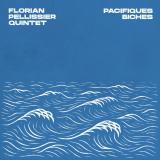
Wild by nature, the Does of the Florian Pellissier Quintet could never be contained in a creative pen that would have forced them never to cross potential geographical limits. Travelers, spending their energy without restraint to let the hard bop of their jazz wander and export itself wherever the groove guided them, they went as far as Africa or South America, from the Cape of Good Hope to Rio. Rio, precisely where, for their last appearance, exposure to a brief electric current had carried them into outer space. A revelation.
Furious strides, exhausting gambols, the Does had done so much that they could not escape the obvious call of calm and serenity. Freed from distances, and after a stop in Colombia to mingle with the crowd at the Barranquilla carnival, it was California and its Pacific coast they reached, to rest before the peaceful immensity of the ocean.
One hundred sixty-five million square kilometers, an infinite expanse to contemplate in order to fling wide open the gates to an even vaster space. A spiritual domain conducive to the search for new sounds. That of the open sea, where measuring miles is neither relevant nor meaningful, and where the only compass becomes the musical tracks the Does follow.
Beneath their coppery hooves, to the crystalline sound of the Fender Rhodes and the sweep of electric layers, the path to take revealed itself in this meditative and abstract realm they had never before explored. Invited to join the purely organic textures, the synthetic notes distilled a few aromas of sweetness into an album of ten tracks, where the FPQ abandoned written scores on some pieces in order to be guided only by the inspiration born of a newfound freedom.
Blue when they began their journey five albums ago, their coat has now taken on the colors that illuminate the Pacific coast. That moment when, as you gaze at the horizon swallowing the sun, only glowing shades filter through—reddish, orange, violet.
Departing without haste or frenzy from one of the shores bordering the ocean, the voices of Archie Shepp, Iggy Pop, and DjeuhDjoah still resonating in their antlers, the Does may now be on the opposite shore. Carried all the way to the Japanese coast by Hokusai’s wave…
- 1: Rebirth
- 2: A Night On The Town
- 3: The Old Haunt
- 4: Is There Anybody Here?
- 5: Waves
- 6: At The End Of The Earth
- 7: Remembered
- 1: The Squeaky Wheel
- 2: If All Goes Well
- 3: The Line
- 4: The Bitter Suite Iv And V: The Congregation And The Sermon In The Silt
- 5: Wait
- 6: The Bitter Suite Vi: Abandon
- 7: Ouroboros
- 8: King Of Swords (Reversed)
Act V[31,72 €]
Vinyl Edition: Clear with Green, Yellow & Black Splatter Part four of The Dear Hunter’s long-running concept series, Act IV combines symphonic rock with narrative-driven songwriting. The multicolor splatter pressing (clear with green, yellow, and black) reflects the album’s theatrical tone and ornate arrangement style. Includes gatefold sleeve with lyric and story inserts. Format: CD Presented in standard CD format with full booklet, Act IV continues the saga’s elaborate storytelling with orchestral arrangements and progressive rock influences. Packaging includes expanded artwork and story content.
- Kolot (Feat. Abate Berihun)
- Carlos
- Slowly
- Embrace
- Trip To The Sahara
- Move On
- 4-8:
- Lpb
- When It Rains
- It Pours
- Haziza Has Got The Juice
Bassist, composer and producer Shay Hazan returns with his third solo album, "When It Rains It Pours", on Batov Records. Following the critical success of "Reclusive Ritual" and "Wusul" Hazan takes a bold step forward, shifting from the guimbri-led sound that established his reputation to a broader palette of bass, guitar, and synth-driven compositions.
Wild by nature, the Does of the Florian Pellissier Quintet could never be contained in a creative pen that would have forced them never to cross potential geographical limits. Travelers, spending their energy without restraint to let the hard bop of their jazz wander and export itself wherever the groove guided them, they went as far as Africa or South America, from the Cape of Good Hope to Rio. Rio, precisely where, for their last appearance, exposure to a brief electric current had carried them into outer space. A revelation.
Furious strides, exhausting gambols, the Does had done so much that they could not escape the obvious call of calm and serenity. Freed from distances, and after a stop in Colombia to mingle with the crowd at the Barranquilla carnival, it was California and its Pacific coast they reached, to rest before the peaceful immensity of the ocean.
One hundred sixty-five million square kilometers, an infinite expanse to contemplate in order to fling wide open the gates to an even vaster space. A spiritual domain conducive to the search for new sounds. That of the open sea, where measuring miles is neither relevant nor meaningful, and where the only compass becomes the musical tracks the Does follow.
Beneath their coppery hooves, to the crystalline sound of the Fender Rhodes and the sweep of electric layers, the path to take revealed itself in this meditative and abstract realm they had never before explored. Invited to join the purely organic textures, the synthetic notes distilled a few aromas of sweetness into an album of ten tracks, where the FPQ abandoned written scores on some pieces in order to be guided only by the inspiration born of a newfound freedom.
Blue when they began their journey five albums ago, their coat has now taken on the colors that illuminate the Pacific coast. That moment when, as you gaze at the horizon swallowing the sun, only glowing shades filter through—reddish, orange, violet.
Departing without haste or frenzy from one of the shores bordering the ocean, the voices of Archie Shepp, Iggy Pop, and DjeuhDjoah still resonating in their antlers, the Does may now be on the opposite shore. Carried all the way to the Japanese coast by Hokusai’s wave…
- A1: A Pact Written In Bone Dust
- A2: Beneath The Shroud
- A3: Abandoned Feretrum
- A4: Conflagration Of Sacred Bones
- A5: Torchless Crossroads
- A6: Cloaked Spectres
- A7: From The Crypt, The Putrid Mist
- A8: Blood, Phlegm, Black Bile
- A9: Gravestone Covenant
- A10: Poison Wind
- A11: Lost In The Ruins
Red Vinyl[32,73 €]
- A1: A Pact Written In Bone Dust
- A2: Beneath The Shroud
- A3: Abandoned Feretrum
- A4: Conflagration Of Sacred Bones
- A5: Torchless Crossroads
- A6: Cloaked Spectres
- A7: From The Crypt, The Putrid Mist
- A8: Blood, Phlegm, Black Bile
- A9: Gravestone Covenant
- A10: Poison Wind
- A11: Lost In The Ruins
Black Vinyl[32,73 €]
- 1: Dame Tu Tormento
- 2: La Muerte De Los Relinchos
- 3: Tierras De Azafrán
- 4: Que Las Campanas Me Doblen
- 5: Una Senda De Pasos Blancos
- 6: Gélida Expiración
- 7: Entregarás Tu Rostro A La Señora
- 8: Vuestra Faz Denegrida
- 9: Cantes De Confesión
- 1: Ten Piedad
- 2: Arpegios En Ocre
- 3: El Quejío
- 4: Taranto A La Hermana Mía
- 5: El Temple De Los Abanicos
- 6: Coplas De Incienso
- 7: Entre Bordados
- 8: Prohibidos Y Cubiertos De Polvo
- 9: Lágrimas De Grana Y Oro
- 1: Al Compás De Tus Contornos
- 2: Y Yo Fuego Te Daré
- 3: Para Un Mártir Del Compás
- 4: Saetas De Altos Balcones
- 5: Su Beso De Plata
- 6: Peldaños Hacia La Santidad
- 7: Mirada De Culpa
- 8: Que En Procesión Marchen
- 9: Por La Vía De Las Procesiones Antiguas
- 1: Baile De Violetas - Guitar Version
- 2: Cinco Miradas Tiene La Aurora
- 3: La Herida Del Ocaso
- 4: Donde La Culpa Obtuvo Su Nacimiento
- 5: Cante De Los Muertos
- 6: Hermana Mía
- 7: Luto Y Estrago
- 8: Manto De Escamas Blancas
- 9: Su Beso De Plata - Redux
- 10: La Marcha Del Retorcido
- Abduction
- Ravaged
- Jackhammer Philosophy
- A Distant Thunder
- Claustrophobic
Schon immer schwirrte im Kopf von Husky (Drums / Asphyx, Rotten Casket, ex Sodom, ex Desaster, ex Metalucifer, ex Metal Inquisitor) die Idee herum, eine Band zu gründen, die sich dem puren Thrash Metal widmet und dabei auch einen kanadischen „Razor“-Touch aufweist, ohne jedoch die musikalischen Wurzeln aller Musiker zu verlieren. Auf einem der unzähligen Treffen mit seinem alten Kumpel Patrick (Bass / ex Crematory, ex Apophis) kam es vor zwei Jahren dann auf dem Party.San Open Air zum finalen „lass uns doch mal jetzt was zusammen machen“. Patrick rekrutierte zusätzlich Holg (Gitarre / u.a. Abandoned, Roxxcalibur) und Husky verpflichtete Benni (Vocals / u.a. Knife, The Earwix), um das Line-Up passend zu komplettieren.
Im Juni 2025 traf man sich im niederländischen Enschede, um bei Tom Meier Recordings (u.a. Asphyx, Soulburn, Cryptosis, Graceless, Rotten Casket) ein erstes Demo aufzunehmen. Die Band hat im Anschluss bei niemand Geringerem als High Roller Records einen Deal erhalten, um das Demo als MCD/MLP zu veröffentlichen und auch das folgende Debütalbum wird dort erscheinen.
Und dies ist erst der Anfang…Seid bereit für „Razorsharp Thrash Metal“!
- A1: Me On The Beach
- A2: Elegy Of Betrayal
- A3: I'll Abandon You
- B1: Yesterday's Story
- B2: Sign Of Love
- B3: Unfaithful Star
- B4: I'll Abandon You
- C1: At The Beach
- C2: They
- C3: A Story From Long Ago
- D1: Woman
In March 2025, "On the Love Beach" held a highly successful solo concert in Shanghai and Beijing with Toushi Naoki.
2025 marks the 30th anniversary of their memorable debut album, "On the Love Beach," and the band's three first albums will be reissued on CD and vinyl!
All three albums are made using the original master tapes, and each has been thoroughly remastered under the supervision of Shinji Shibayama for high-quality
sound!
Shinji Shibayama, who played drums for IDIOT O'CLOCK, a stalwart band in the Kyoto underground scene in the early '80s, founded Orgu Records in 1986
and released "Eat Meat, Take a Vow" under the name "Hallelujahs," formed "On the Love Beach" in 1992. This 1995 debut album by "On the Love Beach"
deserves to be passed down to future generations.
"On the Love Beach," which took approximately three years to complete due to its 24-channel multi-track recording, truly marks the origin of "On the Beach"
It was during the production of this album that Shibayama met his partner, Masako Takeda. Starting with the classic song "Nagisa no Watashi," born from that inspiration,
this masterpiece, with its kaleidoscope-like polyhedral structure, is the result of a meticulous reconstruction of the musical essence of Shibayama's
personal history, including GS, Showa-era pop, progressive rock, contemporary music, and psychedelic influences. The album also features a superb cast of
guest appearances, including Naoki Toshi, Kenichi Takayama "IDIOT," Chie Mukai, and Fuyuri Kudo.
While the 1995 album LP was a low-sounding cut due to its 54-minute running time, this analog reissue features a 2LP cut for superior sound quality.
The D-side includes the obscure classic "Woman," which was only available on CD at the time, and the album has been reborn as a timeless, complete version
worthy of the 30th anniversary of its release! Of course, the CD released at the same time is also a high-quality version with the same remastering!
Inhale. Exhale. Remember to breathe. In that rhythm lies the pulse of being - the ancient echo of stars from which we are made. Breathing is the bridge between the inner cosmos and the outer void. When you breathe, you testify to existence itself: "I am." The Moonrover - a child of reason - abandoned on the cold, dead Moon. It does not feel time, know fear, or comprehend solitude. But a human, in its place, would understand: Silence is not emptiness. It is a mirror. And in that mirror arises the question: "If I am alone, and silence is infinite - who hears my breath?" The answer lies in the breath. Each inhale is resistance against entropy. Each exhale is an act of remembrance. To breathe is to remember that you are not just part of the Universe - you are its awakened part. And just as the Moonrover crawls across grey lunar plains, driven by an unknown purpose, so do you move through life, led by an inner light, until you realize: breath is not just life. It is a prayer sent into silence. And if you can hear it - you are alive.
- 1: Song For Balkis
- 2: Giant Steps
- 3: Sonnet For Stevie
- 4: Amethyst
- 5: Showdown
Drummer and NEA Jazz Master Billy Hart releases his first live album, MULTIDIRECTIONAL, with his longtime all-star quartet featuring saxophonist Mark Turner, pianist Ethan Iverson, and bassist Ben Street. --- Legendary drummer Billy Hart credits the great Rashied Ali for introducing him to the term “multidirectional” – a descriptor for the elusive, daring approach to the kit that Hart and others of his generation had developed intuitively in response to the increasing freedom and exploration of the era’s jazz experimentation. “Rashied Ali told me that ‘multidirectional’ was what John Coltrane called this freeform feel, where conventional structure was abandoned and the rhythms could cut in any direction,” he writes in Oceans of Time: The Musical Autobiography of Billy Hart, his captivating new memoir. Hart had begun to explore that style under the influence of Coltrane’s pioneering work, first venturing into the terrain while playing with Pharoah Sanders at the famed East Village club Slugs’. More than half a century later, Hart has refined and evolved the approach into a singular percussive voice of unparalleled elegance, finesse, and intricacy – as exemplified on MULTIDIRECTIONAL, the first live recording by his longstanding quartet featuring tenor saxophonist Mark Turner, pianist Ethan Iverson, and bassist Ben Street.
*comes with a download code
Wata Igarashi's first album on Dekmantel is a lightning bolt of immediate, immersive and impactful techno energy that maximises his trademark tunnelling rhythms and psychoactive arpeggios with stunning results. Compared to some of his dreamier releases on labels like Midgar, The Bunker New York and Delsin, here we're treated to a more intense, hi-octane dimension to Igarashi's sound perfectly demonstrated in the wide-eyed, invigorating rush of 'Shockwave', 'Meltzone's nagging acid frenzy and 'Unleashed's delirious, pitch-bent peaks.
Precision honed and revelling in the hypnotic abandon of the loop, My Supernova is a techno album through and through, but it's also overflowing with the kind of head-melting creativity and nuanced production that Igarashi has made his own. Just lose yourself in the giddy arps of 'Supernova' — a joyous whirlpool of synths upon synths upon synths reaching fever pitch without even a hint of brute force.
- A1: L'intro
- A2: Look At You (Live)
- A3: Earn The Crown (Live)
- A4: Payback (Live)
- A5: Heaven 2.9 (Live)
- A6: Powderhead (Live)
- A7: A Song For The Outcast (Live)
- A8: The Clash (Live)
- A9: One Sound (Live)
- B1: Made Me Madman (Live)
- B2: U.f.o. Romeo (Live)
- B3: Year By Year (Live)
- B4: Highlights (Live)
- B5: Star War (Live)
- B6: Brand New Hate (Live)
- B7: Minus Celsius (Live)
Backyard Babies was formed in 1987 in Nässjö and can by rights be called Sweden’s most influential glam punk act. Between 1994 and 2019
they released eight studio albums of which both Making Enemies Is Good and Stockholm Syndrome won them a Swedish Grammy.
In 2005 they released their only live album, recorded at La Maroquinerie on May 6 2004, and features blistering, turbocharged renditions
of album hits such as "Minus Celsius", "Earn the Crown", and "Brand New Hate". The chops of guitarist Dregen (of The Hellacopters fame)
propel the whole thing forward with reckless abandon while singer Nicke Borg keeps riling up the crowd in between songs,
adding to the immediacy of a tightly recorded live album. This edition comes with a 4-page booklet containing concert photos.
Live Live In Paris is now available on vinyl for the first time as a 20th anniversary edition of 666 individually numbered copies on yellow & black marbled vinyl.
- Smiling Dog
- Two Stones
- The Hidden Ghost
- Hourglass
- The Moon & The Devil
- Mayhem
- Little Bird
- The Fluorescent Sand
- Beautiful Star
- Your Eyes
Embrace The Abandon is the new project by THE MON, the solo vision of Urlo, vocalist, bassist, and founding member of the Italian heavy-psych veterans Ufomammut.
Structured in two complementary chapters — Songs of Abandon (November 7th, 2025) and Songs of Embrace (March 6th, 2026) — the project tells a journey of duality: loss and surrender on one side, acceptance and rebirth on the other.
The first chapter, Songs of Abandon, is perhaps the most intimate and vulnerable work Urlo has ever created.
Born in a moment of solitude and personal darkness, the album originated from a radical exercise: writing one song a day, for nine consecutive days, using only acoustic guitar and voice.
A collection of stripped-down, emotionally raw ballads. Rooted in acoustic textures and intimate songwriting, these songs explore loss, vulnerability, and the quiet spaces left behind — a personal exorcism of what could have been but never was.
Later, these sketches were shaped into fully realized tracks, with lyrics and subtle layers of sound — not to overwhelm, but to underline the fragile, raw atmosphere that pervades them. The result is a stripped-down, emotionally charged collection that embodies an inner search: the power of music as a tool to face abandonment, to dig into oneself, and ultimately to glimpse the possibility of an embrace.
With Embrace The Abandon, THE MON reaffirms itself as one of the most personal and uncompromising projects.
It is a body of work that fuses vulnerability and strength, speaking directly to the listener with sincerity, leading them through shadow towards light.
An intimate yet powerful sound experience, intertwining the minimalism of acoustic folk with the dark, visionary tension that has always defined Urlo’s artistic path.