
nicht am Lager
Bestelle jetzt und wir bestellen den Artikel für dich beim Lieferanten.
7,69 €
Last In: vor 6 Jahren
Bestelle jetzt und wir bestellen den Artikel für dich beim Lieferanten.

Pure Beauty !
Grey marbled transparent record... fat cut ! Bassy Hardtek or techno when played 33RPM... Pressed 45 RPM.
Quiet old school tribe from the most beautiful techno couple on earth ! A strange record where Hit Hat have been puuled away... get free of high freqs to enjoy the true real techno idea of an elelectronic creation, getting' rid of the Hit hat reflex.... Crazyness :)
Notice here we offer a listen at 33RPM 8, in a Techno downtempo, quiet Doom and totally great as well.... is this an accident ?
erscheint voraussichtlich am 04.06.2019

"The Shanklin Sessions came out of the Shanklin Road studio that Andy Sims shared with one of his partners from Soft Rocks, Bobby Coulman.
Acid Jan started it's life as a Jan Hammer edit that Andy was doing for one of Soft Rock's Disco Powerplay releases. There were a few parts that never made the final cut, but were too good to leave, so Andy got friend Jaime Read in to jam with the left over bits, and from that Acid Jan was born (none of the Jan's original parts made it to this finished re-incarnation).
Acid Jan found it's way onto Cynic label boss Felix's USB and subsequently was played at every festival/club that Felix played for about a year. When Andy heard Felix playing it at Alfresco Festival in 2016, they decided to release it on Cynic.
In search of a B side for the release, Andy dug out the other DAT's from the session Acid Jan was recorded at, and found Sitars over Shanklin, a suitably oddball track to grace the other side.
A little piece of Chicago via India recorded in Brighton."
Bestelle jetzt und wir bestellen den Artikel für dich beim Lieferanten.

Emotional Rescue returns to the Caribbean with the music of Glen Ricks and his infectious Jamaica meets Boogie goldmine that is I've Been Waiting For You.
A performer since the age of 7, Glen Ricks (born Ricketts), established a reputation for his singing range and ability to seamlessly shift from tenor to soprano, going on to sell over a million records around the world.
Having immigrated to Canada as a child, after teaming up with his first band The Fabulous Flames Ricks returned to Jamaica to create his first records. Moving effortlessly from reggae to lovers, and dancehall to soul, R&B, disco and boogie, Ricks established a successful career and he continues to perform to this day.
I've Been Waiting For You is indicative of that cross-pollination of style and sound. Released on 7" in 1983 on the short lived Seraff label, the mix of Ricks' soul voice with laid back boogie groove creates a sound full of lazy JA swing.
Now highly sought after, this special 12" reissue includes the stand out vocal and is backed with an instrumental that builds on the interplay between bass, drums, piano, guitar, keys and finally, backing vocals. To seal the deal - and in true label style - LA's rising star DJ Duckcomb presents the perfect Discomix, seamlessly cutting between both versions with some respectful dubbing in the mix.
Bestelle jetzt und wir bestellen den Artikel für dich beim Lieferanten.

Bestelle jetzt und wir bestellen den Artikel für dich beim Lieferanten.

smog’s music has been on a steady path towards monumentalism since emerging out of the recesses of Berlin in 2015.
Originally from Paris, growing up cutting his chops in the capital’s hip hop undergrowth, the young producer makes music that is as challenging as it is evocative. On “sequel’70” – his debut album – bass, techno, electroacoustic music and jungle are rung through his singular take on the hardcore continuum. The production is powerful, dynamic and geared to bulldoze the dance. It’s clear why the likes of Resident Advisor have tipped smog as an “important artist to watch” and why his tracks have been appearing in sets from artists of the calibre and creative range of Objekt, Donato Dozzy, Samuel Kerridge or Go Hiyama.
With his debut album, smog lays bare a world of start and stop mechanics. Tracks twist and turn through stuttering panoramas of crashing beats, majestic peaks and post-rave intensity. On its most moving moments the gorgeously burnt out cinematic pads of “Mécanique Oblique” are a particular highlight – “sequel’70” feels like coming up in the middle of an industrial wasteland. It’s almost as if the end of the world wasn’t such a terrible prospect after all.
Jungle architectures are pulled apart and reconstructed on “Gelid”, “Dazzle” and the phenomenal “Abschluss SCAN”. Souvenirs of gabber echo through heavy handed kicks and speaker defying noise blasts. IDM inflexions creep their way in opportunistically, but even at its most abstract – album midpoint “Straightforward” sounds like a geiger counter being set off – it all sounds more like the possibilities offered by the future of rave rather than an attempt at paying homage to the genre’s heritage.
There’s a special energy and irreverence to smog’s music and there’s deep reflection in how he connects the dots of the subfamilies of rave. His attention to sound design would almost be worth the trip alone, but the album remains superb even at its most disorderly.
Bestelle jetzt und wir bestellen den Artikel für dich beim Lieferanten.

Cosmo Vitelli hasn’t slept since 1973. Instead, he’s replaced slumber with the tireless exploration of electronic music, sharing his finds as an accomplished DJ and label manager as well as an esteemed producer, with heaps of records, remixes and edits under his belt. With his upcoming two-part LP on Malka Tuti, Cosmo brings forward his more diverse and somehow mature musical side, combining elements of post-punk, krautrock, electronica and pop on this first of 2 four-track records. The songs on the LP transcend style and genre. They manage to hold and playfully sustain an idea that echoes throughout them all - a musical “saying” as well as a personal life experience, and they reflect Cosmo’s prolific studio work of the past 2 years since he moved to Berlin. On the opening song A Brand New City he collaborates with longtime friend Julienne Dessagne (aka Fantastic Twins). Dessagne's vocals cut through the quirky and addictive percussion groove and synth sequence, leading to a a strong emotional melancholic melodic catharsis. On the following two songs Groupe Surdose & Die Alraune we find Cosmo collaborating with Sebastian Lee Philipp (of Die Wilde Jagd fame) to show his more post-rock/krautrock side. Groupe Surdose is an instant classic slow burning dance floor Krautrock tune while in Die Alruane we find poetic German lyrics sung by Lee-Philipp on top of organic grooves, guitars and an epic Saxophone line that together create a distinctive highlight for the record. The closing track Kuldip is the curve ball of them all, sealing the first part of his album with a Mediterranean mid tempo dance tune for the selectors and the middle-eastern inspired electro aficionados.
Bestelle jetzt und wir bestellen den Artikel für dich beim Lieferanten.

Yotam Avni has been a long fixture of the Tel-Aviv nightlife scene, well known internationally thanks to releases on Ovum, Innervisions and Hotflush. We welcome him to our SPEICHER series with three unlikely cuts that you would expect from him (or us).
“Mañana Mañana” swells with a mid-90’s prowess that echo the earliest of Kompakt’s days in the best of ways. “Track For Agoria” thrives from the method of true minimal techno but abstractedly brought into harmony with bells and tweaking synths. Finally, “Heavy Lifting” is righteously led by a soaring synth that envelops itself into snap dragon snares and washed out hi-hats. He saves the best for last as the track opens into classic rave synths - guaranteed to open dance floors to all of eternity.
Bestelle jetzt und wir bestellen den Artikel für dich beim Lieferanten.

Celebrating its 25th anniversary, Far Out Recordings proudly presents two albums of previously unheard Azymuth demo recordings from 1973-75
Since their debut album release in 1975, Azymuth have risen to rank alongside the world’s greatest jazz, funk and fusion artists. As young men in Rio de Janeiro, they stood out for both their exceptional talent as musicians, and their wild rock ‘n’ roll antics in the predominantly middle-class worlds of bossa nova and jazz. Their signature ‘Samba Doido’ (crazy samba) sound ruptured the tried and tested musical structures of the day, resulting in what can only be described as an electric, psychedelic, samba jazz-funk hybrid.
Before they became Azymuth, José Roberto Bertrami (keyboards), Ivan ‘Mamão’ Conti (drums), Alex Malheiros (bass) and Ariovaldo Contesini (percussion) played backing band to just about every major artist in Brazil. Bertrami was also contracted as an arranger and songwriter at some the biggest labels of the era: Polydor, Philips, Som Livre, and EMI being just a few. Azymuth’s name can be found on record sleeves by the likes of Jorge Ben, Elis Regina, Marcos Valle, Ana Mazzotti and countless others. But at the dawn of the seventies, fascinated by developments in improvisational music - from jazz in the US, to progressive rock in the UK and of course samba, bossa and tropicália on home turf - the energetic young group were inspired and ready to move forward. Any spare moment in which they weren’t in sessions and writing music for other artists, they would be carving out their own sound.
These previously unheard recordings took place between 1973-75 at Bertrami’s home studio in the Laranjeiras district of Rio de Janeiro. At the time of recording, there was nothing in Brazil, less the world that sounded anything like them, so perhaps it’s unsurprising that when Bertrami presented his demos to the record companies he had been working for, he was turned away, and told in effect that the music was ‘wrong’.
One of the demos ‘Manhã’ would be picked up by Som Livre and Azymuth released their seminal debut album in 1975. Throughout the late seventies and eighties, the group released a series of now classic albums for Milestone Records, before taking an indefinite hiatus to pursue their individual careers.
When English producers Joe Davis and Roc Hunter arrived in Brazil in 1994 to record the first Azymuth album in over a decade, Bertrami dug out the demos which had sat virtually untouched for over twenty years. Joe recalls how he was “blown away by the freedom and intensity of the music, as well as the genius of the ideas musically.” Beginning a long and fruitful relationship, ‘Prefacio’ would be the first track Azymuth recorded for Far Out Recordings and was released on the Carnival album (1996).
Along with ‘Manhã’ and ‘Prefacio’, only a handful of these demos were ever professionally recorded and released, making this the first opportunity to hear many of these early Azymuth compositions in their raw, original form.
On every track the frenetic energy in the studio is palpable, giving the recordings a beautifully personal feel and a sense of the phenomenally creative vision Bertrami, Malheiros and Conti were realising at the time. Fifty years on, Azymuth’s earliest recorded music retains an ineffable, futuristic quality, standing amongst their most captivating and moving work.
Credits:
Keyboards: José Roberto Bertrami (Mini Moog Series One, Arp Omni, Arp 2600, Arp Solina Strings, Fender Rhodes 88, Hammond B3 with box speaker, Clavinet with Wah Wah)
Drums: Ivan ‘Mamão’ Conti
Bass: Alex Malheiros
Percussion: Ariovaldo Contesini
Produced by Azymuth and Jose Roberto Bertrami
Recorded at José Roberto Bertrami’s home studio in Laranjeiras, Rio De Janeiro, Brazil between 1973–1975.
Issue and project co-ordinator: Joe Davis
Tape transfers by Roc Hunter (thanks to Simon Hitner)
Mastered by Daniel Maunick at the Sugar Shack, Lanark, Scotland
Mastered by Frank at Carvery Cuts
All tracks published by Far Out Music Publishing/Westbury Music LTD
Bestelle jetzt und wir bestellen den Artikel für dich beim Lieferanten.

Celebrating its 25th anniversary, Far Out Recordings proudly presents two albums of previously unheard Azymuth demo recordings from 1973-75
Since their debut album release in 1975, Azymuth have risen to rank alongside the world’s greatest jazz, funk and fusion artists. As young men in Rio de Janeiro, they stood out for both their exceptional talent as musicians, and their wild rock ‘n’ roll antics in the predominantly middle-class worlds of bossa nova and jazz. Their signature ‘Samba Doido’ (crazy samba) sound ruptured the tried and tested musical structures of the day, resulting in what can only be described as an electric, psychedelic, samba jazz-funk hybrid.
Before they became Azymuth, José Roberto Bertrami (keyboards), Ivan ‘Mamão’ Conti (drums), Alex Malheiros (bass) and Ariovaldo Contesini (percussion) played backing band to just about every major artist in Brazil. Bertrami was also contracted as an arranger and songwriter at some the biggest labels of the era: Polydor, Philips, Som Livre, and EMI being just a few. Azymuth’s name can be found on record sleeves by the likes of Jorge Ben, Elis Regina, Marcos Valle, Ana Mazzotti and countless others. But at the dawn of the seventies, fascinated by developments in improvisational music - from jazz in the US, to progressive rock in the UK and of course samba, bossa and tropicália on home turf - the energetic young group were inspired and ready to move forward. Any spare moment in which they weren’t in sessions and writing music for other artists, they would be carving out their own sound.
These previously unheard recordings took place between 1973-75 at Bertrami’s home studio in the Laranjeiras district of Rio de Janeiro. At the time of recording, there was nothing in Brazil, less the world that sounded anything like them, so perhaps it’s unsurprising that when Bertrami presented his demos to the record companies he had been working for, he was turned away, and told in effect that the music was ‘wrong’.
One of the demos ‘Manhã’ would be picked up by Som Livre and Azymuth released their seminal debut album in 1975. Throughout the late seventies and eighties, the group released a series of now classic albums for Milestone Records, before taking an indefinite hiatus to pursue their individual careers.
When English producers Joe Davis and Roc Hunter arrived in Brazil in 1994 to record the first Azymuth album in over a decade, Bertrami dug out the demos which had sat virtually untouched for over twenty years. Joe recalls how he was “blown away by the freedom and intensity of the music, as well as the genius of the ideas musically.” Beginning a long and fruitful relationship, ‘Prefacio’ would be the first track Azymuth recorded for Far Out Recordings and was released on the Carnival album (1996).
Along with ‘Manhã’ and ‘Prefacio’, only a handful of these demos were ever professionally recorded and released, making this the first opportunity to hear many of these early Azymuth compositions in their raw, original form.
On every track the frenetic energy in the studio is palpable, giving the recordings a beautifully personal feel and a sense of the phenomenally creative vision Bertrami, Malheiros and Conti were realising at the time. Fifty years on, Azymuth’s earliest recorded music retains an ineffable, futuristic quality, standing amongst their most captivating and moving work.
Credits:
Keyboards: José Roberto Bertrami (Mini Moog Series One, Arp Omni, Arp 2600, Arp Solina Strings, Fender Rhodes 88, Hammond B3 with box speaker, Clavinet with Wah Wah)
Drums: Ivan ‘Mamão’ Conti
Bass: Alex Malheiros
Percussion: Ariovaldo Contesini
Produced by Azymuth and Jose Roberto Bertrami
Recorded at José Roberto Bertrami’s home studio in Laranjeiras, Rio De Janeiro, Brazil between 1973–1975.
Issue and project co-ordinator: Joe Davis
Tape transfers by Roc Hunter (thanks to Simon Hitner)
Mastered by Daniel Maunick at the Sugar Shack, Lanark, Scotland
Mastered by Frank at Carvery Cuts
All tracks published by Far Out Music Publishing/Westbury Music LTD
Bestelle jetzt und wir bestellen den Artikel für dich beim Lieferanten.

Moonshoe Records has bowled over first listeners by presenting this new side of their sphere - Air Space Ark’s debut, “All Rivers Lead” charts the course of divergent streams of contemporary ambient music, downtempo rhythms, and electroacoustic experimentation, arriving at a calming confluence of these sources. Across the 6 songs on these two sides, they evoke a calming and contemplative headspace
333 is an exquisite study in balance - the intermingling of bird song water sounds that could equally be field recordings or synthesized foley - the ambiguity adding a delightful trompe l'oreille effect - and crystalline keys ; these airy sounds weighted by washes of subbass.
BLANK PAGE is almost like a version of the previous track, retaining the nimble birdsongs and heavy sub, but foregrounding a lolling, stumbling hip-hop beat and placing more emphasis on the effects wizardry as abstract sounds careen across the track in wipes and wisps, before stripping down to a beautiful coda of birdsong, piano plinks and a textured backdrop.
The celestial keys, flute-like thrums and gentle chimes of WORDS BETWEEN SELF evoke the golden age of spiritual jazz, but the hazy ambiance and shuffling beats transmute the other elements around them into something more introspective and personal than jubilant praise. Lyrics aside, the subtle funk coupled with the pensive, meditative air channels the spirit of Stanley Cowell’s classic TRAVELLIN’ MAN.
LOFT IN 7 Is the most “out” moment here. It has echoes, literally, of jazz. Like decaying tape reels disintegrating in real time, we feel the tape buckling and warping under the weight of time as the sounds of a synthetic band warp and shift against electronic impulses and glitches, eventually leaving just a lingering, ghostly imprint. .
DUST SONG veers the closest towards a straightforward instrumental hip hop cut - a submerged sounding breakbeat coupled with a tender piano melody - but is buoyed by drifting pads and a dense, hallucinatory bed of effects.
CONCRETE closes proceedings. Charged with a crepuscular energy, it’s all-together as mercurial and magical as the transition from day to night. Different elements swirl and coalesce, honing in on dense, textural moments across a horizontal drift. The end effect is hypnotic yet captivating, so much so that when the track eventually blooms into silence at the end you’re struck by the brevity of the whole experience. Thankfully you can listen to it again!
Bestelle jetzt und wir bestellen den Artikel für dich beim Lieferanten.

Two years ago, Ferdi Schuster was a young multi-instrumentalist and producer
daydreaming of releasing his music on Claremont 56, one of his favourite labels.
Now he’s set to release his stunning debut album, “All One”, on Paul Murphy’s
long-running imprint.
It’s been a long time between drinks for the German producer, who last graced
C56 with his superb double A-side single, “Little River/Befreit”, in the autumn of
2017. Fittingly, it’s “Little River” – a babbling brook of audio bliss rich in samba
influenced drums, soothing acoustic guitars and spacey synthesizer licks – that
kicks off “All One”, a seductive set in which every drumbeat, piano note, guitar
riff, synthesizer flourish and freside-warm bassline was played by the man
himself.
Throughout, it’s easy to see why Murphy decided to snap up Schuster and
push the producer to record a debut album. Check, for example, the dubbed
out shuffle of “Thinking of You”, where ghostly chords, soft-focus guitar solos
and ethereal vocals drift across the soundscape, and the slowly unfurling bliss
of “The Good Fight”, an effortlessly Balearic workout rich in sun-kissed guitars,
bubbly synth lines and chords so snugly they could probably be used as a
comfort blanket.
Schuster’s greatest strength is undoubtedly the evocative and enveloping nature
of his instrumental music, which draws on a variety of complimentary influences
but never sounds anything less than original and fresh. Some listeners may be
enchanted by the loose and languid pulse of “Fading Away” or the lo-f reggae
jazz of dusty closing cut “Night Talk”, though others may prefer the stoned funk
shuffle of “Interaction” or the spacey vibrations of “Pulsa”, where intergalactic
synthesizer lines wind their way around heady bass guitar and sparse, off-kilter
deep electro drums.
“All One” is that kind of set; an atmospheric and musically accomplished
collection of cuts capable of muting the mundane and distracting from the stress
of 21st century life. As debut albums go, it’s something of a stunner
Bestelle jetzt und wir bestellen den Artikel für dich beim Lieferanten.

Killawatt takes the reigns for his fourth solo EP on Tommy Four Seven’s 47 imprint. Listen with reverence to the artist’s laser precision production talent, in these four explorative techno cuts destined to disturb sound systems
Bestelle jetzt und wir bestellen den Artikel für dich beim Lieferanten.

Berlin’s Answer Code Request and Marcel Fengler remix two cuts from AVION’s ‘Untrod’ album on his Crossing Imprint.
Established in 2013, Crossing has become a home for the majority of VAION’s releases including his debut album that picked up support from the likes of Darko Esser, Cosmin Trg, Anastasia Kristensen, Steve Bicknell and many more.
For this compelling remix package, AVION invites Answer Code Request and Marcel Fengler two legendary Berghain residents known for releasing on Ostgut Ton and their own eponymous imprints, who together have been honing a musical hybrid that stands apart from some of the more uniform forms of techno.
Answer Code Request’s ‘Evasion’ kicks off proceedings with an ethereal ambience balancing a tough syncopated drum sequence, resonant pads and atmospheric synth keys floating underneath. On the flip, Marcel Fengler’s remix of ‘Streetlights’ rounds off proceedings with menacing breaks-tinged percussion,
murmuring oscillations graciously fused with Emika’s delicate vocals and resilient modulations throughout.
Bestelle jetzt und wir bestellen den Artikel für dich beim Lieferanten.

'Boomerang' was first recorded in 1979, when the Broomfield Corporate Jam leader was attempting to plot a solo career. It was the first cut Aaron Broomfield recorded under his own name - Initially, at the family band's home studio, Kilimanjaro, and later at professional studios in L.A and Miami - but it was never released.
'I always wanted to be able to share 'Boomerang' with my fans some day - I didn't release it back then because I thought the time wasn't right,' Broomfield explains. 'It was so different to what was considered commercial then and felt ahead of its time.'
Before deciding against releasing it, Broomfield had two test pressings made. It was the accidental discovery of the
one remaining record by digger Arun Brown (the other perished when Broomfield's Kilimanjaro studio was damaged by a fire in 1996) that set in motion the chain of events that finally led to its release.
The jacket boasts a written essay by Broomfield himself, telling the remarkable story behind the song. The wax
features the two versions of Boomerang, of which both were meticulously restored and re-mastered by celebrated
Australian sound engineer, Dan Elleson.
Head to side A for the 'test press' version, a cosmic, starry-eyed chunk of elastic Miami disco-funk where the
Broomfield family's killer instrumentation - all rubbery bass, deep space synths and crunchy Clavinet motifs - arcs
around the sound space like a boomerang in flight. The vocal arrangement, in which Aaron Broomfield's conscious
lyrics come through loud and clear, brings it home. On the flipside, you'll hear how dynamic the band was through the
'Demo Version' - a relaxed, loose and spacey groover that sounds as ahead of its time in 2018 as it would have when it was recorded in 1979.
Bestelle jetzt und wir bestellen den Artikel für dich beim Lieferanten.

Bestelle jetzt und wir bestellen den Artikel für dich beim Lieferanten.

LA’s Cromie joins Detroit imprint Clave House to release four mesmerizing cuts entitled ‘Root Bulb’.
A familiar face in the Los Angeles house scene, Nikola Hlady aka Cromie has established himself through his talents and graft in the studio showcasing his distinctive deep house rhythms, clever chord progressions and focus on charismatic sound design. His previous releases on Material Image, Amadeus Records and These Things Take Time join hypnotically driven atmospheres with captivating rhythms creating forward- thinking yet classically-minded sonics. His ‘Root Bulb’ EP sees the LA producer join the Clave House family accompanying artists such as Ali Berger, Pascäal, 外神 deepspace, Appian, Gerald Norton, Segv and Berndt.
Cromie's ‘Root Bulb’ EP picks up where his 2018 releases left off, taking inspiration from the Southern California landscape that surrounds him, with its juxtaposition of endless expanses of concrete amidst its staggeringly diverse flora and famous sunshine.
‘Root Bulb’ kicks things off with absorbing pads layered over rough and raw percussion with angelic textures in the distance before ‘Lilac’ delivers breaks-tinged drums, a catchy, buried sample, infectious synth notes and warming melodies inviting the listener’s focus.
‘Aristocrat Motel’ maintains the enrapturing ambience by fusing pulsating bass shoots, alleviating tones and charming, earworm keys offering a club-focussed yet introspective track until ‘Root Bulb (Grove Mix)’ rounds off proceedings with downtempo broken-beat grooves, tantalising vibrations and undulating, cosmic elements.
Bestelle jetzt und wir bestellen den Artikel für dich beim Lieferanten.

Exactly two years after their latest Front Teeth LP, the Zürich-based duo VEIL OF LIGHT is back with a new album called Inflict which will be out May 10 on Avant! Records. This is their fourth full-length and their industrial-tinged synth-based post-punk keeps on getting better, making Inflict their strongest release to date. In these eight new cuts you'll hear how their sound has gotten heavier, bulkier, even more beat-driven. Tracks like So Hard and Holy Wars display drums pounding like noises from a rusty machinery, synths on You Done Me Wrong and Fact2019 they’re so sharp they can slice through your skin, Europe and Animal Instinct feature melodies from the abandoned industrial district of your ghost town. We could go on but you are probably aware of what these two Swiss are all about, and if you don’t you'll know the Veil Of Light when you face it. Artwork by Basel-based visual artist and photographer Samuel Trümpy. Limited edition LP on orange vinyl!
Bestelle jetzt und wir bestellen den Artikel für dich beim Lieferanten.

Under the alias Ciel, Xi'an-born/Toronto-based producer, pianist, DJ, and Discwoman affiliate Cindy Li embodies the social conscience of progressive electronic music. She is at once a local and global artist, having flourished at the fringe of cutting-edge club culture since 2015, firmly rooted in her adopted city while reaching increasingly outward, her sets echoing from Berlin’s Berghain to Chicago’s Smartbar to Lisbon’s Lux Fragil. Back in Toronto, she co-runs the label Parallel Minds and event initiative Work In Progress, an extension of her radio show in both name and M.O. to improve female representation in the scene. She’s helped write safe space policies, hosted DJ workshops, and applied activist pressure on promoters through varying methods with a single-minded resolve. Those efforts have evoked responses, which Li has spent time reckoning with over the past two years. Now, manifesting as a self-guided reaction to her experiences as an artist and activist is Ciel’s Spectral Sound debut, Why Me?, a deeply personal and physical work.
Ciel’s stylistic pocket as a producer remains that of “soft-touch slammers,” but fans will note the material on Why Me? hits harder. “I wanted to write something that was heavy,” she says of the title track, the result of processing the noise leveled at her specifically after she amassed a database of female and nonbinary talents to highlight the lack of bookings amongst a subset of clubs in the community. “I was dealing with a lot... anger, despair, paranoia, feeling unjustly targeted.” She channeled these antiphons into her art. The cut’s namesake is sourced from the foregrounded sample, a snippet of dialogue from an old film about a man who believes he’s been abducted by aliens. Pulsing metallic drum patterns steer through the hypnotic passage; permeating beneath the beats are lush pads, washing the rattled urgency with unease.
Hardware-built tracks “Go Fish” and “Uri’s Song” came together over studio time with friend and occasional collaborator Colin Sims aka Wiretapping. Ciel brought her sampler to the sessions, with Sims contributing additional drums, which she’d arrange further at home, adding synth parts and basslines and effects, distilling it all down to its most potent core. The latter track — an effervescent minimal techno exercise both tender and tough — expresses Li’s reflections on today’s cyclical conditions for activism, dissension, and, ultimately, optimism. “These are harsher sounds but they also have elements that are really beautiful about them. I wanted to communicate that nothing is permanent, that there’s always hope for understanding and resolution.”
Bestelle jetzt und wir bestellen den Artikel für dich beim Lieferanten.
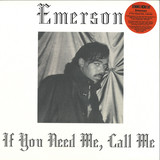
Kalita's obligatory Record Store Day offering is something rather special: synth-funk visionary couple Emerson and Leora Sandidge's mythical unreleased album finally sees the light of day, following Emerson's sole private press seven-inch single release way back in 1988. Those two tunes ("Sending All My Love Out" and "Why Are You So Cold?") make the cut on this belated debut set, alongside six other previously unreleased recordings from the same sessions. Their take on electrofunk, boogie and '80s soul is colourful, soulful and synth-heavy, with the included tracks veering from up-tempo club workouts (see "Raw Deal Cocaine Kills") and fizzing dancefloor pop workouts, to sugary ballads and seductive slow jams. In other words, it's a more than tidy selection of rare and unheard gems.
Bestelle jetzt und wir bestellen den Artikel für dich beim Lieferanten.
