Tape
J. Mono twists our sense of time again, coming up with the third installment of his 'Redate' series: an elegant selection of uncut tracks, roaming in the fields of electro, acid, IDM and EBM.
Redate III in its digital format presents tracks that were written and recorded between 2014 and 2015.
As the cassette version, it includes not only Redate III (as side A), but a collection of J. Mono's various other tracks created between 2017 and 2021, that appeared beforehand on various compilation albums (as side B). In other words, with this fresh new tape you're all set with 8 years of J. Mono experience.
Buscar:j mono
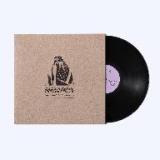
Tape / Cassette
Everyone's favorite synth acid genius, J. Mono from Lajosmizse is back on Dalmata Daniel with the double album Redate I & II tape release, an emotionally filled journey of 24 songs, all showing deep thoughtfulness of composition, mastering soundwaves and harmonies.
This cassette is limited and numbered to 60 copies with risograph printed J-card sleeve in hard case. Every tape comes with unique label sticker for this release and download code.
OUR ENDLESS WAR zeigt eindrucksvoll wie moderner Death Metal zu klingen hat!" Metal Hammer (Florian Krapp, 6 von 7 Punkten)
Info:
Wer es brutal will, kommt an diesem Koloss nicht vorbei!
Auch auf dem fünften Album in ihrer beeindruckenden Karriere kennen WHITECHAPEL kein Halten. Our Endless War bündelt alle Stärken, die das Sextett aus Knoxville in Tennessee seit seiner Gründung entwickelt hat. Das Album wurde penibel ausgefeilt und geht partout keine Kompromisse in Sachen Brutalität ein, ist aber zugleich das bisher geradlinigste, atmosphärischste und emotional packendste Album der Bandgeschichte und hievt jeden Aspekt ihres Sounds auf ein neues Niveau.
Sour Soul is the collaborative album from Toronto jazz/hip-hop band BADBADNOTGOOD and Staten Island rap champ Ghostface Killah. Inspired by 1960s and 70s music - taking inspiration from the recording techniques and production of that era, and eschewing sampling in favour of live instrumentation, BBNG with producer Frank Dukes have created a dramatic, cinematic musical staging for Ghostface’s vivid storytelling. Sour Soul also features guest spots from MF DOOM, Elzhi (Slum Village / J Dilla), Danny Brown and prodigal new rapper Tree (Project Mayhem).
Virtuoso compositions, subtle synthetic atmospheres, voices oscillating between pure intentions and dreamlike fantasy, a confusion of feelings and desires, time and space...Garden of Love, the 3rd album by electro duo Scratch Massive makes an impression from the first moments that you hear its enigmatic beauty. Like a ghost train moving along a tightrope - between shadow and light, failure and redemption, violence and melancholy - this fourth studio album reaffirms the Parisian DJ/Producer duo style/vibe with their hybrid sounds and sensory experiences. For 15 years, Maud Geffray and Sebastien Chenut have maintained artistic and aesthetic control as they participated in the 'revolution of the dancefloors'. In the early 2000s, 'Made in France' electro became known for its hedonism and as the savior of an entire techno generation ready to fight (or at least on the dancefloor!) for a future that was increasingly frustrating and hypothetical.
On first glance, Garden of Love, appears to be an invitation to love and peace, however, nothing is ever that simple, as the album cover evokes a multitude of interpretations. The lyrics speak to the depths of the soul, covering a range of emotion from love, emotions, and fears ... Garden of Love is for our hearts and bodies to become receptive again: the disenchanted poetry of the Last Dance, the sumptuous opening track set against a backdrop of electro-pop murmured in the light and shadows as painful caress; the psychedelic scent of Sunken (a duet recorded with the complicit and poisonous voice of Léonie Pernet); and the dark-tech shores of "Fantome X" with the evanescent and hypnotic pop clarity of Feel The Void (both magnified by the vocals of Romain Thominot of the Reims pop band Grindi Manberg). Scratch Massive draws the outline of an electronic music in search of redemption - reinventing their icy grooves and confronting it with a naive elegance and a disillusioned romanticism that embodies our time.
Tradition and experimentation are two familiar
territories that C'mon Tigre, a duo who find
their identity by working with musicians from
all over the world, can balance between very
well. As they did for their debut album (2014),
they have put together a multicolored collective
for their second record 'Racines', out on
February 15, 2019 for BDC/K7.
The title is a French word that means "roots",
referring to the musical roots in which C'mon
Tigre's feet, head and heart are immersed, and
from which their contaminated tracks sprout to
create unusual and original sound environments. In their new album the sounds of the
Mediterranean - the sea of their land -
intersect, intertwine and overlap with a
kaleidoscope of other sounds and a new
approach based - they explain - "on the type of
work we had done when we rearranged the first
album for live shows, by emphasizing the
synthetic part of our tracks". This time around
they did it from the very beginning: "The
composition of the pieces immediately included
the use of machines and synthesizers as a
basis for acoustic instruments. The goal was to
reprocess the terrain of Mediterranean
influences that was undoubtedly our starting
point".
Imagine a work in progress where bass and
guitars interact with woodwind, synths, percussions, vibraphones, dipping the listener into a
sensual and hypnotic musical journey. Sailing
from the Mediterranean basin and being guided
by the fascination for Africa and the Middle
East, C'mon Tigre give rise to a personal
language, made up of mixtures with jazz,
afrojazz, the rhythmics of hip hop, funk, 70s
disco. All without ever confining their songs to
one style, but pushing the exploration as much
as possible, into a dimension that every journey
worthy of this name should encompass. "With
the musicians we work with the exchange and
experimentation continue till the end, the
songs can take different directions at any time'.
The result is a mixed, cosmopolitan record,
which escapes from any label for the affirmation of a free attitude. The attitude that led
C'mon Tigre to seek a connection with dancefloor culture, even if considered only as an
evocation to revisit in an absolutely personal
way
Nach Releases Auf Going Good, Jinn, Lovers Rock, Gravity Grafitti Und Moscomans Disco Halal-label Veröffentlicht Der Japanische Produzent Yoshinori Hayashi Nun Sein Debütalbum Auf Smalltown Supersound. Als Schüler Des Avantgarde-komponisten Mica Nozawa Besitzt Sein Werk "ambivalence" Einen Kosmischen, Hypnotischen, Fast Rituellen Ansatz Und Wird Von Resident Advisor Als "komplexes Patchwork Aus Studiogeräten, Live-instrumenten, Verstaubten Jazz-platten Und Clever Geschnittenen Library-sounds Mit Weichen Und Einladenden Strukturen" Bezeichnet.
Children Of Tomorrow will celebrate soon its 10 years anniversary. The label was created by Emmanuel Ternois back in the day and being joined by Arnaud Le Texier in 2011. Since then they focused on Techno producing amazing artists, to name few: Terrence Dixon, Zadig, Tensal, Antigone, Oscar Mulero, Jonas Kopp, Samuli Kemppi etc... Children Of Tomorrow is now presenting the first album from Arnaud Le Texier. After almost 30 years Dj-ing around the world and almost 20 years producing. Signing many releases over the years and always busy delivering dance floor releases, it's been a long wait to finally get an album from ArnaudOn his first album we can feel that he wanted to tell a story and to express something deeper with his production experience. There is a different variety of Techno that stretches from ambient / broken beat / hypnotic / raw Techno along with subtles grooves, wondrous atmospheres & sonic textures. On A side the album opens with Dusk, an ambient atmospheric mid-tempo track with sonic sounds that is a perfect intro.Pattern 2 starts with drones and blip sounds and a broken beat groove follows with a pad that sounds like a voice coming from the space. The track ends with some modular click sounds that make the whole track clever. Followed by the album title Granular Therapy, a deep techno track with modular bass line and melancholic pad. A perfect track to play in after or to warm up a party.The B Side is more dedicated to the dance floor with Black Nympheas that is a proper dark modern techno with a grinding bass line and magic drones. A simple beat makes the track evolve in a nice way. Blade Pass frequency is 4/4 effective Techno with a 909 kick, a syncope acid bass line and a pad that sends you to another dimension. It is a powerful track but with a sense of deepness and sensibility that Arnaud can achieve sometimes. This side closes with Binary Sun Dawn which is an ambient track with melody that has a jazz feeling mixed with dark atmospheres, sonic drones and water drops. The C side opens with Mono Driver, a minimal track with a little synth that stays until the end repetitively until it makes you travel and lose your mind. Deep and dance floor at the same time.
Then Snapper is a more percussive track with some shinning bells and a grinding modular bass line.
The last track Virgo Consortium is a cosmic broken beat with dark atmospheric drone, simple bass and phasing efx. The D Side starts with Midi overdub which is a beauty. A mix between ambient and broken beat. The pad has the deepness that transports you somewhere else with an angel choir on top. The beat is spacial and groovy at the same time with smart high hats. This reminds Arnaud's past ambient production but with a modern approach. Surely a special track of the album.
Hideous Engine is more dance floor with metallic bass line and 4'4 beat going towards a sonic pad that closes the track.The last track Dawn is ambient with drones and blip sounds and an acid bass line modulate. A perfect end of the album.This album is an accomplished journey that makes you dance and travel from dusk till dawn. Arnaud Le Texier shows a coherent vision and illustrates his vast diversity in the techno world. Hopefully we won't have to wait 20 years to get another one.
Dais Records Is Proud To Announce The Official Reissue Of "elph Vs Coil - Worship The Glitch". Remastered By Engineer Josh Bonati And Supervised By Coil's Drew Mcdowall, The Vinyl Release Is Pressed Onto Double 12" Lp Vinyl (from The Original 10" Release), And Is Packaged In A Gorgeous 24pt Stock Matte Gatefold Lp With Sticker And Vellum Track Listing Insert. . Also Available On Digipack Cd And Digital.
"unexplainable" May Well Be The Best Explanation For The Members Of The Uk Based Electronic Outfit Coil. Making A Radical Shift From Intentional Accessibility, By Means Of Traditional Pop Songwriting, To Abstract Happenstance, Coil Had Entered Into A New Phase In Their Career...uncharted Waters Utilizing What Was Then The Newest Computer Technology, Digital And Analog Synthesis And The Newly Formed Ideas That Something Outside Of Themselves Was Steering The Ship.
During The Studio Sessions That Developed Into What Would Become 'worship The Glitch'. Coil Became Aware Of Random Compositions Emitting From Their Gear, And Were At Odds With Constant 'accidents' That Were Perpetually Plaguing The Recordings. The Band Called These Unintentional Emissions "elph": A Conceptual Being That Is One Part Physical Equipment, One Part Celestial Being...constantly Playing The Role Of Trickster, Throwing A Wrench Into Coil's Methodology. Eventually, These Accidents And Mistakes Were Embraced By The Band, And The Process Of Misusing Audio Software To Create Intentional "errors" Was Adopted As A Musical Technique. The Acceptance Of The "mistake", And The Use Of Discovered Mistakes As Intentional Elements Slowly Became The Drive And Concept Behind The Album, Thus Birthing The Title 'worship The Glitch'.
Originally Released In 1995 On Coil's In-house Imprint Eskaton, Worship The Glitch Was Coil's First Proper Album-length Attempt At Conceptual Ambient Composition, With A Radical Focus On Chance. Seamless Vignettes Of Shattered Electronics (though Ebbing Softly And In Delicate Balance With Each Other) Provide An Underlying Uncertainty And Discomfort To The Listener.
Dais Records is proud to announce the official reissue of "ELpH vs Coil - Worship the Glitch". Remastered by engineer Josh Bonati and supervised by Coil's Drew McDowall, the vinyl release is pressed onto double 12" LP vinyl (from the original 10" release), and is packaged in a gorgeous 24pt stock matte gatefold LP with sticker and vellum track listing insert. . Also available on digipack CD and Digital.
"Unexplainable" may well be the best explanation for the members of the UK based electronic outfit COIL. Making a radical shift from intentional accessibility, by means of traditional pop songwriting, to abstract happenstance, Coil had entered into a new phase in their career...uncharted waters utilizing what was then the newest computer technology, digital and analog synthesis and the newly formed ideas that something outside of themselves was steering the ship.
During the studio sessions that developed into what would become 'Worship the Glitch'. Coil became aware of random compositions emitting from their gear, and were at odds with constant 'accidents' that were perpetually plaguing the recordings. The band called these unintentional emissions "ELpH": a conceptual being that is one part physical equipment, one part celestial being...constantly playing the role of trickster, throwing a wrench into Coil's methodology. Eventually, these accidents and mistakes were embraced by the band, and the process of misusing audio software to create intentional "errors" was adopted as a musical technique. The acceptance of the "mistake", and the use of discovered mistakes as intentional elements slowly became the drive and concept behind the album, thus birthing the title 'Worship the Glitch'.
Originally released in 1995 on Coil's in-house imprint Eskaton, Worship the Glitch was Coil's first proper album-length attempt at conceptual ambient composition, with a radical focus on chance. Seamless vignettes of shattered electronics (though ebbing softly and in delicate balance with each other) provide an underlying uncertainty and discomfort to the listener.
- A1: Through The Arch
- A2: Molienda
- A3: Looking For Kiwanos
- A4: Interludio - The Caves Of Magdalena
- A5: The Sleep Tree
- A6: Kemu Kemu
- A7: Maglalang Avenue
- A8: Interludio - Beach Of Los Coquitos
- B1: Mi Malphino 82
- B2: Ototoa
- B3: Interludio - Puerto Flamingo
- B4: Viento Del Mañana
- B5: Interludio - Lluvia De Verde
- B6: Segunda Molienda
- B7: Impain Ku
- B8: Mono Borracho
- B9: Le Bella Isla
- A1: Juaneco Y Su Combo - Perdido En El Espacio
- A2: Los Wembler's De Iquitos - Bola Bola En El Tres
- A3: Los Orientales De Paramonga - La Danza Del Mono
- A4: La Mermelada' De Jose L. Carballo - Olvidate De Mi
- A5: Grupo Rosado - En El Campo
- B1: Jaime Gale Y Sus Profetas - Cumbia Profeta
- B2: Anarkia Tropikal Feat. Los Chapillacs - El Silbido Del Tunche
- B3: Sonido Gallo Negro - Inca-A-Delic
- B4: Afrosound - María Isabel
- B5: Chicha Libre - Alone Again Or
- B6: Bareto - No Hay Vuelta Atrás
This Rough Guide features deeply cool cumbia influenced by 1960s Western rock and the hippy movement, spanning the spectrum of psychedelic cumbia from the 1960s pioneers to today's innovators. A classic selection ranging from the vintage Peruvian recordings to classic contemporary bands from Colombia, Chile, Mexico and beyond highlighting how cumbia was reborn in the 1960s to make it relevant to the younger generation.
Includes a FREE download card allowing you to download the full album
Peru has had its share of great electric guitarists bending strings to the rolling beats of cumbia - from Enrique Delgado to José Luis Carballo - who came from its own important domestic tradition of criollo guitar music as much as rock). So it's not an exaggeration to say cumbia peruana (and regional variants at times referred to as cumbia andina, cumbia selvática, and more recently chicha) has had the lion's share of Carlos Santana influences evident in the mix.
Interestingly the Peruvian psych sound so prevalent in the early 1970s had a profound effect on the originators of cumbia; hence we offer the two fine examples from 1970s Colombia that follow. We round out the mix with a gaggle of contemporary artists from Chile, Mexico, USA, Peru, Colombia, Argentina, and Germany, bringing the psychedelic tropical vibe up to date while still retaining the trippy trappings of yesteryear.
- A1: St. Germain - Pink Panther Theme
- A2: Slim Smith - Everybody Needs Love
- A3: Michael Mcdonald - Living For The City
- A4: D-Influence - Good Lover
- B1: Paul Johnson - Better Than This (Dego&Kaidi's 2000 Black Mix)
- B2: The Chi-Lites - I Keep Comin' Back To You
- B3: The Real Thing - Love Takes Tears
- B4: Deodato - Never Knew Love
- C1: Delroy Wilson - Better Must Come
- C2: Laurel Aitken & The Gruvy Beats - Kent People
- C3: The Crystalites - Splash Down (Original Mono Recording)
- C4: Stone City Band Feat. Rick James - Little Runaway
- D1: The Fantastic Four - I Got To Have Your Love
- D2: Chanson - Don't Hold Back
- D3: Baby Washington - Think About The Good Times (Vinyl Only Bonus Track)D
Norman Jay MBE presents his latest compilation, titled 'Good Times Skank & Boogie', set for release 9th October 2015 on Sunday Best Recordings. This is his first compilation since 2011's Good Times 30th Anniversary Addition and follows on from his hotly anticipated Good Times Goes East party at St John Church at Hackney on 29th August.
Norman Jay is undoubtedly one of the finest and highly respected DJs in the world today and yet again pulls from his impressive collection to provide the ultimate eclectic selection.
For this 12th compilation, for those of you counting, Norman kicks off with St Germain's version of Henry Mancini's Pink Panther Theme. A cult favourite from 2004s Pink Panther Penthouse Party album, it of course immediately brings Peter Sellers to mind and a smile to your face. Next up former Uniques front man Slim Smith's Everybody Needs Love is a classic from 1968, cut at the legendary Duke Reid's Treasure Isle studio. Penned originally by Motown heroes Norman Whitfield and Eddie Holland and covered by household names including The Temptations and Glady's Knight & The Pips, Slim's version became something of a signature tune until his mysterious death in 1971. Sticking with Motown, Stevie Wonder's Living For The City is up next but it's the Michael McDonald rendition from his 2008 album Soul Speak, which proves the man who gave us the sublime Sweet Freedom had lost none of his class 20 plus years on.
D-Influence's Good Lover takes things up and brings them closer to home, to the streets of London infact. After a couple of independent releases the band, who had strong connections to the London Jazz and Soul scenes, served up this contemporary boogie tune as part of their 1992 debut long player for East West. They would subsequently score hits as a production team for a number of British R&B acts. Homegrown soul continues with Paul Johnson's Better Than This, released here via longstanding UK soul imprint Expansion to deserved acclaim last year. It's quality and appeal are simply timeless, whilst master Dego and Kaidi's mix adds a classic 80s soul dimension to proceedings.
The Chi-Lites I Keep Comin' Back To You and The Real Thing's Love Takes Tears continue and expand the 80s theme, bringing in 2-step and boogie, as does Deodato's Never Knew Love from the same period.
We switch again with Delroy Wilson's Better Must Come, a massively popular sufferers lament from 1971 by this former Jamaican child star, it would go on to be used in election campaigns by various Jamaican political parties. Kent People by Laurel Aitken & The Gruvy Beat is the next one out the box and was the flip to the 1969 anthem Skinhead Train. It features the UK's top reggae band of the era The Rudies, who along with Aitken, the widely-proclaimed Godfather of Ska, comprised of Earl Dunn (lead guitar), Trevor White (bass), Sonny Binns (keyboards) and Danny Smith (drums). They would go on to enjoy UK chart success backing singer Freddie Notes before they evolved into Greyhound. From the same year Splash Down by The Crystalites is another slate that ignited dance floors in both Jamaica and the UK upon release. Some of you will have noticed the rhythm track is the same as that of the earlier Kingstonians' best-seller, Sufferer, which came courtesy of legendary producer Derrick Harriott.
As the end draws close The Stone City Band featuring Rick James serve up some hard edged boogie, hotly followed by a classic Tom Moulton slice of late 70s disco courtesy of The Fantastic Four and their I Got To Have Your Love. If that doesn't have you dancing then Chanson's superb Don't Hold Back featuring James Jamerson Jr. on bass will leave you no choice. Classic Good Times indeed.
DJ Slip's amazing Discography counts more than 30 releases on well-known lables like Missile, Music Man, Kanzleramt and his own Creation Rebel imprint. His productions are always this little bit different and sets them apart from the rest. Again DJ Slip surprises even those who know. Born and raised in Midwest America he started his music productions with Woody Mc Bride and DBN from Milwaukee. Slip's Homebase is nowadays Brooklyn NY where his Creation Rebel label and the studio are placed too. His brand new album "The Machines Will Know Who You Are" is his first real album and another groundbreaking step that shows his dissimilar sound creations based on electro, techno and instrumental hip hop tunes. The LP contains 12 stories told by the tracks and the guide Slip leads us through the world of strange percussion grooves, post-acid-times, electro bass soundsystems, bangin' techno club memories, chillin' nightflights, Brooklyn and the rough street-life sounds from New York.
- A1: Theme Of Laura Ii
- A2: White Noise (Actual Noise)
- A3: What Lurks In The Forest
- A4: The Girl Behind The Gate
- A5: Ordinary Vanity’s Solitude
- A6: Arcane Disconsolation
- A7: Wistful Refrain
- B1: Promise Of The Forgotten
- B2: Beneath The Null Moon
- B3: Lament Of Heavens Night
- B4: Shadows Of The Lover’s Tree
- B5: Veil Of Forgotten Dreams
- C1: Angel’s Thanatos & Celestial Peaper
- C2: Phantasmagoria
- C3: The Cry Of The Nurse
- C4: Shadow Of My Past
- C5: The Day Of Night Shadows
- C6: Magdalene’s Elusive Lament
- C7: Lady Of The Door Finding Key
- C8: Echoes Of Silence
- C9: Cryptic Echoes
- C10: Nocturnal Reverie
- D1: The Infinite Heartbeat
- D2: Ethereal Dichotomy
- D5: Arcane Confinement
- D6: Cinderella Music Box
- D7: Eldritch Enchantment
- D8: Theme Of Laura (Repetition)
- D9: Overdose Delusion (Existence & Truth)
- E1: Anam Cara
- E2: Eddie’s Sweet Sorrow
- E3: Ephemeral Despondence
- E4: After Daddy
- E5: Desolate Reverberations
- E6: The Moment Our Paths Entwined
- E7: Manic Delirium
- E8: Savage Requiem
- E9: Transcendental Bonds
- E10: Transitory Melancholy
- F1: Obfuscate
- F2: Lake Of Enchantment
- F3: Savage Crusade
- F4: Abyssal Cell
- F5: Nocturnal Epiphany
- F6: Anathema Of Temporal Veils
- F7: Abstract Daddy Appear
- F8: Twin Pyramid
- F9: Unhinged Betrayal
- G1: Chthonic Symphony
- G2: The Enchanted Abyss
- D3: Madcap Descent
- G3: The Enchanted Abyss Part Ii
- G4: Delirium’s Embrace
- G5: Serendipity
- G6: The Reverse Will (Unseen Paths)
- G7: Surreptitious Whispers
- H1: Ontological Quandary
- H2: Socratic Ignorance
- H3: Ephemeral Solipsism
- H4: Ethereal Alleyways
- H5: Chimeric Obfuscation
- H6: Serpentine Shadows
- H7: Promise (Pragma Version)
- I1: Love Psalm Of Eternal Devotion
- I2: Laura Plays The Piano (2024)
- I3: Umbra Vel
- I4: Esoteric Woe
- I5: Tenebrous Anguish
- J1: Metaphysical Inquiry
- J2: Sepulchral Solitude
- J3: Enigmatic Despondency
- J4: Colossal Despair
- J5: Veiled Melancholia
- J6: True (2024)
- J7: James Find Eddie In Prison
- J8: Unhinged Realms
- K1: The Haunting Mirage
- D4: Desolate Heart
- K2: Nocturnal Mirage
- K3: Days Gone By
- K4: Eclipsed Affliction
- K5: Abstract Torment
- K6: Veiled Perdition
- K7: Ethereal Melancholia
- L1: Glimmering Void
- L2: Murmurs In The Gloom
- L3: Inscrutable Lamentation
- L4: Ineffable Lament
- L5: The Monolithic Doors Start To Awaken
- L6: Betrayal’s Reverie
- L7: Tenebrous Enigma
- L8: Tears Of Magdalene
- L9: Theme Of Laura (Laura’s Emotions)
LP 2x12"[42,82 €]
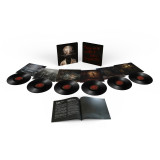
Konami Digital Entertainment und Laced Records tauchen in den Nebel, um den fesselnden und eindringlichen Soundtrack von SILENT HILL 2 (2024) auf Vinyl zu bringen.
Diese 6-LP-Box enthält den kompletten Soundtrack, der vom langjährigen Komponisten der Serie, Akira Yamaoka, komponiert und sorgfältig arrangiert wurde. Besonderes Augenmerk wurde auch auf die Verpackung gelegt, die Gedanken des Komponisten in einem Buch mit Linernotes enthält.
Yamaoka hat den Soundtrack für das von der Kritik gefeierte Remake von Bloober Team komplett überarbeitet. Brandneue, neu eingespielte Cues für SILENT HILL 2 aus dem Jahr 2024 fangen die unheimliche Atmosphäre der titelgebenden Stadt perfekt ein, indem sie Elemente von Trip-Hop und Industrial Rock mit düsterer Atmosphäre und Musique Concrète verbinden. Für Fans der beliebten Survival-Horror-Serie ist der neue Soundtrack vertraut und neu zugleich.
Der Score führt Yamaokas unnachahmliches Sounddesign und seine ätherischen Arrangements zu neuen Höhen und zeigt seine kreative Entwicklung seit der Veröffentlichung des Originalspiels im Jahr 2001. Die Musik geht über die funktionale Rolle eines Videospiel-Scores hinaus und ist sowohl ein wesentlicher Bestandteil der Atmosphäre der SILENT HILL-Spiele als auch ein eigenständiges Werk, das eine Reise durch die dunklen Tiefen der menschlichen Psyche unternimmt.
- A1: Reflections
- A2: Invisible
- A3: Love Goes On
- A4: Never Again
- A5: True
- B1: Concrete Angel
- B2: The Ending
- B3: Shy
- B4: Fade Away
- B5: Make Believe
- C1: Invisible (Dylan Brady Remix)
- C2: Love Goes On Feat. Bladee (Palmistry Remix)
- C3: True (Umru Remix)
- C4: Fade Away (Mechatok Remix)
- C5: Make Believe (Yung Sherman Remix)
- D1: Invisible Instrumental
- D2: Love Goes On Instrumental
- D3: Concrete Angel Instrumental
- D4: Fade Away Instrumental
- D5: Make Believe Instrumental
Hannah Diamond’s debut album Reflections expanded to include Reflections Remixes and selected Reflections Instrumentals across two LPs. This upscaled edition is pressed on Milky Way Clear Glitter vinyl, in a gatefold sleeve featuring the Remixes Star artwork, and premium board inner sleeves, enhanced with metallic lavender HD monograms. It also includes a high-gloss poster insert of the original Moon artwork and lyric sheet. No secret track.
- Fire Back About Your New Baby's Sex
- The Peter Criss Jazz
- Haven't Lived
- Afro Pop
- You Drink A Lot Of Coffee For A Teenager
- Ones All Over The Place
- I Never Liked You
- Details On How To Get Iceman On Your License Plate
- A Lot Of People Tell Me I Have A Fake British Accent
- Lets Face It Pal, You Didn't Need That Eye Surgery
- Fire Back About Your New Baby's Sex
- Haven't Lived
- Afro Pop
- The Peter Criss Jazz
- Ones All Over The Place
- I Never Liked You
- Details On How To Get Iceman On Your License Plate
- Let's Face It Pal, You Didn't Need That Eye Surgery
Maui Blue & Orchid Vinyl. Nachdem wir American Don mit (Steve) Albini fertiggestellt hatten, waren wir kurz davor, dass die Spannungen zwischen uns so groß wurden, dass wir uns trennen mussten. Ich (Eric) war überzeugt, dass wir bei den Aufnahmen die wahre Essenz der Songs verloren hatten. Es war keine einstimmige Entscheidung, mit Steve aufzunehmen. Wir haben das Album komplett mit Gitarrenloops geschrieben, und Team Storm & Stress wollte im Studio mit Pro Tools weitermachen, was sowohl zu dem passte, was wir machten, als auch zu dem, was wir erreichen wollten. Steve hatte gerade den großartigen A-Raum bei Electrical fertiggestellt, und Damon bestand darauf, dass wir dort die Drums aufnehmen würden. Er gab in dieser Frage nicht nach. Sobald wir dort ankamen, wurde uns klar, dass alle Songs, die wir mit unseren Pedalen in mehreren Overdubs geschrieben hatten, nur Mono-Gitarrenaufnahmen zuließen. Wir haben das Problem gelöst, indem wir die Songs zu einem einzigen Loop gespielt und alle Gitarren später überlagert haben, sodass ein volles Stereofeld entstand, das zu den grandiosen Drum-Aufnahmen von Steve passte. Dieser Ansatz hat unsere Spielweise total verändert. Das hat zwar magische Momente der Improvisation ermöglicht (Peter Criss Intro), aber als das Album fertig war, klang es aufgebläht und die Darbietungen waren träge. Ich war mir immer sicherer, dass der Sound des Akai Headrush und die Tempi, die er für Damon vorgab, das Herzstück dieser Songs waren. Ian stimmte mir zu. In einem gewagten letzten Versuch hatte ich die Idee, Greg Norman (der für Steve arbeitete!) anzurufen und ihn zu fragen, ob wir nach unseren nächsten Shows heimlich in sein Studio in S. Chicago kommen und das Album LIVE neu aufnehmen könnten. Es war ein riesiger Schritt, der niemals hätte funktionieren können, aber wie durch ein Wunder waren alle einverstanden, und wir versuchten es. Greg hat uns persönlich und professionell in unserer heißesten Phase eingefangen. Die Tempi sind schneller, und niemand hält sich zurück. Diese echten Live-Bänder zeigen die Songs genau so, wie wir sie auf Tour gespielt haben, wo sie zwischen Juni 1999 und Juli 2000 entstanden sind. Jetzt, 25 Jahre später, wurden die Greg-Norman-Aufnahmen entstaubt und digitalisiert. Mit Hilfe moderner Restaurierungswerkzeuge und dem Fachwissen von Sir Bob Weston konnten wir diese Aufnahmen zum ersten Mal neu abmischen und mastern. - Eric Emm, Bassist
We are excited to continue our work with Art P / Art Programming by finally offering the first full-length work from this Bremen-based electronic group. Originally released only on cassette in 1983, the self-titled album has now been fully restored and remastered, complete with bonus tracks and unreleased mixes unearthed from a rare demo.
The LP opens with "Wesen vom anderen Stern" ("Beings from Another Planet"), a downtempo, 808-driven electro synth wave track with German lyrics telling a story of aliens capturing earth, becoming the new "Herren" (lords), while humans are reduced to mere "objects." Art Programming founding member Jens-Markus Wegener notes that this track has always been a favorite during live performances, and it's easy to imagine how the futuristic sounds would have blown people away at the time.
Next is the electro/proto-techno title track "Art Programming," which we previously issued on a limited 12" in its full-length form. With its straightforward Roland 808 rhythms, catchy synth lines, and vocoder vocals, it's a classic example of German electro, and one of the earliest proto-techno tracks - long before Cybotron claimed the techno mantle. Its extensive break and electronic twist make it an early precursor to the genre. Wegener recalls that this track was created exclusively by him and Grotelüschen, with Grotelüschen contributing most of the melodic elements, while Wegener focused on drum machine programming and vocoder vocals.
On "That's Me," the album welcomes back singer Claudia Roebke. Although it's an electronic composition, Roebke adds a rock-infused, almost psychedelic vibe to the song. The lyrics, written by Wegener, depict a person obsessed with their appearance, using irony to critique societal beauty norms, questioning the obsession with perfection and attraction.
The album continues with a series of uptempo electro tracks: "Videoscreen," "La Gare," and "Genscher Pull 'N' Push." The first two feature slightly different mixes from an earlier demo that we personally prefered over the versions that were available on the final cassette release. "Videoscreen" expands on the theme of social isolation, with lyrics reflecting on a world obsessed with watching video all day - a topic that resonates strongly with today's culture of doom scrolling and social media addiction.
Next up, "Genscher Pull 'N' Push" is an incredible electro/wave/proto-techno track recorded in October 1982 with a political edge. Originally omitted from the album, it was only available on the demo cassette we mentioned earlier. The song takes aim at German politics, with lyrics that shout "bitte geh nach links / bitte geh nach rechts" ("please go to the left" and "please go to the right"), referencing the shifting political allegiances during the 1982 coalition change, when Genscher's party, the FDP, left the Helmut Schmidt cabinet to join the CDU/CSU opposition. The track was never released as the political topic had become outdated just a few months later.
The album closes with "Light and Fire," which originally served as the album's opening track. Its quirky, upbeat vibe now makes for a fitting outro.
The gear used on this album reads like a dream list for early 80s electronic music production: Roland Jupiter 4, TR 808, TB 303, System 100, SVC 350, Korg Mono/Poly, Moog Prodigy, FRICKE-Sequenzer, Roland CSQ-100 Sequenzer, Coron DS-8, MM 12/2, Sony TC 399, TEAC-244 Portastudio, Ibanez DM 1000, EH-Electric Mistress, EV-Micro. This unique lineup of equipment sets the album apart from NDW releases of the era, lending it a distinct sound with heavy proto-techno leanings and that straightforward electro vibe we all love.
The album is being released as a very limited edition of 300 copies on transparent red vinyl, complete with a full picture sleeve and lyrics inlay. This is yet another rediscovered and restored 80s gem on our label that you definitely don't want to miss!
- 01: Maanitus &Amp; Tšiižik
- 02: Markka
- 03: Melkutus
- 04: Letška
- 05: Kuuen Parin Hoirola
- 06: Brišatka
- 07: Tšiižik
- 08: Kirkonkellot
- 09: Kirkonkellot Korkea
- 10: Hoirola, 3 Parin
- 11: Lippa
- 12: Kyngäkiža
- 13: Ristakondra
- 14: Vanha Polkka
- 15: Viistoista
- 16: Vanha Valssi
- 17: Kiberä
- 18: Maanitus Kuokan Kanteleella
- 19: Tuuti Lasta Nukkumahe
Vinyl[22,65 €]
Death Is Not The End present a further volume of Arja Kastinen's eerie amalgamations of 110 year old wax cylinders with her own meticulously transcribed takes, this time focussing in on Armas Otto Väisänen's field recordings of kantele player Iivana Mišukka (b. 1861 d.1919).
"Ivana Mišukka (1861–1919) was one of the Karelian kantele players recorded by the folk music researcher Armas Otto Väisänen on wax cylinders in 1916 and 1917. In the early 20th century, the remote areas of Border Karelia were undergoing the final phase of a transformation in musical culture, with the ancient runo song tradition giving way to newer forms of music. This transition is reflected in Mišukka's repertoire and choice of instrument. The ancient small kantele, hollowed out of a single piece of wood, was already rare at the turn of the century. Mišukka's kantele was a new type of instrument with 26 strings, constructed of several parts, but he played it using the traditional plucking technique. Like other Border Karelian kantele players, his repertoire consisted of music rooted in runosong culture, as well as newer dances and songs from the east and west. Most of the recorded material falls into the latter category.
Ivan Bogdanov Mišukka was born out of wedlock in Suursara village, Suistamo, on 1 May 1861. He began playing the kantele at the age of five or six, quickly mastering the instrument. In adulthood, he was considered one of the area's best master players. Mišukka was landless for most of his life and lived in different parts of the Suistamo parish. His first wife, Tekla Markintytär, died in 1897 at the age of 40, and his second wife, Jevdokia Filipintytär Jeminen, died in 1907 at the age of 50. Seven children were born from the first marriage, two of whom died young. The third wife, Maria Ignatintytär Gurnan (Kuurnanen), was a well-known master of lamentations. Together with Maria, Iivana Mišukka worked as a tenant farmer in the village of Suursara. Mišukka suffered from rheumatism, which prevented him from participating in physical work like Maria. This was apparently partly the reason why Iivana Mišukka went to earn extra money by playing the kantele on gig trips. He often had other traditional artists from Suistamo as his travelling companions, such as the runosingers Konstantin Kuokka and Iivana Onoila. Iivana Mišukka died in Leppäsyrjä village, Suistamo, on 18 May 1919 at the age of 58, and his kantele was donated to Teppana Jänis.
Mišukka only used 14 of the 26 strings on his kantele, playing the same tunes either a fourth higher or lower. He tuned his kantele to the major scale using fifths, except for a low seventh scale degree on the upper strings, but not below the fundamental. Since he did not use the seventh note of the scale on the upper strings at all, he could use the major scale both lower and a fourth higher with this tuning. According to Mišukka, the sound of higher, or 'finer', strings is 'more beautiful', while that of lower ones is 'greater'. Among runosingers, the size of the thirds varied, ranging from major to minor to neutral. A similar phenomenon can be observed in kantele tunings, where the third, sixth and seventh scale degrees vary in a comparable way.
During a meeting, Väisänen suggested that Mišukka play the smaller kantele belonging to Konstantin Kuokka. The idea was to bring it closer to the horn to improve the recording quality. However, the kantele was completely out of tune, and now Mišukka tuned it to the Lydian scale (track 18).
Using the old plucking technique, Mišukka placed his right middle finger on the fundamental tone, his right index finger on the second scale degree, his left middle finger on the third scale degree and his left index finger on the fourth scale degree, and his right thumb on the fifth. The thumb also played the notes above the fifth note of the scale. As Mišukka remarked to Väisänen: 'Peigaloll' tuloo enemb ruadoa' (the thumb has to do more work). However, he did not use the seventh note of the scale on the upper strings at all. Below the fundamental note, he played the seventh and sixth notes of the scale with his right middle finger of and the fifth note of the scale with his right ring finger. This fifth scale degree below the fundamental is almost always used as a drone. Sometimes, when the melody required it, Mišukka, like other players, also varied the fingering. He would also occasionally strike the same string with the side of his fingernail after plucking it.
The wax cylinder recordings of Karelian kantele players are kept in the archives of the Finnish Literature Society in Helsinki, Finland. Copies were made of them onto reel-to-reel tapes in both the 1960s and 1980s. The 1960s copies are mono and the 1980s copies are stereo. However, not all kantele recordings from these decades have survived.
The sound of the kantele is difficult to hear in wax cylinder recordings due to its low volume, and it occasionally becomes completely obscured by noise. During the copying process, the cylinder sometimes rotates unevenly, resulting in breaks or jumps in the music. Additionally, the rotation speed of the cylinder in the copies does not correspond to the performance speed of the original music, which alters the pitch. However, since Väisänen's precise notes are available in the archive, it is possible to deduce the melodies, their speed, and the tuning level of the kantele in the recordings. Of the copies of the original recordings from the 1960s and 1980s, I have selected the one that best met the requirements of this publication and adjusted the speed of the recording to align with Väisänen's notes. To enhance the listening experience, I have replayed the songs, which now partly overlap the old recordings on this release."
— Arja Kastinen
- 01: Maanitus &Amp; Tšiižik
- 02: Markka
- 03: Melkutus
- 04: Letška
- 05: Kuuen Parin Hoirola
- 06: Brišatka
- 07: Tšiižik
- 08: Kirkonkellot
- 09: Kirkonkellot Korkea
- 10: Hoirola, 3 Parin
- 11: Lippa
- 12: Kyngäkiža
- 13: Ristakondra
- 14: Vanha Polkka
- 15: Viistoista
- 16: Vanha Valssi
- 17: Kiberä
- 18: Maanitus Kuokan Kanteleella
- 19: Tuuti Lasta Nukkumahe
Tape[16,39 €]
Death Is Not The End present a further volume of Arja Kastinen's eerie amalgamations of 110 year old wax cylinders with her own meticulously transcribed takes, this time focussing in on Armas Otto Väisänen's field recordings of kantele player Iivana Mišukka (b. 1861 d.1919).
"Ivana Mišukka (1861–1919) was one of the Karelian kantele players recorded by the folk music researcher Armas Otto Väisänen on wax cylinders in 1916 and 1917. In the early 20th century, the remote areas of Border Karelia were undergoing the final phase of a transformation in musical culture, with the ancient runo song tradition giving way to newer forms of music. This transition is reflected in Mišukka's repertoire and choice of instrument. The ancient small kantele, hollowed out of a single piece of wood, was already rare at the turn of the century. Mišukka's kantele was a new type of instrument with 26 strings, constructed of several parts, but he played it using the traditional plucking technique. Like other Border Karelian kantele players, his repertoire consisted of music rooted in runosong culture, as well as newer dances and songs from the east and west. Most of the recorded material falls into the latter category.
Ivan Bogdanov Mišukka was born out of wedlock in Suursara village, Suistamo, on 1 May 1861. He began playing the kantele at the age of five or six, quickly mastering the instrument. In adulthood, he was considered one of the area's best master players. Mišukka was landless for most of his life and lived in different parts of the Suistamo parish. His first wife, Tekla Markintytär, died in 1897 at the age of 40, and his second wife, Jevdokia Filipintytär Jeminen, died in 1907 at the age of 50. Seven children were born from the first marriage, two of whom died young. The third wife, Maria Ignatintytär Gurnan (Kuurnanen), was a well-known master of lamentations. Together with Maria, Iivana Mišukka worked as a tenant farmer in the village of Suursara. Mišukka suffered from rheumatism, which prevented him from participating in physical work like Maria. This was apparently partly the reason why Iivana Mišukka went to earn extra money by playing the kantele on gig trips. He often had other traditional artists from Suistamo as his travelling companions, such as the runosingers Konstantin Kuokka and Iivana Onoila. Iivana Mišukka died in Leppäsyrjä village, Suistamo, on 18 May 1919 at the age of 58, and his kantele was donated to Teppana Jänis.
Mišukka only used 14 of the 26 strings on his kantele, playing the same tunes either a fourth higher or lower. He tuned his kantele to the major scale using fifths, except for a low seventh scale degree on the upper strings, but not below the fundamental. Since he did not use the seventh note of the scale on the upper strings at all, he could use the major scale both lower and a fourth higher with this tuning. According to Mišukka, the sound of higher, or 'finer', strings is 'more beautiful', while that of lower ones is 'greater'. Among runosingers, the size of the thirds varied, ranging from major to minor to neutral. A similar phenomenon can be observed in kantele tunings, where the third, sixth and seventh scale degrees vary in a comparable way.
During a meeting, Väisänen suggested that Mišukka play the smaller kantele belonging to Konstantin Kuokka. The idea was to bring it closer to the horn to improve the recording quality. However, the kantele was completely out of tune, and now Mišukka tuned it to the Lydian scale (track 18).
Using the old plucking technique, Mišukka placed his right middle finger on the fundamental tone, his right index finger on the second scale degree, his left middle finger on the third scale degree and his left index finger on the fourth scale degree, and his right thumb on the fifth. The thumb also played the notes above the fifth note of the scale. As Mišukka remarked to Väisänen: 'Peigaloll' tuloo enemb ruadoa' (the thumb has to do more work). However, he did not use the seventh note of the scale on the upper strings at all. Below the fundamental note, he played the seventh and sixth notes of the scale with his right middle finger of and the fifth note of the scale with his right ring finger. This fifth scale degree below the fundamental is almost always used as a drone. Sometimes, when the melody required it, Mišukka, like other players, also varied the fingering. He would also occasionally strike the same string with the side of his fingernail after plucking it.
The wax cylinder recordings of Karelian kantele players are kept in the archives of the Finnish Literature Society in Helsinki, Finland. Copies were made of them onto reel-to-reel tapes in both the 1960s and 1980s. The 1960s copies are mono and the 1980s copies are stereo. However, not all kantele recordings from these decades have survived.
The sound of the kantele is difficult to hear in wax cylinder recordings due to its low volume, and it occasionally becomes completely obscured by noise. During the copying process, the cylinder sometimes rotates unevenly, resulting in breaks or jumps in the music. Additionally, the rotation speed of the cylinder in the copies does not correspond to the performance speed of the original music, which alters the pitch. However, since Väisänen's precise notes are available in the archive, it is possible to deduce the melodies, their speed, and the tuning level of the kantele in the recordings. Of the copies of the original recordings from the 1960s and 1980s, I have selected the one that best met the requirements of this publication and adjusted the speed of the recording to align with Väisänen's notes. To enhance the listening experience, I have replayed the songs, which now partly overlap the old recordings on this release."
— Arja Kastinen
- 1: Twisted On A Train
- 2: Stairway To Nowhere
- 3: Invisible Ink
- 4: Landline
- 5: Crosseyed Critters
- 6: Oil Change
- 7: East Of Ordinary
- 8: Unglued
- 9: Delusions
- 10: Backroads
Black Vinyl[24,16 €]
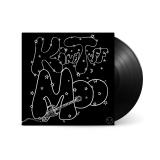
Moo is the first wide release on my new label MUP! When I decided to make a new record, it only seemed right to go back to what brings me the most joy, which is, Rock & Roll music. I got my Tascam 388 fixed, the same tape machine I had used to record my first album, King Tuff Was Dead. It had been sitting in my parent’s house in Vermont for the past 14 years, but I had finally dragged it out to LA. I stopped caring if there were mistakes. There’s not enough mistakes. I played my old, blue, Gibson SG, Jazijoo, and she spewed mangled electrified gold. For once, I sang and I didn’t hate my voice. I played the drums badly and bounced them in mono to one track and it sounded like glorious shit. I wish it sounded even worse. Rock & Roll is the music of rodents and bugs. It should sound like it crept from a decrepit trashcan or a crypt or a toilet. It is not chill or vibey, autotuned or on the grid. It is not perfect, which is why it’s perfect. And I don’t care if it’s dead or alive, cool or uncool: when I hear it, and when I play it, as a chubby and balding 43 year old punk weirdo, I FEEL ENERGIZED. All in all, MOO is a full circle moment. A return to form. A return to rock. A return to Vermont. A return to myself. Reconnecting the dots. Restarting the engine. Plugging in the stack. Finally letting King Tuff be King. Fucking. Tuff.
- 1: Twisted On A Train
- 2: Stairway To Nowhere
- 3: Invisible Ink
- 4: Landline
- 5: Crosseyed Critters
- 6: Oil Change
- 7: East Of Ordinary
- 8: Unglued
- 9: Delusions
- 10: Backroads
Indie Exclusive Vinyl[24,16 €]
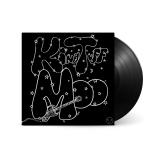
Moo is the first wide release on my new label MUP! When I decided to make a new record, it only seemed right to go back to what brings me the most joy, which is, Rock & Roll music. I got my Tascam 388 fixed, the same tape machine I had used to record my first album, King Tuff Was Dead. It had been sitting in my parent’s house in Vermont for the past 14 years, but I had finally dragged it out to LA. I stopped caring if there were mistakes. There’s not enough mistakes. I played my old, blue, Gibson SG, Jazijoo, and she spewed mangled electrified gold. For once, I sang and I didn’t hate my voice. I played the drums badly and bounced them in mono to one track and it sounded like glorious shit. I wish it sounded even worse. Rock & Roll is the music of rodents and bugs. It should sound like it crept from a decrepit trashcan or a crypt or a toilet. It is not chill or vibey, autotuned or on the grid. It is not perfect, which is why it’s perfect. And I don’t care if it’s dead or alive, cool or uncool: when I hear it, and when I play it, as a chubby and balding 43 year old punk weirdo, I FEEL ENERGIZED. All in all, MOO is a full circle moment. A return to form. A return to rock. A return to Vermont. A return to myself. Reconnecting the dots. Restarting the engine. Plugging in the stack. Finally letting King Tuff be King. Fucking. Tuff.
- Pure Comedy
- Total Entertainment Forever
- Things It Would Have Been Helpful To Know Before The Revolution
- Ballad Of The Dying Man
- Birdie
- Leaving La
- A Bigger Paper Bag
- When The God Of Love Returns There'll Be Hell To Pay
- Smoochie
- Two Wildly Different Perspectives
- The Memo
- So I'm Growing Old On Magic Mountain
- In Twenty Years Or So
Black Vinyl[34,87 €]
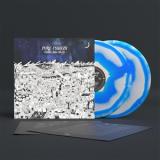
Blau-weiße Corona-Vinyl Doppel-LP im Klappcover. Ursprünglich 2017 rausgebracht und jetzt zum ersten Mal in Europa über Sub Pop erhältlich! Pure Comedy, das dritte Album von Father John Misty, ist eine komplexe, oft sarkastische und ebenso oft berührende Reflexion über die verwirrende Torheit der modernen Menschheit. Father John Misty ist das Projekt von Singer-Songwriter Josh Tillman. Wir könnten viel über Pure Comedy sagen, zum Beispiel, dass es ein mutiges, wichtiges Album in der Tradition amerikanischer Songwriting-Größen wie Harry Nilsson, Randy Newman und Leonard Cohen ist, aber wir denken, es ist am besten, wenn sein Schöpfer es selbst beschreibt. Los geht's, Mr. Tillman: Pure Comedy ist die Geschichte einer Spezies, die mit einem unvollständig entwickelten Gehirn geboren wurde. Die einzige Überlebenschance dieser Spezies, die sich auf einem grausamen, unberechenbaren Felsen wiederfindet, umgeben von anderen Spezies, die in dieser ganzen Sache viel geschickter zu sein scheinen (und für die sie eine Delikatesse sind), besteht darin, sich auf andere, etwas ältere, halb ausgebildete Gehirne zu verlassen. Diese Abhängigkeit bekommt im Laufe der Geschichte verschiedene Namen, wie ,Liebe", ,Kultur", ,Familie" usw. Mit der Zeit und da sich ihre Gehirne als bemerkenswert gut darin erweisen, Bedeutung zu erfinden, wo keine ist, wird die Spezies zum Lieferanten immer bizarrerer und raffinierterer Ironien. Diese Ironien sollen helfen, mit der abscheulichen Verletzlichkeit der Spezies fertig zu werden und zu versuchen, ihre Fantasie mit der Monotonie ihrer Existenz in Einklang zu bringen. So in etwa. Pure Comedy wurde 2016 in den legendären United Studios (Frank Sinatra, Ray Charles, Beck) in Hollywood, Kalifornien, aufgenommen. Produziert wurde es von Father John Misty und Jonathan Wilson, die Tonarbeit übernahm Mistys langjähriger Tontechniker Trevor Spencer und die Orchesterarrangements stammen vom bekannten Komponisten und Kontrabassisten Gavin Bryars (bekannt für seine umfangreichen Soloarbeiten und seine Zusammenarbeit mit Brian Eno, Tom Waits und Derek Bailey).
- Sing Like Little Birds Sing
- What I See Up On The Roof
- No Pasaran!
- A Monochrome Set
- You're Leaving
- Indian Summer
- The Fishing Song
- See What The Morning Brings
- Days Of The Revolution
- Art School
- Trouble Talking
- Dream On
- Take Me To The Dance Floor
- Jaine
- In Our Time
- One More Day
Blue Vinyl[35,50 €]
Campbell Owens, Douglas MacIntyre and Mick Slaven worked on the album alongside founding members Robert 'Bobby Bluebell' Hodgens, David McCluskey and Ken McCluskey to create the new collection of tracks. The result is a stunning body of work; rich, melodic, thoughtful and infectious. First single No Pasaran! premiered on BBC Radio Scotland and in The Herald in September 2025. The Bluebells rose to fame in the 1980s as jangle-pop pioneers of the Sound of Young Scotland era with their three hits Young at Heart, Cath and I'm Falling.
Despite only releasing one readily-available album during their initial run (Sisters, 1984) the band have remained as one of Scotland's most beloved bands, currently boasting over 144,000 monthly Spotify listeners. The band enjoyed a post-breakup revival in 1993 after a Volkswagen advert featured Young at Heart, pushing the single to No.1 for 4 weeks. They have since reunited over the years, to play various festival slots and develop new material. In 2023, the band released The Bluebells In The 21st Century, their first LP in decades. In 2025, The Bluebells played Glastonbury.
Campbell Owens, Douglas MacIntyre and Mick Slaven worked on the album alongside founding members Robert 'Bobby Bluebell' Hodgens, David McCluskey and Ken McCluskey to create the new collection of tracks. The result is a stunning body of work; rich, melodic, thoughtful and infectious. First single No Pasaran! premiered on BBC Radio Scotland and in The Herald in September 2025. The Bluebells rose to fame in the 1980s as jangle-pop pioneers of the Sound of Young Scotland era with their three hits Young at Heart, Cath and I'm Falling.
Despite only releasing one readily-available album during their initial run (Sisters, 1984) the band have remained as one of Scotland's most beloved bands, currently boasting over 144,000 monthly Spotify listeners. The band enjoyed a post-breakup revival in 1993 after a Volkswagen advert featured Young at Heart, pushing the single to No.1 for 4 weeks. They have since reunited over the years, to play various festival slots and develop new material. In 2023, the band released The Bluebells In The 21st Century, their first LP in decades. In 2025, The Bluebells played Glastonbury.
- A1: Fourth Day
- A2: Cumulus
- A3: Found Sound
- B1: Vanilla Mystic
- B2: Concave
- B3: Oblivion
- C1: Timelines
- C2: Idiom
- C3: Stand For Justice
- D1: Hourglass
- D2: Introspect Ft. Tamen
- D3: Love Is The Way W/ Another Channel Ft. Prince Morella
Ruff Kutz presents 'Found Sound', a debut solo album by Pugilist.
At a time where art has become readily reproduced and seemingly disposable, I have made something longer-form to be enjoyed as a complete piece, rather than it's single elements.
Found Sound delves into my internal monologue, which I hope results in a personal and introspective listening experience. Building on my previous discography - you can expect versatile sounds and tempos, with a washy dub-wise feel, intoxicating atmospherics, all in a genre-free structure. The album is floaty, euphoric and perhaps a surprisingly light listen compared to my normal output, but with notably huge bass and intricate percussion throughout.
The album taps into nostalgic reference points without leaning on retrograde tropes. While sculpted by contemporary production and FX, the sound remains raw and not overly polished. The album is best described as a collage of sounds that I have steadily collected over the last decade, which have inspired me, some very cheeky sampling and many a late night working on my studio tan. It is a tribute to the music I grew up with and love the most, from past to the present. It is fitting that this release marks the 10 years since I started the Pugilist alias.
This wouldn't have been possible without Umeya, who the album is dedicated to.
Nach ihrer gemeinsamen Interpretation von I See A Darkness mit Perfume Genius kündigt Anna Calvi die neue EP Is This All There Is? an, die am 20. März erscheint. Die vier Songs versammeln Kollaborationen mit Perfume Genius, Iggy Pop, Laurie Anderson und Matt Berninger.
Eröffnet wird die EP von God’s Lonely Man, in dem Calvi Iggy Pop die Stimme eines zerstörerischen inneren Monologs überlässt. Der Song ist von nervöser Energie getragen: kantige Gitarren, antreibende Drums, eine direkte Konfrontation mit emotionaler Stagnation. Pop verkörpert dabei genau jene rohe Präsenz, die Calvi für die Erzählung suchte.
Seht und hört "God´s Lonely Man" HIER.
Is This All There Is? bildet den ersten Teil einer geplanten Trilogie, die Identität als etwas Veränderliches begreift, geformt durch Nähe, Liebe und biografische Brüche. Ausgangspunkt ist Calvis eigene Erfahrung des Mutterwerdens, die ihren Blick auf Sicherheit, Verantwortung und Möglichkeiten verschoben hat. Die EP kreist um grundlegende Fragen moderner Existenz: Wie lässt sich Intimität neu denken? Was bedeutet es, sich wirklich verbunden zu fühlen? Und wann fühlt man sich wach?
Neben dem bereits veröffentlichten I See A Darkness interpretiert Calvi gemeinsam mit Laurie Anderson Kraftwerks Computer Love neu. Mit Andersons Stimme im Zentrum und choralen Arrangements entsteht ein Stück über digitale Nähe und emotionale Distanz. In ihrer Gesamtheit wirkt die EP wie ein zusammenhängender filmischer Bogen – vier Songs, vier Perspektiven, eine fortlaufende Erzählung.
Is This All There Is? versteht Kollaboration nicht als Zusatz, sondern als Strukturprinzip: Die Stimmen der Beteiligten werden zu Figuren innerhalb eines gemeinsamen Klangraums, in dem Fragen offen bleiben dürfen.
Longtime friend of the label Eraserhead returns after over a decade away from producing music due to his surreal MS Paint work as 'Jim'll Paint It' becoming an unexpected cultural phenomenon. With his debut full-length, 'Violence', Eraserhead presents a truly eclectic electronic LP featuring collaborations with established producers such as Om Unit, Enduser, and Brain Rays, as well as the vocal talents of Nadia Rose, Beans (of Antipop Consortium), and Cadence Weapon. An album held together by theme and tone rather than style or tempo, 'Violence' is the culmination of a bitter wave of inspiration, initially conceived in the wake of a personal tragedy that quickly grew into a broader polemic about the state of the world.
Originally linking up with Love Love in its breakcore netlabel infancy with his refined, breaks-heavy breakcore/gabba, Eraserhead's flair for tight, intricate productions was evident in his finely tuned tracks of controlled chaos. This time around, his work is a darker, more expansive evolution of his sound, with the scale upsized and the stylistic scope massively broadened, remaining unfaithful to any single genre, but with firm nods to Breakcore, Grime, Drum & Bass, Techno, Rave, Dubstep, and Footwork, all chewed up with a hard industrial edge and cinematically framed by a backdrop of apocalyptic synths.
Opening with the cold tech-noir of 'Shining Brainless Beacon' to set the tone, the album quickly locks in with the blistering spoken-word headrush of 'Hurricane With Teeth' alongside rapper Beans, before Om Unit lends his expertise on the sharp groove and clinical bass blasts of 'Operation Hardtack'. The album shifts and morphs constantly throughout the runtime, moving from the raw and urgent acid techno of 'Crowd Control' to the crunching military march of the Gore Tech collaboration 'No More Worlds' and the tribal sci-fi footwork of the Brain Rays collaboration 'Night Visions'. 'Monolith' provides a final burst of catharsis, channelling Underworld by way of Nine Inch Nails, complete with writhing screams from Amée Chanter of sludge-punk-noise-rock duo Human Leather, before the heart of the album is laid bare with the painfully bleak closing dirge of 'Animal'. In its final moments, 'Violence' leaves the listener suspended between devastation and awe - an unflinching portrait of an uncaring world.
Longtime friend of the label Eraserhead returns after over a decade away from producing music due to his surreal MS Paint work as 'Jim'll Paint It' becoming an unexpected cultural phenomenon. With his debut full-length, 'Violence', Eraserhead presents a truly eclectic electronic LP featuring collaborations with established producers such as Om Unit, Enduser, and Brain Rays, as well as the vocal talents of Nadia Rose, Beans (of Antipop Consortium), and Cadence Weapon. An album held together by theme and tone rather than style or tempo, 'Violence' is the culmination of a bitter wave of inspiration, initially conceived in the wake of a personal tragedy that quickly grew into a broader polemic about the state of the world.
Originally linking up with Love Love in its breakcore netlabel infancy with his refined, breaks-heavy breakcore/gabba, Eraserhead's flair for tight, intricate productions was evident in his finely tuned tracks of controlled chaos. This time around, his work is a darker, more expansive evolution of his sound, with the scale upsized and the stylistic scope massively broadened, remaining unfaithful to any single genre, but with firm nods to Breakcore, Grime, Drum & Bass, Techno, Rave, Dubstep, and Footwork, all chewed up with a hard industrial edge and cinematically framed by a backdrop of apocalyptic synths.
Opening with the cold tech-noir of 'Shining Brainless Beacon' to set the tone, the album quickly locks in with the blistering spoken-word headrush of 'Hurricane With Teeth' alongside rapper Beans, before Om Unit lends his expertise on the sharp groove and clinical bass blasts of 'Operation Hardtack'. The album shifts and morphs constantly throughout the runtime, moving from the raw and urgent acid techno of 'Crowd Control' to the crunching military march of the Gore Tech collaboration 'No More Worlds' and the tribal sci-fi footwork of the Brain Rays collaboration 'Night Visions'. 'Monolith' provides a final burst of catharsis, channelling Underworld by way of Nine Inch Nails, complete with writhing screams from Amée Chanter of sludge-punk-noise-rock duo Human Leather, before the heart of the album is laid bare with the painfully bleak closing dirge of 'Animal'. In its final moments, 'Violence' leaves the listener suspended between devastation and awe - an unflinching portrait of an uncaring world.
Antivenom is the fourth album from Portland melancholic dark alternative trio Darkswoon, refining their blend of darkwave, post-punk, and shoegaze into a focused and emotionally charged statement.
Built on a hardware-driven electronic foundation, the album pairs cold mechanical textures with an intimate human core, carrying Jana Cushman’s ethereally soaring vocals as they con-front themes of loss, anxiety, fear, and inequality with unflinching honesty. Norah Lynn’s melodic, gritty bass lines weave through Rachel Ellis’ propulsive rhythms, while Cushman’s guitar creates a dense sonic web that occasionally drifts into more expansive shoegaze territory.
Cohesive yet urgent, Antivenom unfolds as an atmospheric whole filled with cautionary messages and the weight of words left unsaid, capturing a band confident in its evo-lution and singular voice within the dark alternative landscape
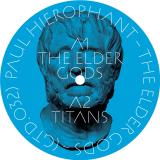
Active in London’s electronic underground since the late 80s, Paul Hierophant has long worked in the space between techno, ambient, and dub, preferring atmosphere, tone, and slow-burn tension to obvious dancefloor tricks.
The Elder Gods finds him further out on the fringes of electro, where the synths loom large and the delay and reverb units are given a proper workout. The result is widescreen, ominous, and immersive.
The title track is a monolithic slab of rhythm where corroded synth pressure and ritualistic percussion feel less like a groove than some ancient machine grinding slowly back into life.
Titans stalks forward on a cavernous half-step pulse, all foggy bass weight and fractured metallic vocal echos, like dub techno that has wandered into darker mythological territory and decided to stay there.
The Hydra coils around a lurching low-end spine, its tentacular FX flickering and mutating while the groove stubbornly regenerates.
Works and Days rounds things off with a standout alien vocal loop drifting through pulsing bass and drums, lending the track a meditative feel that works just as well for late-night headphone sessions as it does in the deeper end of a DJ set.
This is an EP for selectors who like their electro expansive, slightly strange, and built for proper sound systems.
Detroit original, Terrence Dixon, returns to Tresor Records to kick off 2026 with ‘When Stars Remember’. Despite his thirty-year career, Terrence has always managed to keep a lower profile than his peers; he has given few interviews, preferring instead to speak through his music, with cryptic song titles hinting at the thoughts swirling around their creation.
However, ‘When Stars Remember’ finds him stepping forward. “I wanted to get closer to the dancefloor. I consciously made this one feel louder…made with Tresor specifically in mind.” And the EP does just that: whilst many of the hall marks of a Terrence Dixon production are present, the drums are more forward; the synth arpeggios so bold that ‘monumental’ seems a better descriptor than ‘minimal’.
“I put three or four sounds together on the same track, layering to make something bigger”, he says of opening track ‘Mono Collapse’, though the statement could apply to any of the music appearing on the release as all four pieces fold in sonics to create something hypnotic; more than the individual parts: “If you stick with the same layered tones, and repeat it over, after a while your brain changes it on its own; you hear a lot of things: things that you didn’t notice at first, things that maybe aren’t even there.”
The absence of things is another main theme of the EP, especially what Dixon sees as ‘The Forgotten’, a group of fundamental principles like common sense, trust, loyalty, honesty and respect that are missing from modern life. “This world is different…the love is gone. But I love everybody, man. I think, secretly, everybody love everybody, but they just don’t know it.”
Originally released in 1994.
The legendary album from South Africa’s House and Kwaito master Doctor House being reissued for the first time with a full remaster from the original DAT tapes. Nelson Phetole Mohale released a series of albums as Doctor House. Cutting his teeth in the 80s as a session player for a host of big names like Volcano, Senyaka and Obed Ngobeni, he moved on to programming for acts like La Viva and Jivaro, also contributing to Carlos Djedje and others. Still barely out of his teens he became one of South Africa’s first rappers as part of PT House, co-written and produced by Danny Bridgens. Their debut album Big World was released in 1991 and followed by Big City Taste a year later.
- 1: Grow Or Pay
Hard rock paired with a pinch of cowpunk and hearty Danish gruffness: This unique mix has earned D-A-D a passionate fan base whose loyalty and devotion extends far beyond Scandinavia. A bond just as deeply rooted, as that between Hamburg dark rock giants MONO INC. (whose current album Darkness once again conquered the top spot on the German charts) and their raven family. Back in 2008, MONO INC. paid tribute to D-A-D with a cover version of “Sleeping My Day Away” and today, what belongs together rocks together, as MONO INC. plays D-A-D! What's more, in MONO INC.'s version of Grow or Pay, their epic, melancholic dark rock meets the unmistakable raspy voice of D-A-D singer Jesper Binzer.
“We've adored D-A-D since we first saw them live in the early 1990s,” explains MONO INC. mastermind Martin Engler. “The fact that we were able to get Jesper Binzer on board for our version of ”Grow or Pay“ and that D-A-D will also be joining us as special guests on our 2026 tour in Bremen and Munich is almost too much of an honor.”
Xerrox Vol. 2 is the sixth studio album, released in 2009 by German electronic artist Alva Noto. It is the second installment of the Xerrox penthalogy, based on the concept of digital replication of source material.
As with the first Xerrox album, the starting point is a set of samples culled from external sources. This time, snippets and recordings from Sunn O))) collaborator Stephen O'Malley and composer Michael Nyman are featured, as is an excerpt from the 2004 Insen tour with Ryuichi Sakamoto.
While Alva Noto's oeuvre is predominantly affiliated with pristine sound design, the Xerrox series holds more intimate gestures and emotional sensibility. This volume moves further from the conceptualism and orderliness of prior musical outputs, ranging from heart-warming elegies to mind-bending sci-fi projections in extrasolar territories.
This remastered version will be reissued on NOTON in 2026
Tracklisting
---------------------------------------------------------
Medium: 1 // Side: A // Track: 1
Artist: Alva Noto
Title: Xerrox Phaser Acat 1
Playtime: 00:12:11
Explicit Lyrics: No
ISRC: DE1N62500015
(P): 2025 NOTON
Country: Germany
Composer: Carsten Nicolai
---------------------------------------------------------
Medium: 1 // Side: A // Track: 2
Artist: Alva Noto
Title: Xerrox Rin
Playtime: 00:00:51
Explicit Lyrics: No
ISRC: DE1N62500016
(P): 2025 NOTON
Country: Germany
Composer: Carsten Nicolai
---------------------------------------------------------
Medium: 1 // Side: A // Track: 3
Artist: Alva Noto
Title: Xerrox Soma
Playtime: 00:07:11
Explicit Lyrics: No
ISRC: DE1N62500017
(P): 2025 NOTON
Country: Germany
Composer: Carsten Nicolai
---------------------------------------------------------
Medium: 1 // Side: B // Track: 4
Artist: Alva Noto
Title: Xerrox Meta Phaser
Playtime: 00:06:23
Explicit Lyrics: No
ISRC: DE1N62500018
(P): 2025 NOTON
Country: Germany
Composer: Carsten Nicolai
---------------------------------------------------------
Medium: 1 // Side: B // Track: 5
Artist: Alva Noto
Title: Xerrox Sora 1
Playtime: 00:06:54
Explicit Lyrics: No
ISRC: DE1N62500019
(P): 2025 NOTON
Country: Germany
Composer: Carsten Nicolai
---------------------------------------------------------
Medium: 2 // Side: C // Track: 6
Artist: Alva Noto
Title: Xerrox Monophaser 1
Playtime: 00:08:04
Explicit Lyrics: No
ISRC: DE1N62500020
(P): 2025 NOTON
Country: Germany
Composer: Carsten Nicolai
---------------------------------------------------------
Medium: 2 // Side: C // Track: 7
Artist: Alva Noto
Title: Xerrox Monophaser 2
Playtime: 00:05:31
Explicit Lyrics: No
ISRC: DE1N62500021
(P): 2025 NOTON
Country: Germany
Composer: Carsten Nicolai
---------------------------------------------------------
Medium: 2 // Side: D // Track: 8
Artist: Alva Noto
Title: Xerrox Teion
Playtime: 00:02:03
Explicit Lyrics: No
ISRC: DE1N62500022
(P): 2025 NOTON
Country: Germany
Composer: Carsten Nicolai
---------------------------------------------------------
Medium: 2 // Side: D // Track: 9
Artist: Alva Noto
Title: Xerrox Teion Acat
Playtime: 00:05:26
Explicit Lyrics: No
ISRC: DE1N62500023
(P): 2025 NOTON
Country: Germany
Composer: Carsten Nicolai
---------------------------------------------------------
Medium: 2 // Side: D // Track: 10
Artist: Alva Noto
Title: Xerrox Tek Part 1
Playtime: 00:05:27
Explicit Lyrics: No
ISRC: DE1N62500024
(P): 2025 NOTON
Country: Germany
Composer: Carsten Nicolai
---------------------------------------------------------
Medium: 2 // Side: D // Track: 11
Artist: Alva Noto
Title: Xerrox Monophaser 3
Playtime: 00:06:14
Explicit Lyrics: No
ISRC: DE1N62500025
(P): 2025 NOTON
Country: Germany
Composer: Carsten Nicolai
DISPLACES represents Fabris' most personal musical journey to date, inspired by the concept of hyperobjects and cartographic practices. The album sculpts a high-dimensional phased time-space composed of concrete materials and digital archetypes in a state of constant displacement. It delves into the symbolic and philosophical realms of mapping as one of the greatest sense-making mechanisms for life, in dialogue with object-oriented environments, superimposition and non-locality applied to cosmic, temporal, and emotional memory.
The sonic ecosystem expands on the image of navigating a path through a set of places, from the microcosm of quanta to the macro force of dark matter, from underwater depths to overland terrains, encapsulating the cyclical flow between birth and death, both in ecological and anthropological sense. The intersection of these shifting states is explored through the extensive processing of the langspil, Iceland's only traditional instrument, intertwined with manipulated field recordings of biophonies and geophonies captured across Icelandic and Venetian territories. These recordings form the backdrop for a meditative process that relocate familiar objects into unfamiliar realms, reflecting on the transformative power of self-reflection while encapsulating the fragmentation and entanglement found in nature and the human state. The record plunges the listener into a disconcerting and physical soundscape, as a “ghostly spectrality that comes in and out of phase with normalized human spacetime,” evoking sensations of suffocation and release as each layer continuously unfolds the palimpsest of the enclosed labyrinth.
“Extraction of the I” embodies a subatomic reaction—erupting as a molecular force that rises, only to re-submerge with a solitary exhale underwater. In this mutated dark space, beluga whales breathe into "Xanadu Phasing," creating a pulsating tension that releases only to unveil a frozen landscape.
In “Barricading the Ice Sheets” the glacial material morphs into a liquid tunnel of digital artifacts, building a wall of noise that shatters into scattered fragments of ice, resembling bird calls from another world.
A moment of stasis is offered with the appearance of an asymmetrical loop in Monolith I, evoking a primitive rite before an unknown force emerges.
The physical intensity of subsonic material in "A Quake in Being" interrupts the hieratic tone, detuning into polluted sonic matter sourced from relics of the First World War in the Venetian Prealps. The geography of this place reconciles with the original homeland in "The Map is the Territory," blending negative space with anthropogenic elements and exploited sounds of the langspil.
The burning density of "Wolf-Rayet" projects into the void, echoing the residual sounds of a local church as relics of fossilized religions. Wolf tones are the remains in Monolith II, introducing the final track, "Topography of Extinction," where evolving psilocin textures invite the listener to uncover deeper layers of meaning and dislocation.
FELICIA ATKINSON & CHRISTINA VANTZOU
REFLECTIONS VOL. 3: WATER POEMS
Auf ,Reflections Vol. 3: Water Poems" bringen Félicia Atkinson und Christina Vantzou ihre Freundschaft und ihre atmosphärische Kunstfertigkeit in einem feierlichen Fokus zusammen. Gesprochene Worte und orchestrale Fantasie fließen wie Nebenflüsse in einen einheitlichen Strom und ergeben eine Sammlung traumhafter Lieder und Klanglandschaften, die im Meer, im Himmel und in den Steinen verankert sind. Mit elektroakustischen Instrumenten, Gesang und Umgebungsgeräuschen lädt Water Poems die Zuhörer in einen unbewussten Raum ein, irgendwo zwischen alltäglicher Intimität und dem Geheimnis des Ozeans, aus dem alles Leben entsteht. Atkinson und Vantzou haben sich 2009 kennengelernt und seitdem immer mal wieder zusammengearbeitet, aber ein Konzert 2019 in der Philharmonie in Paris hat dieses Projekt richtig in Gang gebracht. Da beide jetzt an der Küste leben (Félicia am Ärmelkanal, Christina am Mittelmeer), wurde das Meer natürlich zu ihrer Muse. ,Das Meer wurde nicht als monolithische Postkarte betrachtet", erklärt Atkinson, ,sondern eher als eine Person an sich; eine Energie, ein Geheimnis, ein komplexer Charakter, dem wir als Menschen, die am Meer leben, jeden Tag begegnen." Im Dialog mit dem Land und der Küste nahmen ihre Sprache und ihre Klänge einen sakramentalen Charakter an. ,Ein feierliches Gefühl, ein Gefühl des Dienens, zieht sich tief durch dieses Album", bemerkt Vantzou, ,ich habe das schon einmal gespürt, aber hier, in der Zusammenarbeit mit Félicia, ist es stärker." Stimme, Atem und wässrige Texturen prägen den Ton des maritimen Mysteriums von Water Poems. Neu in Vantzous Praxis und seit langem ein prägendes Merkmal von Atkinsons Werk, gewinnen ihre gesprochenen Worte hier an relationaler Intimität, indem sie sich gegenseitig und die Uferpromenade ansprechen. Die Texte wurden über zwei Jahre hinweg gemeinsam zusammengestellt. Mit radikaler Unschuld lenken sie das Bewusstsein auf die verborgene Auftriebskraft und die unbewussten Strömungen, die durch das Leben fließen: ,Wie kann ein Boot schwimmen? Wie kann ein Flugzeug fliegen? Wie kann ein Körper schwimmen? Wie kann ein Mensch träumen?" Was mit nah aufgenommenen Stimmen und Feldaufnahmen begann, wurde um Synthesizer, Gongs und Metallophone, Klavier, Vibraphon, Rhodes, Gitarren und Mellotron erweitert. Das Gezeitenklavier des Eröffnungstracks ,Film Still / The Sea" zieht uns in die unbewussten Gewässer des Albums. Enthalten sind Feldaufnahmen, die Vantzou in Delphi in der Nähe des legendären Orakels von Pythia aufgenommen hat - ihr griechisches Erbe verleiht diesem Ort der Vorfahren eine zusätzliche Dimension. Dieser Track und ,Water Poems" als Ganzes sind Ausdruck unseres geologischen Erbes und rufen zum Schutz der Küsten und zu einer Vertiefung unserer Beziehung zu unseren Küsten auf. Ein Teil der Einnahmen aus dem Album geht an Arion, ein gemeinnütziges Naturschutzprogramm für das griechische Mittelmeer. Der langjährige Freund und Mitstreiter John Also Bennett hat bei ,Scorpio Purple Skies", dem kosmischen Finale des Albums, mit E-Gitarre, Lap-Steel-Gitarre und Gesang mitgewirkt. Diese üppige Instrumentierung passt super zu den Science-Fiction-Visionen und der feierlichen Atmosphäre des Albums. Water Poems wurde in The Old Carpet Factory, einem Herrenhaus aus dem 18. Jahrhundert auf der griechischen Insel Hydra, in der Villa Medici aus dem 16. Jahrhundert in Rom und in Les Dunes, Atkinsons Heimstudio in der Normandie, aufgenommen. Mehr als das historische Prestige dieser Orte war es die spürbare Geschichte ihrer Landschaft, die die Musik geprägt hat. Atkinson sagt, dass sie sich zu ,Orten mit seltsamer Anziehungskraft" hingezogen fühlten. In der Villa Medici ,haben Steine und Mineralien das gesprochene Wort beeinflusst", bemerkt sie. ,Wir beide legen Wert auf Gefühl, Atmosphäre und Klang", fügt Vantzou hinzu, ,was er hervorruft und was er bewirkt. In unserem Fall konzentrieren wir uns auf die grundlegenden Elemente: Wasser, Luft, Fels, Kosmos - allesamt lebenswichtig.» Von der Insel Kreta aus arbeitete Vantzou den finalen Mix fertig und tauschte dabei Dateien mit Atkinson aus. Immer noch mit der Küste verbunden, verlief der Mixing-Prozess geduldig und wurde von wichtigen Pausen geprägt. Water Poems spiegelt wider, was die Meeresbiologin Rachel Carson uns in Erinnerung ruft: ,Am Rande des Meeres zu stehen bedeutet, Wissen über Dinge zu haben, die so nahezu ewig sind, wie es das irdische Leben nur sein kann." Es zelebriert rituell dieses ozeanische Gefühl als wichtige Quelle der Gelassenheit und Intelligenz. In einer Welt, die von hitzigen Meinungen und ökologischer Vernachlässigung geprägt ist, lenkt Water Poems unsere Aufmerksamkeit auf ,die Quellen der Quellen". Damit schafft es Raum, um uns wieder mit unseren elementaren, animalischen Instinkten zu verbinden und uns auf tiefere Strömungen einzustimmen. Water Poems von Félicia Atkinson und Christina Vantzou ist der dritte Band von Reflections, einer Reihe zeitgenössischer Kollaborationen von RVNG Intl..
“One foot out the door, another in the otherworld…”
So begins Hannah Lew’s debut, self-titled solo record, soaked in imperious, wide-eyed pop songwriting and a girl-group/post punk aesthetic that belies the artist’s history in the U.S. underground. A towering, hook-laden album, it’s infused with an optimism and surrealism that conversely deals with the times we find ourselves in.
Recorded at home in Richmond, CA and in The Best House studio with Maryam Qudus in Oakland CA, with the assistance of a crack team of West Coast musicians, this album sees Hannah Lew stepping out from behind the legacy of her two groups Grass Widow and Cold Beat. While musically bearing similarities with her previous work, “Hannah Lew” is a bold leap into direct pop territory, making ample use of a vocal style that teases out the inherent melancholy in her melodies. Mastered by Sarah Register, each song is a perfectly honed nugget that frequently pulls the heart in two directions at once.
Themes of change, breaking up, shattering old ways of being are shot through the record. For the front cover, a photograph of the artist’s face was printed, ripped up and re-assembled, resembling the creative process embarked upon by Lew for her first “solo” material. The album feels instinctual, almost dream-like in its assemblage of sweeping synths and pulsating, propulsive drum machine beat patterns with Lew’s vocal performances sensitive and caressing over the top. Increasingly relying on the subconscious and dreams to guide her creative process, Hannah Lew frequently abandons literal interpretations or linear narratives, the songs seeming to exist in a swooning, effortless flow-state while remaining emotionally hard hitting.
On an album where every song could be a single, there are kaleidoscopic shades and varying emotional tones in abundance. First single Another Twilight is carried along a pumping, Italo-disco-style 4/4 beat and mono-synth bass line, the low end pulling at the heart and body. Lew’s vocal melody teases the track before swan-diving into a gorgeous chorus as she sings “it’s all over baby and I don’t mind… in decline, I take my time…” The album is suffused with moments like this. On slow builder Damaged Melody, an arpeggiated synth elongates the verse before a cascading synth showers down melodic glitter. The stunning Replica uses dual swirling synth patterns before a driving, synthpop chorus for the ages carries Hannah Lew’s vocal into the stereo field, sailing in on a high register singed with the embers of a break up.
In a departure from previous groups, her solo songs are guided by dreams and free association inspired by Dada and the Surrealist movement and sculpted afterwards. As such, the songs reveal themselves on repeated listens, revealing traces of heartbreak inspired by both personal and global elements - Hannah Lew regards the album “a wartime album.” On Move In Silence, Lew intones “there’s a war outside, just out of view,” revealing the dichotomy at play throughout. With the songs evolving naturally and in a flow state, the pressures and sadnesses of the modern age bleed through, mixed in with Lew’s inherent love, sensitivity and fractured-but-intact optimism. On the swooning, sublime Sunday layers of Numanoid synths open up for the commanding vocal performance pontificating on grief, love, pain as she “feels the ache on Sunday…” As the chorus builds and Lew’s call-and-response vocal adds to the emotional tension, it almost feels like too much to take.
Elsewhere, there are echoes of Hannah Lew’s previous work. On Time Wasted a bass guitar comes in with a heavy, punk attack before the synths and vocal harmonies reminiscent of later Cold Beat elevate everything. The glassy, sweetly resigned closer The Clock sounds like so classic it could be cover, a sweetened Jesus & Mary Chain tune perhaps, before it erupts into volcanic chorus that could only come from Hannah Lew in 2026.
2026 Repress
Akusmi is the project moniker of French-born, London based composer, multi-instrumentalist and producer Pascal Bideau, who signs to the new Tonal Union imprint for the release of his album 'Fleeting Future.' With its hallucinatory, genre-defying blend of minimalism, cosmic jazz and Fourth World influences, and in its quest for optimism in the face of unknown and limitless possibility. 'Fleeting Future' stands apart as an inventive and inspirational debut.
The creation of the album's richly colourful and multi-layered sound world was originally inspired by Bideau's journey to Indonesia, where he immersed himself in traditional Gamelan and gong music. Many of the themes, motifs and melodies on 'Fleeting Future' seed from the 'Slendro' scale, one of the essential tuning systems used in Gamelan. However it is not musical scales, but scales as in the size or extent of things that most fascinates Bideau, specifically he explains; "the compelling way things dramatically change when you shift from any given scale to another."
The album connects directly to nature and the wider world in its evocation of perceptive shifts and transitions from microscopic to macro scale, as evidenced by the opening title track 'Fleeting Future', on which a simple dotted saxophone line morphs and billows into synths, brass and strings, indicating the musical voyage that lies ahead. Like the start of a journey or adventure it is full of anticipation, its arborescent growth conveying the optimism of the unknown and of limitless possibility. The album centrepiece 'Neo Tokyo' is a vibrating, ebullient mass of colliding elements which feels like zooming in to the electron level, as it teeters on the edge of chaos. The title is a reference to Katsuhiro Otomo's Akira, a dizzying work of art set in a sprawling futuristic metropolis.
'Yurikamome', meanwhile, is an imaginary soundtrack inspired by Bideau's yearning to visit Japan which he fuels by watching Youtube videos of drives and rides through Japanese landscapes and cities. "It's amazing" he adds, "that we have the ability to access almost anywhere in the world and see what it's like, that people document it and upload it. It's never going to be any replacement for the real thing, but with places that really touch you, it works." The track is named after a Japanese monorail train line which rides from Shinbashi to Toyosu, a last journey that feels like a new beginning.
'Fleeting Future' was composed and recorded by Bideau between 2017 and 2019 in his North London studio and features additional contributions recorded in Berlin by Florian Juncker (trombone), Ruth Velten (saxophone) and regular collaborator Daniel Brandt of Brandt Brauer Frick (drums / electronic percussion). Having been living through uncertain times, one thing that keeps spiralling into the unknown is the future, about which Bideau leaves us with a final thought:
"The future is fascinating: It is constantly readjusting to new events. I feel we left a linear approach to the future to enter an arborescent one where all the data and information we have about what could happen is exponentially ever-growing. Following a branch might allow you to glimpse into what it may become, but the evolution of the whole picture might very well render the prediction totally obsolete, and even meaningless. In that sense, there is not one future but innumerable ones all cancelling each other. That's what makes it fleeting."
- 1: Old Big Eye
- 2: The Bliss
- 3: Carver
- 4: Truce
- 5: Masterflow
- 6: The Gorgon
- 7: Gath
- 8: Bad Horse
- 9: Goin' Home
Zum ersten Mal seit einem Jahrzehnt sind die lebenden Fuzz-Legenden Truckfighters mit brandneuem Material zurück und entfachen die Rockszene erneut mit ihrer rohen Energie.MASTERFLOW - das Gleichgewicht zwischen Disziplin und Freiheit. Eine vibrierende Resonanz auf mehreren Ebenen - Körper, Geist, Raum, Zeit und Publikum in perfekter Harmonie.Tauche ein in MASTERFLOW und lass dich von den donnernden Klanglandschaften mitreißen, die nur Truckfighters erschaffen können.Das neue Album entfesselt eine unerbittliche Welle aus fuzz-getränkten Hymnen, massiven Riffs und hypnotischen Grooves, die die Desert-Rock-Wurzeln der Band widerspiegeln und ihren Sound zugleich in neues, weitläufiges Terrain vorstoßen lassen.Ganz im klassischen Truckfighters-Geist ist die Musik auf MASTERFLOW sowohl dynamisch als auch reich an Variationen - sie wechselt mühelos zwischen erdrückender Schwere und ausgedehnten, psychedelischen Passagen. Von erdbebentiefem Bassfundament bis hin zu aufsteigenden, melodischen Spannungsbögen balanciert die Band meisterhaft rohe Kraft mit Feingefühl und Flow. Jeder Track atmet, entwickelt sich und trifft mit klarer Absicht - eine nahtlose Reise, angetrieben von Schweiß, Fuzz und dem rein verzerrten Geist des Rock 'n' Roll.Dieses Album ist gemacht für überfüllte Clubs, endlose Highways und Lautsprecher am Limit - ein klangliches Monolith, das noch lange nach dem Verklingen des letzten Tons nachhallt.Eine große Europa-Release-Tour startet Mitte April und zieht sich durch den gesamten Mai, bevor sie nahtlos in den Festival-Sommer übergeht. Ob im Studio oder live auf der Bühne: Truckfighters liefern ein unvergessliches, überwältigendes Klangerlebnis.