JPEG is the 4th album from German legends Digitalism, released on their own label “Magnetism". The Hamburg-based electronic music duo formed in Hamburg in 2004, consisting of Jens “Jence” Moelle and ?smail “Isi” Tüfekçi. Digitalism has released records on labels such as Gerd Jansons Running Back Records, Kitsune, Virgin, Dynamic Records, Boys Noize Records, Astralwerks and PIAS and has throughout the years played all over the world at famous venues, clubs and festivals. They are also highly regarded for their remixes for acts such as Daft Punk ,Depeche Mode, Superorganism, Mø and many more. Digitalism have became synonymous with unique electronic productions, a crossover sound with roots in both indie, techno and pop. Digitalisms music also appears in countless video games and syncs (Recent campaigns Nissan Leaf, past campaigns Vodafone, Fifa, Gran Turismo and many more).
Buscar:j pan
‘Chemz’ is hooky, rushy and loved-up - both an unhinged premonition of unleashed post-pandemic joy, and a demonic flashback to past ecstasies in a hardcore style perfected in the UK. ‘Chemz’ is a 12 minute rave monster that has ingested several tracks and incorporated them into its distended body. At the other end of the Burial bi-polar spectrum, ‘Dolphinz’ is a desolate oceanic love letter to
our underwater friends.
Stiletti Ana, part of the dreamy sunbathed electronic duo “Jesse” and top tier in Finnish music production is releasing a new solo album, “I’m an arpeggiator” on Höga Nord Rekords. This album carries similarities to Jesse in both production and sounds but hides more ancient wisdom. A refined sound but with more edges left sharp and more of a mysterious vibe.
As the sound professor he is, Stiletti Ana takes you in a tour of his vast collection of vintage synthesisers and in centre of attention sits the arpeggiator (hence the album title) which gives the sound much of its repetitive character. Recorded in the legendary Haista II-studio outside Helsinki, “I’m an arpeggiator” channels the energies from the waters and forest surrounding the studio, giving the music its’s escapistic and romantic character.
This record is a transcendental trip down the paths of Boards of Canada and Manuel Göttsching, dedicated to the ancient Babylonian fishing god, Dagan.
In the midst of a global pandemic John Hiatt
walked into Historic RCA Studio B and opened up
a lifetime full of leftover feelings. A half-century
ago, Hiatt lived in a ratty, $15-a-week room on
Nashville’s 16th Avenue, less than a mile away
from the RCA and Columbia studios that were the
heartbeat of what had come to be known as ‘Music
Row’. In the ensuing 50 years, he went from a
scuffling young buck to a celebrated grand master
of song.
With ‘Leftover Feelings, Hiatt teamed up with multiGrammy winning artist and producer Jerry Douglas
and his band, The Jerry Douglas Band. There’s no
drummer, yet these grooves are deep and true.
And while the up-tempo songs are, as ever, filled
with delightful internal rhyme and sly aggression,
the Jerry Douglas Band’s empathetic musicianship
nudges Hiatt to performances that are startlingly
vulnerable.
In life, leftover feelings can remain unresolved, no
matter how often explored. Explicated in a place of
history, a place of comfort. A sacred place, if you
believe the documentation of human expression to
be a holy thing. Here then, with this album, there is
a meeting of bruised and triumphant American
giants. Here are Hiatt and Douglas, creating the
meant-to-be: Love songs and road songs, sly
songs and hurt songs. Their songs and now our
songs. Leftover feelings that edify and sustain.
MONSTER MAGNET’s A Better Dystopia dominates with a psychotic selection of proto-metal and psych-rock obscurities! "Take a trip inside the mind of psychedelic rock legend Dave Wyndorf with MONSTER MAGNET’s A Better Dystopia – a delightfully psychotic selection of proto-metal and late-era psych songs that fit the band like a glove! With wonderfully obscure song choices and excellent sequencing, the mighty Magnet pay homage to some of their favorite songs of all time, crafting another exciting and unique listening experience alike what they’ve become famous for. While the album marks a new frontier for MONSTER MAGNET as their first covers record, this is not your typical set of standards released to pass time. Wyndorf is at the top of his game on A Better Dystopia – howling, crooning, speaking… whatever it takes to get the emotional message of these very special tunes across, delivering each lyric in his own inimitable style. Musicians Phil Caivano, Bob Pantela, Garrett Sweeney and Alec Morton own the sound on A Better Dystopia – vintage and old school, dense and heavy, with searing fuzz leads and pounding bass and drums all played in a deft style that's almost been lost in modern music..
- 1: I’m An Ohio Boy
- 2: Son Of The South
- 3: 59 Cadillac, 57 Chevrolet
- 4: Wreckless
- 5: Nothing To Lose
- 6: When I Was A Young Man
- 7: If That Ain’t Country (Part Ii)
- 8: Only God Knows Why
- 9: Single Father
- 10: Drank My Wife Away
- 11: A Harley Someday
- 12: Panheads Forever
- 13: Take This Job And Shove It
- 14: The Ride
- 15: You Never Even Called Me By My Name
- 16: Amanda
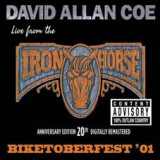
If there’s ever been a way to describe David Allan Coe, it’s got to be his ability to defy categorization. With over six decades of following his musical muse wherever it’s led, this craggy voiced outlaw has crossed the panorama of American roots music. As well as being a singer, guitarist, songwriter, David is also a magician and a ventriloquist, deep sea treasure hunter, and movie star. His movies included Stagecoach, The Last Days Of Frank and Jesse James, Lady Grey, Buckstone County Prison, Take This Job and Shove It, to mention a few. David signed with Sun Records in 1968 and recorded his first album Penitentiary Blues, all songs that David had written in prison. In 1973, Columbia Records bought David’s contract from Sun Records and he recorded his first Columbia album, titled “The Mysterious Rhinestone Cowboy”, several years before Glen Campbell had a hit with the song, “Rhinestone Cowboy.” Much has been written about David’s past and his lifestyle, but not much about his achievements over the years. From performing on Farm Aid to touring with Neil Young, Kid Rock and Willie Nelson. David’s song, “Take This Job and Shove It” has received multi-million airplays certificate from BMI. His “Greatest Hits” album is multi-platinum and his “First Ten Years” album is gold. David has had sixty three songs on the Billboard Singles Charts, including, “Mona Lisa Lost Her Smile”, “The Ride”, “Please Come To Boston”, “Willie, Waylon and Me”, “Jack Daniels If You Please” and “You Never Even Called Me By My Name” to name a few. David has written songs for Johnny Paycheck, Tanya Tucker, George Jones, Willie Nelson, Leon Russell, Charlie Louvin, Del Reeves, Tamy Wynette, Melba Montgomery, Stoney Edwards, The Oak Ridge Boys and Kid Rock. Both “Would You Lay With Me” and “Take This Job and Shove It” are multi- million seller songs penned by David. Johnny Cash has also recorded David’s songs including “Would You Lay With Me” on his chart topping album entitled, Cash. David has been through a lot in his life but has managed to put his past behind him and move forward with his life. This album was recorded in 2001 live from the Iron Horse Saloon in Daytona, Beach Florida and includes the only recorded version of, I’m An Ohio Boy.
** 12” LP edition of 300 copies with cover artwork and booklet featuring illustrations by Ettore Tripodi ** In September 2019 Alessandro Bosetti was invited by fellow composer and curator Riccardo La Foresta to create a new work for a newly created ensemble as part of a residency program hosted by Centro Musica in Modena, Italy. The very first encounter took place on Skype – kind of a prediction of the forthcoming physically distanced pandemic times. The first, straight-to-the-point question Bosetti posed to each musician was to tell him the history of their life. The materials collected in the interviews subsequently underwent a process of anonymization, selection and cut-up in order to create the imaginary autobiography of Didone, a genderless character on whom Bosetti composed a combinatory poem in 84 aphorisms, six of which have been translated into music. The ensemble consists of extremely different musical profiles: the contemporary soprano Giulia Zaniboni, minimalist banjo and acoustic guitar player Glauco Salvo, and four musicians with a jazz background such as guitarist Luca Perciballi, drummers Andrea Grillini and Simone Sferruzza, and saxophonist Dan Kinzelman (also part of Hobby Horse trio and long-time collaborator of Enrico Rava). Some of the stylistic features of Bosetti’s project Trophies (along with Kenta Nagai and Tony Buck) can be detected here and there. Persistent repetitions, mesmerizing sonic masses and extended, oblique melodic lines are here led by the clear and precise voice of soprano Giulia Zaniboni.
The voice is at the heart of this work: the textual fragments of the autobiographies are filtered through Zaniboni’s contemporary vocality, while informing the instrumental writing as well. Themes and textures unveil traces of words or sentences; fragments of biographies are embedded in the intricate instrumental dialogue between the two drummers. A final layer was added by Ettore Tripodi, a unique and out-of-time visual artist who imagined Didone in a series of illustrations accompanying the poem. "Didone" is a work about the reconfiguration and recombination of identities, where every specific sense of belonging melts into an indistinct swarming of possibilities.
Alessandro Bosetti is a Marseille-based composer and sound artist with a particular interest in the musicality of language and in the voice, conceived as an autonomous object and an instrument of expression. His works enact a dialogue between language, voice and sound within complex tonal and formal constructions, often crossed by oblique irony. He builds surprising devices, often linked to the radio medium and to a tireless reflection on the relationships between music and language, questioning aesthetic categories and listening postures.
His work has been shown in reference venues such as the GRM / Présences Electronique festival in Paris, Roulette and The Stone in New York, Café OTO in London, the Liquid Architecture Festival in Melbourne and Sydney, the Serralves Museum in Porto and the San Francisco Electronic Music Festival. His music is released by labels such as Errant Bodies Press, Holidays Records, Rossbin, Sedimental, Unsounds, Monotype, Weird Ear Records.
- A1: Psychomantun X2000
- A2: Black Star
- A3: Century Child
- A4: Mega Society
- B1: Safety Operation
- B2: When Lightning Bugs Arrive
- B3: Interstellar Inferiority Complex
- B4: Impacts & Egos
- B5: Aqua Vera
- C1: From Gravity To Gold
- C2: Let It Come Alive
- C3: So Far
- C4: Serpentine Age Queen
- C5: Greatest Hit Providers
- D1: Love Song #3105
- D2: Jehovah Sunrise
- D3: All For Sale
- D4: Regenesis
Extended Revelation for the Psychic Weaklings of the Western Civilization is the second album by Swedish rock band The Soundtrack Of Our Lives. Heavily influenced bands from the sixties and seventies such as The Rolling Stones and Iggy and the Stooges, the band became popular in both Europa and the United States. Their fame was partially propelled by their songs being featured on popular video game franchises such as FIFA, NHL and Gran Turismo.
The title of this album comes from the Rolling Stones Records’ release of Brian Jones Presents the Pipes of Pan at Joujouka, where the inside liner notes state that “Western Civilization has made us such Psychic Weaklings”. About 50% of the songs on the album were leftover material from the bands debut album, yet this record sounds far more dark and contains influences from psychedelic music. The album was well received and spawned one single: “Black Star”.
An acid rock LP on the Isley Brothers’ T-Neck label? Yes, the unlikely collaboration resulted from a Jimi Hendrix concert at New York’s Syracuse University, supported by the Isleys and mixed soul-rock group, Soul Survivors, who had worked with Tom Bell and Gamble & Huff. When Soul Survivors morphed into Privilege, they convinced the Isleys to sign them to T-Neck, the result being this rare self-titled album, a fine set of hard-rocking originals, expertly produced by the Isleys with plenty of stereo panning, blistering guitar from frontman Edward Leonetti, atmospheric organ from Paul Venturini and melodic bass lines from Jack Douglas, later an engineer for Aerosmith, Lou Reed and Cheap Trick. A true classic, not to be missed!
Never underestimate the power of a woman with her back to the wall. In March 2020, as Covid blew across the planet, the shutters came down on live venues and recording studios, and the music scene fell suddenly silent, Ghalia Volt faced the same dilemma as every other artist.
What now? The answer was One Woman Band. Having joined with the cream of the US roots scene for two acclaimed albums, 2017’s Let The Demons Out and 2019’s Mississppi Blend, Volt’s rebirth as a solo performer wasn’t a decision made lightly. But if an apprenticeship busking in her native Brussels taught Volt anything, it’s that she already had everything she needed to make magic.
“In March, I started playing on a real drum set,” she recalls.
“Playing a kick, snare and hi-hat plus a tambourine with my two feet, while playing slide/guitar and singing at the same time.” After road-testing the new format at shows across Mississippi, Volt realised that one was the magic number.
In August, she committed to the project, embarking on a month-long Amtrak train trip that became an intensive writing session, the shifting landscapes beyond the window inspiring her pen to scratch as never before. Tracked live in November at Memphis’s legendary Royal Sound Studios, One
Woman Band is Volt’s most lyrically honest and groove-driven material to date.
You can feel the turn of those train wheels in the addictive stomp of songs like
Reap What You Sow, while the rattle-and-shiver slide guitar of Espiritu Papago
evokes the scream of a locomotive whistle.
“Imagine John Lee Hooker on mushrooms, lost in the desert of Arizona, on a hot
summer day,” says Volt. “That’s the vibe of that song.” The Covid-19 pandemic
is an unprecedented chapter of human history, with no clear end in sight.
But Ghalia Volt has given us the soundtrack to better times ahead, and the
songs we’ll still be singing when we meet on the other side. This might be a
One Woman Band - but you’re always welcome to ride shotgun.
Hella Love, the Hardly Art debut from Marinero, is an album about closing a chapter. It’s Jess Sylvester’s grand farewell, and love letter to his hometown and the place he grew up, The San Francisco Bay Area, before relocating to Los Angeles after finishing his debut release. Using the moniker Marinero (which means “sailor” in Spanish), Jess Sylvester was drawn to this name as a means to honor his parent’s stories -- his father, a sailor, and mother, a Mexican-American who grew up in San Francisco. This record blends many worlds from beginning to end, and as you go deeper it hits harder. It’s his goodbye to The Bay. Pulling sonic influences from classic Latin American groups and international composers from the 60’s & 70’s: Los Terricolas, Ennio Morricone, Esquivel, Carole King and, Serge Gainsbourg Hella Love finds Sylvester fusing classical arrangements with a variety of different genres, evoking a sonic nostalgia blended with other contemporary artists like Chicano Batman, Connan Mockasin, and Chris Cohen. The album was written, played, and produced by Jess Sylvester with help from Bay Area engineer Jason Kick (Mild High Club’s Skiptracing) at Tunnel Vision and Santo Recording in Oakland, California. On the standout single “Nuestra Victoria,” Sylvester shares “It’s my way of talking about gentrification in SF, or specifically the Mission where my mom and family grew up. The song is about a bakery, or panaderia called La Victoria, and was a place where my mother and tias went growing up, a place I also went to that is no longer there.” It was one of the oldest Mexican-American businesses in SF and I wanted to honor it”. “Through the Fog” highlights Sylvester’s exploration of his influences from the Tropicalia movement, weaving bossa rhythms with lush percussion and orchestration. Using SF’s infamous fog as a metaphor for “tough times”, Sylvester expands that it is a dedication to his friends and family who have helped him get through substance abuse issues, heartbreak, and other painful experiences. “There are a few easter eggs in the lyrics for Bay Area folks or people who have followed my music in the past but it’s mostly about getting through something difficult with the love and support from the homies and fam.” The album’s title track, “Hella Love,” summarizes both of his parent’s stories of how they ended up in the bay. The first verse is about his father’s voyage out west as a sailor during the late ’60s while the second verse follows his mother’s experience moving to The Mission District when she was a young girl.
It’s difficult to classify or generalize about Marinero’s music or identity. To him, it’s important to let his music do the talking. “I’m Chicanx, a bay native, biracial, and I’ve luckily gotten to travel and spend time in Mexico and I feel like my personality and specific musical tastes come through on this album. More than these generalizations we often make, I’m just a human who can both fear and love, and I’m just hoping to connect with others to share optimism and experience joy and laughter, even if for a moment.” Lean your ear to the ground because Jess Sylvester has been many things and will continue to share his journey. It is clear this gifted creator has more to say.
-Luz Elena Mendoza
After getting a handful a couple of weeks back, we now have a good supply of this wonderful album coming in: in for 14th May release date.
With her ambidextrous and pedidextrous, multi-instrumental
techniques of her own making and influences ranging from video
games to West African griots subverting the predominantly
white male canon of fingerstyle guitar, Yasmin Williams is truly
a guitarist for the new century. So too is her stunning sophomore
release, Urban Driftwood, an album for and of these times.
Though the record is instrumental, its songs follow a narrative
arc of 2020, illustrating both a personal journey and a national
reckoning, through Williams’ evocative, lyrical compositions.
Williams, 24, began playing electric guitar in eighth grade,
after she beat the video game Guitar Hero 2 on expert level.
Initially inspired by Jimi Hendrix and other shredders she
was familiar with through the game, she quickly moved on to
acoustic guitar, finding that it allowed her to combine fingerstyle
techniques with the lap-tapping she had developed, as well as
perform as a solo artist. Deriving no lineage from “American
primitive” and rejecting the problematic connotations of the
term, Williams’ influences include the smooth jazz and R&B
she listened to growing up, Hendrix and Nirvana, go-go and
hip-hop. On Urban Driftwood, Williams references the music
of West African griots through the inclusion of kora and hand
drumming of 150th generation djeli Amadou Kouyate, on the
title track.
Yasmin Williams is virtuosic in her mastery of the guitar and
in the techniques of her own invention, but her playing never
sacrifices lyricism, melody, and rhythm for pure demonstration
of skill. Storytelling through sound is important to her too. As
detailed in the liner notes, the songs on Urban Driftwood were
completed during the COVID-19 pandemic and subsequent
lockdown, in the midst of a national uprising of Black Lives
Matter protests in response to the killings of George Floyd and
Breonna Taylor. But while Urban Driftwood illustrates current
struggle, can’t help but open-heartedly offer a timeless solace.
Die legendäre Münchener HipHop-Kultband Main Concept meldet sich zum 30-jährigen Jubiläum zurück. Drei Dekaden, drei Köpfe: MC und Frontmann DavidPe, Beatproducer Glam und DJ Explizit. Anlass genug, das Ganze mit einem neuen Album gebührend zu zelebrieren: Main Concept 3.0. Dabei machen sie ihrem Legendenstatus alle Ehre und liefern, souverän wie immer: lässig pumpende Boombap-Beats voller Seele, virtuose DJAction mit elegant platzierten Cuts und dazu eine lyrische, top aktuelle Gesellschaftsanalyse mit Witz und Verstand verpackt in pointierte Rhyme-Kaskaden. Main Concept in Bestform. Als Featuregäste sind die verehrten und geschätzten Münchner Homies Vier Zu Eins, Boshisan, Waseem sowie aus Bonn das fulminante female Flowtalent Die P am Start. Ein besonderes Schmankerl erwartet alle Fans der Freestyle-Kunst: eine Live-Session mit DavidPe's langjährigeren Cypher-Partnern Samy Deluxe und Roger Rekless. Der Pandemie geschuldet, kommt das Album erst im Frühjahr 2021. Doch um das Jubiläumsjahr nicht tatenlos verstreichen zu lassen, erscheint bereits im Dezember die erste Single mit dem gleichnamigen Titel "3.0".
Every now and then a release comes along which is destined to unite, bring down the walls and basically, be a force for good. Your Kissing by Belcampo does just that, and with a style and panache which defies it’s lo-fi, handstamped limited white label aesthetic. The beauty of Your Kissing is in the way it successfully melds together elements of deep house, disco and the French Touch sound to form a track which will appeal to anyone who simply likes decent music. Belcampo keeps things stripped back just enough to give that beautiful, rolling, hypnotic atmosphere, whilst remaining lush, warm and uplifting, constantly teasing us with the repeated filtering guitar and string hook. Legendary British singer and songwriter Elisabeth Troy provides the cherry on top with her sweet vocal line giving us the hook which will get under your skin in all the right ways.
In addition to the main vocal mix we have a Belcampo Remix going heavier on the filters and pumping groove, calling to mind the glory days of Cassius, Motorbass and Super Discount with that distinctive feel-good French sound of the 90’s.
Closing out the EP we find Delisei which cranks up the jackometer for a peak time slice of looped-up heads down filter madness guaranteed to nice up the dance.
Originally released as a 12” single in 1982, ‘Every Brother Ain’t A Brother’ was the final record from Brooklyn multi-instrumentalist and producer Freddie Thompson’s Panaché band. Built around a fully cleared sampled bassline from ‘The Message’ by Grandmaster Flash & The Furious Five, ‘Every Brother Ain’t A Brother’ plays out like a summertime stroll through New York in the early 80s. The streets are full of excitement, but as the lyrics, written by vocalist Denise Williams (not to be confused with Deniece Williams of ‘Let’s Hear It For The Boy’ fame) make it clear, they’re dangerous as well.
Thirty-nine years later, Isle of Jura is proud to present the first official 12” reissue of ‘Every Brother Ain’t A Brother’. A cult classic from the disco-rap era, the reissue includes the original vocal and instrumental versions of ‘Every Brother Ain’t A Brother’ plus a Jura Soundsystem special version with additional live percussion.
Originally made up of Freddie, his wife, the singer Debra Thompson and keyboardist Douglas Glover, Panaché formed at the behest of a local disco DJ, Carl Nelson. In the wake of Chic’s early singles, Carl felt a French name would give Freddie a competitive edge. “He explained it to us that it was a French word for style and elegance. Panaché, a step above chic,” Freddie reflects.
Business minded, Freddie formed his own label, Roché Records and joined SIRMA - The Small Independent Music Manufacturers Association. “It was very hard for the independent manufacturers to get airplay and distribution at the time, so we all came together,” he remembers. Through SIRMA, Freddie met Joe and Sylvia Robinson from Sugar Hill Records, who several years later, let him sample ‘The Message’ for ‘Every Brother Ain’t A Brother’.
In 1979, Panaché scored some radioplay when they covered ‘Not On The Outside’ by ‘60s D.C R&B group The Moments. Emboldened, they brought onboard backing vocalists and recorded their only album. This Is Panache saw the band blurring the boundaries between soul, jazz-funk and disco and become a sought after collectible.
By 1982, Debra had stepped back, and one of Panaché’s backing singers was center stage, Denise Williams. “Denise was good with writing poetry,” says Freddie. "She had one called ‘Every Brother Ain’t A Brother’. It was about the unrest that was going on in the city at the time. I thought I could do something with that.”
After releasing ‘Every Brother Ain’t A Brother’ in 1982, Panaché quietly moved from center stage to behind the scenes. Over the last thirty-nine years, Freddie has continued to work in the music industry as a session musician and producer. “As soon as we stopped trying to become stars as Panaché, we became busy working in the industry,” Freddie laughs.
After he became one of the most respected name in the global Balearic scene skipping rocks across water and moving through an amazing and different philosophy. A Vision of Panorama's latest release is an extremely well-designed album which is morphing his synth-o-logy on even more subtly and glistering shapes. With previous 12'' releases on Mellophonia, Cala Tarida Musica and Omena gave us the first sings ''Tiger'' was a matter of time. Boogie-crafted sound with squelching percussions and a touch of 'jazz in the house' which representing the charismatic sound of Larry Heard is managing not only to satisfy his already fans but to be discovered by tones of new ones who their musical references are not only the European 'state of Balearic music' but the breezy US sound too
Be With is delighted to present Jorge López Ruiz’s El Grito (Suite Para Orquesta De Jazz), eternal Argentinian magic released on CBS in 1967 that must be one of the most sought-after South American jazz LPs.
Living in Buenos Aires in the 60s, driven by creative impulse and rage Jorge López Ruiz used music as his platform to protest the Argentine military dictatorship: “I could never stand dictatorships, to be told how you have to think, what you have to do. Nor did I endure discrimination”.
A young López Ruiz had appeared on a television panel alongside writer, politician and philosopher Arturo Jauretche, criticising the Onganía dictatorship. Jauretche told López Ruiz “Now say it with music”. This was the deep inhale that lead to El Grito, literally “The Scream”. As López Ruiz later explained “Jauretche urged me that my protests should not remain in words and acquire the consistency of a work… but it was not so much what he told me but how he told me, what prompted me to make the work take shape, first in a live concert and then in a recording”.
As the police and military began resorting to kidnapping, torture and summary executions to quiet dissent, with depressing inevitability the artist community and their work were a particular target of the increasingly brutal regime. El Grito was banned not long after it was released and the majority of original copies were unceremoniously destroyed.
The work of a genius artist living under an opressive dictatorship, erased by the government of the time, this is buried treasure in every sense and it’s been a rare record for over 50 years. But it isn’t just being hard to find that has pushed up the prices of those few original copies that survived, this is a foundational record in the development of jazz in South America.
El Grito (Suite Para Orquesta De Jazz) is a showcase for Jorge López Ruiz’s skills as a composer and arranger as he leads a virtuoso orchestra of the likes of Mario Cosentino (alto sax), Baby López Furst (piano), Pichi Mazzei (drums), Gustavo Bergalli (trumpet), Oscar López Ruiz (guitar), Arturo Schneider (flute) and Jorge López Ruiz himself plays double bass on the fourth and fifth movements.
As the album’s sub-title explains, The album is a Jazz orchestra concept suite. Five movements, to be heard as a whole, that end where they begin.
“When I wrote it there was no history of a cyclical work in jazz. But I didn't notice that, I needed to express something and I did it. At that time they told me I was crazy, that such a thing was very difficult to do. But hey, I like challenges”.
Yet this is not challenging jazz. There are certainly avant garde, free jazz flourishes, but the hard bop characteristics make this a very accessible album: easy to listen to without being easy listening. López Ruiz’s love of film brings a definite cinematic feel.
The title movement opens the album in bombastic style. “El Grito” grabs you by the lapels and refuses to let go. Raw then controlled, it’s by turns stabbing then soothing, with rage weaved in and out of the elegant styles. “M.A.B. = Amor” is our favourite here. With a tense introduction and a patient build, a gentle sax sweeps in to lift everything up to meet the serene piano and soft drums. Elegantly paced, it moves back and forth between deep contemplation and a more urgent call and response between strings and horns. A near-eight-minute, slow motion marvel.
The second side eases in with the beautifully-titled “Hasta El Cielo, Sin Nubes, Con Todas Las Estrellas” (“Up To The Sky, No Clouds, With All The Stars”) a relatively brief mid-tempo piece featuring López Ruiz’s insistent bass notes high in the mix, and again blending the sublime with the emotive with its wild horns and tight rhythm section.
It’s followed by “Tendré El Mundo” (“I Will Have The World”) which also leads with hypnotic bass, but this time swifter, driven by crashing drums, rapid horn conversations and effortlessly cool piano flourishes. Rounding out the suite, “De Nuevo El Grito” (something like “The Next Scream” or “The Scream Renewed”) is a stylish closer. Whilst López Ruiz’s bass shifts the track along, the horns and piano are more restrained, yet no less stunning.
This Be With edition of El Grito sounds sensational, if we do say so ourselves. Working with audio from the original analogue tapes, the vinyl mastering chops of Simon Francis are on full show here in what he considers to be some of his best ever work for Be With. Pete Norman’s cutting skills have made sure nothing is lost. The tortured artwork has been restored here at Be With HQ as the finishing touch to helping this revered work find a rightful place in every protest art collection.
Adiel slowly emerged from the Rome underground onto international dancefloors, from local residencies to renowned festival stages. Following a steady slew of quality releases for her own label, the Italian producer now signs with Figure to show just how far she’s gotten. Right out the gate, Adiel proves her versatility. Method is an intricate, moody stepper, harking back to early Burial with its grimey atmosphere and skeletal breakbeats, complete with ghostly vocals and a cascading synth line, which ties it all together. Showing Adiel’s love for analog drum machines, Mad builds on a dry but lively pattern, with swelling acid arps slowly creeping in until it all breaks down in a sea of squelches, only to emerge again with full force. The B-side goes deep and fast, panning percussion setting the bleak scene for a vividly arp-driven ride beneath a starry sky. Slowing things down to a half-time measure, the final composition leaves lots of room for the finely measured details such as bubbling acid, raw drums, and trippy voices to merge in one last soothing swirl of sound. With such a strong repertoire at her fingertips, Figure X27 shows Adiel as a promising producer who has found her unique voice and is sure to make her way in the years to come.
Pure Donzin is the debut solo offering by Amsterdam - based Donald “Donny” Madjid - also known for his involvement in The Mauskovic Dance Band. On a pandemic - induced break from his usually busy tour ing schedule, Donny, armed with a 60’s drum machine and a few synths, made the most of his time off by experimenting with, and home - recording new sounds - resulting in a fully - fledged 9 - track album under the artist monicker Don Melody Club.
Whilst many of his local peers tend to turn to sounds further from home for inspiration, Madjid felt drawn to honour the literary and musical tradition of The Netherlands, following in the footsteps of classic and lesser known Dutch troubadours such as Ramses Shaffy (a cover of ‘Laat Me’ features on the album) and Ronald Langestraat. Don drew inspiration from bard - like storytelling and for the first time started writing in his native tongue, craftily forging lyrics that his rich tenor voice delivers with a sincerity that translates regardless of whether or not you understand Dutch. This intimacy is balanced evenly with synth and drum machine grooves, recalling Dutch New Wave legends Doe Maar - merging ear worm pop hooks and infectious danceable beats to these otherwise pe nsive ballads.
An ode to being immersed in the magic of the night in good company, an experience so lacking during the year in which the album was recorded, is the danceable Psychonauten. The track is a fine example of the glittering synthesis of infectio us musical atmosphere and lyrically rich straightforwardness Donny has mastered on the album.
The influence of The Mauskovic Dance Band, especially the bass driven, hypnotic groove - a signature sound Don guides in new directions - can be detected on Ver anderd. Somewhat of an anthem, it is laced with tones of 70’s West - African sounds, like fast percussive key arrangements and energetic backing vocals. An example of a more laid back tune on the record is Isabel, a cool nostalgic love song, a soother for a sentimental occasion.
Opening number Geen Nood (No Panic), lyrically nothing short of a ‘sign of the times’ track, paints a mindful setting of cycling past the Amsterdam canals, seeing the leaves in the water, and feeling your blood flow peacefully throu gh your veins - letting go of the need to be anywhere other than where you are. Be it through meditative observances, or hypnotic dance grooves, Pure Donzin is a record that tempts the listener to become just that: immersed in the moment.