
Buscar:j path

Amoul Bayi Records continues its mission of discovering and showcasing West African artists. After introducing talents such as Daba Makourejah and Saah Karim, the Dakar-based label returns with a new release from one of the most soulful
voices in Gambian reggae: Royal Philosopher.
"Thank You Jah" is a song of gratitude, carried by the emotive and distinctive voice of Royal Philosopher. With humility, he expresses his thankfulness for the talent he has received, the path he has walked, and the strength that has guided him along the way.
Built on a dynamic Digi Roots riddim produced by Yared and mixed by Rootical45, the track provides the perfect space for his voice to shine. The refrain – “Thank you Jah for giving I talent” – echoes like a personal prayer and a universal message, able to resonate beyond belief systems.
Royal Philosopher is a Gambian singer whose powerful and precious voice is shaped by spirituality, African heritage, and musical commitment.
Born in Banjul, he first discovered his vocal gift in a church choir, where he developed a heartfelt and sincere expression. He fell in love with reggae through the voice of Garnett Silk, whose intensity and devotion deeply influenced his path. He began his journey with the group The Royal Family, before pursuing a solo career, releasing music with consistency and authenticity.
Today, he presents "Thank You Jah", a single produced by Amoul Bayi Records, imbued with gratitude and faith, true to his artistic vision: sincere, elevated, and deeply connected.
Designed both for turntables and streaming platforms, the single will be released in digital format and on 7" vinyl. The artwork is by renowned Senegalese graffiti artist King Mow.

8
Ruben Rada played a pivotal role in the development of Uruguayan music. By blending Afro-Uruguayan traditions with rock, soul, jazz, and funk, he paved a new musical path that began in the 1960s and continues to evolve today. Throughout his career, he has consistently been surrounded by talented musicians who have been integral to his sound. This was especially true with Daniel "Lobito" Lagarde, bassist and founding member of the iconic band Totem in the early 1970s; Ricardo Nolé, keyboardist, arranger, and musical director of Rada's band in Argentina during the 1980s; and Nelson Cedréz, the drummer who has been by Rada's side since the 1990s. In 2016, these three musicians reunited to form Rada's Old Boys, releasing an album of jazz-infused reinterpretations of Rada's songs that earned rave reviews. Now, they return with Manos, a bold new album that reimagines Rada's works from every phase of his career, featuring deeply personal renditions and a special guest appearance from Rada himself on one track.

Die internationale Rocksensation The Hives, die beste Liveband der Welt und immer noch eure neue Lieblingsband, hat wieder einmal, schneller als erwartet, ein neues Werk geschaffen, wie man es noch nie gehört hat und wahrscheinlich auch nie wieder hören wird. Ihr siebtes Album 'The Hives Forever Forever The Hives' erscheint am 29. August auf dem ehrwürdigen Label Play It Again Sam. Ein neues Album voller Energie, Freude, Wut und Leben! Jeder einzelne Song eine Single, jede einzelne Single ein Hit, jeder Hit ein Volltreffer mitten ins Gesicht. Diese neue Meisterwerk entstand unter der Leitung des langjährigen Kollaborateurs Pelle Gunnerfeldt in Stockholm. Mike D von den legendären Beastie Boys ist als Gast vertreten und auch Josh Homme (Queens Of The Stone Age) stand mit Rat und Tat zur Seite.
The Hives, bestehend aus Howlin’ Pelle, Chris Dangerous, The Johan And Only, Nicholaus Arson und Vigilante Carlstroem, haben sich in über dreißig Jahren in die Annalen der Rockgeschichte eingeschrieben. Dank ihrer Erfolge füllten sie große Stadien und teilten die Bühne mit so monumentalen Acts wie AC/DC und den Rolling Stones. Die BBC bezeichnete sie als „Naturgewalt“, und der Rolling Stone kürte ihr Album 'Veni Vidi Vicious' zu einem der 100 besten Alben des Jahrzehnts. Mit Millionen verkaufter Alben, Platin-Auszeichnungen und zahlreichen Preisen - Grammys, MTV Awards, NME Awards - gelten sie als Titanen der Musikwelt. Oder wie Joe Strummer es gesagt hat: The Hives haben den Rock ’n’ Roll gerettet!

Torn traverses the charnel realms of the grey area on his debut EP for DNO, ‘Taiga’. Steely beats and stony bass coalesce into chimeric rhythms across four enthralling constructions; techno and drum & bass seeping into each other like liquids in a solution, changing the very nature of both.
Opening with a solemn march shrouded in swathes of noise and jitter that blur the soundscape like the death throes of some unlucky video game character, ‘Wreak Havoc’ is an incessant builder. When it finally lets loose the chaos promised by its title, reinforced breakbeats rain down like great factory apparatus hammering out metal plates.
‘Whalebone’ is of a similarly industrial bent. Like a head full of rotor blades, it ripples with densely packed polyrhythms that rattle and whirr, new layers emerging from the churn to grab the consciousness before sinking back into the melee.
‘Taiga’, meanwhile, channelling the cold, ancient immensity of its boreal forest namesake, progresses at a plant-like pace — unhurried and purposeful. It's droning low-end seems to mask secrets, while a canopy of tangled percussion cuts angular shapes through the shadowy undergrowth.
And on ‘Stay’, the complex drumwork vibrates so rapidly around the track’s irradiated pads as to almost merge with them completely, rhythm and ambience becoming a singular hypnotic form.
A natural fit for DNO, Torn’s mystic machine music opens new pathways for the label’s darkling voyage through sound.
Rhythms of postmodern realism at the very bottom of the DNO.

4
I have been playing Eternal a lot in my DJ sets & it all started with Dev/Null posting a video clip of a tune he was working on, in a Skype group chat we're both a part of. It was probably the best thing I'd ever heard from him and I hassled him relentlessly to finish this track so I could start playing it and then potentially signing it for Future Retro London. That tune he was working on ended up being Eternal & I had no hesitation towards taking the tune for the label. I asked him who he would like to remix Eternal for the release and he picked DJ B (who's had tunes out on Demolition Squad & Brazen) and he did a nice 4x4 version, taking the track down a stompier path (I don't know if stompier is a word but can't think of a better word to use).
Watch The Spin is a tune I first heard when I was in Helsinki, playing at a night called 20hz, organised by DJ Sofa & ODJ Pirkka. Pirkka played after me and during his set, I heard him play this track which had a wicked 90s Bristol jump-up flavour, but with new twists & style to it. I went into the booth and asked him who it was by, and he told me it was by him & another guy called Onni and that they'd recently started making music together under the alias of Unlimited Vibes. When I got back to London the next day, I asked him to send the tune and he did and I really liked the track, so decided to sign it for Future Retro London, to fit alongside Eternal on this release. And to complete the release, Ricky Force has done an exceptional remix of Watch The Spin, bringing his modern jungle sound to the table.

For many bands, having all their gear stolen would be catastrophic. For Third Ear Band, this unfortunate 1968 incident opened a portal to beneficial change. Leader/percussionist Glen Sweeney viewed the heist as a sign to alter Third Ear Band's approach, and they switched to exclusively using acoustic instruments. With electrified psychedelia in full bloom, Sweeney, Paul Minns (oboe, recorder, whistles, flutes) and Richard Coff (violin, viola) struck out on an individualistic path, blending Indian raga with chamber music – without plugging in.
Third Ear Band's 1969 debut album, Alchemy, established them as a solemn, powerful force in the global underground. On Alchemy, Sweeney laid down a steady pulse on hand drums, while Minns and Coff wove in melismatic patterns on oboe, recorder, violin and viola. This approach carried over to Third Ear Band's self-titled sophomore album, often called Elements due to its track titles being named after the four basic components of medieval European alchemists' doctrines.
On this 1970 LP, Third Ear Band sounded at once ancient and contemporary, yet they turned on the hippies with their epic, trance-inducing jams that suggested secret knowledge of infinity. Although Third Ear Band flourished during the West's countercultural zenith, they were peculiarly estranged from it on a sonic level. Even outré contemporaries such as Comus and Jan Dukes De Grey sounded like pop groups compared to TEB. Having no traditional front person or electric instruments, Third Ear Band forged a singular path that flowered most vividly on Elements.
The long songs here stream forth from their skilled hands, evoking a communal transcendence in sound – a hypnotic swirl that doesn't swing, but rather wafts and undulates with cloistered beauty. TEB's music exists in an eternal now, a perpetual wow. It is an ouroboros of organic textures, seemingly magicked into the air spontaneously, yet possessing a rigor that suggests long hours in the lab. Without electricity, it somehow burrowed deeper into your consciousness.
– Dave Segal (excerpt from the liner notes)

- Theme For Skantagio
- Theme For Narcoleptics
- Theme For Insuffi Cient Overpreparation
- Theme For Fruitful Tangents
- Theme For All Unawares
- Theme For The Path Made Visible
- Theme For Undivided Neglect
Squanderers sind David Grubbs (Gastr del Sol), Wendy Eisenberg und Kramer. Sie kehren zurück und liefern mit Skantagio den Nachfolger ihres Debütalbums If a Body Meet a Body (Shimmy-Disc, 2024). "Wir waren einen Tag lang im Studio und haben alle Stücke der ersten LP gespielt, bevor wir in die Mittagspause gingen. Skantiago enthält die Stücke, die wir nach dem Mittagessen gespielt haben", sagt Bassist und Shimmy-Disc-Gründer Kramer. "Wir mögen Squanderer (Verschwender) sein, aber wir trödeln nicht. Und wir vertiefen uns nicht zu sehr in unseren spontanen Erfindungen, während wir im Studio sind." Für Fans von: Gastr del Sol, Editrix, Pan American & Kramer, Jim O'Rourke, Bill Orcutt

For his third long-player under the Phi-Psonics banner, Ford-Young marshalled a series of live recordings at the Healing Force Of The Universe record store in Pasadena, sculpting fourteen tracks, largely composed in the moment with a fluctuating cast of players, which wonderfully transmit his ideals of community and inner peace. Called "Expanding To One", it features exquisitely calming yet searching pieces like "There"s Still Hope", where Seth"s softly undulating bassline underpins beatific explorations from core Phi-Psonics members, Sylvain Carton and Randal Fisher (both on saxophone), and Josh Collazo (drums), alongside guests Zach Tenorio (Wurlitzer piano) and Mathias Künzli (percussion). Equally sublime, "Healing Time" ripples like a mountain stream, with Ford-Young, Carton, Fisher and Tenorio joined by Minta Spencer (harp), Dylan Day (guitar) and, on drums/percussion, Jay Bellerose, a revered LA stickman most recently under the spotlight in Jeff Parker ETA IVtet.

- A1: Journey Of A Lifetime ~ Frieren Main Theme
- A2: The End Of One Journey
- A3: A Well-Earned Celebration
- A4: For 1000 Years
- A5: One Last Adventure
- A6: Farewell, My Friend
- A7: Departures
- A8: Time Flows Ever Onward
- A9: Life Is Worth Living
- A10: Before The Light Fades
- B1: The Precious Moments We Share
- B2: Grassy Turtles And Seed Rats
- B3: Where The Blue-Moon Weed Grows
- B4: Phantoms Of The Dead
- B5: Evolution Of Magic
- B6: In Times Of Peace
- B7: Great Mage Flamme
- B8: Goodbye For Now, Eisen
- B9: More Than Mere Tales
- B10: The Warrior's Path
- C1: Fear Brought Me This Far
- C2: Dragon Smasher
- C3: Lift My Head From Shadow
- C4: Beyond The Journey's End
- C9: Headpats And Praise
- D1: Demon's Bane
- D2: Knife To The Throat
- D3: A Sunrise Worth Seeing
- D4: The Magic Within
- D5: New And Dangerous Magic
- D6: Waltz For Stark And Fern
- D7: Mirrored Lotus
- D8: Song For The Beyond
- C5: Zoltraak
- C6: Frieren The Slayer
- C7: Across The Northern Lands
- C8: Gone, But Not Forgotten
37
Der offizielle Soundtrack zu "Frieren: Beyond Journey's End" von Evan Call ist jetzt als Doppel-Vinyl erhältlich. Diese exklusive 2-LP-Ausgabe bringt die emotionalen Höhepunkte von Frierens Reise auf den Plattenteller - eine Reise voller Freundschaft, Verbundenheit und der Kostbarkeit gemeinsamer Zeit. Die zwei coloured LPs (in Smaragdgrün und Kobaltblau) kommen in einem liebevoll designten Gatefold und mit einem Insert mit Original-Illustrationen. Ein Must-Have für alle, die Frieren, Himmel, Heiter und Stark ins Herz geschlossen haben.

- 1: Airport Scene 03:8
- 2: Blackbird 05:15
- 3: Dropouts 02:56
- 4: Free Form Future 02:30
- 5: Higher Path 0:3
- 6: Kill All Indies 04:35
- 7: Naked West 05:14
- 8: Oleo Skull 04:11
- 9: The Cat 05:48
Brazilian Psychedelic Rock Artist Firefriend via Cardinal Fuzz and Little Cloud Records announce a first time vinyl pressing for the classic - “999 to 666 ts Street” Prepare to take the long way through the void — Brazilian sonic architects Firefriend present the searing “999 to 666 TS Street”, a full-length LP that bends time, bleeds color, and dives deeper into the cracked corridors of psychedelic rock. With roots tangled deep in the underground of São Paulo and their eyes forever fixed on the cosmic unknown, Firefriend has carved out a space uniquely their own — a distorted dreamscape where shoegaze meets fuzz, noise folds into melody, and every track is a doorway. “999 to 666 TS Street” is a concept record that navigates a haunted psychogeography: an address etched between realities, where spiritual unrest collides with dystopian daydreams.
A Journey Through Sound and Shadow Drenched in fuzzed-out guitars, whispered vocals, analog synths, and pulsing rhythms, this LP sees the trio — Yury Hermuche (guitar/vocals), Julia Grassetti (bass/vocals), and Cacau Bandeira (drums) — begin to forge the fearless vision they seek. From the opening surge to the final fractured lullaby, “999 to 666 TS Street” is both a destination and a transmission: a call to the wanderers, the outsiders, and the seekers. But Firefriend's mission isn’t just sonic — it’s political.
As proudly left-wing artists with an internationalist vision, the band channels the disillusionment and resistance of a generation watching the world teeter. Their music radiates both critique and hope, connecting the dystopia of late capitalism with a dream of liberation. Whether playing São Paulo basements or European festivals, Firefriend brings an urgent message beneath the haze: solidarity is louder than silence. "This album is a street you can't find on any map — it's the place your mind goes when you turn the lights off," says frontman Yury Hermuche. "It's noise, beauty, and a little bit of danger." "We wanted to build a record that feels like a fever dream on vinyl," adds bassist Julia Grassetti. "Something physical, something that glows in the dark." About Firefriend Known for their hypnotic live shows and cult international following, Firefriend has shared stages with underground legends and graced the grooves of multiple celebrated independent releases.
They’ve become essential listening for fans of Spacemen 3, The Brian Jonestown Massacre, and The Velvet Underground — yet remain wholly, defiantly themselves. “999 to 666 TS Street” marks the start and is another milestone in their prolific catalog, pushing the limits of psychedelic rock while remaining anchored in the beautifully bleak emotionalism that defines their sound. Beneath the distortion lies a worldview — anti-authoritarian, borderless, and defiantly alive.

- Advance
- The Solitude Of Victory
- Ovidian
- Gravity Hill
- In Your City
- Exile
- Here Again W/ Birdy
- Frogs
- Strawberry
- Traveling Light From Afar
También disponible
Color Vinyl[23,95 €]
Cleaning Out The Empty Administration Building ist Ross Farrars neuestes Werk aus rohem, gesprochenem Wort und experimentellem Sounddesign, hier präsentiert unter dem Namen R.J.F.. Der Frontmann der amerikanischen Bands Ceremony und SPICE begann dieses Soloprojekt zunächst als persönliche Herausforderung: Songs von Grund auf selbst zu schreiben, sich mit Instrumenten vertraut zu machen und dabei zugleich sein Unterbewusstsein freizulegen. Dabei ging es weniger um musikalische Virtuosität als um Verletzlichkeit - darum, etwas Ehrliches aus einem ungeschützten, unbearbeiteten, unpolierten Moment zu ziehen, kompromisslos amateurhaft und rein.Diese Sammlung zeigt Farrar im offenen, poetischen Dialog: mit Drumloops und gefundenen Klängen, durchbrochen von Gitarren, Bass und Tasteninstrumenten. Nach über zwanzig Jahren in der vertrauten wie chaotischen Welt von Band-Kollaborationen, legt Farrar all das ab - als Experiment. Das Ergebnis ist unverwechselbar und bewegend.Farrars Punk-Pathos ist in Spuren vorhanden, doch seine deutlichsten Einflüsse stammen von repetitiven Musikformen: Drone, No-Wave, Avant-Jazz und darüber hinaus. Seine nüchternen Texte erinnern an Lou Reed, Rowland S. Howard und andere große Exzentriker. Farrars Texte kreisen um Liebe, Sucht, Vaterschaft und das Leben in der heutigen Welt. ,Ich wollte Bilder schaffen, die die Menschen klar vor sich sehen können", sagt er. Farrar unterrichtete früher Schreiben und Literatur - und wendet hier ein einfaches Prinzip an, das er auch seinen Schülern mitgab: Nicht zu viel nachdenken. ,Ich habe mir einfach gesagt: Diese Songs sollen Spaß machen. Sie sollen nicht stressig sein. Zwei, drei Takes aufnehmen und dann gut ist. Nicht über jedes Geräusch den Kopf zerbrechen. Mach einfach das, was natürlich aus dir herauskommt - und wenn es sich gut anfühlt, dann nimm es."Aus hunderten freier Songs, die Farrar in den letzten Jahren mit geliehenem Equipment aufgenommen hat, kristallisierte sich dieses Album langsam heraus. ,Es kam einfach immer wieder."Der Ton von Cleaning scheint die Zeit zu verbiegen, versetzt die Hörer in eine Art Gang voller Songs, bei denen jede Tür in einen neuen Raum führt - Räume, die oft auf unheimliche Weise vertraut wirken. Der gurgelnde Bass des Openers ,Advance" taucht auch in anderen Stücken wieder auf, etwa im gespenstischen ,Ovidian", benannt nach Ovids Metamorphosen, in dem Farrar über das Wunder der Veränderung sinniert - begleitet von fernen Glockenklängen. Instrumentalstücke wie ,Gravity Hill" - ein Flattern aus Synth-Brummen und statischem Rauschen - oder ,Frogs", mit Saiteninstrumenten und perkussivem Topfschlagen, wirken wie tranceartige Zwischenspiele und verstärken die Wirkung der Texte drumherum.,Exile" blickt zurück auf Verluste, die sich nicht mehr reparieren lassen: ,So much of your heart caught in my exile", singt Farrar mit sanfter Resignation - über einer einsamen Klaviermelodie und schlingernden Gitarrenakkorden. Es ist das strukturierteste Stück der Sammlung und erinnert daran, dass Farrar ein Gespür für melodische Linien besitzt.Das Album endet mit ,Traveling Light From Afar", deutlich schneller als alle vorherigen Songs. Hier, über einem stoischen Motorik-Beat, spricht Farrar das zentrale Thema des Projekts direkt an:,I've been so young in my old age / Selfish & self-pitying / But that's just narcissism - man."Genau dieser Balanceakt - zwischen schonungsloser Selbstbefragung und der Klarheit, die mit dem Älterwerden kommt - schafft Raum für Entwicklung. Farrar leert das Gebäude - Zeile für Zeile.

- Ida Red
- Glory In The Meetinghouse
- Flowery Girls
- I Had A Good Father And Mother
- Shady Grove
- Pretty Fair Maid
- Billy Button
- Puncheon Camps
- The Queen Of Rocky Ripple
- Boatsman
También disponible
SEAWEED GREEN VINYL[22,27 €]
Old-time and traditional music stay exciting for their contrasts. Exacting instrumentation honed through mentorships and late-night jams at fiddler's conventions tangles with a community-sourced inventiveness that influences variants and new sounds. Joseph Decosimo is a master of this genre for this very reason, blending deep technique with an openness and curiosity that keep his music crackling with life. A "marvelous fiddler" (No Depression) and banjo player who braids "exultation and veneration" (INDY Week) into his music, on his third solo album Fiery Gizzard Decosimo gathers a close-knit ensemble of friends from his musical career to infuse his interpretations of fiddle and banjo pieces with a contagious communal joy. As an artist working with traditional music from the South and Appalachia, Decosimo chooses songs based not only on historical significance and lineage but also his own sensory approach. For Fiery Gizzard, his ear was tuned to otherworldly tones and mystery, sourcing from field recordings such as Virginia fiddler Luther Davis' hypnotic version of "Shady Grove" while amping up the music's psychedelic potential. On the middle Tennessee banjo composition "Flowery Girls," a VHS of bluesman Abner Jay inspired Decosimo to rig up a pickup inside a fretless banjo and play it thr ough a tube amp to capture some of Jay's edge and funkiness. But to round out the sound and keep it kinetic meant galvanizing a genre-eschewing crew to jam out - and not in a "spaced-out drooly" kind of way, he laughs, but as a sort of "responsive conversation." Decosimo has always been a community-minded artist. He began playing as a seventh graderin Tennessee, fostering relationships with older players at jams and in homes, a learning mode natural to his inquisitive nature and desire for musical connection. A folklorist by intuition, he later became one by profession, studying with old-time legend Clyde Davenport, teaching in East Tennessee State University's renowned bluegrass program, and receiving his PhD at the University of North Carolina with a dissertation titled "Catching the `Wild Note': Listening, Learning, and Connoisseurship in Old-Time Music." In North Carolina, Decosimo kicked about in the verdant environment of Durham and Chapel Hill's folk and indie scenes, collaborating with artists including Alice Gerrard, Hiss Golden Messenger, and Jake Xerxes Fussell. This community has influenced his own music, including his "sublime and strangely heartening" (Bandcamp Daily) 2022 release While You Were Slumbering and Beehive Cathedral, Decosimo's 2024 "Appalachian mountain music treasury" (New Commute) trio album with Luke Richardson and Cleek Schrey for Dear Life Records. Continuing on this path, Fiery Gizzard is home base for a loose outfit of mostly Tarheel-based musicians from within and beyond traditional music. Inspired by a tour with fiddler Stephanie Coleman (Nora Brown), guitarist Jay Hammond, and synth builder and multi-instrumentalist Matthew O'Connell, Decosimo assembled studiomates based on close friendships and comfort. Coleman, O'Connell, and Hammond contribute to Fiery Gizzard, along with bassist and producer Andy Stack (Helado Negro, Wye Oak), horn player Kelly Pratt (Beirut, David Byrne), Mipso and Fust's Libby Rodenbough, Joseph O'Connell (Elephant Micah), andtrad/experimental artist Cleek Schrey. Decosimo's fiddle and banjo work is virtuosic, intricate and simple simultaneously, a testament to his many years of study. On some tracks, his playing or lovely, plain-hearted singing is the centerpiece, such as on his interpretations of Texan street preacher Washington Phillips' 1929 recording "I Had a Good Father and Mother" or the Eastern Kentucky fiddle barn-burner "Glory in the Meetinghouse," famously played by Luther Strong for Alan Lomax. But there's also a trusting open-door policy, like where Southern Appalachian tune "Ida Red" relaxes into Coleman's sweet, confident fiddling and Hammond's loping guitar. As a bandleader, Decosimo's confidence and enthusiasm for the music reveal the heart of traditional music and how it can come to life through community. Fiery Gizzard is Joseph Decosimo as a powerful champion of traditional music - a sponge who soaks up as much as he squeezes out, a responsive artist who makes his genre accessible, and a magnet who can bring musicians of all sorts into his orbit with his same passion.

5
También disponible
Transparent Seaweed Green Vinyl[22,27 €]
Maggot Mass, the fifth full-length album by Pharmakon on Sacred Bones Records, marks the project's return after a five-year hiatus. This album signifies a departure from the original rules and structures established by Margaret Chardiet for Pharmakon, evolving into a new form. It retains the project's experimental roots in power electronics and noise while incorporating industrial and punk influences. The album stems from a profound disgust with humanity's dysfunctional relationship with the environment and other life forms. It explores the loneliness resulting from this broken bond and challenges us to acknowledge our personal and systemic responsibility. What peace can we make with privilege when the true cost of our comfort is not measured in dollars but in death? How can we reconcile with death when we impose the same hierarchical structures on it that we do in life? Is life worth living in the isolation of this self-imposed species loneliness? Humans often measure worth by accumulation _ money, assets, objects _ mistaking this for power and influence. Western heritage dictates a hierarchy, placing humans at the top, separate from the natural world. This delusion turns bodies into objects, land into property, and people into expendable tools. If our value were instead determined by our contribution to the ecosystem, who could claim that a human is more valuable than a maggot? Maggots recycle death into life, breaking down matter and nourishing new growth. They transform into flies, pollinating plants and sustaining the Earth's flora. In contrast, humans pollute rather than pollinate, with a select few profiting from exploitation at the expense of biodiversity and the well-being of many. In grappling with grief and loss on both personal and global scales, Margaret sought solace in the idea of rebirth through death, celebrating the beauty of regeneration through decay. However, she had to confront the stark reality of the disconnection from the earth under oppressive systems. Pharmakon is here imagining a path where the final act is to give back what was received from creation, offering our lives and deaths to sustain existence. once I slough off this human skin I will find my home and ancestral kin_ in the coffin-birth of my cadaver's ecosystem

10
While most Japanese bands in the early ’70s were chasing British rock trends, Hiroshi Segawa took a bold, singular path—crafting country rock and Southern rock, sung entirely in Japanese. His masterpiece Pierrot stands as a rare and beautiful outlier, brought to life by a dream team of legendary musicians from Japan’s New Rock scene: Hideki Ishima and Jun Kozuki (Flower Travellin’ Band), Tetsu Yamauchi (Samurai), Yuushin Harada, and Katsuo Ohno (PYG).
Now lovingly reissued with a fresh remaster by Makoto Kubota, this edition also includes the haunting single “Kimi ga Ita Shiroi Heya”, originally released the year after Pierrot. A must-have for fans of Japanese rock history, obscure country rock gems, and boundary-breaking musical vision.

7
Hamburg-born composer, pianist and producer Niklas Paschburg announces his latest project, 'Mexican Alps' EP due for release on July 11th. 'La Hormiga' is a rhythmic exploration of life in motion. Pulsing beats and textured synths create forward momentum, echoing the journey through the winding paths of Oaxaca's mountainous surroundings, where tradition and nature intertwine. 'Mexican Alps' combines inspirations gathered from the picturesque mountains of southern Mexico and the majestic peaks of the Swiss Alps. The EP is a mesmerizing journey through those landscapes; drawing inspiration from nature's grandeur and the vibrancy of Día de los Muertos, Niklas blends electronic textures, atmospheric samples, and innovative instrumentation to create a soundscape that is both grounding and transcendent. Without relying on his signature piano, this EP explores new creative territories, evoking deep emotional resonance and moments of introspection. -- If his first album, 'Oceanic '(2018), was conceived as an ode to the Baltic Sea, for his next release, 'Svalbard' (2020), produced with Andy Barlow of Lamb, the Hamburg-born musician, now a Berliner by adoption, sought refuge on an island in the Arctic Ocean, surrounded by snow, ice, darkness and breathtaking landscapes. This time, however, the setting is completely different. "It all started with an invitation to play at a festival in Oaxaca," Niklas says. "Since I had never been to Latin America, I began considering how to take advantage of the opportunity to stay for a while and write something there. I started looking for houses, but I quickly realized it was almost impossible to find one with a piano—it's not a common instrument in Mexican culture. I thought, why not try immersing myself in a writing process that doesn't involve one? I was so excited about the idea that I jumped in." 'Mexican Alps' is the result of a challenge in which Paschburg harnessed his collection of synths and effects to create an ambient-electronic record. On the one hand, an evolution of the work primarily carried out in 'Svalbard' and 'Panta Rhei'; on the other hand, an episode in its own right, distinct from its predecessors due to the absence of the piano and the greater role played by improvisation, by coincidence, it became his first work created without his signature instrument. "Not having the opportunity to write chords, harmonies, and everything else on the piano, I improvised more, focusing on the sound. This was the approach I used to record demos in Mexico, which I then brought with me to Switzerland, where I carried on working on the EP. In addition to my usual setup (the OB-6 by Dave Smith and Tom Oberheim and the OP-1 by Teenage Engineering, plus my ever-beloved Hohner accordion, inherited from my grandfather), I was also guided by the purchase of a new Moog Matriarch with a unique delay. All this helped me build the sound I had in mind: a spacious, abstract, 3D sound that is definitely immersive." He expands. It is an emotional landscape that translates into music. In some of the tracks, Paschburg has also included field recordings collected during the Día de los Muertos, a deeply felt Mexican holiday: "A great celebration, a colorful parade of skeletons, skulls, flowers, and decorated altars, so engaging and intoxicating that I felt compelled to use its sounds in my music." It was precisely from this blend of influences that the fourth track, "Oaxaca de Juárez", emerged—a single characterized by a catchy funk procession and enhanced by the guitar work of Tal Arditi, a rising European jazz artist and singer-songwriter based between Basel and Berlin. 'Mexican Alps' is his new calling card, featuring an enveloping sound crafted by Paschburg in collaboration with Gijs van Klooster, who mixed the EP in a studio specifically designed for Atmos music. Mastering was handled by Bo Kondren at Calyx Studio in Berlin.

4
Emotional Especial reaches a landmark with its 50th release. Started in 2012 as a “dancier & trippier”, club friendly spin off, sub label to Emotional Response, it has gone on to forge a path, releasing a myriad of artists including the opening release by Jamie Paton (Cage & Aviary / ESP Institute) to Richard Sen (Bronx Dogs), the debut of Khidja (Malka Tuti / DFA) and on to unearthing the breaks masters Alphonse (Klasse Wrecks) and Junior Fairplay (Crimes Of The Future), the uplifting Italo influenced Lauer (Robert Johnson), the new wave anthem of Sfire (featuring Sophie), plus perfect remixes bt Kris Baha (CockTail D’amore) and INHALT (Dark Entries), the NYC pop-rave-vox of Kim Ann Foxman, through to showcasing upcoming artists like Berlin’s Giraffi Dog (Aiwo Recs) and the global acid adventures of Akio Nagase (Chill Mountain) to most recently, the slo-mo trance muscle of 53X and post-rave uplighters of Remotif (Space Lab) and DJ 1985.
As with every 10th release on the label, the label present a various artists “Showcase” of what and where the label is. Aptly it is recent signing 53X who opens Gracias Especial with the bounce of Radar. Finland’s Jonne Lydén debut EP on Especial, Zen ’23 came out of nowhere, more than simply riding a zeitgeist of the “Trance Revival”, his all-live analogue symphonies drop the bpms, presenting widescreen beats, darkroom bass, sirens and tripped out vox all mix to propel a singularly driven.
Taking things much deeper has been the hallmark of Jamie Paton’s remixes for the label. As well as providing the opening EP in 2013, designing every sleeve and producing 20 remixes and counting another 2 for the label here, it’s impossible not to associate Especial with Jamie’s music. First, he reworks rising star DJ, but recent break out producer Chez De Milo, with a trademark dub excursion that takes the ethnic origins of Kremer to a space echo wonderland. Space is the place, the lulling beats, see you falling through the gaps, true dub style.
Alphonse makes a rightful return to Especial, with Raze Rave highlighting the allusive producers’ unique understanding of the varied history of rave culture via a techno-suite of soundscapes, perfectly mixing uplifting breaks, memory inducing vocal samples and dub bass, with a nod to the pop sensibility that rave encompassed, while being that allusive “lost chord” moment of man and machine.
The finale returns to the trance acid expanse of 53X, with the mastery of label stalwart Jamie Paton. An apt marriage, Paton takes the title cut from Lydén’s debut EP and crafts a trademark durge-dub, where TB303 and space echo intertwine with the De Witte vocal, hinting at touches of dub, new wave, trance and acid house all in one melting pot of sound the label optimistically termed “Protoid” back at inception of summer 2013.
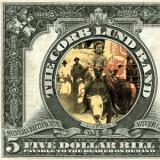
Five Dollar Bill was originally released in 2003, and is now going to be widely available on vinyl for the first time. This record includes songs that are staples in Corb Lund’s live set, such as “(Gonna) Shine Up My Boots” and “Time to Switch to Whiskey.” In addition to these lively jams, Five Dollar Bill features everything from romantic imagery of Corb’s homeland, “Short Native Grasses (Prairies of Alberta),” to songs that give the listener a glimpse into the life of working class folks, such as “Roughest Neck Around” which is an ode to oil riggers and the grit that is required with that lifestyle. “‘Five Dollar Bill’ was a big milestone for me for lots of reasons. It was my first record after my metal band, The Smalls, broke up and it’s when I got really serious about western music. I really dove into my family’s cowboy ancestry and my very rural upbringing in this batch of songs. It was also our first record of many produced by Harry Stinson who is now a very close friend, and our first brush with Nashville, Tennessee, as we recorded half the record down there. It was our last record with Ryan Vikedal on the drums before he flew off into fame and fortune with Nickelback. It was also our last record as a trio. It was my first gold album,” says Lund, “And we are still playing lots of these songs at our shows. It really defined my path forward as a western songwriter and helped lay the foundation for my whole career."
This limited edition release is part of the Corb Lund - Dark Horses Club. New West Records will be releasing unreleased records and material from Corb Lund throughout 2025 and 2026.
The discovery of Doris Dennison's score represents a genuine musicological breakthrough—what once would have been "a tree falling in the woods" thirty years ago now holds the potential to render "a thunderous clap in our minds." While researching Anna Halprin's lesser-known collaborators, scholar Tom Welsh uncovered the archives of AA Leath, one of Halprin's principal dancers. Buried within these materials was Dennison's handwritten score for Earth Interval, dated May 1956. Born in Saskatchewan, Canada, in 1908, and raised near Seattle, Dennison (1908-2009) encountered John Cage while teaching Dalcroze eurythmics at the Cornish College of the Arts. She joined Cage's earliest percussion quartet—alongside Margaret Jansen, the composer and his wife Xenia—in the group widely regarded as having performed the first complete concert of percussion music in the United States. This historic December 1938 concert was followed by tours and the landmark May 1941 performance at the California Club, comprising Cage and Lou Harrison's Double Music, the premiere of Cage's Third Construction, and Harrison's 13th Simfony.
As Bradford Bailey observes in his extensive liner notes, Earth Interval demonstrates "an extraordinary balance of elements that imbues the piece with a sense of clarity, directness, and constraint that is both distinct and ahead of its time." The work's most remarkable innovation lies in its approach to extended techniques, particularly Dennison's notation for the central movement: "In 2nd movement, 1st player lowers + raises a gong into a tub of water while beating." This technique, absorbed from Cage's experimental vocabulary, generates what Bailey describes as "fields of acoustic abstraction that bend and warp time through sustained resonances, beat, and space." The temporal sophistication of these manipulations anticipated Karlheinz Stockhausen's Mikrophonie I (1964) and Annea Lockwood's water-based sound investigations by over a decade. After joining Mills College as dance accompanist, Dennison maintained crucial connections to the Bay Area's experimental scene, collaborating with figures like Merce Cunningham and programming Cage's music throughout the 1950s.
Comprising three movements—Land Form, Air Tide, and Earth Play—Earth Interval is scored for recorder, drums, gongs, maracas, muted gongs, and bowl gongs. In total, the piece is just under eight minutes: "a fleeting glimmer of moment in time, a life spent at the cutting edge, and a singular creative vision that packs a powerful punch." When viewed in historical context, placed in contrast to roughly contemporaneous avant-garde percussion works by Cage, Harrison, Louis Thomas Hardin (Moondog), and Harry Partch, or important precursors like Edgard Varèse's Ionisation (1931) and Henry Cowell's Ostinato Pianissimo (1934), it's clear that Dennison was following her own path. Earth Interval is not derivative. It is a precursor to what was yet to come, alluding to developments of avant-garde and experimental music that wouldn't begin to appear on the cultural landscape until the 1970s and '80s, with the emergence of Post-Minimalism and more idiosyncratic artists and ensembles like Midori Takada, Ros Bandt, Peter Giger, Frank Perry, Christopher Tree, Michael Ranta, Gamelan Son of Lion, and Niagara.
This recording by Chicago's Third Coast Percussion, captured in March 2022, represents the first complete documentation of this pioneering work. The ensemble's interpretation reveals the piece's remarkable contemporaneity while maintaining its historical specificity. Where Cage, Harrison, and Partch employed "self-consciously off-kilter polyrhythms," Dennison's rhythmic sensibility anticipates minimalist developments by nearly a decade, yet integrates "forceful rests, as well as sharp shifts in sonic character, tempo, and meter, that break the momentum and breathe a sense of life into the piece's structure." This positions her work closer to Post-Minimalism decades before its emergence. The architectural approach demonstrates Dennison's understanding that "the composer almost entirely disappears" in favor of phenomenological listening experience, creating what might be called an egoless music that places its realities and meaning entirely in the ear of the beholder. The present recording, realized by Chicago's distinguished Third Coast Percussion ensemble, represents a significant achievement in experimental music scholarship and performance practice. As specialists in the Cage tradition and contemporary percussion repertoire, Third Coast Percussion approached Earth Interval with the historical sensitivity and technical precision required to illuminate Dennison's subtle compositional innovations. The March 2022 recording sessions, engineered by Colin Campbell, capture both the work's intimate chamber music qualities and its bold exploration of extended techniques. The ensemble's interpretation reveals the piece's remarkable contemporaneity—its ability to speak directly to current musical concerns while maintaining its historical specificity.
This recording serves multiple scholarly functions: it provides the first complete documentation of Dennison's compositional voice, offers insight into the broader network of experimental music practitioners surrounding Cage and Harrison, and demonstrates the sophisticated level of compositional thinking that was occurring within the Bay Area's dance-music collaborations of the 1950s. The work's emphasis on phenomenological listening—what might be called an "egoless" approach to musical experience—places it within a lineage of American experimental music that prioritizes perceptual process over compositional personality. The work's original obscurity—limited to AA Leath's performances at venues like the 1957 Pacific Coast Arts Festival at Reed College—paradoxically allowed it to remain "entirely on its own terms," free from the constraints of historical categorization. Drawing on Jacques Derrida's Archive Fever, the argument emerges that "the archive can acknowledge, celebrate, and resurrect" overlooked voices, transforming our understanding of experimental music history. The present Blume edition, featuring Third Coast Percussion's authoritative interpretation, includes a lavishly illustrated 16-page booklet designed by Bruno Stucchi / dinamomilano, containing complete scholarly apparatus, historical photographs, and detailed production notes. This recording enables "cross-temporal intersectionality," allowing Dennison to "belong to a newly formed and more dynamic understanding of the present and past," demonstrating how forgotten voices can reshape entire historical narratives when given proper scholarly attention and performance advocacy.

- People
- The Firm
- Hellhounds
- Point Blank
- Bad Times
- Sometimes
- Summer Is Coming
- Takin' A Ride
- The Luscious Ones
- G. Masina
Explosiv, emotional, kompromisslos und zu laut. In einer Rocklandschaft, die zunehmend zwischen Retro-Glanz und digitalem Kalkül pendelt, übernehmen THE EXTRAS eine Rolle, die längst verwaist scheint: Die einer Band, die Emotionalität nicht mit Pathos verwechselt, die Punk-Wurzeln mit Songwriting-Können paart - und die Haltung hat, ohne Parolen zu schreien. Gegründet 2023 in Köln, aber mit internationaler DNA, zwei der vier Mitglieder stammen aus den USA, verbindet sie den rohen Geist des amerikanischen Undergrounds mit europäischer Gegenwartskultur. Die Gründer Elmar Freels (Köln) und Jon Manierre (New York) werden komplettiert durch Transgitarristin Killer Krissy, Drummer extraordinaire Leroy Kaldenbach und Bassist Pat Bewick. Mit ihrem eigenständigen Breitwandsound, ausgefeilten Lyrics und Rollkragenpullovern nach Lou-Reed-Vorbild (nur in weiß) sind THE EXTRAS eine stilvolle Ausnahmeerscheinung. Sie vereinen rohe Energie mit Zugänglichkeit, Melancholie mit Wut, Punk mit Pop - und zeigen, dass Empowerment auch laut, chaotisch und kollektiv sein kann.
