Antarctica Starts Here Novedades

  • 1
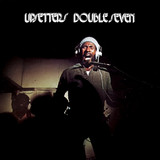
The Upsetters - Double Seven

'Double Seven, released by Trojan in late 1973, was the last album Lee 'Scratch' Perry would release on the label for some considerable time, and it was essentially the final album project he put together before establishing his own Black Ark studio. Opening track 'Kentucky Skank' sets the tone with a slow creeper whose frying sounds underscore its role as a praise song to the Colonel's KFC recipes; the cosmic Moog blips come courtesy of Ken Elliott at Camden's Chalk Farm studio, also prominently featured on U-Roy's double-tracked, stereo-panned gambling ode 'Double Six.' David Isaacs' 'Just Enough' was cut a few years prior, which makes it slightly out of phase with the rest of the set, though the enigmatic 'In The Iaah' sounds mightily fresh, with its uncredited chorus said to come courtesy of the Wailers. Perry's own 'Jungle Lion' has hilarious roars from the maestro at the start, strangely grafted atop a reggae re-make of Al Green's 'Love and Happiness.'

'Overall, Double Seven melds the soul, funk, reggae and dub elements that were constant in Perry's work during this phase. His enhanced audio spectrum and endless reference points would keep his music continually apart from that made by his peers.'
—David Katz (excerpt from the liner notes)

Reservar27.03.2026

debe ser publicado en 27.03.2026

20,13

Ültimo hace: 2026 Años
Jackson C. Frank - 1975 Mekeel Sessions

For years, Jackson C. Frank was as ghostly a legend as they come. Even the relatively few record collectors who revered his work were usually only aware of the lone album that he released in his lifetime. For all most listeners knew, Frank put out a celebrated LP and vanished, despite that record having been produced by Paul Simon.

1975 Mekeel Sessions features six tracks recorded in the mid-'70s at a studio in Lake Hill, New York about five miles from Woodstock where Frank was living at the time. Only discovered in the mid-'90s, these recordings still hum with the same mysterious warmth that defined Jackson at his peak. His guitar work, alternating between strummed and fingerpicking, is consistently adept. His stark and somber voice more weathered than the lighter tone heard on his 1965 debut.

The Mekeel tapes were intended for Frank's sophomore album (titled Marlene), but alas it never came to be. What one hears is not a singer-songwriter fading out of view; it is a singular artist who never stopped trying to build his own world, even when no one was watching. For fans of everyone who Jackson influenced: from Nick Drake, Sandy Denny, Bert Jansch and John Martyn to more contemporary acts like Elliott Smith and Iron And Wine who surely used Frank's sparse approach as a template.

Reservar23.01.2026

debe ser publicado en 23.01.2026

21,22

Ültimo hace: 2026 Años
Horace Andy - Get Wise
  • 1: I Will Forgive You
  • 2: Root Of All Evil
  • 3: Holy Mount Zion
  • 4: Sexy Jean
  • 5: Let The Teardrops Fall
  • 6: I Don’t Want To Be Outside
  • 7: Eighty Percent Badness
  • 8: Get Wise
  • 9: Youth Of Today
  • 10: Feel Good

With his honeyed falsetto, Horace Andy has long been considered one of roots reggae's most inimitable voices. His signature tune, "Skylarking," is one of a handful of songs that can be instantly recognized by even the most casual of reggae fans. Making his debut with producer and mentor Phil Pratt at the age of sixteen, Andy's expressive vocal style is immediately distinctive, bearing the soulful influence of American artists Otis Redding and Smokey Robinson as well as fellow countryman Alton Ellis.

1975's Get Wise collects a series of singles produced by Pratt including versions of hits "Money, Money" ("Root Of All Evil") and "Zion Gate" ("I Don't Want To Be Outside"). Recorded between 1972 and 1974, these sides were captured at legendary studios Channel One, Black Ark, Dynamic Sound and Randy's Studio 17 with house engineers Ernest Hoo Kim, Lee Perry, Carlton Lee and Errol Thompson at the helm.

Originally released on Pratt's Sunshot label, the album doubles as a showcase for The Soul Syndicate Band, a typically ad-hoc session group which featured Sly & Robbie, Aston "Family Man" Barrett and Earl "Chinna" Smith, among others.

Get Wise delivers ten tracks of Andy's finest material and should be in the collection of any aficionado of the classic '70s Kingston sound. Liner notes by JR Gonne.

Reservar22.08.2025

debe ser publicado en 22.08.2025

26,47

Ültimo hace: 2026 Años
Errol Brown & The Revolutionaries - Dub Expression

Recorded and mixed at Duke Reid's storied Treasure Isle studio by Duke's nephew, young engineer Errol Brown, Dub Expression collects dubbed up treatments of seminal rockers rhythms crafted for Marcia Griffiths, John Holt, Dennis Brown and more.

Propelled by the drums of Lowell "Sly" Dunbar, the appropriately named Revolutionaries (with their tough and radical sound) were the ideal group to reflect a turbulent period in Jamaican politics. While the band's personnel remained fluid – depending on which players were available and frequently overlapping with other seminal sessions bands such as Joe Gibbs' The Professionals and Bunny "Striker" Lee's The Aggrovators – The Revolutionaries were most known as Channel One's house band in the mid to late '70s.

The decision to top-bill The Revolutionaries, rather than feature an individual artist as was customary at the time, was made by Kingston's most celebrated female producer, Sonia Pottinger who shrewdly determined that The Revolutionaries' name alone would be a can't miss selling point. One only needs to spend a minute with Dub Expression to hear why.

Originally released in 1978 on Pottinger's High Note label, Dub Expression represents the essence of dub in its purest form. An absolute classic. Liner notes by JR Gonne.

Reservar22.08.2025

debe ser publicado en 22.08.2025

26,47

Ültimo hace: 2026 Años
Third Ear Band - Third Ear Band

For many bands, having all their gear stolen would be catastrophic. For Third Ear Band, this unfortunate 1968 incident opened a portal to beneficial change. Leader/percussionist Glen Sweeney viewed the heist as a sign to alter Third Ear Band's approach, and they switched to exclusively using acoustic instruments. With electrified psychedelia in full bloom, Sweeney, Paul Minns (oboe, recorder, whistles, flutes) and Richard Coff (violin, viola) struck out on an individualistic path, blending Indian raga with chamber music – without plugging in.

Third Ear Band's 1969 debut album, Alchemy, established them as a solemn, powerful force in the global underground. On Alchemy, Sweeney laid down a steady pulse on hand drums, while Minns and Coff wove in melismatic patterns on oboe, recorder, violin and viola. This approach carried over to Third Ear Band's self-titled sophomore album, often called Elements due to its track titles being named after the four basic components of medieval European alchemists' doctrines.

On this 1970 LP, Third Ear Band sounded at once ancient and contemporary, yet they turned on the hippies with their epic, trance-inducing jams that suggested secret knowledge of infinity. Although Third Ear Band flourished during the West's countercultural zenith, they were peculiarly estranged from it on a sonic level. Even outré contemporaries such as Comus and Jan Dukes De Grey sounded like pop groups compared to TEB. Having no traditional front person or electric instruments, Third Ear Band forged a singular path that flowered most vividly on Elements.

The long songs here stream forth from their skilled hands, evoking a communal transcendence in sound – a hypnotic swirl that doesn't swing, but rather wafts and undulates with cloistered beauty. TEB's music exists in an eternal now, a perpetual wow. It is an ouroboros of organic textures, seemingly magicked into the air spontaneously, yet possessing a rigor that suggests long hours in the lab. Without electricity, it somehow burrowed deeper into your consciousness.

– Dave Segal (excerpt from the liner notes)

Reservar22.08.2025

debe ser publicado en 22.08.2025

26,47

Ültimo hace: 2026 Años
Jackson C. Frank - Jackson C. Frank LP

Jackson C. Frank's eponymous album is the embodiment of folk legend. Issued in late 1965 on the UK Columbia label, it was for many years more famous for its producer (Paul Simon) and the musicians who would go on to cover its songs (Nick Drake, Bert Jansch, Sandy Denny) than for the hauntingly beautiful music contained inside.

Frank's backstory certainly adds to the legacy: born in Buffalo, New York, he used the settlement from a childhood accident to sail to London where he quickly became a fixture of the bustling folk scene. Performing a mix of blues standards and originals, he met fellow ex-pat Paul Simon who would put up the money to record Frank's only LP.

For such a sparsely recorded work, Jackson C. Frank covers a lot of ground. From the rugged, world-weary opener "Blues Run The Game" to the stunning melancholy of "Milk And Honey," Frank's nimble acoustic guitar and passionate howls are all that is needed to power such authentic songwriting. Captured in a single-day session, these ten tracks are stark, gritty and seemingly out-of-place with time. There may be no '60s folk record that is simultaneously as rare and influential as Jackson C. Frank's self-titled debut.

Reservar12.04.2024

debe ser publicado en 12.04.2024

29,37

Ültimo hace: 2026 Años
Alice Coltrane - Eternity

Released in 1976, Eternity was Alice Coltrane's first album for Warner Bros. after eight wondrous records on Impulse! Combining the drones and textures of India, the gospel and R&B of her Detroit youth and the dissonance of modern classical composition, Coltrane's music in the '70s would become increasingly difficult to categorize.

Having moved a few years earlier to California (where she founded the Vedantic Center, an Ashram for spiritual studies), Coltrane stretches out on Eternity – incorporating various musical styles, including a stirring adaptation of Igor Stravinsky's The Rite of Spring – and the results are dazzling, both in sonic scope and emotional range

Opener "Spiritual Eternal" sways between Alice's exploratory organ and the dramatic swell of lush strings. A meditative solo piece for harp, "Wisdom Eye," precedes the rollicking rhythms of "Los Caballos," which showcases some of her finest soloing.

"Om Supreme" is the album's first track to be built around bhajans (Hindu devotional songs). Featuring graceful keyboards backed by an angelic choir, this piece hints at the ecstatic devotional music that she would later make with members of her Ashram.

While Coltrane would delve deeper into her spiritual journeys and continue to expand her musical interests on subsequent LPs, Eternity remains a vivid and compelling display of her unique vision, myriad talents and passions.

Reservar03.11.2023

debe ser publicado en 03.11.2023

25,63

Ültimo hace: 2026 Años
Dadawah - Peace And Love - Wadadasow

repress

Michael George Henry (aka Ras Michael and, for this lone release, Dadawah) was born in 1943 in Saint Mary Parish, in northeastern Jamaica. Henry was raised in a Rastafari community when the religious movement was still in its infancy and marginalized within Jamaica. It was there that he began performing Nyahbinghi, the Rastafarian devotional music that combines the influences of African drumming and Black gospel.

Henry found himself in Kingston in the late 1950s where he worked for Coxsone Dodd at the legendary Studio One. By 1968, he had formed the group Sons of Negus and the first overtly Rasta record label, Zion Disc. As Rasta filtered into the mainstream, Henry released more music including albums for Trojan, Dynamic and Grounation labels.

Originally released in 1974, Peace And Love - Wadadasow is Dadawah’s magnum opus. Produced by Lloyd Charmers, the album features slinky basslines, wah-wah guitar, hypnotic keyboards, dubbed-out studio trickery and, of course, the propulsive drumming and rhythmic chanting characteristic of Nyahbinghi.

Antarctica Starts Here presents the first widely available domestic release of Peace and Love - Wadadasow. This reissue is part of an archival series that focuses on Trojan’s essential ’60s and ’70s catalogue. Liner notes by JR Gonne.

No en stock

Haga su pedido ahora y le encargaremos el artículo en nuestro proveedor.

23,95

Ültimo hace: 3 Meses
BOB LIND - SINCE THERE WERE CIRCLES

Singer-songwriter Bob Lind will forever be immortalized by his 1965 hit, »Elusive Butterfly«, but his career is so much more interesting than the fading wonder of that one hit. Once a hard-partying buddy of Charles Bukowski, Lind was the inspiration for the character »Dinky Summers«, a down-on-his-luck folk singer in Bukowski's 1978 novel Women. Lind also doubled as a writer, penning a number of novels and plays as well as serving as a long-time staff writer at the lowbrow tabloid Weekly World News.

If that wasn't enough, Lind is also responsible for one of the greatest major-label 'loner' albums of all time, 1971's Since There Were Circles. After several years languishing without a second hit for the World Pacific label, Lind signed to Capitol and went into the studio with some of the biggest names in the LA country-rock scene including Doug Dillard, Gene Clark, Bernie Leadon and legendary session bassist Carol Kaye. While the record was well-received critically, it sold poorly and marked Lind's bitter departure from the music business for several decades.

The intervening half-century has been incredibly kind to »Since There Were Circles«, and it is now regarded as a cult masterpiece that pairs perfectly with Gene Clark's No Other, Bobby Charles' self-titled Bearsville album and Lee Hazlewood's Cowboy in Sweden. Lind's songwriting here is vastly darker and more self-reflective than anything from his folk-pop period, and the production is simultaneously loose and rootsy, yet lushly orchestrated and occasionally bombastic. Lind somehow manages to bring it all together with wry delivery and literate detail.

Reservar15.07.2022

debe ser publicado en 15.07.2022

25,00

Ültimo hace: 2026 Años
The Silvertones - Silver Bullets

The Silvertones were steeped in the grand tradition of Jamaican vocal trios along with other greats such as The Heptones, The Abyssinians and The Kingstonians. Formed in 1964 by Delroy Denton, Keith Coley and Gilmore Grant, the group recorded under a variety of names in the ska and rocksteady era for Duke Reid’s Treasure Isle and Coxsone Dodd’s Studio One, before hooking up with producer Lee “Scratch” Perry.

Originally released in 1973, The Silvertones’ debut Silver Bullets was recorded at Perry’s Black Ark studio with vocal tracks captured at King Tubby’s Dromilly Avenue studio in a marathon, all-night session. While firmly planted in roots reggae, Silver Bullets’ dense harmonies and relaxed vibe harken back to rocksteady. The album marks an interesting point in Jamaican music where the past and the future are visible in the grooves of a single LP—from classic rocksteady-tinged love songs like “That’s When It Hurts” and “Rock Me In Your Soul” to the Rasta anthem “Rejoice Jah Jah Children.”

Antarctica Starts Here presents the first widely available domestic release of Silver Bullets. This reissue is part of an archival series that focuses on Trojan’s essential ’60s and ’70s catalogue. Liner notes by JR Gonne.

No en stock

Haga su pedido ahora y le encargaremos el artículo en nuestro proveedor.

21,81

Ültimo hace: 3 Años
The Upsetters - Scratch The Upsetter Again

'The inventive record producer and vocalist Lee 'Scratch' Perry was involved in every musical shift of note in his native Jamaica, from the rhythm and blues that pre-dated the arrival of ska in the early 1960s through the slower and more spacious rocksteady style that appeared middecade and, of course, the frenetic sound of reggae, which he helped to birth as an independent producer during the late 1960s. Operating as 'The Upsetter' from his base in a downtown Kingston record shop, Perry found his greatest success with instrumental music during this phase, the organ and saxophone re-castings of standard vocal issues proving exceptionally popular overseas.

'Scratch The Upsetter Again surfaced early in 1970 as a largely instrumental set, but with dreamy reverb a hefty feature and keyboards veering away from standard organ motifs. Dave Barker, who was soon to hit the pop charts as part of Dave & Ansel Collins, tackles The Shirelles' 'Will You Still Love Me' in soul reggae mode, only for Perry to shift things towards the emerging dub spectrum with 'Take One.'

'As Perry inched ever closer to the dub experimentation he would turn into an art form at his own Black Ark studio later in the decade, Scratch The Upsetter Again shows him moving away from the standard approaches of his competitors in his quest to test the very limits of recorded sound. And reggae was all the richer for it.'
—David Katz (excerpt from the liner notes)

Reservar30.06.2021

debe ser publicado en 30.06.2021

20,13

Ültimo hace: 2026 Años
Alice Coltrane - Transfiguration

By the late '70s, Alice Coltrane had largely gravitated away from jazz, incorporating Hindu chants and hymns into her music to reflect a newfound sense of creative omnipotence. However, in April 1978, she would return to her roots, performing at University of California, Los Angeles to make her first and only live album.

Transfiguration, featuring drummer Roy Haynes and bassist Reggie Workman, showcases Alice's many compositional talents and fierce improvisatory abilities. Throughout this double LP set, her playing evokes the time spent in her late husband John Coltrane's band and the avant-garde music of her earlier years.

As biographer Franya J. Berkman writes, "Her up-tempo keyboard work here is the most exciting of her commercial career. With its rapid-fire transpositions of short figures; its long modal passages, rhythmic play, and timbral inventiveness; its sustained energy and burning pace; and the unrelenting support of Haynes and Workman, she takes leave of the jazz business with a truly breathtaking swan song."

Alice Coltrane would not revisit jazz on record for another 26 years, turning instead to spiritual music made with students at her Vedantic Center and self-releasing a series of cassettes under her Sanskrit name, Turiyasangitananda. It is hard to imagine a better farewell than the intense and spellbinding Transfiguration.

Reservar26.04.2019

debe ser publicado en 26.04.2019

29,37

Ültimo hace: 2026 Años
Alice Coltrane - Transcendence

Transcendence was not only Alice Coltrane's last studio album for Warner Bros., it would also be her last studio work for nearly three decades. While Eternity and Radha-Krsna Nama Sankirtana followed the composer's muse through an exciting range of musical styles and influences, Transcendence is perhaps the most fully realized of the three LPs, synthesizing the best elements of each into a monumental whole.

Side one consists of intimate compositions with Alice's pointillist harp enhanced by intricate string arrangements. At times, the emotional climaxes in "Radhe Shyam" and the title track sound like the score to an epic film. This would be the closest Coltrane ever came to chamber music, yet rendered with her uniquely spiritual tint.

Side two moves into celestial territory with uplifting chants, light handclaps and bluesy organ. These call-and-response chants, featuring members from her Ashram, completely embody both African-American gospel and Hindu devotional traditions, an uncanny fusion that is transformed through Alice's pure spirit.

What runs through the album's two musical halves is a powerful sense of devotion and discovery. At this point in her life, Coltrane was on a journey toward truth through sound, and Transcendence gives the listener a front row seat to this quest.

Reservar26.04.2019

debe ser publicado en 26.04.2019

24,16

Ültimo hace: 2026 Años
Alice Coltrane - Radha-Krsna Nama Sankirtana

Radha-Krsna Nama Sankirtana was the first of two albums Alice Coltrane released in 1977 (the other being Transcendence). Coltrane's music during this period grew out of an epiphany in which she would renounce secular life and don the orange robes of a swamini (spiritual teacher in the Hindu tradition). Musically, this meant leaving jazz behind (at least partially) and embracing the chants and rhythms of devotional music.

The first half of Radha-Krsna is mostly filled with simple arrangements of bhajans (Hindu devotional songs) and features the singing of students from the Vedantic Center, the Ashram that Coltrane founded in 1975. The group bounces with the joy of a gospel choir (not coincidentally, some had backgrounds in Southern Baptist churches).

A rapturous aura permeates opener "Govinda Jai Jai" with Alice leading on Fender Rhodes. On "Prema Muditha," she returns to acoustic piano (her main instrument in the early part of her career) to deliver a powerful and poignant theme.

Sidelong "Om Namah Sivaya" beams with probing organ improvisations accompanied by the drumming of her 13-year-old son Aruna John Coltrane, Jr. This closing track offers a strong indication that even if Alice Coltrane was turning toward new traditions for inspiration, her music was still something that only she could make.

Reservar26.04.2019

debe ser publicado en 26.04.2019

24,16

Ültimo hace: 2026 Años
  • 1
Artículos por página
N/ABPM
Vinyl