Limited Colored Edition - 1000 Copies
Arguably one of the most acclaimed and loved bands of the past 20 years, by both fans and their musical peers alike, The Beta Band formed in St. Andrews, Scotland, in 1996. Innovative and singular, their unique musical and aesthetic approach to everything they did set them far apart from their musical contemporaries. Together for a relatively short period of time, the three albums and three EPs they released between 1996 and 2004 would nonetheless help define them as one of the most exciting and cherished bands of their generation. 'Heroes to Zeros' is the third and final studio album by The Beta Band released in 2004. It was mixed by famed producer Nigel Godrich and rose to number 18 in the UK charts.
quête:j period
Having remained continuously active since 1971, the Yoruba Singers are the longest-running musical group in Guyana. Emerging from a music scene mostly dominated by slick, commercial entertainment, the Yoruba Singers brought a new dimension to Guyana popular music, cooking up a potent stew of afrocentric vibes, steeped in a committed invocation of the country's African heritage. The Yoruba Singers released several recordings during their imperial period in the nineteen seventies and eighties, but what is broadly regarded as the group's magnum opus is the 1981 album Fighting for Survival. The album sums up the group's first decade of operation, serving up a heavy mix of calypso, jazzy funk, reggae and afrobeat. Initially released on the short-lived Interculture label and later reissued on a Guyana-only compact disk, the album has long been more talked about than actually heard. But thanks to Cultures of Soul a new edition is now available in wide release, and with it comes the opportunity to experience some of the deepest grooves the Caribbean has to offer!
- A1: Theme From The Conversation (3:33)
- A2: The End Of The Day (1:37)
- A3: No More Questions / Phoning The Director (2:18)
- A4: Blues For Harry (Combo) (2:39)
- A5: To The Office / The Elevator (2:40)
- A6: Whatever Was Arranged (2:09)
- A7: The Confessional (2:21)
- B1: Amy's Theme (2:51)
- B2: Dream Sequence (2:35)
- B3: Plumbing Problem (2:54)
- B4: Harry Carried (2:47)
- B5: The Girl In The Limo (2:25)
- B6: Finale And End Credits (3:54)
- B7: Theme From 'The Conversation' (Ensemble) (2:31)
THIS IS NOT A REISSUE. THIS IS THE FIRST TIME THIS AMAZING MINIMAL SCORE HAS BEEN ISSUED ON VINYL
This is the first time the complete score to The Conversation has been released on vinyl. The film itself was originally released in 1974 and a 7' demo of the theme was sent out as promotional material by Paramount (PAA-0305), but a USA stock edition was never issued. In Japan the same music was also issued on a 7' at about the same time (JET-2273), with a picture sleeve, but until now nothing else has ever been pressed on vinyl.
Jonny Trunk's little obsession with this music began after I'd caught the film, late night, sometime in the mid 1990s. Musically it's an exceptional example of the 'new minimalism' in film music of the period, marking a departure (for some) from big scores to smaller, more economic ensemble sounds.
The film was written, produced and directed by Francis Ford Coppola and is still a thrilling journey into sound, mind and murder. Heavily influenced by Antonioni's Blow-Up (and not, as some thought, by Watergate), Coppola wanted to fuse the concept of Blow-Up with 'the world of audio surveillance'. The story centres around Harry Caul (Gene Hackman), a mac-wearing professional wire-tapper and clandestine bugger who gets unusually consumed by a conversation he's been paid to record. Caul is a loner, an obsessive-compulsive character with numerous neuroses that play out brilliantly throughout the film. And as he slowly pieces together the conversation fragments and forms his own story around it, his world falls apart.
Sonically this movie - all about sound - is groundbreaking in many ways, with actual 'sound Design' Provided By The Legendary Walter Murch - The Man Who Actually Invented The Term In The First Place.
For The Music, Coppola Wisely Chose A Young David Shire, His Brother In Law. Shire's Deceptively Simple Piano Theme (composed Because Of No Budget For Big Orchestra) Is One Of Tragic Beauty, Brilliantly Capturing Caul's Loneliness, His Slightly Disturbed Nature And This Trip Into Darkness. The Melody Has Both Sweet And Sour Tones, Feeling A Little Like A Slow Ragtime, Which Both Develops And Retreats Throughout The Film; There Are Even Trips Into Avant-garde Territory With Electro-acoustic Flourishes And Concrète. The Solo, Agitated Figure Of Caul, Wearing His Distinctive Transparent Mac, Is Made All The More Raw And Poignant By The Score - The Sparse And Curiously Emotional Compositions Are Unlike Any Others I Can Think Of From The Period.
The Soundtrack For The Conversation Proved To Be A Major Break For Shire, His Career Really Taking Off From This Musical Point. His Next Score Was To Be The Underground Classic Taking Of Pelham 123, Followed Up Later Ironically By All The Presidents Men - A Thriller About The Watergate Scandal.
The Conversation Went On To Win Several Awards And Nominations, And Has Become A Classic Of The 'new Hollywood' Movement. Hopefully Now This Music May Become Part Of The Renewed Interest In Old Film Soundtracks.
Lost Futures is a new label that explores experimental and often radical approaches to dance music from the past. In a musical landscape that increasingly claims to seek and reward new forms and ideas, Lost Futures delves into the recent past to revisit forward-thinking, optimistic projects that, owing to the social, musical or outright political climate, perhaps struggled to find an audience. Allowing only time to re-contextualise these leftfield, sometimes misunderstood and ultimately human bodies of work, Lost Futures taps into the inherent idealism of rave.
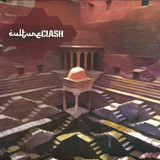
LF001 trips back until the early nineties to revisit the alternative scene emerging from the Dutch city of Utrecht. Here, three young men - DJ Zero One (Sander Friedeman), TJ Tape TV (Arno Peeters) and DJ White Delight (Richard van der Giessen) - joined forces to form 'The Awax Foundation'. Inspired by the transcendent and revolutionary electronic music arriving on their shores imported from Chicago and Detroit, combining their knowledge, gear and ever-expanding vinyl collection allowed additional freedom in paying sincere tribute to these intoxicating sounds, while also developing their tastes in a more personal, eclectic direction.
The musical flavours of Awax initially leaned toward acid house and the roots of techno. However, with three different mindsets in the mix, their tastes were rarely fixed. One thing each shared in common was a devotion to collecting rare sounds, specifically more adventurous and international samples than those emanating from the increasingly-hard, masculine dance music emerging from the Netherlands during the period. Inspired by the cross-over global sound of bands like Suns of Arqa, or 'World Music', as it was perhaps patronisingly termed at the time, the trio became interested in the idea of making techno with 'ethnic instruments'.
Of course, this being 1992, none of The Awax Foundation had access to such instruments, instead, they had a vast, collective library of samples from all over the world. There were no collaborations and no clear plan. Instead, they set to work using a Yamaha TX16W sampler, the legendary Atari 1040ST computer, a cheap mixing desk and a couple of low-end synths and FX machines. When Richard mentioned the project to his friend, Akin Fernandez, the London DJ and owner of cult label Irdial Discs, Fernandez was intrigued enough to invite the trio to record a one-hour show for his 'Monster Music Radio' series on London's then-burgeoning Kiss FM.
Forced to come up with a name, 'CultureClash' seemed like the obvious choice, even if the members of Awax were only creatively sparring among themselves. Along with the term 'ethno-techno', slightly dubious to a hopefully more conscious Western audience in 2017, these were the only guiding principles to the quietly ambitious project that soon combined cutting-edge machine rhythms with samples sourced from everywhere from Bolivia to Togo, and inspired by everything from Ravi Shankar's epic soundtrack to the Oscar-winning movie Ghandi, to the technical limits of their own setup requiring a dazzling degree of cut-and-paste work. Some tracks even emerged out of academic studies within the ethnomusicology department at The University of Amsterdam.
The show aired on October 2nd, 1992, recorded in one blistering take and without any rehearsals, traversing a huge variety of tempos and styles. If the performance wasn't seamless, it was undeniably thrilling, fresh and ambitious. As such, several labels, including Fernandez's aforementioned Irdial Discs expressed an interesting in commercially releasing CultureClash, while another imprint proposed a series of twelve-inches and an album. But the sheer complexity of the project meant that it never saw the light of day, while the trio embarked on different journeys ahead, both creative and personal.
Twenty five years later, and the original CultureClash lineup and founding members of The Awax Foundation provide the sound of the first release from Lost Futures. An otherworldly, ambitious and optimistic compilation, accompanied by extensive sleeve notes from the trio, CultureClash is a timeless ode to experimentation in dance music's ever-overlapping culture.
Arguably one of the most acclaimed and loved bands of the past 20 years, by both fans and their musical peers alike, The Beta Band formed in St. Andrews, Scotland, in 1996. Innovative and singular, their unique musical and aesthetic approach to everything they did set them far apart from their musical contemporaries. Together for a relatively short period of time, the three albums and three EPs they released between 1996 and 2004 would nonetheless help define them as one of the most exciting and cherished bands of their generation. Released in 1999, the album The Beta Band' followed the critically acclaimed compilation The Three E.P.'s' (1998). With high anticipation for The Beta Band, the band originally planned to record the album in four separate continents, but financial constraints slimmed the recording locations down, however, the album was still recorded in a variety of locations and pulling inspiration from sources as diverse as Jamaican reggae, Disney's movie The Black Hole' and Bonnie Tyler's Total Eclipse of the Heart".
D-Leria returns to the scene more than a year after debuting on Berlin-based label Delirio, releasing a collection of work produced between 2014 and 2018; ten tracks which mark a new beginning for this young Italian producer, sweeping between heavy ambient excursions to hypnotic/ tribal techno, modernized and polished off in his own way.'Driving to Nowhere' is the summation of an extended journey; a year-long hiatus due to unforeseen health concerns allowed time to meditate and consider his past experiences in Italy's various underground electronic music scenes, and the potential directions inspired by thriving Berlin.
From 2014 to 2017 he released several EP's, each developing upon this new style, until joining the young label Delirio as both a musician and a manager. With Delirio he has hosted artists such as Stanislav Tolkackev, Roberto Bosco, Plaster, Retina.it and more, with a unique agenda to record precisely produced music live, instead of laboring in the studio to achieve over-polished audio. His first album inaugurates the beginning of the new DLP catalog, which will be dedicated to LPs, albums and other projects released on 12-inch vinyl. Through these 10 tracks D-Leria experiments with various production methods, as in 'Makumba' where he precisely combines the kick drum with a tight bass line in a 12-step sequence, making the track fluid and never predictable. 'Reborn' is an even more ambitious undertaking, initially recorded on tape before being sent back to the mixer via Hi Fi stereo, D-Leria modulated the cassette coil with a bic pen to create a unique 'detune' effect. 'From the Ground' and 'Driving to Nowhere', both made through the same setup, combine tribal voices and moans, combining an ethereal ambience with drums and analog percussion, connecting the rhythm directly to the soul. The opening track 'Libero' is dedicated to himself, while 'Her Smile' and 'Uragano' are both dedicated to the person that was closest to him in his last period of stop and realization of the album, where he expresses his most deep moments in the first, and more difficult in the second.
Just like in most of the EP already released on Delirio, Giuseppe Tillieci aka Neel took care of the mastering of the tracks, while the artist has taken care of the smallest details from the production, to the mixing, to the graphics and also to the titles of the tracks, which refer to personal thoughts and events that happened during this long journey to nowhere.
On her deeply moving debut album At Weddings, Sarah Beth Tomberlin writes with the clarity and wisdom of an artist well beyond her years. Immeasurable space circulates within the album's ten songs, which set Tomberlin's searching voice against lush backdrops of piano and guitar. Like Julien Baker and Sufjan Stevens, she has a knack for transforming the personal into parable. Like Grouper, she has a feel for the transcendent within the ordinary.
Born in Jacksonville, Florida, and now based in Louisville, Kentucky, Tomberlin wrote most of At Weddings while living with her family in southern Illinois during her late teens and early twenties. At 16, she finished her homeschooling curriculum and went to college at a private Christian school she describes, only half-jokingly, as a "cult." By 17, she had dropped out of school, returned home, and begun to face a period of difficult transition in her life. The daughter of a Baptist pastor, Tomberlin found herself questioning not only her faith, but her identity, her purpose, and her place in the world.
"I was working, going to school, and experiencing heavy isolation," Tomberlin says of the time when she first began writing the songs on At Weddings. "It felt monotonous, like endless nothingness. It was a means to get through to the next step of life." In songwriting, Tomberlin found relief and lucidity she had trouble articulating otherwise. When she was 19, she wrote "Tornado" on her parents' piano, and began to develop confidence in her music. A year later, she had written enough songs to fill an album.
Throughout At Weddings, Tomberlin's lyrics yearn for stability and belonging, a near-universal desire among young people learning to define themselves on their own terms for the first time. "I am a tornado with big green eyes and a heartbeat," she sings on "Tornado," her voice stretching to the top of her range. Rich, idiosyncratic imagery — a fly killed with a self-help book, brown paper bags slashed violently open, clouds that weep over a lost love — sidle up to profound realizations about learning to be alive in this world. "To be a woman is to be in pain," Tomberlin notes on "I'm Not Scared." On "A Video Game," she muses, "I wish I was a hero with something beautiful to say."
Tomberlin cites the hymns she grew up singing in church as her greatest musical influence, and while At Weddings in many ways documents the unlearning of her childhood faith, it's easy to hear the reverential quality of sacred music in her songs. "A lot of hymns talk about really crazy stuff — being saved from the depths and the mire, judgment. When you actually realize what you're singing, it becomes really overwhelming," Tomberlin says. "I grew up singing in church. I was still helping to lead worship when I started coming to terms with the realization that I didn't know if I believed. I felt nauseous and shaky reading these words I was singing and feeling their intensity. If I did believe this, how could I sing these words without being scared out of my mind That's what's influenced how I write."
At Weddings is laden with reverence for music itself, for the power it has to heal others and help people navigate their lives. It is a record about learning to love oneself and others without reservation, from a place of deep sincerity — a lifelong challenge whose tribulations Tomberlin articulates beautifully. "My number one goal with my music is for honesty and transparency that helps other people find ways to exist," she says. With At Weddings, this remarkable young songwriter offers up comfort and wonder in equal measure.
a1 | Any Other Way
a2 | Untitled 1
a3 | Tornado
a4 | You Are Here
a5 | A Video Game
b1 | I'm Not Scared
b2 | Seventeen
b3 | Self Help
b4 | Untitled 2
b5 | February
For the last 20 years London-based author and party organiser Tim Lawrence has dedicated himself to excavating the history of New York City party culture and bringing some of the most powerful aspects of that culture to London's dance scene, from where it has ricocheted around the world. Having conducted the first set of major interviews with David Mancuso, Lawrence started to put on Loft-style Lucky Cloud Sound System parties with David and friends in London in June 2003. In early 2004 he published Love Saves the Day: A History of American Dance Music Culture, 1970-79, which tracked the influence of the Loft on the wider New York DJ, dance and disco scene. In 2009 his biography of the iconic musician Arthur Russell became the first book to map the wider downtown music scene. These beautifully written and politically insightful histories have educated, inspired and celebrated the previously overlooked foundations of contemporary dance music.
Lawrence's most recent publication, Life & Death On The New York Dancefloor, 1980 - 1983, published in late 2016, shines a light on 'one of the most dynamic and creative periods in the history of New York City'. Falling between the more regularly celebrated sounds of disco, house and techno, the period produced a uniquely hybrid series of sounds that never acquired a settled name. This led them to be largely ignored by historians and even DJs, yet the power of the period's music and the scenes it birthed, Lawrence argues, remains undeniable. Met with a rapturous response, Life and Death On The New York Dance Floor saw Lawrence on the road for most of the next year as he spread the word about the characters, the records, the clubs and the bands that shaped the post-Disco, post-Punk, and burgeoning Hip Hop landscapes of New York City during the early 1980s—a period when freedom still ruled.
This, the first of a 2-part sonic tribute to the 1980 - 1983 era as well as a musical companion piece to Life & Death On The New York Dance Floor sees recognised musicians (David Byrne of Talking Heads) nestle up alongside the belatedly recognised (Arthur Russell's Dinosaur L and Loose Joints, and Suicide's Alan Vega) and the downright obscure (Gray, 2 Teens Kill 4 and Tuxedomoon). An indication of what's to follow, Dinosaur L's original album version of 'Go Bang' has been dramatically overshadowed by the definitive François Kevorkian remix yet received regular play by David Mancuso and remains an enthralling experimental Arthur Russell jam.
Lovingly curated across 2 slabs of vinyl, the album introduces listeners to a stunning array of sounds, styles, vibes and feelings that encapsulate this most fertile and forward-thinking era, when music, fashion, sound system innovations, leaps in music technology, a DIY attitude and a freedom from corporate politics combined with extraordinary expressivity. All music contained within this album has been hand-picked and programmed by Tim Lawrence. It represents a selective yet rich introduction to one of the most extraordinary periods in New York City's epic musical history.
This is the first release on Reappearing Records, a label led by Tim Lawrence and distributed worldwide by Above Board distribution. Licensing courtesy of Tracksuit Music. Mastering by Optimum Mastering, Bristol UK. Artwork & design courtesy of Atelier Superplus. 2018.
Arguably One Of The Most Acclaimed And Loved Bands Of The Past 20 Years, By Both Fans And Their Musical Peers Alike, The Beta Band Formed In St. Andrews, Scotland, In 1996. Innovative And Singular, Their Unique Musical And Aesthetic Approach To Everything They Did Set Them Far Apart From Their Musical Contemporaries. Together For A Relatively Short Period Of Time, The Three Albums And Three Eps They Released Between 1996 And 2004 Would Nonetheless Help Define Them As One Of The Most Exciting And Cherished Bands Of Their Generation. After A Short Hiatus The Band Gradually Gravitated Back Into The Studio And Recruited Noted Uk Producer Colin Emmanuel, Aka C-swing, To Oversee The Process Of hot Shots Ii' Which Was Released In Mid 2001. Notoriously The Band Had Intended To Release squares", Which Featured A Sample From The Günter Kallmann Choir's 1970 Version Of Wallace Collection's daydream", As The Lead Single. However After Filming The Music Video And Taking The Single To Radio It Suddenly Transpired That Another Single daydream In Blue' By I Monster Featuring The Sample From Günter Kallmann Choir Recording Was Also To Be Released At The Same Time Causing The Band To Release broke' Instead. Touring Extensively And Supporting Radiohead In August 2002, They Made No. 3 On Q Magazine's List Of 50 Bands To See Before You Die".
The next Alien Jams release is "NEW" brought to us by Australian artist YAWS. Recorded earlier this year in his hometown, this 12" marks a new headspace for this London based producer, coinciding with a long and painful visa renewal process that kept him out of the UK for most of this year. YAWS brings forth an EP of six all killer no filler jam outs. Constructed during a period of transience and reflection, YAWS stripped back his usual setup to skeletal form, while placing an emphasis on process, experimentation and put simply, fun. While keeping a familiar thread of tongue in cheek throughout his work, "NEW" remains both raw and honest.
LP,180g, 2018 REISSUE - REMASTERED FROM ORIGINAL TAPES, CAREFULLY REPRODUCED ORIGINAL ART
Veteran library musician Alan Parker recorded with session vocalist Madeline Bell for his Themes International Music label and the result was 1976's The Voice of Soul.
The sensational uptempo dancer 'That's What Friends Are For' is probably the most well known track on the record, and is a big hit on the rare groove scene, but it is by no means an anomaly. The Voice of Soul is essentially a perfect, sophisticated soul album with heaps of swagger and sass from beginning to end.
Its once generic-sounding title is now deservedly defnitive.
And the whole LP oozes sex. It oozes sex so much that it could have soundtracked a period porn flm. Indeed, parts of it did. 'Love Is All' and 'You've Got What It Takes' both featured on the infamously banned Pretty Peaches from the same year.
As is usual with library records, The Voice of Soul was hard to get even when it was frst released. It's next to impossible now. So here's your opportunity to own what is in our opinion one of the fnest rare soul LPs of the late 70s, and a superb example of Madeline Bell's superlative vocal talents.
But that's not the whole story. As well as pitching the record as 'a varied selection of modern female vocal features which are equally suitable for background or radio programme usage', the original release notes go on to explain that 'the corresponding backing tracks are issued on TIM 1022 The Sound of Soul. Therefore it is possible to edit from vocal to instrumental version and vica versa where commentary or scene changes occur.'
So yes, all of the backing tracks from The Voice of Soul were released as The Sound of Soul, and we couldn't re-issue one without re-issuing the other.
As with all ten re-issues, the audio for The Voice of Soul comes from the original analogue tapes and has been remastered for vinyl by Be With regular Simon Francis. We've taken the same care with the sleeves, handing the reproduction duties over to Richard Robinson, the current custodian of KPM's brand identity.
This is a long overdue reissue of a fantastic album! Here we find a pure disco classic from the US scene of the late 70s. The original copies retail at plus $300, that's only if you can find one at all! So those who love to spin good music, but are unwilling or unable to lay down too much money can now lend an ear to this fine vinyl! The opening track is 6.5 minutes long and consists of ongoing grooves with a hint of rock thanks to the melodic lead guitar. The driving rhythms are irresistible with soulful and strong female lead vocals that capture you right away. This reminds me strongly of the lengthy Donna summer dance classic, released during the same period 'Better than walking out' which became a dance floor sweeper. There is nothing complicated here, just sheer groove interwoven with catchy melodies. 'Lovin' you is so easy' follows and is a mid-paced soul anthem that comes as clean, slick and close to pop music a tune can come, but the melody of the chorus will stick to your mind. The arrangements are tight revealing several layers of instrumentation on second take. The lead singer's expressive voice matches with the best of its genre. A grand dame of soul familiar to a wide audience. While we ruminate about the different stylistic ingredients of this album we reach ''Woman', an entire instrumental with a straight groovy beat paired by cool funky rhythm guitar that lies beneath a soundscape made by the electric piano. Both seem to interact tightly and communicate with another. This tune just moves you physically with ease. Lushly orchestrated ''Our love is special' turns out to be a wonderful soul pop anthem of the kind that stays with you when you have only enjoyed it once. I'm almost certain that most fans of the late 70's soulful dance and pop will spin this record over and over again. This is what the DISCO LADIES are made for. Their music has this certain disco feeling but the classic 60s Motown Soul roots are so obvious and keep the whole collection of songs so grounded, that the music will go straight to the heart, nestling there for a long time. ''I second that emotion' is again a mid-paced groover that has this fluttering beat with great instrumental figures build upon this footing. One might hear elements of reggae, gospel and funk melting into an utterly joyful soul pop tune that eventually would become an evergreen in the clubs. Last but not least we are treated to ''Woman', again the arrangements of lead and backing vocals are amazing! These are footed by equally amazing strings and horns. These melodies, soulful, expressive, intense and full of joy! The last tune is a vocal version of 'Woman'. Definitely being the highlight of the entire album and a worthy finale for a record that sticks out of the masses of disco music productions of it's era! All this makes a wonderful and delightful reissue ! worthy of joining every black music aficionado of the 1970s.
- A1: Muriel - Alton & Eddie
- A2: Dearest Darling - Jiving Juniors
- A3: Are You Mine - The Echoes & Celestials
- A4: Dearest Beverley - Jimmy Cliff
- A5: Send Me - Keith & Enid
- A6: Midnight Love - The Downbeats
- A7: Til The End Of Time - Chuck & Dobby
- B1: Album Of Memory - The Mellowlarks
- B2: True Love - Horthens & Stranger
- B3: Diamonds & Pearls - Dobby Dobson
- B4: I'm Going Back - The Charmers
- B5: Pleading For Mercy - The Blues Busters
- B6: Do You Know - Owen & Millie
- B7: Heavenly Angel - Laurel Aitken
A collection of Jamaican doo wop & R&B records taken from the late 50s and early 60s. These records represent a period in which soundsystems were just starting to dominate the island, with Duke Reid and Sir Coxsone stepping up their rivalry by beginning to make and release their own records rather than rely on US imports for use in their dances. Many of these records are definitely more-or-less imitations of the American records, as the uniquely Jamaican ska sound was yet to take hold - however many of the future stars of ska, rocksteady and reggae were beginning to cut their teeth in the industry on these records, incl. Jimmy Cliff, Derrick Harriott, Alton Ellis and more, and they provide a unique view into the fledgling independent record industry culture in Jamaica that would prove to be unbelievably proflific and unparalleled for an island of it's size.
Three different takes from two different periods of time meet up in this acid focused 12". The record features two Skudge originals from 2009, optimized into today's standards. And also a classically trained Splice track, where a fierce drum pattern goes in parallel with the acidic bass line. A current take on a very classic machine.
Planet Battagon are innovators in Droid Jazz. Electronics, jazz and outer-national sounds ain't no new thing. But following in the extra terrestrial sounds and cosmic mythology of Sun Ra, Planet Battagon are not reaching for the cosmos but simply made of it. Droid consciousness is the starting point but what's consciousness got to do with it. The droid's need culture, music and art and of the highest and most experimental of that lies Droid Jazz.
Originating on Lord Battagon's home planet the group are documenting the folklore and jazz stylings of the Trans-neptunia neighbourhood out on the edgelands of the solar system. This debut release follows on from a Lord Battagon outing on the Atlantic Jaxx label. 'Who's out on Quaoar' is taken from the Ltd Ed 12' 'Battagon Symphony', part one of 'The Rough Guide to Trans-Neptunia'. The release also features 'Salacians of Neptunia', a homage to the early droid cultural pioneers and the chant like 'Moon of Dysnomia' that is played ceremonially to temper the erratic saline tides of the aforementioned moon especially during its retrograde period. Droids and saline do not mix well and OntheCorner are releasing these 'Rough Guides to Trans-Neptunia' after intercepting distressed transmissions prior to a
devastating saline tide.
The Noise Droids of Planet Battagon are:
Jack Baker - Acoustic Drums
Martin Slattery - Bass Clarinet,Alto Sax & FX
Oli Savill - Percussion
Mickey Ball - Trumpet
Nathan Curran (Tugg) - Synth Bass, Syn Drums, FX & Conductor
Composer, Synthesist And Producer Matt Robertson Is Set To Release His New Album 'entology' Via Tape Club Records On 16th November 2018. It Follows His Warmly Received 2016 Album 'in Echelon', Described By Mojo As "nils Frahm's Modern Classical Meets Jon Hopkins' Grainy Techno", "an Album Of Symphonic Electronica And Leftfield Techno Thats Cinematic In Scale" In Mixmag And "magnificent Wild Sound" By The Line Of Best Fit.
As Musical Director For Björk, Cinematic Orchestra And Anohni As Well As Working With Lamb, Emiliana Torrini And Bat For Lashes, Matt Has A Wealth Of Experience Collaborating With Some Of The Most Exciting Artists In The World. Working With A Collection Of Vintage, Modern And Diy Synths, And Combining Electronic Music Production With Classical Composition And Cinematic Soundscapes - Artists, Producers And Film Composers Alike Seek His Enveloping And Distinct Sound.
"i Love The Idea That Not So Very Long Ago, The Idea That A Species Could Become Extinct At All Was Laughed At. In The 17th Century, Fossils Were Believed To Be From Mythical Creatures Like Dragons. In 1796, George Cuvier Presented The Idea That A Species Could Have Existed And Now No Longer Existed, And He Was Laughed At By Scientists. Darwin Then Suggested That Evolution Did Not Need Catastrophic Events To Explain Extinction - More That It Was Due To Perpetual Competition In An Overcrowded World.
I'm Adopting The Word "entology" To Be An Awareness Of Our Current Period Of Geological Time Being An Extinction Period, Where An Extinction Period Is Defined As A Time When A Significant Proportion Of Species Die In A Geologically Insignificant Amount Of Time. I Was Trying To Imagine The Obvious Desolate Spaces Of A Post Apocalyptic World, But Also The Slightly More Opaque Vision Of The Fact That So Many Things Are Becoming Extinct Around Us Without Us Noticing, Or Even Being Aware Of Their Existence In The First Place.
The Idea Is Of Desolation But, Because Of The Awareness, Also Of Hope."
- Matt Robertson
The latest release on Arma comes from Dutch legend and devoutly deviant underground operator Ruud Lekx, aka Rude 66. With a legacy that reaches back to the early 90s and the rough and ready Dutch electro sound of Bunker Records and The Hague, he's maintained a distinctly non-conformist approach that touches on acid, Italo, techno and more besides, all finished with the punky attitude that sets him and peers like Unit Moebius and I-F apart.
The tracks gathered together on The Witch Trials EP come from throughout Lekx's career. As the artist himself says, 'tracks from wildly different eras and sessions suddenly can combine to form one coherent EP. It's almost like the A-side tracks were waiting for 20 years to be combined with the B-side tracks.'
The overriding theme that binds together these timeless machine excursions is that of medieval witch trials - a global phenomenon that peaked in the 15-1600's. Considering the suspicion, propaganda and mass moral panic involved in this strange curio of distant history, Lekx points to the parallels with the current age, 'of political polarization and fake news accusations flying all over.' The EP title is also a tribute to two records close to his heart: The Fall's Live At The Witch Trials, and the one-off Witch Trials project by members of the Dead Kennedys, Adrian Borland and Christian Lunch.
'Werewolves & Poisoners' and 'The Crusade Against Idolatry' are both archive tracks from the 1994-5 period when Lekx made his first albums for Bunker Records. The first track's charging arps, rugged kicks, nagging acid lines and discordant paranoia all speak to that trailblazing period, while 'The Crusade...' revels in canny programming of interwoven synth lines feeding into an unhinged, psychedelic rampage that reflects the righteous fervour and spiritual confusion of the EP concept.
'The Absence Of Diabolism' opens up the B-side with a different tone, having been produced in 2016 and demonstrating the deeper acid undulations Lekx has become known for in more recent years. Still delivered via the same trusted tools he was using in the 90s, the sound feels like an extension of the Rude 66 vision rather than a separate entity. 'Envious Are All The People, Witches Watch At Every Gate,' a cut from the late 90s, closes the EP out in a spacious, snarling exploration of broken acid electro laden with cinematic sweeps of synthesizer and a constant sense of unresolved tension.
Across these four tracks, Lekx displays the scope of his craft as Rude 66 while also proving that timeless music can make sense in any context, and that the threads of inspiration in an artist's journey can be followed, explored and even resolved 20 years later, when you least expect it
Arguably One Of The Most Acclaimed And Loved Bands Of The Past 20 Years, By Both Fans And Their Musical Peers Alike, The Beta Band Formed In St. Andrews, Scotland, In 1996. Innovative And Singular, Their Unique Musical And Aesthetic Approach To Everything They Did Set Them Far Apart From Their Musical Contemporaries. Together For A Relatively Short Period Of Time, The Three Albums And Three Eps They Released Between 1996 And 2004 Would Nonetheless Help Define Them As One Of The Most Exciting And Cherished Bands Of Their Generation. After A Short Hiatus The Band Gradually Gravitated Back Into The Studio And Recruited Noted Uk Producer Colin Emmanuel, Aka C-swing, To Oversee The Process Of hot Shots Ii' Which Was Released In Mid 2001. Notoriously The Band Had Intended To Release squares", Which Featured A Sample From The Günter Kallmann Choir's 1970 Version Of Wallace Collection's daydream", As The Lead Single. However After Filming The Music Video And Taking The Single To Radio It Suddenly Transpired That Another Single daydream In Blue' By I Monster Featuring The Sample From Günter Kallmann Choir Recording Was Also To Be Released At The Same Time Causing The Band To Release broke' Instead. Touring Extensively And Supporting Radiohead In August 2002, They Made No. 3 On Q Magazine's List Of 50 Bands To See Before You Die".
- A1: Ohiyee
- A2: Yabaal
- A3: Heelo
- B1: Hiyeeley
- B2: Aw Baahilowlow
- B3: Doon Baa Maraysoo
- C1: Intro Vol 2
- C2: Jaceyl Mirahiis
- C3: Dab
- C4: Saafiyeey Makaa Saraayeey
- D1: Jaajumoow Jees
- D2: Diinleeya
- D3: Caashaqa Maxaa I Barayee
- E1: Keene Gardaran
- E2: Jubba Aaka
- E3: Aduun Hawli Kama Dhamaato
- F1: Salkuu Dhigey
- F2: Haddi Aanan Gacaloy
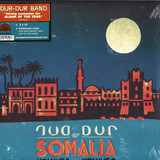
In the expansive sleeve notes accompanying this superb triple-album, Analog Africa founder Samy Ben Redjeb accounts, in great detail, the epic tale of Dur-Dur Band, a Mogadishu-based deep funk outfit that took Somalian radio by storm during the early 1980s. It's a remarkable story, all told, but nowhere near as remarkable as the music contained on this essential retrospective. Redjeb has managed to license both of their previously cassette-only albums, stretching them across three slabs of wax. Brilliantly played and performed, the songs mix killer American and African style funk grooves with hooky Somalian vocals, spacey synths and occasional nods towards other styles (most notably reggae on later period cut "Diinleeya" and Juju on "Salkuu Dhigey"). Simply essential.
- A1: Leben Und Arbeiten - Amanita
- A2: Malaria! - Your Turn To Run
- A3: Ausserhalb - Zeitzelle
- A4: Die Haut - Der Karibische Western
- B1: Aus Lauter Liebe - Pingelig
- B2: Mania D. - Track 4
- B3: Exkurs - Fakten
- B4: Christiane F. - Wunderbar (Optimo Edit)
- C1: Sprung Aus Den Wolken - Dub And Die
- C2: P1/E - Up And Above / Up And Above Dub
- C3: Franz Erlmeier & Fritz Köstler - Öffnen Sie Mal Ihre Tasche
- C4: Populäre Mechanik - Scharfer Schnitt (No. 1)
- D1: Andreas Dorau - Fred Vom Jupiter
- D2: Weltklang - Veb Heimat
- D3: Stefan Blöser - Voyager One
- D4: Matthias Schuster - An Rah Robeel
Strut Present An Exclusive New Compilation Curated By Optimo's Jd Twitch, 'kreaturen Der Nacht', Bringing Together Classics, Rarities And Oddities From Germany's Original Post-punk And Diy Scene. 1979 To 1984 Was An Era Of Particular Artistic Upheaval In Germany As Strong Subculture Scenes Formed In Many German Cities. Emphasis Was Placed On Expression Rather Than Technical Perfection, Artistic Impact Rather Than Skill. Diy Self-organisation Prevailed With The Establishment Of Small Record Labels And Independently Produced Records And Cassettes. Bands Experimented Across Genres And Consciously Abandoned The English-speaking Mainstream With German Band Names And Lyrics. 'although We Had A Small Underground
Scene, It Was Very Vibrant,' Explains Gudrun Gut Of Malaria! 'bands Like Die Haut, My Frst Band Mania D., Malaria!... We Organised Gigs Ourselves Or Friends Would Open A Gallery And
Have Bands Playing. We Hung Around Together In A Handful Of Clubs Like Risiko Or Dschungel And Went To Gigs At So36. West Germany Had Other Regional Scenes Too: Düsseldorf And
Köln Around Der Plan And The Ata Tak Label And There Was The Hamburg Side With Abwärts. Germany Didn't Have A Real Music Industry Like The Us Or England Back Then.'
This New Collection Is A Personal Selection From Jd Twitch, Built Over Years Of Playing The Tracks In Club Sets. 'it Is Not Designed To Tell A Defnitive Story Of What Was Going On In
Germany In This Era,' He Explains. 'rather, It Is Simply An Arbitrary Collection Of Records I Adore From A Specifc Era With A Specifc Attitude That Hopefully Together Sum Up Some
Of The Musical Undercurrents In Germany At That Time.'
The Package Features A Host Of Rare And Unseen Photos From The Period Along With Extensive Interviews With Artists Including Beate Bartel (mania D.), Christoph Dreher (die Haut),
Michael Hirsch (p1/e) And Thomas Voburka (weltklang). All Tracks Are Remastered By The Carvery With Artwork By Optimo's In-house Design Man Andrew Beltran.