Created between Palm Springs, California and Hilo, Hawai'i, V is the first double album from the Hawaiian-New Zealand singer-songwriter, multi-instrumentalist and producer Ruban Nielson's Unknown Mortal Orchestra band. Designed to play as one continuous movement and road-tested on dry California freeways, V is the definitive Unknown Mortal Orchestra car record. It's also the fifth full-length album Ruban has released in twelve years. Across fourteen sunbleached songs - written solo or with his brother Kody - Ruban draws from the rich traditions of West Coast AOR, yacht rock, weirdo pop and Hawaiian Hapa-haole music. Over a laidback blend of singalong anthems and cinematic instrumentals, he evokes blue skies, afternoons spent lounging by hotel swimming pools and the alluring darkness that lurks below perfect, pristine surfaces. It's a duality expressed in the dilapidated sunset blues and the saltcorroded soul Ruban explores through tracks like `Layla' and `Nadja. ' During the pandemic's early days, Ruban reunited with Kody at a cousin's wedding in Hawai'i. With assistance from their father, Chris Nielson (saxophone/flute) and longstanding Unknown Mortal Orchestra member Jake Portrait, they brought everything Ruban had been thinking about together. The result was V, due for release on March 3, 2023, through Jagjaguwar. When they talked about records that moved them in that spine-shivering manner, Ruban started thinking about the 70s AM radio rock and 80s pop songs that had lurked on the edge of his subconscious mind for most of his life. He wanted to write his version of records like that, leading to the two glorious uptempo singles Unknown Mortal Orchestra released in 2021, `Weekend Run' and `That Life'. However, the golden good times never last forever. Not long after, health issues began to plague his extended family.Putting his recordings aside, he helped his mother and his uncle move home from New Zealand and Portland to Hawai'i, and began dividing his time between Hawai'i and Palm Springs. During this period he reconnected with his relatives, reassessed his past, and started to look at things with fresh eyes. Hawai'i brought back memories of the darker side of his parents' lifestyle as entertainers. On those trips, he heard those classic AM radio rock records everywhere. They were inextricably intertwined with the palm trees, swimming pools, and glamorized hedonism he'd internalized from his childhood. There's a type of music in Hawai'i called Hapa-haole (Half white). You can hear it expressed in signature Unknown Mortal Orchestra style through the humid guitar-led atmosphere of V's penultimate song, `I Killed Captain Cook'. Although the songs are presented in a traditional Hawaiian manner, they're mostly sung in English. Having been influenced by Hawaiian music since Unknown Mortal Orchestra's first album, Ruban saw a space for himself within the tradition. When he reflected on his success, he realised he had the responsibility and platform to represent Hapa-haole music on the global stage.
quête:j period
NYC's Disco powerhouse West End Records should need no intro. The home of too-numerous-to-list club classics for over 30+ years is still impacting today on what we know to be club culture. The label started by one Mel Cheren (RIP) with assistance from Larry Levan and more way back in 1976 is still held in such high regard today with it's catalogue constantly being played, rediscovered, reinterpreted and loved by waves and waves of new fans and admirers. One such admirer is one of the UK's longest serving DJ's and editors, a truly legendary Northern selector who's unique reel to reel DJ sets and reworks has gained him fans worldwide and continues to do so. Ladies and gentlemen, we give you Greg Wilson's West End versions, 4 tracks of unparalleled funk touched by the man himself who has also kindly supplied some choice words about this special release:
"West End has a particular place in my heart. Along with Prelude, it was my main go-to label during the early '80s, an underground New York powerhouse issuing a relentless run of now classic and cult-classic club cuts during the time I was DJing at Legend in Manchester. For me personally, the label is forever connected with this then futuristic venue, West End's progressive approach to dance music, incorporating electronic elements to play a key role in ushering in the Electro-Funk era, finding its perfect environment at Legend, with tracks by Stone, and especially the Peech Boys' hugely influential 'Don't Make Me Wait', providing major stepping stones. This is a project that holds a deeper resonance for me, given my personal relationship with the label, and I'm so happy to contribute the series; the 4 favourites tracks I selected for this release illustrating West End's best qualities - serious grooves and soulful vocals.
The edit of 'You Can't Take Your Cake And Eat It Too' by B.T. (Brenda Taylor) was originally featured on my first Credit To The Edit compilation, back in 2005, whilst Raw Silk's 'Do It To The Music' was also edited around the same period, but has never been made available until now. 'Keep On Dubbin'' by Forrrce, although not as big as the other inclusions at the time, was an ahead of its time hybrid, mixed by Francois Kevorkian, whose dub awakening had taken place the previous year, and Shirley Lites 'Heat You Up (Melt You Down)', which draws from the instrumental 'Melt Down Mix', the version of choice at Legend, where dub and instrumental mixes often trumped the main vocal versions"
A truly golden era of dance music history, all killer - no filler! All tracks featured re-edited by Greg Wilson and re-mastered, re-pressed and re-released with the permission of and in conjunction with West End Records, New York City / BMG. '
Future Jazzers, notorious experimentalists and outfield eccentrics stumble onto the dancefloor. In the 90s. In the UK.
From an electronic music perspective, the period 1992 to 1996 in the UK that this compilation celebrates, was one of dizzying sonic diversification.
It was also a particularly turbulent time in the UK, not only politically and economically, but also culturally too. Economic catastrophe in ‘92 was followed by widespread poverty, a cost of living crisis and countless political scandals. Meanwhile, John Major’s Tory government pandered to its political base via unpleasant, authoritarian legislation that seemingly sought to crush rave culture, alternative lifestyles, and traveller communities. The UK was not so much a ‘Happy Land’ – to quote the name of this compilation – as an angry and divided one. Sounds familiar, doesn’t it?
Throughout, the music created by producers based across these Isles remained uniquely British, speeding up a process begun in the late 1980s through the emergence of street soul, bleep & bass and breakbeat hardcore – musical styles whose roots in multicultural inner-city communities made them distinctly different from the Black American sounds that had inspired their creators. It was here, rather than in the indie pubs of Camden, that real musical revolutions were taking place.
This deep diving selection brings together some truly adventurous and original electronic music from this period, much of it very hard to find. Major label outings connect with white label oddities with ease. Perhaps it could even be argued that many of these unearthed gems fit more easily into DJ sets in 2023 than they ever did at the time. The off-kilter swing of Richard D James’ obscure and highly sought after Strider B outing, ‘Bradley’s Robot’ is joined by further rare cuts from Cabaret Voltaire and the Black Dog, and artists as diverse as Ultramarine, Herbert, Fretless AZM, and Radioactive Lamb, amongst others.
This collection has been lovingly selected, compiled and mastered for maximum sonic playback. This very special release boasts sublime pastoral themed artwork, as well as informative and passionate liner notes by celebrated music scribe Matt Anniss (‘Join The Future’).
- A1: Unreal Personality
- A2: Lights
- A3: Deutsches Madchen
- A4: Covergirl
- A5: Wahlerisch_
- B1: Ucx-S
- B2: Modern Air
- B3: Seit Wir Uns Kennen
- B4: Picture 210
- B5: Gentlemen _ Pettycoats
- C1: Deutsches Madchen (Demo)
- C2: Lights (Demo)
- C3: Wahlerisch (Demo)
- C4: Picture 210 (Demo)
- C5: Seit Wir Uns Kennen... (Demo)
- D1: Ucx-S (Demo)
- D2: Gentlemen _ Pettycoats (Demo)
- D3: Fire
- D4: Automobil
- D5: 40-50-60
Mannequin presents an expanded double-LP of 'Exploded View' from Dutch minimal synth pioneers The Actor. Originally released in 1982 by Trumpett Tapes, the album was repressed for the first time by Mannequin Records in 2014, and is now coming back to life again in 2022, enriched by an extra full-length of demos from a 1981-1984 period.
Singing both in English and German, The Actor songs are often related to modernism, fashion and dancing, like a sort of early incarnation of Depeche Mode but totally devoted to home taping and diy recordings, where Trumpett was definitely the perfect home for it, having releasing such amazing cassettes from Doxa Sinistra, Ende Shneafliet, Dr C.Stein, and many more. A must have for the dusty/rusty analog synthesizers lovers.
After a first mini-album Dr Bolivard which took the form of a funky and electronic tragi-comic self-psychotherapy, a series of interviews with creators on YouTube (Jacques, Myd, L'impératrice...) where he played a zany psychiatrist character asking existential questions, Bolivard is back with a new mini-album which will be released on January 27th 2023: M. Bolivard.
Composed between 2020 and 2022, he gives his impressions of a turbulent period: pandemic, confinements, American and French elections, global warming, war in Ukraine, worsening mental health... Bolivard keeps his black humour and his taste for nonsense while adding a good dose of satire. On the agenda: social anxiety, radicalisation of opinions, narcissism, psychopathy...
Musically, French pop and funk are always mixed with electronic music. Bolivard sings, raps, slams, speaks, above all to tell stories that are more or less crazy, often funny, sometimes disturbing, definitely creative.
"Contamination" is a 1980 horror / sci-fi movie directed by Luigi Cozzi,
who has collaborated with Dario Argento for some time, author of many underground movies that have been very popular
Its soundtrack was entrusted to Goblin during a hectic period for the band (Squadra Antigangsters, Amo Non Amo, Patrick, Buio Omega) who had various line- up changes: abandoned by guitarist Massimo Morante and keyboardist Claudio Simonetti, brothers Marangolo (Agostino on drums and Antonio on saxophone), Fabio Pignatelli (bass guitar) and Maurizio Guarini (keyboards) with Roberto Puleo on guitar, wrote one of the best scores of that time showing a wide
range of music styles (Jazz, funk, rock, electronic) and once again showcases Goblin's ability in creating very original film scores. The album has some extra tracks from the "Buio Omega" soundtrack, which was the first full release (fans would have to wait 1997 for a full CD release). Agostino Marangolo: Drums & Percussions Antonio Marangolo: Sax Roberto Puleo: Guitars Maurizio Guarini:
Keyboards Fabio Pignatelli: Bass guitar
There is a perfect match between Dario Argento's film and Goblins' music
in "Profondo Rosso" (Deep Red), both made in 1974 - and then released
the following year - when both artists were living in a period of maximum
creativity: their fortuitous meeting produced two masterpieces, one
cinematographic and one musical, a source of inspiration in the decades
to follow
The music of "Profondo Rosso" was originally commissioned to jazzman Giorgio
Gaslini, a former Dario Argento's collaborator who wrote the songs on side B of
this LP, but was soon entrusted to four young musicians from Rome: Claudio
Simonetti (keyboards), Massimo Morante (guitars) , Fabio Pignatelli (bass guitar),
Walter Martino (drums). The legendary theme and sinister melodies of the title
track set a new standard at the time for film music, not just in the thriller / horror
genre, and thanks to their dazzling debut Goblin enjoy international fame and
respect until today. An essential masterpiece for any lover of soundtracks and
cinema, Italian music, progressive rock, jazz- rock and much more. A piece of
History, reissued in a faithful reproduction of the original 1975 version. 180gr.
clear purple vinyl edition.
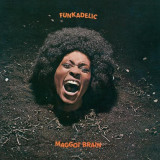
- A1: Maggot Brain
- A2: Can You Get To That
- A3: Hit It & Quit It
- A4: You & Your Folks, Me & My Folks
- B1: Super Stupid
- B2: Back In Our Minds
- B3: Wars Of Armageddon
- C1: Maggot Brain Live 1971
- D1: Maggot Brain Bmg Dub
Deluxe edition[39,71 €]
1971 and Black America was luxuriating in the soft soul
of the O’Jays, the Temptations had just left behind their
flirtation with psychedelia, James Brown was
explaining Soul Power, Sly & the Family Stone were
having a Family Affair, and Marvin Gaye was asking
‘What’s Going On’.
• In their own inimitable way, Funkadelic were laying
down their own statement about the ecology of the
planet in the opening of lead and title track ‘Maggot
Brain’, turning it into an elegy for the Earth in the
ensuing heart-wrenching extended Eddie Hazel guitar
solo – one of the most radical records of the period.
• The album also spawned two Top 50 singles with the
usual Funkadelic wry observational humour of ‘You
And Your Folks, Me And My Folks’ and ‘Can You Get To
That’. And just in case you think things have
normalised, the set closes with nine minutes of the
chaotic sound collage ‘Wars Of Armageddon’.
• This 50th anniversary edition includes a second 12”
with two versions of the title track. Side A features the
live version from Meadowbrook from the same year that
the studio album came out. Jump forward 46 years to
the “Reworked by Detroiters” release and side B has
the BMG Dub, showing the enduring quality of one of
the great guitar records of all time.
• This issue is mastered from fresh transfers of the tape.
• Facsimile gatefold sleeve.
• 180gram black vinyl
This EP contains unreleased music composed and produced by Alessandro Alessandroni in the 70s, taken from a dusty tape found in his vault. Afro Discoteca strikes immediately for its modernity and rich textures, sounding unbelievably contemporary.
Alessandro Alessandroni is one of those pioneers, a maestro that built the legend of Italian soundtracks and library music along with Ennio Morricone, Piero Umiliani and many others. His vault testifies how prolific had been those times, with hundreds of tapes and obscure recordings from that period. Among the many, a dusty tape bearing the hand-written label Afro Discoteca' captured the attention of Four Flies.
The music contained in the tape had never been released until now. When he listened to the tracks, Italian legendary DJ LEO MAS (one of the undisputed inventors of the Balearic sound) told us: It is surprising to listen to something that sounds
so modern... This EP is the perfect union of Afro influences and Italian taste. There's something Afro lounge here but also incredibly cinematic - it makes me think of John Carpenter's atmospheres. B1 (Afro Discoteca) reminds me of clubs I've been in Malindi in the late 70s and the closing track is absolutely spellbinding. This is wonderful.' PAOLO SCOTTI, head of Déjà vu Records and an authoritative Italian jazz expert said: Alessandroni's contribution to music is huge, he's a great musician and a great experimenter. Afro Discoteca sounds like it's been produced yesterday by a DJ of our times, an absolutely surprising EP and proof of Alessandroni's spontaneous genius!'
- A1: Marie Touchet - College Infernal (House Paradise Version)
- A2: Michel Moers - La Route
- A3: Anne Zamberlan - Attention Danger
- A4: Thalie - C'est Pas Sorcier
- A5: Histoires De Filles - House Tube
- B1: Fred De Fred - En Amour (Edit 2020)
- B2: Techno 90 - Everybody Dancing
- B3: Jean-Francois Maurice - Top Model
- B4: Claire An - Pres De Toi (Je N'ai Pas Peur) (Je N'ai Pas Peur)
- B5: Artiste Inconnu - Opium (Pirate Mix)
"I can't enough of this compilation. It is SOOOO good. This period of 90's French pop/dance needs to be explored more. Highly recommended." :) 1. Marie Touchet - Collège infernal (House Paradise version) 06:29 2. Michel Moers - La route 03:40 3. Anne Zamberlain - Attention danger 03:19 4. Thalie - C'est pas sorcier 03:50 5. Histoires de Filles - House Tube 03:27 6. Fred de Fred - En Amour (Edit 2020) 05:52 7. Techno 90 - Everybody Dancing 03:40 8. Jean-François Maurice - Top Model 02:14 9. Claire An - Près de toi (Je n'ai pas peur) 02:44 10. Artiste inconnu - Opium (Pirate mix)
On Al Hadr, Sabrina Bellaouel taps into myriad influences: from spirituality, astrology to club culture, romance, the body and self-love. Creating a balance between places, identities and sounds is a huge part of the charm of Al Hadr. As a true Libra, she’s finding a balance between honoring her roots and carving out her future.
Following two solo EPs, also on InFiné — 2020’s We Don’t Need To Be Enemies and 2021’s Libra — the French-Algerian producer and vocalist’s unique style of electronic R&B blossoms with Al Hadr, a 13-track album featuring collaborations with dance producer Basile3, experimental club DJ and writer Crystallmess, jazz musician Monomite and pop singer Bonnie Banane, among others.
Born, raised and based in Bagneux, outside the southern périphérique of Paris, Bellaouel lives between worlds. At home, her Algerian heritage and Muslim faith have fused tight familial bonds and a keen sense of history and culture; as “Berbers”, she speaks French and Arabic. In her headphones, she finds comfort in the sparse experimentalism of Radiohead and romantic tales of Jill Scott. On the hot club dance floors of Paris, driving house beats connect her to her body.
In swirling these private and public passions together on Al Hadr — which translates from Arabic as “the present time” — Bellaouel is the most vulnerable she’s ever been on record. Classic neo-soul and silken R&B blend with club electronics. Tender harmonies are sung and rhymes are spoken in English, French and Arabic, exploring love, faith and identity. Samples of drum machines are the backbone for wisps of woodwind, strings, keys and environmental ‘found sounds’, including Bellaouel’s own live recordings.
Creating a balance between places, identities and sounds is a huge part of the charm of Al Hadr. As a true Libra, she’s finding a balance between honoring her roots and carving out her future.
Everything began with a chat between Systematic label head Marc Romboy and his long time friend Paolo aka Dusty Kid. During the pandemic times they reminisced about the most exciting period of techno music, the beginning of the 90s and exchanged tracks which have blown them away. They listened to tracks on labels like R&S, Plus 8, Industrial Strength and all over sudden they came to the idea to create a concept where Dusty Kid would put his hands on four of his most favorite tracks from 1992 and 1993. The result is this Various Artists track album including new interpretations of four classic tracks which changed their lifes and were, have been and still are iconic. Check every single track and jump into a time machine which transfers you to the early 90s and the future at the same time
- 1: Margaret Murie 02 46
- 2: Crux 04 07
- 3: Nameless 0 6
- 4: Eidetic 01 36
- 5: Thursday Night 03 09
- 6: Halve 03 12
- 7: Osco Drug 01 19
- 8: Lillian Isola 02 3
- 9: Safn 01 10
- 10: Maple Seed 02 21
- 11: Viridiana 03 29
- 12: Tet 01 51
- 13: God Innocent Controller 01 36
- 14: The Void 03 17
- 15: Alces 01 06
- 16: Pastel Dust 03 30
- 17: Where To 04 02
Dark Green Vinyl[24,33 €]
American singer-songwriter, poet, and photographer Thomas Meluch, known musically as Benoît Pioulard, returns with his most structured and vocal release to date. Titled »Eidetic,« a word denoting the ability to recall mental images with extraordinarily rich precision, the album presents unprecedented clarity and vitality for Benoît Pioulard. To access its thematic ground, Meluch looked inward with an affinity towards the people he loves during a period marked by his move from Seattle to Brooklyn in 2019. The resulting work engages with the universe's unflinching mortality and, as he says, »the ways it has modified and improved my relationships, especially with family.« Embodied by the creek, leaves, and ferns of the cover photography — taken in Michigan’s Burchfield Park, where he and his dad used to hike and »muse on existence« — the music glistens and unfurls with the flow of life he’s come to know. »Eidetic« is the culmination of Meluch's craft both as a producer and writer. An evocative sonic vocabulary meets deft lyrical introspection, articulated with the nuance, vulnerability, and confidence of a longtime artist hitting a stride.
Meluch has continually refined, redefined, and adjusted the focus of his gentle pop project over the last 20 years. Recorded primarily with guitar, tapes, and voice — and spanning labels with albums for Kranky, Morr Music, Beacon Sound, and Past Inside the Present — his catalog flows seamlessly between ambient improvisation and pop composition. Much like the analog photos that often accompany his releases, songs can feel dreamily softened and distant, and others beautifully vivid and detailed. 2021 full-length »Bloodless« found Meluch deep in droning decay, expressive yet wordless. With »Eidetic,« he swings back to sharpened forms. Lush banks of treated guitar and synth brush against hushed percussion; there is mist in the distance, but everything up close is intricately constructed and radiant. Meluch's voice is notably forward in the mix — a warm and calming tenor, a harmonic coo more than a whisper — ever-observant and actively processing.
To record much of the album, Meluch filled a cabin in rural Maine with his usual setup of simple percussion, a couple of Fender electrics, and a parlor guitar made by his friend who does bespoke luthier work. The modest utility is what he knows best, and here he pushes the output to its most pristine potential.
»Eidetic« opens in a swirl of familiar haze; »Margaret Murie« eases listeners in, as lush and verdant as the landscapes conserved by its famed namesake. With the setting established, Meluch, the narrator, enters the foreground with »Crux,« a tender piece written about finding new motivations in a new city. »We covet this rare green hue / Here at the farthest point from home,« he sings above a reassuring pattern of strums and percussion. Meluch's prose shines on the swiftly-moving »Nameless,« inspired by the neurological effects that came with the antiquated practice of manufacturing mercury mirrors; »folks would slowly go insane while looking into their own reflections every day,« he adds. The idea informs a series of surreal abstractions before everything drops out in the final minute, and we are left free-floating in eerie nothingness.
Across the album, labyrinthine lyrical ponderings scatter with dazzling imagery, artfully blurring scenes from world history with Meluch's more personal, present-day. The propulsive and earnest »Thursday Night« catches his mind overly active and too stoned, riffing on black holes and songwriting itself. »Halve« references the splitting of the atom, what he considers »the beginning of man's downfall,« and the unrealized initiative proposed by the US government that would have created 'nuclear refuges' in its national parks. Meluch's loved ones weave throughout; »Tet« holds his father's experience in Vietnam and its lasting effects. »Lillian Isola« touches on his maternal grandmother's spinal curvature, and »Pastel Dust« navigates the wake of his cat, who died on New Year's Eve 2020.
At first blush, Meluch's atmospheric and melodic sensibilities resonate purely in their own right. Upon closer meditation, his ability to render stories — many of which surround human tragedy, misfortune, and understanding — through the prism of his poetry makes »Eidetic« even more rewarding.
- 1: Margaret Murie 02 46
- 2: Crux 04 07
- 3: Nameless 0 6
- 4: Eidetic 01 36
- 5: Thursday Night 03 09
- 6: Halve 03 12
- 7: Osco Drug 01 19
- 8: Lillian Isola 02 3
- 9: Safn 01 10
- 10: Maple Seed 02 21
- 11: Viridiana 03 29
- 12: Tet 01 51
- 13: God Innocent Controller 01 36
- 14: The Void 03 17
- 15: Alces 01 06
- 16: Pastel Dust 03 30
- 17: Where To 04 02
Black Vinyl[24,33 €]
Dark Green Vinyl
American singer-songwriter, poet, and photographer Thomas Meluch, known musically as Benoît Pioulard, returns with his most structured and vocal release to date. Titled »Eidetic,« a word denoting the ability to recall mental images with extraordinarily rich precision, the album presents unprecedented clarity and vitality for Benoît Pioulard. To access its thematic ground, Meluch looked inward with an affinity towards the people he loves during a period marked by his move from Seattle to Brooklyn in 2019. The resulting work engages with the universe's unflinching mortality and, as he says, »the ways it has modified and improved my relationships, especially with family.« Embodied by the creek, leaves, and ferns of the cover photography — taken in Michigan’s Burchfield Park, where he and his dad used to hike and »muse on existence« — the music glistens and unfurls with the flow of life he’s come to know. »Eidetic« is the culmination of Meluch's craft both as a producer and writer. An evocative sonic vocabulary meets deft lyrical introspection, articulated with the nuance, vulnerability, and confidence of a longtime artist hitting a stride.
Meluch has continually refined, redefined, and adjusted the focus of his gentle pop project over the last 20 years. Recorded primarily with guitar, tapes, and voice — and spanning labels with albums for Kranky, Morr Music, Beacon Sound, and Past Inside the Present — his catalog flows seamlessly between ambient improvisation and pop composition. Much like the analog photos that often accompany his releases, songs can feel dreamily softened and distant, and others beautifully vivid and detailed. 2021 full-length »Bloodless« found Meluch deep in droning decay, expressive yet wordless. With »Eidetic,« he swings back to sharpened forms. Lush banks of treated guitar and synth brush against hushed percussion; there is mist in the distance, but everything up close is intricately constructed and radiant. Meluch's voice is notably forward in the mix — a warm and calming tenor, a harmonic coo more than a whisper — ever-observant and actively processing.
To record much of the album, Meluch filled a cabin in rural Maine with his usual setup of simple percussion, a couple of Fender electrics, and a parlor guitar made by his friend who does bespoke luthier work. The modest utility is what he knows best, and here he pushes the output to its most pristine potential.
»Eidetic« opens in a swirl of familiar haze; »Margaret Murie« eases listeners in, as lush and verdant as the landscapes conserved by its famed namesake. With the setting established, Meluch, the narrator, enters the foreground with »Crux,« a tender piece written about finding new motivations in a new city. »We covet this rare green hue / Here at the farthest point from home,« he sings above a reassuring pattern of strums and percussion. Meluch's prose shines on the swiftly-moving »Nameless,« inspired by the neurological effects that came with the antiquated practice of manufacturing mercury mirrors; »folks would slowly go insane while looking into their own reflections every day,« he adds. The idea informs a series of surreal abstractions before everything drops out in the final minute, and we are left free-floating in eerie nothingness.
Across the album, labyrinthine lyrical ponderings scatter with dazzling imagery, artfully blurring scenes from world history with Meluch's more personal, present-day. The propulsive and earnest »Thursday Night« catches his mind overly active and too stoned, riffing on black holes and songwriting itself. »Halve« references the splitting of the atom, what he considers »the beginning of man's downfall,« and the unrealized initiative proposed by the US government that would have created 'nuclear refuges' in its national parks. Meluch's loved ones weave throughout; »Tet« holds his father's experience in Vietnam and its lasting effects. »Lillian Isola« touches on his maternal grandmother's spinal curvature, and »Pastel Dust« navigates the wake of his cat, who died on New Year's Eve 2020.
At first blush, Meluch's atmospheric and melodic sensibilities resonate purely in their own right. Upon closer meditation, his ability to render stories — many of which surround human tragedy, misfortune, and understanding — through the prism of his poetry makes »Eidetic« even more rewarding.
Lawrence Hayward knew that he wanted to be a pop star as a teen, and he devised a plan to release ten albums and ten singles over ten years to make that dream come true. A particular and determined individual, he would only be known as Lawrence from that day forward. His hopes for stardom would be pinned on his newly formed band, the succinctly named Felt. Soon signed to Cherry Red Records, Lawrence’s achingly cool vocals and the group’s way with walking melodies were evident on their debut for the label, “Something Sends Me To Sleep.” This compilation collects material from Felt’s Cherry Red period of 1981 to 1985, kicking off with that confident start, assembling numerous high points, and closing with their biggest hit, “Primitive Painters.”
This phase of the band is defined by the songwriting partnership and unique interplay of Lawrence and guitarist Maurice Deebank, with Deebank’s stylish and confident playing the envy of many of their counterparts. He delivers a constant string of shimmering hooks that wrap themselves around and over top of Lawrence’s more traditional beat combo song structures, as if trying to fit four songs worth of ideas into a pre-set radio friendly cutoff time. It works wonderfully as Lawrence always counters with a solid bedrock.
In one of many brushes with the brass ring, in 1984 Felt recorded versions of “Dismantled King Is Off The Throne” and “Sunlight Bathed The Golden Glow,” for the newly formed and Warners-backed label Blanco y Negro, in hopes that the band would follow their A+R man Mike Alway to the executive suite. Despite putting forward two of their finest songs, it was not to be. While major label dreams had to remain on the shelf, fans were delighted to be able to hear these beautifully stripped down and more direct versions when this compilation was released a few years later.
By 1985 the Felt roller coaster was something Maurice Deebank was constantly getting on and off of. As Gary Ainge always kept the beat, and Lawrence never lost focus, they were joined by local teen prodigy Martin Duffy on keyboards, filling out the arrangements, and following Deebank’s racing six-string cascades in “The Day The Rain Came Down” you can even hear a tiny hint of the next phase of the band in Duffy’s organ before Maurice swoops to the finish. The newly expanded Felt would then put everything they had into making one of the defining releases of the 80s: “Primitive Painters.”
Lawrence Hayward knew that he wanted to be a pop star as a teen, and he devised a plan to release ten albums and ten singles over ten years to make that dream come true. A particular and determined individual, he would only be known as Lawrence from that day forward. His hopes for stardom would be pinned on his newly formed band, the succinctly named Felt. Soon signed to Cherry Red Records, Lawrence’s achingly cool vocals and the group’s way with walking melodies were evident on their debut for the label, “Something Sends Me To Sleep.” This compilation collects material from Felt’s Cherry Red period of 1981 to 1985, kicking off with that confident start, assembling numerous high points, and closing with their biggest hit, “Primitive Painters.”
This phase of the band is defined by the songwriting partnership and unique interplay of Lawrence and guitarist Maurice Deebank, with Deebank’s stylish and confident playing the envy of many of their counterparts. He delivers a constant string of shimmering hooks that wrap themselves around and over top of Lawrence’s more traditional beat combo song structures, as if trying to fit four songs worth of ideas into a pre-set radio friendly cutoff time. It works wonderfully as Lawrence always counters with a solid bedrock.
In one of many brushes with the brass ring, in 1984 Felt recorded versions of “Dismantled King Is Off The Throne” and “Sunlight Bathed The Golden Glow,” for the newly formed and Warners-backed label Blanco y Negro, in hopes that the band would follow their A+R man Mike Alway to the executive suite. Despite putting forward two of their finest songs, it was not to be. While major label dreams had to remain on the shelf, fans were delighted to be able to hear these beautifully stripped down and more direct versions when this compilation was released a few years later.
By 1985 the Felt roller coaster was something Maurice Deebank was constantly getting on and off of. As Gary Ainge always kept the beat, and Lawrence never lost focus, they were joined by local teen prodigy Martin Duffy on keyboards, filling out the arrangements, and following Deebank’s racing six-string cascades in “The Day The Rain Came Down” you can even hear a tiny hint of the next phase of the band in Duffy’s organ before Maurice swoops to the finish. The newly expanded Felt would then put everything they had into making one of the defining releases of the 80s: “Primitive Painters.”
Innemuseum is the debut album by Danish composer, singer and multi-instrumentalist Cisser Mæhl. The 10 fragile compositions for vocals, sparse electronics and a myriad of instrumentation illuminate a hushed charm unlike few other Sonic Pieces releases to date.
The album sparked off while Cisser was working in a mountain lodge in mid Norway during summer 2019. On her spare time she would find herself recording mountains, rivers, stones, plants and animals in the beautiful scenery. After moving to Oslo shortly after, she rented a studio to further work on her own music, songs and sound processing. Through some friends she met Norwegian artist Jenny Hval who became an inspiration as she started taking solo classes with her. Jenny then pushed to contact producer Lasse Marhaug to work together. This became the last piece of the puzzle for Innemuseum to come to fruition as Lasse ended up putting the final touches on the album. When Cisser returned to Copenhagen after 7 months in Oslo, the album was finished. The title “Innemuseum” refers to both the dark months in Oslo and the retraction towards the inner self. An inner museum - music from within, both as a person and as in physical places.
This is undeniably a very personal record that sounds like the musical embodiment of Cisser herself. She sings in Danish in a close-miked way like she's sitting right next to you, all while gentle rhythms and soft strings together create a sort of bright, minimal chamber music with hints of pop sensibility. It almost feels like a Scandinavian reflection of Colleen's work in her more quiet, vocal periods. A music box of weightless compositions for the conscious mind.
- 1: On Warmer Music
- 1: 2 All My Kin
- 1: 3 It's Alright, You're O.k
- 1: 4 The Mutable Mercury
- 1: 5 The Town Crusher
- 1: 6 The Unthinkable Is True
- 1: 7 River High
- 1: 8 Every Is A Good Trip
- 1: 9 Do Go On
- 1: 0 Privileged & Impotent
- 1: Oh Dear Friends
- 2: 1 An Amateur Thief
- 2: In Our Time
- 2: 3 Morley Timmons
- 2: 4 The O.t.s
- 2: 5 Rip Off The Gift
- 2: 6 The Last Good Time
- 2: 7 The Guns Of Meridian Hill
- 2: 8 The Town Crusher (Live)
- 2: 9 Morley Timmons (Early Version)
- 2: 10 Every Is A Good Trip (Extended)
- 2: 11 The O.t.s. (Early Version
Brown Vinyl[31,51 €]
In late 1996, after two years of persistent touring, Chisel was eager to document its quickly evolving sound. Decamping from their native D.C. to Brooklyn's Rare Book Room, the power trio of Ted Leo, Chris Norborg, and John Dugan teamed with engineer Nicolas Vernhes and came away with Set You Free, a remarkable, but largely overlooked, classic of the era. Originally issued on the venerable Gern Blandsten imprint in April 1997, Set You Free presaged the turn of the century 60s rock revival, providing a counterpoint to second-wave emo. This deluxe 25th anniversary edition has remastered and expanded the original's 17-song track list with five period alternates and rarities, plus a booklet of lyrics, photos, and an essay by Jes Skolnik. Get ready for the invasion.
- 1: On Warmer Music
- 1: 2 All My Kin
- 1: 3 It's Alright, You're O.k
- 1: 4 The Mutable Mercury
- 1: 5 The Town Crusher
- 1: 6 The Unthinkable Is True
- 1: 7 River High
- 1: 8 Every Is A Good Trip
- 1: 9 Do Go On
- 1: 0 Privileged & Impotent
- 1: Oh Dear Friends
- 2: 1 An Amateur Thief
- 2: In Our Time
- 2: 3 Morley Timmons
- 2: 4 The O.t.s
- 2: 5 Rip Off The Gift
- 2: 6 The Last Good Time
- 2: 7 The Guns Of Meridian Hill
- 2: 8 The Town Crusher (Live)
- 2: 9 Morley Timmons (Early Version)
- 2: 10 Every Is A Good Trip (Extended)
- 2: 11 The O.t.s. (Early Version
Black Vinyl[30,21 €]
In late 1996, after two years of persistent touring, Chisel was eager to document its quickly evolving sound. Decamping from their native D.C. to Brooklyn's Rare Book Room, the power trio of Ted Leo, Chris Norborg, and John Dugan teamed with engineer Nicolas Vernhes and came away with Set You Free, a remarkable, but largely overlooked, classic of the era. Originally issued on the venerable Gern Blandsten imprint in April 1997, Set You Free presaged the turn of the century 60s rock revival, providing a counterpoint to second-wave emo. This deluxe 25th anniversary edition has remastered and expanded the original's 17-song track list with five period alternates and rarities, plus a booklet of lyrics, photos, and an essay by Jes Skolnik. Get ready for the invasion.
Over the last half decade, the music collective Constant Smiles has produced a prolific output of acclaimed music, culminating in their forthcoming record Kenneth Anger, masterfully brought to life by engineer Jonathan Schenke (Parquet Courts, Liars, Dougie Pool). The group is known most recently for their much-praised debut album for Sacred Bones records, Paragons, an emotionally resonant offering of indie folk masterpieces that all confront the internal ways we process our struggles with intimacies, addiction and humanity produced by Ben Greenberg. Constant Smiles' primary singer/songwriter Ben Jones uses the creative process as a tool for working through deeply transformative periods in his life. The band's indie folk music lays bare this internal process, but on Kenneth Anger, the music shifts to synth pop and looks externally, examining creativity, community, ritual, and their place in the healing process. Ritual takes a primary role in the eponymous Kenneth Anger. Not only is auteur Kenneth Anger himself known for his sensorial depictions of ritual, Jones often used the films as a silent visual back drop during his song writing sessions, a ritual that grounded the creation of the album. And while the director's use of saturated color inspired the warm `80s synth style production, the director's trailblazing spirit of authenticity also pushed Jones through his most vulnerable expression to date. While the narrative undertones of the songs deal with fear and isolation and anxiety, the songs themselves were created through the healing process of ritual, and enriched with collaboration, community and trust. The resulting music produces a balm that can genuinely recalibrate the nervous system. The listener journeys through the depths of every track while being lifted and guided by the music's transformative, hypnotic power and this illustrates one of the foundational accomplishments of the album. Just as a Kenneth Anger film explores the underbelly of the unconscious through often soothing visuals, Kenneth Anger the album conjures the underworld into a series of synth pop classics.