
4
Killer new offering from French roots reggae label Abendigo featuring Robert Dallas, King Alpha, & Wellette Seyon.
Killer new offering from French roots reggae label Abendigo featuring Robert Dallas, King Alpha, & Wellette Seyon.

David Agrella returns to his Agrellomatica Records with the spacey house sounds of 'Flowing', featuring remixes from Ben Hauke & Mr Barcode.
Hot on the heels of his recent 'Freedom Unfolding' release, praised by Raresh, Sasha, Laurent Garnier, Vladimir Ivkovic and Dorian Paic, Italian-born tastemaker David Agrella is back on his Agrellomatica imprint with more intergalactic fire. This time, the London-based selector serves up four groove-laden cuts across 'Flowing', including remixes from Woop Records' Ben Hauke and Into The Wizards' Sleeve Mr Barcode.
Title track 'Flowing' is a cosmic voyage peppered with glossy pads, eerie synths and sharp percussion, before Agrella's own 'Sabotage Mix' throws in deep, driving tones, subtle robotic vocals, and interstellar keys. On the flip, Ben Hauke delivers a dubbed-out reshape, harnessing fluttering echoes, emotive harmonies and deep basslines. To close, Mr Barcode provides a punchy electro remix, as warped samples and driving low-ends get down in this slice of dancefloor mania.

Two heavyweights of the Detroit underground come together on this kicking new EP from Puzzlebox. K-1 aka Keith Tucker brings his famously repetitive sounds and rugged electro-funk to 'On My Computer', which bumps irresistibly as smeared sci-fi chords set your sights on the future. Add in robotic vocals and supple bass and you have an instant classic. It's then to the Eastside of the Motor City for DJ Maaco's 'The People' which is just as funky but in totally different ways; his laid-back groove is embellished with lush synth sequences and late-night cool that is topped off by a more seductive male vocal. Two very different but equally brilliant tunes.

"Full recording of one of the most engaging and beguiling Late Junction live sessions we’ve ever heard - the one off first meeting between Korean multi-instrumentalist Park Jiha and writer and performer Roy Claire Potter.
It’s an unlikely pairing which works from the first breath. Park Jiha plays the saenghwang, a Korean mouth organ which she blows in long multiphonics to set pace for Potter’s words. They unfurl a scene slowly in front of you, rich and focused, shifting your field of vision and drawing you in, elsewhere. It’s impossible not to follow, not to look for where they point. When the piri sounds for a flooded town on the B side, the water flows between your own feet; Potter’s words a sometimes frightening hörspiel in scouse.
Though the details are fine, the space each artist gives one another and their instruments, their language, is given to the listener in turn. A careful melody picks out a route for words with no fixed meaning, a body with no fixed direction, and we are invited to listen and see a kind of music made visible in its inference. A truly very special record we are very proud to share.
—
Influenced by linguistics and performance theory, Roy Claire Potter makes performance, text, drawing, installation and film, and oen collaborates with musicians and sound artists to make audio for music festivals and radio. Across the wide range of their practice, Roy tells stories built from fragmented, intense images that depict moving bodies or domestic scenes and architectural settings. Roy’s interest in subtext and narrative sequencing is felt in the way they use fast-paced talking or reading speeds, and restricted or partial views of space. Complicated social or group dynamics, and the aftermath of violent events are common themes in Roy’s work and are usually treated with a dark, sometimes wilful humour.
Park Jiha creates exploratory music rooted in traditional Korean instrumental performance. To this session she brings three instruments: a Korean hammered dulcimer called a yanggeum, a saenghwang which is an instrument made of 24 slender bamboo pipes attached to a bowl and played like a harmonica and a double-reed bamboo flute called a piri, which sounds similar to an oboe.
—
Recorded and mixed on: 30 January 2020 by Rob Winter, Pete Smith and Andy Rushton at Maida Vale Studios, London for “Late Junction - Roy Claire Potter and Park Jiha in session”. Produced by Rebecca Gaskell, Katie Callin and Alannah Chance at Reduced Listening for BBC Radio 3."

Terrace Martins neuestes Projekt Drones beschreibt der Künstler als "Black Disneyland" - eine Mischung aus überdimensionalen, farbenfrohen Charakteren, die als Avatare von Emotionen in kleinen Welten innerhalb einer größeren Welt funktionieren. Um seine Vision zum Klingen zu bringen, rief Martin - ein dreimaliger Grammy-Nominierter, der einige der größten Namen der Rap-Szene von Los Angeles sowie legendäre Genre-Pioniere wie Herbie Hancock und Clark Terry produziert hat und gleichzeitig Teil des West Coast Get
Down ist (zu dem auch Kindheitsfreund Kamasi Washington, Bass-Architekt Thundercat und andere moderne musikalische Koryphäen gehören) - Freunde, Nachbarn und Kollaborateure an. Kendrick Lamar , Snoop Dogg , Ty Dolla $ign und James Fauntleroy tauchen im Titeltrack auf und meditieren zu Slinky Funk und R&B darüber, wie wir in Beziehungen als Automaten funktionieren können. Die Töne, für die Martin bekannt ist, tauchen auf "Griots of the Crenshaw District" auf, einer instrumentalen Jazzexplosion, die von Grammy-Gewinner
Hit-Boy produziert wurde und bei der Martin, Tenorsaxofonist Kamasi Washington und Urban Maestro Robert Glasper verschlungene Noten in die Luft blasen. Aber es macht auch Platz für Songs wie das butterweiche "This Morning" von Arin Ray und Smino und "Reflection", James Fauntleroys digitalisiertes Plädoyer für Sehnsucht und Sinnlichkeit in einem ruhigen Sturm

‘Reich’s music expands from minimalist austerity to more full-bodied passages and back again. Reminiscent of his earliest work, it is very beautiful.’ – Financial Times
‘The music has tender energy, and an undercurrent of melancholy. Its droning tones sometimes seem to be pulling apart – like taffy, or like Richter’s stretching spaghetti stripes of color.’ – New York Times
Nonesuch Records releases the first recording of Steve Reich’s Reich/Richter, performed by Ensemble intercontemporain and conducted by George Jackson. The composition was originally written to be performed with German visual artist Gerhard Richter and Corinna Belz’s film Moving Picture (946-3).
Reich describes Richter’s book Patterns, which served as source material for the film: “It starts with one of his abstract paintings from the ’90s. He scanned a photo of the painting into a computer and then cut the scan in half and took each half, cut that in half and two of the four quarters he reversed into mirror images. He then repeated this process of ‘divide, mirror, repeat’ from half to quarter, eighth, sixteenth, thirty-second, all the way up to 4096th. The net effect is to go from an abstract painting to a series of gradually smaller anthropomorphic ‘creatures’ (since the mirroring produces bilateral symmetry) to still smaller very fine stripes.
“Belz described the film in terms of ‘pixels’. It begins with two-‘pixel’ stripes and the music begins with a two-sixteenth note oscillating pattern. When the film moves to four ‘pixels’, the music moves to a four-sixteenth note pattern, then to eight, and sixteen,” the composer continues. “After that, I began introducing longer note values – initially eighth notes, and later to quarter notes. By the middle of the film, when the images move from 512 to 1064 pixels, the music really slows to dotted half notes. Finally, as the ‘pixel’ count begins to diminish, the music moves back into more rapid eighths and then ending with the most intense rapid sixteenth movement.”
After more than one hundred performances of Reich/Richter at The Shed in New York in 2019, it was performed in London at the Barbican by the Britten Sinfonia conducted by Colin Currie and then in Paris at the Philharmonie, where this recording was made. The Austrian ensemble Windkraft Tirol, led by Kasper de Roo, will perform Reich/Richter on September 8 at Szentrum, Silbersaal in Schwaz, and the LA Phil New Music Group, led by Brad Lubman, performs the piece, accompanied by Richter and Belz’s film, at Walt Disney Concert Hall in Los Angeles on April 1, 2023.
Nonesuch has recorded every new piece of music by Steve Reich since 1985, beginning with The Desert Music and continuing through 2018’s Pulse/Quartet, resulting in twenty-two albums and the two box sets Phases in 2006 and Works: 1965-1995 in 1997. The label will put out a collection of his complete works in 2023.
Reich released a book last month, Conversations, that includes dialogues with past collaborators, fellow composers, musicians, and visual artists who have been influenced by his work, including: David Lang, Brian Eno, Richard Serra, Michael Gordon, Michael Tilson Thomas, Russell Hartenberger, Robert Hurwitz, Stephen Sondheim, Jonny Greenwood, David Harrington, Elizabeth Lim-Dutton, David Robertson, Micaela Haslam, Anne Teresa de Keersmaeker, Julia Wolfe, Nico Muhly, Beryl Korot, Colin Currie, and Brad Lubman. Booklist said in its review, ‘Iconoclastic American composer Steve Reich is singular in his own right, and when he is in conversation with other equally iconoclastic composers, conductors, sculptors, musicians, percussionists, and video artists, sparks not only fly, they sparkle. Reich and his colleagues conduct lovely give-and-takes during which they share stories, creative approaches, and viewpoints. Reich's Conversations is the best kind of eavesdropping.’
Steve Reich has been called ‘America’s greatest living composer’ (Village Voice), ‘the most original musical thinker of our time’ (New Yorker), and ‘among the great composers of the century’ (New York Times). His music has influenced composers and mainstream musicians all over the world. Music for 18 Musicians and Different Trains have earned him two Grammy Awards, and in 2009, his Double Sextet won the Pulitzer Prize. Reich’s documentary video opera works – The Cave and Three Tales, done in collaboration with video artist Beryl Korot – have been performed on four continents. His recent work Quartet, for percussionist Colin Currie, sold out two consecutive concerts at Queen Elizabeth Hall in London shortly after tens of thousands at the Glastonbury Festival heard Jonny Greenwood (of Radiohead) perform Electric Counterpoint followed by the London Sinfonietta performing his Music for 18 Musicians.
In 2012, Reich was awarded the Gold Medal in Music by the American Academy of Arts and Letters. He has additionally received the Praemium Imperiale in Tokyo, the Polar Music Prize in Stockholm, the BBVA Award in Madrid, and the Golden Lion at the Venice Biennale. He has been named Commandeur de l’Ordre des Arts et des Lettres and has been awarded honorary doctorates by the Royal College of Music in London, The Juilliard School, and the Liszt Academy in Budapest, among others. ‘There’s just a handful of living composers who can legitimately claim to have altered the direction of musical history and Steve Reich is one of them’, states the Guardian.
Pierre Boulez founded the Ensemble intercontemporain in 1976 with the support of Michel Guy (who was France’s Minister of Culture at the time) and the collaboration of Nicholas Snowman. The Ensemble’s thirty-one soloists share a passion for twentieth and twenty-first century music. Under the artistic direction of Matthias Pintscher, the musicians work in close collaboration with composers, exploring instrumental techniques and developing projects that interweave music, dance, theater, film, video and visual arts. In collaboration with IRCAM (Institut de Recherche et Coordination Acoustique/Musique), the Ensemble intercontemporain is also active in the field of synthetic sound generation. New pieces are commissioned and performed on a regular basis. Resident of the Cité de la musique – Philharmonie de Paris, the Ensemble performs and records in France and abroad, taking part in major festivals worldwide.
George Jackson, winner of the 2015 Aspen Conducting Prize, came to attention after stepping in at short notice with Orchestre de Paris, where he stepped in for Daniel Harding. Recent highlights include leading Ensemble intercontemporain at Festival Romaeuropa, the Rainy Days Festival in Luxembourg, and Festival D’Automne in Paris, as well as conducting the RTÉ National Symphony Orchestra, the orchestra of Opéra de Rouen and the world premiere of Tscho Theissing’s Genia with Theater an der Wien. His varied operatic experience includes performances at Opera North, Hamburg State Opera and Opera Holland Park, as well as conducting a new production of Hänsel und Gretel at Grange Park Opera.

Originally released in July 2021 on blue vinyl – this is a yellow vinyl re-press – original notes below
During 2019, Blondie was invited to perform in Havana, Cuba as part of a cultural exchange through the Cuban Ministry of Culture. This was a 40 year ambition come especially for songwriter & guitarist Chris Stein, who had longed to visit Cuba for most of his life. Artist and director Rob Roth documented this special moment and career highlight by shooting a short film titled “BLONDIE: VIVIR EN LA HABANA”.
The film is broken up into 3 parts — Water, Fire and Air — and present a meditation on the experience as well as highlights from the two-night live musical performances with special guests Alain Perez, David Torrens and Cuban Fusion Pioneers Sintesís at Havana’s famous Teatro Mella.
With narration from Blondie founding members Debbie Harry, Chris Stein, and Clem Burke, providing a glimpse into the passion and beauty they discovered in Havana and the magic moments of performing alongside incredible Cuban artists. “BLONDIE: VIVIR EN LA HABANA” goes beyond the atypical short form film and live music documentary by presenting a portrait of the legendary band’s first experience in Havana and of the magical exchange between musicians from the two cities each call home and their intertwined influences.
The sound track for the film features Cuban musicians Carlos Alfonso, Ele Valdés, María del Carmen Ávila, Alejandro Delgado, Juan Carlos Marin, Jamil Schery, Degnis Bofill, Adel González
Released in July on limited edition pale blue vinyl to accompany the film which will feature throughout 2021 in many prominent Film Festivals inc the Tribeca Film Festival.
Black Vinyl[29,37 €]
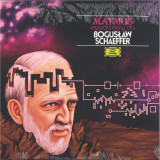
Matmos are one of the most prominent experimental electronic artists working today, crafting work by creating new conceptual frameworks & immediately testing those frameworks absolute limits. For Regards / Uklony dla Boguslaw Schaeffer they've focused on another artist known, in large part, for doing the same. Boguslaw Schaeffer was one of the first Polish artists creating electronic music. In step with American contemporaries like John Cage and Morton Feldman, he worked across the boundaries of classical composition, electronic experimentation, and radical theater in playfully form-breaking ways. Matmos are not the first ones to recognize the power of his catalog, from Solo (a 2008 documentary that garnered numerous international awards), to the annual Shaeffer's Era Festival (most recently celebrated simultaneously in Warsaw and Los Angeles) his work continues to inspire. Regards.. however, was not just inspired by his work, Matmos were given access to the entirity of Schaeffer's recorded works to use as they saw fit, commissioned by the prestigious Instytutu Adama Mickiewicza. They re-assembled & re-combined these recorded works with modern instrumentations in a way that only Matmos could, and what emerges is a composite portrait of the utopian 1960s Polish avant-garde and the contemporary dystopian cultural moment regarding each other across a distance. To facilitate the transcultural exchange that is the album's essential premise, all song titles and liner-notes are provided in both English and Polish. The album was mastered by Rashad Becker and features illustration and design by acclaimed artist Robert Beatty (Tame Impala, Osees, Mdou Moctar). Like the anagrams of the letters of Boguslaw Schaeffer's name that were re-assembled to create some of the song titles, the album itself is a musical re-assemblage of component parts into possible but unforeseen new shapes. Adding harp from Irish harpist Una Monaghan, erhu, viola and violin from Turkish multi-instrumentalist Ulas Kurugullu, and electronic processes from Baltimore instrument builder Will Schorre, and Horse Lords wunderkind Max Eilbacher, the resulting arrangements constantly toy with scale as they move from the close-mic-ing of ASMR and the intimacy of chamber music to the immensity of processed drones and oceanic field-recordings that close the album. Offering a "life review" of production styles, Regards / Uklony dla Boguslaw Schaeffer builds temporary shelters out of the panoramic wreckage of modernist composition, sixties tape music, seventies dub, eighties industrial music, nineties postrock and dark ambient, 2000s era glitch fetishism, and contemporary post-everything collage sensibilities.


Neil Young + Promise Of The Real release a new live album, ‘Noise & Flowers’, that captures the group in all their glory on their 2019 European tour. The release will be accompanied by a concert film that shares the same title and is included in the album’s 2xLP+CD+Blu-ray Deluxe Edition.
‘Noise & Flowers’ documents a 9-date tour that began just two weeks after Young’s lifetime friend and manager of more than 50 years, Elliot Roberts, passed away at the age of 76. Performing alongside a photograph of Roberts taped to his road case, Young approached each show as a celebratory memorial service to honour his late friend. It’s a trek the legendary singer/songwriter describes as “wondrous.”
In the album’s liner notes, Young says, “Playing in his memory made it one of the most special tours ever. We hit the road and took his great spirit with us into every song. This music belongs to no one. It’s in the air. Every note was played for music’s great friend, Elliot.”
In paying tribute to the manager who guided Young’s career for over a half-century, ‘Noise & Flowers’ explores all corners of his vast discography. It balances all-timer anthems (‘Mr. Soul’, ‘Helpless’, ‘Rockin’ in the Free World’) with rarely aired ‘70s deep cuts (‘Field of Opportunity’, ‘On the Beach’) and ’90s gems (‘From Hank to Hendrix’, ‘Throw Your Hatred Down’). His frequent backing band since 2015, Promise of the Real effectively bridges the extremes in Young’s sound, infusing his raging rockers and country serenades with their casual brilliance and telepathic intuition.
The companion film (directed by Bernard Shakey and dhlovelife) emphasizes both the intimacy and ecstasy of these performances.
‘Noise & Flowers’ is entry No. PS 21 in the Neil Young Archives Performance Series of live releases – a special addition to a robust, and still-growing catalogue.

Anyone who knows Duke's music, will immediately smile at the first few
seconds of the opening track "Here I'm Is" from the new album 'They
Called It Rhythm & Blues', available on 180g black vinyl from Stony Plain
Records
It's that joyous jump-blues shuffle sound that Duke has been perfecting since the
late 60s. Indeed, every song on this album is about the groove, master
musicianship, great understated taste and a perfect band mix that always
complements the pulse and the singer. Duke's guitar is at the center and brings it
all together.For a lifetime Duke Robillard has been playing the jazzy corners of the
blues. He was a founder of Roomful of Blues in the early 1970s, and replaced
Jimmy Vaughan in the Fabulous Thunderbirds in the 1990s and was a core
member of the New Guitar Summit through the 2000s, in addition to releasing an
astounding 37 albums on his own. He has won the W.C. Handy Award as Best
Blues Guitarist an astounding four times, and been nominated for two Best Blues
Album Grammy Awards. He is credited with taking the blues to a new level for
multiple generations of blues guitarists

London producer Scott Ferguson, aka Robot84, continues his superlative run through 80s speckled gear on his own label. This time he's cooked up a killer slice of proto house with an Afro vocal boost from TAMA. From the slick reverse edits to the warm thrum of the bassline, the classic drum machines patter to the spangled arps, this is feel good business rendered with reverence and love for the roots of dance music as we know it today. Stick on the A side for the vocal version, flip it over for the dub, or better still bag two copies and get creative in the mix.

Cocoon Recordings presents: Cocoon Compilation T
Limited Vinyl Box Set including 6x blue vinyl & download code
Another year, another expertly curated compilation touches down courtesy of Cocoon Recordings. Somehow, the world keeps turning and with it the Cocoon universe keeps expanding, causing subtle yet persuasive shifts in the sonic soundscape that continue to
capture and captivate the imagination. In time-honored tradition the old guard and the new combine with devastating effect, to define the current state of play…
Veteran Techno producer Stephen Brown makes it clear the compilation series is back with a bang, opening things up in epic fashion with the lucid dreamscape ‘Level Steps’ - a true work of art. Another heavy-weight hitter steps straight up in the form of Claude von Stroke, who adds his own unique swagger to proceedings with those trademark shuffling beats and freaky, hypnotic bleeps scuffling for dominance on ‘Moody Fuse’. Denis Horvat then slows things down on ‘Monomono’, with post-raveNew Release Information
abstractions and disobedient synth-patches causing mayhem before the track finally unfolds in all its terrifying beauty.
Motoring on, the collection wastes no time reaching that familiar tipping point as we enter the techno phase of the journey. A very special appearance from Daniel Avery makes it all the more worthwhile amid a dense forest of chiming melodies and blistering electrical surges on ‘Your Future Looks Different In The Light’, before Jeroen Search’s aptly titled ‘Subversive Elements’ lead us deeper and
deeper, into the matrix.
Marco Bailey then kicks off a triptych of trance with some massive filtered piano action on ‘Kanai’ that’s destined to trigger a serotonin smile with everyone it touches. Revisiting the huge,
ever-growing pulsating brain of planet Orb, Damiano van Erckert continues the loved-up vibe on the gorgeously titled ‘500 People 500 Hearts 1 Love’, expertly complimenting the classic ambience with
some slick 909 snare and cymbal interplay. The melodic pull of ‘Vision99’ then signifies that the party is peaking at just the right moment as YOKTO concocts a glistening, psychedelic groove. The
emotional resonance climbs ever higher with brittle melodies endlessly circling a lush, throbbing bass drone to create the sense of something stirring out of reach.
Just when you think the acid sound is done and dusted, up pops a track like Jonathan Kaspar’s ‘CCC’ that somehow manages to offer an entirely new perspective. Riding in on a wave of expectant
arpeggios, the squelching bass and noise filter go toe to toe before Kaspar gets busy with a freaky tempo excursion that’ll be destroying dance floors all year long. ‘The Art of Electronics’ is, as the title
suggests, another superlative example of pure analogue fire, served up by UK legend, Andrew Meecham aka The Emperor Machine. The funk starts to flow as the bass drops, the machines cut loose and a swarm of cascading bleeps ride the trans-europa express to oblivion.
Electro overlord Carl Finlow, has come to define the UK take on the genre over the last couple of decades. Here, he makes his long overdue label debut, taking us into the closing straight with a
nervous sliver of dystopian futurism, complete with molten basslines and a fuzzy logic that underpins the tight, laser-guided groove on ‘Surface Control’. DeFeKT then draws this great adventure to a close
with the deliciously dark robo-disco overtones of ‘Terraform’ creating a dusky landscape that skillfully seduces the listener before the tension finally breaks in a wash of ecstatic chords.
All in all, it’s a supremely ambitious collection of tracks, generously featuring some of the most inspirational and durable artists of their respective generations. In fact, is this perhaps the best Cocoon
Compilation to date

21st anniversary of Hey Tank, Miam Monster Miam's second album in limited vinyl edition. A absurd and poetic piece of music from the indie belgium lofi scene of the 90's. The Sleeve note are written by Dogbowl.

THE IRON GIANT (1999) ist ein moderner Animationsklassiker mit einer wunderschönen, sympathischen Filmmusik von Michael Kamen. Diese Deluxe Edition des 2-LP-Sets erweitert den Original-OST mit alternativen Stücken und seltenen Demos - darunter ein bisher unveröffentlichter Song, ”Souls Don’t Die”, der auf Kamens Thema basiert und von Kamen und Eric Clapton gesungen wurde. Die innovative Verpackung verfügt über eine Zuglasche, mit der sich die Augen des Roboters auf der Außenhülle öffnen lassen, und je
nachdem, welche Innenhülle sich hinter dem Cover befindet, zeigt sich ein anderes Bild.
Die wunderschöne, einfühlsame Filmmusik zu Iron Giant stammt von Michael Kamen - eine seiner letzten großen Filmmusiken und sein erster Animationsfilm, weit entfernt von den Action-Blockbustern, für
die er bekannt geworden war, aber viel näher an seinem Herzen. Kamens großartige Partitur ist voller Melodie, Humor und Sensibilität und wird von der Tschechischen Philharmonie großartig dargeboten. Sie ist so groß wie die Bedrohung durch die nukleare Vernichtung und so intim wie die Güte, die den neunjährigen Hogarth Hughes mit der außerirdischen Maschine verbindet - der beschließt, dass er lieber ”Superman” als eine Waffe wäre.

Repress
In 1974 Mazzotti recorded her first album Ninguem Vai Me Segurar (1974), enlisting the in-demand arrangement talents of Azymuth’s original keyboard maestro Jose Roberto Bertrami who co-wrote several of the tracks and plays organ, piano and synthesizers on the album. It also features Azymuth’s bassist Alex Malheiros and percussionist Ariovaldo Contestini, with Romildo Santos who produced the album on drums. Recorded in Estudio Haway around the same time Azymuth recorded their debut album there, it’s no wonder the samba jazz-funk pioneer’s distinctive aesthetic is present throughout, and Mazzotti’s sensational compositions are made even more beautiful for it.
An artist as imaginative and unique as Ana Mazzotti doesn’t come around often. Dubbed a “super-musician” by fellow Brazilian virtuoso Hermeto Pascoal, Mazzotti’s short but rich musical career culminated in just two studio albums: Ninguem Vai Me Segurar (1974), and Ana Mazzotti (1977). Outside circles of Brazilian funk aficionados, these two gems of spellbinding samba-jazz, lysergic funk and trippy bossa have remained relatively obscure. This was partly as a result of Mazzotti’s premature death (she lost her battle with cancer in her mid-thirties), but also due to financial restraints and the prejudice she faced as a female songwriter in a fundamentally sexist society.
Born in Caixas, in Brazil’s Rio Grande do Sul municipality, Mazzotti began to play the accordion aged five, before moving with prodigious ease onto the piano. By the age of twelve she was already conducting her convent school’s choir, and at twenty-one she led her city’s premier chorus, the Coral Bento Goncalves. When rock and roll hit South America in the sixties, a young Mazzotti was one of the early adopters, fronting various guitar groups including an all-female Beatles cover band, and an eclectic, eight-piece psychedelic group Desenvolvemento. Before moving to Sao Paulo to start her career proper, Mazzotti met drummer, producer and fellow music educator Romido Santos, who she would later marry. Romildo introduced Mazzotti to jazz, and music by the likes of Chick Corea and Hermeto Pascoal who she would later befriend and perform with.
In 1977, Mazzotti took her debut album back to the studio, releasing the album with a new running order and new ethereal cover art, ostensibly another crack at commercial success following the small scale of the independently funded first release. With intimately re-recorded vocals, and the bonus of gorgeous horn arrangements and a new track: the carnivalesque ‘Eta, Samba Bom’, replacing Roberta Flack’s hit ‘Feel Like Making Love’, Ana Mazzotti (1977) delivers Mazzotti’s refreshingly cool musical style even more effortlessly, while retaining the all magical energy of her debut.
Far Out Recordings is proud to present the official reissue of this cult favourite Brazilian treasure. Remastered and pressed to 180g vinyl Ana Mazzotti (1977) will be available on vinyl LP, CD and digitally from 13th September.
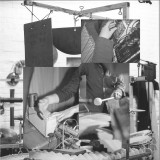
Turn up the volume and look how time bends before your eyes because that is what Robyn Schulkowsky and Andi and Hannes Teichmann do with their music. They bend time.
They make a ring out of it or some sort of ellipse, and then they pull it straight again, they transform it into a rope, and then, of course, they balance on it, forwards, backwards, half speed,
double speed, 33 rounds per minute, or was it 45? Just try both.
World percussion meets Techno and Berlin club culture, one might be tempted to say. One would be wrong to do so. This is not just crossover, this is just not an "encounter" between different generations, different experiences, different cultures, traditions and attitudes and form asossations of expressions, or, to put it in a more simple way, an "encounter" between drums and gongs and bells and stones and on the other side hardware-electronic and sequencing, delay and reverb. This is far more complex.No need to put a label on it.
by Roland Schimmelpfennig / excerpt

The mastermind behind long-running Inner Sunset Recordings out of San Francisco and the elusive Imperial Pressings has once again resurfaced, and resurfaced with ferocity! Inaugurating the all-new imprint PDG Discs, Homero G.’s “March of the Mighty Club Heroes” is a superbly crafted 4-track E.P. that hearkens back to the days of old, when music had unforgettable stories to tell and partying went hand in hand with making memories that lasted a lifetime.
Blast off into outer space with A1, “Red Planet”. The bassline rumbles and the breaks roll with an intensity that propels you forward in a swirl of intergalactic pads. Track A2, “Rusty Robofriend”, is awesomely twinkly, grindy, happy-go-lucky breakbeat jam that your grandfather’s childhood toy robots secretly dance to when nobody is looking. B1’s “Triple Tab Fantasy” is a perky, skippy, stabby, organ-filled breakbeat delight that joyfully progresses with bursts of refreshing positivity around each and every corner. And B2, “March of the Mighty Club Heroes”, is a deep and rainy piano-adorned, break-laced anthem that gives a beautifully sentimental and heartfelt nod to all the true heads out there who will let absolutely nothing stand in their way of going to the club. Not even bad weather.
A fantastic record that’s 100% built for true connoisseurs of dance music, old-schoolers and all-around music lovers alike, “March of the Mighty Club Heroes” possesses a level of detail and emotion-filled storytelling that is rarely witnessed in electronic music these days.
Once again Homero G. delivers, and delivery massively. He’s notorious for not repressing prior releases, regardless of how sought after they may be later on, so grab your copy now. Because when it’s gone, it’s very likely gone for good.

“Rob wanted the world of The Northman to feel harsh and uncomfortable, and for everything to feel like it was caked in mud and dry blood, so it was crucial for the score to mirror that.” Composers Robin Carolan (Tri-Angle Records) and Sebastian Gainsborough (Vessel) were given a task of epic proportions when director Rob Eggers (The VVitch, The Lighthouse) asked them to create the score for his ambitious and highly anticipated new film The Northman, releasing on April 22nd. They needed to make a score that both honored the immense research that had gone into the authenticity of this Viking era period piece and complimented the cinematic maximalism of the film for a modern audience. The artists stretched themselves to the depths of their creativity and the resulting album is a gorgeous sonic tableaux that places the listener right in the center of the film.
While arranging the score the composers consulted musician and ethnographer Poul Høxbro for inspiration and insight into the history of Viking music. Having backgrounds in left field electronic music, Robin and Sebastian felt liberated by the constraint of using a small selection of musical tools for this piece. “Electronic music has almost limitless potential when it comes to making sounds and that’s obviously an incredible thing, but you can also go down the wormhole and get lost in it sometimes. There’s no risk of that happening when you only have a few primary instruments to draw upon.” Robin remarked.
They utilized traditional instruments such as the tagelharpa, langspil, kravik lyre, and säckpip to build the cinematic world of The Northman but they also took creative freedoms in adding instruments likes drums, which some academics believe wouldn’t have played a big part in Viking musical culture, simply due to the lack of archaeological evidence of actual drums. “One of the pieces we wrote was intended to emulate the sound of a bullroarer; an ancient instrument used in sacred rituals or in battle to intimidate enemies. It makes a really disorienting roaring vibrato sound and low frequencies capable of traveling insane distances.” Robin says when asked about one of the more unique aspects of the score. Everyone involved put so much effort into both their research and their creativity and this richness is evident in every track. The album as a whole is a cinematic masterpiece of sound and ambiance, both gorgeous and disturbing, like the film it so beautifully accompanies.

“Rob wanted the world of The Northman to feel harsh and uncomfortable, and for everything to feel like it was caked in mud and dry blood, so it was crucial for the score to mirror that.” Composers Robin Carolan (Tri-Angle Records) and Sebastian Gainsborough (Vessel) were given a task of epic proportions when director Rob Eggers (The VVitch, The Lighthouse) asked them to create the score for his ambitious and highly anticipated new film The Northman, releasing on April 22nd. They needed to make a score that both honored the immense research that had gone into the authenticity of this Viking era period piece and complimented the cinematic maximalism of the film for a modern audience. The artists stretched themselves to the depths of their creativity and the resulting album is a gorgeous sonic tableaux that places the listener right in the center of the film.
While arranging the score the composers consulted musician and ethnographer Poul Høxbro for inspiration and insight into the history of Viking music. Having backgrounds in left field electronic music, Robin and Sebastian felt liberated by the constraint of using a small selection of musical tools for this piece. “Electronic music has almost limitless potential when it comes to making sounds and that’s obviously an incredible thing, but you can also go down the wormhole and get lost in it sometimes. There’s no risk of that happening when you only have a few primary instruments to draw upon.” Robin remarked.
They utilized traditional instruments such as the tagelharpa, langspil, kravik lyre, and säckpip to build the cinematic world of The Northman but they also took creative freedoms in adding instruments likes drums, which some academics believe wouldn’t have played a big part in Viking musical culture, simply due to the lack of archaeological evidence of actual drums. “One of the pieces we wrote was intended to emulate the sound of a bullroarer; an ancient instrument used in sacred rituals or in battle to intimidate enemies. It makes a really disorienting roaring vibrato sound and low frequencies capable of traveling insane distances.” Robin says when asked about one of the more unique aspects of the score. Everyone involved put so much effort into both their research and their creativity and this richness is evident in every track. The album as a whole is a cinematic masterpiece of sound and ambiance, both gorgeous and disturbing, like the film it so beautifully accompanies.
