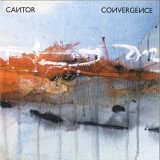
After releasing on Correspondant, Traffico Music and Mortordiscs, the new Cantor EP ‘Convergence’ is published by his own label Underground Pacific. Convergence is an emblematic rendering of Cantor’s attitude in sonic form – a sampling from his consciousness.
Pared down to four arresting tracks, influenced by new wave and post punk, including a remix by the legendary Alexander Robotnick, Convergence presents auditory concepts through which to explore the fundamentals of Cantor’s music: distortions, psychedelia, romanticism and sonic cheerfulness.
The vinyl edition is carefully tended featuring a unique contribution of the Italian artist Fabio Baggio (artbajo).
Search:j rob
The late engineer and producer Paul C’s fingerprints are all over this single from Ultramagnetic MC’s, perhaps the defining release of their career. While earlier records gave notice of their strange and unique talents, they were loveably messy affairs. This, however, is the real deal, as polished as their early sound would ever be.
‘Give the Drummer Some’ grabs a fistful of different elements – from James Brown, Dee Felice Trio and James Brown – but bends them to its own purpose. This is a song with a momentum of its own and endlessly quotable lyrics. One of which, of course, was sampled by The Prodigy – huge hip-hop fans – for ‘Smack My Bitch Up’ in 1997. The now hugely rare 7” of ‘Give the Drummer Some’ edits this out to make it more radio-friendly, but this reissue reverses that cut, giving you the original lyrics. If anyone knows why Kool Keith also changes the word ‘rappers’ to ‘monkeys’ for that edit, answers on a postcard…
The brilliant B-side harks back to the time when every group had a song dedicated to their DJ. ‘Moe Luv’s Theme’ sees Kool Keith at his most straightforward, singing the praises of the turntable skills of Moe Luv. It would be throwaway were it not for the effortless repurposing of Jackie Robinson’s oft-sampled ‘Pussyfooter’. That – and the presence of one of the world’s great MC’s at the height of his powers – elevates it far above a footnote.
The Bees are a textbook case of the chew and spit cycle that was the late 80’s South African music industry. Although their unknown story is likely unique, it is just as likely that it is no different to that of many other young artists who dreamed of getting their music heard at the time.
By 1988, the independent record label was no longer as uncommon as it had been at the beginning of the decade. As the 80s went on, more seasoned A&R reps and Producers that had gained experience and connections from their work under major labels would be trying to cash in on a market they helped create. Without the need of big rooms or expensive recording equipment, the digital advancements allowed many Producers to open or work in smaller studios and promote unknown artists under their own imprints. They would then have their catalogs marketed and distributed by the same major labels they had been working for just years prior. This would open up the possibility of a new era of stars as potential talent no longer had to be pitched to major labels in hopes of them taking a chance on a new signee over their already established artists. With the market growing and a struggle to keep up with the demand for new sounds this agreement would allow the major labels to put new emerging artists or groups on their catalog with little investment and high reward if it happened to be a hit.
ON Records was just one of the independent players at the time. Ronnie Robot had just signed the unlikely trio The Bees in hopes of adding a hit group to his label roster that consisted of solo acts. Despite the debut’s fresh house inspired sound, it failed to catch on was outsold by the bubblegum disco the label was known for. Over the years unsold back stock and promos would build up with the distributor. Luckily this allowed sealed copies from the label’s catalog to survive into the 90s when the distributor’s stock was unloaded and picked up by legendary Johannesburg jazz shop Kohinoor. Here sealed copies of the Bees first attempt sat under appreciated for over 20 years before becoming a hot title after they started circulating online and became club staples. This is how the first album of an unknown group with no success was able to become a collectors item and earn a reissue over 25 years later.
With their first record behind them The Bees were ready move forward and get back into the studio. A suggestion from producers had the trio change camps and go work with the newly formed Creative Sound Recordings, the label that promised “Music for the Future” and ended up being an essential studio in the early years of Kwaito. They would work with producer Chris Ghelakis and guitarist George Vardas, while a young Marvin Moses sat behind the desk. Musically the sophomore album was as good as a follow up as you could get. Building on the first album, Mashonisa delivers catchy melodies backed by heavy drum programming that would score points with any Pantsula. The Black Box inspired “ Never Give Up” was one of two tracks chosen to be pressed as the promo for the album, hoping to trick listeners with their catchy version of the hit( A year later the label would release their first volume of Black Box covers sang by neo soul diva BB, it would be a great seller). The label printed up an unknown amount of these in a last attempt to push the release in Shabeens and on Radio. The cheaper route of flooding the market with promo copies would only pay off 25 years later when unplayed copies started being rediscovered and had survived the years in a quantity that original run of the full album could not. Once again it was clear that with no mainstream appeal, the quality of the music on its own was not enough to garner any success at the time. The album flopped worse than their first and failed to make it past it’s initial run, making it one of the harder titles to get from the CSR catalog.
Mashonisa would be the last attempt from the Bees. They would disappear from the scene as quickly as they appeared. Of the three members it is only known that lead Singer Solomon Phiri continued in music fronting a wave dance group before he mysteriously vanished in 1993, never to be heard from again. Through a combination of luck and circumstance the group, which is unknown in South Africa to even the most plugged in musicians, producers and radio hosts of the time, managed to finally get some of the recognition they deserved 30 years later. Unfortunately this small blip of fame would happen with none of the band members present to give their side of the story, or even aware of how their two albums became popular enough to be printed on different continents in a new millennia. The Bees suffered the same fate as countless other artists of the time, who thanks to emerging independent labels and willing producers were given an opportunity to have a short career, only to be replaced by the meat grinder of the music industry when they failed to produce a hit.
Since making his debut as 96 Back in 2018, Evan Majumdar-Swift has become one of underground electronic music's genuine rising stars. To date, the Sheffield-born producer has released two acclaimed albums for labels such as Hypercolour and CPU as well as a string of singles and collaborations. His EP for Happy Skull showcases his growing versatility as a producer and marks the labels return following a brief hiatus.
"143 Connections", is a rapidly unfurling club cut that sees him pepper a weighty 140 rhythm track with crispy arpeggios and rolling acid motifs . The track increases in intensity as it progresses, with Rob Gordon's immaculate mastering work bringing out the cut's inherent weight, sharpness and subtle Bleep influences.
Elsewhere across the EP, 96 Back takes the opportunity to expand his trademark sound a little further. "Set Science" is a colourful slab of electro machine funk, full of fizzing sci-fi melodies and brain dance era synth work while "In The Trunk, Belting Down The Highway" drops the tempo but turns the intensity up to red with a slow motion chunk of mutant electronica complete with misty eyed breakdown.
Neil Young has said this album is “the unheard bridge between Harvest and Comes a Time”, which perfectly describes the warm, semi-acoustic feel of these twelve songs. Originally intended to be released in 1975, the album has remained unreleased since then, and has a legendary status among Neil’s fans.
Seven of the songs are previously unreleased on any album, and different versions of the other five songs would appear on later Neil Young albums. Neil plays guitar, piano and harmonica on the album, and is accompanied by a stellar group of musicians including Levon Helm, Ben Keith, Karl T Himmel, Tim Drummond, Emmylou Harris and Robbie Robertson.
The premise for Quindi Records is simple – to represent music with a universality at its core.
Without adhering to specific genre tropes, the releases are intended to have a meaning and purpose in all kinds of situations – a social soundtrack as much as a stimulating experience,
feeding emotions and the psyche with a sentimental palette of sounds. Lovers’ music, loners’ music, music for friends and family alike.
Woo makes for a perfect choice to meet this loose concept head-on – the music of Clive and Mark Ives straddles disparate worlds and finds its own peculiar balance. On one hand it’s delicate synthesizer music with a minimalist bent, while on the other their joyous, twinkling harmonies have an immediacy that speaks to the soul. You can detect privacy in their craft – the brothers originally recorded their music in relative isolation in London in the 70s, 80s and early 90s. It’s only in recent years their sublime work has enjoyed a wider audience through an extensive run of reissues.
Arcturian Corridor ? presents a rare, previously unreleased piece of music from Woo – the expansive suite of the title track that unfurls across five parts. It’s an enchanting listen that shows a new breadth and depth to the duo – detailed drum programming and a broader palette of synth tones cascading in elegant unison. The name refers to Arcturus, the fourth brighteststar in the night sky. As Woo themselves explain, “The Arcturian Corridor is said to be a channel of light that brings unconditional love and wisdom from Arcturus to Earth.”
In addition to the 20-minute A-side piece, Woo also presents a new version of “Love On Other Planets”, a standout piece from their 1990 album ?Into The Heart of Love? . The fragile subtlety of the original has been embellished here with rich new passages that turn it into a kind of electronica epic, although still marked out with the sensitivity one expects from a Woo record.
Two remixes complete the set, both furthering Quindi’s modus operandi as a genre-agnostic force for cosmically charged music. Dublin’s Wah Wah Wino collective present their Wino Wagon manifestation for a tastefully strange house version of the fifth part of “Arcturian Corridor” that channels the freakiness of Pepe Bradock, the robo-funk of Metro Area and a soupcon of pop nous. British duo Ultramarine maintain the stylistic ambiguity as they channel decades of expressive experimentation between live band dynamics and machine soul on their version of the title track’s second chapter.
Outta Sight’s collectable ‘Real Side’ series continues with two stunning sides from Ted Jarrett’s Nashville based ‘ref-o-ree’ label. Jarrett was a hugely successful songwriter and producer for a number of Tennessee labels before he formed Poncello and Spar ahead of the harder Soul sounding ‘ref-o-ree’ that was home to our star turn Wendell Watts. Little is known about Wendell Watts other than he recorded and released two 45s for the ‘ref-o-ree’ label in 1969. According to some sources he hailed from Detroit but these recordings are certainly Nashville based and were produced by label owner Ted Jarrett and arranged by his long-time collaborator Bob (Robert) Holmes. The 45s are highly collectable with “Kiss A Good Thing Goodbye” rarely seen for sale and available as a reissue for the very first time. Incredibly, both of our featured spins were originally released as B-sides. “You Girl” on the back of Watts’ soul-cover of the Peppermint Rainbow hit “Will You Be Staying After Sunday”, whilst “Kiss A Good Thing Goodbye” played second fiddle to the novelty Bob Holmes song “The Love Bug”. The latter was reissued in 1972 coupled with “Grooviest Thing Side Of Heaven” on the tiny Jiminie logo. Watts also released a chidren’s Christmas album in 1972, for which he wrote most of the songs, before bowing out of the music industry.
‘Reality Tunnels’ is a concept that was originally introduced by Robert Anton Wilson in his 1983 book ‘Prometheus Rising’. In essence, the concept of a reality tunnel relates to an idea on how we create our own perspective – the subjective filter that we each apply to the world around us; the things we perceive and what our consciousness deems worthy of attention, IE what we see and hear is entirely relative to what we do not.
At points angular and uncompromising with levels in the red, frequencies pushed out and EQ curves stretched into strange new shapes, Pinch mixes both low and hi fi on this boldly distinct sonic statement. It sees him flexing years of production skills – but unconventionally so – knowing well that safe predictability and rounded polish don’t get the most interesting results.
Dark trip hop Bristolia segues into blistering jungle on album opener ‘Entangled Particles’, before planet-hopping onto the spiky insidious grimestep of ‘All Man Got’, featuring the rugged rasp of OG warhorse Trim.
Beginning a triptych of future techno, ‘Accelerated Culture’ offers the album’s most relatively straightforward moment, albeit one of scorching, anthemic dancefloor heat. Delving deeper into the vortex is the synapse sparking wobbler ‘Returnity’, before ‘Finding Space’ reaches to the cosmos’ far-flung, glowing outlands.
Back to an urban reality is ‘Party’, where a subtly menacing sense of dread is ignited by Killa P’s incremental flow, which ramps-up and pairs-back the intensity in unexpected ways. Still moving freely between different realities, ‘Back To Beyond’ is beautiful gloaming ambience, executed with equal fine-tuned grace as the genre’s masters.
Jamaican vocalist Inezi lends sweet tones to the slow burning, roots-meets-modern-bass spiritual ‘Change Is A Must’, and on ‘Non-Terrestrial Forms’ an atmospheric, misty steppers intro segues stealthily into fiercely dystopian, amen-fuelled jungle tekno; marking one of several surprise attacks on the album, where a subtle-slight-of hand shoots the intensity level dynamically up.Closing as it begins, the album is bookended by a piece that recalls the dark, intricate soundscapes of Massive Attack’s ‘Mezzanine’ and Tricky’s ‘Maxinquaye’ – found here in ‘The Last One’s scorched, smoky rocker.
Hit the vinyl double pack for an exclusive and quite unique sounding 120bpm glitchy techno roller featuring man like Trim once again and live cello recordings.
For his third release on LARJ, Davis from São Paulo dusts off his TR-808, Juno, MS-20, and gets firmly into his musical stride for six electroid tracks full of pumping bass drums, snappy snares and bleepy synth-riffs. Conjuring that signature new school vibe with a true vintage touch, every track pulls its weight with bubbling basslines and/or funky synths. Davis surely hits on the motifs and distinctive dynamics for which LARJ can always be trusted upon.
Davis Genuino, who has already played a few times on the wooden dancefloor with the likes of Âme DJ and Oliver Hafenbauer, is a founding member of the ODD queer warehouse-party collective and a central figure to São Paulo’s new school House and Techno scene.
‘Reality Tunnels’ is a concept that was originally introduced by Robert Anton Wilson in his 1983 book ‘Prometheus Rising’. In essence, the concept of a reality tunnel relates to an idea on how we create our own perspective – the subjective filter that we each apply to the world around us; the things we perceive and what our consciousness deems worthy of attention, IE what we see and hear is entirely relative to what we do not.
At points angular and uncompromising with levels in the red, frequencies pushed out and EQ curves stretched into strange new shapes, Pinch mixes both low and hi fi on this boldly distinct sonic statement. It sees him flexing years of production skills – but unconventionally so – knowing well that safe predictability and rounded polish don’t get the most interesting results.
Dark trip hop Bristolia segues into blistering jungle on album opener ‘Entangled Particles’, before planet-hopping onto the spiky insidious grimestep of ‘All Man Got’, featuring the rugged rasp of OG warhorse Trim.
Beginning a triptych of future techno, ‘Accelerated Culture’ offers the album’s most relatively straightforward moment, albeit one of scorching, anthemic dancefloor heat. Delving deeper into the vortex is the synapse sparking wobbler ‘Returnity’, before ‘Finding Space’ reaches to the cosmos’ far-flung, glowing outlands.
Back to an urban reality is ‘Party’, where a subtly menacing sense of dread is ignited by Killa P’s incremental flow, which ramps-up and pairs-back the intensity in unexpected ways. Still moving freely between different realities, ‘Back To Beyond’ is beautiful gloaming ambience, executed with equal fine-tuned grace as the genre’s masters.
Jamaican vocalist Inezi lends sweet tones to the slow burning, roots-meets-modern-bass spiritual ‘Change Is A Must’, and on ‘Non-Terrestrial Forms’ an atmospheric, misty steppers intro segues stealthily into fiercely dystopian, amen-fuelled jungle tekno; marking one of several surprise attacks on the album, where a subtle-slight-of hand shoots the intensity level dynamically up.Closing as it begins, the album is bookended by a piece that recalls the dark, intricate soundscapes of Massive Attack’s ‘Mezzanine’ and Tricky’s ‘Maxinquaye’ – found here in ‘The Last One’s scorched, smoky rocker.
Hit the vinyl double pack for an exclusive and quite unique sounding 120bpm glitchy techno roller featuring man like Trim once again and live cello recordings.
Sludge machine music slapped through the infinite mixing desk by SRS - the combined mind of Sunun and Robin Stewart. At any pointData Fossil'sgiddy industrial riddims could collapse under their own weight. There are Sunun inputs and there are Robin Stewart inputs - but everything is offered up to their machines gladly for an output of nu-human-beat. Voices drift through the mix in hushed Italian and Robin's gruff roboticized drawl, floating dub chords left hanging for cavernous subs and rattled bones, distant harps and arps, a sudden blast of trills. 'Spit Fossil' itself is a clipped noise-pop wonder - the aural equivalent of a lights-on Avon dancefloor with only the weirdest left standing.
Recorded on the rooftop of a housing project called Camelot in 2018, the two Bristol locals debuted the live / unplanned collaboration in an inflatable arena called 'Toldo' in the Brunswick Club ballroom (RIP). Then again at Young Echo at the Cube Microplex - a night where it's said anything is possible (Sunun even dubbed Guest's live human heartbeat there recently….). IfData Fossilis hard to describe - it's just the sound of the musical freedom of a city that will never run dry.
It's a high Bokeh honour to welcome Sunun back after we helped release her 2018 debut,Ooid EP. Her live show continues to be the most inspiring re-use of dub principles we've witnessed (again and again). Time only grows her music outwards causing the Young Echo collective to demand she join them. SinceOoid,she's released a 12" of MPC wonders with close Bristol pals Cold Light.
Recently bearing his dub-side to all that didn't know on Trilogy Tapes'Time Travel EP, Robin Stewart is half of world conquering techno-cult Giant Swan. Also a veteran of Rwdfwd stable of imprints (Fuckpunk and NoCorner) - his music DNA is equal parts shoegaze and steppas. In 2020 he was officially recognised for having the largest collection of Bokeh t shirts.
Pleamar(Spanish for high tide) is the first collaborative release between Chancha Vía Circuito and El Búho for Wonderwheel Recordings, and stands as one of the most refreshing EP's within the Latin American downtempo electronic genre.
On this release the vision of both artists is united as one. This unity is reflected through "Real Fun, Wow!"'s artwork, presenting an image of a centered eye, reminiscent of historic drawings from tide studies. The representation of Earth, with a central circle surrounded by two ellipsoids that rotate and align in perfect harmony, mirrors the meeting of the two producers, the moment when the seawater reaches its apex andPleamaroccurs.
Like a metamorphosis that - without knowing it - we had been waiting a long time for, the EP reconstructs Pedro and Robin's encounters over the years. It transports us into the history of migrant sounds, the salvaged sound of floral jungles, high mountain forests and the ocean deep. We hear a sonic beauty filled out by deep personal stories - four humble and honest tracks that demonstrate the fusion of these artists and both them and the genre into new territory.
Starting with "Oruga"'s deep ambience, dub atmospheres and space echo reverberations, the album follows this line of reverberated rhythms and relaxed percussion lines throughout, carrying us along with a pulsating, deep, natural tempo. "El Mago Georges", perhaps the Pleamar'sjewel, is bursting with life - impactful depth and perfectly tuned melodies yet tribal and delicate at the same time. "Murga del Viento'' recalls another meeting of these two minds: El Búho's much-loved remix of "Sueño en Paraguay" a beautiful track from Chancha Vía Circuito ("Amansará" 2014). Here the whistle meets the owl from the previous track and the two birds take us a step forward in this collaboration with chords superimposed on a haunting bass. The release ends with "Una Pulgada de Silencio", a track of cosmic synthesizers, trickling water samples and the voice of argentine folk singer Gus Goncalves. Through Pleamar we come to find a much needed peace and clarity hidden beneath the rolling waves, a deep-sound escape to get lost in.
Delsin turns its attention to the archives of one of the great early pioneers of Dutch techno - Eevo Lute Muzique. The label was founded in 1991 by Wladimir Manshanden and Stefan Robbers (who was already recording seminal early techno records as Terrace for Djax-Up-Beats). Channeling the inspiration of the Detroit originators and mixing it up with their own synth pop and new wave influences, Manshanden and Robbers (adopting the Florence alias) forged a bold aesthetic with Eevo Lute, both musically and visually. This was an early iteration of techno as listening music, with an emphasis on expression and narrative over dancefloor functionality, helped in no small part by Manshanden's striking poetry. This double set of remastered, reissued tracks gathers together the earliest Florence and Wladimir M. material, largely recorded between 1991 and 1994, across five discs - the definitive document of a treasured piece of Dutch techno history. Comes with inlay and liner notes by Oliver Warwick.
Interstellar digital dancehall with stunning synth, superb vocal by Robert Ffrench in extended mix & mad style by obscure DJ Shortie Ranks. Recorded at Creative Sound Studio (Kingston, JA) in 1985.
"On “I Am Wondering” – a lovers of sorts – Ffrench is Dennis Brown in the high notes, and Gregory Isaacs in the song`s playboy sentiments. A guitar gently wah-wahs, while the synths do a giddy glissando. Midway through this discomix the bass becomes boss – throwing everything else – chopped piano chords and all – into echo. Then it`s rewind for the DJ cut – a brag and boast toast from Shortie Ranks – recounting his triumphs at legendary Kingston reggae venue, Skateland”. (Ban Ban Ton Ton - April, 21 of 2020) Robert French grew up in central Kingston and attended Kingston College. He recorded his first singles in 1979, at the age of 17. He achieved success in 1984 with his performances at the Festival Song Contest and the Reggae Sunsplash festival. He had a combination hit with deejay Clement Irie with "Bun & Cheese", and his first two albums were released in 1985. He had another hit in 1989 with "Modern Girl", a collaboration with
Courtney Melody. In the mid-1990s he relocated to New York City, where he teamed up with rapper Heavy D, with whom he had a hit with "More Love", with an album following on Ras Records, featuring collaboration with several artists including Lady G and General Degree. He has since returned to Jamaica, where he runs the
Ffrench record label and distribution company. He released the album Yesterday and Today in 2001, collecting many of his earlier singles. After a period of inactivity as a recording artist, he returned in 2009 with the single "I Do". As a producer he has worked with artists such as Dennis Brown, Buju Banton (he produced Buju's first single
"Ruler" on Stamina riddim), Beres Hammond, George Nooks, Luciano, Jah Cure, Yami Bolo and Sizzla to name a few. Robert French was the cosin of the late great Pat Kelly. As a french label, big fan from Ffrench productions, i'm very proud and happy to start a collaboration with Robert Ffrench, the most french jamaican. Stay tuned for many many more.
THE FISRT AUDIOTRIX ALBUM !!!!
10 Tracks by Ixindamix in multiple styles featuring Sim Simmer on The ones that left, Scallywag on Boom Boom Boom and Wotcha Braincells and Roberta Carrieri on Yodelix.
2 X 180G Vinyl in a beautifully designed full-colour picture sleeve with free download code inside.
What Ixindamix says !
"I’m extremely proud to present my new album “The Underground Tree” the first for over 10 years is out on 23rd May !
The title comes from a line in “Reserve the Right” – “We are family, I’ve got my possee and me, we’re fruit from the underground tree” the last track on the album, a rambling rap covering many subjects from climate change to data collection all written under the influence of a heavy hangover, where I foolishly decided it would be a good idea to get back on the mic. You can read more about that here …..
Also featuring on the album are Sim Simmer, Scallywag and Roberta Carrieri on vocals. From Bass House to Drum & Bass with a twist of Acid, Breakbeat, Ghetto, Garage and Swing, these 10 tracks are to be released on a double vinyl album available at the end of May. You can hear the megamix below.
Family is one of the most important things to us, whether it be blood or our larger sound system families, tribes or crews. They are the people that mean the most to us and make our everyday lives the best they can be. This album is dedicated to them all friends and fans the world over xxxx.
Much like its associated club, Live At Robert Johnson not only features seasoned veterans, but likewise emerging talents and those already paving their way with quality productions. Victor’s production style tells much about his ongoing collaborations with one of bespoke veterans, Gerd Janson, providing countless remixes and edits as a tag team on labels such als Running Back and Permanent Vacation.
Taking their inspirations from a sonic array of UK Synth Pop, Balearic beats and Italo Disco, Victor Shan’s LARJ debut 4-track EP reveres nights spent at the Robert Johnson club: from the dancefloor to the studio. Lush detuned synths, deep basslines sometimes lingering down below, and upfront beats—they all catch the vibe of a wooden dancefloor to be found at Nordring 131 in Offenbach.
Debüt-EP des Londoner Duos Jockstrap (Georgia Ellery & Taylor Skye) auf Warp. Jockstraps Mixtur aus harten Dubstep/Industrial-Beats, klassischer Komposition und verdrehten, zum Teil perversen Fantasy-Erzählungen begeisterte die Fachmedien (Dazed, Pitchfork, BBC 6Music, The Quietus, The Face, The Guardian) bereits bei ihrem Einstand, der digitalen "Love Is The Key To The City" EP (2018, Kaya Kaya Records), woraufhin es Lobeshymnen hagelte und Warp Records das Duo vom Fleck weg signte. Die beiden Künstler kollaborierten einzeln und zusammen bereits mit Underworld, Dean Blunt, Injury Reserve und Damon Albarn's Africa Express, zudem spielte Georgia Ellery in dem mehrfach prämierten, britischen Film "BAIT".
- "My favourite avant-garde situationists." - Mary Anne Hobbs (BBC 6Music)
- "One of my favourite bands." - Matt Wilkinson (Beats1)
- "Jockstrap are giving classical romance a surreal twist." - The Face
- "Melodiously sweet and sophisticated yet tempered by bursts of naivety and caustically fucked up-ness." - The Quietus
- "I don’t know what kind of music Jockstrap are making right now, but I like it." - The Fader


