"Quit to Play Chess" is the final studio album of Cola Boyy, who tragically passed away in March 2024 after winning the hearts of neo-disco and funk enthusiasts, from Los Angeles to Paris, from Coachella to London.
After a critically acclaimed EP (Black Boogie Neon, 2018), a debut album (Prosthetic Boombox, 2021), and collaborations with the likes of MGMT, Benny Sings and The Avalanches, the self-proclaimed Disabled Disco Innovator was able to finish his new album, groovier than ever.
Without boundaries of styles, tinted with hiphop, R'n'B and drum & bass, and faithful to his very unique flow, Cola Boyy offers one last record in his image: 12 generous, inventive, psychedelic and passionate tracks. An album painting a nuanced yet lyrical portrait of its era, drawing on the diversity of the contemporary world to offer anthems for those who are in lack of them.
The album is a work of goldsmith on the production side, with music craftsmen like Andrew VanWyngarden (MGMT), Jared Solomon (producer of SZA, Lola Young, Remi Wolf, Fousheé...), Nate Fox (Chance The Rapper, Lil Wayne) and Lewis OfMan, who build "Quit to Play Chess" as the most current and genuine project of its author...
Buscar:j walk
- 1: Soul Dressing
- 2: Tic-Tac-Toe
- 3: Big Train
- 4: Jellybread
- 5: Aw’ Mercy
- 6: Outrage
- 7: Night Owl Walk
- 8: Chinese Checkers
- 9: Home Grown
- 10: Mercy Mercy
- 11: Plum Nellie
- 12: Can’t Be Still
Throughout their history, Booker T. & The MG's racked up Top 40 hits, had their songs covered by artists as diverse as The Ventures, Count Basie, and Tom Petty & The Heartbreakers, were inducted into the Rock and Roll Hall of Fame, received a Grammy Lifetime Achievement award, and continued being the band of choice in collaborations with legends such as Bob Dylan & Neil Young. 1965’s Soul Dressing features the legendary The Mar-Keys’ horn section, who add gravity to their soul sound, while Side Two might be the most fantastic late-night come-down album side of all time. And bonus points for the hints of ‘mod’ sprinkled around (even the U.K.’s Small Faces covered their original track “Plum Nellie”).
Bump, skip, hats, jack, jack, jack. Danny. Kenny. 'Little' Louie. Junior. FK. Sound Factory. Twilo. Body & Soul jus'born. When a walk to the Alphabets still has you checking your shoulder. NYC going through changes, condos just on the horizon.
Strictly, King Street, MAW and a myriad of the City's labels were ahead of the pack. Like many, Ear Candy had its moment. Chopped vocals sampled, looped and riding a bass and kick as only an analogue can do. 'Yer can I listen to the new Maxi' Boom, talking, talking, talking. Reasons to release Brian, Persian or whoever comes next, alongside today's producers is that the lineage carries on. Right FYI Chris!Better than today No. Different. Keep digging, keep debating, keep on keeping on as only that 4/4 kick and rumble can move...you.
Discover the Mystery.
- 1: Pop Out
- 2: Crush
- 3: K Pop
- 4: Evil J0Rdan
- 5: Mojo Jojo
- 6: Philly
- 7: Radar
- 8: Rather Lie
- 9: Fine Shit
- 10: Backd00R
- 11: Toxic
- 12: Munyun
- 13: Crank
- 14: Charge Dem Hoes A Fee
- 1: Good Credit
- 2: I Seeeeee You Baby Boi
- 3: Wake Up F1Lthy
- 4: Jumpin
- 5: Trim
- 6: Cocaine Nose
- 7: We Need All Da Vibes
- 8: Olympian
- 9: Opm Babi
- 10: Twin Trim
- 11: Like Weezy
- 12: Dis 1 Got It
- 13: Walk
- 14: Hba
- 15: Overly
- 16: South Atlanta Baby
- 1: I'm A Stranger Here/Stranger Blues
- 2: Nervous
- 3: I Just Want To Make Love To You
- 4: Born With The Blues
- 5: I Got My Eyes On You
- 6: John Henry
- 7: I Need Money
- 8: Everyday, I Have The Blues
- 9: Night Time Is The Right Time
- 10: My Own Fault
- 1: Baby, Won't You Please Come Home
- 2: Moanin
- 3: Money Honey
- 4: Kansas City
- 5: Bye Bye Baby
- 6: Medley : The Blues Ain't Nothin' But A Woman & Bye Bye Baby
- 7: Eyesight To The Blind*
- 8: Your Funeral & My Trial*
- 9: Bye Bye Bird*
- 10: Fattening Frogs For Snakes*
- 11: Bye Bye Blues*
- 12: Wake Up Baby**
The blues, born in the cotton fields of the American South, emerged from makeshift instruments and simple harmonies rooted in African heritage. It captured the struggles, hopes, and fleeting joys of laborers enduring harsh conditions, with its hallmark "blue note" adding a unique dissonance to this evocative musical style.
As industrialization progressed, the blues migrated to urban centers like Chicago and New Orleans, evolving with modern instruments and expanding themes to reflect urban struggles, sensual nights, and existential despair. This period birthed many of the musicians who later formed the American Folk and Blues Festival (AFBF), an initiative started in 1950s Germany to introduce Europe to the genre and counter its reductive reputation as a precursor to jazz.
The Lost Recordings celebrates these legendary artists through restored performances from the 1962 Olympia in Paris and the 1963 Stadttheater in Bremen. Featured artists include John Lee Hooker, Memphis Slim, Sonny Terry, Brownie McGhee, T-Bone Walker, Helen Humes, and others, showcasing the depth and evolution of the blues.
From intimate duos like Brownie McGhee and Sonny Terry’s harmonica-guitar interplay to T-Bone Walker’s electrifying group performances, each act demonstrates the genre's versatility and influence. John Lee Hooker’s solo mastery mesmerized audiences, while T-Bone Walker pioneered the electric guitar's place in blues, inspiring legends like B.B. King.
The album also highlights Sonny Boy Williamson, whose charismatic harmonica and profound sensitivity defined his performances. These concerts take listeners on a journey through the authentic sound of the blues, traversing America’s history and foreshadowing its transformative impact on global music.
- A1: Dawn/Go Within
- A2: Carnaval
- A3: Let The Children Play
- A4: Jugando
- A5: I’ll Be Waiting
- A6: Zulu
- B1: Bahia
- B2: Black Magic Woman/Gypsy Queen
- B3: Dance Sister Dance (Baila Mi Hermana)
- B4: Europa (Earth’s Cry Heaven’s Smile)
- C1: She’s Not There
- C2: Flor D’luna (Moonflower)
- C3: Soul Sacrifice/Head, Hands & Feet
- D1: El Morocco
- D2: Transcendence
- D3: Savor/Toussaint L’overture
Santana Bridges the Divide Between Live and Studio Material on Moonflower: 1977 Double Album Features Extraordinary Performances, Soulful Vibes, and Dynamic Mix of Latin, Rock, Funk, and Blues
Sourced from the Original Master Tapes and Strictly Limited to 3,000 Numbered Copies: Mobile Fidelity’s 180g 33RPM 2LP Set Plays with Audiophile-Quality Detail, Balance, and Imaging
1/4” / 15 IPS original analogue non-Dolby master to DSD 256 to analogue console to lathe
Though it may seem strange now, Moonflower stood for nearly 15 years as Santana’s first and only live record released in the United States. This despite the fact that roughly half of the double album consists of new studio songs, including a zesty cover of the Zombies classic “She’s Not There” that reached the Top 30 of the singles charts.
However unconventional, the “split” strategy went over like gangbusters. Moonflower reached the Top 10 of the Billboard Top 200 and achieved double-platinum status — feats the group would not again replicate for 22 years. These, and the beautiful quality of the program itself, are among the reasons why the 1977 effort remains viewed by critics and fans alike as must-have Santana.
Sourced from the original master tapes, pressed at Fidelity Record Pressing in California, housed in a Stoughton jacket, and strictly limited to 3,000 numbered copies, Mobile Fidelity’s 180g 33RPM 2LP set of Moonflower presents the record in audiophile sound for the first time on a domestic reissue. Part of the MoFi’s Santana catalog restoration series, this collectible version features quiet surfaces and black backgrounds that expose the critical details, liquid tones, and dynamic interplay central to Santana’s music.
The enhanced sonics extend not only to Carlos Santana’s six-string wizardry, but to the rhythmic, melodic, and vocal elements that course throughout both the studio and live cuts on Moonflower. The grip and depth of the bass lines; the wash of the organ; the scope and carry of the vocals; the extension and weight of the low-end frequencies; the rich textures of the guitars, percussive devices, and keyboards: all appear amid wide, balanced soundstages and image with right-sized dimensionality.
Significantly rooted in the styles and approaches that inform the group’s first three records, Moonflower captures the final appearances of iconic percussionist Jose “Chepito” Areas and go-to keyboardist Tom Coster on a Santana album. As he did during the preceding five-year stretch, Coster inhabits a large role here, sharing songwriting credits on a majority of the new cuts and helping steer the arrangements toward spiritually minded albeit concise directions that encompass vibrant Latin, rock, and blues themes that began to escape the ensemble shortly after his departure.
Close your eyes and feel the warmth of the sun on the R&B-kissed “I’ll Be Waiting,” anchored by Carlos Santana’s gliding fretwork and Greg Walker’s creamy vocals. Enter the cosmic universe of “Zulu,” on which Coster’s nimble phrasing opens the gate to polyrhythmic beats, knotty grooves, and interlocking funk. Grab the album cover and drift off to paradise amid the equally evocative “Flor d’Luna (Moonflower),” a romantic slow dance that Carlos Santana ensures tiptoes en route to its blissful destination. Channeling a different spirit animal, the guitarist later lets loose on the hard-hitting “El Morocco,” on which he seemingly engages in a shootout with himself and wades into the rippling psychedelia that elevated the band’s early material.
Speaking of the past, Moonflower triumphs on that level as well. In more ways than one, the live selections — and the caliber of the performances — chosen for inclusion represent an abbreviated greatest-hits survey of the band up to that point. And, at the very least, a convincing argument about why Santana had progressed into one of the most formidable bands you could hope to see on a stage in the mid ‘70s.
Simultaneously representative and illustrative of the group’s breadth, tracks stem from the collective’s eponymous debut, Abraxas, and Santana III as well as the then-more recent Amigos and Festival. Whether you fall for the sidewinding spell of a spicy rendition of “Black Magic Woman/Gypsy Queen,” lose your head to the positively epic momentum of “Soul Sacrifice/Head, Hands & Feet,” or keep dropping the needle on the savory grace of the brilliant reading of “Europa (Earth’s Cry Heaven’s Smile),” this pressing of Moonflower puts you — and Santana’s first-chapter legacy — in good hands.
- A1: Stardust
- A2: Unidentified
- B1: Round About Midnight
- B2: Walkin
- B3: If I Were A Bell
- C1: Fran Dance (Put Your Little Foot Right Out)
- C2: Two Bass Hit
- D1: So What
- D2: All Of You
- D3: The Theme
In December 2024, The Lost Recordings released the first volume of this legendary concert, recorded on October 11, 1960, at the Olympia by Miles Davis and his quartet, joined by saxophonist Sonny Stitt. Alongside pianist Wynton Kelly, bassist Paul Chambers, and drummer Jimmy Cobb, they formed an ensemble of exceptional musicality.
Now comes the second part of this remarkable concert.
In 1960, Miles returned to Paris for the fourth time in 12 years. Just months earlier, he had performed there with John Coltrane in a turbulent concert, marking the end of their collaboration. In October, at the Olympia, he rediscovered a stage he loved in a city he had fallen for back in 1949. "I loved being in Paris, I loved the way I was treated there," he would later say.
Since 1949, his music had evolved. From his immersion in Parkerian bebop to his collaboration with Gil Evans, he refined his style, developing a more spacious jazz inspired by Ahmad Jamal and enriched by his classical training. The soundtrack of Elevator to the Gallows in 1957 was a turning point, foreshadowing the pinnacle of Kind of Blue in 1959.
From the opening notes of Stardust, a previously unreleased piece, Miles sets the tone—seduction and lyricism. With a track attributed to Sonny Stitt, the swing settles in. The atmosphere intensifies with ‘Round Midnight, followed by Walking, where Stitt and Davis engage in a masterful exchange. If I Were a Bell and Fran Dance offer a more introspective moment before Two Bass Hit reignites the energy. The concert reaches its peak with So What and All of You, as Miles captivates the audience until the final notes of The Theme.
Our quest to recover the full concert began in 2022 when a friend sent us a photo of magnetic tapes in Brittany. A label reading "Miles Davis – Olympia 1960" caught our attention. After two years of research spanning France, the United States, and Stockholm, we are proud to present, for the first time, the complete version of this legendary concert.
- A1: Antonio Soler: Sonata In D Minor, R. 24
- A2: Antonio Soler: Sonata In F Major, R. 89
- A3: Enrique Granados: El Pelele, Ieg. 22
- A4: Carlos Suriñach: Canciones Y Danzas, No. 3
- A5: Enrique Granados: El Fandango De Candil, "Goyescas" Op. 11, No. 3
- A6: Enrique Granados: Quejas O La Maja Y El Ruiseñor, "Goyescas" Op. 11, , No. 4
- A7: Enrique Granados: Los Requiebros, "Goyescas" Op. 11, No. 1
- B1: Federico Mompou: Canciones Y Danzas No. 4
- B2: Federico Mompou: Canciones Y Danzas No. 5
- B3: Federico Mompou: Canciones Y Danzas No. 6
- B4: Isaac Albéniz: Corpus Christi En Sevilla, "Iberia", Book I, No. 3
- B5: Isaac Albéniz: Triana, "Iberia", Book Ii, No. 3
- B6: Isaac Albéniz: El Albaicín, "Iberia", Book Iii, No. 1
- B7: Isaac Albéniz: Lavapiés, "Iberia", Book Iii, No. 3
- B8: Francis Poulenc: Toccata
The Spanish Queen (of the Piano)
She had small, square hands. She was 1.52 m tall. As a child, she banged her head on the floor to be allowed to play the piano. She was Catalan. She was a pianist—one of the greatest. Her mission? To spread the Spanish repertoire. Her name was Alicia de Larrocha.
When she passed away in 2009 at age 89, Nelson Freire wrote, "I truly loved her; she was a modest woman, and her playing shone like the sun." Acclaimed worldwide, she stood alongside Victoria de Los Angeles as one of Spain’s finest artists.
Larrocha’s journey began at three, seated at a piano. At four, she studied under Frank Marshall, a student of Granados. By six, she was performing publicly; by eleven, she played Mozart’s Coronation Concerto with Madrid’s Symphony Orchestra, astonishing audiences. Despite her small hands, she developed an airy, precise touch, even daring to record Rachmaninov’s Third Concerto. But beyond technical mastery, her playing held a profound sense of life and imagination.
Though trained in Bach, Mozart, and Chopin, Larrocha fought to bring Spanish composers to global audiences. Albéniz and Granados owe much of their fame to her. Her international breakthrough came in the 1950s when an American impresario heard her Spanish recordings and invited her to the U.S., where she triumphed.
Her performances honored Spain’s musical heritage. From Soler’s sonatas to Granados' Goyescas, she infused each note with nuance. She brought Goya’s paintings to life in El Pelele and mastered the dark contrasts of Surinach’s Canción y Danza. Albéniz’s Iberia demanded both power and delicacy—qualities she commanded effortlessly.
Her final tribute was to her friend Francis Poulenc, performing his Toccata—a soaring farewell.
As one admirer put it in 1982, "She walked toward a piano too big for her, sat, placed her hands on the keys… and became the queen."
Alicia De Larrocha, Piano
- A1: My Boy Lollipop
- A2: Oh, Henry
- A3: Do-Re-Mi
- A4: Since You've Been Gone
- A5: I'm In Love Again
- A6: Sugar Dandy
- A7: Sweet William
- A8: Bluey Louey
- A9: Something Gotta Be Done
- B1: He's Mine
- B2: Tom Hark
- B3: Be My Guest
- B4: Walking To New Orleans
- B5: Let The Four Winds Blow
- B6: Don't You Know
- B7: Until You're Mine
- B8: I Want You To Know
- B9: See You Later Alligator
My Boy Lollipop is the debut album by Jamaican singer Millie Small, capturing the infectious energy of the early ska movement. Driven by the global success of the title track, a genre-defining hit, the album delivers a lively mix of upbeat rhythms, playful melodies, and Millie’s unmistakable high-pitched vocals. With a blend of ska, pop, and R&B influences, it's a vibrant showcase of the sound that helped bring Jamaican music to international audiences. A must-have for fans of classic ska and timeless feel-good tunes.
- A1: Walking (Theme)
- A2: Just A Little Lovin’
- A3: Infinite Vibrations
- A4: Walking
- A5: Today Years Old
- A6: Choir Beat
- B1: Music Will Explain
- B2: 1000 Goodbyes
- B3: Animal Noises
- B4: Music Will Explain (Reprise)
- B5: Wiggle Room
- B6: The Outer Limits
Mockys neues Album - und das erste auf Stones Throw - 'Music Will Explain (Choir Music Vol. 1)' dreht sich um die menschliche Stimme und versucht, die Essenz des Menschseins in einer zunehmend digitalen und künstlichen Welt einzufangen.
Mocky lud Freunde und Kollaborateure ein, sich in seiner Garage um ein Mikrofon zu versammeln und eine bewusste Mischung aus menschlichen Harmonien, Live-Instrumenten und analogen Aufnahmen, die nur Menschen machen können, zu kreieren.
Seine Fingerabdrücke sind in der Musik vieler Künstler zu finden: Er produzierte für Feist, Kelela, Moses Sumney und Vulfpeck und wurde von GZA, Kanye West und Cordae gesampelt.
Für den Anime Carole and Tuesday von Shinichiro Watanabe komponierte er die preisgekrönte Filmmusik.
Für Fans von: Benny Sings, Feist, Eddie Chacon, Helado Negro, Sault, Michael Kiwanuka, Jamie Lidell.
- A1: Just Got To Know
- A2: Walkin' And Talkin' (For My Baby)
- A3: The Tips Of My Fingers
- A4: Woman, Woman Blues
- A5: Something You Got
- A6: The Poor Side Of Town
- A7: I'm Tired Of Wandering
- A8: Fat Mama Rumble
- B1: You're Gonna Make Me Cry
- B2: Cool Drink Of Water Blues
- B3: Don't Let Me Down
- B4: A Dying Veterans Plea 2:16
- B5: Lone Town Blues
- B6: A Woman, A Lover, A Friend
- B7: Roamin' And Ramblin' Blues
- B8: Right Around The Corner
- C1: She May Be Yours
- C2: Brought Life Back To The Dead
- C3: West Helena Blues
- C4: Thirty Two Twenty Blues
- C5: I'm Leaving You
- C6: Big Fat Mama Blues
- D1: I'm A King Bee
- D2: Rollin' And Tumblin
- D3: Stop Talking In Your Sleep
- D4: I Can't Quit You Baby
- D5: The Last Mile Of The Way
- A1: Pharoah Jones
- A2: Ghost Gospel
- A3: Ill Feeling
- A4: Capital Punishment
- A5: Do Not Adjust
- A6: Cool Green Trees
- A7: Chill Scratch
- A8: Poisonous Fumes
- A9: Welcome Aboard The Starship
- B1: Keep On Runnin
- B2: Sounds Impossible
- B3: Painted Faces
- B4: The Knew Style
- B5: Chicken Wing Blues Sauce
- B6: Kool Breeze
- B7: Sexx Bullets
- B8: Soul Child
- B9: Take Off Runnin
- B10: Centurian
- B11: Bozack
- B12: Church
- B13: Splash One
- B14: Hank
- B15: 73 Goatee
"Chasing the funky symphonies that filled my head and my dreams..."
December 25th, 2023 - an Instagram post. Stimulator Jones shared half a dozen FIRE tracks from his beat tape archive. We were immediately drawn to the rough hewn boom bap.
"I'd release that", Rob commented.
Hours of material was shared and the result is this: Cool Green Trees (1999-2005). A collection of beats and loops Stimulator Jones created between the ages of 14-20 at home in his basement, bedroom and computer room in Roanoke, Virginia.
You will not believe the profound soulful genius contained within these naive schoolboy melodies.
December 25th, 1998 - 25 years ago to the day and his much-coveted Yamaha SU10 sampler was finally bestowed upon young Stimmy AKA Sam Lunsford: "I immediately hooked up a CD Walkman to the input jack and looped the beginning two bars of Grover Washington Jr.'s "Mercy Mercy Me". I don't know what exactly was so thrilling about hearing two measures of music repeating over and over but it was so infectious and hypnotizing and enthralling to me. I'll never forget that ecstatic rush of making my first loop - an uncontrollable, gleeful smile plastered all over my face." When you hear the pocket breakbeat symphonies featured here on Cool Green Trees, you'll feel the same sense of frisson.
In the wake of his Stones Throw breakthrough - Exotic Worlds & Master Treasures - Stimulator Jones was pegged by many as a 90s throwback artist. However, he literally IS a 90s artist. He's been recording music most of his life and he's now 40. He created the bulk of Cool Green Trees as a teenager. Everything before 2004 was recorded when Sam was still in school. He was in 8th grade when he made the 1999 tracks - he didn't even have his learner's permit. This album is a snapshot of a young man in a simpler time. Things were still mysterious back then and he was flying blind, relying on his ears and having to figure things out for himself: "I had no road map for becoming a beatmaker. I have been collecting music since I was a kid, I am a lifelong digger and seeker of cool and interesting sounds. I was there in the golden age of Hip Hop, and while I may have been a suburban white kid in Roanoke, Virginia, I was tuned in and I bought so many classic albums when they came out. I was attracted to Hip Hop because of the musical and poetic quality. I was hypnotized by the rhythms, partially because I was a drummer. I didn't brag about collecting my breakbeat records or making beats - it was something I did in isolation. It wasn't something I generally wanted to bring attention to and it didn't really score me any cool points. I certainly wasn't flexing on social media about it."
Hell, he can do that now!
Opener "Pharoah Jones" was inspired by Yesterday's New Quintet and Madlib's ability to capture that classic 70s sound whilst playing all the instruments. Sam created this one stoned afternoon by laying down a 2 bar loop and a shaker loop on his Yamaha SU700 sampler. He hung a microphone from the ceiling and played his Yamaha Stage Custom drum kit over the top before adding ender Rhodes and playing his dad's Selmer tenor sax through an Electro Harmonix Memory Man echo pedal. Yes! Up next, "Ghost Gospel" utilises a dope loop from a gospel record and adds some soul-funk drums overtop, whilst working that filter knob. Says Sam: "The loop reminded me of something Ghostface would rap over. The sample was in 3/4 waltz time but I flipped it for a 4/4 groove, a technique I picked up from RZA. "Ill Feeling" uses sped-up pieces from a dusty old funk record and putting them over a classic NOLA drum loop; gain chopping up a slow, bluesy 3/4 time signature and bending it to a 4/4 groove. Classy shit. "Capital Punishment" features drums tapped in live, inspired by MF Doom's Special Herbs series. "Do Not Adjust" consists loops found on a compilation of 70s French music at Happy's Flea Market, a classic Roanoke digging spot.
The sublime, evocative title track, "Cool Green Trees" was created when Sam was still living at home. He dumped samples off his SU10 into the family desktop and arranged them in a demo version of Pro Tools: "This track was sort of my ode to the DJ Shadow style of sample based production. Super spacey, slow, and moody. The heavily filtered drums were inspired by Alec Empire's 'Low on Ice' album. I later added some scratches and sounds from a Spider Man storybook record." "Chill Scratch" snags the final bit of a bossanova record and pairs it with a drum loop before adding experimental scratching run through an Electro Harmonix Memory Man echo pedal. "Poisonous Fumes" was made using a sampler, mixer and a turntable; a kind of mixtape beat collage with added scratches and sounds from various records. Using dialogue from superhero records was a nod to Madlib. "Welcome Aboard The Starship" is dark, downtempo trip-hop with a spooky bent. Sam paired a slow, hard drum loop with a guitar sample grabbed off a psychedelic rock record. To finish, he added various backwards sounds and weird atmospheric effects and a little scratching. Swoon.
Side B opens with "Keep On Runnin", made on a borrowed Roland SP202 sampler. Having always loved the sound of the Lo-Fi filter on those machines, reminiscent of the Emu SP1200, Sam always imagined Del or another of the Hieroglyphics crew rapping over this beat. You can certainly hear why. "Sounds Impossible" sees Sam experimenting with layering multiple kick samples at different volumes to create patterns similar to those heard by Showbiz and Lord Finesse during their God-level 1995 period. "Painted Faces" was made by chopping up a REDACTED record which he had gotten from Happy's Flea Market and paired it with a REDACTED drum loop. By the time Sam recorded "The Knew Style", he had acquired a shitty old 1960s portable turntable off eBay. It didn't function properly when he bought it but his brother opened it up, cleaned it out and got it working: "I remember he told me that there was a bunch of sand inside of it when he opened it up, as if its previous owner had taken it to the beach. I would take that turntable on my Happy's Flea Market digs so I could preview records...that's how I found this loop."
"Chicken Wing Blues Sauce" loops up a classic blues joint and pairs it with some REDACTED drums. A bit of filtering and arranging et voilà! "Kool Breeze", from 1999, is one of Sam's oldest surviving beats, as is "Sexx Bullets". The Roots sampled the same record, leaving Sam frustrated yet vindicated. "Soul Child" was an early SU10 creation, looping a dusty old Soul Children 45 and pairing it with 70s rock drum loops to great effect. "Take Off Runnin" was another loop found digging with a portable turntable. Paired with some boom bap drums it makes for a hypnotic head-nod groove. "Centurian" was intended to be a little beat interlude a la Pete Rock. The sample is from a sun-dappled soft-psych record and it's paired with a Robin Trower drum loop that just happens to fit perfectly. Sometimes you slap things together kind of haphazardly and magic happens. "Bozack" was the first beat Sam made using Pro Tools, his first foray into using chopped sounds instead of loops, an exciting new world. "Church" is beat interlude using a Phil Upchurch loop with the "Long Red" drums - a favourite break of Dilla et al. Sam was really on a tear in late 2004, probably because he was unemployed and phoneless and able to just make beats all day. He made "Splash One" on a borrowed Yamaha SU700 and again was experimenting with tapping the drums in live with his fingers, instead of using a loop or sequenced pattern. Channeling 9th Wonder, Sam used a water splash sound effect from a Batman record as a percussive element, hence the title (also a 13th Floor Elevators reference). The main loop is a backwards portion of one of his favourite Roy Ayers songs.
"Hank" is another fun little beat interlude thing, created on a borrowed Roland SP202 sampler with the fantastic Lo-Fi effect that resembled the Emu SP1200 at a fraction of the price. "73 goatee", from 99, is another of his oldest surviving beats, created in his bedroom with his Yamaha SU10 and his brother's Vestax MR-300 4-track recorder: "This one will always feel special. I can remember having a feeling all the way back then on the night that I created it that this was a solid beat with a catchy loop. There was something in the Fender Rhodes melody that resonated with me emotionally, and I had never heard a producer sample that portion before. I felt like I had found my own unique sound, my own unique loop. It came from an Ahmad Jamal '73. I actually even recorded myself rapping and scratching over this beat way back then, I still have that version in all its imperfect sloppy glory."
Sam explains just how much these tracks mean to him: "They all have immense historical and sentimental value and I'm proud of them. These beats come from an innocent, simple time when I was just figuring out how to craft these sounds. They're something very personal to me. They are the initial part of a journey that I really was taking *alone*. There was no YouTube. I couldn't Google shit. I didn't even know any other beatmakers, producers or DJs in my town that could teach me anything. It was always just me, alone, in a room with some equipment - chasing the funky symphonies that filled my head and my dreams. What I was doing wasn't cool. Most of my peers thought I was a weirdo and couldn't care less. Creating these sounds was an anti-social endeavour. In a sense, I felt like it was me against the world, and all I had to instruct and assist me were the recordings produced by my heroes - RZA, DJ Premier, Erick Sermon, Beatminerz, Showbiz, Diamond D, Beatnuts, Prince Paul, The Bomb Squad, Pete Rock, Q-Tip, E-Swift, Mista Lawnge, DJ Shadow, Cut Chemist, Peanut Butter Wolf, El-P and so many more...I dedicate this collection to them, and to my older brother Joe who has always been a musical and technical guiding light for me.
This was a time before every kid was a self-described producer and beatmaker, before everyone had a DAW, before Kanye and "chipmunk soul", before Red Bull beat battles, before there was any social media beyond chat rooms and AOL Instant Messenger, before Soundcloud, before SP-404 mania, before lo-fi beats to study to, before Splice, before targeted ads for MIDI chord packs, etc. In 99 when I told people that I had a sampler and made beats I was mostly met with bewildered confusion and indifference. Kids and adults alike would wonder why I got this weird machine for Christmas instead of something worthwhile like a Playstation or a mountain bike or even a guitar for that matter because at least that could be used to make "real music". Back then, sampling was still not widely respected as an art form - it was seen as lazy, talentless and unoriginal at best and outright criminal theft at worst. I had gotten respect for playing drums and guitar and things of that nature but this was a step in the wrong direction in the eyes of many."
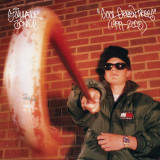
The cover photo is a picture of Sam standing on his back porch in the latter part of 1998, just before he got his first sampler. He was 13 years old, in 8th grade. His dad took the picture with his 35mm film camera: "I actually wanted to be pointing my dad's .22 pistol at the camera lens but he wouldn't let me. He gave me an old walking cane to use instead. The Tommy Hilfiger puffer jacket came from the lost and found at William Fleming High School where my mom worked as a secretary. I was thrilled when she brought it home because we never spent money on expensive name brand clothing like that - we were for the most part strictly a sale rack, bargain bin, thrift store, yard sale, flea market kind of family when it came to clothes. My watch is some cheap off-brand fake gold department store watch." Mastering for this vinyl edition was overseen by Be With regular Simon Francis and it was cut by the esteemed Cicely Balston at Abbey Road Studios to be pressed in the Netherlands by Record Industry.
• The Hidden Cameras freuen sich, anlässlich des 15-jährigen Jubiläums von »Origin: Orphan« das Remix-Album »Origin: Orphan Remixed« zu veröffentlichen.
• Die Leadsingle des Albums, der Remix von »Colour of a Man« von den Pet Shop Boys zeigt den brillanten Trademark-Sound des berühmten Duos.
• Und auch Holy Fuck wurden nach einem Mix gefragt und sie lieferten einen Remix getreu ihrer elektronischen Lo-Fi Ästhetik.
- Sunshine
- Blue Mind
- Leaving Before
- I Walked Into The Wrong Place
- Salt For Morning
- Nobody Else
- Waltz For Morning
- Emptiness Is
- Lovesick
- Pale Green Tower
- Too Late
Andy Jenkins neues Album Since Always entstand aus dem Loslassen von Selbstwahrnehmungen, Erwartungen und Annahmen. Jenkins fand Raum in sich selbst als Gitarrist seinen eigenen Songs zu vertrauen, und Produzent Nick Sanborn schlüpfte in eine neue Art von Produktionsrolle, indem er Ideen entwarf und filterte sie gemeinsam durch. Kurzum, es war ein sehr erwachsenes Vorgehen, zwei Fans, die zusammenarbeiten, um etwas zu schaffen; eine Platte, auf der der Verlust und die Liebe, der Kompromiss und der Gewinn des Erwachsenseins sichtbar werden. Beide waren in ihren jeweiligen, aber miteinander verflochtenen Musikszenen in Richmond und Durham, schon seit Jahren Fans voneinander, hatten aber nie offiziell zusammengearbeitet. Jenkins hatte ein paar Jahre damit verbracht, Songs für den Nachfolger seines 2018 erschienenen Debüts "Sweet Bunch" zu sammeln; die neuen Songs waren kunstvoll gestaltete Oden an die verschiedenen Zusicherungen und Ängste, die damit einhergehen können, ein gewisses Maß an Zufriedenheit zu finden, wenn man auf die 30 zugeht. Als Jenkins seine Stücke einspielte, hörte Sanborn zu und ließ seiner seiner Fantasie freien Lauf und überflutete Jenkins mit Ideen - Rhythmusverschiebungen, Keyboard-Verzierungen, Gesangseffekten. Es gab ein Doppel-Takt-Piano, einen Fehler in ,Too Late", den sie beide liebten. Da war die Vocoder-Auswahl während ,Emptiness Is", eine Wahl, die es dem Paar ermöglichte einen großen Teil des Songs allein mit Bass und Schlagzeug zu bestreiten. Da war die Sequenz, die unter ,Leaving Before" brodelt, ein Spiegel des lyrischen nervösen Herzens. Als Amelia Meath und Jenn Wasner von Flock of Dimes im Studio herumhingen im Studio herumhingen, fragte Sanborn, ob sie bei ein paar Stücken singen wollten. Das ist Meath bei ,Blue Mind", die Jenkins' Zeilen über den Zauber der Liebe singt, als würde sie eine Beschwörung anbieten, und Wasner erhebt sich durch die statische Morgendämmerung von ,Lovesick". ,Andy wollte jemanden, der Entscheidungen trifft, die er nie treffen würde", erinnert sich Sanborn. ,Es war diese Minenarbeit, die wir zusammen machen mussten." Als die Songs jedoch immer mehr zusammenwuchsen, bestand Jenkins darauf, dass es endlich an der Zeit war, seine Gitarren abzulegen. ,Ich war noch nie ein besonders kompetenter Gitarrist", sagt er jetzt mit einem kleinen Lachen, aber Sanborn liebte die eigenwillige Art und Weise, wie sich seine Gitarrenschläge mit seiner Stimme verbanden, also hielt er sie hin. Sie würden auf Jenkins' langjährigen Mitarbeiter, ein Ass namens Alan Parker, warten, der aus Richmond kommen und die Teile ersetzen sollte. Als Parker kam, hörte er dasselbe wie Sanborn - ja, er war technisch versierter, aber seine Overdubs hatten nicht dieselbe Persönlichkeit, nicht die gleiche erzählerische Wahrheit. Jenkins lenkte ein, und so blieben seine Gitarren und verankern das Album.
- Introit
- Sanctus
- Kyrie Eleison
- Pie Jesu
- Sequentia
- Agnus Dei
- Lux ?Terna
- In Paradisum
All Men Unto Me is a project led by Rylan Gleave, composer and vocalist (most notably in Ashenspire and various Paraorchestra projects). Today, All Men Unto Me announces their second album Requiem, an album which re-imagines an ancient mourning in a real, contemporary setting. Taking the broad emotional arcs of the Missa pro Defunctis, these structures pave way for new songs, ruminating on patriarchal power systems and the conditions of transmasculinity within these, through the haze of Queer reverence and forgiveness. In Rylan's words, the Missa pro Defunctis "translates to ‘Mass for the dead’, and refers to the Catholic text taken from the Roman Missal. When set to music, it is called a ‘Requiem’. Requiem masses are usually performed at funerals. I’ve sung in a few Requiems — Mozart, Fauré, Duruflé — when I’ve been in choirs, and felt those dramatic arcs of the structure in my own voice. Writing a Requiem felt like processing my own complex feelings about the Church, patriarchal power within it (and more broadly), and the death of a part of me in a framework that allowed for mourning. The contours of sorrow, light, forgiveness, and reverence made space for these songs to speak to my own identity as a survivor, and use that structure in a way that let me direct an ancient narrative myself." Marrying traditional Anglican soundworlds of electro-pneumatic church organ and stacked choral vocals with heavier sounds, closer to experimental/noise rock and doom metal, Requiem sits at times near Swans, Kayo Dot, Lingua Ignota, Greet Death, and Scott Walker.
[e] SEQUENTIA [video]
This Project is really a two in one offering. Combining the three tracks from Ringer’s 2021 release, the “Meta Music EP” and his darker more aggressive moniker, Black Sued’s offering the “Rogue EP”. The EP is sort of a yin and yang. Monotone is a deep chordal track with uplifting vocals and a pulsing almost distorted bassline. This track is complimented with minimal drums and a simple yet beautiful synth riffs that bring it all together. New Plan is a fast paced cut that insights the listener to move. The drums and chords wrestle in a rhythmic dance while Ringer’s voice projects the essence of this side of the 12”. Positivity and persistence, the energy is alive in this track. YIA, an acronym that stands for Yes I Am, is meditative and filled with affirmations for the listener. Deep solemn chords, and the sounds of a thunder storm take the listener into a inner place of self reflection. The affirmations are for the listener to embody, a solid thought provoking end to this side of the 12”.
Rogue, the title track of this side of the record, is an intelligent, dark and jazz filled groove, that takes the listener on a journey. The groove is easy to catch, and wraps the listener into an almost mysterious landscape of rhythm and melody. Keeping the tone of this side of the 12” is Maze. The chords and rhythm walk in tandem to a beat that almost favors a marching band. A higher energy feel arrives as the 16th high hats meet a long defining chord that take this track to the next level. Deep Dirt reminds me of a drum machine tweaking or malfunctioning. The ominous chords paired with the distorted synth and bass lines that carry the listener through the filth that is this track.
- 01: Let There Rise The Hymns Of Exaltation
- 02: Unmake Me
- 03: Ppm (Revisited)
- 04: Threads 2024
- 05: The Next Last Day
- 06: My Exit, Unfair, Pt. 2
With the world burning around oneself, the importance of the current moment is core, not to get lost. Focus on the important, i.e. the non-urgent, the ectoplasmatic material in the cracks between the whirlwinds of hurry, angst and greed around. Scarred ourselves, yet with unrelenting blissful resistance to the unforgiving circumstances, an apocalypse is not about giving up. Circling around the chaos to find one's own unique place(s), hailing and embracing the rare people that share those whereabouts. Connection, mutuality and community as the means to walk through the harsh cliffs of the world.
- A1: Don't Try To Tell Me - Berna-Dean
- A2: This Mornin' - The Jesse Stone Singers
- A3: All Around The World - Vermettya Royster With James Brown's Band
- A4: What's On Your Mind - The Four Bars
- A5: Don't Look Now - Wilbur "Hi-Fi" White & King Kolax Band
- A6: Money Talks - Kenny Smith
- A7: Hey Little Girl Pt 1 - Roosevelt Lee
- B1: Goin' Away Baby (Round Like An Apple) - Smokey Wilson
- B2: Hey Hey Baby - T-Bone Walker
- B3: I'm A Good Woman - The Afterglows
- B4: You Make Me Mad - Johnny Madara
- B5: Money Talks (Tell Me What I Say) - The Citations
- B6: Tell Me Why - Richard Berry
- B7: Mary Don't You Weep - The Delights
New R&B discoveries continue to emerge and entertain the many followers of the New Breed musical cult; nobody finds more than the Kent connoisseurs.
Berna Dean’s two previously unheard recordings are by far her best. They were laid down at Cosimo Matassa’s New Orleans’ studios by GNP Crescendo but eschewed in favour of two relatively average sides. The great 50s R&B songwriter Jesse Stone provides a rocker for the much-admired Jimmy Breedlove and a super-catchy ‘This Morning’ for an unknown mixed vocal group that has a joyous gospel feel. Jesse also penned ‘Private Eye’, a classic early 60s story-song, for Buddy Wilkins which was issued on Al Sears’ Tri-Ess imprint.
The title track is used twice, on two very different Fraternity recordings. Kenny Smith’s version was issued in 1964 and has many followers, but the equally meritorious Coasters-inspired composition by the Citations is newly discovered. Win Menifee’s ‘I’m Runnin’ Around’ from the same Cincinnati label comes complete with a fascinating back-story.
There are three cover versions. Vermettya Royster’s ‘All Around The World’ is backed by James Brown’s 1961 band, while Roosevelt Lee's 1970 update of the 1947-originated ‘Hey Little Girl’ funks the tune up a la Godfather of Soul. The cover that will make the biggest noise is undoubtedly west coast band the Afterglows’ version of Barbara Lynn’s evergreen dancer ‘I’m A Good Woman’ – this is a future monster.
Golden Crest provides two fabulous male vocal group sides – the swinging ‘What’s On Your Mind’ by Eddie Daye’s Four Bars and the delightful harmonies of the appropriately-named, but unknown Delights ‘Mary Don’t You Weep’.
Blues still thrived into the 70s as Albert Washington’s mean and moody ‘Case Of The Blues’ proves. Smokey Wilson took the music into the late 70s with the storming ‘Goin’ Away Baby (Round Like An Apple)’, which benefits here from a 45-style edit. His Pioneer Club on 88th Street in South Central L A provides the atmospheric photo for this collection.
More early 60s movers come from Wilbur “Hi-Fi” White with ‘Don’t Look Now’, future hit songwriter Johnny Madara’s raucous ‘You Make Me Mad’ and Big Boy Groves ‘Bucket O’ Blood’ which brilliantly describes the kind of club these tracks would fit right into.
The LP version loses a few tracks, but so many collectors have strong preferences we’ve thrown the vinyl junkies a lifeline.