Search:jäger

Styles
All
MAIIJA - What if LP

MAIIJA

What if LP

12inch912008337216
Noise Appeal Records
13.02.2026

"What If" ist das neue Album von MAIIJA - eine eindringliche Auseinandersetzung mit Verletzlichkeit, Mut und den Emotionen, die uns verbinden. Marilies Jagschs Stimme bewegt sich zwischen Stärke und Zerbrechlichkeit und steht im Zentrum eines Sounds, der elektronische und organische Elemente fein miteinander verwebt.
Persönliche Erfahrungen, geprägt vom Leben mit Endometriose, treffen auf die Unsicherheiten unserer Zeit. Produziert von Peter Paul Aufreiter mit Gernot Scheithauer, Lukas Lauermann und Gästen wie The Zew, Oskar Mayböck und Paul Szelegowitz, ist ein Album entstanden, das berührt, tröstet und verbindet.
"What If" erinnert daran: Was auch kommt, wir sind nicht allein.

EN

"What If" is the new album by MAIIJA - a powerful exploration of vulnerability, courage, and the emotions that connect us. At its heart is Marilies Jagsch's voice, moving between strength and fragility, framed by a sound that blends electronic and organic elements.
Personal experiences shaped by living with endometriosis meet the uncertainties of our time. Produced by Peter Paul Aufreiter with Gernot Scheithauer, Lukas Lauermann, and guests including The Zew, Oskar Mayböck, and Paul Szelegowitz, the album is both moving and comforting.
"What If" is a reminder: whatever comes next, we are in this together.

pre-order now13.02.2026

expected to be published on 13.02.2026

26,26
David Bowie - Under The Influence? 2x12"
  • A1: Little Richard - Fabulous Little Richard
  • A2: Anthony Newley - Who I Can Turn To
  • A3: Ann Peables - I Can’t Stand The Rain
  • A4: Ken Nordine & The Fred Katz Group - Word Jazz
  • A5: Gerry Mulligan - California Concerts
  • A6: Koerner, Ray & Glover - Blues, Rags & Holler
  • A7: Stooges - Stooges
  • A8: Moondog - Moondog
  • A9: Linton Kwesi Johnson Forces Of Victory - Forces Of Victory
  • A10: Pixies - Doolittle
  • B1: Air - Moon Safari
  • B2: Scott Walker - Scott Walker
  • B3: Grandaddy - The Sophtware Slump
  • B4: Tom Verlaine - Tom Verlaine
  • B5: Brian Eno - Another Green World
  • B6: Kevin Ayers - Unfairground
  • B7: Mother Of Invention - Freak Out
  • B8: Roxy Music - Roxy Music
  • B9: The Langley Schools Music Project - Innocence & Dispair
  • B10: The Polyphonic Spree - Section 8

Which musical artists influenced David Bowie? Which records did he listen to over and over again during his youth and beyond? Who were his favorite songwriters and composers? What were his favorites? And in the case of such an artist, unique in his genre from the beginning to the end of his career, is the term “influences” the right one? As we delved into Bowie’s work, we learned that, even if he was the type to pick and choose from all over the place, he drew most of his inspiration from himself

pre-order now13.02.2026

expected to be published on 13.02.2026

27,94
Airelle Besson & Lionel Suarez - Blossom LP
  • 1: Blossom
  • 2: Kyoto Dans La Brume
  • 3: Sans Laisser D'adresse
  • 4: Answer Me
  • 5: La Course
  • 6: Ida Lupino
  • 7: Lontano
  • 8: Le Jour J A L'heure H
  • 9: Les Tuiles Bleues
  • 10: Resonances

The album begins with the title track (Blossom) a light and immediate song composed by Besson. Also composed by Besson are 'Kyoto dans la brume', inspired by a stay in Japan's imperial city, and 'La Course', originally written for three slapstick short films by Fatty Arbuckle starring Buster Keaton. Suarez's composition ' Sans laisser d'adresse' , was initially written for a stage play titled ' Ici Nougaro' , and his ' Le jour J a l'heure H' for a film by director Jean- Henri Meunier. 'Les Tuiles Bleues' is a nod to Suarez's late friend, Malagasy accordionist and singer, Regis Gizavo.

There are also three covers on the album, 'Answer Me' by Gerhard Winkler and Fred Rauch, a composition recorded by Keith Jarrett during his 2016 European tour; Besson cites Jarrett as a major influence. There is also Carla Bley's ' Ida Lupino' and Pat Metheny and Lyle Mays' ' Au Lait'. These and their own compositions result is Blossom' ', a highly accomplished album on which trumpet and accordion shine in equal measure.

pre-order now13.02.2026

expected to be published on 13.02.2026

26,85
Infernal Majesty - None Shall Defy LP
  • Overlord
  • R.i.p
  • Night Of The Living Dead
  • S.o.s
  • None Shall Defy
  • Skeletons In The Closet
  • Anthology Of Death
  • Path Of The Psyco
also available

Green/White Splatter Vinyl[28,36 €]


Gemastert und restauriert von den Original-Master-Transfers durch Patrick W. Engel bei TEMPLE OF DISHARMONY im Dezember 2021. Geschnitten von SST Germany auf Neumann-Maschinen für optimale Qualität auf allen Ebenen. Die ultimative audiophile Neuauflage dieses zeitlosen Thrash-Klassikers! Infernäl Mäjesty aus Toronto, Kanada, formierten sich 1986 zunächst unter dem Namen Overlord; ihr erstes Demo brachte ihnen im Underground und bei der einschlägigen Presse gleich genug Bekanntheit ein, um einen Deal mit Roadrunner Records an Land zu ziehen. Das selbstproduzierte Debüt „None Shall Defy“ wurde 1987 veröffentlicht und hat sich seitdem zu einem veritablen Kultklassiker gemausert. Thrasher in der ganzen Welt betrachten „None Shall Defy“ als eines der besten Thrash-Alben überhaupt, und als die beste Kanadische Scheibe auf ihrem Gebiet – sengend, aggressiv und ultra-heavy; trotzdem hat der Infernäl Mäjesty-Erstling bisher nie die gebührende Aufmerksamkeit erfahren. Das muss sich ändern, und dank des Re-release auf High Roller Records gibt es nun die Chance, dieses Stück Thrash-Geschichte (wieder) zu entdecken. Wenn man sich vor Augen hält, dass Infernäl Mäjesty sich nur ein Jahr vor Erscheinen des Albums gegründet hatten, werden seine hohe Qualität, das große musikalische Können und die extrem durchdachten Songstrukturen noch ein Stück beeindruckender. Während der Sound das Albums vielleicht schon auf vorbildliche Weise das Harte, das Klare und das Finstere ausbalanciert, wurde es von Patrick W. Engel (Temple of Disharmony) noch einmal sorgfältig remastered, um das Beste aus “None Shall Defy” herauszuholen. Was Reviewer niemals zu erwähnen vergessen ist, wie unglaublich evil das Album ist; nicht nur was den Sound angeht, sondern auch in der Art und Weise, wie die Band ihre Songs rüberbringt – es ist technisch, aber die Technik ist stets songdienlich; die Riffs werden ohne Ende variiert, es herrscht definitiv kein Mangel an brillanten Ideen, an komplexen Tempiwechseln und an starken Soli.

Darüber hinaus sind die Lyrics schön finster und streckenweise extrem blasphemisch – was will man mehr?

pre-order now13.02.2026

expected to be published on 13.02.2026

25,00
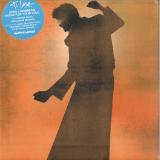
DAVID WALTERS - TI LOVE LP 2x12"

In his own time, in his own tone and in his own company.

‘Win and lose without losing oneself’’ This line from French rapper Oxmo Puccino greatly accompanied David Walters while composing his fourth studio album. Over the eleven tracks on ‘Ti Love’, David took his time to find the right tone and in turn, tell his truth.

‘Ti Love’, is a French-Creole abbreviation for “petite love”, meaning ‘little love’, evoking that sweet fondness found in those small gestures and little acts of kindness.

Think of things like young kids' brotherly love or a stranger lending you a helping hand, while expecting nothing in return. It’s these motions that allow this album to feel full of real life, carried by beating drums that also pull at our heart strings.

Basing himself in a small village in Martinique, where David had not long since scattered the ashes of his late mother, the multi-instrumentalist decided to remain there and let the writing of Ti Love pour out from deep inside him. Taking influence from around the island, the energy from his makeshift studio set up in Fort de France, allowing a resilient yet grieving man to recount, let go and come to terms with his recent loss.

So embracing these new circumstances, on the rugged coastal Caribbean island of Martinique, David took up an artist’s residency in the island’s capital Fort de France, located near the town’s port is the ‘Manoir des Artistes’, a bustling recording studio space. A place where the walls shake as the latest sounds being created are blasted by locals and visitors alike. Most studio doors are wide open; as music here is a huge part of everyday life, feedback from encouraging neighbouring musicians is on hand and welcomed. A contrast to the isolation often assumed with working in more traditional music studios.

It was here in this stimulating environment that David recorded Ti Love’s initial demos.

With his first collaborator onboard, Neeweed, a 25-year-old producer and gospel expert who David met at the Martinique Jazz Festival.

Of the album’s initial versions of the record David recollects: ‘It took me three years to write it, then I rewrote it, reworked it. In the end I'm really glad I stepped back and listened to myself.’ I found a great ally in GUTS, who ended up being the artistic director of the record”

David surrounded himself with the right people who helped him express himself in the best possible way. He called on other friends and musical comrades; album opener and title track, ‘Ti Love’ features the incomparable Fatoumata Diawara (World Circuit Records / Africa Express) and further along additional production came in from; Izem, Art Of Tones, and GUTS himself, who all added just the right amount of ‘little love’ to this

project. Further helping hands came from Californian producer and DJ Captain Planet, who David was introduced to a few years ago. Closer to home, here in Europe, the German producer Bluestaeb appears on two tracks: the very catchy disco funk ‘Mr Maraboo’ and ‘Kite Koule’, the latter being the first single lifted from the album, where David invited Nigerian guitarist Keziah Jones.

Elsewhere on the album, fellow Heavenly Sweetness recording artist Blundetto contributed two tracks; the reggae ‘Voodoo Love’, which is David's tribute to Studio One, and the very sweet and resilient ‘Bon Voyage’, which closes the album... "It's gold, it doesn't need anything changing.” remarked David - ‘Bon Voyage’ is a goodbye to his mother, whose voice called him from the bottom of the sea one night while he was surfing during the full Moon.

Released almost 20 years after his debut album ‘AWA’ released on French imprint Ya Basta, home to Gotan Project and many others, David boasts a long list of radio supporters including; Gilles Peterson, Cerys Matthews and Don Letts at the BBC, while further field Cosmo Radio in Germany, and KCRW in Los Angeles.

On this new record, David has shown sincerity and vulnerability, while still honouring the infectious groove that he is known for the world over. Despite the upsets, a little love can indeed go a long way.

CREDITS:
Produced by Bluestaeb / Blundetto / Captain Planet / Izem / Art of Tones
A&R : Guts
Mixed by Mr Gib @ Onetwopassit
Except "Bon Voyage” and "Voodoo Love" mixed by Jerome “Blackjoy” Carron
Mastered by Benjamin Joubert @ Biduloscope
Art by Elliott Walters

out of Stock

Order now and we will order the item for you at our supplier.

23,11

Last In: 63 days ago
DJ Maestro - Deep Trip LP 3x12"

DJ Maestro

Deep Trip LP 3x12"

3x12inchBHLP258
Black Hole
09.02.2026

DJ Maestro, geboren als Martijn Barkhuis in Nederland, is een gerenommeerde Nederlandse DJ, producer en componist, vooral bekend om zijn werk aan de fameuze Blue Note Trip-compilatieserie. Met een diepgewortelde passie voor jazz en een scherp oor voor eigentijdse grooves, verwierf Maestro naam door klassieke jazzopnames te combineren met moderne beats, wat resulteerde in een verfijnde fusie die zowel traditionele jazzliefhebbers als een nieuwe generatie luisteraars aanspreekt. Zijn vermogen om naadloze, atmosferische en muzikale verhalen te creëren leverde hem erkenning op van het prestigieuze Blue Note Records-label, dat hem het vertrouwen gaf om hun klassieke catalogus te gebruiken voor moderne, genre-overstijgende mixes. Met de lancering van de Blue Note Trip-serie in de vroege jaren 2000 hielp DJ Maestro de interesse in klassieke jazz nieuw leven in te blazen door tijdloze tracks te koppelen aan subtiele elektronische elementen en soulvolle interpretaties. De serie werd een vaste waarde in lounges en hi-fi luisterruimtes over de hele wereld. Elke release weerspiegelt Maestro’s respect voor muzikaal erfgoed en zijn talent om verhalen te vertellen via geluid, waarbij hij luisteraars meeneemt op een muzikale reis die zowel nostalgisch als vooruitstrevend is. In 2015 begon DJ Maestro aan een opmerkelijk project: Little Girl Blue Remixed, een eigentijdse herinterpretatie van Nina Simone's iconische debuutalbum uit 1958. Het album werd geprezen om zijn respectvolle, maar inventieve remixes. Dit project onderstreepte Maestro's vermogen om de brug te slaan tussen klassieke jazz en hedendaagse muziek, en verstevigt zijn status als visionair binnen de jazz fusion scene. Naast deze albums heeft DJ Maestro samengewerkt met een breed scala aan artiesten, bigbands en jazzmuzikanten. Hij heeft zijn repertoire ook uitgebreid naar filmmuziek, liveoptredens en remixes – allemaal met behoud van zijn kenmerkende stijl geworteld in jazz, soul en downtempo. DJ Maestro blijft een culturele brug slaan tussen tijdperken, waarbij hij de rijkdom van jazz viert en tegelijkertijd innovatie, dansmuziek en moderniteit in zijn mixen verwelkomt. Na zijn geprezen reeks genre-overstijgende compilaties keert Maestro nu terug met Deep Trip – een gloednieuwe mixcompilatie die zal verschijnen op Black Hole Recordings. Deze keer kiest hij voor een meer house-georiënteerde richting, met warmere grooves, diepere ritmes en een weelderige sfeer, maar altijd met Maestro’s onmiskenbare signatuur. Deep Trip verschijnt zowel als een mixed CD als in een triple vinyl set met alle tracks in ongemixte versie. Het is een reis door hedendaagse deep house-texturen, met soulvolle percussie en een hypnotische opbouw. De compilatie laat Maestro’s muzikale evolutie horen: trouw aan zijn jazzwortels, maar volledig omarmend wat de moderne house te bieden heeft.


h 4. I Hadn't Known I Only Heard


h 4. I Hadn't Known I Only Heard


[h] 4. I Hadn't Known [I Only Heard]


[h] D2 | Herbert - I Hadn't Known [I Only Heard] (7 15)

out of Stock

Order now and we will order the item for you at our supplier.

50,38

Last In: 67 days ago
DIRT BUYER - DIRT BUYER III

DIRT BUYER

DIRT BUYER III

12inchBRLP74
Bayonet
06.02.2026
  • Baseball
  • For Me
  • Halfway
  • Bullshit Fuck
  • Betchu Won't
  • Get To Choose
  • Wait On The World
  • Multizeal
  • Me Before You
  • Old As Sin
  • When You Were A Kid

,Dirt Buyer III" fängt mit einem Song über Sport an. "Baseball/ Is somethin'/ I'll never get, but I/Sleep on it/ Wake up/ And try again", singt Joe Sutkowski zu einer zunächst langsamen, dann dröhnenden verzerrten Gitarre. Aber natürlich weiß jeder, der mit der emotionalen Tiefe der Musik von Dirt Buyer vertraut ist, dass Sutkowski nicht einfach nur über Amerikas Lieblingsfreizeitbeschäftigung singt. ,Es geht darum, mit bestimmten Erwartungen aufzuwachsen und sich an sie zu halten, nur weil man gesagt bekommt, dass man das tun soll", erklärt Sutkowski. ,Der Song handelt davon, Autonomie und Unabhängigkeit zu erlangen." Gleich zu Beginn kehrt Dirt Buyer III zu den Ursprüngen zurück, zu den in der Kindheit fest verankerten Brüchen, um ein Album zu schaffen, das von da an ein viszerales Dokument der Bewältigung derselben Prüfungen im Erwachsenenalter ist. Als ,Dirt Buyer II" 2023 erschien, hatte es bereits drei Jahre lang in der Schublade gelegen. Zu diesem Zeitpunkt hatte Sutkowski bereits alle Songs für ,Dirt Buyer III" geschrieben, während einer besonders turbulenten Phase seines Lebens. Anstatt wie früher die für ein Album notwendige Anzahl an Songs zu schreiben und dann direkt ins Studio zu gehen, hatte er hier mehr als zwei Dutzend Tracks angesammelt. Nur wenige Wochen, nachdem "II" veröffentlicht worden war, nahm Sutkowski "III" auf. ,Ich war so bereit, etwas anderes zu machen", erklärt er. Er war bereit, diese Jahre hinter sich zu lassen. Genauso wie es einen klanglichen Sprung von den selbstgemachten Aufnahmen von "Dirt Buyer" zum moderaten Studio-Polish von "Dirt Buyer II" gab, hat Sutkowskis Musik zwischen den Alben wieder eine logische, aber substanzielle Entwicklung durchlaufen. Das Grundgerüst ist dasselbe: zerklüftete Akustikgitarren, elektrische Riffs, die mal herbstlich, mal bissig und übersteuert klingen, Schlagzeug, das mit dem selben verzweifelten Tempo vorwärts taumelt, mit dem Sutkowski diese Jahre durchlebt hat. Und dann seine Stimme über allem: klagend, sich windend, manchmal brüchig und manchmal voller neuer Kraft. Getragen von den soliden Strukturen dieser Songs und einer kraftvolleren Produktion präsentiert Dirt Buyer III die bisher vollendetste und eindringlichste Version von Sutkowskis Sound. Im Oktober 2023 traf sich Sutkowski mit seinen Freunden Hayden Ticehurst und Chris Cubeta im Brooklyn Studio G. Er zeigte ihnen alle Demos, und gemeinsam wählte das Trio die ,stärksten Stücke aus der Reihe" aus, wobei sie sich auf die 11 Kompositionen konzentrierten, die auf "III" zu hören sind. ,Wir wussten, welche Songs es werden würden, und haben uns direkt an die Arbeit gemacht", sagt Sutkowski. Trotzdem nahmen sie sich Zeit, um alles genau richtig hinzubekommen, und verteilten die Aufnahmen, das Abmischen und die letzten Feinheiten über ein ganzes Jahr. Das Ergebnis ist ein Dirt Buyer-Album, auf das Sutkowski so stolz ist wie nie zuvor. Er sagt: ,Es spiegelt am besten wider, wo ich als Songwriter gerade stehe ."

pre-order now06.02.2026

expected to be published on 06.02.2026

22,27
Kanonenfieber - Soldatenschicksale LP

KANONENFIEBER: "In der Schule lernen wir, dass Krieg etwas Schlechtes ist. Vom Prager Fenstersturz bis zur Ermordung des Thronfolgers in Sarajevo - Krieg bedeutet immer Gewalt. Wir hören von politischen Spannungen, gewagten Feldzügen und zermürbenden Materialschlachten. Untermauert wird all das von Zahlen, so gewaltig und abstrakt, dass sie beinahe irreal wirken: 17 Millionen Tote allein im Ersten Weltkrieg.
Wenn sich der Pulverdampf vom Schlachtfeld verzogen hat, bleiben nur noch Tote zurück - keine Menschen. Doch wer war der Mann, der erschossen im Granatentrichter liegt? Wer war der kaum 17-jährige Junge, der nach einem Minentreffer im Unterstand erstickte, schreiend nach seiner Mutter? Wer war der Feldwebel, der Fahnenjunker, der Pionier - der einfache Soldat, der innerhalb weniger Sekunden sein Leben und seine Identität verlor? Ein einzelnes Schicksal, das im Schatten des "großen Ganzen" so winzig erscheint, dass es kaum Beachtung findet.
Genau hier setzt Soldatenschicksale an.
Von der Landung der Amerikaner an der Westfront über den erbarmungslosen Winterkrieg im Osten bis hin zu den Kämpfen auf und unter der Wasseroberfläche der Nordsee - es geht um Menschen. Um Stimmen. Um Geschichten, die in Vergessenheit geraten. "Soldatenschicksale" versammelt überarbeitete Fassungen von "Yankee Division" (2022), "Der Füsilier" (2023) und "U-Bootsmann" (2023) sowie zwei neue Stücke, die als "Skagerrak" fungieren.
Skagerrak. Die größte Seeschlacht des Ersten Weltkriegs.
Nach jahrelangem Wettrüsten zwischen dem Deutschen Kaiserreich und Großbritannien ist es am 31. Mai 1916 so weit: zwei Großmächte prallen aufeinander. In den Songs "Z-Vor!" und "Heizer Tenner" wird der Untergang des Kleinen Kreuzers SMS WIESBADEN geschildert, erzählt aus der Sicht eines Marinemelders und eines Heizers. Artillerie, Flammen, Maschinenlärm - und mittendrin: zwei Männer, die Teil einer Geschichte werden, die keiner überlebt."
Ltd. CD Mediabook, Ltd. Gatefold LP & LP-Booklet, LP, Digital album.

pre-order now06.02.2026

expected to be published on 06.02.2026

24,16
Lee Morgan - City Lights

Lee Morgan

City Lights

12inch5811997
CM BLUE NOTE
06.02.2026

Der Trompeter Lee Morgan war gerade einmal 19 Jahre alt und stand noch ziemlich am Anfang seiner
langjährigen Zusammenarbeit mit Blue Note Records, als er 1957 sein lebhaft swingendes Album “City
Lights” aufnahm. Wie schon auf seinen vorangegangenen Alben präsentiert der junge Trompeter hier vor
allem Stücke seines Mentors Benny Golson, mit dem er zuvor in der Big Band von Dizzy Gillespie zusammengespielt hatte. Morgan selbst sollte sich erst später als Komponist profilieren.

pre-order now06.02.2026

expected to be published on 06.02.2026

34,03
Various - ANTENA/ATENAS LP

In 2017, at Documenta Kassel (but in Athens), I invited José Jiménez Bobote, a remarkable gitano artist from the Tres Mil Viviendas neighbourhood in Seville, to record a series of actions in specific locations in the Greek capital. Ancient Greece and modern Greece. I wanted him to draw sound from the city, to strike it as only a flamenco artist can, with his feet. To hit the ground and make it moan, ring out with noises evoking significant moments in history: from Diogenes the Cynic and the Apostle Paul’s sermon at the Areopagus to Rosa Eskenazi’s resistance to the Nazi-German occupation, and the ups and downs of police Inspector Costas Haritos’s survival at the European Bank during the PIGS crisis. Bobote struck the ground and Athens responded, sending back echoes of the past, in an exceptional anachronistic exercise. In flamenco it is possible for several times to sound simultaneously.

We took seventeen hours of footage, and water from many wells.

I then shut away producer, musician, and friend Raül Refree with this material so that he could take the long titles and use them as scores, turning them into mere songs. It was very important to think in terms of songs. The tracks had to have the capacity to be songs, the kind of thing one whistles while absent-mindedly walking down the street. Generally speaking, the scores—that is, the texts—defended the use and abuse of the loose coins that people carry around in their pockets. Loose change as a kind of everyday fetishism against big financial capital. Pistis! Refree managed to coax that distinctive unity of songs, their bright catchiness, from the amalgamation of sounds that would, in other hands, end up being labelled concrete music. Peter Szendy would be pleased and grateful. Being able to sing under one’s breath something that others consider simply noise.

Seven songs, yes. And if you get the chance, take a stroll through Athens with them: the locations are clearly defined. If not, then let Athens fill your home with all its ancient wisdom, boring into your ears like worms, making holes in history.

Listen, and, as people used to say, turn up the volume!

Pedro G. Romero, Santa Marta, Colombia, November 2025

Comes with booklet with song lyrics written by Pedro G. Romero. Limited edition of 250 vinyl records.

pre-order now02.02.2026

expected to be published on 02.02.2026

26,47
Ian Anderson - Thick As A Brick 2 ( LP 2x12")
  • 1: From A Pebble Thrown
  • 2: Pebbles Instrumental
  • 3: Might-Have-Beens
  • 4: Upper Sixth Loan Shark
  • 5: Banker Bets, Banker Wins
  • 6: Swing It Far
  • 7: Adrift And Dumfounded
  • 8: Old School Song
  • 9: Wootton Bassett Town
  • 10: Power And Spirit
  • 11: Give Till It Hurts
  • 12: Cosy Corner
  • 13: Shunt And Shuffle
  • 14: A Change Of Horses
  • 15: Confessional
  • 16: Kismet In Suburbia
  • 17: What-Ifs, Maybes, Might-Have-Beens
  • 18: Etching

Half-Speed Remaster des 2012er Albums

Anlässlich des 40-jährigen Jubiläums des Albumklassikers "Thick As A Brick" erscheint am 30. März 2012 eine Fortsetzung zum Originalalbum mit dem Titel "Thick As A Brick 2".

1972 hatte Ian Anderson mit dem Jethro-Tull-Album "Thick As A Brick" einen Klassiker des Progressive Rock aufgenommen. Im Mittelpunkt der Songtexte stand die fiktive kindliche Hauptfigur Gerald Bostock. Das Album avancierte zum Spitzenreiter in den Billboard Charts und zu einem beachtlichen Erfolg in etlichen anderen Ländern.

Vierzig Jahre später: Was würde Gerald Bostock, der nun 50 Jahre alt wäre, heutzutage machen? Wie wäre es ihm in all der Zeit ergangen? Der "zweite" Teil des Albumklassikers zieht die unterschiedlichsten Möglichkeiten in Betracht, was aus dem frühreifen Schuljungen Gerald Bostock hätte werden können, welche Wege er hätte einschlagen können. In den diversen Songs nimmt die Hauptfigur verschiedene Alter Egos an, um die Vielzahl der möglichen Wendungen zu verdeutlichen, die Schicksal und Zufall in einem Leben bereit halten. So illustrieren die Songs nicht nur Geralds Leben, sondern auch die Entwicklungen unserer eigenen Biographien, die nicht selten durch zufällige Begegnungen und Eingriffe völlig neue Wendungen annehmen, auch wenn sie manchmal zunächst noch ganz nichtig und unbedeutend erscheinen.

Ian Anderson über sein neues Album: "Wenn unsere Generation auf ihr Leben zurückblickt, überkommt sie sicherlich gelegentlich dieser 'Was wäre wenn'-Moment. Wären wir, wie Gerald, statt dem, was wir sind, vielleicht Prediger, Soldat, Penner, Geschäftsinhaber oder Finanztycoon geworden? Und all jene, die der Generation des Internet und der sozialen Netzwerke angehören, mögen darüber sinnieren, was mit den unzähligen Möglichkeiten ist, die sich bei jeder Gelegenheit anzubieten scheinen."

Im Rahmen dieser Veröffentlichung wird Ian Anderson erstmals seit 1972 "Thick As A Brick" gemeinsam mit seinen Bandkollegen John O'Hara (Keyboards), David Goodier (Bass), Florian Opahle (Gitarre) und Scott Hammond (Schlagzeug) - sowie einigen musikalischen Gästen - in kompletter Länge live spielen. Zudem präsentieren Ian Anderson und seine Band im zweiten Teil der Show auch die Fortsetzung des Albumklassikers live.

pre-order now30.01.2026

expected to be published on 30.01.2026

38,45
Nils Wülker - Zuversicht LP

Nils Wülker

Zuversicht LP

12inch5021732957177
Domestic Audio
30.01.2026

„Zuversicht“, das jetzt erscheinende fünfzehnte Album des laut Crescendo „klanggenialen Trompeters und Ausnahmekomponisten“ Nils Wülker, strahlt die Lebensenergie des Titels aus – in vielfacher, wunderbarer Hinsicht. Die elf Eigenkompositionen, eingespielt im Quartett mit den Jazz-Stars Aaron Parks (Grammy-Gewinner an der Seite von Terence Blanchard oder Joshua Redman) am Piano, Linda May Han Oh am Kontrabass (Grammy-Gewinnerin, u.a. mit Pat Metheny oder Kenny Barron zu hören) und dem laut Jazz Magazine „Drummer seiner Generation“ Greg Hutchinson, drängen den ECHO-Gewinner und Top Ten-Jazzer Nils Wülker bewusst aus seiner Komfortzone in eine schöne, neue Klangwelt. Wülkers Personalsound ist eindringlich und unverkennbar, das Ergebnis dennoch überraschend. Gemeinsam haben die Vier in nur dreieinhalb Tagen voll gemeinschaftlicher Schaffenskraft in den legendären Hansa Studios in Berlin (U2, David Bowie, Depeche Mode u.a.) ein Album geschaffen, das gleichermaßen zeitgemäß wie richtungsweisend ist – und in seinen starken Melodien und dem sagenhaften Interplay voll Zuversicht.


Das Resultat spricht für sich: „Zuversicht“ ist ein sehr organisches, in jeder Note lebendiges Album, dem die Kompositionen des Leaders in Kombination mit der kreativen Zusammenarbeit der drei weiteren Bandmitglieder enorme Größe und Eleganz verschaffen, eine immer wieder überwältigende Energie. Auch live auf Tour wird die Besetzung des Albums zu erleben sein – mit Nils Wülker an der Seite von Linda May Han Oh, Greg Hutchinson und anfangs, aufgrund von Termingründen, mit keinem Geringeren als Omer Klein am Piano. Gute Gelegenheiten, Nils Wülkers spontan entwickelte neue Stücke und die traditionsreiche, moderne Klangwelt dieser Musik unmittelbar zu erleben.

pre-order now30.01.2026

expected to be published on 30.01.2026

26,26
KAFFKIEZ - WIR

KAFFKIEZ

WIR

12inchEB831
SUPERPOLRECORDS
30.01.2026

Rote splatter Vinyl. Nach über 16 Monaten ohne frische Musik sind KAFFKIEZ zurück und kündigen direkt ein neues Album für den 30.01.2026 an. Noch vor 5 Jahren waren die Shows dieser Band nur von Freunden & Verwandten besucht. Mittlerweile finden die Familientreffen der Rosenheimer Bande in großen Hallen statt und die ansteckende Leichtigkeit der Band verbindet weit über ihre Musik hinaus. Wie die Nachbarsjungs, mit denen man immer noch gerne eine Runde um den Block dreht, stehen KAFFKIEZ für eine durchdringende Befreiung von Alltagslasten und ein Augenzwinkern, das die Sorgen auf morgen vertagt. Die Jungs der Band machen klar, um was es ihnen geht. WIR. Ein Album das Zusammenhalt und Gemeinschaft durch und über die Musik hinaus manifestiert. Eine Einladung an alle Fans von lebenshungrigen Gefühlen, langen Sommerabenden und treibender Leichtigkeit. Wer schon länger Teil der KAFFKIEZ Family ist, wird sich über die gut bekannten und unaufhaltsam nach vorne marschierenden Rhythmen & die schrammelnden Gitarren direkt abgeholt fühlen. Doch der Sound des kommenden & dritten Studioalbums der Band hat an Druck und Kraft gewonnen. Elemente wie Bläser und Synths strecken die Hände in neue Richtungen aus ohne zu vergessen, wo sie herkommen. Ein Familienausflug der Extraklasse.

pre-order now30.01.2026

expected to be published on 30.01.2026

27,31
TYLER BALLGAME - For The First Time, Again LP
  • 1: For The First Time, Again
  • 2: I Believe In Love
  • 3: You're Not My Baby Tonight
  • 4: Matter Of Taste
  • 5: Sing How I Feel
  • 6: Goodbye My Love
  • 7: Got A New Car
  • 8: Ooh
  • 9: Down So Bad
  • 10: I Know
  • 11: Deepest Blue
  • 12: Waiting So Long
also available

ORANGE COLOURED Vinyl[21,81 €]


Rough Trade Records freut sich, das fantastische Debütalbum von Tyler Ballgame ankündigen zu dürfen: For the First Time, Again erscheint am 30. Januar 2026. Mit zwölf Songs, die zwischen Classic Rock, Indie und Americana oszillieren - Ballgame zeigt, wie große Stimmen und starke Melodien Herzen bewegen und Horizonte öffnen können. Die erste Single I Believe in Love, eine hymnische Mischung aus Lennon und Orbison, ist ab sofort mit Video erhältlich - gefilmt von engen Freunden in Ballgames WG. Entstanden am Küchentisch und inspiriert vom Rat seines Produzenten Jonathan Rado ("Schreib den größten Song der Welt"), wurde daraus eine Ode an die Liebe selbst - und an die Narren, die sie macht. Produziert von Jonathan Rado (Foxygen, Weyes Blood, Miley Cyrus) und Ryan Pollie (Los Angeles Police Department), bringt das Album analoge Wärme, akustische Energie und üppige Harmonien zurück - mit Unterstützung von Amy Aileen Wood (Fiona Apple) am Schlagzeug und Wayne Whitaker am Bass. Ballgames Weg hierhin war alles andere als geradlinig: Vom Kellergeschoss in New England über Coverband-Auftritte in Rhode Island bis hin zum mutigen Neustart in Los Angeles. Offenheit, Risiko und der Glaube an sich selbst prägen seine Songs - und werden live zur großen Bühne.

pre-order now30.01.2026

expected to be published on 30.01.2026

21,81
TYLER BALLGAME - For The First Time, Again LP

Rough Trade Records freut sich, das fantastische Debütalbum von Tyler Ballgame ankündigen zu dürfen: For the First Time, Again erscheint am 30. Januar 2026. Mit zwölf Songs, die zwischen Classic Rock, Indie und Americana oszillieren - Ballgame zeigt, wie große Stimmen und starke Melodien Herzen bewegen und Horizonte öffnen können. Die erste Single I Believe in Love, eine hymnische Mischung aus Lennon und Orbison, ist ab sofort mit Video erhältlich - gefilmt von engen Freunden in Ballgames WG. Entstanden am Küchentisch und inspiriert vom Rat seines Produzenten Jonathan Rado ("Schreib den größten Song der Welt"), wurde daraus eine Ode an die Liebe selbst - und an die Narren, die sie macht. Produziert von Jonathan Rado (Foxygen, Weyes Blood, Miley Cyrus) und Ryan Pollie (Los Angeles Police Department), bringt das Album analoge Wärme, akustische Energie und üppige Harmonien zurück - mit Unterstützung von Amy Aileen Wood (Fiona Apple) am Schlagzeug und Wayne Whitaker am Bass. Ballgames Weg hierhin war alles andere als geradlinig: Vom Kellergeschoss in New England über Coverband-Auftritte in Rhode Island bis hin zum mutigen Neustart in Los Angeles. Offenheit, Risiko und der Glaube an sich selbst prägen seine Songs - und werden live zur großen Bühne.

pre-order now30.01.2026

expected to be published on 30.01.2026

21,81
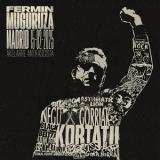
FERMIN MUGURUZA - MADRID 15-02-2025 - AKELARRE ANTIFACISTA LP 3x12"
  • Maputxe
  • Urrun
  • Eguraldi Lainotsua
  • Hay Algo Aquí Que Va Mal
  • Balazalak
  • La Línea Del Frente
  • In-Komunikazioa (Intro Free Nelson Mandela)
  • Desmond Tutu
  • Newroz
  • Azoka Eguna
  • Euskal Herria Jamaika Clash
  • A La Calle + La Familia Iskariote
  • Bizitza Zein Laburra Den
  • Nicaragua Sandinista
  • Dow To The River To Pray
  • Black Is Beltza ·
  • After-Boltxebike
  • Aiako Txikito/Hiri Gerrilaren Dantza
  • Bidasoa Fundamentalista
  • Jon Maia: Versos A Madrid
  • Lehenbiziko Bala
  • Itxoiten
  • Etxerat
  • Zu Atrapatu Arte
  • Kolore Bizia
  • Radio Rahim
  • Dub Manifest
  • Yalah Ramallah
  • (Intro) Gora Herria
  • Sarri, Sarri

The musical legacy of a night that will live on for years - Fermin Muguruza's 40th anniversary roar! Under the title "Akelarre Antifascista" (which literal translation would be "Anti-Fascist Witches' Coven", but loosely translated as Anti-Fascist Celebration), in a reference to the legendary Akelarre, a wild gathering of Basque witches, this album distils all the intensity, sweat and collective excitement of a night when thousands of voices joined together to celebrate not just a career, but a way of seeing art as resistance. On 15th February 2025, Madrid saw more than just a concert: it was a collective ritual, an anti-fascist demonstration in which thousands of voices came together as one to emphasize the tenacity of a voice that never surrendered. Four decades after lighting the fuse of combative rock in Euskal Herria, the Basque Country, Fermin Muguruza chose the capital of Spain, a city that closed its doors to him so many times and that he has described as "the heart of the beast", to make the definitive record of his 40th anniversary tour. The result is "Akelarre Antifascista", a live album that distils the history of a musical and political resistance that has spanned generations, languages and frontiers. The concert, sold out with 15,000 people, was an explosion of energy, memory and future. Right from the first chord, the Sports Palace of Madrid became an open setting, a free territory where bodies, rhythms, languages and flags mixed freely. Triple 180gr vinyl LP in trifold sleeve.

pre-order now30.01.2026

expected to be published on 30.01.2026

54,58
Ojiji - The Shadow LP

Ojiji

The Shadow LP

12inchCS0004
Continued Sound
30.01.2026
  • 1: Downtown
  • 2: The Shadow
  • 3: Good Intentions
  • 4: Gerima
  • 5: See The Light
  • 6: Hang On
  • 7: Summer Rain
  • 8: Forgotten Dream
  • 9: Ojijican

Continued Sound is proud to present The Shadow by Ojiji.
In 1979, Rupert “Ojiji” Harvey put out one of the most distinctly original albums of a generation. Combining progressive jazz-fusion arrangements with soul, funk, and reggae from his native Jamaica, Ojiji’s The Shadow is an album only he could create.
Ojiji, along with his brother Carl, were performing in nightclubs before they were old enough to legally enter. At just 15, Ojiji was tapped by reggae keyboard legend Jackie Mittoo to join his band The Cougars. Not long after, the Harvey brothers teamed up with other Cougars members to form the funk band Crack of Dawn. This union proved to be groundbreaking, not just in the soul/funk genre, but for Canadian music as a whole. In 1975, they were signed to a major label, Columbia Records, the first Black Canadian band in history to do so. Tracks like “It’s Alright” and “Keep the Faith” still echo in the halls of Canadian funk history.
Personal and industry differences caused Crack of Dawn to break up in 1977, and a young Rupert Harvey was without a band for the first time. However, the creative mind never rests. Outside of the band, Ojiji had been writing and composing his own personal songs since age 17. These songs were a fusion of the sounds and styles he’d soaked up during his time with his musical mentors mixed with new emerging musical influences he was hearing every day.
With the help of his brother Carl and some Crack of Dawn bandmates, he began recording his debut solo album The Shadow. The band's tightness heard in the intricate arrangements are a testament to their interwoven musicianship at the time. Many tracks were recorded in only one-take. Each song in The Shadow’s eclectic glory paints a picture of a young man's singular lived experience through music. Regaling us with where he’s been. Inviting us to where he’s going.

pre-order now30.01.2026

expected to be published on 30.01.2026

31,05
Soinuarenbidea II - Sintesis de Paisaje sonororos y Electrónica post industrial

Una interpretación de Soinuarenbidea II debería partir de esta premisa: todo es posible, nada es aleatorio, y en sí mismo es un imposible de aleatoriedades. El escenario planteado explora la idea de realidad aumentada desde una percepción sonora, ambiental y colectiva. La obra transita hacia adelante y hacia atrás recreando experiencias extintas de porvenir incierto, tratando de facilitar un fin pacificador. Cada pieza sonora se crea, se despliega, se repliega y se destruye, en una torsión permanente de toda la realidad que hace posible cada fragmento musical, cada identidad acústica, cada espacio sonoro. Lo onírico, la ficción, y el viaje están continuamente presentes, y es en el transitar de cada fragmento donde se produce el diálogo de la exposición musical. Los elementos de esta ficción se recrean continuamente, en un continuum donde se entrelazan y se van contorsionando a medida que crecen o decrecen con cada fragmento de síntesis concreta. Los temas explícitamente musicales son el magma que conduce a dar voluptuosidad al disco, siendo la piel un contexto o límite que en sí mismo fluctúa indefinidamente en texturas y configuraciones posibles. Y la urdimbre del silencio es la síntesis que está continuamente presente y que trata de cohesionar los fragmentos en continua colisión expresiva. Las grabaciones de campo proporcionan el material sonoro concreto, y como un fractal sonoro cada una de ellas ofrece diferentes grados de interpretación que a su vez conduce a nuevos fragmentos y nuevas creaciones. Así que se puede pensar que esta es una síntesis de una posible realidad, pero interpretable en infinidad de maneras. Un movimiento y una estaticidad implícitas que generan estructuras y dinámicas acústicas. Lo que se escucha no es real, pero en sí mismo forma parte de la realidad, creando un escenario expectante. Lo cinematográfico, plástico y teatral, danzante y dinámico cobra importancia en este juego, porque se trata de contar una historia, una experiencia recreada desde los puntos de vista del arte visual. Es a su vez hilo conductor y entretenimiento, discurso político y puro divertimento. Es desde este espacio de convivencia artística que tiene sentido la totalidad y justifica el formato sonoro planteado. La contradicción de la obra es patente en el formato, y es a su vez el planteamiento de una accidentalidad en el devenir vital. Contenedor de Ruido recoge todas estas contradicciones y las manifiesta en la obra Soinuarenbidea II. Es una historia sonora, es un cuento acústico. Es un fragmento de vitalidad en imágenes audibles. Es una invitación a la reflexión, a la crítica, al disfrute, a la meditación, a la celebración. Y sobre todo es esperanzadora apreciación de la realidad como algo maleable que confeccionamos colectivamente, que requiere de una paciente observación y la participación colectiva global, en un mundo finito pleno de diversidades y del que ignoramos prácticamente todo, al que deberíamos volver con respeto y devoción.

Soinuarenbidea II-ren interpretazio batek premisa honetatik abiatu beharko luke: dena da posible, ezer ez da ausazkoa, eta, berez, ausazkotasun ezinezko bat da. Planteatutako agertokiak errealitate areagotuaren ideia aztertzen du, soinu-, ingurumen- eta talde-pertzepzio batetik abiatuta. Lanak aurrera eta atzera egiten du, etorkizun zalantzagarriko esperientzia desagertuak birsortuz eta helburu baketsua lortzen saiatuz. Soinu-pieza bakoitza sortu, hedatu, tolestu eta suntsitu egiten da, musika-zati bakoitza, identitate akustiko bakoitza eta soinu-espazio bakoitza ahalbidetzen dituen errealitate osoaren etengabeko bihurdura batean. Onirikoa, fikzioa eta bidaia etengabe daude presente, eta pasarte bakoitzaren joan-etorrian gertatzen da musika-erakusketaren elkarrizketa. Fikzio honen elementuak etengabe birsortzen dira, continuum batean, non sintesi zati zehatz bakoitzarekin hazi edo txikitu ahala elkar lotzen eta bihurritzen diren. Esplizituki musikalak diren gaiak diskoari atsegintasuna ematera eramaten duen magma dira, azala testuingurua edo muga izanik, testura eta konfigurazio posibleetan mugarik gabe aldatzen dena. Eta isiltasunaren irazkia etengabe presente dagoen sintesia da, zatiak etengabeko adierazpen-talkan kohesionatzen saiatzen dena. Landa-grabazioek soinu-material zehatza ematen dute, eta soinu-fraktal batek bezala, horietako bakoitzak interpretazio-maila desberdinak eskaintzen ditu, eta horrek, aldi berean, zati eta sorkuntza berrietara eramaten du. Beraz, pentsa daiteke errealitate posible baten sintesia dela, baina hamaika modutan interpreta daitekeena. Egitura eta dinamika akustikoak sortzen dituzten mugimendu eta estatikotasun inplizitu bat. Entzuten dena ez da erreala, baina, berez, errealitatearen parte da, eta agertoki espektakularra sortzen du. Zinematografikoak, plastikoak eta antzerkikoak, dantzariak eta dinamikoak garrantzia hartzen dute joko honetan, ikusizko artearen ikuspegitik birsortutako istorio bat, esperientzia bat, kontatzea baita helburua. Aldi berean, hari gidaria eta entretenimendua da, diskurtso politikoa eta dibertimendu hutsa. Elkarbizitzarako espazio artistiko honetatik osotasunak zentzua du eta planteatutako soinu-formatua justifikatzen du. Obraren kontraesana nabarmena da formatuan, eta, aldi berean, bizi-bilakaeran istripu-tasa bat planteatzea da. Zarata-edukiontziak kontraesan horiek guztiak jasotzen ditu eta Soinuarenbidea II obran adierazten ditu. Soinu istorio bat da, ipuin akustiko bat. Bizitasun zati bat da, irudi entzungarrietan. Hausnarketarako, kritikarako, gozamenerako, meditaziorako eta ospakizunerako gonbidapena da. Eta, batez ere, itxaropentsua da errealitatea modu kolektiboan egiten dugun gauza xaflakor gisa hautematea, behaketa pazientea eta partaidetza kolektibo globala eskatzen dituena, dibertsitatez betetako mundu mugatu batean, ia guztia kontuan hartzen ez duguna, eta errespetuz eta debozioz itzuli beharko genukeena.

An interpretation of Soinuarenbidea II should start from this premise: everything is possible, nothing is random, and in itself is an impossible randomness. The proposed scenario explores the idea of ​​augmented reality from a sonic, environmental, and collective perception. The work moves back and forth, recreating extinct experiences of an uncertain future, seeking to facilitate a peaceful end. Each sound piece is created, unfolds, retreats, and is destroyed, in a permanent twisting of all reality that makes each musical fragment, each acoustic identity, each sonic space possible. The dreamlike, the fictional, and the journey are continually present, and it is in the transit of each fragment that the dialogue of the musical exposition takes place. The elements of this fiction are continually recreated, in a continuum where they intertwine and contort as they grow or diminish with each fragment of concrete synthesis. The explicitly musical themes are the magma that leads to the work's voluptuousness, the skin being a context or boundary that in itself fluctuates indefinitely in possible textures and configurations. And the warp of silence is the synthesis that is continually present and seeks to unite the fragments in a continuous expressive collision. The field recordings provide the concrete sound material, and like a sonic fractal, each one offers different degrees of interpretation that in turn lead to new fragments and new creations. So one can think of this as a synthesis of a possible reality, but interpretable in an infinite number of ways. An implicit movement and staticity that generate acoustic structures and dynamics. What is heard is not real, but in itself is part of reality, creating an expectant scenario. The cinematic, plastic and theatrical, dance and dynamic aspects take on importance in this game, because it is about telling a story, an experience recreated from the perspective of visual art. It is at once a common thread and entertainment, political discourse and pure entertainment. It is from this space of artistic coexistence that the whole makes sense and justifies the proposed sound format. The contradiction of the work is evident in its format, and it is, in turn, the presentation of an accidentality in the course of life. Noise Container gathers all these contradictions and manifests them in the work Soinuarenbidea II. It is a sound story, an acoustic tale. It is a fragment of vitality in audible images. It is an invitation to reflection, to critique, to enjoyment, to meditation, to celebration. And above all, it is a hopeful appreciation of reality as something malleable that we collectively craft, requiring patient observation and global collective participation, in a finite world full of diversity and of which we know practically nothing, to which we should return with respect and devotion.

Paisajes sonoros, diseño sonoro, drones y música grabada, realizada y arreglada para Contenedor de Ruido por David Aranaz. Coro: Basandere Ahotsak. Producido y mezclado por David Aranaz. Mástering: Estanis Elorza. Fotografía: David Aranaz. Texto: David Aranaz. Traducción: Saioa Aranaz Oreja. Trabajo y Diseño artístico: Cristina Martinez. Edición: Contenedor de Ruido Producciones y Sarbide Music. Distribución: Contenedor de Ruido.

Contenedor de Ruido agradece el apoyo en la realización de Soinuarenbidea II al coro Basandere Ahotsak y en especial a Eva Orbara Goicoa.

Soinuarenbidea II está dedicado al pueblo palestino.

Paisajes y objetos Sonoros, samplers y otras músicas transformadas para Soinuarenbidea II
Burlada: Paseos sonoros matinales por Merindad de Sangüesa, Calle Mayor, Capuchinas, Parque Uranga y varias iglesias y plazas. Pasajes del cotidiano: basura de papel, cristal y plástico.
Pamplona: Cementerio de San José. CEIP Sanduzelai /// Quinto Real: Fábrica de Armas, Puerto de Urkiaga y alrededores. Suite del silencio, bosques en movimiento /// Fábrica de armas de Orbaiceta: regatas, biosques, paseo sonoro hasta regata /// Belate: Puerto de Belate y alrededores. Vacas en pradera junto a las turberas /// Bardenas Reales: Suite de guitarra y Suite del silencio, estepa desértica /// Austria: Tranvías de Graz y Viena. Muchedumbre del metro de Viena.
Voces cinematográficas de: Matanza en Texas, Robocop, Espíritu Sagrado, Solo los Amantes Sobreviven, Voces de Gaza, Yojimbo, Terciopelo Azul, Los 7 Magníficos.
La pista A2 está dedicada a la memoria de David Lynch.
La pista B4 está dedicada a Eva Orbara Goicoa.
Pista A4: Contiene interpretaciones de piano de Three Piano Pieces Op.11 de Arnold Schoenberg.
Pista A5: Es una interpretación expandida con síntesis FM del Concerto Op. 24 - Etwas lebhaft - de Anton Webern.
Pista A7: Contiene la canción Besarkatu ninduzun (Letra de Josune López y música de Josu Elberdin) en interpretación de Basandere Ahotsak en la iglesia de Burutain bajo la tormenta.
Pista B2: Contiene la canción Recuerdos de la Alhambra (Fernando Tárrega) en interpretación torsionada de David Aranaz Sarasa.
Pista B14: Contiene la canción Agur María (Letra y Música de Estíbaliz Robles “Estitxu” y arreglo exclusivo de Alfonso Ortiz para Basandere Ahotsak) en interpretación de Basandere Ahotsak.

Equipamiento para Soinuarenbidea II.
Micros de condensador SE7, configuración XY y ORTF; Micros de cinta ORTIZ LUTHIER configuración XY y Blumlein; Grabadoras MARANTZ y ZOOM; Sintetizadores y samplers Elektron MONOMACHINE SPS-1, MACHINEDRUM SFX6 y MODEL:SAMPLES. Dave Smith MOPHO. Torso Electronics S-4. Sintetizador Modular 333 DIY; Guitarra clásica ALHAMBRA 6P; Esculturas Sonoras tipo Baschet, cristal y metales; Mesa Soundcraft FX16ii; Interface de Audio RME Babyface Pro FS; DAW Logic Pro; Procesamiento de modelado analógico con Acústica Audio, Waves, Softube, Brainworx, Sonible, Analog Obsesion, Tokio Dawn. Metering de Logic y RME DigiCheck . Amplificación Hafler PRO2400. Monitorización BW DM602 S3. Mezcla digital; Mastering híbrido.

pre-order now30.01.2026

expected to be published on 30.01.2026

26,47
Sagenbringer - Zwischen den Welten

Sagenbringer

Zwischen den Welten

12inch2261721
NoCut
30.01.2026
  • A1: Feuer Und Eis
  • A2: Valkyrensturm
  • A3: Berserker Feat. Asenblut
  • A4: Freie Vögel
  • A5: Bei Vollmond
  • A6: Zwielichtkarneval
  • A7: Walpurgisnacht
  • A8: Freya Feat. Nissara
  • A9: Der Stete Tropfen
  • A10: In Odins Goldener Hall
  • A11: Götterdämmerung
  • A12: Ein Goldener Morgen

SAGENBRINGER weaves fantasy and emotion, joy and sorrow into the 12 stories on ‘Zwischen den Welten’ (Between Worlds) through words and sound. All of this is packaged in a modern musical guise that has been forged from folk and metal elements into a hot iron. Stories are everywhere. They are countless and come from all corners of the worlds we know and don't know. But they always manage to stimulate the mind, touch the heart or send the soul on a journey. This is the calling of SAGENBRINGER: to spread these stories and not let them fall into oblivion. After establishing themselves in the German folk and pagan scene with their first two albums, ‘Sagenbringer’ and ‘Zeit der Geschichten’, and becoming a recurring name on festival posters across Germany, the young skald troupe are now releasing their third studio album on 30 January 2026. Zwischen den Welten (Between Worlds) transports listeners to the most diverse corners of mythology, legends and human emotions.

pre-order now30.01.2026

expected to be published on 30.01.2026

23,49
Various - Wizzz! French Psychorama Volume 5 (67-75)

The journey through French-speaking pop archives continues with this fifth volume, packed with fuzz, gimmicks, and dissent. Far from the charts, the selected tracks display a great creative freedom, often backed by corrosive humor. Welcome to the surprising, kaleidoscopic, and colorful world of the late sixties and early seventies, Wizzz!
Born in Montauban, Robert Pico stumbled into music by chance when he met René Vaneste, then artistic director at Pathé-Marconi. René brought him to Paris to record his first 45 RPM EP in 1964. A year later, Pierre Perret introduced him to Vogue, where he recorded his second album with Claude Nougaro’s orchestra. Sylvie Vartan then introduced him to RCA, where he recorded four singles, including the astonishing "Chien Fidèle," a track backed by a hair-rising fuzz guitar. Alongside his solo career, he also composed for other artists like Alain Delon (the song was recorded but remains unreleased), Magali Noël, Bourvil, and Georges Guétary. In the Paris of the sixties, he mingled with Mireille Darc, Elsa Martinelli, Marie Laforêt, France Gall, Françoise Hardy, Petula Clark, Régine, Dani, Serge Gainsbourg, Joe Dassin, Franck Fernandel, Charles Level, and Roland Vincent. Despite his efforts and winning a Grand Prix Sacem for his final record, Robert Pico didn’t achieve the expected success in show business and decided to leave Paris and return to the Southwest, where he devoted himself to writing. He is the author of 23 books (including Delon et Compagnie, Jean-Marc Savary Editions 2025, a memoir about his youth and his many encounters). Today, he is relieved to never have become a celebrity and devotes himself to his work with passion.
In 1969, the Franco-Italian movie Erotissimo was released, directed by Gérard Pirès (who later directed Taxi in 1998, written and produced by Luc Besson). This pop comedy features Annie Girardot, Jean Yanne, Francis Blanche, Serge Gainsbourg, Nicole Croisille, Jacques Martin, and Patrick Topaloff. The soundtrack was written by Michel Polnareff and William Sheller, with lyrics by Jean-Lou Dabadie. "La Femme Faux-cils," performed by Annie Girardot. It recounts the feelings of a rich CEO's wife who seeks to develop her sex appeal under the influence of advertisement and magazines. Groovy, sparkling and light, this track, with ITS lush arrangements humorously critiques consumer society and feminine beauty standards.
“Je suis l’Etat” (1967) is the flagship track of the first EP by singer-songwriter Spauv Georges, aka Georges Larriaga, better known as Jim Larriaga (1941-2022). Born into a family of bakers, the young man was initially planning to become a hairdresser when he discovered English-speaking music through Elvis Presley and the Beatles. After this revelation, he decided he would become a songwriter and gave himself five years to succeed. He recorded his first two EP’s independently for RCA under the pseudonym Spauv Georges; meaning “that poor George”, a nickname given to him by the mother of her friend Jean-Pierre Prévotat (future drummer of the Players, Triangle, or Johnny Hallyday). Portraying a depressed and eccentric young man, Spauv Georges created corrosive and amusing songs that didn’t reach a wide audience, despite a TV appearance with Jean-Christophe Averty.
Supported by his loyal friend and fellow songwriter Jean-Max Rivière, Georges Larriaga met the future singer Carlos in the early '70s, then Sylvie Vartan’s assistant. He wrote songs for Carlos, including the popular "La vie est belle," "Y’a des indiens partout," and "La cantine", which went onto become a huge hit in 1972. He also composed for Claude François (“Anne-Marie”, 1971), Charlotte Julian (“Fleur de province”, 1972), helped launch child singer Roméo (who sold 4 million records), and later wrote the hit "Pas besoin d’éducation sexuelle" (1975) for the young Julie Bataille. In 1971, Jim recorded an album for Disc'Az: “L’univers étrange et fou de Jim Larriaga”, which featured pop gems like “La maison de mon père”.
The story of the song "Zoé" began when Pierre Dorsay, artistic director at Vogue Records, asked Swiss singer and musician Pierre Alain to write a song for a new female singer. The inspiration came when he realized that Zoé (the artist's name) was also the name of France's first atomic battery, created in 1948, which consisted of uranium oxide immersed in heavy water! The lyrics reflect a bubbling energy that must be handled with caution, while the instrumentation echoes this atomic theme, notably with the use of a theremin.
Zoé’s career lasted only as long as a single 45 RPM, but it seems Christine Fontane was the vocalist behind this pseudonym, who is known for several EPs, a good "popcorn" album in 1964, and a handful of children’s singles in the '70s. Regardless, the photograph on the cover is of a different girl entirely.
Later, Pierre Alain continued his career, writing songs for himself, Marie Laforêt, Danièle Licari, Alice Dona, Arlette Zola (3rd place in Eurovision 1982), and achieving multiple gold and platinum records in Canada. Also an inventor with several patents, president of the Romande Academy, and head of the French Alliance in Geneva, he now composes atonal music, books, and poetry. Moreover, he is also the host of "Les Mardis de Pierre Alain" at "Le P'tit Music'Hohl" in Geneva.
Filled with oriental choruses and fuzz guitar, "Fou" is from Jacques Da Sylva's only EP released by Vogue in 1967. Despite the quality of this recording, all traces of this singer disappear after this first effort.
Valentin is a baroque pop singer born in Belgium. He is the songwriter and composer of most of the tracks on his three singles released in the late 60s in Canada. A legend says that he reincarnated himself as Jacky Valentin during the 1970s for a rock'n'roll revival career in Belgium, but his older brother sadly debunked this story. Valentin's first two singles were arranged by Claude Rogen, a Parisian session pianist who had come to Canada to promote the song “Mister A Gogo”, a cover of David Bowie’s “Laughing Gnome”, adapted by singer Delphine, his wife at the time. Far from his usual network, Claude Rogen arranged music for Polydor, including the arrangements for “Je suis un vagabond” in 1969, a jerk tune with string arrangements and a furious optimism.
Jacques Malia wrote, composed, and recorded his only 45 EP for Festival in 1966. “Histoire de gitan” is an incredible beat track with bohemian scat that tells the story of a gypsy musician who came to Paris to make it in the Music-Hall, to no avail. The hero of the song and its author probably shared a similar fate, as Jacques Malia faded into anonymity after this remarkable attempt.
Bernard Jamet recorded two EPs for Barclay in the late sixties and co-wrote several songs with Christine Pilzer, Pascal Danel, and prolific songwriters Michel Delancray and Mya Simile. The track “Raison Légale” (1968), his masterpiece, immerses the listener in a courtroom right when a murderer is being judged, with jerk rhythm and free arrangements. A unique, paranoid, judicial, and psychedelic oddity.
Jean-Pierre Lebrot-Millers started his career in show business in 1967 as a singer and songwriter for the Philips label. After three singles, he wrote several songs of a new kind with his friend Pierre Halioche, in the midst of the sexual liberation movement and the democratization of drugs. With provocative lyrics, “Les filles du hasard” and “Barbara au Chapeau Rose” were released on a Philips singles in 1968. The character of Barbara was inspired by a queen of Parisian nightlife during the psychedelic years: model Charlotte Martin, who dated Eric Clapton from 1965 to 1968, then Jimmy Page from 1970 to 1983. Jean-Claude Petit’s arrangements, with a table-filled intro, soul brass, and Hendrixian guitar, emphasize the flamboyance of a hedonistic and sexy character, whose dog is named Junkie because “Junkie est un nom exquis”! The track was recorded live in three takes with a full orchestra.
Upon its release, the record was censored by Europe 1 and RTL due to its references to drug use. Jean-Pierre Lebrot was then banned from the airwaves and later dismissed by his record label. He changed his artist name to Jean-Pierre Millers, while his companion Pierre Halioche became D. Dolby for a new dreamy composition, “Chilla”, which Jean-Pierre produced himself with arrangements by Jean Musy. Once again, the song was immediately censored everywhere. After this setback, he decided to stop singing and started taking on odd jobs to support his Swedish wife and their son until the day he met Jean-Pierre Martin, then production manager at Decca, who had worked with Manu Dibango. Martin offered Jean-Pierre Lebrot-Millers, then employed at Rank Xerox, the position of artistic director at Decca. He accepted and became, a year later, promotion director (radio, press, TV). He worked on Julio Iglesias’s first album for Decca, which became a massive hit and allowed him to meet Claude Carrère. The latter asked him to write new songs and find their performers, much like a “talent scout.” It’s through him that Jean-Pierre discovered Julie Pietri and Corinne Hermès. He composed “Ma Pompadour” for Ringo, Sheila’s husband, and took the microphone again for the syncope hit “Rendez-Vous” in 1982.
That same year, Jean-Pierre Lebrot-Millers tried to release a track for which he had heavily gone into debt: “Si la vie est un cadeau”. Having recorded it in London, he presented it to numerous professionals, all of whom refused to get involved. The same thing happened with Antenne 2 and the Sacem when he proposed the song as France’s entry for Eurovision. He then met Haïm Saban, who was producing cartoon soundtracks and had just launched the Goldorak theme song. Saban, having listened to the song, declared it had the potential to become a hit. He sent Jean-Pierre and Corinne Hermès to meet the CEO of the Luxembourg radio and television network. The latter received them, asked to hear a verse and chorus a cappella in his office, and immediately hired them to represent Luxembourg at Eurovision 1983. They reworked the arrangements and recorded a new version with Haïm Saban as co-producer. The song ended up winning Eurovision 1983, a great comeback for our hero. He continued producing and hung out with the band Nacash in Belgium when a couple came to introduce their daughter for an impromptu audition in a hotel room. The girl sang “Les démons de minuit” while dancing to a radio cassette. Impressed, he had her take singing lessons for a year and composed a song for her (for which he had the melody and title, but no lyrics). This required him to go on the hunt for a lyricist, who ended up being Guy Carlier. They recorded the song, which was initially a ballad, at Bernard Estardy’s CBE studio, and gave the singer a new name: Melody. They showed the song around their industry network without success. Later, Estardy called Jean-Pierre to suggest changing the rhythm and making it pop-rock. Orlando, Dalida’s brother, liked the result and decided to co-produce the track. “Y’a pas que les grands qui rêvent » became a classic hit. The song has since been covered by Juliette Armanet (as a ballad, like the original) and Valentina.

Born into an aristocratic Breton family, Hervé Mettais-Cartier worked as a DJ at Queen Kiss, a nightclub in Poitiers, where he formed the band Les Concentrés with Michel (an actor) and Christian (a radio technician). Together, they created a repertoire of whimsical songs (“Ma bique est morte”, “J’suis un salaud”, “Fils de dégénéré”...) that they performed on stage dressed in white (in homage to “concentrated milk”). They performed at Bliboquet and Olympia in 1968 for the 10th edition of the “Relais de la chanson Française” organized by L’Humanité-Dimanche and Nous les Garçons et les Filles, sponsored by Pepsi Cola. Winners in the author-composer category, alongside Danish singer Dorte, their visibility allowed them to record a 45, and appear on television in Jean-Christophe Averty’s show. The A-side of the disc features Bruno le ravageur, a casatchok dedicated to Bruno Caquatrix, the director of Olympia, nicknamed in the song “Coq Atroce” or “croque-actrices”. The B-side is dedicated to “Fils de dégénéré”, a quirky tribute to Hervé's aristocratic roots, mixing absurdity with sophisticated vocal harmonies.
After Les Concentrés, Hervé Mettais-Cartier formed the duo La Paire et sa Bêtise with his friend Olivier Robert. They performed in Parisian cabarets and toured with Pierre Vassiliu. In the late 1970s, Hervé began a solo career. He recorded two albums for the Motors label in 1978 and 1979, which did not achieve their anticipated success due to lack of promotion. In 1980, he met Bernadette, with whom he started a family and created a “Chansons à voir” (songs to see) show that he performed until his death at the end of 2024.

Publicité comes from the final EP by the Missiles (Ducretet Thomson, 1966), a disc that also includes “La (nouvelle) guerre de cent ans”, featured on Volume 4 of our Wizzz! series. Please refer to the booklet for the story of the band.

“He’s 1.82 meters tall, 28 years old, weighs 135 kg, is black and Belgian”: this is the description of singer Hegesippe on the back of his sole single (Decca, 1967). He appears on the album cover wearing a Greek toga, like a hippie gag – we are at the end of the year 1967. In “Le crédo d’Hegesippe”, this former bodyguard of Antoine and the Charlots plays the delightful card of the thick brute converted to Flower-Power and non-violence, with arrangements by Jean-Daniel Mercier, aka Paul Mille.
“Ethéro-disco” was released on a promotional record for clients of the Maréchal company (Liège, Belgium) for the New Year 1979. Over a funky rhythm, celebrity impersonations (Brigitte Bardot, Jacques Dutronc, Fernandel…) deliver an enigmatic text about pharmaceutical products like ether, bismuth, and aspartate. The track was composed by Dan Sarravah (responsible for Joanna's “Hold-up inusité” featured on Wizzz! Volume 3) and Tony Talado, who was also a singer (one 45 in 1967), songwriter (with over a dozen credits between 1964 and 1985 in various styles from surf music to disco), author (Devenez Végétarien, Dricot Editions, 1985), ad designer, and psychologist.

Décollez-les is on the A-side of Mamlouk's only single, a pseudonym for Marsel Hurten, who is known for his work on several EPs in the late sixties, as well as composing music for Hervé Vilard’s “Capri, c’est fini”, Claude Channes' “La Haine”, Annie Philippe’s “On m’a toujours dit”, and Nancy Holloway’s “Panne de Cœur”.
This strange song, with Afrobeat horns and absurd dialogues between a chef and his kitchen staff, is the result of a collaboration between Marsel Hurten and one of his neighbors, a photographer from Pavillon-sous-Bois (93), where the musician settled after returning from the Algerian War. A music video was shot to promote the record.
Marsel Hurten was born in Tourcoing (59) into a musical family. At a young age, he joined the brass band founded by his grandfather, playing the piston before studying trumpet at the conservatory, as well as teaching himself how to play the guitar. As an orchestra musician, he toured in France, Belgium, Germany, and England. He released a series of solo 45’s between 1965 and 1968 for the DMF and Az labels before stopping recording to focus on working for other artists (Gilles Olivier, Noëlle Cordier…).
“L’amour nu” (Vogue, 1971) is the work of the short-lived Belgian band Mozaïque. The track, written by singer Jacques Albin, closely resembles another of his compositions, “Carré Blanc”, which he recorded in 1969 for Disc’AZ.
Represented by the Lumi Son micro-label based in Marignane (Côte d'Azur), Jean-Marc Garrigues released two 45 RPMs in the late sixties, defending the French jerk sound. The song “Je dis Non” is a short, joyful ode to youth, pop music, and rebellion.
Songwriter and performer Jacques Penuel released three singles. The first one, “Astronef 328” (Fontana, 1969), features a dizzying series of chords punctuated by sound effects, a sci-fi story, and arrangements by Jean-Claude Vannier.

We would like to sincerely thank Pierre Alain, Moon Blaha, Marsel Hurten, Bastien Larriaga, Jean-Pierre Lebrot-Millers, Bernadette Mettais-Cartier, Robert Pico, Olivier Robert, Claude Rogen, Micky Segura.

out of Stock

Order now and we will order the item for you at our supplier.

23,11

Last In: 77 days ago
Items per Page:
N/ABPM
Vinyl