quête:jac the disco

Genres
Tout
Various - Hotline Miami 1 & 2: The Complete Collection (8x12")
 
76

To celebrate the 10th anniversary of the iconically brutal-yet-stylish Hotline Miami, the head honchos at Devolver Digital, Dennaton Games and Laced Records picked up the phone and made the call to bring back two killer soundtracks to vinyl.

This Standard Edition of the Hotline Miami 1 & 2: The Complete Collection 8LP box set includes traditional black vinyl.

Every in-game track from Hotline Miami and Hotline Miami 2: Wrong Number is present and correct, including Castanets’ “You Are The Blood” (not previously available via the HM2 Steam soundtrack release.) 76 tracks remastered for vinyl will be pressed to heavyweight LPs that come in spined inner sleeves, contained in a rigid board lift-off lid box with spot UV highlight.

Also included in the box are two 12” art prints of the front and back cover pieces, and a 50 Blessings symbol felt slipmat and metallic sticker.

The box set features brand new eye-exploding artwork by long-time Dennaton collaborator Niklas Åkerblad — aka El Huervo aka Beard — alongside illustrator -IZMA-. El Huervo’s grisly covers depict contradictory accounts of a berserk face-off between Jacket and Biker, replete with entrails. -IZMA-’s disc sleeves explore scenes from the series’ lore, tapping into the violence, psychedelia and nihilism that pervade its characters and themes.

10 years on, neon-soaked indie hit Hotline Miami has become a cultural touchstone in a way that few video games ever achieve — and the electronic soundtracks for both series titles are held up as modern classics that have transcended gaming. At turns brutal and laid-back, pulsating and aimless, coked-up and checked-out, these two ultracool compilations were at the heart of the retro-’80s synthwave scene that swept the Internet over the 2010s.

pré-commande08.06.2026

il devrait être publié sur 08.06.2026

222,65
Genesis - Foxtrot LP 2x12"

Genesis

Foxtrot LP 2x12"

2x12inchAAPA027-45
Analogue Productions
08.06.2026

Genesis' Foxtrot is the band's fourth studio album, released in 1972. Regarded as one of the seminal albums of the progressive rock genre, it marked a significant milestone in Genesis' discography.

AllMusic's Stephen Thomas Erlewine says Foxtrot is where where Genesis began to pull all of its varied inspirations into a cohesive sound. The startling thing about the opening "Watcher of the Skies" is that it's the first time that Genesis attacked like a rock band, playing with a visceral power, he writes, giving the album a 5-star review.

"There's might and majesty here, and it, along with 'Get 'Em Out by Friday,' is the truest sign that Genesis has grown muscle without abandoning the whimsy. Certainly, they've rarely sounded as fantastical or odd as they do on the epic 22-minute closer "Supper's Ready," a nearly side-long suite that remains one of the group's signature moments. It ebbs, flows, teases, and taunts, see-sawing between coiled instrumental attacks and delicate pastoral fairy tales. If Peter Gabriel remained a rather inscrutable lyricist, his gift for imagery is abundant, as there are passages throughout the album that are hauntingly evocative in their precious prose." — AllMusic

This is the rare art-rock album that excels at both the art and the rock, and it's rightly celebrated for its enduring impact on the progressive rock genre, making it an essential listen for Genesis fans.

Analogue Productions has given Foxtrot the deserving full reissue treatment: Mastered directly from the original master tape by Chris Bellman at Bernie Grundman Mastering and cut at 45 RPM. Pressed on 180-gram vinyl at Quality Record Pressings, and housed in tip-on old style gatefold double pocket jackets with film lamination by Stoughton Printing.

pré-commande08.06.2026

il devrait être publié sur 08.06.2026

89,03
Matty - POPS

Matty

POPS

12inchLEX189LP
LEX RECORDS
05.06.2026
  • 1: Around The World
  • 2: Boyfriend
  • 3: Fool 4 U
  • 4: Madly
  • 5: Shes The One
  • 6: I Love You (Yes I Do)
  • 7: My Girl
  • 8: Cant Get Enough Of Her Love
  • 9: Cool
  • 10: Can You Hold Me Tight
  • 11: Mommy

A founding member and keyboardist of acclaimed jazz
groupBADBADNOTGOOD,Tavares has gone from being an in-demand
producer with some of the biggest names in music to a songwriter and
artist in his own right, having touched corners of the globe and cemented
twoGRAMMY Awardsand five nominations
Between collaborations with Kendrick Lamar , Ghostface Killah , MF DOOM , Tyler
the Creator , Kali Uchis , Tavares has also played with Frank Ocean ,
soundtracked Virgil Alboh 's landmark S/ S 2019 runway show for Louis Vuitton,
and penned songs for Post Malone , Rosalia , Travis Scott , Kodak Black , Justin
Beiber,Camilla Cabello,Jack Harlow amongst others.
With a sound that fuses his nostalgia for the golden era of blogs with the
eclecticism of the late 2000s, the combination of the internet crossed with an
isolated suburban upbringing has laid the groundwork for Matty's genre-bending
artistry. Embracing a raw creative output with an aversion to following the norms
of the industry reverberates across his discography,Matty has found success in
previous releases including 'Clear' and 'I'll Gladly Place Myself Below', which push
the boundaries of sonic creativity and knowledge.
Now with his upcoming album POPS , Matty relinquishes his lowkey and
understated style for something larger than life, while maintaining a level of
honesty and openness that has defined his past work to make for a dynamic
release that constellates around music's greatest subject - love.

pré-commande05.06.2026

il devrait être publié sur 05.06.2026

18,07
Di Saronno - Deus Ex Machina

Di Saronno

Deus Ex Machina

12inchVESSELRECORDINGS016
VESSEL RECORDINGS
01.06.2026out soon

Di Saronno hails from Italy and brings plenty of jack to his house sounds, as well as hints of fiery disco and an always timeless outlook. Ira James' Vessel Recordings Group is a perfect home for that sort of tackle and his 'Deus Ex Machina' EP kicks off with a funked-up and medical groove that's choppy and warmed through with some lo-fi and jazzy chords. 'Savoir Faire' is a still raw but has more breezy vibes with sultry spoken word samples and 'Keep It Real' then brings a clean, more punchy Keri Chandler-style house bounce. 'Planet 303' is a choppy closer with a monstrous bassline that brings the filth down below US garage drums. Well-crafted house that cannot be missed.

pré-commande

Cet article n'a pas encore été publié. Vous pouvez pré-commander le produit maintenant.

25,00
F.T.G, Nick Beringer, Floorfillers, Nicolas Aftalion - Transmissions #1

TRANSMISSIONS #1 connects four distinct Skylax signals into a single flow. Each track comes from a precise moment, a specific context, and a clear dancefloor function. Together, they form a transmission built on movement, use and continuity. A1. F.T.G – Tribute ’89 (Fuckthegovernment #001 Mix) is a raw drum-machine workout positioned between dark Chicago house and late-’89 European techno. Stripped, direct and uncompromising, Tribute ’89 quickly became an underground staple, heavily played by Ricardo Villalobos and Raresh — a foundational Skylax signal. A2. Nick Beringer – 57th Corner, taken from Second Floor (Wax Classic, 2016), is a tech-leaning deep house cut marked by restraint, precision and late-night tension, capturing Beringer at a pivotal point in his long-standing relationship with Skylax. B1. Floorfillers – Love Is Growing delivers a powerful house-disco statement rooted in old-school foundations, where filtered disco loops, raw drum programming and uplifting swing echo the lineage of DJ Sneak, Paul Johnson, early Roulé / Crydamoure-era French touch and classic Chicago jack — a modern floor-driver with timeless intent. B2. Nicolas Aftalion – Rue des Wallons brings deep, soulful house with a strong Kerri Chandler influence; warm chords, chunky drums and emotional weight firmly grounded in early ’90s US garage tradition. Supported by Cinthie, it closes the transmission with groove, balance and purpose. TRANSMISSIONS #1 — built to move, built to last, signals in motion. Four tracks. Four signals. Still moving.

pré-commande

Cet article n'a pas encore été publié. Vous pouvez pré-commander le produit maintenant.

12,40
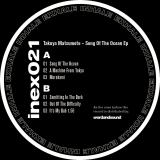
Takuya Matsumoto - Song Of The Ocean EP

Japan's Takuya Matsumoto returns to Inhale Exhale with a new six-track EP entitled 'Song Of The Ocean'.
Japanese DJ and producer Takuya Matsumoto has quietly established himself as one of the most distinctive voices to emerge from Japan's contemporary house scene. Known for his warm, deeply musical approach to production, Matsumoto blends classic house
sensibilities with jazz, funk and soulful influences, crafting records that balance dancefloor functionality with rich musicality. Through releases on respected international labels like Clone's Jack For Daze and Royal Oak, Vibes and Pepper, and Fina he's built a
reputation for refined grooves, elegant arrangements and a timeless approach to house music.
Across the six tracks Matsumoto once again radiantly showcases the depth of his production skills as the project sonically traverses Balearic-tinged House, bouncy acid- laced electro, cosmic nu-disco, breaks driven jungle and dub infused deep house.

pas en stock

Commandez maintenant et nous commanderons l'article pour vous chez notre fournisseur.

17,61

Derniere entrée: 11 jours
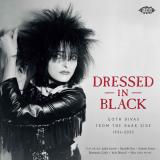
Various - Dressed In Black –  Goth Divas From The Dark Side 1941-2025 LP
  • A1: Do You Take This Man? – Diamanda Galás With John Paul Jones
  • A2: Night Shift – Siouxsie & The Banshees
  • A3: Cat –House – Danielle Dax
  • A4: Subterranean World (How Long...?) – Anita Lane With Die Haut
  • B1: Cisco Sunset – Lydia Lunch With Rowland S Howard
  • B2: Wasting Time – Annie Hogan
  • B3: Garbageman – The Cramps
  • B4: Road To Nowhere – Judy Henske
  • B5: Ode To Billie Joe – Bobbie Gentry
  • C1: Season Of The Witch – Julie Driscoll, Brian Auger & The Trinity
  • C2: Ain't No Grave – Anna Calvi
  • C3: Death And The Lady – Shirley Collins
  • C4: Idiot Milk – M U M M Y
  • C5: Iceblink Luck – Cocteau Twins
  • D1: All Tomorrow's Parties – The Velvet Underground & Nico
  • D2: Dressed In Black – The Shangri –Las
  • D3: Gloomy Sunday – Billie Holiday
  • D4: Katie Cruel – Karen Dalton
  • D5: I Put A Spell On You – Nina Simone
  • D6: Ça Va "Le Diable" – Juliette Greco

“Dressed In Black” was curated and annotated by Cathi Unsworth, author of the book Season Of The Witch: The Book of Goth – a woman who considers herself fortunate to have had Siouxsie Sioux, Lydia Lunch and Diamanda Galàs for role models while she was growing up. For further illumination in Cathi’s own words, read on.

“The music gathered here is an aural manifestation of turbulent times, made by women possessed of supernatural abilities. The music I fell in love with emerged from the dark end of the 1970s: The Winter of Discontent of 1978-79, when intractable industrial action left the dead unburied and mountains of rubbish in the streets. All the promise of punk came to a brutal end with the deaths of Sid and Nancy in New York; IRA bombs exploded in central London and a seemingly uncatchable ripper roamed West Yorkshire with 13 murders under his belt. Ill omens that augured badly for the events of 3 May 1979, when Margaret Thatcher became our first woman prime minister. Dressed in blue and ready to whip the country to her heel.

“But at night, malcontent youth were united by forces of opposition, whose dissenting voices were aired across the land on John Peel’s Radio 1 show, set to the sound of slasher guitars, swirling fairground keyboards, loping basslines and percussion that recalled the echo of jackhammers or the march of insect feet. Here, punk’s unruly offspring distilled the dissonance of the times into a new kind of music. Flirting with the fetishist and taboo, drawing upon horror and science fiction imagery, they were the outlaw leaders of the greatest style tribe of the decade: the goths. Dressed in black, these kohl-eyed women voiced the alienation of their generation during the decade of the Cold War, the Miners’ Strike, privatisation and AIDS.

“To make sense of the absurd is genius enough. But to then cast the glamour of sublime music around those insights – I come back to my point about supernatural abilities. I hope you will find illumination within. You know the dress code.”

pré-commande26.05.2026

il devrait être publié sur 26.05.2026

32,35
Soul Jazz Records Presents - REBEL ISLAND SOUL – Under The Influence: Reggae, Funk & Soul In Jamaica in the 1970s (2x12")
  • 1: John Holt - You’ll Never Find Another Love Like Mine (3.48)
  • 2: Cornell Campbell - Be Thankful (3.58)
  • 3: Elizabeth Archer & The Equators - Feel Like Making Love (.4)
  • 4: The Chosen Few - People Make The World Go Round (3.22)
  • 5: Dave & Ansel Collins - Single Barrel (3.17)
  • 6: The Now Generation - Shaft (3.19)
  • 7: The Marvels - Some Day We’ll Be Together (3.05)
  • 8: The Darker Shades Of Black - War (2.41)
  • 9: Winston Curtis - Private Number (3.42)
  • 10: Lee Perry & The Upsetters - Bathroom Skank (4.30)
  • 11: Slim Smith - Watch This Sound (2.43)
  • 12: Winston Francis - Sitting In The Park (3.29)
  • 13: The Sensations - If I Don’t Watch Out (2.57)
  • 14: Carl Bert & The Cimarons - Slipping Into Darkness (3.04)
  • 15: The Darker Shades Of Black - Ball Of Confusion (3.10)
  • 16: Jah Youth - Ain’t No Sunshine (2.35)

Sixteen killer 70s reggae funk and soul cuts from the likes of John Holt, Lee Perry, Cornel Campbell, The Cimarons, The Chosen Few and more featuring superb reggae takes on songs by artists including The Jackson 5, William DeVaughn, Diana Ross and The Supremes, War, The Temptations, Roberta Flack, The Stylistics and others!

Well-documented is the influence of American black music on Jamaican styles of the 1960s – from the birth of ska music, when The Skatalites ska-ified the jump-up southern USA rhythm and blues music of Rosco Gordon, Louis Jordan and Fats Domino, through to the creation of rocksteady when Jamaican artists like The Techniques, The Paragons, Alton Ellis and The Melodians turned to the slower rhythms and soulful harmonies of groups such as The Impressions and The Drifters for inspiration. 

Less-well established is that in the 1970s Jamaicans didn’t (shock!) stop listening to American black music styles, with many 70s reggae artists as invested in soul, funk and the proto-disco sounds of Philadelphia, as was the case with rhythm and blues in the previous decade. In the 1970s, while Jamaica promoted its own roots reggae styles around the world, powerhouse USA soul labels such as Motown, Philadelphia International and Stax Records were at the same time all popular on the island.
This interaction between American and Jamaican music was not limited to Jamaica. In Britain, first-generation Caribbean-émigré children in the 1960s and early 70s grew up with an equal love of both soul and reggae, which manifested itself in the home-grown arrival of lovers rock in the mid-1970s.
Soul Jazz Records’ new ‘Reggae Island Soul’ tells this story of how soul and funk-infused reggae in the 1970s united the sounds of Jamaica, USA and the UK into a highly addictive cultural hybrid of styles.

pré-commande15.05.2026

il devrait être publié sur 15.05.2026

28,99
Mark Broom - Touch EP

Mark Broom

Touch EP

12inchREKIDS288
Rekids
13.05.2026

UK Techno and House lynchpin Mark Broom returns to Radio Slave’s Rekids with the ‘Touch’ EP, landing 8th May 2026. Active since the late ‘80s and widely regarded as one of UK dance music’s most enduring figures, Broom’s catalogue spans key imprints including Warp Records, M-Plant, Hardgroove, and his own Pure Plastic and Beardman, alongside collaborations with the likes of Riva Starr, Baby Ford, and James Ruskin. Since fi rst appearing on Rekids in 2019, he’s gone on to deliver 13 further releases, including his five-part ‘Mutated Battle Breaks’ EP series on sister label RSPX.

Following 2024’s ‘Showtime’ EP, his last House-leaning outing for Rekids, Mark Broom now drops the ‘Touch’ EP.The title track leads the charge, pairing a nostalgic vocal with a Disco-House hybrid feel and jackin’ edge, setting the tone for ‘Eyes’, where he works the filters to build suspense as a loopy sample drives those feel-good dancefloor moments. The B-side shifts into Techno territory with ‘MXM’, a robust, driving groove marked by a machine-like swirl that steadily pushes the pressure, before closer ‘Don’t’ rounds things out with a hard-hitting drumline and tough, strobe-lit stab work.

En stock du09.06.2026

13,66
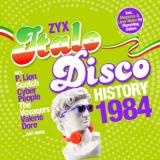
Various - ZYX Italo Disco History: 1984 LP 2x12"
  • Fokewulf 190 - Body Heat (Vocal)
  • The Voyagers - Distant Planet (Vocal)
  • Frank Tavaglione - Tumidanda (English Version)
  • P. Lion - Dream (Vocal Version)
  • A.g.f. - Loved By You (Vocal Version)
  • Raggio Di Luna (Moon Ray) - Comanchero (Vocal Extended)
  • Ranko - Happy World (Vocal Version)
  • Clay Pedrini - New Dream (Vocal)
  • Cyber People - Polaris
  • Scotch - Disco Band (Remix By Mach 2 Vocal Version)
  • Jaco - Spanish Run (Vocal)
  • Valerie Dore - The Night (Original Mix)
  • G.j. Lunghi - Acapulco Nights (Maxi Version)
  • Raggio Di Luna (Moon Ray) - Megamix By Flemming Dalum(Comanchero)
  • The Voyagers - Megamix By Flemming Dalum (Distant Planet)
  • Fokewulf 190 - Megamix By Flemming Dalum (Body Heat)
  • P. Lion - Megamix By Flemming Dalum (Dream)
  • Valerie Dore - Megamix By Flemming Dalum (The Night)
  • Scotch - Megamix By Flemming Dalum (Disco Band)
  • G.j. Lunghi - Megamix By Flemming Dalum (Acapulco Nights)
  • A.g.f. - Megamix By Flemming Dalum (Loved By You)
  • Ranko - Megamix By Flemming Dalum (Happy World)
  • Clay Pedrini - Megamix By Flemming Dalum (New Dream)
  • Frank Tavaglione - Megamix By Flemming Dalum (Tumidanda)
  • Cyber People - Megamix By Flemming Dalum (Polaris)
  • Jaco - Megamix By Flemming Dalum (Spanish Run)

Erleben Sie das pulsierende Lebensgefühl der 80er Jahre mit der farbigen 2LP-Compilation „ZYX Italo Disco History 1984“. Diese exklusive Vinyl-Ausgabe entführt Sie direkt in das goldene Zeitalter der Italo Disco und vereint die größten Dancefloor-Hits eines unvergesslichen Jahres.

Freuen Sie sich auf ikonische Tracks von Künstlern wie P. Lion, Scotch und Valerie Dore – Namen, die für eingängige Melodien, treibende Beats und den unverwechselbaren Sound der Italo Disco stehen. Jeder Song dieser Sammlung spiegelt die Energie und den Glamour der internationalen Clubszene von 1984 wider. Ein besonderes Highlight ist der enthaltene 15-minütige Megamix der Italo-Disco-Legende Flemming Dalum. Mit seinem einzigartigen Gespür für Rhythmus und Atmosphäre verbindet er die größten Hits zu einem mitreißenden Mix, der nahtlos durch die Klangwelt der 80er führt. Die farbige Doppel-LP macht diese Compilation nicht nur musikalisch, sondern auch optisch zu einem echten Sammlerstück – perfekt für Vinyl-Liebhaber und Fans elektronischer Klassiker

pré-commande24.04.2026

il devrait être publié sur 24.04.2026

24,33
TOBA - Make Your Mind Up / Don't Take It

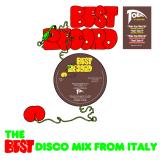
The long-awaited reissue of Toba makes it clear, once and for all, to fans and industry insiders that disco music produced in Italy between the late 70s and early 80s had no chance of success. What was disparagingly called "spaghetti disco", considered a poor imitation of real American disco music, only good for Japanese cartoons. This was the main reason that prompted Italians to record their songs abroad, as Fratelli La Bionda with their pseudonym D.D.Sound in Munich. Luigi Figini, with "Supercool" and "Percussion Sundance" by Edo Martin and Pino Santapaga (the same as "Step By Step" by Koxo), claimed that Kash was a one-off Swedish disco project, a lie that came to light when an Italian test pressing from the previous year, made by GDB, was posted !!! Amin-Peck followed the trend of passing off their songs as foreign music on the intuition of their Roman producers. So ''Love Disgrace'' was released on 7'' by a label called Connection, which never really existed, created for the purpose by Giancarlo Meo, confident that this would bring success to the Bolognese duo who were already creating 'proto Italo-Disco tracks' with a new-wave trend. To make the whole operation seem real, the London agency Ellie Jay Ltd. was involved, contacting Andy Fernbach of Jacobs Studios Ltd. The vinyl was also produced in the UK, otherwise the deception would have been discovered, then imported to Italy by Best Record. Italo-Disco was officially born after this, in 1982, not before! Everything makes sense now ! Real events that actually happened and purely invented names and anecdotes. Just think, even the image of Tony Balch used for the cover of Toba was taken from Grand Theft's 1978 album "Have You Seen This Band?" and reproduced on the new redesigned cover, as were the heads of the other musicians. The idea of a real band called Toba had finally come to fruition and would lead to a second sensational success the following year. Now it all makes sense! Facts and anecdotes that really happened and names and circumstances that are purely fictional. Finally, everything adds up! Real things and invented names of musicians and collaborators. It's important to clarify what we've said above, but we haven't talked about "Make Your Mind Up" and "Don't Take It" and the two masterful remixes performed by Dave Mathmos. In short: with the original versions we'll make Italo-Disco purists happy, with the remix versions we'll please new younger followers with more modern sounds and versions more in line with today's tastes and trends.

pas en stock

Commandez maintenant et nous commanderons l'article pour vous chez notre fournisseur.

18,91

Derniere entrée: 18 jours
Lex Wolf - Changes 001

Lex Wolf

Changes 001

12inchCHANGES001
Changes
21.04.2026

Lex Wolf will be a familiar name to those who like leftfield edits and trippy disco sounds, following great outings on the likes of Razor-N-Tape. Here, the producer kicks off new label Changes with four cuts of passionate and throbbing pumps. 'Rhythm Papi' has elastic drums and fat bass with erotic vocal whispers, and 'Everybody' taps into classic sampling with jacked-up house drums and sparkling arps. 'Fall Into A Trance' has old school horns and a steamy energy with yet another bold, potent bassline, while 'Keep Playin' is a bouncy sound with panning melodies and vocoder vocals that blend the past with the future. These are full-flavour sounds packed with character.

En stock du10.06.2026

15,08

Derniere entrée: 5 jours
Various - Tchic Tchic: French Bossa Nova 1963-1974  Colored Edition LP 2x12"
  • A1: Les Masques - Il Faut Tenir (1969)
  • A2: Isabelle Aubret - Casa Forte (1971)
  • A3: Christianne Legrand - Hlm Et Ciné Roman (1972)
  • A4: Jean Constantin - Pas Tant D'chichi Ponpon (1972)
  • A5: Billy Nencioli & Baden Powell - Si Rien Ne Va (1969)
  • B1-: Marpessa Dawn - Le Petit Cuica (1963)
  • B2: Jean-Pierre Sabar - Vai Vai (1974)
  • B3: Sophia Loren - De Jour En Jour (1963)
  • B4: Isabelle - Jusqu’à La Tombée Du Jour (1969)
  • B5: Sylvia Fels - Corto Maltesse (1974)
  • C1: Frank Gérard - Comme Une Samba (1972)
  • C2: Ann Sorel - La Poupée Des Favellas (1971)
  • C3: Charles Level - Un Enfant Café Au Lait (1971)
  • C4: Andrea Parisy - Les Mains Qui Font Du Bien (1970)
  • C5: Audrey Arno - Quand Jean-Paul Rentrera (1969)
  • C6: Aldo Frank - T’as Vu Ce Printemps (1970)
  • D1: Christianne Legrand - Cent Mille Poissons Dans Ton Filet (1972)
  • D2: Clarinha - Lemenja (1970)
  • D3: Hit Parade Des Enfants - Aquarela (1976)
  • D4: Jean-Pierre Lang - Tendresse (1965)
  • D5: Magalie Noël - Une Énorme Samba (1970)
  • D6: Françoise Legrand - La Lune

Ever since the late 1950s bossa-nova revolution, Brazil’s influence on French music has been undeniable. Pierre Barouh, Georges Moustaki and a vast array of lesser known artists, all made the Musica Popular Brasileira (MPB) an axis of promotion at the service of a cool and metaphysical, modern and mixed Brazilian lifestyle. Some were seduced by the poetic languors of the bossa, some were looking for fun, and others just loved the American hybridization of jazz-bossa, jazz-samba.


What is bossa nova? One of its creators, Joao Gilberto said: "Its style, cadence, everything is samba. At the very start, we didn't call it bossa nova, we sang a little samba made up of a single note - Samba de uma nota so .... The discussion around the origins of bossa nova is therefore useless”. It is nevertheless useful to remember that these magnificent Brazilian songs, which the guitarist describes as samba, were shifted and balanced around improbable chords. "I like things that lean, the in-betweens that limp with grace," said Pierre Barrouh, quoting Jean Cocteau.


With emotion, arrangements for violin and supple guitar licks, bossa nova rapidly changed. A transformation that can be heard in the Tchic, tchic, French Bossa Nova 1963-1974 compilation, the result of a cultural reappropriation, which traveled through the United States and supplemented itself in France.

A musical revolution that has remained significant, bossa nova was born in Rio. From 1956 to 1961, Brazil lived through its golden years. In five years, the country had invented its modernist style. Elected president in 1956, Juscelino Kubitschek de Oliveira, an elegant man with a broad forehead, brandished a promising slogan: "Fifty years of progress in five years". He quickly got to work. Not worried about increasing debt, he launched the project for a new federal capital, Brasilia, designed by the communist architect Oscar Niemeyer. Volkswagen opened state-of-the-art factories and created the “fusquinha”, the Beetle. In Rio, the Vespa made its first appearance. The Arpoador Surf Club crew run into the “girl” from Ipanema, Helô Pinheiro - the tanned garota ("chick"), between a flower and mermaid, who at 17 walked by the Veloso bar, where the fiery author and composer, Tom Jobim and Vinicius de Moraes, were getting drunk on whiskey. From then on, bossa symbolized cool.

In 1958, Joao Gilberto recorded Chega de Saudade, which the directors of Philips denied, calling it "music for fagots". The marketing director, who believed in it, secretly pressed 3000 78-inch vinyls and distributed them at schools around Rio, creating a tidal wave.

American jazzmen then took over. In particular, trumpeter Dizzy Gillespie and guitarist Charlie Byrd. In November 1962, the Brazilian Ministry of Foreign Affairs funded a "Bossa-Nova" concert at Carnegie Hall in New York, inviting the genre’s pioneers. Unprepared, the show soon turned to disaster. But the troupe was invited to the White House by Jackie Kennedy. The first lady loved "the new beat" and in particular Maria Ninguem, a song by Carlos Lyra, later covered by Brigitte Bardot.

In Brazil, the 1964 military coup quickly ended this euphoria. The destructive atmosphere that ensued pushed many Brazilian musicians to leave, if not to exile. Thus, Tom Jobim, Sergio Mendes and Joao Gilberto arrived to the United States. In New York, Joao Gilberto met saxophonist Stan Getz. At the time, he was married to the Bahianese Astrud Weinert Gilberto, who had a German father. She had never sung before, but she knew how to speak English. Getz therefore asked her to replace her husband on The Girl From Ipanema. The Getz/Gilberto record with Tom Jobim on piano, was released in March 1964. Phil Ramone, the "pope of pop" was in charge of sound.

Bossa nova arrived in Paris through the classic “guitar-voice” channel (Pierre Barouh, Baden Powell, Moustaki…) But France loved jazz and Paris had already welcomed its American contributors. All these good people were to pass through Saint-Germain-des-Prés. The cabaret l'Escale became the Mecca of Latin American sound where one could find Pierre Barrouh and his friends, such as the Camara Trio, samba-jazz aces, whose only record was published by the Saravah label. With a band strangely called Les Masques (a band that included Nicole Croisille and Pierre Vassiliu, among others), the Camara Trio recorded an interesting Brazilian Sound, including the track Il faut tenir which is present on this tasty compilation of rarities.

Other enlightened musicians can also be found on the compilation, such as Jean-Pierre Sabar (songwriter for Hardy, Auffray, Leforestier ...) and the French pop rock organist Balthazar. In 1975, Sabar recorded Aurinkoinen Musiikkimatka on a Finnish label, which featured the crazy Vai, Vai, included on this record. We are now following the footsteps of Brazilian electronic musicians such as Sergio Mendes, Eumir Deodato or Marcos Valle who created funk and disco sounds on their keyboards and synthesizers. A style that influenced Véronique Sanson when she wrote Jusqu’à la Tombée de la nuit in 1969 for Isabelle de Funès, the niece of Louis and a great friend of Michel Berger - Sanson did end up singing this track on her 1992 Sans Regret record.


The pinnacle of exoticism and travel, Sylvia Fels’ Corto Maltese includes bongos, sea mist and ocean sounds. The title was taken from Jacky Chalard’s concept album written in 1974, Je suis vivant, mais j’ai peur (I am alive, but I am scared), based on Gilbert Deflez’s science fiction novel.


However, bossa nova extended the scope of popularity. "In the 1970s, I was a fan of Sergio Mendes, Getz / Gilberto. I fell in love with this music that I knew because I had been an orchestral singer, " explained Isabelle Aubret, who in 1971 delivered a composite record of covers by the very funky Jorge Ben, Orfeu Negro, Tom Jobim, Vinicius de Morais and Jean Ferrat. "I recorded this album for Meys Records in Paris, far from Brazil, with wonderful musicians, François Raubert, Roland Vincent, Alain Goraguer...". The latter wrote the arrangements for Casa Forte, a very percussive title borrowed from Edu Lobo, one of the initiators of the bossa who spent time in California. "Jazz and bossa came together and produced very rhythmic music. I love singing, it allows me to dream, to have fun, to feel a high on stage, and these songs brought me joy, made me swing, my singing felt like a dance.”


The world tours of French singers and their desire for the tropics, often brought them to Rio with its hills, forests, caipirinhas and tanned bodies. There are surprises though, like this Iemenja (Iemenja is the goddess of the sea in the Afro-Brazilian candomblé religion). Not unlike the composer and musician Jean-Pierre Lang, based in Sao Paulo, Claire Chevalier taught Brazil to Brazil. In 1970, the singer and painter published a 45-inch vinyl, Mon mari et mes amants (My husband and my lovers), under the improbable pseudonym of Clarinha (little Claire). She was then living in Rio, with her husband, Joël Leibovitz, who founded a band called Azimuth, and who owned a record label specialized in "sambas enredos" songs for samba school parades.


For its B side, she asked Pierre Perret to come up with lyrics for a song composed by Carlos Imperial: "Oh goddess of the sea, o goddess Iemenja, I bring a white rose to adorn your long hair ..." . "Perret came to see us, and we had fun, remembers Joël Leibovitz. We wrote Lemenja for fun, we recorded it at the Havaí studio, behind the Central do Brasil the central station. Erlon Chaves, the arranger who worked with Elis Regina, joined us" adding his share of Afro-Brazilian percussions and funky brass to the mix.

There is a common misunderstanding in Franco-Brazilian history: that bossa, admittedly hedonistic, is perceived as funny, even though the poets who wrote the texts are often philosophizing on the human condition. Its French interpreters pull it towards a carnival inspired universe, far removed from its fundamental essence. Thus, Jean Constantin covered the famous Samba da minha terra, an ode to the art of samba written by the classic Bahian composer Dorival Caymmi, renaming it with the enticing title of Pas tant de tchi tchi pompon: "On your pier there is no tchi tchi / when you arch your back, you know everything is alright ”(lyrics by Gérard Calvi). This expedited bossa aims for the absurd, but retains a certain elegance.

Indeed, Jean Constantin was not an idiot, the rather large man had a huge mustache and liked fantasy, (Les pantoufles à papa, Le pacha, inspired by cha-cha-cha-cha, salsa and jazz) but he was also the lyricist of Mon manège à moi interpreted by Edith Piaf, the composer of Mon Truc en plume by Zizi Jeanmaire and the soundtrack of François Truffaut’s 400 Blows. Le Poulpe, published in 1970, from which this bossa is extract, was arranged by Jean-Claude Vannier, an accomplice of Serge Gainsbourg’s Melody Nelson. In short: "There is enough of samba / By looking at the parasol / Because my poor cabeza / Is going to die in the sun".

Even the American actress Marpessa Down, who was at the heart of the bossa nova revolution with her role as Euridyce in Marcel Camus’ film Orfeu Negro, winner of the 1959 Cannes Palme d'or, fed the clichée with Je voudrais parler au petit cuica - "Tell me how you manage to always make people want to dance / It's true, I must admit that I cannot resist your magic" - in consequence, once can hear the cuica, a little drum inherited from the Bantu.


But bossa nova had many angles. Societal, of course, pushing actresses who were symbols of women's liberation like Brigitte Bardot, Jeanne Moreau, or Sophia Loren to engage in the exercise of accelerated bossa. In February of 1963, Sophia Loren made a record in French in Rome, Je ne t'aime plus, featuring the song De jour en jour, a bossa written by two Italians, Armando Trovajoli and Tino Fornai, which was released a little later by Barclay. Bossa accompanied the 1960s, a decade of moral liberation. Ann Sorel, who interpreted La Poupée des favellas, caused a sensation with L’amour à plusieurs, a provocative song written by Frédéric Bottom and Jean-Claude Vannier. As for the actress Andrea Parisy, she displayed her bourgeois cheekiness in Marcel Carné's Les Tricheurs before interpreting Les mains qui font du bien. And Magalie Noël, the friend of Boris Vian, who sung Johnny fais-moi mal, was hired to sing Une énorme Samba, composed by Alain Goraguer (arranger to Gainsbourg, Bobby Lapointe and Jean Ferrat) with lyrics by Frédéric Botton.

But in the end, of what wood is bossa nova made of? The answer is given by Christianne Legrand, daughter of Raymond the conductor, and sister to Michel the composer: "With me, with jà" - jà means "immediately" in Portuguese. In 1972, the singer, an expert in vocal jazz and a member of the Double Six, published Le Brésil de Christianne Legrand. Two songs included on the Tchic Tchic compilation that demonstrate how bossa, jazz, funk, rock, etc. work like a swiss army knife: the music is used to denounce broken systems, or miracles, HLM et ciné roman, Cent mille poissons dans ton filet, two songs from the O Cafona soundtrack, a successful telenovela broadcast, at the time in black and white, on TV Globo. The first was adapted in French by the fighter and friend of the Legrand tribe, Agnès Varda. The second is content with a play on words, jostling them into a summer fun.


Véronique Mortaigne

pré-commande17.04.2026

il devrait être publié sur 17.04.2026

27,31
Guilty Razors - Complete Recordings 1977 - 1978

UILTY RAZORS, BONA FIDE PUNKS.


Writings on the topic that go off in all directions, mind-numbing lectures given by academics, and testimonies, most of them heavily doctored, from those who “lived through that era”: so many people today fantasize about the early days of punk in our country… This blessed moment when no one had yet thought of flaunting a ridiculous green mohawk, taking Sid Vicious as a hero, or – even worse – making the so-called alternative scene both festive and boorish. There was no such thing in 1976 or 1977, when it wasn’t easy to get hold of the first 45s by the Pistols or the Clash. Few people were aware of what was happening on the fringes of the fringes at the time. Malcolm McLaren was virtually unknown, and having short hair made you seem strange. Who knew then that rock music, which had taken a very bad turn since the early 1970s, would once again become an essential element of liberation? That, thanks to short and fast songs, it would once again rediscover that primitive, social side that was so hated by older generations? Who knew that, besides a few loners who read the music press (it was even better if they read it in English) and frequented the right record stores? Many of these formed bands, because it was impossible to do otherwise. We quickly went from listening to the Velvet Underground to trying to play the Stooges’ intros. It’s a somewhat collective story, even though there weren’t many people to start it.
The Guilty Razors were among those who took part in this initial upheaval in Paris. They were far from being the worst. They had something special and even released a single that was well above the national average. They also had enough songs to fill an album, the one you’re holding. In everyone’s opinion, they were definitely not among the punk impostors that followed in their wake. They were, at least, genuine and credible.

Guilty Razors, Parisian punk band (1975-1978). To understand something about their somewhat linear but very energetic sound, we might need to talk about the context in which it was born and, more broadly, recall the boredom (a theme that would become capital in punk songs) coupled with the desire to blow everything off, which were the basis for the formation of bands playing a rejuvenated rock music ; about the passion for a few records by the Kinks or the early Who, by the Stooges, by the Velvet mostly, which set you apart from the crowd.
And of course, we should remember this new wave, which was promoted by a few articles in the specialized press and some cutting-edge record stores, coming from New York or London, whose small but powerful influence could be felt in Paris and in a handful of isolated places in the provinces, lulled to sleep by so many appalling things, from Tangerine Dream to President Giscard d’Estaing...
In 1975-76, French music was, as almost always, in a sorry state ; it was still dominated by Johnny Hallyday and Sylvie Vartan. Local rock music was also rather bleak, apart from Bijou and Little Bob who tried to revive this small scene with poorly sound-engineered gigs played to almost no one.
In the working class suburbs at the time, it was mainly hard rock music played to 11 that helped people forget about their gruelling shifts at the factory. Here and there, on the outskirts of major cities, you still could find a few rockers with sideburns wearing black armbands since the death of Gene Vincent, but it wasn’t a proper mass movement, just a source of real danger to anyone they came across who wasn't like them. In August 1976, a festival unlike any other took place in Mont-de-Marsan – the First European Punk Festival as the poster said – with almost as many people on stage as in the audience. Yet, on that day, a quasi historical event happened, when, under the blazing afternoon sun, a band of unknowns called The Damned made an unprecedented noise in the arena, reminiscent of the chaotic Stooges in their early adolescence. They were the first genuine punk band to perform in our country: from then on, anything was possible, almost anything seemed permissible.

It makes sense that the four+1 members of Guilty Razors, who initially amplified acoustic guitars with crappy tape recorder microphones, would adopt punk music (pronounced paink in French) naturally and instinctively, since it combines liberating noise with speed of execution and – crucially – a very healthy sense of rebellion (the protesters of May 1968 proclaimed, and it was even a slogan, that they weren’t against old people, but against what had made them grow old. In the mid-1970s, it seemed normal and obvious that old people should now ALSO be targeted!!!).
At the time, the desire to fight back, and break down authority and apathy, was either red or black, often taking the form of leafleting, tumultuous general assemblies in the schoolyard, and massive or shabby demonstrations, most of the time overflowing with an exciting vitality that sometimes turned into fights with the riot police. Indeed, soon after the end of the Vietnam War and following Pinochet’s coup in Chile, all over France, Trotskyist and anarcho-libertarian fervour was firmly entrenched among parts of the educated youth population, who were equally rebellious and troublemakers whenever they had the chance. It should also be noted that when the single "Anarchy in the UK" was first heard, even though not many of us had access to it, both the title and its explosive sound immediately resonated with some of those troublemakers crying out for ANARCHY!!! Meanwhile, the left-wing majority still equated punks with reckless young neo-Nazis. Of course, the widely circulated photos in the mainstream press of Siouxsie Sioux with her swastikas didn’t necessarily help to win over the theorists of the Great Revolution. It took Joe Strummer to introduce The Clash as an anti-racist, anti-fascist and anti-ignorance band for the rejection of old-school revolutionaries to fade a little.

The Lycée Jean-Baptiste Say at Porte d’Auteuil, despite being located in the very posh and very exclusive 16th arrondissement of Paris, didn’t escape these "committed" upheavals, which doubled as the perfect outlet for the less timid members of this generation.
“Back then, politics were fun,” says Tristam Nada, who studied there and went on to become Guilty Razors’ frontman. “Jean-Baptiste was the leftist high-school in the neighbourhood. When the far right guys from the GUD came down there, the Communist League guys from elsewhere helped us fight them off.”
Anything that could challenge authority was fair game and of course, strikes for just about any reason would lead to increasingly frequent truancy (with a definitive farewell to education that would soon follow). Tristam Nada spent his 10th and 11th unfinished grades with José Perez, who had come from Spain, where his father, a janitor, had been sentenced to death by Franco. “José steered my tastes towards solid acts such as The Who. Like most teenagers, I had previously absorbed just about everything that came my way, from Yes to Led Zeppelin to Genesis. I was exploring… And then one day, he told me that he and his brother Carlos wanted to start a rock band.” The Perez brothers already played guitar. “Of course, they were Spanish!”, jokes their singer. “Then, somewhat reluctantly, José took up the bass and we were soon joined by Jano – who called himself Jano Homicid – who took up the rhythm guitar.” Several drummers would later join this core of not easily intimidated young guys who didn’t let adversity get the better of them.

The first rehearsals of the newly named Guilty Razors took place in the bedroom of a Perez aunt. There, the three rookies tried to cover a few standards, songs that often were an integral part of their lives. During a first, short gig, in front of a bewildered audience of tough old-school rockers, they launched into a clunky version of the Velvet Underground's “Heroin”. Challenge or recklessness? A bit of both, probably… And then, step by step, their limited repertoire expanded as they decided to write their own songs, sung in a not always very accurate or academic English, but who cared about proper grammar or the right vocabulary, since what truly mattered was to make the words sound as good as possible while playing very, very fast music? And spitting out those words in a language that left no doubt as to what it conveyed mattered as well.
Trying their hand a the kind of rock music disliked by most of the neighbourhood, making noise, being fiercely provocative: they still belonged to a tiny clique who, at this very moment, had chosen to impose this difference. And there were very few places in France or elsewhere, where one could witness the first stirrings of something that wasn’t a trend yet, let alone a movement.

In the provinces, in late 1976 or early 1977, there couldn’t be more than thirty record stores that were a bit more discerning than average, where you could hear this new kind of short-haired rock music called “punk”. The old clientele, who previously had no problem coming in to buy the latest McCartney or Aerosmith LP, now felt a little less comfortable there…
In Paris, these enlightened places were quite rare and often located nex to what would become the Forum des Halles, a big shopping mall. Between three aging sex workers, a couple of second-hand clothes shops, sellers of hippie paraphernalia and small fashion designers, the good word was loudly spread in two pioneering places – propagators of what was still only a new underground movement. Historically, the first one was the Open Market, a kind of poorly, but tastefully stocked cave. Speakers blasted out the sound of sixties garage bands from the Nuggets compilation (a crucial reference for José Perez) or the badly dressed English kids of Eddie and the Hot Rods. This black-painted den was opened a few years earlier by Marc Zermati, a character who wasn’t always in a sunny disposition, but always quite radical in his (good) choices and his opinions. He founded the independent label Skydog and was one of the promoters of the Mont-de-Marsan punk festivals. Not far from there was Harry Cover, another store more in tune with the new New York scene, which was amply covered in the house fanzine, Rock News (even though it was in it that the photos of the Sex Pistols were first published in France).
It was a favorite hang-out of the Perez brothers and Tristam Nada, as the latter explained. “It’s at Harry Cover’s that we first heard the Pistols and Clash’s 45s, and after that, we decided to start writing our first songs. If they could do it, so could we!”
The sonic shocks that were “Anarchy in the UK”, “White Riot” or the Buzzcocks’s EP, “Spiral Scratch” – which Guilty Razors' sound is reminiscent of – were soon to be amplified by an unparalleled visual shock. In April 1977, right after the release of their first LP, The Clash performed at the Palais des Glaces in Paris, during a punk night organised by Marc Zermati. For many who were there, it was the gig of a lifetime…
Of course, Guilty Razors and Tristam were in the audience: “That concert was fabulous… We Parisian punks were almost all dressed in black and white, with white shirts, skinny leather ties, bikers jackets or light jackets, etc. The Clash, on the other hand, wore colourful clothes. Well, the next day, at the Gibus, you’d spot everyone who had been at this concert, but they weren’t wearing anything black, they were all wearing colours.”

It makes sense to mention the Gibus club, as Guilty Razors often played there (sometimes in front of a hostile audience). It was also the only place in Paris that regularly scheduled new Parisian or Anglo-Saxon acts, such as Generation X, Siouxsie and the Banshees, the Slits, and Johnny Thunders who would become a kind of messed-up mascot for the venue. A little later, in 1978, the Rose Bonbon – formerly the Nashville – also attracted nightly owls in search of electric thrills… In 1977, the iconic but not necessarily excellent Asphalt Jungle often played at the Gibus, sometimes sharing the bill with Metal Urbain, the only band whose aura would later transcend the French borders (“I saw them as the French Sex Pistols,” said Geoff Travis, head of their British label Rough Trade). Already established in this small scene, Metal Urbain helped the young and restless Guilty Razors who had just arrived. Guitarist for Metal Urbain Hermann Schwartz remembers it: “They were younger than us, we were a bit like their mentors even if it’s too strong a word… At least they were credible. We thought they were good, and they had good songs which reminded of the Buzzcocks that I liked a lot. But at some point, they started hanging out with the Hells Angels. That’s when we stopped following them.”

The break-up was mutual, since, Guilty Razors, for their part, were shocked when they saw a fringe element of the audience at Metal Urbain concerts who repeatedly shouted “Sieg Heil” and gave Nazi salutes. These provocations, even still minor (the bulk of the skinhead crowd would later make their presence felt during concerts), weren’t really to the liking of the Perez brothers, whose anti-fascist convictions were firmly rooted. Some things are non-negotiable.
A few months earlier (in July 1978), Guilty Razors had nevertheless opened very successfully for Metal Urbain at the Bus Palladium, a more traditonally old-school rock night-club. But, as was sometimes the case back then, the night turned into a mass brawl when suburban rockers came to “beat up punks”.

Back then, Parisian nights weren’t always sweet and serene.

So, after opening as best as they could for The Jam (their sound having been ruined by the PA system), our local heroes were – once again – met outside by a horde of greasers out to get them. “Thankfully,” says Tristam, “we were with our roadies, motorless bikers who acted as a protective barrier. We were chased in the neighbouring streets and the whole thing ended in front of a bar, with the owner coming out with a rifle…”
Although Tristam and the Perez brothers narrowly escaped various, potentially bloody, incidents, they weren’t completely innocent of wrongdoing either. They still find amusing their mugging of two strangers in the street for example (“We were broke and we simply wanted to buy tickets for the Heartbreakers concert that night,” says Tristam). It so happened that their victims were two key figures in the rock business at the time: radio presenter Alain Manneval and music publisher Philippe Constantin. They filed a complaint and sought monetary compensation, but somehow the band’s manager, the skilful but very controversial Alexis, managed to get the complaint withdrawn and Guilty Razors ended up signing with Constantin with a substantial advance.

They also signed with Polydor and the label released in 1978 their only three-track 45, featuring “I Don't Wanna be A Rich”, “Hurts and Noises” and “Provocate” (songs that exuded perpetual rebellion and an unquenchable desire for “class” confrontation). It was a very good record, but due to a lack of promotion (radio stations didn’t play French artists singing in English), it didn’t sell very well. Only 800 copies were allegedly sold and the rest of the stock was pulped… Initially, the three tracks were to be included on a LP that never came to be, since they were dropped by Polydor (“Let’s say we sometimes caused a ruckus in their offices!” laughs Tristam.) In order to perfect the long-awaited LP, the band recorded demos of other tracks. There was a cover of Pink Floyd's “Lucifer Sam” from the Syd Barrett era – proof of an enduring love for the sixties’ greats –, “Wake Up” a hangover tale and “Bad Heart” about the Baader-Meinhof gang, whose actions had a profound impact on the era and on a generation seeking extreme dissent... On the album you’re now discovering, you can also hear five previously unreleased tracks recorded a bit later during an extended and freezing stay in Madrid, in a makeshift studio with the invaluable help of a drummer also acting as sound engineer. He was both an enthusiastic old hippie and a proper whizz at sound engineering. Here too, certain influences from the fifties and sixties (Link Wray, the Troggs) are more than obvious in the band’s music.

Shortly after a final stormy and rather barbaric (on the audience’s side) “Punk night” at the Olympia in June 1978, Tristam left the band ; his bandmates continued without him for a short while.

But like most pioneering punk bands of the era, Guilty Razors eventually split up for good after three years (besides once in Spain, they’d only played in Paris). The reason for ceasing business activities were more or less the same for everyone: there were no venues outside one’s small circuit to play this kind of rock music, which was still frightening, unknown, or of little interest to most people. The chances of recording an LP were virtually null, since major labels were only signing unoriginal but reassuring sub-Téléphone clones, and the smaller ones were only interested in progressive rock or French chanson for youth clubs. And what about self-production? No one in our small safety-pinned world had thought about it yet. There wasn’t enough money to embark on that sort of venture anyway.

So yes, the early days of punk in France were truly No Future!

pas en stock

Commandez maintenant et nous commanderons l'article pour vous chez notre fournisseur.

21,43

Derniere entrée: 59 jours
Motrik - MOON: The Cosmic Electrics of MOTRIK LP

Portland-based krautrock band Motrik formed in 2013, its four members united by a pledge to modernize their beloved genre. Sharing a passion for pioneers like Can, Kraftwerk, and Trad Gras Och Stenar, the group has demonstrated its ability to deliver over a series of EPs and albums, most recently 2020's acclaimed Artificial Head. As they continue to experiment by incorporating additional influences ranging from funk and jazz to psych and prog Motrik's third full-length, a double LP titled MOON: The Cosmic Electrics of MOTRIK, is a further continuation in the story of an historic genre befitting of the album's cosmic artwork.

Motrik boldly takes full advantage of the space that four sides of vinyl allow on this latest offering. The middle of the album features two long suites that feel typical of the groups dynamic live performances, which frequently feature fog cannons, lasers, and other prop homages to Kraftwerk and company. The 13-minute "Stabilize" emerges from a haze of synth pulses and guitar tones, settling into a steady NEU!-like chug that swells and recedes like an ecstatic wave. On "Space Elevator", the motorik drive from which the band take their name evolves into an insinuating and sensual disco-like throb before the perfect proggy comedown in the final minute.

pré-commande03.04.2026

il devrait être publié sur 03.04.2026

28,15
BRENDAN EDER ENSEMBLE / EDWARD BLANKMAN - CAPE COD COTTAGE

Welcome to the world of Edward Blankman, a retired dentist who wrote elegant, minimalist jazz in obscurity circa 1970. At least that’s the story.

In truth, Edward Blankman’s Cape Cod Cottage is the 2021 concept album from Echo Park composer Brendan Eder.

A tender, wistful follow up to 2020’s To Mix With Time, the Cape Cod Cottage sound evokes the spirit of Erik Satie, Miles Davis with Gil Evans, and Stevie Wonder, balanced with the accessibility of 1960s lounge-exotica. Eder’s characteristic arrangements are crafted to reflect the past, without losing the innovative quality of his modern ear.

Eder created Blankman’s story to channel his own grief, with bittersweet tenderness. Read the liner notes, and you’ll be transported to the quiet shores of Cape Cod, where a lonely retiree mourns his late wife, Natalie, with walks in nature and evenings at his Wurlitzer.

The story is brought to life with a meticulously crafted package sporting classic liner notes, faux 1970s photographs documenting Edward with the musicians (taken during the actual session), a make-believe jazz label, and a commissioned oil painting of Edward’s cottage. Eder spent over a year rendering the compositions and charts according to his vision.

Eder brought together a dream line up with a ton of chemistry for the project; drummer Christian Euman (Jacob Collier), saxophonist Josh Johnson (Jeff Parker, Leon Bridges), and bassist Alex Boneham (Billy Childs), who all studied together at the Hancock Institute of Jazz. Rounding out the group is flutist Sarah Robinson, a recurring player in Eder’s ensemble, and Edward Blankman (Brendan) on the Wurlitzer.

The cast was booked for a single date with coveted engineer Michael Harris (Kamasi Washington, Angel Olsen, Fleet Foxes) at famed Electro-Vox Recording Studios. To create realism for Edward’s story, the charts were purposefully withheld from the musicians until they arrived at the studio. The result is an authentic and natural performance delivered by players at the top of their game, captured on pristine vintage equipment including the legendary Neve-8028 console.

pas en stock

Commandez maintenant et nous commanderons l'article pour vous chez notre fournisseur.

24,16

Derniere entrée: 67 jours
PARIAH - Blaze of Obscurity Re-Issue
  • 1: Missionary Of Mercy
  • 2: Puppet Regime
  • 3: Canary
  • 4: Blaze Of Obscurity
  • 5: Retaliate!
  • 6: Hypochondriac
  • 7: Enemy Within
  • 8: The Brotherhood

Pariah’s cult album re-issued! “Blaze of Obscurity” brings you pure Thrash Metal fury! Satan changed their name to Pariah in 1988-1989. There’s Heavy Metal, Power Metal, Thrash Metal, Death Metal, the list seems almost endless. Sub-genres are important in metal and bands are quickly classified and labeled. Pariah (the last re-incarnation of Satan) is one of few bands that are difficult if not impossible to classify. Is it Heavy metal? NWOBHM? Thrash Metal? Pariah did not make it easy to describe their sound. It might be too sophisticated to simply label it Heavy Metal, which in its infancy was a rather simple affair.

They don’t sound like any Metal band out there, perhaps discounting some of the more aggressive and technical ones, and then the signature NWOBHM sound is added. The guitar playing by Russ Tippins and Steve Ramsey is undeniably what defines Pariah as well as Satan in the past. Undeniably, Satan has gone a long way; from humble NWOBHM beginnings, to Experimental/Melodic Mettal (in Blind Fury) and something that could be described as a NWOBHM/Thrash Metal hybrid (“The Kindred”). It’s as if they’ve been experimenting trying to find their identity, and theyfinally found it. Stylistically, “Blaze of Obscurity” could be seen a step back to “Suspended Sentence”, but this time around they got everything right, down to the last note. Those who have heard Satan know what to expect: great guitar playing.

And sure enough, “Blaze of Obscurity” is a demonstration of guitar mastery and is overall a very guitar-driven album, with plenty of mind-boggling riffs and solos are all over the place, but more importantly, it’s a demonstration of some amazing songwriting as well. This is easily Pariah/Satan’s creative peak and one of the most consistent albums I’ve ever heard, featuring eight great and conceptually perfect songs with lyrics that come across as sophisticated and thought-provoking. It is not fair to put the entire spotlight on Tippins and Ramsey though since the drumming and bass work from Sean Taylor and Graham English really shines. The rhythm is fast and tight, keeping it focused, aggressive and intense till the end. Vocalist Michael Jackson (yes, that’s his name) has to be commended too as this is easily his careers best performance.

The verdict: “Blaze of Obscurity”: the level of musical genius expressed here, along with near flawless songwriting, is more than enough to skyrocket it to heights reserved only for classics. Probably not your choice for some light listening those quiet Sunday evenings, but those who take a more serious, intellectual approach when selecting their music will find very much to appreciate here.
Tracklisting

pré-commande27.03.2026

il devrait être publié sur 27.03.2026

28,99
Monsieur Van Pratt / Boogietraxx - Illegal Disco Limited 002

2026 Repress

The Illegal Disco Limited series is already so wrong it's right and once again it is the inimitable Monsieur Van Pratt dropping two undeniable edits on this one. 'What About Me' kicks off and is a clever flip of a classic groove that has a Chic-style baseline keeping busy down below natty piano work and with hefty drums powering it on. 'Sunset
Driver' is a chugging retro-future disco sound with Michael Jackson vocals from an elusive demo. On the flip, Van Pratt teams up with Boogietraxx for a bright take on the Japanese viral fav 'Stay With Me' and Boogietraxx then takes over solo, first with the funk-driven 'Moving Down the Line' before closing with the feel-good spark of 'Pretty Good Feeling.'

pas en stock

Commandez maintenant et nous commanderons l'article pour vous chez notre fournisseur.

15,76

Derniere entrée: 20 jours
Various - Minyo Groove 1963-1979 - Japan Meets Latin, Rock, Rare Groove & Funky Vibes (Selected by DJ Yoshizaw

- For all fans of the Wamono series!

- All tracks selected by DJ Yoshizawa Dynamite. Includes the first ever vinyl release of The Peanuts' "Ohara Bushi" track, originally released only on tape in 1970.

- Fully licensed King Records masters.

- Mastering and lacquer cut by Jukka Sarapaa at Timmion Cutting Lab, Helsinki, Finland.

- 180g heavy vinyl pressing, reverse board jacket.

- Artwork by Nicolas Kerembellec (Nker).

---

Active as a professional DJ in Japan since the late eighties, DJ Yoshizawa Dynamite is also a renowned remixer, compiler and producer. An avid record collector and an expert of Wamono music, Yoshizawa has published in 2015 the now-classic Wamono A to Z records guide book, which instantly sold-out. The book unveiled a myriad of beautiful and rare records from a highly prolific, but still then unknown, Japanese groove scene. He has also selected a large part of the music in our highly acclaimed Wamono compilations.

For this brand new chapter in the series, Yoshizawa explores King Records' legendary catalog and unearths exceptional, rare and unknown musical gems. King Records has been releasing music since 1931 and is one of the most prestigious labels in Japan. Traditional Japanese music, known as "Minyo", are ancient songs once sung by fishermen, coal miners and sumo wrestlers. They are reimagined here with vibrant afro latin, rock, rare groove and funky arrangements in this killer selection of music released on King between 1963 and 1979. Also worth mentioning is the track Ohara Bushi by The Peanuts, which was released only on tape in 1970 and is now available for the first time ever on vinyl format.

Put the needle on the record, turn up the volume and dig right now into the Wamono sound - the cream of the Japanese funk, soul, rare groove and disco music developed throughout the years since the end of the fifties in Japan!

---

180GWALP08 - Manufactured and distributed by 180g.

En stock du09.06.2026

34,03

Derniere entrée: 18 jours
Articles par page:
N/ABPM
Vinyl