An acid rock LP on the Isley Brothers’ T-Neck label? Yes, the unlikely collaboration resulted from a Jimi Hendrix concert at New York’s Syracuse University, supported by the Isleys and mixed soul-rock group, Soul Survivors, who had worked with Tom Bell and Gamble & Huff. When Soul Survivors morphed into Privilege, they convinced the Isleys to sign them to T-Neck, the result being this rare self-titled album, a fine set of hard-rocking originals, expertly produced by the Isleys with plenty of stereo panning, blistering guitar from frontman Edward Leonetti, atmospheric organ from Paul Venturini and melodic bass lines from Jack Douglas, later an engineer for Aerosmith, Lou Reed and Cheap Trick. A true classic, not to be missed!
Cerca:jack
- A1: Little Girl Blue
- A2: It Don't Mean A Thing
- A3: I Loves You, Porgy
- A4: Come On Back, Jack
- A5: Plain Gold Ring
- A6: Work Song
- A7: Children Go Where I Send You
- B1: Forbidden Fruit
- B2: Cotton-Eyed Joe (Live At Town Hall)
- B3: My Baby Just Cares For Me
- B4: African Mailman
- B5: Love Me Or Leave Me
- B6: He's Got The Whole World In His Hands
- B7: Exactly Like You (Live At Town Hall)
Every now and then a release comes along which is destined to unite, bring down the walls and basically, be a force for good. Your Kissing by Belcampo does just that, and with a style and panache which defies it’s lo-fi, handstamped limited white label aesthetic. The beauty of Your Kissing is in the way it successfully melds together elements of deep house, disco and the French Touch sound to form a track which will appeal to anyone who simply likes decent music. Belcampo keeps things stripped back just enough to give that beautiful, rolling, hypnotic atmosphere, whilst remaining lush, warm and uplifting, constantly teasing us with the repeated filtering guitar and string hook. Legendary British singer and songwriter Elisabeth Troy provides the cherry on top with her sweet vocal line giving us the hook which will get under your skin in all the right ways.
In addition to the main vocal mix we have a Belcampo Remix going heavier on the filters and pumping groove, calling to mind the glory days of Cassius, Motorbass and Super Discount with that distinctive feel-good French sound of the 90’s.
Closing out the EP we find Delisei which cranks up the jackometer for a peak time slice of looped-up heads down filter madness guaranteed to nice up the dance.
- A1: The John Coltrane Quartet — Africa 16:27
- B1: Max Roach — Garvey's Ghost 7:52
- B2: Quincy Jones And His Orchestra — Hard Sock Dance 3:20
- B3: John Coltrane — Up 'Gainst The Wall 3:14
- B4: Elvin Jones/Jimmy Garrison Sextet — Just Us Blues 5:55
- C1: John Coltrane — Alabama 5:09
- C2: Charles Mingus — Better Get Hit In Yo' Soul 6:31
- C3: Shirley Scott Trio — Freedom Dance 4:50
- C4: Yusef Lateef — Sister Mamie 5:27
- D1: Archie Shepp — Malcolm, Malcolm—Semper Malcolm 4:48
- D2: Stanley Turrentine — Good Lookin' Out 5:21
- D3: Earl Hines — Black And Tan Fantasy 5:11
- D4: Oliver Nelson — The Rights Of All 3:58
- E1: Pharoah Sanders — The Creator Has A Master Plan (Edit) 9:08
- E2: John Coltrane & Alice Coltrane — Reverend King 11:03
- F1: The Ahmad Jamal Trio — The Awakening 6:22
- F2: Albert Ayler — Music Is The Healing Force Of The Universe 8:41
- F3: Charlie Haden — We Shall Overcome 1:19
- G1: Alice Coltrane — Blue Nile 7:02
- G2: Pharoah Sanders — Astral Traveling 5:50
- G3: Archie Shepp — Blues For Brother George Jackson 3:52
- G4: Michael White — Lament (Mankind) 2:28
- H1: Dewey Redman — Imani 7:09
- H2: Marion Brown — Bismillahi 'Rrahmani 'Rrahim 6:02
- H3: John Handy — Hard Work 6:58
Orange and black. Fire and ebony. Fury and pride. Wearing its signature colors proudly and raising its exclamation point high, Impulse! Records was the go-to label for music that harnessed the searching and political stand-taking of the Sixties. Launched in 1961, Impulse grew to become an inherent part of the era’s velocity as well as its volume, pulling jazz into the age of Black Power, Afrocentricity, and Spiritual Expansion. In its balance of tradition and transition, it bridged the golden age of jazz, that brief window from the late Fifties to the Seventies when players representing every jazz era were alive and active—from Louis Armstrong to Albert Ayler, from the legends of lore to a new generation of energy players. Impulse treated all its musicians as innovators, revolutionaries even—from swing and bebop, to free and Afrofuturist. The performances on Impulse Records: Music, Message and the Moment draw their staying power from a wide embrace of styles and sounds, as well as a tight focus on a historic moment when the promise of change was in the air and the message of racial harmony was in the music. Today that music has lost none of its relevance: the promise still deferred, the message still on time.
"Pay Your Way In Pain" is the first single ahead of St. Vincent's highly anticipated new album Daddy's Home, produced by pop producer and long term collaborator Jack Antonoff. "I was inspired by the classic records of the 70s. Stevie, Sly, Stones, Steely Dan, Chords, Groove. The days when sophisticated harmony and rhythm didn't sound heady - they just sounded, and felt good. Lots of guitar. But warm sounds, not distortion and chaos. Hopefully a turn nobody will see coming" - Annie Clark.
A Deep House 3 track EP featuring more of Matt’s production.
A. Deep Within - Almost metallic percussion accompanies atmospheric pads evolving into a breakdown with lush chords and bass.
B1, Last Dance a jackin’ styleHouse jam with shuffling beats and happy melodies.
B2 Acid Jasz A jazzed out Deep House track with a repeating drum loop sample complete with chords and Vibraphone.
Cuernavaca / Stateville / Frankincense And Myrrh / Apsara / Ancestral / Spin / Zincali
Approaching his eighty-fifth birthday, sharp and lean, Phil Cohran lives a couple of blocks from the lake on the north side of Chicago. His modest apartment is filled with a palpable richness. His cornet and trumpets, zithers, French horn, harp and frankiphones (an electric kalimba of his own invention); his beloved telescope; African art; a mural of the Chinese monastery where Muslim monks bestowed on him the name Kelan ('holy scripture'); hand-printed posters from the culture wars of 1960s Chicago; all reflect a life dedicated not just to music, but also to science and astronomy, to history and activism. In its range of subject matter the track-list of Kelan Philip Cohran & The Hypnotic Brass Ensemble embodies this invigorating and all-embracing curiosity: a Mexican hill-town filled with perfume and flowers... an Illinois state prison where Cohran taught inmates in the 1960s... heavenly dancers in the temples of Cambodia... a tribute to a sixteenth-century Venetian musicologist. Welcome to the musical world of Kelan Philip Cohran.
Cohran was born in Mississippi and grew up in St Louis. In the immediate post-war years St Louis was a jazz heartland, home of stalwarts like Clark Terry and Oliver Nelson (both of whom he played with), not to mention a genius called Miles Davis. In 1950 Cohran moved to another heartland, Kansas City, where he played trumpet in one of the hardest swinging swing-groups, led by Jay McShann (who famously had given Charlie Parker his first job). With McShann he spent 'the best year of my life', touring as far as Mexico and playing proto-rock'n'roll in Texas with the likes of Big Mama Thornton on vocals. Back in St Louis Cohran led his own group, the Rajas Of Swing, whose show involved wearing red jackets, grey slacks, blue suede shoes and turbans.
Then in the mid-50s he moved to Chicago. He had a small group with a friend, the legendary tenor saxophonist John Gilmore, whose regular gig was to play at Sarah Vaughan's weekly 'birthday' parties, an excuse for the Sassy One to splash the cash and have some fun. ('What, Sarah Vaughan would sing with you and John Gilmore' 'No way, Sarah didn't sing, she was too busy partying.') And in 1959, through Gilmore, he was invited to join Sun Ra's Arkestra, at a crucial period in the evolution of that extraordinary group. Effortlessly wrapping traditions as divergent as boogie-woogie and electronica in an Afro-centric, intergalactic mythology of his own making, Sun Ra casts a huge shadow across conventional narratives of jazz history. 'With Sunny', Cohran simply says, 'I found my own voice'.
You can hear the emergence of this voice on the LP Angels And Demons At Play, recorded in 1960 - Sun Ra's masterpiece from the period. On the track Music From The World Tomorrow, against the urgent whipped and chopped percussion of the Arkestra, it is Cohran's zither, initially bowed and then plucked and strummed, which is the track's magic ingredient. More profoundly it was Sun Ra's example - his defiant self-confidence and sense of purpose - that set Cohran on his own (to quote another Ra composition) 'pathway to unknown worlds'. Indeed this spirit of self-belief led Cohran to turn down the invitation to accompany the Arkestra when Sun Ra moved east in 1961.
Staying in Chicago, Cohran founded the Affro-Arts Theater and performed with the Artistic Heritage Ensemble, recording the group for his own Zulu Records imprint. (Co-members went on to become Earth Wind & Fire; Cohran taught the group's leader Maurice White the mysteries of the frankiphone). The AACM, a musicians' collective of immense influence and importance, had its first meeting in Cohran's front room. With Oscar Brown Jr and Gene Page he wrote and performed in a show celebrating the nineteenth-century Afro-American poet Paul Lawrence Dunbar. He taught music tirelessly in schools and prisons. His studies into music theory and history led him to the discovery of a key book in his life, Gioseffo Zarlino's treatise on harmony, published in Venice in1558. Astronomy is another passion and another area of expertise. One of the gems of the Cohran discography is African Skies, with its lovely harp playing, commissioned by the Chicago Planetarium in 1993.
In Chicago he also raised a large family. Many of his children have gone on to become professional musicians; eight of them are the Hypnotic Brass Ensemble. For each of them, their first teacher was their father, who famously insisted on giving them music lessons not just for several hours after school, but for several hours before school as well. Their father's music was all around them as children; they all vividly remember lying in bed at night not being able to sleep because their father was rehearsing with the Jazz Workshop downstairs.
For the Hypnotic Brass Ensemble, the voyage to where they are now - whether tearing up festivals from Glastonbury to Melbourne, or touring with Gorillaz, or recording their first album on Honest Jon's - has involved a necessary stepping away from their father's shadow. Phil Cohran is the first to recognise this, happily allowing their sound - heavy on the funk, with the urgency of hip hop never far away - to blossom.
But likewise this album is for all of them a natural step. Recorded in Chicago in June 2011, the idea was beautifully simple - 'my music and their band' as Phil puts it, 'we don't have to rattle on more than that'. Only to point out perhaps that here - in the majestic surge of Zincali, for instance, or in the sheer verve and bounce of Cuernevaca - is music not just filled with the warmth of home. This is music that plumbs the depths and rings with joy.
'Cuernevaca is a town in the mountains south of Mexico City. I was there in 1950 when I was on the road with Jay McShann's band. It's a place close to paradise, a city filled with the fragrance of flowers. I always wanted to go back... In 1974 I taught workshops at the prison in Stateville, the Big House where Al Capone spent time. There's a huge wall around the prison, and once I took Hypnotic there - ha - to see what the future holds for them... Makeda, the Queen of Sheba, sent a caravan of gifts to King Solomon - a caravan that took more than a day to pass one point - and the main gifts were Frankincense And Myrrh... I wrote Apsara in 1967, when Jackie Kennedy was in the news with her visit to the temple of Angkor Wat in Cambodia. Apsara were celestial beings, dancers who brought forth the civilization of ancient Cambodia, by dancing in the holy nectar called Amrita... Ancestral is a meditation drone written for my Friday-night residence at the Ethiopian Diamond Restaurant in Chicago's Rogers Park... Spin is the latest of these compositions. Everything in the cosmos spins, from the smallest objects we can see in a microscope to the largest galaxies. Spin is the motion of all things whether it looks like it or not... Zincali is a name Spanish gypsies call themselves. 'Zin', East Africa; 'cali', the people. One of the offshoots in my research into Moorish Spain has led me to Gioseffo Zarlino, the sixteenth-century master of music at St Mark's in Venice. It's said that Bach lost his sight reading Zarlino's treatise on counterpoint. His greatest composition is his setting of the Song of Songs - 'Nigra Sum', 'I am black'. This is my tribute to Zarlino and to the zincali.'
- A1: Squrl - Streets Of Detroit
- A2: Squrl - Funnel Of Love (Feat Madeline Follin)
- A3: Jozef Van Wissem & Squrl - Sola Gratia (Part 1)
- A4: Jozef Van Wissem & Squrl - The Taste Of Blood
- B1: Squrl - Diamond Star
- B2: Squrl - Please Feel Free To Piss In The Garden
- B3: Squrl - Spooky Action At A Distance
- C1: Jozef Van Wissem & Squrl - Streets Of Tangier
- C2: Jozef Van Wissem - In Templum Dei (Feat Zola Jesus)
- C3: Jozef Van Wissem & Squrl - Sola Gratia (Part 2)
- C4: Jozef Van Wissem - Our Hearts Condemn Us
- D1: Yasmine Hamdan - Hal
- D2: Jozef Van Wissem & Squrl - Only Lovers Left Alive
- D3: Jozef Van Wissem & Squrl - This Is Your Wilderness
Soundtrack for the critically acclaimed Jim Jarmusch film Only Lovers Left Alive, starring Tom Hiddleston and Tilda Swinton. The score for Only Lovers Left Alive - a collaboration between SQÜRL (Jim Jarmusch, Carter Logan and Shane Stoneback) and Dutch lutenist Jozef Van Wissem - serves as a reflection of the distinct textures of Detroit and Tangier, bridging ancient and modern sounds, entangled and timeless. Avant-Baroque lute weaves through twenty-first century guitar grit, heavy back beats, Moroccan percussion, synth bass, field recordings, and numerous sonic effects to create a cinematic tapestry. Guest vocalist Madeline Follin (Cults) appears on SQÜRL's syrup soaked re-interpretation of the Wanda Jackson hit "Funnel of Love". Zola Jesus' commanding vocal soars through Van Wissem's "In Templum Dei". And Yasmine Hamdan's intimate and evocative "Hal", recorded on the set of the film and mixed by SQÜRL. The film and soundtrack album were released worldwide in 2014, and quickly earned the group the Cannes Soundtrack Award from a consortium of film and music critics. In the years that have followed it has remained a favorite of critics and fans alike, who have continued to hunt down the limited vinyl copies in existence.
- A1: (Family Tree) Make A Change (Family Tree)
- A2: Run Away Bay
- A3: Love's Wonderland
- B1: Every Way But Loose
- B2: Higher
- B3: Always Have To Say Goodbye
- C1: Every Way But Loose (Extended Studio Version)
- C2: Run Away Bay (Extended Studio Version)
- D1: Plastic (Previously Unreleased Version)
- D2: Time (Extended Studio Version)
- D3: Always Have To Say Goodbye (Extended Studio Version)
Strut present the definitive edition of a 1977 classic, Plunky & Oneness OfJuju's 'Make A Change' album featuring the international hit 'Every WayBut Loose' and five previously unheard studio takes. Recorded at Omega studios in Maryland, the album marked a transition forthe band with lead vocalist Jackie Eka-Ete recording her last sessions withPlunky and Virtania Tillery taking over lead vocal duties. "'Make A Change'was always designed as a slightly more commercial entry in our discography," says Plunky. "We approached the sessions in the same way that we had approached all of our music since the early '70s. We played extended jams because we would always find something within those explorations. The songs had enough organic qualities to be considered R&B and enough rhythm to be Afro funk." After catching fire in Washington DC clubs through local record pools, the dancefloor favourite 'Every Way But Loose' famously became an anthem for Larry Levan at New York's Paradise Garage, kick-starting international success for the track. Other album cuts like funk workout 'Higher' and the wistful stepper 'Always Have To Say Goodbye' have remained staples among soulful DJs worldwide. "The songs and lyrics on this album have come back around full circle," continues Plunky. "With songs like '(Family Tree) Make A Change' and 'Every Way But Loose', we don't have tochange one word for them to be relevant all these years later. The positive messages are universal and timeless." This definitive edition of 'Make A Change' features the full original album alongside five previously unheard studio takes, all remastered by TheCarvery from the original tapes. Bonus tracks include extended studio versions of 'Every Way But Loose' and 'Always Have To Say Goodbye'and a previously unheard version of 'Time'. Package features brand newliner notes by bandleader Plunky Branch.
Prolific digi-dub recording artist Jackson Bailey heads up the new year for Research, debuting with a two track 7" of slow and melodic synth cuts. At once playful and naïve yet masterfully constructed, the pieces unravel in unison to create the drowsy headspace associated with pitched down G-funk beats or vintage Italian library. Sharing a similarly visual immediacy to Amedeo Tomassi's compositions for Biologia Marina, both 'Sauna Research' and 'Aquarium Trousers' conjure up subaquatic atmospheres of macrophytes and crill, wetsuits and snorkels. Tropical flora and fauna float by in the distance. Fittingly soundtracking the Australian summer, the new release follows on from recent daydream-like stoned outings for EM and Good Morning Tapes.
Straight Outta Caledonia is the first commercially available “Greatest Hits” of the outsider songwriter Jackie Leven, an artist
who has largely remained in obscurity in his native Scotland despite being one of the greatest wordsmiths – and singers – it ever
produced. A well-travelled musician who began making psychedelic, progressive music in the late 60s before emerging as an
epic storyteller full of pathos, humour and humanity in the 90s, Leven lived and wrote like many of the fragile, gregarious
characters of his songs; large, full of life and empathy. Leven passed away in 2011 after recording 30+ albums under different
guises or with his briefly successful New Wave band Doll by Doll. Straight Outta Caledonia is a compilation collated by Night
School Records on its Archival label School Daze that seeks to introduce Leven’s music to new generations.
In an age of isolation, alienation and loss of visceral experience, Jackie Leven’s music can be massive and welcoming. It feels
connected to some universal humanity and vibrates with vitality. His songs are often full of tragedy and comedy simultaneously,
cutting straight to the heart, often plugging directly into the nervous system of the listener. His lyrics are rich, dense with imagery
that can veer from apocalyptic to the comically banal in a sentence, with a songwriting panache that can be heavy handed to
almost bursting point before skewering the song with a clownish, warm punchline. His productions ranged from Bob Dylan’s
Rolling Thunder Revue style rock band orchestrations with strings and organ as on the epic Ancient Misty Morning or they could
be pared down to the purest form of folk song as on Poortoun: Leven on stage alone with an acoustic guitar, albeit played with a
mastery of the instrument that he often only hinted at. Musically his sound can bend traditional structures or stay completely
confined within them yet still forever push towards an ecstatic release, as on the cinematic Snow In Central Park.
The most exciting, jaw-droppingly effective tool at Leven’s disposal was his voice. A multi-octave instrument that, though
damaged during a savage assault in Fife, he used with flair; he had both a brazen disregard for the rules and a deep humility, all
of which is evidenced with every phrasing. A baritone that could flit up through the register – always touched by his gentle
Kirkcaldy accent – it’s the prime delivery method for his songs. Leven’s voice enabled him to inhabit the characters in his songs to
an uncanny degree, a skill that in turn enables the listener to empathise with them and, subsequently, the singer. It’s most evident
in stand out song The Sexual Loneliness Of Jesus Christ, a breathtaking re-telling of the life of its protagonist, not as a pure,
sinless messiah but as a sexually frustrated, solitary man condemned to an existential loneliness no one else will ever feel. In
many ways the track is the archetypal Jackie Leven song. Produced by Pere Ubu’s David Thomas, what strikes the ear first –
after the samples of unemployed workers in Glasgow following the closing of the Clyde shipyards – is the audacious, rhythmic
tremolo effect Leven employs through the verses before the production opens up to allow Leven’s vocal to lift into a soar, a
freeing glide powered both by the force of the singer’s chutzpah and the inherent, doomed destiny of the protagonist. With any
other singer such subject matter could come across as gauche or worse, pretentiously sonorous, but Jackie Leven’s genius was
such that he could be this cinematic and brazen while touching something elemental and true in the beholder. It’s a skill evident in
every song on Straight Outta Caledonia, the trademark of a songwriter who revelled and excelled in intensity with a lightness of
touch.
In his lifetime, Jackie Leven toured, wrote and recorded at a ferocious rate. He recorded under aliases to avoid record contract
restrictions, played house shows in Europe after or instead of official concerts, events which were often spoken word story telling
masterclasses as well as performances of his often bewilderingly dense songbook. His music has traditionally been catalogued
as “folk” music and has been largely banished to a small, dedicated group of international fans and apostles both private and well
known, like author Ian Rankin or Glenn Matlock. Since his passing in 2011 however, there has been a growing recognition
amongst a newer generation, with artists like James Yorkston or Molly Nilsson publicly stating the influence of the unsung
troubadour on their own craft. Jackie Leven’s fairytales for hard men are often forensic deconstructions of masculinity, sad and
ecstatic, light and shadow, always endlessly rich, a resource as bountiful as Leven himself’s human spirit undoubtedly was.
Otto A Totland's modern compositional elements are most widely recognized as half of the Norwegian duo Deaf Center, where his melancholic, intricate piano work provides haunting relief to the beds of noise and deep strings from Erik K Skodvin. Pinô is the first full-length release by Totland, though his solo work has been released once, as the 5-minute A-side of Sonic Pieces 7inch Harmony From the Past. Otto's previously brief vignettes are now expanded into a fully personal realization of his own style.
Initial track Open fills itself with heavy, knowing pauses that quickly become overwhelmed with the desire to understand what's to come. Each silence leads into quick flutters of keys, preparing the listener for a vast terrain of giddy beauty, bleak depths, and true contentedness. Pinô quickly recalls deep winter; in front of a fireplace for days on end, you lose how far along you've ventured into the 18 tracks without any idea how far is left to go. The experience feels inevitable, with no other option but to curl up somewhere cozy and appreciate the sense of timelessness that Totland has created. His album is a haunting modern compositional treasure, expressed through instrumentals completely unique to Totland and captured masterfully by Nils Frahm at Durton Studios.
With Pinô, Otto A Totland appears out of the Norwegian landscape, sharing an achievement that will provide a relief during the brooding winter darkness. Though a highly personal endeavor, the recognizable continuation of Totland's compositions will attract fans of Deaf Center, and the cinematic and classical components of his solo work will hold sway for those familiar with Harold Budd or Dustin O'Halloran.
The Pinô 2nd edition LP comes in a reversed cardboard jacket, printed in- and outside with full tone colours and holds printed innersleeves with the original artwork.
"What's The Rush?" is the second full-length album from Cold Moon - the Bay Area based band consisting of members of The Story So Far and Set Your Goals. "What's The Rush?" is the follow up to their 2019 debut "Rising". Cold Moon's sound has been described as raw and artistic as Stiched Sound describes, "...there is a rawness felt in the music. Jack Sullivan’s voice adds a dynamic aspect, instead of vocals being a driving force behind the tracks, the lyrics accent each individual track giving us a complete and balanced sound that rises and falls with each individual track".
Astral Black welcome Eahwee (pronounced errr-wee)to the fold for his 'Solitude' EP. Through his production work with MC's such as Mutant Academy's Koncept Jack$on & High Focus' Coop, a handful of releases on Dallas-based label Sunday Dinner and a flurry of bandcamp beat tapes - the London-based producer has quietly made a name for himself on the international beat scene. With the release of 'Solitude', Eahwee joins the ranks of Astral Black alumni & his production peers Budgie, Shy One & JD. Reid amongst the labels forward-thinking-producer blessed catalogue.
Across the 12-tracks here on 'Solitude', Eahwee contorts a gold-mine of 70's soul samples into a psychedelic reflection on isolation & the human experience, presented in the form a life affirming 17-minute long mixtape. From the exultantly ethereal sounds of 'Duuduu' & 'Windough' to the heart string pulling 'Naybahuud' & 'Rarecandy', Solitude is a testament to how Eahwee has developed his craft into an effortless touch. Though largely instrumental, peppered along the way are a handful of vocal performances in the form of guest appearances from Blah Records commander-in-chief, Lee Scott, the mafioso memoirs of extra terrestrial MC Melanin 9 and neo-soul sage, Ninjah Aragniz – who closes off proceedings with the infinitely loop-able summer anthem 'yah yah'.
The 7" vinyl edition is limited to 100 copies and includes tracks 'LOOOL', 'Shame' & "yah yah' featuring Lee Scott, M9 & Ninjah Aragniz respectively, alongside their instrumentals. Whilst the cassette edition, limited to 30 copies, features all 12 tracks in full on the A-side, with all 12 instrumentals on the B-side.
The Artwork, a comment on working with the best & worse of human nature, comes courtesy of Eahwee himself with yypography & additional design by Morgan Hislop.
black vinyl in mirrorboard gatefold jacket with die-cut! Much like the New Orleans-born artist who created it, Second Line is an unapologetic genre bender that pushes boundaries, expands possibilities, and shatters expectations. It's more than just an album: Second Line is a cohesive sensory experience that questions traditional ideas of sound, production, and visual aesthetics as they relate to music. Its interlocking parts tell an epic story about the quest for artistic expression, with Dawn describing her project as "a movement to bring pioneering Black women in electronic music to the forefront." She elaborates: "You never see women appreciated as producers and artists alike _ especially Black women in the electronic space. The time is now for us to start recognizing their talent, not only in electronic music but in all genres. I wanna be the reason why a young Black girl from the South can be whoever she wants to be musically, visually, and artistically." Second Line cuts to the chase with its opening suite of dancefloor bangers, immediately displaying Dawn's mastery of layered production and melodic hooks. Second Line treats Louisiana Creole culture, New Orleans bounce, and Southern Swag as elemental, allowing Dawn to weave in and out of house, footwork, R&B, and more. As she says, "I am the genre." The story of Second Line centers on Dawn's persona King Creole, assassin of stereotypes, a Black girl from the South at a crossroads in her artistic career. To move forward, she decides to look back, but where previous album New Breed took influence from her father, Second Line is illuminated by Dawn's mother. Her proud repeated proclamation of "I'm a Creole Girl" introduces the ecstatic dancehall pop of "Jacuzzi," and later, on the cinematic album centerpiece "Mornin | Streetlights," she answers Dawn's question of how many times she has been in love. Intimate conversations like this between the two are interlaced throughout Second Line, giving credence to how the protagonist came to be, and direction to build a lane forward. It's no surprise that King Creole's story parallels Dawn Richard's. As a founding member of Danity Kane, and later with Diddy's Dirty Money, Dawn was able to explore the ins and outs of commercial pop music. As a solo artist, she opted to selfrelease her music. Over the span of five critically acclaimed full-length albums, Dawn has made the message clear that she will not bow down or bend to industry norms. All the while, she's built her resume with enough extracurriculars to make your head spin: Cheerleader for the New Orleans Hornets? Check. Animator for Adult Swim? Check. Owner-operator of a vegan pop-up food truck? Check. Martial arts expert? Check! Second Line embodies the heritage of soul music and the roots of New Orleans, all surrounded by the influences of electronic futurism. "The definition of a Second Line in New Orleans is a celebration of someone's homecoming," says Dawn. "In death and in life, we celebrate the impact of a person's legacy through dance and music. I'm celebrating the death of old views in the industry. The death of boxes and limits. I'm celebrating the homecoming of the Future. The homecoming to the new wave of artists. The emergence of all the King Creoles to come." Dawn Richard is bold, confident, purposeful, and a King throughout Second Line. Are you ready to dance?
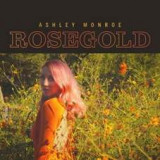
A reliable traditionalist with a penchant for bittersweet songs of heartbreak and loss, Ashley Monroe pulled a complete 180 for her spectacular new album, Rosegold, riding the joyful emotional wave that followed the birth of her son to create her most ecstatic, blissed-out collection yet. Written and recorded over the past two years, the record finds the GRAMMY-nominated Nashville star pushing her sound in bold new directions, drawing on everything from Kanye West and Kid Cudi to Beck and The Beach Boys as she layers lush vocal harmonies atop dreamy, synthesized soundscapes and sensual, intoxicating beats. Monroe worked with a variety of producers on the album, letting the tracks dictate her direction rather than any arbitrary adherence to genre or tradition, and the result is a record as daring as it is rewarding, an ecstatic, revelatory meditation on happiness and gratitude that tosses expectation to the wind as it celebrates our endless capacity to love, and to be loved, even in the midst of chaos and tragedy.Born in Knoxville, TN, Monroe first began turning heads in Nashville as a teenager, when she arrived in town with a notebook full of mature, emotionally sophisticated songs that belied her young age. A jack-of-all-trades, she picked up work behind the scenes at first, singing on sessions at Jack White’s Third Man Studios and penning tunes that would appear on albums by the likes of Guy Clark, Carrie Underwood, Jason Aldean, and Miranda Lambert. Monroe and Lambert forged a close personal bond through their collaborations, and in 2011, they teamed up with fellow Nashville journey woman Angaleena Presley to launch the critically acclaimed trio Pistol Annies, which would go on to top the Country Album charts, crack the Top 5 on the Billboard 200, and earn a GRAMMY nomination for Best Country Album. Monroe’s solo output was equally lauded, with NPRhailing her work as “subtle and breathtaking” and Rolling Stone praising her writing as “riveting and sharp-witted.” Over the course of three studio albums, Monroe would land her own GRAMMY nomination for Best Country Album, share bills with the likes of Vince Gill and John Prine, and perform everywhere from The Tonight Show and Conan to Late Night and The View.
- A1: Theme Of Art Of Fighting 2 (Title)
- A2: I Chose This One (Player Select)
- A3: The Horse And Me (Ryo Sakazaki Bgm)
- A4: Ferrari Man (Robert Start Demo)
- A5: Swing The House (Robert Garcia Bgm)
- A6: Gang (Jack Turner Bgm)
- A7: Chinese Old Man -Neo Asian Mix- (Lee Pai Long Bgm)
- B1: The Pumpkin And The Clown (King Bgm)
- B2: Towards Glory (Mickey Start Demo)
- B3: Prelude To Glory (Mickey Rogers Bgm)
- B4: Bonus Game (Bonus M.e. ~ Bonus Select)
- B5: Acquisition (Bonus Success) ~ Again, In The Next Chance (Bonus Failure)
- B6: Initiation To The Super Special Moves (Old Temple ~ Old Factory)
- B7: Nature (Energy Enhancement Screen) ~ 100-Man Kumite
- B8: Next Stage (Movement Map Screen)
- C1: Mustang Man (John Crawley Bgm)
- C2: The Way Of The Shinobi (Eiji Kisaragi Bgm)
- C3: Foghorn (Temjin Bgm)
- C4: Diet (Yuri Sakazaki Bgm)
- C5: Master (Takuma Sakazaki Bgm)
- C6: Blue Moon Factory -Oh Oh Big Mix- (Mr.big Bgm)
- D1: Commissioner (Geese Taking Demo)
- D2: Huh Geese (Geese Appearance Demo)
- D3: A Kiss For Geese -Cyber Edit- (Geese Howard Bgm)
- D4: Towards "Fatal Fury" (Geese Escape Demo)
- D5: Let's Meet In "Fatal Fury" (Geese Epilogue)
- D6: Bright, Enjoyable (Ryo, Robert, Yuri, Temjin Ending)
- D7: Ambition (Jack, Big Ending)
- D8: Here Is A New Medicine (Lee Ending)
- D9: A New... (Mickey, John Ending)
- D10: The Way Of Fighting (Kisaragi Ending)
- D11: Hope (King, Takuma Ending)
- D12: Too Long!! (Staff Roll)
- D13: Continue ~ Game Over
Worldwide[18,45 €]
Womack updates his material for the 80s, creating grown-up sensual soul.
The passion for earthy R&B seemed to have dimmed as the 80s began.
Synthesised confections abounded and veteran Bobby Womack, the Midnight Mover, was at a crossroads. His peers were either in the wilderness (Marvin Gaye, James Brown and Isaac Hayes) or otherwise indisposed (Sam Cooke, Jackie Wilson, Sly Stone), so it was left to Womack to fly the flag for down-to-earth, quality soul.
Womack had been a recording artist for best part of two decades when he made The Poet. After making his name with The Valentinos in the 60s, he cut a string of heartfelt, emotional albums for Minit, United Artists and Columbia throughout the 70s. The Poet was written with great optimism; Womack was out of contract and was approached by agent Otis Smith to set up on his new label, Beverly Glen.
Working with Patrick Moten, Womack crafted eight songs that sounded breathlessly contemporary. If this material had been put in the hands of a soul crooner, it could have sounded perfunctory. The Poet works because of the juxtaposition of Womack’s feral growl with the album’s sweet, smooth, urbane soundtrack. This is grown-up, sensual music; from So Many Sides of You to its epic closer Where Do We Go From Here, this is a luscious collision of Womack’s soul mastery and slick musicianship. It rises and falls, with Womack sidestepping cliché thanks to his preaching, heartfelt delivery. For example, when he cries “I wanna dedicate this song to all the lovers tonight / And I expect that might be the whole world,” on If You Think You’re Lonely, it sounds honest, simple and sincere.
The Poet put Womack back on the map, and gave him his first US R&B chart-topper and first mainstream top 30 album. It was adored in the UK, and sent many back to investigate his grittier 70s heyday as an albums artist. The album became the best-selling record of Womack’s career
Womack cut the equally sublime follow-up The Poet II, released in 1984.
Daryl Easlea – BBC
- 1: Love Has Finally Come At Last
- 2: It Takes A Lot Of Strength To Say Goodbye
- 3: Through The Eyes Of A Child
- 4: Surprise, Surprise
- 5: Tryin’ To Get Over You
- 6: Tell Me Why
- 7: Who’s Foolin’ Who
- 8: I Wish I Had Someone To Go Home To
- 9: American Dream
Womack updates his material for the 80s, creating grown-up sensual soul.
The passion for earthy R&B seemed to have dimmed as the 80s began.
Synthesised confections abounded and veteran Bobby Womack, the Midnight Mover, was at a crossroads. His peers were either in the wilderness (Marvin Gaye, James Brown and Isaac Hayes) or otherwise indisposed (Sam Cooke, Jackie Wilson, Sly Stone), so it was left to Womack to fly the flag for down-to-earth, quality soul.
Womack had been a recording artist for best part of two decades when he made The Poet. After making his name with The Valentinos in the 60s, he cut a string of heartfelt, emotional albums for Minit, United Artists and Columbia throughout the 70s. The Poet was written with great optimism; Womack was out of contract and was approached by agent Otis Smith to set up on his new label, Beverly Glen.
Working with Patrick Moten, Womack crafted eight songs that sounded breathlessly contemporary. If this material had been put in the hands of a soul crooner, it could have sounded perfunctory. The Poet works because of the juxtaposition of Womack’s feral growl with the album’s sweet, smooth, urbane soundtrack. This is grown-up, sensual music; from So Many Sides of You to its epic closer Where Do We Go From Here, this is a luscious collision of Womack’s soul mastery and slick musicianship. It rises and falls, with Womack sidestepping cliché thanks to his preaching, heartfelt delivery. For example, when he cries “I wanna dedicate this song to all the lovers tonight / And I expect that might be the whole world,” on If You Think You’re Lonely, it sounds honest, simple and sincere.
The Poet put Womack back on the map, and gave him his first US R&B chart-topper and first mainstream top 30 album. It was adored in the UK, and sent many back to investigate his grittier 70s heyday as an albums artist. The album became the best-selling record of Womack’s career
Womack cut the equally sublime follow-up The Poet II, released in 1984.
Daryl Easlea – BBC