
Buscar:jag


- 1: A Believable Boy
- 2: Sugar
- 3: You're No Man
- 4: Don't Hurt Me, I'm Trying
- 5: Dad Made Toast!
- 6: My Fault My Fault
- 7: Who Made You This Sweet?
- 8: But You Want Him
- 9: Nara
- 10: Let It Die
When Are You Leaving? is the second full-length album from LA-based Korean-American artist NoSo (Baek Hwong), and it marks a bold evolution in both sound and storytelling. Where their 2022 debut Stay Proud of Me introduced a deeply earnest voice navigating identity and belonging - earning praise from NPR's All Songs Considered, Paste, The Guardian, and a stunning performance at Tiny Desk - this follow-up turns the lens inward with even greater clarity and confidence.
Across a vibrant palette of disco grooves, jagged guitars, and atmospheric ballads, NoSo captures the quiet power of letting go - of fractured relationships, old narratives, and the need to be understood by others. The album is rich with emotional contrast: thorny truths wrapped in dreamy production, vulnerability delivered with the assuredness of an artist coming fully into their own.
Self-produced and sonically fearless, When Are You Leaving? is a coming-of-age record for anyone still in the process of becoming, and a testament to NoSo's place among the most compelling songwriters of their generation.

8
"Eight tracks of jagged electronics, heavy basslines, and fractured spoken word collide in a body-jerking soundclash that is both raw and vital."
Good On Paper enjoyed "Baldauf’s crisp, distanced tones accompanied by Roe’s ominous, pulsating programmed bass line and four-to-the-floor whack, coaxing pure pop out of tension and incongruity." Electronic Sound Magazine hailed the LP as "a blistering, club-forward workout", with "top-drawer, nose-bloodying electronics,’" positioning the Stroud duo as "rather like a wonky Tom Tom Club with added grit."

"Dunya", der Titel von Mustafas meisterhaft ausgearbeitetem und atemberaubend zärtlichem Album, bedeutet aus dem Arabischen übersetzt so viel wie "die Welt mit all ihren Fehlern". Ein hochtrabendes Thema für einen jungen Songwriter, aber wie bei jedem Thema, das im Mittelpunkt der Arbeit des sudanesisch-kanadischen Künstlers steht - von religiöser Hingabe bis zu Kindheitstraumata, von Bandengewalt bis zu romantischer Intimität - nähert er sich durch eine persönliche Sichtweise. Er mischt Genres und Stimmungen, verwebt romanhafte Details in einprägsame Folksongs und hat ein Album geschaffen, das sich wie eine Reihe persönlicher Durchbrüche anfühlt, die einer nach dem anderen eintreffen. Was zuerst an Mustafas Musik auffällt, ist seine Art zu schreiben: ein einfacher, durchdringender Ton, der jede Geschichte so roh und ernsthaft wirken lässt wie die Worte eines Liebesliedes. Mit seinem leisen Vortrag, der seine Umgebung zum Schweigen bringen kann, entwickelte sich Mustafa schnell vom Wunderkind, das in seiner Heimatstadt Toronto Gedichte rezitierte, zu einer Kraft, die hinter den Liedern steht und Popsongs schreibt. Auf "Dunya" ist er zu einem eigenständigen Autoren gereift. "Ich versuche, das gewöhnliche Leben im Ghetto zu bewahren und zu feiern", beschreibt Mustafa seine lyrische Inspiration. Die Songs, in denen er sein Aufwachsen und seinen weiteren Lebensweg beschreibt, sind gleichermaßen entwaffnend in ihrer Einfachheit und vielschichtig in ihrer emotionalen Bandbreite. Durch die Zusammenarbeit mit Aaron Dessner, Rosalía, Clairo, Nicolas Jaar und anderen sowie Mustafas langjährigem kreativen Partner Simon Hessmann offenbart die Musik eine selbstbewusste, unverwechselbare Stimme, die noch nie so massenkompatibel geklungen hat.

- A1: Dj Lux & Claudio Diva - Soul Control Part 1
- A2: Jaguar
- A3: Aurora (Mare)
- B1: Diva Dj & An'qua Cosmic Boys - Ascen'on To Al'tude
- B2: Ὄλυμπος - Free Your Mind
- B3: Valium - Digital Dream (Club Vrs )
- C1: Claudio Diva - Clon3 (Bass Vrs )
- C2: Diva Dj & An'qua Cosmic Boys – Energy
- C3: C D.jay - Sunday (A;Ack Mix)
- D1: Diva Dj & An'qua Cosmic Boys - Time Flies (Trance Remix)
- D2: Dj Lux & Claudio Diva - Clear World Phase One (L B.tribute)
- D3: En'ty - Midnight Express (M 1)
12
This is the second volume of the double compila"on Shock Room. This collec"on features iconic
and sought-a(er "techno, trance & progressive" sounds that got en"re genera"ons dancing and
are s"ll being played and sought a(er by DJs and fans of this musical genre. The compila"on
takes its name from the "main room" inside the Ul"mo Impero nightclub in Turin, a historical
temple of '90s techno trance music in Italy

8
Double album for 2025's Peur Bleue production, bringing oldschool Tribe and Acid ... Many first timers on vinyl supported by beloved artists since years....
Photo of the shop by Livia Saavedra, and visuals By Vstee FDB
Mastering by Jo.IND and cut by Simon Davey.
Pressed at Records Industry.

- Watercress
- Daylight
- Honey-Eyed
- Anchorage
,Watercress" beginnt mit einem coolen, klaren Gitarrenriff. Die Stimmung hat sich gegenüber dem letzten Mal, als wir von S. Carey gehört haben, deutlich verändert. In ,Break Me Open" aus dem Jahr 2022 war er noch schwer besorgt - niedergeschlagen und reumütig nach einer großen verlorenen Liebe. ,Watercress" hingegen beginnt mit dem Klang hart erkämpfter Hoffnung. Tatsächlich wächst Brunnenkresse nur in klarem, seichtem Wasser. Und genau an diese Orte kehrt Sean Carey immer wieder zurück - um zu fischen, nachzudenken und zu wachsen. Die Jahreszeiten sind vergangen und er hat Zeit damit verbracht, im Wasser zu heilen, fließend und still. Die Teile wurden gesammelt und wieder zusammengesetzt. Natürlich wird die Musik von S. Carey immer etwas Wehmütiges haben. Aber hier ist es die Wehmut eines hellen, klaren Oktobermorgens. Diese gitarrenlastigen Songs sind in vielerlei Hinsicht eine Fortsetzung des beliebten Albums ,Hundred Acres" aus dem Jahr 2018. Die Gitarren geben den Takt vor. Das Schlagzeug ist das Rückgrat. Und Seans Stimme erzählt die Geschichte. Das klingt nach einem einfachen Rezept, aber es steckt mehr Nuance dahinter als bei einer Hochseilnummer. Aufgenommen im Hive in Eau Claire von Zach Hanson und Brian Joseph aufgenommen, mit der üblichen Besetzung, die bei Bedarf für Instrumentierung und Co-Composition sorgt, sowie den Gastsängerinnen Gia Margaret und Hannah Hebl, die sich wunderbar in das Gesamtgefüge einfügen und einen Sound schaffen, der vertraut und fast nostalgisch klingt - aber auch glänzend und neu. Sean Carey ist seit über fünfzehn Jahren ein wichtiges Mitglied von Bon Iver. Beginnend mit ,All We Grow" aus dem Jahr 2010 sind seine vier Alben und einige epische EPs auf offensichtliche und subtile Weise naturalistische Erkundungen der Landschaften des Herzens und der realen Welt, jede einzelne mit der Geduld eines echten Fischers und dem Scharfsinn eines Folk-Jazz-Phänomens.

- A1: Door Of No Return
- A2: Freedom Jazz Dance
- A3: Good Afternoon Everyone
- A4: The Haunting
- A5: Dying To Live
- B1: Politician
- B2: Black Fathom Five
- B3: Beautiful Bastard
- B4: My Little Zulu Babe
- B5: In Effigy
Wer seine 50-jährige Karriere verfolgt hat, kennt Vernon Reid als Künstler, der in allen Farben malt. Je nachdem, in welche Ära man eintaucht und welches Album auf dem Plattenteller liegt, findet man den New Yorker Universalgelehrten zwischen Jazz, Metal, Punk, Funk, Electronica und Hip-Hop pendelnd. Und das alles mit so vielseitigen Kollaborateuren wie Mick Jagger oder Public Enemy. Ein Künstler im Wandel und doch eine feste Größe, auf dessen Aussagen man bauen kann. “Hoodoo Telemetry”, sagt der 66-jährige über sein Werk, “ist wie ein Stück meines Geistes. Ich habe eine ganze Weile gebraucht, um mit diesem Album zu beginnen. Diese Songs kommen aus unterschiedlichen Zeiten und Lebenssituationen. Einige Songs sind ganz neu, andere sind aus älteren Ideen, die ich wieder aufgegriffen habe, entstanden.
Plötzlich fand ich den Fokus und mir war klar das ich jetzt mit der Arbeit an diesem neuen Album anfangen muss.

- 1: Tur Att Du Fanns
- 2: Full For Fyllans Skull
- 3: Allt Ar Stort
- 4: Korsdrag
- 5: Tank Om Du Maste Borja Om Nu
- 6: Barnen Bloder
- 7: Landsvag Till Himlen
- 8: Nar Jag Vakna En Dag
- 9: In Pa Scenen
- 10: Tralim
- 11: Klockan Ringer
- 12: Romantique
- 13: Fredagen Kom
- 14: Nanstans I Fjarran/Fredax
- 15: Drommer Om En Plats
- 16: Vid Rymd Retur

- Seduce
- I Found Out
- Fuck You Jesus
- Death Crossed The Street
- What Is Wrong With Those People In This World Today
- In The End
- Feed My Brain
- Shut Up
- Junkie Child
- I Want Your Sweat
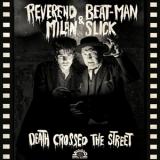
Zwei Garagen-Generationen treffen aufeinander! Reverend Beat-Man, das Schweizer Ein-Mann-Orchester und der König des Blues Trash, trifft auf Milan Slick, eine echt dunkle Seele und vielleicht Reinkarnation von Nick Cave (ach, noch zugegen)/Johnny Thunders, um Rock'n'Roll zu spielen, der so frisch und lebendig, wild und düster ist wie nie zuvor. Reverend Beat-Man und Milan Slick lernten sich 2020 inmitten der Pandemie kennen, als sie einen Soundtrack für den Vampirfilm "A Girl Walks Home Alone at Night" von Ana Lily Amirpour schrieben. Zusammen spielten sie Gigs bei Super Sonic Records oder im legendären SO36 in Berlin, um dann gemeinsam mit Beatrice Graf und Benjamin Glaus ein Album unter dem Namen "Reverend Beat-Man & The Underground" zu produzieren (im Rahmen des Rocklette PALP Festivals), eine makabre Tanzparty zum Untergang der Menschheit. Als Nächstes nahmen der superprimitive Rock 'n` Roll-Trash-Hi-Energy-Lo-Fi Reverend Beat-Man und der raffinierte, clevere, verspielte und düstere Milan Slick ihr erstes gemeinsames Album im ehemaligen Züri West Studio mit Sebastian Zwahlen und dem einzigartigen Robert Butler von Miracle Workers auf. Reverend Beat-Man ist eigentlich eine Ein-Mann-Band mit einer Mission: Blues-Trash und wilden Rock'n'Roll. Geboren 1967 in Bern, Schweiz, im Sommer der Liebe und des Hasses, ist er seit 1992 auf Tour, zuerst als Lightning Beat-Man, dann als Reverend Beat-Man One-Man-Band und mit seiner Band The Monsters. Er spielte in ganz Europa, Nord- und Südamerika, Japan, Vietnam, Neuseeland, Australien, Afrika, CBGBs, Montreux Jazz, Muddy Roots usw. Er ist der Gründer von Voodoo Rhythm Records (1992). Wäre er Politiker, würden ihn sogar seine Feinde respektieren (die Regierung). Er wurde 2014 für den Schweizer Musikpreis nominiert, gewann den lokalen Musikpreis als einflussreichster Musiker in Bern (Hauptstadt der Schweiz) und betreibt dort einen Platten- und Souvenirladen. Der Singer-Songwriter Milan Slick (Jahrgang 2004) steht noch ganz am Anfang seiner Karriere, hat aber bereits mit namhaften Künstlern wie Mario Batkovic oder Birdman Jäggi oder seiner eigenen Band Fatigues zusammengearbeitet. In seiner Musik sind Einflüsse von u.a. Nick Cave bis David Bowie zu hören, aber auch, dass sich eine eigenwillige junge Stimme herauskristallisiert, von der wir in Zukunft hoffentlich noch viel hören werden. Als Classic Black or limitiertes Glow In The Dark Vinyl, jeweils mit vierseitigem A4-Insert & DLC, Digisleeve-CD, Kassette sowie Tonband mit Extras erhältlich!

REVEREND BEAT-MAN & MILAN SLICK
DEATH CROSSED THE STREET (TAPE)
10
Zwei Garagen-Generationen treffen aufeinander! Reverend Beat-Man, das Schweizer Ein-Mann-Orchester und der König des Blues Trash, trifft auf Milan Slick, eine echt dunkle Seele und vielleicht Reinkarnation von Nick Cave (ach, noch zugegen)/Johnny Thunders, um Rock'n'Roll zu spielen, der so frisch und lebendig, wild und düster ist wie nie zuvor. Reverend Beat-Man und Milan Slick lernten sich 2020 inmitten der Pandemie kennen, als sie einen Soundtrack für den Vampirfilm "A Girl Walks Home Alone at Night" von Ana Lily Amirpour schrieben. Zusammen spielten sie Gigs bei Super Sonic Records oder im legendären SO36 in Berlin, um dann gemeinsam mit Beatrice Graf und Benjamin Glaus ein Album unter dem Namen "Reverend Beat-Man & The Underground" zu produzieren (im Rahmen des Rocklette PALP Festivals), eine makabre Tanzparty zum Untergang der Menschheit. Als Nächstes nahmen der superprimitive Rock 'n` Roll-Trash-Hi-Energy-Lo-Fi Reverend Beat-Man und der raffinierte, clevere, verspielte und düstere Milan Slick ihr erstes gemeinsames Album im ehemaligen Züri West Studio mit Sebastian Zwahlen und dem einzigartigen Robert Butler von Miracle Workers auf. Reverend Beat-Man ist eigentlich eine Ein-Mann-Band mit einer Mission: Blues-Trash und wilden Rock'n'Roll. Geboren 1967 in Bern, Schweiz, im Sommer der Liebe und des Hasses, ist er seit 1992 auf Tour, zuerst als Lightning Beat-Man, dann als Reverend Beat-Man One-Man-Band und mit seiner Band The Monsters. Er spielte in ganz Europa, Nord- und Südamerika, Japan, Vietnam, Neuseeland, Australien, Afrika, CBGBs, Montreux Jazz, Muddy Roots usw. Er ist der Gründer von Voodoo Rhythm Records (1992). Wäre er Politiker, würden ihn sogar seine Feinde respektieren (die Regierung). Er wurde 2014 für den Schweizer Musikpreis nominiert, gewann den lokalen Musikpreis als einflussreichster Musiker in Bern (Hauptstadt der Schweiz) und betreibt dort einen Platten- und Souvenirladen. Der Singer-Songwriter Milan Slick (Jahrgang 2004) steht noch ganz am Anfang seiner Karriere, hat aber bereits mit namhaften Künstlern wie Mario Batkovic oder Birdman Jäggi oder seiner eigenen Band Fatigues zusammengearbeitet. In seiner Musik sind Einflüsse von u.a. Nick Cave bis David Bowie zu hören, aber auch, dass sich eine eigenwillige junge Stimme herauskristallisiert, von der wir in Zukunft hoffentlich noch viel hören werden. Als Classic Black or limitiertes Glow In The Dark Vinyl, jeweils mit vierseitigem A4-Insert & DLC, Digisleeve-CD, Kassette sowie Tonband mit Extras erhältlich!
10
Zwei Garagen-Generationen treffen aufeinander! Reverend Beat-Man, das Schweizer Ein-Mann-Orchester und der König des Blues Trash, trifft auf Milan Slick, eine echt dunkle Seele und vielleicht Reinkarnation von Nick Cave (ach, noch zugegen)/Johnny Thunders, um Rock'n'Roll zu spielen, der so frisch und lebendig, wild und düster ist wie nie zuvor. Reverend Beat-Man und Milan Slick lernten sich 2020 inmitten der Pandemie kennen, als sie einen Soundtrack für den Vampirfilm "A Girl Walks Home Alone at Night" von Ana Lily Amirpour schrieben. Zusammen spielten sie Gigs bei Super Sonic Records oder im legendären SO36 in Berlin, um dann gemeinsam mit Beatrice Graf und Benjamin Glaus ein Album unter dem Namen "Reverend Beat-Man & The Underground" zu produzieren (im Rahmen des Rocklette PALP Festivals), eine makabre Tanzparty zum Untergang der Menschheit. Als Nächstes nahmen der superprimitive Rock 'n` Roll-Trash-Hi-Energy-Lo-Fi Reverend Beat-Man und der raffinierte, clevere, verspielte und düstere Milan Slick ihr erstes gemeinsames Album im ehemaligen Züri West Studio mit Sebastian Zwahlen und dem einzigartigen Robert Butler von Miracle Workers auf. Reverend Beat-Man ist eigentlich eine Ein-Mann-Band mit einer Mission: Blues-Trash und wilden Rock'n'Roll. Geboren 1967 in Bern, Schweiz, im Sommer der Liebe und des Hasses, ist er seit 1992 auf Tour, zuerst als Lightning Beat-Man, dann als Reverend Beat-Man One-Man-Band und mit seiner Band The Monsters. Er spielte in ganz Europa, Nord- und Südamerika, Japan, Vietnam, Neuseeland, Australien, Afrika, CBGBs, Montreux Jazz, Muddy Roots usw. Er ist der Gründer von Voodoo Rhythm Records (1992). Wäre er Politiker, würden ihn sogar seine Feinde respektieren (die Regierung). Er wurde 2014 für den Schweizer Musikpreis nominiert, gewann den lokalen Musikpreis als einflussreichster Musiker in Bern (Hauptstadt der Schweiz) und betreibt dort einen Platten- und Souvenirladen. Der Singer-Songwriter Milan Slick (Jahrgang 2004) steht noch ganz am Anfang seiner Karriere, hat aber bereits mit namhaften Künstlern wie Mario Batkovic oder Birdman Jäggi oder seiner eigenen Band Fatigues zusammengearbeitet. In seiner Musik sind Einflüsse von u.a. Nick Cave bis David Bowie zu hören, aber auch, dass sich eine eigenwillige junge Stimme herauskristallisiert, von der wir in Zukunft hoffentlich noch viel hören werden. Als Classic Black or limitiertes Glow In The Dark Vinyl, jeweils mit vierseitigem A4-Insert & DLC, Digisleeve-CD, Kassette sowie Tonband mit Extras erhältlich!

- Tell Your Story Walkin
- Crack Killed Apple Jack
- Tell Your Story Walkin
- Crack Killed Apple Jack
- I Once Was There
- Wonderin
- Start Again
- Born To Mack
- The Lying Truth
- Without Love
- Amelia
- God I'm Going Down
- Much Ado About Buttin
- I Need You
- I Think You Need To Think
- Shake This Town
- Show Me Some Emotion
- A Journey Into The Middle Ages
A guitar player, writer, producer, and composer, Stevie Salas has recorded on over 70 different albums with artists as diverse as George Clinton, Justin Timberlake, Buddy Miles, T.I., Mick Jagger, and Rod Stewart. Having sold over two million solo albums around the world, Stevie has been cited as one of the top 50 guitarists of all time. Dreaming of a career in music, Stevie left the small town of Oceanside, California in 1985. Eight months later he was discovered by funk music legend George Clinton as the lead guitarist for Clinton's albums. Stevie received his first major label producer credit with Was (Not Was) when he co-produced the UK hit "Out Come the Freaks" from the album "What up Dog?" Rolling Stone Magazine listed "What up Dog?" as one of the top 100 records of the decade. With an extensive solo career, Stevie has now teamed up with Deko Entertainment to reissue some of these albums starting with the 30th Anniversary of "Back From The Living (Deluxe Edition)"
k MUCH ADO ABOUT BUTTIN' [SUCKERMANGRUBBY MOUTH MIX]
[q] TELL YOUR STORY WALKIN' [MUG MASHER REMIX]
[r] CRACK KILLED APPLE JACK [GRAVY BOOTY REMIX)
[k] MUCH ADO ABOUT BUTTIN' [SUCKERMANGRUBBY MOUTH MIX]
[q] TELL YOUR STORY WALKIN' [MUG MASHER REMIX]
[r] CRACK KILLED APPLE JACK [GRAVY BOOTY REMIX)

- 1: Ich Kann Gar Nichts
- 2: Vom Anderen Stern
- 3: Joker
- 4: Lalelu
- 5: Schattenboxer
- 6: Knock Dich Selbst Aus
- 7: Schrott
- 8: Versailles
- 9: Hands Down
- 10: Nie Wieder Verlieren
- 11: Seltsame Welt
Was tun die Menschen um uns herum? Wie tun sie’s? „Wollen wir das nicht alle die ganze Zeit verstehen?“, fragt Alli Neumann, die mit ihrem dritten Studioalbum methaphorisch als funkelnder Stern auf hartem Asphalt landet. Als „ROQUESTAR“ muss sie sich dort erstmal orientieren. Inspiriert von David Bowies Ziggy Stardust, der fürs Seltsamsein bekannt wurde und sich was traut, auch um gesehen zu werden, blinkt Alli zwischen Auffallen und Anpassung. Die Musikerin bewegt sich längst fließend in dieser Dualität und changiert zwischen den Polen – man will ja doch von allen geliebt werden, oder?! Die Musikerin spielt mit diesem ambivalenten Gedanken, der unlösbar scheint und liefert mit ihrem Album „ROQUESTAR“ 12 Songs, die von genau diesem dringlichen Hunger nach Anerkennung getrieben sind. „Sie erzählen von dem Willen, geliebt zu werden.“ Eine Wahrheit und auch psychosoziale Utopie, vielleicht, „in der sich viele wiederfinden“, meint Alli, und ja doch schambehaftet daherkommt, weil deutlich wird: Wir sind schrecklich abhängig vom Außen, von dem wir so oft die Schnauze voll haben. Mit „Ich kann gar nichts“ schreibt Alli genau dagegen an: Eine selbstironische Hommage an die Imperfektion – wider jeder Erwartung. Geliebt werden wollen, trotz oder gerade wegen ... Rockstar sein, Alli sagt: „everybody’s favorite misfit“. Wie es geht, das mit dem Lieben, das ja auch immer damit einhergeht, wie es um die Liebe zu sich selbst steht, zeigt sich in der Gleichzeitigkeit ihrer Songs: Während Alli in „Vom anderen Stern“ zu Funk eine neue Liebe als Eskapismus zeichnet, „Baby lass dich fallen, um fliegen zu lernen“, erinnert sie in der Grungerock-Ballade „Nie wieder verlieren“ daran, wie giftig es sein kann, sich für einen Menschen aufzugeben. Auf „ROQUESTAR“ scheint alles in Bewegung. Es sind Anstöße, die die Musikerin gibt. Manchmal Anklagen, Aufforderungen, aus denen Sehnsüchte sprechen, nur nie Antworten. Auch weil das nicht zu Alli, der Artist, passen würde, die sich doch so gerne bewegt, wie die Welt, durch die sie fliegt. Durch Genres und Formate – als Musikerin, Schauspielerin, auf Bühnen, auch im Fernsehen, eine Künstlerin, die sich erfährt, (er)lebt, ein bunter Hund, Alli liebt, auch ihre Integrität. Und während die Songs in sich und auch im Miteinander organisch aufgehen, hört man mit etwas Genauigkeit zwei ungewöhnliche Instrumente spielen. Zwei barocke, die Allis „ROQUESTAR“-Modus musikalisch markieren. Zusammen mit ihrer Produzentin Novaa lässt sie Cemberlo und Fagott sich an vorherrschende Synthie- und Kraut-Pop-Sounds schmiegen, während das Fagott von den allermeisten aus der Popmusik verbannt wird. Sich wirklich zeigen, das kann Alli. „Being loved for not being loved“, beschreibt sie selbst, nur immer als Versuch. Bemerkenswert ist, dass die Musikerin bei ihrem Tempo und ihren Kurven der vergangenen Jahre nie Splitter ihres Ichs verloren hat. Während sie also 2025 zwischen den Zeilen über eine „ROQUESTAR“-Identität textet, ist sie es längst: Ein Stern, der vom Himmel auf den Boden einer steinigen Realität fällt, sich umschaut und unaufhörlich probiert. Im ewigen Gerangel zwischen laut und leise, Kraut und Folklore, Protest und Rückzug. Zwischen amüsiert und politisch, Großstadt und Landleben, 80ies und Barock. Alli und ihre Musik strahlen manchmal gleißend hell und manchmal gedimmt hinein in diese Welt, aber leuchten, das tun sie wirklich immer.

Unmistakable are the sonic experiments of Spanish alchemist ORBE; with this fresh release on Token. ORBE's iconically viscous textures and impactful percussion weasel their way into 'Ascender' for a deeper release on Kr!z's label. Thick, brooding atmospheres drive these tracks into stories of pursuit and escape throughout its four tracks.
A slick, pulsating low end in 'Flashback' stands out as a first impression for an imposing EP. Electric leads zip by for maximum psychosis; he's known for his uncompromising dissonance and drive. A staple of the Spanish scene, ORBE bites down hard on deep and hypnotic techno to resonate through concrete warehouses. This jagged edge to club music continues through 'W9Y' - a more drum-forward cut with noisy transitions and breathable synthwork. Sharper stabs occupy this space as opposed to the track's predecessor and tension is maintained with a lingering pad in the background. A meditative conclusion for the A side, ORBE quickly shifts his attention in the titletrack 'Ascender'. Emphasizing tone and tune on the kick, the lead comes with confrontation. Rolling through shifting hats, the producer brings boiling tension through minimal arrangement and the weight of his sound design - a skillset only the most seasoned artists can claim. To close things out, 'Break Nation' does just that - cutting off the traditional four/four rhythm and instead presenting itself as a bass stepper. With ORBE's classic unison packed synths, this dweller presents a whole other perspective on 'Ascender'. A hybrid of influences and yet still destined for the techno dancefloor, this breath of fresh air serves as deep dive into the subconscious for an eyes-closed experience.

- A1: The Snapshots – Hip Hip Hurray
- A2: Ricky – I’m Burned
- A3: 5 From Dave – Little Child
- A4: The Rainbows – Show Me What You Want
- A5: The Mods – I’m Losing You (Live At Jazz Bilzen)
- A6: Early Christian - Fire
- A7: Jess & James - Julie’s Doll
- A8: Fabien Collin – Satan In Eigen Persoon
- B1: Cash ? Cash! Soundtrack – Cash-Cash
- B2: Ariane – Tu Voudrais Que J’oublie
- B3: The Klan – Melody Maker
- B4: The Ropes – Is It True ?
- B5: The Swinging Jaguars – Do The Monkey
- B6: The Layabouts– It’s All Along Of Me
- B7: The Four Rockets – The Place Where She Lives
- B8: Ballad And Beat – Pose Like A Picture
14
Starman Records, the Belgian label also specialized in re-releases of Belgian rock from the 60s, 70s, and 80s, has so far released five volumes in the highly anticipated and widely acclaimed Belgian Vaults Series by the press and fans.
These unique albums focus entirely on the sixties and early seventies, compiling many very hard-to-find tracks, mainly originally released as singles on small, long-forgotten labels. Pop, beat, rock ’n’ roll, psych... gems worth rediscovering. The Belgian Vaults are not just collector’s material; the albums offer restored and remastered sound quality and are specifically curated to appeal to all sixties rock fans.

- A1: Malavoi - Te Traigo Guajira
- A2: Los Caraibes - Donde
- A3: Tropicana - Amor En Chachacha
- A4: Ryco Jazz - Wachi Wara
- A5: Eugene Balthazar - Dap Pignan
- A6: Roger Jaffort - Oye Mi Consejo
- A7: Les Kings - Oriza
- B1: Les Supers Jaguars - Tatalibaba
- B2: Super Combo De Pointe A Pitre - Serrana
- B3: L'ensemble Abricot - Se Quedo Boogaloo
- B4: Henri Guedon - Bilonga
- B5: Les Aiglons - Pensando En Ti
- B6: Los Martiniquenos - Caterate
13
In Guadeloupe, many people think that jazz and ka music are like a ring and a finger. To some extent, the same could be said about so called Latin music and the music played in the French West Indies.
Both aesthetics were born in the Caribbean and bear so many connections that they can easily be considered cousins. In constant dialogue, there are lots of examples of their fruitful alliance and have been for a while. The English country dance that used to be practiced in European lounges came to be called kadrille in Martinique and contradanza in Cuba. They both featured additional percussion instruments inherited from the transatlantic deportation. Drawing from shared feelings about the same traumatized identity – later to be creolized – it would be hard not to assume that they were meant to inspire each other. The golden age of the orchestras that graced the Pigalle nights during the interwar period further proves the point. As soon as the 1930s, Havana-born Don Barreto naturally mixed danzón and biguine music in a combo based at Melody's Bar. In the following decade, Félix Valvert, a conductor who was born and raised in Basse-Terre in Guadelupe, also worked wonders in Montparnasse with La Coupole, which was an orchestra made up of eclectic musicians. Afro- Caribbean performers of various origins were often hired on rhythm and brass sections in jazz bands, which used to enliven the typical French balls of the capital. In the 1930s and onwards, Rico’s Creole Band was one of them.
Martinican violinist-clarinettist Ernest Léardée, who would become the king of biguine music as well as the main figure of French Uncle Ben's TV commercials (a dark stigma of post-colonial stereotypes), had musicians from the whole Caribbean sphere play at his Bal Blomet – and they all enchanted "ces Zazous-là" (according the words of Léardée's biguine-calypso piece). In les Antilles (French for French West Indies), music history started to speed up in the 1950s, when trade expanded and radio stations grew bigger. The Guadelupean and Martiniquais youth tuned in their old galena radio sets to South American and Caribbean music. As for the women traders, les pacotilleuses, they bought and sold goods across different islands (the "passing of items through various hands" was thought to be most pleasurable) and brought back countless sounds in their luggage. Such was the case of Madame Balthazar, who once returned from Puerto Rico with the first 45rpm and 33rpm to ever enter Martinique.
Out of this adventure was created the famous Martinican label La Maison des Merengues, a music business she opened and undertook with her husband and which proved to be a major landmark. At the end of the 1950s, in Puerto Rico, Marius Cultier competed in the Piano International Contest playing a version of Monk's Round 'Midnight. He won the first prize and this distinction foreshadowed everything that was to come. Cultier, the heretic Monk of jazz, was quickly praised for writing superb melodies, always tinged with a twist that conferred a unique sound to his music. It didn't take long for the gifted self-taught musician to get to play with Los Cubanos, making a name for himself thanks to his impressive maestria on merengues.
The rest is history. Besides, in the late 1950s, Frantz Charles-Denis, born into the upper middle class in Saint-Pierre and better known by his first name Francisco, went back home after working at La Cabane Cubaine – a club located rue Fontaine where he had caught the Latin fever. Francisco's music was therefore heavily marked by his Cuban cousins' influence, which gave the combos he led a specific style and also led to renewal. Things were swinging hard in La Savane, located in the main square in Fort-de-France. He set up the Shango club close by and tested out the biguine lélé there, a new music formula spiced up with Latin rhythms. Soon afterwards, fate had him fly to Puerto Rico and Venezuela.
As for percussionist Henri Guédon (percussions were only a part of his many talents), he was born in Fort-de-France in May 22nd 1944, the day marking the celebration of the abolition of slavery. As an old man, he could remember that in " his father's Teppaz, a lot of hectic 6/8 music was constantly playing...". In the opening lines of his Lettre à Dizzy, a small illustrated collection of writings published by Del Arco, he highlighted the huge impact that cubop had on him as a teenage boy, around 1960. He eventually turned out to be the lider maximo in La Contesta, a big band steeped in Latin jazz. He was also the one who originated the word zouk to describe music which brought the sound of the New York barrio to Paris. It was the culmination of a journey that started in Sainte-Marie: "a mythical place for bélé, the equivalent of Cuban guaguancó". In the early 1960s, the tertiary economy developed to the detriment of agriculture. Yet rural life was where roots music emerged in Martinique and in Guadeloupe.
Record companies played a major part in the process of Latin versions sweeping across the islands – before reaching everywhere else. Producer Célini, boss of the great Aux Ondes label, and Marcel Mavounzy, both the head of Émeraude records - a firm which was founded in 1953 - as well as the brother of famous saxophonist Robert Mavounzy, were big names to bear in mind. Although there were many of them - all of whom are featured on this record - Henri Debs was definitely the major figure in the recording adventure. He proved to be so influential that he even got compared to Berry Gordy. In the mid 1950s, when he acquired his first Teppaz, he worked on his first compositions: a bolero and a chachacha. Then, he became the one man who made people discover Caribbean music, from calypso to merengue. He was among the first ones to rush out to San Juan, Puerto Rico, to buy records and distribute them through a store run by one of his brothers in Fort-de-France. He had members of the Fania All Star come and perform there, which he was madly proud about. He was also the first one to pay attention to Haitian music, such as compas direct and various other rhythms which would soon flood the market. As a result, many of the combos hitting his legendary studio would end up boosted by widespread "Afro-Latin" rhythms. However, he never denied his identity: gwo ka drums were given a major role, although they were instruments which had long been banned from the "official" music spheres. The present selection bears witness to such a creative swarming. Here are fourteen tracks of untimely yet unprecedented cross-fertilization: all types of music rooted in the Creole archipelago have found their way, whatsoever, to the tracklisting. Whether originating from the city or being more rural, they all go back to what Edouard Glissant, in an interview about the place of West Indian music in the Afro-American scope, called "the trace of singing, the one which got erased by slavery." "It is so in jazz, but also in reggae, calypso, biguine, salsa... This trace also manifests through the drums, whether Guadelupean, Dominican, Jamaican or Cuban... None of them being quite the same. They all point to the idea of a trace, seeking it out and connecting to each other through it. This is the hallmark of the African diaspora: its ability to create something new, in relation to itself, out of a trace. It may be the memory of a rhythm, the crafting of a drum, a means of expression which doesn't resort to an old language but to the modalities of it." The opening track features one of the emblematic orchestras of this aesthetic identity, criscrossing many music types from the archipelago. The 1974 Ray Barretto guajira – Ray Barretto was a major New York drummer influenced by Charlie Parker and Chano Pozzo – is magnificently performed by Malavoi, a legendary Fayolais group (i.e from Fort-de-France). Additionally, the compilation ends on a piece by Los Martiniqueños de Francisco. It symbolically closes the circle as it is a genuine potomitan of Martinique culture which also functions as a tireless campaigner for Afro-Caribbean music. Practicing the danmyé rounds (a kind of capoeiria) to the rhythm of the bèlè drum, it delivers a terrific Caterete, a kind of champeta of Afro- Colombian obedience which was originally composed by Colombian Fabián Ramón Veloz Fernández for the group Wgenda Kenya. The icing on the cake is Brazilian Marku Ribas, who found refuge in Martinique in the early 1970s, bringing his singing to the last trance-inducing track. These two "versions" convey the whole tone of a selection composed of rarities and classics of the tropicalized genre, swarming with tonic accents and convoluted rhythms. It is the sort of cocktail that the West Indians never failed to spice up with their own ingredients. For instance, the Los Caraïbes cover of Dónde, a famous Cuban theme composed by producer Ernesto Duarte Brito, has a typical violin and features renowned Martinique singer Joby Valente and his piquant voice.
The track used to be – or so we think – their only existing 45rpm. The meaningful Amor en chachachá by L'Ensemble Tropicana, a band which included Haitian musicians among whom was composer and leader Michel Desgrotte, also recalls how Latin music was pervasive in the tropics in the mid-1960s. They were the ones keeping people dancing at Le Cocoteraie in Guadelupe and La Bananeraie in Martinique. Around the same time, another "foreign" band, Congolese Freddy Mars N'Kounkou's Ryco Jazz, achieved some success on both islands by covering Latin jazz classics – such as their adaptation of Wachi Wara, a "soul sauce" by Dizzy Gillespie and Chano Pozo whose interweaving of strings and percussions can have anyone hit the dancefloor. How can you resist Dap Pinian indeed, a powerful guaguancó by Eugene Balthazar, performed by the Tropicana Orchestra and published by the Martinique-founded La Maison des Merengues? It also acts as a symbol of the maelstrom at work. Going by the name Paco et L'orchestre Cachunga, Roger Jaffory used to play guaguancó too: his Fania-inspired Oye mi consejo is one example of his style. Baila!!!!! Dancing was also one of the Kings' focus points. Oriza is a Puerto Rican bomba and a "classic" originally composed by Nuevayorquino trumpeter Ernie Agosto, which reserves major space for brasses, giving it a special sheen.
Emerging from the New York barrios crucible was also La Perfecta, a Martinique group originating from Trinidad, whose name directly references the totemic Eddie Palmieri figure as well as his own band, also called La Perfecta. Here they borrow Toumbadora from Colombian producer and composer Efraín Lancheros and interpret it by emphasizing percussions, which set fire to the track even more than the wind instruments. The same goes for Martinique's Super Jaguars, who use Tatalibaba – a composition by Cuban guitarist Florencio "Picolo" Santana which was made famous by Celia Cruz & La Sonora Matencera – as a pretext for sending their cadences into a frenzy. In a more typically salsa vein, the Super Combo, a famous Guadelupean orchestra from Pointe-Noire that was formed around the Desplan family and had Roger Plonquitte and Elie Bianay on board, adapt Serana, a theme by Roberto Angleró Pepín, a Puerto Rican composer, singer and musician also known for his song Soy Boricua. Here again, their vision comes close to surpassing the original. In the 1970s, L'Ensemble Abricot provided a handful of tracks of different syles, hence reaching the pinnacle of the art of achieving variety and giving pleasure. They played boleros, biguines, compas direct, guaguancó and even a good old boogaloo - the type they wanted to keep close to their hearts for ever, "pour toujours", as they sang along together in one of their songs. Léon Bertide's Martinican ensemble excelled at the boogaloo which had been composed by Puerto Rican saxophonist Hector Santos for the legendary El Gran Combo.
Three years later, in 1972, Henri Guédon, with the help of Paul Rosine on the vibraphone, tackled the Bilongo made famous by Eddie Palmieri. Such a classic!!!!! And so were the Aiglons, the band from Guadelupe: choosing to execute Pensando en tí, a composition by Dominican Aniceto Batista, on a cooler tempo than the original, they noticeably used a wonderfully (un)tuned keyboard in place of the accordion. On the high-value collectible single – the first one released by Les Aiglons under the Duli Disc label – there is a sticker classifying the track under the generic name "Afro". Now that is what we call a symbol. Jacques Denis

6
NECHTO returns with its second 12” vinyl compilation, continuing the mission of presenting forward-thinking techno from both rising talents and trusted names. Each of the six tracks adds a unique voice to the raw and honest collection.
Mecha opens the record with “All My Love”, a hypnotic debut techno track shaped by years in drum and bass. Contakt follows with “Peak Jam”, a one-take hardware jam built around the warmth of a signature synth. “16th Symphony” by Human Safari is a jazz-influenced cut intended for special moments in a DJ set. Unspent delivers “Moog Gorning”, a track that shifts from percussive 4x4 to broken rhythm, carrying deep personal emotion. ARGIE’s “Strangers” captures the tension of connection and distance with layered percussion and melody. Franz Jäger closes with “Get Simon to sync”, a rave-influenced hybrid track designed for peak-time impact.
With contributions from the UK, Poland, Malta, France, the Netherlands, and Sweden, this compilation once again highlights NECHTO’s dedication to showcasing both emerging and established artists while pushing the boundaries of modern techno.

- Hadamar
- Dorfmatratze
- Lauf Jäger Lauf
- Brautstrauß
- Tür Zu
- Bike Punx
- Autobahnkirche
- Rana Plaza
- Herbst
- Aluhüte
- Kein Freund - Kein Helfer
- Tür Zu Remix (Kem Trail)
Hätt ich dich heut erwartet, hätt ich Tür zu gemacht - Wenn alle Stricke reißen, macht"s wie Theilen: Niederbrennen Weitermachen Was nach DIY klingt, soll auch DIY sein. Die Punkband vom Niederrhein, deren Mit- und Ohneglieder ganz konstruktiv aus Düsseldorf UND Köln kommen, präsentieren in gewohnt destruktiver Manier ihr Debüt-Album Niederbrennen Weitermachen. Die Texte sind deutsch, das Weltuntergangsgefühl kennt keine Ländergrenzen. Aufgenommen und abgemischt wurde das Ganze im Sommer 2024 von Hütte (Fantom Studio Ost) in Hannover, der Stadt mit dem gewissen Nichts. Das Mastering übernahm Marvin vom Tide Studio in London. Auf der Platte geht es meist politisch zu, beispielsweise in der Debüt-Single Hadamar, die von der NS-Tötungsanstalt im gleichnamigen Ort handelt, oder der Fuck-Fast-Fashion-Hymne Rana Plaza. In Dorfmatratze wird gegen die Doppelmoral heteronormativer Vorstellungen davon angebrüllt, wer mit vielen Menschen schlafen darf und wer nicht (Spoiler: Frauen*), und worum es bei Kein Freund Kein Helfer geht, kann sich wohl jede/r vorstellen. Dass der Humor trotz allem noch nicht ganz verloren ist, zeigen Songs wie Autobahnkirche, Tür zu oder Brautstrauß. Ein veganes 8-Bit-Sahnehäubchen wurde auch versteckt, und zwar in Form eines "Tür zu"-Remixes von the one and only Kem Trail. Bei Bike Punx darf sogar gute Laune aufkommen, aber bitte nur kurz. Wer Bock auf eingängigen Punk mit ein bisschen Schnörkeln und Emo-Vibes hat, der ist bei Theilen richtig abgebogen.
