An R&B band formed in Milwaukee, Wisconsin, USA, in 1961. The members were lead vocalist and guitarist Harvey Scales (b. 1941, Arkansas, USA), Monny Smith, Bill Purtie, Rudy Jacobs, Al Vance, Bill Stonewall and Ray Armstead. Superstar James Brown was sweeping the charts in the late 60s with his new kind of hard soul called ‘funk’, and under his influence, Harvey Scales And The Seven Sounds, like numerous other groups at that time, made their presence felt recording new funk sounds. The group’s one hit, ‘Get Down’ (number 32 R&B, 1967), was recorded on Lenny LeCour’s Magic Touch label. The b-side, ‘Love-itis’, was later recorded by the rock group J. Geils Band. After signing with Chess Records, Scales and his group had a regional hit with the LeCour-produced ‘The Yolk’ in 1969. Later, under the aegis of Detroit producer Don Davis, the group recorded for Stax Records with little success. In 1976, for southern soul hit-maker Johnnie Taylor, Scales co-wrote the massive hit ‘Disco Lady’. That success secured Scales a recording contract with Casablanca, with whom the artist released two albums. Scales was still recording in the early 90s.
Buscar:james s taylor
- A1: Gloria Jones - Tainted Love
- A2: Frank Wilson - Do I Love You (Indeed I Do)
- A3: Smokey Robinson & The Miracles - Going To A Go-Go
- A4: The Supremes - Love Is Like An Itching In My Heart
- A5: Martha Reeves & The Vandellas - Nowhere To Run
- A6: Barbara Randolph - I Got A Feelin
- A7: The Flirtations - Nothing But A Heartache
- A8: Brenda Holloway - When I'm Gone
- A9: Darrell Banks - Open The Door To Your Heart
- A10: Jimmy James & The Vagabonds - Ain't No Big Thing
- A11: Dean Parrish - I'm On My Way
- B1: Stevie Wonder - Uptight (Everything's Alright)
- B2: R. Dean Taylor - There's A Ghost In My House
- B3: The Marvellettes - I'll Keep Holding On
- B4: The Elgins - Heaven Must Have Sent You
- B5: Dusty Springfield - Live It Up
- B6: Fontella Bass - Rescue Me
- B7: Dana Valery - You Don't Know Where Your Interest Lies
- B8: Archie Bell & The Drells - Here I Go Again
- B9: Edwin Starr - Stop Her On Sight (S.o.s)
- B10: Barbara Mcnair - You're Gonna Love My Baby
- B11: The Tams - Hey Girl Don't Bother Me
- C1: Al Wilson - The Snake
- C2: Dee Dee Sharp - What Kind Of Lady
- C5: Diana Ross
- C6: Tammi Terrell - This Old Heart Of Mine (Is Weak For You)
- C7: Paul Anka - I Can't Help Lovin' You
- C8: Brotherhood Of Man - Reach Out Your Hand
- C9: Coasters - Crazy Baby
- C10: Marvin Gaye - This Love Starved Heart Of Mine (It’s Killing Me)
- D1: Frankie Valli & The Four Seasons - The Night
- D2: Harold Melvin & The Bluenotes - The Love I Lost
- D3: The Exciters - Blowing Up My Mind
- D4: Shirley Ellis - Soul Time
- D5: Joy Lovejoy - In Orbit
- D6: Bobby Hebb - Love, Love, Love
- D7: Tami Lynn - I'm Gonna Run Away From You
- D8: Mary Wells - Shop Around
- D9: The Isley Brothers - My Love Is Your Love (Forever)
- D10: Tobi Legend - Time Will Pass You By
- C3: The Velvelettes - He Was Really Saying Something
- C4: Marlena Shaw - Let's Wade In The Water
A 2LP compilation featuring 42 of the world’s most supreme Northern Soul anthems.
An essential collection for any fan of great timeless music, this compilation celebrates the dance movement that emerged in Northern England and the Midlands in the early 1970s. Be transported back to the swinging sounds of Northern Soul, featuring the soulful classics from Gloria Jones, The Supremes, Smokey Robinson & The Miracles, Dusty Springfield and Frankie Valli & the Four Seasons.
Of the countless accolades and analyses that surround Blue, no point is more significant than the fact that the 1971 Joni Mitchell album continues to become more popular, revered, referenced, and relevant with each passing day. Such vitality is not only extremely singular; it is the ultimate measure of great art and, in the context of Blue, indisputable proof of the record's accessibility, integrity, and timelessness. If the most brilliant and everlasting music seeks to find truths shared by all of humanity, Blue can be said to be universal doctrine.
Sourced from the original analogue master tapes, pressed on MoFi SuperVinyl, and strictly limited to 12,000 numbered copies, Mobile Fidelity's UltraDisc One-Step 180g 45RPM 2LP box set presents the landmark album with reference-grade detail, tonality, and directness. Marking the first time the beloved LP has received audiophile-quality treatment, it's one of six iconic 1970s Mitchell records Mobile Fidelity is reissuing on definitive-sounding vinyl and SACD sets.
Everything about Blue sounds more intimate, involving, and inescapable on this transparent pressing, which benefits from a virtually non-existent noise floor and superior groove definition. Mitchell's voice, positioned front and center, and primarily accompanied by minimalist acoustic guitar, piano, and dulcimer playing, comes across clearly and prominently. Suspended notes and radiant chords double as question marks, commas, and phrases. The in-the-room presence and spatial dimensionality make absolute the full-range spectrum of introspective emotions — hurt and distress, self-awareness and joy, difficulty and uncertainty, warmth and desire — Mitchell navigates, queries, and contemplates throughout the record. The defencelessness the singer once spoke about is laid bare here like never before.
The packaging of the Blue UD1S set complements its distinguished status. Housed in a deluxe box, both LPs come in special foil-stamped jackets with faithful-to-the-original graphics that illuminate the splendor of the recording. This UD1S reissue exists as a curatorial artifact for listeners who prize sound quality and production, and who desire to engage themselves in everything involved with the album, including the unforgettable cover photograph of a ruminative Mitchell shot by Tim Considine.
Deemed the third Greatest Album of All Time by Rolling Stone; universally celebrated by critics, fans, artists, and educators; and defined by a spell of disarmingly vulnerable songs that are at once confessional, intense, spare, honest, painful, hopeful, and exquisite, Blue charts love, spiritualism, independence, and loss like no record before or since. Widely considered the album that established the singer-songwriter template, the largely autobiographical LP changed everything shortly after its original release in June 1971. Amazingly, it continues to do so more than five decades later.
An incalculable influence on generations of artists, it stands as the through-line from Carole King, Elton John, James Taylor, Joan Armatrading, and Leonard Cohen to Patti Smith, Carly Simon, Emmylou Harris, and Rosanne Cash to 21st century contemporaries like Brandi Carlile, Taylor Swift, Sharon Van Etten, and Courtney Barnett. Teetering between agony and optimism, it is — to borrow a phrase from Mitchell's eternal "A Case of You" — a bottomless "box of paints."
The beauty of the stripped-down arrangements, intoxicating melodies, and Mitchell's wisdom on Blue didn't go unnoticed. Critical acclaim, coupled with the depth of the material and Mitchell's reputation, propelled the album into the Top 20 in the U.S. and Top 10 in the U.K. Yet while so much pop music diminishes with age, Blue has defied norms and headed in the opposite direction. Its 50th anniversary year witnessed an outpouring of tributes, reflections, and testimonials that helped frame the record's escalating importance and symbolism — apt in an age in which women have become the prominent trailblazers in rock, R&B, and hip-hop.
Perhaps most succinctly, in a 2021 article celebrating the LP, the Los Angeles Times declared: "In 1971, nothing sounded like Joni Mitchell's Blue. 50 years later, it's still a miracle." Nothing, indeed. Yet "miracle" suggests Blue partially owes to a divine agent or inexplicable circumstance. And though Mitchell's bracing conviction and forthright sincerity can appear otherworldly, her musical approach and lyrical storytelling is nothing if not personal and human. What we hear is pure truth — no matter how aching, complicated, or stark.
Much has been written about the circumstances that inspired the songs on Blue: Mitchell's romances; her time overseas; her disdain for celebrity; her lingering sense of loss at having given up her daughter for adoption; her treatment by the very same industry that her music made uncomfortable; her prolonged search for resolution. These situations and experiences pushed Mitchell to question everything — especially big-picture concepts that have always obsessed mankind: fulfilment, autonomy, love, honesty, being.
"I wanna make you feel free," Mitchell sings on the record-opening "All I Want." Mission accomplished. Blue is liberation — and the start of a freedom that continues to impact music, culture, and identity today.
More About Mobile Fidelity UltraDisc One-Step and Why It Is Superior
Mobile Fidelity Sound Lab's UltraDisc One-Step (UD1S) technique bypasses generational losses inherent to the traditional three-step plating process by removing two steps: the production of father and mother plates, which are created to yield numerous stampers from each lacquer that is cut. For UD1S plating, stampers (also called "converts") are made directly from the lacquers. Since each lacquer yields only one stamper, multiple lacquers need to be cut. Mobile Fidelity's UD1S process produces a final LP with the lowest-possible noise floor. The removal of two steps of the plating process also reveals musical details and dynamics that would otherwise be lost due to the standard multi-step process. With UD1S, every aspect of vinyl production is optimized to produce the best-sounding vinyl album available today.
Burn Out - the latest release from Mini Trees - is a defiantly euphoric EP with the sonic and emotional bandwidth of a full-length record packed neatly into five new songs from Los Angeles-based songwriter Lexi Vega. Inspired by a relentless touring schedule that followed the release of her 2021 debut album Always In Motion, the songs of Burn Out confront questions of identity, exhaustion, and how to navigate creating art in an industry fixated on commodifying it.
A month away from music sparked Vega’s creativity and inspired her to return with long-time friend and producer Jon Joseph. Together they determined to push the limits of Mini Trees’ “bedroom pop” description, opening the door to a number of new
collaborators - keys from Zac Rae (Death Cab for Cutie, Lana Del Rey), arrangements from James McAllister (Sufjan Stevens, Taylor Swift), and even bass from longtime family friend Jimmy Johnson (James Taylor, Phil Collins). These songs shimmer in production, even as they’re saturated with the pervasive sense of fractured identity, disillusionment, and otherness that has shaped much of Vega’s sense of self. The overwhelming weight of these disparate identities is reflected in the EP’s cover art - a bed cluttered with clothes she’s chosen not to wear, familial heirlooms and mementos strewn at her feet.
Since the early 80's Allan Crockford has been a major figure in Medway's garage rock scene, including playing for The Prisoners, Billy Childish's Thee Headcoats, the original line-up of the James Taylor Quartet, The Solarflares and many more. Since 2010 he has fronted his own band, The Galileo 7, as writer, guitarist, and lead vocalist. Their unique blend of powerful '60s garage rock'n'roll, psychedelic vocal harmonies and quality songwriting has now featured on no less than eight albums. Their ninth, You, Me and Reality, sounds like the work of a seasoned rock 'n' roll band dialling things up one and approaching its zenith. The group performances of the quartet of Allan Crockford, Viv Bonsels, Paul Moss and Mole ooze energy and dynamics - whether it's the garage ramalama of opener 'Can't Go Home', the woozy psychedelics of 'Slow Down', the chipper folk-rock of 'A Simple Man' or the '60s mod-pop stomp of the title track. As with 2019's last album proper, There Is Only Now, all four group members share lead vocal duties, with Viv's contributions adding an affecting indie-pop flavour that coyly suggests new directions. You, Me & Reality largely eschews its predecessor's predilection for ambling unplugged off the beaten path, instead sticking with up-tempo ensemble performances that showcase the players' musical chops and vocal interplay in the kind of warm, fizzy, analogue soundscape that's become a touchstone of many Medway bands.
Produziert von Joe Bonamassa und Josh Smith in den Ocean Way Studios in Nashville, Tennessee, enthält 'The Blues Album' Joannes persönliche Coverversionen von elf seltenen Blues-Klassikern. Dabei zollt sie Künstlern und Bands Tribut, die nicht zur offensichtlichen Auswahl gehören, wie z.B. Little Village, Little Milton, The Fabulous Thunderbirds, James Ray, covert gleichzeitig aber auch bahnbrechende Blues-Ikonen wie Albert King, Peter Green von Fleetwood Mac und Magic Sam. Einige Songs sind B-Seiten von Singles. War es eine bewusste Entscheidung von Joanne, Songs zu covern, die keine bekannten Blues-Standards sind? 'Wir versuchen, nicht die ausgetretenen Pfade des Blues zu gehen', erklärt Bonamassa. 'Jeder Song muss für sich selbst stehen und gleichzeitig den ursprünglichen Meistern Tribut zollen.'
Ok – so it’s taken 30 years to make the debut album, but fucking hell, it is worth the wait.
Mari Steven aka Little Red Flames has been writing songs forever, singing in bands throughout the 90s, supporting the likes of The Fall, The James Taylor Quartet and Gil Scott Heron and playing the first T in The Park and then working with dance music producers in the 00s and featuring on several Ibiza chill out albums! With life rooted in music she interviewed every major band from 1994 – 2006 on TV, Radio and in the press and made TV documentaries about Coldcut and Roni Size and Reprazent… but all this good life kept getting in the way of the dream… to record an album.
Non, je ne regrette rien, the life stuff is all brilliant and the time has never been quite right until now.
Produced by legendary Glasgow producer Alex Smoke, ‘Love Feeling’ is a spirit lifting, heart wrenching, emotional rollercoaster of the smoothest electronic synth pop with the darkest most gynormous beats and oh yes, it will make you dance.
- A1: James & Bobby Purify – My Adorable One
- A2: Arthur Alexander – I Need You Baby
- A3: Walter Jackson – It´s Hard To Believe
- A4: Maxine Brown – Don´t Leave Me Baby
- A5: Shirley Brown – When You Really Love Somebody
- A6: Dream Machine – All My Love
- A7: Soul Children – Midnight Sunshine
- B1: The Isley Brothers – Here We Go Again
- B2: Johnnie Taylor – You´re The Best In The World
- B3: Gladys Knight & The Pips – More, More, More
- B4: Gil Scott-Heron – Your Daddy Loves You (For Gia Louise)
- B5: Aretha Franklin – The Wind
Whatever condition your condition is in, Soul4Real have huddled together a team of the finest soul physicians to make you feel good.
We scoured all the shelves in the soul pharmacy and discovered some potions that were only just through the trial stage. Just one listen to the brilliant Aretha, Gladys, Walter Jackson and the Purify’s tracks convinced us not to wait for FDA approval, so we took the plunge and shared them with the world on vinyl for the very first time.
Recorded in 1968, Arthur Alexander‘s magnificent “I Need You Baby” reached legendary status during the tape-swapping epidemic of the late 70s/early 80s. The first traces of Alexanderitus were linked back to a tape dispensed by a north London mod by the name of Randy Cozens, which went viral. Even today, the mere mention of the title to any of those C60-swap-survivors can cause severe heart palpitations.
Down in Memphis, they tend to practice the holistic approach to heartaches. Southern folk understand it’s about the voice and its natural healing powers, especially when it’s being administered by the likes of the Soul Children and Shirley Brown, who instinctively inject the perfect amount of ache, warmth and emotion to hit just the right spot. May we prescribe at least two listens a day, taken with or without food.
Helping with recovery we have included tracks by our care team Maxine, Gil Scott-Heron and the Isleys, whose gentle grooves will help nurse you back onto the dance floor in record time.
And finally, my personal favourite, Dr Johnnie Taylor. Frankly, it beats me how someone who delivers the lines "she don’t break no records when it comes to good looks” and “she burns up the food when she cooks" to his girlfriend manages to avoid a trip to A&E. We decided such foolish bravery should be rewarded by having his picture on the album cover.
12 tracks, all great examples of real soul music, a mix of well known classics, overlooked gems, and 4 original unreleased songs.
It is with great fanfare that we proudly announce the return of the esteemed improvisational chainsaw blues trio Young James Long. Young James Long formed in Dallas in 2003 with a weekly residency at a local (and appropriately named) dive bar called Muddy Waters. PW Long (guitar, vocals) and Kirkland James (guitar) had known each other socially since the 90s when Long was fronting Quarterstick Records’ Mule, and James was playing with Tenderloin. Long would go onto make a series of incredible solo records under his own name and that of PW Long’s Reelfoot and James would play with Alejandro Escovedo (among many others) before their paths finally crossed again. They recruited Taylor Young (Hi-Fi Drowning, Young Heart Attack, The Polyphonic Spree) on drums and a raw, blues-punk-rock-and-roll band emerged fully formed, songs flying out of them with enthusiasm and ease. They recorded the You Ain’t Know The Man EP with their friend (and eventual Grammy winner) Stuart Sikes not long after. The EP came out via Southern Records in 2007, and thanks to the tasteful ears of the people this side of the pond, a European tour followed. If you saw that tour, you’ll agree that it felt like the band were really hitting their stride. However, here we are in 2023, so what happened? Answer: geography - the age-old enemy of creativity. One member left Texas and the others (being the extremely able and skilled musicians that they are) were perpetually wooed away to play in other bands. Everyone’s got bills to pay, right? And with that, things just kind of fizzled out. Long even insists he quit playing music around 2010. One of the most recognisable voices in underground music: out of the game. Incredible. Inconceivable.
Then, last year we at Wrong Speed got an email asking if we’d be interested in some new music Young James Long had been working on. We thought it might be a joke. They sent some mixes through, and it became very quickly apparent that it was anything but. Turns out the trio had started chatting about music again in 2020 (before the world had other plans) and had finally made their first full-length album Orogeny in the summer of 2021. Orogeny sounds live and thrillingly immediate, as though all obstacles between their delivery and your ears have been removed and discarded as irrelevant. There is no filler, no treading of water at any point. Amps buzz, songs teeter on the edge of collapse, you feel like you’re sitting in the middle of the band as they play and it’s a pretty sweet place to be. The album contains a whopping 17 songs, most under 2 minutes long. They don’t want to waste your time, or most importantly (after sixteen years away), theirs. If you’re familiar with Long’s previous bands, you’ll know he has a rare gift for pairing extreme volume with extreme tenderness and it’s thrilling to find that gift present and correct after over a decade away. And that voice – holy shit, that voice. He can go from a Beefheart howl to the sweetest country baritone in the space of a single line. In James and Young he’s found the perfect foils, a power trio of instinctive and soulful musicians able to conjure shining gems of magic out of the grit and the dirt. Young James Long is risen from the ashes – it’s a miracle!
- 1: Cold Blue Steel And Sweet Fire
- 2: Like Veils Said Lorraine
- 3: Medley: Bony Moronie/Summertime Blues/You Never Can Tell - With James Taylor
- 4: You Turn Me On I’m A Radio - With Neil Young & The Stray Gators
- 5: See You Sometime (Early Version With Bass & Drums)
- 1: This Flight Tonight
- 2: Electricity
- 3: Lesson In Survival
- 4: Blue
- 5: Banquet
- 6: Intro To For The Roses
- 7: For The Roses
- 1: Intro To Judgement Of The Moon And Stars (Ludwig’s Tune)
- 2: Judgement Of The Moon And Stars (Ludwig’s Tune)
- 3: Blonde In The Bleachers (Alternate Guitar Mix)
- 4: Barangrill (Guitar/Vocal Mix)
- 5: Sunrise Raga
- 6: Twisted (Early Alternate Version)
- 1: Piano Suite
- A. Down To You
- B. Court And Spark
- C. Car On A Hill
- D. Down To You
- 2: Help Me
- 3: Trouble Child (Early Alternate Take)
- 4: Car On A Hill (Early Alternate Take)
- 5: Bonderia
- 1: Introduction
- 2: Free Man In Paris – With Tom Scott & The L.a. Express
- 3: The Same Situation – With Tom Scott & The L.a. Express
- 4: Just Like This Train – With Tom Scott & The L.a. Express
- 6: Jericho
- 7: Woman Of Heart And Mind
- 1: In France They Kiss On Main Street
- 2: Edith And The Kingpin
- 3: Don’t Interrupt The Sorrow
- 4: Harry’s House
- 1: The Jungle Line (Guitar/Alternate Vocal)
- 2: Shades Of Scarlet Conquering (Alternate Version)
- 3: The Boho Dance (Alternate Version)
- 4: Dreamland (Early Alternate Band Version)
- 1: Raised On Robbery – With Neil Young & The Santa Monica Flyers
- 2: People’s Parties (Early Alternate Take)
Joni Mitchell Archives, Vol. 3: The Asylum Years (1972-1975) is the latest entry in Rhino’s ongoing, GRAMMY-winning series exploring the vast untapped archives of rare Joni Mitchell recordings — a project guided inti-mately by Mitchell’s own vision and personal touch. Joni Mitchell Archives, Vol. 3: The Asylum Years (1972-1975) will be available as a 4 LP with an accompanying book featuring photos and a conversation about this period between Joni Mitchell and longtime friend Cameron Crowe.
The collection begins with an early cut of “Cold Blue Steel And Sweet Fire,” one of two songs (along with “For The Roses”) test-driven during a visit to a Graham Nash David Crosby recording session at Wally Heider’s in Hol-lywood.
From there, listeners are treated to early demos and alternate versions from sessions from For The Roses, Court & Spark, and The Hissing Of Summer Lawns; historic live show recordings, including the entirety of Mitch-ell’s triumphant 1972 return to Carnegie Hall and a definitive gig with her Court And Spark backing band Tom Scott & the L.A. Express; and tracks from sessions cut alongside James Taylor, Graham Nash, and Neil Young.
q 5. Sunrise Raga [3:41]
White Vinyl[33,57 €]
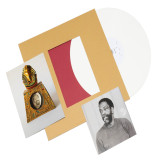
Artistry was Sirone's first album as a leader, recorded in 1978, just after the split of the Revolutionary Ensemble. Artistry has an Atypical combination of instruments, bass, cello , flute and percussion and delivers aplenty. Listen and you will know. Sirone ( Norris Jones) had an enormously prolific career as a bassist, both as a member of the Revolutionary Ensemble and playing with many of the best musicians of the 20th century - from Pharoah Sanders, Albert Ayler, John Coltrane, Gato Barbieri, Noah Howard, William Parker, Cecil Taylor, Sun Ra, Sonny Sharrock,Marion Brown ... and the list goes on.
played on
NTS radio
bbc radio 3 LATE JUCTION
LAST FM
radio peng
Black Vinyl[30,21 €]
Artistry was Sirone's first album as a leader, recorded in 1978, just after the split of the Revolutionary Ensemble. Artistry has an Atypical combination of instruments, bass, cello , flute and percussion and delivers aplenty. Listen and you will know. Sirone ( Norris Jones) had an enormously prolific career as a bassist, both as a member of the Revolutionary Ensemble and playing with many of the best musicians of the 20th century - from Pharoah Sanders, Albert Ayler, John Coltrane, Gato Barbieri, Noah Howard, William Parker, Cecil Taylor, Sun Ra, Sonny Sharrock,Marion Brown ... and the list goes on.
played on
NTS radio
bbc radio 3 LATE JUCTION
LAST FM
radio peng
The only album to soundtrack both late-'70s Minneapolis lounges and a Travis Scott x Dior fashion show. Recorded in a host of living rooms with only a Fender Rhodes piano, a Donca Matic Mini Pops drum machine, and Senrick's wide-eyed, 20-year-old voice, the 1977 LP disappeared into the wild and joined the Wendigo in Minnesota lore. A provocative mix of marina soul, easy listening, and loner folk, Dreamin' is a sanguine sliver of the American private mind garden. Harsh winters coupled with a relative lack of interest amongst siblings allowed Chuck Senrick years of unfettered access to the family piano in their Farmington, Minnesota, home. Learning both by ear and by instruction, Senrick began gigging professionally at age 15, joining John Zimmer and the CR4 for a weekly rundown of Allman Brothers, Blind Faith, and Cream covers at the Sea Girt Inn in Lake Orchard. Tapping into James Taylor's pop-chart achievements in songwriting and enunciation, Senrick composed the bulk of the songs featured on Dreamin' before graduating from Farmington High School. At 20, Senrick migrated 30 miles north to the Twin Cities to pursue music full-time. Using borrowed equipment and borrowed living rooms, a string of informal recording sessions generated the quarter-inch tape for Dreamin'. "I didn't know how to do it," Senrick says about producing an album. "I just knew it could be done." Constructed with vocals, Fender Rhodes, and an assortment of rhythm presets on his Donca Matic Mini Pops drum machine, a mere 200 copies of the private-press masterpiece were stamped and sleeved and sold hand-to-hand at performances. Chuck's wife Lesli illustrated the album cover_a pen-to-paper portrait of her husband against the backdrop of the Minneapolis Skyline, she and their newborn son situated on a nearby knoll. Any plans for a re-press were quashed when producer Bruce W. Hansen lost the reels during a messy divorce. "I was a kid with big ideas and not much hope to do anything but play," Senrick said of the Dreamin' era. "It still amazes me that people are interested in it."
United by a shared love of performing bluesy, soulful music in the most intimate and acoustic of settings, Blicher Hemmer Gadd's hard- swinging 4th album recreates the excitement and energy of the late- night sets they've performed around the world together. The album also features two special songs that were recorded during lockdown in Michael's studio in Copenhagen.
Formed after a chance encounter more than 11 years ago, they continue with this joyful project, which has flourished despite the 3,000+ miles, 40+ years and 3 busy touring schedules which separate them.
After decades performing stadiums with the likes of Eric Clapton, James Taylor and Steely Dan, Gadd relishes the opportunity to rediscover the sound and feel of playing almost acoustically "This is honest Music" he says, "no one plays like this anymore."
"It's bluesy, swinging and soulful jazz played by exceptional musicians" - Rhythm Magazine
The album has been produced together with Brinkmann (Germany), one of the world's leading producers of hi- end turntables. To deliver the highest possible sound quality, on both LP and CD the record has been mastered using MQA technology and converted to analog with a Brinkmann Audio Nyquist Mk II Streaming Digital- to- Analog Converter. The MQA Master has been directly fed from the DAC into the cutting machine. A Brinkmann Audio Bardo direct drive turntable is employed for quality control.
Produced alongside Aaron Dessner (The National, Sharon Van Etten, Taylor Swift), Collections From The Whiteout heralds the first time Ben has opened the door to production outside of he and his bands closer confines.
The foreboding darkness that coated Ben’s second record I Forget Where We Were and thinly veiled its follow up Noonday Dream, isn’t so evident on Collections.. These are songs written from headlines scanned, or news stories scrolled past. Ben has taken those snippets and let his curiosity take control, creating an aural scrapbook that reverberates with tape loops and guitar FXs.
There are sounds akin to Brian Eno, Durutti Column and Steve Reich in there, but also Neil Young and Townes Van Zandt. It’s a million miles away from Ben’s multi-platinum selling debut, but a path plotted from Ben’s then to his now isn’t so far removed.
The door was also left open to some new players too. Yussef Dayes, one of the UK’s most innovative young drummer/producer’ especially in the field of jazz features, as does Kate Stables from This Is The Kit, James Krivchenia from Big Thief, Kyle Keegan from Hiss Golden Messenger, and the aforementioned Aaron Dessner lent his hand too where needed. Long-term guitarist to Ben’s band, Mickey Smith, remains a reassuring presence. Rob Moose, a long-standing arranger of strings for Bon Iver and a collaborator to Laura Marling, Blake Mills, and Phoebe Bridgers is also present, peppering the mix.
Der renommierte Troubadour aus Illinois erweitert seine musikalische DNA mit Covers Vol. 2, die tiefgreifendste persönliche Musikreise, die er je unternahm. Zuhörer werden mit mitreißenden Interpretationen von Klassikern von Billy Joel (Vienna), Bruce Springsteen (Streets Of Philadelphia), James Taylor (Fire And Rain) und Peter Gabriel (In Your Eyes) sowie Indie-Perlen von Radiohead (Weird Fishes), JP Saxe (A Little Bit Yours) und Manchester Orchestra (Sleeper 1972) verwöhnt. Ebenfalls enthalten sind einige unerwartete Darbietungen wie Jeremy Zucker (Scared), Del Amitiri (Tell Her This) und Go West (King Of Wishful Thinking). William Fitzsimmons: 'Leute, die meinen Katalog kennen, wären wahrscheinlich überrascht zu erfahren, dass ich tatsächlich ein ziemlich großer Fan von Popmusik bin. Von der Brillanz der Beatles und den Beach Boys bis hin zu den moderneren Stilrichtungen von Harry Styles, Beyoncé und Taylor Swift – ich genieße eine eingängige Melodie genauso wie jeder andere.'
- A1: James Brown - Hundred Mile High City (Ocean Colour Scene)
- A2: Skanga - It's A Deal, It's A Steal (Tom, Nick & Ed)
- A3: Junior Murvin - The Boss
- A4: Lewis Taylor/Carleen Anderson - Truly, Madly, Deeply
- A5: Dusty Springfield - "Hortif**Kinculturist" (Winston)
- A6: John Murphy/David Hughes - Police & Thieves
- B1: Robbie Williams - 18 With A Bullet
- B2: E Z Rollers - Spooky
- B3: The Stooges - The Game
- B4: The Castaways - "Muppets" (Harry, Berry & Gary)
- B5: Stretch - Man Machine
- B6: Evil Superstars - Walk This Land
- C1: John Murphy & David Hughes - "Blaspheming Barry" (Barry)
- C2: John Murphy & David Hughes - I Wanna Be Your Dog
- C3: John Murphy & David Hughes - It's Kosher (Tom & Nick)
- C4: James Brown - Liar Liar
- C5: The Stone Roses - "I've Been Shot" (Plank & Dog)
- C6: Pete Wingfield - Why Did You Do It
- C7: Guns 4 Show Knives 4 A Pro" (Ed & Soap)
- C8: Oh Girl
- C9: If The Milk Turns Sour (With Rory)
- C10: Zorba The Greek
- D1: I'll Kill Ya (With Rory)
- D2: The Payback
- D3: Fools Gold
- D4: It's Been Emotional (Big Chris)
- D5: 18 With A Bullet
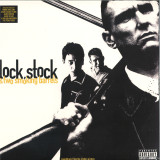
Originally released on Island Records in September 1998, the soundtrack to the box-office smash film, written and directed by Guy Ritchie, quickly became a must-own album, and is frequently cited as one of the best movie soundtracks of all time.
Lock, Stock and Two Smoking Barrels redefined the British gangster film and established Guy Ritchie as one of the greatest directing and writing talents of his generation. Using a frenetic mixture of filmic styles, humour, violence, breakdown of the fourth wall, narration, and vast amounts of swearing, it is hard to imagine a time when this film and its influence was not around. It made a star of the-then unknown Jason Statham, and, amazingly, hard man footballer Vinnie Jones, who as Big Chris, had several scene-stealing moments. Taking his cue from Quentin Tarantino, who had been meticulously curating his film soundtracks since the early 90s, Ritchie made the music to his film tell its own story, complete with memorable snatches of dialogue between many of the tracks.
It offers a beautifully eclectic selection of songs from the preceding three decades, plus then-current artists providing some of their best material, such as Hundred Mile High City by Ocean Colour Scene or E-Z Rollers' drum'n'bass masterpiece Walk This Land. Of the heritage tracks, Dusty Springfield sings her sultry take on Spooky; James Brown appears twice with The Boss and The Payback; The Stooges with I Wanna Be Your Dog, and two versions of Pete Wingfield's masterful one-hit-wonder 18 With A Bullet; in its 1975 original and a contemporary cover by Lewis Taylor and Carleen Anderson. And this is only half of it.
- A1: Wrap Myself Up In Your Love
- A2: Never Gonna Let You Go
- A3: Before I Thrill Again (Demo)
- A4: That Good Old Feeling Back Again
- A5: Acquaintances (Promo Version)
- B1: Your Burning Love
- B2: Kristi
- B3: Give Me Your Love
- B4: Tell Me With Your Eyes (Just Be You)
- B5: Dance Of Love
- C1: One More Time
- C2: Country Lovin
- C3: Please Analyze
- C4: Sailing
- C5: To Be Lonely
- D1: Madam Operator
- D2: Don't Be So Nice
- D3: Don't It Make You Feel
- D4: How Long Has It Been
- D5: Back To The Streets
Numero Group tauchen mit "Seafaring Strangers: Private Yacht" erneut in die Welt der amerikanischen Privatpressungen ein. Nach ihren musikalischen Exkursionen zu den Hexen und Zauberern von Darkscorch, den Geächteten des Cosmic Americana, neben 'Ladies From the Canyon' und ihren 'Lonesome Heroes', ist es an der Zeit, es einfacher anzugehen. Diesmal ist der Sound weicher und glatter, die Mitspieler allesamt kamen aus den Welten von Jazz, Folk, Rock und Soul, und hier spielen sie mit enormen Popappeal. Manchmal klassifiziert als West Coast Sound oder AOR - und später Yacht Rock - sind die Kompasspunkte unserer Private Yacht Expedition die blauäugigen Harmonien von Hall und Oates, der Kokain-bestäubten Fender Rhodes von Michael McDonald und die Combover-Streicher von James Taylor.
- A1: Speedboat (2023 Edit)
- A2: Low Res Skyline (2023 Edit)
- B1: Blocks (2023 Edit)
- B2: Burma Heights (2023 Edit)
- B3: Skin Diving (2023 Edit)
- C1: Fukumachi (2023 Edit)
- C2: L O.9.V.e. (2023 Edit)
- C3: Cone (Mix 2)
- D1: Bueno (2023 Edit)
- D2: French Dub (2023 Edit)
- D3: Evil Dub (2023 Edit)
- E1: Blufarm (Abbey Road 2023 Edit)
- E2: Unknown Mind
- E3: Bueno (Ambient Mix)
- F1: Speedboat (96 Demo)
- F2: L O.9.V.e. (Boat Mix, 2023 Edit)
- F3: Redfarm (Abbey Road 2023 Edit)
Dance music has always been grounded in a sense of place. Chicago, Detroit, London, Berlin—a zip code can tell you as much about the music as the year it was made.
But beyond the nuts and bolts of the here and now lies a netherzone where some of the best electronic music floats, impossible to pin down. Swayzak’s Snowboarding in Argentina is one such record.
The title hints at its uncanny placelessness. The music has nothing outwardly to do with Argentina, for one thing. The work of UK producers David Nicholas Brown and James S. Taylor, it was recorded in a number of locations—mostly bedrooms—around London. Yet there is little that is quintessentially British about the music.
Instead, Brown and Taylor drew much of their inspiration from, on the one hand, the luminous chords and silky heft of Detroit techno, and on the other, the staccato drums and clipped textures that were then beginning to bubble out of Berlin and Cologne.
That brings us to the question of time. For if Snowboarding in Argentina belongs to nowhere, it is equally a product of nowhen.
On a practical level, the music took shape in the mid to late 1990s, although it took nearly 10 years for it to come to fruition. Brown and Taylor began jamming on instruments, then machines, in the late 1980s. Then, after Brown suffered a serious car accident, the two musicians began working together more seriously. Trial and error yielded a promising single with a downtempo vibe that a hired-gun studio producer promptly ruined; Swayzak retreated to their bedrooms.
They learned about Chain Reaction from a radio show, found new ways to burrow into the circuitry of their machines, and by 1996 they had hit upon their sound. brought 10 copies of the first to Berlin’s Hard Wax, sold them directly to the shop for a fistful of Deutschmarks, and turned around and spent the money on records; that’s how DIY electronic music worked in those days.) The album itself appeared in 1998 on London’s Pagan label and quickly built a cult following. It was clear that the music was in conversation with its contemporaries: Heard from the right angle, it was possible to imagine it as a halfway point between the proto progressive house of Underworld and the monochromatic minimalism of Kompakt. But it also didn’t quite sound like anything else around; it was a dispatch from an unknown territory that needed no special understanding to decipher.
A quarter century later, Snowboarding in Argentina sounds simply eternal. Certain hallmarks of ’90s production are available—the music’s almost murky warmth is a reminder of what electronic music sounded like before software swallowed everything into its digital maw—but there’s nothing dated about it. The exploratory nature of these tracks, as the result of experimenting with their machines’ limitations, never eclipses their musical or emotional essence.
Long since been deemed a classic, Snowboarding in Argentina remains an underdog in the annals of electronic music. Its semi-obscurity was surely not helped by the decision to publish nine of its original 12 tracks on the CD, and seven on the vinyl, with only four appearing on both formats. Twenty-five years after its original release, Lapsus’ Perennial Series edition unites, for the first time, all the album’s tracks as a single triple-vinyl package, rounding out the 12 original songs with previously unreleased material. Working off the original DAT premasters, Swayzak have created new edits of all the tracks. The result might be considered the definitive edition of the album as it was meant to be, after a 25-year journey. It seems fitting that an album so timeless would continue morphing throughout its lifespan. For fans, it’s the chance to hear a beloved album as never before. And for newcomers, it’s the perfect introduction to a record that, in its own quiet way, reshaped the sound of electronic music, opening up new frontiers unbound by cartography or calendars.
The core of Snowboarding in Argentina appeared on a series of three two-track singles in 1997. (Taylor brought 10 copies of the first to Berlin’s Hard Wax, sold them directly to the shop for a fistful of Deutschmarks, and turned around and spent the money on records; that’s how DIY electronic music worked in those days.) The album itself appeared in 1998 on London’s Pagan label and quickly built a cult following. It was clear that the music was in conversation with its contemporaries: Heard from the right angle, it was possible to imagine it as a halfway point between the proto progressive house of Underworld and the monochromatic minimalism of Kompakt. But it also didn’t quite sound like anything else around; it was a dispatch from an unknown territory that needed no special understanding to decipher.
A quarter century later, Snowboarding in Argentina sounds simply eternal. Certain hallmarks of ’90s production are available—the music’s almost murky warmth is a reminder of what electronic music sounded like before software swallowed everything into its digital maw—but there’s nothing dated about it. The exploratory nature of these tracks, as the result of experimenting with their machines’ limitations, never eclipses their musical or emotional essence.
Long since been deemed a classic, Snowboarding in Argentina remains an underdog in the annals of electronic music. Its semi-obscurity was surely not helped by the decision to publishnine of its original 12 tracks on the CD, and seven on the vinyl, with only four appearing on both formats. Twenty-five years after its original release, Lapsus’ Perennial Series edition unites, for the first time, all the album’s tracks as a single triple-vinyl package, rounding out the 12 original songs with previously unreleased material. Working off the original DAT premasters, Swayzak have created new edits of all the tracks. The result might be considered the definitive edition of the album as it was meant to be, after a 25-year journey. It seems fitting that an album so timeless would continue morphing throughout its lifespan. For fans, it’s the chance to hear a beloved album as never before. And for newcomers, it’s the perfect introduction to a record that, in its own quiet way, reshaped the sound of electronic music, opening up new frontiers unbound by cartography or calendars.
Hailing from Macclesfield, Cheshire, and growing up in Cheadle Hulme, John Mayall had already made a name for himself on the Manchester blues scene before relocating to London in 1963 at the urging of Alexis Korner.
Following the breakup of The Bluesbreakers in 1968, Mayall took a three week break in LA, and it proved an eye-opener for him. As a result, Blues From Laurel Canyon was a concept album of sorts, a view of a Brit Abroad at a time when it wasn't de rigueur to travel. 2401 especially is an incredible confection – acknowledging Cream, foreseeing Led Zeppelin; Mick Taylor's slide guitar would soon be heard in the Rolling Stones. Fly Tomorrow is a nine- minute blues- rock tour de force.This re-issue faithfully replicates the original 1968 Decca Records UK stereo release with gatefold sleeve and is pressed onto high quality 180g vinyl.