
15
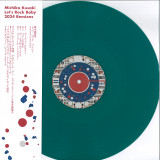
Bosconi Records is thrilled to announce a distinctive vinyl release that harks back to berlin 2000’s good old days
The featured track of this release unveils Console’s , known and active as Acid Pauli, reinterpretation of a track that gained fabio’s attention during his stay in Berlin in 2000. Fabio Della Torre, the owner and A&R of Bosconi Records, stumbled upon this hidden gem during his year in Berlin as many djs in the city were spinning it. Finally his quest to uncover the origins of this track led him to a CD release on the label of Angelika Köhlermann. The track in question is Console’s reimagining of “Let’s Rock Baby” a composition by the independent musician and video artist Anne Laplantine, who adopted the Japanese-sounding alias Michiko Kusaki. This version was originally released alongside a series of remixes by artists such as Dmx krew, Felix Kubin, and Adult, all featured on Angelika Köhlermann’s label.
Today, Bosconi Records is thrilled to bring this iconic track to light again on vinyl, accompanied by fresh interpretations. It’s important to note that these reinterpretations breathe life into Console’s work, not Laplantine’s original track, making Console’s version the centerpiece of this release. We have a banger version from German electro luminary The Exaltics which his typilcal electro techno trademark sound. The Exaltics had just released his new album on Clone and has been featured by Helena hauff in her Fabric Mix compilation. Italian producers Voodoos & Taboos, known for their homonymous label and with an recent “banger” on Bordello a Parigi with an electro playful version. The vibrant Queen of Coins have breathed new life into Console’s track, delivering a fresh new-beat acid ebm burner, giving the track a new and personal perspective.
This project mirrors Bosconi Records’ commitment to exploring diverse dimensions of electronic music and featuring compelling compositions. The release looks to resonate with DJs and electronic music enthusiasts, offering a contemporary perspective on a timeless track.

In 1998, Carsten Nicolai, also known as Alva Noto, visited a sound installation created by Robert Lippok for a group exhibition in Weimar, Germany. Soon after, he invited Lippok to release music on his label raster-noton. "Open Close Open" was released in 2001 and marked the beginning of Lippok"s solo career. Before, Lippok had already played in Ornament und Verbrechen (with his brother Ronald Lippok) and To Rococo Rot (with Ronald Lippok and Stefan Schneider). The source material for "Open Close Open" initially served as a soundtrack for a video by Takehito Koganezawa, a visual artist from Japan. For this remastered vinyl reissue, Lippok revisited the original sound material and produced a new track called "Licht."

‘THE CONGREGATION - Jazz Alliance International’ compilation is the latest offering from Mono Jazz label. Compiled by Massimiliano ‘Jazzcat’ Conti - a DJ, broadcaster and internationally respected
selector with over 150,000 followers on Mixcloud - and featuring liner notes by Paul Bradshaw (from the iconic ‘Straight no Chaser’ magazine), ‘THE CONGREGATION’ is an innovative, largely
contemporary selection of tracks that they feel is representative of the current era - a true manifesto of the international jazz scene of the present days.
The release was received with great enthusiasm by some of the leading DJs and music critics of the scene – from the UK, to Germany, to Japan – getting early radio support by Patrick Forge (NTS), Colin
Curtis (Hitmix Radio), Kevin Beadle (TWR), Rainer Trüby (Compost Records), Shuya Okino (Kyoto Jazz Massive), Raffaele Costantino (Rai Radio 2), Ilya Rasskazov (Headz.FM), Michael Rütten (Soul Searching), David Patterson (JFSR), Simon Harrison (Basic Soul) & more.
Built around a near mythical, unreleased song by Japanese producer Yellowtail featuring legendary beat generation jazz singer Mark Murphy, the selection of tunes contained in this album ventures far and wide. Soulful offerings by Anthony Joseph and Jimetta Rose & The Voices of Creation, percussive and spiritual renditions by the likes of Malcolm Strachan, Right Tempo’s own Francesco Sotgiu and Nicola Conte, Latin-flavoured explorations by Mexican giant Tino
Contreras and Acid Jazz’s signed Mama Terra and a hip-hop spiced cut by Portuguese producer Azar Azar are some of the many moods that can be found in ‘THE CONGREGATION’

Best known for his work for legendary Thai director Apichatpong Weerasethakul (he even designed the enigmatic “bang” in 2021’s labyrinthine ‘Memoria’), Japan’s Koichi Shimizu has been honing a unique musical language since the early ‘90s, where some of his earliest material can be found on a split LP with Yoshiteru Himuro via once-iconic imprint Worm Interface (itself home to music from Autechre side-line Gescom). ‘Imprint’, was initially released quietly back in 2021 and has been remastered for this new edition, removing one track and bumping it up with four more, making it all available on vinyl for the first time.
The album offers a perfect overview of Shimizu’s broad palette, ranging from fine-wrought keys to electronic brutalism and guttural rhythmic pulses, plotted with an underlying narrative cadence that evinces his ability to heighten the impact of moving image, whilst also colouring the imagination with ephemeral sound imagery. His tekkerz are in bracing, anticipatory effect on a retooled, expanded version of his music from ‘Memoria’ within the convulsive, swarming silhouette of ‘Imprint’, and ‘The Path’ finds his aural accompaniment to ‘Uncle Boonmee...’ given room to breathe and develop into an unexpected, OOBE-like experience. In ‘Moth’ he magnifies and anthropomorphises a winged insect with finely chiselled technical nous, and his exquisite arrangement to ‘Faded Sign’ is somehow comparable to the ephemeral emotional register of cinematic collaborations between Ryuichi Sakamoto and Carsten Nicolai.

Box Version[44,50 €]
Repress!
Mr Bongo are delighted to present an officially licensed re-issue of this underground Japanese rock rarity 'Uganda (Dawn of Rock)' by Akira Ishikawa & Count Buffaloes. This album has become highly sought-after amongst psych, prog and acid rock collectors and due to the rare nature of original copies they come at a hefty price tag.
The respected Japanese jazz drummer Akira Ishikawa was not messing around when he recorded the 'Uganda (Dawn of Rock)' album with his band the Count Buffaloes. For this offering, originally released in 1972 on Toshiba Records, Akira Ishikawa takes us on a deep tripped-out journey. 'Uganda (Dawn of Rock)' is a fusion of progressive and psych rock with African percussion workouts, dergy-wah wah blues-funk, and jazzy sensibilities; with different genres morphing and uniting as they progress.
A long way from his funk and afrobeat album 'Back To Rhythm’, re-issued on Mr Bongo in 2019, this record has a darker, deeper, abstract and experimental stoned tone with the listener being pulled into its vortex for the ride. This record doesn’t pull any punches.
For this album, Akira is joined by Hideaki Chihara on bass, guitarist Kimio Mizutani, sounding at times like an early 70s Peter Green, percussionist Larry Sunaga and composer Takeru Muraoka.
The album has become highly sought-after amongst psych, prog and acid rock collectors and due to the rare nature of original copies they come at a hefty price tag.
We are delighted to present an officially licensed re-issue of this underground Japanese rock rarity.
Available in 2 formats: Original LP in Box version & Tip-on Sleeve with OBI version.
• Highly sought-after underground Japanese rock rarity, originally released in 1972.
• Feat. Hideaki Chihara, Kimio Mizutani, Larry Sunaga and Takeru Muraoka.
• Available as the original LP in Box version & Tip-on Sleeve with OBI version.

Acclaimed Japan “minyo footwork” duo WaqWaq Kingdom - aka Shigeru Ishihara (DJ Scotch Egg / Seefeel) and Kiki Hitomi (ex-King Midas Sound) - return with feverishly joyous new album Hot Pot Totto, a bubbling hot pot of dance music that responds to ecological anxiety.
“Two words are conjoined: hot pot and ottotto,” vocalist Kiki Hitomi tells us. “Ottotto is the Japanese equivalent of “oops”, or said when someone nearly falls over but manages to get their balance back: “it was dangerous but now we are safe!” Combined with the heady brew of their musical styles (“like a psychedelic Nabe hot pot: melting traditional Japanese Minyo with Jamaican dancehall, footwork, dub, techno, tribal polyrhythms and Super Nintendo soundtracks”), producer Shige Ishihara’s time in East Africa working with local musicians, and the dayglo hallucinogen of the duo’s visual aesthetic, WaqWaq Kingdom’s thumping, thrilling, irresistible third release is a unique ride.
Thematically - despite its ostensibly celebratory impact - Hot Pot Totto addresses the world’s grave ecological state. “Now our earth is on the way to catastrophe, as global warming becomes a serious problem through humanity’s fault. We are on the edge,” Hitomi writes. “We need to get back on the right track.” The ottotto of the album title refers to this experience - the need to get back on track. However, this is not lamenting music: it is fiercely defiant, full of colour and rapture, maintaining an optimism that we can.
Opening single “Hakke Yoi” ties treated voice, a floor-shaking beat, and a dizzying, transforming colour palette to a heart-quickening BPM. The track is named after the traditional cry of a sumo wrestling match, shouted by the referee to maintain tempo, commonly translated as “put some spirit into it!” The lyrics refer to humanity’s sacrifice of our planet for our own material gains. Later, key track “Buri Buri” features Ugandan experimental dance producer Catu Diosis and centres around the lyric “Turn disaster to our advantage / good fortune and happiness will come to those who smile,” offering not regret but encouragement and empowerment with its neon alien sonics and relentless vibrancy.
Kiki Hitomi was formerly a member of Ninja Tune / Hyperdub’s King Midas Sound (along with The Bug and Roger Robinson), and co-founded iconic Japanese dubstep-noise duo Dokkebi Q. She is also a celebrated illustrator and designer, having created artwork for countless record sleeves (including this one) and brands. Shigeru Ishihara - aka DJ Scotch Egg - has been orbiting the dance music galaxy for over a decade, releasing radiantly unpredictable solo records through Lightning Bolt’s Load Records, as a member of Warp Records’ legendary Seefeel, and performing with both projects across the world. He recently undertook a residency at the Nyege Nyege Villa in Uganda, working with Phantom Limb alumnus MC Yallah. More recently, Ishihara has been releasing music under the guise of Scotch Rolex, collaborating with the likes of Shackleton, Swordman Kitala, Lord Spikeheart and more.
Hot Pot Totto is WaqWaq Kingdom’s third release for Phantom Limb, following the rapturously received album Essaka Hoisa in 2019 and follow-up EP Dokkoisho in 2020. The band recently performed at the label’s sold out 5th anniversary event in London, setting an ecstatic venue alight with energy.
f B1 Buri Buri feat. Catu Diosis

Reissued on vinyl for the first time, Juno Reactor’s 1997 ‘Bible of Dreams’, also newly mastered and available of
double black vinyl.
‘Bible of Dreams’ was Juno Reactor's fourth album. It had a very different sound from the group's previous albums,
and moved away from the traditional dance beats by implementing tribal influences. The band collaborated with
Amampondo, a traditional South African percussion act, on the single ‘Conga Fury’. Watkins and Amampondo went on
a five-week tour of the US, opening for Moby.
Featuring music from the film soundtracks The Matrix Reloaded, Animatrix, Mortal Kombat Annihilation and Beowulf.
Composer, producer, musician and performer Ben Watkins is an essential innovator of modern electronic music and a
pioneer of Trance. Over the course of nearly 30 years, Watkins has created a unique driving fusion of electronica,
orchestral and global music executed on an epic & symphonic scale.
Juno Reactor was formed as an art project in 1990. Ben Watkins wanted to collaborate with other artists, producing
exciting projects that were not commercially driven. He wanted to create experimental music and non-musical
soundtracks that would work with installations, art pieces, and film projects.
As well as releasing a string of influential albums as Juno Reactor, Watkins’ tracks have been placed in numerous highprofile feature films, television programmes and computer games and Ben Watkins composed large sections of the
original score for the films The Matrix Reloaded and The Matrix Revolutions, as well as composing the entire orchestral
score for Japanese anime feature film Brave Story.

By welcoming the beauty of imperfection and simplicity, Sven Wunder applies the timeless wisdom of wabi sabi on this musical journey. What you can hear is filtered through Ukiyo-e (which translates as “pictures of the floating world”), which illustrates everyday life, as well as through Japonism, the study of Japanese art, and more specifically its influence on European works. The result is a surface that creates an illusion by sound. The infusion of Min’yō with jazz rock, this hazy scene evokes the landscape of Monet’s ”The Water Lily Pond”, which depicts the painter’s Giverny garden, with a Japanese bridge, bamboo, ginkgo trees and the reflection of the sky in the pond. This illusion constructs both time and space.
The surface of the music, like the canvas of the painting, invents a journey between now and then by interpreting the idiom of folkloric and western art instruments. In this composition, the sound of the Western concert flute, which stretches back to the Renaissance and Baroque periods, evokes the sound of the bamboo-flute (”shakuchachi”), which reached its peak during the Edo period. The guzheng, also known as the Chinese zither, with a more than 2,500 year history, joins traditional Japanese folk melodies with modern pop percussion and 20th century electronic instruments such as the Moog synthesizer, Wurlitzer electric piano and electric bass.
This is the illusion that celebrates the fleeting nature of all things. A journey. A deep inhale and a slow exhale. It has a mix of jazz (both funky and progressive), East Asian and South Asian sounds. The idea of fusing these styles and reframing them with the aesthetic of wabi sabi is to reconnect with nature and concentrate on asymmetries and emphasize ornamentation to generate new ways of looking at the world, here and now.

Soul Jazz Records’ feature-length documentary/CD/Book ‘Studio One Story’ is being re-released on 1 August 2011, and is also available for the first time as a stand alone DVD. The DVD is being issued as a prelude to the forthcoming deluxe-hardback book ‘Original Cover Art of Studio One Records’ released this autumn by Soul Jazz Records as well as a new Studio One album compilation on Soul Jazz to coincide with the new book.
Studio One Story is a documentary this is both a staggering slice of musical history and a definitive guide to Studio One, Jamaica’s greatest ever record company, and its legendary founder, Clement ‘Coxsone’ Dodd. ‘Studio One Story’ was filmed in 2002, two years before the death of the legendary Clement ‘Sir Coxsone’ Dodd, a man famously reticent of being interviewed - until the making of this film. Described by Chris Blackwell as the Motown of Jamaica, or ‘The University of Reggae’, Studio One is where the careers of literally hundreds of reggae artists began: Bob Marley and the Wailers, Alton Ellis, The Heptones, Ken Boothe, The Skatalites, Burning Spear and Sugar Minott, to name but a few! Studio One is the ‘foundation’ label of Jamaican Reggae and Clement ‘Sir Coxsone’ Dodd is seen by many as its father.
One and a half years in the making, Studio One Story is a truly unique documentary in which the late Clement Dodd gave unprecedented personal access to tell the previously untold story of how he and the many artists and musicians at Studio One literally shaped the rise of Reggae music from the 1950s onwards through to the late 1970s. This is the true story of reggae music and its Jamaican roots told from the inside: From the rise of Kington’s sound systems in the 1940s and 1950s, through to the evolution of a Jamaican music industry (and Studio One’s dominance) in the 1960s and the worldwide success of reggae in the 1970s.
The 4 hour documentary (including over an hour of extras) was filmed on location in Kingston, Jamaica and features interviews with Horace Andy, Alton Ellis, Ken Boothe, Sugar Minott, Denis Alcapone, The Ethiopians, Sylvan Morris, Johnny Moore, Lone Ranger, King Stitt and many others. The DVD also includes rare footage of The Skatalites, Jackie Mittoo, Count Ossie, Marcia Griffiths and others. As well as the stand-alone DVD, Soul Jazz Records are reissuing the original (DVD +CD+Book) original box set.
IF YOU ARE ORDERING THIS PLEASE CHECK IF YOU NEED NTSC (AMERICA, JAPAN, ETC) OR PAL (EUROPE, AUSTRALIA, ETC).
THE DVD HAS FRENCH AND ENGLISH SUBTITLES.
NB.MP3 Release is for the audio CD only.
REVIEWS ‘Studio One was Jamaica’s Motown. This documentary brings it brilliantly to life.’ The Telegraph ‘The history of Clement ‘Coxsone’ Dodd’s legendary Jamaica studio is fantastically told through interviews, copious amounts of music and historical footage and more.’ Uncut ‘Studio One Story is no mere historical document; it is a map that will lead you directly to a massive seam, endlessly mineable, of musical gold’ The Observer ‘A fascinating documentary’ The Telegraph ‘Compulsive viewing for anyone with an interest in Reggae’ The Wire

black LP[37,61 €]
Anyone who takes their old-skool hip-hop seriously knows Main Source were the real deal, and their 1991 album Breaking Atoms remains one of the greatest albums in the genre. While there was an eventual follow-up in 1994, hip-hop folklore has often spoken of their shelved 1992 LP The Science.
Bar the odd bootleg single or demo here and there, the album has never been heard but now a major missing piece in the story of early 90s rap is being put back into its rightful place, as P-Vine present the first ever release of The Science, cut from the group's own master tapes and guaranteed to be a new favourite for anyone who values the golden age of beats and rhymes.

Happy we can introduce a new addition to our catalog THINNER005, an EP called
“ & . . “
as the title tells, it’s a joint release by our friends, KOOLMFL, Sonic Weapon &. . Lemmi Ash
“& . . “ EP includes three club tracks, which been power played by Powder over these years in many different moment.
Each track can add a distinctive touch to the night, as like completing your cocktail with lemon and/or lime.
_
KOOLMFL, fka K-LINE and Sonic Weapon is our regular suspects from Nagoya, motor city of JAPAN.
Some may know them putting out a shared EP “G” before on Thinner Groove and now they back to it again.
atonbow by KOOLMFL features words of a space traveller in state of peaceful sorrow, seemingly communicating their honest thought to the loved one who might not be hearing, Can you hear me ? … Hi astronaut, at least we can :)
KOOL’s clicky drum work pass the words to the floor, and the party breaks down with sudden synth and take all of us home.
,
On track HOMIE, Sonic Weapon shows his signature fast boogie style again in a new approach with much dubbed out, ear pleasing, filtering, minimalistic, and stylistic way. The texture keeps changing but keeping the groove.
Feels like the beauty of watching a bridge getting slowly collapsing after somehow you made it to the other side.
& . .
We also want to introduce Lemmi Ash, a Swedish duo formed by Samo DJ and Martinou, newly joining the TG spectrum,
The duo previously had a release from ESP institute and each of them countless solo appearance on various releases . . .
Nonetheless, they a good long time friend and perfect fit for this release.
The duo features comfy calming ear tickling electronic sound with some kiddish, animalistic, or primitive humor in their own balance. This track Presence grooves with a leaning forward racing gamey phrase drifting around the mini synth explosion, feels like a joyful cruise during regardless the intense highway.

Der Jesper Kyd-OST zu Fortsetzung der HITMAN-Videospielreihe: Das mainstreamig angelegte 'Hitman 2: Silent Assassin' (2002) erhielt großartige Rezensionen, u.a. eine 'Action Game Of The Year' Nominierung vom US-Magazin Computer Gaming World. Jesper Kyd schuf mit dem Budapester Symphonieorchester und dem Ungarischen Rundfunkchor ein orchestrales Melodram, das dem Spiel ein Gefühl von Unruhe und Pracht verlieh. Trotz live aufgenommener Orchestrierungen blieb sein Stil unverkennbar: starke Melodien, eingängige Rhythmen und groovige Electronica werden um harmonische Weltmusik-Elemente ergänzt, die zu den weltumspannenden Eskapaden von Agent 47 passen.

Godzilla returns once more to face the combined might of Japan's most extraordinary scientists in the second picture of the Millennium-era: GODZILLA VS. MEGAGUIRUS. Looking for new ways to defeat the Big G, the JSDF invent an incredible new weapon called Dimension Tide, which creates a miniature black hole that will transport Godzilla far away from Earth. However, a byproduct of weapon testing leads to thousands of winged insects invading Tokyo and attacking Godzilla. The Big G fights back, but their new queen appears, now kaiju-sized due to Godzilla's atomic breath. A thrilling battle then occurs as Godzilla goes head-to-head with Megaguirus while the JSDF frantically works to disappear both monsters forever.
GODZILLA VS. MEGAGUIRUS saw the introduction of composer Michiru Oshima into the franchise with a fantastic score that built on previous Toho musical traditions with a view to the future. While using music composed by the great Akira Ifukube for two sequences, Oshima also unveiled her own theme for Godzilla. First heard in a slow and foreboding mode, it's quickly unleashed in gigantic low tones, as terrifying and inevitable as the Big G himself. Soaring heroic material represents the JSDF and their advanced Griffon aircraft, while powerful brass is used for the threat of Megaguirus. Cementing Oshima's reputation as a great composer, GODZILLA VS. MEGAGUIRUS is a classic of kaiju musical mayhem. - Charlie Brigden
Composed by Michiru Oshima
Artwork by Attack Peter
Manufactured in Czech Republic

Returned to us from early 90s Japan are the holy holy sounds of Ghost. Their collective, clearly inspired by various forms of transcendental music throughout history, created a new syncretic psychedelia with these albums, mixing the texture and vibe of multinational forms of traditional music, with strummed antique stringed instruments and the haunting wail of a recorder on top of their heavy beats and guitars. The considerable depth of this approach was explored through 2014 over another five Ghost LPs, as well as the further explorations to the present day of leader Masaki Batoh, as a solo artist and with The Silence, Damon & Naomi, Helena Espvall and most recently, nehan. These first three Ghost titles were originally released by P.S.F. on CD in 1990, 1992 and 1994, respectively, radiating enigma and energy in palpable waves with their original sound. After the acclaim that greeted Drag City"s 1996 US release of Lama Rabi Rabi, we quickly reissued all three on vinyl - and they quickly went out of print! At which point, Ghost had Snuffbox Immanence and Free Tibet ready to go. And then, Hypnotic Underworld. And then, and then . . . . Now, it"s been 25 years since they were last offered on vinyl. In the twenty-year sweep of Ghost history, these first three releases qualify as primitive early Ghost - sort of like a German Os Mutantes (or perhaps a Brazilian Amon Düül). The subterranean presence of a diversity of progressive/avant classic rock influences (Pink Floyd, Incredible String Band, Captain Beefheart, Scott Walker, Led Zeppelin, Popol Vuh, Third Ear Band, to name but a few) provokes further synthesis, making for an entirely new meditation on the traditional order of psychedelic music. The first two studio albums, each one an iteration of Ghost"s unique lysergic folk music, were followed by the monolithic "live in various places" happening of Temple Stone, which raised the trippiness levels considerably. But this was only the end of the beginning . . .

Returned to us from early 90s Japan are the holy holy sounds of Ghost. Their collective, clearly inspired by various forms of transcendental music throughout history, created a new syncretic psychedelia with these albums, mixing the texture and vibe of multinational forms of traditional music, with strummed antique stringed instruments and the haunting wail of a recorder on top of their heavy beats and guitars. The considerable depth of this approach was explored through 2014 over another five Ghost LPs, as well as the further explorations to the present day of leader Masaki Batoh, as a solo artist and with The Silence, Damon & Naomi, Helena Espvall and most recently, nehan. These first three Ghost titles were originally released by P.S.F. on CD in 1990, 1992 and 1994, respectively, radiating enigma and energy in palpable waves with their original sound. After the acclaim that greeted Drag City"s 1996 US release of Lama Rabi Rabi, we quickly reissued all three on vinyl - and they quickly went out of print! At which point, Ghost had Snuffbox Immanence and Free Tibet ready to go. And then, Hypnotic Underworld. And then, and then . . . . Now, it"s been 25 years since they were last offered on vinyl. In the twenty-year sweep of Ghost history, these first three releases qualify as primitive early Ghost - sort of like a German Os Mutantes (or perhaps a Brazilian Amon Düül). The subterranean presence of a diversity of progressive/avant classic rock influences (Pink Floyd, Incredible String Band, Captain Beefheart, Scott Walker, Led Zeppelin, Popol Vuh, Third Ear Band, to name but a few) provokes further synthesis, making for an entirely new meditation on the traditional order of psychedelic music. The first two studio albums, each one an iteration of Ghost"s unique lysergic folk music, were followed by the monolithic "live in various places" happening of Temple Stone, which raised the trippiness levels considerably. But this was only the end of the beginning . . .

Returned to us from early 90s Japan are the holy holy sounds of Ghost. Their collective, clearly inspired by various forms of transcendental music throughout history, created a new syncretic psychedelia with these albums, mixing the texture and vibe of multinational forms of traditional music, with strummed antique stringed instruments and the haunting wail of a recorder on top of their heavy beats and guitars. The considerable depth of this approach was explored through 2014 over another five Ghost LPs, as well as the further explorations to the present day of leader Masaki Batoh, as a solo artist and with The Silence, Damon & Naomi, Helena Espvall and most recently, nehan. These first three Ghost titles were originally released by P.S.F. on CD in 1990, 1992 and 1994, respectively, radiating enigma and energy in palpable waves with their original sound. After the acclaim that greeted Drag City"s 1996 US release of Lama Rabi Rabi, we quickly reissued all three on vinyl - and they quickly went out of print! At which point, Ghost had Snuffbox Immanence and Free Tibet ready to go. And then, Hypnotic Underworld. And then, and then . . . . Now, it"s been 25 years since they were last offered on vinyl. In the twenty-year sweep of Ghost history, these first three releases qualify as primitive early Ghost - sort of like a German Os Mutantes (or perhaps a Brazilian Amon Düül). The subterranean presence of a diversity of progressive/avant classic rock influences (Pink Floyd, Incredible String Band, Captain Beefheart, Scott Walker, Led Zeppelin, Popol Vuh, Third Ear Band, to name but a few) provokes further synthesis, making for an entirely new meditation on the traditional order of psychedelic music. The first two studio albums, each one an iteration of Ghost"s unique lysergic folk music, were followed by the monolithic "live in various places" happening of Temple Stone, which raised the trippiness levels considerably. But this was only the end of the beginning . . .

Joe Yellow is a studio project started in 1983 by Domenico Ricchini and the producers Miki Chieregato and Roberto Turatti.Their big hit Eurobeat / Hi NRG tune "U.S.A."('92) will be 7inch on first time, with Japanese imaginary jacket.The song became famous in Japan when dance-pop group Da pump covered it.

20 TOMES AVAILABLE, MORE THAN 55 MILLIONS MANGAS SOLD (WORLDWIDE) ONE OF THE BEST-SELLING MANGA OF THE WEEKLY SHONEN JUMP IN JAPAN
ONE OF THE BEST SUCCESS OF THE CLUB DOROTHEE

