Поиск:japan

Стили
Все
The Police - Around The World LP (2x12")

Mit spannenden, persönlichen Aufnahmen und einem ausführlichen Blick hinter die Kulissen begleitet ”The Police: Around The World” die Band dabei, wie sie neues Territorium erkundet und lässt uns an den Anfängen ihres kometenhaften Aufstiegs teilhaben: 1979 und 1980 begab die Gruppe sich auf ihre allererste Welttournee, welche sie durch sechs Kontinente führte. Zwischen den Auftritten bietet der Film der DVD/Blu-ray Formate einen heiteren Blick auf die Band auf ihrer Reise um die Welt und ihre Besuche bei lokalen Sehenswürdigkeiten. ”Around The World” wird mit restauriertem Bild und remastertem Ton
präsentiert und enthält vollständige Auftritte von 4 Songs, die in der Dokumentation vorkommen.

Mit diesem Album kombinieren sich Liveaufnahmen und ganz persönlichen Eindrücke von Sting, Andy Summers und Stewart Copeland in Japan, Hong Kong, Australien, Indien, Ägypten, Griechenland, Frankreich, Südamerika und in den Vereinigten Staaten; und kreieren so das ultimative „The Police“-Erlebnis.

Сделать предзаказ20.05.2022

он должен быть опубликован на 20.05.2022

32,35
GOLDMUND SOMETIMES - WESTERN VINYL

Nachpressung des Albums von 2015. Obwohl er vielleicht nicht so bekannt ist, hat sich die sinnträchtige, deutlich amerikanische Musik von Kenniff zu einem allgegenwärtigen Sound gemausert, der im Radio, in Filmen, im Fernsehen und in Werbung von Apple, Facebook, Google und anderen auftaucht. Aufgenommen über drei Jahre hinweg fungieren die Songs auf seinem neuen Album ,Sometimes" wie ein Tagebuch, das die kurzen Momente am Tag dokumentiert, in denen Kenniff sich für Trost und unendliche kreative Möglichkeiten dem Klavier zuwandte. Kenniff schrieb und nahm alles auf dem Album selbst auf, mit der Ausnahme von ,A Word I Give", das eine Kollaboration mit dem japanischen Pianisten Ryuichi Sakamoto ist, der die Musik von GOLDMUND einst als ,so, so, so wunderschön" beschrieb. In einem Interview mit NPR diskutierte Keith Kenniff seine Vorliebe für Musik aus der Zeit des Bürgerkriegs und ihre Möglichkeit, ,in nur wenigen Noten solche Geschichten" zu erzählen. Auch die Improvisationen auf ,Sometimes" schaffen es, trotz ihrer technischen und kompositionellen Einfachheit, tiefgründig zu sein. Subtile Details und Dynamiken drücken das aus, was sonst nicht zu artikulieren wäre. ENG Though he may not be a household name, Kenniff's evocative, distinctly American music has become quietly ubiquitous in the past few years, often appearing on NPR, in films, on TV, and in ads for Apple, Facebook, and Google among others. Recorded over the course of three years, the material on his new album Sometimes functions as a journal, documenting brief moments in Kenniff's day when he could turn to the piano as a source of solace and unending creative possibilities. Kenniff wrote and recorded everything on the album with the exception of the track "A Word I Give", which is a collaboration with preeminent Japanese pianist Ryuichi Sakamoto, who once described Goldmund's music as "...so, so, so beautiful." In an interview with NPR's Weekend Edition Keith Kenniff discussed his appreciation of Civil War era music, and it's ability to covey "...so much story in so few notes." Similarly, these improvisations manage to be richly evocative despite their technical and compositional simplicity, using subtle details and dynamics to express what might otherwise be inexpressible.

Сделать предзаказ20.05.2022

он должен быть опубликован на 20.05.2022

18,45
Jon Porras - Arroyo

Jon Porras

Arroyo

12inchTHRILLX563
Thrill Jockey
20.05.2022
 
4
также имеющийся в продаже

Black Vinyl[26,85 €]


Jon Porras draws a staggering array of atmospheres out of even the simplest instrumentation. Across his work as one-half of psych-drone duo Barn Owl and his solo releases, Porras welds monoliths and ether into propulsive music that is deeply felt. Arroyo, named for the Spanish word for "stream" in a nod to Porras' heritage as a first generation Colombian?Japanese American, drifts gently from one tributary to the next in unhurried contemplation and euphoria. The portentous weight and abrasive textures of Porras' previous work give way to the trickle of richly detailed acoustic instruments slipping in and out of the fold. On Arroyo, Jon Porras evokes a distinct sense of resplendent anticipation and calm with a fathomless flow and softly gorgeous colors. For Porras, Arroyo became a rumination on simplicity and simple truths, a work of complete immersion and continuous motion where separate elements coalesce into an ever-changing whole. Porras spent the year leading up to 2020 living nomadically across Europe where he was able to soak in a deep appreciation for the effortless beauty of overgrown gardens, the basic principles of classical architecture and a more transient sensibility. The album was written and recorded in a time of even more change for Porras: after the birth of his daughter. Like a stream's steady glide across bedrock that waxes and wanes with each gradual turn, the music of Arroyo exhibits a transportive stillness. The compositions take on a light, gaseous buoyancy as discreet drones swell with measured fluctuations and ripples of piano rest atop the surface. Arroyo borrows harmonic concepts from modal jazz to create a unique sense of ease and endlessness. Each of the four pieces on the album centers around a single suspended chord, a chord most commonly associated with devotional music which embodies a space between harmonic tension and resolution. Porras embellishes that liminality with arrangements that feel less like distinguishable layers of instruments and more like one undulating nebula of sound. In the past decade of Porras' solo work, his music has grown increasingly engaged with elaborate synth textures and detailed processing. With Arroyo, Porras consciously takes a step back from those more intricate compositions and focuses on more organic, unadorned textures and places each sound with the same precision. Stark piano and guitar patiently hover over modest currents of Hammond organ and Yamaha DX7 with the sustain of each chord and phrase acting as a natural guide to the album's subtle rhythm. The four pieces that comprise Arroyo each encompass their own idyllic channel, slowly weaving their way in and out of the album's elegant stir. Porras' reflections on simplified elements take shape in gorgeous arrangements that impart clarity amidst a tranquil mist. Arroyo is an album that unearths splendor in a unified feeling of space, serenity in perpetual renewal

Сделать предзаказ20.05.2022

он должен быть опубликован на 20.05.2022

28,15
Yasuhiro Morinaga - Exploring Gongs Culture In Southeast Asia, Mainland And Archipelago
 
35

Gongs have played an integral role in the mythogeography of Asia. This is not music that aligns with national borders or ideas of homogenous populations, let alone racial stereotypes and exotic clichés. What connects all of these tracks is a simultaneous feeling of entrancement and social cohesion. Communal and collaborative, its form is hypnotically repetitious, melodies and rhythms spread out among the players using the technique of hocketing in which a flowing line is distributed among all the musicians. The effect is mesmerising, immediately intoxicating to anybody who loves Chicago footwork, free improvisation, Sun Ra or young hip hop producer Jetsonmade. The music is simple yet mysterious and enveloping, a sound world in which to disappear. A theory exists but this is not explained. - David Toop (extracts from the liner notes)

This project, Massif and Archipelago, is a field recording project initiated by Japanese sound artist Yasuhiro Morinaga, documenting traditional gong music by different Southeast Asian ethnic groups. The project aimed to examine the impact of the natural and social environment on the gong music culture of Southeast Asia. During the project, he visited over 50 different ethnic groups and made hundreds of recordings. This album presents a selection of the unique gong music from different ethnic minorities. The selected music has been divided into two broad sections: one focussing on the music from the Massif, i.e. mainland Southeast Asia (Central Highland of Vietnam and Northeast Cambodia), the other on music from the Archipelago, maritime Southeast Asia (the Luzon Islands of the Philippines, Borneo, Sulawesi, and the Flores Islands of Indonesia).

Сделать предзаказ20.05.2022

он должен быть опубликован на 20.05.2022

18,11
Keith Fullerton Whitman - GRM (Generators) - Parts 1 & 2 Nakid

Fractal head rearrangement from Keith Fullerton Whitman on his first vinyl release in what feels like years, here blessing Japan’s NAKID label with a new instalment in his forever-evolving Generators project, arcing from bleeping post-Kosmische sounds into completely unexpected drum mutations in footwork and grime modes. It’s properly head melting gear that links the algorithmic mind-fukkery of Laurie Spiegel with the floor-bending rhythmic experimentation of Mark Fell, Rian Treanor or Jana Rush, and the first in a three part series that offers some of the strongest gear we’ve heard from one of the very best in the game.

Modular synth scientist, critic and historian Keith Fullerton Whitman first debuted his »Generators« set in 2009, using a modular setup to create non-repeating melodic patterns that basically came close to generating themselves. Over the course of hundreds of live shows (and a handful of releases on Root Strata, Editions Mego and other labels), Whitman glacially honed his process and allowed the concept to slither down different avenues, mutating as it picked energy from the various venues it was situated in. His rigorous method meant ‘Generators’ was never played out the same way twice, veering from psychedelic Kosmische experimentation to obliterated, off-grid Techno.

In 2019, on the tenth anniversary of the project, Whitman was invited by the GRM in Paris to set up in Studio C, where he avoided the arsenal of pristine, museum-worthy modular synthesizers and instead reprogrammed his classic ‘Generators’ patch. Recorded in a single take using luxe analog- to-digital convertors, the result is a 45-minute durational piece, split into two distinct sides for this release.“Very little manual interaction happened,” Whitman explains. The music is, as its title suggests, generative, and at this point basically sounds as if it reached its most advanced, final form. The first few minutes of the opening side mine the original theme, with clocked LFO shapes triggering oscillator blips in mind-expanding non-looping patterns. Soon, percussion enters the matrix, at first wrong-footing us with a 4/4 fake-out - possibly nodding to the piece’s 2010 Root Strata iteration - before splitting into staccato polyrhythmic abstractions of the most loose- limbed and deadly variety.

General MIDI drums can sound almost hilariously boxed-in, but handled by Whitman they show off a plastic cultural sheen to piercing effect, deployed in a way that re-draws the rhythmic bass music of someone like Jlin while nodding to Mark Fell and Rian Treanor’s quasi-generative dance explorations. These comparisons take on even more weight on the second side, where Whitman opens up his filters to allow the synth bleeps to sing even more loudly, introducing that all- important clap/hat interplay that dialogues with Atlanta and Chicago simultaneously.

Сделать предзаказ20.05.2022

он должен быть опубликован на 20.05.2022

29,37
TOMOKAWA, KAZUKI - FINALLY, HIS FIRST ALBUM LP

At the tender age of twenty-five, while he was working part-time at an Italian restaurant in Tokyo's Kamata district, Kazuki Tomokawa released his debut record, fittingly titled Finally, His First Album. While he had already penned hundreds of songs, including his first single "Try Saying You're Alive!," written on a long train ride past fields and rice paddies, it was this recording that introduced Japan to one of its most unique musicians of the postwar era. Each track, as record label exec Kiichi Takahara writes in the LP's liner notes (here translated for the first time), is not a song but a "flesh-and-blood human being," birthed by the singer-songwriter and the raw, guttural cries that would become a hallmark of his incomparable sound. 1970s Japan was a time and place marked by a profound desire for authenticity amidst the onset of television and media saturation. Tomokawa arrived on the scene as a musician with "the personality of a hydrogen bomb," to borrow a phrase from his frequent collaborator Toshi Ishizuka. In an unwieldy interview included here, members of the notorious leftist band Zun? Keisatsu (Brain Police) put it bluntly: here was a man surrounded by the "disingenuous," the "wishy-washy," and the "superficial," who was delivering "real life, unvarnished." These songs are lullabies for the lost, staring not into the void but-as the fourth track declares-from inside it. Finally, His First Album is the first of three Tomokawa records to be reissued by Blank Forms Editions in conjunction with the US release of Tomokawa's memoir, Try Saying You're Alive!, the first-ever English translation of his writing. This debut captures the self-assured trademarks that Tomokawa would hone over the course of decades. Multiple tracks are performed in his native Akita dialect, a distinct and highly regional vernacular of northern Japan seldom heard outside the prefecture-and even more rarely heard in music. Tomokawa's lyrics locate profound interiority in the rituals of everyday life, and are sung against sparse folk arrangements of tender, lilting chords-a prelude to the rock and electronic stylings to come in later years. A self-proclaimed "living corpse," Tomokawa wallows, whispers, shouts, and cries, yet still, through his existential doubt, asks to be heard.

Сделать предзаказ13.05.2022

он должен быть опубликован на 13.05.2022

25,17
Plunky & Oneness Of Juju - Bush Brothers & Space Rangers LP

Strut continue their deep dive into the archives of Black Fire Records with a new reissue of Oneness Of Juju's Bush Brothers & Space Rangers, showcasing the band at the peak of their powers in 1977. Primarily recorded at Arrest Studios in Washington DC, the album ispacked with landmark Oneness tracks including 'Be About TheFuture' ("possibly the first ecology-themed song that I know of") the George Clinton-influenced 'Plastic', an acoustic alternative version of 'African Rhythms' and strong covers of Caiphus Semenya's 'West Wind' and Bobby Womack's 'Breezin''. Plunky continues, "The album is composed of several different sessions featuring different personnel and only first came out as an album in its own right when Black Fire MD Jimmy Gray started working with P-Vine Records in Japan during the '90s. For me, it's one of the hottest periods for the band."

Сделать предзаказ13.05.2022

он должен быть опубликован на 13.05.2022

22,48
TOMOKAWA, KAZUKI - A STRING OF PAPER CRANES CLENCHED BETWEEN MY LP

In a generation of musicians that came of age in postwar Japan, Kazuki Tomokawa stands as a pioneer of radical individualism, with a sound marked by shocking intimacy and blistering honesty. In his third album, A String of Paper Cranes Clenched between My Teeth, released by Harvest Records in 1977, Tomokawa creeps "ever more inward," as Kiichi Takahara writes in the record's original introductory text-embracing an attitude pervasive amongst musicians of the time who interrogated the prosaic and the profound alike, eschewing politics and society in favor of an "attitude of total self-containment." Tomokawa recorded the album over the course of a month-from August 24 to September 25, 1977-at Tokyo's famed Onkio Haus studio in the bustling Ginza district. The arrangements, accordingly, are amped up: paired with the Black Panther Orchestra, Tomokawa's "screaming philosopher" vocals find their match with the orchestra's electric guitar, bass, piano, tuba, and ground-thumping drums played by the Brain Police's Toshi Ishizuka-who appears on Tomokawa's first three records and remains his collaborator to this day. "This is Kazuki Tomokawa in the flesh," concludes Takahara. A String of Paper Cranes Clenched between My Teeth is, in Tomokawa's uncanny way, able to cut through facade and artifice in pursuit of truth. "You call that life?" he heckles, exhausted by the melodrama and nihilism of youth counterculture, "try saying you're alive!"

Сделать предзаказ13.05.2022

он должен быть опубликован на 13.05.2022

25,17
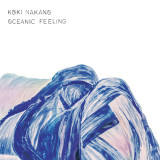
KOKI NAKANO - OCEANIC FEELING

Koki Nakano

OCEANIC FEELING

12inchNOFLP53
NO FORMAT
13.05.2022

Following Pre-Choreographed released in April 2020 where he mixed his classical pieces with electronic sounds and started developing the relationship between dance and music, Japanese pianist Koki Nakano is back with Oceanic Feeling. The music deals with his inability to fully live in this so-called oceanic feeling, capturing thus the composer's longing, frustration and ultimately search for harmony within his own limitations. He composed much of Oceanic Feeling while watching dancers move to what he played and the album's singles come accompanied by mesmerizing videos featuring renowned choreographers and performers such as Tess Voelker and Marion Motin. Musically speaking, Nakano is constantly moving through the grey area between intellect and instinct on Oceanic Feeling. Tracks oftentimes feel simple, and in that simplicity, genuinely touching. Yet behind every piano key is a complex, layered recording system developed by the artist himself that gives sounds a unique depth. Oceanic Feeling is an impressive avantgarde journey that moves and stirs without ever losing balance.

Сделать предзаказ13.05.2022

он должен быть опубликован на 13.05.2022

18,45
Doctors Of Madness - Dark Times

RIYL: Velvet Underground, Lou Reed, Nick Cave, Patti Smith, Leonard Cohen, Iggy Pop, Radiohead & Tom Waits. "If you have never heard the Doctors of Madness, you should. Musically they are the Velvet Underground, New York Dolls with shades of glam, hippie, prog and punk all rolled into one, yet are still totally original. Vastly underrated, they should have been huge. Pure genius" Vic Reeves…. The DOM are “the missing link between David Bowie & The Sex Pistols” (The Guardian May 2017). Exploding onto the music scene in 1975 with their theatrical, William Burroughs-inspired Sci-fi nightmare, they were misunderstood by many, but those who knew understood the importance of the band’s dangerous, uncompromising approach to lyrics, to music and to performance. Among the many fans of the band were acts as diverse as The Damned, Vic Reeves, Joe Elliott of Def Leppard, Spiritualized, Julian Cope, The Adverts, The Skids and Simple Minds. The Sex Pistols supported them, so did The Jam & Joy Division. They were the first to combine the avant-garde approach of The Velvet Underground with a distinctly European aesthetic. The blue hair, exotic stage-names, the lyrical themes of urban decay, political propaganda, mind control and madness were all taken up by the punk bands who followed in their wake. The DOM were trailblazers, pioneers, adventurers…pushing the boundaries of rock music and theatre to see how far it would go before it bust. What happened after them was due, in no small part, to what they achieved in 3 short years. They may not have been Jesus Christ, but they were, arguably, John the Baptist!!! Now, 40 years after they imploded, they are back…with an album seething with lyrical anger and passion. It is the most potent and incisive musical dissection of modern life and contemporary politics released the decade. With tracks titles like “So Many ways To Hurt You”, “Sour Hour”, “Make It Stop!” and the ground-breaking sonic assault of the title track “Dark Times”, Richard “Kid” Strange proves once again that he has his finger firmly on the pulse of our times, just as he had when he founded the band in 1974. Produced by John Leckie (Radiohead, Stone Roses, Pink Floyd), the new album, Dark Times, features contributions from Joe Elliott (Def Leppard), Sarah Jane Morris (Communards), Terry Edwards (PJ Harvey, Nick Cave etc), Steve ‘Boltz’ Bolton (The Who, Scott Walker) and the young protest singer Lily Bud, alongside the current thrilling and thunderous DOM rhythm section of Susumu Ukei (bass guitar) & Mackii Ukei (drums) of the Japanese extreme glam-metal band Sister Paul, and Dylan O Bates (violin and keyboards). Julian Cope, another rock star who, like Strange, found the confines of music too tight for his ambition, his energy and his imagination, was blown away when he first heard the songs, declaring, “These Dark Times are enormously informing: the RULES OF THE FUTURE are indeed being forged right now”. Top producer Martyn Ware (Human League/Heaven 17) said the album “…reminds me of Iggy Pop’s Kill City album – love it.” and Biba Kopf (The Wire) declared, “Still listening to new DOM album with immense interest and pleasure”. The first single, Make It Stop!, is an impassioned howl against the global drift to right wing extremism and persecution of minorities, and is already a live showstopper for the band. It features the thrilling cross-generational combination of Def Leppard’s Joe Elliott and Lily Bud on backing vocals. In the period since the last DOM gig in 1978, Richard has written a memoir, collaborated on a cantata with internationally celebrated composer Gavin Bryars, worked as an actor on films with Tim Burton, Martin Scorsese, Harmony Korine & Jack Nicholson, toured the world in a Russian version of Hamlet with James Nesbitt as his grave-digging co-star, played Glastonbury, sung baritone in the British premiere of Frank Zappa’s200 Motels at the Royal Festival Hall, directed a multi-media evening celebrating the life and work of William Burroughs, won Best Art Film Prize at the Portobello Film Festival last year, had his own live talk show, worked with Tom Waits and Marianne Faithfull on the William Burroughs/Robert Wilson stage play The Black Rider, curated events for the Tate Gallery, and sung Walt Disney songs with Jarvis Cocker.

Сделать предзаказ13.05.2022

он должен быть опубликован на 13.05.2022

15,92
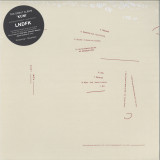
LNDFK - Kuni LP

LNDFK (aka Linda Feki) presents her ground-breaking debut album, "Kuni" on Brooklyn-based Bastard Jazz Recordings. Undeniably on the rise after her 2019 breakout performance at Primavera Sound, LNDFK has already caught the attention of Pitchfork, Rolling Stone, Clash Magazine, Noisey, and Brooklyn Vegan (among many others) while being championed by the likes of Gilles Peterson, Tom Ravenscroft, and Jamz Supernova & landing spots on tastemaker playlists like Spotify's "Pollen" and "Fresh Finds."

"Kuni" is a spellbinding exploration of dichotomies: Love & Death (Eros & Thanatos), Flower & Fire, Delicacy & Violence, Poetry & Realism, Purification & Destruction. These opposites are reified in the 10-track LPs multifarious and multifaceted sounds, elegantly meandering through a variety of styles and genres, spearheaded by Linda and features the production wizardry of Darrio Bassolino who co-wrote the album.

"Kuni" opens with "Hana-bi," an ambient instrumental piece that sets the tone for the album. Inspired by the Takeshi Kitano 1997 film of the same name – particularly Joe Hisaishi's stunning soundtrack, as well as Kitano's paintings which appear in the film. "Hana-bi" expresses the dialoguing opposites of flowers and fire, the first of many dichotomous representations throughout the album. "Takeshi" acts as an extension and to "Hana-bi," albeit one of opposing sound, with its driving, highly syncopated drums (which reappear throughout "Kuni") – à la Karriem Riggins, Questlove, or Yussef Dayes – frenetic bass line, and jazz chords. Linda's sultry voice is interspersed, initially jumping around in scat fashion, being triggered as if a sample, before her lyrics come in; her vocals are used like an additional instrument, adding to the song's rich texture. "Kuni" truly hits its stride with the next song, "Smoke – a moon or a button" (its title lifted from the 1959 book by Ruth Krauss and Remy Charlip), which is structured like a jazz standard yet flows into neo-soul territory sonically with those prodigious drums a highlight once again.

LNDFK touches on experimental hip hop in two songs on the record (both of which were released as singles in 2021): "Don't Know I'm Dead or Not (feat. Chester Watson)" – track #4 – and "How Do We Know We're Alive (feat. Pink Siifu)" – track #9. Although they embrace a more hip hop-leaning sound, these songs by no means shy away from the exploratory theme, and feature two of the alt-rap scenes rising stars with Chester Watson and Pink Siifu who offer provocatively impressing verses, combining dense word play with unconventional flows. While these tracks may first appear to be outliers on the album, they are undeniably in tune with "Kuni's" message and sonic palette, acting as testaments to LNDFK's willingness to explore and experiment.

Meanwhile, "Ku" – the third and last single before the album release – furthers the pre-established future soul sound while meandering through nu jazz and left-field electronic. Inspired by the graphic novel and film, "Sin City," and its female assassin protagonist Miho, "Ku" is a musical interpretation of Miho's story, incorporating both her beauty – the first half of the song – and murderous tendencies – the second half – to create a stunning juxtaposition, culminating in an ambient finale that suggests the character's vulnerability and inner peace. The song gracefully bridges the gap between Hiatus Kaiyote-esque songwriting, Dilla's rhythmic syncopation, and Thundercat's instrumental prowess (LNDFK has shared a stage Brainfeeder labelmate Kamasi Washington).

Mixed in throughout "Kuni" are a series of instrumental pieces that function as something akin to an interlude. The aforementioned intro, "Hana-bi," and the album closer "se mi stacco da te, mi strappo tutto:" act as bookends, while "Om" indicates the half-way mark, and "Ktm" sees Jason Lindner add his sound the album. These tracks are the ambient foundation of "Kuni," representing the thematic duality of the work. Clocking in at only 24 minutes, "Kuni" packs an astonishingly diverse array of sounds, styles, and themes, all while showcasing virtuosic musicianship and instrumental prowess.

Appearing on "Hana-bi" and "Ktm," renowned international artists Asa-Chang and Jason Lindner add an additional perspective to "Kuni": Asa-Chang on "Hana-bi," and Jason Lindner on "Ktm." Asa-Chang - famously of the Japanese avant-garde group Asa-Chang & Junray - provides vocals and percussion to an alternate version of the instrumental opener, while the acclaimed keyboardist Jason Lindner offers his synth expertise on "Ktm." These features highlight the spirit of collaboration found in LNDFK's music, always willing to try out new ways of working.

LNDFK is a singer and songwriter, born of two cultures – an Italian mother and Arab father. She grew up in Naples, away from her father, the Sahara, her homeland and traditions, which has helped nourish the desire to rediscover – through art – an engagement to her roots. Her music melts with jazz, neo-soul and hip-hop influences, filtered through her experiences and sensibility.

Her first EP, "Lust Blue," was composed with the artistic production of Dario Bass and released by Feelin' Music; after that she released several singles that saw international radio support (BBC, NTS, Wordwide FM) and gained a massive audience on digital platforms. Together with her band, she toured around Europe, performing alongside such notable artists as Kamasi Washington and Mndsgn, among others. Most recently she toured Italy, and performed at Primavera Sound Festival 2019 in Barcelona.

"Kuni," is due out on NYC label Bastard Jazz Recordings in February, 2022, while the vinyl LP will follow shortly after.

нет на складе

Закажите сейчас, и мы закажем товар для вас у нашего поставщика.

20,55

Последний логин: 4 г. назад
Tenniscoats - Papa's Ear

Tenniscoats

Papa's Ear

12inchMORR184-LP
Morr Music
06.05.2022
 
12

Just over a decade ago, Japanese indie-pop duo Tenniscoats recorded »Papa's Ear« (2012) and »Tan-Tan Therapy« (2007), two albums made with musical and production help from Swedish post-rock/folk trio Tape. Originally released on Häpna, they are beautiful documents of the exploratory music made by a close-knit collective of musicians, fully at ease with each other, playing songs written by Tenniscoats and arranging them in gentle and generous ways. Released during a particularly productive time for Tenniscoats – during the late ‘00s and early ‘10s, they would also collaborate with Jad Fair, The Pastels, Secai and Pastacas – they have, however, never been available on vinyl. In collaboration with Alien Transistor, Morr Music is now reissuing these albums both digitally and on double vinyl, with extra tracks.

This reissue mini-series starts with »Papa’s Ear«. The second album from this expanded line-up of Tenniscoats, you can hear the musicians are immediately comfortable in each other’s presence, and they’ve almost intuitively understood what they can offer to one another. Saya and Ueno of Tenniscoats bring their magical, gentle folk-pop sensibility, and their winning way with straightforward, yet lush melodies. Johan Berthling, along with fellow Tape member Tomas Hallonsten, plus guests Fredrik Ljungkvist, Lars Skoglund, Andreas Söderstrom and Andreas Werlin, all generous and creative presences in the Swedish jazz underground, shades in the songs with endlessly inventive arrangements, highlighting the warmth and curiosity at the core of the Tenniscoats’ aesthetic – sometimes taking the songs in unexpected directions, other times pillowing the melodies with the softest of brushstrokes and the kindest of tones.

»Papa’s Ear« includes some of Tenniscoats’ most memorable songs. »Papaya« is a lustrous dreamland of a song, with the Swedish musicians singing ‘pa-pa-ya’ as an enchanted tattoo, while Saya’s piano and melodica clank and huff out, further expanding the song’s horizon. It’s followed by the spindly and mysterious »Sappolondon«, where drums and double-bass shuffle and pulse under weeping accordion and bittersweet clarinet. Saya’s voice sighs into the frame while the musicians breathe lungfuls of sweet drones and flick glittering countermelodies across the song’s surface. It reminds a little of the wild kindness of Movietone, or the regal charm of Carla Bley’s compositions.

Elsewhere, you can hear Tape and their friends embracing the freedom offered by the songs of Tenniscoats: see, for example, the glistening electronics in »På floden«, like a keyboard conducting a music box on a distant planet; or the descending phrase for winds on »Sabaku«, dovetailing beautifully into a creek of moon-lit texturology. The double-LP ends with two extra tracks, drawn from the 2008 Tenniscoats/Tape split single, also released by Häpna., »Lutie Lutie« is a sweet delight, driven by a clacking drum machine, the Tenniscoats duo joined by Hallonsten on glockenspiel and synthesizer, and special guest, Japanese indie-pop legend Kazumi Nikaido, as choir. »Come Maddalena« rounds off the set, a brooding cover of an Ennio Morricone tune, the music by Tape, the vocals by Tenniscoats and Nikaido. Open-hearted and full of puckish spirit, »Papa’s Ear« is an album of great tenderness and warm friendship.

Сделать предзаказ06.05.2022

он должен быть опубликован на 06.05.2022

28,36
Sigh - Eastern Darkness LP 2x12"

Sigh

Eastern Darkness LP 2x12"

2x12inchVILELP893
Peaceville
06.05.2022

EXTENSIVE COLLECTION OF SIGH'S EARLY DEMOS, EP's & RARITIES,
PRESENTED ON DOUBLE CD FORMAT - INCLUDES INTERVIEW & LINER
NOTES COURTESY OF MAINMAN MIRAI KAWASHIMA ON THE
FORMATIVE YEARS OF THE JAPANESE LEGENDS.Cult Japanese black
metal legends Sigh formed in 1989/90, featuring mainman Mirai
Kawashima, Satoshi Fujinami & Kazuki Ozeki
Following initial demos, Shinichi Ishikawa was brought into the band, & Kazuki
removed from the line- up. It was following this shift that the band set about
recording the masterpiece debut 'Scorn Defeat' for Euronymous' Deathlike Silence
Productions, going on to become one of the country's greatest & most revered
metal exports. With a journey through the strange & the psychedelic,
incorporating a whole eclectic mix of genre styles & experimentation throughout
their career, Sigh has remained a vital creative force in the avantgarde field.
However, at its core, Sigh has always remained true to its roots of old school
metal. 'Eastern Darkness' contains a comprehensive collection of Sigh's early rare
works showing their swift musical evolution as well as the strong utilisation of
keyboards in their compositional process throughout. The collection includes the
band's legendary demo tapes, 'Desolation', & 'Tragedies', plus their EP's & rarities,
as well as contributions to various compilation releases in the mid 1990's.
Considering Sigh's well- known regard for UK legends Venom throughout their
career, 'Eastern Darkness' also contains the band's own tribute to the 1980's black
metal pioneers, in the form of tribute 'To Hell & Back', originally released on tape
in 1995.
This edition of 'Eastern Darkness' is presented on double disc CD format &
includes a 12- page booklet featuring an interview with Mirai Kawashima about
the early years of the band, along with his recollections of the origins of each title
contained within the release, three decades on from Sigh's formation.

Сделать предзаказ06.05.2022

он должен быть опубликован на 06.05.2022

39,71
Takayanagi Masayuki New Direction for the Art - La Grima

Famed free jazz concert registration of an early New Direction for the Art performance. Recorded in 1971. Old-style Gatefold LP, with rare photographs & extensive liner notes by Alan Cummings.

The performance by Takayanagi Masayuki New Direction for the Art at the Gen’yasai festival on August 14, 1971 was an intense, bruising collision between the radical, anti-establishment politics of the period in Japan and the febrile avant-garde music that had begun to emerge a few years before. The ferocious performance that you can hear here was received with outright hostility by the audience, who responded first with catcalls and later with showers of debris that were hurled at the performers. Takayanagi though described the group’s performance to jazz magazine Swing Journal as a success, “an authentic and realistic depiction of the situation”.

In 1962, Takayanagi, bassist Kanai Hideto and painter Kageyama Isamu went on to form an AACM-style musicians’ collective called the New Century Music Research Institute. Every Friday, members gathered at Gin-Paris, a chanson bar in the fashionable Ginza district of Tokyo, to push the outer limits of jazz creativity.

But the pivotal moment for his music was the creation a new trio version of his New Directions group in August 1969, with the free bassist Yoshizawa Motoharu and a young drummer Toyozumi (Sabu) Yoshisaburō. Experiments eventually led to the creation of two basic frameworks for improvisation that Takayagi referred to as Mass Projection and Gradually Projection.

“La Grima” (tears), the piece that was played at the Gen’yasai festival, is a mass projection and listening to it, you can get a clear sense of what Takayanagi was aiming at. Mass projection involves a dense, speedy and chaotic colouring in of space that destroys the listener’s perception of time, and thus of musical development.

The ferocity of the performance of “La Grima” at the Gen’yasai Festival in Sanrizuka on August 14, 1971 was consciously grounded by Takayanagi in a particular historical moment, ripe with conflict and violence. A month after the festival, on September 16, three policemen would die during struggles at the site. This was the context that the three-day Gen’yasai Festival existed within. The line-up reflected the radical politics of the movement, with leading free jazz musicians like Takayanagi, Abe Kaoru, and Takagi Mototeru appearing alongside radical ur-punkers Zuno Keisatsu, heavy electric blues bands like Blues Creation, and Haino Keiji’s scream-jazz unit Lost Aaraaff.

New Direction for the Arts trio topped the bill on the opening day, playing an aggressive, uncompromising “mass projection” set of polyphonic improvisation. Alongside drummer Hiroshi Yamazaki and saxophonist Kenji Mori, Takayanagi soloed hard and continuously for forty minutes. This was performance as precisely calibrated metaphor: three musicians responding to the demands of the moment with instinctive force and fury, untethered by rules, leaderless yet not rudderless (the direction part of the group’s name was no accident). The piece was entitled La Grima – tears - and the fusion between the palpable anger of the performance and hopeless sadness of its title were also perfectly apt for the situation. This was a fight that the state was always going to win. Yet, by all accounts, the band’s set went down like a fart at a funeral. The band were showered with catcalls and debris throughout, and by chants of “go home” when the music finally came to an end.

However, looking back at the event in the year-end issue of Japan’s leading jazz magazine, Swing Journal, Takayanagi was surprisingly upbeat: New Directions brought a solid political consciousness to our performance and succeeded in an authentic and realistic depiction of the situation. But journalism revealed its superficiality in its inability to penetrate the core of the music. I don’t know much about anyone else, but we at least left behind a competent record.

It’s a fascinating statement in many ways. Perhaps on one-hand it can be read as stubborn, solipsistic and self-justifying, yet in conjunction with his statement in 1971 there are points that guide us towards an understanding of just what Takayanagi intended with his performance at the festival. As Kitazato Yoshiyuki has argued, it becomes an almost religious act, directed at the earth deities of the land. A union of anger, sorrow and malevolence that can be placed nowhere effective, all it can do is find expression and channeling. The forcible land seizures at Narita, the eviction of farmers from land that had been in families for generations, the destruction of communities: none of this can be prevented, not least by an artistic action. All that can be done is an attempt to mark the land itself, to soak it with the combined force of emotions and the volume of the performances, to bury something there that cannot be drowned out, even by the coming roar of jet engines.

Сделать предзаказ06.05.2022

он должен быть опубликован на 06.05.2022

25,17
THE JESUS AND MARY CHAIN - DAMAGE AND JOY

Originally released in 2017 on the band's own label Artificial Plastic and now being reissued by Fuzz Club Records, 'Damage And Joy' is the seventh studio album from Scottish alt-rock legends The Jesus and Mary Chain. The long-awaited follow-up to 1998's 'Munki', 'Damage And Joy' was the band's first studio album in nearly two decades and contained brand new material alongside reimagined versions of songs that had been released in various forms by the Reid brothers in between the Mary Chain's 1999 break-up and 2007 reunion. Co-produced by Youth (Killing Joke) and featuring the lead singles 'Amputation' and 'All Things Pass', 'Damage & Joy' also featured guest appearances from Scottish singer-songwriter Isobel Campbell ('The Two of Us', 'Song For A Secret') and American alt-pop star Sky Ferreira ('Black And Blues'). 'Damage And Joy' is now being given a deluxe, expanded vinyl reissue. The double LP is reissued on both black and coloured 180g vinyl with remastered audio by Pete Maher (U2, The Rolling Stones, Jack White, Liam Gallagher), a heavy tip-on-printed gatefold sleeve, printed inner-sleeves and a 16-page booklet, plus bonus tracks and an alternative track-order. Included in this reissue and available on vinyl for the very first time is 'Ono Yoko' (originally only available on the Japanese CD version of the album), as well as alternative versions of 'The Two Of Us' featuring Sky Ferreira and 'Black And Blues' featuring Isobel Campbell.

Сделать предзаказ06.05.2022

он должен быть опубликован на 06.05.2022

31,72
THE JESUS AND MARY CHAIN - DAMAGE AND JOY

The JesusandMary Chain

DAMAGE AND JOY

2x12inchFCVDEIE16612
Fuzz Club Records
06.05.2022

Originally released in 2017 on the band's own label Artificial Plastic and now being reissued by Fuzz Club Records, 'Damage And Joy' is the seventh studio album from Scottish alt-rock legends The Jesus and Mary Chain. The long-awaited follow-up to 1998's 'Munki', 'Damage And Joy' was the band's first studio album in nearly two decades and contained brand new material alongside reimagined versions of songs that had been released in various forms by the Reid brothers in between the Mary Chain's 1999 break-up and 2007 reunion. Co-produced by Youth (Killing Joke) and featuring the lead singles 'Amputation' and 'All Things Pass', 'Damage & Joy' also featured guest appearances from Scottish singer-songwriter Isobel Campbell ('The Two of Us', 'Song For A Secret') and American alt-pop star Sky Ferreira ('Black And Blues'). 'Damage And Joy' is now being given a deluxe, expanded vinyl reissue. The double LP is reissued on both black and coloured 180g vinyl with remastered audio by Pete Maher (U2, The Rolling Stones, Jack White, Liam Gallagher), a heavy tip-on-printed gatefold sleeve, printed inner-sleeves and a 16-page booklet, plus bonus tracks and an alternative track-order. Included in this reissue and available on vinyl for the very first time is 'Ono Yoko' (originally only available on the Japanese CD version of the album), as well as alternative versions of 'The Two Of Us' featuring Sky Ferreira and 'Black And Blues' featuring Isobel Campbell.

Сделать предзаказ06.05.2022

он должен быть опубликован на 06.05.2022

33,07
Seikatsu Kojyo Iinkai - Seikatsu Kojyo Iinkai

Ferocious JP / US free jazz bomb. A rare meeting between the NYC free jazz scene and the Japanese free music scene. Old-style Gatefold LP, with rare photographs & liner notes by Alan Cummings.

Following hot on the heels of the first, mid-sixties generation of Japanese free jazz players like Kaoru Abe, Masayuki Takayanagi, Yōsuke Yamashita, Motoharu Yoshizawa, etc., an exciting second wave of younger players began to emerge in the seventies. Two of its leading members were the saxophonist Kazutoki Umezu and multi-instrumentalist Yoriyuki Harada. Both were post-war babies and immigrants to the city, Umezu from Sendai in the north and Harada from Shimane in the west. They first met as students in the clarinet department at the Kunitachi College of Music, a well-known conservatory in western Tokyo. Harada was already securing sideman gigs on bass with professional jazz groups and was active in student politics, making good use of his connections to set up jazz concerts on campus. It was around this time that the two began to play together in an improvised duo, with Umezu on clarinet and bass clarinet and Harada on piano. They also experimented with graphic scores and prepared piano.

These experiments eventually led to the creation of a trio, with a high-school student called Tetsuya Morimura on drums, that they decided to name Seikatsu Kōjyō Iinkai (Lifestyle Improvement Committee) in joking reference to the Marxist discourse of the student radicals of the time. Around 1973, Umezu and Harada decided to call it a day and go their separate ways. Umezu began playing with the Toshinori Kondo Unit and Harada with the Tadashi Yoshida Quintet. In 1974 Harada formed his own trio and began to play at jazz coffeehouses across Japan.

Then, in September 1974 Umezu travelled alone to New York, where he set about building connections with the loft jazz scene in the city. It was a fortuitous moment to arrive in New York. Rents were cheap in the Lower East Side, possibilities for squatting existed, so many musicians and artists had moved to the area. Umezu soon became known on the scene as Kappo and he started to make connections with some of the young musicians like David Murray, Arthur Blythe, and Oliver Lake. He recalls making the rounds of the lofts every evening, checking out the performances, and getting the chance to sit in with many groups including Juma Sultan’s Aboriginal Music Society and trumpeter Ted Daniel’s orchestra.

Things were going so well that Umezu wrote to Harada and invited him to come to New York. He accepted and arrived in the city in July 1975. Harada and Umezu took the opportunity to resume their artistic collaboration. Their first concert together in over two years took place on July 20th at another loft, Sunrise Studios at 122 2nd Avenue. Umezu remembers Sunrise as an unusually sunny loft with the rarest of things, a grand piano. He invited along Ahmed Abdullah, a trumpeter he had got to know while playing with Ted Daniel. Abdullah led his own group and was a long-term Sun Ra sideman. William Parker, one of the key figures in the loft jazz scene of the period, was on bass. Abdullah also brought along Rashid Sinan on drums. Sinan drummed in Abdullah’s units throughout the seventies, but he had also played on Frank Lowe’s immortal Black Beings album and collaborated with Arthur Doyle, playing on Doyle’s Alabama Feeling album. By all accounts the evening was a huge success, with speed and dynamism of Harada’s piano playing gaining him lots of support.

Since they had managed to save some money from their day jobs, Umezu and Harada decided to set up a recording session with the same line-up on August 11 at Studio We, where there was a well-equipped studio on the third floor. Umezu recalls the session as follows, Of course, we recorded our performances in one take, with zero retakes as far as I remember. On all the tracks we recorded, we moved as one unit, sharp and fast. That was the nature of Lifestyle Improvement Committee, New York Branch.

Umezu and Harada would later become known for the elements of parody and entertainment that they brought to their music, a freewheeling blend of pastiche, humour and on-stage performativity that paralleled the approaches of the Art Ensemble, Sun Ra, and Holland’s ICP. But here, on their first recordings, the humour element is not yet present. Instead, there is a febrile sense of joy in creation and connection. On the Umezu-penned “Kim”, for example, Harada opens the piece with a speedy exploration of the full-range of the keyboard, hitting hard on the bass keys to create a rhythmic bed out of which patterns begin to emerge. Umezu enters at a much slower pace, longer held notes that at first float weightlessly over the urgency of the piano before they begin in splinter and accelerate. When Parker and Sinan kick in, it’s a rollicking tempo with Parker plucking deep and hard and the left-handed Sinan skittering hard across the topside of his kit. Abdullah kicks in a glorious solo twelve minutes in, bright and breathy at once. The piece slows and grows more spacious towards the end, giving Parker a chance to showcase some arco work that shades beautifully into the air against Abdullah’s trumpet.

Сделать предзаказ06.05.2022

он должен быть опубликован на 06.05.2022

25,17
Tibor Szemző - Snap #2

Tibor Szemző

Snap #2

12inchFB066
Fodderbasis
06.05.2022

Tibor Szemző's new LP features two composition, »The Other Shore« & »CUBA«. As the album title implies, »Snap #2« can be considered a sequel to his cult album »Snapshot from the Island« (released in 1987). Back then the island was a metaphor for isolation, while »Snap #2« offers Szemző’s reflections of his visits to real islands, Cuba (1988-1990) and Japan (1992-1994). As usual, Tibor Szemző processed the themes both visually and musically and has presented them many times live as cinematographic performances.

A previous version of »The Other Shore« was released in 1999 on CD. On this album, the original recording from 1997 is used; it has been recomposed, remixed and remastered and some additional recordings have been included. The core of Szemző’s Gordian Knot ensemble of the mid-nineties (Tibor Szemző on bass flute, Péter Magyar on drums and Tamás Tóth on bass guitar) has been enlarged by a string section and additional percussionists. The Other Shore composition has a multilayered texture; it starts with strings and is followed by prerecorded voices reciting the Sutra of the Lotus Flower of the Wonderful Law (Myôhô-Renge-Kyô in Japanese), the most important sutra of Mahayana Buddhism. Then percussion introduces the basic beat of the piece and the voice of the 102 year-old Buddhist priest Ônishi Ryôkei giving a lecture on Kannon sutra is heard. The following uneven entries of drums and bass guitar are like paint brush strokes in Zen calligraphy. The long tones of Szemző’s bass flute enters the piece as the last element suggesting itself as a connecting thread through all previous layers.

When Tibor Szemző first visited Cuba in 1988, he had just started shooting film on 8mm, something of a personal diary. When he met Jonas Mekas in Budapest a few years later, he realized that this footage could be screened publicly and also be an integral part of live performances. »CUBA« is the recording from 2000 of one such performance and was remixed by the author in 2021. It is as similar to and yet different from »The Other Shore«. The Gordian Knot band seemingly structures the piece in the same way, but the resulting sound is much heavier especially thanks to drummer Péter Magyar. Nevertheless, the contributions of Szemző on bass flute, Mihály Huszár on electric bass and T. Bali on prepared electric guitar also inject the proper rock sting. Incorporated Havanna street sounds and local radio broadcasts recorded by the author provide even more steamy roughness to the sound of Szemző’s »CUBA«.

The cover design of the »Snap #2« with photo reproductions from Szemző’s films reflects the aesthetics of the Snapshot from the Island album. This vinyl LP runs at 45 RPM for better sound quality.

Сделать предзаказ06.05.2022

он должен быть опубликован на 06.05.2022

23,74
GOWDY, T. - MIRACLES

Gowdy,T.

MIRACLES

12inchCSTLP165
Constellation
06.05.2022

T. Gowdy has kept up a productive albeit mostly virtual pace since the release of Therapy With Colour (his third full-length album and first for Constellation) which dropped just as things were locking down back in spring 2020: performances at numerous festivals including MUTEK Montréal, Node Festival and NEW NOW; audiovisual pieces exhibited at various European galleries and events; a track and video for Constellation's Corona Borealis Longplay Singles Series; sound design for the documentary Atalaya by filmmaker Emma Roufs. Gowdy now returns with Miracles, his second full-length for Constellation, which draws on source materials originally performed in 2018 for an unreleased audio/visual project based around surveillance footage_a precursor to videocapped, monitor-based horizons that soon took on new meanings. Re-immersing himself in those recordings, Gowdy disassembles and deploys them as raw source material for new experiments with vactrols, noise gates and analog-to-digital triggering and aliasing, the original recordings juxtaposed anew amidst their successive textural and rhythmic treatments. Gowdy keeps this re-composition process stripped down, elemental and purposive, guided by an ascetic Aufhebung: synthesis as sublation_subjecting a temporal material/theme to analysis and transformation, reintegrating to form a whole that overcomes what it preserves without erasure, reshaping and intrinsically carrying its origins forward. Where Therapy With Colour was strictly and rigorously a set of stereo live performances, Miracles fuses iterative_though still spartan_layers of performance. "Therapy With Colour was about healing through self-hypnosis; Miracles is about forging a future with memory through subjection to trigger mechanisms" notes Gowdy. The result is a captivating collection of minimal IDM and oscillated electronics from the Montréal/Berlin producer, working primarily in a 120-140 BPM zone of tonal percussion and corrugated pulse. Gowdy's sensibility and sound palette gets deeper and dirtier, summoning new pathways of alluvial flicker and abraded euphoria. As the album progresses, low-pass gate vactrols coalesce into a clear and vital theme, conveying immanence through woody timbres at times reminiscent of the Shinrin-yoku aesthetic (Japanese `forest bathing'), though always with a grainy transcendence rather than invoking any clean pure sheen. Gowdy consistently heats and heightens the presence of each component in the mix, balancing different elements in democratic compression/distortion, attaining an unornamental and earnest form of mantric-industrial majesty. Miracles is live, corporeal, activated electronic music of the highest caliber, deployed with monastic and meditative focus.

Сделать предзаказ06.05.2022

он должен быть опубликован на 06.05.2022

22,48
MONKEY TIMERS - KLUBB LONELY LP (2x12")

"This limited release is a collaboration between Monkey Timers DISKO KLUBB and a Japanese record label from Amsterdam trusted by fans & artists around the world, Sound Of Vast.

Monkey Timers are gaining support in Japan and abroad as a DJ / production unit that is pioneering the next phase of the Japanese new house and disco dub music scene. They will be releasing their long-awaited full-length album ‘KLUBB LONELY’ in collaboration with DISKO KLUBB and Sound Of Vast as a 2LP set limited to 500 copies worldwide.

The album will be packed with collaborations with vocalists / producers / musicians from Japan and abroad including a cover of Dusty Springfield's ‘That's The Kind Of Love I've Got for You’ featuring Lisa Tomlins, who is known for her vocals on Lord Echo and Recloose albums. Also featuring are Berlin-based Mr. Ties; Keith Sano, a promising talent from Okayama who is gaining international attention; MIRRROR, an up-and-coming Japanese-American hip-hop unit; DJ Sammo Hung Kam-Bo (Omoide Baka Yarou ATeam); Marimba player Mami Tsunodou, who is a supporting member of cero, KIRINJI, etc. and many more.

Mixed and mastered by Justin Van Der Volgen (MY RULES). The cover design was done by C.E designer Sk8Thing. "

нет на складе

Закажите сейчас, и мы закажем товар для вас у нашего поставщика.

23,74

Последний логин: 3 г. назад
Продуктов на странице:
N/ABPM
Vinyl