Released in July 1963, "Impressions" is a compilation of recordings from various sessions between 1961 and 1963 of John Coltrane. The album showcases the range of Coltrane's musical interests, from modal jazz and hard bop to ballads, reflecting his evolving style during the early 1960s and received positive reviews for its adventurous spirit and technical brilliance. Critics and fans alike praise the album for capturing a pivotal moment in Coltrane's career as he moved towards more experimental and spiritual jazz. The early 1960s were a period of significant evolution for Coltrane. Having recently left Miles Davis's sextet, Coltrane was delving deeper into modal jazz, a style that focuses on scales (or modes) rather than traditional chord progressions. This period saw Coltrane pushing the boundaries of jazz with extended solos, complex improvisations, and a deeper spiritual search, which would later culminate in his iconic album "A Love Supreme."
Suche:jazz co
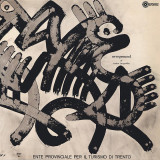
Sonor Music Editions presents this restored issue of Maestro Sandro Brugnolini's Overground. This elusive masterpiece in library music captures the most impressive work, alongside Underground (1970), of the Italian composer and alto sax player.
Sandro Brugnolini was a prominent member of the Modern Jazz Gang, a famous Italian jazz group, during the 1950s and 60s, which also included Amedeo Tommasi, Cicci Santucci, and Enzo Scoppa. The group was active from 1956 to 1965 and produced some remarkable albums such as Miles Before And After (1960) and the original soundtrack from Gli Arcangeli (1962), which featured the renowned American jazz singer, Helen Merrill. Subsequently, he recorded many of the genre's most iconic releases, including Feelings (1974), albeit uncredited, and ventured into Psychedelic Lounge Funk and Progressive Jazz Beat tunes.
Overground was released on Sincro Edizioni Musicali in 1970 as the soundtrack to Enrico Moscatelli and Mario Rigoni's documentary Persuasione, commissioned by Ente Provinciale Per Il Turismo Di Trento, a local tourism board in Italy, with music composed by Sandro Brugnolini and Luigi Malatesta featuring some of the best musicians in Italy at the time like Angelo Baroncini and Silvano Chimento on guitars, Giorgio Carnini on piano and organ, Enzo Restuccia on drums, and Giovanni Tommaso on bass and effects. The music spans from underground Psychedelic Prog. Rock with swirling organs, trippy effects, and distorted fuzz guitars to sophisticated Lounge grooves with Avant-garde orchestrations.
The music has been transferred and remastered from the original master tapes. It has been lacquer cut in stereo by Jukka Sarapää at Timmion Cutting and packed in a thick cardboard sleeve featuring a fully restored painting by Umberto Mastroianni licensed by Centro Studi dell’Opera di Umberto Mastroianni
- Politely
- Whisper Not
- Now's The Time
- The First Theme
- Moanin' With Hazel
- We Named It Justice
- Blue March For Europe, N* 1
- Like Someone In Love
- Along Came Manon
- Out Of The Past
- A Night In Tunisia
- Ending With The Theme
Art Blakey and the Jazz Messengers' tremendous concert at Club Saint Germain in Paris on December 21, 1958. This record presents the complete set and is produced as a three LP gatefold album with each vinyl one of three different colours: blue, white and red, representing the French flag. Au Club Saint Germain it's a memorable record and winner of numerous awards including the prestigious Grand Prix du Disque in 1959 from the Academie Charles Cros. Art Blakey and his Jazz Messengers are here with Lee Morgan on trumpet, Benny Golson on saxophone, Bobby Timmons on piano and Jymie Merrit on double bass. Drummer Kenny Clarke was living in Paris at the time and joined the group for the songs "A Night in Tunisia" and "Ending with the Theme" resulting in a session that will go down in jazz history!
Borned In Ya zeigt Carpers langjährige musikalische Einflüsse ebenso wie ihre künstlerische Entwicklung und ihren Sinn für Abenteuer.
Neben ihrer bekannten Mischung aus Country mit Jazz, Blues, Soul und R&B setzt Carper auf dem neuen Album ihre subtile Mischung dieser Elemente fort und kreiert Songs, die die Genres kreuzen und an die "populären" Sounds einer anderen Ära erinnern. Von Refrains im Gospel-Stil über funkige Grooves, die an den klassischen R&B der 50er und 60er Jahre erinnern, bis hin zu Hillbilly-Jazz, Honky-Tonk und Country-Soul - Carper hat ein weiteres Meisterwerk geschaffen.
Melissa Carper wollte dem Old-School-Sound der 1940er- und 1950er-Jahre treu bleiben, den die Fans von ihren von der Kritik gefeierten Alben Daddy's Country Gold (2021) und Ramblin' Soul (2022) kennen und lieben, und gleichzeitig ihre einzigartige Mischung aus Blues, Soul, frühem Rock'n'Roll, Jazz, Western Swing und Country-Sounds einbringen.
Prolific Danish drummer Emil de Waal has come to be known for his unique and personal contributions to a wide variety of musical projects in jazz, pop, rock, and electronica, including Kalaha, Baghdad Dagblad, Maluba Orchestra, and his own quartet to name a few. Well versed in the art of collaboration, his new record is his first solo undertaking, combining his jazz musicianship with his affinity for the offoff-kilter and electronically manipulated. Comprised of seven original compositions, as well as creative reinterpretations of pieces by Charlie Haden, Duke Ellington, and Hans Henrik Ley/Jannik Hastrup, the record is a collection of intimate, interactive duo performances decorated with sounds and textures from the electronic world. The record s title translates to four eyes ", a double double-entendre alluding to the album s duo approach, under four eyes so to speak, as well as to the fact that de Waal wears glasses. Making a conscious effort to collaborate with more female instrumentalists as well as musicians de Waal hadn t played with before, Fire Ojne " features a wide spectrum of organic instrumental timbres on the prepared piano, clarinet, saxo-phone, pedal steel guitar, and bass flute. From sung melodies and winding improvisations to spacious, experimental textural approaches, each piece sees de Waal engage in a private conversation with a musician he s admired. From the bluesy New Orleans feel of Ellingtons Limbo Jazz "", to the glitchy, menacing, avant avant-garde groove of Halvfirs Fems "", to the spacious, twinkling, ethereal Diskurs "", the album showcases the staggering breadth of the drummer"s influences and ideas. Programmed drum beats, vast reverbs, foley recordings of flowing water, and ricocheting delays craft an expansive, surprising and inventive context for improvised music in the 21st Century.
This isn't just a seminal album. It is an estuary. All the black rivers that would form Brazilian funk/hip-hop flow through it. Led by Paulista pianist Salvador Silva Filho - Dom Salvador - 'Som, Sangue, e Raça' from 1971, one year after the explosion of Tim Maia on the scene, catalyzed the bossa nova and jazz background of its leader with the rhythm and blues of its members like saxophonist Oberdã Magalhães, nephew of samba-enredo master Silas de Oliveira and future leader of Banda Black Rio, who since the group Impacto 8 (which had, among others, Robertinho Silva on drums and Raul de Souza on trombone) had already been trying to reconcile MPB with Stevie Wonder and James Brown. Add to all this a mixture of samba, Nordestino accent, and even the black side of the Jovem Guarda represented by the authorial presence of Getúlio Cortes (older brother of Gerson King Combo, our James Brown 'cover') in 'Hei! Você'. Alongside these elements and the presence of Rubão Sabino (bass), who still called himself 'Rubens', drummer Luis Carlos (another member of Black Rio), the record enlists the trumpet and flugelhorn of symphonic musician Darcy in place of the original Barrosinho (yet one more founder of Black Rio), who was traveling during the recording but would end up being a leading force of the band.
The album 'Som, Sangue e raça' paves the way for future generations of musicians and producers of the Carioca scene at the beginning of the 1970s. The lyrics that dealt with the question of race and the explosive fusion of samba, soul, jazz, and funk, elaborated by Dom Salvador and his troupe, Abolição, established the bases for the development of new sounds and tendencies in Brazilian music.
Gary Bartz, a titan of the saxophone, has left an indelible mark on the jazz landscape through collaborations with luminaries like McCoy Tyner, Art Blakey and Miles Davis. BGP's selection of 'Celestial Blues,' featuring the soulful vocals of Andy Bey, encapsulates the essence of spiritual jazz, epitomizing Bartz's musical strength. Paired with 'Gentle Smiles (Saxy),' famously sampled by A Tribe Called Quest, this release offers a glimpse into Bartz's multifaceted artistry and enduring influence on contemporary music.
Decoy is a 1984 album by the famous jazz musician Miles Davis, recorded in 1983. Robert Irving III on keyboards took over the role that Miles had assumed with a true sense of harmony and only a rudimentary mastery of synthetic sounds and movements. Irving shared the responsibilities of directing with the trumpet player’s nephew Vince Wilburn, Jr., but Al Foster continued to lead the tempo. John Scofield drew the funk of bassist Darryl Jones in the direction of chromatic abstraction. The two tracks that he co-wrote with Miles are fragments of solos: “That’s What Happened” reprising the beginning of his solo on “Speak” (Star People). Decoy offered a good balance between the dominant funk that subsequently took over and the jazz tradition, reflected by Scofield’s angularities, Marsalis’ freedom of tone and the breath of Miles’ playing that had recovered its full power. Decoy is available as a 40th anniversary edition of 2000 individually numbered copies on smokey coloured vinyl, housed in a gatefold sleeve.
For The Elektric Band’s sophomore outing, Chick Corea - the venerated 27-time Grammy winner and National Endowment for the Arts Jazz Master - entered the studio with Dave Weckl on drums, John Patitucci on bass, and two new players who would solidify the band’s classic line up, guitarist Frank Gambale and saxophonist Eric Marienthal.
More heavily produced than its predecessor, Light Years contains several sequence-driven tracks, Corea’s attempt at reaching out to a wider audience with a brand of music that was tighter, funkier and eminently more communicative than he had recorded on 1986’s The Chick Corea Elektric Band.
The crisp, irrepressibly catchy title track is a prime example of Corea’s more commercial aspirations for the album, with Patitucci laying down a fat, funky groove with some hearty slap bass lines (a distinct flavor of the time), and Marienthal’s pungent alto sax strutting over the top. Not only did this groove-oriented track catch on with listeners, it also won a Grammy for Best R&B Instrumental Performance at the 31st Annual Grammy Awards.
Originally released on GRP Records in 1987, the album also contains the dreamy contemporary jazz offerings of “Second Sight” and “The Dragon,” the sequence-driven “Time Track”, “Flamingo,” featuring Carlos Rios on guitar and, the electrifying, techno tour de force, highly complex closer, “Kaleidoscope.
THE COMPLETE ALBUM + BONUS TRACK - 180g VIRGIN VINYL - LIMITED EDITION. 2-3-4 was not a typical album for Shelly Manne who was primarily associated with West Coast Jazz. For this session though he flew from Los Angeles to New York by arrangement with producer Bob Thiele to be reunited with pioneering tenor saxophonist Coleman Hawkins and pianist Hank Jones, both of whom he had recorded with at various times in the 1940s. In an unusual session lasting through the wee hours of the morning, Manne ended by recording one tune as a duet with Hawkins.
Feedasoul Records’ mainstay Soul Groove, returns to the label with a four-track vinyl masterpiece that doubles down on his Jazz and Soulful roots while delivering infectious Deep House cuts. This release is a testament to Soul Groove’s evolution as a serious up-and-comer in the electronic scene, showcasing his unique, smooth sound that has become synonymous with Feedasoul Records.
Following a ten-year hiatus, multi-instrumentalists Rafael Anton Irisarri and Benoît Pioulard return with »How to Color a Thousand Mistakes«, their third LP together as Orcas. Building on the electronic minimalism of »Orcas« (2012) and the Twin Peaks-inspired haze of »Yearling« (2014), the duo have expanded their sound and vision into a full-spectrum ensemble.
In the time since their last major collaboration, Irisarri and Pioulard have done plenty on their own, while also traversing significant life changes: relocation from Seattle to New York, separation and divorce, illness, hospitalizations, and the loss of siblings, parents, and friends. Yet from these tribulations, they gleaned inspiration to reconstruct their lives, creating music with new collaborators and partners. Recorded in a variety of studios and cities including Brooklyn, Cambridge, Oxford, Seattle, and upstate New York, the resulting album, under the tutelage of UK producer James Brown (Arctic Monkeys, Kevin Shields, Nine Inch Nails), is a patiently-crafted beast, equally inspired by impressionism, British new wave, and dream pop.
With Irisarri’s guidance and Brown’s encouragement, Pioulard brings his velvety voice to its harmonized peak on songs like »Wrong Way to Fall« and the Durutti Column-indebted »Fare«. Where his most recent solo albums for Morr Music (»Sylva« and »Eidetic«) navigated foggy forests of ambient pop and stacked tape loops, here his characteristic blur shifts into focus with a unique degree of clarity and confidence. »How fare against balance do I / Navigate my errors?«, Pioulard sings in a heartbreaking tenor, echoing the album’s broader themes of introspection, grief, loss, trial and trauma.
Lead single, »Riptide«, is a summary of Pioulard’s life changes and personal upheavals in the past decade, »flitting eastward toward a yen deep in the past« and learning to glide through the tumult of ocean waves, as a metaphor for the punches one takes in pursuit of grace. Its towering, key-changing midsection arrives with the monumental drumming of Slowdive’s Simon Scott, a long-time friend and cohort who appears on most songs in the set. Scott’s quintessentially English, jazzier approach offers a balance of force and restraint as the backdrop for Irisarri’s majestic guitars, analog synth lines, and Martin Heyne’s Fender Rhodes counterpoints.
Second single, »Next Life«, began as a sketch by Scott, and reached its final form in the hands of Pioulard and Irisarri, at a point that each had endured major concurrent losses, finding a commonality in the need to gaze over the horizon while acknowledging the unavoidable bittersweetness of letting go – not only of people, but of routines, places, and expectations. It’s one of Orcas’ most nuanced pieces, with a mid-tempo, sunset glow that unfolds into a sparkling, slide-guitar finale as it disappears in the rear view.
On third-act highlight, »Bruise«, Scott is doubled on the drum kit by MONO’s Dahm Majuri Cipolla, whose Liebezeit-influenced metronomy anchors a nimble bass groove from Andrew Tasselmyer (of Hotel Neon), and some of the album's most syncopated, spaced-out interplay, courtesy of Puerto Rican guitar player Orlando Méndez (a childhood friend of Irisarri’s). Originally a droney, fingerpicked guitar demo, »Bruise« is the most storied composition here, having gone through almost a dozen versions and lyrical edits, with Brown distilling hours of improvised performances into the final arrangement.
Throughout »How to Color a Thousand Mistakes«, Irisarri uses his deep well of production experience to paint the stereo field with meticulously designed textures, exemplified on the slow burn of »Heaven’s Despite« and the heady rush of »Swells«. As a mixing and mastering engineer with Black Knoll, he has built a client list that reads as a who’s-who of modern, forward-thinking composition, including Temporary Residence, All Saints Records, and Ghostly International, among many others.
As with previous collaborations, Irisarri and Pioulard bring disparate styles and specialties to the table, but with an interpersonal dynamic that transcends friendship into brotherhood, their open-minded workflow and mutual respect are evident at every turn. »How to Color a Thousand Mistakes« brims with tight, complex art rock songwriting, masterful production, and sonic versatility, informed by a plethora of genres and tonal hues. The title might promise answers, but the gravitational center of the album is the dawning realization that, as you reckon with the infinite whims of the cosmos, there could be none.
*REMASTERED ROUGH TRADE DEBUT LP LIMITED TO JUST 500 COPIES WITH EMBOSSED OUTER SLEEVE AND ORIGINAL INNER SLEEVE ON BLACK VINYL*
Dream POP, they called it. Given AR Kane’s Alex Ayuli once worked for advertising agency Saatchi & Saatchi, it’s no surprise that he and collaborator Rudy Tambala invented their own genre before critics could stick their oar in. It was a canny move, but more importantly, it was accurate: the music of AR Kane was made for dreamers, by dreamers, and its languor and longing made it particularly bewitching listening; their music is often smeared and blurry, happily lost in its own indefinable pleasures. “We wanted dream pop,” Tambala says, “that feeling of a dream where the rules are different. Dream logic.”
-UNCUT REISSUE OF THE MONTH
"A.R. Kane carved out a unique musical path, welding elements of pop, psych, dub, electronica, funk, noise, jazz, ambient and more in a way that had never been done before. Or since. Their debut in particular is a work of unbridled brilliance."
*Electronic Sound*
‘Sixty Nine’ the group’s debut LP that emerged in 1988 had critics and listeners struggling to fit language around A.R. Kane’s sound. As a title it was telling - the year of ‘Bitches Brew’, the year of ‘In A Silent Way’, the erotic möbius between two lovers - and as originally coined by the band themselves, ‘dream pop’ (before it became a free-floating signifier of vague import) was entirely apposite for the music A.R. Kane were making. Crafted in a dark small basement studio in which Tambala recalls the duo had “complete freedom - We wanted to go as far out as we could, and in doing so we discovered the point where it stops being music”. There was an irresistibly dreamy, somnambulant, sensual and almost surreal flow to ‘sixty nine’s sound, but also real darkness/dankness, the ruptures of the primordial and the reverberations of the subconscious, within the grooves of remarkable songs like ‘Dizzy’ and ‘Crazy Blue’. Alex’s plangent vocals floated and surged amidst exquisite peals of refracted feedback but crucially there was BASS here, lugubrious and funky and full of dread, sonic pleasure and sonic disturbance crushed together to make music with a center so deep it felt subcutaneous, music constructed from both the accidental and the deliberate, generous enough to dance with both serendipity and chaos. ‘sixty nine’ remains - especially in this remastered iteration - ravishing, revolutionary – Neil Kulkarni
"A.R. Kane made some of the most exciting, forward-thinking, and science fictional music of their era".s*
After his debut album 'Happy Floating' in 2022, Leipzig-based producer Damian Dalla Torre returns to Squama with 'I Can Feel My Dreams'. Developed during a residency in Santiago, Chile, it incorporates electronic, jazz and ambient influences utilizing Andean quena flutes, synthesizers and field recordings and again centering on collaborations with fellow artists like Ruth Goller, Miriam Adefris and Christian Balvig.
A wistful haze runs throughout the album, coming out at the end, there's both light and darkness and no need to choose.
The Big Picture is the 2014 studio album by Kat Edmonson, who calls her music vintage cosmopolitanism pop. For the recordings of this album, she collaborated with acclaimed producer Mitchell Froom (Crowded House, Suzanne Vega). On The Big Picture, according to NPR, “she's a savvy student of '60s film soundtracks, jazz-pop stylists and Brill Building songcraft, nodding to her influences at every turn. But her take on those stylized musical languages is so fresh and fluent that the referencing never feels cumbersome."" The album features standout tracks “Rainy Day Woman”, “Oh My Love”, and “You Can’t Break My Heart”, which remain fan-favourites to this day. The Big Picture is available as a 10th anniversary edition of 500 copies on white & black marbled vinyl.
BLUE NOTE CLASSIC VINYL EDITION: Mono (Thad Jones) bzw. Stereo (Clifford Jordan), von Kevin Gray gemastert, bei Optimal auf 180g-Vinyl gepresst, im Single-Sleeve.
Der 1986 gestorbene Trompeter Thad Jones ist Jazzfans vor allem durch seine großartigen Arbeiten mit dem Count Basie Orchestra (dem er als Solist, Arrangeur und Komponist von 1954 bis 1963 angehörte) und seinem eigenen Thad Jones/Mel Lewis Orchestra in Erinnerung. Doch er konnte sich auch als Leader kleinerer Ensembles immer wieder glänzend in Szene setzen. Und nirgends besser als auf dem 1956 mit einem All-Star-Quintett aufgenommenen Album “The Magnificent Thad Jones”, mit dem sich der Trompeter endgültig als einer der führenden Musiker und Komponisten des modernen Jazz etablierte.
Als Clifford Jordan 1957 nach New York zog, um im Quintett von Max Roach Sonny Rollins zu ersetzen, eilte ihm der Ruf voraus, eines der größten Chicagoer Talente auf dem Tenorsaxofon zu sein. Noch
im Jahr seiner Ankunft erhielt der 25-Jährige die Chance, drei Alben für Blue Note einzuspielen, auf denen er sein Können unter Beweis stellte. Auf “Cliff Craft”, einer wunderbar entspannten Quintett-Aufnahme, präsentierte Jordan neben drei eigenen Kompositionen auch exzellent interpretierte Klassiker von Charlie Parker, Dizzy Gillespie und Duke Ellington.
BLUE NOTE CLASSIC VINYL EDITION: Mono (Thad Jones) bzw. Stereo (Clifford Jordan), von Kevin Gray gemastert, bei Optimal auf 180g-Vinyl gepresst, im Single-Sleeve.
Der 1986 gestorbene Trompeter Thad Jones ist Jazzfans vor allem durch seine großartigen Arbeiten mit dem Count Basie Orchestra (dem er als Solist, Arrangeur und Komponist von 1954 bis 1963 angehörte) und seinem eigenen Thad Jones/Mel Lewis Orchestra in Erinnerung. Doch er konnte sich auch als Leader kleinerer Ensembles immer wieder glänzend in Szene setzen. Und nirgends besser als auf dem 1956 mit einem All-Star-Quintett aufgenommenen Album “The Magnificent Thad Jones”, mit dem sich der Trompeter endgültig als einer der führenden Musiker und Komponisten des modernen Jazz etablierte.
Als Clifford Jordan 1957 nach New York zog, um im Quintett von Max Roach Sonny Rollins zu ersetzen, eilte ihm der Ruf voraus, eines der größten Chicagoer Talente auf dem Tenorsaxofon zu sein. Noch
im Jahr seiner Ankunft erhielt der 25-Jährige die Chance, drei Alben für Blue Note einzuspielen, auf denen er sein Können unter Beweis stellte. Auf “Cliff Craft”, einer wunderbar entspannten Quintett-Aufnahme, präsentierte Jordan neben drei eigenen Kompositionen auch exzellent interpretierte Klassiker von Charlie Parker, Dizzy Gillespie und Duke Ellington.
The Remedy is a classic, soulful house bounce with glossy, sultry jazz infusions - peak Summertime vibes. I also pay tribute to my afro-electronic, percussive roots with Ritual which is the complete opposite of The Remedy. Ritual is mighty on the low end, it's seductive with hypnotic horns, an earth-shaking bass line and a rhythmic groove throughout. This track is an absolute weapon for the club :)
Gordon is a great advertisement for live jazz. When he really starts “stretchin’ out” on a number, and his long, firmly anchored legs begin vibrating rapidly from side to side, the intense swing of his music has a natural visual counterpart. It’s true that you cannot see him in this album but you can feel the impact of his personality as it is poured into his music. This session was not recorded in a nightclub performance but in its informal symmetry, it matches the relaxed atmosphere that the best of those made in that manner engender. Everyone was really together, in all the most positive meanings of that word. It was so good that Blue Note put these four men in the studio again, two days later. We’ll be hearing that one in the near future. Meanwhile, proceed directly to Go! You won’t collect $200.00, but you will get a monopoly of Melody Avenue, Swing Street and Inspiration Place.