Over the past decade Tuccillo has steadily honed his craft as a producer and is now widely known and beloved for his contemporary twist on raw groove driven House music which has found a home on the likes of Nu Groove, Kwench, Melodeum, Holic Trax his own Unblock label and of course Kaoz Theory where he returns here following 2023’s ‘The Waves’ EP.
Title-cut ‘Sundown’ leads the release on a deep house tip with a swinging drum groove, airy chord sequences, intricate filtered vocals and a funk-infused bass line. ‘Holding On’ then shifts gears into Chicago House territory via a bouncy bassline and dubbed out vocal chops, intertwined with a playful organ melody, tension building strings and skippy percussion.
‘Whatever’ then opens the b-side with a more stripped-back feel, laying focus on crisp, low-slung drums, hypnotic atmospherics, choppy dub stabs and an amalgamation of vocal murmurs. ‘Velvet City’ then concludes the EP, encapsulating the core aesthetic of deep house with wandering jazzy keys, ethereal pads, organic drums and rumbling subs all silkily ebbing and flowing amongst one another.
Buscar:jazz co
Ethio-jazz composer Dawit Yifru dropped a real classic when he first released his self-titled solo instrumental album. It is strictly a compilation of 11 songs that he wrote and recorded during the 70s and have since been restored and remastered from original cassettes. They helped to make him one of the most notable artists in one of the most important eras in Ethiopia's music history as he mixed up Ethiopian Chickchika music, Twist, Congolese Rumba, and Waltz styles that all represented that time in music in the Horn of Africa country. This collection is the first in a new series from Muzikawi's Archive & Research project which looks to shine a light on some of Ethiopia's most celebrated but not internationally renowned sounds.
Wewantsounds is delighted to reissue Harold Land's 1971 Mainstream Records LP 'Choma (Burn),' recorded in Los Angeles with Bobby Hutcherson and featuring Reggie Johnson on bass, Ndugu and Woody Theus on drums, Bill Henderson & Harold Land Jr. on piano/Fender Rhodes. Together the musicians create a superb spiritual mix of funky and modal Jazz that was the trademark of the Harold Land-Bobby Hutcherson quintet between 1968 and 72. Choma (Burn) is reissued here in its original gatefold artwork with all the photos scanned from first generation negatives recently found in the Mainstream Records vaults, and comes with newly remastered audio and a 2-page insert including new liner notes by Kevin Le Gendre
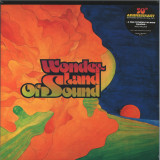
To mark its 50th anniversary, Farfalla Records is proud to announce the reissue of the highly sought after German library gem "Wonderland of Sound".
Originally released in 1974, the album was produced by Brillant-Musik's founder Werner Tautz and recorded in Zurich.
Wonderland of Sound is the epitome of the classic 70s library sound. A jazzy bliss orchestrated by the hottest European session players making up the Big Band "Rainbow-Orchestra".
A Splendidly funky and stunning set of compositions and arrangements with ultra-stylish horn section.
The eleventh issue of We Jazz Magazine, "Oni Puladi" for Carla Bley.
All articles presented IN ENGLISH. Carla Bley by Stewart Smith, Gondwana Records by Debra Richards, Ahmed by Seymour Wright, Amirtha Kidambi by Ayana Contreras, Ruth Goller by Daryl Worthington, Abdul Wadud by Pierre Crépon / David Neil Lee, François Jeanneau by Bret Sjerven, Mette Henriette by Debra Richards, Nduduzo Makhathini by Rob Garratt, Discaholic column by Mats Gustafsson, We Jazz Festival 2023 photo essay by Julius Töyrylä, album & live reviews, plus more.
128 pages, 170 x 240 mm in size and printed on 140g Edixion paper with laminated 300g Invercote covers.
Super-Sonic Jazz Records is set to release the brilliant debut album ‘Every Move’ from Dutch neo-soul risers ROSEYE.
Led by the captivating vocals Tallulah Rose, ROSEYE is a 5-piece ensemble that intricately weaves together psychedelic grooves with ethereal narratives. Their music transcends genres, effortlessly blending soul, jazz, and rich electronics. Drawing inspiration from luminaries like Jordan Rakei, Hiatus Kaiyote, and Robert Glasper, ROSEYE delivers an authentic, groove-infused, and explosively soulful sonic experience.
Speaking about the upcoming album, the band explain: “We're all about diving into that deep connection music brings - mixing up explosive, groovy vibes with some trippy and peaceful sounds. Our upcoming album 'Every Move' touches on some personal themes like sexuality, spirituality, nature, and grief, we wanted it to be liked a journey through the highs and lows of life”.
Frederiksberg Records was founded in New York in 2013 by Danish video journalist and music lover Andreas Vingaard. The name, Frederiksberg, is the part of Copenhagen where Andreas grew up and rst discovered his passion for music. As a collector of vinyl records, he's travelled extensively to acquire fresh sounds - Sudan, Ethiopia, Togo, Benin, Trinidad among other places.
The idea for the label emerged when Andreas befriended renowned Jazz saxophonist, Carsten Meinert. Committed to telling the story of Meinert's music the right way, Andreas resolved to take full ownership of the To You re-release (2015). The result has been a rollercoaster journey of running an independent record label.
Frederiksberg Records, with roots in Scandinavian Jazz, will include a wide spectrum of genres - electronic, disco, ambient and more.
A sparsely documented yet iconic era for Ted Milton's psycho-funk afro punk fake no-wave pogo jazz group Blurt has been brought to life with an expansive collection of restored versions of live performances. Captured on early camcorders during the frenzy of counter-cultural activity that characterised Europe around the fall of the Iron Curtain, these recordings of Blurt, recently posted by fans on YouTube, are a visceral reminder of a scene whose influence is writ large on today's alternative music culture.
Ted Milton's trio have produced an impressive string of albums, not to mention his numerous solo recordings. Featuring 15 tracks spanning their extensive discography from their 1980 debut single – also the title of this collection – “My Mother Was A Friend Of An Enemy Of The People” to 1999’s “Eat Up Your House”, this live collection of performances have been digitised by whatever means available. The original sound captured by the inbuilt microphones of these camcorders and the videos concerned are in many cases the only documentation of an iconic era whose zeitgeist was so masterfully epitomised for many by Blurt.
Refurbished / restored/ repurposed using new AI tools there is a spectral roughness to them but surfing on these reconstructed waveforms, the inimitable machinations of Blurt ride out once again, emerging from a pixilated oblivion to put into perspective the peculiar absurdity of our human condition.
- 1: Different Type Time (Prod. Quelle Chris & Cavalier)
- 2: Custard Spoon (Prod. Quelle Chris)
- 3: Can’t Leave It Alone Feat. Eric Jaye (Prod. Glassc!Ty)
- 4: Come Proper (Prod. Jacob Rochester)
- 5: Touchtones (Prod. Aummaah)
- 6: Déjà Vu / Tydro ‘97 (Prod. Messiah Muzik / Quelle Chris)
- 7: Doodoo Damien (Prod. Quelle Chris)
- 8: Baby I’m Home (Prod. Wino Willy)
- 9: Yeah Boiii (Prod. Quelle Chris)
- 10: All Things Considered (Prod. Wino Willy)
- 11: Pears (Prod. Malik Abdul-Rahmaan)
- 12: Told You (Prod. Fushou)
- 13: Badvice (Prod. Low Key)
- 14: Think About It Feat. Billzegypt (Prod. Obliv)
- 15: Up From Here / 7Th Ward Spyboy (Prod. Ahwlee / Quelle Chris)
- 16: Manigaults / I Miss Them (Prod. Ruffiankick)
- 17: Lazaroos (Prod. Vinny Cuzns)
- 18: Bespoke Feat. Dominic Minix (Prod. Hann_11)
- 19: 50 Bags Feat. Lord Chilla (Prod. Child Actor)
- 20: Axiom / My Gawd (Prod. Glassc!Ty / Quelle Chris)
- 21: Flourish (Prod. Quelle Chris)
"It seemed that if I didn’t somehow repeat the process of greatness, and do so immediately, multiple times away to satisfy playlist and binge watch culture, then I “wasn’t shit”. After a while I was like “nah this doesn’t feel good,… I don’t know if I am finding joy in this”. I would record songs and not release them, obsess over sessions recorded in my home with 30 takes of vocals and wake up only to delete them. When it began to feel right I found solace in an epiphany that I was not obligated to operate at any other wavelength. I am moving on a different type of time, and that doesn’t expire." -Cavalier
For heads of a certain time period of NYC hip-hop, Brooklyn born, New Orleans-based rapper and songwriter, Cavalier was the one that got away. The outrageously talented artist whose name and reputation preceded him everywhere you went in the scene. The rapper who everyone knew was so dope that he had to blow, but who never seemed concerned with any of that. The pretty boy draped in Polo who stole every live show with a feather in his hair and a mouth full of gold fronts. The cat so dedicated to his own independence that even indie labels stopped trying to sign him and projects came when they came, but when they came they were undeniable.
Cavalier was THAT guy for a lot of us; a silver-tongued philosopher with an eye for the poignant details of black life and a delivery as effortless as a young Ken Griffey’s swing. All that said, it never really felt like Cav had that moment in the spotlight that we always assumed was coming. After chiseling away through headier cult corners of the NYC hip-hop scene Cavalier was recognized for his memorable co-pilot to Quelle Chris’ 2013 Mello Music debut, Niggas Is Men. The critically acclaimed LP helped propel Quelle Chris into the forefront of indie hip-hop (and also happened to be the first production credits for Messiah Muzik). Cav followed up with his first full length, Chief, which sports a notable Raekwon feature but also early work from producers like Ohbliv and Tall Black Guy. A relocation to New Orleans and partnership with producer/vocalist Iman Omari yielded two more projects: 2015’s Lemonade EP and Private Stock in 2018. Great records all; eagerly sought by collectors and signal boosted by influential media like OkayPlayer, Solange’s Saint Heron, and Pitchfork. Cavalier’s bonafides have never been in question, but his new album Different Type Time feels like a revelation—a sonic suspension bridge between his rich history and the artform’s future.
Different Type Time doesn’t sound like the future though, its vibrations are somewhere all their own. It sounds like jazz, like a conversation overheard in roti shop, or a pool hall, or the foyer of your old building on a fall day, front door propped open with a brick. The blues is in there too, and the south—the American South, and theGlobal South, and South Brooklyn. It’s not that it sounds like the past, but you can hear everything that came before in the thick of the basslines and the yearning of the keys. Different Type Time also doesn’t sound like now, it sounds like RIGHT NOW; the bounce of the lyrics like the staccato of basketball in the park, carried on a spring breeze.
Although he doesn’t rap on DTT, Quelle Chris plays a pivotal role; producing eight songs and serving as associate producer/consigliere to Cav throughout the creative process. “There is no time wasted in explaining things when I collaborate with Quelle. He understands the universe I am in and the realities I want to create. He’s in them. And I don’t think I can envision one without him,” Cavalier explains. Messiah Muzik, Wino Willy, Ohbliv, Ahwlee, Child Actor, Fushou and several other producers round out the credits, all lending their talents to the album’s spaciously soulful sound. At the center of all these alchemies is Cavalier, nimbly dancing in and out of pockets like a sidewalk game of jumprope. Different Type Time is a masterclass in this thing we call hip-hop; daring and original, yet always standing deeply rooted in the culture.
"Espontaneamente se Tenta: Aventuras Sonoras de Djalma Corrêa is an album of deeply exploratory pieces by legendary percussionist and composer Djalma Corrêa. This double-LP set features previously unreleased recordings that cover a wide range of sonic experiments, revealing an unknown side of the prolific and groundbreaking Brazilian artist. Most of the tracks on this album were digitized for the first time – directly from the original tapes – and were compiled in collaboration with Corrêa just before he passed.
The result is a wild and unsettling collage that shows us just how original and intense Corrêa could be: from the unorthodox electroacoustic piece Evolução (Para Fita e Filme), which channels ancestral African inspirations to create a sonic cosmogonical narrative, to the proto-mixtape Exemplo de Sintetizadores, in which he transitions from transcendental drones to astral cha-cha-chas.
While the compilation might seem disjointed at first listen, it is in fact the most accurate translation or representation of his central concept: spontaneous music. Djalma's relationship with sound was always guided by his fearless approach to listening, and by his audacious and dynamic interaction with both musicians and equipment, which enabled him to work across a wide array of genres: from jazz to completely abstract music, always through a personal DIY ethic.
Corrêa developed a strong bond with experimentalist and inventor Walter Smetak, with whom he shared a studio during his formative years at Universidade Federal da Bahia. Suite Contagotas, featured in this collection, is no less than a sonic materialization of that bond: an experiment revolving around dripping water and its randomness – a tentative exploration of the ideas and possibilities envisioned by Smetak for his audacious, albeit unrealized, Estúdio OVO.
Djalma, however, is best known for his studio work in historical albums, including many by Caetano Veloso, Gilberto Gil and Jorge Ben, and for his own polyrhythmic opus Baiafro. The last track is an early recording called Bossa 2000 dC, first performed by Djalma at the 1964 Nós, Por Exemplo concert, an event which is often cited as marking the beginning of the Tropicalia movement. At the time, he was the only artist in the lineup using electronic devices to create sounds, e.g. medical oscillators and contact mics to augment his percussive palette.
The artwork is an amalgamation of material found in the Djalma Corrêa Archive (currently managed by his son Caetano Corrêa) and other material created during the period in which the record was being put together. The intention is to guide the listeners through this possibly tempestuous soundscape, giving them additional resources so that they may draw their own meanings and make their own sense of this extremely immersive and original experience – which is like nothing we've ever heard before."
Forest Law's debut album, "Zero," is a vibrant journey blending Balearic funk with urban Tropicalia, showcasing his adept guitar playing, old-school sampling, and UK- styled beats alongside his mellow yet sombre vocals. Recorded across eclectic locations from Icelandic fish net factories to a garden shed in Romford, this innovative release marks a new chapter for the multi-instrumentalist producer.
Released in collaboration with the UK home for jazz and electronic sounds, Total Refreshment Centre, Zero is Forest Law’s first release since his debut EP on Brownswood Recordings four years ago, marking a new and exciting chapter for the up-and-coming talent.
Crafted over seven years, "Zero" is deeply influenced by Law's experiences, from immersive stays in Porto where he delved into Portuguese music to an artist residency in a remote Icelandic fishing village. The album was finished, and recorded in his garden shed in Romford, East London. It’s a beautiful juxtaposition about a boy from Essex, who fell in love with international music, discovered the world, and then produced a musical treatise about his adventures from his shed.
A bit more than half a decade on from his widely acclaimed debut Vanishing Points from 2018, Swiss guitarist, composer, and improv musician Manuel Troller releases his new record Halcyon Future. A rhythmically dense and ambiguous, yet joyful ride for unstable times, a plea for warmth and hopeful resistance.
Troller’s mode of incorporating, zooming in, and expanding on small elements from improvised sessions creates a multilayered work of driving rhythms and abstract, vibrating textures. Opening with Halcyon Future I’s distinctive open pulse, this first piece guides us through subtle harmonic shifts that are almost unrecognizable as they take place over extended time, overlapping and creating a sense of ambiguity until the piece reaches an almost optimistic level with Mario Hänni’s unexpected introduction of driving acoustic drums. Relentlessly and with increasing excitement, heavy electronic 80s bass drums and an armada of layered hi-hats push them on, leading to the all-incorporating melodic finale.
The two long pieces Halcyon Future I and Halcyon Future II focus on forward momentum. In between them stands DNA, a purposely directionless contemplation on emotion as such. It is raw, naked, and confrontational, with a tender and subtly changing chord progression creating intimacy and proximity, abstraction and warmth, like a beautifully vibrant hologram for the listener to walk around in.
The B-side with its 20-minute Halcyon Future II features playful futuristic guitars, enhancing and challenging the stereo image that Troller is already well-known for. As it’s given time to develop and take root, the ever-varying guitar interactions densify and the staccato patterns jump out of the speakers with joy, creating excitement and building momentum. Compared to Side A, things turn to a slightly more complex rhythmical, melodic, and harmonic feel here. There are easy references, such as Manuel Göttsching’s E2-E4 or Pat Metheny performing Steve Reich’s Electric Counterpoint, but Troller goes a different and very much more concrete way. Although the piece has been recorded in various places and through a long process of overdubbing, there is an astonishingly strong live feel to it, from beginning to the end, from the slow rise to the full spectrum and the almost krautrock-like finale. Improvisers Hans Koch on soprano saxophone and Michael Flury on heavily fuzzed trombone join in, while Troller and Mario Hänni on many guitars, bass, drum machines, and acoustic drums provide a joyous driving entity, not giving up until it all breaks down again. There is overkill and brute force, though never without depth and a vision of future.
In the musical scope of Halcyon Future, there is no need for an absolute definition of things. A continuously changing interpretation of repetitive and variable elements fading in and out of focus tells a story of an excited sense of acceptance. Feelings of transcendence stem from Troller’s layering of constantly shifting rhythmic structures with unforeseen improvised harmonic changes. Drum machine parts overlayed with acoustic drums shift between musical modes, anchoring the album on the verge of a jazz-influenced, motorik, post-ECM balearic plateau. Abstract textural elements gently swirl around and behind all that is rhythm, providing a submissive counterpoint. As with much of Troller’s work, Halcyon Future is an album that unfolds slowly, revealing more of its richness, detail, and subtle beauty at each listen.
Halcyon Future is a joint release by three:four records and meakusma.
very dope.
With this EP an attempt is made at documenting the vibrant action happening during the late 1970s and early 1980s in the Pioneer Valley area of Western Massachusetts, US. The story is richer than the snapshot we present here, and a more detailed account is to be found in the accompanying book that can be purchased separately.
The Five Colleges in Hampshire County congregated a vast student population that inevitably interacted with the towns in the area. Bars, music and record stores, live music and a lot of experimentation and free thinking. Hampshire College, especially, promoted new approaches to teaching, subjects that might be considered radical by some even today, although a more favourable context would now surely exist for openly debating such topics as American Indians, Kayak Design, Black Oral Tradition, Food Management, etc. And the music? The immediate "punk effect" motivated the creation of numerous bands, many short lived, others evolving into New Wave / Power Pop territory, eventually crossing into Post-Punk experimentation. What is captured in "Noho EP" is a more electronic disposition, favoured by the existence of EMS gear and other equipment at Hampshire College and University of Massachusetts. We chose to focus on a group of musicians who, for a time, played together in different combinations under the loose umbrella of the Tekno Tunes label and the structure around it.
These musicians come from very different backgrounds and the nucleus portrayed here consisted of Christopher Vine, Elliott Sharp, James Whittemore and Nicholas Brown.
Of the several line-up changes The Scientific Americans went through, it was actually only the duo of Chris Vine and Jim Whittemore who recorded "Among Bodge Watt". Never before released, it is a companion piece to their track "El Salvador" available on the 1981 ROIR tape-album "Load & Go!". The Sci Ams were founders of the Tekno Tunes label and also created the Tekno Tours "concert promotion agency", under which name they exposed local audiences to bands such as The Stranglers, The Slits, Pylon, Pere Ubu, The Psychedelic Furs, The Bush Tetras, Steel Pulse, etc. Their own sound kept progressing but at its best there's a solid dub undercurrent, pretty obvious in "Among Bodge Watt".
Human Error was born out of a collective jam by Chris Vine, Elliott Sharp, Jim Whittemore and Nick Brown. Elliott Sharp had moved to Northampton in August of 1978 and naturally became involved in the local music scene, hooking up first with Whittemore at a hi-fi audio store where he worked at the time. Basement jams followed stimulating conversations, and other musicians joined the sessions. "Clandestinator" sounds gorgeously loose, an effortless groove coming from a quasi-dub set-up. Nothing here seems calculated, the music just flows, contagious and irregular as the handclaps in the mix.
The Higher Primates later evolved into a "proper" band but started as Nick Brown's solo project. The Primates only ever released a (now sought-after) 7" single in 1980 (on the Tekno Tunes label, precisely). Both tracks on "Noho EP" were recorded the following year and never released until now. "Auto Music in the Disco Dub Style" is self-explanatory, with a steady, mid-tempo TR808 beat running through, supporting synth squelches, echoes and reverbs, a fat bassline, dissonant melodic lines and odd vocal snippets. Kind of a DJ tool when the concept was barely in place. The more uptempo "Teresa Variations" adds a Fender Jazz bass and Selmer sax to the electronics. It actually sounds more "Disco", even with the robotic, unintelligible vocals. On top of this, the vibe is sealed by the overall Radiophonic Workshop analogue strangeness applied to a dance beat.
On his debut album kotokid walks you through meandering scenes of jazz fusion and hip-hop infused sonic cinema. While bass guitar is his bread and butter, the Amsterdam-based musician is a multi-instrumentalist in the truest sense of the word. Throughout this album he effortlessly blends together enchanting harmonies, expansive synth-scapes, intimate piano melodies, stanky bass grooves. With ‘ignite’ and ‘early spring’ he captures the emotions of rebirth, renewal, and hope. Energizing the spirit with ‘Fl00t’, ‘floating’ and ‘Titan’ he invites a sense of action, urgency and eventual triumph. Victory’s abound. Sonic meditations in their own right, ‘soil’ and ‘kotokin’ blend cinematic stylized melodies together eliciting introspection and clarity. And whether it's joy, nostalgia, discomfort, pain, grief, longing or happy remembrance - ‘family & death’ - conjures the plethora of these experiences in a life giving dance between piano and cello.
BBE Music is thrilled to present J Jazz: Free and Modern Jazz From Japan 1954-1988, a
remarkable large-format book covering some of the deepest, rarest, and most innovative
jazz music released anywhere in the post-war era. Compiled by Tony Higgins and Mike
Peden, co-curators of BBE Music's acclaimed J Jazz Masterclass Series, the book also
features a foreword by Japanese jazz icon, Terumasa Hino.
This is the first time a book of this type has been published outside of Japan and the first
anywhere of this size and scale. It is a unique collection of over 500 albums of free and
modern jazz released in Japan during a period of radical transformation and constant
reinvention. An era that saw Japan return from the ravages of World War Two to become a
global economic power and emerge as both a technological leader and an international
cultural force.
Through a unique gallery of albums, J Jazz charts the development of jazz in Japan from the
first stirrings of the modern jazz scene in the mid to late 1950s and on through the hard bop
and modal jazz of the 1960s. It steers the reader into the radical directions of the 1970s when
free jazz, fusion, post-bop, and jazz-funk opened up a growing number of Japanese jazz
artists to a new global audience before consolidating in the mid to late 1980s with a musical
scene that laid the path for the contemporary jazz generation to follow.
Over 500 full-colour sleeves from many of the leading names in Japanese jazz sit alongside
rare and private pressings that tell a story of constant change and musical exploration. J
Jazz includes profiles of several leading record labels such as East Wind, Frasco, King
Records, and Nippon Columbia as well as critical independents such as Three Blind Mice,
ALM, and Aketa’s Disk.
J Jazz includes interviews with celebrated jazz photographer Tadayuki Naito, and pianist
Tohru Aizawa, bandleader on the totemic spiritual jazz album, Tachibana Vol 1, as well as
free-jazz record collector and jazz musician Mats Gustafsson.
The book also features a chapter on albums by non-Japanese artists that only received a
Japanese release, with collectible, rare, and obscure releases by figures such as Herbie
Hancock, Miles Davis, Mal Waldron, Steve Lacy, and Art Blakey. J Jazz includes Japanese
jazz charts from some of the world's leading jazz DJs including Gilles Peterson, Toshio
Matsuura, Paul Murphy, and Shuya and Yoshihiro Okino. Among the specialist content is a
feature on obi strips by record dealer and Japanese jazz expert, Yusuke Ogawa, plus a
special article on Japanese Blue Note albums.
Across its 300-plus pages, J Jazz includes a detailed introduction contextualising the music,
tracing the story of Japan's fascination with jazz back before the war. It also features
biographical information on many of the key artists involved in shaping the post-war
Japanese jazz scene including Sadao Watanabe, Toshiko Akiyoshi, Masabumi Kikuchi,
Masahiko Togashi, Terumasa Hino, Yosuke Yamashita, Fumio Itabashi, Masayuki
Takayanagi, Takeo Moriyama, Isao Suzuki, and many more
Er war einer der ersten Tenorsaxophonisten, der modernen Jazz nach dem Big-Band-Stil spielte, was ihn zu einer Quelle der Inspiration für viele machte. Im Juli 1979 spielte er beim North Sea Jazz Festival mit seinem Trio, bestehend aus dem Pianisten Kirk Lightsey, dem Bassisten Rufus Reid und dem Schlagzeuger Eddie Gladden. Auf “North Sea Jazz Concert Series Dexter Godon 1979” sind ihre Performances von 'It's You Or No One' und 'More Than You Know' zu hören. Außerdem enthält das Album eine Aufnahme des „Tenorkampfes“, der am Abend während "Flying Home" mit Hank Jones am Klavier, Gene Ramsey am Bass und Gus Johnson am Schlagzeug, sowie Dexter Budd Johnson, Illinois Jacquet, Arnett Cobb und Buddy Tate am Saxophon, stattfand. Nachdem mit Ella Fitzgerald die North Sea Jazz Concert Series erfolgreich startete, folgt nun die zweite Veröffentlichung der Vinyl- Serie, die Ende letzten Jahres von Bertus Distribution in Zusammenarbeit mit NTR, AVROTROS und MOJO präsentiert wurde. Es ist eine neue Vinyl-Serie, bestehend aus Live-Aufnahmen von legendären Künstlern aus den Jahrzehnten des renommierten North Sea Jazz Festivals. Die North Sea Jazz Concert Series umfasst offiziell lizenzierte Veröffentlichungen, die standardmäßig auf weißem 180-Gramm-Vinyl in einer Hülle aus hochwertigem Papier zusammen mit einem Liner Notes kommen. Die Veröffentlichungen erscheinen mit schwarz-weißem Artwork von Hans Pol, der sich am typischen Stil des Festivals orientiert. Die Gestaltung ist von den Cover-Klassikern älterer Jazz-Veröffentlichungen des Labels Blue Note inspiriert. Die Liner Notes wurden von dem Journalisten und Jazz-Experten Jeroen de Valk verfasst. Das besondere Merkmal der Serie: Alle Aufnahmen sind erstmalig auf Vinyl verfügbar.
-Debut full-length album from Miami-based soul jazz trio Fat Produce. -Featuring musicians who played with The White Blinds, Scone Cash Players, Jungle Fire, War, The Bombillas. Featured in Relix Magazine’s April/May new artist spotlight to over 250k subscribers.
-Upcoming shows in California and Florida. F-Spot Records proudly presents the debut LP "Fresh Squeeze" from Miami-based soul jazz trio Fat Produce. Led by guitarist Addison Rifkind (The Soul Vaccinators) and drummer Michael Duffy (The White Blinds, Jungle Fire), this duo is joined by world-renowned bass player Rene Camacho (Poncho Sanchez, War) to bring you 14 all-new and original soul jazz instrumental cuts that's a guaranteed head-nodder from start to finish. When Rifkind and Duffy first met on a gig with organist Adam Scone (Scone Cash Players), both felt an instant chemistry musically, and the seeds of Fat Produce were born. In sharing their passion for classic soul jazz, in addition to funk and hip-hop, Rifkind and Duffy started to dive in, taking the idea of a guitar trio to new heights unlike anything you've heard before. After a year of playing gigs and honing their craft, both descended back to their hometown of Los Angeles, CA, to meet up with Rene Camacho and spend two days recording at The F-Spot HQ under the helm of producer and label owner David M Celia. Recording all live in one room to 1/2" tape, the resulting sessions truly captured the essence of Fat Produce's sound. Forced to be in the moment tracking live with no overdubs, "Fresh Squeeze" highlights the authentic tone and feeling from those two special days spent breathing new life into the guitar trio format. From the more straight-ahead soul jazz tunes like "Sticky Beets" and "Slick" to more outside-the-box cuts like "SON!" and the afrobeat-inspired "Afrenetic," rounded out with groove-focused compositions such as "Cadillac Converter," Grease on the Range," and "818 Don't Hate," this LP brings a variety of styles and feels, while all keeping it under the same umbrella of guitar, upright bass, and drums. Highlighting the chordal and melodic stylings of Addison Rifkind, the signature drum tone and feel of Michael Duffy, and tastefully executed playing from bassist Rene Camacho, "Fresh Squeeze" is the perfect sonic experience. From the first note on side A to the last hit on side B, it's a full sound, a timeless listen, and one slated to be on repeat for decades to come
Von seinem ersten Album „Minima Moralia“ („Excellent“ 8.1 Pitchfork) im Jahr 2006 bis hin zu den über 70 folgenden Alben hat Chihei Hatakeyama einen gewaltigen Kanon an Werken geschaffen.
Shun Ishiwaka, der mit Künstlern wie Ai Kuwabara, Hiroki Chiba, Kei Matsumaru, Gen Hoshino, Terumasa Hino, Tony Allen und unzähligen anderen zusammengearbeitet hat, ist einer der produktivsten Modern-Jazz-Schlagzeuger Japans.
Gemeinsam haben sie in Ambient-, Experimental-, Elektronik-, Pop-, Hip-Hop-, Jazz- und Metal-Projekten gespielt, und genau das repräsentiert diese neue Veröffentlichung - ein Treffen gleichgesinnter Musiker mit unzähligen Bezugspunkten, die an einem epochalen Punkt zusammenkommen, um ein Ambient-Werk zu produzieren, das vor Kreativität und Verständnis strotzt
Sie lernten sich bei Live-Auftritten im Radio kennen. Dies führte zu einer Reihe von Auftritten. Die Chemie stimmte sofort, und im März 2023 folgten die Aufnahmesitzungen für dieses 2-bändige Epos.
Zu Chiheis spezifischen Referenzen für die Gitarrenbearbeitung auf diesem Album gehören My Bloody Valentine, Les Rallizes Dénudés und Keiji Haino.
Beide Musiker schöpften aus ihrer Vorliebe für Free Jazz und Spiritual Jazz, insbesondere für die Werke von Alice Coltrane und später Sun Ra.
Psychoakustische Überlegungen, Zufall, Spontaneität und der Schnittpunkt, an dem Musiker in der Hitze des Gefechts aufeinander reagieren (oder auch nicht), waren allesamt Inspirationen für dieses bemerkenswerte Projekt, das in zwei separaten Teilen im Jahr 2024 veröffentlicht wird.
AAA Audiophile 200g 45rpm Triple Disc LP!
Sourced from First Generation Analogue Recordings without Any Digital Corruption!
2xHD Mastering on Nagra Equipment by René Laflamme!
Sound Restoration by George Klabin & Fran Gala!
Cut All Analogue at Bernie Grundman Mastering on Tube Cutting Equipment!
There have been many guitar gods, but there's never been an electric bassist as deified as Jaco Pastorius. – Michael J. Agovino
This live album by Jaco Pastorius and the Word-of-Mouth Big Band, featuring harmonica virtuoso Toots Thielemans as special guest, was recorded in analog 24 tracks by the Record Plant mobile truck at Avery Fisher Hall in NYC on June 27, 1982, as part of George Wein's Kool Jazz Festival. This Deluxe 45rpm 200g edition is the first one to be mastered from the original 2 track master tapes that were found some 30 years later (the previous digital download versions were released from a digital remix of the 24 tracks). What we have here is the direct copy of the original pure analogue 2 track mix.
The brightest star in the electric bass firmament, Jaco Pastorius burst onto the national scene in 1976 with his audacious self-titled album on Columbia Records, featuring a line-up of top jazz musicians. With his extraordinary fretless electric bass playing as the centerpiece, Jaco Pastorius created an immediate sensation with the public and the media. His signature approach employed Latin-influenced funk, lyrical solos on fretless bass, bass chords, and innovative use of harmonics. In Jaco's work with Weather Report and beyond, the self-described "greatest bass player in the world" (an assessment shared with virtually the entire music world) established a new identity and role for his instrument and became the torch-bearer for a new way of playing both technically and conceptually. But behind it all was an ever present R&B and Latin-influenced groove and a screaming rock-'n'-roll attitude that he refined and incorporated into sophisticated jazz harmonic structures.
In addition to his extraordinary virtuosity, Jaco was also developing into an accomplished and sophisticated composer and arranger and those talents are gloriously on display on this album. The 3-time Grammy Award nominee was inducted into the Down Beat Jazz Hall of Fame in 1988, one of only seven bassists so honored (and the only electric bassist). His legacy as a bass innovator continues to this day, more than 30 years after his untimely death in 1987.
A landmark recording and masterful symphony of performance, composition, and execution, Miles Davis' E.S.P. established the template jazz would follow for the following decade. The 1965 record splits the gap between accessible hard-bop and the cutting-edge approach Davis increasingly pursued into the 1970s. Adventurous, sophisticated, and yet altogether cohesive, E.S.P. stands out not only due to its elastic compositions but via its chemistry, interplay, and feeling attained by the instrumentalists. The first album Davis' classic second quintet made together, it's also very arguably the group's best. Never before has the effort been experienced in such transformational sound.
Pressed at RTI, this 180g 45RPM 2LP set of E.S.P. renders the music's dynamics, pitch, colors, and textures with lifelike realism and proper scale. Reference-caliber separation, wall-to-wall soundstages, and distinct images magnify the intensity and beauty of Davis and Co.'s creations. Whether it's the distinctive snap of Tony Williams' drum sticks against the snare head, air moving through Davis' trumpet, acoustic thrum of Ron Carter's bass, or upper register of Herbie Hancock's piano, the sound is better than you'd even hear in the most intimate jazz clubs. Prepare to be swayed on every level.
For many, E.S.P. looms among the decade's best albums if only because of the significance of Davis' line-up. While Hancock, Williams, and Carter are holdovers that began playing with one another on 1963's Seven Steps to Heaven, Wayne Shorter functions as the secret weapon and key addition responsible for this ensemble hitting a new peak. Indeed, the saxophonist helped pen two of the seven compositions here – notably, E.S.P. is entirely comprised originals and clocked in as one of the longest-running jazz LPs issued at the time – and, more importantly, grants Davis the confidence and leeway necessary for the eruption of enigma, steadiness, and tension.
As he did with John Coltrane year earlier, Davis hangs back and picks his moments to solo, with Shorter stepping up to supply the churn. Their bandmates respond in kind, itching to take off into new stratospheres all the while keeping their improvisations grounded and connected to the piece at hand. Guided by Davis' visions and inspired by current boundary-pushing works by the likes of Ornette Coleman, Cecil Taylor, and Coltrane, the magnificent results spark with variation, harmony, emotion, energy, and brilliant movement.
Interlocking lines drive "Little One," alternating rhythms pulse through the funky "Eighty-One," melodies soar on the balladic "Iris," the aptly titled "Mood" broods over minor-key structures, and "Agitation" – goosed by a two-minute percussive introduction by Williams – delivers on its promise. No record – and no group of musicians – have ever balanced coherent themes and exploratory playing in better fashion than Davis' quintet on E.S.P. It's the avant-garde record even jazz traditionalists love, and essential on every level.