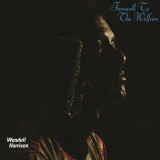
The Tribe co-founder’s masterpiece, lacquered directly from his master tapes in an all analog transfer by Bernie Grundman. The defnitive reissue of this Spiritual Jazz album, one of the most sought after artifacts of the 1970s jazz underground. The Tribe label, one of the brightest lights of America’s 1970s jazz underground, receives the Now-Again reissue treatment. This is your chance to indulge in the music and story of one of the most meaningful, local movements of the 20th Century Black American experience, one that expanded outwards towards the cosmos. In the words of the collective themselves, “Music is the healing force of the universe.” Included in an extensive, oversized booklet, Larry Gabriel and Jeff “Chairman” Mao take us through the history of the Tribe, in a compelling story that delves not just into the history of the label and its principals, but into the story of Black American empowerment in the latter half of the 20th Century. The booklet features never-before-seen archival photos and rare ephemera from Tribe’s mid-1970s heyday.
Suche:je movement
A masterful mix of timeless American soul with vintage 1970s African samples in a most rewarding way – musical traveler Eamon teams with production duo Likeminds for No Matter The Season, his second album for Now-Again. “I’ve been singing since I was a tike, promoters used to call me ‘the boy wonder’, but with this record it felt new, almost like I was singing every note as if my life depended on it,” says Eamon from his home in Southern California, a far cry from his native Staten Island, New York City. But you wouldn’t know his birthplace from the way he sings, especially on No Matter The Season, where Eamon put a new spin on vintage samples from the Now-Again catalog, crafting beats from various African rhythms such as Amanaz’s Zamrock, the Hygrades Nigerian funk, and Ayalew Mesfin’s Ethiopian tezetas. Shortly after the release of his last Now-Again project, Captive Thoughts, he began working with the production duo on two original compositions that appear on No Matter The Season. But as time went on, he came upon the idea of completing the album by sending the duo samples from the Now-Again catalog to work with. Which were expanded upon with a multitude of live instruments. “There was something special about combing through the African records at Now-Again,” Eamon reflects. “I had never heard the variety of funk and soul that existed in places like Lagos and Addis Ababa, it was like a history lesson in Rhythm & Blues. I was hearing the godfathers of the movement here in the US. I wanted to pay my respect to that lineage. Since singing in my father’s doo-wop group as a kid, I’ve always used music from the past to create and express something new in the present. But to be able to do that across continents and get back to the roots…that was really impactful for me.” Likeminds, helmed by Chris Soper and Jesse Singer, two East Coast transplants to LA who are as comfortable chopping up samples on an MPC as they are playing classic instruments, using vintage microphones, or recording to tape, offer up what could be described as a West Coast spin on the revivalist soul sound championed by Daptone Records. “For sure, the album is soaked in an old school feel, but to still tap into the depths of my soul today is always the end goal,” Eamon states. All but two tracks are based on Now-Again samples, using the classic rhythms as accompaniment to showcase Eamon’s emotional singing style that is still as honest and raw as when he was a 16, singing about heartbreak. The end result, No Matter the Season, is a celebration of the musical relationship between Africa and America and the thrilling soul music that relationship has spawned since the 60s and 70s. “My hope is people know that I’m not leaving anything on the table in this chapter of my career,” Eamon reflects. “Only thing I can do is pour my heart out on every single line. Even though I’m writing and screaming to the heavens about my joy, my pain, my love…these are songs for everyone, everywhere, anytime. You’re gonna walk away feeling something. This is why I titled the album No Matter The Season.”
For Susanna, nothing happens in a vacuum. Every creative act responds to what's come before. And by exploring this dialogue, we can learn new things about ourselves and the world. This idea has inspired the Norwegian artist throughout her near two1decade career. It's behind her unforgettable covers of classic songs and her interpretations of the paintings of Hieronymous Bosch. And it found its purest expression on 2020's Baudelaire & Piano, a stripped back song cycle setting texts from the 19th century French poet's The Flowers of Evil. In Elevation, its followup, Susanna's engagement with Baudelaire's work blossoms into a collaborative enterprise, combining tape, spoken word and song. The result is a unique musical conversation spanning centuries and disciplines; a "time travelling" project, as Susanna puts it, that moves between creative dimensions. She brings collaborators back into the process, nurturing connections made over a series of Baudelaire & Piano live shows presented in 2020 and 2021. Composer1improviser Delphine Dora offers teasing renditions of the original French texts, layering spoken recitation and otherworldly singing in a set of atmospheric vignettes. And tape recorder soundscapes from Stina Stjern-familiar from Susanna's Hieronymous Bosch project Garden of Earthly Delights (2019)-frame the album with hiss, hum and soft fingers of melody, like mist settling on a landscape. These contributions deepen the album's mystery and its evocative power. The result is an engrossing interleaving of sounds and registers; and, as Susanna describes it, "an intuitive and collective ceremony of the ethereal and mystical in life." Elevation features work by American occultist artist Cameron (1922-1995), an adherent of Aleister Crowley's Thelema movement. Her illustrations "Witch Woman", "Pan" and "Danse" adorn the release, which will be available on cassette as well as in the usual digital, CD and vinyl formats.Oslo-based artist Susanna has released music as Susanna and the Magical Orchestra and 'just' Susanna since 2004, through labels like Rune Grammofon, ECM Records and her own outlet SusannaSonata. She has collaborated with artists like Jenny Hval, Bonnie 'Prince' Billy and John Paul Jones, highly active with different projects, songwriting/composing, and making personal interpretations of other people's songs.
Originally planned for issue on Strata-East, Hammond took his collaboration with Durrah to Detroit and issued his masterpiece. Lacquered by Bernie Grundman. Now-Again presents the denitive Tribe Records reissues. Deep, Spiritual Jazz of the highest order. The Tribe label, one of the brightest lights of America’s 1970s jazz underground, receives the Now-Again reissue treatment. This is your chance to indulge in the music and story of one of the most meaningful, local movements of the 20th Century Black American experience, one that expanded outwards towards the cosmos. In the words of the collective themselves, “Music is the healing force of the universe.” Included in an extensive, oversized booklet, Larry Gabriel and Jeff “Chairman” Mao take us through the history of the Tribe, in a compelling story that delves not just into the history of the label and its principals, but into the story of Black American empowerment in the latter half of the 20th Century. The booklet features never-before-seen archival photos and rare ephemera from Tribe’s mid-1970s heyday.
Paul Butterfield was an iconic blues harmonica player and singer, famous for his in 1963 formed Paul Butterfield Blues Band. Their 1966 releases classic East West is one of the outstanding albums in which they integrated psychedelic rock in traditional blues music. The supergroup consisted at that time of guitar hero Mike Bloomfield, keyboardist Mark Naftalin, bassist Jerome Arnold, drummer Billy Davenport and, of course, the master himself, Paul Butterfield. The authentic blues sounds are woven in the sounds of jazz and raga music. It's an exciting trip in which you can hear the talented individuals, but also how they created their music together. The album proved to be one of the essential albums in the blues-rock movement of the 60s.
Paul Butterfield died in 1987 at the age of 44. During that time he was still recording new songs. In 2006 he was inducted into the Blues Hall of Fame and in 2015 again as part of his own Paul Butterfield Blues Band.
On a balmy Brazilian night in February, 1981, a crowd gathered in Rio de Janeiro's Gávea neighbourhood under the iconic dome of the city's Planetário (Planetarium). Alongside musicians like Helio Delmiro and Milton Nascimento (who were in the audience that night), they were there to see the great "Bruxo" (sorcerer) Hermeto Pascoal live in concert, with his new band formation which would become known simply as "O Grupo" (The Group).
Growing up on a farm in Brazil's northeastern state of Alagoas, Hermeto has always been deeply in tune with, and inspired by nature. In his youth he would make his own flutes to play call and response with the birds and frogs. He would build scrap-metal instruments in his blacksmith grandfather's forge, and sit for hours by the lake listening to the sounds of nature. On the Planetário Da Gávea recordings though, Hermeto is cast as the "sorcerer" or the "cosmic emissary" (as the great Brazilian guitarist Guinga once called him), exhibiting an intuitive sense of harmony and melody beyond that of our own world.
"Tudo e Som" (All is Sound). It's a phrase Hermeto regularly returns to, and it points to the fact that not only can music be made from anything, but also alludes to something much more profound. It's an understanding of the universe as being in a state of constant movement, forever vibrating at the quantum level, like the string of a guitar, or a saxophone's reed. "Tudo e Som" is a declaration of the mystical and spiritual power of sound, as a fundamentally vibrational force.
The series of concerts at the Planetário marked the birth of "O Grupo" which would last with the same line-up (apart from Zé Eduardo Nazário) for the next eleven years. Every member of O Grupo was a phenomenal musician in their own right. It was one of saxophonist/flautist Carlos Malta's first gigs with the group, and the concert unusually featured two drummers, Zé Eduardo Nazário and Marcio Bahia. Nazário, from São Paulo, had played with Hermeto during the mid-70s (as well as with Milton Nascimento, Egberto Gismonti and Toninho Horta, to name a few). Bahia though had just joined the group. Acclaimed keyboard player Jovino Santos Neto was on keyboards, piano and organ, and the great Itiberê Zwarg (who remains in Hermeto's band to this day), played bass. Rounding the group off was the percussionist Pernambuco. During this period (up until the early 90s) the group would rehearse for hours on end, virtually seven days a week, with a total dedication to music and Hermeto's musical vision.
Most of the compositions performed that night at the Planetário had never been recorded before, and many are unique to this album, including the wild 'Homônimo Sintróvio', the exaltant 'Samba Do Belaqua', 'Vou Pra Lá e Pra Cá' and 'Bombardino', which features Hermeto's wonderfully absurd call and response mouthpiece soliloquy. Then there's the stunning 7/4 Samba 'Jegue' which builds with inventive dissonance, before releasing yet another celestially colourful, celebratory refrain. The show also features the first recorded performances of 'Era Pra Ser e Não Foi' and 'Ilza na Feijoada' (inspired by Hermetos' wife Ilza's famed black bean and meat stew), which Hermeto later recorded on his 1984 studio album "Lagoa Da Canoa Município De Arapiraca".
Dubbed by Miles Davis as "one of the most important musicians on the planet", a Hermeto Pascoal live show was (and still is) an experience like no other. Across the recording of the Planetário concert, wild improvisation meets groovy, virtuosic vamping on progressive, extended psychedelic jams. The tracks are generally built around a beautiful, transcendent melody; instantly recognisable as being Hermeto's, and for the most part, the musicians then solo over extended two chord vamps. There's a plethora of powerfully delivered rhythms, wild solos and the performances are punctuated by Hermeto's unpredictable, at times comical sonic antics.
Over forty years since this historic happening, Far Out Recordings is overjoyed to release this magical recording of Hermeto Pascoal e Grupo Live at Planetário Da Gávea, on double vinyl LP, CD and digitally for a February 4th 2022 release.
Party starting outfit Spaghetti Club dive into 2022 with a hop, skip and a wobble as their third release sees the light of day this January. The four track VA maneuvers between dynamic moods for the dance floor, including sounds from label founder, Pierre Codarin, Harry Wills, Philipp Boss, and Jealous Lover.
Carrying the torch for the first track is UK producer, Harry Wills with “Longbags”, his animated sound fitting the ethos of the label entirely, cruising on a slinky arrangement, and sub heavy bass. Next up is Activo founder Philipp Boss, with a deeper and curious encounter, riding his synths around subtle house movements in “Serious Cat”.
Head chef Pierre Codarin provides a pacey and elasticated groove in “Smoke The Gap”, mechanical beeps and bleeps breathing life into the forward motion of the track. On a more mysterious trip is the last track of the EP from Jealous Lover. “Dresses For The Ride Not The Slide” is a hazy trip, crammed full of rippling shades of electro, calling in the shadows of the afters.
- A1: Rhythim Is Rhythim - Emanon
- A2: Cybersonik - Technarchy
- B1: Looney Tunes - Just As Long As I Got You (Brooklyn Club Mix)
- B2: Ecstacy Club - Jesus Loves The Acid
- C1: Nightmares On Wax - Aftermath
- C2: Juno - Soul Thunder
- D1: Bodysnatch - Just 4 U London (Kuff Mix)
- D2: Q Project - Champion Sound (Alliance Remix)
Fabio & Grooverider have been at the forefront of UK dance music for over 3 decades. This is the roots of their story told through music. The 2 London DJ's are part of the DNA of the global Jungle / D&B movement and they have remained relevant, cutting edge, authoritative and essential to this truly underground art-form since it's inception. RAGE could arguably be the ground zero of Jungle. The party was started at London's cavernous Heaven club by Fabio & Grooverider in 1988, at the height of Acid House fever that was making it's way up and down the motorways, slip-roads, fields and warehouses of the M25 and further beyond every weekend, troubling the nation, the police, your parents and the press as it went. RAGE was a different beast, it certainly channelled some of that Acid energy but pitted it against the new and exciting sounds emanating from Belgium, Amsterdam, Detroit, Sheffield, Essex and Hackney and in turn created a new style, a new sonic attitude and energy in the process. Rumbling bass-lines, narcotic synth rushes and roughly chopped and sped-up breakbeats all merged into a style that we now know as Jungle. Nothing like this had been heard before, this was a brand new style and it was coming out of London's West End and Fabio & Grooverider were the people firmly behind it. RAGE is approaching its 30th anniversary. Its sonic and cultural legacy is still being felt today, Fabio & Groove are still shutting down raves and festivals every weekend all over the world with their superior DJ sets and musical knowledge guided by their pioneering spirit. This musical selection you hold in your hands, the first of 4 parts, sees them delve into their prodigious memories and record boxes to select a true musical representation of the very beginning of one of the UK's most unique and influential musical movements of the last 50 years. Across 4 x 2 x 12"s compilations we are taken on the journey through the sounds of RAGE, accompanied with track by track notes from Fabio & Groove themselves. This is the sound of the underground, from the inside out. This is a masterclass in the old-school. The roots. There is no filler here, it's simply ALL killer. Lovingly selected and programmed by the masters - 'The Living Shock' & 'The Ladies Choice'. Produced in conjunction with Above Board distribution and Fabio & Grooverider. All tracks mastered from original sources and fully licensed. Mastering by Optimum, Bristol. Artwork and design by Atelier Superplus. 2019
The Tribe co-founder’s debut, lacquered directly from his master tapes in an all analog transfer by Bernie Grundman. The definitive reissue of this Spiritual Jazz album which set the stage for his Vibes from the Tribe The Tribe label, one of the brightest lights of America’s 1970s jazz underground, receives the Now-Again reissue treatment. This is your chance to indulge in the music and story of one of the most meaningful, local movements of the 20th Century Black American experience, one that expanded outwards towards the cosmos. In the words of the collective themselves, “Music is the healing force of the universe.” Included in an extensive, oversized booklet, Larry Gabriel and Jeff “Chairman” Mao take us through the history of the Tribe, in a compelling story that delves not just into the history of the label and its principals, but into the story of Black American empowerment in the latter half of the 20th Century. The booklet features never-before-seen archival photos and rare ephemera from Tribe’s mid-1970s heyday.
Reissue of violinist Jean-Luc Ponty's 1967 album 'Sunday Walk', originally
released on the SABA label (which later was renamed MPS), featuring an
all-star group that includes pianist Wolfgang Dauner, bassist NielsHenning Örsted-Pedersen and drummer Daniel Humair
Legendary drummer Kenny Clarke compared Jean- Luc Ponty to Dizzy Gillespie.
Fellow violinist Stuff Smith marvelled, "He plays violin like Coltrane plays
saxophone." Born in 1942, the French violinist transported jazz violin playing into
the world of modern jazz. On Frank Zappa's urging, Ponty moved to the States in
1973. Over the next years he toured with Zappa as well as the Mahavishnu
Orchestra. In 1975 he founded his own band and became one of the most
prominent figures of the jazz- fusion movement in the USA, selling millions of
albums that all reached the top of the U.S. charts.
On the 1967 'Sunday Walk' the band saunters through two blues, a waltz, and a
standard before reaching "Suite for Claudia", which begins at a blistering pace
with Ponty's saxophone- like "brilliance and fire" playing. It then settles into a
medium swing groove with Wolfgang Dauner's infectious piano play followed by a
smouldering Ponty. Daniel Humair's crisp drum solo segues into a heart- felt
waltz. After all, this was written for Ponty's wife. Ponty is here with a group of
Europe's finest at their youthful best. The way they play, it's all a walk in the park.
Beside Dauner and Humair, legendary bass player Niels-Henning Ørsted Pedersen
completes Ponty's quartet.
"The re-issue of this album by MPS makes me extremely happy as I consider it to
be one of my best recordings from the 60s. " - Jean-Luc Ponty
- A1: Black Slate - "Sticks Man
- A2: Dee Sharp - "Rising To The Top
- A3: Asher Senator - "One Bible
- A4: Cymande - "Fug
- B1: Digital Mystikz - "Misty Winter
- B2: Winston Curtis - "Be Thankful For What You've Got
- B3: Trevor Hartley - "It Must Be Love
- B4: Shut Up & Dance - "Java Bass
- C1: Brown Sugar - "Black Pride
- C2: The Terrorist - "Rk1
- C3: Black Harmony - "Don't Let It Go To Your Head
- D1: Pebbles - "Positive Vibrations
- D2: Ragga Twins - "Ragga Trip
- D3: Janet Kay & Alton Ellis - "Still In Love
- E1: Funk Masters - "Love Money
- E2: Cosmic Idren - "Compelled
- E3: Harry Beckett - "No Time For Hello
- F1: Sandra Reid - "Ooh Boy
- F2: Tabby Cat Kelly - "Don't Call Us Immigrants
- F3: Brown Sugar - "I'm In Love With A Dreadlocks
Soul Jazz Records new ‘Life Between Islands’ collection coincides with the launch of Tate Britain’s exhibition of the same name. This landmark exhibition explores the links between Caribbean and British art and culture from the 1950s to now.
Soul Jazz Records album, sub-titled “Soundsystem Culture – Black Musical Expression 1973-2006,” focuses on the most important Black British musical styles to emerge out of the distinctly Caribbean world of sound systems. The album features an all-star line-up including Dennis Bovell, Shut Up and Dance, Cymande, Digital Mystikz, Brown Sugar, Funk Masters, Janet Kay, Ragga Twins and more.
The album is a lightning-rod journey across Roots Reggae, Jungle/Drum & Bass, Jazz-Funk, Lovers Rock, Jazz, Dubstep and more. Much of Soul Jazz Records’ catalogue comes out of these genres and this album is partly an overview of some of Soul Jazz’s earlier releases (including Digital Mystikz’ long-deleted groundbreaking and now highly-collectible single, ‘Misty Winter’) alongside some choice rare and classic tunes that span over 30 years of sound system culture.
Many of the tracks represent how Black British artists defined their own identity with songs such as Brown Sugar’s righteous ‘Black Pride’, ‘I’m In Love with A Dreadlocks’ and Tabby Cat Kelly’s powerful ‘Don’t Call Us Immigrants’. Aside from being musically rooted in the distinctly Jamaican-born phenomenon of the sound system, much of this identity is also shaped by the triangular relationship of being British-born, of Caribbean heritage, and with an equal love of African-American Jazz, Funk and Soul, as evidenced with many Lovers Rock tunes reggae covers of American soul tunes (such as those of Jean Carn, William de Vaughan and Rose Royce featured here). This stateside influence can also be heard in groups such as the Funk Masters, a group formed by reggae radio DJ Tony Williams, whose jazz-funk music successfully crossed over into New York’s clubland, as well as the great Cymande, whose unique street-funk became staple material for numerous US hip-hop artists in the years that followed.
In the early 1990s, jungle and drum and bass artists took the essence of reggae’s soundsystem culture – MCs, dubplates, crews – and applied them to their own music, applying heavy reggae bass lines to intense double-speed drum breakbeats. At the forefront of this new movement were the duo Shut Up and Dance, working closely with The Ragga Twins, aka Deman Rocker and Flinty Badman, both MCs for North London’s infamous Unity reggae soundsytem. In the early 2000s, dubstep, spearheaded by Digital Mystikz, became the latest instalment in this ever-evolving soundsystem culture.
- A1: Dick Khoza And The Afro Pedlars - Chapita
- A2: Ensemble Of Rhythm And Art - Pelican Fantasy
- A3: Spirits Rejoice - Sugar Pie
- B1: Makhona Zonke Band- The Webb
- B2: Abacothozi - Night In Pelican
- C1: The Black Pages - There Goes
- C2: The Headquarters - Moshate
- C3: The Shyannes - Asso-Kam
- D1: Almon Memela’s Soweto - Pelican City
- D2: The Drive - I Have A Dream
‘The Afro Modern Seventies Sounds of Soweto’s First Nightclub
• Over ten years in the making, this is the first compilation from South African vinyl re-issue specialists Matsuli Music
• Ten track double gatefold album journey through jazz, funk, fusion and disco, detailing the incredible story and sounds behind the Soweto nightclub during the height of apartheid
• Uniquely South African take on the trans-Atlantic sounds of Philadelphia, Detroit and New York City
• Cover artwork by Zulu Bidi (of Batsumi fame) with unseen photographs, and liner notes by Kwanele Sosibo featuring interviews with key musicians, players and a former president of South Africa
• Audio mastered and cut for vinyl by Frank Merritt at The Carvery with heavyweight 180g vinyl pressed at Pallas in Germany
A night-time haunt in the backstreets of Soweto run by a well-known bootlegger should have been a prime zone for nefarious underworld activities. Instead, it nurtured an underground of a different kind. Soon after its opening in 1973, Club Pelican became a spot where musicians steeped in the tradition of South African jazz began to cook up experimental sounds inspired by communion, competition and the movements in funk and soul blowing in from the West. Located in an industrial park on the western edge of Orlando East, Soweto, Club Pelican was off the beaten track, among a matrix of railway and industrial infrastructure. In a different time and place, this would have been a prototypical nightclub location, except there was no local precedent to follow. This was Soweto’s first night club.
In the intervening years, this location has served to heighten the now-defunct spot’s legendary status as a singular venue, one that ruled the night in the Seventies. Initially called Lucky’s and established in 1973, the Pelican’s impact on the Soweto cultural landscape was immediate. Lorded over by a charismatic figure known as Lucky Michaels, the club became the jewel in a nondescript collection of family businesses. It boasted a diverse pool of talent in its succession of house bands and an A-list of ghetto-fabulous singers as
its cabaret stars. Its VIP section was a veritable who’s who of Soweto society and its stage, hosting a mix of the day’s pop culture infused with the creativity and individual histories of the musicians, the Pelican filled a live music vacuum.
One Night in Pelican captures the halcyon seventies period with a single nightclub embodying an indomitable spirit of its troubadour players. While schooled and rooted in “standards” and local forms, the music could take any direction, at a moment’s notice. This compilation features all the key groups and players of the time: Abacothozi, Almon Memela’s Soweto, The Black Pages, Dick Khoza and the Afro Pedlars, The Drive, Ensemble of Rhythm and Art , The Headquarters, Makhona Zonke Band, the Shyannes and Spirits Rejoice.’
- A1: Willie Ninja - I’m Hot (Louie Vega & Josh Milan Remix)
- A2: Willie Ninja - I’m Hot (Expansions Nyc Dub)
- B1: Willie Ninja - Hot (Louie Vega’s Why Because I’m Hot Original Mix)
- C1: Ralph Falcon - Break You (Radio Slave Remix)
- D1: Ralph Falcon - Break You (Original Mix)
- E1: The Messenger - End This Hate (Tensnake Remix)
- E2: The Messenger - End This Hate (Todd Edwards Original Mix)
- F1: Beltram Presents Phuture Trax - Future Groove (Agent Orange Dj Rework)
- F2: Beltram Presents Phuture Trax - Future Groove (Maxed Out Original Mix)
- G1: Kim English - Unspeakable Joy (Dr Packer Remix)
- G2: Kim English - Unspeakable Joy (Maurice Joshua Original Mix)
- H1: Byron Stingily - You Make Me Feel Mighty Real (Kevin Mckay Remix)
- H2: Look Out - Let Your Body Go (Franky Rizardo Remix)
part 2[37,77 €]
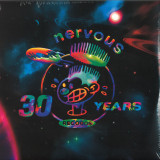
Nervous Records, the iconic label synonymous with the rise of house from the streets of New York City, will mark 30 years in the music industry by releasing the celebratory compilation LP ‘Nervous Records: 30 Years’ on October 1st (Part 1) and October 15th (Part 2).
Featuring original mixes of the label’s biggest tracks, plus remixes by some of its most celebrated acts, ‘Nervous Records: 30 Years’ is both a celebration of the past and of the future. Featuring a who’s who of electronic dance music, the long player sees names including Louie Vega, David Morales Darius Syrossian, Tensnake, Monki, Franky Rizardo, Danny Howard and more take on iconic Nervous cuts: ‘You Make Me Feel Mighty Real’, ‘Treat Me Right’, ‘Future Groove’, ‘Feel Like Singing’, ‘Get Up Everybody’, ‘Break You’, ‘Hot’, ‘End This Hate’, ‘Unspeakable Joy’, ‘Can Ya Tell Me’, ‘Jerk It’, ‘The Anthem’, ‘It Makes A Difference’, ‘Learn 2 Luv’ and ‘Don’t You Ever Give Up’.
The album marks one of the most enduring, extraordinary legacies to grace America’s illustrious music history, not just in electronica but far beyond. Founded in 1991 by Michael and his father Sam Weiss, and recognizable immediately by its distinctive character logo, the label grew rapidly, in no small part due to Michael Weiss’ practically unmatched passion for discovering new music.
“Louie Vega and Kenny Dope woke me at 4am on Tuesday night, Wednesday morning from their studio telling me they had something really different that I needed to hear,” Michael recollects. “I asked if they could play it over the phone. They said if I wanted to hear it I had to come to the studio. So of course I got myself up, got dressed and went there. That “really different track” ended up being ‘The Nervous Track’, a tune that became our signature release and was also highly instrumental in the emergency of London’s ‘Broken Beat’ movement.”
The label’s willingness to take chances on fresh sounds and innovative concepts rising up from the melting pot sidewalks of NYC ensured a body of work that has become a living musical history of the city. House cuts ‘Unspeakable Joy’ and ‘Nitelife’ (Kim English), ‘Get Up (Everybody)’ (Byron Stingily) and ‘Feel Like Singing’ (Sandy B) bump up against hip-hop anthems like ‘Who Got Da Props’ (Black Moon) and “Bucktown” (Smif-n-Wessun) and reggae cut ‘Take It Easy’ (Mad Lion); soulful flows from Mood II Swing (Kim English ‘Learn 2 Luv’, Loni Clark “Rushing”), Armand Van Helden (‘The Anthem’) and Nuyorican Soul (‘Mind Fluid’) sit alongside seminal techno singles like Winx’ ‘Don’t Laugh’. The young artists and producers who joined the Nervous Records’ family have gone on to become some of the most hallowed and celebrated dance acts of all time: Louie Vega, Kenny Dope, David Morales, Tony Humphries, Roger Sanchez, Armand Van Helden, Kerri Chandler, Kim English, Byron Stingily, Josh Wink, to name just a handful.
“We did a release with Josh Wink under his Winx alias entitled ‘Nervous Build-Up’,” Michael said. “It did well and it was obvious how talented Josh was. Subsequent to that release I was pretty persistent in asking him to continue to play me his new demos. During one phone conversation he said, “Mike I’m gonna play you something over the phone but don’t laugh when you hear it.” That demo ended up being ‘Don’t Laugh’, which became one of our biggest international hits and still to this day is one of America’s earliest and most impactful techno hits.”
As much a celebration of the label’s future as it is of their past, Nervous Records: 30 Years is but a marker in the imprints’ history, a clear sign of where they’ve been and also where they’re going. With 30 years behind them, the label’s determination to unearth new raw diamonds in the rough is as unwavering as ever.
“I’ve always been one to look at what others are doing (the industry at large) and think, “ok, are they doing this specific thing for a reason, or doing it because everyone else is doing the same thing” and make my decision based on that,” says Nervous Records’ General Manager Andrew Salsano. “In an age where data metrics and analytics reign supreme, I remain steadfast that they should be complementary to your decision and not the sole indicator to make one. So many songs today are written with 15 second hooks in mind for social media, and while there’s nothing wrong with that business model you will always be chasing the wave instead of carving out your own path and identity.
“My primary focus for the sound of the label has and will continue to revolve around signing good songs and music that has the ability to react at the street level first. The best results come from artists that are firstly given a bit of local love that grows into a global impact. Fresh ideas that express child-like curiosity and artists showing vulnerability in their music are also something I look for, artists and producers that are not making music with certain markets in mind, but rather their own style and signature that is unique but able to straddle the fine line of underground and overground.”
Still as raw, as underground and as finely tuned to the dance floor as they ever have been, perhaps the secret to the success - and the longevity - of Nervous Records has something to do with that hard, dogged, no-holds-barred NYC edge that runs through the veins of the label. With the next generation of producers rising from the clubs of New York, one thing is certain; Nervous Records will be there to find them, nurture them and bring them to the world at large, over the next decade and beyond.
For fans of Tall Heights, Sufjan Stevens, & Indie Folk! Steadily building their artistic style and audience for the past seven years, New Jersey based alternative folk band Cold Weather Company carries a diverse sound, rich with harmonies and instrumental builds. The band combines the various writing approaches and influences of its three members, Brian Curry, Jeff Petescia, and Steve Shimchick, to create unique arrangements with intricate layering. Over the past few years, the band has earned over eight million cross-platform digital streams and supported acts such as Tall Heights, Jamestown Revival, and Juke Ross. On their fourth full-length album, Coalescence, Cold Weather Company continues to expand their acoustic-forward, alternative folk sound into new territory. With delicate additions of synths and electronic instruments, as well as a broadened palette of horns, percussion, strings, and harmonies, "Coalescence" explores each song down to its smallest sonic niche. Conceptually, the album revolves around growth by highlighting our capacity to better ourselves and our connections through introspection and reflection. Often occurring cyclically, especially in nature, the idea of growth also inspired the release process for the album which will be split into three parts, each representing a different conceptual facet. "With their spot on songwriting and boisterous melodies, Cold Weather Company is set to follow in the alt-folk leaning sounds of Avett Brothers, Ben Howard George Ezra
Hannes Buder (born 1978 in the former GDR) is a musician, composer and improviser in the field of experimental music. His works concentrate on issues of movement, authenticity, intuition, minimalism, and slowness.
Buder's current projects include the bands 'Zug Zug' with Todd Capp and Andrew Lafkas, 'Gravity' with Hannes Lingens and Andrew Lafkas, the duo Nothingness with Sarah Jegelka, and his solo projects. Beyond that he has collaborated with Audrey Chen, Tony Buck, Audrey Lauro, Hilary Jeffery, Mike Majkowski, Steve Heather, Nicole Mitchell's Black Earth Ensemble, the Berlin Improvisers Orchestra and many others. Hannes Buder's Solo recordings include "Changes" (2000), "Dunkelbunt" (2004), "Openyoureyescloseyoureyes" (2006), "Changes II" (2015) and "Oustide WOrds" (2021). He performed concerts in Europe, Australia and in the USA.
Buder has also composed, improvised and recorded music for different dance (Oxana Chi, Judith Sanchez Ruìz), theater (Jörg Mihan, Johannes Maria Schmit) and film projects (Barbara Lubich, Annick Gaudreault). He's been giving workshops at festivals, music schools and with prisoners in jail. He studied guitar in Weimar and Dresden.
BBE Music is excited to present the long awaited, eponymous debut album from the USA/UK partnership of JTronius and Maverick Quest, aka Sons of the Sun. Delivered remotely following a chance meeting on music-tech networking app ‘Brapp’, the ingenious pair sent files back and forth between Texas and South East London to manifest their shared vision for ‘Sons of the Sun’. Remarkably, the duo are still yet to meet in person. A respected solo artist knighted by Bootsy Collins as an official ‘funkateer,’ Berklee College graduate JTronius is an extravagant entertainer, entrepreneur and lifestyle brand. Self-dubbed The Guvna of the Galaxy, he brings his swaggy, soulful style to all his endeavours. He has shared stages with LL Cool J, The Roots, Talib Kweli, Pharrell, Busta Rhymes and Damian Marley and is an accomplished actor, appearing in a number of successful Hollywood feature films. Genre-blending record producer and multi-instrumentalist Maverick Quest grew up immersed in the aesthetic of hip hop. But in an environment where flipping loops from vinyl was standard, developing his musicianship to create his own sounds was radical, a move that paved the way for his signature sonic. He has previously performed with and produced for Guru, Grandmaster Flash, Ice T, Ibibio Sound Machine, Solo Rosa and Portico Quartet to name but a few, and is firmly rooted in the epicentre of the burgeoning South East London jazz movement. Sons of the Sun’s debut long player features a host of luminary guests and musicians from all over the globe, including guitarist Dai Miyazaki (Bilal, Ms. Lauryn Hill, Tye Tribbett), keyboard player and vocalist Matt Cusson (Christina Aguilera, Brian McKnight), singer Ayesha Brooks (The Voice, Season 6), saxophonist & flautist Jelani M. Brooks (Ghost Note, RC & The Gritz, Erykah Badu), Boston rapper Madame Cruz and Scottish horn collective The Brasscats, among many others. Mixed by Grammy-nominated Clinton “Ubiquity” McCreery and mastered at Grammy-awarded studio The Carvery, this album inks an impressive first chapter in the story of Sons of the Sun.
GENRE: Modern Classical, Experimental, Ambient Metal. RIYL: György Ligeti, Sarah Davachi, Stars Of The Lid. 180g LP pressed at Optimal, 350gsm jacket, inner & DL card. Jessica Moss Also Known For Her Tenure In Thee Silver Mt. Zion (2002-2015), Black Ox Orkestar (2002-2007), Recordings By Vic Chesnutt, Carla Bozulich, Arcade Fire, Basia Bulat, Roy Montgomery, Sarah Davachi, Big Brave & More. A phosphene is “the phenomenon of seeing light without light entering the eye.” The title of the heart-rending and resolute new album by composer/violinist Jessica Moss could not be better chosen. Moss is by now a seasoned practitioner of immersive isolation music; across three previously acclaimed solo records of minimal and maximal post-classicism, her acoustic, amplified, and electronically-shifted violin is the raw material for deeply expressive, palpably haunted, wholly committed compositions. But Phosphenes inscribes fleeting halos of refracted ghostly light out of a prevailing darkness with especially plangent determination and intensity. This is the most overtly searching, mournful and inexorable music Moss has made to date. The pieces on Phosphenes exquisitely navigate consonance and dissonance, building patiently from single notes to multiple voicings, harmonic stacks and clusters. These compositions channel themselves like slow-moving water in a dark cave, finding small eddies and catching glints of luminescence from within. Signal processing is kept to a minimum in the three-movement “Contemplation” suite on Side One, where Moss deploys amplification chiefly in the service of activating overtones and pitch-shifts, thickening and widening the sonics, carving out her unique timbral space. Based on a four-note sequence that sets whole tones against one another, “Contemplation” is a bona fide requiem that finds Moss at her most instrumentally naturalistic, measured, and modern. Side Two unfolds in a more foreboding vein: “Let Down” is marked by cavernous octave-dropped arco and pizzicato, providing a gothically-inflected substratum upon which hauntingly wordless vocal invocations and cumulative gyres of violin melody unfurl. “Distortion Harbour” grinds with noisier grit and a more harrowing complexion, highlighting Moss’s ambient-metal sensibility and her distinctive palette of industrial-inflected power electronics a reminder of why she’s also been a go-to player on albums by the likes of Big Brave, Oiseaux-Tempête and Zu in recent years. These two songs also feature upright bass from old friend and former bandmate Thierry Amar (Godspeed You! Black Emperor, Thee Silver Mt. Zion, Black Ox Orkestar). Album closer “Memorizing & Forgetting” is inarguably the most tender and beautiful song in Jessica’s oeuvre: a keening lullabye of sorts, on which she plays piano, violin and guitar, joined by her partner Julius Levy in a lustrous ambient vocal duet. Everyone has been trying to find a way through and out of pandemic, lockdown, social isolation and often darkened hope and for many musicians, the absence of touring, of live performance, live sound, live audiences, and a living. For Moss, it’s also been “like when you press your fists hard against your eyes and eventually there is fireworks.” The light gets in where it can, even or maybe especially as imaginative sensory simulacra (if/when we shut down our screens and are left to our own devices). Phosphenes is a stoic, acutely sensitive, superlative musical statement from Moss
Aufgang is back with its 3rd album, “Broad Ways”, slated for release in November 2021
With this 3rd album, the franco-lebanese duo perpetuates its winning alchemy by drawing on the psychic and collective traumas of recent History at the crossroads between European and Middle Eastern cultures.
What more was there to prove for the Aufgang duo since their re-invention of US techno a few years ago through the means of organic instruments like piano + drums, and releases on Infiné & BlueNote/Decca ?
Maybe that they would from now on independently take onto themselves, the full conception and distribution of their body of work, supported by a collective of visual-arts creators, dancers, and emerging talent-incubators (Bi:Pole/Believe/ BigWax/Alter-K)...
“Broad Ways” could be translated as «in many ways» in the sense that there are many ways of seeing the world, and that everything is not binary and that on the contrary, our lives are shaped by the each other’s own paradigms...
In this clever mix of experimental techno, lyrical prowess and melodies in the Arab tradition, can one imagine a future that would solve the world’s current contradictions in a boiling magma so complex of which Edgar Morin would be proud... Following this unique trademark, this art of mixing influences and cultures, along the New York, Paris, Lebanon and now Sydney axis... how far will they go?
According to Pitchfork, AUFGANG “blends piano, drums and electronic music with virtuosity, with one foot in the club and the other in the conservatory.”
Rami KHALIFÉ, composer and pianist, transcends the classical heritage of his years studying at the Juilliard School in NYC and the Middle Eastern origins of his masterful family: his father Marcel KHALIFÉ is a major composer and musician in the Arab world.
The drummer and producer Aymeric WESTRICH has an instinctive DIY approach and infuses his music with his knowledge of urban and electronic cultures, developed with Kery James, Cassius, Phoenix and more recently Lomepal.
Taking their inspiration from multiple artistic movements and currents, from the Disco of the mythical Larry Levan to the poetry of Oum Kalthoum, these two free electrons have created their sound between Paris, Beirut and New York, in reaction to the frenetic energy of big cities, as if in an effort to prevent this energy from corroding their freedom. It’s a unique experience born from the sublime diversity of these two masterful approaches.
Overkill are an American thrash metal band, formed in 1980 in New Jersey. They are often called 'the Motörhead of thrash metal', based on their unique playing style, which was influenced by punk rock and the new wave of British heavy metal. They were also one of the first thrash metal bands to sign to a major label (having signed to Atlantic Records in 1986), and rose to fame as part of the genre's movement of the mid-to-late 1980s, along with the 'big four' (Metallica, Megadeth, Slayer and Anthrax) as well as Exodus and Testament. Overkill achieved their first mainstream success with their second studio album and Atlantic debut, Taking Over (1987) which acclaimed global praise & chart success. The band's next five studio albums were also on Atlantic —Under the Influence (1988), The Years of Decay (1989), Horrorscope (1991), I Hear Black (1993) and W.F.O. (1994) and were also successful on a global scale, making them one of the most successful East Coast thrash metal bands. Overkill now have nineteen studio albums under their belt and continue to tour the world to huge audiences still to this day.
12” gatefold jacket w/ full color matte UV print, 1x translucent purple cloudy effect vinyl, black dust sleeve, printed LP labels, marketing sticker and free digital download card
Gregory Keltgen (aka DJ Abilities) gravitated toward the turntables at a young age, becoming a DJ at only 17, before going on to compete in the legendary DMC DJ competitions only 2 years later in 1999. He won the regional title and advanced to the U.S. finals that year, before doing it again in 2001. Soon after, Abilities was also garnering attention for performing all the scratches on indie classic, Fantastic Damage, the debut album by El-P of Run The Jewels’ fame, as well as contributing his turntable talents and production skills to other Hip-Hop cult favorites like The Anti-Album by Semi.Official, and The Taste of Rain... Why Kneel? by Deep Puddle Dynamics. But above all, his name would become most celebrated throughout the 2000’s as one-half of the dynamic Hip-Hop duo Eyedea & Abilities.
DJ Abilities had first met Micheal “Eyedea” Larsen in the mid-90’s, and the two soon began a working relationship that would eventually play a prominent role in the burgeoning Indie-Rap movement of the time. Together, the pair developed a near symbiotic
creative union that produced three albums—First Born; E&A; and By The Throat—a catalog animated by the burning fusion of Eyedea’s introspective and technically adept rhymes with Abilities’ precise scratches and versatile production. Tragically, his partner Eyedea passed away in 2010 leaving Abilities to soldier on by himself, but the influence of their partnership continues to shape DJ Abilities’ music to this day.
His latest project, Phonograph Phoenix, finds the DJ/Producer returning to the forefront and embracing an entirely new approach to making music. A departure from previous work that was primarily sample-based, Phonograph Phoenix finds Abilities opting to build the album’s compositions from the ground up, creating his own sound through Ableton Live and various soft synths, with razor sharp cuts and select vocal chops providing a voice where his fallen partner may have once stood.
COLOURED vinyl[45,42 €]
Over nearly 20 years, Howlin Rain may have become the quintessential independent American rock ’n roll band: a steam-spitting Hydra of cranked guitars, kicking asphalt dust through a kaleidoscoping travelogue of desert motels and dives, volleying forth transmissions of sci-fi poetry from the blacktop veins of this cracked and aching country.
Now, in America 2021, capping these strangest and sorest of times, the band returns with The Dharma Wheel, a six-track, 52-minute dive into a joyous fantasy realm of exaggerated present.
“I wanted The Dharma Wheel to be a portal from our everyday world, the one from which you stand on hard ground and hold the album in your hands and peer into the artwork, and into another universe,” says songwriter, guitarist and vocalist, Ethan Miller. “You enter into that universe with your eyes and ears and mind and take a ride through free-form meditation on these ideas — from big, fundamental concepts about our existence right down to the grease that rolls down the arm of a pulp novel killer as he eats a gas station hot dog in an old Dodge in an alleyway.”
Lyrically, Miller has completed his evolution into a mushroom-plucking Whitman of the West, singing outlandish tales in a topographic blend of Humbead’s Revised Map of the World and an inverted U.S. where downtrodden bodhisattvas roam the back streets and moonless country roads.
“Down in Florida swamps, run by nature’s law, standing in the water, Eden gone. Two men loading rifles, beasts making time, they shot a boy from an orange tree and watched the colored birds take flight, watch the colors as they soar and dive.” — ‘Under the Wheels.’
The band, Jeff McElroy (bass, backing vocals), Justin Smith (drums/percussion, backing vocals) and Dan Cervantes (guitar, backing vocals), again sounds hardwired into Miller’s vision, building tracks that swagger and sway in response to his verse. Lending a hand this time around is the legendary Scarlet Rivera (Bob Dylan’s Rolling Thunder Revue) on violin, and the endlessly inventive Adam MacDougall (Chris Robinson Brotherhood, Circles Around the Sun) on keys.
Songs were shaped via the blast furnace of endless gigs, then recorded often mere hours after the band slipped the stage.
“The captured sonic fact about this record is that it’s the sound of a band that rehearsed this material a lot and put a ton of work into its construction and was on the road a lot and recorded on days off in the tour schedule,” Miller says. “In some cases we were on stage on Saturday night playing these songs at quarter-to-2 in the morning and by Noon the next day we were sipping coffee in the studio playing them for the machine.”
Rivera’s violin is the first sound heard as the album dawns on the instrumental “Prelude.” Soon, the band joins, twirling the theme into a psychedelicized awakening. “Don’t Let the Tears” brings the boogie, with MacDougall’s madcap synth work and wah-wah guitars showering 70’s glitter upon a parquet dance floor of the mind. “Under the Wheels” and “Rotoscope” center the album with taut, compositional epics populated by murdering drifters and fuzz pedal explosions. The blue hour comedown of “Annabelle” meditates upon the weariness of lost love, with Rivera again amping the heartache via her violin strings.
“In the evening the trains go by, and shake the dust from dirty walls, sometimes I feel like a spider in an old mason jar, who threatens only convex light from down the hall. I’ve been lost to the world since the photos of the black hole, landed on my desktop screaming, perhaps the all and nothing all-in-one is just too much to take, for particles and matter that never found their way.” — ‘Annabelle’
The record closes with the 16-minute title track, a multi-movement suite which cycles from Crazy Horse-meets-Traffic jams through colossal, mass-moving funk stomp, eventually cresting and washing into a sing-along gospel lament.
The Dharma Wheel is an album of great depth, and one steeped in good vibes: a rich, glistening world of the ultra-vivid. As illustrated in Arik Roper’s cover art, the grand dharmachakra has been set in motion, churning off the California coast.
“We were trying to build a world big enough that the imagination won’t go soft on you after just a few listens and where our love for this music, and music in general — along with a good dose of audacity — create a magic carpet ride through the world of The Dharma Wheel,” Miller continues. “In pursuing that I think we also managed to make a record that has a lot of joy in it: the joy of playing music, the joy of experiencing music, the joy of storytelling and poetry, the kind of singular joy and extended ecstatic moment that only a real ‘band’ can express in just that way.”
And it’s this joy, this exuberance and dedication to the lines of cosmic expression — all centered in the exalted art of the everyday — that constructs the heart of the record. At its core, The Dharma Wheel is the triumph of a working band, a transmission from a never-paused before arriving for our strange, bruised, spectacular now.”
Black vinyl[39,37 €]
Over nearly 20 years, Howlin Rain may have become the quintessential independent American rock ’n roll band: a steam-spitting Hydra of cranked guitars, kicking asphalt dust through a kaleidoscoping travelogue of desert motels and dives, volleying forth transmissions of sci-fi poetry from the blacktop veins of this cracked and aching country.
Now, in America 2021, capping these strangest and sorest of times, the band returns with The Dharma Wheel, a six-track, 52-minute dive into a joyous fantasy realm of exaggerated present.
“I wanted The Dharma Wheel to be a portal from our everyday world, the one from which you stand on hard ground and hold the album in your hands and peer into the artwork, and into another universe,” says songwriter, guitarist and vocalist, Ethan Miller. “You enter into that universe with your eyes and ears and mind and take a ride through free-form meditation on these ideas — from big, fundamental concepts about our existence right down to the grease that rolls down the arm of a pulp novel killer as he eats a gas station hot dog in an old Dodge in an alleyway.”
Lyrically, Miller has completed his evolution into a mushroom-plucking Whitman of the West, singing outlandish tales in a topographic blend of Humbead’s Revised Map of the World and an inverted U.S. where downtrodden bodhisattvas roam the back streets and moonless country roads.
“Down in Florida swamps, run by nature’s law, standing in the water, Eden gone. Two men loading rifles, beasts making time, they shot a boy from an orange tree and watched the colored birds take flight, watch the colors as they soar and dive.” — ‘Under the Wheels.’
The band, Jeff McElroy (bass, backing vocals), Justin Smith (drums/percussion, backing vocals) and Dan Cervantes (guitar, backing vocals), again sounds hardwired into Miller’s vision, building tracks that swagger and sway in response to his verse. Lending a hand this time around is the legendary Scarlet Rivera (Bob Dylan’s Rolling Thunder Revue) on violin, and the endlessly inventive Adam MacDougall (Chris Robinson Brotherhood, Circles Around the Sun) on keys.
Songs were shaped via the blast furnace of endless gigs, then recorded often mere hours after the band slipped the stage.
“The captured sonic fact about this record is that it’s the sound of a band that rehearsed this material a lot and put a ton of work into its construction and was on the road a lot and recorded on days off in the tour schedule,” Miller says. “In some cases we were on stage on Saturday night playing these songs at quarter-to-2 in the morning and by Noon the next day we were sipping coffee in the studio playing them for the machine.”
Rivera’s violin is the first sound heard as the album dawns on the instrumental “Prelude.” Soon, the band joins, twirling the theme into a psychedelicized awakening. “Don’t Let the Tears” brings the boogie, with MacDougall’s madcap synth work and wah-wah guitars showering 70’s glitter upon a parquet dance floor of the mind. “Under the Wheels” and “Rotoscope” center the album with taut, compositional epics populated by murdering drifters and fuzz pedal explosions. The blue hour comedown of “Annabelle” meditates upon the weariness of lost love, with Rivera again amping the heartache via her violin strings.
“In the evening the trains go by, and shake the dust from dirty walls, sometimes I feel like a spider in an old mason jar, who threatens only convex light from down the hall. I’ve been lost to the world since the photos of the black hole, landed on my desktop screaming, perhaps the all and nothing all-in-one is just too much to take, for particles and matter that never found their way.” — ‘Annabelle’
The record closes with the 16-minute title track, a multi-movement suite which cycles from Crazy Horse-meets-Traffic jams through colossal, mass-moving funk stomp, eventually cresting and washing into a sing-along gospel lament.
The Dharma Wheel is an album of great depth, and one steeped in good vibes: a rich, glistening world of the ultra-vivid. As illustrated in Arik Roper’s cover art, the grand dharmachakra has been set in motion, churning off the California coast.
“We were trying to build a world big enough that the imagination won’t go soft on you after just a few listens and where our love for this music, and music in general — along with a good dose of audacity — create a magic carpet ride through the world of The Dharma Wheel,” Miller continues. “In pursuing that I think we also managed to make a record that has a lot of joy in it: the joy of playing music, the joy of experiencing music, the joy of storytelling and poetry, the kind of singular joy and extended ecstatic moment that only a real ‘band’ can express in just that way.”
And it’s this joy, this exuberance and dedication to the lines of cosmic expression — all centered in the exalted art of the everyday — that constructs the heart of the record. At its core, The Dharma Wheel is the triumph of a working band, a transmission from a never-paused before arriving for our strange, bruised, spectacular now.”
- A1: Dave Porter - Breaking Bad Main Title Theme (Extended)
- A2: Rodrigo Y Gabriela - Tamacun
- A3: Working For A Nuclear Free City - Dead Fingers Talking
- A4: Glen Phillips - The Hole
- A5: Darondo - Didn't I
- B1: Mick Harvey - Out Of Time Man
- B2: The In Crowd - Mango Walk
- B3: Ticklah - Nine Years
- B4: Fujiya & Miyagi - Uh
- B5: The Silver Seas - Catch Yer Own Train
- C1: The Walkmen - Red Moon
- C2: The Be Good Tanyas - Waiting Around To Die
- C3: Los Cuates De Sinaloa - Negro Y Azul: The Ballad Of Heisenberg
- C4: Calexico - Banderilla
- D1: Far East Movement - Holla Hey
- D2: The Black Seeds - One By One
- D3: Blue Mink - Good Morning Freedom
- D4: Yellowman - Zungguzungguguzungguzeng
- E1: Chuy Flores - Pollos Hermanos Veneno
- E2: Los Zafiros - He Venido
- E3: Vince Guaraldi & Bola Sete - Ginza Samba
- E4: Teddybears Feat. Eve - Rocket Scientist
- F1: Prince Fatty - Shimmy Shimmy Ya
- F2: Son Of Dave - Shake A Bone
- F5: America - A Horse With No Name
- G1: Alexander - Truth
- G2: Ana Tijoux - 1977
- G3: Bang Data - Bang Data
- G4: Fever Ray - If I Had A Heart
- H1: Apparat - Goodbye
- H2: Thee Oh Sees - Tidal Wave
- H3: Taalbi Brothers - Freestyle
- I1: Whitey - Stay On The Outside
- I2: The Peddlers - On A Clear Day You Can See Forever
- I3: Knife Party - Bonfire
- J1: Tommy James & The Shondells - Crystal Blue Persuasion
- J2: The Limeliters - Take My True Love By The Hand
- J3: Marty Robbins - El Paso
- J4: Badfinger - Baby Blue
- F3: The Association - Windy
- F4: Quartetto Cetra - Crapa Pelada
First time on vinyl
10th Anniversary of the Breaking Bad TV Series
5 x 10' vinyl in 5 different jackets, 1 relating to each season
Each 10' is the same colour, Strictly Limited Edition Albuquerque Crystal Coloured (transparent with a hint of turquoise) Vinyl!
Lift off box-set with Breaking Bad logo on front with special drip-off varnish
Exclusive Breaking Bad Poster & Pollos Hermanos plastic ID badge
Booklet with exclusive pictures and extensive liner notes by Thomas, the musical supervisor of Breaking Bad
One run only of this very exclusive BOX-SET
Individually numbered the manufacturing qty for Worldwide is est 4000 with 800 for the UK - we could get some more
PLEASE ORDER BY 12.00 TUESDAY 25 SEPT TO BE GUARANTEED YOUR QTY
Available worldwide
Weight ESTIMATED 950g
All the essential Breaking Bad songs by Badfinger, Calexico, Far East Movement, America, Fever Ray, Apparat, Whitey, Knife Party, The Peddlers and others
Various dialogies by Walter, Jesse, Skyler, Mike, Gus, Saul and many more
This release will be heavily promoted on social media, including the social media accounts of Breaking Bad (facebook, over 11 million followers!!!).
MOV proudly presents the OST - BREAKING BAD (MUSIC FROM THE ORIGINAL SERIES) 5 x 10' BOX-SET!
A TOP PRIORITY RELEASE with WORLDWIDE RIGHTS!
So far only the score music has been released on vinyl and now finally, for the very very first time, the original soundtrack music is released on vinyl!
Breaking Bad is widely regarded as one of the greatest television series of all time and celebrates its 10th anniversary in 2018.
The legion of fans have been waiting for this to be released for a long time. There will be a huge demand for this exclusive BOX-SET!
This release was never released in any other format (CD, vinyl, digital) before and will only be available on vinyl!
OST - BREAKING BAD (MUSIC FROM THE ORIGINAL SERIES) is presented in a beautiful Lift off box-set with Breaking Bad logo on front with special drip-off varnish. The box-set includes a selection of defining songs, devided in five 10' records on coloured vinyl, each representing a season with accessory artwork. The numbered box-set also includes a booklet, poster and Pollos Hermanos plastic ID Badge. Next to all essential Breaking Bad songs by Badfinger, Calexico, Far East Movement, America, Fever Ray, Apparat, Whitey, Knife Party, The Peddlers and others, the 10' records also include various dialogies by Walter, Jesse, Skyler, Mike, Gus, Saul and many more. The box-set is a ONE-RUN-ONLY and is STRICTLY LIMITED!
Breaking Bad is an American neo-western crime drama television series created and produced by Vince Gilligan. The show originally aired on the AMC network for five seasons, from January 20, 2008 to September 29, 2013. The series tells the story of Walter White (Bryan Cranston), a struggling and depressed high school chemistry teacher diagnosed with lung cancer. Together with his former student Jesse Pinkman (Aaron Paul), White turns to a life of crime by producing and selling crystallized methamphetamine to secure his family's financial future before he dies, while navigating the dangers of the criminal world. The title comes from the Southern colloquialism "breaking bad", meaning to "raise hell" or turn toward crime. Breaking Bad is set and filmed in Albuquerque, New Mexico.
Walter's family consists of his wife Skyler (Anna Gunn) and children, Walter, Jr. (RJ Mitte) and Holly (Elanor Anne Wenrich). The show also features Skyler's sister Marie Schrader (Betsy Brandt), and her husband Hank (Dean Norris), a Drug Enforcement Administration (DEA) agent. Walter hires lawyer Saul Goodman (Bob Odenkirk), who connects him with private investigator and fixer Mike Ehrmantraut (Jonathan Banks) and in turn Mike's employer, drug kingpin Gus Fring (Giancarlo Esposito). The final season introduces the characters Todd Alquist (Jesse Plemons) and Lydia Rodarte-Quayle (Laura Fraser).
Breaking Bad is widely regarded as one of the greatest television series of all time. By the time the series finale aired, it was among the most-watched cable shows on American television. The show received numerous awards, including 16 Primetime Emmy Awards, eight Satellite Awards, two Golden Globe Awards, two Peabody Awards, two Critics' Choice Awards and four Television Critics Association Awards. For his leading performance, Cranston won the Primetime Emmy Award for Outstanding Lead Actor in a Drama Series four times, while Aaron Paul won the Primetime Emmy Award for Outstanding Supporting Actor in a Drama Series three times; Anna Gunn won the Primetime Emmy Award for Outstanding Supporting Actress in a Drama Series twice. In 2013, Breaking Bad entered the Guinness World Records as the most critically acclaimed show of all time.
Summer was conceived as an entry point for Sonae to access and wrestle with difficult themes, to engage with them authentically, artfully, personally. It was also the starting point for a collaborative audio-visual project with video artist Jennifer Trees (the confronting multimedia installation that premiers in September 2021 at Stadtgarten, Cologne).
Summer articulates these ideas using the unique musical and sonic language that Sonae has been developing across previous releases. The expressive textures and tender melodics of 2015’s Far Away is Right Around the Corner; the atmospheric noise and brute unease of 2018’s I Started Wearing Black; the vicious edges of her 2019 remix-tape Music For People Who Shave Their Heads. Summer is haunted by blistered cellos and spectral string drones, the elegant and emotive movement around diatonic harmonies that echo the classicism and bucolic themes of Vivaldi’s The Four Seasons (1775). Like Vivaldi, Sonae’s work is programmatic, presenting a progressive, intensifying narrative and suggesting aural phenomena of the natural world - buzzing insects, breaking rocks, waves crashing, dust and heat rising - and characterising the seasonal spirit as capricious, volatile and punishing. In these ways, Summer is related to pastoral traditions of European classicism, evoking the aura of doomed and dust-blown gothic grandiosity. It also has feet firmly planted within the lean, sound worlds of underground techno - pulsating four-on-the-floor beats with deep, vibrational sine-wave sub kicks; elegantly bleak, distorted atmospherics that straddle the uncanny space between corrosion and euphoria. The result is a visceral and poetic listening experience. Original, highly affecting, fully engaging body, mind and soul. (…)
Sonae’s music evokes imagination, provokes emotion, and disrupts and defies expectations. She explores the edges and intensities of experience, creating audible and embodied sensations that suggest the physical, atmospheric, and psychological effects of global warming on a living organism. We feel the fatigue, the slowness, sweatiness, dizziness, the sensations of uncomfortable warmth and burning; the atmospheres are hazy, dark and heavy, articulations are brutish and tactile, crunchy and sharp; there is restlessness and resignation, desolation and awe.
Summer is not a warning. It is not an explanation or an argument. It offers no answers. Summer simply holds up a mirror and asks us to experience and behold both the beauty and the brutality of our present reality. It is a work of protest, grief and hope, and it functions as a space for the listener to reckon with these truths and sensations for themselves. (Leah Kardos, London, June 2021)
Sonae (Sonia Güttler) is a German electronic producer and DJ, based in Cologne. Her acclaimed debut album was released in 2015 with Monika Enterprise (Berlin) followed on the same label with her second album in 2018 : ‘’I Started Wearing Black’’. Her Third album ‘’Music For People Who Shave Their Heads’’ has been released in 2019 with bit-phalanx (London).
Sonae plays live solo and with the label collective Monika Werkstatt at places like Institut Für Zukunft (Leipzig), Meakusma Festival (Eupen), Ausland (Berlin), Pop Kultur Festival (Berlin), Fusion Festival (Germany), Uh-Fest (Budapest), Cafe Oto (London), 23rpm Festival (London) The Cube (Bristol) and more on the same bill with Squarepusher, Plaid, Darkstar, Kyoka, Frank Bretschneider, Tim Exile.
"Oscillation associations
This album is titled Os. When I look at the shape of these two letters, O and S, I realize that they are a rotation and an oscillation.
Os is Dutch for Ox. An ox is a castrated male bull. The primary benefit of castrating bull calves is to temper their tempers, making it easier and cheaper for people to handle them. Os is also an abbreviation of oscillation, -cillation being castrated off. Oscillation means a movement back and forth in a regular rhythm, like breathing, push-ups, tides, swinging or sound. For this album Lyckle was not dealing with oxes or bulls, but with oscillations, guiding them through synths, handling their tempers. If I look at the etymology of oscillation, I learn that it stems from the term Oscilla, which were ancient disks depicting a face or animal on each side. Oscilla is a diminutive of os and means ‘little face’. They were hung in trees during religious feasts honoring various deities, as well as being thought of as purifying the air as they swung in the wind.
The wind chime with its little sunny face, smiling on the cover of this record was hanging in the windowsill of Lyckle’s studio, behind his back, where the wind would make it jingle, averting the Evil Eye according to apotropaic magic. In ancient Rome, wind chimes named Tintinnabulum were decorated with a phallus, which was also seen as a good luck charm. Phallic charm also appeared as objects of jewelry such as pendants and finger rings. It has been suggested that some types of phallic pendants were designed to point outwards in the direction of travel in order to face any potential danger or bad luck, nullifying it before it could affect the wearer.
When I take the record itself out of the sleeve, I see that there are two phalluses carved into the surface of the vinyl, like little ornaments. When you start playing the record, they start chasing each other, going round and round. They point in all directions of the room, but are never able to point at each other. Finally, I am told that it is recommended to listen to this record with the window open, allowing sounds from outside to blend in with the music. "
- Bernice Nauta
- A1: Gimme Little Sign ~ Brenton Wood
- A2: Another Dirty Deal ~ The Incredibles
- A3: So In Luv ~ Othello Robertson
- A4: I’m On My Way ~ Barbara Dane
- A5: A Little Spark Of Fire ~ Bruce Cloud
- A6: Meet Me At Midnight ~ Cindy Lynn & The In-Sounds
- B1: The Ice Man ~ Billy Watkins
- B2: Gonna Hang On In There Girl ~ Jesse Davis
- B3: One Love ~ Jimmy Lewis
- B4: Backfield In Motion ~ Mel & Tim
- B5: I’ve Arrived ~ Jewel Akens
- B6: The ‘In’ Crowd ~ Dobie Gray
The UK’s love affair with American soul music blossomed in the
mid 1960s, with the launch of the Tamla-Motown record label in
Britain. But by the end of the decade this passion took on a
distinctly homegrown twist with a new movement that grew out
of the North of England and Midlands’ underground soul and
R&B scene. It was here at dancehalls and clubs such as
Manchester’s Twisted Wheel and the Wigan Casino that
devotees danced the night away to uptempo, joyous US soul
records that always came with a heavy beat. Pretty soon the
movement had a name: Northern Soul. This collection is the
next best thing and it is all on vinyl, exactly how the movement’s
fans originally heard them
Audiophile 180glp pressing includes eight 12"x12" art print reproductions of analog film stills by renowned experimental filmmaker Daïchi Saïto. The first purely solo record by Jason Sharp - where every sound is created by his saxophone, breath, heartbeat & modular synthesis rig. Sharp's customized electroacoustic biofeedback system utilizes a heart monitor to turn his pulse into signal & tempo responsively synthesized in real time during peformance & recording. Produced by Radwan Ghazi Moumneh (MATANA ROBERTS, SUUNS, BIG | BRAVE, ERIC CHENAUX, JERUSALEM IN MY HEART). For Fans of Fennesz, Christina Vantzou, Tim Hecker, Klaus Schulze, Ben Frost, Gas, Windy & Carl, Colin Stetson. Montréal saxophonist and electroacoustic composer Jason Sharp presents his third album on Constellation. The Turning Centre Of A Still World is Sharp's first purely solo record and his most lucid, poignant, integral work to date. Following two acclaimed albums composed around particular collaborators and guest players, Sharp conceived his third as an interplay strictly bounded by his own body, his acoustic instrument, and his evolving bespoke electronic system. The Turning Centre... is a singular sonic exploration of human machine calibration, interaction, expression and biofeedback. Using saxophones, foot-controlled bass pedals, and his own pulse - patched through a heart monitor routed to variegated signal paths that trigger modular synthesizers and samplers - Sharp paints with organic waves of glistening synthesis, pink noise and digitalia. Melodic strokes and harmonic shapes ripple and crest across ever-shifting seas, through an inclement cycle from dawn to dusk. The album's six main movements navigate a world where placid surfaces are always roiled and disquieted by a deeper inexorable gyre: the gravitational pull and tidal perpetuity of our bodies made of water, buffeted by terrestrial atmospheric pressures, wrung out by emotions, coursing with blood, sustained by breath, inescapably yearning for and returning to ground again and again. Sharp's heartbeat literally courses through these compositions - while only occasionally surfacing as a clearly audible pulse or rhythm, it physically feeds into a spectrum of generative synthetic processes that help constitute and conduct the music.
Guitarists Marisa Anderson and William Tyler distil deeply
rooted and varied traditions into distinctive voices all their own.
Anderson and Tyler are each unyielding in their desire to extend
through those traditions and the confines of ‘guitar music’ to
craft music at once intimate and expansive, conversational and
transcendent.
The duo’s debut collaborative album tethers together their
singular voices into unified narratives that glisten, drive and
sway. On ‘Lost Futures’, Anderson and Tyler’s guitars dance
through lush arrangements and pastoral duets serpentine and
reverent.
‘Lost Futures’ takes its name from writer Mark Fisher’s cultural
theory of the loss of potential futures, the hopes and ideals
which once felt inevitable but have since been interrupted.
Anderson and Tyler’s use of textural drones, rhythmic repetition
and harmonic shifts embody the building tensions of uncertainty
created by profound loss: loss of life, experience,
companionship, compassion. Across ‘Lost Futures’, Anderson
and Tyler mold their instruments into breathtaking panoramas of
blight and bliss. Each movement contains a dense biome of
transportive sound.
The duo’s music together reckons with mounting pressures as
well as the joy of newfound friendship and gratitude for being
able to play together. In tandem, Marisa Anderson and William
Tyler have composed a work of remarkable breadth, brimming
with resplendent odes of solace.
Marisa Anderson and William Tyler are both prolific solo artists.
Tyler has also toured with groups including Lambchop and
Silver Jews and Marisa has contributed to recordings by Beth
Ditto, Sharon Van Etten and Circuit Des Yeux among others.
‘Lost Futures’ features guests Gisela Rodriguez Fernandez on
violin and Patricia Vázquez Gómez playing quijada.
Package features artwork by Sam Smith. LPs include artworked
inner-sleeve featuring photography by Marisa Anderson.
With Pierre-Jean Guidon (Moravagine, Chute Libre) as their saxophone player, Subversion (from France) played lowkey jam-orientated Progressive Rock with prominent folk and jazz flavors. However, despite the brainy exterior, their soft music had more in common with the naivety of the 60’s Yé-yé movement and lounge-pop in general. Thus they seemed to belong to a bygone era, one far removed from the upcoming punk-rock and new-wave one.
- A1: Ballade De Melody Nelson (Howie B Remix)
- A2: La-Bas C'est Naturel (Faze Action Remix)
- A3: Love On The Beat (Krikor & Warrio Remix)
- B1: Bonnie & Clyde (Herbert Remix)
- B2: No Comment (Dax Riders Remix)
- B3: Sea Sex & Sun (Demon Ritchie Remix)
- C1: Lola Rastaquouere (Chateau Flight Remix)
- C2: Aeroplanes (Readymade Mix)
- C3: Marabout (Bob Sinclar Remix)
- C4: Five Easy Pisseuses (Ogm Remix)
- D1: Requiem Pour Un Con (The Orb Remix)
- D2: L'hotel Particulier (Stratus Remix)
- D3: Je T'aime Moi Non Plus (Dzihan & Kamien Remix)
- D4: New York Usa (Snooze Remix)
Reissued on vinyl almost 20 years after its release I Love Serge (subtitled electronica Gainsbourg) is released on July 9. The album tribute from the electro scene to Serge Gainsbourg originally released in 2001. This pearl is composed of remixes of emblematic titles by Serge Gainsbourg produced by the flower of the electro movement of the time. Reviews and Ads – L’Echo and London Macadam
Land of the Free? with revered classic songs like the incendiary “F*ck
Authority,” was a wake -up call from Pennywise, aimed at the slumbering
masses of America, an attempt to shake people out of their lethargy and
prod them into thinking about the world.
Originally released in June 2001, the band’s six studio album tackled the political and social issues of the day, from police corruption and mass shootings to
elections, topics that 20 years later are just as relevant.
Pennywise have made a name for themselves over the past 33 years as a politically minded, melodic hardcore /punk band that has sold millions of albums
and become one of the most successful independent acts of all time.
Formed in 1988, the band played backyard parties in their hometown of Hermosa Beach, California, without having any aspirations other than playing as
many songs as they could before the police showed up. Hermosa Beach and
the surrounding neighborhoods are a prominent place in popular culture, with
groups like Black Flag, The Circle Jerks and Descendents merging a fast rebellious sound with the surrounding aggressive surf and skate culture.
Inspired by their predecessors, Pennywise were at the forefront of a second
wave of American punk rock that would catapult the movement from a tightknit subculture into a worldwide movement.
Synth legend Suzanne Ciani, Demdike Stare’s Sean Canty & Finders Keepers’ Andy Votel come together on this killer hour-long 2014 synapse popper of a collaboration pooling the occasional group’s esoteric collage-based approach into a remarkably foreboding session pregnant with a dread that’s never quite resolved. Think Vladimir Ussachevsky, Todd Dockstader, Spectre and Company Flow melted thru the Deutsch-Italo industrial DIY tape era and funneled thru an almost impenetrable fog of Ann Arbor basement noizze.
Hustling some of Neotantrik’s most amorphous gestures, ’241014’ is a four-segment movement of reduced Buchla treatments, destroyed vinyl loops and scraping foley suspense; like a cosmic dream diary layered into a collage of drones and clatters. Little in Ciani’s extensive catalogue has hinted at what’s on display here; the joyful lullaby-pop of “Seven Waves” or metallic alien soundscraping of “Flowers of Evil” are only hinted at. She instead paints new sonic vistas, allowing space for her collaborators to make themselves known; Votel’s chiming toy autoharp and Bubul Tarang (a Punjab string instrument) add a distinctive flavor, while Canty’s grimy drones and noise-soaked textures drizzle pitch-black molasses into the cracks and crevices. Together, the effect is a bit like hearing Philip Jeck improvising over Popol Vuh’s peerless Moog-led debut “Affenstunde” or Demdike Stare knocking out impromptu reworks of Tangerine Dream’s abstrakt early run.
Perhaps unusually, the trio have still never set foot in a studio together, exclusively maintaining their practice in-the-moment and on stage when schedules intersect. So it’s all the more remarkable that their improvisations naturally find a democracy of role and such a heightened level of intuition, beautifully converging their thoughts to mutual, open-ended conclusions that leaves billowing room for interpretation. In a most classic sense, it’s like the sensation of sleep paralysis or dream/nightmare ambiguity, with a level of suggestiveness that’s disorienting from end to end.
For the first time the recordings are now available in high fidelity (there was a tape version a couple of years back) - now remastered by Rashad Becker to better represent the otherworldly scope of their actions on stage, from the NWW-like queues and drone of ‘Scanned Accents’ and keening silhouette of ‘Second Action,’ to new sections of subaquatic Porter Ricks-like murk in ‘Anti-Contraction’ and the levitating webs of synth and tactile, sampled textures in ‘Last Canción.’ Tape music and synth music have long shared a passionate embrace, and here turntablism coolly slides in on the action. Canty and Votel’s background in beat tape assembly and crate digging pays off: they’re keenly experimental creators but bring an unfussy sense of rhythm and performance that’s miles beyond any facile repetition of a nostalgia for vintage glory. Combined with Ciani’s delicate Buchla work - it’s a unique proposition.
Françoise Hardy became an international sensation during the early 1960s through her albums on Disques Vogue, the French jazz label that then began showcasing chanson. She signed to the label at seventeen after answering a newspaper advertisement recruiting unknown singers while she was a freshman at the Sorbonne, the B-side of debut single, ‘Tous Les Garçons Et Les Filles,’ brought her to the forefront of the Yé-yé movement, mixing chanson with Anglophone rock and pop, and paving the way for this debut LP, which was lauded by the likes of Bob Dylan and Mick Jagger. This first offering is still arguably her best – grab it now to understand why!
Hella Love, the Hardly Art debut from Marinero, is an album about closing a chapter. It’s Jess Sylvester’s grand farewell, and love letter to his hometown and the place he grew up, The San Francisco Bay Area, before relocating to Los Angeles after finishing his debut release. Using the moniker Marinero (which means “sailor” in Spanish), Jess Sylvester was drawn to this name as a means to honor his parent’s stories -- his father, a sailor, and mother, a Mexican-American who grew up in San Francisco. This record blends many worlds from beginning to end, and as you go deeper it hits harder. It’s his goodbye to The Bay. Pulling sonic influences from classic Latin American groups and international composers from the 60’s & 70’s: Los Terricolas, Ennio Morricone, Esquivel, Carole King and, Serge Gainsbourg Hella Love finds Sylvester fusing classical arrangements with a variety of different genres, evoking a sonic nostalgia blended with other contemporary artists like Chicano Batman, Connan Mockasin, and Chris Cohen. The album was written, played, and produced by Jess Sylvester with help from Bay Area engineer Jason Kick (Mild High Club’s Skiptracing) at Tunnel Vision and Santo Recording in Oakland, California. On the standout single “Nuestra Victoria,” Sylvester shares “It’s my way of talking about gentrification in SF, or specifically the Mission where my mom and family grew up. The song is about a bakery, or panaderia called La Victoria, and was a place where my mother and tias went growing up, a place I also went to that is no longer there.” It was one of the oldest Mexican-American businesses in SF and I wanted to honor it”. “Through the Fog” highlights Sylvester’s exploration of his influences from the Tropicalia movement, weaving bossa rhythms with lush percussion and orchestration. Using SF’s infamous fog as a metaphor for “tough times”, Sylvester expands that it is a dedication to his friends and family who have helped him get through substance abuse issues, heartbreak, and other painful experiences. “There are a few easter eggs in the lyrics for Bay Area folks or people who have followed my music in the past but it’s mostly about getting through something difficult with the love and support from the homies and fam.” The album’s title track, “Hella Love,” summarizes both of his parent’s stories of how they ended up in the bay. The first verse is about his father’s voyage out west as a sailor during the late ’60s while the second verse follows his mother’s experience moving to The Mission District when she was a young girl.
It’s difficult to classify or generalize about Marinero’s music or identity. To him, it’s important to let his music do the talking. “I’m Chicanx, a bay native, biracial, and I’ve luckily gotten to travel and spend time in Mexico and I feel like my personality and specific musical tastes come through on this album. More than these generalizations we often make, I’m just a human who can both fear and love, and I’m just hoping to connect with others to share optimism and experience joy and laughter, even if for a moment.” Lean your ear to the ground because Jess Sylvester has been many things and will continue to share his journey. It is clear this gifted creator has more to say.
-Luz Elena Mendoza
Debut solo album by the Red River Dialect songwriter. Recorded at the Hotel2Tango, Montreal, by Howard Bilerman. Featuring Thor Harris (Swans, Thor & Friends, Shearwater) on drums and Thierry Amar (GYBE!, ASMZ) on bass, with guest appearances from Tom Relleen (RIP) (Tomaga, Melos Kalpa), Catrin Vincent (Another Sky) and Coral Rose (The Silver Field, Red River Dialect).
David has written five critically acclaimed collections of songs under the Red River Dialect name. The last two albums (released by Paradise of Bachelors) achieved a glowing Pitchfork review and a Folk Album of the Month award from the Guardian. Selected press below.
“Folk Album of the Month. Alert, anti-colonialist folk. Songwriter David Morris brings alternate seduction and disquiet on this worldly album steeped in the British landscape... a wide-eyed, curious creature, willingly alert to the world.” – 4/5 The Guardian
“Animated with a new intensity, the Cornwall band’s fifth album may be its most ingenious and immersive mix of folk and rock yet. It’s also Morris’ most compelling set of songs. He invests small sensations with outsize power, finding joy in sensory pleasures as well as in the mystical inquests that music allows. Even as the record is steeped in the long history of British folk music, that balance of the tactile and the spiritual anchors these songs in the present moment.” – Pitchfork
“The most underrated folk-rock band in Britain. The idea of them as a Cornish-born, Buddhist-inclined Waterboys is more potent than ever. Their fifth album of elementally-battered, rueful and rousing folk-rock ... is as stirringly anthemic as they've managed thus far.” – MOJO
“A beguilingly atmospheric record… imagine Steve Gunn transplanted to Kernow.” – Clash
“Gorgeous and moving, anchored by the heft of the physical but reaching for more. The epic spareness, the way it manages to be both still and an enveloping swirl, reminds me most of Talk Talk. There’s a prayerful intensity to the quiet bits, a listening, wondering awe, that makes the rock payoffs more powerful. The album works as a restless, searching, gorgeous whole. Morris and his band have never been better.” – Dusted
“It’s not often that a band comes along and over the course of nine songs both plays to the tradition and stands it on its ear. RRD has taken the challenge of playing with reckless abandon to heart, generating an album that stands on the shoulder of giants showing no fear.” Folk Radio
Monastic Love Songs continues the tradition that David has established over the course of five albums with Red River Dialect: using a song cycle to articulate a relationship with inner and outer landscapes, inspired by the Taoist approach of observing the movement of the heavens in order to understand the cosmos within, and vice versa. The joyful closing track Inner Smile was initially written as a poem of thanks to his Tai Chi teacher Hollis and takes its name from a Taoist practice.
The songs were written during the final weeks of a nine-month retreat at Gampo Abbey, a Buddhist monastery in Nova Scotia where David took ordination as Buddhist monk. The album title is sincere, with a little tongue-in-cheek. The songs mostly explore human relationships within the community, with outliers: Gone Beyond shimmers with cosmic devotion, in Rhododendron a reverie grows from the shadow of a flower. Steadfast concerns the love to be found beyond the urge to like and be liked, when you can’t avoid that difficult person. Leonard Cohen, on his six years living in a monastery:
“You know, there’s a Zen saying: ‘Like pebbles in a bag, the monks polish one another.’
David considers this album to be a follow up to 2015’s Tender Gold and Gentle Blue. The cover of that lp featured an image of him on top of Skellig Michael, in the years before the island was made famous as the home of the Jedi. He considers the visit to that abandoned Celtic monastic site to be one of the influences that stirred up his motivation. Skeleton Key speaks of what was given up to go, and what he was giving up to leave, referencing the Tibetan concept of the ‘bardo of becoming’.
The album came about through a series of fortunate encounters. David’s friend Tom Relleen visited him at the Abbey in May 2019, mentioning a postponed plan to visit the Hotel2Tango. A spark was sown: this studio had long figured in David’s imagination. Many of the releases on Constellation Records, which he had become a die-hard fan of in his teens, were recorded there. Tom contributed some Buchla synthesizer to the opener New Safe, which concerns healing in emptiness and light.
In May David was given permission by the senior monastics to acquire a guitar, which was swiftly baptised as “Malibu Barbie”. Having let the identity of being a songwriter loosen up, not playing an instrument in six months, he was unsure what would happen. In the single hour he was permitted to practice each day, songs began to cascade. The first, Purple Gold, concerns a reacquaintance with first love. David wrote to the Hotel2Tango asking if they had any days available in mid-July?
Engineer and studio co-owner Howard Bilerman replied that they did, and a date was set. Did Howard know any local drummers or bass players who might do a session? He did, too many to choose from, what kind of style? David decided to ask for his ideal: did Thierry from Godspeed ever do sessions? Howard sent him the demos. Thierry was up for it. On the day he went deep into the cover of traditional song Rosemary Lane, his double bass singing on this and on Circus Wagon.
David asked if there were any local drummers he would recommend? Thierry said “many, what style?” David tried his luck again, “two of my favourite drummers are Thor Harris and Jim White.” Thierry said let’s invite them. Thor, having met David a decade earlier, flew from Austin to Montreal for that July day in the studio. Nine months of watching thoughts come and go in meditation helped David recognise this as an opportunity to practice enjoying the day without expectations.
He is, however, grateful that this album came out the way it did, channelling some of what it was like to live those nine months in a monastery overlooking the Gulf of St Lawrence, frozen and flowing.
Mixed by Jimmy Robertson at SNAFU, London, mastered by DenisBlackham.
After a year of sadness comes an album fit to resist it. Detritus, the third solo LP by violinist/composer Sarah Neufeld, confronts anguish with beauty, turmoil with grace, gliding through the present like a dancer mid-motion, reaching through space 'til she's caught. Detritus originated with a collaboration: in 2015, Neufeld was invited to appear on stage with the legendary dancer/choreographer Peggy Baker. Baker had prepared a solo piece based on work from Neufeld's second album, The Ridge, to which Neufeld added an original lyrical prelude. The live result was an incendiary duet, almost a sort of face-off, which left each artist unsated. They agreed to reunite for a more extended collaboration - a full-length show with Baker's company, where Neufeld would write to (and perform music alongside) Baker's choreography. It was a fertile partnership, uniting the two women's intense, curious, ferocious sensibilities across an age difference of 29 years. Baker had conceived the show around the title of Neufeld's prelude, "Who We Are In The Dark," exploring themes of loss, betrayal and the emptiness of space; Neufeld was herself in crisis mode, reacting to a specific, earthbound kind of grief (including the end of a relationship). Making work together, they drew on these raw feelings - insistent, urgent darkness but also something that was, for Neufeld at least, much more unexpected: a romantic, tender-hearted love, inspired by the movements of the dancers before her. The work premiered in February 2019. Even before Neufeld and Peggy Baker Dance Projects set off on tour, she had the intuition that this music might take another form: as a distilled set of songs, refined and developed beyond the versions performed on stage. Starting that summer, she began arranging this lush and soloistic material - work that eventually became Detritus - and performed some of these experiments at her own solo gigs. Neufeld worked throughout the process with her Arcade Fire bandmate Jeremy Gara, whose drums, synths and ambient electronics co-anchored the Peggy Baker shows and helped shape the reimagined album versions. She would go on to add foot-pedal bass synth, wordless vocals and swells of French horn courtesy of Bell Orchestre compatriot Pietro, bringing in woodwind wizard Stuart Bogie as a one-man flute ensemble, layering clusters of chords atop Neufeld's luminous compositions.
Julien Sénélas, Jérôme Vassereau and Soia present a new version of In C, Terry Riley's seminal work : a musical interpretation with two modular synthesizers (11 oscillators) and a graphic interpretation of the original score (53 shapes). Composed in 1964 by Terry Riley, In C is considered as the founding work of the minimalist movement. Like the 11 acoustic instruments that can be heard on the most famous version recorded in 1968, 11 oscillators from two modular synthesizers are used here. The illustrator and visual artist Soia has created an alphabet of shapes, which represents each of the 53 musical cells that make up In C. A visual and electronic reinterpretation of this evolving composition, among the most accessible and generous of contemporary music.
La grande vallée (1993/95), 20'41
Musical composition, design and sound production carried out at the INA grm Studios (Paris) in 1993/95
Original audio recordings in the Drôme and the Mont Ventoux areas
Voice: Hélène Bettencourt
Vocal occurrences: Frédéric Malenfer, Bruno Roche, Lionel Marchetti
Bass clarinet (for processing): Jean Andréo
Micro-climat (1989/90), 21'33
Micro-climat is the first movement of the Sirrus cycle (Micro-climat, Passerelle, Sirrus) composed in 1989/90
Musical composition, sound design and production, audio recordings in 1989/90 at the CFMI studios in Lyon (Lumière University, Lyon 2)
"I wonder if my fascination for clouds (without being an obsession) may have risen at the end of the 80s as, whilst composing Micro-climat, I would regularly wander between the Vercors mountains and the high plateaus of the Monts du Forez discovering, through my eyes, body, breath, active observation and walk, that natural forms when constantly changing and yet swollen with a unity of matter (in this instance, water) open one up to a deep, fundamental breath and a clear field for the mind. The sky and its forces: our ally.
A model for a natural music which, although fixed, as in musique concrète (a rule of the genre), moreover on a recording tape, will remain charged with such a poetic quality that (isn't it its role or rather its reality?) it will ensure a perpetual renewal for our senses, so as to reach another idea of the world, far more open and richer than what we could have imagined."
Lionel Marchetti, 2011
Lionel Marchetti is a major figure of the "third generation" of concrète musicians, a term he values. Listening to these works, imbued with poetry and traversed by micro-narratives, one can indeed retrieve the original concrète spirit, the one that draws from the sonic world, with ears wide open, so as to extract a fertile, rich and multiple substance then shaped and conveyed towards a formal and musical abstraction. Lionel Marchetti has mastered this process, but his real distinctive feature is a truly unique talent for setting climates (as one sets traps) and keeping us on constant alert. The two pieces in this record perfectly illustrate the entrancing dimension of Lionel Marchetti's music, whose charm leads us, through each successive listening, to become voluntary captives so as to better liberate ourselves.
François Bonnet, Paris, 2020
- A1: Minibus
- A2: Dentist
- A3: Sekt Um 12
- A4: Tacken
- A5: Hood Feat Jackson
- A6: Riny
- A7: Hyena Dancehall
- A8: Butlin’s Minehead Interlude
- A9: Bangface
- 10: 00 Kicks
- A11: Puls
- A12: Soda
- A13: Paradiso
- A14: Kupfer
- A15: U8
- A16: Ohm
- A17: The Germs
- A18: Stadtschloss
- A19: Disc
- A20: Movement Feat Paul St Hilaire
- A21: Keller
- A22: Mean
- A23: Klangkrieg
- A24: Cthulhu Drums
- A27: Devotion Is Such A Strong Word
- A25: Bilbao
- A26: Lockdown
Über zwei Jahre nach der Veröffentlichung von "Who Else" meldet sich das Berliner Duo Modeselektor mit einem ausschließlich aus eigenen Stücken bestehenden Mixtape "Extended" aus 27 neuen Tracks mit einer Gesamtlauflänge von rund 66 Minuten zurück. Angesiedelt im Spannungsfeld von Future Bass, Electro, Techno und Hip-Hop, widmen sich Gernot Bronsert und Sebastian Szary der Dekonstruktion von Musik-Genres, zerlegen diese in ihre atomaren Einzelteile und fügen sie nach Lust und Laune wieder neu zusammen. Als Gäste wirken Jackson & His Computerband sowie der legendäre Dub-Sänger Paul St Hilaire auf zwei Stücken mit. "Extended“ erscheint als CD und Tape. Darüber hinaus werden drei EPs ab Ende April im monatlichen Rhythmus veröffentlicht, die sich jeweils einem Track des Mixtapes mit Gesangsbeiträgen, Neuinterpretationen und Remixen widmen. Zudem hat der Tänzer Corey Scott-Gilbert eine choreografierte Interpretation von "Extended" kreiert, die in Zusammenarbeit mit Krsn Brasko und Tobias Staab in dem 60-minütigen Tanz-Video "Work" mündete, das begleitend zum Release des Mixtapes veröffentlicht wird.