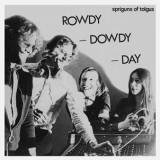
Homemade, charming folk-rock with the lovely voice of MANDY MORTON, 12-string guitars, dulcimer, mandolin, fiddle… Fabulous covers of “Let No Man Steal Your Thyme”, “Matty Groves” and more!
Formed in the early 70s, Spriguns of Tolgus evolved from the folk duo of Mandy & Mike Morton and the scene centered around their Anchor Folk Club in Cambridge. In 1974, the band (Mike and Mandy plus Rick Thomas and Chris Russon) decided to produce a recording to raise funds for new equipment. Using a small tape recorder and mixing desk, “Rowdy Dowdy Day” was recorded live in the dining room at the band’s rented house. A small number of cassettes were produced and subsequently sold at the Anchor Folk Club.
With the original cassette impossible to find now, we’re glad to present a new vinyl edition.
“We grew up in the ’60s to the sound of The Beatles; we embraced flower power and all it brought with it; and we indulged ourselves in every type of music on offer. From America came The Byrds, Jefferson Airplane, Joni Mitchell and Bob Dylan, and here in the UK we celebrated our own heroes, Pentangle, Fairport Convention, The Incredible String Band and later Steeleye Span” – Mandy Morton
quête:jefferson
Nearly fifteen years of touring with peripheral regional projects (Mixtapes, Ogikubo Station, The Homeless Gospel Choir, Direct Hit!, The Mimes, Boys) has kept her tethered to both the road and to sounds that were not always her own.The solo endeavor marks the beginning of an autonomous output for her vision, harkening to sounds that are distinct to Ohio's brand of humble experimentation, roots aesthetics and pop-centric reliability.
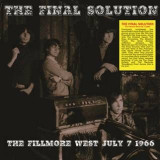
Previously unreleased live soundboard recordings from this groovy group from the '60s San Francisco Bay Area scene. Along with The Sopwith Camel, The Beau Brummels, The Mystery Trend, The Great Society, Jefferson Airplane, The Warlocks and The Grateful Dead, The Final Solution were part of the first wave of San Francisco rock bands having formed in 1965. They were very popular all over the Bay Area and appear on countless early posters of the period, but they never released anything. If you dig The Great Society and The Warlocks 'Emergency Crew' demos, this is for you!
Made when mono was still king, Bob Dylan's self-titled 1962 debut is as understated of an entrance as any significant musician as ever made. Already well-versed in American roots music, Dylan simultaneously pays homage to tradition and extends it by putting his own stamp on classic material that metaphorically functions as the soil of our contemporary songs and styles. Free of ego, and performed with masterful conviction, Bob Dylan ranks with the debut efforts of similar artistic giants Elvis Presley and the Rolling Stones.
Mastered from the original master tapes, pressed at RTI, and limited to 3,000 copies, Mobile Fidelity's restored 180g mono 45RPM 2LP version brings the contents of this seminal release as closest as they've ever come to master tape-quality in the original mono configuration. Transparent to the source, the simple sounds of Dylan's voice, acoustic guitar, and harmonica take on lifelike perspective and directness – the "husk and bark" to which Robert Shelton referred in his now-legendary New York Times review of a Dylan appearance at Gerde's Folk City. MoFi has made possible an inexpensive time-traveling trip back to the Greenwich Village coffeehouses and folk clubs in which Dylan cut his teeth, albeit in much better fidelity and without any annoying background chatter. Wider grooves mean more information reaches your ears.
As the preferred mix at the time of the recording, the mono version presents Dylan as he and his producers originally intended. Since the separation of the stereo versions isn't as sharp, the mono edition places Dylan's vocals in the heart of the musical action and as one with the accompaniment. It paints listeners an incredibly accurate portrait of the attention-getting, concrete mass of sound that features no artificial panning and straight-ahead immersion into the music. This is how almost everyone first heard this timeless album – making the mono mix all the more historically valuable and truthful.
Much has been made of the commercial indifference that greeted the album upon its low-key release. Yet focusing on sales figures and the reaction of a public not yet hip to Dylan's name or music is to miss the forest for the trees. Distinguished from the era's other folk efforts by way of the determination, brazenness, and lived-through-this worldliness Dylan approaches the material and sings the songs, Dylan lays the groundwork for the path he'd soon trailblaze and everyone else would follow.
By nodding to Woody Guthrie at the same time he completely re-imagines a sobering tune such as Blind Lemon Jefferson's "See That My Grave Is Kept Clean," Dylan straddles the past and future. He also displays, with challenging authority and savant-like expertise, the ability to handle weighty topics such as death, sorrow, and lamentation with the vaudeville flair, bluesy mannerisms, and poignant command of an artist three times his age.
As Dylan scholar and pop-culture critic Greil Marcus observed in 2010, "Everybody knew Joan Baez and the Kingston Trio; if you knew Bob Dylan, you knew something other people didn't, something that soon enough everybody had to know. Within a year, an album could put an adjective in front of the singer's name as if it were already common coin." It all starts here.
Track List
Repress
Part 2 of the Needs (not wants) retrospective, comes with an insert with a collage of archival photo's and liner notes by Gerd Janson. Re-mastered by François Kevorkian.
Sometimes, three words are enough to tell it all. Accordingly, the core story of Needs – the musical adventure of brothers Lars and Marek Bartkuhn and their partner Jan “Yannick” Elverfeld – can be understood from the inspiration behind this compilation’s title. Paying homage to the title of a lesser-known Marshall Jefferson and Ce Ce Rogers production for Strictly Rhythm, Needs (Not Wants) typifies their aesthetic, ethos, innovations and modus operandi.
Materializing in this collection of some of the outfits’ best takes (from 1999 to 2006), moments of glory and predictive flashes of genius paint a beautiful picture of what can happen if devotion and imagination are paired with moxie and skill.
Rare 1986 Funk/Soul From Alabama.
Originally released as a private pressed cassette tape only.
First Time On Vinyl.
Released in collaboration with the Numero Group.
180g BLACK vinyl limited to 500 copies w/obi strip. Non-Returnable.
Armed with little more than his Peavey T-60 guitar and a Jumbo Fuzz pedal, Errol Stubbs and his bar-band cohorts cranked out a self-released tape of funked-up disco soul in 1986. With no label or distribution to speak of, Errol would simply put on his best suit and sell the cassettes by hand. The tape languished into obscurity…until now!
The story of Errol Stubbs begins in Birmingham, Alabama in 1959. The youngest of five, he was surrounded by music as a child–his aunt taught piano at Daniel Payne College while his older brother, Avery Beavers, was an accomplished jazz trumpeter. Under the guidance of Avery, Errol started playing trumpet at the age of nine, though he gravitated toward songwriting and quickly picked up the guitar. Inspired by blues greats the likes of Albert King, Buddy Guy, and Little Milton, 12-year-old Errol began mimicking the sounds that filled southern airwaves. As a teenager, he played at barbecues, fish fries, and dive bars across the Magic City. After a brief stint at Jefferson State studying music, Errol’s passion for songwriting beckoned him away from the classroom.
Stubbs bounced around bar bands before settling on a live lineup and saving enough dough to take his vision to the recording studio. Over the course of two days, his well-rehearsed band recorded Turning it Out mostly live to tape at the Sound Of Birmingham Studio. Located on Birmingham’s east side, the state-of-the-art studio kept the lights on by recording commercial jingles but was more than happy to open their doors to local talent.
Taking notes from guitar god Ernie Isley and funk legend Rick James, the resulting recordings are drenched in cosmic phaser-fuzz guitar work, slapping bass lines, and sexual disco innuendos. Big brother Avery lends a hand on Clavinet for “Sweat,” while studio owner/engineer Don Mosley adds a tasteful dose of Moog synthesizer across a handful of cuts.
Soon after the Sound Of Birmingham sessions, Errol released the private pressed EP “Dancin’ Fancy,” b/w “Spaced Out On Your Love,” the latter of which was featured on Numero Group’s 2019 compilation Visible and Invisible Persons Distributed In Space.
The seven-song cassette Turning It Out was sold in local record stores and from night club stages, but only a few copies made their way out of Birmingham.
- A1: Frankie Knuckles Pres. Director’s Cut – The Whistle Song (Re-Directed)
- A2: Frankie Knuckles Pres. Director’s Cut Feat. Jamie Principle – Your Love (Director's Cut
- B1: Frankie Knuckles Pres. Director’s Cut Feat. B. Slade – Get Over U (Director's Cut Mix
- B2: Frankie Knuckles Pres. Director’s Cut Feat. Jamie Principle – I'll Take You There
- C1: Ashford & Simpson - Bourgie Bourgie (A Director's Cut Exclusive)
- C2: Joey Negro & The Sunburst Band Feat. Donna Gardier & Diane Charlemagne – The
- D1: Artful & Ridney Feat. Terri Walker - Missing You (Eric Kupper’s ‘Director's Cut Tribute To
- D2: Marshall Jefferson Feat. Curtis Mcclain – The House Music Anthem (Move Your Body)
There are few people across the globe, who will have not been touched by the work of Frankie Knuckles. Forever regarded as ‘The Godfather of House’ for his unrivalled contribution to the house music we know today; what started as an underground movement in Chicago has grown to international heights thanks to Frankie. His records earned him recognition on a global scale, allowing him to work with some of the globes biggest names including the likes of Diana Ross, Whitney Houston and Michael Jackson.
Five years ago, Frankie passed away in Chicago on 31st March 2014 leaving behind one of the greatest house music legacies spanning almost four decades. Now he is commemorated by long time writing and production partner Eric Kupper. Eric, himself a seasoned DJ producer and writer, has worked on over 116 Billboard #1 Dance Records and played a pivotal role in a many of Frankie’s productions. Having both worked together for many years they established themselves at ‘Director’s Cut’ from 2011 and set about producing original releases and remixes based on the classic ‘Def Mix’ sound while sharing equal credits for their creations.
Together they re-produced and re-purpose classic cuts for modern dancefloors, with reworks including tracks from Marshall Jefferson, Ashford & Simpson, Artful & Ridney and The Sunburst Band, alongside Frankie Knuckles originals. These releases have now been brought together by Eric to feature on special album called ‘The Directors Cut Collection’ on SoSure Music. It includes the Director’s Cut reworks of Frankie’s classic cuts such as ‘Your Love’ and ‘Take You There’ with Jamie Principle, alongside Frankie’s first #1 single - ‘The Whistle Song’ on which Eric shares writing credits.
Within a multitude of classic reworks, highlights include a previously unreleased version of Ashford & Simpson’s ‘Bourgie Bourgie’ and a huge Director’s Cut Retro Signature mix of Marshall Jefferson’s 'The House Music Anthem (Move Your Body)' featuring Curtis McClain.
The Director’s Cut Collection is a fitting tribute to commemorate the fifth anniversary of Frankie’s passing whilst giving Eric a platform to tell his side of the creative story. This album is to be released in collaboration with The Frankie Knuckles Foundation who work to continuing Frankie’s legacy well into the future.
- Black Raspberry
- The Dues We Have To Pay
- I Love You
- Mimosa
- Mr. Pogo
- Gee Monetti
- Autumn Rain
Modern and grounded in 1960s hard-bop sensibility, the American pianist and composer Albert Dailey (1939 – 1984) had perfect control over his instrument. Since an early age he played with cutting-edge musicians, the likes of Art Blakey, Sarah Vaughan, Stan Getz, Charles Mingus and Lee Konitz to name just a few. But despite that, he was an underrated artist during his lifetime receiving deserved recognition only after his death. Renaissance 2 November 1977 is his second album, played by a bold group that includes the voice of Cheryl Alexander, Carter Jefferson on sax, Cecil McBee on bass and features both Cheryl Alexander and Adam Nussbaum on drums.
William Penn Fyve aka William Penn & His Pals were a regular presence on the early Bay Area scene, opening for the likes of Jefferson Airplane, Paul Revere & the Raiders and Them. Their line–up included lead singer / organist Gregg Rolie, later of Santana / Journey. In 1966 they recorded their lone single, "Swami" / “Blow My Mind”, for the Thunderbird label.
The A-side (written by guitar player Mike Shapiro and famous for being included on “Pebbles-The Acid Gallery”) is early acid-punk with fuzzed-out raga guitars and hilarious lyrics about a guru. The flipside is an energetic garage-punk number with swirling Vox organ and a fuzz rave up á la Yardbirds.
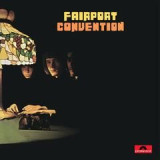
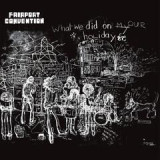
These records contain some of the most storied names not just in British, but world music. From a bunch of school friends setting out to be 'the British Jefferson Airplane', over the course of their first quartet of releases, the group metamorphosed into the leading exponents of British folk rock. In the way American folk and blues had looked back to gospel songs and spirituals, Fairport mined a seam a traditional English folk song, and then combined them with rock rhythms to create something ground- breaking and quickly emulated.
For many, this is the first time the considerable talents of Richard Thompson, Sandy Denny, Ashley Hutchings, Ian Matthews, Dave Swarbrick and Dave Mattacks would have been heard on record.
From a bunch of school friends setting out to be 'the British Jefferson Airplane', over the course of their first quartet of releases, the group metamorphosed into the leading exponents of British folk rock. In the way American folk and blues had looked back to gospel songs and spirituals, Fairport mined a seam a traditional English folk song, and then combined them with rock rhythms to create something ground-breaking and quickly emulated.
Simoncino is back again on SKYLAX with the volume 2 of the Resurrection series ! The made in Perugia prodigy delivers us once again 3 titles paying homage to the sound of chicago, the fabulous triplet lost tape 1, 2 & 3. On A1, the aptly named Lost tape 1 us leads into the meanders of the jungle house in direct tribute to the great marshall Jefferson all sprinkled with some "detroit" sauce, this peaktime track will delight the most humid and demanding dancefloors. Lost tape 2 is more airy with these sparkling bells and its bass that lifts your guts, mental we tell you ! A bit as if paris gray was remixed in a hovering dub version. On lost tape 3, it is clearly the quintessence of the spirit of simoncino, his genius. This way of creating a universe that is both a tribute to the original chicago house and the italian dream house straight from the 90s. Completely trippy. And cherry on the cake on B2, we have a remix of the now classic "on the dancefloor", a title created in collaboration with Merwyn Sanders from Virgo Four (Chicago), from Detroit legend : Marcellus Pittmann ! 9 mn of pure madness. The Detroit - Chicago axis has never been so obvious. A must. Comes out on clear vinyl. Note that on the label's bandcamp, with the purchase of the vinyl, you can get 1 exclusive bonus track (& what a track !) : Simoncino & Merwyn Sanders of Virgo Four "On The Dance Floor" (Marcellus Pittman smooth remix).
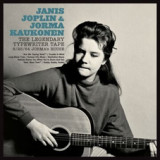
The legendary 1964 rehearsal collaboration receives its first official issue Restoration and Mastering by Grammy®-winning engineer Michael Graves Packaging contains rare photos plus liner notes from Jorma Kaukonen Jorma Kaukonen (later of Jefferson Airplane and Hot Tuna) met a singer named Janis Joplin at a hootenanny in San Jose, California, in the fall of 1962. Over the following years, Janis would call on Jorma to accompany her at gigs. As they continued to play together, the Bay Area was changing musically and developing into the legendary San Francisco scene to which both Janis and Jorma would be integral. During a rehearsal for a show in North Beach, Jorma started his reel-to-reel machine to capture what they were working on. For decades, this recording was the stuff of legend, with inferior, multi-generational transfers making their way through select collector’s circles. Now, for the very first time, it is available officially, with the blessing and cooperation of both the Janis Joplin Estate and Jorma Kaukonen. The Legendary Typewriter Tape: 6/25/64 Jorma’s House contains this legendary recording, featuring Restoration and Mastering from acclaimed, Grammy®-winner Michael Graves. The tracks include Joplin on vocals, Kaukonen on guitar, and Jorma’s wife Margareta typing away intermittently in the background. This may have just been a rehearsal, but it is so much more. Featuring Joplin originals, as well as blues classics, The Legendary Typewriter Tape is an intimate glimpse into two major artists at the beginnings of what would become highly influential careers. As Jorma says in his liner notes: “This is indeed a window into a simpler time when the music truly was everything.” Available on CD and Digital December 2, 2022, the release will also be available on vinyl exclusively for Record Store Day Black Friday, November 25, 2022 Enjoy being a fly on the wall and revel in the magic of The Legendary Typewriter Tape.
- A1: Yasper, Moods - Blessed
- A2: Aves - Stay Positive
- A3: Psalm Trees - Curosau
- A4: King I Divine - Reflections
- A5: Makzo, Jacuzzi Jefferson - Zephyr
- A6: Mommy - Jellyfish-Lamp
- B1: The Doppelgangaz - Dialed Up
- B2: Poldoore - Serenity
- B3: Bao, Venuz Beats - In Between
- B4: Kissamile - Daylight
- B5: Cygn - 2Girls 1Rose
- B6: Enzalla - Morning View
- C1: Sadtoi, Akulta - Billie & Zanaho
- C2: Mama Aiuto - Beach Safari
- C3: Vhsceral - Gimetime
- C4: Benson & Hedges - Masked Man
- C5: Evil Needle, Misha - Lost In This Moment
- C6: Chromonicci - Summer's Delight
- D1: Ian Ewing, Philanthrope - Barcade
- D2: Plusma - Luumi
- D3: Oddfish - Indian Summer Rally
- D4: Comodo - Last Up
- D5: Arbour - Solarium
- D6: Sleepy Fish - Pond Sketch
Sound Of Smoke sind eine vierköpfige Psychedelic Soul- & Bluesrock Band aus Freiburg mit einem ordentlichen Vintagevibe. Die Bandmitgliedern um Frontfrau Isabelle Bapté schaffen es mit einem Mix aus Blues, Soul und Stonerrock auf eine Reise durch die Zeit mit zu nehmen, als Klänge a la Jefferson Airplane, Black Sabbath und Led Zeppelin in Ihren Bann zogen. Mit "Phases" veröffentlicht das Freiburger Psychedelic-, Soul- & Bluesrock Quartett kaum ein Jahr nach der Platte "Tales" ihre zweites Album über Tonzonen Records. In zahlreichen psychedelischen Jamsessions entstanden elf neue Songs, welche man im legendären Big Snuff Studio in Berlin aufnahm. Das Album wurde in einer 10-tägigen Session komplett analog mit der Technik aus den 60er & 70er Jahren auf Tonband von Szenen-Ikone Richard Behrens (Kadaver, Elder, Odd Couple, All Them Witches uvm.) aufgenommen. "Phases" überzeugt mit eingängigen Bluesrockriffs, orientalische Klängen, bis hin zu schwebenden, sphärischen Klangwelten aber auch Krautrock. Das Leitmotiv bleibt jedoch Isabelle Baptés versiertes Flötenspiel und ihre warme, individuelle Stimme, welche Grace Slick wieder aufleben lässt. Florian Kiefer, welcher den Titel "Reincarnation of Lemmy Kilmister" mit seinem markanten, grollendem Basssound (und Backenbart) für sich beansprucht, bildet mit Johannes Braunstein ein groovendes Fundament im Stile von John Bonham. Getreu dem Motto "Im just tryin to write the best guitar riff in history" wie schon einst Jimmy Page oder Richie Blackmore und einem Faible für Wildwestromantik, trägt Jens Stöver letztlich das gewisse Etwas zum "Sound Of Smoke" bei. Veredelt wurde "PHASES" danach noch mit Orgel- und Synthoverdubs von Isabelle und Florian. Sound Of Smoke freuen sich mit " Phases" ihr anspruchsvollstes Album einem großen Publikum präsentieren zu können.
Eva Louise Goodman’s Nighttime project locates itself on a musical tree planted on the British Isles, perched atop the branch of folk leaning into sixties rock. Her upstate New York environs don’t stray far from that image. With tempered percussion, floating mellotron, and singing that evokes Bleecker & MacDougal on a fervent Saturday afternoon, her new album Keeper Is The Heart reaches deep into the essence of musicians such as Vashti Bunyan, Sibylle Baier and Pentangle, breaking down the decades into a sound thoroughly and bizarrely modern.
Through her years performing with Mutual Benefit, Goodman fell in love with life on the road and the collaborative energy of a band. In this third Nighttime album, she channels these experiences into her own music. The creative journey from writing to recording to mixing drove her deeper into a sense of self while expanding her sound. In the process, she put aside lo-fi origins and challenged herself to achieve the same intimacy with a bigger production.
Like most paths of self-discovery, the journey started with displacement. In October 2019, Goodman set out to record the album on her own, while cat-sitting at a friend’s empty Brooklyn apartment. Rather than recording, she was drawn to the overgrown garden, where she spent her days listening to music and reading old journals. Charlie Megira, The Incredible String Band and Roy Montgomery invoked the spirit of the album, as she realized that a new, more collaborative approach would be necessary to bring the songs to life.
In March 2021, after a pandemic year immersed in sound experimentation and writing, she entered the upstate New York studio of recording engineer Rick Spataro (Florist). Together, Spataro and Goodman dove into creating the album, recording one song a day, letting the spark and excitement of spontaneity be their guide. “I've always been fascinated with ‘automatic’ arts,” Goodman says, “where things are created intuitively and without premeditation, from the subconscious.” In this light, they worked with abandon–pushing through the heaviness of songs written years earlier with the same energy as songs which were not yet fully developed. Taking chances, improvising, they sought to strip away pretense, and elude perfectionism at all cost.
Among their experiments, the duo manipulated tape speeds–slowing or speeding up different instrument tracks, imbuing passages with altered perspectives. Improvisation was the key in track five, ‘The Way,’ a song about “the magical act of carving out a path through life, amidst all possibility.” After a long day of recording, the song was feeling heavy and uninspired. As night fell, Spataro picked up the Stratocaster and, in one take, laid down a rolling, roiling guitar line that defined the track.
This spirit of surrender weaves through the album. “Break free from time, and sink in the pool of the mind,” begins ‘Garden of Delight’, an energetic highlight, propelled by 60’s-era organ and Jefferson Airplane-esque vocals. The song was accidentally deleted after the first day of recording. By luck or fate, the one surviving file captured the song’s loose and free-wheeling essence. Inspired, Goodman encouraged her circle of collaborators to work similarly: “I gave everyone trust and total freedom to contribute as they felt called to, encouraging an intuitive approach of simply improvising, playing through the song a few times and then sending over the results.” Synth, cello, violin, saxophone and flute all appear, but often in unconventional ways.
Keeper Is the Heart reflects Goodman’s process towards greater creative freedom. The first words she sings: “Lift the veil of all of this hate/To see the fear at its base.” Her last lines: “We’ll follow the fates across the great expanse of time/To the source of the light within our mind.” In between is a work of art awash in personal awakenings that revel in the freedom of intuition, the lifting of veils, and the beauty of transformation. As Goodman states, “What is it you find when you look inward to see beyond, past your fears, to your heart's true desires?”
BBE Music announces the first-ever re-issue of this sun baked folk/jazz hybrid 45 by Louisiana brothers Will & James Ragar. First released in 1981, this private press 7" showcases Will & James' songwriting skills, refined performance and sophisticated compositions. Remastered by Frank Merritt the re-issue has an analogue warmth that the brothers say sounds even more pleasing than the original. Will & James Ragar began as the Will James Band performing on the popular 'Crawfish Circuit' of Southern Louisiana - this circuit included New Orleans, Thibodaux and Baton Rouge. They played blues, rock and jazz combos, covering everything from James Taylor to Jimi Hendrix. Eventually evolving into an acoustic folk-rock duo by the time they entered the studio in 1980. Both tracks on the 45 were recorded at River City studios in Baton Rouge in 1980. The engineer had the Allman Brothers on his list of recording credits, so they felt they were in excellent company. "Bayou Paradise" was an ode to the beauty of Southern Louisiana. The famous Sunshine bridge over wetlands as the sounds of migrating geese echo overhead on their journey down the Mississippi River flyway. The Atchafalaya river basin flows into the Gulf of Mexico near Lafayette creating a large wetland area and lush lakes connected by endless bayous. Miles and miles of lush swamps with many uninhabited areas just waiting to be explored. "Forever" captures the exhilaration of new love, focusing on its intoxication and ecstasy without looking ahead to the reality of a life on the road. The soulful chorus inspires motion and enthusiasm. The shadow of Woodstock had a defining role against tradition. Things were changing socially. Loving someone forever was always part of the dream but seemingly broken in an age of break-ups and divorce. The optimistic hope that "love will survive" was half dream and half pessimistic glance forward at the social trends of relationships that were to follow. The studio band included Will & James. John Smart on keyboards, he's solo on "Forever" was achieved with the Legendary Analog Prophet synth and saturated the studio with rich layers of its distinctive sound, driving the up-tempo chorus. Dave D'Aubin, a versatile bass player whose resonant tone is very present on both songs. Tommy Jefferson is on drums, an alumnus of the Southern University jazz program, the same place Randy Jackson and Billy Cobham studied. Tommy used a tight higher pitch snare drum on the recording, a sound that would soon become very popular, but at that time was a little ahead of the curve. The session was recorded on analogue tape using the 24-track MCI recorder and mixed down to analogue tape for the single. Will & James added vocal harmonies and soaked up the fidelity during mix-down. The release coincides with the long-awaited re-issue of the brothers' album 'Will & James Ragar One'. This much sort after private press long-player was originally released in 1980 and sold locally in a limited run has now been fully remastered by Frank Merritt. BBE Music presents the album in a glorious gatefold with extensive sleeve notes. This time the vinyl will be pressed over 2 discs to produce the best sound possible.
- 1: True Religion
- 2: Highway Song
- 3: 99 Year Blues
- 4: Sea Child
- 5: Keep On Truckin
- 6: Water Song
- 7: Ode For Billy Dean
- 8: Let Us Get Together Right Down Here
- 9: Sunny Day Strut
Burgers is the third album by Hot Tuna, the folk rock offshoot of Jefferson Airplane members Jorma Kaukonen, Jack Casady, and Papa John Creach, released in 1972 as Grunt FTR-1004. It was the band's first studio album, the previous two being live recordings. "Water Song" and "Sunny Day Strut" are instrumentals composed for this album
Celebrating 50 Years of Their Debut Studio Album. Featuring: Jack Casady, Jorma Kaukonen, Papa John Creach, Sammy Piazza. Includes: “WATER SONG” & “HIGHWAY SONG” Featuring David Crosby. LIMITED EDITION ON TRANSPARENT ORANGE VINYL.
Over the last decade-and-a-half, C Joynes has ploughed a singular furrow through solo guitar, with a body of work incorporating English folk-tunes alongside North & West African music, and lifting proto-minimalist and improvised techniques from the European classical and avant-garde traditions.
His new release, ‘Poor Boy On The Wire’, is his first full album dedicated wholly to the electric guitar. Through a typically wide-ranging set, Joynes exploits the instrument’s potential by placing intricate parlour music alongside overdriven garage blues throw-downs, wiry electric folk and the brittle ringing tones of free improvisation. However, these explorations of the tones and timbres of close-mic’d guitars and amplification retain an overall coherence and unity through the deliberate use of a limited palette of budget instruments and vintage equipment.
With ‘Poor Boy On The Wire’, Joynes has released 9 albums to date, including ‘The Borametz Tree’ (2019), recorded with long-term fellow travellers Dead Rat Orchestra, and ‘The Wild Wild Berry’, a collaboration with singer Stephanie Hladowski (MOJO Top 5 Folk Albums 2012, fROOTS Editors Choice Album Of The Year 2012). He has played extensively across the UK, Europe and the USA, sharing bills with performers including: Shirley Collins, Martin Carthy, A Hawk And A Hacksaw, Marc Ribot, Alasdair Roberts, Richard Dawson, Jack Rose, Josephine Foster, Sir Richard Bishop, Six Organs Of Admittance and 75 Dollar Bill.
“As much Conlon Nancarrow and Ali Farka Toure as Blind Lemon Jefferson, the compositional mind at work here can take apparently disparate threads of modernism and ethnic tradition and treat them as though they were all archaic blues styles learnt from dusty 78s.”
BRUCE RUSSELL, THE WIRE
“An inheritor to Davy Graham; a lone operator prone to unexpected collaborations, with a repertoire that crosses continents and timezones with consummate ease, and dashed off with a phenomenal, yet lightly applied technique.”
ROB YOUNG, THE WIRE
“His epigrammatic re-castings and re-readings of widely-travelled folk melodies and rhythms from a variety of traditions suggest shared memories that might be intensely universal while seeming strangely out of reach.”
KEVIN MACNEIL BROWN, DUSTED MAGAZINE
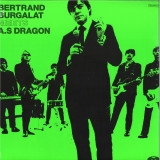
This album, recorded live after the release of Bertrand Burgalat's first album (The Sssound of Mmmusic, 2000), is a unique testimony of a passionate encounter, of explosive concerts and an exceptional musical adventure, a mixture of soulful rhythms, oniric keyboards and songs with chiseled lyrics and harmonies.
Out of stock on vinyl for decades, it will be reissued and published in December 2022, with a text by Philippe Manœuvre. 21 years after its first publication, it has not aged a bit. It includes tribute covers ("Follow Me" by Amanda Lear, "Tears Of A Clown" by Smokey Robinson), and a version of "Easy Tiger", recorded at the same time for Depeche Mode.
"This album brings back the great psychedelic concerts that Bertrand gave at the time. For me, Aux Cyclades électronique is in the running for the title of most beautiful song in the world, I haven't changed my mind."
Philippe Manoeuvre, excerpt from the innersleeve note, April 2022
"A.S Dragon is arguably the best French rock band of today. Nearly an hour of psyche-magnetic madness, the spectacular collision of a Gainsbourg theorist playing his melodies to a Jefferson Airplane from Clignancourt charged with pushing all galactic limits."
Philippe Manoeuvre, Rock & Folk, October 2001
"Bertrand Burgalat meets A.S Dragon could satisfy both French Touch fans and Rock'n'Roll purists. It sounds like the resurrection of a sixties garage rock band, somewhere between Detroit and Combs-la-ville. Burgalat for charity."
Philippe Barbot, Télérama, November 2001
"This is a fantastic remix! It sounds a bit like 70's funk. Bertrand has taken the song and reworked it from top to bottom, re-recording people on every part. It sounds like a James Bond song. It's really one of the best remixes we've ever done. "
Martin Gore (Depeche Mode) on "Easy Tiger", Magic, May 2001
"I wish this song could last my whole life..."
Virginie Despentes, on "Aux Cyclades électronique", "Vernon Subutex