mule musiq welcomes british producer jimmy wallace, presenting his debut album “red, yellow, black” - a nine track strong record that partly leaves the dancefloor behind.
since childhood, music has been a strong influence on the 33-year-old artist. his mother, a music teacher, exposed him to classical sounds from an early age.
but it was hearing the electronic tones of the french touch movement, which really ignited his mu-sical journey. a year later he started to dj, acting out his love for four-to-the-floor grooves in local clubs. today you'll find him on the bill with artists like ruf dug, mr scruff, or bradley zero, heating up the dance floors.
as a producer he has already released a handful of stunning eps, including one for sweden’s finest house label studio barnhus, and one for london’s revered rhythm section international imprint.
both feature house tunes with an edge, house tunes with a love for the roots of the genre along-side more reflective, ambient moments. he also runs the label tartan records, where he publishes dancefloor focused white labels.
his music has been championed by titans of the scene such as palms trax, ryan elliott, dj tennis, gilles peterson, dixon, and hunee. axel boman even coined his debut ep as “one of the very best demo emails ever received at label studio barhnus hq”.
an advance praise, that wallace now acknowledges with an album full of deeply crafted music. some tracks lean towards the dancefloor, like the swung sounds of “bubbles”, the hypnotic mael-strom of “good morning”, or the epic, jazzy moments of “labyrinth”.
the theme of nature is evident throughout, with field recordings and environmental sounds he rec-orded on the road, being fused with his own musical ideas.
tracks like “waterfall” and “tokyo street”, draw influence on time spent in asia, whereas "dhq", "by the river", and "by the lake" are inspired by his childhood and hometown in the shropshire country-side. “i’ve been writing ambient and more nature focused material for a few years now without really having a plan for it.
finally, this year after writing the tune “labyrinth” i felt i had a body of work which was both diverse and cohesive enough to bring together on a record. so, the album represents moments of time i have spent in various outdoor spaces around the world, using sound to try and turn these experi-ences into musical format.” wallace discloses.
the result is a mesmerizing long player featuring an evocative, emotional story arc that avoids ste-reotypes and straight party orientated narration. “having written plenty of club music for the past few years, i wanted to show a different side to my sound.
something more intimate, private, experimental which can be listened to away from the party.” he reveals on the meditative, blissful “red, yellow, black” - an album, which has the power to transport listeners to places and spaces new – for inspiration, relaxation, and dancefloor moments off the beaten path
Buscar:ji fi
Atack’s founder member and lead guitarist Keith Atack has a long pedigree in the rock music scene. He grew up during the sixties and was influenced from an early age by bands like The Beatles, Rolling Stones, Yardbirds and then on to Jimmy Page and Ritchie Blackmore. He has also toured with many pop acts like Bonnie Tyler, Rick Astley and many others. He has a rock / funk / soul style as well as a jazz and blues influence. He is joined by band members that also have strong roots in the rock scene such as Bob Richards on drums who has rubbed shoulders with members of bands like Iron Maiden, Survivor, Asia and Shy. Bassist Chris Childs is well respected and is the bass player with UK stalwarts “Thunder/ Lonerider/Tyketto”, he is an ideal addition to the line-up along with seasoned vocalist Lee Small (Shy/Phenomena/Lionheart and many more). Finishing off the quintet is Nick Foley whose keyboard prowess is ever present throughout the album. The sound of the Hammond for which he is known gives the whole album a feel of Deep Purple and Rainbow with a true classic British Rock sound. “Nine Lives” is an exciting addition to the escape music roster and available in limited edition vinyl and CD formats, something very much to look forward to.
"Coyote" ist Dylan LeBlancs fünftes Studioalbum und das erste, das er selbst produziert hat. Aufgenommen wurde es in den legendären FAME Studios in Muscle Shoals, Alabama, mit einem handverlesenen Ensemble weltberühmter Studiomusiker, darunter Fred Eltringham, bekannt für seine Arbeit mit Ringo Starr und Sheryl Crow, Pianist Jim "Moose" Brown, der schon mit Bob Seger gearbeitet hat, und Bassist Seth Kaufman, gefeiert für seine Beiträge zu Lana Del Reys Songs. Das Album ist halb autobiografisch, halb Konzeptalbum und dreht sich um die Figur des Coyote, eines Mannes auf der Flucht, der sich von seiner Vergangenheit befreien will.
- A1: Unknown Artist – Ringing Of The Bells
- A2: Bing Crosby – White Christmas
- A3: Rosemary Clooney – Jingle Bells
- A4: Zion Harmonizers – When Jesus Was Born
- A5: The Golden Gate Quartet – Fit The Battle Of Jericho
- A6: Mahalia Jackson – Silent Night
- A7: Ray Conniff – Santa Claus Is Coming To Town
- A8: Jerry Butler – Holy Night
- A9: Mitch Miller – What Child Is This
- B1: Bang – Last Christmas
- B2: Savannah Care – All I Want For Christmas Is You
- B3: Helping Hand – Do They Know It's Christmas
- B4: Robin Salms – Jingle Bell Rock
- B5: Brice Seagul – Driving Home For Christmas
- B6: Mel Roberts – Mistletoe And Wine
- B7: Don Leighton – Happy Xmas, War Is Over
- C1: Unknown Artist – Glockengeläute Der Wieskirche, Des Doms Zu Münster, Des Ulmer Münsters Und Des Straßburger Münsters
- C2: Berliner Mozartchor – Stille Nacht, Heilige Nacht
- C3: Unknown Artist – Jesu Geburt
- C4: Stuttgarter Hymnus-Chorknaben – Uns Ist Ein Kindlein Heut Geboren
- C5: Unknown Artist – Die Weisen Aus Dem Morgenland
- C6: Radio-Sinfonieorchester Stuttgart – Pastorale (Der Messias)
- C7: Stuttgarter Hymnus-Chorknaben – Vom Himmel Hoch Da Komm Ich Her
- C8: Berliner Mozartchor – O Du Fröhliche
- D1: Unknown Artist – Glockengeläute Des Limburger Doms
- D2: Chor Der Staatsoper Wien – Adeste Fidelis - Herbei, Oh Ihr Gläubigen
- D3: Berliner Mozartchor – Ihr Kindelein Kommet
- D4: Berliner Mozartchor – Zu Bethlehem Geboren
- D5: Dresdner Kreuzchor – Es Ist Ein Ros' Entsprungen
- D6: Berliner Mozartchor – Kling Glöckchen Klingelingeling
- D7: Unknown Artist – Süßer Sie Glocken Nie Klingen
- D8: Leipziger Thomanerchor – Fröhliche Weihnacht Überall
- D9: Berliner Mozartchor – O Tannenbaum
- D10: Berliner Mozartchor – Leise Rieselt Der Schnee
- D11: Unknown Artist – Schneeflöckchen
- D12: Berliner Mozartchor – In Dulci Jubilo
- D13: Unknown Artist – Ringing Of The Bells
- C9: Radio-Sinfonieorchester Stuttgart – Pastorale (Weihnachtoratorium)
- C10: Unknown Artist – Glockengeläute Der Dome Zu Aachen, Regensburg, Würzburg
- A1: Unknown Artist – Ringing Of The Bells 1 27
- A2: Bing Crosby – White Christmas 3 05
- A3: Rosemary Clooney – Jingle Bells 2 38
- A4: Zion Harmonizers – When Jesus Was Born 2 24
- A5: The Golden Gate Quartet – Fit The Battle Of Jericho 2 39
- A6: Mahalia Jackson – Silent Night 5 05
- A7: Ray Conniff – Santa Claus Is Coming To Town 2 27
- A8: Jerry Butler – Holy Night 2 50
- A9: Mitch Miller – What Child Is This 2 05
- B1: Bang – Last Christmas 4 29
- B2: Savannah Care – All I Want For Christmas Is You 3 55
- B3: Helping Hand – Do They Know It's Christmas 3 36
- B4: Robin Salms – Jingle Bell Rock 2 11
- B5: Brice Seagul – Driving Home For Christmas 3 38
- B6: Mel Roberts – Mistletoe And Wine 3 48
- B7: Don Leighton – Happy Xmas, War Is Over 3 29
+ CD
- A1: Future Testaments (4 13)
- A2: Resting Point (2 16)
- A3: A Desolate Stretch Of Night Road (5 50)
- A4: Where All Is Ending (4 37)
- A5: Overwrite (4 11)
- A6: I'm Eating Here (4 01)
- B1: Echos Of Inherent Sense (1 21)
- B2: A Space In The Subsequent Familiar (4 23)
- B3: Drift Incline (4 52)
- B4: Trichome (4 19)
- B5: Absence Of Solution (4 23)
- B6: Kwaahu (5 02)
FSOL present the final instalment in the Environments Trilogy. “7.003” goes deeper and darker than the previous two albums, the flavour here harping back with memories of the group’s 90’s sounding pre “Dead Cities” album. On this release we have swamp laden electronics dripping from cavernous breakbeats weaving in and out of otherworldly chords and strings firmly back in the driving seat.
FSOL deliver not only the final piece of the jigsaw but a clever jaw-droppingly sensorium.
Valerie from the Galerie steps back into the low-key, light-dark with another long-playing release for What About Never. An ode to the lost FM waves of talk radio, late-night Quiet Storm jams and WBLS mastermixes, Long Time Listener First Time Caller scans the frequencies between dream house music and midnight blue ambient moods.
Devilish is an album surrounded by a darkest atmosphere, its lyrics show urges experienced in our century, such as the constant degradation of the Amazon rainforest and the population increasingly affected by psychological illnesses such as anxiety and depression At the same time, it opens windows of escape for an imaginary world inspired by games, series and fiction books. In their second album with the new lineup, Mayara Puertas (Voice), Rene Simionato (Guitar), Castor (Bass) and Amilcar Christofaro (Drums) transcend the sound of extreme metal with maturity, incorporating progressive metal, influences from Brazilian music and symphonic elements.
The album also honors Brazilian heroes with a participation of Andreas Kisser (Sepultura) in the track "Buried Alive", and a tribute to Rickson Gracie the resilient fighter of Jiu Jitsu considered one of the greatest legends in this sport, the theme of the track "Warrior". The band also mobilized several musicians related to indigenous causes in their country to collaborate on the song "Uatuma", making an appeal for the preservation of the Amazon in a song that flows in an powerful way with the speeches of the indigenous leader Raoni Metuktire and tribal rhythms. For the cover art, the band had Marcelo Vasco, a Brazilian illustrator who has already created artworks for Slayer, Dimmu Borgir, Soulfly among others.
Brooklyn-based bassist/composer Kenneth Jimenez presents his new work Sonnet to Silence on We Jazz Records. Consisting of 7 original compositions by Jimenez performed by his quartet including pianist Angelica Sanchez, drummer Gerald Cleaver and saxophonist Hery Paz, Sonnet to Silence echoes the original fire of New York free jazz while stepping into a terrain of its own, boldly forward-thinking.
- A1: The Vamp
- A2: Twenty One
- A3: Spoonful
- B1: Back To Rack
- B2: High Jack
- B3: The Ground For Peace
- B4: Head Rock
From the opening “The Vamp” to the final “Head Rock”, this is a dazzling jazz rock showcase with dreadnought songs that are filled with ideas and passion you can hold. A masterpiece that has an overwhelming presence in the history of jazz in Japan, as a heresy left on the prestigious jazz label Tact.
Bass – Yasuo Arakawa
Drums – Sadakazu Tabata
Guitar – Ryo Kawasaki
Organ – Masaru Imada
Tenor Saxophone, Soprano Saxophone – Jiro Inagaki
Trumpet – Tetsuo Fushimi
After a string of two dozen brilliant albums beginning in the 1950’s, clarinetist, saxophonist, flutist,
composer and arranger Jimmy Giuffre stopped recording. For nearly ten years he focused solely on
live performance. This album, Music for People, Birds, Butterflies and Mosquitoes, marked his return
to the studio after his self imposed hiatus. Known for developing forms of jazz which allowed for free
interplay between the musicians, Giuffre began his career as an arranger for Woody Herman’s big
band in the late 1940s. Playing primarily saxophone, he became a central figure in the West Coast
cool jazz scene of the 1950’s, with the Lighthouse All Stars in Hermosa Beach, CA. In the late 50’s, he
began working within different configurations of the trio format, on what he called “blues-based folk
jazz.” A prime example being his piece "The Train and the River" famously featured in 1958 Newport
Jazz Festival concert film, Jazz On A Summer’s Day. The trio here is completed by drums and bass
with Giuffre trading seamlessly between tenor saxophone, clarinet, flute and bass flute. The twelve
original compositions are very much in Giuffre’s signature style. The melody explorations have an
eastern vibe, and are played in hushed tones with an almost chamber music like quality. From 1973,
originally on the Choice label, this album has been remastered and is being presented here as the
artist intended, with its original title, track order and album artwork, for the first time since its original
release. Remastered by Alex McCollough at True East Mastering. Vinyl cut by Jeff Powell at Take Out
Vinyl.
- Carol Of The Bells
- Only Santa Knows
- The Little Drummer Boy
- Have Yourself A Merry Little Christmas
- Rudolph The Red-Nosed Reindeer
- River
- Rockin' Around The Christmas Tree
- White Christmas
- Santa Claus Is Coming To Town
- Deck The Halls
- Grown-Up Christmas List
- Silent Night
- Merry Christmas To You
- Christmas (Baby Please Come Home)
- Sleigh Ride
- Jingle Bell Rock
- Frosty The Snowman
180 GRAM AUDIOPHILE VINYL
INCLUDES INSERT WITH LINER NOTES
INCLUDES CHRISTMAS POSTCARD
FEATURING 4 EXTRA SONGS “CHRISTMAS (BABY PLEASE COME HOME)”, “SLEIGH RIDE”,
“JINGLE BELL ROCK”, AND “FROSTY THE SNOWMAN”
WITH GUEST PERFORMANCES BY OLIVIA NEWTON-JOHN AND GURRUMUL
PEAKED #2 ON THE AUSTRALIAN ALBUMS CHART
FOR THE FIRST TIME AVAILABLE AS A 2LP-SET
LIMITED DELUXE EDITION OF 1500 INDIVIDUALLY NUMBERED COPIES ON SNOWY WHITE MARBLED VINYL
Bill Evans and Jim Hall had first recorded together in July of 1959, during the making of John Lewis’ LP Odds Against Tomorrow, and the two musicians also participated on Gunther Schuller’s Jazz Abstractions (recorded in December of 1960). However, those were big band albums and had no space at all for any real interaction between the pianist and guitarist. Undercurrent, presenting them as a duet, was their third studio encounter and one of their most rewarding collaborations. 180-GRAM BLUE COLORED VINYL - THE COMPLETE ALBUM + 2 BONUS TRACKS
Gombloh’s forgotten masterpiece
What if you have Brian Wilson and Bruce Springsteen rolled into one? And what if he came of age as an poor buskers in in Surabaya, Indonesia, but then summoned enough strength to record six albums that flew in the face of everyone in the country’s rock scene back in the early 1980s?
Genius, be they Brian Wilson or Soedjarwoto “Soemarsono” Gombloh, don’t conform to rules written for us mere mortals. They have their own way of doing things and in the case of Gombloh, writing music, conducting recording session and spending cash from his music, must be conducted on his own terms and his terms only. Studio time was expensive back in the early 1980s, yet Gombloh could be three-hour late for his session, and while engineers, session musicians and producers were jittery about the prospect of another botched session, Gombloh took his time for a nap before the recording begun.
Yet, some of his greatest works came into being in the wake of this napping session. Recording session for Sekar Mayang is no exception, despite the fact there’s foreboding sense of doom with Gombloh being unsure about the possibility of selling enough units to help his label break even. This is, after all, this is his last record with his band Lemon Tree’s. No one knew that Gombloh was operating with all his cylinders running and what came out of this Indra Record session, in the waning days of 1980, were some of the best compositions ever committed to magnetic tapes (to wax, if now you’re holding this on vinyl).
This is Gombloh at the peak of his creative genius. You can argue that his debut album Nadia & Atmospheer (what’s with the spelling mistake?) is the most sprawling and complex album (both sonically and thematically), but Sekar Mayang certainly had the best songs and I can make the argument that this album’s 10 songs are strong contenders for biggest hits in blues, country, psychedelic rock charts. “Prahoro & Prahoro” is one of those impossible song which appears to have sprung from a bottomless well of inspiration, encompassing King Crimson’s sprawling epic, Deep Purple’s deepest blues and Genesis’ most progressive tendencies. Or “Sekaring Jagat”, which begins as Lennon-McCartney lullaby before launching a thousand ships traveling to the end of the rainbow with children choir singing heavenly melodies backed by droning harpsichord and synclavier, while a buzzing Hammond B3 tightly locks with Gombloh’s guitar strumming.
For many of his fans, Gombloh is known as generous man of the people. A Robin Hood type if you please. He spent his royalty checks to buy foods for beggars and buskers and dish out some more to buy undergarments for Surabaya’s prostitutes. In Sekar Mayang, Gombloh went full Springsteen mode in “Mitra Becakan,” a social commentary that cut so deep you can end up with tears in your eyes and lump in your throat (even if you don’t understand any of its Javanese language lyrics). This is one the most devastating social commentary ever recorded for a pop song, and even if you discount the greatness of its musical composition, you chalk this up as a great social-realism poetry. His years of hanging out with pedicab drivers, street vendors and street-bound prostitutes certainly gave him enough insight into their (in)human condition.
Yet, a record this stellar was largely forgotten. First, this record was a flop upon its release in 1981. Indra Records reportedly only did one pressing on cassette tape and be done with it. For those who were lucky enough to have come across one of songs from this album on the radio were likely growing up in East Java, where Gombloh had a massive cult following early in the 1980s. Nothing was heard from this record again.
There were only a handful of cassette tapes from the first pressing found on second-hand market and I recently stumbled upon one online with a price tag of Rp 50 million (US$3,500). It’s no longer available now.
In Sekar Mayang, Gombloh harbours an obsession for a long-lost utopia, Java’s distant past, where farmers have their barn full of rice and corn, where blacksmith working around the clock making tools and children singing and dancing in their seminaries. Or the fact that he opens the song with stanza from Serat Weddhatama, arguably the most monumental poem in neo-classic Javanese literature, could be his pledge of allegiance. The question for him is should a modern-day Indonesia, rife with poverty, corruption and environmental degradation not be an anathema to that utopia?
In the end, you don’t need to be someone fluent in Javanese to enjoy this majestic record. And if this record turns out to be the last in Elevation Records catalogue and we shut down this label tomorrow, we will be very happy. Mission accomplished!
As the title suggests, the recording Tenorlee finds Lee Konitz, the great American saxophonist,
playing exclusively on tenor. It was a spontaneous decision, and a tribute to his dear friend,
Lighthouse All-Star saxophonist Richie Kamuca, who had passed away just days before Konitz
entered the studio for these sessions. Konitz classically trained on the clarinet, but switched to jazz
saxophone after being enamored by Lester Young. By 1945 the 18 year old Konitz was performing
professionally. He made a staggering 150 albums as a band leader over the course of his long and
storied career. He played and recorded with everyone from Dave Brubeck, Charles Mingus, Ornette
Colman, Elvin Jones, and Gerry Mulligan, to Elvis Costello, Brad Mehldau and Charlie Haden.
Between 1948 and 1950, he was a member of Miles Davis’ group, and participated in the recordings
that would eventually be collected and released as Birth of The Cool. With a trio featuring Lighthouse
All-Star alum Jimmy Rowles on piano and Michael Moore on bass, Kontiz called out old and familiar
songs. The intention was to “let the tunes happen” as only finely tuned jazz musicians of certain
experience can. Of note is “Lady Be Good” which finds Konitz and Rowles quoting Lester Young’s
solo from the 1936 recording with Count Basie. From 1978, originally on the Choice label, this album
has been remastered and is presented here as the artist intended, with its original title, track order and
album artwork, for the first time since its original release. Remastered by Alex McCollough at True
East Mastering. Vinyl cut by Jeff Powell at Take Out Vinyl.
- 01: Driving Home For Christmas - 2023 Re-Recording
- 02: Last Christmas
- 03: Silver Bells (Feat. Matt Dusk)
- 04: Thank God It's Christmas
- 05: Merry Christmas Everyone (Feat. The Bosshoss)
- 06: Komm, Wir Geh?N Zusammen
- 07: A Christmas To Remember
- 08: All I Want For Christmas Is You - 2023 Re-Recording (Feat. Sabrina Weckerlin)
- 09: Weihnachten Mit Dir
- 10: It's Beginning To Look A Lot Like Christmas
- 11: Christmas Twist Medley (Rockin' Around The Christmas Tree & Jingle Bell Rock) (Feat. Helmut Lotti)
- 12: Happy Weihnacht
- 13: Mele Kalikimaka
- 14: Winter Wonderland
- 15: White Christmas
- 16: Das Allerbeste
- 17: Was Ich Mir Am Meisten Wünsch
Tom Gaebel hat die Veröffentlichung eines neuen Weihnachtsalbums angekündigt. " A Christmas To Remember" heißt es, erscheint am 17. November über Warner Music und hält eine Mischung aus eigenen Songs und weihnachtlichen Klassikern bereit, denen Gaebel seine ganz besondere Note verleiht. Wie gut er das kann, beweisen seit Jahren seine Weihnachtskonzerte, die ihn und sein Orchester durchs ganze Land führen. Acht Jahre nach seinem zweiten und bisher letzten Weihnachtsalbum erfüllt er sich und seinen Fans den Wunsch nach einer neuen Xmas-Sammlung. Es ist ein Herzensprojekt des gefeierten Sängers, Bandleaders, Entertainers.
Das Album wird insgesamt 13 Tracks und 4 Bonustracks enthalten und als Vinyl, Deluxe-CD & exklusives Bundle sowie digital erscheinen. Als Gäste wirken The BossHoss, Helmut Lotti, Sabrina Weckerlin sowie der erfolgreiche kanadische Crooner Matt Dusk mit.
Unter den Songs des Albums finden sich reihenweise moderne Klassiker, von Gaebel handverlesen und mit seiner unnachahmlichen Mischung aus knackigen Big-Band-Sounds und spielerischem Easy Listening neu interpretiert. Darüber hinaus finden sich auch drei
Eigenkompositionen auf dem Album.
Tom Gaebel sagt: "Bei aller Leichtigkeit ist mir eines immer wichtig: Ich nehme die Musik sehr ernst - bei mir hört man nur echte Streicher, echte Bläser, echten Chor.
Alles hand- und mundgespielt, wie es früher selbstverständlich war und heute leider die absolute Ausnahme ist."
Das dritte Album der wiedervereinigten Rain Parade, eine der führenden Bands der Paisley Underground Szene in Los Angeles Anfang und Mitte der 80er Jahre.
Produziert von Jim Hill, bleiben sich Matt Piucci und Steven Roback auf Last Days of a Dying Sun treu, ihrem psychedelischen Sprachbild und unverfehlbaren Gespür für starke Melodien.
Unter den Gastmusikern finden sich auch Debbie und Vicki Peterson von The Bangles.
Limitierte Vinyl-Erstpressung auf transparentem, blauem Vinyl.
Most of Gen X-ers who grew up in the mid-1980s Indonesia must have seen Soedjarwoto Soemarsono, known with his nom de guerre “Gombloh” performing on a state-run television station, playing some of his biggest hits from that era, pop gems like “Kugadaikan Cintaku (I Pawn Off My Love)”, “Setengah Gila (Half-Crazy).”
But of course, it is not fair to judge Gombloh only from these hits. Dig deeper and you will find buried treasure in his early stuff from Indra Records, and there are many of them.
His album with the band Lemon Tree’s Anno ‘69 (yes, that’s the name of the band) is all remarkable, but what he did for Chandra Records was no less spectacular. How can you go wrong with songs like “Kebyar-Kebyar”, the unofficial national anthem for Indonesia, dan “Berita Cuaca” one of the better epic songs in a catalogue full of epochal songs? These were all long out of print and in our journey to source the original master for these albums we met Bob Djumara of Nirwana Records, the Surabaya, East Java-based label which broke Gombloh into the mainstream in the mid-1980s. Almost all albums Gombloh recorded for his early labels, Indra Records and Chandra Records were critically acclaimed, but commercially they bombed, big time. Nirwana Records came up with an ingenious plan. What if they recorded Gombloh performing live and release it as is. After all, the first song in Gombloh debut record Nadia & Atmospheer is him strumming on his guitar backed by the cheering of a crowd, who could be heard going wild when he hurled that epithet “bastard” at the end of the song
The end result is a brilliant recording which despite being recorded live the sound quality so pristine leading many to doubt the claim of being live. Regardless, Nirwana shipped a decent number of units and Gombloh could buy his first car, a Katana Jeep, with money from the royalty.
One of the best things about Live Gila is its perfect sequencing, beginning with Gombloh’s social commentary on the rich’s debauched lifestyle of preying on young boys and girls, one of the most popular subjects allowed by the censoring machine of the New Order authoritarian government. The second song “Untuk Persada” is a soaring ode to the nation. For this song, Gombloh could be heard drawing his inspiration from The Police, which was undoubtedly popular in the early 1980s, even in a faraway port city like Surabaya.
Listening to this record as a whole (we omitted the last song from the original master tape “Bagimu Negeri” which sounds too jingoistic), we could not help but point to some of similarities it has with Bob Dylan’s Blood on the Tracks. Not a single composition in this record sound indigenous (the Malay-influenced rock of Panbers or Koes Plus come to mind); they all sound modern and effortlessly catchy, and had it not been for the language, this album could be mistaken for a musical output from someone growing up in Laurel Canyon or Southern France.
There are only limited copies of vinyl records in the second-hand market today available for Gombloh music, if at all. For his ardent fans, they have to scavenge for old cassettes to continue to be able to enjoy his music and have to pay top dollar for that. In Indonesia, where he was a superstar in the early 1980s, Gombloh was largely forgotten. With this project, we can only hope that the time is ripe for Gombloh to reemerge and now, more than ever, his music could speak to a bigger audience.
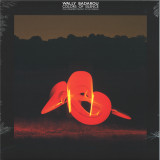
Synth pioneer and musical polymath, Wally Badarou is a genius. But you know that already. A vinyl version of his majestic Colors Of Silence has been craved by the Balearic cognoscenti ever since its low-key 2001 release. Indeed, when we first started work on Be With, we asked some pals with exquisite taste what their dream release would be. We asked Balearic legend Moonboots and, without hesitation, he said Colors Of Silence by Wally Badarou. We didn't know Wally had made this album. And most still don't. But that's about to change.
Colors Of Silence is ostensibly a new age album. As ever though, Wally's sophisticated synth textures and expressive keyboard runs are so full of character, so full of life, that this work of art transcends any easy genre categorisation. It's simply stunning, throughout. It sounds like A.r.t. Wilson or Suzanne Kraft, with traces of CFCF and Jonny Nash. But it was made a good decade earlier than the work of these modern giants. Sometimes, it doesn't seem far from some Larry Heard albums.
Island Records founder Chris Blackwell's friend Nathalie Delon asked Wally to provide music for the yoga DVD she was to release. Lack of time on both sides made them agree on using "quality demos" Wally had in his ideas bank. It's understandable why Colors Of Silence remains somewhat of a lost gem. As Wally explains: "Total lack of promotion made it an 'intimate' release, which was exactly what I was looking for: just a buzz-maker and time-buyer that would allow me to concentrate on the real thing as soon as I'd have time, which could also turn into a rare collecting item later, once the final versions made their way to success. You never know."
Over the years, Colors Of Silence has become a true cult record for the ambient/Balearic heads.
The beguiling but brief "Dance In The Dust" is the shuffling, hyper-percussive, hypnotic opener. It gives way to the deep serenity of "Amber Whispers". It's a gliding, divine, mini melodic masterpiece. It'll make you swoon in its extreme beauty. The bright and breezy "Where Were We" follows, a tropical, reggae-tinged bounce through the islands.
The uptempo groove is maintained on the keys-drizzled soca-funk of "The Lights Of Kinshasa" before Side A is rounded out with "Pictures Of You". It starts with stately, melancholic, unadorned piano and this alone would make for a beautiful song. But Wally always gives us that bit extra and he effortlessly introduces warm, dreamy pads and minimal, slo-mo percussion to augment a frankly stunning piece of work.
Ushering in Side B, Wally's mesmeric piano playing is to the fore again, in the intro to uber-chilled "Serendipity For Two". The playing becomes more mellifluous as the track progresses and adds warmth through exotic percussion, woodwind, sweeping synths and digi-drums. It has echoes of, er, Echoes. It segues seamlessly into the more propulsive, wavy "Smiles By The Millions". If you're not nodding and grinning along widely to the gently throbbing bassline underpinning this, we can't help you. The meditative "Higher Still" follows, cinematic in feel and ever so slightly sinister with the strings. It sounds particularly Badalamenti-esque, if you ask us.
That unmistakable, almost peculiar Badarou funk - so lyrical, so texturally rich and so rhythmically spacious - is all over "Oriental". Next up, "Days To Wonder" brings the serenity back, insistent yet melodic keys, as if played in a place of worship, coupled with birdsong, conjure a kind of instant nostalgia for halcyon days of youth. The contemplative "Dawn Of Europa" is a sombre, beatless, ambient journey whilst the glorious, too-brief "Crystal Falls" features soft percussion and sparkle before fully glistening with some gentle head-nod beats. Wally brings this incredible collection to a mellow, tender close with the graceful "Purple Lines".
There can be few artists more under-appreciated given their vast influence than Wally Badarou. His solo work practically defined the sound of the Balearic DJs of the 1980s, and thus the more sophisticated sound of dance culture thereafter. A synth specialist, Badarou was the long-time associate of Level 42. He was one of the Compass Point All Stars (with Sly and Robbie, Barry Reynolds, Mikey Chung and Uziah "Sticky" Thompson), the in-house recording team of Compass Point Studios responsible for a series of albums in the 1980s recorded by Grace Jones, Tom Tom Club, Mick Jagger, Black Uhuru, Gwen Guthrie, Jimmy Cliff and Gregory Isaacs. Badarou's keyboard playing could also be heard on albums by Robert Palmer, Marianne Faithfull, Herbie Hancock, M (Pop Muzik), Talking Heads, Manu Dibango and Miriam Makeba. He also produced Fela Kuti. Phew!
Meticulously remastered and cut by both Simon Francis and Cicely Balston respectively, it has been pressed to the highest possibly quality at Record Industry in Holland. Special thanks must go to Apiento from Test Pressing who first introduced us to Wally and facilitated all those early zoom meetings. It couldn't have happened without his help. Not least on pulling the art together, too, which features striking original photography by Mads Perch. Benji Roebuck of Roebuck Press did his thing brilliantly in art working the whole package to completion. All in all: essential.
Limitierte Reissue zum 15-jährigen Jubiläum des legendären Albums der UK Mod-Jazz-Funk-Supergroup TRIO VALORE mit Steve White (Style Council), Damon Minchella (Ocean Color Scene) und Seamus Beaghen (Madness) auf kristallklarem Vinyl. Ursprünglich 2008 veröffentlicht, erreichten die 12 Tracks voller erschütternder Hammond-Grooves, heavy Deep-Funk und super Dancefloor-Mod-Jazz-Melodien schnell Kultstatus. Zu den Highlights zählen die hippen Versionen von 'Rehab' (Amy Winehouse), 'Fire' (Jimi Hendrix), 'Paint It Black' (The Rolling Stones) und groovige Eigenkompositionen wie die Boogaloo-Soul-Nummer 'Dam Square' oder der Dancefloor-Jazz-Titeltrack.