The Punky Rocking Christmas came over two different Xmas’s for the punk connoisseur. The first back in 1977 when the Sex Pistols took themselves up to Huddersfield to play a gig for the firemen but also as they arrived in the afternoon a gig for the local kids. After much cake throwing and high jinks and with the kids all cleared out the Pistols played the evening show for the adults. This it would turn out to be the Sex Pistols last show in England, as they went to America in January 1978 and imploded. That as they say is another story.
The second Christmas Punk bonanza took place in London’s Ladbroke Grove area when The Clash, possible inspired by the Sex Pistols previous Xmas gig, decided to play their own Xmas gig in 1979 on
Christmas Day at The Acklam Hall. The added bonus was they also played at the venue on Boxing Day. So there you have it the two biggest punk bands giving two xmas treats to their fans. To celebrate these festive treats Mal-One has written two songs to celebrate both events and dubbed up both versions for this Maxi-12” special. He has also provided two sleeves a Sex Pistols sleeve 250 copies and a Clash sleeve 250 copies plus a signed print in each. As they say what more could you want in your xmas stocking.
Ho Ho Ho and a punky rocking happy Xmas to you all.
Buscar:ji
Renée was born out of The Hague-based rock ‘n roll band René And His Alligators, founded by René Nodelijk in 1959. Throughout the 60s they were moderately successful both on stage and in the studio and served as an inspiration for many bands associated with the burgeoning beat scene in the coastal city. From 1967 onwards they performed under a few different names before going on a hiatus. In 1977 he made a comeback, this time joined by his wife Anja Nodelijk, née Exterkate. To reflect this fresh feminine impulse the band name was changed to simply Renée and recorded four full-length albums and a host of singles before disbanding in 1982 to make way for Anja’s solo career.
Reaching For The Sky from 1980 is their second and has been likened to many different things: Fleetwood Mac, Dire Straits, or even a fantasy collaboration between Pat Benatar’s guitarist, Heart’s Ann Wilson, and Steely Dan. Sprinkle some reggae and funk in the mix and it is no surprise that some of the tunes on this album ended up in niche YouTube algorithms, a Japanese book about obscure records, and in DJ sets by big names like Prins Thomas, who even released an extended edit of “Change Your Style” on a 12” single. This is obscure sophisti-pop at its best. Reaching For The Sky is available as a 45th anniversary edition on translucent magenta coloured vinyl.
DYSTORTION
Extrawelt's Latest and Longest-Brewing Album Lands This December on Cocoon
In this beautiful world marked by rising chaos, sometimes the simplest way to escape its troubles is through sonic relief. Germany's renowned electronic duo Extrawelt will offer exactly that with their 5th full-length album, DYSTORTION, via Cocoon Recordings this December.
For over two decades, the humble duo behind Extrawelt, who shy away from making music for clicks, have been a steadfast presence in electronic music. Known as serious studio and tour-focused artists who craft timepiece albums, each a work of enduring craft, that go on to create atmospheric, out-of-the-box live acts, they've been shaping and redefining electronica since their first release.
DYSTORTION is their most diverse and evocative album to date. Imagined over six years and shaped by a world in flux through COVID, political upheavals, social media, and AI, it reflects the contrasts and twists we've all felt while offering surges of serenity and hope. From brooding tension to playful relief, it moves through different states in an evolved Extrawelt manner.
The album's opening credit, "Grand Départ," as if a cinematic prelude, invites us into a world of creeping bass, an explicitly Extrawelt sound that's synonymous with the "anti-genre genre" they work within. The album's second track, "Clapland," sees Extrawelt joining forces with Jimi Jules, a name synonymous with excellence in electronic music, creating a rare collaboration that is felt in every note. Soon, the mood shifts into softer melodies as heard in "Surrounded By Miracles," "Hope Sounds Good," and "Sir Stringalot," which bring bright euphorics to balance the darker moments in an album echoed by industrial influences. Later, as "Dystortion" (the album's title track) unfolds, we're drawn into something few electronic artists can create: raw emotion. This is a gritty landscape as reflective as it is pulsing, glitchy, intense, and richly textured.
DYSTORTION is a reflection of a complex, divided world, carried through dramatically with Extrawelt's signature techno tension. Like the world right now, it is full of contradictions, surprises, and moments of introspection, an essential listen for fans of mature electronic music that may or may not need a reminder of why, after 20 years, we're still listening.
Mit Selenites, Selenites! präsentiert Jimi Tenor das erste Album seiner neuen Band - ein Meilenstein in der Karriere des finnischen Multiinstrumentalisten, der 2025 seinen 60. Geburtstag feierte. Tenor, bekannt für seine genreübergreifenden Visionen, vereint hier Afrobeat, Electronica, Spiritual Jazz und experimentelle Klangwelten zu einem kraftvollen, organischen Sound. Seit den 1990er Jahren prägt Tenor die internationale Musikszene mit Veröffentlichungen auf Labels wie Sähko und Warp Records. Seine Zusammenarbeit mit Künstlern wie Tony Allen, dem UMO Helsinki Jazz Orchestra und Florence Adooni zeigt seine Offenheit für musikalische Kulturen und seine Fähigkeit, scheinbar Gegensätzliches zu verbinden. Die JIMI TENOR BAND entstand in Helsinki und besteht aus fünf virtuosen Musiker:innen, die ihre Stücke live erprobt und verinnerlicht haben. Die Aufnahmen spiegeln diese Energie wider: Direkt, roh und voller Spielfreude. Die Songs wirken wie Live-Mitschnitte - spontan, intensiv und nahbar. Mit Selenites, Selenites! gelingt Tenor ein Album, das nicht nur musikalisch überzeugt, sondern auch seine Rolle als stilprägender Künstler unterstreicht.
2024 reissue of this Jiro Inagaki & Soul Media jazz rock masterpiece on clear purple vinyl! With vocals by Sammy and Yasushi Sawada. Backed by Masahiko Sato, Kimio Mizutani, Hiro Yanagida. Essential!
A collection of earlier and newer works by LFU
combined in one EP.
On November 14, 2025 !K7 Records released DJ-Kicks by Eris Drew. She chose 'Oh Echt' by LFU as the opening track of her mix.
The style of 'Oh Echt' is not easy to categorize. Electronic breakbeats with Detroit hi-hat patterns and a typically pushy four-to-the-floor kick. The funky, staccato bassline and mysterious strings take you back to the eighties and the added funky organs and stabs complete the story. The "Oh Echt" Main Mix is the instrumental mix of the 'Vogel Mix' in which the 'Oh Echtapella' is incorporated.
The first design of 'Boom Boom Tracking' was in 2011 for a DJ/DRUM performance that LFU did. He picked it up again in 2014, but did not finish it until 2024. This big beat floor filler contains chemical beats accompanied by electrostabs and a deep, dark bassline. If you listen intently to this song on a regular audio device, you might notice a thump on every 1 of the 4 beats, but when it's played on a good, big sound system, you can't miss this tension in your stomach. 'Boom Boom Tracking' it is!
Downtempo percussive track 'Tjeetje' is the first track LFU has made in North Coast Studio in 2001. 'Slow Forward' was the third song he completed there in 2003, the same place where he met Ben Baan of Fruitcake, who played the piano part.
Initially, 'Queen Cubana' did not make it as a remix of Eddy Zoey's 'No Soy Cubano' in 2017. In this new version, LFU removed his vocals, except for "Step". LFU took inspiration from Katy Perry's 'Bon Appetit' and turned it into a rhythmic slow jam with carefully programmed beats, resulting in a spectacular funky joint.
Side A takes us across the pond for a British funk-rock classic: “Give It To You” from UPP’s 1975 self-titled LP. Already sacred in sample lore, its breakbeat (written by drummer Jimmy Copley) has fueled Eric B. & Rakim, Gang Starr, Jeru, Del, DJ Shadow & more. This edit amplifies the raw pocket — drums, fills, transitions — pushing them forward w/o losing grit. Produced by Jeff Beck, UPP’s LP fused funk, fusion & rock, giving the break shimmer & weight beyond pure drum programming. For DJs, this is precision-built: roomy enough to drop hats, scratches, or vocals, yet solid enough to ride raw.
On the flip, the S.S.O. Orchestra’s 1977 gem “Faded Lady.” Lush, cinematic textures — strings, vocals, bass, pads — laced in funk/soul arrangements. Sample lineage runs deep: Diamond D (“I Went for Mine”), Busta Rhymes’ “New York Shit,” Nas’ “Something Foul.” This edit doesn’t destroy or over-chop — it finds the sweet spots, letting the horns, pads & mood breathe. Not a break tune but a vibe: atmosphere & weight for DJs to lean into.
Together, these 2 sides deliver a powerful juxtaposition:
Punching in with his debut vinyl EP for Fluid Funk, Chilean house producer Massiande follows up to a string of head-turning releases on an array of labels, including Jimpster’s Freerange Records. His much anticipated new offering, “Essential”, packs all the attributes of his vivid, floor-focussed vision, taking us on a bouncy ride across densely forested coastal house scapes and heavy-lidded electronics. Draped in washed-out pads and cottony textures, Massiande’s tracks have us floating in a chromatic daze of sorts, light-hearted and somewhat nostalgic, but above all hopeful and resilient.
A textbook slab of Massiande’s ever-expanding palette of woozy house tropes and silken disco touch, A1 “Tears” (also presented in bare instrumental form on the flip side B2) has it all, from the euphonic synths arrangements to the no-nonsense, club-igniting jack and irresistible footwork, via the infectious bass and Chicago-style soulfulness of its vocals. Proper fiery number and absolute weapon for any DJ seeking either impactful elegance in a peak-time context or to rekindle the flame when the after gets a bit too prosaic and requires that extra funky boost to get back on tracks. Grooviness exemplified.
More of a straightforward affair, A2 “Essential” unflappably beckons us on the path of utter vaporous escapology with its pulsating tableau of FX-soaked machine talk, semi-acidic bass and zero-G synthwork painting the sky all shades of pastel. The result is a rather captivating piece of weightlessly intuitive though carefully engineered sonic daydream. Injecting further oomph to the groove, B1 “Come On” pulls out a symbiotic collage of Sino-flavoured melody, Stax-ian vox sampling and straight out Detroit house-indebted propulsion, neatly showcasing both Massiande’s broad spectrum of influences and that idiosyncratic take of his on the said genres’ tried-and-tested leitmotivs.
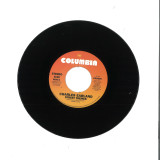
“Coming To You Love” is a classic and ever popular jazz funk and soul release from 1980. From its original release, the LP and 12” versions have dominated, this 7” version only recently coming to light as a different take on the track with a bonus Charles Earland organ solo. Since the realization of its existence, the previously styrene only US Columbia 7” has exchanged hands for increasingly higher amounts.
Charles came from Philadelphia, played sax first with Jimmy McGriff before turning to organ in the late 60s and earning a nickname ‘The Mighty Burner’
During his time at Mercury records he scored a hit song with the disco record “Let The Music Play”, building an audience with a jazz funk and soul crowd which exists to this day through numerous other releases on Mercury and then Columbia through to his passing in 1999.
Theory Therapy is pleased to present ‘we’re here all the time’ by jp (aka J.P Wright) – the New York producer behind one of last year’s shinetiac remixes on the OST label, and a member of Housecraft Recordings’ trip-bient group Ahem.
Compiling several years of well-worn material, the Brooklyn artist’s debut solo LP was the result of many hours of hardware jams and happy accidents, later meticulously edited down into these seven arrangements. Blending first-thought-best-thought spontaneity with extended DAW labouring, Wright delivers some of the most immediate music yet on Theory Therapy.
The album is reminiscent of ’90s and early-’00s IDM. Syncopated rhythms and atmosphere swirl into a mutable whole, as hardcore breakbeat, ambient trance and acidic electro bleed together into a liquid mélange. The sequencing drifts from gauzy, ethereal openings into tensile, club-ready pressure before swerving toward moments of stillness – like lingering in an emptied club hours after the crowd has gone.
There’s a distinct physicality to the music too. Kick patterns jitter like loose live wires, delays ripple through the fog-soaked air, yet the album’s finest moments lie in its more subtle textures and tonal shifts. This is proper braindance that keeps you suspended in its pulse, caught in non-linear time. Wright lets the music wander in unpredictable arcs, moments folding back on themselves, stretching in multiple directions at once – tracing and retracing a memory that refuses to settle.
Mastered and cut by Beau Thomas
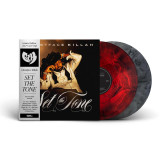
- A1: 6 Minutes (Ft. Jim Jones, Sheek Louch, & Harl3Y)
- A2: Pair Of Hammers (Ft. Method Man)
- A3: Skate Odyssey (Ft. Raekwon & October London)
- A4: Scar Tissue (Ft. Nas)
- B1: Kilo In The Safe (Ft. Iceman)
- B2: Skit 1
- B3: No Face (Ft. Ye)
- B4: Champion Sound (Ft. Beniton)
- B5: Cape Fear (Ft. Fat Joe & Harl3Y)
- C1: Skit 2
- C2: Plan B (Ft. Harl3Y)
- C3: Bad Bitch (Ft. Ja Rule & Trevor Jackson)
- C4: Locked In (Ft. Az & Bee-B)
- C5: Skit 3
- D1: Touch You (Ft. Shaun Wiah)
- D2: Shots (Ft. Busta Rhymes, Serani, & Harl3Y)
- D3: Trap Phone (Ft. Chucky Hollywood)
- D4: Outro Skit
- D5: Yupp! (Ft. Remy Ma)
Black Vinyl[31,05 €]
Hip-Hop-Legende Ghostface Killah liefert mit seinem neuen Album "Set The Tone" eine Mischung aus Tracks, die sowohl das männliche als auch das
weibliche Publikum ansprechen: Eine Mischung aus knallhartem New Yorker Rap und melodischen, entspannten Tracks.
Ghostface hat außerdem mit Hip-Hop-Schwergewichten wie Nas, Kanye West, Ja Rule und vielen anderen zusammengearbeitet.
- A1: Jimmy Page & Robert Plant - Whole Lotta Love
- A2: Aerosmith - Immigrant Song (Feat Jimmy Page)
- A3: John Paul Jones - Grind
- A4: John Paul Jones - Goose
- B1: Jimmy Page & Robert Plant - Rock & Roll
- B2: Jimmy Page & Robert Plant - Babe I'm Gonna Leave You
- B3: The Black Crowes & Robert Plant - Custard Pie
- B4: The Black Crowes & Robert Plant - Celebration Day
After over a decade in the shadows, the mysterious and elusive Creative Use return to their secret headquarters for brand new manoeuvres.
Freshly kitted out with new prescience, flair, and a Maestro Echoplex EP-3, they deliver Creative Use 11 via newcomers, Powerhouse Jim & The Fitness Centre, direct from their dojo in the North of England.
The trio of delights offer something for all discerning DJs and collectors alike. This EP won’t be around for long, so we advise to buy or cry.
Yan Tregger, born Edouard Joseph Scotto Di Suoccio, is a prolific French-Italian composer, trumpeter, arranger, and library music specialist.
Tregger built a vast and varied catalogue of over 1,400 works registered with SACEM as a library music composer.
His output spans funk, jazz-funk, psychedelic disco, electronic experiments, film soundtracks, advertising jingles, and even relaxation music.
This LP is a compilation of rare or unreleased tracks made by the Maestro in The 70's.
For Toxic Funk Vol. 20, we're excited to welcome back the man with the big beats and unmistakable grooves – Sonale – for his first-ever 7" vinyl release on Breakbeat Paradise Recordings. After making waves with digital releases like the bass-driven Ill Vibe EP and the party-starting Sound Monkey EP, Sonale now brings his signature style straight to wax with two exclusive funk-heavy weapons. The A-side, Give I...
Chicago's premier boogie purveyors STAR CREATURE dig deep with 4 extremely rare cuts, 3 of them being white whale level impossible to find & the 4th commanding big bucks online! Includes songs by TIGER JACK, SOUL INVADERS, MOTHERFOX, and PYRAMID PLUS. Heavyweight vinyl and heavyweight reverse board jacket. Due out Nov. 10.
“Let’s Bounce” was originally issued on Ajana as one of their only 2 releases, the first being earlier from Central Power System on Numero Group’s The Chicago Party compilation. Tiger Jack remained elusive, both Jack and a copy of his record until we stumbled upon a contact and were able to get in touch and stitch together the fully extended mix of this Punk Funk Boogie Bopper. Speaking of Numero Group, The 2nd track of Side 1 comes from an assist from the reissue Gods themselves as they blessed us with this never-sold-on-discogs soulful side of Boogie Slap issued on one-and-done label Magikal. When asked about the track, songwriter CA Williams said they recorded it for a restaurant jingle. Probably the best one we’ve ever heard.
Side 2 starts off with an absolute Modern Soul Monster with Motherfox’s Hot Shot. John Harris came by Star Creature’s South Side of Chicago HQ to chop it up and share some stories on Motherfox and his other passion project most deep funkers would known as Carver High. This record has reached insane demand the past few years as it’s a certified floor filler for all scenes - peak big budget sound packed into a small DIY package, total package. Track 2 delivers the full version of the ever mysterious Pyramid Plus providing the Titular Tune “Comin’ At Ya’” as vocoded talkboxed low slung, spaced out Boogie Banger.
Bringing together the elder statesman of the Zulu guitar Madala Kunene and internationally acclaimed Sibusile Xaba, kwaNTU pulls two generations of South African guitar mastery into a single point of focus. Under-represented on recordings outside of South Africa, Madala Kunene (b. 1951), the ‘King of the Zulu Guitar’, is revered as the greatest living master of the Zulu guitar tradition. Sibusile Xaba, whose collaboration with Mushroom Hour Half Hour reaches back to his first recording in 2017 (Open Letter To Adoniah/Unlearning), has garnered international acclaim for his unique voice and virtuoso guitar stylings, which bring together multiple South African guitar lineages in an original, spiritualised fusion. Collaborating with Mushroom Hour and New Soil for kwaNTU, the two players come together to weave a filigree sonic fabric which reaches down to the heartwood of Zulu guitar music but moves resolutely outward, building on the past to create a deeply rooted statement about present conditions and future travels. kwaNTU – which can be roughly translated ‘the place of the life-spirit’ – is also conclave of teacher and student, as Xaba has been taught by Kunene for the last decade. Meditative, rich and sonically sui generis, kwaNTU finds these two musicians linking up within the inimitable space of sound and spirit that they share through Kunene’s teaching.
The great masters of South African music have not all had equal exposure. For many years the generation of musicians who were exiled during apartheid took centre stage, as the regime made it very difficult for those at home to be heard. More recently, a new cohort of important voices, especially in jazz, has broken through to international consciousness. But for the generation of musicians in between – those who shone like beacons in the most difficult final years of apartheid and immediately afterward – international recognition has been slow in coming.
Madala Kunene, ‘the King of the Zulu Guitar’, is among this number. A revered figure for current generations of South African musicians, Kunene began his recording career in 1990, at the bitter end of apartheid, with a now classic self-titled LP for David Marks’ storied Third Ear imprint. Born in 1951 in Cato Manor, near Durban, he had determined to be a musician from early childhood, and by the time he first entered a recording studio he had already had a long career as a popular performer. His virtuoso absorption and transformation of the venerable Zulu maskanda guitar tradition and his richly spiritualised approach to music immediately marked him out as someone special, and in the years that followed, Kunene cemented his position as one of South Africa’s musical elders. He is without doubt the grand master of the Zulu guitar tradition, but his sound and sensibility ranges far beyond it into varied sonic terrain, and he has collaborated with a wide range of musicians both at home and abroad. Now in his mid-seventies, he remains a shining light for those that are making music in contemporary South Africa.
‘He is really an amazing person,’ says the guitarist Sibusile Xaba, who has been mentored by Kunene for over a decade, and now invites a collaboration with him on kwaNTU. ‘As a mentor, he's really powerful in showing us the way. For us to have this opportunity to make music together and have a project together is really a blessing to me.’
Xaba himself grew up in Newcastle, KwaZulu-Natal, where his mother had been in a band and his father sang in a church choir, and from early childhood Xaba played homemade tin guitars. He only later realised that music was his calling. ‘I just loved music. I was fortunate. My parents loved music. And when it was time for me to leave home and go to study outside Newcastle, I knew that music was what I wanted to do. There was no second option. It was just music.’ Moving to Pretoria to study music formally, Xaba committed himself to his craft, developing a unique style that draws on both US jazz masters such as Wes Montgomery and Jim Hall, and the rich and varied heritage of the South African guitar, from inspirational jazz players such as Allen Kwela and Enoch Mthalane, to the music of the Malombo groups and Dr. Philip Tabane (Xaba has previously collaborated with Dr. Tabane’s late son, Thabang), and the Zulu guitar tradition embodied by Kunene.
‘I was really in love with the jazz guitar, I really admired it, and I was digging a lot in that direction,’ says Xaba, recalling his first encounter with Kunene’s music, over a decade ago. ‘And then one day on my timeline, Kunene popped up, and I was like – “What's this sound?” I was so connected to it. It really touched me deep. I started checking out his records, and then I found out he's from the same region as I am, which is Zululand.’ After Kunene played a show at the Afrikan Freedom Station in Johannesburg, Xaba make contact with him, and visited him at home in Durban. They struck up a friendship, and Xaba became the elder’s student, as Kunene began to pass on his knowledge and his inimitable way of playing.
kwaNTU is a tribute to this relationship and the deep learning that has defined it. The album was recorded in Zululand in the town of Utrecht, at a cultural centre called Kwantu Village, which gives its name to the album. ‘It's such a broad word,’ Xaba says, ‘but the elders teach us that Ntu is basically an energy, almost chi, an energy, a force that all living beings have within them. It's a living energy, so kwaNTU is like, almost the place of this energy.’ The two men sequestered themselves for five days of jamming, improvising and planning, and then the session was recorded in one take over a single night, with Gontse Makhene joining on percussion and backing vocals and Fakazile on vocals. Other voices and overdubs were later added in the studio in Johannesburg.
The result is a rich and meditative recording that finds two generations in a deeply engaged dialogue. Teaching and passing on his knowledge, the elder Kunene has brought Xaba into a space of sound and knowledge that they now share; Xaba’s own practice of deep communion with nature and his dedication to his musical craft make him the perfect interlocutor for Kunene. The result is an album that foregrounds the two musicians engaged at the highest levels of responsive listening, sympathetic unity, and collaborative concentration. Bringing an elder statesman of South African music to an international listening audience for the first time in decades by pairing him with one of South Africa’s most important new voices, kwaNTU is a meeting of generations and a powerful demonstration of musical lineage and continuity.
‘Before music, there is sound,’ Xaba observes, speaking of Kunene’s unique approach to music. ‘And sound is like a common compartment…it's not restricted to particular people or particular geographic places, you know what I mean? It's sound. Everybody can hear it. So when he constructs that sound into music, I think everybody resonates with the energy behind his construction of sound into song. Here at home, we really love him for preserving our history through the guitar, through his stories as well the music, the songs that he writes. We really, really admire him.’
Composer and arranger of Hiroshi Suzuki's "Romance" and Jiro Inagaki's "Breeze," Hiromasa Suzuki is a musician who had worked extensively in the Japanese entertainment industry, not only in jazz, but also in pops, cinema, television, and animation music production. This album is a pre-fusion/crossover masterpiece produced by Jiro Inagaki and recorded with talented players such as Shuichi Murakami, Akira Okazawa, and Masayoshi Takanaka.