Legendary Swiss punk band from the late 70s - "You can't dispute Liliput's status as pioneers of feminist art-punk - Along with fellow travelers like the Slits and the Raincoats, this (mostly) female Swiss group took advantage of punk's anything-goes attitude and created jittery, spirited pop that was both in step with the times and completely singular. The early material is a riot of exuberant energy, taking stylistic cues from peers like Gang of Four and Wire-- propulsive bass, skittering pop rhythms, slashing guitars-- and adding distinctive overlapping vocal patterns, which are sung, shrieked, and hiccupped in three languages and made- up dadaistic slang. More than 20 years on, it still sounds fresh." - Lisa Gidley
Search:ji
The Path is the latest album from Belbury Poly (aka Ghost Box records founder Jim Jupp). This time round Jupp has recruited a full band roster to expand his own unique electronica. He is joined by occasional Belbury Poly collaborator Christopher Budd on Bass and Guitar, Jesse Chandler (of Midlake, Mercury Rev & Pneumatic Tubes) on flute, clarinet and keyboards, Max Saidi on drums plus narration from author and poet, Justin Hopper.
Musically it takes as its starting point a particular moment of early 1970s British film soundtracks by the likes of Roy Budd and Roger Webb; a soundworld of easy-going jazz and funky rhythms gently coloured with pastoral strings and flutes. The Path, however, is unmoored from time or place thanks to Hopper’s narrative style, Chandler’s rustic flutes and keys, Budd’s soulful psychedelic guitars and Jupp’s production and electronics. The co-writers were all chosen for their unique abilities and an
intuitive understanding of the ongoing Belbury Poly project. The spoken word elements form a loose, open-ended narrative; very much an album with spoken word rather than a spoken word album.
The Band and Album Recording:
Christopher Budd: Electric Bass, Double Bass, Guitars, Electric Sitar
Jesse Chandler: Piano, Synths, Mellotron, Flute, Clarinet
Justin Hopper: Narration
Jim Jupp: Electric Piano, Synths, Mellotron, Percussion, Sound Effects
Max Saidi: Drums, Percussion
The project came together over two years, beginning with a conversation between Hopper and Jupp during a walk on the Sussex South Downs. Originally, it was to tell the tale of an American academic unravelling while adrift in an alienating English landscape. From the beginning, the pair wanted on a narration integrated lyrically into the piece, rather than dropped on top. The words gradually became more film-noir and open to interpretation; occasionally a little tongue-in-cheek. The final
texts explore a folklore of alienation; the way we impact the landscape and it impacts us.
Belbury Poly:
Jim Jupp has released EPs, singles and seven albums on Ghost Box as Belbury Poly. It’s generally a solo project, but he calls on a floating roster of like-minded musicians to extend the sound beyond studio based electronica. He is also one half of The Belbury Circle along with Cate Brooks (of The Advisory Circle) - occasional collaborators with John Foxx. He has recorded library tracks for KPM, BMG and Lo-Editions. He’s remixed tracks for several artists including Beautify Junkyards,
John Foxx and Bill Ryder-Jones (The Coral) and co-written a song with Paul Weller for his 2020 album On Sunset.
The PLX-500 inherits the layout of the PLX-1000 professional turntable and produces a warm, clear analogue sound. The perfect deck if you want to start playing with vinyl or if you just want to listen to your record collection at home.
Solidly built with excellent vibration damping and precise audio playback, this high-torque deck has a USB out so you can make digital recordings of your vinyl collection in our free rekordbox software. You can also combine the PLX-500 with the rekordbox dvs Plus Pack, a compatible mixer and the RB-VS1-K Control Vinyl to play and scratch with digital files.
Main Features
What's in the box
PLX-500
Power cord
USB cable
Slip mat
Dust cover
Adapter for EP records
Head shell (with cartridge)
Balance and shell weights
Audio adaptor cable:
1 Stereo pin plug (female)
1 Stereo mini plug (male)
Operating instructions
Specifications
Width
450 mm
Height
159 mm
Depth
368 mm
Weight
10.7 kg
Turntables
Drive Method
Servo-type direct drive
Platter
Aluminium, die-casting diameter: 332 mm
Motor
3-phase, brushless DC motor
Braking System
Electronic brake
Rotation Speed
33⅓, 45, 78 rpm
Rotation Adjustment Range
±8 %
Wow and Flutter
1.6 kgf・cm
Start Time
Within 1 sec (at 33⅓ rpm)
Tone Arm
Arm Type
Universal type S-shape tone arm
Gimbal-supported type bearing structure
Static balance type
Overhang
16 mm
Effective Length
230.5 mm
Tracking Error
Within 3°
Height Adjustment Range
6 mm
Stylus Pressure Variable Range
0-4 g (1 scale 0.1 g)
Single Cartridge Weight
1,6 kgf・cm
Anlaufzeit
Innerhalb 1 s (bei 33⅓ Upm)
Tone Arm
Tonarm
Universeller S-Tonarm
Kardanisch aufgehängte Lagerung
Statisch balanciert
Overhang
16 mm
Effective Length
230,5 mm
Trackingfehler
Innerhalb von 3°
Height Adjustment Range
6 mm
Variables Auflagegewicht
0-4 g (1 Teilstrich = 0,1 g)
Cartridgegewicht einzeln
< 9,5 g
Sytem-Typ
VM
Anschlüsse
USB
1 USB Typ B
Ausgänge
1 PHONO/LINE (Cinch)
'One Deep River' is Mark's sixth consecutive studio album to be recorded at his British Grove Studios and his first since 2018's 'Down The Road Wherever.' When Covid restrictions eased, Mark reconvened at BG with longtime band members and collaborators such as Guy Fletcher, Danny Cummings, Richard Bennett, Glenn Worf, Jim Cox and others, with the addition of first-time contributor Greg Leisz on pedal and lap steel and acoustic guitar.
Says Mark of the new album, which he co-produced with longtime confidant Fletcher: "It was back to the old-fashioned idea of a band making a record together in the room, which maybe in the more youth-oriented side of the industry has become quite rare, because everyone uses loads of technology. We do too, but what we do is we combine the old and the new. If it works, I use it.
"With these songs, you can see them coming together very quickly, with a band like this. You're in a game where you're making the thing and it's happening whether you like it or not. You could push the pace, but I try and give myself a little bit more breathing room. The fatal thing a lot of the time would be to want to rush everything. Something creative always happens by not panicking."
Of the track 'Ahead Of The Game,' Mark adds: "That all goes back to bands playing live. In some way, I was thinking about Nashville, because when I first went out there, it must have been in the early '80s and all the bands in the bars downtown were playing the hits. And that's fine. What I was trying to say is that's an achievement to actually get to a place where you've got employment, and you've got yourself a gig. I mean, statistically, what are the odds of making it? If you stopped to think about that, you'd hardly take a step further, would you?"
'One Deep River' is Mark's sixth consecutive studio album to be recorded at his British Grove Studios and his first since 2018's 'Down The Road Wherever.' When Covid restrictions eased, Mark reconvened at BG with longtime band members and collaborators such as Guy Fletcher, Danny Cummings, Richard Bennett, Glenn Worf, Jim Cox and others, with the addition of first-time contributor Greg Leisz on pedal and lap steel and acoustic guitar.
Says Mark of the new album, which he co-produced with longtime confidant Fletcher: "It was back to the old-fashioned idea of a band making a record together in the room, which maybe in the more youth-oriented side of the industry has become quite rare, because everyone uses loads of technology. We do too, but what we do is we combine the old and the new. If it works, I use it.
"With these songs, you can see them coming together very quickly, with a band like this. You're in a game where you're making the thing and it's happening whether you like it or not. You could push the pace, but I try and give myself a little bit more breathing room. The fatal thing a lot of the time would be to want to rush everything. Something creative always happens by not panicking."
Of the track 'Ahead Of The Game,' Mark adds: "That all goes back to bands playing live. In some way, I was thinking about Nashville, because when I first went out there, it must have been in the early '80s and all the bands in the bars downtown were playing the hits. And that's fine. What I was trying to say is that's an achievement to actually get to a place where you've got employment, and you've got yourself a gig. I mean, statistically, what are the odds of making it? If you stopped to think about that, you'd hardly take a step further, would you?"
180-GRAM VIRGIN VINYL - THE COMPLETE CONCERT. TOTAL TIME: 59 MINUTES - LIMITED EDITION
The complete April 8, 1960 concert at the Kongresshaus in Zurich, Switzerland by the splendid Miles Davis Quintet with John Coltrane on tenor sax, Wynton Kelly on piano, Paul Chambers on bass, and Jimmy Cobb on drums. Along with the frequently heard “All Blues” and “So What”, the Zurich concert has versions of “Fran Dance” and “If I Were a Bell”. “If I Were a Bell” had been first recorded by Miles and Coltrane in a quintet format in the celebrated October 26, 1956 studio session for Prestige and the Zurich version heard here is the only surviving appearance of this song from the 1960 European tour
Warehouse Find! Test Pressing!
It's Toby Tobias time folks! Ahead of his brilliant LP which will be dropping here on DOG in September we give you a little reminder of why he's one of the heroes of the underground UK house scene. Toby has been honing his skills as a producer, DJ, promoter and all round nice guy for years now and we're very happy to be offering up fresh new club business from the man himself in the form of The Rising EP. Never one to go for the obvious, he always puts his neck on the line and pushes his productions in an interesting and often unexpected direction, making full use of his fully analogue studio to get those 'happy accidents' into his tracks which gives him the edge over so many others on the scene today.
Even with a straight up club banger like The Rising, Toby makes sure things stay edgy, raw and just a little bit mental. At the end of the day this is a Chi-town influenced filter disco banger but with fresh spin that'll make sure it creates the perfect vibe when you drop it in the clubs.
Taking things in a deeper direction we have Jitterbug on the remix, keeping the pace and drive but dipping the original in a vat of thick, syrupy treacle which gives us an altogether more heady, spaced out vibe for those moments when only the trippiest shit will suffice.
Flip over for Toby's own dub version of The Rising which strips it all back and warps it out for a loopey, Soundstream influenced take on the original. Full of attitude but keeping the bags of fun times feel with more punch than Frank Bruno (in his heyday!)
Pink Martini are musical ambassadors who strive to create a world of goodness, beauty and romance, a unique cross between a Cuban dance orchestra, a Brazilian marching band and a 1940s Hollywood musical. “Hey Eugene!” is now rerleased to coincide with the 30th Anniversry tour .From the blissful opener, “Everywhere”,inspired by those lush Hollywood theme songs of the late 1940s, via the exultantly funky title song and first single to The exuberance of “Dosvedanya Mio Bombino” and the gorgeous cover of “Tea for Two” the duet with the legendary Jimmy Scott, we are treated to an eclectic group of songs that are classic Pink Martini. Tour:April 29 – Manchester April 30 - Edinburgh May 2 – Oxford May 3 – Bristol May 4 – Southend May 5 – London (Royal Albert Hall)
Complex, emotive, and straddling several genres, Sketches Of Spain is one of Miles Davis’ masterpieces, a landmark of orchestrated jazz. The third of his collaborations with Gil Evans, Sketches was inspired by the classical ‘Concierto de Aranjuez,’ which sparked the suite that makes up the LP. Drummers Jimmy Cobb and Elvin Jones and bassist Paul Chambers reconfigured their approaches to blend with the orchestra under Evans’ command and Davis uses a muted flugelhorn for the epic opener; his solo on ‘Saeta’ is blinding and the adapted Andalusian folk song ‘Solea’ draws on flamenco. This absolute stunner is a must-have!
- A1: Sharkey - Someone Like Me
- A2: Lynne Ann Kingan - If You Love Me - Hate Me
- A3: James Thornbury - So Tan
- A4: Jim Huxley - Only A Song
- A5: Charlie Webster - Snodland
- B1: The Bob Hughes Band - You Broke My Heart
- B2: Goldrust - Going Yesterday
- B3: Jim Kennedy - You Are The Reason
- B4: Jon Betmead - Marie Elene
- C1: Charles Murphy - The Foot That's Holding Me Down
- C2: Remnant - I Will Set You Free
- C3: Fred Potts - Following Rainbows
- C4: The Superwomen - Lowlands
- D1: Robison Kaplan Ltd - Don't Say Goodbye
- D2: Gary Ramey - You Are His
- D3: John Agostino - Loss Of Love
- D4: Ritchie Tierney - Please Stop Breaking Me Down
A humanity-reminding suite of miracle moments, Someone Like Me unites a geographically unbound cast of real people in pursuit of a meaningful connection. Taping their lived experience in economic studios in quiet English counties, Pacific Northwest woodland retreats and the big city bustle of Sydney and Los Angeles, these kindred spirits rendered sheer beauty in the process. Custom pressed folk songs of love, loss and the lord saviour.
Illuminating minor works from seasoned players such as former Syndicate Of Sound chart-topper Sharkey and late-era Canned Heat lynchpin James Thornbury, the collection simultaneously honours the fleeting amateurism of hobby musicians. With their one shot at tangible vinyl, freshman Lynne Ann Kingan realised her loose bubblegum rocker on campus time, while U.S. Navy recruit Fred Potts cut his unconditionally serene ballad remotely stationed on a Spanish naval base. Spartan production continues to reign with Jon Betmead’s hair-raising gospel, howling into infinite space, and Goldrust’s stripped back garden hymn.
Throughout the hour-long reflection, faith has an intermittent yet revelatory presence, most overtly with the divine choral soul of Seventh-day Adventist quartet Remnant. More subtly, Gary Ramey and Jim Kennedy both turned to song in their spiritual quests, offering their all to a universal power. An irrefutable compilation cornerstone, the National Office For Black Catholics showcased Charles Murphy’s lionhearted account of the Black experience at a 1971 concert. Five years earlier, high school seniors The Superwomen would use their hauntingly angelic harmonies to address racial inequity with a breathless take on ‘Lowlands’.
Reaching the furthest corners, Someone Like Me secures the inaugural licence of three homespun masterpieces. Discovered by fluke in the digital haystacks of Youtube and Soundcloud, Jim Huxley’s bedroom pop earworm melds peacefully into Charlie Webster’s synthesized reverie. Meanwhile, Hollywood’s John Agostino introduces us to the bizarre world of tax scam records, with the artist only now learning that his tender psych-folk demos were leaked via a 1977 bootleg.
Compiled and lovingly restored by armchair digger Mikey Young (Eddy Current Suppression Ring/The Green Child), Someone Like Me pays due service to seventeen rarefied journals of truth and devotion. Adorned with visual artist Chris Fallon’s figure and flora dream extractions, the uniting songbook is further detailed by expansive track-by-track liner notes and a forward from San Franciscan poet Rod Roland.
Repress!
‘Hardcore Jollies’ was Funkadelic’s ninth studio album and their debut on Warner Bros Records. Released in October 1976 and dedicated to “the guitar players of the world”, it showed Funkadelic was the heaviest black rock band since Jimi Hendrix’s Band Of Gypsies (even featuring Buddy Miles on one track). With lead guitarists Michael Hampton and Eddie Hazel dazzling, the personification of funk Bootsy Collins on bass, Bernie Worrell’s keyboard wizardry and many more, the album was helmed by the genius of George Clinton. Reaching no.12 on the US R&B chart, the album spawned singles ‘Comin’ Round The Mountain’ (US R&B No.54) and ‘Smokey’ (US R&B No.96) and a live remake of 1973’s ‘Cosmic Slop’ from the album of the same name. Recorded during rehearsals for 1976’s P-Funk Earth Tour, this version features a vocal introduction dropped from the 1973 studio cut. Over 45 years since its original release, ‘Hardcore Jollies’ is among Funkadelic and George Clinton’s best-ever albums and remains a masterful example of their creative genius. FUNKADELIC Masterminded by the larger-than-life figure of George Clinton, Funkadelic was a key component of his influential P-Funk empire. Funkadelic’s unique combination of Rock, Psychedelia, R&B & Soul led to the band crossing over to the pop mainstream & gaining a vast international following, becoming one of the most important & influential groups in music. On 6 May 1997, Parliament / Funkadelic were inducted into the Rock & Roll Hall Of Fame by Prince. To commemorate six decades of thrilling & delighting fans, George Clinton returned to the stage in 2022 for a series of concerts. To celebrate, Charly have reissued Funkadelic’s classic four albums ‘Hardcore Jollies’; ‘One Nation Under A Groove’; ‘Uncle Jam Wants You’; & ‘The Electric Spanking Of War Babies’ (originally released by Warner Bros during a golden period for the band between 1976-1981). Each album will be available as deluxe gatefold Digi-Sleeve CDs in PVC wallets + obi-strip & facsimile-edition gatefold LPs on 180-gram black vinyl & limited edition 180-gram coloured vinyl + 1970s-style obi-strip in a protective PVC sleeve. “They played a HUGE role in creating the future of music.” PRINCE
Jimpster dons his Franc Spangler cap and joins forces with up and coming London-based producer and DJ Hudson’s Choice for a four track EP entitled Myatts Field. Touching on trippy slo-mo electronic grooves, tropical moods and percussive house jams it brings a more experimental and left field sound to Delusions Of Grandeur which we’re sure you’re going to love!
Opening track AcidMan sets the tone of the EP with a bubbling 303 line taking centre stage while pitched down vocals add a hint of menace, heightening the psychedelic mood. Dubby FX and analogue synth lines drift in and out of focus and give a live jam feel to the arrangement reminding us of something that might grace the decks of A Love From Outer Space. Heavily Percussed continues offering up a crazy percussion tool loaded with wonky cross rhythms, glitchy found sounds and a hypnotic synth sequence for good measure.
Flip over for Myatts Field, another slower tempo mutant discoid house groove which takes us on a deep trip into the jungle. Echoing sax and hazy vocals transport us to another world where Weather Report experimented with rolling four on the floor grooves and spacious dub.
Closing out the EP Roots picks up the pace with another percussion-heavy slice of tropical sounds which doffs a cap to masters such as Gregory and Osunlade. Steel pan melodic lines intersperse with chiming synth sequences making for an unusual yet hooky club track which will lock the dancers into its incessant groove.
- A1: A Part Of Me / There Are Such Things 4:36
- A2: When There Is Love 4:44
- A3: Black Butterfly 3:28
- A4: Angel Face 5:38
- B1: The Nearness Of You 5:40
- B2: Can't Help Singing 2:32
- B3: Close Your Eyes 3:08
- B4: I Should Care 5:46
- C1: You Came A Long Way From St. Louis 3:57
- C2: C'est Si Bon 5:44
- C3: The Jitterbug Waltz 3:16
- D1: Time After Time 4:34
- D2: You Won't Forget Me 5:15
- D3: First Came A Woman 5:41
In her intimate 1992 recording with jazz piano legend Hank Jones, AbbeyLincoln contemplates the subject of love, sounding more optimistic than usual. About When There is Love Lincoln noted in 1992: “I have a sombre outlook and assessment of the world in which we live, but I also have love, love for the beautiful man that makes life bearable in an otherwise unbearable world. So this is my offering on the altar of conjugal love.” She offers highly personalized interpretations of four of her originals and ten standards, among which Duke Ellington's "Black Butterfly," "The Nearness of You," "You Came a Long Way from St. Louis," Fats Waller's "Jitterbug Waltz" and "You Won't Forget Me" are most memorable. A truly moving testament from two of jazz's finest artists. This 140-gram vinyl is the first international vinyl reissue, pressed at Pallas, and is presented in a wide-spine, single-sleeve jacket.
- A1: Magic Momentum
- A2: Rockets To Mars
- A3: The News These Days
- A4: Life (Skit)
- A5: Love Vibration
- B1: Original Flow
- B2: Hold On
- B3: Surviver (Skit)
- B4: Tatamaka Pt.1
- B5: Tatamaka Pt.2
- C1: Time (Skit)
- C2: Time
- C3: Jinja (Skit)
- C4: Kochirakoso
- C5: Our Tactus
- C6: Nah Personal
- D1: No Chains
- D2: Push Comes To Shove
- D3: We No Let Y'all In
- D4: Mexico (Skit)
- D5: Future For Our Children
We Release JAZZ is very happy to announce an exciting new body of work by Joseph Deenmamode aka Mo Kolours. The singular musical spirit’s new 21-track album Original Flow is available as a double LP housed in a heavy 350gsm sleeve with original artwork by Mo Kolours himself and the classic WRJ obi strip, as well as in digipack CD and digital formats.
A catalog of critically acclaimed records, including his self-titled debut (2014), ‘Texture Like Like Sun’ (2015), 2018 album ‘Inner Symbols’ and three companion EPs, established Deenmamode as a prodigious musician and vocalist. Pitchfork extolled his “hypnotic, tribal-infused dance grooves”, DJ Mag appreciated the “colourful celebration of soundsystem culture”, and Resident Advisor advocated that “no one sounds quite like Mo Kolours”. Musical analogies were drawn by The Guardian as “The best album Curtis Mayfield never made with A Tribe Called Quest and Lee Perry” and Mojo as “like Marvin Gaye produced by J Dilla”.
Five years ago, Deenmamode moved to the Japanese countryside. Far away from familiarity, he contemplated his place and further questioned his identity. “I had none of my ‘own’ people around. I had time to really find what makes me tick musically. Japan has helped me go back to those subconscious leanings, really go deep, and reflect the aspects that make up my story”.
The tracks on ‘Original Flow’ have been constructed from sessions, improvisations and soundbites captured around the world during this time; collecting contributions from musicians including Deenamode’s brothers Reginald Omas Mamode and Jeen Bassa plus Andrew Ashong, Charles Bullen, Dwaye Kilvington, Eddie Hick, Stefan Asanovic, Myele Manzanza, Ross Hughes, and Tom Dreissler. Deenamode says “I’m proud of this album’s creative process. Coming from a tradition of scouring through hours of records, I wanted to create my own samples, to find that perfect loop that no other producer could put their hands on. I decided to invite a group of friends and acquaintances, who also happen to be incredible musicians, to a studio in Crystal Palace to improvise based on some loose ideas I had. We spent all day, and recorded everything”.
‘Original Flow’ is an album of UK street-soul nouveau, future indigenous jazz fusion, Rasta Segga, Nyahbinghi jazz, Malagasy Hebrew hip hop. While retaining a spirit of exploration and improvisation, it sees Deenmamode grow and flex beyond beat tape brevity, expanding composition and stretching his musical muscle to play live with other musicians. Themes of empowerment, overcoming adversity, and mental liberation coexist with notes from ancient history, futurism, and science, as well as musings on family and togetherness.
‘Magik Momentum’ springs from a discussion that features at the start of the song, an inspiring mentor answering a question from Deenmamode about improvisation and what role it plays in life when planning and manifesting the future. ‘Rockets to Mars’ questions the lack of care for the billions of people with nothing, while governments plan to explore space. “This sparked a comparison in my mind to a Sonny Okuson song that I would reference when performing. Okuson’s song talked of the lack of resources in many communities in the world, while governments go to the moon”.
He says the music behind ‘The News These Days’ is “possibly my favourite on the album”. Looped like he would a late sixty jazz-fusion sample, there was nothing added and the track was complete within a matter of minutes. “It was the first and best moment from the entire Crystal Palace session”, he adds. The album’s contrasting title track with minimal instrumentation played solo by Deenamode. While frustratingly searching for gems in past recordings, he thought in a burst of ego, “I don’t need no-one else to make a dope beat!” picked up his ravanne, (the traditional frame drum of his fathers home-land of Mauritius), pressed record, and started to play. He says, “In my thoughts were the rhythms of the Nubians in Upper-Egypt and Sudan, the swing of the huge drums played by Mauritanian women, of-course the Sega beat of Mauritius, and the ever inspiring beat of James Yancey”.
Driven by UK broken beat, Cuban congas, Nigerian and Mauritian inflections, ‘Love Vibration’ follows the concept that all emotions carry a vibratory frequency and pays homage to the frequency of creation and the power of love. The two part ‘Tatamaka’ tells of the history of Deenmamode’s ancestors, the maroons of Mauritius. “We are people who managed to run from our oppressors and find refuge in a corner of the island called ‘Le Morne’ where they could not reach us. One bloody day they came in numbers to re-capture, to revenge. Many of us chose to jump to our deaths, rather than be taken back into subjugation. The poem by Creole Richard Sedley Assonne says; “there were hundreds of them, but my people, the maroons chose the kiss of death over the chains of slavery”. Tatamaka was the name of a famed maroon leader who was murdered for claiming his, and our people’s freedom. The song is the imagined journey of escape and freedom by an ancestor of the maroons of Le Morne”.
Born in the west midlands and raised on the traditional sega music of his father’s Indian Ocean homeland of Mauritius alongside records by the likes of Jimi Hendrix, Santana and Michael Jackson; his influences expanded with late 90s jungle and drum and bass nights in Bristol, experiments at art college in Camberwell, and the rich culture of Peckham, “at the time we called it the Afro Quarters of London” says Deenmamode, adding hip hop, dub, soul and soundsystem styles to his individual sound.
He explains, “I love drum music, from hand-drums to 808s. I love music from the ancient past, heritage music, indigenous music, traditional music passed down from the beginning of time. Music from the body, hand claps, grunts and foot stomps. Music with audible depth, busy, bustling, highly charged. Music from the soul, the music from beyond. I love music from the islands and the mountains. The music of the streets, hustle music, alleyway beats. Club music”.
He describes the creative process as thinking in images. “The visual world and the world of sound seem to intermingle in my thought process. When I play the drum with my eyes closed, a world of imagery dances and moves with beat. Improvised drumming feels like I am listening to what I want to hear, rather than trying to play what I want to hear. Following the rhythm and finding new pathways to walk within the patterns is what I experience. In this way I often feel I am just a listener, instead of the player”.
Original Flow is pressed on biovinyl, a sustainable alternative to traditional vinyl. Biovinyl replaces petroleum in S-PVC by recycling used cooking oil or industrial waste gases, resulting in 100% CO2 savings in bio-based S-PVC production. Furthermore, it is 100% recyclable and reusable, embracing the circular economy ideology.
About 20 years ago, Carlos Giffoni quickly made a name for himself both as a noise guitarist and a laptop noisician upon arriving in New York (via Florida and Venezuela). His expertly curated annual No Fun Festival, as well as his No Fun label, further solidified him as a key figure in the international noise scene. The festival's success proved the formula for experimental and improvised music fests could work with the noise underground as well, but it also capitalized on the faster rate of connections being made between geographically disparate artists as a result of the (still relatively nascent) internet. Back then Carlos would play his laptop like a pinball machine, in contrast to the static stage presence of most laptop performers, and his solo music, like many others' at that time, expressed a less dark and dour vision of the implications of harsh noise. By the close of the 2000s, he had stopped doing the festival, switched gears musically to playing the lighter No Fun Acid sets, and moved to LA. Now he has re-emerged in a big way with Dream Walker, his first full-length since 2018's Vain (and only his second since 2010). Inspired by the masterful performances and diffusions he heard at the February 2023 GRM electronic music festival in Paris, particularly sets by old friends Lasse Marhaug, Jim O'Rourke, and Eiko Ishibashi, he began conceptualizing new music of his own in response, turning to synthesizers and other hardware to produce a work more firmly in the tradition of European electronic music than anything else he's done. Intended as a late night listen that evokes the edge of consciousness, with Carlos getting as close as possible to a trance state during the actual recording and mixing, each of the eleven tracks transition into one another rather than being standalone discrete pieces, forming two side-long suites that proceed like stages of a dream. Unabashedly tonal and repetitive, the glistening opener "Now Dream," the droning "Sleep Walker," and the closing triptych of "Lost in Descanso," "Sunrise," and "The Hidden Path" occupy a power electronics-ambient nexus that feels spiritually close to the Mego label. Elsewhere, "Ticking Clock" is reminiscent of Stereolab's non-easy listening vintage electronic side, while the two-part arpeggiated "Euphoria" recalls early Oneohtrix Point Never (which Carlos released on No Fun). The contrast between "One Breath"'s crackling opening and its remarkably fluid and soaring sustained synthesized chords is a distillation of the album's lingering tension between electronics' ability to project mechanical rupture as well as the organic and the infinite _or "walking between dreams," as Carlos himself puts it. Produced by Lasse Marhaug (who also mastered Carlos' first solo album, Welcome Home, back in 2005), released by Stephen O'Malley (who I remember DJing at the No Fun fest), with cover art and photos by personal friends, Carlos considers the album a family affair. But Dream Walker most of all heralds a maturation of the artist, and stands as a record that exists out of pure desire, rather than obligation or force of habit; a statement of reconnecting with music not by merely revisiting it, but by building on what's come before, both in his own work and in the music he loves. -Alan Licht, New York, December 2023
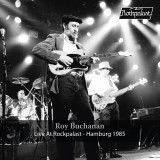
Roy Buchanan gilt bis heute als "der beste unbekannte Gitarrist der Welt". Die Rolling Stones wollten ihn als Nachfolger für Brian Jones, Eric Clapton als Gitarrist bei Derek & The Dominos - beides Angebote, die er ablehnte. Roy Buchanan war ein Meister auf der Fender Telecaster-Gitarre, sein Spiel beeinflusste Musiker wie z.B. Gary Moore, oder Jeff Beck maßgeblich. Roy Buchanan wuchs in Kalifornien auf, wo er auch Gitarre lernte. Als Teenager zog er nach Los Angeles und spielte mit Spencer Dryden (später der Drummer von Jefferson Airplane) in der Band Heartbeats. Danach tourte er mit Dale Hawkins und spielte mit Robbie Robertson (The Band), der Buchanan später als einen seiner Haupteinflüsse bezeichnete. In den 60er Jahren heiratete Roy Buchanan, zog nach Washington DC und arbeitete als Studiomusiker an mehr als 100 Produktionen, vornehmlich für Freddy Canon und Leiber/Stoller. Erst 1971 erschien sein erstes Solo-Album, was dazu führte, dass er und sein unnachahmliches Spiel auf der Fender Telecaster von Größen wie John Lennon, Eric Clapton oder den Rolling Stones als Geheimtipp gehandelt wurde. Die ab 1985 aufgenommenen Alben "When A Guitar Plays The Blues" (1985), "Dancing On The Edge" (1986) und "Hot Wires" (1987) gehören zu den Highlights seiner Karriere. Nur drei Jahre vor seinem tragischen Selbstmord wurde dieses Rockpalast-Konzert am 24. Februar 1985 in der Markthalle in Hamburg aufgenommen. Ein Auftritt, bei dem Roy Buchanans Genie als Gitarrist in einzigartiger Weise überzeugt - nicht zuletzt durch seine kongenialen Cover-Versionen u.a. von Jimi Hendrix oder Don Gibson. Es ist kein Geheimnis, dass Roy Buchanan seine Qualitäten vor allen Dingen bei seinen Auftritten ausleben konnte, von denen nur wenige aufgezeichnet wurden. Ein beeindruckendes Vermächtnis!
On his 1963 debut release for the Phillips label, baritone saxophonist Gerry Mulligan is joined by familiar friends, including Art Farmer, Bob Brookmeyer and Jim Hall for a relaxed and refined set of cool jazz ballads. Highlights include the Mulligan-penned title track and Chopin’s ‘Prelude In E Minor’.
Verve’s Acoustic Sounds Series features transfers from analog tapes and remastered 180-gram vinyl in deluxe gatefold packaging.
Ever since their auspicious beginnings, more than a decade ago, Laughing Bastards have giddily delighted in impurity. Initially a reeds-guitar-bass trio modeled after the classic Jimmy Giuffre 3, the band has remained truthful to its original spirit. Saxophone player Michel Mast and guitarist Jan-Sebastiaan Degeyter have remained its core, but the band went through several permutations, first welcoming Eline Duerinck (cello) and Marcos Della Rocha (for Unanimal in 2019) and solidifying its present-day line-up with bassist Cyrille Obermüller.
Bastards. It's kind of a rude word to throw around carelessly, but there has always been that element of being irregular, being too stubborn to comply with what is expected, that has set them apart. This is nowhere more evident than in the material contributed by Degeyter, who wrote more than half of the album's compositions. A talented illustrator and designer (he created a few of their striking album covers) as well as a versatile guitarist, Degeyter always manages to add a strong visual component to his material. In combination with his knack for pulling exotic influences into the band's overall sound, it leads to a playful, cinematic eccentricity.
"Tigraman" and "Black Spoon" are examples of this. Both are infused with an Ethiopian-tinged sound, but while the first one develops the catchy throbbing of a trance-like soul/rock tune, the second exudes the lush cadence of Golden Age Ethio jazz, the kind that gets under your skin with those sensual, irrepressible rhythms. They are a nice match with the increasing drama of the Slavic-tinged "Red Lemon", the slow, dreamy flow of the Jamaican dance hall-inspired "Sand", a strong feature for Duerinck, and "Dosi", that shows Obermüller's knack for propulsive melody.
The synesthete in Degeyter gets free reign in "Calliope", chamber jazz in which sweeping sax and cello are kept grounded by guitar, bass and drums. Mast's odd meter-song "Fetish" is another showcase for the band's effortless dancing and some gorgeous tenor schmooze. Della Rocha's "Turquoise" starts off in brooding, contemplative way and keeps simmering on a low, glowing fire. To top it off, there are a few covers that remind you of the band's origins. A new take on Giuffre's rootsy "The Train and the River" stresses their loose flexibility with an Americana style somewhat reminiscent of Charlie Haden, while Carla Bley's evergreen "Vashkar" gets a carefully constructed makeover to close out the album with grace.
On their latest album, Laughing Bastards prove they are a quintessential Belgian band - soaking up sounds and influences from all over the place while maintaining a tight unity - with an international appeal. Combining jazz and chamber music with ideas from pop music and multi-colored strains does not only give their music an iridescent edge, but also keeps the interplay fresh and inspired, something to return to while waiting to see them live on stage.
Party Pest features ex-The Reprobettes members Jemma Jives (drums & vox) and Sally Balhorn (guitar & vox) alongside bass player Julia Watt (Moody Beaches, La Bastard, Hot Wings) and Kate Alexander on synth (Ute Root, The Hot Blood). Unpredictable and chaotic, Party Pest is influenced by artists such as The Slits, ESG, Kleenex, The Cure and The B52's. On Uninvited, Party Pest channel post-punk irreverence, blending discordant melodies, jangly guitar hooks, wild primal drumbeats, big bold bass grooves and synthesised sonic mayhem into a celebration of life as they know it. Anything can and does happen when Party Pest play so strap in for a wild ride whether you're invited or not. When the glitter settles, the Ajax's been snorted and your Mum's been pashed, wipe the love dust from your eyes and check your bathtub.