‘Hardcore Jollies’ was Funkadelic’s ninth studio album and their debut on Warner Bros Records. Released in October 1976 and dedicated to “the guitar players of the world”, it showed Funkadelic was the heaviest black rock band since Jimi Hendrix’s Band Of Gypsies (even featuring Buddy Miles on one track). With lead guitarists Michael Hampton and Eddie Hazel dazzling, the personification of funk Bootsy Collins on bass, Bernie Worrell’s keyboard wizardry and many more, the album was helmed by the genius of George Clinton. Reaching no.12 on the US R&B chart, the album spawned singles ‘Comin’ Round The Mountain’ (US R&B No.54) and ‘Smokey’ (US R&B No.96) and a live remake of 1973’s ‘Cosmic Slop’ from the album of the same name. Recorded during rehearsals for 1976’s P-Funk Earth Tour, this version features a vocal introduction dropped from the 1973 studio cut. Over 45 years since its original release, ‘Hardcore Jollies’ is among Funkadelic and George Clinton’s best-ever albums and remains a masterful example of their creative genius. FUNKADELIC Masterminded by the larger-than-life figure of George Clinton, Funkadelic was a key component of his influential P-Funk empire. Funkadelic’s unique combination of Rock, Psychedelia, R&B & Soul led to the band crossing over to the pop mainstream & gaining a vast international following, becoming one of the most important & influential groups in music. On 6 May 1997, Parliament / Funkadelic were inducted into the Rock & Roll Hall Of Fame by Prince. To commemorate six decades of thrilling & delighting fans, George Clinton returned to the stage in 2022 for a series of concerts. To celebrate, Charly have reissued Funkadelic’s classic four albums ‘Hardcore Jollies’; ‘One Nation Under A Groove’; ‘Uncle Jam Wants You’; & ‘The Electric Spanking Of War Babies’ (originally released by Warner Bros during a golden period for the band between 1976-1981). Each album will be available as deluxe gatefold Digi-Sleeve CDs in PVC wallets + obi-strip & facsimile-edition gatefold LPs on 180-gram black vinyl & limited edition 180-gram coloured vinyl + 1970s-style obi-strip in a protective PVC sleeve. “They played a HUGE role in creating the future of music.” PRINCE
Cerca:jim black
- A1: Sit Down
- A2: Use A Brick
- A3: Home Is The Sailor
- A4: For Practice
- A5: A Doughnut In My Hand
- A6: Fairs Fair
- A7: Killer Bee (Jungle Tip) (Jungle Tip)
- A8: Whale Badge
- A9: Blue Bear
- A10: Creamy Pumpkins
- A11: Counting Scotch
- A12: My Darling
- A13: Life In A Scotch Sitting Room Vol 2 (Episode 15) (Episode 15)
- A14: Mostly Tins
- A15: Tomato Brain
- A16: Bad Eye
- A17: Silent "S
- A18: Halfway Through
- A19: Look At The Moon
- B1: Old Black Dog
- B2: The Gathering Doubt
- B3: Pussy On The Mat
- B4: Large & Puffy
- B5: People Run To The Edge
- B8: Brenda
- B9: I Love You But I Dont Know What I Mean
- B10: Breathing Regularly
- B11: Life In A Scotch Sitting Room Vol 2 (Episode 16) (Episode 16)
- B12: Full Of Goods
- B13: Ok I'll Count To 8
- B14: Secret Drinker
- B15: Pass The Ball Jim (For John Peel) (For John Peel)
- B16: Over You Go
- B17: Step It Out Lively, Boys
- B18: Uncut Moquette
- B19: Women Of The World
- B6: Country Door
- B7: Piranhas (Jungle Tip) (Jungle Tip)
Ivor Cutler is loved by generations of fans - including Paul McCartney, Billy Connolly and Alex Kapranos - for his unique music and poetic humour. A phenomenal stage presence for 50 years, with a prolific output. Championed by legendary DJ John Peel for whom Cutler recorded 21 sessions. 'Privilege' was produced as a vinyl LP for Rough Trade Records in 1983 and has been unavailable for decades. The album is only one of two where Cutler collaborates with other artists. It is unique in that there is a second voice - singer Linda Hirst. Musicians Steve Beresford and David Toop play several instruments and produced the record.
Lee Burridges’ All Day I Dream Presents Jim Rider’s Fantastic New EP, The Final Straw
The UK-Producer Revives the Labels’ Heavier Melodic Sensibilities Across 4-Originals
The title track opens an EP led by intention, accenting a time in the producer’s life where he was disillusioned with his day job and intent on pursuing music full time once again. “The Final Straw'' includes a romantic, husky narrative delivered by Namibian vocalist “Black Soda” (AKA Annely Ickua). Here we find him pulling from his musical upbringing - melodic elements afforded to him by his Mother, a folk musician and singer, and his focus on percussion fueled by his background as a drummer.
“Rascals” is a follow up to “Fools” from Jim’s 2021 Beatport category #1 EP “Popcorn & Politics”. It pays homage to the classic 1950s American TV show “Little Rascals” with eccentric keys and playful percussion alongside dazzling, eccentric elements from keys to tropical-inspired marimbas. “Los Que Caen,” as the name suggests, is inspired by Rider’s love of latin music and percussion and includes a heavy bass guitar riff, bouncy synths and a harp-led rhythm section. EP closer “The Cypriot” blends lead flute lines with plucky synths and a driving bassline while sporadic haunting vocal ad-libs and delayed keys add decoration to the track.
From playing chaotic house parties in their home city of Oxford to becoming major festival headliners across Europe, Foals' trajectory has been remarkable. They've earned critical acclaim (NME and Q Award wins, plus Mercury Prize, Ivor Novello and BRIT Award nominations) and fan devotion (1.7 million sales of their four Gold-certified albums) in equal measure. And while the majority of contemporaries have fallen by the wayside, Foals continue to hit new peaks.
After more than a decade in the game, Foals again embrace that love for the unconventional with the bravest and most ambitious project of their career: not one, but two astonishing new albums: 'Everything Not Saved Will Be Lost'. A pair of releases, separate but related, they share a title, themes and artwork. 'Part 1' will be released on March 8th, with 'Part 2' following later in the year.
'They're two halves of the same locket,' frontman Yannis Philippakis explains. 'They can be listened to and appreciated individually, but fundamentally, they are companion pieces.
Fundamentally tethered but possessing their own personalities, the two bodies capture the most compelling, ambitious and cohesive creations they've ever produced. Eager to break the traditional pop song structure which they felt they were becoming increasingly tapered to, the 20 tracks defy expectation. There are exploratory, progressive-tinged tracks alongside atmospheric segues which make the music an experience rather than a mere collection of songs. Yet the band's renowned ability to wield relentless grooves with striking power and skyscraper hooks also reaches new heights.
The album's lead single 'Exits' is a case in point, featuring Philippakis conjuring the image of a disorienting world via a contagious vocal melody. It's a fresh anthem for Foals' formidable arsenal, but also an ominous forecast.
'There's a definite idea about the world being no longer habitable in the way that it was,' says Yannis. 'A kind of perilousness lack of predictability and a feeling of being overwhelmed by the magnitudes of the problems we face. What's the response And what's the purpose of any response that one individual can have'
'Exits' signposts what to expect thematically from both instalments of 'Everything Not Saved Will Be Lost'. The title is a warning that anything - from the tiniest fleeting moment of inspiration through to the planet's own biological diversity - can be under threat of being irrevocably erased.
It's a theme that permeates throughout the album's material, as Foal mirror the public neuroses that have been provoked by our current cultural climate. Paranoia of state surveillance Fear of environmental collapse Anxiety over Trump's next potentially cataclysmic move It's all there in these apocalyptic songs.
'Lyrically, there are resonances with what's going on in the world at the moment,' summarises Yannis. 'I just feel like, what's the utility of being a musician these days, if you can't engage with at least some of this stuff These songs are white flags, or they're SOSs, or they're cries for help... each in a different way.'
The new albums' journeys began as the 'What Went Down' era ended. Founding bassist Walter Gervers departed on amicable terms after playing the Festival Paredes de Coura in Portugal in August 2017. Foals felt that he couldn't be replaced - a decision that ushered in a period of recalibration, reorganisation and, ultimately, rejuvenation.
After taking a little time out, Foals - completed by Jimmy Smith (guitar), Jack Bevan (drums) and Edwin Congreave (keys) reconvened - with Yannis on production duties, who, together with Edwin, also covered the bass parts. They began by writing in a rehearsal space before exporting those sketches into the recording phase at 123 Studios, Peckham, with the assistance of engineer Brett Shaw. They'd repeat the cycle between the two spaces, effectively creating an ongoing feedback loop as they sought to push every new idea to the finish line.
1 x 12" black vinyl 180gsm
- label 4/c
- discobag on reverse board with matt varnish
- gatefold on reverse board with matt varnish
- shrinkwrap
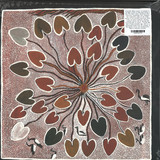
Efficient Space is honoured to share the little-heard recordings of three Yolngu songmen from Northeast Arnhem Land - Bobby Bunnungurr, Jimmy Djamunba and Peter Milaynga (d. 2007) - working in collaboration with Victorian musician Peter Mumme. Yolngu are the indigenous peoples of Arnhem Land in Northern Territory, Australia; their clans are the Marangu and Malabirr, the languages Djinang and Gannalbingu. Their songs are of instruction, story and ceremony.
A connection first initiated by Yolngu actor David Gulpilil, Waak Waak Djungi's mid-90s recordings were preceded by years of respectful sharing of culture. Mumme explains that 'the aim was to produce something that is new, not in the sense of a breakthrough, but what emerges from the combining of existing ideas'. What developed was sonically unique - sprawling vocal/electronic soundscapes and field recordings that reimagine the traditional songs of black crows and white cockatoos, sharing, creation spirits and of leaving and returning home to country. Spacious and patiently durational, the songs resound in a big land with a big story to tell.
On the 1997 Waak Waak Djungi album Crow Fire Music, these interpretations were assembled with traditional recordings and additional material from Sebastian Jörgensen and Sally Grice. Falling short of generating public interest, it became well known in the Yolngu homeland. Nearly two decades later, a CD copy filed away in the 3RRR FM library would prompt a three year investigation to meet the people behind the music.
Waak Waak ga Min Min (Black Crow, White Cockatoo) combines the previously unreleased Gandi Bawong with five contemporary versions from the original album, with a new cover painting by Bobby Bunnungurr. Tracing 1997 back to many millennia ago, this is a captivating window into the richness of Aboriginal culture and collaboration.
Calvin Love is a Canadian singer-songwriter, composer, and producer from Edmonton, Alberta, now based between Edmonton and Los Angeles. With a sound that blends noir-tinged folk‑pop, crooning rock ’n’ roll, and cinematic storytelling, Love has become a distinctive voice in the international indie landscape. His music has drawn comparisons to Roy Orbison, Leonard Cohen, and Bryan Ferry, with Aquarium Drunkard describing his work as “a crestfallen soundtrack of near‑escape… like Chris Isaak trapped in a David Lynch film.”
Since his debut New Radar (2012), Love has released a run of acclaimed records including Super Future (Arts & Crafts, 2015), Highway Dancer (2018), Night Songs (2020), and Lavender (2021). Along the way, he has collaborated with renowned producers and artists such as Gus Seyffert (Beck, Roger Waters, Black Keys) and the late Richard Swift (The Shins, Damien Jurado), while earning coverage from outlets including SPIN, The Fader, Interview Magazine, and Stereogum.
A seasoned live performer, Love has toured extensively across North America, Europe, and Asia, appearing at festivals such as SXSW, Pop Montréal, Strawberry Festival (China), Endless Daze (South Africa), and Sled Island. He has shared stages with Morrissey, Mac DeMarco, Courtney Barnett, Jonathan Wilson, The Divine Fits, and Jim James, performing in iconic venues like Carnegie Hall, The Troubadour, and Hollywood Forever Cemetery.
In early February 2026, Love releases his seventh studio album, Throw My Shadow To The Sun — a bold, visceral statement that captures him at a new creative peak. Self‑produced and recorded by Reverend Baron at The Ladder Factory in East Los Angeles, the album channels raw, unfiltered energy into a late‑night rock ’n’ roll atmosphere built on moody grooves, gritty textures, and Love’s unmistakable croon.
The sessions brought together a formidable live band: Josh Da Costa (Drugdealer) on drums, Brent Randall (Vanity Mirror) on bass, Davey Chegwidden (De La Soul, Ghostface Killah, Raekwon, Too Short) on percussion, Jeremy Brian Gill (Curtis Harding) on tenor saxophone and flutes, Daniel E. Garcia (Reverend Baron) on lead guitars, and multi‑instrumentalist Laena Myers (White Fence, Orville Peck, El Mariachi Bronx) on violin.
From the hypnotic sway of “Underneath It All,” to the reverb‑drenched sax of “Forever Feels,” to the heavy sludge‑rock crush of “Setting Sun,” Throw My Shadow To The Sun draws from the lyrical storytelling of Dire Straits, the laid‑back blues of JJ Cale, and the timeless melodic drama of Roy Orbison. The result is a cohesive, lived‑in record that transforms fleeting moments and late‑night impressions into something enduring and cinematic.
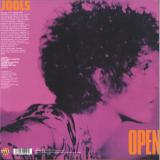
Released in 1967, Open marked a bold debut for Brian Auger & The Trinity, featuring the dynamic vocals of Julie Driscoll. Music and its makers were rapidly evolving in ‘67, the UK's Jazz and R&B scenes were being influenced by pop and psychedelia and socially, musicians of many styles found common ground in London’s clubs like The Cromwellian and The Scotch Of St James where the The Beatles, US legends Wilson Pickett and Jimi Hendrix mingled with the capitals jazzers and pop stars, often loudly jamming together in even louder 'Lord Byron' shirts. 'Open' fully embraced this spirit by fusing together those genres and attitudes of the era. From the outset Auger displays his jazz rooted approach on the A side with 'In and Out' and 'Isola Natale' (later covered by one of his American jazz heroes Richard ‘Groove’ Holmes). Both showcase the Trinity's musicianship and Brian's improvisational flair. Auger himself takes on vocal duties on the raucous ‘Black Cat’, a track that became a club hit. Open is marked by its eclecticism; 'Lament for Miss Baker' is a tender, piano ballad influenced by Duke Ellington, reflecting Auger’s jazz and classical influences whilst 'Goodbye Jungle Telegraph' is a wild and crazy percussive freak out. Brian displayed not only his virtuosity but also his surrealist sense of humour with bizarre sound effects, inspired by Spike Milligan's The Goons' radio show interspersed between the tracks.
Julie Driscoll’s arrival on the album’s B side brings a sharp shift in tone. Her smoky, emotive vocals inject a soulful depth, notably on covers of Otis Redding & Carla Thomas hit 'Tramp', Aretha's 'Save Me' and The Staples Singers ‘Why Am I Treated So Bad". With original numbers 'Break It Up' and 'A Kind Of Love In' we hear the Auger / Driscoll pop infused R&B at its very best, whilst the version of Donovan’s 'Season of the Witch' stretches out into a slow-burning epic. In 2025, Open is viewed as a cult classic and testament to a unique period when genre boundaries were fluid and artistic risk-taking was the norm. Brian Auger & The Trinity’s debut captures the adventurous energy of the late 1960s. 58 years later, its importance in the development of British jazz fusion and progressive bands that followed is undeniable, with The Charlatans Tim Burgess recently commenting on Auger's Instagram that The Trinity were a 'huge influence'.
- 1: Skull Chamber
- 2: The Venus And The Sorcerer
- 3: Panel Of The Lions
- 4: Hillaire Chamber
- 5: Candle Gallery
- 6: Chamber Of The Bear Hollows (North)
- 7: Chamber Of The Bear Hollows (South) & Brunel Chamber
- 8: Entrance Chamber
Demetrio Castellucci and Massimo Pupillo present the music of Sleep Technique, a performance by Dewey Dell inspired by the Chauvet cave and its ancient cave paintings.
The music comes to life anew on record, an immersion into the depths of sonic particles, moist electroacoustic rhythms, the repeated forms of speleothems, and the electric bass that scrapes the walls, shaping them into concave or convex surfaces. A voice that moves incredibly slowly, yet is in constant motion, like the millennia-old, unceasing erosion of water.
The album’s journey follows the geography of the cave in reverse, moving from its deepest chamber back to the entrance.
Demetrio Castellucci is a composer and sound designer who has been involved in theater productions, choreography, and film since 2004. Around the same time, he began performing as a DJ, favoring an omnitemporal approach geared toward dance that transcends musical genres. Since 2006, he has been a member of the dance company Dewey Dell, and since 2007, he has been active as Black Fanfare, a maximalist electroacoustic project. He has collaborated on performances by Andreco and Enrico Ticconi/Ginevra Panzetti, as well as on films by Ahmed Ben Nessib, Beatrice Pucci, and Ilaria di Carlo. After living in London and Berlin, he settled in Vilnius, where in 2018 he founded Unarcheology, a digital platform that publishes music and radio programs. He is also active as Airport Gad, an ambient project which, together with Unarcheology, launched its own “Airline Company”: concerts in a flight simulator built from cardboard, where the pilots are also the musicians.
Massimo Pupillo is best known as a founding member of the band Zu, with whom he has released 18 albums and performed over 2,000 live shows worldwide. He has maintained a highly open and multidisciplinary approach that has led him to work with some of the most acclaimed figures in the contemporary art world: South African photographer Roger Ballen, actors Malcolm McDowell and Marton Csokas, Romeo Castellucci and Chiara Guidi of Societas Raffaello Sanzio, American choreographer Meg Stuart, poet Anne Waldman, and Italian poet Gabriele Tinti, among others. He has collaborated live and in the studio with avant-garde musicians and composers such as Alvin Curran, piano duo Katia & Marielle Labèque, and classical virtuosos like Viktoria Mullova and Giovanni Sollima. He has also worked with some of the most influential names in the international rock scene, including Mike Patton, Thurston Moore, Jim O’Rourke (Sonic Youth), Guy Picciotto & Joe Lally (Fugazi), Buzz Osborne (Melvins), and Damo Suzuki (CAN).
In the field of improvised music, he has collaborated with Peter Brötzmann, Toshinori Kondo, Mats Gustafsson, Ken Vandermark, and Tony Buck, among others. Within the experimental music scene, his collaborations include Oren Ambarchi, David Tibet (Current 93), Thighpaulsandra (Coil), Stephen O’Malley (Sunn O))), Abul Mogard, Mick Harris (Scorn), Gordon Sharp (This Mortal Coil), FM Einheit (Einstürzende Neubauten), and many more. In cinema, he composed the score for Kirill Serebrennikov’s film LIMONOV, presented at Festival de Cannes in 2024.
- 1: The Yellow Tinker (Slow Reel) 03:03
- 2: Liostáil Mé Le Sáirsint (Song) 03:11
- 3: The Donegal Selection: An Bóthar Mór/Tommy Peoples’ Reel/Is Cuma Liom (Reels) 0:24
- 4: Faoiseamh A Gheobhadsa (Song) 05:18
- 5: Port Árainn Mhór/Port Kitty Rua Mooney (Jigs) 03:30
- 6: The House Of Baoithín Selection: Miss Stewart’s/Bonnie Annie/Hand Me Down The Tea Things/House Of Baoithín (Reels) 03:54
- 7: The Barley And The Rye (Song) 03:18
- 8: An Gasúr Dána/An Ghirseach Dholba/Ríl Na Mbreac Beadaí (Reels) 04:0
- 9: Gabhaim Molta Bríde (Song) 04:2
- 10: The Letterkenny Blacksmith/John Doherty’s Favourite/Scread Na Bealtaine (Reels) 04:16
Altan is arguably the most iconic band working in traditional Irish music today. For the past 35 years, they have brought the music of their native County Donegal to the world stage. The band's newest album, aptly titled Donegal , pays homage to County Donegal's rich musical heritage, breathtaking landscapes, and vibrant culture. The music's authenticity and allure transport listeners to a bygone era in rural Ireland while forging a connection between the past and the present.
Featuring co- founder, lead vocalist, and fiddler Mairead Ni Mhaonaigh ; newest member Clare Friel on vocals and fiddle; accordionist Martin Tourish; guitarists Daithi Sproule and Mark Kelly; and Ciaran Curran on bouzouki and mandolin. With Jim Higgins (percussion), Steve Cooney (bass), and Graham Henderson (keyboards). Recorded by Manus Lunny at Seafront Studio in County Donegal, Ireland.
- A1: Tomorrow
- A2: T.m.t. <3 T.b.m.g
- A3: Matter Of Opinion
- A4: Victims
- A5: For A Friend
- B1: Never Can Say Goodbye
- B2: Lovers And Friends
- B3: Hold On Tight
- B4: If I Could Tell You
- B5: C Minor
- C1: I Just Want To Let You Know
- C2: Scat
- C3: 77 The Great Escape
- C4: I Do It All For You
- C5: Zing Went The Strings Of My Heart
- C6: When The Boy In Your Heart Is The Boy In You Arms
- C7: Piece Of Saxophone
- D1: Tomorrow (Stephen Lipson Extended Version)
- D2: There’s More To Love (Jalapeno Mix)
- D3: Never Can Say Goodbye (San Paulo Mix)
Black Vinyl LP[24,16 €]
Red Vinyl
The Communards’ sophomore album ‘Red’ consolidated the genius of the musical partnership between Bronski Beat singer Jimmy Somerville and pianist Richard Coles. Fusing synths and hi-NRG production with lush string and horn arrangements, The Communards straddled pop and the political, the album’s themes set against the political unrest and moral panic of late 80s Britain. A global smash upon its release, this remastered and expanded 35Th Anniversary Edition features an extensive array of B-sides, live tracks, demo versions and remixes, including classic mixes by legendary 80s club doyens Shep Pettibone, Clivilles & Cole (better known as C&C Music Factory) and a euphoric new 2022 remix of ‘Never Can Say Goodbye’ by UK outfit The 2 Bears (Hot Chip’s Joe Goddard and DJ Raf Rundell). Available on Deluxe Double CD , Collector White & Red Double Vinyl , Black Vinyl. All editions remastered , with new sleeve notes.
- That Girl
- Sister
- Lullaby And Goodnight
- Love's My Only Crime
- Let It Burn
- Everything I Want
- Dedications To The One I Love
- Seven Come Eleven
- Wild Heart
- Here We Go Again
- Public Animal #9
- Black Cloud
- Crawl
- Just Can't Win
- Each Dawn I Die
- I Want You Right Now
- Stain
- Hell's Kitchen
- Playground
Black & White Swirl Vinyl. Mit ihren Wurzeln fest in der Punkrock- und Hardcore-Szene des Cass Corridor in Detroit der frühen 80er Jahre verankert, erreichten John Brannon (Negative Approach) und Larissa Strickland (L-7) zuerst zusammen mit der eingespielten Rhythmusgruppe aus Kevin Strickland und Jim Kimball, und nachdem Kevin und Jim die Band verlassen hatten (um Mule zu gründen) mit Ron Sakowski (Necros) am Bass und Todd Swalla (Necros) am Schlagzeug, eine ganz neue Ebene. Inspiriert von The Birthday Party und den Stooges der Funhouse-Ära sowie frühen Blues- und Jazzkünstlern, waren die Laughing Hyenas ein heftiger, schwefeliger Noise-Knaller. Die düsteren und hypnotischen Bassriffs und der Tribal-Swing bildeten den perfekten Rahmen für Larissas (sie hatte erst ein paar Monate vor der Gründung der Band angefangen, Gitarre zu spielen) schneidendes, zerklüftetes, ja fast schon mörderisches Gitarrenspiel und John Brannons teuflisches Heulen. Wenn es eine Band gibt, die eine LP mit Live-Material verdient hat, dann sind es die Laughing Hyenas. Wie Aaron Dilloway es so schön gesagt hat: "Die Laughing Hyenas waren die gruseligste Band, die ich je gesehen habe." Dieses Set wurde von John Brannon sorgfältig aus seinem persönlichen Archiv an Kassetten zusammengestellt. Die Aufnahmen wurden von Bobby Emmett übertragen, gemischt und gemastert, bekannt für seine Arbeit mit The Sights, Sturgill Simpson und zuletzt Jack White.
- Sorry Again
- There's Only One Thing Left To Say
- Tripping Wires
- I Can't Stop Smiling
- The All-Consumer
- Drug Girls
- Rubble
- Labrador
- Hey You, Get Off My Moon
- Medio Core
- What You Left Behind
- Wake Up, I'm Leaving
- Marzipan
- Labrador (Drum Machine Version)
- Diamond Jubilee
- What You Left Behind (Reprise)
- Your Silent Face
- You're So Good To Me
- Seven Seas
- Breaking Lines
2LP-Erstauflage auf farbigem Loser-Vinyl: "BIO PETROL" Disk 1 und "MAGENTA" Disk 2. "¡Simpatico! (Remastered and Expanded)" bringt das lange vergriffene zweite Album von Velocity Girl aus dem Jahr 1994, "¡Simpatico!", mit einem superfrischen Mastering und einer Menge Bonus-Tracks aus der "¡Simpatico!"-Zeit endlich wieder raus. Das Originalalbum klingt besser als je zuvor und wird durch ein komplettes Album mit B-Seiten und Raritäten ergänzt. Velocity Girl wurde um 1989 an der University of Maryland außerhalb von Washington DC gegründet, mit dem Gitarristen Archie Moore (Black Tambourine), dem Gitarristen Brian Nelson (Black Tambourine), dem Schlagzeuger Jim Spellman (Starry Eyes, Foxhall Stacks, High Back Chairs, Julie Ocean, Piper Club), dem Bassisten Kelly Riles (Starry Eyes) und der Sängerin Sarah Shannon (Starry Eyes, The Not Its). Die Band kombinierte englisch inspirierten, lauten Shoegaze-Fuzz mit rauem US-Indie-Rock und klassischem Pop-Songwriting im Stil der 60er Jahre. Eine Killer-Single auf Slumberland und ununterbrochene Tourneen erregten die Aufmerksamkeit der Indie-Rock-Kenner, und bald darauf unterschrieb Velocity Girl einen Vertrag mit Sub Pop auf einer Motorhaube in Hoboken, New Jersey. Nach der Tournee zur Unterstützung ihres Debüts ,Copacetic" verbrachte die Band den größten Teil des Jahres damit, eine Reihe von Songs für ein zweites Album zu schreiben. So hatten sie noch nie gearbeitet - es war eine neue Erfahrung, Zeit und Budget (vom Label!) darauf zu verwenden, ein Album zu produzieren, das kein selbst produziertes Punkrock-Studioalbum war. Nachdem sie ihr neues Material monatelang im lauten Stil von ,Copacetic" gespielt hatten, waren die Bandmitglieder von den Songs begeistert, wollten sich aber von der rauen, amateurhaften Atmosphäre ihrer früheren Alben lösen. Und ihre Einflüsse waren diesmal etwas anders: weniger My Bloody Valentine und Wedding Present, mehr New Order. Jemand bei Sub Pop brachte die Band mit John Porter zusammen, dem ehemaligen Mitglied von Roxy Music, der The Smiths, Billy Bragg, The Alarm und eine Reihe anderer Acts der 80er Jahre produziert hatte. Sie trafen sich während einer Tournee in Los Angeles. Er erklärte sich bereit, das Album in einer dreiwöchigen Session in den Cue Studios in Falls Church, Virginia, zu produzieren. Er war genau das, was die Band brauchte: ein Redakteur, Arrangeur und Zuchtmeister. Als er gnadenlos jeden unnötig wiederholten Takt herausschnitt, merkte die Band, dass sie sich zu einem klareren Sound hingezogen fühlte und fast komplett auf die laute Gitarre verzichtete, zweifellos beeinflusst durch Porters Präsenz. Velocity Girl waren super zufrieden mit dem Ergebnis, und ,¡Simpatico!" kam im Juni 1994 raus. Diese erweiterte Neuauflage enthält eine Reihe von Songs, die einige Monate nach den Albumaufnahmen in den Inner Ear Studios in Arlington, Virginia, aufgenommen wurden. Die Sessions lieferten spielerisch-experimentelle B-Seiten für die Singles des Albums, zwei Cover-Songs (das New-Order-Cover ,Your Silent Face" und ein Beach-Boys-Cover) für eine Single auf Merge Records und einen Compilation-Track.
- A1: Robert Pico - Le Chien Fidèle
- A2: Annie Girardot - La Femme Faux Cils
- A3: Spauv Georges - Je Suis L'état
- A4: Zoé - Zoé
- A5: Jacques Da Sylva - Fou
- A6: Valentin - Je Suis Un Vagabond
- A7: Jacques Malia - Histoire De Gitan
- A8: Bernard Jamet - Raison Legale
- B1: Jean-Pierre Lebort - Barbara Au Chapeau Rose
- B2: Les Concentrés - Fils De Dégénérés
- B3: Les Missiles - Publicité
- B4: Hegessipe - Le Credi D'hegessipe
- B5: Marechalement Votre - Ethero Disco
- B6: Mamlouk - Decollez Les
- B7: Mozaique - L'amour Nu
- B8: Jean-Marc Garrigues - Je Dis Non
- B9: Penuel - Astronef 328
The journey through French-speaking pop archives continues with this fifth volume, packed with fuzz, gimmicks, and dissent. Far from the charts, the selected tracks display a great creative freedom, often backed by corrosive humor. Welcome to the surprising, kaleidoscopic, and colorful world of the late sixties and early seventies, Wizzz!
Born in Montauban, Robert Pico stumbled into music by chance when he met René Vaneste, then artistic director at Pathé-Marconi. René brought him to Paris to record his first 45 RPM EP in 1964. A year later, Pierre Perret introduced him to Vogue, where he recorded his second album with Claude Nougaro’s orchestra. Sylvie Vartan then introduced him to RCA, where he recorded four singles, including the astonishing "Chien Fidèle," a track backed by a hair-rising fuzz guitar. Alongside his solo career, he also composed for other artists like Alain Delon (the song was recorded but remains unreleased), Magali Noël, Bourvil, and Georges Guétary. In the Paris of the sixties, he mingled with Mireille Darc, Elsa Martinelli, Marie Laforêt, France Gall, Françoise Hardy, Petula Clark, Régine, Dani, Serge Gainsbourg, Joe Dassin, Franck Fernandel, Charles Level, and Roland Vincent. Despite his efforts and winning a Grand Prix Sacem for his final record, Robert Pico didn’t achieve the expected success in show business and decided to leave Paris and return to the Southwest, where he devoted himself to writing. He is the author of 23 books (including Delon et Compagnie, Jean-Marc Savary Editions 2025, a memoir about his youth and his many encounters). Today, he is relieved to never have become a celebrity and devotes himself to his work with passion.
In 1969, the Franco-Italian movie Erotissimo was released, directed by Gérard Pirès (who later directed Taxi in 1998, written and produced by Luc Besson). This pop comedy features Annie Girardot, Jean Yanne, Francis Blanche, Serge Gainsbourg, Nicole Croisille, Jacques Martin, and Patrick Topaloff. The soundtrack was written by Michel Polnareff and William Sheller, with lyrics by Jean-Lou Dabadie. "La Femme Faux-cils," performed by Annie Girardot. It recounts the feelings of a rich CEO's wife who seeks to develop her sex appeal under the influence of advertisement and magazines. Groovy, sparkling and light, this track, with ITS lush arrangements humorously critiques consumer society and feminine beauty standards.
“Je suis l’Etat” (1967) is the flagship track of the first EP by singer-songwriter Spauv Georges, aka Georges Larriaga, better known as Jim Larriaga (1941-2022). Born into a family of bakers, the young man was initially planning to become a hairdresser when he discovered English-speaking music through Elvis Presley and the Beatles. After this revelation, he decided he would become a songwriter and gave himself five years to succeed. He recorded his first two EP’s independently for RCA under the pseudonym Spauv Georges; meaning “that poor George”, a nickname given to him by the mother of her friend Jean-Pierre Prévotat (future drummer of the Players, Triangle, or Johnny Hallyday). Portraying a depressed and eccentric young man, Spauv Georges created corrosive and amusing songs that didn’t reach a wide audience, despite a TV appearance with Jean-Christophe Averty.
Supported by his loyal friend and fellow songwriter Jean-Max Rivière, Georges Larriaga met the future singer Carlos in the early '70s, then Sylvie Vartan’s assistant. He wrote songs for Carlos, including the popular "La vie est belle," "Y’a des indiens partout," and "La cantine", which went onto become a huge hit in 1972. He also composed for Claude François (“Anne-Marie”, 1971), Charlotte Julian (“Fleur de province”, 1972), helped launch child singer Roméo (who sold 4 million records), and later wrote the hit "Pas besoin d’éducation sexuelle" (1975) for the young Julie Bataille. In 1971, Jim recorded an album for Disc'Az: “L’univers étrange et fou de Jim Larriaga”, which featured pop gems like “La maison de mon père”.
The story of the song "Zoé" began when Pierre Dorsay, artistic director at Vogue Records, asked Swiss singer and musician Pierre Alain to write a song for a new female singer. The inspiration came when he realized that Zoé (the artist's name) was also the name of France's first atomic battery, created in 1948, which consisted of uranium oxide immersed in heavy water! The lyrics reflect a bubbling energy that must be handled with caution, while the instrumentation echoes this atomic theme, notably with the use of a theremin.
Zoé’s career lasted only as long as a single 45 RPM, but it seems Christine Fontane was the vocalist behind this pseudonym, who is known for several EPs, a good "popcorn" album in 1964, and a handful of children’s singles in the '70s. Regardless, the photograph on the cover is of a different girl entirely.
Later, Pierre Alain continued his career, writing songs for himself, Marie Laforêt, Danièle Licari, Alice Dona, Arlette Zola (3rd place in Eurovision 1982), and achieving multiple gold and platinum records in Canada. Also an inventor with several patents, president of the Romande Academy, and head of the French Alliance in Geneva, he now composes atonal music, books, and poetry. Moreover, he is also the host of "Les Mardis de Pierre Alain" at "Le P'tit Music'Hohl" in Geneva.
Filled with oriental choruses and fuzz guitar, "Fou" is from Jacques Da Sylva's only EP released by Vogue in 1967. Despite the quality of this recording, all traces of this singer disappear after this first effort.
Valentin is a baroque pop singer born in Belgium. He is the songwriter and composer of most of the tracks on his three singles released in the late 60s in Canada. A legend says that he reincarnated himself as Jacky Valentin during the 1970s for a rock'n'roll revival career in Belgium, but his older brother sadly debunked this story. Valentin's first two singles were arranged by Claude Rogen, a Parisian session pianist who had come to Canada to promote the song “Mister A Gogo”, a cover of David Bowie’s “Laughing Gnome”, adapted by singer Delphine, his wife at the time. Far from his usual network, Claude Rogen arranged music for Polydor, including the arrangements for “Je suis un vagabond” in 1969, a jerk tune with string arrangements and a furious optimism.
Jacques Malia wrote, composed, and recorded his only 45 EP for Festival in 1966. “Histoire de gitan” is an incredible beat track with bohemian scat that tells the story of a gypsy musician who came to Paris to make it in the Music-Hall, to no avail. The hero of the song and its author probably shared a similar fate, as Jacques Malia faded into anonymity after this remarkable attempt.
Bernard Jamet recorded two EPs for Barclay in the late sixties and co-wrote several songs with Christine Pilzer, Pascal Danel, and prolific songwriters Michel Delancray and Mya Simile. The track “Raison Légale” (1968), his masterpiece, immerses the listener in a courtroom right when a murderer is being judged, with jerk rhythm and free arrangements. A unique, paranoid, judicial, and psychedelic oddity.
Jean-Pierre Lebrot-Millers started his career in show business in 1967 as a singer and songwriter for the Philips label. After three singles, he wrote several songs of a new kind with his friend Pierre Halioche, in the midst of the sexual liberation movement and the democratization of drugs. With provocative lyrics, “Les filles du hasard” and “Barbara au Chapeau Rose” were released on a Philips singles in 1968. The character of Barbara was inspired by a queen of Parisian nightlife during the psychedelic years: model Charlotte Martin, who dated Eric Clapton from 1965 to 1968, then Jimmy Page from 1970 to 1983. Jean-Claude Petit’s arrangements, with a table-filled intro, soul brass, and Hendrixian guitar, emphasize the flamboyance of a hedonistic and sexy character, whose dog is named Junkie because “Junkie est un nom exquis”! The track was recorded live in three takes with a full orchestra.
Upon its release, the record was censored by Europe 1 and RTL due to its references to drug use. Jean-Pierre Lebrot was then banned from the airwaves and later dismissed by his record label. He changed his artist name to Jean-Pierre Millers, while his companion Pierre Halioche became D. Dolby for a new dreamy composition, “Chilla”, which Jean-Pierre produced himself with arrangements by Jean Musy. Once again, the song was immediately censored everywhere. After this setback, he decided to stop singing and started taking on odd jobs to support his Swedish wife and their son until the day he met Jean-Pierre Martin, then production manager at Decca, who had worked with Manu Dibango. Martin offered Jean-Pierre Lebrot-Millers, then employed at Rank Xerox, the position of artistic director at Decca. He accepted and became, a year later, promotion director (radio, press, TV). He worked on Julio Iglesias’s first album for Decca, which became a massive hit and allowed him to meet Claude Carrère. The latter asked him to write new songs and find their performers, much like a “talent scout.” It’s through him that Jean-Pierre discovered Julie Pietri and Corinne Hermès. He composed “Ma Pompadour” for Ringo, Sheila’s husband, and took the microphone again for the syncope hit “Rendez-Vous” in 1982.
That same year, Jean-Pierre Lebrot-Millers tried to release a track for which he had heavily gone into debt: “Si la vie est un cadeau”. Having recorded it in London, he presented it to numerous professionals, all of whom refused to get involved. The same thing happened with Antenne 2 and the Sacem when he proposed the song as France’s entry for Eurovision. He then met Haïm Saban, who was producing cartoon soundtracks and had just launched the Goldorak theme song. Saban, having listened to the song, declared it had the potential to become a hit. He sent Jean-Pierre and Corinne Hermès to meet the CEO of the Luxembourg radio and television network. The latter received them, asked to hear a verse and chorus a cappella in his office, and immediately hired them to represent Luxembourg at Eurovision 1983. They reworked the arrangements and recorded a new version with Haïm Saban as co-producer. The song ended up winning Eurovision 1983, a great comeback for our hero. He continued producing and hung out with the band Nacash in Belgium when a couple came to introduce their daughter for an impromptu audition in a hotel room. The girl sang “Les démons de minuit” while dancing to a radio cassette. Impressed, he had her take singing lessons for a year and composed a song for her (for which he had the melody and title, but no lyrics). This required him to go on the hunt for a lyricist, who ended up being Guy Carlier. They recorded the song, which was initially a ballad, at Bernard Estardy’s CBE studio, and gave the singer a new name: Melody. They showed the song around their industry network without success. Later, Estardy called Jean-Pierre to suggest changing the rhythm and making it pop-rock. Orlando, Dalida’s brother, liked the result and decided to co-produce the track. “Y’a pas que les grands qui rêvent » became a classic hit. The song has since been covered by Juliette Armanet (as a ballad, like the original) and Valentina.
Born into an aristocratic Breton family, Hervé Mettais-Cartier worked as a DJ at Queen Kiss, a nightclub in Poitiers, where he formed the band Les Concentrés with Michel (an actor) and Christian (a radio technician). Together, they created a repertoire of whimsical songs (“Ma bique est morte”, “J’suis un salaud”, “Fils de dégénéré”...) that they performed on stage dressed in white (in homage to “concentrated milk”). They performed at Bliboquet and Olympia in 1968 for the 10th edition of the “Relais de la chanson Française” organized by L’Humanité-Dimanche and Nous les Garçons et les Filles, sponsored by Pepsi Cola. Winners in the author-composer category, alongside Danish singer Dorte, their visibility allowed them to record a 45, and appear on television in Jean-Christophe Averty’s show. The A-side of the disc features Bruno le ravageur, a casatchok dedicated to Bruno Caquatrix, the director of Olympia, nicknamed in the song “Coq Atroce” or “croque-actrices”. The B-side is dedicated to “Fils de dégénéré”, a quirky tribute to Hervé's aristocratic roots, mixing absurdity with sophisticated vocal harmonies.
After Les Concentrés, Hervé Mettais-Cartier formed the duo La Paire et sa Bêtise with his friend Olivier Robert. They performed in Parisian cabarets and toured with Pierre Vassiliu. In the late 1970s, Hervé began a solo career. He recorded two albums for the Motors label in 1978 and 1979, which did not achieve their anticipated success due to lack of promotion. In 1980, he met Bernadette, with whom he started a family and created a “Chansons à voir” (songs to see) show that he performed until his death at the end of 2024.
Publicité comes from the final EP by the Missiles (Ducretet Thomson, 1966), a disc that also includes “La (nouvelle) guerre de cent ans”, featured on Volume 4 of our Wizzz! series. Please refer to the booklet for the story of the band.
“He’s 1.82 meters tall, 28 years old, weighs 135 kg, is black and Belgian”: this is the description of singer Hegesippe on the back of his sole single (Decca, 1967). He appears on the album cover wearing a Greek toga, like a hippie gag – we are at the end of the year 1967. In “Le crédo d’Hegesippe”, this former bodyguard of Antoine and the Charlots plays the delightful card of the thick brute converted to Flower-Power and non-violence, with arrangements by Jean-Daniel Mercier, aka Paul Mille.
“Ethéro-disco” was released on a promotional record for clients of the Maréchal company (Liège, Belgium) for the New Year 1979. Over a funky rhythm, celebrity impersonations (Brigitte Bardot, Jacques Dutronc, Fernandel…) deliver an enigmatic text about pharmaceutical products like ether, bismuth, and aspartate. The track was composed by Dan Sarravah (responsible for Joanna's “Hold-up inusité” featured on Wizzz! Volume 3) and Tony Talado, who was also a singer (one 45 in 1967), songwriter (with over a dozen credits between 1964 and 1985 in various styles from surf music to disco), author (Devenez Végétarien, Dricot Editions, 1985), ad designer, and psychologist.
Décollez-les is on the A-side of Mamlouk's only single, a pseudonym for Marsel Hurten, who is known for his work on several EPs in the late sixties, as well as composing music for Hervé Vilard’s “Capri, c’est fini”, Claude Channes' “La Haine”, Annie Philippe’s “On m’a toujours dit”, and Nancy Holloway’s “Panne de Cœur”.
This strange song, with Afrobeat horns and absurd dialogues between a chef and his kitchen staff, is the result of a collaboration between Marsel Hurten and one of his neighbors, a photographer from Pavillon-sous-Bois (93), where the musician settled after returning from the Algerian War. A music video was shot to promote the record.
Marsel Hurten was born in Tourcoing (59) into a musical family. At a young age, he joined the brass band founded by his grandfather, playing the piston before studying trumpet at the conservatory, as well as teaching himself how to play the guitar. As an orchestra musician, he toured in France, Belgium, Germany, and England. He released a series of solo 45’s between 1965 and 1968 for the DMF and Az labels before stopping recording to focus on working for other artists (Gilles Olivier, Noëlle Cordier…).
“L’amour nu” (Vogue, 1971) is the work of the short-lived Belgian band Mozaïque. The track, written by singer Jacques Albin, closely resembles another of his compositions, “Carré Blanc”, which he recorded in 1969 for Disc’AZ.
Represented by the Lumi Son micro-label based in Marignane (Côte d'Azur), Jean-Marc Garrigues released two 45 RPMs in the late sixties, defending the French jerk sound. The song “Je dis Non” is a short, joyful ode to youth, pop music, and rebellion.
Songwriter and performer Jacques Penuel released three singles. The first one, “Astronef 328” (Fontana, 1969), features a dizzying series of chords punctuated by sound effects, a sci-fi story, and arrangements by Jean-Claude Vannier.
We would like to sincerely thank Pierre Alain, Moon Blaha, Marsel Hurten, Bastien Larriaga, Jean-Pierre Lebrot-Millers, Bernadette Mettais-Cartier, Robert Pico, Olivier Robert, Claude Rogen, Micky Segura.
- 1: A Hard Rain's A-Gonna Fall - The Staple Singers
- 2: Everything Is Broken - Bettye Lavette
- 3: Just Like Tom Thumb's Blues - Nina Simone
- 4: Gotta Serve Somebody - Natalie Cole
- 5: It Ain't Me Babe - Maxine Weldon
- 6: It's Alright Ma (I'm Only Bleeding) - Billy Preston
- 7: The Mighty Quinn - Solomon Burke
- 8: Rainy Day Women #12 & 35 - Merry Clayton
- 9: Shelter From The Storm - Cassandra Wilson
- 10: The Times They Are A-Changin' - The Brothers & Sisters Of Los Angele
- 11: Tomorrow Is A Long Time - Harry Belafonte
- 12: Baby I'm In The Mood For You - Odetta
- 13: Don't Fall Apart On Me Tonight - Aaron Neville
- 14: If Not For You - Sarah Vaughan
- 15: George Jackson - Jp Robinson
- 16: When He Returns - Jimmy Scott
- 17: I Threw It All Away - The Bo-Keys
- 18: Down Along The Cove - Johnny Jenkins
- 19: Every Grain Of Sand - Lizz Wright
- 20: Blowin' In The Wind - The Caravans
Ace’s small but ever-evolving “Black America Sings…” series has been quiet of late, but it springs back into action this month with the 2-LP and CD releases of “Highway Of Diamonds” – a second dip onto the catalogue of Bob Dylan, as reimagined by some of the foremost African-American artists of the 20th century.
From almost the start of his songwriting career, Dylan’s words and music have impacted on black American music, with ‘Blowin’ In The Wind’, speaking to an America that was still mostly segregated and becoming an anthem for all colours and creeds. As Dylan’s own career progressed, so did the number of covers he received, with a significant amount coming from what might be termed ‘non-traditional’ sources such as those heard here.
The 20 songs on “Highway Of Diamonds” continue the story that was told in part on the earlier “How Many Roads” compilation, with an almost entirely different selection of artists lending their voices to some of the best songwriting of the 20th century, and an almost entirely different selection of songs (with the exception of ‘Blowin’ In The Wind’ itself, which provides a common thread linking the story told across the two sets).
Big names from the worlds of soul, gospel and jazz, timeless songs and, for many, new ways of appreciating ever-durable material make “Highway Of Diamonds” as essential a purchase as its predecessor.
As ever, the great audio is complemented by a handsomely illustrated package on both CD and double vinyl, with a plethora of illustrations and in depth song-by-song-and-track-by-track annotation by Ace legend Tony Rounce.
Delve into the quirky and psych-tinged world of Brazilian pianist, composer and multi-instrumentalist Mauricio Fleury.
With more than a hint to Brazilian jazz greats like Azymuth, Deodato and CTI Records in their prime, Revoada is a groove based jazz-framed record, primed with other transitory musical vignettes which touches on Turkish psych and soul-jazz born out of the 70's film soundtrack genre.
Revoada is a 6 track album and storyboard of Mauricio's migration and travels through Brazil's geographical oddities , its rural and urban enclaves. Recorded in Brazil, it's the result of numerous treks through funky flea markets, soaking up old vinyls and vintage cultural artefacts combined with a new life led in Berlin since 2022.
Mauricio, as well as a founding member of Bixiga 70 (google Brazilian Afrobeat pioneers), a band he fronted for over 12 years, is also an in-demand collaborator and musician who as a pianist, guitarist and even percussionist has shared stages and studios with the likes of Brazilian greats including Gal Costa, Emicida, Lucas Santtana, João Donato and Liniker.
In 2007 he had a life-changing experience meeting Tony Allen, at the Red Bull Music Academy. After hanging out, chatting music and life, Tony insisted to Mauricio to participate with Tony in a jam with blacktronica and soulful house music pioneers Ron Trent, Theo Parrish and Steve Spacek. Mauricio sums it up, "From that moment on, I was never afraid to collaborate musically with anyone, no matter who's playing. It also brought me to researching the connection between Brazilian music and Afrobeat which is something that still means the world to me".
Another unforgettable session Mauricio undertook happened alongside João Donato and Marcos Valle, playing Donato's classic album Quem É Quem, live, a record seen as a blueprint for second generation bossa nova. Mauricio has worked with Gal Costa on two albums, Estratosférica Ao Vivo and her last studio album A Pele do Futuro. Fabio Sá and Vitor Cabral (bassist and drummer on Revoada) were playing with Gal at her last concerts, including in Berlin in 2022 before she passed.
In contemporary music, Mauricio was part of Toy Selectah and Mexican Institute of Sound's Compass project. He's worked with Colombia's Los Pirañas and has even recorded a mysterious and unreleased album with Quantic.
Revoada shows signature traces of Thelonious Monk, Ramsey Lewis' swinging soul sound, Deodato's drama, and styles from further afield, spreading into Turkish psych and Ethiopian jazz, when the time is right. Each track, led always by Mauricio playing multiple instruments with a choice selection of guests and core members on bass and drums, highlights Fleury's meticulous approach to finding the right timbre, utilising his arsenal of organs and effects pedals to set the mood, taking the listener to a specific place or memory that has shaped him.
A vinyl DJ for over 25 years and someone who is immersed in digger and collector's culture, Mauricio places a lot of emphasis on the importance of the complimentary relationship between two artforms (DJ and composer/producer) in the sense of having a broad repertoire of musical knowledge, references and perhaps predictably, being a Brazilian, understanding the connection between rhythms. This is an impressive debut album that struts itself right into the runout groove.
US Black Friday 2025 Release. There are very few albums in the psych/punk/hard rock/private presses strata that garner the sort of universal awe and accolades that Fraction’s almighty Moonblood LP does, and even fewer records in the world that could be dubbed ‘Christian Rock’ incur such fierce devotion. Indeed some records just meteorically lift themselves out any genre tag with brilliance and sheer defiance--and Moonblood is surely one of them. Based in LA, Fraction was a ragged collection of working-class musicians--the line-up was ringleader Jim Beach--vocals; Don Swanson--lead guitar, Curt Swanson--drums, Victor Hemme--bass, and Robert Meinel--rhythm guitar. Beach himself describes those early days: “The guys met through various acquaintances that we had in LA. All of us had been in bands before, but were seeking something with more teeth. We had a small studio in an industrial complex in North Hollywood and started practicing sometimes as early as 4:30 AM. We all had day jobs, so we did what we could.”
Amazingly the recording sessions for the album were recorded similarly on the fly, as Beach further states: “The Moonblood recording took place at Whitney’s Studio in Glendale, CA, early in 1971. On a strict budget, these songs were recorded in less than three hours—all of them “one takes.” We played, all 5 of us, simultaneously-- there were no studio effects, no overdubbing or any additional sound effects added. Basically what you hear is considered ‘old school’ recording.”
This workmanlike description in no way prepares one for the pure tortured genius the session wrought. Particularly noteworthy is Beach’s vocals—as commonly stated, the spirit of Jim Morrison is conjured in his deep baritone, which gives way to unparalleled pained howls, at times bathed in delay which trails into the abyss. Fascinatingly enough, Beach cites the much punker Love as his fave LA band over the Doors, and also gives influence-nods to proto-everything rockers The Yardbirds and to Dylan, whose dark word tapestries surely inspired Beach’s lyrics (though lines from The Doors’ “L’America” pop up on the LP) Whatever the case, the man clearly has a vision, as even the stark sleeve concept is Beach’s own. Equally as integral to the Fraction sound is lead guitarist Don Swanson—his blown-out fuzz riffs set a template for what is now commonly known as “stoner rock” or “acid punk,” and his solos consist of jagged, wah-wah-ed shards of notes, with his amplifier clearly pushed to the limit.
Beach says: “Don’s guitar was always my driving force and he did everything he could to keep it over the top. You’d never know that (his sound) was coming from an old, broken down Esquire. Don kept it alive!” The other members contributions shouldn’t be underappreciated though-- drummer Curt Swanson keeps things at a constant simmer, and then boils over when the whole band launches into snarling glory. The band and LP as a whole equals something indescribably intense from start to finish—comparisons to the Detroit late 60s high-energy bands like The Stooges and MC5 abound, as well as the sort of late 60s damaged spirit lurking in biker clubs and disgruntled Vietnam vets. The song cycle on side 1 of the LP in particular cuts to the emotional core, with severely charged dark lyrics like “Extend your thumbs and burn the darkness out of her.” Which brings us to the Christian aspect--it often can confuse listeners. The Fraction/Beach world of religion is complex and perhaps a bit pagan/sinister than most---fire and brimstone, temptation, and the truth-seeker being burned by this hell on earth—or perhaps as Beach himself best put it: “Speaking for myself, as a believer, it’s been a progressive experience since my childhood.
I think we’re all basically driven to live more than religion.” The album was pressed in a run of but a few hundred to little attention in the day, but now inferior bootlegs flood the marketplace, and originals of Moonblood command thousands of dollars. So enjoy this all-inclusive reissue, which also features for the first time on vinyl, 3 lost tracks-- like the more acoustic-minded “prisms” and “dawning light,” as well as the proto-metal choogle of “Intercessor’s Blues.”
- The Kkk Took My Baby Away
- Man-Trap
- Signals Of Love
- The Double Axe
- Modern Terms Of Abuse
- Ecoming Unbecoming Me
- Paint It, Black
- Walking On My Grave
- Jim Bowie
- Sex And Flies
- He's Gonna Kill That Girl
- Fire In The Mountains
- I Can't Find Pleasure
- The Money Will Roll Right In
Wenn Sie das ungute Gefühl hatten, dass 2025 irgendwie das Jahr von Thee Headcoatees werden würde, dann klatschen Sie sich selbst herzlich ab - denn überraschenderweise ist es tatsächlich so! Wir können indirekt den Tod unseres lieben verstorbenen Great Ribbon, Mr. Don Craine, dafür verantwortlich machen, dass Thee Headcoats 2022 ein Comeback feierten. Ursprünglich hatten sie geplant nur eine Tribute-EP als Thee Headcoats Sect aufzunehmen - zusammen mit Dons Downliner Sect-Kollegen Keith Grant Evans - aber dann stellten sie fest, dass sie noch ein paar Stunden Zeit im Studio hatten, und dachten sich, dass sie genauso gut auch ein neues Headcoats-Album aufnehmen könnten. Und warum auch nicht? Das Ergebnis war, ohne viel Aufhebens, das Album "Irregularis (The Great Hiatus)", das 2023 bei Damaged Goods erschien. Ende 2024, noch bevor man ein Deerstalker-Band entwirren konnte, waren die Jungs schon wieder am Werk, und eine weitere neue Headcoats-LP war ,im Kasten", deren Veröffentlichung ursprünglich für Anfang dieses Jahres geplant war. ABER dann kam irgendwo jemand auf die Idee: ,Warum sollten nur die Jungs den ganzen Spaß haben? Wie wäre es, wenn wir auch den Sisters of Suave, Thee Headcoatees, eine Chance geben?" Mit allen ihnen zur Verfügung stehender männlichen List und Tücke schalteten Thee Headcoats und Damaged Goods ihre Charmeoffensive ein. Mit purer Entschlossenheit und Hartnäckigkeit wurden Ludella Black, Kyra LaRubia, Bongo Debbie und Holly Golightly nacheinander aus ihren Verstecken gezerrt, wo sie sich lautstark wehrten (was sie am besten können), um die 14 Killer-Songs aufzunehmen, die auf ihrem neuesten Album mit dem raffinierten Titel ,Man-Trap" zu finden sind. Das war keine Kleinigkeit! Anfang 2025 wurde also eine Aufnahmesession in den renommierten Ranscombe Studios in Rochester gebucht, Gin und Snacks wurden vorbereitet, und im Handumdrehen waren die Backing Tracks im Kasten - Thee Headcoats wieder zurück als die beste Backing-Band und Thee Headcoatees zurück am Gesang. Billy Childish übernahm die Produktion. Unbeeindruckt von einigen geografischen Hindernissen auf dem Weg dorthin war Ende Mai das Ergebnis ein glänzendes neues Headcoatees-Album! UND WAS FÜR EIN ALBUM! Es ist mindestens genauso gut wie alle ihre Alben aus den Neunzigern und vielleicht sogar noch besser... (,Ja-a-a-a!", flüstert der Geist von Don Craine.) Diese Mischung aus großartigen Coverversionen und einigen fantastischen neuen Songs ergeben eine verdammt gute LP. Betreten Sie "Man-Trap" auf eigene Gefahr - Sie wissen, dass Sie es wollen! Und falls Sie sich fragen, wie die Mädchen ihre Zeit seit der Veröffentlichung von ,Here Comes Cessation" im Jahr 1999, also vor nur 26 Jahren (!), verbracht haben, lesen Sie weiter... LUDELLA BLACK hat drei Soloalben sowie Veröffentlichungen mit The Masonics vorzuweisen und gerade erst mit The 5,6,7,8's aufgenommen. Nebenbei sang sie auch mit The Shall-I-Say Quois, zusammen mit ihrer Freundin Kyra. KYRA LaRUBIA war Anfang der 2000er Jahre kurzzeitig bei The A-Lines neben Bongo Debbie & Nurse Julie (von Stuck-Ups / Buffets / CTMF) und arbeitete an einer Neuauflage ihres Albums ,Here I Am, I Always Am". Die Musik trat dann in den Hintergrund, während Kyra sich auf ihre Promotion in Sport- und Bewegungswissenschaften konzentrierte. Seit 2005 ist sie Dozentin an der University of Kent. BONGO DEBBIE hat weiterhin in einigen Bands getrommelt. Sie ist Mitglied von Ye Nuns (The Monks Tribute Band), The A-Lines, Dutronc und hat kürzlich unter anderem für die Sting-Rays ausgeholfen. HOLLY GOLIGHTLY hat seit 1999 neun Soloalben veröffentlicht, sechs davon mit Lawyer Dave in The Brokeoffs, sang ein Duett mit Jack White auf dem Album ,Elephant" von The White Stripes und tourte um die Welt.
- Again And Again
- Don't Let Them Tell You (It's Fair)
- Another World
- Cinema
- Back Of My Hand
- Hey You
- If You've Got The
- Time
- Smiling
- Burning Up
- Price Of A Man
SKY BLUE VINYL[23,49 €]
Nach der Neuauflage von The Belair Lip Bombs' (dem ersten australischen Signing des Labels) Debütalbum ,Lush Life" im Jahr 2023 durch Third Man Records - das breite Anerkennung fand, darunter eine ?-Bewertung im NME, eine 7,8-Bewertung von Laura Snapes in Pitchfork, einen Artikel in der Rubrik ,Ones To Watch" im Guardian und eine Auszeichnung als ,Best Rock or Punk Work" bei den Victoria Music Awards erhielt, bereitet sich die vierköpfige Band aus Melbourne auf die Veröffentlichung ihres mit Spannung erwarteten zweiten Albums ,Again" am 31. Oktober vor. Unter der Leitung von Maisie Everett (Gitarre, Keyboard, Gesang) und ergänzt durch ein talentiertes Trio von Musikern bestehend aus Mike Bradvica (Gitarre), Jimmy Droughton (Bass) und Daniel Devvlin (Schlagzeug) wurde das Album mit Produzent Joe White von Rolling Blackout Coastal Fever aufgenommen. (,Again" festigt die Position von Lip Bombs (als feste Größe in der aktuellen Indie-Szene). ,Hey You", die erste Singleauskopplung aus dem Album, fängt das großformatige Songwriting und das angeborene Gespür der Band für mitreißende Melodien ein.
PETER SOUND ORCHESTER THOMAS
EDGAR WALLACE (MUSIC FROM THE ORIGINAL MOVIES) (REVISED
- Die Seltsame Gräfin (Titelmusik)
- Das Rätsel Der Roten Orchidee (Titelmusik)
- Die Tür Mit Den Sieben Schlössern (Titelmusik)
- Requiem For Crooks
- Der Zinker (Titelmusik)
- Walking Dandy
- Das Indische Tuch (Titelmusik)
- Zimmer 13 (Titelmusik)
- Die Gruft Mit Dem Rätselschloß (Titelmusik)
- Der Hexer/Neues Vom Hexer (Titelmusik)
- Theme For Lucy (Titelmusik)
- Aha!
- Twisting Monk (Titelmusik)
- Der Bucklige Von Soho (Titelmusik)
- Das Geheimnis Der Weißen Nonne (Titelmusik)
- Der Hund Von Blackwood Castle (Titelmusik)
- The Space Of Today (Titelmusik)
- Sitar Cha-Cha
- Der Gorilla Von Soho (Titelmusik)
- Susan And Jim (Alternate Version)
- Sgt. Pepper's Final Fight
- Der Mann Mit Dem Glasauge (Titelmusik)
- Die Tote Aus Der Themse (Titelmusik)
Black Vinyl[26,26 €]
Leuchtend rotes Vinyl | Gatefold | 180g | limitiert auf 200 Stück weltweit Die musikalische DNA der Edgar-Wallace-Filme - jetzt als streng limitierte Vinyl-Edition. Peter Thomas" Soundtrack-Klassiker verbinden Soul-Jazz, Easy Listening und psychedelische Spannung zu einem einzigartigen Hörerlebnis. Die Edition enthält Titel aus 17 Wallace-Filmen, darunter "Der Zinker", "Der Hexer" und "Die seltsame Gräfin", ergänzt durch rare Bonusstücke. Verpackt im stilvollen Gatefold mit Illustrationen von Adrian Keindorf. Ein audiophiles Denkmal für den Sound der deutschen Krimi-Kultur.
- A1: Jimmy Reed Highway Feat Lou Ann Barton
- A2: Baby What You Want Me To Do
- A3: Bright Lights Big City Feat Kim Wilson
- A4: Big Boss Man Feat Kim Wilson
- A5: Good Lover Feat Lou Ann Barton
- A6: Caress Me Baby Feat Lou Ann Barton & James Cotton
- B1: Aw Shucks, Hush Your Mouth
- B2: You Upset My Mind Feat Lou Ann Barton & Kim Wilson
- B3: I'll Change My Style
- B4: Bad Boy
- B5: Baby, What's Wrong Feat Gary Clark Jr
- B6: Hush Hush Feat Delbert Mcclinton
- B7: You Made Me Laugh
It runs through the minds of men and women of a certain age, complexion, and place who grew up during the era of segregation and who defied their parents, the law, and all genteel propriety and custom by answering one bluesman's invitation to cross the color line and join him getting lowdown and dirty as he serenaded a generation from the bandstand, on jukeboxes, and through the radio.
To them, the slurred guttural sound of a wise man singing "Hush, Hush," putting down the "Big Boss Man" or advising the listener to "Take Out Some Insurance" before they behold the "Bright Lights, Big City" was a siren's call they had no choice but to answer. Even if they tried, they couldn't resist the steady, dirty rhythm punctuated by the twanging sting of an electric guitar note and the sweet wail of a harmonica. And when they leaned in close, they could even hear the barely perceptible sound of a woman's voice whispering forgotten lyrics into an ear.
Ain't nobody can do Jimmy Reed like Jimmy Reed could. But this drive down Jimmy Reed Highway with fellow Mississippian Kent "Omar" Dykes at the wheel with Jimmie Vaughan (older brother of the legendary Stevie Ray Vaughan) riding shotgun and folks like, Kim Wilson, Miss Lou Ann Barton, James Cotton, Delbert McClinton, and Gary Clark, Jr., joining the duo, comes mighty close. As Omar guns the engine and peels rubber on the two- lane blacktop lined with no- good women, empty whiskey bottles, too many cigarette butts and bad intentions, he leaves John Law trailing behind eating his dust. Hop in for a ride and turn up the volume. The electric bluesman who shaped the minds and moves of a musical generation is alive and well. (by Joe Nick Patoski)
Limited edition BROWN & BLACK SWIRL vinyl 1000 copies worldwide. Remastered by Bob Weston at Chicago Mastering Service. Originally released in 1989 vinyl reissue includes 2 bonus tracks. "...one of the best examples of melodic hardcore just a step away from emo. The album is excellently played and is full of breathtaking anthems that, from time to time, even wink at metal soundscapes." - Debaser - // Naked Raygun were an extraordinary staple in the Chicago music scene - beginning in the early 80's and continuing until their quiet demise in the early 90's. Their music showed the world that punk rockers could play and be really good at it. Founded in Chicago in 1980, by Marco Pezzati, Jeff Pezzati and Santiago Durango, Naked Raygun released six albums during their eleven year career that would change the sound of punk rock indefinitely. The band is widely recognized as being one of the most influential punk bands of the 80's. Their anthemic style incorporated politics in a uniquely accessible way, melding pop and hardcore into one cohesive sound, that would later be dubbed, "The Chicago Sound". Shortly after their first release, Basement Screams, Durango left to join Big Black permanently, and was replaced by John Haggerty, whose unique style of buzzsaw guitar would define Raygun's sound for their next four albums. Additionally, Pierre Kezdy replaced Camilo Gonzalez and Eric Spicer took over drums for Jim Colao. In 1990, Haggerty left the band to start Pegboy. Bill Stephens joined the band for their final studio release entitled, Raygun...Naked Raygun.
- Home Of The Brave
- Dog At Large
- Knock Me Down
- Mr. Gridlock
- The Strip
- I Remember
- Those Who Move
- The Envelope
- Backlash Jack
- Peacemaker
- New Dreams
- Slim - Bonus Track
- Rocks Of Sweden - Bonus Track
Limited edition PLUTONIUM vinyl 1000 copies worldwide. Remastered by Bob Weston at Chicago Mastering Service. Originally released in 1986 vinyl reissue includes 2 bonus tracks. "This is a bit different than previous records in that there's only a couple of songs with their distinctive bass licks and chunky melodies. So instead of bordering on redundancy, they prove their diversity by being more melodic, rockin', and even pop. This LP is more challenging than before and really great." - MaximumRockNRoll, April 1986 - // Naked Raygun were an extraordinary staple in the Chicago music scene - beginning in the early 80's and continuing until their quiet demise in the early 90's. Their music showed the world that punk rockers could play and be really good at it. Founded in Chicago in 1980, by Marco Pezzati, Jeff Pezzati and Santiago Durango, Naked Raygun released six albums during their eleven year career that would change the sound of punk rock indefinitely. The band is widely recognized as being one of the most influential punk bands of the 80's. Their anthemic style incorporated politics in a uniquely accessible way, melding pop and hardcore into one cohesive sound, that would later be dubbed, "The Chicago Sound". Shortly after their first release, Basement Screams, Durango left to join Big Black permanently, and was replaced by John Haggerty, whose unique style of buzzsaw guitar would define Raygun's sound for their next four albums. Additionally, Pierre Kezdy replaced Camilo Gonzalez and Eric Spicer took over drums for Jim Colao. In 1990, Haggerty left the band to start Pegboy. Bill Stephens joined the band for their final studio release entitled, Raygun...Naked Raygun.
Limited edition DARK TEAL vinyl 1000 copies worldwide. Remastered by Bob Weston at Chicago Mastering Service. Originally released as a 6-song ep in 1983 vinyl reissue includes 8 bonus tracks. "The long- awaited NAKED RAYGUN EP has finally been released, and musically it's a beauty. The songwriting is extremely imaginative, the vocals are unbelievably catchy, and the unique fuzzed-out guitar work sounds wonderful." - MaximumRockNRoll, October/November 1983 - // Naked Raygun were an extraordinary staple in the Chicago music scene - beginning in the early 80's and continuing until their quiet demise in the early 90's. Their music showed the world that punk rockers could play and be really good at it. Founded in Chicago in 1980, by Marco Pezzati, Jeff Pezzati and Santiago Durango, Naked Raygun released six albums during their eleven year career that would change the sound of punk rock indefinitely. The band is widely recognized as being one of the most influential punk bands of the 80's. Their anthemic style incorporated politics in a uniquely accessible way, melding pop and hardcore into one cohesive sound, that would later be dubbed, "The Chicago Sound". Shortly after their first release, Basement Screams, Durango left to join Big Black permanently, and was replaced by John Haggerty, whose unique style of buzzsaw guitar would define Raygun's sound for their next four albums. Additionally, Pierre Kezdy replaced Camilo Gonzalez and Eric Spicer took over drums for Jim Colao. In 1990, Haggerty left the band to start Pegboy. Bill Stephens joined the band for their final studio release entitled, Raygun...Naked Raygun.
- Soldiers Requiem
- When The Walls Come Down
- Walk In Cold
- Jettison
- Live Wire
- The Mule
- Coldbringer
- Blight
- Free Nation
- Hammer Head
- Ghetto Mechanic
- Suspect Device
- Vanilla Blue - Bonus Track
- The Strip (Live) - Bonus Track
- Roller Queen (Live) - Bonus Track
- Backlash Jack (Live) - Bonus Track
Limited edition GRAPE CRUSH vinyl 1000 copies worldwide. Remastered by Bob Weston at Chicago Mastering Service. Originally released in 1988 vinyl reissue includes 4 bonus tracks. "Plenty of bands can claim Naked Raygun as an influence, from post-punkers to hardcore acts. All of them could learn a thing or two or three by studying the whoas. With Jettison... Naked Raygun achieved creative bliss. Here is an album that successfully combines dissonant instrumentation with supremely catchy vocals." - Punknews.org - // Naked Raygun were an extraordinary staple in the Chicago music scene - beginning in the early 80's and continuing until their quiet demise in the early 90's. Their music showed the world that punk rockers could play and be really good at it. Founded in Chicago in 1980, by Marco Pezzati, Jeff Pezzati and Santiago Durango, Naked Raygun released six albums during their eleven year career that would change the sound of punk rock indefinitely. The band is widely recognized as being one of the most influential punk bands of the 80's. Their anthemic style incorporated politics in a uniquely accessible way, melding pop and hardcore into one cohesive sound, that would later be dubbed, "The Chicago Sound". Shortly after their first release, Basement Screams, Durango left to join Big Black permanently, and was replaced by John Haggerty, whose unique style of buzzsaw guitar would define Raygun's sound for their next four albums. Additionally, Pierre Kezdy replaced Camilo Gonzalez and Eric Spicer took over drums for Jim Colao. In 1990, Haggerty left the band to start Pegboy. Bill Stephens joined the band for their final studio release entitled, Raygun...Naked Raygun.
Limited edition ORANGE SWIRL vinyl 1000 copies worldwide. Remastered by Bob Weston at Chicago Mastering Service. Originally released in 1990 vinyl reissue includes 3 bonus tracks. "We drove up there and my cousin Tracy had turned punk rock. And she said, 'I'm going to this show tonight. Come with me.' And so I went to this club called The Cubby Bear - it's right across the street from the baseball stadium - and a band called Naked Raygun were playing, and they're this legendary Chicago punk rock band. But I'd never seen live music. So my introduction to rock and roll was in a club that held about 150 people that was half full and I was belly up against the stage watching this incredible live band, like, sweat and spit and bleed in front of me." - Dave Grohl interview, The Record, 2011- // Naked Raygun were an extraordinary staple in the Chicago music scene - beginning in the early 80's and continuing until their quiet demise in the early 90's. Their music showed the world that punk rockers could play and be really good at it. Founded in Chicago in 1980, by Marco Pezzati, Jeff Pezzati and Santiago Durango, Naked Raygun released six albums during their eleven year career that would change the sound of punk rock indefinitely. The band is widely recognized as being one of the most influential punk bands of the 80's. Their anthemic style incorporated politics in a uniquely accessible way, melding pop and hardcore into one cohesive sound, that would later be dubbed, "The Chicago Sound". Shortly after their first release, Basement Screams, Durango left to join Big Black permanently, and was replaced by John Haggerty, whose unique style of buzzsaw guitar would define Raygun's sound for their next four albums. Additionally, Pierre Kezdy replaced Camilo Gonzalez and Eric Spicer took over drums for Jim Colao. In 1990, Haggerty left the band to start Pegboy. Bill Stephens joined the band for their final studio release entitled, Raygun...Naked Raygun.
Limited edition GREEN SWIRL vinyl, 1000 copies worldwide. Remastered by Bob Weston at Chicago Mastering Service. Originally released in 1985 vinyl reissue includes bonus track. "This band consistently defies categories. More than hardcore. More than rock. More than experimental. And this LP blazes out with a fury that's sharp, clean, and loud as fuck. The sound on this release is more concise and focused than earlier stuff but doesn't sacrifice any of their drive. Possibly one of America's most important bands." - MaximumRockNRoll, March 1985 - // Naked Raygun were an extraordinary staple in the Chicago music scene - beginning in the early 80's and continuing until their quiet demise in the early 90's. Their music showed the world that punk rockers could play and be really good at it. Founded in Chicago in 1980, by Marco Pezzati, Jeff Pezzati and Santiago Durango, Naked Raygun released six albums during their eleven year career that would change the sound of punk rock indefinitely. The band is widely recognized as being one of the most influential punk bands of the 80's. Their anthemic style incorporated politics in a uniquely accessible way, melding pop and hardcore into one cohesive sound, that would later be dubbed, "The Chicago Sound". Shortly after their first release, Basement Screams, Durango left to join Big Black permanently, and was replaced by John Haggerty, whose unique style of buzzsaw guitar would define Raygun's sound for their next four albums. Additionally, Pierre Kezdy replaced Camilo Gonzalez and Eric Spicer took over drums for Jim Colao. In 1990, Haggerty left the band to start Pegboy. Bill Stephens joined the band for their final studio release entitled, Raygun...Naked Raygun.
- A1: Back To Black
- A2: Move Over
- A3: Come As You Are
- A4: Spanish Castle Magic
- A5: Sittin’ On The Doc Of The Bay
- A6: Love Is A Losing Game
- A7: Jimi (Instrumental Hendrix Medley)
- B1: Light My Fire
- B2: I’ve Been Loving You Too Long
- B3: Lithium
- B4: Crosstown Traffic / Freedom
- B5: Riders Of The Storm
- B6: Piece Of My Heart
After their first joint recording experience in 2022, in which they dedicated a monograph to the Beatles, revisiting their great classics,
Sarah Jane Morris, a British jazz, rock, and R&B singer and songwriter, and the Solis String Quartet, a Neapolitan string quartet with
extensive concert and recording experience, are embarking on a new album. This time, it's not a monograph, but a tribute to a series
of artists who have left an indelible mark on the universal music world with their art and unique lifestyle. The project is titled "The 27
Club," a reference to those artists who, despite not choosing to belong to any elite circle, were united by the fate of having left this
world too soon, at just 27 years old. Among them are great names such as Jimi Hendrix, Janis Joplin, Jim Morrison, Kurt Cobain, Amy
Winehouse, and Otis Redding. Despite their differences, these artists share a charisma and a passion for music that has made them
immortal. Their musical legacy continues to celebrate their memory and inspire new generations. The album is a tribute to these timeless
artists, whose songs remain timeless and continue to move. Forever Young.
"After our first recording collaboration with Sarah Jane Morris in 2022, in which we dedicated a monograph to the Beatles, revisiting
their great classics, we decided to take on a new challenge, no longer a monograph but a work dedicated to a series of artists who have
unmistakably marked the universal musical world with their art and their very particular lifestyle! We called it "Forever Young" and it
tells the story of the "Club of 27" in music; an imaginary, dark and very elitist circle in which artists of the caliber of Jimi Hendrix, Janis
Joplin, Jim Morrison, Kurt Cobain, Amy Winehouse, Otis Redding found themselves enrolled, certainly unwillingly and without their
knowledge, after death snatched them from success on the threshold of twenty-seven, only to restore them, almost as compensation,
to immortal glory, just a stone's throw from legend. Musically speaking, thanks to the overflowing evocative power of Sarah Jane Morris's
voice, it was both fascinating and stimulating for us to try to restore It integrates the idea and mood that permeated and still live on in
these compositions, the rhythm, the melody, and the lyricism, in an original reinterpretation that accompanies the listener in the rediscovery of these masterpieces! Solis String Quartet
"Greatly talented creative people often die young, like Keats, Mozart, Schubert, Raphael, and the Brontë sisters. We tend to think of
them in two ways: we wonder what they might have accomplished had they lived longer. However, more positively, we can appreciate
their youthful talents as impervious to the passage of time, their brilliance preserved in their eternal youth. They will remain forever
young." Sarah Jane Morris
pictured cover sealed in shrink wrap (first time ever on Samosa)
Samosa Records comes back with a real summer bang in the form of the ‘Afro-Ritmo EP’ – a four-track journey into afro soaked vibes courtesy of Anura & Sr. Lobezno and featuring label boss De Gama!
First up on side A is the EP’s title track, the mesmerising ‘Afro Ritmo’. Anura & Sr. Lobezno announce their arrival on Samosa Records with this spicy West African rhythm bomb. Kakaki trumpet fanfares meld with intricate synth stabs and ethereal Oja flute, whilst the solid tribal beats and rolling bass dictate the dance moves. And dance you must…
Track 2 is the deliciously glitchy, conga bonanza ‘Sungu Sa’. Make no mistake, ‘Sunga Sa’ is out to get you from the very first beat – tempting you to go behind the curtain as the haunting guitar lures you ever closer to its secret door. Dark, uplifting and ritualistic, the chant of ‘Sunga Sa’ will live in your head rent free well after the sun has gone down. Don’t say you weren’t warned.
Over on Side B De Gama takes the title track ‘Afro-Ritmo’ and applies his unique sonic rubs, balms and enhancers to create a pulsating after hours jam full to the brim with Afrotropic sparkle and magic dust. Like an unstoppable chugging train steaming through a savanna, De Gama is the conductor supreme as the raspy synth, bluesy guitar riff and uplifting brass fanfares entwine around that pounding beat.
Finally, Track 4 gives us the seriously powerful Javier Morrilas remix of ‘Afro-Ritmo’. The original is stripped right down and given the Big Beat treatment for this insanely good take – a peak time switcheroo of a track that keeps you guessing as to where it’s taking you. As the flutey breakdowns and broken beat madness get you, you will fall in love with this one instantly.
The ‘Afro Ritmo’ EP is a powerful, masterful four tracker from Anura & Sr. Lobezno which is well at home in the Samosa Records cooking pot. Spread the word, buy the vinyl. You won’t be disappointed.
• Reviewed with love by The Black Light Disco
Written, Produced, Arranged and Mixed by Anura & Sr. Lobezno.
Keyboards & Percussions: Anura.
Trumpet: Jimmy Garcia
Sax & Flute: Carlos Ligero
Trombone: Prudencio Valdivieso
*Remix and Additional Productions by Stefano Gamma aka De Gama for De Gama Rec - Rome.
Jazz Guitar & Acoustic Bass by Pietro Nicosia.
** Remix and Additional Productions by Javier Morillas.
All tracks mastered by Francesco Pierguidi at L’n’P Studio – Rome.
Artwork and computer graphics by Nerina Fernandez.
SMS038
- A1: Horace Andy Ain’t No Sunshine
- A2: Sister Nancy Bam Bam
- A3: Mr. Vegas Heads High (Kill ’Em With It Remix)
- A4: Alborosie No Cocaine
- A5: Jimmy Riley Sexual Healing
- A6: Lee “Scratch” Perry & The Upsetters Soul Fire
- B1: The Wailers I Shot The Sheriff (Instrumental)
- B2: The Mighty Diamonds Pass The Kutchie
- B3: Freddie Mcgregor Big Ship Sailing
- B4: Black Uhuru I Love King Selassie
- B5: Gregory Isaacs Oh What A Feeling
- B6: Tenor Saw Ring The Alarm
- C1: Max Romeo Material Man
- C2: Sly & Robbie Inner City Blues
- C3: Althea & Donna Uptown Top Ranking
- C4: Third World De Do Do Do, De Da Da Da
- C5: Yellowman Zungguzungguguzungguzeng
- D1: Sean Paul Feat. Sasha I’m Still In Love With You
- D2: Chaka Demus & Pliers Murder She Wrote
- D3: Ini Kamoze World A Music
- D4: Eek-A-Mouse Ganja Smuggling
- D5: Errol Dunkley Ok Fred
Rediscover some of the best Reggae tracks ever made in a double vinyl package.
Featuring : The Wailers – Errol Dunkley – Max Romeo – Horace Andy – Sly & Robbie – Tenor Saw – Chaka Demus & Pliers - Sean Paul – Sister Nancy – Yellowman – The Mighty Diamonds – Lee “Scratch” Perry & The Upsetters
Jackie Mittoo’s ‘Reggae Magic’ is a new collection from the great Jackie Mittoo. The album features a mixture of classic tunes and rarities from the period 1967-74, when Mittoo was at the height of his musical powers. Mittoo’s solo career began after the end of The Skatalites in 1965. He began pushing new musical boundaries, creating a uniquely identifiable organ-led funky reggae sound that owed as much to Booker T and The MGs, Jimmy Smith, Stax and Motown as to the post-ska and emergent rocksteady island rhythms of Kingston, Jamaica. His solo work at the legendary Studio One spanned seven albums and hundreds of singles.
Aside from producer and founder Clement ‘Sir Coxsone’ Dodd, it’s hard to think of anyone more central to the sound and success of Studio One than Mittoo; keyboard player extraordinaire, songwriter, arranger, musician, truly the Keyboard King at Studio One. Jackie Mittoo had been the youngest founding member of The Skatalites (at age 16), probably the most important group in Jamaican music. After they split, he became leader of the three pivotal groups at Studio One – The Soul Brothers, The Soul Vendors and Sound Dimension. He also became musical director for Studio One, helping create countless hits for singers Ken Boothe, Bob Andy, The Wailers, John Holt, Delroy Wilson and more – unforgettable tunes like Alton Ellis’ ‘I’m Still in Love with You’, Marcia Griffiths’ ‘Feel Like Jumping’, The Heptones’ ‘Baby Why’ and others. Between 1965 and 1968, many of the tunes created at Studio One can be attributed to Mittoo – timeless instrumental tracks, recorded either under his own name or those of The Soul Brothers, Soul Vendors and Sound Dimension, that have become the basis for literally 1000s and 1000s of Jamaican songs over many decades, giving the music an unsurpassed longevity.
The endurance of his music was as a direct result of significant developments in Jamaican music in the 1970s, namely the creation of three important new styles: Dub, Deejay and Dancehall. In the early 1970s Mittoo’s instrumental tracks were used as the musical source for a series of classic Studio One dub albums. At the same time Deejays at Studio One, including Dillinger, Prince Jazzbo and Dennis Alcapone, began toasting over these same popular rhythms to create their own new songs. In the mid-70s, a new generation of Studio One singers and deejays, including Sugar Minott, Freddie McGregor, Johnny Osbourne, Michigan & Smiley and others, began once again creating new melodies over these original instrumentals, signalling the birth of a new Jamaican style that became known as ‘dancehall’.
As dancehall swept across the island, rival producers copied these now classic rhythms. These original Jackie Mittoo-driven tunes spread like a virus throughout Jamaican music; be they the instrumental cuts to tunes such as Alton Ellis’ ‘Mad Mad’ , ‘I’m Just A Guy’, Larry Marshall’s ‘Mean Girl’, Slim Smith’s ‘Rougher Yet’, and instrumentals such as Mittoo’s classic ‘Hot Milk’ or ‘One Step Beyond’, The Sound Dimension’s ‘Real Rock’, ‘Heavy Rock’, ‘Full Up’, ‘Drum Song’, ‘Rockfort Rock’ … and the list goes on. These tracks became a constant soundtrack to the island, emitting from the ever-present sound of speaker boxes strung up around dancehalls. This recycling travelled even farther afield; The Sound Dimension’s instrumental ‘Real Rock’, updated by Willie Williams on his classic ‘Armageddon Time’ was in turn covered by The Clash. Lily Allen sampled Mittoo’s debut solo single ‘Free Soul’ for number one hit ‘Smile’; Dawn Penn’s ‘You Don’t Love Me (No, No, No)’, accompanied by The Soul Vendors, was revived by Penn and producers Steely & Cleevie in 1994, since covered by Rihanna, Ghostface Killah, Stephen Marley, Damian Marley and Beyonce. And so it goes; an endless time-leaping, continent-hopping diasporic musical map of the world with all roads essentially leading back to one man – Jackie Mittoo.
- 1: Blackmail David Ruffin
- 2: Crime In The Street David Ruffin
- 3: Look Out Your Window Frank Wilson
- 4: Just To Keep You Satisfied The Originals
- 5: I Pray You Still Love Me Jimmy Ruffin
- 6: I Hate Myself For Loving You The
- 7: If I Can´t Love You Then I Can´t Love Me Eddie
- 8: When The Lights Come Down On Love Dennis
- 9: You Are The Way You Are Leon Ware
- 10: Don´t You Wanna Come Leon Ware
Satisfaction comes in many forms. When the magical word Motown is uttered, most people are hard-wired to The Four Tops, the Temptations and The Supremes. But to reduce Motown to the effervescent sixties is only part of the label’s remarkable legacy.
By the 1970s, a different sound was gathering. America was on the verge of a nervous breakdown. The Vietnam War had been a disaster, urban street crime was epidemic and the nation’s college campuses were alive with political resistance. The joyful hope that had inspired “Baby Love” now felt anachronistic and out of time.
The music industry was changing too. The vinyl pop single on 45rpm which had been the staple of Motown’s success was being challenged by concept albums. This was the era of Edwin Starr’s anti-war album War and Peace (1970), The Temptations mind-bending Psychedelic Shack (1970) and Marvin Gaye’s state-of-the-nation classic What’s Going On (1971).
By the early 1970s Motown had a stable of male vocalists that was arguably the best in the world, among them former lead singers from The Temptations - David Ruffin, Dennis Edwards and Eddie Kendricks. Alongside them singer-producers like Leon Ware and Frank Wilson were asserting their presence.
David Ruffin’s “Crime in the Street” captured the epidemic of violence in Detroit allowing his exquisite voice to quietly rage against gun crime. Recorded a few years before his underground classic “Rode by the Place”, both sound more modern today than when they were recorded.
If there is a common thread here, it’s the mid-tempo shifting soul soon to be christened as “quiet storm” including groups on the margins of Motown such as The Originals and The Fantastic Four led by the impassioned “Sweet” James Epps.
Just to keep you satisfied, immerse yourself in the overlooked creativity of Detroit’s male voices in the early 1970s.
David Bowie 6. I Can’t Give Everything Away (2002 - 2016) is the sixth in a series of box sets spanning Bowie’s career from 1969. The eighteen-piece vinyl box set is named after the closing track on ★ (BLACKSTAR), Bowie’s final studio album. The box sets include newly remastered versions (except ★ and No Plan), with input from David’s co-producer Tony Visconti.
Exclusive to each of the box sets are Montreux Jazz Festival and Re:Call 6. The former was recorded on the 18th of July 2002 at the prestigious Montreux Jazz Festival and among the 31 tracks features a full performance bar one song of one of Bowie’s most revered albums, Low.
Re:Call 6 features 41 non-album / alternative versions / b-sides and soundtrack songs, including tracks never previously available on vinyl.
An accompanying 84 page book features previously unseen notes, drawings and handwritten lyrics from Bowie and photos by Sukita (who took the set’s cover shot), Jimmy King, Frank W. Ockenfels 3, Markus Klinko, Mark ‘Blammo’ Adams and more as well as memorabilia, technical notes about the albums from co-producer Tony Visconti and design notes from Jonathan Barnbrook.
18 LP Box Set:
84-page hardback book
Heathen (Remastered) (1LP)
Montreux Jazz Festival (4LP) (Previously unreleased)*
Reality (Remastered) (1LP)
A Reality Tour (Remastered & Re-sequenced) (3LP)
The Next Day (Remastered) (2LP)
The Next Day Extra (Remastered) (1LP)
★ (Blackstar) (1LP)
No Plan (1LP)
Re:Call 6 (Non-album singles, edits, single versions, b-sides and soundtrack music) (Remastered) (4LP)*
- A Refugee
- Refuge
- Blood
- Occupied
- At The Diner 2
- At The Penitentiary
- A Beggar
- People!
- A Generic Breakup Ballad
180g, turquoise vinyl. Perhaps the hardest thing about Soul music is convincing. If the place and the experiences don't somehow shine through and meet us, we risk missing out on what's on offer completely. "But first_ are you experienced?" as Jimi Hendrix asked. That's precisely why Soul music is difficult in Sweden. There are few who can portray their experiences in music in a way as convincing as in the Black US Soul tradition. This however seems almost provocatively easy for Bror Gunnar Jansson to do. On the album People, it's as if he pours both lyrics and melodies that have grown slowly in life and that come naturally if you grow up on the right soil. And on almost every song, it only takes a few bars for Bror Gunnar Jansson & The Escapism to show who their musical relatives are. Although Gunnar seems to move freely in musical landscapes ruled by the greats of seventies soul from Al Green, Curtis Mayfield and Aretha Franklin, as well as in some of the fringes of blues and jazz territory, both he and drummer and producer Christopher Cantillo explain that the album has took a long time brewing. And that what may appear obvious and simple has sprung out of a friendship that spans more than half of their lives.
- Buffalo Sky
- Ridin Hi
- Mexicali
- Like A Stray
- The Ballad Of Billy Major
- Pink Flamingos
- Frontier Romance
- Montana
- Massive Jesus
- Ragdolls
"Entweder du machst, was alle machen, besser als alle anderen oder du machst, ganz was anderes..." Was Sergio Leone für den Western war, ist Johnny Indigo für die Rock Musik. Anders, rauher, echt und kompromisslos. Johnny Indigo ist das Soloprojekt von dem Wahlwiener Mathias Kollos, der bereits für viele Künstler hinter den Kulissen und auf verschiedensten Bühnen tätig ist und war. Jetzt hat er den Schritt nach vorne getan und tritt mit seiner Band "The El Dorado Wildfire" mit eigens für Live arrangierten Versionen von seinem Debut Album "American Daydreams" gemeinsam auf. Wie klingt das verschmitzte Grinsen von Terence Hill? Was hört man, wenn Clint Eastwood seine unvergleichliche Miene verzieht? Den eigenständigen Mix aus Alternative Rock, Southern Rock, Country und Blues von Johnny Indigo. Das Album vermischt Roots und Country Elemente mit modernem Rock und Blues. Ästhetisch geprägt von dem Image der Spaghetti Western, ohne in unnötige Cliches zu verfallen. Vergangene Acts wie Led Zeppelin, Jimi Hendrix oder die Rolling Stones werden ebenso nicht vernachlässigt wie moderne Formationen wie Queens Of The Stone Age, The Black Keys oder Rival Sons.
- Monk Time
- Shut Up
- Boys Are Boys And Girls Are Choice
- Higgle-Dy Piggle-Dy
- I Hate You
- Oh, How To Do Now
- Complication
- We Do Wie Du
- Drunken Maria
- Love Came Tumblin' Down
- Blast Off!
- That's My Girl
Released exclusively in Germany in March 1966, "Black Monk Time" by The Monks has become a cult classic -praised as a groundbreaking forerunner to punk and krautrock. Though the album was overlooked at the time, its bold sound and sharp lyrics have earned it lasting influence and critical acclaim. The Monks were five American G.I.s stationed near Heidelberg, West Germany. Originally performing as a typical beat group under the name the 5 Torquays, they evolved into something far more radical. After discovering guitar feedback by accident and embracing a raw, percussive approach, they caught the attention of two German ad men-Walther Niemann and Karl Remy-who became their managers and helped reinvent their identity. Dressed in monks' robes with tonsured hair and noose neckties, the band developed a confrontational, rhythm heavy sound. Nowhere is this clearer than in the album's opening track, 'Monk Time,' which captures their entire aesthetic in under three minutes. A pounding, repetitive groove of bass and drums anchors the track, layered with distorted guitar bursts, percussive electric banjo, chaotic organ stabs, and unrestrained, shouted vocals. It's a declaration of intent-urgent, jarring, and unforgettable. Their sole studio album, produced by Jimmy Bowien and recorded in Cologne in late 1965, defied musical norms. From the explosive opener 'Monk Time' to the fierce 'Complication,' "Black Monk Time" rejected flower power for something more urgent-anger, humor, and innovation. At the time, Polydor Records deemed the music too radical for American audiences, delaying its U.S. release. Despite its initial commercial failure, the album is now seen as a pivotal moment in rock history-loud, strange, and unapologetically ahead of its time. The Monks' story is as unlikely as their sound: five ex-soldiers and two ad executives creating one of the most daring records of the '60s. The band never sparked the revolution they hinted at, but decades later, "Black Monk Time" still resonates. This is your chance to experience the album that dared to be different - don't miss it. Remastered sound from the tapes, pressed on 180g vinyl.
Turning heads with their unique blend of garage, psych, punk rock Bad Bangs played across notable festivals and club shows throughout a 23 show run in 2024. Making waves at Left of The Dial (NL), Leffingeleuren (BE), Truenorayo (ES) and Gliding Barnacles Festival (PT) Bad Bangs make a charging return to the 2025 European Summer festival circuit. Their 2024 sophomore release Out Of Character was the first offering since their debut album Character Building. Somewhere between punk and country, folk and psych, Bad Bangs find themselves Out Of Character. The Melbourne based outfit's sophomore album bends across genres to form a unique soundscape of their own. Live tracking with the masterful Paul Maybury (Cash Savage & The Last Drinks, The Murlocs) captured the bands enigmatic live energy, whilst mastering by Jim Diamond (Ghetto Recorders, The White Stripes, The Dirtbombs, The Gore Gore Girls) secured the signature gritty sound of Bad Bangs. The album arrives with the punchy, punk-laced opening track Contest, which questions the fabric of an industry hell bent on image and conformity, and concludes with the psych infused Wild Mess which laments the shifting state of the natural world. Themes of social and environmental unrest swirl in the undercurrent of an album reflecting on immediate frustrations and personal reflection. With a staple cult following in their hometown of Melbourne, Bad Bangs have supported a high caliber of contemporaries over the years such as Shannon and The Clams, The Murlocs, Rolling Blackouts Coastal Fever and Chastity Belt. Bad Bangs Out Of Character is set for re-release through Beast records (FR) and locally released via Blossom Rot Records (AU&NZ) (Snowy Band, Cassie Ramone and more) Bad Bangs are part of Ya Ya Yeah's booking roster throughout EU. Bad Bangs members are Shelby De Fazio, Tim Ryles, Sophia Lubczenko and Gab Portocarrero.
- A1: Share This Love
- A2: Made Through Ritual
- A3: In Due Time
- A4: Free Spirit
- B1: Shades Of Light
- B2: Freedom’s Call
- B3: Cosmic Dust
- B4: Children Of The Drum
Strut present the first international release in over 30 years by legendary Afro-jazz group Oneness Of Juju with their new album Made Through Ritual on 11th July 2025.
In 1975, the late DJ / producer and jazz distributor Jimmy Gray and James “Plunky” Branch joined a musical revolution, founding Black Fire Records and releasing the label’s debut album, the classic African Rhythms by Oneness of Juju. This July, Plunky brings this important musical relationship full circle with Made Through Ritual, produced by Plunky’s son Jamiah “Fire” Branch and Jimmy’s son Jamal Gray.
The album takes a novel approach to beat culture. Working from demos created by Jamal using a selection of original jazz samples, Plunky took the tracks, replayed and re-interpreted the arrangements using live musicians. “The album explores the art of deconstruction and reconstruction in music - sampling, sequencing, and live improvisation merge with multi-track recording to craft intricate harmonies and arrangements,” explains Plunky. “The process became a ritualistic expression of creativity and transformation.”
The resulting album is a fascinating listen. Opening with the meditative soul chant ‘Share This Love’ voiced by regular Oneness vocalist Charlayne “Chyp” Green, the album opens out into a series of jazz vignettes including the title track, ‘In Due Time’ and ‘Free Spirit’. The powerful album closer, ‘Children Of The Drum’ celebrates black culture and legacy through the poetry of Roscoe Burnem.
Released on 1LP and 1CD with specially commissioned cover artwork by contemporary Ivorian artist Maxime Manga, Made Through Ritual represents an important new chapter in the Oneness story. The album will be supported by a selection of European tour dates during Autumn and Winter 2025.