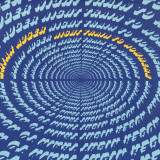
Miles Davis is regarded to be one of the most influential and acclaimed figures in the history of jazz and 20th-century music. Quiet Nights is the fourth and last studio album that Davis collaborated on with Gil Evans. The 1963 release took inspiration from the bossa nova genre that rose to popularity during the time.
Quiet Nights is a mix of situations and sources: Brazilian folk (“Prenda Minha”, titled “Song #2” on the album), Spanish classical (“Adelita” by guitar pioneer Francisco Tárrega, here called “Song #1”), and a few ballads, including one that stands out from the rest of the big band album: “Summer Night,” a quintet take featuring Miles playing muted then open trumpet and the start of a new band: tenor saxophonist George Coleman, pianist Victor Feldman, bassist Ron Carter, and drummer Frank Butler.
The album was produced by Teo Macero. Some of the additional performers on this album include Paul Chambers, Bill Barber, Steve Lacy, Jimmy Cobb, Willie Bobo, and George Coleman amongst others.
Suche:jim x
Departing from the Steve Miller Band after a two-album stint, Boz Scaggs set up shop in Muscle Shoals, recording his debut album with that legendary set of studio musicians known for their down-and-dirty backing work for Aretha Franklin and Wilson Pickett, among many other Southern soul legends. The Muscle Shoals rhythm section and guitarist Duane Allman give this music genuine grit. From the Jimmie Rodgers cover "Waiting for a Train" and the folky "Look What I Got!", to the extended 11-minute blues workout "Loan Me A Dime", this album is a thoroughly showcase for Boz Scaggs' musical vision and an enduring blue-eyed soul masterpiece.
The set uses newly remastered audio with lacquers cut by Jeff Powell. The packaging includes expansive liner notes by producer Jim Rooney and critic/ writer Holly Gleaso and the booklet includes rare photographs.
There's a Light Beyond These Woods' is Griffith's debut album and was recorded ive to two-track in 1977 and 1978. All but two of the nine songs were penned by Griffith.
Poet In My Window' is Griffith's second album, released in 1982. All but one track are written by Griffith.
Once in a Very Blue Moon', Griffith's third album, was released in 1984 and had more of a country sound than her previous work. This album is different from her previous in the inclusion of more instrumentation; musicians Béla Fleck, Mark O'Connor, Pat Alger, Lloyd Green, and more appear on this record. The title song was covered by Dolly Parton in 1985.
The Last of the True Believers' was released in 1986, and Griffith continues her turn into a more country- oriented sound. It also includes "Love at the Five and Dime" and "Goin' Gone," which were later hits for Kathy Mattea. This album was nominated for a Grammy for Best Contemporary Folk Album.
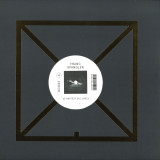
Jimpster makes a welcome return to Delusions, donning his Franc Spangler cap and serving up three funked-up, disco-infused tracks to get down to.
Opening up the release we have party starter Fight The Feeling which sees Spangler work up a rolling groove laced with dubby percussion, horn solos and souring lead synth.
Powerslide goes full retro with clav and guitar chops, hammond slides and an irresistible bassline bringing the funk, making for a high energy club cut to nice up the dance floor.
Closing out the release we have the deeper, lo-slung bounce of Dance The Funk which comes complete with Prelude-inspired synth stabs, heavy Moog bassline and crunchy house drums.
- A1: Midnight Special
- A2: A Subtle One
- B1: Jumpin' The Blues
- B2: Why Was I Born
- B3: One O'clock Jump
It’s a testament to Jimmy Smith’s volcanic creativity that the Hammond B3 organ firebrand recorded not one but two soul jazz classics—Midnight Special and Back at the Chicken Shack—in a single day when he entered Van Gelder Studio on April 25, 1960 with Stanley Turrentine on tenor saxophone, Kenny Burrell on guitar, and Donald Bailey on drums.
This Blue Note Classic Vinyl Edition is stereo, all-analog, mastered by Kevin Gray from the original master tapes, and pressed on 180g vinyl at Optimal.
It’s been nearly eight years since the last Mondo Drag album came out. In that time, the Bay Area psych-prog band toured the US and Europe, performed at major festivals and—once again—reformed their rhythm section. But in the context of the band’s nearly two-decade existence, this period may have been the most fraught. Vocalist and keyboardist John Gamiño lost friends and family members. Meanwhile, humanity suffered the throes of a global pandemic. “It was a dark chapter,” he recalls. “I was going through a lot of stuff personally—there’s been a lot of death, loss of family members, and grief. Plus, the band was inactive. It felt like time was slipping away from me. I felt like I was wasting my opportunities. I felt like I wasn’t participating in my story as much as I could have.” This feeling of time slipping away is the prevailing theme on Mondo Drag’s new album, Through the Hourglass. “For me, Through the Hourglass really encompasses the quarantine/pandemic years,” Gamiño says. “But in a way that includes a couple of years before that for us, because the band was stagnant during that time. Living with that was really impactful on our daily lives. So, the album is reflective. It’s looking at time—past, present, future.” Luckily, Mondo Drag emerged from this dour period reborn. Freshly energized by bassist Conor Riley (formerly of San Diego psych squad Astra, currently of Birth), who joined in 2018, and drummer Jimmy Perez, who joined in 2022, Gamiño and guitarists Jake Sheley and Nolan Girard have triumphed over the seemingly inexorable pull of time’s passage. “Astra was the one contemporary band that we felt was on the same tip as us,” Gamiño says. “We saw the similarities and felt the same vibe. Conor moved to San Francisco in 2018 and heard we were looking for a bassist, so we got in touch. For us, it was like, ‘The synth player from Astra wants to play bass for us?’ We couldn’t think of anybody more perfect.” Perez, meanwhile, brings deep psych-prog knowledge and impeccable skill. “He’s an amazing drummer, and he allowed us to do what we’ve been trying to do,” Gamiño says. “Before he came along, it was like, ‘Where are the drummers who like psych and prog and can play dynamically?’ We ended up trying out metal drummers, but they couldn’t swing. Jimmy was the final piece of the puzzle.” The result is a dazzling and often plaintive rumination on the hours, days, and years—not to mention experiences—that comprise a lifetime. Two-part opener “Burning Daylight” smolders with melancholy, offering a whirl of multi-colored and hallucinatory imagery. “It’s about the California wildfires and a feeling of helplessness,” Gamiño explains. “There’s a juxtaposition between the dark lyricism and upbeat music which is meant to imply a sort of delusional state—and choosing our own delusion to overcome the crushing despair of reality.” Eleven-minute centerpiece “Passages” is a sprawling prog-rock adventure, festooned with lofty guitar melodies, sweeping organ flourishes and a delicately finger-picked outro. But the heaviest song, thematically speaking, might be the mournful and hypnotic “Death in Spring,” which borrows its title from the like-named Catalan novel. “In the novel, people are placed inside opened trees and their mouths filled with cement before they die to prevent their souls from escaping,” Gamiño explains. “The song is about three people I knew who lost their lives to gun violence, addiction, and mental health. It’s my way of cementing their souls in song form.” Mondo Drag fans might be surprised by this blend of hard reality with literary surrealism, but it’s a perfect example of how the last several years have impacted Mondo Drag—and Gamiño in particular. “On all of our previous albums, the lyrical content is more psychedelic and out there,” he acknowledges. “This is the most personal stuff I’ve ever done, so I’m definitely feeling vulnerable on this one.” The title Through the Hourglass comes from the opening of the long-running soap opera Days of Our Lives. It’s less inspired by a predilection for daytime TV than Gamiño’s connection with his late mother, who passed during the time since the last album. “I used to watch Days of Our Lives with her everyday growing up,” he explains. “The song is kind of a reinterpretation of the theme song, although it’s different enough that probably no one will catch it. Now that I’m getting older, I like to put these little Easter eggs in the songs for myself and for archival purposes—for memories.” Through the Hourglass was tracked at El Studio in San Francisco, with an additional ten days of recording at the band’s rehearsal space, which doubles as a hybrid analog-digital recording studio. The album was engineered and mixed by Phil Becker, drummer of space-punk mainstays Pins Of Light. “We’re still here,” Gamiño says. “We’ve been in the studio working on our craft and honing our skills. Now we’re re-emerging for the next stage of our life cycle.”
After 1976’s Contraband, Golden Earring continued in a straightforward hard rock direction on Grab It For A Second (1978). Working with legendary producer Jimmy Iovine (U2, Bruce Springsteen, Tom Petty & the Heartbreakers, Stevie Nicks, Dire Straits, Patti Smith), this was the band’s final album featuring guitarist Eelco Gelling.
This 45th anniversary edition of Grab It For A Second is remastered for the first time from the original master tapes and features the bonus track “I Can’t Talk Now” (B-side of the Movin’ Down Life 7-inch single). It is available as a limited edition of 1500 individually numbered copies on translucent yellow coloured vinyl.
In the swirl of underground music emerging from Dunedin, New Zealand in the 1980s, Peter Gutteridge stands as one of the era’s most intense and shadowy figures. Despite being a founding member of The Clean and The Chills, Gutteridge would eschew indie-rock fame for the hypnotic and driving sounds of his later bands such as Snapper.
Fittingly, it is Pure—Gutteridge’s lone solo album of intimate home recordings—that serves as the most revealing and celebrated release of his career. As Peter Jefferies writes in the liner notes, “That’s what’s so good about Pure. Not only the songs, but the name, the name for the recording. It is as pure as you can get. That’s the real deal, when it goes from nothing to something and he catches it on his machine.”
Originally released on cassette in 1989 on Xpressway, Pure documents Gutteridge’s stunning use of 4-track as instrument. Featuring lo-fi pop gems and interstitial sketches, the LP combines densely layered keyboards and guitars, distorted drum machines and possessed-sounding vocals to create a truly singular work of undistilled artistic vision.
While Gutteridge denied that he was the architect of the “Dunedin Sound,” Pure sits comfortably next to the most revered Flying Nun releases of its time. Shifting exquisitely from churning rattle to an airy ease without losing momentum, these twenty-one songs hold a lasting place in the canon of DIY music. Recommended for fans of Syd Barrett, Jim Shepard and early Fad Gadget. Includes drawing chosen by Peter’s family.
Japan has produced some exceptionally talented jazz drummers and among them is Tatsuya Nakamura, who joins the BBE Music J Jazz Masterclass Series with his album ‘Locus’ from 1984, a session covering several bases, from heavy percussive samba to meditative avant-ambient. This is the album’s first ever reissue, although a track from ‘Locus’, ‘¼ Samba’, was included on J Jazz vol. 3. Nakamura began his drumming career as a teenager, inspired after seeing the documentary film “Jazz on A Summer’s Day” and listening to his idols Art Blakey and Miles Davis. By his early twenties, Nakamura was working with such luminaries as free jazz guitarist Masayuki Takayanagi, pianist Masaru Imada and band leader & composer Mitsuaki Kanno. In the mid-70s, like several other Japanese jazz players, Nakamura decided to make the move to New York where he studied drumming with Roy Haynes, and performed with members of the AACM and players from the loft and free jazz scenes including Richard Davis, George Adams, John Hicks, and Pharaoh Sanders. Returning to Japan, Nakamura continued playing as leader of his Japanese band The Jazz Fellows and in 1979, he went into the studio as leader for the classic “Where Is The Quarter” session featuring Masaru Imada, Hideto Kanai and Kenji Mori. This session includes the original percussion heavy version of ‘¼ Samba’ and was followed by a period back in NYC during which he recorded the funky/free session ‘Rip Off’ in 1980. 1984 saw Nakamura working as leader of a heavy-duty fusion septet and in February of that year he led them in a performance at Audio Technica Hall. The album ‘Locus’ on Sea Horse Records is the label’s one and only release. On ‘Locus’, Nakamura is joined by a stellar line-up. On trumpet is Shinobu Fujimoto and he’s joined by seasoned bass player Hideto Kanai (1931 -2011) who began playing in the mid-1950s, appearing on King Recs All-Star Jazz Series before going on to be a regular fixture on the legendary Three Blind Mice (TBM) label, backing many of its leading artists. He even released his own album on TBM, ‘Ode to Birds’ in 1975. On guitar is Kazumasa Akiyama. Born in Tokyo in 1955, he taught himself guitar at 10 years old and was influenced initially by The Beatles and Ray Charles, and later Jimi Hendrix, Cream, Chicago Blues, and jazz. When he was a student, he got a chance to appear on Sadao Watanabe's radio program ‘My Dear Life’, which led him to join the Isao Suzuki Group and Mikio Masuda Group. Akiyama released his first leader album ‘Dig My Style’ in 1978 and is still an active musician. On keys is the incredible Jun Fukamachi (1946-2010). Born in Harajuku, Tokyo, Fukamachi started playing the piano at the age of three, showing an extraordinary talent, recognised as a child prodigy. He became a professional musician while still in school and released his first album ‘Portrait of a Young Man’ on Polydor in 1971.
The blues portion of the 1960 Newport Jazz Festival took place on Sunday afternoon, July 3, at the end of the long weekend of jazz performances. The program also included, among others, sets by John Lee Hooker, Jimmy Rushing, Sammy Price, and Otis Spann. Waters' portion of the show includes unforgettable versions of Hoochie Coochie Man, I've Got My Mojo Working, and Tiger in Your Tank.
"The King of Chicago blues at his very best." - ***** AllMusic
It's not because one might have worked with people like Jimi Hendrix, John McLaughlin and Rod Stewart throughout their career that Italo-Disco wouldn't get the best of your work. A great example of the Italian phenomenon's infectiously widespread grip is British rock keyboardist Brian Auger's path, when he found himself in a Milanese recording studio during the mid 80's and recorded his last known release in that decade. Powerfully fusing decades of rock and jazz education with the synthetic hysteria of the time (and culture), the result is a classic downtempo number that has found its way into some of our favorite DJ sets for a while now. Vocal and instrumental are featured on the A-side and in addition the B-side offers a new remix where things take somewhat of a catastrophic turn into what sounds like Brian getting on the wrong train to a K-hole, probably not for most dance floors. Meticulously remastered at manmade mastering in Berlin.
Hellfish and Bryan Fury, the Axe Gabba Murda Mob, are two of the biggest innovators in hardcore techno. Both have been pushing the genre in all kinds of directions for over two decades providing the pulse for thousands of parties around the globe. So with this in mind, we are honoured to present 'Baby Eaters', an earth shaking joyride to the very edge of the human psyche and beyond.
The eponymous A-side strikes terror into the hearts of men, splitting brain cells like atoms with destructive chain reactions of radical distortion and soul-stripping screams. Pure demonic catharsis, sound frequencies don't get more violent than this. The B side 'Acid Abyss' is an LSD stained hardcore techno anthem where eerily cold voices are strangled by crunchy bellowing kick drums and bleeding 303s. Despite still being cranked up, the precision of the fills in this track offsets the chaotic kicks of the A-side, coming off almost subtle in comparison.
This single is for connoisseurs coming lovingly housed with artwork by the wonderful Jim'll'Paint it, depicting the deadly duo conducting some rather grizzly research in their underworld studio.
For fans of: Venetian Snares - Bloody Fist
- Word Games (Live)
- Love The One You’re With (Live)
- Sugar Babe (Live)
- Do For The Other (Live)
- Jesus Gave Love Away For Free (Live)
- 49: Bye-Byes/For What It’s Worth (Live)
- You Don’t Have To Cry (Live)
- The Lee Shore (Live)
- Cherokee (Live)
- Black Queen (Live)
- Know You’ve Got To Run (Live)
- Band Introduction (Live)
- Ecology Song (Live)
- Bluebird Revisited (Live)
- Lean On Me (Live)
Founding member of Buffalo Springfield and folk-rock supergroup Crosby, Stills, Nash & Young, Stills' first solo album, Stephen Stills, earned a gold record, is the only album to feature both Jimi Hendrix and Eric Clapton, and climbed to #3 on the album charts. Stephen Stills’ single "Love the One You're With" became his biggest solo hit, peaking at number 14 on the Billboard Hot 100 and is the first track on this collection. 14 tracks from Stephen Still’s First US Tour, previously unissued and recorded Live at The Berkeley Community Theater in 1971, featuring David Crosby on two songs. In 1971 Stephen Stills embarked on a US tour, opening each show with an intimate acoustic first set, and closing each night with a riveting electric set featuring the Memphis Horns. These historic, previously unreleased recordings took place over two nights at the Berkeley Community Theater, with David Crosby joining him on vocals and guitar for "You Don’t Have To Cry" and "The Lee Shore." These recordings find Stills at peak performance in both vocal delivery and musicianship, effortlessly incorporating alternate instrumentation on his instantly recognizable tracks, including a seamless medley of “49 Bye Byes" and "For What It’s Worth” unexpectedly played on piano. Hand-picked by Stills from his personal archives, this album captures timeless and era defining performances. Fans who were lucky enough to catch his historic debut trek, dubbed “The Memphis Horns Tour,” were treated to the balladeer, the raving troubadour, the acoustic bluesman, the soul driver, and by far the most passionate music maker. Backed by a loyal cast of friends, including his usual steady rhythm section—drummer Dallas Taylor and bassist Calvin “Fuzzy” Samuels—along with keyboardist Paul Harris, guitarist Steve Fromholz, and percussionist Joe Lala, these Northern California shows were one of the most unique and intimate stops on the tour This album, rather than being an artifact from a bygone era, sparkles and stimulates. It cajoles you into thinking, feeling and—most importantly—moving. Stephen Stills Live At Berkeley 1971 is a cornucopia of priceless sound—and all of it bears the distinct and loving fingerprint of Stephen Stills.
- A1: Warm Winter
- A2: Speshal (Feat. Stove God Cooks)
- A3: Two 23’S (Feat. Conway The Machine)
- A4: Loverboy Interlude
- A5: Back To Shore (Feat. Wiz Khalifa & Elcamino)
- B1: Target Practice (Feat. Jim Jones)
- B2: Band Of Brothers (Feat. Benny The Butcher & Ransom)
- B3: Sal’s Pizza
- B4: Mint Green (Feat. Curren$Y)
- B5: Sharlene
Although Beyond Belief was completed in only a handful of all-night sessions, 38 Spesh and Harry Fraud took their time crafting this high level Hip-Hop music. Harry didn’t simply send Spesh a folder of beats to rap to, Spesh made the trip to Harry’s lab, and all the beats and lyrics were created on the spot. Fans and critics agree that this 10-track offer- ing is some of the strongest work in both artists’ catalogues. The LP boasts monster tracks like “Speshal,” “Band of Brothers,” and “Warm Winter.” Guests on the album include Benny The Butcher, Conway The Machine, Stove God Cooks, Ransom, Wiz Khalifa, Curren$y, Jim Jones, and ElCamino.
ENG 180 grm classic black vinyl, 2023 repress. At the risk of further labouring a rather obvious point, with Thank God for Mental Illness, their third collection of absolutely stunning music in 1996, the Brian Jonestown Massacre parallels the prolific and effortless brilliance of the Rolling Stones at their fevered late-1960s peak; the sheer scope of their achievements is stunning - rarely are bands quite so productive, or quite so consistently amazing. Thank God is the BJM's down-and-dirty country-blues outing, all 12-odd tracks supposedly recorded on a single July day at a cost of just $17.36 The Brian Jonestown Massacre is a psychedelic rock band originally from San Francisco, California, led by guitarist/singer Anton Newcombe. Since 1995 The Brian Jonestown Massacre has released numerous albums, first for Bomp! Records, the label which gave them their start, and later for TVT and Tee Pee. BJM has been essential in the development of the modern U.S. garage scene, and many LA and SF musicians got their start playing with Newcombe, including Peter Hayes of The Black Rebel Motorcycle Club. Originally Newcombe was heavily influenced by The Rolling Stones' psychedelic phase - the name comes from Stones guitarist Brian Jones combined with a reference to cult leader Jim Jones, but his work in the 2000s has expanded into aesthetic dimensions approximating the UK Shoegazing genre of the 1990s and incorporating influences from world music, especially Middle Eastern and Brazilian music.
- 1: The District Sleeps Alone Tonight
- 1: 2 We Will Become Silhouettes
- 1: 3 Sleeping In
- 1: 4 Turn Around
- 1: 5 Nothing Better
- 1: 6 Recycled Air
- 1: 7 Be Still My Heart
- 1: 8 Clark Gable
- 2: 1 Our Secret
- 2: This Place Is A Prison
- 2: 3 A Tattered Line Of String
- 2: 4 Such Great Heights
- 2: 5 Natural Anthem
- 2: 6 (This Is) The Dream Of Evan And Chan
- 2: 7 Brand New Colony
"Everything Will Change" ist eine Dokumentation und Konzertfilm über den Auftritt von THE POSTAL SERVICE im Greek Theater in Berkeley auf ihrer 2013er Reunion Tour. Als Kollaboration zwischen Benjamin Gibbard von DEATH CAB FOR CUTIE und Jimmy Tamborello von DNTEL zusammen mit Jenny Lewis von RILO KILEY veröffentlichten THE POSTAL SERVICE ,Give Up", ihre erstes und einziges Album, 2003. Das Album sollte sich über eine Million Mal verkaufen. Die meisten Fans allerdings hatten niemals die Chance, die Band live zu sehen. Zur Feier des zehnjährigen Jubiläums von ,Give Up" kam die Band wieder zusammen, um durch die ganze Welt zu touren. ,Everything Will Change" fängt eine dieser Nächte ein, in der sich alles änderte. Das Konzert ist nun erstmals als LP Tonträger erhältlich. Die limitierte Erstauflage der 2xLP kommt gepresst auf hellblauem (Disk 1) und pinkem (Disk 2) Vinyl.
Verheyen reflects on how he "learned a valuable lesson, from all those years making records and touring with Supertramp. We always lamented that the record was a demo for the tour, because the songs developed so much more on the road. This time I was fortunate to play the music for a year and a half before committing it to CD and vinyl, so the songs feel much more fully realized. It was a luxury recording music we all knew so well."
This is reflected in the musicianship heard on the album, which includes a masterful duet between Carl and Sophia James – of American Idol fame – on Riverboat Sky’s title track. The supporting musicians consist of Verheyen’s regular touring band – Dave Marotta (bass), John Mader (drums) and Troy Dexter (keyboards); who are supplemented by Jim Cox, Alex Acuna and Chad Wackerman.
- Jimmy Somerville's debut solo album Read My Lips is re-issued with rarities and new remixes.
- Originally released in 1989, the album enjoyed Gold Sales and 3 Top 30 hits, as well as Jimmy's Top 10 cover of Sylvester's 'You Make Me Feel (Mighty Real)'.
- Across these expanded versions are remixes from Gerd Janson, AMYL, Arpeggius and William Orbit; unreleased demos, B-Sides and rarities such as 'From This Moment On' (from Red, Hot + Blue)
and I Believe in Love (with Arthur Baker and The Beat Disciples).
- New liner notes from journalist and author Paul Burston.
This release heralds the launch of a new 7” series from Mr Bongo. In partnership with London-based DJ and digger, Miche, the series will feature his latest discoveries, as well as choice cuts, taken from his 'With Love' compilations. For the inaugural offering, we take a trip to hazy San Francisco, California, in 1977. Smoke, Inc. were an emerging band in the Greater San Francisco Bay area and a regular fixture in the buzzing live music scene. They had a strong following and were in rotation in most of the Bay area clubs, as well as opening for numerous prestigious acts such as Sly & The Family Stone, Taj Mahal, The Pointer Sisters and Toots and The Maytals. Members of the group worked with Jimi Hendrix, Stevie Wonder, Frank Zappa, Martha Reeves & The Vandellas, and many others considered the cream of the crop of the music world.
Smoke, Inc. featured Roy Schmall on keyboards and vocals, Stan Terry on lead vocals and harmonica, Michael 'Ollie' Schotka, on bass and vocals, Keith Stafford on drums and vocals, and Archie Williams Jr on guitar. They went on to release one 12" EP and two 7" singles. One of those 7’s included 'Waitin' For Love’. It was first released in 1977 and came out on the band's own self-titled imprint. It has gone on to become their rarest and most sought-after recording, now fetching up to an astonishing £2,500 on Discogs. It is a breezy, feel-good, modern/crossover soul beauty, with an infectious sing-along chorus, floaty flute solo, and packed with pure, uplifting dancefloor energy. The B-side features a cover version of the Holland Dozier & Holland-penned classic 'It's the Same Old Song’, made famous by the Four Tops.
Miche enthuses, “I included this gem on my first ‘With Love’ compilation and knew that it deserved its own dedicated reissue complete with original artwork. I’m delighted to get the chance to make that happen for this incredible, soulful AOR glide from a band that is well due another round of appreciation. It’s very rare, and consequently very expensive, so here it is for you all to spin and add to your record collections.”
46 years since its original release, it is our privilege to help Roy and the gang’s light shine once again and let a whole new audience relish the beautiful sounds of 'Waitin' For Love'.
- Jimmy Somerville's debut solo album Read My Lips is re-issued with rarities and new remixes.
- Originally released in 1989, the album enjoyed Gold Sales and 3 Top 30 hits, as well as Jimmy's Top 10 cover of Sylvester's 'You Make Me Feel (Mighty Real)'.
- Across these expanded versions are remixes from Gerd Janson, AMYL, Arpeggius and William Orbit; unreleased demos, B-Sides and rarities such as 'From This Moment On' (from Red, Hot + Blue)
and I Believe in Love (with Arthur Baker and The Beat Disciples).
- New liner notes from journalist and author Paul Burston.