Conrad Schnitzler (1937-2011), composer and concept artist, is one of the most important representatives of Germany"s electronic music avant-garde. A student of Beuys, he founded Berlin"s legendary Zodiak Free Arts Lab, a subculture club, in 1967/68, was a member of Tangerine Dream (together with Klaus Schulze and Edgar Froese) and Kluster (with Dieter Moebius and Hans-Joachim Roedelius) and also released countless solo albums. The red album ("Rot") from 1973 was Schnitzler"s first solo LP.
Поиск:jo 68
Все
This record"s origin story is as elusive as Pharoah was about everything Pharoah. It was born out of a misunderstanding between him and the India Navigation producer Bob Cummins, and was recorded at a crossroads in his career with a group of musicians so unlikely that they were never all in the same room again. There was a guitarist who was also a spiritual guru, an organist who would go on to co-write and produce "The Message", and a classically trained pianist - his wife at the time, Bedria Sanders - who played the harmonium despite never having seen one. At times ambient and serene, at others funky and modal, PHAROAH radically departed from his earlier work. It would become one of the artist"s most beloved records and one of the great works of the 20th century. With Pharoah Sanders" blessing, the limited edition embossed version of this 2 LP box set presents the definitive, remastered version of PHAROAH, his seminal record from 1977, along with two previously unreleased live performances of his masterpiece "Harvest Time". This is the first official rerelease of PHAROAH, which has been bootlegged often since its original release in 1977. These exceptional live versions of "Harvest Time" - which Pharoah performed during an intense European tour in the summer of "77 and which are included here for the first time - turn the original, beloved composition on its head. PHAROAH will be released a year after the legendary tenor saxophonists" untimely passing, and two years after the release of what was to become his final album, the widely acclaimed PROMISES, a collaboration between the composer Floating Points and Pharoah Sanders, featuring the London Symphony Orchestra. The first pressing of this limited edition box set comes with an embossed cover and is accompanied by never-before-shared photographs and ephemera, as well as a 24-page booklet featuring rarely seen photographs, interviews with many of the participants, and a conversation with Pharoah himself.
2-LP set 180g black vinyl.
Joined by a never-before-convened, top-of-the-pyramid rhythm section (Sullivan Fortner, piano; Larry Grenadier, bass; Tyshawn Sorey, drums) the 39- year- old presents ten far-flung originals that elicit the full measure of their creativity over the 68- minute program, spurring Lund - who makes ingenious use of effects within his flow - to some of his most dynamic and varied playing on record.
Lage Lund: guitar and effects
Sullivan Fortner: piano
Larry Grenadier: bass
Tyshawn Sorey: drums
This Moment' - Shakti's first new studio album in more than 45 years - is
a work of immense depth and radiant optimism
With John McLaughlin (guitar, guitar synth) and Zakir Hussain (tabla) joined by
vocalist Shankar Mahadevan, violinist Ganesh Rajagopalan, and percussionist
Selvaganesh Vinayakram, the Shakti of now is a powerfully dynamic collective,
defined by deft interplay, dazzling unison passages, extraordinarily dexterous
improvisations, and the ability to draw from a vast well of global traditions and,
miraculously, put them in conversation with one another.
As a cornerstone of what is now called World Music, the vision and virtuosity of
Shakti has inspired generations of musicians from around the world to explore
sonic hybrids once thought impossible. Born of the musical and spiritual
brotherhood shared by the revolutionary British guitarist and bandleader John
McLaughlin and master Indian percussionist Zakir Hussain, Shakti's soulful,
organic intermingling of Eastern and Western musical traditions has proven
transformative for both the band's members and its listeners. Fifty years after the
informal conversations and jam sessions that sparked the band into existence,
their music continues to resonate and evolve.
Despite the large gap in their studio discography, Shakti has persisted
intermittently over the years as a live proposition, releasing several concert
recordings. "Shakti is very much a 'live' band, " explains McLaughlin. "A part of the
problem with making a studio recording has always been the fact that we live on
different continents, and we all follow our individual careers – in addition to
working together in Shakti. 'This Moment' is the result of me calling everyone in
the fall of 2021 and persuading them to use today's recording technology to
realise it."
Recorded and mixed in the U.S., Monaco, India, and Great Britain, This Moment is
nevertheless cohesive, bound by the deeply held bond shared by the players - a
bond that is audibly apparent across the album's eight tracks.
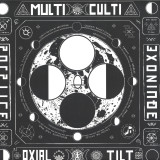
Multi Culti return with an expansive 8-track mini-LP showcase timed for summer solstice celebrations.
The a-side kicks off with the musically-gifted Mytron’s genre-defining title ‘Shisha House’, Italian Ayala teams up with Abrao on ‘Magia,’ Jamie Paton slices up the low-slung, serpentine ‘Sub Ritual,’ and Xanga & Zebulon deliver a literal love letter to the ‘Coca Leaf’.
B-side action begins with Ecuadorian newcomer Kunturi, whose ‘Eclosión’ portends a new wave of Nicola Cruz inspired, folkloric techno, Italian duo Future Island (Oltrefuturo teamed up with treasure island) rock an impressive slow-mo trance dub on ‘Wide Music II,’ Aiku debut out of Germany’s Harz mountains with ‘Fried Acid,’ while Argentine wizard Balam finishes the journey off with the incense and sitar laden ‘Caravana.’
While they may dabble in orientalist tropes, these are not mere Tulum-chasers out for shamanic DJ duty. This is avant-garde folk-Tronica that tows the limbo line and once again asserts cult supremacy in the great Psychonautical odyssey.
Das aus San Francisco stammende four-piece kehrt mit ihrem ersten neuen Album seit sechs Jahren zurück.
Ein Album, an dessen Anfang anders als zuvor die Musik von Gitarrist und Pianist Niko Wenner stand und nicht Sänger Eugene S. Robinson’s Texte.
So wurde das Album von Wenner’s Familie inspiriert. Der Geburt seiner zwei Kinder und dem Tod seines Vaters.
Wie bei den Vorgängeralben so kommen auch auf 'Love's Holiday' unterstützende Instrumente zum Tragen, doch sind es dieses Mal vor allem menschliche Stimmen, die den neuen Songs ihren besonderen Reiz geben. Kristin Hayter (Lingua Ignota) leiht dem Song Lovely Murk ihren opernhaften Gesang, während das mehrschichtige Chorbett von 1000 Hours von Roger Joseph Manning Jr (Jellyfish/Beck) stammt. Das Album enthält außerdem einen 15-köpfigen Chor sowie Streicher, Oboe, Flöte und Klarinette.
Byard Lancaster was a composer/multi-instrumentalist born in Philadelphia in 1942. He started playing alto saxophone at an early age and later took up flute and bass clarinet. While attending Berklee College of Music, Lancaster and pianist Dave Burrell organized late-night jam sessions with fellow students and touring musicians. In 1965, he moved to New York and quickly became part of the city's burgeoning scene – playing with jazz luminaries such as Archie Shepp, Sunny Murray, Bill Dixon and Marzette Watts.
It's Not Up To Us, Lancaster's 1968 debut as a leader, was originally released on Vortex, a subsidiary of Atlantic responsible for first albums by Chick Corea, Keith Jarrett and Sonny Sharrock. Featuring guitarist Sharrock (another Berklee alum), It's Not Up To Us is true fire music – fusing elements of free jazz, soul/R&B and traditional folk song.
On the opening title track, Lancaster's luminous flute draws the listener in, while bassist Jerome Hunter grounds the tune with a simple descending theme over Keno Speller and Eric Gravatt's syncopated rhythms. "John's Children," a reference to the group's status as post-Coltrane players, showcases the modal strumming of Sharrock's steady drones as Lancaster cries into the void. After repeated listens, Lancaster's original compositions become visceral aural memories ingrained in the ear, while the standards ("Misty" and "Over The Rainbow") sound the most avant-garde pieces on the album.
This first-time vinyl reissue is recommended for fans of Albert Ayler, Don Cherry and Pharoah Sanders.
'Dream From The Deep Well' is the new album from celebrated Irish singer songwriter Brigid Mae Power. Recognised as a purveyor of dreamier pop with folky leanings, this new album is a departure; a unique marriage of traditional stylings and very modern melodies; a breath-taking soundtrack which underpins her gorgeous vocal. Filled with personal tales of offspring and grandparents, the lovelorn and the lost, it's the essence of re-imagined folk music, from the traditional intro and outro that act as bookends. It's folk music, but not as we know it. In these ever-confusing and often annoying times, Brigid brings us modern folk for modern folk, with her evocative vocal, doubling back on itself with strings, steel guitar, horns and mellotron adding to its baroque loveliness. It's waving back at her rootsy past, daubing new colours on a much-loved canvas. 'Dream From The Deep Well' is a new visionary beginning from a gifted songwriter. Elsewhere, there's the lovelorn longing of her version of Tim Buckley's 'I Must Have Been Blind', alongside a moving tribute to the late Ashling Murphy, a 23-year-old Irish primary school teacher and traditional Irish musician who was attacked and killed while jogging along the Grand Canal just outside Tullamore, County Offaly. It's a harrowing story, delivered with overwhelming compassion. In the best tradition of old school folk music, it opens up a pressing issue to a wider audience. It's an album that's politically primed and socially aware; a broadside for us all, this is Brigid Mae Power's most complete album yet. "Her haunting voice, an instrument that raises the everyday to a near-mystical realm." The Guardian. "The Irish singer-songwriter flits between past and present; between traditional and modern forms; between the heaven in her voice and the earthbound epiphanies of her words." Pitchfork
- 22: When Worlds Collide
- 23: Raver
- 24: The Spin
- 25: Clear Spot
- 26: Rev Head
- 27: Set It On Fire
- 28: Burn Out
- 29: This Life Of Yours
- 30: Solid Gold Hell
- 31: Blood Red River
- 32: Don't Lie To Me
- 34: Melodramatic Touch
- 35: Slow Death
- 36: Strangers In The Night
- 37: I've Had It
- 38: Gonna Make You
- 39: When Worlds Collide
- 40: Ghost Train
- 41: The Other Place
- 42: She Cracked
- 1: Hell Beach
- 2: If It's The Last Thing I Do
- 3: Bad Priest
- 4: Demolition Derby
- 5: It Came Out Of The Sky
- 6: Atom Bomb Baby
- 7: Go Baby Go
- 8: Psycho Cook Supreme
- 9: Lead Foot
- 10: Murderess In A Purple Dress
- 11: Temple Of Love
- 12: You Only Live Twice
- 13: Human Jukebox
- 14: Shine
- 15: Distortion
- 16: Place Called Bad
- 17: Hungry Eyes
- 18: Braindead
- 19: It Must Be Nice
- 20: This Is My Happy Hour
- 21: Fire Escape
- 33: Have You Seen My Baby?
- 43: Frantic Romantic
- 44: Shake Together Tonight
- 45: Last Night
- 46: Bet Ya Lyin' (Slink City Lee)
- 47: It's For Real
- 48: Pissed On Another Planet
- 49: Shadows Of The Night
- 50: Girl
- 51: I'm Looking For You
- 52: She Says She Loves Me
- 53: Sorry Sorry Sorry
- 54: That Girl
- 55: High Noon
- 56: Teenage Dreamer
- 57: Another Sunday
- 58: Walk The Plank
- 59: Larry
- 60: Making A Scene
- 61: It'll Never Happen Again
- 62: This Is My Happy Hour
- 63: Swampland
- 64: We Had Love
- 65: The Scientists Clear Spot
- 66: The Scientists When Fate Deals Its Mortal Blow
- 67: The Scientists Burnout
- 68: The Spin
- 69: Rev Head
- 70: Set It On Fire
- 71: Blood Red River
- 72: Nitro
- 73: Solid Gold Hell
- 74: I Cried No Tears
- 75: Crazy Heart
- 76: This Life Of Yours
- 77: Backwards Man
- 78: The Wall
- 79: Raver
- 80: Fire Escape
Black + White Haze Vinyl. With a sound that was swampy, primal and modern-urban all at once_as much in the tradition of rock n' roll and punk rock as it was a rejection of those things, the Scientists' formula was as universal as it was specific to their own experience. The themes of getting wasted, driving around in hotted-up cars, being trapped in crap jobs, and paranoia were their subject matter. Machine throb bass and drums with jagged car-wreck guitars were their modus operandi. Fitting into no place or time they spurned all but the most rudimentary and elemental of rock structures to create a sound all their own. Quadruple CD includes their complete studio recordings, live recordings, and a previously unissued set from Adelaide UniBar, plus dozens of previously unpublished photographs, discography, and fold out Perth Punk family tree. Double LP version boils the box down to 22 essentials, plus unpublished photographs, discography, and fold out Perth Punk family tree.
t 20 THIS IS MY HAPPY HOUR LIVE AT ADELAIDE UNIBAR
u 21 FIRE ESCAPE [LIVE AT ADELAIDE UNIBAR]
[v] 22 WHEN WORLDS COLLIDE [LIVE AT ADELAIDE UNIBAR]
[w] 23 RAVER [LIVE AT ADELAIDE UNIBAR]
[x] 24 THE SPIN [LIVE AT ADELAIDE UNIBAR]
[y] 25 CLEAR SPOT [LIVE AT ADELAIDE UNIBAR]
[z] 26 REV HEAD [LIVE AT ADELAIDE UNIBAR]
[xa] 27 SET IT ON FIRE [LIVE AT ADELAIDE UNIBAR]
[xb] 28 BURN OUT [LIVE AT ADELAIDE UNIBAR]
[xc] 29 THIS LIFE OF YOURS [LIVE AT ADELAIDE UNIBAR]
[xd] 30 SOLID GOLD HELL [LIVE AT ADELAIDE UNIBAR]
[xe] 31 BLOOD RED RIVER [LIVE AT ADELAIDE UNIBAR]
[xf] 32 DON'T LIE TO ME [LIVE AT THE LOFT]
[xh] 34 MELODRAMATIC TOUCH [LIVE AT STOREY HALL]
[xi] 35 SLOW DEATH [LIVE AT STOREY HALL]
[xj] 36 STRANGERS IN THE NIGHT [LIVE AT THE SYDNEY UNI]
[xk] 37 I'VE HAD IT [LIVE AT LE TOTE]
[xl] 38 GONNA MAKE YOU [LIVE AT THE PRINCE OF WALES HOTEL]
[xm] 39 WHEN WORLDS COLLIDE [LIVE AT SYDNEY TRADE UNION CLUB]
[xn] 40 GHOST TRAIN [LIVE AT THE PRINCE OF WALES HOTEL]
[xo] 41 THE OTHER PLACE [1985 FLEXI DISC]
[xp] 42 SHE CRACKED [1985 FLEXI DISC]
First time reissue of mega rare 1972 psych-folk album from Venezuela.
180g LP.
One of the most obscure records ever released in Venezuela that was originally distributed in tiny quantities as a promo-only album.
A magic blend of protest songwriting, with a strong environmentalist statement, and folky pop with psych ingredients —such as the use of sitar sounds— recorded by the collective of artists “Una Luz”, and “El Zigui” who was once described as the local Bob Dylan.
The late ‘60s was a short period of time, long enough to turn the world upside down.
Music, paying attention to the ancient Greeks who said that changes in society are also reflected in it, also undergoes violent transformations in its structure. The turbulent joy of rock and roll and twist gives way to the meditative sounds of the waves of the sea contained in surf to finally welcome music of soft and delicate harmonies with songs full of references in their lyrics to the state of society and their relationships with the environment.
On the other hand, in Venezuela, although the expansive wave of May 68 had not reached it, a certain degree of dissatisfaction began to be perceived, especially through the music of a singer-songwriter from the countryside of Venezuela known as Ali Primera, El Cantor del Pueblo. Thanks to a scholarship from the German government, he studied for a few years in that country, and it was there that he recorded his first album, with songs whose lyrics reflect the essence of authors such as Bob Dylan and Atahualpa Yupanqui. And Ali Primera becomes one of the greatest influences of our artist: El Zigui.
Guillermo Sánchez Corao —known as El Zigui for some strange reason— was born in the Venezuelan city of Maracay, capital of the State of Aragua, on January 13, 1948. From a very young age he began to study guitar playing and, already in his teens, we can find him as part of the duo El Zigui & Franklin together with Franklin Laudelino Mejías, another young man with a great musical pedigree.
It is during his bohemian phase as a troubadour, in the surroundings of the Ateneo de Caracas, when his music caught the attention of producer Mario Tepedino, the most important youth music producer at the time. Mario takes him to his TV show “2001 Juvenil”. With the incorporation of other musicians such as Rubén "Micho" Correa —who would later become a great arranger and record producer— he created the group El Zigui y Una Luz, which would later be joined by musicians such as Carlos "Nene" Quintero and Alfredo Padilla, members of the amazing Grupo Pan. Later on, another outstanding singer would also join Una Luz: Guillermo Carrasco.
With this formation they made it into a recording studio in 1972 where they managed to record, in just 30 hours, a long-playing album of which only 60 copies were pressed and has therefore gained cult status among collectors. As expected, the strong content of the lyrics was not supported by the media, making the promotion of the album impossible to accomplish. However, it was with the help of Mario Tepedino that they made it to television, with appearances on “2001 Juvenil” and “Antesala Lunar”, a show that was especially produced for the broadcast of the arrival of man on the Moon.
That was probably one of the main reasons for El Zigui to move to Canada and then France until 1978 when he returns to Venezuela. He would then join bands like Xabañón, Fogón and De Vuelta al Futuro, a 12-member super group. The former members of Una Luz had become well known musicians in the country, especially Guillermo Carrasco who was one of the greatest ballad artists in the ‘80s and targeted by the biggest record companies at the time. El Zigui died in a traffic accident on June 22, 1999. If he had lived through these crazy times... where would he have gone?
His best work to date is presented to us as Ivan’s voice is centre stage, with layered harmonies added to the soundscape of delay-soaked electric guitars, and essentials-only drums and bass.
Drawing from new life experiences, musical influences from the likes of J.J. Cale, Nina Simone and Tim Buckley, along with the freedom to create at his leisure; Ivan’s original and unique sound remains recognisably present, creating a fusion of 1960s/70s folk and blues. If you’re a fan of John Martyn’s drowsy melancholia you’ll love this album.
COLORED VINYL
What were they up to? They couldn't explain it. But not explaining it was part of the point. The Danish duo Bremer/McCoy - with Jonathan Bremer on acoustic bass and Morten McCoy on keys and tape delay - recorded straight to tape so that they had as little time as possible to think about it. They just laid it down. The duo has been making music that defies categorization since 2012. They started as a dub group, bringing their own sound system to shows. Now their sound lilts between jazz, ambient, and neoclassical, with contemplative, propulsive melodies that capture the Nordic woods they walk in. Their last full-length release, 2019's clear-eyed Utopia, gained them a cult following in the U.S. and a roster of notable fans, including Nils Frahm and Gilles Peterson. The duo's latest release Natten, which means "The Night" in Danish, strives for even more transcendence, more freedom, more of everything in whatever sound they're making. It's still hard to explain. It's not meant to be explained. These 11 tracks are tinged with the sublime: watching the setting sun, feeling the planet tilt on its axis. If you listen closely, you can hear the constellations. Let Bremer/McCoy bring the night mood to you, whatever you're up to.
Das Solo Debütalbum einer der wohl einflussreichsten, innovativsten und produktivsten Schlagzeuger zeitgenössischer Musik.
Die 13 Stücke umfassende Sammlung ist das Ergebnis einer 40-jährigen Karriere, in der Lombardo als Mitbegründer von Slayer bekannt wurde, zwei GRAMMY-Awards erhielt und sein Repertoire über alle Genres hinweg erweiterte. Der in Havanna geborene Lombardo arbeitete unter anderem mit Mike Patton und Fantômas zusammen, dem von der Kritik verehrten John Zorn, dem experimentellen Hip-Hop-Künstler DJ Spooky und den wiederauferstandenen Punk-Ikonen The Misfits.
Der Aufnahmeprozess für das filmmusikähnliche 'drum album' hatte ein einfaches Mantra: Schlagzeug musste Schlagzeug sein. Das Anfang 2022 von Lombardos Sohn David A. Lombardo abgemischte, selbst produzierte Album enthält eine große Konzert-Bass Drum, eine Pauke, einen Flügel und eine Schar von Shakern, Maracas, chinesischen und symphonischen Gongs, indianischen Trommeln, Congas, Timbales, Bongos, Batás, Holzblöcken, Djembes, Ibos, Darbukas, Octobans, Cajóns und Becken.
Das Solo Debütalbum einer der wohl einflussreichsten, innovativsten und produktivsten Schlagzeuger zeitgenössischer Musik.
Die 13 Stücke umfassende Sammlung ist das Ergebnis einer 40-jährigen Karriere, in der Lombardo als Mitbegründer von Slayer bekannt wurde, zwei GRAMMY-Awards erhielt und sein Repertoire über alle Genres hinweg erweiterte. Der in Havanna geborene Lombardo arbeitete unter anderem mit Mike Patton und Fantômas zusammen, dem von der Kritik verehrten John Zorn, dem experimentellen Hip-Hop-Künstler DJ Spooky und den wiederauferstandenen Punk-Ikonen The Misfits.
Der Aufnahmeprozess für das filmmusikähnliche 'drum album' hatte ein einfaches Mantra: Schlagzeug musste Schlagzeug sein. Das Anfang 2022 von Lombardos Sohn David A. Lombardo abgemischte, selbst produzierte Album enthält eine große Konzert-Bass Drum, eine Pauke, einen Flügel und eine Schar von Shakern, Maracas, chinesischen und symphonischen Gongs, indianischen Trommeln, Congas, Timbales, Bongos, Batás, Holzblöcken, Djembes, Ibos, Darbukas, Octobans, Cajóns und Becken.
As some of you may know, Alice Coltrane was a legendary pianist, composer, spiritual leader, and the wife of John Coltrane, the most venerated and influential saxophonist in the history of jazz. In 1967, four years after meeting John, he died of liver cancer, leaving Alice a widow with four small children. Bereft of her soul mate, Alice suffered sleepless nights and severe weight loss. At her worst, she weighed only 95 pounds. She had hallucinations in which trees spoke, various beings existed on astral planes, and the sounds of “a planetary ether” spun through her brain, knocking her into a frightening unconsciousness.
The critical event of this period was not that Alice fell into the nadir of her existence, but rather that she experienced tapas, a vital period of trial. These tapas (a Sanskrit term she used to describe her suffering) helped prepare Alice for the spiritual ally she found in Swami Satchidananda, an Indian guru, with whom Alice made her first trip to India. On her second trip there, Alice had a revelation instructing her to abandon the secular life and become a spiritual teacher in the Hindu tradition – so she moved out West – eventually opening the Shanti Anantam Ashram on 47 acres she’d bought in Agoura Hills, California.
lack Marble Vinyl! High Vis were formed in 2016 from the ashes of some of the UK's best hardcore bands. Gild-toothed frontman Graham Sayle's anguished lyrics about life in working class Britain were familiar to fans of Tremors' full-throttle thrash, but alongside his former bandmate Edward `Ski' Harper and veterans of Dirty Money, DiE and The Smear, High Vis sought to transform that energy and intensity into something entirely new.Like scene-mates Chubby and the Gang did by pulling in unlikely source material from classic doo-wop or Micromoon have by combining everything from psychedelia and metal into their high potency mix, High Vis' 2019 debut album, No Sense No Feeling showed the band were never going to be constrained by any sense of genre rules or regulations. Its claustrophobic rattle bore traces of Joy Division, Bauhaus, Crisis, The Cure and Gang Of Four lurking in the shadows. 2020's synth-driven EP, Society Exists, was further evidence of the band's restless creative MO.High Vis' second album Blending sees them open their viewfinder wider than ever before.
Alongside longstanding favourites such as Fugazi and Echo and The Bunnymen; Ride and even Flock Of Seagulls were shared reference points as the band worked on the album together.From the anthemic sweep of opener "Talk For Hours", through the title track's psychedelic swirl and "Fever Dream"'s baggy groove, it sees High Vis' sound blossoming into something with an unlimited richness. The hazy drift of "Shame" or the melodic jangle of "Trauma Bonds" may take them until uncharted waters, but they still have all the power and bite that made No Sense No Feeling so remarkable.Lyrically, the album represents another leap forward too. Talking frankly about poverty, class politics, and the challenges of everyday life, Sayle's lyrics have always addressed the downtrodden and discarded communities across Britain slipping below the waterline. This time around, Sayle's lost not of that social consciousness, but he's looked at himself and his own emotional landscape, and in the process created something that feels more universal, that reaches a hand-out to people and ultimately gives a message of hope."To me, the lyrics are less selfish," reflects Sayle. "In the past, I couldn't see past whatever was going on with me.
It's about accepting things and being open to conversations and learning to talk to people rather than just thinking that we're all doomed."The song "Talk for Hours" is a prime example of that. Born out of an afternoon meeting up with an old group of mates "repeating the same thing and not actually learning anything about each other" it offers to actually break the cycle and to listen and speak frankly about shared feelings and experiences. "Trauma Bonds", meanwhile, traces the broken lines of those living in lost communities, but ultimately realises that despite our shared scars, there's still hope to move on to a better future."The message of the album is you're not who you're told you are," Sayle summarises. "You're not your class background. Whatever it is, you're not that. Don't resign yourself to thinking you can't be this and you can't be that."It's a vitally important message right now, and one that could be the motto for not only Blending, but for High Vis themselves.
Neuauflage des Debütalbums der amerikanischen Experimental-Rock-Band Tomahawk von 2001.
Das Album wurde nach einem Treffen zwischen Sänger Mike Patton und Gitarrist Duane Denison aufgenommen. An dem Album waren Mitglieder von Faith No More, The Jesus Lizard, Helmet und Melvins beteiligt.
- Ltd. Col. LP: (Opaque Brown Vinyl)
"Hungarian guitarist Gabor Szabo (1936-82) issued only three live recordings during his lifetime. Significantly, the first of these, The Sorcerer (1967), remains the most popular album in the guitarist’s all-too abbreviated discography. But there were also More Sorcery (1968) and Gabor Szabo Live with Charles Lloyd (1974), offering Szabo totally in his element and at his bewitching best.
Several more of Szabo’s concert recordings have surfaced in the intervening years, including this one, superbly captured for radio broadcast live in 1976 at the 600-seat Agora Ballroom in Cleveland, Ohio. It is a revelation. There is a sense here that concert patrons may have been hearing an altogether different Gabor Szabo than record buyers.
For one thing, Szabo is heard fronting what is likely his own group, rather than an army of studio musicians. In 1976, Szabo was leading a tremendous quartet with George Cables (or Joanne Grauer) on piano, Tony Dumas on bass and Sherman Ferguson on drums. Szabo had not had a band with this much jazz clout since his famed quartet with Jimmy Stewart in 1967-68 – and it is a union worth savoring: Szabo’s records during this period were light, at best, on jazz.
It’s unclear if any of these musicians are on the Agora date, but as Dumas’s “It Happens” opens the program, it’s a good bet, at least, that the bassist is on board here. But as Szabo’s ’76 quartet is not known to have recorded a studio record, Live in Cleveland is the closest thing to what a mid-seventies Szabo jazz album would sound like.
Gone, are the strings, vocals and concessions to commercial consideration so prevalent on so many of Szabo’s studio records at the time. What is present, though, is fine craftsmanship, tremendous interplay, and the exciting improvisation that good jazz always yields.
This particular concert was part of Sansui’s “New World of Jazz,” a series of 13 hour-long jazz concerts recorded at Cleveland’s iconic Agora Ballroom and broadcast over 40 FM radio stations. The series was sponsored by Sansui Electronics, a Japanese manufacturer of audio and video equipment, which previously sponsored a similar series of rock concerts recorded at the Agora as well.
Sansui was promoting its matrix QS 4-channel sound system – offering, what was considered at the time, superior diagonal separation and stereo compatibility. The firm, partnering with Agora Ballroom and Agency Recording Studio owner Hank LoConti (1929-2014), was looking to take advantage of what they rightly felt was the then-current jazz renaissance.
Each show’s 16-track master tape was mixed through the Sansui QS 4-channel encoder,” according to an August 1976 Billboard article detailing the arrangement, “for distribution to the 40 FM stations throughout the United States that bought the series” – allowing for three commercial spots for local dealers to advertise."
The recording is available for the first time on CD and VINYL. Mastering by grammy-nominated Jessica Thompson.
The first ever complete overview of Goth culture will be released in 2023.
Finally, after a decade of work, countless interviews and immersing himself into the culture, John Robb's definitive book is a journey far into The Art Of Darkness. The first in-depth book on Goth is a deep dive into the enduring culture and the social, historical and political backdrop that created the space for The Art Of Darkness to thrive.
680 pages with interviews with the likes of Andrew Eldritch, Killing Joke, Bauhaus, The Cult, The Banshees, The Damned, Einsturzende Neubauten, Danielle Dax, Johnny Marr, Trent Reznor, Adam Ant, Laibach, The Cure, Nick Cave and many others, this is a deep
dive and walk on the dark side and into the very heartland of Goth.
Every generation has got to deal with the blues - embrace the melancholy. Find a beauty in the darkness, a poetry in sex and death...Whether it’s the Roman love of ghost stories, European macabre folk tales of the Middle Ages, Romantic poets, or the original Gothic tribes sacking the Eternal City, a walk on the dark side has always had its attractions. In the post-punk period, Generation Xerox saw music, clothes and culture come together to create one of the most enduring pop cultures of them all that still resonates to this day..
Goth.
It may have been a retrospective term for a scene that was already thriving, but its back story goes back millennia. The book starts with the fall of Rome and ends with Instagram and Tik Tok influencers, taking diversions through Lord Byron, European folk tales, Indian sadhus, Gothic architecture, Romantic poets, philosophers and idealists before coalescing through the dark end of the Sixties’ youthquake, and then blooming like Baudelaire’s Les Fleurs Du Mal in the post-punk period.
Defying the broken heartland of the post-industrial cities, the semi-forgotten satellite towns and the grim real politic of the Thatcher years, this was a post-punk culture full of dark dance and a death disco. The music soundtracked the style and a Stygian obsidian soundtrack fused the many fragments of culture that had been flirted with in the post-war pop narrative; a darker culture that began to coalesce around the holy trinity of the Doors, the Velvets and the Stooges in the late Sixties before flirting with glam rock, being amplified by punk, exploding as Goth, and then splintering into electronic dance music, industrial, psychobilly and new Goth, before finally filtering through dystopian Hollywood blockbusters, modern literature and throughout the modern world.
In the late Seventies, Goth culture emerged around a clutch of bands who found a new form of beauty in the apocalyptic foreboding, as a new youth tribe took glam rock from the catwalk to the cobbles and onto their own dance floors, creating their own art of darkness.