New on Outta Sight, an official reissue of the Gloria Jones classic “Tainted Love”. The song originates from 1964, then made a household favourite from 1981 when made a hit by Soft Cell. Gloria’s 1965 release in the USA was originally a B-side to a non-hit, and it took ten years for it to be discovered in the UK where it was played on the Northern Soul scene. It’s the Motown-like rhythms and arrangements that made it relevant. Gloria re-recorded it herself in 1976, and while still not a hit, the song in NME’s Top 500 greatest of all time and Gloria dubbted ‘The Queen Of Northern Soul’. She was in a relationship with Marc Bolan at the time of his fatal accident. This single is coupled with another northern soul favourite, the Holland/Dozier/Holland song “There’s A Ghost In My House” by Motown artist R. Dean Taylor. It was originally recorded in 1966 and reached No.3 in the UK Charts (1974)
Search:jo jo
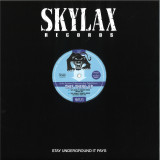
Step into the realm of legends with « This Thing EP » by Lukas Lyrestam & Simoncino, featuring the iconic voice of Robert Owens—a true gem on vinyl. This release brings together the visionary talents of rising stars Lukas Lyrestam and Simoncino with the remix artistry of house music luminary Chez Damier, crafting a blend of past and future that resonates with the magic of timeless house. The EP opens with « This Thing » a creation by Lyrestam & Simoncino, elevated by Robert Owens’ soulful vocals that weave effortlessly into the groove, setting the tone for a transcendent sonic journey. Chez Damier, one of the genre's most revered figures, takes the reins with a masterful remix that transforms « This Thing » into something even greater, infusing his deep and emotive style to further enrich the track's essence.
« This Thing EP » is more than a release; it's a celebration of house music’s enduring legacy, uniting legends across generations. Available in limited edition on Skylax Records, this vinyl is a must-have for true aficionados. Don’t miss your chance to own a piece of house history secure your copy and join the legacy.
- A1: The Right Way
- A2: Pocket
- A3: What Do You Believe In?
- A4: I Ron
- A5: Hideaway
- A6: All I Know
- B1: Rush Of Blood
- B2: Feeding All These Fires
- B3: Put A Little Hurt On Me
- B4: Chokehold
- B5: Wreckage
- B6: Hope You Felt Loved At The End
- C1: Bleed The Same
- C2: Sorry For My Broken Heart
- C3: Ghosts
- C4: Lovers In A Past Life (Acoustic)
- C5: Lovers In A Past Life
Rag’n’Bone Man is ready to accept joy into his life. Born Rory Charles Graham, the Sussex-born singer known for his gravelly blues vocals, took the world by storm with his debut album ‘Human’ in 2016. Now multi award-winning, the British vocalist is embracing newfound balance, returning to his creative foundations while building anew.
It’s the most vital chapter to date in one of British music’s defining stories. A truth-telling voice that has framed an era, Rag’n’Bone Man’s success speaks for itself: his debut album ‘Human’ went platinum four times over in the UK and multi-platinum in a further twenty-seven countries - becoming the fastest selling male debut album that decade. While his latest release ‘Life By Misadventure’ debuted at #1 and spent seven weeks in the Top 10, making it the fastest-selling album by a solo artist in 2021. With over nine-billion worldwide streams (and counting) over his entire catalogue, Rag’n’Bone Man is a voice that can be heard across the globe. Now he’s ready to eclipse this: assured, and built with love, his uplifting new album “What Do You Believe In?” finds the multi award-winning British artist (with three BRITs, two MTV Europe awards, and an Ivor Novello to his name) facing the future with passionate excitement.
‘What Do You Believe In?’ is anchored in the blossoming of confidence and the enduring support network he finds in family life. It’s taken time, but Rag’n’Bone Man is in a secure, loving place - and he wants to share that feeling. The period surrounding second album, 2021’s ‘Life By Misadventure’, was marked by self-doubt, with troubles weighing down on the singer’s shoulders – but then things changed - As a result, new album ‘What Do You Believe In?’ has a bold, yet radiant touch.
With the pairing of the poignant and ubiquitous themes and the sonic brightness of both 00s hip-hop and the youthful memories they prompt, the release of the albums title track ‘What Do You Believe In?’ sets the tone for the for the thrilling musical journey Rag’s is preparing to take fans on.
Movetone Wax proudly presents its third release, MVT003, showcasing the vibrant sounds of Ed Herbst. A longtime friend and collaborator of label owner Maik Yells, Herbst embarks on his first solo venture with Movetone Wax, presenting two compelling house tracks poised to captivate the dance floor. As side A is highlighting Ed‘s love for garage, side B is reflecting his deeper side.
Enhancing the EP’s allure, maestros Terence :Terry: and Niko Maxen contribute their distinctive signatures, expanding the palette and culminating in a diverse and electrifying four-track journey.
If ever a producer could be hailed as the true heir to New York's storied house music throne, it's undoubtedly Mike Terra—and his new, seriously weighty Rhythm of Love EP on Nat Wendell's Depths imprint is a testament to that in strides.
The EP begins with the peak-time infectiousness of A1 "7th & C," setting the commanding tone for what's to come. The fittingly Big Apple-titled A2 "27th Street (Dub Mix)" follows, a rollicking shuffler whose fat kicks, stabbing synths, and snapping cymbals recall Johnick's steamier cuts. New York in the 90’s is indeed the frame of reference for this EP, and the B-side finds Terra doing what he does best: creating bumping, stomping, and uplifting must-have workouts for the floor. Whether you prefer the swarthy slapping, Todd Terry-esque groove of title track B1 "Rhythm of Love" or the conga-driven, deep-padded chunk of late-night house that is
B2 "City Got You Trippin'," a late-night jam crafted for those still standing, both tracks are bound to find their places in the record bags of DJs—and heads—worldwide.
If you haven’t been living under the rock you certainly know who Marilin is. Marinella is an Italian-born, London-based artist who with her utmost professionalism is no stranger to the powers of light and darkness, that depends on the mood of the party she is performing at. However here we will leave the light alone and focus on the darkness. Favoured by sir Craig Richards himself, Mariiin has toured the globe playing at the most different and unique events that has given her the edge and insightful knowledge she possesses. Whether she takes people on the musical journeys by herself or with her partner in crime Bobby, it is always an experience that is impossible to forget with the burning desire to repeat and repeat infinite number of times.
Her solo EP “La Notte” has a very unique and defined dark character which has landed on the label with absolutely in sync with its vision.
This October Jamiroquai celebrates the 30th anniversary of ‘The Return Of The Space Cowboy’. Their second album, it will be reissued as a double-LP set on 140g “moon grey” vinyl and includes Michael Gray’s Good Vibe Zone edit of ‘Space Cowboy’ - which has never been released on a physical product. The packaging has also been re-designed for this anniversary release including foil enhancement of the original cover design.
‘The Return Of The Space Cowboy’ is the follow up album to the band’s huge 1993 debut, ‘Emergency On Planet Earth’. Selling over 3 million copies globally, ‘Emergency On Planet Earth’ put the band on the map with their distinctive sound standing them apart from other popular acts of the time.
‘The Return Of The Space Cowboy’ was released just one year later and was met with great critical and public acclaim. Certified Platinum in the UK, Japan and France, it achieved chart success in multiple countries and spawned the single ‘Space Cowboy’ which remains one of their biggest tracks to date. Critically the album was lauded with Rolling Stone saying "Jamiroquai parlay jazzy soul pop so tight it crackles… Nowadays, when most funk comes out of cans, Jamiroquai's live spark glows", The Guardian said “... this second album sounds like vintage Stevie Wonder and Johnny 'Guitar' Watson, but Kay's vocals are as snappy and engaging as his extrovert persona" and Q magazine said it “combines intricate arrangements with several long, free-form workouts crammed with virtuoso performances".
For many, this album is defined by some of the most complex songwriting the band have ever produced and Jay Kay called it “one of our most creative and accomplished albums”. The process of making the album came with many challenges. Having to recruit a new drummer (after Nick Van Gelder failed to return from holiday), the band were met with second-album syndrome with Kay proclaiming since that lyrics weren’t coming "... because suddenly I wasn't homeless, I had everything I needed. So I found myself creating problems to write about." The songwriting process was complex for the band as Jay Kay was often dissatisfied with the results, leading songs to be scrapped or rewritten, but half-way through recording Kay wrote ‘Space Cowboy’, a song which reflects darker times during the recording session, and it became the catalyst of creative inspiration helping them finish the record. On this 30th anniversary edition of the album Space Cowboy gets a modern dance makeover courtesy of DJ Michael Gray, shedding new light on the track and emphasising it’s already infectious groove.
The album built on the success of ‘Emergency On Planet Earth’ and Jamiroquai have become one of the UK’s most pioneering and ground breaking bands of the past 30 years. Pushing boundaries and bringing jazz and funk to a mainstream audience, their sound is not only unique, but immediately recognisable.
ni:'o is the final project for Neo Festen’s studies at the Conservatory of Amsterdam, marking a milestone in his musical journey. The five-track EP showcases a blend of energetic yet deep sounds, exploring emotional themes throughout.
"Test Run 4 U," a standout track, carries a long expressive story, while "Protocol 1.625" is an fun experiment to the use of different time signatures.
ni:'o, Introduces the listener to his personal and approach to dance music.
While this EP closes one chapter, this is just the beginning.
Audrey Powne's eagerly anticipated debut album has been met with widespread acclaim from a host of tastemakers and musicians. Garnering over 500 plays on UK radio, her music has reached an audience exceeding 2 million listeners. Many have touted her work as a strong contender for Jazz Album of the Year—a remarkable achievement for a debut release. This exceptional remix pack features a soulful interpretation from the illustrious DJ and producer Joe Claussell, profoundly inspired by the album cut "Souled Out." Claussell unveils three exquisite and spiritual remixes, each highlighting unique elements of Audrey's original production. Joaquin's Deep Version is quintessential Claussell, merging the bassy textures of a vintage King Tubby dub with vibrant percussion and dance-inducing beats. The "Sacred Rhythm Mix" is an essential for the dancefloor, weaving a seamless progression of expertly crafted sonic layers that culminate in a boogie-style crescendo, destined to be a summer anthem for DJs. The Cosmic Arts Interpretation Mix completes the trinity expertly with an enchanting downtempo mix expertly seasoned with orchestral and percussive elements which breathes even more magic into Audrey’s incredible vocal display on this track. True to Claussell's renowned craftsmanship, these remixes speak for themselves—listen and be transported. Adding to the allure of this remix pack are the superb renditions of "Feed The Fire'' by the legendary deep house producer Atjazz and the dynamic New York duo musclecars. Both remixes have garnered critical acclaim, elevating this package to an unprecedented level of excellence. Available for the first time on vinyl, these mixes are presented by BBE Music in a double pack, ensuring unparalleled sound quality that is spread out for maximum audio fidelity—a must-have for discerning DJs and vinyl aficionados who prize top-tier music pressed on wax. This release is not just a collection of tracks but a treasure trove of sonic brilliance, making it indispensable for enthusiasts of high-quality, heartfelt music.
For this 6th edition of our "Vinyl Only" series, our loyal friends Christian Burkhardt, Nils Twachtmann and Filou are at the helm and are joined by the experienced Chris Llopis. On the A side, Christian Burkhardt with his track "Rytm Mod" throws his sexy and pumpy house beats while Chris Llopis with his track "Dubster" will make you vibrate with his dancing and catchy bass as he has the secret. On the B-side, Nils Twachtmann with his track "Space Odyssey" and Filou with his track "Sophe" offer you deeper and melodic approaches to a minimal house that will delight purists.
- A1: Annihilated(Force Of Gravity)
- A2: Shafted(Laws Of Attraction/Repulsion)
- A3: Sickness(Slowly Dying)
- B1: Vertical(Never See You Again)
- B2: Floored(Point Of Impact)
- B3: Drop(Machine Sex)
- C1: Hypnotised(F-Cked Up)
- C2: Inhuman(Let Machines Do The Talking)
- C3: Departed(Left The Body Behind)
- D1: Buried(Your Life Is Short)
- D2: Bodied(Send For The Hearse)
- D3: Exit(Wasteman)
Maverick UK producer Kevin Richard Martin (Zonal / Techno Animal / King Midas Sound) joins Relapse for the release of his devastating new double album Machine, his first solo instrumental record as THE BUG.
Machine started life as a series of self-released "floor weapons" (to use Martin’s description), landing in installments between 2023 and 2024 on the Bandcamp page of Martin’s own PRESSURE label. And now - always his intention - Martin has collated a single, powerful, unified statement from those EPs. The album detonates apocalyptic dread-tech mutations of crushing intensity, fusing a unique new strain of futuristic dub with deadly deep electronics and killer bass riffs worthy of the heaviest metal. It is, writes Martin, “ice cold and dystopian.” It celebrates “atmospheric pressure, and the joy of full body assaults, via oversized sound systems in undersized club rooms.” Machine also represents the latest metamorphosis of the "Macro Dub Infection" philosophy Martin germinated with the groundbreaking series of compilations he began curating for Virgin Records as early as the mid 90’s.
In 1969, singer and police lieutenant Pedro Gregorio López started recording a series of instrumental tracks and songs on the MAG record label in Peru, ranging from guaracha to cumbia, all cooked with musical eclecticism and simmered to appeal to a wide audience. Many of these musical ingredients combined on the 1971 album entitled "Cocinando", in reference to the similarities between Peruvian cooking and tropical music. López began his career as a singer and orchestra conductor many years earlier, when he joined the backing singers for Lucho Macedo's Sonora. After completing his police training, he adopted the stage name Martín López, in order to preserve the anonymity his job required. Between 1969 and 1971 Martín López y sus Estrellas recorded all the tracks comprised on this album, including salsa, guarachas, rumbas, chichas and boleros, proving their knowledge and mastery of the tropical music lexicon. It is not surprising since the orchestra was made up of the most talented label’s session stars: including the double bassist Joe di Roma, singer Pablo Villanueva "Melcochita", percussionists Ñiko Estrada and Coco Lagos, and trumpeter Tito Chicoma. "Cocinando" is an epic historical treasure that captures the explosive impact of the tropical music movement on Peruvian culture.
The saga continues. With his second V/A vinyl release, Giano Electronics has the pleasure to host a great producer like Teslasonic with a proper electro-bomb, also joined by stunning electro tracks from Direct Y, the acid duo Twist Head Groove, Stefano Rocchi and iQbit’s atmospheric vibes.
Artwork by Abu Qadim Haqq
Masterd by Andrea Merlini
Future sounds from the eternal city
- A1: Flore
- B1: John Iii
- B2: Us
- C1: Just-Test
- D1: We The Blessed
- E1: Mother Africa
- F1: Sweet Evil Miss" Kisianga
- F2: Virginia
- G1: C Marianne Alicia
- G2: Dr Oliver W. Lancaster
- H1: Palm Sunday
- H2: Prima - Mr A.a
- I1: Keno - Exactement
- I2: Providence Baptiste Church
- J1: Just Test
- J2: Work And Pray
- J3: Rib Crib I
- K1: Rib Crib Ii
- K2: Loving Kindness
- K3: Dogtown
- L1: Love Always
Souffle Continu records presents Byard Lancaster – The Complete Palm Recordings 1973-1974, the definitive package of Philadelphia-born jazz wizard Byard Lancaster including his 4 legendary albums released on Jef Gilson’s Palm Records in the 1970s, Us, Mother Africa, Exactement and Funny Funky Rib Crib, along with the first ever standalone edition of Love Always, a fifteen minute modal jazz beauty plus a 20 page booklet with rare photos and in-depth article about Byard Lancaster’s Parisian years by Pierre Crépon.
At the beginning of the 1960s, at the Berklee College of Music, Byard Lancaster met some feisty friends: Sonny Sharrock, Dave Burrell and Ted Daniel. It is easy to see why he rapidly became involved in free jazz. Once he was settled in New York, he appeared on Sunny Murray Quintet, recorded under the leadership of the drum crazy colleague of Albert Ayler.
In 1968, the saxophonist and flutist recorded his first album under his own name: It’s Not Up To Us. The following year he came to Paris in the wake of... Sunny Murray. He would come back to France in 1971 (again with Murray) and in 1973 (without Murray for a change). This is when he met Jef Gilson, the pianist and producer who encouraged him to record under his own name again. On Palm Records (Gilson’s label), he would release four albums: Us, Mother Africa, Exactement and Funny Funky Rib Crib.
“Us”, the first of the four records was recorded on November 24th, 1973 with Sylvin Marc on electric bass (a Fender... Lancaster?) and the evergreen Steve McCall on drums.
On the album, the trio works from the John Coltrane model; free jazz shook up by the timely contributions of the bassist, followed by a mesmerizing atmospheric music. Then, Lancaster delivers a sinuous solo path, which is a reminder of his unique tone. On the album’s companion single, the trio launches into great black music of a different genre which would lead the clairvoyant François Tusques to claim that Byard Lancaster is an “authentic representative of soul/free jazz”, to sum up this is Great Black Music! A few months after recording “Us”, Lancaster recorded “Mother Africa” along with Clint Jackson III, a trumpeter, partner of Khan Jamal or Noah Howard on other recordings.
On march 8th, 1974, Lancaster and Jackson headed up a group composed of Jean-François Catoire (electric and double bass), Keno Speller (percussion) and Jonathan Dickinson (drums). Together, they create an immediate impression. From the first seconds of “We The Blessed”, they develop a free jazz which rapidly abandons any virulence under the effect of blues and soul based interventions. When Gilson’s composition “Mother Africa” begins, listeners are transported into the studio, listening to the musicians setting up: chatting and joking... Then comes the melody: a dozen or so notes of a repeated theme which is accelerated and deformed according to their whims... The jazz played by the association Byard Lancaster / Clint Jackson III is rare: creative AND recreational. “We the blessed”, is apt listening to this again today!
The recording of “Exactement” required two sessions in the studio: February 1st and May 18th 1974 – in between the two dates, Lancaster recorded, alongside Clint Jackson, the excellent Mother Africa.
Two names appear on the cover of “Exactement”: Lancaster (Byard) and Speller (Keno). Byard Lancaster wanted to be precise, moving regularly from one instrument to another: first on piano, which was the first instrument he learned. On “Sweet Evil Miss Kisianga”, his inspiration is first and foremost Coltrane (even if leaning more towards Alice than John), this announces the storm to follow.
It is Lancaster’s horn-playing which really stands out: on alto (the sound of which is transformed by an octavoice on one track, "Dr. Oliver W. Lancaster") or soprano saxophones, as well as on flute or bass clarinet, the musician walks a tightrope making the most of all the risks he takes. Using the full register of his instruments, he has fun with the possibilities.
Then, Lancaster invokes or evokes Ornette Coleman, Eric Dolphy and even Prokofiev, before going into a danse alongside Keno Speller on percussion. Above all, he has a unique sound. Byard Lancaster, on whatever instrument he plays and by continually seeking, always ends up hitting the right note... ends up by playing exactement the note he had to play.
“Funny Funky Rib Crib” is an unforgettable recording (made up of several sessions dating from the middle of 1974) of creative jazz overwhelmed by funk and soul. If Lancaster had already made successful albums in the same genre – notably New Horizons, under the name Sounds Of Liberation which he co-led with Khan Jamal –, this one is an homage to James Brown and Sammy Davis enjoying the company of a host of guests including François Tusques (electric piano), Clint Jackson III (trumpet), François Nyombo (guitar), Joseph Traindl (trombone)...
Funny Funky Rib Crib’s cover is a three-quarter profile portrait of the saxophonist (who can also be heard on flute, piano and even vocals), however, on the record, it is the whole group, inspired and frenetic, that tests the melodies of “Just Test”, “Dogtown” or “Rib Crib” – the two versions of which display leader Lancaster’s art of nuance. On both sides of the album, the group also moves into a calmer groove, infused by blues and soul, “Work And Pray” and “Loving Kindness” are meditative tracks where listeners can lay back and relax before asking for more: Funny Funky Rib Crib!
The magnificent “Love Always” was originally released on the fourth (and last) volume of the Jef Gilson Anthology series released in 1975.
Recorded on 8th March 1974, it is a beautiful 15-minute-long modal jazz piece. Four notes from the bass (the relentless Jean-François Catoire, who makes up the rhythm section alongside drummer Jonathan Dickinson and percussionist Keno Speller), and the group is up and running!
On piano, Gilson shows the subtle tact of a sideman, leaving the lions’ share of the place to the horns. This allows us to hear the trumpet of Clint Jackson III and the alto (which sometimes sounds almost flute-like) of Byard Lancaster each staking their claim in a long hallucinatory march which moves from moments of direct exaltation to profoundly sensitive collective playing. And if further proof was required of the confidence that Byard Lancaster and Jef Gilson inspire, “Love Always” provides it on this one sided release exclusive to the box set.
An obscure bit of Brazilian folk rock from the early 70s - recorded with an easygoing, laidback style that's really wonderful! The group's working mostly here in a blend of acoustic guitar and percussion and some of the guitar work is done by Jorge Amiden of O Terco, using a strange three-necked guitar that looks mighty weird in the picture! This instrument seems to be played using a bow at times - creating a "guitar strings" sort of feel that gives the record a bit more class than you might expect from its relatively rootsy setting and there's also some great subtle production on the vocals that compresses them slightly, in a way that links the record to some of the other South American rock of the time. Titles include "O Jogo", "Tributo Ao Sorriso", "Blusa Le Linho", "Voce Pole Ir Alem", "Do Zepo Adiante", "Transe Uma", "Cara Ou Coroa", and "Venha Pisar Na Grama".
A sense of destiny hangs over Sentir Que No Sabes, Mabe Fratti’s fourth solo-credited album released in a five year span. Her work has always possessed a finely tuned sense of drama capable of expressing a range of emotional states, and across this new album, she conveys the struggle to process various relationships or situations–and the actions that come next. Sentir Que No Sabes is urgent and clear, poppy, generous and approachable, while showcasing a considerable emotional hinterland. It is also, as Fratti is quick to mention, “groovy.”
Written and recorded with her partner, multi-instrumentalist, and co-composer Héctor Tosta (I.La Católica, Titanic), Sentir Que No Sabes is the result of an intense, detail-oriented process. Fueled by a new confidence gained in their collaborative project, Titanic, and its critically acclaimed 2023 LP, Vidrio, the two hunkered down in the familiarity of their studio (aka Tinho Studios) to bash out the initial sonic coordinates of her new record. “We talked and talked, and discussed ways of playing and recording, until things became inevitable,” Fratti explains. “We recorded a bunch of demos at our home studio and that meant we had a lot of time to re-edit and experiment. We really dug in. We were super focused on detail.” Tosta also took up the controls as producer and arranger-in-chief for all additional instruments. The album was later completed at Willem Twee Studios in Den Bosch in the Netherlands, and Pedro y el Lobo Studios and Soy Sauce Studios, in Mexico City.
For the final studio recordings, the pair were joined by drummer Gibran Andrade and trumpetist Jacob Wick to fill out and expand on Tosta’s percussion and brass arrangements. This small group of friends were able to work quickly and openly, and without fear: a testament to the exhaustive groundwork put in at Tinho Studios. This can be heard in three short, intermediary tracks that also manage to be the most aggressive on the record: “Kitana” (a scratch-laden instrumental that acts as a strange prelude for the last track, “Angel nuevo”) and a pair of two-minute instrumental interludes, “Elastica” I and II. None are throwaway mood pieces; rather they act as emotional cue cards, and hint at the way Fratti and Tosta created the overall atmosphere of Sentir Que No Sabes.
A strong sense of rhythm irrigates the sound from the jump, as heard on the glorious opening track, “Kravitz.” Here, the brilliant plucked cello line acts as a bassline and props up the steady thump of the kick drum. The cello’s growl serves as a conduit for a set of slightly paranoid lyrics that tell us “Quizás haya oídos en el techo” (“maybe there are ears in the ceiling”), while the song also introduces another staple of the record: the clever brass stabs, whistles, parps, and other interjections that paint a canvas of traffic in a city. It’s a postmodern, widescreen sound that for some might recall The Blue Nile’s Hats.
Sentir Que No Sabes is a record full to the brim with a modern pop sensibility, invoked by the sort of magpie spirit that ensnares anything it can find, repositioning sounds for the here and now. The keys and melody on the melancholy “Pantalla azul” (“Blue screen error”) transport us back to the glossy mid-1980s. “Oídos” (“Ears”) is a beautiful slice of contemporary, hybrid pop, in which Fratti’s vocal lines delicately spin themselves around the lean structures erected by the brass and drums, and the descending “plink” of a set of piano chords. Then we have a gloriously strong ending with the swell of “Angel nuevo” (“New angel”), another cinematic track full of gentle, instrument-rich swells and eddies that manages to be almost endless in its range–and yet intensely personal, as Fratti’s voice is close, almost whispering in your ear. A much needed lullaby for our fractious times.
The lyrics, for their part, have a stop-start quality to them, and hint at the small, incremental emotional taxes we pay through just living our lives. They circle around the music like birds waiting to swoop. There is something of the spiritual in all of Fratti’s work that expresses itself in a form of yearning: she looks to new horizons while personal dramas find themselves internalized, contextualized, and then dealt with through metaphor. Here, she was keen to mention Tosta’s constant encouragement in her finding a path to best sing or phrase her words to impart their maximum effect. “Hector was super inquisitive about my lyrics and asked me questions about what I meant, which sometimes is something you don't wonder so much about in isolation,” Fratti explains. “Besides, he is a great poet, and you can see that in what he did on the Titanic record. This made me go deeper into my lyric writing and definitely transformed it into something that I feel super happy about now.”
Take “Enfrente” (“In Front”), a track that initially comes across as a languid, glossy number, with plucked cello strings standing in for a bass line and brittle synth parts. Soon we catch on to a brilliant minor chord switch, which mirrors the fear and doubt expressed in the lyrics as someone “trembles up to the podium” in a “search for meaning.” There’s also the startling introduction of a vocoder in “Quieras o no” (“Whether you want it or not”); it comes precisely at the point Fratti sings “Quieras o no es un desastre” (“Whether you want it or not, it's a disaster”). Moments like these leave room for interpretation and, over time, create a strong bond between the listener and the record.
In fact, across Sentir Que No Sabes, each phrase–whether instrumental or vocal–becomes at some level emblematic of acts and moods that impart deep emotional significance. We see this best on “Intento fallido” (“Failed attempt”), which could be the score to feeling trapped in self-doubt, only to suddenly be sprung free by the song’s gloriously upbeat ending. On “Márgen del índice” (“Index margin”), the quicksilver switch between initial disharmony and a beautiful melody is breathtaking, all augmented by evocative arrangements, textured production, and the slightly playful, gnomic lyrics. The track’s emotional ecosystem allows another brilliant ending, which uses the simple repeated phrase, “Cómo lo va a ver?” (“How are you going to see it?”).
So what to make of Sentir Que No Sabes? High gloss Pastoralism? The sound of a city-bound, post-post modern soulscape? No matter the emotions evoked, it's the work of an artist coming into their own, and creating a benchmark record.

Lo-x3 returns with the bold and electrifying release, "Shoc_orridor", a sonic journey that pushes the boundaries of contemporary techno while paying homage to its roots.
On the A-Side, Lo-x3 transports us back to the golden age of 90s techno with the raw energy of "Pima" and "Thereon". These two tracks are a masterclass in minimalist rhythms and hypnotic loops, offering an authentic nod to the iconic sounds that shaped a generation of underground dancefloors. The vintage textures and driving beats create an irresistible momentum, blending nostalgia with a modern edge.
Flipping to the B-Side, the mood takes a deeper, more experimental turn. "CB-190301" crafts a vivid sonic landscape, weaving together intricate soundscapes and unconventional rhythms. The track challenges listeners to go beyond the ordinary, sparking both reflection and revelation with its complex layers and detailed production. This is a track for the mind as much as the body, inviting you to lose yourself in its enigmatic progression.
Finally, "Beth" delivers a powerful finale. Anchored by a relentless bassline and fractured, broken beats, this track is pure, unbridled energy. It embodies the raw intensity of the dancefloor, ready to shake the walls of any club or festival it encounters. The track's aggressive groove and infectious rhythm make it an undeniable force, promising to leave a lasting impact wherever it's played.


![Neo - [ni:’o]](https://www.deejay.de/images/l/1/2/1098412.jpg)