
Search:jo jo

- A1: Sweet Potato Gravy Maurice Simon & Pie Men
- A2: Mmm Mmm Mmm Dave Lewis
- A3: Sorry ‘Bout That Harold Johnson Sextet
- A4: Sophisticated Funk John Roberts
- A5: Chittlin' Salad The Soul Runners
- A6: Hijack Jackie Hairston
- A7: Whip You Little Charles Whitworth
- A8: The Shing-A-Ling Thing The Naked Truth
- B1: I Can't Afford To Lose Him Sound Stage House Band
- B2: Sunny Jerome Richardson
- B3: Bucket O Grease Les Mccann
- B4: Cornbread And Buttermilk Leon Haywood
- B5: Dead The Mark Ii
- B6: The Skrooch Little Eddie
- B7: Flunky Flunky The Soul Set
- B8: Mother Blues Gene Ludwig

10
"I think I have never met anybody, with the exception of Brazilian guitarists Baden Powell and Toquinho, as connected to his instrument as Agustín Pereyra Lucena" – Vinicius de Moraes
Far Out continues its exploration into the singular catalogue of Argentine guitarist and songwriter Agustin Pereyra Lucena with a special Record Store Day edition of his most celebrated album Ese Dia Va A Llegar.
Agustín Pereyra Lucena was one of South America’s outstanding guitarists. Hailing from Buenos Aires but obsessed with the music of neighbouring Brazil, Agustin abandoned his architecture studies to pursue music full-time, earning friendship and collaborations with Brazilian music's greatest figures including Vinicius de Moraes, Baden Powell, Toquinho, Dorival Caymmi, Maria Bethania and Chico Buarque.
Originally released in 1975, the album has been better known in some parts of the world as Brasiliana – a title repurposed by Agustín's European record label in the 70s to exoticize the sounds of South America for the continental market. It finds Agustin and band—which includes key collaborators Guillermo Reuter on contrabass, and Carlos Carli on drums and percussion— at their most blissfully laid back. The album features idiosyncratic renditions of classics by Antonio Carlos Jobim, Vinicius de Moraes, João Donato and Agustin’s personal hero and friend Baden Powell, alongside Agustín's own works which ooze with captivating mystical wonder.
The analog warmth of the recording is such that it feels like you’re there in mid-seventies Buenos Aires, on a balmy late night session at Estudios Audión, with a group of phenomenally impressive musicians. The heat generated is offset only by the cool temperament of everyone involved. On the handful of vocal tracks on the album, Agustin’s gentle voice is responded to by the liquid smooth vocals of Laura Hatton, Luis Maria Cosenza and Patricia Scheuer.
Agustin’s unique position in the annals of his continent’s musical history has been lovingly maintained by Agustin’s nephew Jose Luis Pereyra Lucena, who has entrusted Far Out Recordings to preserve and re-release Agustin’s works. The music has been professionally remastered at London’s Metropolis Studios, using multiple copies of well kept original vinyl.
Reissued worldwide for the first time under its original title and cover as Agustin originally intended, Ese Dia Va A Llegar will be presented in a limited edition obi-stripped gatefold replica sleeve.

Renowned Italian jazz master Nicola Conte presents an incandescent limited edition 7" single for Record Store Day 2026. "Terra Em Transe" and "Naquela Base" are brand new tracks from sessions for Conte's forthcoming Far Out Recordings album, drawing deep from early 70s Brazilian jazz and modal hard bossa while underlining the vital role of the arts in social and political struggle.
In Nicola's own words: "Terra Em Transe' is a dedication to visionary director Glauber Rocha and to all free thinkers willing to portray the conflicts, contradictions and lies of those in power around the world." The original composition takes inspiration from Milton Nascimento's vocal harmonies and Tamba 4's sophisticated samba-jazz.
'Naquela Base' is a stunning reinvention of João Donato's classic: pure modal hard bossa recorded entirely live in the studio. Inspired by samba-jazz classics like Tenório Jr.'s "Embalo" and Paulo Moura's "Fibra", the track is carried beautifully by Teppo Mäkynen's masterful drumming, with solos from Gaetano Partipilo on alto saxophone and Pietro Lussu on piano, supported by Ameen Saleem on double bass and Abdissa Assefa on percussion.
Having released music with Blue Note, Impulse! and Schema records, Nicola Conte's relationship with Far Out Recordings has produced his acclaimed Umoja project, his five-part Viagem compilation series, and most recently Viaggio, a compilation exploring Italy's library music renaissance from 1970-79.
'Terra Em Transe / Naquela Base' will be released as a limited edition 7" single for Record Store Day 2026 via Far Out Recordings.

Reissued for the first time ever, here’s the remastered debut album of jamaican singer/producer Enos McLeod, originally released in 1983 on Soul Beat record. An ultra rare affair recorded at Joe Gibb's studio with a great backing band featuring Sly & Robbie, Earl Chinna Smith, Winston Wright and more…

Essential compilation from a cult classic singer/songwriter whose first three albums are highly collectible in Europe and Japan. After stopping touring, the industry walked away, but the artist kept writing and recording eight more albums, only available via his website. Crossroads features 14 tracks, including 9 previously unheard, with sociopolitical themes, and poetic visionary lyrics that still resonate today. Legendary jazz musicians such as John Scofield and Paul McCandless (Oregon) contribute.

Reissued for the first time on vinyl, the debut album by English post-punk heroes Snake Corps, originally released in 1984 on Midnight Music. The band raised from the ashes of Sad Lovers & Giants, after their official split in 1983. Led by Tristan Garel-Funk and Nigel Pollard (who immediately left the band replaced by Jon Greville of Rudimentary Peni). Often championed by legendary John Peel, The Snake Corps deserve a major recognition for their epic sound often reminiscent of early U2 and Ultravox.

- Profondo Rosso
- Death Dies
- Roller
- Chi? - Parte Uno
- Chi? - Parte Due
- Suspiria
- Blind Concert
- Un Ragazzo D’argento
- Opera Magnifica
- Yell
- Amo Non Amo
- Funky Top
FOLLOWING THE SUCCESS OF “THE OTHER HELL”, GOBLIN ARE BACK FOR RECORD STORE DAY 2026 WITH AN EXCLUSIVE COMPILATION OF SINGLES RELEASED BETWEEN 1975 AND 1979!
For the very first time on vinyl, this compilation gathers together all the singles released by Goblin during their golden era between 1975 and 1979, a journey that begins with the explosive, legendary debut Profondo Rosso, a true chart phenomenon of its time, and reaches the rare Amo Non Amo, passing through unforgettable milestones of Italian film music and progressive rock.
The collection opens with Profondo Rosso and Death Dies, taken from the soundtrack of Dario Argento’s masterpiece that catapulted Goblin to fame, blending dark atmospheres, virtuosity, and a unique sense of cinematic tension. It continues with Roller and Snip Snap, drawn from the instrumental album Roller (1976), a record not tied to any film, yet considered a cult cornerstone of Italian progressive music for its intricate structures and expressive power.
Chi? and Chi? - Parte Seconda follow; two tracks originally composed as the theme for a 1976 RAI television show, which saw Goblin bring their unmistakable sound to a different medium, experimenting within a shorter, punchier format.
Next comes Suspiria with its haunting counterpart Blind Concert, from the soundtrack of Argento’s 1977 horror classic. This remains one of Goblin’s most iconic and unsettling works, where music becomes an active narrative force: hypnotic, percussive, and filled with eerie vocal layers that made it a cornerstone of horror soundtracks worldwide.
From Il Fantastico Viaggio del Bagarozzo Mark (1978) come Un Ragazzo d’Argento and Opera Magnifica, two tracks that highlight the band’s more conceptual and visionary side, a move away from cinema toward a self-contained narrative and progressive experimentation.
The single Yell stands as another late-decade gem. Originally composed as the opening theme for the RAI television series “Sette storie per non dormire” (1978), it captures Goblin’s ability to merge rock energy with electronic pulse, proving their versatility far beyond the horror realm.
The compilation closes with Amo Non Amo and Funky Top, taken from the soundtrack of the 1979 film Amo Non Amo, one of the group’s lesser-known but fascinating cinematic works.
Far more than a simple anthology, The Singles Collection 1975–1979 maps the evolution of Goblin’s sound, from the worldwide success of Profondo Rosso to their most mature and experimental phase. It finally restores to vinyl a body of work that had long been scattered across rare 45 rpm releases, offering fans and collectors a complete, vivid portrait of one of Italy’s most inventive and influential musical ensembles.

12
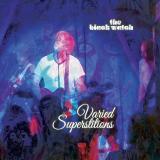
It is with some degree of surpriseand delight that we were contacted by John Andrew Fredrick, the founder and omnipresent member of Santa Barbara’s the black watch to see if Blue Matter would be interested in putting out their newest album. Of course we were. One listen was more than enough to convince us that it would fit perfectly on to the label. Perhaps a little more indie than other albums we’ve released, but sowhat? ‘Varied Superstitions’ is an intriguing collision of Cure-style indie and trippy psych which had us buzzing right away. the black watch (lower case intentional) wasformed in 1987 by John Andrew Fredrick in Santa Barbara, California, and he has been (and still is) it’s guiding light. They have released 25 albums over the last 38 years and show no sign of ageing. With a fantastic band behind him, John has presented us with a wonderful batch of songs ranging from mesmeric psych to indie/punk. In late 2025 John paid a brief visit to the UK to see friends and also to do a couple of live acoustic performances. The Bevis Frond was lucky enough to share the bill with John at London’s Betsey Trotwood for a wonderful evening of acoustic revelry. Not only is he a hugely talented musician/songsmith, but a thoroughly decent fellow. It’s a true privilege to be able to put out ‘Varied Superstitions’ on our label.

- A1: Les Masques - Il Faut Tenir (1969)
- A2: Isabelle Aubret - Casa Forte (1971)
- A3: Christianne Legrand - Hlm Et Ciné Roman (1972)
- A4: Jean Constantin - Pas Tant D'chichi Ponpon (1972)
- A5: Billy Nencioli & Baden Powell - Si Rien Ne Va (1969)
- B1-: Marpessa Dawn - Le Petit Cuica (1963)
- B2: Jean-Pierre Sabar - Vai Vai (1974)
- B3: Sophia Loren - De Jour En Jour (1963)
- B4: Isabelle - Jusqu’à La Tombée Du Jour (1969)
- B5: Sylvia Fels - Corto Maltesse (1974)
- C1: Frank Gérard - Comme Une Samba (1972)
- C2: Ann Sorel - La Poupée Des Favellas (1971)
- C3: Charles Level - Un Enfant Café Au Lait (1971)
- C4: Andrea Parisy - Les Mains Qui Font Du Bien (1970)
- C5: Audrey Arno - Quand Jean-Paul Rentrera (1969)
- C6: Aldo Frank - T’as Vu Ce Printemps (1970)
- D1: Christianne Legrand - Cent Mille Poissons Dans Ton Filet (1972)
- D2: Clarinha - Lemenja (1970)
- D3: Hit Parade Des Enfants - Aquarela (1976)
- D4: Jean-Pierre Lang - Tendresse (1965)
- D5: Magalie Noël - Une Énorme Samba (1970)
- D6: Françoise Legrand - La Lune
Ever since the late 1950s bossa-nova revolution, Brazil’s influence on French music has been undeniable. Pierre Barouh, Georges Moustaki and a vast array of lesser known artists, all made the Musica Popular Brasileira (MPB) an axis of promotion at the service of a cool and metaphysical, modern and mixed Brazilian lifestyle. Some were seduced by the poetic languors of the bossa, some were looking for fun, and others just loved the American hybridization of jazz-bossa, jazz-samba.
What is bossa nova? One of its creators, Joao Gilberto said: "Its style, cadence, everything is samba. At the very start, we didn't call it bossa nova, we sang a little samba made up of a single note - Samba de uma nota so .... The discussion around the origins of bossa nova is therefore useless”. It is nevertheless useful to remember that these magnificent Brazilian songs, which the guitarist describes as samba, were shifted and balanced around improbable chords. "I like things that lean, the in-betweens that limp with grace," said Pierre Barrouh, quoting Jean Cocteau.
With emotion, arrangements for violin and supple guitar licks, bossa nova rapidly changed. A transformation that can be heard in the Tchic, tchic, French Bossa Nova 1963-1974 compilation, the result of a cultural reappropriation, which traveled through the United States and supplemented itself in France.
A musical revolution that has remained significant, bossa nova was born in Rio. From 1956 to 1961, Brazil lived through its golden years. In five years, the country had invented its modernist style. Elected president in 1956, Juscelino Kubitschek de Oliveira, an elegant man with a broad forehead, brandished a promising slogan: "Fifty years of progress in five years". He quickly got to work. Not worried about increasing debt, he launched the project for a new federal capital, Brasilia, designed by the communist architect Oscar Niemeyer. Volkswagen opened state-of-the-art factories and created the “fusquinha”, the Beetle. In Rio, the Vespa made its first appearance. The Arpoador Surf Club crew run into the “girl” from Ipanema, Helô Pinheiro - the tanned garota ("chick"), between a flower and mermaid, who at 17 walked by the Veloso bar, where the fiery author and composer, Tom Jobim and Vinicius de Moraes, were getting drunk on whiskey. From then on, bossa symbolized cool.
In 1958, Joao Gilberto recorded Chega de Saudade, which the directors of Philips denied, calling it "music for fagots". The marketing director, who believed in it, secretly pressed 3000 78-inch vinyls and distributed them at schools around Rio, creating a tidal wave.
American jazzmen then took over. In particular, trumpeter Dizzy Gillespie and guitarist Charlie Byrd. In November 1962, the Brazilian Ministry of Foreign Affairs funded a "Bossa-Nova" concert at Carnegie Hall in New York, inviting the genre’s pioneers. Unprepared, the show soon turned to disaster. But the troupe was invited to the White House by Jackie Kennedy. The first lady loved "the new beat" and in particular Maria Ninguem, a song by Carlos Lyra, later covered by Brigitte Bardot.
In Brazil, the 1964 military coup quickly ended this euphoria. The destructive atmosphere that ensued pushed many Brazilian musicians to leave, if not to exile. Thus, Tom Jobim, Sergio Mendes and Joao Gilberto arrived to the United States. In New York, Joao Gilberto met saxophonist Stan Getz. At the time, he was married to the Bahianese Astrud Weinert Gilberto, who had a German father. She had never sung before, but she knew how to speak English. Getz therefore asked her to replace her husband on The Girl From Ipanema. The Getz/Gilberto record with Tom Jobim on piano, was released in March 1964. Phil Ramone, the "pope of pop" was in charge of sound.
Bossa nova arrived in Paris through the classic “guitar-voice” channel (Pierre Barouh, Baden Powell, Moustaki…) But France loved jazz and Paris had already welcomed its American contributors. All these good people were to pass through Saint-Germain-des-Prés. The cabaret l'Escale became the Mecca of Latin American sound where one could find Pierre Barrouh and his friends, such as the Camara Trio, samba-jazz aces, whose only record was published by the Saravah label. With a band strangely called Les Masques (a band that included Nicole Croisille and Pierre Vassiliu, among others), the Camara Trio recorded an interesting Brazilian Sound, including the track Il faut tenir which is present on this tasty compilation of rarities.
Other enlightened musicians can also be found on the compilation, such as Jean-Pierre Sabar (songwriter for Hardy, Auffray, Leforestier ...) and the French pop rock organist Balthazar. In 1975, Sabar recorded Aurinkoinen Musiikkimatka on a Finnish label, which featured the crazy Vai, Vai, included on this record. We are now following the footsteps of Brazilian electronic musicians such as Sergio Mendes, Eumir Deodato or Marcos Valle who created funk and disco sounds on their keyboards and synthesizers. A style that influenced Véronique Sanson when she wrote Jusqu’à la Tombée de la nuit in 1969 for Isabelle de Funès, the niece of Louis and a great friend of Michel Berger - Sanson did end up singing this track on her 1992 Sans Regret record.
The pinnacle of exoticism and travel, Sylvia Fels’ Corto Maltese includes bongos, sea mist and ocean sounds. The title was taken from Jacky Chalard’s concept album written in 1974, Je suis vivant, mais j’ai peur (I am alive, but I am scared), based on Gilbert Deflez’s science fiction novel.
However, bossa nova extended the scope of popularity. "In the 1970s, I was a fan of Sergio Mendes, Getz / Gilberto. I fell in love with this music that I knew because I had been an orchestral singer, " explained Isabelle Aubret, who in 1971 delivered a composite record of covers by the very funky Jorge Ben, Orfeu Negro, Tom Jobim, Vinicius de Morais and Jean Ferrat. "I recorded this album for Meys Records in Paris, far from Brazil, with wonderful musicians, François Raubert, Roland Vincent, Alain Goraguer...". The latter wrote the arrangements for Casa Forte, a very percussive title borrowed from Edu Lobo, one of the initiators of the bossa who spent time in California. "Jazz and bossa came together and produced very rhythmic music. I love singing, it allows me to dream, to have fun, to feel a high on stage, and these songs brought me joy, made me swing, my singing felt like a dance.”
The world tours of French singers and their desire for the tropics, often brought them to Rio with its hills, forests, caipirinhas and tanned bodies. There are surprises though, like this Iemenja (Iemenja is the goddess of the sea in the Afro-Brazilian candomblé religion). Not unlike the composer and musician Jean-Pierre Lang, based in Sao Paulo, Claire Chevalier taught Brazil to Brazil. In 1970, the singer and painter published a 45-inch vinyl, Mon mari et mes amants (My husband and my lovers), under the improbable pseudonym of Clarinha (little Claire). She was then living in Rio, with her husband, Joël Leibovitz, who founded a band called Azimuth, and who owned a record label specialized in "sambas enredos" songs for samba school parades.
For its B side, she asked Pierre Perret to come up with lyrics for a song composed by Carlos Imperial: "Oh goddess of the sea, o goddess Iemenja, I bring a white rose to adorn your long hair ..." . "Perret came to see us, and we had fun, remembers Joël Leibovitz. We wrote Lemenja for fun, we recorded it at the Havaí studio, behind the Central do Brasil the central station. Erlon Chaves, the arranger who worked with Elis Regina, joined us" adding his share of Afro-Brazilian percussions and funky brass to the mix.
There is a common misunderstanding in Franco-Brazilian history: that bossa, admittedly hedonistic, is perceived as funny, even though the poets who wrote the texts are often philosophizing on the human condition. Its French interpreters pull it towards a carnival inspired universe, far removed from its fundamental essence. Thus, Jean Constantin covered the famous Samba da minha terra, an ode to the art of samba written by the classic Bahian composer Dorival Caymmi, renaming it with the enticing title of Pas tant de tchi tchi pompon: "On your pier there is no tchi tchi / when you arch your back, you know everything is alright ”(lyrics by Gérard Calvi). This expedited bossa aims for the absurd, but retains a certain elegance.
Indeed, Jean Constantin was not an idiot, the rather large man had a huge mustache and liked fantasy, (Les pantoufles à papa, Le pacha, inspired by cha-cha-cha-cha, salsa and jazz) but he was also the lyricist of Mon manège à moi interpreted by Edith Piaf, the composer of Mon Truc en plume by Zizi Jeanmaire and the soundtrack of François Truffaut’s 400 Blows. Le Poulpe, published in 1970, from which this bossa is extract, was arranged by Jean-Claude Vannier, an accomplice of Serge Gainsbourg’s Melody Nelson. In short: "There is enough of samba / By looking at the parasol / Because my poor cabeza / Is going to die in the sun".
Even the American actress Marpessa Down, who was at the heart of the bossa nova revolution with her role as Euridyce in Marcel Camus’ film Orfeu Negro, winner of the 1959 Cannes Palme d'or, fed the clichée with Je voudrais parler au petit cuica - "Tell me how you manage to always make people want to dance / It's true, I must admit that I cannot resist your magic" - in consequence, once can hear the cuica, a little drum inherited from the Bantu.
But bossa nova had many angles. Societal, of course, pushing actresses who were symbols of women's liberation like Brigitte Bardot, Jeanne Moreau, or Sophia Loren to engage in the exercise of accelerated bossa. In February of 1963, Sophia Loren made a record in French in Rome, Je ne t'aime plus, featuring the song De jour en jour, a bossa written by two Italians, Armando Trovajoli and Tino Fornai, which was released a little later by Barclay. Bossa accompanied the 1960s, a decade of moral liberation. Ann Sorel, who interpreted La Poupée des favellas, caused a sensation with L’amour à plusieurs, a provocative song written by Frédéric Bottom and Jean-Claude Vannier. As for the actress Andrea Parisy, she displayed her bourgeois cheekiness in Marcel Carné's Les Tricheurs before interpreting Les mains qui font du bien. And Magalie Noël, the friend of Boris Vian, who sung Johnny fais-moi mal, was hired to sing Une énorme Samba, composed by Alain Goraguer (arranger to Gainsbourg, Bobby Lapointe and Jean Ferrat) with lyrics by Frédéric Botton.
But in the end, of what wood is bossa nova made of? The answer is given by Christianne Legrand, daughter of Raymond the conductor, and sister to Michel the composer: "With me, with jà" - jà means "immediately" in Portuguese. In 1972, the singer, an expert in vocal jazz and a member of the Double Six, published Le Brésil de Christianne Legrand. Two songs included on the Tchic Tchic compilation that demonstrate how bossa, jazz, funk, rock, etc. work like a swiss army knife: the music is used to denounce broken systems, or miracles, HLM et ciné roman, Cent mille poissons dans ton filet, two songs from the O Cafona soundtrack, a successful telenovela broadcast, at the time in black and white, on TV Globo. The first was adapted in French by the fighter and friend of the Legrand tribe, Agnès Varda. The second is content with a play on words, jostling them into a summer fun.
Véronique Mortaigne

- A1: Joe Yorke & Yaksha – Rocking Ship
- B1: Alpha Steppa – Wrecking Ship (Dub Mix)
Hailing from North-west UK, singer and producer Joe Yorke is classed as one of the most promising UK reggae artists of his generation. His exceptional and unique falsetto voice paired with his profound and poetic lyrics have caught the attention of some of the best producers and labels and an ever-growing fanbase. Joe has entered the stage with support from reggae/dub legends such as David Rodigan, Don Letts, Dennis Bovell, Nick Manasseh and Stand High Patrol. His latest single comes via Steppas Records in collaboration with upcoming UK dub producer Yaksha, “Rocking Ship” is a poignant and compassionate commentary on the plight of refugees. Mixed by Alpha Steppa, featuring a heavyweight, stripped back dub mix for company. A crucial 7” for collectors, home listening and sound systems alike.

- A1: Johnny And Dee Dee
- B1: Julie Is A Junkie
To commemorate the 40th Anniversary of the passing of James Darroch, singer/songwriter/guitarist for Sydney's incredible The Eastern Dark, Grown Up Wrong! is thrilled to announce a long-awaited reissue of the band's classic single "Julie Is A Junkie/Johnny and Dee Dee".
Heavily influenced by the Ramones - the band opened their first live show with 'Blitzkrieg Bop' and from then on opened with a new Ramones song every time they played, working through the band's complete catalogue in chronological order - as all manner of hyper-melodic and high energy rock. The Eastern Dark were a classic trio powered by former Celibate Rifles bassplayer James Darroch's blazing guitar and anchored by former Lime Spiders backing vocalist Bill Gibson's hard driving and melodic bass playing (and supreme backing vocals) and Geoff Milne's untouchable beat keeping. They set Sydney's Radio Birdman influenced scene alight in 1984 and quickly built an international following on the back of their classic single. Sadly, just hours after completing what would become their next release - the mini-LP "Long Live the New Flesh" - the band's life, and that of 26-year old James Darroch, was brutally ended in a road accident whilst the band was on its way to Melbourne.
On the back of the tragedy, the band's music lived on and it's global impact was reflected in the influence it bore on numerous bands, from Boston's the Lemoneads to Tokyo's Teengenenete, and obviously a succession of Australian bands from the Hard-Ons through to God and the Meanies and beyond.
After years of searching, surviving members Bill Gibson and Geoff Milne recently found the single's original multi-track tapes, and for the new release, the original recordings have been both remixed and remastered for maximum impact under their supervision.

- 1: I Need Her
- 2: Bendita Ilusin
- 3: Una Traicin
- 4: Amor Perdido
- 5: Juliana
- 6: Phoenix
- 7: La Bendicin
- 8: La Realidad
Joe Bataan's Ghetto Records released Joe Acosta's "The Power of Love" LP in 1971. It is now beloved among both salsa dura fans for the tough uptempo numbers and with the lowrider "souldies" crowd for its sweet and slow Latin soul track 'I Need Her.' There are a number of funky mid-tempo son montunos, as well as three super hard guaguancos enough variety to make for a solid dancing-and listening experience. Reissued once again thanks to our collaboration with Now-Again Records. Our release includes an insert with liner notes.

That’s My Story“ ist das 1960 erschienene Album der Blues-Ikone John Lee Hooker, das ursprünglich bei
Riverside Records veröffentlicht wurde. Das Album zeichnet sich durch einen für einen Country-BluesSound rohen, reduzierten Ansatz aus. Hooker spielt Akustikgitarre in Titeln wie „I Need Some Money“
und „No More Doggin’“, um eine fesselnde Sammlung zu schaffen, die sein Können gekonnt zur Geltung
bringt. Diese Ausgabe wurde bei QRP auf 180-Gramm-Vinyl gepresst und von Matthew Lutthans bei The
Mastering Lab von den Originalbändern remastert (AAA).
- A1: Nica's Dream
- A2: Avenue
- B1: Greensleeves
- B2: Lamento
- B3: Sheila's Song
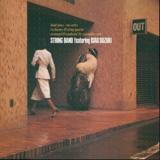
This album was recorded by Isao Suzuki with an international string band lineup featuring Hank Jones, Roy Haynes, and Ron Carter. Widely supported by jazz fans both in Japan and abroad, it remains highly sought after and continues to command strong popularity on the used market.
Bass (Piccolo Bass): Isao Suzuki
Bass: Ron Carter
Piano: Hank Jones
Drums: Roy Haynes

- 1: Apis Bull
- 2: Moon Of Urd
- 3: Phlegraean Fields
- 4: Blind In Abyssal Realms
- 5: Hierothesion
ORDH's debut, "Blind In Abyssal Realms", sets out to redefine what the term 'progressive death metal' truly means. But before ORDH, there was BARISHI. When their bass player threw in the towel to pursue other interests in life, guitarist and vocalist Graham Brooks, "looking for a fresh start", decided the time had come to finally dwell in his favorite genre: death metal. But not just any kind of death metal_ Having drafted BARISHI drummer Dylan Blake, with whom Graham has been playing since he was twelve years old, and Josh Smith from KIEFCATCHER on bass, the trio then spent a few gruelling years working on their debut, with Graham writing most of the music and ironing the songs out with Dylan and Josh. Having toured with COME TO GRIEF when BARISHI was still around, Graham and the latter's singer Jonathan Hébert had hit it off really well, so when the time came to find a vocalist, Jonathan was called upon, "right on time to jump straight into the recording and writing process, as most of the music was ready to go".

The recordings on Volume II were captured in Copenhagen, Denmark on January 18, 2020. Guided as much by human instinct as by musical intention, the ensemble moved through the evening with a shared sensitivity…listening, responding, and trusting the moment as it unfolded. Though Morten McCoy admits to having felt quite ill that evening, nothing in the music suggests restraint. Instead, what remains is a vivid, playful exchange, where McCoy and Johannes Wamberg carry both Part I and Part II as a flowing conversation, speaking through sound rather than words.
Part I begins abruptly, almost throwing the listener back in time to the exact moment the improvisation was born. Jonathan Bremer steps to the forefront, providing a solid, melodic bassline as Kristoffer and Eliel, perfectly in sync, lay down a steady foundation for whichever voice chooses to rise above the rhythm.
This is also one of the few I Am An Instrument recordings to feature two guitarists. Johannes Wamberg leads the way, shaping the harmonic direction, while Steven Jess Borth II adds subtle rhythmic textures through muted palm work, deepening the groove without ever stepping into the foreground.
Part II unfolds with Morten McCoy on his Moog One, delivering a beautiful, expansive solo. Using a carefully chosen patch, the sound pulses through the rhythm, moving with the groove rather than above it, riding the beat like a wave through the ocean.
Shaped by trust, presence, and collective improvisation, Volume II captures a group deeply attuned to one another, allowing intuition and momentum to guide the unfolding form.
——
Volume III was recorded in Copenhagen on March 5, 2020. Little did anyone know that only days later, the world would be placed on pause for years. Captured just before that moment of global stillness, this session carries a heightened sense of presence, a final gathering before silence reshaped everything. Recorded in a space more commonly associated with a club atmosphere, the music draws on a different kind of energy and immediacy. With Eliel Lazo unable to attend, the group invited Victor Dybbroe of Girls In Airports to join on percussion, subtly reshaping the ensemble while preserving its core spirit. Part I opens with Steven Jess Borth II calling out on tenor saxophone, answered by Morten McCoy on Wurlitzer electric piano. The piece gradually unfolds into a meditative groove, patient and expansive, carrying the listener through an eight-minute journey of layered rhythm and restraint.
Part II begins with Jonathan Bremer on stand up bass, slowly joined by the rest of the ensemble as each voice enters with intention. Midway through, an unexpected vocal melody from Borth emerges, drenched in reverb and delay, later reappearing as a melodic line on the tenor saxophone.
Part III is led by Morten McCoy on Wurlitzer electric piano. His signature melodic language sets the direction, guiding the ensemble while leaving ample space for the music to breathe and evolve through collective improvisation. Reprise returns to the closing moments of Part II, its title reflecting its origin. The familiar groove reappears, transformed into a distinctly Jamaican-influenced rhythm, over which Borth delivers a final tenor saxophone solo, bringing the conversation to rest.
Any questions about any of these products feel free to get in touch and we'll help you out!
[a] a1. Part I [Vol.2]
[b] a2. Part II [Vol.2]
[c] a3. Part I [Vol.3]
[d] b1. Part II [Vol.3]
[e] b2. Part III [Vol.3]
[f] b3. Reprise [Vol.3]

- 1: Horizon: Ii. True Horizon
- 2: Horizon: I. Visible Horizon
Pulitzer Prize-winning American composer John Luther Adams wrote this piece for the Australian Chamber Orchestra. Inspired by his recent relocation to Australia and his travels across the continent - from the Northern Territory and the Red Centre all the way to Tasmania - 'Horizon' is an immersive audio experience exploring the relationship between the visible horizon, with its trees, its mountains and its human structures, and the true horizon: the enveloping circle where the sky meets the earth. How long might it take us to traverse that distance, from where we are to as far as we can see? And what lies beyond that edge of the known? The Australian Chamber Orchestra brings its passion, its virtuosity and its vibrant energy to this exquisitely unique musical experience.

- 1: 24-03-04_Birthday_B4
- 2: Big-Box Store Heart
- 3: Nqa
- 4: Sure Could (A Random Exercise In Life-Altering Party Fouls)
- 5: The Luna Project
- 6: Crash Taylor
- 7: 30Days30Days30Days
- 8: Shitshow Or Boulevard Of Soaking Dreams
- 9: Oh, Donna
- 10: Wten
- 11: Something's Gotta Give
- 12: Pinch Me
When you name your band Prince Daddy & The Hyena, you sort of accept that chaos isn’t a chapter in your story – it’s the entire ethos. Since forming out of Albany, NY’s DIY scene, Prince Daddy & The Hyena have built a career out of reaching their breaking point and continuing forward anyway. Their first LP, produced by Joe Reinhart, captured a very young band figuring things out in real time; their massive conceptual undertaking Cosmic Thrill Seekers followed and pushed their ambition (and patience) to new extremes. Not long after, a serious van accident nearly took their lives, directly informing the intensity of their self-titled record.
Over the last decade, the band has lost close friends and collaborators, endured relationship struggles, and faced countless moments that would have ended most bands without question. But those experiences never slowed Prince Daddy & The Hyena down. On their upcoming fourth album, Hotwire Trip Switch, they recalibrate and reconnect with their roots while sounding more focused and self-aware than ever. Reuniting with Joe Reinhart for the first time in nearly a decade, the album pulls from the punchy lineage of Green Day, the hook-driven quirk of Weezer, the snarky urgency of Joyce Manor and Jeff Rosenstock – all through the distinctly bratty lens of songwriter and vocalist Kory Gregory.
