We Jazz Records kicks off their new series of archival 7" releases with Esa Pethman "In Belgium 1967" released 23 September 2022. The two-tracker is licensed from the Belgian VRT radio archives and both of the pieces are previously unreleased. Finnish jazz legend Pethman, heard here on alto flute and tenor sax, joins forces with European jazz greats such as Heinz Bigler, Uffe Karskov and Jean Fanis. This is a small but valuable piece of unheard European jazz history from the early heyday of modern jazz. The physical release is a quality "inside-out"-styled EP with 3mm spine and small center hole on the 45rpm vinyl.
An excerpt from the liner notes by Mikko Mattlar:
"Esa Pethman (b. 1938) was one of the key figures of modern Finnish jazz in the 1960s. His album The Modern Sound Of Finland was the first Finnish modern jazz album and his composition "The Flame" a true modern Fenno-jazz evergreen.
Pethman was born in Kuusankoski, 135 kilometres from Helsinki in the Kymenlaakso area. The jazz scene was active even though it was an area of rural landscapes and paper mills. Pethman discovered jazz when he heard a Charlie Parker record being played at a local music shop in the late 1940s. Following Parker, bebop became his favourite style of jazz.
Young Pethman played flute and saxophone in local bands who accompanied schlager singers. They played tangos and waltzes for dancers, but usually started a typical dance event with an hour of jazz. In 1959 Pethman moved to Helsinki to study music at the Sibelius Academy. Back then it was a strictly classical music academy, but Pethman later described the studies as crucial for his development and career. He quickly made his way to studio sessions and into the best orchestras in Helsinki.
As a student of composition, Pethman also began writing his own music. "The Flame" was a melody he just got on his mind one night, and he decided to write it down. The catchy composition was released as a 7" single in 1964, a year before Pethman's debut album. Both records stand as benchmarks for modern Finnish jazz. The album consisted entirely of Pethman's compositions, not versions of jazz standards like a lot of the Finnish jazz released until then.
In the mid 1960s, Finnish jazz was also taking its first international steps. Pethman's quintet took part in the first Montreux Jazz Festival in Switzerland in June 1967. At the Montreux jazz band competition, the quintet came in fourth of the twelve contestants. Despite not winning the competition, the band got an honourable mention, and Pethman was now recognized outside Finland.
In December 1967 Pethman travelled to Brussels. His visit was organised by the national Finnish broadcasting company Yleisradio and their jazz program producer Matti Konttinen. Konttinen was supposed to go to Brussels with Pethman, but the musician ended up traveling alone.
In the Decca recording studios Pethman played two songs. He recorded a version of his most famous composition "The Flame", where he played the alto flute and was accompanied by Belgian musicians. On Swiss saxophonist Heinz Bigler's composition "Like Steel", Pethman played the tenor saxophone. The band was now more international, consisting of Bigler, the Italian Francesco Santucci, the Dane Uffe Karskov, a Belgian rhythm section and Pethman. After 55 years, Pethman still remembers Bigler's remarkable skills as a saxophonist.
The two-day visit included the recording session, a dinner and a concert. Pethman and the other non-Belgian musicians came to Brussels mainly to play at a jazz concert organised by the European Broadcasting Union EBU. They played at the studio first, and the concert was held the following day. Pethman and all the other soloists played as members of an international big band. The studio and live session were produced by the Belgian Radio and Television jazz section leader Elias Gistelinck."
Buscar:jo mills
No Speakers scores a major coup here by signing a Detroit legend from Underground Resistance's Galaxy 2 Galaxy. This guy's shared stages with figureheads like Jeff Mills, Carl Craig and Goldie so his creds cannot be questioned. His signature fusion of jazz and electronic fire burns bright here with A-side bangers 'Layers to This' and 'Bridgehouse' primed for future classic status as well as peak-time destruction. Flip it for South London's L.A. Synthesis remix. No stranger to dropping their own iconic techno, their take twists and turns into otherworldly soundscapes. Label boss El Prevost closes the EP with a savage twist of 'Bridgehouse' that is dark and twisted in all the right ways.
DJ Feedback
Kai Alce:
"Bridgehouse is just that, a bridge to the future."
Chris Udoh:
"Bridgehouse is an exceptional cut! "
Kosh:
"Nice release."
D'Julz:
"Best EP I heard in a long time. Lovely."
Radio Slave:
"So good to see La Synthesis here !!! and another great EP. from Jon. Full support."
ICYKOF:
"This is really fun. Love the first track."
Barbara Preisinger:
"The original tracks are sounding great to me and will go into the box. Thanks a lot!"
Orlando Voorn:
"Dopeness, all killer no filler."
Okain:
"Classy stuff."
Cristi Cons:
"Very nice, thanks."
Ryan Crosson:
"El Prevost remix is great, also enjoying the la synthesis remix."
Harri:
"Nice, will play and support."
Domenic Cappello:
"Jon is Detroit royalty, love this."
DJ Hutch:
"Love this release. Bridgehouse remix is crazy."
Harvey Sutherland:
"Bridgehouse is hot, thanks!"
Colin Dale:
"Excellent EP. All the cuts rock."
Greg Gow:
"Nice soulful tracks full support."
Laurent Garnier:
"Cool deepness."
Aleqs Notal:
"Jon Dixon, always on fire!!!"
Man Power:
"Layers to this is great."
DJ Bone:
"Smooth and funky release. Very nice."
- Memories Are Now - Sm
- The Lost Sky - Sm
- Animal Kingdom Chaotic - Sm
- Simon Says - Sm
- Cut Connection - Sm
- Songs Of Old - Sm
- Unsaid - Sm
- Pegasi - Sm
- The Coming - Sm
Die in Manchester lebende Kalifornierin Jesca Hoop wurde von Tom Waits entdeckt, von Peter Gabriel als Tour-Sängerin mitgenommen, sie arbeitete mit Produzenten wie John Parish (PJ Harvey), Blake Mills (Alabama Shakes) und Tony Berg (Phoebe Bridgers) zusammen. Der Grund sind ihre meisterhaft komponierten, im Folk verwurzelten Songs, detailreiche, harmonische Kuriositäten voller guter Ideen und tiefer Emotionen. ""Selective Memory"" ist die Unplugged-Version ihres vierten Studioalbums ""Memories Are Now"" (2017) und reiht sich in die Riege der reduzierten Formate ihrer ersten drei LPs ein. In Anlehnung an diese Tradition mit ihrer rauen Ästhetik haben Hoop und zwei Bandkolleginnen das Album von Anfang bis Ende live in Jescas Haus in Manchester eingespielt. Es ist voller brillanter Harmonie, gehaltvoller Texte und authentischer Darbietungen, süß und bitter, frisch und roh zugleich und sehr aktuell.
- 1: A Brief History Of Blindness (Feat. Lynn Blakey)
- 2: Waiting For The End Of Time (Feat. Jason Falkner)
- 3: Cloud To Cloud (Feat. Matthew Caws)
- 4: You Swallowed The Sun (Feat. Chris Stamey And Pat Sansone)
- 5: The Waiting Game (Feat. Aimee Mann)
- 6: In The Shadow Of The Moon (Feat. Lynn Blakey And Mike Mills)
- 7: So Sad (Don't Let Go) (Feat. Matthew Caws)
- 8: Ex Post Facto Kids (Feat. Mitch Easter)
- 9: How We Breathe (Feat. Lynn Blakey, Matthew Caws And Kimberley Rew)
- 10: The Quickening Sky (Feat. Django Haskins And Faith Jones)
- 11: All The Rage (Feat. Chris Stamey And Aimee Mann)
- I Know I'm Not Wrong
- Learning To Fly
Los Angeles-based artist Sam Wilkes is known for his genre-defying solo work and collaborations in the experimental and jazz community. His debut release for Psychic Hotline, 104.3 is part of the label's ongoing Singles Series. Stepping away from his bass guitar, Wilkes explores new territory on a borrowed Fender Stratocaster, lent to him by longtime friend Brian Robert Jones (Paramore, Vampire Weekend). On the very night he brought the guitar home, Wilkes recorded a live, loop-based version of Tom Petty's "Learning to Fly" in a single take, later layering in bass and background vocals. The whole thing started as an experiment; more about exploring an instrument than making a record. A few weeks later on his last night with the Strat, Wilkes recorded what would become the A-Side: his reimagining of Fleetwood Mac's "I Know I'm Not Wrong." "I just wanted to document what was happening without any other intention. Half of my time on bass is spent trying to make it sound not like a bass, so actually getting to play a different instrument felt incredibly liberating," says Wilkes. Both arrangements are intuitive and spontaneous. Captured without pretense, the result is a pair of understated songs, perfect for a summer drive. This release is the latest installment in our long-running Psychic Hotline Singles Series, which has featured standout tracks from artists like Kieran Hebden, Sam Gendel, Blake Mills, Flock of Dimes, Anjimile, and Bartees Strange. With each new entry, the series continues to showcase boundary-pushing work from across our extended creative family.
- A1: Beginning Again
- A2: Bumpin' On Sunset
- B1: Straight Ahead
- B2: Change
- B3: You'll Stay In My Heart
When Straight Ahead hit the shelves in 1974, it marked another bold chapter for Brian Auger’s Oblivion Express. The band—Steve Ferrone on drums, Barry Dean on bass, Jack Mills on guitar, and Lennox Langton on congas— was firing on all cylinders, pushing jazz fusion into fresh, uncharted territory.
Critics took notice, with Billboard praising the album as “excellent in development and inventiveness, ” and it found its way onto multiple charts at once.
The journey begins with “Beginning Again, ” a lively opener built on Langton’s congas and Ferrone’s muscular groove. Auger’s electric piano sparkles here, immediately setting the album’s adventurous tone. Then comes their take on Wes Montgomery’s “Bumpin’ On Sunset. ” Darker in mood and drenched in atmosphere, Auger stretches out into improvisation while still honoring Montgomery’s spirit. The interpretation struck such a chord that, years later, Wes’s widow wrote to Auger to tell him it was her husband’s favorite version of his much-loved tune.
The title track, “Straight Ahead, ” shifts gears into funk, showcasing the group’s ability to slide effortlessly between genres. “Change” pushes further, blending rock’s raw energy with jazz’s improvisational freedom, driven by Auger’s command of the Hammond organ. To close, “You’ll Stay in My Heart” brings the tempo down with a tender, soulful ballad—an intimate ending to an album full of bold explorations.
At the time, reviewers hailed the record as a gem. One called it “a minor masterpiece of incredibly engaging and melodic keyboard-centric jazz-rock fusion. ” Another singled out “Bumpin’ On Sunset” as “the best reason to own this recording.”
Half a century later, Straight Ahead still resonates. It captures that fertile moment in the 1970s when jazz, rock, and funk were colliding, and artists like Auger were busy redrawing the map. To this day, it stands as proof of Auger’s fearless curiosity and his knack for breaking boundaries—music that looked forward then, and still feels ahead of its time now.
"Imagine More is the follow-up to Lophae's acclaimed debut Perfect Strangers (January 2025).
Recorded live to 2-inch,16-track analogue tape with the band all in one room, engineered and mixed by Benedic Lamdin (Nostalgia 77), and mastered by Caspar Sutton-Jones (Gearbox Studios), this second offering from guitarist and composer Greg Sanders' quartet ventures deeper into their distinctive blend of modern jazz, psychedelic exploration, and world music flourishes.
Four gifted improvisers navigate Sanders' compositions with mercurial dialogue and musical communion, weaving melodic elegance with rhythmic complexity, creating sound-worlds that echo Jeff Parker, Joao Gilberto, and Blake Mills while channeling the sophistication of Stan Getz, Bill Frisell, and Edu Lobo.
Fizzing electric guitar, flowing saxophone lines, and skittering rhythmic interplay transport listeners from north-west London's Fish Factory recording studio to the musical capitals of New York, New Orleans, Rio De Janeiro, Bamako, and Johannesburg - anchored by Sanders' unmistakable compositional voice and the quartet's intuitive sensitivity."
Tensal is the solo project of Héctor Sandoval, also known as half of Exium and Komatssu. Since its creation in 2014,
Tensal has become the channel for his most personal vision of Techno, blending diverse rhythms and textures with a
powerful and distinctive identity. Alongside his own imprint Tensal Ltd, he has released on some of the scene’s most influential labels, including Mord, Modularz, Perc Trax, Blueprint, Arcing Seas, PoleGroup, Float, Kynant, KR3, A.R.T.S,
Warm Up and Soma, where he delivered his first LP in 2018.
He has remixed artists such as Slam, Electric Indigo, Anthony Linell, Mike Parker, Shed, Pangaea and Shifted, while his
tracks are championed by leading DJs like Jeff Mills, Richie Hawtin, Marcel Dettmann, Ben Klock, Ellen Allien, Laurent Garnier and DVS1. His DJ sets, built largely from his own productions, have taken him to more than 60 countries
worldwide, with performances at iconic clubs and festivals including Berghain, Tresor, Awakenings and Fabrik.
Beyond Tensal, Sandoval explores different frontiers of electronic music: with Juan Rico (Reeko) he formed Komando Terrorismo Sonico (K.T.S.), releasing the album Insurrección in 2021; in 2022 he launched Syndromania on Oaks
Records, a vinyl-only project fusing Techno with Trance, EBM, Electro and Acid. In 2023 he joined BPitch Control,
releasing several EPs and performing at the label’s We Are Not Alone events, while in late 2024 he debuted on Blueprint
Records with Highland Landscapes, a collaboration with Vince Watson (Amorphic), followed by a joint EP on Mord in
2025.
Bassist Pino Palladino hat als gefragter Studiomusiker mit vielen Giganten gespielt, darunter Elton John,
Tears for Fears, David Gilmour, D’Angelo und Adele. Sein Jazz-Talent spielte er mit Manu Katché, Dominic
Miller u.a. aus. 2021 erschien auf Impulse! Records „Notes with Attachments“, seine erste gemeinsame
Produktion mit dem Gitarristen und Multiinstrumentalisten Blake Mills.
Beider Mischung aus Jazz, minimalistischem Funk, Indie Rock und subtilen Melodien kam bei Hörern
und Kritikern an und wurde sogar mit Joni Mitchell’s “Hejira” und Miles Davis’ “Bitches Brew” verglichen.
Jetzt kehren Palladino und Mills mit ihrem zweiten gemeinsamen Album auf Impulse! Records zurück, das
ihren ganz eigenen Sound fortführt und weiterentwickelt.
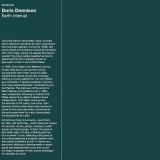
The discovery of Doris Dennison's score represents a genuine musicological breakthrough—what once would have been "a tree falling in the woods" thirty years ago now holds the potential to render "a thunderous clap in our minds." While researching Anna Halprin's lesser-known collaborators, scholar Tom Welsh uncovered the archives of AA Leath, one of Halprin's principal dancers. Buried within these materials was Dennison's handwritten score for Earth Interval, dated May 1956. Born in Saskatchewan, Canada, in 1908, and raised near Seattle, Dennison (1908-2009) encountered John Cage while teaching Dalcroze eurythmics at the Cornish College of the Arts. She joined Cage's earliest percussion quartet—alongside Margaret Jansen, the composer and his wife Xenia—in the group widely regarded as having performed the first complete concert of percussion music in the United States. This historic December 1938 concert was followed by tours and the landmark May 1941 performance at the California Club, comprising Cage and Lou Harrison's Double Music, the premiere of Cage's Third Construction, and Harrison's 13th Simfony.
As Bradford Bailey observes in his extensive liner notes, Earth Interval demonstrates "an extraordinary balance of elements that imbues the piece with a sense of clarity, directness, and constraint that is both distinct and ahead of its time." The work's most remarkable innovation lies in its approach to extended techniques, particularly Dennison's notation for the central movement: "In 2nd movement, 1st player lowers + raises a gong into a tub of water while beating." This technique, absorbed from Cage's experimental vocabulary, generates what Bailey describes as "fields of acoustic abstraction that bend and warp time through sustained resonances, beat, and space." The temporal sophistication of these manipulations anticipated Karlheinz Stockhausen's Mikrophonie I (1964) and Annea Lockwood's water-based sound investigations by over a decade. After joining Mills College as dance accompanist, Dennison maintained crucial connections to the Bay Area's experimental scene, collaborating with figures like Merce Cunningham and programming Cage's music throughout the 1950s.
Comprising three movements—Land Form, Air Tide, and Earth Play—Earth Interval is scored for recorder, drums, gongs, maracas, muted gongs, and bowl gongs. In total, the piece is just under eight minutes: "a fleeting glimmer of moment in time, a life spent at the cutting edge, and a singular creative vision that packs a powerful punch." When viewed in historical context, placed in contrast to roughly contemporaneous avant-garde percussion works by Cage, Harrison, Louis Thomas Hardin (Moondog), and Harry Partch, or important precursors like Edgard Varèse's Ionisation (1931) and Henry Cowell's Ostinato Pianissimo (1934), it's clear that Dennison was following her own path. Earth Interval is not derivative. It is a precursor to what was yet to come, alluding to developments of avant-garde and experimental music that wouldn't begin to appear on the cultural landscape until the 1970s and '80s, with the emergence of Post-Minimalism and more idiosyncratic artists and ensembles like Midori Takada, Ros Bandt, Peter Giger, Frank Perry, Christopher Tree, Michael Ranta, Gamelan Son of Lion, and Niagara.
This recording by Chicago's Third Coast Percussion, captured in March 2022, represents the first complete documentation of this pioneering work. The ensemble's interpretation reveals the piece's remarkable contemporaneity while maintaining its historical specificity. Where Cage, Harrison, and Partch employed "self-consciously off-kilter polyrhythms," Dennison's rhythmic sensibility anticipates minimalist developments by nearly a decade, yet integrates "forceful rests, as well as sharp shifts in sonic character, tempo, and meter, that break the momentum and breathe a sense of life into the piece's structure." This positions her work closer to Post-Minimalism decades before its emergence. The architectural approach demonstrates Dennison's understanding that "the composer almost entirely disappears" in favor of phenomenological listening experience, creating what might be called an egoless music that places its realities and meaning entirely in the ear of the beholder. The present recording, realized by Chicago's distinguished Third Coast Percussion ensemble, represents a significant achievement in experimental music scholarship and performance practice. As specialists in the Cage tradition and contemporary percussion repertoire, Third Coast Percussion approached Earth Interval with the historical sensitivity and technical precision required to illuminate Dennison's subtle compositional innovations. The March 2022 recording sessions, engineered by Colin Campbell, capture both the work's intimate chamber music qualities and its bold exploration of extended techniques. The ensemble's interpretation reveals the piece's remarkable contemporaneity—its ability to speak directly to current musical concerns while maintaining its historical specificity.
This recording serves multiple scholarly functions: it provides the first complete documentation of Dennison's compositional voice, offers insight into the broader network of experimental music practitioners surrounding Cage and Harrison, and demonstrates the sophisticated level of compositional thinking that was occurring within the Bay Area's dance-music collaborations of the 1950s. The work's emphasis on phenomenological listening—what might be called an "egoless" approach to musical experience—places it within a lineage of American experimental music that prioritizes perceptual process over compositional personality. The work's original obscurity—limited to AA Leath's performances at venues like the 1957 Pacific Coast Arts Festival at Reed College—paradoxically allowed it to remain "entirely on its own terms," free from the constraints of historical categorization. Drawing on Jacques Derrida's Archive Fever, the argument emerges that "the archive can acknowledge, celebrate, and resurrect" overlooked voices, transforming our understanding of experimental music history. The present Blume edition, featuring Third Coast Percussion's authoritative interpretation, includes a lavishly illustrated 16-page booklet designed by Bruno Stucchi / dinamomilano, containing complete scholarly apparatus, historical photographs, and detailed production notes. This recording enables "cross-temporal intersectionality," allowing Dennison to "belong to a newly formed and more dynamic understanding of the present and past," demonstrating how forgotten voices can reshape entire historical narratives when given proper scholarly attention and performance advocacy.
Am 24.06. erscheint das achte Studioalbum „Meet The Moonlight“ von Jack Johnson. Zeitgleich startet
seine Sommertour quer durch die USA.
Das Album ist zum größten Teil in persönlicher Zusammenarbeit mit Produzent Blake Mills entstanden;
aufgenommen wurde es in Los Angeles und Hawaii. Es behandelt Themen wie die Zerbrechlichkeit menschlicher Beziehungen und die Unbeständigkeit des Lebens
- A1: East Coast Love Affair - Xylocopa Violate
- A2: Helen Sharpe - Got 2 Have Your Love (Jazz Rave Mix)
- A3: Len Lewis - Joy
- B1: Percy X & Mark Broom - Lady Killer
- B2: Sound Of The Suburbs - All You Need
- B3: Amtraxx - Funky
- C1: Eden Burns - Big Bark Manifesto
- C2: Karizma - Kellah
- C3: Ivan-I & Starchild - All Things Dub
- C4: Lightning Head - Me & Me Princess (Version 2)
- D1: Selective Perception - Dij-Ya-Do-One
- D2: 82J6 - Exercise Life
- D3: Quest - Smooth Skin
HUGE CONGRATULATIONS TO MOXIE AND THE LOVE INTERNATIONAL X TEST PRESSING TEAM FOR WINNING THE BEST COMPILATION IN THE DJ MAG BEST OF BRITISH AWARDS 2025
“I feel really chuffed as a lot of work went into building this compilation,” beams Moxie, when we congratulate her on the award. “I also worked alongside a great team, including Dave Harvey, Ellie Stokes, Chez de Milo and everyone at Prime Distribution. I’d been manifesting working on a project like this for years, so when it all came together I was so happy with it. But to have recognition from the DJ Mag public vote is the cherry on the cake.”
Few artists have shaped their local scene quite like Alice Moxom under her celebrated Moxie alias. A born-and-bred Londoner, Moxie is a dance music powerhouse whose influence runs deep—from the grassroots to global stages. Her trajectory spans early teenage years digging for garage records, to dubstep sets at legendary club nights, to running her long-standing and beloved NTS Radio residency. For over a decade, she’s been a midweek staple on NTS, championing deep house, Detroit techno, and all things dubby, groovy, and percussive, while regularly platforming artists through guest mixes and interviews with icons like Jeff Mills, Four Tet, and Or:la.
Her latest endeavor, the Love International compilation, brings that wealth of experience to life. 'I’d secretly been manifesting this for a while,' Moxie admits. 'Love International has such a specific energy, and I wanted the compilation to reflect that—dubby, fun, euphoric, deep. It’s all the styles of music I love, pulled together in harmony. Being at Love International always feels like coming home. Whether it’s dancing in Barbarellas or sharing a smile with a stranger on the dancefloor, there’s this sense of unity that’s hard to describe. That’s why I chose ‘U Skladu’ for the sleeve—because that’s what it feels like: in harmony.'
- A1: Early Autumn; Bass – Milt Hinton; Drums – Osie Johnson; Flute – Jerome Richardson; Guitar – Billy Mure; Piano – Billy Rowland, Written-By – Johnny Mercer, Ralph Burns, Woody Herman 3:09
- A2: Round Midnight; Bass – Milt Hinton; Drums – Osie Johnson; Guitar – Billy Mure; Piano – Billy Rowland; Trumpet – Billy Butterfield, Written-By – B. Hanighen*, C. Williams*, Thelonious Monk 2:59
- A3: Prelude To A Kiss; Bass – Milt Hinton; Drums – Osie Johnson; Guitar – Billy Mure; Piano – Billy Rowland; Trombone – Urbie Green; Written-By – Duke Ellington, Irving Gordon, Irving Mills 2:58
- A4: My One And Only Love; Bass – Wendell Marshall; Drums – Don Lamond; Piano – Hank Jones; Tenor Saxophone – Al Cohn; Written-By – Guy Wood, Robert Mellin 3:28
- A5: In Other Words; Bass – Wendell Marshall; Drums – Don Lamond; Piano – Hank Jones; Tenor Saxophone – Al Cohn; Written-By – Bart Howard 3:51
- A6: Two For The Blues; Baritone Saxophone – Jerome Richardson; Bass – Milt Hinton; Drums – Osie Johnson; Guitar – Billy Mure; Piano – Billy Rowland, Written-By – J. Hendricks*, Neal Hefti 2:38
- B1: Blue And Sentimental; Bass – Milt Hinton; Drums – Osie Johnson; Guitar – Billy Mure; Piano – Billy Rowland; Trombone – Urbie Green, Written-By – Count Basie, Jerry Livingston, Max David* 2:52
- B2: Speak Low; Bass – Wendell Marshall; Drums – Don Lamond; Piano – Hank Jones; Tenor Saxophone – Al Cohn, Written-By – Kurt Weill, Ogden Nash 3:57
- B3: Oh What A Night For Love; Bass – Milt Hinton; Drums – Osie Johnson; Guitar – Billy Mure; Piano – Billy Rowland, Written-By – Neal Hefti, Steve Allen (3) 2:55
- B4: You Go To My Head; Bass – Wendell Marshall; Drums – Don Lamond; Piano – Hank Jones; Tenor Saxophone – Al Cohn, Written-By – Haven Gillespie, J. Fred Coots 3:04
- B5: Caravan; Bass – Milt Hinton; Drums – Osie Johnson; Flute – Jerome Richardson; Guitar – Billy Mure; Piano – Billy Rowland, Written-By – Duke Ellington, Irving Mills, Juan Tizol 3:51
- B6: Soft Winds; Baritone Saxophone – Jerome Richardson; Bass – Milt Hinton; Drums – Osie Johnson; Guitar – Billy Mure; Piano – Billy Rowlandm, Written-By – Benny Goodman, Fred Royal 2:36
It’s always a pleasure to welcome Scottish producer Milton Jackson back on Freerange and this time he joins forces with a trio of Detroit heavyweights to deliver the Fire Emoji EP. Brian Kage is a producer / DJ, founder of record label Michigander and has released on esteemed labels such as FXHE and Planet E. Here, Brian is on co-production and mastering duties and helps bring a raw yet musical quality to all four tracks. HazMat Live is a Detroit native known for his unique approach to music and live performances having graced records and live shows with the likes of Kenny Dixon Jr, Amp Fiddler, Bilal, Soul Clap and Delano Smith. Finally, Jon Dixon adds his own inimitable touch to the release with his deft keyboard work. Jon Dixon not only leads the Underground Resistance live acts Galaxy 2 Galaxy and Timeline but has also performed with everyone from Jeff Mills, Carl Craig and Mike Banks through to Goldie, Leon Ware and Dwele.
Lead track Fire Emoji is probably best described as a serious stomper. A paired back club tool which pumps hard and will keep the energy levels simmering on any dance floor worth its salt. Echoing vocals and reverb-drenched hits add a trippy edge whilst an extended break adds extra drama and tension to the arrangement.
The Sunsetters lightens the mood with a euphoric slice of chunky, deep house which acts as the foundation for HazMat Live to deliver his epic synth solo, accompanied by lush strings, deep pads and punctuating 909 snares.
Wanna C U fuses US and UK Garage sounds to form a taught, muscular club groove which will lock you in with it’s fat stabs, swinging beats and repeating sampled vocal hook.
- A1: Blondie - "Call Me" (3 31)
- A2: Madness - "My Girl" (2 47)
- A3: Kate Bush - "Army Dreamers" (2 51)
- A4: Roxy Music - "Oh Yeah!" (4 50)
- A5: Grace Jones - "Private Life" (4 39)
- A6: Siouxsie & The Banshees - "Christine" (3 00)
- A7: Judas Priest - "Breaking The Law" (2 36)
- A8: Motorhead - "Ace Of Spades" (2 49)
- B1: Donna Summer - "On The Radio" (3 53)
- B2: Diana Ross - "I'm Coming Out" (3 57)
- B3: Change - "Searching" (3 12)
- B4: Stephanie Mills - "Never Knew Love Like This Before" (3 24)
- B5: Odyssey - "If You're Lookin' For A Way Out" (3 07)
- B6: The Korgis - "Everybody's Got To Learn Sometime" (3 54)
- B7: Andrew Lloyd Webber & Marti Webb - "Take That Look Off Your Face" (3 08)
- B8: Jona Lewie - "Stop The Cavalry" (2 57)
- C1: Adam & The Ants - "Antmusic" (3 31)
- C2: Toyah - "I Want To Be Free" (2 58)
- C3: Kim Wilde - "Chequered Love" (3 17)
- C4: The Human League - "Open Your Heart" (3 51)
- C5: Visage - "Mind Of A Toy" (3 35)
- C6: Altered Images - "I Could Be Happy" (3 30)
- C7: Fun Boy Three - "The Lunatics (Have Taken Over The Asylum)" (3 04)
- C8: Shakin' Stevens - "Green Door" (3 02)
- D5: Gary Numan - "She's Got Claws" (4 52)
- D6: Freeez - "Southern Freeez" (3 55)
- D7: Kiki Dee - "Star" (3 14)
- D8: Cliff Richard - "Wired For Sound" (3 38)
- E1: Duran Duran - "Hungry Like The Wolf" (3 25)
- E2: Haircut 100 - "Fantastic Day" (3 13)
- E3: Adam Ant - "Friend Or Foe" (3 25)
- E4: Soft Cell - "Torch" (4 08)
- E5: A Flock Of Seagulls - "Wishing (If I Had A Photograph Of You)" (4 06)
- E6: Japan - "Nightporter" (4 52)
- E7: Abc - "All Of My Heart" (4 38)
- F1: The Clash - "Should I Stay Or Should I Go" (3 01)
- F2: The Jam - "Beat Surrender" (3 22)
- F3: Bucks Fizz - "The Land Of Make Believe" (3 49)
- F4: Tight Fit - "Fantasy Island" (3 26)
- F5: Dollar - "Videotheque" (3 32)
- F6: Imagination - "Just An Illusion" (3 57)
- F7: Shalamar - "There It Is" (3 22)
- F8: Daryl Hall & John Oates - "I Can't Go For That (No Can Do)" (3 43)
- G1: Wham! - "Wham Rap! (Enjoy What You Do?)" (3 22)
- G2: Spandau Ballet - "Gold" (3 42)
- G3: Bananarama - "Cruel Summer" (3 30)
- G4: Billy Joel - "Tell Her About It" (3 45)
- G5: Paul Young - "Wherever I Lay My Hat (That's My Home)" (4 02)
- D1: The Police - "Invisible Sun" (3 22)
- G6: Carmel - "Bad Day" (3 37)
- D3: The Teardrop Explodes - "Reward" (2 45)
- G7: Culture Club - "Victims" (4 55)
- H1: Paul Mccartney & Michael Jackson - "Say Say Say" (3 40)
- H2: Kc & The Sunshine Band - "Give It Up" (3 55)
- H3: The Cure - "The Walk" (3 26)
- H4: Tears For Fears - "Change" (3 51)
- H5: Heaven 17 - "Come Live With Me" (3 30)
- H6: Elton John - "I Guess That's Why They Call It The Blues" (4 40)
- H7: Robert Plant - "Big Log" (4 54)
- I1: Queen - "Radio Ga Ga" (5 40)
- I2: Thompson Twins - "Doctor! Doctor!" (4 23)
- I3: Nik Kershaw - "I Won't Let The Sun Go Down On Me" (3 21)
- I4: Howard Jones - "Like To Get To Know You Well" (3 52)
- I5: Sandie Shaw - "Hand In Glove" (2 56)
- I6: Alison Moyet - "All Cried Out" (3 39)
- I7: Tina Turner - "Private Dancer" (4 03)
- J1: Lionel Richie - "Stuck On You" (3 07)
- J2: Rufus & Chaka Khan - "Ain't Nobody" (4 21)
- J3: Billy Ocean - "Caribbean Queen (No More Love On The Run)" (3 57)
- J4: Hazell Dean - "Whatever I Do (Wherever I Go)" (3 42)
- J5: Shakatak - "Down On The Street" (3 17)
- J6: Frankie Goes To Hollywood - "The Power Of Love" (5 31)
- J7: Band Aid - "Do They Know It's Christmas?" (3 45)
- D2: Pretenders - "Message Of Love" (3 25)
- D4: Orchestral Manoeuvres In The Dark - "Joan Of Arc" (3 14)
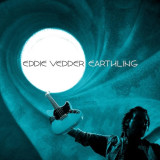
Knapp zwei Jahre nachdem Pearl Jam ihr Album „Gigaton“ veröffentlichten, erschien d iesen F ebruar das langersehnte dritte Studioalbum von Pearl Jam Frontmann Eddie Vedder: „Earthling“. Nun ist das Warten endlich vorbei - das Album erscheint jetzt endlich auch als schwarze Standard LP und Deluxe CD!
Neben dem Song „Long Way“ gibt auch „Brother The Cloud”, ein Tribut an den verstorbenen Chris Cornell von Soundgarden, emotionale und musikalische Einblicke in das Album, welches auf das 2011 erschienene ”Ukulele Songs” folgte. Die Produktion von „Earthling“ übernahm Andrew Watt, gemeinsam mit PJ-Tourmitglied Josh Klinghoffer, Bassist Pino Palladino, Multiinstrumentalist Glen Hansard und dem Red-Hot-Chili-Peppers-Schlagzeuger Chad Smith. Die Aufnahmen für das Album fanden in Watts Studio
in Beverly Hills statt.
Liquid Gold Vinyl[25,84 €]
Lucy Dacus, die als „eine der besten Songwriterinnen ihrer Generation“ (Rolling Stone) gilt, kehrt am
28.3. mit ihrem neuen Album „Forever Is A Feeling“ zurück. Als Bandmitglied der Indie-Supergroup
„Boygenius“ gewann sie mit deren Debütalbum „The Record“ drei GRAMMY® Awards. In ihrem vierten
Soloalbum schreibt Lucy Dacus in ihren Songtexten offen über Sexualität und den Turbulenzen der Liebe.
In 13 Tracks, die von komplexen Instrumentals-Arrangements bis hin zu minimalistischen Sounds reichen,
beschäftigt sich mit dem Thema Vergänglichkeit und dem Gefühl der „Unendlichkeit“. Das Album Cover
ist ein Porträt von Lucy, das von dem Künstler Will St. John gemalt wurde. Außerdem holte sich die
Indie-Rock Sängerin bei „Forever Is A Feeling“ nicht nur kräftige Unterstützung von ihren „Boygenius“
Bandmitgliedern Phoebe Bridgers und Julien Baker, sondern auch von Folk Musiker Hozier, Blake Mills,
Bartees Strange, Madison Cunningham, Collin Pastore, Jake Finch and Melina Duterte.
- A1: Calliope Prelude
- A2: Big Deal
- A3: Ankles
- A4: Limerance
- A5: Modigliani
- A6: Talk
- A7: For Keeps
- B1: Forever Is A Feeling
- B2: Come Out
- B3: Best Guess
- B4: Bullseye (With Hozier)
- B5: Most Wanted Man
- B6: Lost Time
Clear Vinyl[25,63 €]
Lucy Dacus, die als „eine der besten Songwriterinnen ihrer Generation“ (Rolling Stone) gilt, kehrt am 28.3. mit ihrem neuen Album „Forever Is A Feeling“ zurück. Als Bandmitglied der Indie-Supergroup „Boygenius“ gewann sie mit deren Debütalbum „The Record“ drei GRAMMY® Awards. In ihrem vierten Soloalbum schreibt Lucy Dacus in ihren Songtexten offen über Sexualität und den Turbulenzen der Liebe. In 13 Tracks, die von komplexen Instrumentals-Arrangements bis hin zu minimalistischen Sounds reichen, beschäftigt sich mit dem Thema Vergänglichkeit und dem Gefühl der „Unendlichkeit“. Das Album Cover ist ein Porträt von Lucy, das von dem Künstler Will St. John gemalt wurde. Außerdem holte sich die Indie-Rock Sängerin bei „Forever Is A Feeling“ nicht nur kräftige Unterstützung von ihren „Boygenius“ Bandmitgliedern Phoebe Bridgers und Julien Baker, sondern auch von Folk Musiker Hozier, Blake Mills, Bartees Strange, Madison Cunningham, Collin Pastore, Jake Finch and Melina Duterte.
Nach einem Jahrzehnt, in dem die Band das Beste aus improvisierten Aufnahmeräumen in Lagerhäusern, Wohnwagen und Lofts gemacht hat, ist „For Melancholy Brunettes (& sad women)“, das vierte Album von Japanese Breakfast, die erste richtige Studioveröffentlichung der Band. Produziert von Grammy-Preisträger Blake Mills, zieht sich Frontfrau und Songschreiberin Michelle Zauner von der hellen Extrovertiertheit des Vorgängers „Jubilee“ zurück, um die dunkleren Wogen zu erforschen, die in ihrem Inneren aufgewühlt sind, das launische, fruchtbare Feld der Melancholie, das seit langem als der psychische Zustand von Dichtern am Rande der Inspiration gilt. Das Ergebnis ist eine künstlerische Absichtserklärung: ein reifes, komplexes, kontemplatives Werk, das den romantischen Nervenkitzel einer Gothic Novel heraufbeschwört. „For Melancholy Brunettes (& sad women)“ folgt einer transformativen Periode in Zauners Leben, in der ihr zweifach GRAMMY-nominiertes Durchbruchsalbum ‚Jubilee‘ und ihre Bestseller-Memoiren ‚Crying In H Mart‘ sie in den kulturellen Mainstream katapultierten und ihre tiefsten künstlerischen Ambitionen erfüllten. Als sie über diesen Erfolg nachdachte, erkannte Zauner die Ironie der Sehnsucht, die so oft Glückseligkeit und Verderben miteinander verbindet. „Ich fühlte mich verführt, das zu bekommen, was ich immer wollte“, sagt sie. „Ich flog zu nah an die Sonne heran, und mir wurde klar, dass ich sterben würde, wenn ich weiterflöge“. Das Schicksal von Ikarus und anderen Verdammten verleiht „For Melancholy Brunettes (& sad women)“ sein beständigstes Thema: die Gefahren des Begehrens. Wie zerstreutes Licht führen seine spektralen Teile die Charaktere des Albums durch Zyklen von Versuchung, Übertretung und Vergeltung. In „Orlando in Love“ - ein Riff auf John Cheevers Riff auf „Orlando Innamorato“, einem unvollendeten Epos, das aus 68 Cantos des Renaissance-Dichters Matteo Maria Boiardo besteht - ist der Held ein gutmütiger Dichter, der sein Winnebago am Meer parkt und dem Ruf einer Sirene zum Opfer fällt, seinem 69. Canto (selbst im erhabenen Reich des klassischen Mythos hat Zauner ein Faible für Anspielungen). „Honey Water“ lotet die stille Wut einer Frau aus, die mit einem untreuen Mann verheiratet ist und zusieht, wie er immer wieder der Lust nachgibt wie ein niederes Insekt, das seinen eigenen Untergang herbeiführt Traurigkeit ist in der Tat die dominierende emotionale Tonart dieser Platte, aber es ist eine Traurigkeit der besonderen Art: die nachdenkliche, vorausschauende Traurigkeit der Melancholie, in der die Erkenntnis des im Wesentlichen tragischen Charakters des Lebens mit Sensibilität für seine flüchtige Schönheit einhergeht. Zauner findet in ihr genügend Raum für Hoffnungsschimmer. Es sind die Tröstungen der Sterblichen, die Dichter vor ihr gerufen haben und die Dichter nach ihr immer wieder neu entdecken werden: Liebe und Arbeit, und obwohl sie sich wie stärkende Vorsätze durch die vielen Episoden des Albums ziehen, erklingen sie am deutlichsten im letzten Song, „Magic Mountain“, einer Auseinandersetzung mit Thomas Manns berühmtem gleichnamigen Roman. Für sie fühlt sich jede Arbeit wie das Erklimmen eines Berges an, aber von der Spitze von „For Melancholy Brunettes (& sad women)“ aus blickt sie in die Zukunft.
- Here Is Someone
- Orlando In Love
- Honey Water
- Mega Circuit
- Little Girl
- Leda
- Picture Window
- Men In Bars
- Winter In La
- Magic Mountain
Nach einem Jahrzehnt, in dem die Band das Beste aus improvisierten Aufnahmeräumen in Lagerhäusern, Wohnwagen und Lofts gemacht hat, ist „For Melancholy Brunettes (& sad women)“, das vierte Album von Japanese Breakfast, die erste richtige Studioveröffentlichung der Band. Produziert von Grammy-Preisträger Blake Mills, zieht sich Frontfrau und Songschreiberin Michelle Zauner von der hellen Extrovertiertheit des Vorgängers „Jubilee“ zurück, um die dunkleren Wogen zu erforschen, die in ihrem Inneren aufgewühlt sind, das launische, fruchtbare Feld der Melancholie, das seit langem als der psychische Zustand von Dichtern am Rande der Inspiration gilt. Das Ergebnis ist eine künstlerische Absichtserklärung: ein reifes, komplexes, kontemplatives Werk, das den romantischen Nervenkitzel einer Gothic Novel heraufbeschwört. „For Melancholy Brunettes (& sad women)“ folgt einer transformativen Periode in Zauners Leben, in der ihr zweifach GRAMMY-nominiertes Durchbruchsalbum ‚Jubilee‘ und ihre Bestseller-Memoiren ‚Crying In H Mart‘ sie in den kulturellen Mainstream katapultierten und ihre tiefsten künstlerischen Ambitionen erfüllten. Als sie über diesen Erfolg nachdachte, erkannte Zauner die Ironie der Sehnsucht, die so oft Glückseligkeit und Verderben miteinander verbindet. „Ich fühlte mich verführt, das zu bekommen, was ich immer wollte“, sagt sie. „Ich flog zu nah an die Sonne heran, und mir wurde klar, dass ich sterben würde, wenn ich weiterflöge“. Das Schicksal von Ikarus und anderen Verdammten verleiht „For Melancholy Brunettes (& sad women)“ sein beständigstes Thema: die Gefahren des Begehrens. Wie zerstreutes Licht führen seine spektralen Teile die Charaktere des Albums durch Zyklen von Versuchung, Übertretung und Vergeltung. In „Orlando in Love“ - ein Riff auf John Cheevers Riff auf „Orlando Innamorato“, einem unvollendeten Epos, das aus 68 Cantos des Renaissance-Dichters Matteo Maria Boiardo besteht - ist der Held ein gutmütiger Dichter, der sein Winnebago am Meer parkt und dem Ruf einer Sirene zum Opfer fällt, seinem 69. Canto (selbst im erhabenen Reich des klassischen Mythos hat Zauner ein Faible für Anspielungen). „Honey Water“ lotet die stille Wut einer Frau aus, die mit einem untreuen Mann verheiratet ist und zusieht, wie er immer wieder der Lust nachgibt wie ein niederes Insekt, das seinen eigenen Untergang herbeiführt Traurigkeit ist in der Tat die dominierende emotionale Tonart dieser Platte, aber es ist eine Traurigkeit der besonderen Art: die nachdenkliche, vorausschauende Traurigkeit der Melancholie, in der die Erkenntnis des im Wesentlichen tragischen Charakters des Lebens mit Sensibilität für seine flüchtige Schönheit einhergeht. Zauner findet in ihr genügend Raum für Hoffnungsschimmer. Es sind die Tröstungen der Sterblichen, die Dichter vor ihr gerufen haben und die Dichter nach ihr immer wieder neu entdecken werden: Liebe und Arbeit, und obwohl sie sich wie stärkende Vorsätze durch die vielen Episoden des Albums ziehen, erklingen sie am deutlichsten im letzten Song, „Magic Mountain“, einer Auseinandersetzung mit Thomas Manns berühmtem gleichnamigen Roman. Für sie fühlt sich jede Arbeit wie das Erklimmen eines Berges an, aber von der Spitze von „For Melancholy Brunettes (& sad women)“ aus blickt sie in die Zukunft.