Der belgische Barock-Folk-Dichter Loverman veröffentlicht sein Debütalbum "Lovesongs". Alle Songs wurden von Loverman geschrieben und von Pieterjan Maertens und Jo Francken produziert, die vor allem für ihre Arbeit mit Tamino und Zaz bekannt sind. Die Liebe ist das zentrale Motiv des Albums und schwingt in jedem der 11 Songs mit - eine warme, intime und offene Atmosphäre durchdringt die ganze Platte.
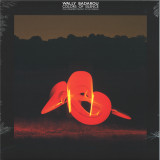
Synth pioneer and musical polymath, Wally Badarou is a genius. But you know that already. A vinyl version of his majestic Colors Of Silence has been craved by the Balearic cognoscenti ever since its low-key 2001 release. Indeed, when we first started work on Be With, we asked some pals with exquisite taste what their dream release would be. We asked Balearic legend Moonboots and, without hesitation, he said Colors Of Silence by Wally Badarou. We didn't know Wally had made this album. And most still don't. But that's about to change.
Colors Of Silence is ostensibly a new age album. As ever though, Wally's sophisticated synth textures and expressive keyboard runs are so full of character, so full of life, that this work of art transcends any easy genre categorisation. It's simply stunning, throughout. It sounds like A.r.t. Wilson or Suzanne Kraft, with traces of CFCF and Jonny Nash. But it was made a good decade earlier than the work of these modern giants. Sometimes, it doesn't seem far from some Larry Heard albums.
Island Records founder Chris Blackwell's friend Nathalie Delon asked Wally to provide music for the yoga DVD she was to release. Lack of time on both sides made them agree on using "quality demos" Wally had in his ideas bank. It's understandable why Colors Of Silence remains somewhat of a lost gem. As Wally explains: "Total lack of promotion made it an 'intimate' release, which was exactly what I was looking for: just a buzz-maker and time-buyer that would allow me to concentrate on the real thing as soon as I'd have time, which could also turn into a rare collecting item later, once the final versions made their way to success. You never know."
Over the years, Colors Of Silence has become a true cult record for the ambient/Balearic heads.
The beguiling but brief "Dance In The Dust" is the shuffling, hyper-percussive, hypnotic opener. It gives way to the deep serenity of "Amber Whispers". It's a gliding, divine, mini melodic masterpiece. It'll make you swoon in its extreme beauty. The bright and breezy "Where Were We" follows, a tropical, reggae-tinged bounce through the islands.
The uptempo groove is maintained on the keys-drizzled soca-funk of "The Lights Of Kinshasa" before Side A is rounded out with "Pictures Of You". It starts with stately, melancholic, unadorned piano and this alone would make for a beautiful song. But Wally always gives us that bit extra and he effortlessly introduces warm, dreamy pads and minimal, slo-mo percussion to augment a frankly stunning piece of work.
Ushering in Side B, Wally's mesmeric piano playing is to the fore again, in the intro to uber-chilled "Serendipity For Two". The playing becomes more mellifluous as the track progresses and adds warmth through exotic percussion, woodwind, sweeping synths and digi-drums. It has echoes of, er, Echoes. It segues seamlessly into the more propulsive, wavy "Smiles By The Millions". If you're not nodding and grinning along widely to the gently throbbing bassline underpinning this, we can't help you. The meditative "Higher Still" follows, cinematic in feel and ever so slightly sinister with the strings. It sounds particularly Badalamenti-esque, if you ask us.
That unmistakable, almost peculiar Badarou funk - so lyrical, so texturally rich and so rhythmically spacious - is all over "Oriental". Next up, "Days To Wonder" brings the serenity back, insistent yet melodic keys, as if played in a place of worship, coupled with birdsong, conjure a kind of instant nostalgia for halcyon days of youth. The contemplative "Dawn Of Europa" is a sombre, beatless, ambient journey whilst the glorious, too-brief "Crystal Falls" features soft percussion and sparkle before fully glistening with some gentle head-nod beats. Wally brings this incredible collection to a mellow, tender close with the graceful "Purple Lines".
There can be few artists more under-appreciated given their vast influence than Wally Badarou. His solo work practically defined the sound of the Balearic DJs of the 1980s, and thus the more sophisticated sound of dance culture thereafter. A synth specialist, Badarou was the long-time associate of Level 42. He was one of the Compass Point All Stars (with Sly and Robbie, Barry Reynolds, Mikey Chung and Uziah "Sticky" Thompson), the in-house recording team of Compass Point Studios responsible for a series of albums in the 1980s recorded by Grace Jones, Tom Tom Club, Mick Jagger, Black Uhuru, Gwen Guthrie, Jimmy Cliff and Gregory Isaacs. Badarou's keyboard playing could also be heard on albums by Robert Palmer, Marianne Faithfull, Herbie Hancock, M (Pop Muzik), Talking Heads, Manu Dibango and Miriam Makeba. He also produced Fela Kuti. Phew!
Meticulously remastered and cut by both Simon Francis and Cicely Balston respectively, it has been pressed to the highest possibly quality at Record Industry in Holland. Special thanks must go to Apiento from Test Pressing who first introduced us to Wally and facilitated all those early zoom meetings. It couldn't have happened without his help. Not least on pulling the art together, too, which features striking original photography by Mads Perch. Benji Roebuck of Roebuck Press did his thing brilliantly in art working the whole package to completion. All in all: essential.
out of Stock
Last delivered 22 months ago available to reorder, subject to availability
Orbiting Human Circus' new album is called Quartet Plus Two. What is Orbiting Human Circus? It is the continuing evolution of Julian Koster (Neutral Milk Hotel, The Music Tapes), whose music and storytelling under this moniker have encompassed immersive theater and a Night Vale Presents podcast, as well as more traditional albums. Central to the album are the "two" referenced in the title: North and Romika, the singing saws, whom Koster doesn't "play" so much as encourage. "I think saws sing like angels," says Koster. "I always have. Since I was a little boy. When you encourage them to sing, they do so earnestly and beautifully. It's an honest and real sound." The origins of Quartet Plus Two are as magical and seemingly unlikely as everything else in Koster's career. While walking through New York's Central Park, he stumbled upon Gauvain Gamon and Kolja Gjoni_a standup bass player and drummer, respectively_playing Gershwin and Mingus, and a musical partnership was born. Pianist Benji Miller rounds out the titular quartet, with Koster's longtime collaborators Robbie Cucchiaro (horns) and Thomas Hughes (orchestral arranging and chimes) of The Music Tapes also contributing to the record. The music they make together is at once familiar and unrecognizable, as Koster and Orbiting Human Circus interpret jazz compositions by Irving Berlin, Duke Jordan, George and Ira Gershwin, and others, alongside Koster's three originals. The use of the term "composition" is intentional and speaks to Koster's relationship with the music of Quartet Plus Two in far more evocative terms than "cover" or "standard." "To me it was always magical that there were these people called `composers' who created symphonies and popular songs for other people to breathe into life and existence all over the world and throughout time," he explains. "They traveled into our homes as sheet music, endless recorded interpretations, or were passed from hand to hand, village to village, like folk tales, changed by every hand that touched them. That music was something that came to life in our own living rooms and lives, songs that our grandmothers might have sung in a choir that we might sing just as earnestly. I just think it's nice, and I would love to share that feeling in any way we can."
Orbiting Human Circus' new album is called Quartet Plus Two. What is Orbiting Human Circus? It is the continuing evolution of Julian Koster (Neutral Milk Hotel, The Music Tapes), whose music and storytelling under this moniker have encompassed immersive theater and a Night Vale Presents podcast, as well as more traditional albums. Central to the album are the "two" referenced in the title: North and Romika, the singing saws, whom Koster doesn't "play" so much as encourage. "I think saws sing like angels," says Koster. "I always have. Since I was a little boy. When you encourage them to sing, they do so earnestly and beautifully. It's an honest and real sound." The origins of Quartet Plus Two are as magical and seemingly unlikely as everything else in Koster's career. While walking through New York's Central Park, he stumbled upon Gauvain Gamon and Kolja Gjoni_a standup bass player and drummer, respectively_playing Gershwin and Mingus, and a musical partnership was born. Pianist Benji Miller rounds out the titular quartet, with Koster's longtime collaborators Robbie Cucchiaro (horns) and Thomas Hughes (orchestral arranging and chimes) of The Music Tapes also contributing to the record. The music they make together is at once familiar and unrecognizable, as Koster and Orbiting Human Circus interpret jazz compositions by Irving Berlin, Duke Jordan, George and Ira Gershwin, and others, alongside Koster's three originals. The use of the term "composition" is intentional and speaks to Koster's relationship with the music of Quartet Plus Two in far more evocative terms than "cover" or "standard." "To me it was always magical that there were these people called `composers' who created symphonies and popular songs for other people to breathe into life and existence all over the world and throughout time," he explains. "They traveled into our homes as sheet music, endless recorded interpretations, or were passed from hand to hand, village to village, like folk tales, changed by every hand that touched them. That music was something that came to life in our own living rooms and lives, songs that our grandmothers might have sung in a choir that we might sing just as earnestly. I just think it's nice, and I would love to share that feeling in any way we can."
"Jazz Contrasts", einer der herausragenden Titel in Kenny Dorhams ohnehin schon unglaublichem Katalog, wird von Kevin Gray direkt von den Originalbändern gemastert und in einer Deluxe-Verpackung untergebracht, was diese Ausgabe zur ultimativen Edition macht. Kenny Dorham ist einer der größten Jazz-Trompeter aller Zeiten. Zu Beginn spielte er in den Big Bands von Lionel Hampton, Billy Eckstine, Dizzy Gillespie und Mercer Ellington sowie im Quintett von Charlie Parker. Dorham spielte nicht nur als Sideman in einigen der besten Bands der damaligen Zeit, sondern leitete auch seine eigenen Gruppen. Jazz Contrasts wurde zwischen dem 21. und 27. Mai 1957 im Reeves Sound Studio in New York aufgenommen. Auf der Aufnahme ist Kenny in glänzender Form neben dem ebenso großartigen Sonny Rollins am Tenorsaxophon, Hank Jones am Klavier, Oscar Pettiford am Bass, Max Roach am Schlagzeug und der meisterhaften Jazz-Harfenistin Betty Glamann zu hören.
"Omoiyari" means to have empathy and consideration for others, and act on it. This fall, the American indie-folk multi-instrumentalist and singer-songwriter Kishi Bashi is set to release the companion album to his forthcoming documentary song film, titled Music from the Song Film: Omoiyari. Consisting of two LPs_"The Songs" and "The Score"_the release showcases what is essentially the soundtrack to Omoiyari, the feature-length motion picture co-directed by Kishi Bashi, aka Kaoru Ishibashi or "K," which is being released via MTV Documentary Films in November. Focusing on K's own six-year journey of discovery surrounding his research of the incarceration of 120,000 Japanese Americans that followed the attack on Pearl Harbor in 1941, the film is part social justice documentary and part song-film experiment. The album includes K's live improvisations, which are featured in the documentary, many recorded on the sites where the concentration camps stood. Written during and about the artist's transformational dive into his personal identity and serving as a broad survey of the Japanese American experience as well as the incarceration_Music from the Song Film: Omoiyari serves as an evocative musical accompaniment to the lessons of empathy and compassion portrayed in the film and highlights the process and power of one of modern indie's most talented musicians.
God knows enough has been written about Workshop. Surely you haven't read it, but this group has been around since 1985, and what they did was this: musically quite limited, they made the music they wanted to hear, but in an ingenious way. Some played the instruments skillfully and others not so much. Something came out of it! One says: that's just the way I like it. The other one boasts: yes, I understood everything how you play here, sometimes you hit it, or sometimes you play so that the parents cry with joy. In fact, seven records were recorded, which, with the exception of the second LP, are still more than worth listening to today. Are they in danger of being forgotten?
Yes and no. What is worth listening to here has often been banned. One must bring it out again. Make attentive. Against the forgetting. These impetuous songs - just let them get close to you again and listen to them in a new context and forget all the smart-ass talk that was said about them. That means to put the self with all its reality entanglements in the pillory. This is of course not only pleasant. Bravo!
out of Stock
Last delivered 2 years ago available to reorder, subject to availability
The only one of tenor saxophonist Tina Brooks’ albums as a leader to be released during his too-brief lifetime, 1960’s True Blue is a hard bop masterpiece featuring Brooks’ distinctive compositions performed by an exceptional quintet with Freddie Hubbard on trumpet, Duke Jordan on piano, Sam Jones on bass, and Art Taylor on drums. This Blue Note Classic Vinyl Edition is stereo, all-analog, mastered by Kevin Gray from the original master tapes, and pressed on 180g vinyl at Optimal.
After her album with producer High John on MPM in 2019 and collaborations with agajon, Àbáse, KUOKO, Cap Kendricks and Move 78, soul singer douniah returns with her debut solo project!
douniah imparts her debut solo project "A Lot, Not Too Much" to an unexpecting audience. Thoughtfully, the singer-songwriter invites us to embark on our own saviour. The collection of songs is steeped in artistic and emotional integrity. Production was ledand executed by Dhanya Langer, one half of band project Modha, and producer of JujuRogers' 2019 album "40 Acres N Sum Mula". Written amid the pandemic, this piece is aneffort of immense proportions - experimenting with her sound in time, wading through spirals of arduous personal challenges. 'A first impression of how my journey sounds.'Agadir-born and Hamburg-raised, douniah engages in the practice of interpreting herspirit, impressively, in German, Darija and English. We find here, a body of work that threads together the tenets of free-form poetry and romanticism, backdropped by neo-experimental jazz tendencies. In euphony, a worldly array of instruments act insymbiosis to carry us through "A Lot, Not Too Much". douniah's voice is one to fall into; her message is enunciated with every word, delivered delicately with an inventory ofriffs and ranged tone. The utilisation of choppy, note-like, freestyles bridges the EP's strong singles, into a rhapsodic whole.
out of Stock
Last delivered 2 years ago available to reorder, subject to availability
Ancient Infinity Orchestra is a 14-member jazz ensemble led by double-bassist and composer Ozzy Moysey, based in the bustling creative city of Leeds in the North of England – home to one of the most innovative and community-based jazz scenes in the UK. Saxophonist Matt Cliffe who also performs with Matthew Halsall is a key member and the rotating line-up which includes drums, two bassists, keyboards, harp, violin, cello, two tenors, alto, oboe, flute and percussion. "River of Light’ drinks deep from the well of spiritual jazz and is especially inspired by the soulful sounds of Pharoah Sanders, Alice and John Coltrane but also channels a certain Northern sensibility that can be heard in the music of Matthew Halsall or Alabaster de Plume. Melodic, warm and honest this is music that is happy to wear its heart on its sleeve.
Das 35-jährige Jubiläum der Popsensation Milli Vanilli wird mit einer besonderen Veröffentlichung gefeiert, die eine Hommage an die zeitlosen Hits der Kultgruppe darstellt: "The Best of Milli Vanilli (35th Anniversary)". Diese Zusammenstellung verspricht den Fans eine Reise durch Songs, die eine Ära prägten, darunter Chartstürmer wie "Girl You Know It's True", "Blame It On the Rain", "I'm Gonna Miss You" und "Baby Don't Forget My Number". Diese Songs begeistern noch heute ein weltweites Publikum und zeigen den anhaltenden Einfluss von Milli Vanilli auf die Musiklandschaft. Milli Vanilli war eine der populärsten Musikgruppen in den späten 80er und frühen 90er Jahren, von ihrem ersten Album "All Or Nothing" wurden weltweit über 8 Millionen Exemplare verkauft. Mit ihrem Debüt-Hit "Girl, You Know It's True" wurde ein einzigartiger Hype ausgelöst, der die beiden ehemaligen Clubtänzer Rob Pilatus und Fab Morvan zu Pop-Superstars machte. Sie wurden bejubelt, verehrt und gefeiert. 1990 wurde die Gruppe mit einem Grammy als "Best New Artist" ausgezeichnet, der ihr später wieder aberkannt wurde, nachdem bekannt geworden war, dass Rob Pilatus und Fab Morvan - das Gesicht des Projekts - nie wirklich gesungen hatten. Die Songs wurden von Frank Farian produziert - der auch hinter anderen Gruppen wie Boney M., La Bouche und No Mercy steckt - und verwendete die Stimmen der Sänger Brad Howell, John Davis, Jodie Rocco, Linda Rocco und Charles Shaw. Der Skandal machte weltweit Schlagzeilen und das Duo ging getrennte Wege
Das 35-jährige Jubiläum der Popsensation Milli Vanilli wird mit einer besonderen Veröffentlichung gefeiert, die eine Hommage an die zeitlosen Hits der Kultgruppe darstellt: "The Best of Milli Vanilli (35th Anniversary)". Diese Zusammenstellung verspricht den Fans eine Reise durch Songs, die eine Ära prägten, darunter Chartstürmer wie "Girl You Know It's True", "Blame It On the Rain", "I'm Gonna Miss You" und "Baby Don't Forget My Number". Diese Songs begeistern noch heute ein weltweites Publikum und zeigen den anhaltenden Einfluss von Milli Vanilli auf die Musiklandschaft. Milli Vanilli war eine der populärsten Musikgruppen in den späten 80er und frühen 90er Jahren, von ihrem ersten Album "All Or Nothing" wurden weltweit über 8 Millionen Exemplare verkauft. Mit ihrem Debüt-Hit "Girl, You Know It's True" wurde ein einzigartiger Hype ausgelöst, der die beiden ehemaligen Clubtänzer Rob Pilatus und Fab Morvan zu Pop-Superstars machte. Sie wurden bejubelt, verehrt und gefeiert. 1990 wurde die Gruppe mit einem Grammy als "Best New Artist" ausgezeichnet, der ihr später wieder aberkannt wurde, nachdem bekannt geworden war, dass Rob Pilatus und Fab Morvan - das Gesicht des Projekts - nie wirklich gesungen hatten. Die Songs wurden von Frank Farian produziert - der auch hinter anderen Gruppen wie Boney M., La Bouche und No Mercy steckt - und verwendete die Stimmen der Sänger Brad Howell, John Davis, Jodie Rocco, Linda Rocco und Charles Shaw. Der Skandal machte weltweit Schlagzeilen und das Duo ging getrennte Wege
Das 35-jährige Jubiläum der Popsensation Milli Vanilli wird mit einer besonderen Veröffentlichung gefeiert, die eine Hommage an die zeitlosen Hits der Kultgruppe darstellt: "The Best of Milli Vanilli (35th Anniversary)". Diese Zusammenstellung verspricht den Fans eine Reise durch Songs, die eine Ära prägten, darunter Chartstürmer wie "Girl You Know It's True", "Blame It On the Rain", "I'm Gonna Miss You" und "Baby Don't Forget My Number". Diese Songs begeistern noch heute ein weltweites Publikum und zeigen den anhaltenden Einfluss von Milli Vanilli auf die Musiklandschaft. Milli Vanilli war eine der populärsten Musikgruppen in den späten 80er und frühen 90er Jahren, von ihrem ersten Album "All Or Nothing" wurden weltweit über 8 Millionen Exemplare verkauft. Mit ihrem Debüt-Hit "Girl, You Know It's True" wurde ein einzigartiger Hype ausgelöst, der die beiden ehemaligen Clubtänzer Rob Pilatus und Fab Morvan zu Pop-Superstars machte. Sie wurden bejubelt, verehrt und gefeiert. 1990 wurde die Gruppe mit einem Grammy als "Best New Artist" ausgezeichnet, der ihr später wieder aberkannt wurde, nachdem bekannt geworden war, dass Rob Pilatus und Fab Morvan - das Gesicht des Projekts - nie wirklich gesungen hatten. Die Songs wurden von Frank Farian produziert - der auch hinter anderen Gruppen wie Boney M., La Bouche und No Mercy steckt - und verwendete die Stimmen der Sänger Brad Howell, John Davis, Jodie Rocco, Linda Rocco und Charles Shaw. Der Skandal machte weltweit Schlagzeilen und das Duo ging getrennte Wege
Music compilation and art book. We open the GLITZERBOX again and look into a glittering kaleidoscope of music and illustration. Crossing genres, in handmade editions and with great attention to detail, Jimmy Draht fuses artistic ideas into a new whole.
The vinyl contains beautiful folk songs, experimental collages, field recordings and lo-fi pop. All tracks are exclusive or have never been released on vinyl before.
Featuring music by: Maxine Funke, Tenniscoats, Mouth Harp Ensemble, How to count planets, A Happy Return, Benoit Pioulard, New North Wales, Dump, My Two Toms, Oro Swimming Hour, Matthew de Gennaro, The Gentlist, Andersens, Jam Money, Michael Tanner.
The artists, whether they paint, draw, scribble or cut, whether analogue or digital, whether they are graphic artists, illustrators or visual artists: they combine image and sound, discover connections and show that music can create images and vice versa.
Art by Petra Péterffy, Laurent Impeduglia, Nadine Spengler, Michael Dumontier, Tomoko Mori and Nicholas Stevenson.
A limited and numbered edition of 300, with hand-printed 3 color silkscreen book. Compiled by Markus Acher (The Notwist) and Jimmy Draht.
Since the late 90s JIMMY DRAHT publishes elaborately designed music-graphic-comic-text hybrids, most of them handmade and screenprinted. Initiated by Marion Epp, often in cooperation with a music label, artists from various genres are invited to participate. Each release is accompanied by exhibitions and music events.
Bands such as Calexico, The Notwist, Lali Puna, Neoangin, Pram, Otomo Yoshihide, A Million Mercies, Ted Milton, MS John Soda, Schwermut Forrest, Tied & Tickled Trio have participated (to name a few).
In terms of design we were lucky to showcase the works of ATAK, Anna Sommer, Knust, CX Huth, Katz & Goldt, Judith Zaugg, Thomas Ott, Jochen Gerner, Martin tom Dieck, Jim Avignon, Le Denier Cri, Elvisstudio and many more.
ALIEN TRANSISTOR was founded in 2003 by Markus & Micha Acher of The Notwist. The concept of the label is to produce music that has a musical or personal reference to the Notwist microcosm: From electronic soundscapes to abstract hip-hop to laptop-treated contemporary, from processed oriental music to Nick Drake-inspired songwriting. Alien Transistor respects no musical boundaries.
The composer behind one of the most sensational breakthroughs in Danish music invites you on a crackling, ever-changing and deeply personal journey. His third album Atmospherics drops after a decade in which Mike Sheridan has searched deeply to find and capture his inner sound.
Films, theatres and art museums have benefited from Mike Sheridan‘s sense of sound and melody for the past 10 years. An album has been a long time coming because, in the wake of his breakthrough at the age of 16, he needed to listen extra closely to his inner sounds.
With Atmospherics, he unfolds the music in a meeting between who he once was and who he is today.
Three years ago, he began to create what is now the album Atmospherics. The term refers to electrical disturbances in the atmosphere, such as during a thunderstorm, which can interact with and distort wireless signals. Here, the title refers to both the sound of the album itself, where computer collages, classical instruments crystal clear melodies and heavy rhythms collide, and to the electronic processing and reworking. But really, he thought it would be a quiet release, almost devoid of melodies. Themes and music slide in and out of each other on the album. There are moments of dub, techno, pop and modern compositional music.
There are sounds and beats that crackle, dissolve, replace each other, or connect with each other in new ways.In this way, Atmospherics can be listened to as a long exhalation from an artist who has dared to hold his breath longer than most.
Atmospherics features both Danish and international guests such as Agnes Aldén (a singer, songwriter and producer from Falun, Sweden), Indra Rios-Moore (a singer, songwriter and arranger, from the Lower East Side of Manhattan), BYLJA and Janus Rasmussen - as well as a host of Sheridan‘s regular musicians.
The artwork for Atmospherics is created by visual artist Nicolai Howalt.
out of Stock
Last delivered 2 years ago available to reorder, subject to availability
After two years, Carl and Andreas present their second album, and once again, it opens up a wide associative space for us. What strikes us initially is the uncommon instrumentation: a church organ, harpsichord, glass tubes, and more. Like their first album (The Aporias of Futurism), it is mysterious and dark. But it also carries a strong touch of rebellion and adrenaline, sometimes quite pointedly. The pieces are now shorter and feature intricate yet irresistible rhythms. The impact is immediate, yet it maintains a sense of solemnity and ceremony. The Apollonian complexity of the rhythms and subtle melodic interweavings is transformed into a Dionysian, ecstatic, hypnotic, and at times tribal context. "Music for Unknown Rituals" oscillates between primitive instincts and avant-garde intrigues.
The process began in Döblitz, a small village on the Saale river in Germany, inside an old church that houses an organ built in 1886 by Johann Adolph Ibach. Carl and Andreas gained access and secluded themselves there for a few days, accompanied by the organ, an instrument made of glass tubes, and a set of modular synthesizers. After recording the basic tracks in Döblitz, the work continued in Munich and Berlin. Carl played electric guitars, harpsichord, bass, metallophone, xylophone, Indian harmonium, and various percussive instruments. Andreas added layers of electronic sounds, noises, and atmospheric drones. He also created percussive structures extracted and derived from recorded material of technical and industrial noises, which contrasted with the acoustic drums played by Carl. The antithetical approach continues with the dichotomous arrangement of the instruments, often panned hard left and right in the stereo field, creating an antiphonic communication. Some parts, especially the use of the electric guitar, evoke memories of the psychedelic sixties. However, this is anything but a nostalgic album—these musical references are merely remnants, set pieces, and fragments used from a contemporary, post-modern, post-youth-cultural, and post-romantic perspective.
Although Andreas and Carl continue on their chosen path of composing music with an almost literary narrative structure, this album is conceptually and formally completely different from their first effort. If “The Aporias of Futurism” was a revolutionary manifesto (in a pataphysical sense), "Music for Unknown Rituals" is more like the implementation in action; it is the practical application of the previous statement. To put it another way, if "The Aporias of Futurism” was the conceptual manifesto of a dark utopia of modernity, "Music for Unknown Rituals" is the staging of free will surrendering to the myths and catharsis of a Greek tragedy. And in response to this, the artwork features a leitmotif of histrionics with hands, the hands being the first and intuitive part of the body to express something: a ritual, a prayer, a defeat...
— Andreas Gerth is one half of Driftmachine, and Carl Osterhelt is part of F.S.K and collaborates with Hans-Joachim Irmler of Faust. Both became connected through their participation in the Tied & Tickled Trio.
As the title suggests, the recording Tenorlee finds Lee Konitz, the great American saxophonist,
playing exclusively on tenor. It was a spontaneous decision, and a tribute to his dear friend,
Lighthouse All-Star saxophonist Richie Kamuca, who had passed away just days before Konitz
entered the studio for these sessions. Konitz classically trained on the clarinet, but switched to jazz
saxophone after being enamored by Lester Young. By 1945 the 18 year old Konitz was performing
professionally. He made a staggering 150 albums as a band leader over the course of his long and
storied career. He played and recorded with everyone from Dave Brubeck, Charles Mingus, Ornette
Colman, Elvin Jones, and Gerry Mulligan, to Elvis Costello, Brad Mehldau and Charlie Haden.
Between 1948 and 1950, he was a member of Miles Davis’ group, and participated in the recordings
that would eventually be collected and released as Birth of The Cool. With a trio featuring Lighthouse
All-Star alum Jimmy Rowles on piano and Michael Moore on bass, Kontiz called out old and familiar
songs. The intention was to “let the tunes happen” as only finely tuned jazz musicians of certain
experience can. Of note is “Lady Be Good” which finds Konitz and Rowles quoting Lester Young’s
solo from the 1936 recording with Count Basie. From 1978, originally on the Choice label, this album
has been remastered and is presented here as the artist intended, with its original title, track order and
album artwork, for the first time since its original release. Remastered by Alex McCollough at True
East Mastering. Vinyl cut by Jeff Powell at Take Out Vinyl.
NEA Jazz Master, Toots Thielemans, is widely considered to be the preeminent jazz harmonica
player. It is safe to say that before him, the harmonica in jazz was simply not done, and Thielemans
can be credited with legitimizing the instrument in the genre. Born in Brussels, Belgium in 1922.
Theileman’s excelled on accordion as a small child, before picking up the guitar as a teenager after
hearing Django Reinhart. Along the way, he taught himself to play harmonica as a hobby. In 1948,
during a visit to the US, he sat in on guitar with a jazz group at small club in New York and was
“discovered.” Engagements soon followed with the likes of Benny Goodman, Charlie Parker, Miles
Davis, Oscar Peterson, Dizzy Gillespie, Quincy Jones and more. As the story goes, in response to a
musicians’ union restriction, Thielemans was forbidden to play guitar at a gig. So, he pulled out his
harmonica. The rest, as they say, is history. He went on to have a long and prolific career on the
instrument, as both a band leader and session musician. With his unique sound, he became a go-to
for film scores in the 1970s (The Pawn Broker, Midnight Cowboy). Perhaps most notably, Thielemans
is unconsciously known to generations for having played the melody on Sesame Street’s famous
closing theme. Organized as a purely jazz session, the date here prominently features a young Joanne
Brackeen on piano. It is perhaps Brackeen’s presence that makes this set so interesting. As an
avant-garde player she provides the vehicle for Thielemas to explore more advanced ideas. The
album covers a wide range of material, including two originals by Brackeen, alongside standards by
Coltrane, Ellington, Mercer and Mancini.
25th anniversary release of the album from 1998 as expanded special limited edition. It is the eighth Dub Syndicate studio album mixed by Adrian Sherwood. Originally released as catalogue number Lion & Roots 002 in 1998 on Style Scott"s own label here"s the expanded and remastered collector"s limited edition as 2LP-set including six additional tracks not available on the original vinyl release and also as 18-track CD release, with the booklet including excerpts from an unpublished interview. Main vocal contributor is the legendary artist Big Youth plus Little David courtesy J.R. Productions (Junior Reid"s camp), backing vocals by Skip McDonald and Style Scott"s inimitable laughter. The basic tracks were recorded in Jamaica, with some of the pals from the Roots Radics days (i.e. Flabba Holt, Steely Johnson) at Studio 2000 (Steely & Clevie"s studio) and the legendary Tuff Gong Recording Studio, followed by overdubbing in the USA at Greenpoint Studios (Bill Laswell"s studio) and Playroom Studios in New York, with additional overdub and final mix at On-U Sound (London) by Adrian Sherwood.
out of Stock
Last delivered 2 years ago available to reorder, subject to availability
Berlin party series and label AWAY Music continues its limited vinyl series called "Reissued", dedicated to re-releasing iconic cuts from the vast collaborative catalog of Move D & Pete Namlook. The third installment "Reissued 3", which follows the series' first two EPs from previous years, features again some exceptional pieces that were previously only available on CD. Move D and Pete Namlook are electronic visionaries whose 26-album relationship explored and intertwined psychedelic synthscapes, deep house and techno, future jazz, and downtempo on Namlook's cult imprint Fax Records. Their innovative and influential works keep inspiring electronic music producers today, showcasing their willingness to collaborate and push the boundaries of electronic music. First up on the A side, “Der Strahlender Verlierer”, from the 2006 Album “Let the Circle Not Be Broken”, begins atmospherically before pushing subtly into open filter and undulating synth territory. Introspective and accepting, the piece gradually lets the sum of its parts coalesce into a peaceful whole with sustained chords and the flicker of played steel strings.
“Hardwired Tangent” from the 2001 Album “Wired” rounds out the first side with edgier and more ominous tones. Brooding and bubbling its way through artificial textures absorbed by carefully weighted rhythmic tension. Shuffling jazz electronics. The moody low-mid hum providing buoyancy throughout. Also from the 2001 album, the B side’s “Hardwired Hypotenuse + Asymptote” is a synthetic journey. Textural, pseudo-organic, pulsating with urgency. The motoric percussion imparting structure to the sonic alchemy. Tactile yet integrated components offer the listener (or dancer) multiple entry points into the music. This is both artful and kaleidoscopic — a treatise on contemplative and psychoactive house music.
"Reissued 3" is a true testament to the innovative spirit and pioneering work of Move D and Pete Namlook. With these tracks now available on vinyl for the first time, AWAY's limited series is a must-have for old and new fans alike.
out of Stock
Last delivered 18 months ago available to reorder, subject to availability
Berlin party series and label AWAY Music continues its limited vinyl series called "Reissued", dedicated to re-releasing iconic cuts from the vast collaborative catalog of Move D & Pete Namlook. The third installment "Reissued 3", which follows the series' first two EPs from previous years, features again some exceptional pieces that were previously only available on CD. Move D and Pete Namlook are electronic visionaries whose 26-album relationship explored and intertwined psychedelic synthscapes, deep house and techno, future jazz, and downtempo on Namlook's cult imprint Fax Records. Their innovative and influential works keep inspiring electronic music producers today, showcasing their willingness to collaborate and push the boundaries of electronic music. First up on the A side, “Der Strahlender Verlierer”, from the 2006 Album “Let the Circle Not Be Broken”, begins atmospherically before pushing subtly into open filter and undulating synth territory. Introspective and accepting, the piece gradually lets the sum of its parts coalesce into a peaceful whole with sustained chords and the flicker of played steel strings.
“Hardwired Tangent” from the 2001 Album “Wired” rounds out the first side with edgier and more ominous tones. Brooding and bubbling its way through artificial textures absorbed by carefully weighted rhythmic tension. Shuffling jazz electronics. The moody low-mid hum providing buoyancy throughout. Also from the 2001 album, the B side’s “Hardwired Hypotenuse + Asymptote” is a synthetic journey. Textural, pseudo-organic, pulsating with urgency. The motoric percussion imparting structure to the sonic alchemy. Tactile yet integrated components offer the listener (or dancer) multiple entry points into the music. This is both artful and kaleidoscopic — a treatise on contemplative and psychoactive house music.
"Reissued 3" is a true testament to the innovative spirit and pioneering work of Move D and Pete Namlook. With these tracks now available on vinyl for the first time, AWAY's limited series is a must-have for old and new fans alike.
out of Stock
Last delivered 2 years ago available to reorder, subject to availability
Frozen reeds presents the only recorded duo playing of two legendary musical figures. Derek Bailey and Paul Motian – two longstanding pioneers of distinct strains of improvised music – came together for a brief period of collaboration in the early 1990s. Tapes of their two known live performances (one at Groningen’s JazzMarathon festival in the Netherlands, the other a year later at New Music Cafe, NYC) were recently unearthed in the Incus archives, and their contents will surprise and delight fans of both supremely idiosyncratic musicians.
The Groningen concert (1990) is released on vinyl, while the New York date (1991) is included with the digital download, free of charge for all purchasers. A conversation between Bill Frisell and Henry Kaiser on Bailey, Motian, their intertwined backgrounds, and the significance of these recordings is included as sleeve-note insert.
“This is one of those moments that we’re always hoping for, and it's so rare. And it's so hard to talk about, because it's so beautiful. It's like you're seeing some new species of plant that you never knew existed or something.” – Bill Frisell
Each player bringing decades of crucial experience to their encounters – with histories taking in vast swathes of the development of jazz and free improvisation – these fleeting shared moments provide some of the most riveting playing in the career of either.
There is precious little recorded evidence of Motian as a free improviser, but his mastery is beyond any doubt in these recordings. From knife-edge precision to textural haze, Motian’s palette is astounding, but perhaps even more impressive is his confidence in the non-idiomatic conversation itself. Pushing far beyond the established vocabulary of free percussion, his playing allows a measured degree of repetition to take form, giving rise to almost song-like structures. The covert influence of the drummer’s work on the post-rock genre (just taking its first nascent steps in the early 1990s) is made overt here.
In turn, Bailey allows some of his most unashamedly melodic passages to unfold without a mote of his trademark contrariness or antagonism. Patterns that would be acerbically disrupted elsewhere are allowed to settle, with variations of note and timbre introduced more gradually than is typical of his playing. When forceful changes in dynamics or tone do arrive, they do so in such close tandem with Motian’s rhythmic and textural transitions as to beggar belief. The guitarist’s duos with percussionists (Jamie Muir, Han Bennink, John Stevens…) arguably provide some of the highlights of his discography. ‘Duo in Concert’ represents a strong addition to the list.
An elegant sense of construction pervades the sets, as the duo ably fulfil the promise of free improvisation: carving out hugely compelling, expertly balanced, and thrillingly paced music as if from thin air.
180 GRAM AUDIOPHILE VINYL
INCLUDES INSERT WITH LINER NOTES
INCLUDES CHRISTMAS POSTCARD
FEATURING 4 EXTRA SONGS “CHRISTMAS (BABY PLEASE COME HOME)”, “SLEIGH RIDE”,
“JINGLE BELL ROCK”, AND “FROSTY THE SNOWMAN”
WITH GUEST PERFORMANCES BY OLIVIA NEWTON-JOHN AND GURRUMUL
PEAKED #2 ON THE AUSTRALIAN ALBUMS CHART
FOR THE FIRST TIME AVAILABLE AS A 2LP-SET
LIMITED DELUXE EDITION OF 1500 INDIVIDUALLY NUMBERED COPIES ON SNOWY WHITE MARBLED VINYL
Sababa 5 continues their musical journey following the success of their acclaimed self-titled debut album, which fused deep funk and Middle Eastern grooves. Their latest offering, still under the Batov Records label, ventures into more explorative and experimental instrumental compositions. While evolving their musical direction, "Aspan" delves into the realm of psychedelic rock while retaining the essence of the band"s signature Middle Eastern groove.
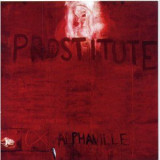
Ursprünglich 1994 veröffentlicht, ist Prostitute das vierte Album von Alphaville und war die erste Veröffentlichung seit fünf Jahren. Mit "einer großen Vielfalt an Stilen" enthält das Album elektronischen Jazz, New-Wave-Musik, Synthpop, Swing, Hip-Hop, klassische Balladen und Pink-Floyd-ähnliche elektronische Musik - es ist also eher ein theatralisches Album.
Die erste Singleauskopplung war "Fools", gefolgt von der zweiten Single aus dem Album, "The Impossible Dream". Das Album wird zum
ersten Mal auf Vinyl veröffentlicht. Die 2 CD Extended Version enthält mehrere Mixe und alternative Versionen.
- 2LP - remastered, Trifold-Hülle plus 24-seitiges Booklet,
- 2CD - mit der Original-CD und einer zusätzlichen Disc mit Tracks, die nur auf 12"-Vinyl erhältlich waren, und einer 5"-Maxi-CD mit Mixen, alternativen Versionen usw.
As a father and touring musician I made this album to keep my kids company in my absence, hopefully for them to sing along with in their mom’s car. These songs evoke memories of my mother playing her Martin parlor guitar and of my father, at the family turntable, telling stories about Furry Lewis and Gus Cannon or explaining a song’s meaning. I wanted to share these childhood favorites with my kids. This collection of childhood favorites was recorded for fun, at home, with family and friends in the spirit of sharing. Everyone is welcome. I wanted to share these songs with my kids and my friend’s kids as well as expose my daughters to the joy of learning, performing and recording music that my father shared with me. The recording was largely done in 2017 during dinner parties, sleep overs and play dates, either in a family style social setting or while the kids slept. After burning rough mix CDs for the family car, I set the project aside until 2023. Finishing the album with fresh ears album benefitted from my film score work done in 2020 and 21. I love letting projects simmer on the back burner until the time is right. The perspective of time can’t be bought or faked. My daughters sang on the album, both in 2017 and in 2023. Overdubbing my daughters on top of their younger vocals, 6 years later, was a unique sensation and document of their youth. You can hear my youngest daughter sneeze and improvise wordless melodies but my oldest daughter stole the show after her first overdub party, taking me aside and asking “don’t you get paid for singing on a record?” - Luther Dickinson
Taipan Tiger Girls’ third and final LP is a hypnotic, cosmic freakout that combines analogue electronics, drums, guitar and the mammoth drones of the Melbourne Town Hall Grand Organ. Recorded live at Melbourne Music Week in 2017 in front of an ecstatic sold out hometown crowd, this record marks the zenith of the short but incendiary career of an extraordinary band. An instrumental outfit with a relentless drive to experiment, Taipan Tiger Girls are composer, producer and all-round electric statesman Ollie Olsen (WhirlyWirld / Max Q / NO / Third-Eye / Psy-Harmonics), experimental drummer and synth obsessive Mat Watson (Boredoms BoaDrum / E.S.G / ULMD / Other Places), and feedback guitar droner and organist Lisa MacKinney (Mystic Eyes / Hospital Pass / Super-Luminum). On Live At the Melbourne Town Hall they are joined by very special guest guitarist Bonnie Mercer (Grey Daturas/Hospital Pass/Breathing Shrine) with MacKinney commanding the historic Melbourne Town Hall pipe organ. Live at the Melbourne Town Hall is a monument to the combined talents of a group of phenomenal musicians whose fusion created a magic elixir made all the more precious by its temporary nature. Showcasing the improvisatory prowess of the band at the peak of their powers and bolting off into the stratosphere in a thrilling surge of psychedelic expansion. GENRE: EXPERIMENTAL, DRONE, ELECTRONIC, ANALOGUE SYNTH, LIVE, PSYCHEDELIC, IMPROVISED Released in conjunction with Heavy Machinery Records
2LP - 180 Gram Vinyl When Losing A Dream To Reality is the debut album from Swedish alto saxophonist and composer Hannes Bennich. Bennich is one of the most interesting new voices on the Scandinavian scene and presents all-original compositions for his first outing written for his band of pianist Britta Virves, double bassist Tomas Sjödell and drummer Emil Norman. Special guest vocalist Helen Salim joins for one track. The album is based around dream narratives: "I wrote music with different versions of dreams ending up perhaps not the way you want to. Like a winding path that can go in any direction," explains Bennich.
2LP - 180 Gram Vinyl When Losing A Dream To Reality is the debut album from Swedish alto saxophonist and composer Hannes Bennich. Bennich is one of the most interesting new voices on the Scandinavian scene and presents all-original compositions for his first outing written for his band of pianist Britta Virves, double bassist Tomas Sjödell and drummer Emil Norman. Special guest vocalist Helen Salim joins for one track. The album is based around dream narratives: "I wrote music with different versions of dreams ending up perhaps not the way you want to. Like a winding path that can go in any direction," explains Bennich.
2LP - 180 Gram Vinyl Trumpeter Raynald Colom immediately captivates with the hauntingly beautiful dream-like opening notes of his new live recording, A Million Dreams. Colom demands the listener's attention throughout the cohesive eight-track outing, alongside pianist Tony Tixier, Joe Sanders on double bass and Francesco Ciniglio on drums. French born and Barcelona-based, Colom is a seasoned musician inspired by many genres and artforms, but with firm roots in flamenco. A Million Dreams documents a truly magical live experience, transporting listeners to the Italian town of Pontinia, where the album was recorded.
2LP - 180 Gram Vinyl Trumpeter Raynald Colom immediately captivates with the hauntingly beautiful dream-like opening notes of his new live recording, A Million Dreams. Colom demands the listener's attention throughout the cohesive eight-track outing, alongside pianist Tony Tixier, Joe Sanders on double bass and Francesco Ciniglio on drums. French born and Barcelona-based, Colom is a seasoned musician inspired by many genres and artforms, but with firm roots in flamenco. A Million Dreams documents a truly magical live experience, transporting listeners to the Italian town of Pontinia, where the album was recorded.
A Flor de Piel, the new album from singer-songwriter and composer Maria Monica Gutierrez (aka Montañera), is a meditative journey of self-discovery across oceans, time, and the traditional confines of genre. Originally from Bogota, Colombia, Gutierrez began the album as a way to explore her identity after a difficult move to London left her feeling untethered in a strange new place. The result is an examination of the immigrant's experience through a rich sonic lens of ambient pop textures, inspired by sources as disparate as Colombian traditional music, traditional Senegalese music, and whalesong from the depths of the Atlantic. The album begins with the title track "A Flor de Piel," Gutierrez's indelible vocals floating above a vast expanse before being joined by deep, silky bass and the plucks of a koto-like stringed instrument. "The song was inspired by traditional Japanese music," Gutierrez explains, "It's about making my heart a little lighter; I know that inside of me I can be as light as mist in heat, I can be fragile as the song of a sparrow." That sentiment perfectly encapsulates much of what makes A Flor de Piel so special. The album comes with a message of healing for all people, without forgetting the centuries of struggle and hurt that form the bedrock of modern society. The track "Santa Mar," for instance, is inspired by the musical traditions of afro-pacific women in Colombia, and the crucial role that they play as peacebuilders in the region. Backed by a hypnotic beat, the song features contributions from marimba player Cankita, alongside Las Cantadoras de Yerba Buena, an all-female vocal group that utilizes traditional Afro-Colombian music to preserve their history and promote peace. Standout track "Como Una Rama" is a futuristic take on bullerengue, a traditional style of music and dance originally developed by Maroon communities on Colombia's Caribbean coast. Deeply affecting, the song combines Gutierrez's indomitable voice with electronics that recall Steve Reich's rhythmic minimalism. "Cruzar," the final track on the album, feels almost like a lullaby, with a meditative harmonic style and trance-like vocal melody. "The lyrics," Gutierrez explains, "are a personal reminder of what is important to me: healing, letting go, breathing, evaporating, forgetting, changing, crystallizing." Across the 40-odd minutes of A Flor de Piel, Gutierrez triumphs at recontextualizing traditional sounds and sentiments into a modern form using synth-based and electronic textures. It's a fitting representation for the personal struggles that the artist endured during her move to London. Rather than dwelling solely on the past Guitierrez uses A Flor de Piel to summon the strength of past generations, and forge a new path forward. As she describes it, "The album has accompanied me through inner journeys of finding myself in a new territory _ of redefining myself, of remembering who I am _ in a strange place." As we drift towards an increasingly frightening and uncertain future, perhaps Montañera's A Flor de Piel is exactly what we need: something to give us strength, to bring us peace, and to accompany our journey into a strange new place.