High Roller Records, 2nd pressing, black vinyl, ltd 200, insert
Buscar:joachim j
High Roller Records, 2nd pressing, white/ red mixed vinyl, ltd 300, insert
- 1: There Are Some Worlds Where All Dreams Die (En Glad Stu
- 2: The Day Of Days Was There (Vardag)
- 3: Love Shows In Her Smile: It Is Confident (Panik)
- 4: Their New Life Was Their Final Life (Vilse)
- 5: Birdbrain (Olle Ångest)
- 6: His Fingers, Moving In The Air, Produced A Soft Organ-L
- 7: Oh, Said The Strange Mind, You Want Me To Think For You
- 8: Her Eyes...were Like Cold Fires (Slut)
Ltd. Interdimensional Jade Vinyl[32,14 €]
World-renowned horn player Mats Gustafsson teams up with Joachim Nordwall to create THEIR POWER REACHED ACROSS SPACE AND TIME- TO DEFY THEM WAS DEATH- OR WORSE- an avant-garde masterpiece. Gustafsson and Nordwall push their instruments to the limit, almost mirroring the title of the record by "reaching across space and time". The duo creates a sense of vast, three-dimensional auditory expanses. "This is where acoustics and analog synths meet. It is unique music. Unheard Vibes. Perfect for special venues and good PAs..." -Gustafsson & Nordwall. We encourage listeners to take multiple journeys through the expansive spacial exploration that is THEIR POWER REACHED ACROSS SPACE AND TIME- TO DEFY THEM WAS DEATH- OR WORSE. Joachim Nordwall has been active in creating psychedelic electronic music since the late 80s- A cornerstone of the Swedish musical underground, exploring the extremities of guitar music with The Skull Defekts and solo recordings as The Idealist that access the spiritual and political dimensions of electronic music and dub. Nordwall also runs the esteemed and boundary pushing iDEAL Recordings, cementing his position as a major player in the contemporary scene. Mats Gustafsson is a prominent figure in the modern jazz scene, working as a composer, improviser, and saxaphone player. He has been involved in hundreds of projects, including work with Sonic Youth, Neneh Cherry, Peter Brötzmann, and Merzbow, as well as being an active member of groups such as FIRE!, The END, and Swedish Azz.
- 1: There Are Some Worlds Where All Dreams Die (En Glad Stu
- 2: The Day Of Days Was There (Vardag)
- 3: Love Shows In Her Smile: It Is Confident (Panik)
- 4: Their New Life Was Their Final Life (Vilse)
- 5: Birdbrain (Olle Ångest)
- 6: His Fingers, Moving In The Air, Produced A Soft Organ-L
- 7: Oh, Said The Strange Mind, You Want Me To Think For You
- 8: Her Eyes...were Like Cold Fires (Slut)
Black Vinyl[29,62 €]
World-renowned horn player Mats Gustafsson teams up with Joachim Nordwall to create THEIR POWER REACHED ACROSS SPACE AND TIME- TO DEFY THEM WAS DEATH- OR WORSE- an avant-garde masterpiece. Gustafsson and Nordwall push their instruments to the limit, almost mirroring the title of the record by "reaching across space and time". The duo creates a sense of vast, three-dimensional auditory expanses. "This is where acoustics and analog synths meet. It is unique music. Unheard Vibes. Perfect for special venues and good PAs..." -Gustafsson & Nordwall. We encourage listeners to take multiple journeys through the expansive spacial exploration that is THEIR POWER REACHED ACROSS SPACE AND TIME- TO DEFY THEM WAS DEATH- OR WORSE. Joachim Nordwall has been active in creating psychedelic electronic music since the late 80s- A cornerstone of the Swedish musical underground, exploring the extremities of guitar music with The Skull Defekts and solo recordings as The Idealist that access the spiritual and political dimensions of electronic music and dub. Nordwall also runs the esteemed and boundary pushing iDEAL Recordings, cementing his position as a major player in the contemporary scene. Mats Gustafsson is a prominent figure in the modern jazz scene, working as a composer, improviser, and saxaphone player. He has been involved in hundreds of projects, including work with Sonic Youth, Neneh Cherry, Peter Brötzmann, and Merzbow, as well as being an active member of groups such as FIRE!, The END, and Swedish Azz.
Cluster was the pioneering German duo of Hans-Joachim Roedelius and Dieter Moebius. Formed on the cusp of the 1970s, they were a part of West Germany's nascent Kosmische Musik scene. The group would use restrained improvisational techniques similar to Gruppo Nuova Consonanza, working with both electric and acoustic instruments (organ, guitar, tone generators, cello, etc.) to create a singular sound that Julian Cope called "a huge beating heart, planet-sized and awesome."
Originally released in 1972 on Brain, Cluster II features six pieces of atmospheric, proto-ambient drones – a step forward from Cluster's 1971 self-titled debut, which had all untitled songs. On "Im Suden," hypnotic bass pulsations and repetitive guitar patterns flow serenely, while side two opener "Live In Der Fabrik" dives deep into Roedelius and Moebius' foreboding industrial soundscapes and synergistic textural interplay.
As Roedelius told Uncut magazine in 2022, "This feels like a breakthrough? Well, we were just getting more into it, and getting more experienced at being able to elaborate it. Conny (Plank) was working with us again – as well as being a multi-talented artist, he was a very experienced sound master and great human being. He contributed as a fellow musician, adding sounds with his mixing table such as reverb, delay and other effects enriching the whole pieces so that they finally became somehow unique."
It's no surprise that when Neu! guitarist Michael Rother first heard Cluster II, he suggested a collaboration with the band – resulting in the supergroup Harmonia who would make their first album together the following year.
Known for their dynamic sound and complex song structures, De Beren Gieren deliver an extravagant blend of polyrhythmic soundscapes and elitist twists, showing an ability to change mood in a way that constantly holds the listener’s attention. They effortlessly shift from more rigidly styled compositions to improvised sections and thus reveal the pulsating and ominous futuristic sound of a new world.
Produced by Dijf Sanders and Frederik Segers, ‘Less Is Endless’ is an ode to a universe teeming with life. Seen as an extension to the critically acclaimed 2017 album ‘Dug Out Skyscrapers’, it searches for vents through which life can emerge and evolve. The secret of communicating creativity can be found in the cultivation of the unfinished; the missing piece of the puzzle tickles the imagination more than the perfect end result.
From the psychotropic opener ‘A Funny Discovery’ and off-kilter piano rhythms of ‘Animalcules’ to the impressionist melodies and harmonic soundscapes of ‘Tuin’, De Beren Gieren give the music the space to breath and grow with every unexpected twist and turn. Elsewhere, ‘Guggenheim House’ is a lesson in the avant-garde, while ‘Gentse Leugentjes’ is a far cry from the traditional piano-bass-drum set-up, before the affecting ‘Moments Never a Moment’ and 18-minute ‘A Random Walk’ is an adventure in improvisation and electronics that defies any logical convention.
Forming in 2009, Fulco Ottervanger (piano, fx, synths), Lieven Van Pée (double bass, electric bass) and Simon Segers (drums, fx) quickly built a reputation across the Benelux region with their ‘must-see’ live shows and have since taken their transcendental live energy across Europe, Morocco and Japan and have performed at North Sea Jazz, Jazz Middelheim, Trondheim Jazzfestival, Ljubljana Jazz Festival, Moers Festival, Gent Jazz, Kanazawa Jazz Street and Eurosonic.
The trio’s breakthrough came with second album ‘A Raveling’ (2013) which received rave reviews, and the following year, a live recording with Portuguese trumpet player Susana Santos Silva was released as ‘The Detour Fish’ (2014) on the Clean Feed label, gaining De Beren Gieren further widespread recognition. Their 2015 release ‘One Mirrors Many’ was lauded by Dutch magazine Jazzism and signalled the beginning of their electronic quest, finding its maturity in ‘Dug Out Skyscrapers’ (2017). In 2019, they celebrated their 10th anniversary, releasing the limited edition ‘Broensgebuzze EP’.
De Beren Gieren have collaborated with renowned jazz artists including Louis Sclavis, Ernst Reijseger, Joachim Badenhorst, Marc Ribot, Jan Klare and Jean-Yves Evrard.
The recordings on this album constitute the material from a June 20th, 1968 studio session recorded by Hans Georg Brunner-Schwer (HGBS) and Joachim-Ernst Brendt in Germany's Black Forest. This is no ordinary recording. This enthralling Bill Evans session was recorded five days after a famous performance at the 1968 Montreux jazz festival by Evans, bassist Eddie Gomez and drummer Jack DeJohnette. Verve's Montreux live recording won a Grammy, but this studio session has been in the vaults ever since.
For the first time this album was mastered in all analogue (AAA), from the original analog master. Mastered by René Laflamme at 2xHD Mastering lab and cut at Bernie Grundman at 45 RPM.
The 2xHD Fusion Mastering System is an innovation in audio restoration for a virtual audio reality. In the constant evolution of its proprietary mastering process, 2xHD has progressed to a new phase called 2xHD Fusion, integrating the finest state-of-the-art analog Nagra-T tape recorder modified with high-end tube playback technology, wired with OCC silver cable for better transparency and 3D imaging. 2xHD Vinyl are sourced from first generation analog recordings without any digital corruption. The cutting is done at Bernie Grundman Mastering Lab on tube cutting equipment.
2022 Repress !
Disco Club is a groundbreaking 1978 EP of experimental electronic
disco created by Fèvre and his collaborator under their tongue-in-cheek aliases Joachim Sherylee and Junior Claristidge. The Aphex Twin-backed Rephlex label notably reworked a handful of Disco Club tracks in 2004, however this is the first ever reissue of the EP in its complete, originally intended sequence. So synonymous is Fèvre's career with this release, he continues to perform internationally as Black Devil Disco Club today. An impossibly rare piece, this edition has been treated to a remaster from the original tapes by Fèvre himself.
RÜBEZAHL - melancholisch, magisch und dunkel. In Zusammenarbeit mit Lord Of The Lost-Mastermind Chris Harms als Produzent entsteht das bisher düsterste Album in Witts gesamter Diskographie. Thematisch unter anderem angesiedelt im Gebirge, bei Riesen und Berggeistern, beweist Joachim Witt hier wieder einmal mehr auch seine Liebe zum romantischen Naturalismus, ohne dabei seinen ureigenen Stil zu verlieren.
Re-release Gegründet 1970 von Dieter Moebius und Hans-Joachim Roedelius zählen Cluster zu den einflussreichsten Bands der experimentellen Elektronik- und Ambientmusik in Deutschland. "Cluster 71" war das Debütalbum des Duos und zählt laut dem Musikmagazin "The Wire" zu den "One Hundred Records That Set The World On Fire". "Cluster 71" ist ein Monster: Das Album enthält gerade mal drei (unbetitelte) Stücke und ist schwere Kost für unvorbereitete Ohren. Doch das Album war wegweisend wie kaum ein zweites elektronisches Musikwerk. Cluster waren vorher noch ein Trio und schrieben sich Kluster. Aufgrund musikalischer Differenzen trennten sich Moebius und Roedelius 1970 von Konrad Schnitzler und spielten 1971 im Hamburger Star Musikstudio ihr erstes Album ein. Clusters völlige Abkehr von gebräuchlicher Harmonik und Rhythmik bis hin zu totaler klanglicher Abstraktion, ihr selbstverständlicher Umgang mit Geräuschen, rigorose elektronische Live-Improvisationen und das Bewusstsein, nichts verlieren zu können - das alles kennzeichnet diesen innovativen Aufbruch. Der Begleittext stammt von Asmus Tietchens.
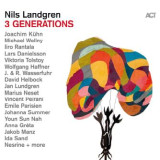
Nils Landgren war und ist das Rückgrat der ACT-Familie. 40
Alben als Leader und weitere 20 als Produzent und Solist
sind bisher auf dem Label erschienen. All diese Rollen und
damit verbundenen Qualitäten kommen auf ‘3 Generations‘
parallel zum Tragen: Zusammen mit ACT-Gründer und
Produzent Siƽi Loch bringt Landgren, anlässlich des
30-jährigen Label-Jubiläums, drei Generationen von ACTKünstler*innen in verschiedenen Besetzungen zusammen.
Im Jahre 1994, nur zwei Jahre nach Label-Gründung, begegneten sich Siƽi Loch und Nils Landgren erstmals. Kurz
darauf wurde Landgren exklusiver ACT-Künstler. Über sein
Netzwerk kamen in der Folge Künstler*innen wie Esbjörn
Svensson, Viktoria Tolstoy, Rigmor Gustafsson, Ida Sand
oder Wolfgang Haffner zum Label. Auf '3 Generations' sind
Joachim Kühn, Michael Wollny, Iiro Rantala, Lars Danielsson, Viktoria Tolstoy, Wolfgang Haffner, Julian & Roman
Wasserfuhr, David Helbock, Jan Lundgren, Marius Neset,
Vincent Peirani, Emile Parisien u.v.m. zu hören.
With ‘Terrain,’ Joachim Spieth presents the fourth long player on his Affin imprint.
The follow-up album to ‘Ousia’ (2021), ‘Terrain,’ reflects on the human relationship with nature. The album title is a reference to a musical language that layers Spieth’s music production practices and intimacy with nature.
‘Terrain’ was forged in deep solitude.“It’s an interplay of euphoric flashes and introspection” – says Spieth. The eight compositions take the listener into a captivating cascade of sonic textures resembling internal states fluctuations and emotional release. The tension between the organic warmth and static curves broads tones into liquified roars and empty spaces.
Unlike Spieth’s previous albums, ‘Terrain’ holds more intimate gestures and emotional sensibility. Soothing frequencies here are intended to create a state of awareness in the listener. It is a work of conceptual and emotional beauty, evoking a form of spatial imagery that is as grounding as elevating.
Drive at Night wurde 2021 von den beiden langjährigen Freunden und Bandkollegen Joachim Nordlund und Johan Lindstedt von Astral Doors und SunStrike gegründet. Da beide den melodischen Rock aus den 80er Jahren lieben, war es nicht schwer zu entscheiden, welche Richtung sie mit ihrer Musik einschlagen sollten. Im Jahr 2021 wurden 12 Songs in Joachims Studio in Borlänge, Schweden, geschrieben und aufgenommen und produziert. Drive At Night folgen der Tradition der großen skandinavischen Melodic Rock Bands und bieten tolle Melodien, riesige Keyboard-Sounds und Sing-a-Long-Refrains. Später im Jahr folgt die Vinylveröffentlichung.Für Fans von Treat, Europe, Madison oder Eclipse.
'The Arbitrary Dimension of Dreams' is Cate Kennan's oblique exploration of memory, nighttime, and narrative. The resulting 12 compositions are brisk, evocative, and lingering. Kennan's sonic palette is vast yet harmonized, deftly matching spectral synthesizers to hazy lap steel guitars and watery analog effects. Existing in the sparsely occupied world of early melodic electronic music, her songs call to mind the sonic landscape's of Malcolm Cecil, Hans-Joachim Roedelius, and Deux Filles. Each individual track sculpts a setting, constructing an amorphous landscape of surreal musical vignettes. Picture a boat tied to a dock, bobbing with the waves, wisps of fog refusing the complete vision. This is the nebulous space of 'The Arbitrary Dimension of Dreams,' an enveloping, insistent realm that feels both intimately familiar and profoundly otherworldly.
Toots Thielemans was a jazz harmonica virtuoso from Belgium. Together with guitarist Philip Catherine, pianist Joachim Kuhn and other session musicians, he recorded the 1974 album Toots Thielemans/Philip Catherine & Friends, which was later reissued as Two Generations. The album features some of his best known works such as “Bluesette” and “Inner Journey”, which were previously cd-only compositions.
Two Generations is part of the Timeless Records 45th Anniversary Jazz Series and is available as a limited edition of 750 individually numbered copies on white coloured vinyl. The sleeve features the artwork of the
1996 reissue.
Drei Vinylpremieren und zwei Neuauflagen füllen als hochwertige 180g-Pallas-Pressungen Lücken in der LP-Sammlung.
VINYL-PREMIEREN / BISLANG NUR ALS CD ERHÄLTLICH / REMASTERT / DOPPEL-LPs:
Till Brönner “That Summer” (2004): sommerliche Jazz-Vocals und Instrumentals, smoother Funk- und
Brazil-Grooves, noch immer eines seiner beliebtesten Verve-Alben
Barbara Dennerlein “Take Off” (1995): groovende Hammond-B3-Tracks in klassischer Verve- und BlueNote-Tradition, aufgenommen in New York mit All-Star-Band aus Roy Hargrove, Mitch Watkins, Dennis
Chambers u.a., internationaler Durchbruch von Deutschlands “First Lady of Jazz” Rolf Joachim Kühn Quartett ”Lifeline” (2012): mit den Gästen John Patitucci und Brian Blade, Gipfeltreffen zweier deutscher und zweier amerikanischer Jazzlegenden, ausgezeichnet mit dem Deutschen Schallplattenpreis VERGRIFFENE KLASSIKER ENDLICH WIEDER AUF LP / REMASTERT / 1-LP:
Elis Regina und Toots Thielemans ”Elis & Toots” (1969): aufgenommen in Stockholm, klingt aber so fröhlich und heiß wie direkt unter dem Zuckerhut in Rio entstanden, ein mitreißender Klassiker des BrasilJazz “Joyce Live At The Mojo Club” (1995): brasilianische Kultmusikerin gab rares Deutschland-Konzert im
legendären Hamburger Club und begeisterte das Publikum mit heißer Samba, Bossa Nova und MPB, ein Klassiker des Rare-Groove
Drei Vinylpremieren und zwei Neuauflagen füllen als hochwertige 180g-Pallas-Pressungen Lücken in der LP-Sammlung.
VINYL-PREMIEREN / BISLANG NUR ALS CD ERHÄLTLICH / REMASTERT / DOPPEL-LPs:
Till Brönner “That Summer” (2004): sommerliche Jazz-Vocals und Instrumentals, smoother Funk- und
Brazil-Grooves, noch immer eines seiner beliebtesten Verve-Alben
Barbara Dennerlein “Take Off” (1995): groovende Hammond-B3-Tracks in klassischer Verve- und BlueNote-Tradition, aufgenommen in New York mit All-Star-Band aus Roy Hargrove, Mitch Watkins, Dennis
Chambers u.a., internationaler Durchbruch von Deutschlands “First Lady of Jazz” Rolf Joachim Kühn Quartett ”Lifeline” (2012): mit den Gästen John Patitucci und Brian Blade, Gipfeltreffen zweier deutscher und zweier amerikanischer Jazzlegenden, ausgezeichnet mit dem Deutschen Schallplattenpreis VERGRIFFENE KLASSIKER ENDLICH WIEDER AUF LP / REMASTERT / 1-LP:
Elis Regina und Toots Thielemans ”Elis & Toots” (1969): aufgenommen in Stockholm, klingt aber so fröhlich und heiß wie direkt unter dem Zuckerhut in Rio entstanden, ein mitreißender Klassiker des BrasilJazz “Joyce Live At The Mojo Club” (1995): brasilianische Kultmusikerin gab rares Deutschland-Konzert im
legendären Hamburger Club und begeisterte das Publikum mit heißer Samba, Bossa Nova und MPB, ein Klassiker des Rare-Groove
Drei Vinylpremieren und zwei Neuauflagen füllen als hochwertige 180g-Pallas-Pressungen Lücken in der LP-Sammlung.
VINYL-PREMIEREN / BISLANG NUR ALS CD ERHÄLTLICH / REMASTERT / DOPPEL-LPs:
Till Brönner “That Summer” (2004): sommerliche Jazz-Vocals und Instrumentals, smoother Funk- und
Brazil-Grooves, noch immer eines seiner beliebtesten Verve-Alben
Barbara Dennerlein “Take Off” (1995): groovende Hammond-B3-Tracks in klassischer Verve- und BlueNote-Tradition, aufgenommen in New York mit All-Star-Band aus Roy Hargrove, Mitch Watkins, Dennis
Chambers u.a., internationaler Durchbruch von Deutschlands “First Lady of Jazz” Rolf Joachim Kühn Quartett ”Lifeline” (2012): mit den Gästen John Patitucci und Brian Blade, Gipfeltreffen zweier deutscher und zweier amerikanischer Jazzlegenden, ausgezeichnet mit dem Deutschen Schallplattenpreis VERGRIFFENE KLASSIKER ENDLICH WIEDER AUF LP / REMASTERT / 1-LP:
Elis Regina und Toots Thielemans ”Elis & Toots” (1969): aufgenommen in Stockholm, klingt aber so fröhlich und heiß wie direkt unter dem Zuckerhut in Rio entstanden, ein mitreißender Klassiker des BrasilJazz “Joyce Live At The Mojo Club” (1995): brasilianische Kultmusikerin gab rares Deutschland-Konzert im
legendären Hamburger Club und begeisterte das Publikum mit heißer Samba, Bossa Nova und MPB, ein Klassiker des Rare-Groove
Drei Vinylpremieren und zwei Neuauflagen füllen als hochwertige 180g-Pallas-Pressungen Lücken in der LP-Sammlung.
VINYL-PREMIEREN / BISLANG NUR ALS CD ERHÄLTLICH / REMASTERT / DOPPEL-LPs:
Till Brönner “That Summer” (2004): sommerliche Jazz-Vocals und Instrumentals, smoother Funk- und
Brazil-Grooves, noch immer eines seiner beliebtesten Verve-Alben
Barbara Dennerlein “Take Off” (1995): groovende Hammond-B3-Tracks in klassischer Verve- und BlueNote-Tradition, aufgenommen in New York mit All-Star-Band aus Roy Hargrove, Mitch Watkins, Dennis
Chambers u.a., internationaler Durchbruch von Deutschlands “First Lady of Jazz” Rolf Joachim Kühn Quartett ”Lifeline” (2012): mit den Gästen John Patitucci und Brian Blade, Gipfeltreffen zweier deutscher und zweier amerikanischer Jazzlegenden, ausgezeichnet mit dem Deutschen Schallplattenpreis VERGRIFFENE KLASSIKER ENDLICH WIEDER AUF LP / REMASTERT / 1-LP:
Elis Regina und Toots Thielemans ”Elis & Toots” (1969): aufgenommen in Stockholm, klingt aber so fröhlich und heiß wie direkt unter dem Zuckerhut in Rio entstanden, ein mitreißender Klassiker des BrasilJazz “Joyce Live At The Mojo Club” (1995): brasilianische Kultmusikerin gab rares Deutschland-Konzert im
legendären Hamburger Club und begeisterte das Publikum mit heißer Samba, Bossa Nova und MPB, ein Klassiker des Rare-Groove
Drei Vinylpremieren und zwei Neuauflagen füllen als hochwertige 180g-Pallas-Pressungen Lücken in der LP-Sammlung.
VINYL-PREMIEREN / BISLANG NUR ALS CD ERHÄLTLICH / REMASTERT / DOPPEL-LPs:
Till Brönner “That Summer” (2004): sommerliche Jazz-Vocals und Instrumentals, smoother Funk- und
Brazil-Grooves, noch immer eines seiner beliebtesten Verve-Alben
Barbara Dennerlein “Take Off” (1995): groovende Hammond-B3-Tracks in klassischer Verve- und BlueNote-Tradition, aufgenommen in New York mit All-Star-Band aus Roy Hargrove, Mitch Watkins, Dennis
Chambers u.a., internationaler Durchbruch von Deutschlands “First Lady of Jazz” Rolf Joachim Kühn Quartett ”Lifeline” (2012): mit den Gästen John Patitucci und Brian Blade, Gipfeltreffen zweier deutscher und zweier amerikanischer Jazzlegenden, ausgezeichnet mit dem Deutschen Schallplattenpreis VERGRIFFENE KLASSIKER ENDLICH WIEDER AUF LP / REMASTERT / 1-LP:
Elis Regina und Toots Thielemans ”Elis & Toots” (1969): aufgenommen in Stockholm, klingt aber so fröhlich und heiß wie direkt unter dem Zuckerhut in Rio entstanden, ein mitreißender Klassiker des BrasilJazz “Joyce Live At The Mojo Club” (1995): brasilianische Kultmusikerin gab rares Deutschland-Konzert im
legendären Hamburger Club und begeisterte das Publikum mit heißer Samba, Bossa Nova und MPB, ein Klassiker des Rare-Groove
With the project XV | 1 Affin leaves 15 years of its existence behind and looks expectantly and full of optimism into the future.
The A side starts with MTRL's (co-founder of the Munich IO label), "Spice Fields" who celebrates his Affin debut here with a delicate, driving track. Another premiere is the first collaboration between Cauê and Joachim Spieth, who celebrate here with "Alpha", an atmospheric multi-modulated piece of club music.
The B side starts with an old acquaintance, Reggy Van Oers, who makes a massive reappearance with "niffA" after a few years of abstinence. Svarog closes the first episode of our 15th anniversary with the pushing "Psalm". All tracks were mastered at the Berlin-based Artefacts Mastering Studio. Markus Guentner, a label artist from the early days, is responsible for the graphic design and also did a logo redesign.
The Idealist is one of the many projects of Joachim Nordwall who has a long history in Swedish experimental music running the quintessential iDEAL Recordings record label since 1998, as a member of the psych-drone duo Alvars Orkester, avant punk rock trio Kid Commando and ritual drone rock group The Skull Defekts and through his many solo recordings and collaborations with people such as John Duncan, Aaron Dilloway, Mika Vainio, Mats Gustafsson, Leif Elggren, Gabi Losoncy, Mark Wastell and Christine Abdelour.
As The Idealist, he has been delving into an amalgam of experimental techno, dub and industrial music since 2006. His new A Lion Is A Lion And Not A Lamb continues this perspective unabatedly, conjuring up six tracks that shimmer with an almost psychotropic intensity, sometimes including acidic touches, dwelling in a confrontational minimalist musical stance where repetition, bursts of gorgeous noise and dubbed out skeletal rhythms make for wayward yet driving grooves at home on the dance floor and a set of headphones alike. The Idealist looks for engagement within rhythm, in its almost purest
form.
FEAN II is the following of the first opus released on Moving Furniture Records in 2018, from some materials of the improvisatory collective FEAN based around Jan Kleefstra (voice, poems), Romke Kleefstra (guitar, bass and effects), Mariska Baars (vocals) and Rutger Zuydervelt (electronics) from Netherlands, joined by the Belgian musicians Annelies Monseré (church organ, keyboard), Sylvain Chauveau (tuned percussion, radio) and Joachim Badenhorst (acoustic and amplified clarinet, bass clarinet, saxophone). Like The Alvaret Ensemble, this project is the result of some improvisations in a Church. But at not the same place.
The FEAN project gets its inspiration from the ecological decay of peatland in the Dutch province Friesland and in other parts of Europe. Agriculture and peat extraction are threatening the landscape severely and with long term consequences. This forms the underlying thought for the improvised recording sessions, which were overseen by Jan Switters. Although the Piiptsjilling members are obviously used to perform and record together, adding the three Belgian guests (who didn’t play together before) added an extra dimension to the group’s dynamics, resulting in a concentrated yet playful series of improvisations, that were later mixed and edited for the project.
For laaps, that was an obvious choice to continue the exquisite corpse project with FEAN and a part of the same members than the first release, just before to move to the Spring season and some news bridges, colors and sounds imprints to come.
Back in stock !
Brian Eno hat den Begriff Ambient Music geprägt und berühmt gemacht - die Musik aber hat er nicht allein erfunden. Brüder im Geiste waren die deutschen Musiker Hans-Joachim Roedelius und Dieter Moebius (Cluster). Es ist müßig, darüber zu spekulieren, wer wen beeinflusst hat, die Idee der Ambient-Musik lag Mitte der 70er-Jahre einfach in der Luft. Fakt ist, dass Brian Eno 1975 ein Konzert von Cluster in Hamburg besuchte. Er stellte sich strategisch günstig in die erste Reihe, und erwartungsgemäß bat man ihn zu einem Jam auf die Bühne. Nach dem Konzert verabredete man ein Treffen, das dann 1977 stattfand. Drei Wochen lang waren Eno und Cluster im Studio von Conny Plank. Zwei Alben entstanden daraus: "Cluster & Eno" sowie "After The Heat". Ersteres ist ohne Übertreibung das erste in Deutschland produzierte Ambient-Album. "After The Heat" ist jedoch etwas völlig anderes. Während auf "Cluster & Eno" die Handschrift von Cluster zu lesen ist (und Enos Ambient-Konzept die Hand führt), ist "After The Heat" eher ein Eno-Album mit den Stilmerkmalen der Cluster-Musik.
Splattered Vinyl[24,75 €]
Luzifer wurden im Jahre 2009 von L. Steeler (Bass) und S. Castevet (Gesang, Gitarre, Schlagzeug) in Hamm/Westfalen als Nebenprojekt der im Underground gefeierten Vulture gegründet. 2015 erschien die "Rise"-EP, 2018 gefolgt von der "Black Knight" 7" Single auf High Roller Records.
Mittlerweile ergänzt Vulture-Drummer Gereon Deceiver die Besetzung von Luzifer, der auch auf den sieben Songs des ersten vollständigen Albums "Iron Shackles" zu hören ist. Stefan Castevet erklärt: "Mit Gereons Einstieg bei Vulture hat sich das im Laufe der Jahre so ergeben. Gereon übernimmt so auch bei Luzifer die Drums, macht bei den Background-Chören mit und hat sich am Songwriting beteiligt. In die finale Phase der Vorbereitung hat er viel Energie mit reingebracht, und da ich eh seit vielen Jahren nicht mehr richtig hinterm Schlagzeug gesessen habe, ist er ein echter Segen für die Band (lacht)."
"Soundmäßig wollten wir auf dem Album so klingen wie Quartz bei 'Satan's Serenade' und da zusätzlich so 'ne Sommer-Note reinkriegen wie in Rockers 'Mighty Thor'", umreißt Stefan das stilistische Koordinatensystem von "Iron Shackles". "Ob uns das gelungen ist, weiß ich gar nicht unbedingt. Vieles hat sich im Aufnahme- und Mixing-Prozess dann verselbständigt. Große gezielte musikalische Einflüsse besitzen wir in dieser Form gar nicht. Zumindest nicht bewusst. Viel 70er-Kram und dazu dann sowas in Richtung Heavy Load trifft's vielleicht am ehesten."
Neben "Der goldene Reiter", eine in Eisen gegossene Coverversion des NDW-Hits von Joachim Witt, ist auf dem Album noch eine weitere Nummer mit deutschen Texten zu finden, nämlich "Hexer (In drei Teufels Namen)", von dem Stefan Castevet zu berichten weiß: "Wir hatten auch schon auf unserem ersten Release einen Track auf Deutsch. Wir finden das einfach sehr charmant. Damals war's DDR-Heavy-Metal, den wir abgefeiert haben, diesmal hatten wir schlicht Lust drauf. Machen halt nicht so viele. Der Text stammt übrigens von unserem Freund Ela von Iron Kobra. Der kann sowas einfach besser als wir!"
Black Vinyl[24,75 €]
Luzifer wurden im Jahre 2009 von L. Steeler (Bass) und S. Castevet (Gesang, Gitarre, Schlagzeug) in Hamm/Westfalen als Nebenprojekt der im Underground gefeierten Vulture gegründet. 2015 erschien die "Rise"-EP, 2018 gefolgt von der "Black Knight" 7" Single auf High Roller Records.
Mittlerweile ergänzt Vulture-Drummer Gereon Deceiver die Besetzung von Luzifer, der auch auf den sieben Songs des ersten vollständigen Albums "Iron Shackles" zu hören ist. Stefan Castevet erklärt: "Mit Gereons Einstieg bei Vulture hat sich das im Laufe der Jahre so ergeben. Gereon übernimmt so auch bei Luzifer die Drums, macht bei den Background-Chören mit und hat sich am Songwriting beteiligt. In die finale Phase der Vorbereitung hat er viel Energie mit reingebracht, und da ich eh seit vielen Jahren nicht mehr richtig hinterm Schlagzeug gesessen habe, ist er ein echter Segen für die Band (lacht)."
"Soundmäßig wollten wir auf dem Album so klingen wie Quartz bei 'Satan's Serenade' und da zusätzlich so 'ne Sommer-Note reinkriegen wie in Rockers 'Mighty Thor'", umreißt Stefan das stilistische Koordinatensystem von "Iron Shackles". "Ob uns das gelungen ist, weiß ich gar nicht unbedingt. Vieles hat sich im Aufnahme- und Mixing-Prozess dann verselbständigt. Große gezielte musikalische Einflüsse besitzen wir in dieser Form gar nicht. Zumindest nicht bewusst. Viel 70er-Kram und dazu dann sowas in Richtung Heavy Load trifft's vielleicht am ehesten."
Neben "Der goldene Reiter", eine in Eisen gegossene Coverversion des NDW-Hits von Joachim Witt, ist auf dem Album noch eine weitere Nummer mit deutschen Texten zu finden, nämlich "Hexer (In drei Teufels Namen)", von dem Stefan Castevet zu berichten weiß: "Wir hatten auch schon auf unserem ersten Release einen Track auf Deutsch. Wir finden das einfach sehr charmant. Damals war's DDR-Heavy-Metal, den wir abgefeiert haben, diesmal hatten wir schlicht Lust drauf. Machen halt nicht so viele. Der Text stammt übrigens von unserem Freund Ela von Iron Kobra. Der kann sowas einfach besser als wir!"
wieder lieferbar Cluster boten live eine Art Performancekunst, die wesentlich aus Improvisation, Krach, bewusster Vermeidung von rhythmisch-harmonischen Strukturen und dem zügellosen Einsatz elektronischer Klangerzeuger bestand. Dazu kamen Auftrittsdauern von bis zu sechs Stunden, in denen Künstler und Publikum nicht selten in rauschhafte Zustände gerieten. Clusters Musik war anfänglich roh, brutal, spontan und wurde mit einfachstem Equipment - keine Synthesizer, keine Sequencer, keine High-End-Verstärker - erzeugt. Hans-Joachim Roedelius und Dieter Moebius ließen keine mechanischen Prozesse ablaufen. Sie benutzten ihre Maschinen, aber verließen sich nicht auf sie. Vielmehr setzten sie auf Intuition. Das Experiment glückte nicht immer, aber oft. Dann spürte man tatsächlich so etwas wie Magie und hörte das Entstehen einer utopischen Klangwelt. Die zwei von Moebius und Roedelius autorisierten Mitschnitte dieses Albums geben eindrücklich die Atmosphäre und die Magie eines Cluster-Auftritts wieder. Der eine fand 1977 während eines Science-Fiction-Festivals in Metz statt, der andere entstand im Januar 1972 bei einem Auftritt in der Hamburger Fabrik. Die Tonqualität ist mäßig, weil damals das Gelingen der Performance wichtiger war als ihre perfekte Aufzeichnung. Wir heutigen Hörer sollten das akzeptieren.
“They were so solid. They meant what they said, they did what they did… here’s two guys, a guitar player and a harmonica player, and they could make it sound like a whole orchestra.” – Taj Mahal
“It was perfect. What else can you say?” – Ry Cooder
Nearly sixty years after they first played together, Ry Cooder and Taj Mahal, longtime friends and collaborators, reunite with an album of music from two Piedmont blues masters who have inspired them all their lives: GET ON BOARD: THE SONGS OF SONNY TERRY & BROWNIE MCGHEE, on Nonesuch Records.
With Taj Mahal on vocals, harmonica, guitar, and piano and Cooder on vocals, guitar, mandolin, and banjo – joined by Joachim Cooder on drums and bass – the duo recorded eleven songs drawn from recordings and live performances by Terry and McGhee, who they both first heard as teenagers in California.
Explaining where Terry and McGhee took him musically, Cooder says, “Down the road, away from Santa Monica. Where everything was good. ‘I have got to get out of here,’ was all I could think. What do you do, fourteen, eighteen years old? I was trapped. But that first record, Get on Board, the 10” on Folkways, was so wonderful, I could understand the guitar playing.”
Taj Mahal adds, “I started hearing them when I was about nineteen, and I wanted to go to these coffee houses, ‘cause I heard that these old guys were playing. I knew that there was a river out there somewhere that I could get into, and once I got in it, I’d be all right. They brought the whole package for me.”
Taj Mahal and Ry Cooder originally joined forces in 1965, forming The Rising Sons when Cooder was just seventeen. The band was signed to Columbia Records but an album was not released and the group disbanded a year later. The 1960s recording sessions, widely bootlegged, were finally issued officially in 1992. GET ON BOARD is Taj Mahal and Ry Cooder’s first recording together since then.
Harmonica player Sonny Terry and guitarist Brownie McGhee, both originally from the southeastern United States, had active solo careers as well as collaborating with some of the most celebrated musicians of their time. But they were best known for their forty-five-year partnership, which began in 1939 and included mesmerising live performances around the world and numerous acclaimed recordings.
Their Piedmont blues style became popular during the folk music revival of the 1940s and ’50s, centered in New York City’s flourishing club scene for jazz, boogie-woogie, blues and folk music. Terry and McGhee traveled in the same circles as Woody Guthrie, Pete Seeger, Leadbelly, and Josh White, among others in a rich mix of writers, actors and musicians. As a new generation emerging in the 1960’s drew inspiration from folk and blues, Terry and McGhee toured the world as the foremost exponents of the acoustic music of the Piedmont. They were named National Heritage Fellows in 1982 in recognition of their distinctive musical contributions and accomplishments.
“You got the south on steroids, when you got the music of the south, the culture of the south, the beauty of the south, through Brownie and Sonny,” Taj Mahal says. He describes McGhee as a “solid rhythm player. To really play behind the harp like that. He would set stuff up. He wasn’t making many notes. Sonny had all the notes, running around. But Brownie, he laid it down.” Cooder adds: “This thing of squeezing the thumb and first finger and a little bit of the second finger, which I still do. I’d forgotten where it came from. That’s what Brownie did. I saw him do that and said, ‘I think I can do that.’”
Taj Mahal calls Terry “a wizard harmonica player”. Cooder says, “Sonny had incredible rhythm for one thing. Making sounds with his voice and the harmonica so you couldn’t tell quite which was which. He was good at that.”
“We’ve been doing this a while,” Cooder says. “Perhaps we’ve earned the right to bring it back. Taj Mahal concludes. “We’re now the guys that we aspired toward when we were starting out. Here we are now… old timers. What a great opportunity, to really come full circle.”
2 rare historical recordings (1983 and 1986) originally released as single sides and gathered here for the first time.
"Conductor might be my favourite composition and Life And Death Of Pboc might be my most sincere. Conductor was my first composed piece with no obvious reference points ... Life And Death Of Pboc was the second. These two compositions gave me the title Godfather of Dark Ambient."
Carl Michael von Hausswolff, born in 1956 in Linköping, Sweden, lives and works in Stockholm. Since the end of the 70s, von Hausswolff has worked as a composer using recording technology as his main instrument and as a visual artist using light projections, film/video and still photography as well as other media. He has exhibited at dOCUMENTA (Kassel), the biennials in Venice, Moscow, Liverpool, Istanbul, Sarajevo etc and in Copenhagen, Stockholm, Nicosia, Kaliningrad, Tokyo, London, New York, Philadelphia etc. His music has been played in festivals such as Sonar (Barcelona), CTM (Berlin), L'audible (Paris), el niche Aural (Mexico City), MUTEK, (Montreal) etc. and release works on LP/CD/DL by labels like Erototox (Ashevile), Sub Rosa (Brussels), Touch (London), Pomperipossa (Göteborg) and iDeal (Göteborg). He recently curated the 2nd part the sound-installation FREQ_OUT named freq_wave in co-operation with TBA21-Academy and collaborates with artist Leif Elggren, EVP re-searcher Michael Esposito, composers Hans-Joachim Roedelius, Mark Fell, Jim O'Rourke, author Leslie Winer and as Dark Morph (with Jónsi of Sigur Rós). He has also collaborated with Pan sonic, The Hafler Trio, Freddie Wadling and Erik Pauser (as PHAUSS).
Very limited new repress coming, note new price. It’s unusual for an act to hit its peak after four decades. Yet here it is. The band’s climb to become Britain’s most dazzling live band - shows are played at full energy without the breaks lesser combos need to breathe, drink or chatter – was unexpected, and public awakening to their humour, skill and brilliance demands revision of post-punk history. The Nightingales emerge as the industrious ant to their peers’ workshy grasshopper personae, appearing victoriously at the finish line to puzzled realisations that they’d ever even been in the race. The Nightingales have notoriously had a new label for each new album, a fact which might reasonably call for consumer caution, but they don’t fit in with anything like a scene, they speak their own musical language, and while they bust out slogans about being “slightly superior to others of their ilk” . . . the truth is, they have no ilk. Faust’s Hans-Joachim Irmler adds keyboards and The Lovely Eggs’ Holly Blackwell’s languid voice features on one song, but the album’s real shock is that the band has now gelled to an unspoken, nearly psychic interplay. Captain Beefheart, one of Robert Lloyd’s musical heroes, is best known for the difficult-but-classic Trout Mask Replica, and like that album, this one contains nary a ‘hit’, yet here every song sticks in the brain and grooves . . . outclassing Beefheart’s masterpiece with its effortless charm. John Peel noted, “Their performances will serve to confirm their excellence when we are far enough distanced from the 1980s to look at the period rationally and other, infinitely better known, bands stand revealed as charlatans". It’s doubtful he would have bothered with such a pre-emptive defence if he’d been able to witness the explosive growth of the band during their second incarnation. Perish The Thought will be promoted by a far-flung tour, from Scotland to Serbia, with some dates already sold out. Guest supports include Stewart Lee, The Wolfhounds and Near Jazz Experience. Several videos for songs from the album were made.
Reissue of a 1969 trio recording by American guitarist Jim Hall, who
resides at the top of the jazz guitar pantheon
At the time of his death in 2013 at the age of 83, he had long been considered
one of the jazz greats, a major influence on generations of jazz guitarists. It
seems that virtually every major musician wanted to play with Hall. His work as a
sideman ranged from swing era giant Ben Webster to new music pioneer Ornette
Coleman. HIs recording credits include a series of classic albums with groups
headed by Jimmy Guiffre, Sonny Rollins, and Bill Evans; Hall often spoke of
Rollins and Evans as two of his major influences.
This intimate June 1969 musical get-together was due in large extent to the close
friendship between the Hall and legendary German writer/ critic and producer
Joachim-Ernst Berendt. As Hall, his wife and daughter were visiting him in Berlin,
Berendt noticed that, although he had been recording extensively with a number
of major jazz figures over the last years, including several collaborative gettogethers, Hall had not recorded an album solely under his own name in over a
decade. Berendt immediately set up a trio recording for Hall that included two
internationally renowned musicians with whom Hall had previously worked, the
American expatriate bassist Jimmy Woode and Swiss- French drummer Daniel
Humair.
In such a transparent setting, Hall unfurled his finest qualities. Humair
perceptively summed it up: Hall played with "more clarity, more purity, more
sensitivity" than any other guitarist of the period. It resulted in an album of
intensely introspective music.
Reissue of The Rolf Kühn Orchestra's gently-grooving 1979 album
'Symphonic Swampfire', featuring Joachim Kühn, Philip Catherine, NielsHenning Ørsted Pedersen, Charlie Mariano, Herb Geller and others
For a German jazz musician to find international recognition as a major player
has been and remains a rarity. Clarinetist Rolf Kühn belongs to this elite class. No
one sounds like him on the clarinet; warm, round and masterful, his tone remains
unmistakable no matter what style he may be playing at any given moment. His
play resonates with a maturity and wisdom gathered from a long and rich life of
musical experiences.
Inspired by the captivating and breathtaking landscape of Ibiza, which Rolf Kühn
discovered for the first time in 1970, the album 'Symphonic Swampfire' was
created in 1978. Rolf Kühn had spent many summers in Ibiza, his brother
Joachim is now living there since several years. After Kühn had written orchestral
compositions for commissioned works for film, TV and radio productions, he was
able to fulfill his long- standing wish to record one of his jazz albums with an
orchestra. 'Symphonic Swampfire' is the first collaboration with sound engineer
Walter Quintus, with whom Rolf and Joachim Kühn should collaborate many more
times.
Reissue of Rolf Kühn's funky 1980 LP 'Cucu Ear', beside his brother
Joachim Kühn, who as always took the place at the keys, Rolf brought
together an illustrious group of musicians from a variety of backgrounds
for this record, including Alphonse Mouzon, Philip Catherine, Charlie
Mariano, Herb Geller and Niels-Henning Ørsted Pedersen
For a German jazz musician to find international recognition as a major player
has been and remains a rarity. Clarinettist Rolf Kühn belongs to this elite class.
No one sounds like him on the clarinet; warm, round and masterful, his tone
remains unmistakable no matter what style he may be playing at any given
moment. His play resonates with a maturity and wisdom gathered from a long
and rich life of musical experiences.
"I have always had the desire to find unusual set-ups for my productions – like
working with musicians who come from very different genres such as classical
music, jazz fusion, pop, etc. But these trains of thought, which of course can be
very tempting, can never be implemented without a risk. In the case of "Cucu Ear"
for example Alphonse Mouzon and Niels- Henning Ørsted Pedersen played
together for the first time ever. With Niels and Alphonse, coming from such
different stylistic directions, the plan worked out so perfectly that they are among
my favorite rhythm groups today. Not least because of my brother Joachim, who
plays fantastic additional synthesizer solos in addition to his great piano playing.
These were two wonderful days in the studio and an unusual and extraordinary
session that is still today very special for me." - Rolf Kühn, 2019
4 Hands ist ein intimes Gespräch unter Freunden - geführt mit den Händen auf dem Klavier. Es ist eine surreal anmutende musikalische Konversation zwischen dem deutschen Klangpionier Hans-Joachim Roedelius und dem US-amerikanischen Komponisten Tim Story. Eindrucksvoll belegt dieses Gemeinschaftsprojekt, welch herzerwärmende und zugleich außerweltliche Schönheit entstehen kann, wenn sich zwei Menschen aus unterschiedlichen, sich überschneidenden Richtungen ihrem geliebten Instrument annähern. 4 Hands vereint minimalistische Klangfiguren, in deren Verlauf sich immer wieder ganz zart ein geisterhaftes Zusammenspiel offenbart und überraschende harmonische Wendungen aufblitzen: Roedelius' auf Instinkt, Intuition und Improvisation basierender Ansatz geht mit Storys gegenläufiger Herangehensweise Hand in Hand, wenn der US-Amerikaner Ideen über längere Zeiträume herausdestilliert. Es entstehen zwei Seiten, zwei Perspektiven einer fesselnden Konversation, die zum Nachdenken anregt und mit jedem Anhören neue Gestalt annimmt, neue Tiefen aufzeigt Seit drei Jahrzehnten für seine wegweisenden Auftritte und Aufnahmen gefeiert, ist der Grammy-nominierte US-Komponist Tim Story für seine einzigartige Mischung aus Komposition und innovativem Sounddesign bekannt. Der in Berlin geborene und heute in Österreich lebende Komponist Hans-Joachim Roedelius hat mit seiner gut fünf Jahrzehnte umspannenden Karriere, in deren Verlauf er solo und in verschiedenen Konstellationen mehr als 100 Alben veröffentlichen sollte, gleich mehrere Generationen von Musiker*innen geprägt. Angefangen beim bahnbrechenden Trioprojekt Kluster (von Conrad Schnitzler ins Leben gerufen), später Cluster (mit Dieter Moebius), bis hin zu genreübergreifenden Soloveröffentlichungen und Aufnahmen mit Größen wie Brian Eno, hat Roedelius die Entwicklungen in den Bereichen Ambient, elektronische und experimentelle Musik entscheidend geprägt - und ist zwischenzeitlich auch immer wieder in schwer definierbare, im Interferenzbereich des Klaviers liegende Klangregionen aufgebrochen.
Reissue of The Rolf Kühn Group's funky 1975 fusion album 'Total Space',
featuring Joachim Kühn, Philip Catherine, Gerd Dudek, Albert
Mangelsdorff and Daniel Humair
For a German jazz musician to find international recognition as a major player
has been and remains a rarity. Clarinettist Rolf Kühn belongs to this elite class.
No one sounds like him on the clarinet; warm, round and masterful, his tone
remains unmistakable no matter what style he may be playing at any given
moment. His play resonates with a maturity and wisdom gathered from a long
and rich life of musical experiences. At MPS, Rolf Kühn was allowed free rein to
choose the team for the recordings and so he decided to get Wolfgang
Hirschmann on board, one of the most interesting sound engineers in jazz at that
time. Having a free jazz background, Kühn breaks out in a new direction towards
jazz fusion with this album.
"My recordings for the MPS label always benefited from an atmosphere of artistic
freedom, something that I am still thankful for. MPS was the first German record
company that recorded solely jazz and was open for experiments and new fields
of music. For "Total Space" I was allowed to try out new things like having two
drummers, Daniel Humair and Kaspar Winding and to invite completely
freethinking players like Albert Mangelsdorff or Gerd Dudek to the recording." -
Rolf Kühn, 2019
4 Hands, an intimate and surreal musical conversation on the piano from German sound pioneer Hans-Joachim Roedelius and American composer Tim Story, is an example of all the warm yet otherworldly beauty that can come from approaching a shared love for a singular instrument from overlapping directions.
Recorded sequentially but on one and the same grand piano, Roedelius laid down a few impromptu piano études in May 2019 whilst visiting his transatlantic friend Story. Tim then learned all their intricate phrasings to add his own parts in the following months.
"Together we shaped the basic compositions, sometimes carefully preparing the piano with various materials (including my own hands), and Achim’s performances were committed to tape. I continued to compose and refine my parts in the following months. Because it was all recorded on the same piano, the result has a very appealing consistency of sound, and hopefully blurs our individual contributions into a single integrated voice,” Story explains.
4 Hands encapsulates rippling minimalistic patterns and delicate, ghostly interactions with surprising harmonic twists. Roedelius’ intuitive and instinctive approach based in improvisation, paired hand in hand with Story’s deliberate distilling of ideas over time, creates two sides of an engaging and thought provoking conversation that seems to evolve and deepen with each successive listen.
"4 Hands is not just a new album — the logical continuation of the long-standing friendship between two composers. It’s our tribute to awareness and listening, coaxing a new sound language from the endless possibilities of a single piano played by our four hands. For me, these pieces express a different kind of beauty, they evoke more than the sum of their parts, they are a wordless dialogue, a bridge across the great water that separates our cultures from one another. Allons enfants des deux patrie, haha!” adds Roedelius.
How can one explain the lasting popularity of the bass clarinet in musical circles from Vienna to Brussels? Perhaps because its frequency range articulates an alternative to conventions of popular music, where "bass" is reserved primarily for rhythmic impulses and the very foundation of the music. Viennese bass clarinetist Susanna Gartmayer's playing can by no means be reduced to just this, rather, it scutinizes the entire sound universe: she can do rhythm and drone, not to mention melody and noise, often all at once. Who would be a more fitting collaborator than Stefan Schneider, with his minimalist rhythms and subtle cosmic exploration?
Together, Schneider and Gartmayer form the project So Sner, which owes its existence to a concert in 2015 at the Approximation Festival in Düsseldorf. Gartmayer's bass clarinet polyphonies so impressed Schneider that he quickly suggested a collaboration. That same year, they began recording the album "Reime" in Kraftwerk's former Kling Klang studio, which in 2015 became workspace and concert venue simply called Elektro Müller. The second part was recorded in the summer of 2020 in Düsseldorf-Kaiserswerth at Stammhaus church, whose interior wood paneling facilitated organic acoustics.
Susanna Gartmayer has been active as a musician and composer in various realms between experimental rock music, improvisation and multimedia sound performance since the early 2000s, releasing the album "Smaller Sad" with Christof Kurzmann and "Black Burst Sound Generator" with Brigitta Bödenauer in 2020. In addition to his solo project Mapstation, Düsseldorf-based musician and producer Stefan Schneider has been pursuing new avenues of experimental music in the here and now for over 20 years, in numerous collaborations with Sofia Jernberg, Krautrock pioneer Hans-Joachim Roedelius, or visual artist Katharina Grosse among others.
So Sner's sound is equally oriented towards experiment and tradition, whose roots can be traced back to the UK of the early 80s: an era in which soul and synth, jazz and industrial, avant-garde and polyrhythm were blended with the help of intellectualism and punk attitude in such a way that manifold sketches of possible music emerged which are only being colorized today. Like So Sner - from the very first stomp to the very last drop.
Olaf Karnik, Cologne, October 2021
4 Hands ist ein intimes Gespräch unter Freunden - geführt mit den Händen auf dem Klavier. Es ist eine surreal anmutende musikalische Konversation zwischen dem deutschen Klangpionier Hans-Joachim Roedelius und dem US-amerikanischen Komponisten Tim Story. Eindrucksvoll belegt dieses Gemeinschaftsprojekt, welch herzerwärmende und zugleich außerweltliche Schönheit entstehen kann, wenn sich zwei Menschen aus unterschiedlichen, sich überschneidenden Richtungen ihrem geliebten Instrument annähern. 4 Hands vereint minimalistische Klangfiguren, in deren Verlauf sich immer wieder ganz zart ein geisterhaftes Zusammenspiel offenbart und überraschende harmonische Wendungen aufblitzen: Roedelius' auf Instinkt, Intuition und Improvisation basierender Ansatz geht mit Storys gegenläufiger Herangehensweise Hand in Hand, wenn der US-Amerikaner Ideen über längere Zeiträume herausdestilliert. Es entstehen zwei Seiten, zwei Perspektiven einer fesselnden Konversation, die zum Nachdenken anregt und mit jedem Anhören neue Gestalt annimmt, neue Tiefen aufzeigt Seit drei Jahrzehnten für seine wegweisenden Auftritte und Aufnahmen gefeiert, ist der Grammy-nominierte US-Komponist Tim Story für seine einzigartige Mischung aus Komposition und innovativem Sounddesign bekannt. Der in Berlin geborene und heute in Österreich lebende Komponist Hans-Joachim Roedelius hat mit seiner gut fünf Jahrzehnte umspannenden Karriere, in deren Verlauf er solo und in verschiedenen Konstellationen mehr als 100 Alben veröffentlichen sollte, gleich mehrere Generationen von Musiker*innen geprägt. Angefangen beim bahnbrechenden Trioprojekt Kluster (von Conrad Schnitzler ins Leben gerufen), später Cluster (mit Dieter Moebius), bis hin zu genreübergreifenden Soloveröffentlichungen und Aufnahmen mit Größen wie Brian Eno, hat Roedelius die Entwicklungen in den Bereichen Ambient, elektronische und experimentelle Musik entscheidend geprägt - und ist zwischenzeitlich auch immer wieder in schwer definierbare, im Interferenzbereich des Klaviers liegende Klangregionen aufgebrochen.
It’s all in a haze…
Time and life has happened and memories fade. These recordings were made in 1991 and 1992 when we were proudly surfing our mid teens and spending enormous amounts of time in the studio. Every weekend was spent upstairs at Zwarre’s house with analogue synths, VHS sessions watching splatter movies and Psychic TV’s ”8Transmissions8”, going through the Paul Kelday and Sound of Pig cassettes, reading zines to find out more about bands and labels operating the experimental music world, and dreaming about a life away.
Alvars Orkester had been going since ’87 and we had lost a few members so we were down to a duo. We had gone from being kind of all over the place, to investigating how sound affect your mind, and narrow it down. Recording together were magic moments, and it did change me to whoever I am today. These vague memories are dear to me.
Joachim Nordwall, Brännö, August 9th 2021