João Pais Filipe delivers three acoustic solo percussion works for Ondes HXCX. The tracks were originally recorded for an exhibition called "Membrana" which took place in a church in Northern Portugal, using only drums. Different odd time signatures were extensively explored on each of the tracks. 18/16, 19/16, 23/16 and for the first time, a technique called "omission" was also introduced. It consists of omitting notes of the Rhythm without changing it, creating a sense of illusion and changing the perspective of the Rhythm. Burnt Friedman, an accomplice of João's studies on odd rhythms focused on blending counter-rhythmic electronic elements into the 23/16 track.
Ink stamped artwork.
Поиск:joao filipe g
Все
- 1
A split between Discos Extendes and the label Lovers & Lollypops, puts side by side two of the most relevant and prolific artists in music made in Portuguese territory: Bruno Silva and his project “Serpente” and João Pais Filipe, Leon Marks and Valentina Magaletti with “CZN”. Two projects that developed in parallel, but with a mutual interest in the strength of the rhythm and the textures and timbral richness of percussion sounds. The similarities are undeniable. A mutual admiration, also.
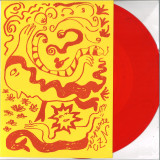
Comes in a Tranparent Red Vinyl in PVC Sleeve. Includes A4 risograph print by Cláudia Lancaster.
Side A written and produced by Bruno Silva with collaboration of Kelly Jayne Jones on "Perda Outra" and Maxwell Sterling on "Em Vida Traz”. Side B written and produced by João Pais Filipe, Leon Marks and Valentina Magaletti. Master by Carlos Nascimento at Qualia Audio Lab Artwork by Cláudia Lancaster Design by Conhecido João.
KIK is the new project of two core strategists of sonic enigma HHY & The Macumbas: Jonathan Uliel Saldanha & João Pais Filipe. Ditching acoustic instruments in favour of drum synthetics & tightly controlled sound design, the duo's debut album NIGHTSHIFT focuses on off-kilter club tracks that thwart 4-on-the-floor flavours whilst maintaining trance-inducing extended cycles. If the devil is in the details, this is all about the spectromophology of the details.
Beginning with moving morse code blips in an odd time signature We Can't Dance announces the characteristic unlife of the album's pulse. Once the kick enters, syncopations progressively accumulate into a weave of interacting rhythmic lines. Smoke Machine's groove is reminiscent of the riddims Saldanha explores in his HHY & The Kampala Unit, adding scintillating pads and snippets of blitzed out laughter.
The album's third track, Proff, hearkens back to the initial pulse, displaced and pitched down in register. Here's a more meditative temperament on display, where the regular geometries of the club have been moved into higher-order structures. Segments rise & fall into earshot. Deepening the meditative mood, Back Room explores a short melodic leitmotif anchoring the track's wander- lust.
The rhythmic assault continues in Tactical Gear, bringing further experiments into polyrhythmic contours exacerbated by preci- sion movements of echo & delay. Limping can be heard as a what-if sonic fiction taking Autechre-inspired abstractions through Durbanoid Gqom terrains. The album closes with its longest track, Night Shift, that segments into shifting sound worlds.
Drawing from industrial grit, cybernetic percussion and the eerie fluorescence of after-hours energy, NIGHTSHIFT exists in the liminal space between body music and abstraction——a soundtrack for phantom warehouses and malfunctioning machines. This isn’t just music; it’s an immersive sonic environment, a journey into the heart of deconstructed dancefloors.
For fans of Rian Treanor, Proc Fiskal, Jlin and Lorenzo Senni.
Most recently, HHY has been collaborating with Nyege Nyege through projects such as Kampala Unit and Arsenal Mikebe, performing live with the ensemble alongside Valentina Magaletti, and producing records for artists like Fulu Miziki, as well as collaborations with Phelimucasi, Rey Sapiens, Kingdom Choir and others. He also released Camouflage Vector: Edits From Live Actions 2017–2019 on the label, a live album featuring two tracks with Adrian Sherwood.
Previous collaborations include Tunnel Vision with Badawi (released on Tzadik), the HHY & The Macumbas album Beheaded Totem on House of Mythology, and Fujako (Wordsound, with MC Sensational), along with double-bill shows with acts such as Clipping and Death Grips.
A meeting of minds and bodies on a heady percussive trip with no clear destination, captured live at Espacio Cultural El Tanque in Tenerife. With both imaginary and lived in tropical sceneries coalescing the two units, both Tenerife's Lagoss and Kampala's Abagwagwa (aka Nihiloxica) find a common thread to disentangle cartographies. As if it was bound to happen. As it did.
Taking Abagwagwa's relentless barrage of polyrhythms as a starting point to jammin' excursions that never falter into self indulgence, brimming with ideas and spirits pulled from East African traditions, Free Jazz cosmologies, Dub tactics, urban sonic warfare and different strains of psychedelia through a vast array of drums, percussion, flutes, skewed synths, ecstatic vocals and electronic processing.Blessed with the xamanic drumming of João Pais Filipe on two tracks and feeling equally indebted to both bands' vision all the while commiting to a newfound sense of wonder, 'Island Slang' is a celebration that's truly alluring in its search for some sort of 'Universal Consciousness' - to quote Alice Coltrane - for which we're now invited to tag along. You are all welcome.
'Since 2018, João Pais Filipe (drums) and Burnt Friedman (electronics/synth) have investigated into automatic pattern–composition rooted in doubling and halving; the unimpeachable laws of motion. The offer of freedom can be seen as a way to get in touch with necessity.
On "Mechanics Of Waving" the attempt is made to succumb to such a mode of action, the drilling of a method, not through individual cunning or displayed musicianship.
Through constant practise Friedman & Pais discover the principles of rhythmic phenomena while dis–associating the music from cultural idioms. Inspired by rare infrasound–ratios ranging from 11 to 23, Nonplace releases the results of a 4 years long operation.'
Drums recorded and engineered by José Arantes.
Mastered by Kassian Troyer, Dubplates & Mastering.
LP + BOOK!
For most of the 20th century, Portugal's economy has relied on fishery and an exploitative canning industry arising from it. To endure their hardship and coordinate their work, fishermen sang. Leva Leva: Litany of the Portuguese fishermen documents this particular culture of the Portuguese coast, through a vinyl compilation containing undisclosed original recordings of fishermen’s songs and contemporary compositions by artists Filipa Cordeiro, Joăo Pais Filipe, Nandele, Romain Baudoin and S1m0nc3ll0. Alongside the record, the project features a detailed art book (Portuguese – French) (not available through wholesale). The volume gives a voice to artists, writers, witnesses and experts, all invited to reflect upon the question of this culture and the rapid transformation it experienced.
140g Black vinyl LP – Printed inner sleeve – Sealed plastic sleeve
In Trux We Pux is an editorial project organized by the Porto based label and collective Favela Discos. Focusing on the city’s thriving experimental and improvised music scene, it sets out to portrait in a series of four volumes some of the characteristic sounds and collaborative practices that have been in development in Porto during the last few years.
In Trux We Pux 04 is the last in a series of four records organized by Favela Discos, set out to shine a light on Porto’s thriving experimental and improvised music scene. Throughout the collection the label tries to expose the eclectic sound and collaborative practices that have been in development in the last few years in the city by promoting the collaboration between artists and the creation of new collective improvisation pieces.
As the first album dwelled into the electronic spectre of the scene, this volume veers itself to the physical side of experimental and improvised explorations. Although there is space for outsiders manipulating the sound by electronic means, most of the music in this album is plucked, bowed, percussed or sung. The artists themselves are as varied as the music they played, among the 13 artists that collaborated for the creation of this album are many promising newcomers but also some of the more recognizable and relevant names in the scene, with the presence of the Sonoscopia founder Gustavo Costa, João Pais Filipe one of the most characteristic drummers in Portugal, and the DIY duo and underground staple Calhau!.
As we could suspect, the diverse selection of musicians, while providing us a view on the various kinds of musical languages that populate the city’s scene, also creates a dynamic collection of sounds. Spanning a large gamut of sub-sub-genres, from near-musique concrète to tribal noise, the album is a rollercoaster collage that miraculously achieves logic and cohesion, like a voyeur listener taking us on a journey through an abandoned mall where most of the bands in Porto rehearse, whose halls reverberate with a cacophony of music.
Third time’s a charm. Or a chant in this case.“Antologia De Música Atípica Portuguesa” is back.Following two sold out volumes, the unplanned trilogy comes to a close with chants and hymns whilst continuing to merge music genres and presenting them as a world building concept.
If the first two volumes were dedicated to work (“O Trabalho”) and regions (“Regiões”), it only made sense to close the trilogy with ceremonial music, connecting the real – each musicians’ creation – with a fantasied celebration of Portuguese folk, traditions, and ghost methods within these unusual anthems.
If you’ve listened to Niagara before, you probably felt this whole ceremonial thing going on. A perfect opener then, for this volume with Niagara’s deep dive into proto religious-ambient music with “Paulo, Apolo e Pedro”. It sets the tone for the next 35-minutes of ethereal like songs. Either you listen to musicians working within their natural habitat (João Pais Filipe or Filipe Felizardo) or feel them exploring new areas in their realm (Niagara, Joana Guerra or Serpente), this third volume manages to combine eight of the best underrated visionaries working in current day Portugal.
In the past, “Antologia da Música Atípica Portuguesa” created an imaginary folktale where current day creations could live with the idea of archive or fake-folk. This volume forgets the world building and actually lives in it. Because this is the real Portugal. This is our folk. These are our chants. Embrace the otherworldly.
Following highly praised releases by Hermeto Pascoal & Grupo, Leonardo Marques, Xenia Franca and Moons, 180g and the legendary Disk Union continue to explore the best of today's Brazilian music scene with this wonderful psychedelic and funky pop album by Rio de Janeiro's Gus Levy: Magia Magia.
The mystical universe of Magia Magia reflects influences from the samba rock of Jorge Ben, the romantic grooves of Djavan and the psychedelic pop of Connan Mockasin and Negro Léo. The lyrics and sensations suggest a new way of seeing the reality of the world and relationships: union, spirituality, magic, complicity, happiness, courage, love, fraternity, dilemmas and contradictions lead the poetical subject of Magia Magia. Inspired by a conception of the universe ruled by feminine entities, Gus Levy brings with Magia Magia a masterpiece of modern Brazilian psychedelic and funky pop, with exquisite artwork by Fernanda Varella.
A composer and multi-instrumentalist from Rio de Janeiro, Brazil, Gus Levy has been gaining more and more attention on the Brazilian music scene during the last few years. He is also a producer at Rio de Janeiro's Estúdio Carolina studios, a member of the band "Os Dentes" for more than 10 years, and the guitarist of choice for artists like Antonio Neves, Filipe Marones and João Werneck.
Jupiter, the gas giant in our Solar System, with thunderstorms a thousand times more powerful than on Earth, rainfalls of diamonds in the atmosphere, temperatures below -100°C, plenty of hydrogen, 79 moons and a South pole that looks like an abstract painting, has just the kind of environment this music seems to emanate from.
Jupiter and Beyond, the second collaborative effort of composer/performer Rafael Toral and percussionist João Pais Filipe as a duo (after Saturn in 2016), is definitely not quite a record of Earth music. On the contrary, Jupiter and Beyond, is indeed gas music, unfolding over two long movements without solid body or any tangible outline, between ambient and noise. A music of sheer volume and beauty, icy, massive, in which the elements of Toral's signature, in particular his use of jazz-inspired electronics and feedback, dissolve to become a labile, nebulous, expansive material, occasionally struck by abyssal depressions and masterful densities, magnified by the return, after 17 years of silence, of the electric guitar in Rafael Toral's instrumentarium.
Towards the end of Beyond, the second piece on the record, lurking behind the volutes of feedback, a bell and a bass drum, one can detect from the distance... a barking dog, as a surreptitious and prosaic reminder of where we are here and now, a calling back to Earth. Between sadness and joy, anger and peace, movement and stillness, Jupiter and Beyond is indeed a mirror held out to us, music reflecting our times and that emotionally speaks first of all about us.
"While João Pais Filipe was drummer in the Space Quartet, we played a live duo set. During soundcheck we were jamming for a while on bowed gongs and feedback and lost track of time, it just flowed so well. I joked "we could make a whole record with this!". But later we took the idea seriously and set to record an improvised session at his cymbalsmith workshop (he made the gong on the cover and it was used in the recording). When we listened to the first take the mass of sound was amazing. At some point it reminded me of the complex clusters of sound in Ligeti's music as it appears on Kubrick's 2001 scene "Jupiter and Beyond the Infinite". In the end the title felt like an apt choice for Saturn's successor. Back at my studio I felt the need for some more layers of density in some sections. I thought of using trombones, but ended up picking up the electric guitar, which I hadn't used since 2003.” Rafael Toral
- 1