Dead Times is Lee Buford (The Body, Sightless Pit, Manslaughter 777) and Steven Vallot (Muslin). The duo originally began working together in 2008 while living together in Providence DIY space The Sickle, and releasing the early records from The Body and The Assembly of Light Choir on their short-lived Aum War label. They quickly achieved cult status with just two limited releases. Those releases have become highly coveted rarities for The Body fans and those familiar with the world of Providence, Rhode Island"s legendary DIY scene, which gave rise to artists like Lightning Bolt and Black Dice. Emerging over a decade later, Dead Times connects the threads of the untethered extremes of their origins to the mastery of production, composition, and structure each member has cultivated in their time apart. On their debut self-titled full-length, Dead Times present a kind of mesmeric dread, a world of desperate beauty wrapped in sonic venom. Buford and Vallot each bring wells of experience and new skill to Dead Times since their days living together in dilapidated warehouses. The duo"s shared history remains an essential element to their chemistry, but each has sharpened their craft to harness that raw creativity into music that is fearless, poignant and undeniably unique. A band"s band, but not for long. Dead Times, the duo"s first album, is staggering in its ambitions and exquisite in its execution. Lee Buford is known for his prolific work in acts including The Body, Sightless Pit, Everyone Asked About You, and more, alongside numerous collaborations with the likes of Full Of Hell, BIG|BRAVE, Thou, OAA, and Siege Engine. Steven Vallot is known for his collaborative work both musically, and artistically, with artists such as Krieg, The Body, Whitehorse, and Drew McDowall.
Suche:jocke
McCombs is one of the most highly regarded bassists/guitarists working today, known for his pioneering band Tortoise, his bass playing in Chicago"s Eleventh Dream Day, and his innovative instrumental group Brokeback. He has released albums with guitarist David Daniell, and collaborated with the likes of Tom Zé to Yo La Tengo, Stereolab to Daniel Lanois. In addition to being the touring bassist for The Sea and Cake, McCombs has somehow found time to form a new trio Black Duck with guitarist Bill MacKay, and percussionist Charles Rumback. Douglas McCombs" VMAKMcCombs" debut solo album is a mix of improvisation, textural explorations and recurring melodic themes. Taking after Brokeback"s classic Morse Code in the Modern Age: Across the Americas, "Two To Coolness" is a piece that McCombs refined through a series of improvised performances and features Calexico drummer John Convertino, as well as singer/guitarist/synth player Sam Prekop (also of The Sea and Cake). "Green Crown"s Step" was largely improvised working through melodies and patterns. The stately "To Whose Falls Shallows" reshapes three key themes that Tortoise and Brokeback fans will find to be signature McCombs, buoyed by fellow Brokeback member James Elkington (Tweedy), who also engineered and mixed the album. On the album, McCombs plays with spare instrumentation and primarily plays electric and acoustic guitars as well as the Bass VI, drawing out textures that stretch the scope of his instruments. McCombs" work is pastoral and expansive, his playing is refined and nuanced, and his melodies often bely his admiration for Ennio Morricone as his guitar imbues endlessly sprawling fields of the midwest with the same sense of magic. It is a true pleasure to hear him perform in such an intimate way. This is an absolute essential for followers of McCombs and newcomers alike, as the album lays bare his influence on each of his groups as well as firmly stakes McCombs as a force all his own.
- 1: Tnt
- 1: 2Swung From The Gutters
- 1: 3Ten-Day Interval
- 1: 4I Set My Fave To The Hillside
- 1: 5The Equator
- 1: 6A Simple Way To Go Faster Than Light That Does Now Work
- 1: 7The Suspension Bridge At Igazu Falls
- 1: 8Four-Day Interval
- 1: 9In Sarah, Mencken, Christ And Beethoven There Were Wome
- 1: 0Almost Always Is Nearly Enough
- 1: Jetty
- 1: 2Everglade
1998: Tortoise"s third studio album TNT is released. In and out of print over the past decade we are happy to finally give everyone what they have been asking for - TNT on vinyl again! Pressed on high quality virgin vinyl, the two LPs are packaged in a deluxe old-style tip-on gatefold jacket fully replicating the original artwork and includes a download coupon for the first time! Tortoise"s third full-length release, TNT, was written and recorded during a 10-month interval in 1997. This longer-than-usual writing/production schedule was purposefully undertaken by the group in the hopes of crafting an expansive, diverse, yet thematically coherent offering. TNT builds upon the spare, instrumental framework of the group"s first, self-titled album, and the extended edits, melodic adventures, and klangfarben of the subsequent full-length release, Millions Now Living Will Never Die. Further to this, Tortoise"s interest in the possibilities offered by the remixing of tracks was realized within the actual production of TNT; individual elements, sections, or sometimes whole compositions mutate within the album"s shifting framework. These techniques were suitably realized thanks in part to the use of non-linear digital recording and editing methods, the first example of such work for the group.
- 1: Subterranean - Movement I
- 1: 2 Subterranean - Movement Ii
- 1: 3 Subterranean - Movement Iii
- 1: 4 The Long Wait - Movement I
- 1: 5 The Long Wait - Movement Ii
- 1: 6 To Hold And To Be Held - Movement I
- 1: 7 To Hold And To Be Held - Movement Ii
- 1: 8 Mon Coeur - Movement I
- 1: 9 Mon Coeur - Movement Ii
- 1: 0 Mon Coeur - Movement Iii
- 1: Be Without Being Seen - Movement I
- 1: 2 Be Without Being Seen - Movement Ii
- 1: 3 Be Without Being Seen - Movement Iii
- 1: 4 Les Parenthèses Enchantées - Movement I
- 1: 5 Les Parenthèses Enchantées - Movement Ii
- 1: 6 Les Parenthèses Enchantées - Movement Iii
- 1: 7 Les Parenthèses Enchantées - Movement Iv
- 1: 8 Les Parenthèses Enchantées - Epilogue
- 1: 9 Night Looping - Movement I
- 1: 20 Night Looping - Movement Ii
- 1: 2 Night Looping - Movement Iii
Colleen thrives on reinvention. For over two decades under the name, French artist Cécile Schott has continuously pushed her compositional practice into new directions. Her creative approaches have included complex samples and loops, instrumental processing and even dub production techniques applied to the baroque viola da gamba. Each album immerses the listener in a wholly unique world while remaining unmistakably a work by Colleen. Schott"s compositions glow with carefully considered textures that move in captivating revolutions while subtly evolving. A connective thread of Schott"s work is the exploration of the intricacies of emotion while reveling in the act of contorting pop and classical forms into new shapes. Colleen"s Le jour et la nuit du réel is a voyage deep into the world of synthesis, a dense thicket populated by drifting echoes and pulsating arpeggios. More than just a creative approach, sound synthesis here becomes a means to interrogate complex concepts, from the self and perception to shifting notions of what is "reality".
Multi-instrumentalist Sally Anne Morgan, known for her work as part of The Black Twig Pickers, and half of House and Land (with Sarah Louise), cultivates seeds sown by folk musics and psychedelia. Carrying tills the rich soil of Appalachian traditions and her rural North Carolina surroundings into warm, reflective songs about the weight people carry with them, as well as Morgan"s own pregnancy and the birth of her first child. Bridging the more freeform, expansive leanings of 2021"s Cups and the lucid beauty of her acclaimed 2020 debut Thread, Carrying finds Morgan imbuing her masterfully crafted songs with more subtle and intricate arrangements. The album"s exploratory nature is anchored by a full band comprised of some of the most thoughtful players in the psychedelic folk and "cosmic country" spheres, including a guest appearance by Ripley Johnson (Rose City Band, Wooden Shjips, Moon Duo), and the foundational rhythm section of fellow The Black Twig Pickers collaborators: drummer Nathan Bowles (Steve Gunn Band, Pelt), guitarist Andrew Zinn, and bassist/engineer Joe Dejarnette. Morgan finds unity in the burdens and joys, tensions, and releases of modern living as a common thread that people bear in their day-to-day lives. "So much of what we accumulate and carry around with us burdens us, but we also can"t or don"t know how to let go," says Morgan. The profoundness and mundanity of that weight ran parallel for Morgan as she literally carried her child to term: the utter commonality of enduring what billions of parents before her had, and the awesome power of the human body and spirit, the complicated and unpredictable wash of emotions that come with nurturing and nourishing another life.
Vienna has a storied history as a ground zero for new music. Radian, who call Vienna home, embodies the city"s spirit of innovation. Martin Brandlmayr (drums, electronics), Martin Siewert (guitar, electronics) and John Norman (bass) are stalwarts of the European contemporary music community. Distorted Rooms presents a dazzling new elevation of Radian"s employment and manipulation of microtones with a new emphasis on abstracted guitar motifs, often employing a more loop-based or electronic approach to the guitar"s sonics. Radian"s visionary approach to composition speaks to a lifetime of working in forward-thinking music. The trio expertly hone in on sounds often removed from the sheen of the recording process and mine them for unique, rich textural sound palettes which they then meticulously arrange. Distorted Rooms creative process began with multi-stage recording of often the smallest sounds, from pick-scrapes to an amplifier"s latent hiss. These slivers of sound are then restructured and processed through a variety of techniques that transform them drastically. Radian have always been interested in sounds that might be considered byproducts and maximizing their creative and aural potential. More minor gestures like switching a pedal on and off or toggling the guitar"s pickup are mic"d and spun into textures that crackle and froth to fascinating effect. Radian"s angular, expansive music delights in tension and contradiction, sound and silence, improvisation and composition. The trio employs a singular and wholly unique sense of microtonality. While their creation process is complex, the resulting music is emotionally affecting, creating an aura of suspense and at times unease. Brandlmayr, Siewert, and Norman share an unconventional, wildly imaginative approach to sound.
Pelican and Thrill Jockey are proud to present a deluxe edition of the band"s acclaimed 2005 album The Fire In Our Throats Will Beckon The Thaw, newly remixed, remastered and featuring special bonus rarities including an early version of "Red Ran Amber," (previously only available on a split with MONO) and demos of "Autumn Into Summer," "Last Day of Winter" and "Sirius". The Fire In Our Throats established Pelican as indisputable masters of their craft. Pelican"s ability to alchemize their influences into a sound so wholly original and then expand on that sound into a work of captivating beauty remains a marvel. The album indelibly shifted the paradigm of heavy music and the ripples of that shift can be heard in the countless bands who have risen to prominence since its release. The genre-busting nature of the album"s melodicism and refined dynamics was a harbinger of things to come in a genre whose strict boundaries were rapidly being shattered; a fact recognized and cemented by the album"s critical reception, which engendered everything from an Album of the Year nod from Decibel, to pontifications about Pelican representing a rising wave of intellectualism in metal from the New York Times. Nearly two decades since the album"s release on Hydra Head Records, The Fire In Our Throats has stood as not just one of the band"s most celebrated releases, but as a watershed work of avant-metal. The album arrives with a fresh mix by its original engineer Greg Norman and mastering by Josh Bonati, imbibing the songs with a new ferocity while also granting increased clarity, highlighting the developing interplay between each member. The refreshed mix brings an additional punch to the rhythm section of bassist Bryan Herweg and drummer Larry Herweg, bolstering the brightened melodicism and interlocking riffing between guitarists Trevor Shelley de Brauw and Laurent Schroeder-Lebec. The more articulate presentation of the album showcases the power of each individual player while buttressing Pelican"s distinct sound as a unified force.
Voyager Gold Vinyl
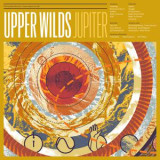
On Jupiter, Brooklyn trio Upper Wilds voyage deeper into the cosmos, mapping out the overwhelming enormity of the universe in soaring hooks and blistering noise. The third installment in the trio"s exploration of our solar system looks to its largest planet for a daring exploration of scale and perspective. New York underground mainstay Dan Friel"s melodic gifts and wry lyricism are magnified and propelled ever outwards by the thundering rhythm section of bassist Jason Binnick and drummer Jeff Ottenbacher, all immersed in rippling fuzz. Just like its namesake, Jupiter stands as Upper Wilds most colossal offering in their catalog. The raw power of their music is amplified to titanic proportions, sky-clawing riffs invoking the sheer awe that the heavens inspire. More than any Upper Wilds album before it, Jupiter makes humanity"s endeavors in space exploration an inseparable part of its sonic DNA . Recorded with Travis Harrison at his studio Serious Business in Brooklyn (Guided By Voices, Dope Body, The Men), the trio"s live recordings are inspired by the Voyager Golden Record - a double LP launched with the 1977 Voyager probe spanning field recordings to compositions by J.S. Bach and Laurie Spiegel. While the Voyager Golden Record"s intended audience may have originally been the extra-terrestrial beings that might encounter the probe, Upper Wilds bring cosmos-seeking sounds back to earth with a record made for and about humanity. Jupiter finds comfort in space"s unending expanse. Far from feeling defeated by the smallness of our existence in the face of an uncaring universe and ever-expanding infinite, Upper Wilds capture the power of creativity to extend our lifespans far beyond our limited time on earth
This new album compiles several songs made in the years following Black To Comm's classic "Alphabet 1968" album. Originally released on the seminal Type label in 2009 (and to be reissued on Cellule 75 this year) "Alphabet 1968" combined the sound of vintage shellac and vinyl loops with broken electronics and field recordings, the press release mentioning disparate influences "ranging from Moondog to Basic Channel by way of Bernard Herrmann". In a beautiful one-page review in The Wire magazine (later reprinted in his book Ghosts Of My Life) Mark Fisher compared Richter's music to JF Sebastian’s miniature automata in Blade Runner ("with their bizarre mixture of the clockwork and the computerised, the antique and the ultramodern, the playful and the sinister"), ETA Hoffmann's inventor-magicians and Auguste Villiers de l'Isle-Adam's 1886 tale of Thomas Edison's (fictitious) construction of an artificial human.
Now titled "Coh Bâle" (inspired by a strange dream) these recordings were supposed to become a follow-up to said album but for reasons unknown it never materialized and the album seemed forever lost. At the time Richter started to dive deeper into several strains of (so-called) world music aka the folk music of Southeast Asia and Eastern Europe as well as liturgical and medieval music, the Kraut-Electronica of Harmonia and several certain Mediterranean experimentalists from the 1980's who started to merge their mostly electronic and field recording based compositions with traditional musics from all over the world by way of new sampling technology.
Many of the songs for the album were recorded while travelling and at various residencies around Europe: a detuned piano in a Thessaloniki basement (Richter played at a children's birthday party there), vintage synthesizers in the GRM studios in Paris, decaying acoustic instruments found in an old Black Forest mansion, childrens' voices at a workshop in Karlsruhe's ZKM Institute; then mixed on headphones in the ICE trains running between these places and his hometown Hamburg.
"Coh Bâle" is taking inspirations from old Nonesuch Explorer and Ocora LP's, Crammed Records, 80s Mediterranean Ambient (Nuno Canavarro, Roberto Musci) combined with the DIY spirit of Deux Filles and Flaming Tunes and the playfulness of Asa Chang & Junray. The songs are both mysterious and transparent, intricate and frugal, vibrant and patient. One of the album's unexpected climaxes is a gorgeous (artificial) berimbau version of the Welsh traditional "Iechyd o Gylch".
No two songs feature the same instrumentation and many acoustic sources (pianos, flutes, wood percussion, viola, tablas, autoharp) were disassembled and later coalesced into new configurations or used as virtual instruments; later combined with samples, field recordings, electronics and (on a few tracks) autotuned vocals reminding of recent works by the likes of Claire Rousay or More Eaze.
We had to wait for a worldwide pandemic for Richter to dig deep into the vaults and finally bring these recordings to light. This is the 2nd release from his archives after the "Diode, Triode" LP which presented Musique Concrète/Acousmatic recordings made at INA/GRM and ZKM. Another massive Double-CD (MM∞XX Vol. 1 & 2) was released last year featuring collaborations with 33 artists such as Andrew Pekler, Richard Youngs, Eric Chenaux, Maja Ratkje, Radwan Ghazi Moumneh of Jerusalem In my Heart, GRM boss François Bonnet (Kassel Jaeger), Felix Kubin, Timo van Luijk (In Camera, Af Ursin), Luke Fowler and many others, showing Richter's versatility and his willingness to reinvent himself for every new release.
Marc Richter is widely known under his Black To Comm moniker, having released (at least) 12 albums under this alias in the last 20 years. He is currently signed to the Thrill Jockey label. Richter composes soundtracks for film and has worked with visual artists such as Mike Kelley and Ho Tzu Nyen. He also records as Jemh Circs and Mouchoir Étanche for his own Cellule 75 label (named in tribute to the late Luc Ferrari).
Marc Richter aka Black To Comm released his debut record 20 years ago. In 2023 he is still busy releasing music under various disguises and is currently signed to the Thrill Jockey label. To celebrate this anniversary his own Cellule 75 label is re-releasing some classic out-of-print vinyl albums that originally came out on the defunct Type and De Stijl labels. The LP will feature a full-colour lyric sheet / poster exclusive to this edition.
After releasing the critically acclaimed Alphabet 1968 on the seminal Type label (Grouper, Jóhann Jóhannsson, Yellow Swans), Richter chose De Stijl for this 2012 album, an American label that had just put out future classics by the likes of Circuit Des Yeux, Hype Williams and Wolf Eyes.
EARTH is a 2009 silent film by Ho Tzu Nyen, one of Singapore's foremost visual artists. After hearing Black To Comm's Alphabet 1968 Ho Tzu Nyen invited Richter to accompany the film at Berlin's Asian Film Festival, Unsound in Krakow and several other art biennals and music festivals around the world.
In his own words: "Most of the music was composed under the influence of heavy pain killers while recovering from a broken leg (the recordings literally took place in bed). The music (like the film) is about slowness and decay, states of unconsciousness, sleeping and waking up, dying and being reborn. The film is a post-apocalyptic collage based on paintings by classical European painters (Caravaggio, Delacroix, Rembrandt, Gericault) -- the music translates this concept employing corresponding collage-based sampling techniques using loops made from vintage vinyl and shellac records combined with acoustic and electronic instrumentation and voice."
From the original De Stijl one-sheet:
"Richter’s already formidable expressive power stretches over all of EARTH. Reflecting the countless cyclical forces that make up, oh, more or less everything we know and are, the music on EARTH is bracing, lovely, bustling and still, and at times bittersweet, a commingling of sensations and emotions that can’t be neatly separated from one another. (EARTH is complex, as you know.) Guests on EARTH include David Aird, a.k.a Vindicatrix (on the Mordant Music label), contributing startling vocal work; Renate Nikolaus on an array of instruments and noise devices; Rutger Zuydervelt (singing bowls); and Christopher Kline (singing saw). EARTH is Black to Comm’s seventh album and his debut for De Stijl, following the acclaimed Alphabet 1968 (on Type) and last year’s vinyl-only collaboration with Mike Kelley of Destroy All Monsters (on the En/Of label)."
Alex Neilson in The Wire:
"The most marked aspect of Earth is the voice of David Aird, aka Vindicatrix. Imperious and dolorous, he has the gravity of post-Climate Of Hunter Scott Walker, David Sylvain or Klaus Nomi stripped of the pathetic ritz. This is something that's easy to do badly, but Aird pulls it off with aplomb. On "The Children" he breaks into a morose yodel, rolling the words around his palate and colouring each syllable black before gifting them to the air. The meaning isn't understood verbally as much as viscerally. Beneath Aird's ululations, Richter casts handfuls of angelic debris from keyboards and digital devices, generating a celestial electronic tapestry reminiscent of Japanese musician Nobukazu Takemura. Sounds vie and twist at frequencies you can't so much hear as feel in the bridge of your nose, and the variety and full-bloodedness of the accompaniment is what prevents Aird's vocal from occassionally lapsing into shtick."
The first full-length collaboration from two artists who have expanded the field of rock thru their work over the last 3 decades, both as individuals and in their time together in The Sea and Cake.
Marc Richter aka Black To Comm released his debut record 20 years ago. In 2023 he is still busy releasing music under various disguises and is currently signed to the Thrill Jockey label. To celebrate this anniversary his own Cellule 75 label is re-releasing some classic out-of-print vinyl albums that originally came out on the defunct Type and De Stijl labels. The LP will feature a full-colour printed inner sleeve exclusive to this edition.
In 2009 the Type Recordings label run by John Twells had just released seminal records by Grouper, Jóhann Jóhannsson and Yellow Swans when they signed Richter and put out his breakthrough Alphabet 1968 album. The LP sold out within two weeks, receiving a glowing full-page review in The Wire Magazine by the late Mark Fisher (later reprinted in his book Ghosts Of My Life), was selected for Boomkat's Top 10 releases of the year (alongside debut albums by Leyland Kirby, Demdike Stare and Oneohtrix Point Never) and was greeted with universal praise in the underground blog network as well as established magazines such as The New Yorker and Pitchfork.
The music itself played with the notion of nostalgia without being nostalgic itself. It's the sound of half-remembered dreams, a surreal distorted vision of the past, an aural polaroid of long forgotten musics, a ghostly voice from a non-existent era.
From the original Type one-sheet:
"The mission statement for Alphabet 1968 was to write an album of "songs" for want of a better word. Short tracks which represented genre points, the milestones which stuck in Richter's mind when he thought back to his favorite records. What we arrive at is a breathtaking 10-track album which, over the course of 45 minutes, explores world music, techno, noise, avant-garde, ambient music and even exotica. Each track is linked with a loose thread of radio static or environmental sound, dragging you through the album, as if tuning in to a stray broadcast or a particularly adventurous mix. Richter has pieced the album together from hours of recordings made at his studio with home made gamelan, small instruments and loops gathered from a collection of ancient vinyl and 78 records. The scope of the album is admirable, but ignoring this, it is simply a shockingly arresting collection of experimental oddities, with references ranging from Moondog to Basic Channel by way of Bernard Herrmann. It's not hard to fall in love with Alphabet 1968, far harder would be to place exactly where the record should fit into your collection."
Mark Fisher in The Wire:
"But what if we were to take Richter's provocation seriously - what would a song without a singer be like? What would it be like, that is to say, if objects themselves could sing? It’s a question that connects fairy tales with cybernetics, and listening to Alphabet 1968, I’m reminded of a filmic space in which magic and mechanism meet: JF Sebastian’s apartment in Blade Runner. The tracks on the LP are crafted with the same minute attention to detail that the genetic designer and toymaker brought to his miniature automata, with their bizarre mixture of the clockwork and the computerised, the antique and the ultramodern, the playful and the sinister. Richter’s musical pieces have been built from similarly heterogeneous materials - record crackle, shortwave radio, glockenspiels, all manner of samples, mostly of acoustic instruments. ….. JF Sebastian's apartment was itself an update of older spaces in which science and sorcery co-existed: the workshops of ETA Hoffmann's inventor-magicians, or of Pinocchio's creator, Geppetto. I think, too, of Auguste Villiers de l'Isle-Adam's astonishing 1886 tale The Future Eve in which Edison, using the expertise he has recently acquired from inventing the phonograph, sets himself the task of constructing an artificial woman. But if there are songs here, they are sung by the gramophone and other recording and playback machines. Richter so successfully effaces himself as author that it is as if he has snuck into a room and recorded the objects as they played (to) themselves. Rather than simply automating his music, as in the case of Pierre Bastien and his mechanical machines, Richter makes us feel that he has merely recorded the unlife of objects. ….. Indeed, the impression of things winding down is persistent on Alphabet 1968. Entropy has not been excluded from Richter's enchanted soundworld. It feels as if the magic is always about to wear off, that the enchanted objects will slip back into the inanimate again at any moment."
repress !
Striking back the way we like it.
With a primitive approach the duo Fractions initiates this ritualistic 12" with a hyper-disco trance induced big room smasher.
As it follows Lars Huismann burns it with a tune that could be directly extracted from a 2000's mighty label like Primate, danger funk alert.
Heavily influenced by the present music the hit of this record has a name, She Won't Make Me Sad. Jheal Bashta pushes once again the limits of the urban music transforming this trap track into a unique piece of dance floor techno music not easy to forget. Sang by his brother Metal Fence.
Closing the issue Kontain's Paradox, will melt the heart and the shoes of those who can still on the dance floor (one of the tracks that I've been playing in the last parts of my sets lately the most).
Discoteca Neanderthal for disc-jockeys and collectors.
TURQUOISE VINYL
The first full-length collaboration from two artists who have expanded the field of rock thru their work over the last 3 decades, both as individuals and in their time together in The Sea and Cake.
Black Duck captures a band already deeply in tune with one another. The three-piece super-group consists of Douglas McCombs, Charles Rumback, and Bill MacKay each has a distinct musical voice that is instantly recognizable, yet blends seamlessly with one another-their time performing together, playing to the moment and reading each other and the spaces they"re in formed a fluency between the trio which allows them to follow each other down winding paths and short tangents alike. McCombs is a founding member of Tortoise, Pullman, and Brokeback and the long-standing bassist for Eleventh Dream Day, an artist whose contribution to the music world can not be overstated. MacKay began releasing records in the early 2000s. He has released several acclaimed solo albums with Drag City as well as a duo album each with Nathan Bowles (Banjo, Black Twig Pickers), and Katinka Kleijn (Cello, Chicago Symphony Orchestra (CSO)), and two beloved records with Ryley Walker. Rumback burst onto the fertile Chicago improvised music scene in the early 2000"s. His fluid technique and expressive playing garnered him much attention. In addition to his solo releases, Rumback has recorded with Ryley Walker, jazz greats such as Jim Baker, James Singleton, and Greg Ward. Black Duck"s debut is a testament to that fluency, an expedition led by three veterans into alluring worlds bathed in myriad splendors. Black Duck is a gallery of sonic tapestries, unbound by any genre constraints. Black Duck redefines what two guitarists and a drummer can do, pieces move from breezy shuffles to stormy blues rumbles to gorgeous textural drones. Playing entirely improvised live sets for years helped develop the trio"s acute senses for one another, knowing precisely how to listen to the others and bolster whatever direction they move in. In the short time the trio have played together, they have performed at Big Ears Festival and alongside acts like Yo La Tengo.
Disco Pogo is the new, bi-annual, electronic music magazine from the original founders of seminal 90s title Jockey Slut.
Issue 2 is, once again, a chunky 236 pages and features Daniel Avery, I. JORDAN, Ashley Beedle, David Holmes, Donna Summer, Eddie Chacon, Erol Alkan's Trash, Flesh at The Hacienda, Honey Dijon, Hot Chip, Kerry Chandler, Laurent Garnier, Lou Hayter, Paul Woolford, Ron Trent, TSHA, 90s Jungle and much more.
Viva acid house!
Markus Popp is endlessly curious and his music as Oval is delightfully inventive. Since pioneering albums in the 90s systemisch and 94diskont., Oval has continually excavated new spaces in electronic music, leaving an indelible mark on the landscape. New album Romantiq finds Popp delivering his most light and delicate tones to date. Like the plucking of harp strings, Popp"s organic and playful approach to sound is warm and bright. Oval continually, confounds with his ability to conjure such lithe, evocative sonics from software. Romantiq evolved from an audio-visual collaboration with digital artist Robert Seidel for the grand opening of the German Romantic Museum, where a huge outdoor projection covered the museum building. Popp sought a more expansive definition of the romantic, conjuring flickering images that glitch, evolve and collapse in on one another - opulent neo-chamber music lit by the paradoxically heartwarming screen glow of social media flirtations. Popp crafted dozens of short vignettes that each sought to evoke a specific mood or emotion. Processed period instruments trace luxuriant spaces that shift from low-lit chambers to glistening palatial grandeur, glitching through past, present and future. Swelling atmospheres emerge like perfume, rich scents flooding the senses before evaporating on the breeze. Romantiq"s musical oxytocin is made from ancient instruments processed and edited by a modern electronic master with the utmost deftness and delicacy.