2nd remix single of the session 2 by kuniyuki&henrik schwarz.
we invited two very hot new artist.
one is henrik schwarz's children "johannes brecht.
his debut single on sunday music was highly acclaimed.
his new single is coming on mule musiq very soon!
one more is talented producer in glasgow.his release on phonica or ene are our
favorite release.
lord of the isle 12" on mule musiq is also coming.
both remix are simply excellent.
Suche:johannes
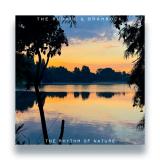
The Rhythm Of Nature’ is the stunning new masterpiece from Andy Compton (The Rurals) and Shamrock!
Written between Andy’s tours in South Africa and Shamrock’s extended UK trip in the summer of 2025, this album embodies their shared mission: to spread positive, joyful vibrations with LOVE.
Here, Soul, Jazz, and African music blend seamlessly through the talents of these two cosmic brothers, connected deeply by their love of making music.
When Andy and Shamrock jam and record, music flows so freely, creating a powerful, spiritual energy.
This follow-up to their 2023 debut album, Soul & Spirit — which still touches hearts worldwide — includes magical songs like ‘Bunny Chow’ and ‘Rosa Mziki’, originally created in Johannesburg and previously released on the Bunny Chow EP, Along with super fresh, unheard gems.
The album also features incredible musicians such as Nekoye Ommeh (Vocals), Pete Morris (Keys), Bongani Sessionist (Percussion), Kafele Bandele (Trumpet), and Charlie Hearnshaw (Sax), adding their magical energies to the soundscape.
Allow yourself to experience the full journey, feel and enjoy every note!
- A1: Satin Jackets & Kimchii - Bring On Up Your Love (Flashbaxx Remix) Length 05 18 Min
- A2: Satin Jackets & Erobique & Thunder - You Get Me So High Length 04 19 Min
- B1: Satin Jackets Feat Nazzereene - Know Me (Johannes Albert Remix) Length 05 04 Min
- B2: Satin Jackets Feat Seint Monet - Control (Ceci Remix) Length 03 31
A concentrated four track showcase extending the warm glow of last summer’s album “Cruise Control” into the spring of 2026. Satin Jackets lines up a heavyweight cast and delivers an EP that moves effortlessly between sunlit elegance and late night force.
A1) Satin Jackets & Kimchii – “Bring On Up Our Love” (Flashbaxx Remix)
Flashbaxx transforms the Satin Jackets and Kimchii track into a driving disco house floor weapon with bright chords and classic dancefloor swagger. Guaranteed to get everyone grooving.
A2) Satin Jackets & Erobique & Thunder – “You Get Me So High”
A radiant meeting of Satin Jackets, Erobique and Thunder that sails between disco, Westcoast soul and soft focus glamour. Built around the 2025 vocal, the trio turn it into a warm and irresistibly smooth homage to timeless Yacht Rock.
B1) Satin Jackets & Nazzereene – “Know Me” (Johannes Albert Remix)
The Berlin producer dives deep into Chicago house aesthetics and delivers a crisp, rolling late night tool that lights up any club at peak time.
B2) Satin Jackets feat. Seint Monet – “Control” (Ceci Remix)
Ceci closes the EP with a dreamy, slow burning rework that wraps Seint Monet’s vocal in hazy pads and gentle after hours warmth.
Extra Mile EP is the kind of twelve inch you do not pass on. A tight, potent combination of artists who elevate each other with ease.
- 1: Layer After Layer
- 2: Indalo
- 3: No Abiding City
- 4: Rising Falling
- 5: The Bridge
- 6: Mama Carries
- 7: Eating The Other
- 8: What Did The Rain Say?
- 9: Tulip
Shimmering Xhosa traditions and deep electronic futures vibrate as South African sonic poet and composer Dumama unveils her groundbreaking debut solo album, Towards An Expanse. Sometimes gospel, sometimes electro-psychedelic space travel, Towards An Expanse unfurls from a languid lament into an ever-expanding sonic universe. Dumama defies conventional genre boundaries while excavating deep personal and cultural histories in this concise but boundaryless collection, recorded between New York, Johannesburg and Berlin. Dumama first gained international attention with her acclaimed 2020 collaborative album, Buffering Juju, created with fellow South African musician and artist Kechou, and lauded as Global Album of the Month by The Guardian. Her new solo work draws on a rich lineage of South African voices. Gugulethu Duma (aka Dumama) is a musician / composer / sonic poet / creative producer from the Eastern Cape Province of South Africa. Dumama is one of the few uhadi players in the world. Her use of the traditional Xhosa bowed instrument guides her profound story-telling, blending ancestral roots into an urgent electro-acoustic palette. The album was born out of sessions with acclaimed musician and producer Shahzad Ismaily in New York and South African powerhouse Nandi Ndlovu in Johannesburg.
- 1: Big Bang
- 2: Dusk
- 3: Library Copy Do Not Remove
- 4: Habitat
- 5: Arp Angels
- 6: Castle In The Moon
In ,Library Copy Do Not Remove" präsentiert JJ Weihl von Discovery Zone eine digitale Verzauberung der Realität, in der er das Materielle und das Immaterielle miteinander verwebt, um zu zeigen, dass es sich dabei tatsächlich um zwei Aspekte ein und desselben handelt. In Weihls Welt sind Natur und Technologie keine Feinde, sondern erschaffen sich gegenseitig in einem unendlichen Tanz aus Bedeutung und Reflexion. Ursprünglich als Raumsound für das Zeiss-Groß-Planetarium in Berlin geschaffen, ist ,Library Copy Do Not Remove" eine Schöpfungsmythologie für das simulierte Universum. Dabei handelt es sich jedoch nicht um eine trockene, bostromische, maskuline Fantasie einer digitalen Realität, der die Geheimnisse der Natur fehlen. Stattdessen fordert Weihl den Zuhörer auf, im Rahmen einer Simulation Raum für die beeindruckende Realität der natürlichen Welt zu lassen. Wenn unsere Welt simuliert ist, dann muss die Simulation in der Lage sein, die Schönheit und Pracht der Natur zu erschaffen. Auf diese Weise betreibt Weihl eine ambient-artige Alchemie, die eine große Versöhnung von Natur und Technologie fordert, während sie uns auffordert, darüber nachzudenken, wie und wo die Erfahrung transzendenten menschlichen Bewusstseins zwischen ihnen existieren könnte. Die Songs auf ,Library Copy Do Not Remove" entstanden, während Weihl gleichzeitig ihr zweites Album ,Quantum Web" fertigstellte, und spiegeln einen weitreichenden, inspirierenden Zustand aus Aufregung und Angst wider, der mit der Aufgabe einherging, Musik für einen so einzigartigen Raum zu komponieren. Die Songs selbst wurden durch Ambisonics geformt, ein spezielles Format für räumliches Audio, das direktional ist, anstatt auf Kanälen zu basieren (wie Stereo), und wurden über ein Mosaik aus 49 Lautsprechern übertragen. Da es für Live-Auftritte geschrieben wurde, war ,Library Copy Do Not Remove" nie als Album im eigentlichen Sinne gedacht, sondern als dreidimensionales Ereignis. Auf diese Weise spiegelte die Klanginszenierung wider, wie wir Klang in unserem Alltag wahrnehmen: uns aus allen Richtungen umgebend. Für diese Albumveröffentlichung hat Weihl alle Songs gemeinsam mit ihrem langjährigen Produzenten E/T von Grund auf neu abgemischt und die Konstellation der Tracks für ein Stereoerlebnis neu konzipiert und überarbeitet. Inspiriert von den Werken von James Gleick, LD Deutsch, Johannes Kepler und Jorge Luis Borges, erforscht ,Library Copy Do Not Remove" die kreative Spannung zwischen Realität und Wahrnehmung, Information und Mythologie, Harmonie und Unordnung. Im gesamten Album fragt Weihl, wie wir als Menschen das Universum um uns herum und den zugrunde liegenden Code, der es belebt, verstehen lernen. Was dabei entsteht, ist ein klanglicher Mythos, der von spiralförmigen digitalen Universen erzählt, die ineinander verschachtelt sind und in denen jeder teilnehmende Akteur gleichzeitig sowohl Teil als auch das Ganze der Realität ist. Auf diese Weise ist ,Library Copy Do Not Remove" ein cyber-Ausdruck zeitloser Weisheit: Anstelle von ,wie oben, so unten" könnte Weihl vorschlagen: ,wie der Input, so der Output".
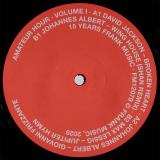
Amateur forever? Oh yeah! “Amateur Hour” celebrates 15 years of Frank Music - still running on pure DIY energy, with Johannes Albert happily admitting he’s got no master plan, just a deep feel for House Music. And somehow, nearly 80 releases later, that instinct still hits. Volume I digs into the archives: forgotten cuts, long out of print, quietly becoming cult favorites. David Jackson’s “Broken Heart” returns to wax, alongside J.A.’s own “Giovanni Frizzante" if Italo is still your thing.
Flip it over and it gets deeper: Shan reworks “Wing House” into something massive, while Max Lessig closes things out with the understated, timeless glow of “Jupiter Hymn”.
Let's be frank. Once again.
Stay True Sounds presents a vinyl-focused celebration of a modern dance music classic.
Jazzanova need no introduction. For over two decades, the Berlin collective has shaped the sound of soulful electronic music — timeless, refined, and rooted in pure musicality. Their collaboration with the ever-smooth Vikter Duplaix produced That Night, a track that has since lived many lives on dancefloors across the world.
Central to its legacy is the Wahoo Remix by Dixon and Georg Levin — a cult favourite that continues to resonate from Berlin to Johannesburg. This vinyl release brings together key reinterpretations of that remix, spotlighting South African artists who have added new dimensions to an already iconic recording.
Amateur forever? Oh yeah! “Amateur Hour” celebrates 15 years of Frank Music - still running on pure DIY energy, with Johannes Albert happily admitting he’s got no master plan, just a deep feel for House Music. And somehow, nearly 80 releases later, that instinct still hits. Volume II dives into the digital archives - bringing these cuts to wax for the very first time. Tom drops the vocal house bomb “Watch Me”; New Zealand's Eden Burns flips “Sounds” into something seriously special, and Claus Casper brings the sunshine with “Piano Italiano” (exactly what you think it is). And then there’s Amount’s “Feel You” - the one that’s been moving bodies since Fusion Festival 2023 and hasn’t really stopped since.
Let's be frank. Once again.
- A1: Jonathan Kaspar – Her
- B1: Robag Wruhme – Ratibor Numida
- B2: Ja Ck - Neverland
- A1: Butch – Straight Tripping
- B1: Josh Wink – Self Acceptance
- B2: Raxon – Believe In Mi
- A1: Dino Lenny – Sayonara Chicago
- B1: Extrawelt – Mindwear
- B2: Frank Sonic & Dist_42 – Silberschwein
- A1: Guy J – Alive Again
- B1: Riccardo De Polo – Melancholia
- B2: Johannes Volk – Vaporized Memories
- A1: Harvey Mckay – Tears In Rain
- B1: Damiano Von Erckert - Mad Man (I Told You What I Know)
- B2: Fedele - Zommerfest 25
Vol.2[89,03 €]
For its 25th anniversary, Cocoon Recordings returns to its roots with an elaborate vinyl LP box set, marking the first part of a two-volume anniversary project. 25 Years Cocoon Recordings – Volume
One brings together exclusive contributions from international artists who have defined the sound and diversity of the label over the past two decades, complemented by fresh talents who are helping to shape its future.
Over the span of 25 years, Cocoon Recordings has created a catalog that now comprises hundreds of releases, 12-inches, albums, mix CDs, and iconic compilation box sets, always bridging past, present, and future. While firmly rooted in techno and house, the label has also provided space for electronica,
ambient, and other evolving genres.
25 Years Cocoon Recordings – Volume One is more than just a compilation. It is both a homage to the label’s history and a glimpse into what lies ahead. With exclusive tracks that embody the Cocoon sound in all its depth and complexity, this release marks a milestone in the legacy of one of electronic
music’s most influential labels, arguably the strongest compilation in Cocoon’s history. To mark this special occasion, Sven Väth’s label presents the first of two carefully curated volumes, uniting 15 exclusive tracks from international artists in celebration of nearly three decades of Cocoon
Recordings. The luxurious 5x12" box set features a spectral-reflective foil finish and includes contributions from renowned names such as Butch, Robag Wruhme, Josh Wink, Guy J, and Dino Lenny, alongside longtime companions of the label including Extrawelt, Harvey McKay, Johannes
Volk, and Raxon. New discoveries of recent years, Jonathan Kaspar and Riccardo De Polo, enrich the release in their own distinctive ways. The compilation is completed by the unmistakable talents of Damiano von Erckert, Fedele, and ja:ck, who provide the perfect conclusion to the first of two parts.
This release sets the stage for what's next: a daring diptych where musical voices emerge, shining with originality and passion, carrying the spirit forward. The story is just beginning. Something special is on the horizon. One can only wonder which artists will shine on the second chapter.
- A1: Ojah With Hugh Masekela - Afro Beat Blues
- A2: Letta Mbulu - Mahlalela
- A3: Baranta Feat. Miatta Fahinbulleh - Amo Sakesa
- B1: Letta Mbulu - U Se Mcani
- B2: Baranta With Miatta Fahinbulleh - Tepo
- B3: The Zulus - Za Labalaba
- B4: The Zulus - Aredze
- C1: Baranta With Miatta Fahinbulleh - Witch Doctor
- C2: The Zulus - Joala
- C3: Baranta With Miatta Fahinbulleh - Ahvuomo
- D1: Letta Mbulu - Melodi (Sounds Of Home)
- D2: Baranta Fet. Miatta Fahinbulleh - A Cheeka Laka Laka
- D3: Johannesburg Street Band - Awe Mfana
- D4: Letta Mbulu - Macongo
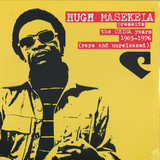
The Chisa Years: 1965-1975 (Rare and Unreleased) is a compilation album by South African jazz trumpeter Hugh Masekela. The album consists of 14 rare or forgotten tracks recorded by Stewart Levine and Hugh Masekela from 1965 to 1975 when they ran their own Chisa Records label.Thom Jurek of Allmusic wrote 'In sum, there isn't a weak moment on this entire collection. It's appeal is wide and deep and one can only hope this is the first of many volumes of this material to appear. BBE Records has done a stellar job in making this slab available.' Dan Nishimoto of the Prefix Magazine stated 'The compilation focuses on Masekela's original idea of 'African American Music.' From the early experiments of the Zulus (a group featuring M'Bulu) in mixing doo-wop, rhythm & blues and South African gospel and the mbaqanga/'Grazing in the Grass'-style work of the generically named Johannesburg Street Band to the clearly Fela-influenced Ojah (Masekela's band in the mid-'70s, consisting of players from Ghana and Nigeria) and the readyfor-primetime belting of M'Bulu, each track reveals a multi-pronged effort to find and challenge the notion(s) of how African and American cultural forms could interact.'
Bringing together the elder statesman of the Zulu guitar Madala Kunene and internationally acclaimed Sibusile Xaba, kwaNTU pulls two generations of South African guitar mastery into a single point of focus. Under-represented on recordings outside of South Africa, Madala Kunene (b. 1951), the ‘King of the Zulu Guitar’, is revered as the greatest living master of the Zulu guitar tradition. Sibusile Xaba, whose collaboration with Mushroom Hour Half Hour reaches back to his first recording in 2017 (Open Letter To Adoniah/Unlearning), has garnered international acclaim for his unique voice and virtuoso guitar stylings, which bring together multiple South African guitar lineages in an original, spiritualised fusion. Collaborating with Mushroom Hour and New Soil for kwaNTU, the two players come together to weave a filigree sonic fabric which reaches down to the heartwood of Zulu guitar music but moves resolutely outward, building on the past to create a deeply rooted statement about present conditions and future travels. kwaNTU – which can be roughly translated ‘the place of the life-spirit’ – is also conclave of teacher and student, as Xaba has been taught by Kunene for the last decade. Meditative, rich and sonically sui generis, kwaNTU finds these two musicians linking up within the inimitable space of sound and spirit that they share through Kunene’s teaching.
The great masters of South African music have not all had equal exposure. For many years the generation of musicians who were exiled during apartheid took centre stage, as the regime made it very difficult for those at home to be heard. More recently, a new cohort of important voices, especially in jazz, has broken through to international consciousness. But for the generation of musicians in between – those who shone like beacons in the most difficult final years of apartheid and immediately afterward – international recognition has been slow in coming.
Madala Kunene, ‘the King of the Zulu Guitar’, is among this number. A revered figure for current generations of South African musicians, Kunene began his recording career in 1990, at the bitter end of apartheid, with a now classic self-titled LP for David Marks’ storied Third Ear imprint. Born in 1951 in Cato Manor, near Durban, he had determined to be a musician from early childhood, and by the time he first entered a recording studio he had already had a long career as a popular performer. His virtuoso absorption and transformation of the venerable Zulu maskanda guitar tradition and his richly spiritualised approach to music immediately marked him out as someone special, and in the years that followed, Kunene cemented his position as one of South Africa’s musical elders. He is without doubt the grand master of the Zulu guitar tradition, but his sound and sensibility ranges far beyond it into varied sonic terrain, and he has collaborated with a wide range of musicians both at home and abroad. Now in his mid-seventies, he remains a shining light for those that are making music in contemporary South Africa.
‘He is really an amazing person,’ says the guitarist Sibusile Xaba, who has been mentored by Kunene for over a decade, and now invites a collaboration with him on kwaNTU. ‘As a mentor, he's really powerful in showing us the way. For us to have this opportunity to make music together and have a project together is really a blessing to me.’
Xaba himself grew up in Newcastle, KwaZulu-Natal, where his mother had been in a band and his father sang in a church choir, and from early childhood Xaba played homemade tin guitars. He only later realised that music was his calling. ‘I just loved music. I was fortunate. My parents loved music. And when it was time for me to leave home and go to study outside Newcastle, I knew that music was what I wanted to do. There was no second option. It was just music.’ Moving to Pretoria to study music formally, Xaba committed himself to his craft, developing a unique style that draws on both US jazz masters such as Wes Montgomery and Jim Hall, and the rich and varied heritage of the South African guitar, from inspirational jazz players such as Allen Kwela and Enoch Mthalane, to the music of the Malombo groups and Dr. Philip Tabane (Xaba has previously collaborated with Dr. Tabane’s late son, Thabang), and the Zulu guitar tradition embodied by Kunene.
‘I was really in love with the jazz guitar, I really admired it, and I was digging a lot in that direction,’ says Xaba, recalling his first encounter with Kunene’s music, over a decade ago. ‘And then one day on my timeline, Kunene popped up, and I was like – “What's this sound?” I was so connected to it. It really touched me deep. I started checking out his records, and then I found out he's from the same region as I am, which is Zululand.’ After Kunene played a show at the Afrikan Freedom Station in Johannesburg, Xaba make contact with him, and visited him at home in Durban. They struck up a friendship, and Xaba became the elder’s student, as Kunene began to pass on his knowledge and his inimitable way of playing.
kwaNTU is a tribute to this relationship and the deep learning that has defined it. The album was recorded in Zululand in the town of Utrecht, at a cultural centre called Kwantu Village, which gives its name to the album. ‘It's such a broad word,’ Xaba says, ‘but the elders teach us that Ntu is basically an energy, almost chi, an energy, a force that all living beings have within them. It's a living energy, so kwaNTU is like, almost the place of this energy.’ The two men sequestered themselves for five days of jamming, improvising and planning, and then the session was recorded in one take over a single night, with Gontse Makhene joining on percussion and backing vocals and Fakazile on vocals. Other voices and overdubs were later added in the studio in Johannesburg.
The result is a rich and meditative recording that finds two generations in a deeply engaged dialogue. Teaching and passing on his knowledge, the elder Kunene has brought Xaba into a space of sound and knowledge that they now share; Xaba’s own practice of deep communion with nature and his dedication to his musical craft make him the perfect interlocutor for Kunene. The result is an album that foregrounds the two musicians engaged at the highest levels of responsive listening, sympathetic unity, and collaborative concentration. Bringing an elder statesman of South African music to an international listening audience for the first time in decades by pairing him with one of South Africa’s most important new voices, kwaNTU is a meeting of generations and a powerful demonstration of musical lineage and continuity.
‘Before music, there is sound,’ Xaba observes, speaking of Kunene’s unique approach to music. ‘And sound is like a common compartment…it's not restricted to particular people or particular geographic places, you know what I mean? It's sound. Everybody can hear it. So when he constructs that sound into music, I think everybody resonates with the energy behind his construction of sound into song. Here at home, we really love him for preserving our history through the guitar, through his stories as well the music, the songs that he writes. We really, really admire him.’
Nachdem sie auf ihrem gefeierten Debütalbum ein multidimensionales Klanguniversum definiert hatten, verlassen der Komponist und Filmemacher Chris Hunt und James ,Munky" Shaffer von Korn auf EXINFINITE das Vertraute und driften in ein Reich der Rekursion, wo sie auf ein Gewirr aus gespiegelten Wurmlöchern blicken, die mit unheimlicher Mehrdeutigkeit summen. Das zweite Album von VENERA ist düsterer, heavier und perkussiver als sein Vorgänger, aber es gibt etwas Intimeres in seinen Schaltkreisen, das schwer zu definieren ist - etwas Mystisches, Geheimnisvolles und Melancholisches. Songs materialisieren sich aus dem Nichts, nur um von sauren Synthesizern aufgelöst oder von Hunts geschärften Beats durchbohrt zu werden, während Shaffers dichte, gequälte Riffs durch euphorische, zeitverzerrte Vocals von FKA twigs, Dis Fig und Chelsea Wolfe ausgeglichen werden. Nach ihrer Begegnung mit der Unendlichkeit haben VENERA nach innen geschaut, über die Grenzen der Existenz nachgedacht und ihre tiefsten Emotionen ausgegraben. VENERA entstand 2022, als Hunt und Shaffer nach Aufnahmen mit der albanischen Künstlerin Xhoana X. ihr eigenes musikalisches Terrain betraten. Das Duo improvisierte gemeinsam und experimentierte mit cineastischem, von Science-Fiction inspiriertem Sounddesign und erkannte, dass die Zusammenarbeit Potenzial hatte. So begannen sie, ihren Sound weiterzuentwickeln und zu verfeinern, wobei sie Unterstützung von Deantoni Parks, dem ehemaligen Schlagzeuger von Mars Volta, Alain Johannes von Queens of the Stone Age, dem Post-Punk-Duo VOWWS und den LA-Noise-Rock-Legenden HEALTH erhielten. Nachdem ihr Debütalbum 2023 auf Mike Pattons Label Ipecac erschienen war, setzten VENERA die Dekonstruktion und Neugestaltung ihres Songwritings fort, tauschten Eno-artige Ambient-Atmosphären gegen explosive Beats und dichte Texturen aus und fanden heraus, wie sie die von ihnen eröffnete Erzählung erweitern konnten, ohne alte Pfade zu beschreiten. Auf ,Tear" ist die neue Richtung des Duos deutlich zu hören, wenn Shaffers ursprüngliche Gitarrenklänge zu unheimlichen Widescreen-Expositionen umgestaltet werden, die Hunt mit pneumatischen Kick- und Snare-Zyklen untermalt. Unterbrochen von Luftschleusen-Zischen und leuchtenden Synthesizern, bietet der Track eine Kulisse, die VENERA kontinuierlich verwandelt und das Konzept im Laufe des Albums neu formt. Die Kult-Singer-Songwriterin Chelsea Wolfe gibt dem düsteren ,All Midnights" einen gotischen amerikanischen Touch, indem sie kraftvoll über VENERAs vakuumverpackte Rhythmen und gasförmige Synthesizer singt, und der in Berlin lebende Noisemaker Dis Fig, der bereits mit The Body und The Bug zusammengearbeitet hat, verleiht Shaffer und Hunts tape-verzerrten Industrial-Pops und -Whirrs in ,End Uncovered" hauchige, emotional vielschichtige Töne. Sie lassen squelchigen, verlangsamten Techno in okkulte Noise-Reflexionspools auf dem schlängelnden ,Asteroxylon" einfließen, und Hunt antwortet auf Shaffers hallende Zupftöne mit Nebelhorn-Stöhnen auf dem unheilvollen, nachdenklichen ,uuu773". ,EXINFINITE" baut sich kontinuierlich auf, bis es ,Caroline" erreicht, eine intensive Zusammenarbeit mit FKA Twigs, die ihre unheimlichsten Töne isoliert. Zunächst umspielt sie ihre Worte mit bedrohlichen elektrischen Verzerrungen und verstümmelten, geisterhaften Stimmen, bevor sie in einen aufgeladenen opernhaften Schrei ausbricht, dem Shaffer und Hunt mit flirrenden kybernetischen Beats und dichten Wänden aus Gitarrenlärm begegnen. Dieser Track bricht das Konzept von VENERA vollständig auf, verschmilzt das Synthetische mit dem Natürlichen und löst Dysphorie, Selbstverlust und unendliche Regression aus. So wirken der blutrünstige Lärm und die finstere Atmosphäre von ,Decreation" wie eine dissoziierte Coda. In ,EXINFINITE" werden Zerstörung und Tod nicht überwunden, sondern so lange intensiviert, bis sie sich vollständig verwandeln.
In 1995 Celvin Rotane’s “I Believe” carved its place in house history. Powered by the unmistakable “Huh!” sample a soaring high string breakdown, and a phat kick that slams into a massive crash, it became a global club anthem, lighting up dance floors from festivals to beach bars. An evergreen classic, it still moves crowds today.
Now, 30 years later, it returns as a fully remastered and refurbished package on limited vinyl. The release features the original Dub Mix plus remixes from DJ Misjah and Rozzo from Switzerland, now rather known as Lake People. And there is more on the way, with remixes coming from Johannes Albert, Cinthie and many more. Huh, we believe again.
“Chacha” is the third album from one of the most groundbreaking European acts of the moment. Schulverweis, the collaboration between the prolific Levente Pavelka and the elektro enfant terrible Johannes Haas (aka L.F.T.), delivers an exceptional blend of eerie, lo-fi post-punk. This album breathes new life into an otherwise seemingly explored genre, making it an undeniable must-have for collectors drawn to the experimental edge of darkwave sounds. All tracks have been specially remastered for vinyl by Daniel Hallhuber at Young and Cold Studios (Germany).
J.E. Movement's groundbreaking ‘Ma Dea Luv’,
Toward the end of the 1980s South Africa's recording industry was booming. Searching for a sound that could cross over to all in the country's segregated society while also eyeing international success, a new duo emerged that quickly rendered its 'bubblegum' predecessors obsolete. Drawing on international trends and crafting lyrics for local ears, J.E. MOVEMENT — a duo made up of James Nyingwa and Elliot Faku — exploded onto the local scene with their debut album, 'Ma Dea Luv'. The future had arrived.
A talented bassist and composer, Nyingwa was at the time employed as an in-house producer at TRS Studios in Plein Street in downtown Johannesburg, run by two Greek immigrants, George Vardas and Chris Ghelakis. Together they formed a close bond as friends and musical partners at what would become CSR Records, recording original hits with acts like the NEW AGE KIDS and SIDNEY, while also cashing in on cover versions as BLACK BOX.
The six tracks on J.E. Movement’s 1988 debut give firm nods to UK Street Soul, New Jack Swing and Stock Aitken Waterman's 'Hit Factory' sound and infuse them with an African rhythmic flair and homegrown lyrical sentiment. Though not expressly political, the title track was received by many as a play on words referencing then-jailed and banned Nelson Mandela (coming after the similarly styled 'I'm Winning My Dear Love' by Yvonne Chaka Chaka in 1986 and 'We Miss You Manelow' by Chicco in 1987), giving it an added potency for those in the know. 'Jack I'm Sorry' was an underground hit in the townships, while 'Marco', 'Friends', 'Funkytown' and the eponymous closer are similarly bass and drum-driven, with hiphop-styled vocals.
Introducing the second release under the Statica imprint “MyCn18: Engraved Hourglass”
STATICA002 comes from Berlin-based artist Johannes Mai aka John Spring. John's productions have gained legendary notoriety over the past decade with his early releases revered for their timeless sound and experimental edge, whilst always keeping to a ritual of dancefloor compatibility. An influential artist who pushed the boundaries of minimalism and helped lay the foundations that have sculpted the sound of the present. It's a great honour to be releasing his first EP in over 13 years with 3 never before heard tracks from the mid 00’s.
“Train Ride” is an energetic A1 with pacey drums and a marching topline, while the A2 “Ravebehave” delves deep into spring reverb mastery and wavering synths. The B1 “Melodic Ten” begins with rolling percussion and uplifts with the whispers of enchanting vocals. B2 comes as a remix of Melodic Ten by Fabric resident and stand out London artist Harry McCanna aka Henry Hyde! stripping it back even further and introducing his own sinister synths, growling bass and groove-led drum patterns. It's a pleasure to have Harry featured on the release.
MyCn 18 is a young planetary nebula in the southern constellation Musca. It was discovered by Romano Coradi and Hugo Schwarz in 1991. MyCn 18's hourglass shape is produced by the expansion of a fast stellar wind within a slowly expanding cloud which is denser near its equator than its poles. The central star of the nebula is unknown.
Credits-:
A massive thank you to John Spring & Harry McCanna for their Contributions. Distributed by Deejay.de. Mastering by Justin Drake. Design and Curation by Alix
Exploring the water engineering relationship between Japan and the Netherlands across a trilogy of experimental releases, the third and final part of Field Records' Waterworks series is courtesy of Yui Onodera. Pairing delicate synthesis and instrumentation with field recordings and negative space, the accomplished artist and sound architect examines the impact of water engineering on Japan's Kiso Three Rivers.
The location refers to the confluence of the Kiso, Nagara and Ibi rivers on the Nōbi plain in Gifu prefecture. In the late 19th century, Japanese authorities collaborated with Dutch engineer Johannes de Rijke to separate the three rivers at the lower part of the Kiso delta. These extensive improvements, which were finalized in 1912, successfully shielded the city of Nagoya from regular flooding.
Onodera's minimalist palette and detailed approach to spatial sound design balances microscopic field recordings and tonally-rich traditional instruments, which he applies with stark focus to the subject of the Kiso Three Rivers across eight extended pieces of music arranged into two distinct parts. The A side's shorter tracks are delicately sculpted miniatures interweaving chiming bell tones, treated guitar impressions and hushed pads. The B side's two longer suites are more overtly minimal in nature, emphasising sampled water sources accented with patient brush strokes of synthesis.
This project is supported by the Embassy of the Kingdom of the Netherlands in Tokyo, Japan.