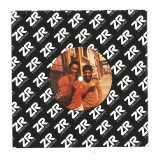
Opaque Pink Coloured LP Vinyl - M.E.B. (formerly Miles Electric Band) led by Vince Wilburn, Jr collects a progressive All-Star ensemble featuring Miles Davis alumni and the players Miles inspired. This brand new, never-released studio recording captures a multi-generational who’s who of acclaimed artists performing new Miles-inspired compositions. Two tracks of the five on the album include unreleased trumpet performances by Miles and the album, produced by Miles' alumni Lenny White and Wilburn, features music legends including Ron Carter, Marcus Miller, Stanley Clarke, Donald Harrison, Darryl Jones, Vernon Reid and John Scofield. This album is dedicated to the memory of Wallace Roney and Bernard Wright and contains some of their final recordings. The cover is an original painting from artist and Miles’ associate Mikel Elam. Pressed on hot pink vinyl, this is the exclusive vinyl release.
quête:john b
Bound To Rise is the quietly impressive debut album from Yorkshireman Chris Brain. His songs have a gentleness and ethereality, enhanced by his softly husky, smoky vocals coupled with delicate finger-picked guitar patterns based around his alternate tunings.
The self-composed songs draw on the pastoral and the traditional, heavily centred in natural imagery featuring both as itself and as allegory. A misty ambiguity, suggestions of layered meaning and hints of multiple interpretations permeate the lyrics. And darker moods throw long shadows across this landscape.
A pre-dawn longing for the sun in title track ‘Bound To Rise’ seems to obliquely evoke springtime, primitive beliefs and lifting mood. ‘Bird Count’ is another daybreak song hinting at other, more intimate, preoccupations, “calling out your name / never to be tame”.
‘Chance To See’ celebrates the emotional significance of a relationship, and it’s easy to interpret ‘Golden Eagle’ as its flipside partner, “but you can’t choose her, she chooses you” – or maybe it’s simply a song about birdwatching. ‘Flying On Time’ continues with rare sightings paired with impressions of human air travel and distance, “she’s due tonight / just for one night / to visit our skies”.
Non-specific doubt and uncertainty edgily patrol ‘If I Could’, whilst the cheerfully pattering guitar motif of ‘Peace And Quiet’ belies an inner melancholy, and ‘Rare Find’ charmingly bookends Mary Jane Walker’s plangent violin and Simeon Walker’s subtle piano.
‘Sunday Morn’ “lays the week to rest” amongst other things but, despite the laid-back vibe, all is not sunny and “melancholy calls to greet us once more”. Brain’s songs are intriguing shifts of light and shade, and the details improve with each listen.
Coming full circle thematically, the joyous simplicity of expression in ‘Sun Song’ makes it close kin to the mighty Bright Phoebus, “the sun was born and she’s beautiful / the sun was born from the ground”. It’s an optimistic ending to an emotionally ambiguous album.
Influenced by, among others, Nick Drake, John Martyn and Joni Mitchell, it’s not hard to see where Chris Brain is coming from. More interesting is where he’s going to. Bound To Rise makes a very promising start.
- A1: Pulling Back The Curtain (Intro)
- A2: Dues And Don'ts
- A3: The Wait
- A4: Fraud Fades
- A5: Suit Up
- A6: Mood Swings
- A7: Mono Pro Bono
- A8: The Oath
- A9: Taking The Stand
- B1: All Rise
- B2: Sinkhole
- B3: The Appeal
- B4: Loyalty Over Royalty
- B5: The Wait (Pt.2)
- B6: No Clouds On A Sunny Day
- B7: The Wait (Pt.3)
- B8: I Rest My Case
Die Musik von Soul Supreme bewegt, groovt, pocht und schlägt mehr denn je. Die farbenfrohe Klangpalette von 'Poetic Justice' bietet die bisher größte Besetzung mit Gastmusikern: darunter Drummer J-Zone, Bassist Glenn Gaddum Jr., Jeroen Verberne (Gallowstreet) und Johnny Biner und Euan Jenkins (beide Radiohop). Mit seinem bewährten Set-up und einem neu hinzugefügten Clavinet klingt Soul Supremes Schmelztiegel aus Jazz-Funk, Hip-Hop-Grooves, gefühlvollen Cuts und Library-Funk reicher als je zuvor.
Unlike the majority of previous Davis albums, E.S.P. consisted entirely of new compositions written by members of the group. Despite the profusion of new material, only one tune ("Agitation") is known to have appeared in the group's live performances. "Little One" might be best known for being revisited on Hancock's landmark album, Maiden Voyage, recorded a few weeks later. This version is somewhat more embryonic; Carter's bass is halting, and Davis and Shorter state the theme with winding, interlocking contrapuntal lines that evoke Davis and Coltrane's version of "Round Midnight". Hancock's solo on Carter's composition, "Eighty-One", also presages his work on that LP - particularly its title track.
The title track is reminiscent of Jackie McLean's "Little Melonae", which Davis had recorded with John Coltrane in 1956. "Iris", by contrast, is another Coltrane-like ballad, not too dissimilar to "Infant Eyes" on Shorter's Speak No Evil album. Shortly thereafter, Shorter's compositions would begin to dominate the Quintet's recordings, though here he contributes only two of the seven songs.
This was the first time Wayne Shorter recorded with Miles, and the band - in this configuration - had been together for less than a year. As you will hear, the connection between the musicians is uncanny, as if they had been playing together for decades. Especially notice Wayne Shorter's brilliant interplay with Miles on the closing track "Mood," the haunting ballad written by bassist Ron Carter. At over forty-eight minutes, E.S.P. is one of the longest jazz albums of its period.
How does one properly introduce an epochal record? Perhaps by unequivocally stating that it is the best-selling jazz album in history. Or by affirming that, every year, it sells tens of thousands of copies more than five decades after its original release. There's also the matter of its status as the most-referenced, and arguably, most important, jazz recording of all-time. And the Dream Team line-up of Miles Davis, Cannonball Adderley, John Coltrane, Bill Evans, Wynton Kelly, Paul Chambers, and Jimmy Cobb. Yes, Kind of Blue is utterly inimitable.
In its three-decade-plus history, Mobile Fidelity has never been prouder to have the honour of handling efforts as important as Davis' key recordings. It's why the our engineers took every available measure to transport listeners to the March and April 1959 sessions that parlayed modal jazz into mainstream language. The blueprint for melodic improvisation and vamping, Kind of Blue simplifies tonal organization and chordal progression into an eminently beautiful, introspective tapestry stitched with swinging poetry, mellifluous soloing, compositional lyricism, transcendental harmonies, and group interplay of the highest calibre.
While no one has ever completely identified the magic behind the record's allure – the otherworldly nature is part of its inherent charm – much of the success lies with the band members. Davis intentionally hand-picked these musicians to comprise this particular cast, with everyone from former foil Evans to blues maestro Kelly to percussive genius Cobb interacting and reacting with peerless skill.
An audiophile favourite from the day it was issued, Kind of Blue takes on nirvanic sonic proportions via Mobile Fidelity's reissue. The expressive warmth, imaging clarity, frequency extension, and window-on-the-world breadth afforded by this new edition places music lovers right in the studio with the sextet. Close your eyes and, no matter how many times you may have heard it before, your experience will parallel that of the players that recorded these gems. Everyone shares in the excitement of not knowing what will happen and, as the music begins to lie out in front of you, you'll feel as if you've been whisked away to a jazz holy land. Quintessential.
Complimenting the release of the new Supafunkanova Vol.3 album by Woody Bianchi is this extremely badass 7” for all those that like it at 45. Two very rare, choice cuts from the album, one of which doesn’t feature on the Vinyl version of the Compilation.
First up is the Together Band with their falsetto boogie funk track ‘Calif. Curl, Calif. Girl’ sitting somewhere between Slave & One Way with it’s killer guitar groove, disco toms and synth swells.
On the flip is The Firebolts - Firebolt Hustle an extremely hard to find cut on 7” featuring legends such as Bernard Wright and Barry Johnson. A pure badass Funk track from the Disco-Boogie era indeed!
- A1: Sweet - Love Is Like Oxygen
- A2: Lou Reed - Vicious
- A3: Mott The Hoople - All The Young Dudes
- A4: The Runaways - Cherry Bomb
- A5: New York Dolls - Personality Crisis
- A6: Alvin Stardust - My Coo Ca Choo
- A7: Kiss - 2,000 Man
- Side B
- B1: Roxy Music - Do The Strand
- B2: Slade - Cum On Feel The Noize
- B3: Sparks - This Town Ain't Big Enough For Both Of Us
- B4: Paper Lace - The Night Chicago Died
- B5: Tower - See You Tonight
- B6: Mick Ronson - Only After Dark
- B7: Steve Harley & Cockney Rebel - Make Me Smile
- C1: Mud - Tiger Feet
- C2: Wizzard - See My Baby Jive
- C3: Elton John - Saturday Night's Alright (For Fighting)
- C4: Bonnie St. Claire & Unit Gloria - Clap Your Hands And Stamp Your Feet
- C5: Alice Cooper - School's Out
- C6: Kenny - The Bump
- C7: Bay City Rollers - Saturday Night
- D1: T.rex - Jeepster
- D2: Pilot - Magic
- D5: Catapult - Let Your Hang Hang Down
- D6: Cozy Powell - Na Na Na
- D7: Mink Deville - Spanish Stroll
- D8: Chicory Tip - Son Of My Father
- D3: The Rubettes - Juke Box Jive
- D4: Suzi Quatro - Can The Can
Glam Rock is the style of rock music, mainly developed in the UK, and was performed by artists and groups wearing outrageous costumes, makeup, glitter and hairstyles. Glam Rock Collected contains the biggest Glam Rockers from groups such as Sweet, T.Rex, Roxy Music, Mott The Hoople, Kiss, Mud, Slade, Wizzard and artists as diverse as Elton John, Suzi Quatro, Lou Reed, Alvin Stardust, Alice Cooper and many more.
Third release in the 'first time on vinyl' trilogy, following the quickly sold out 'Pink Lady Lemonade - You're From Outer Space' (REPOSELP102) & 'Myth Of The Love Electrique' (REPOSELP111)
Here we have the bands classic 2007 double album 'Acid Motherly Love' pressed on vinyl for the first time.
This 2LP set is pressed on transparent orange vinyl, and comes housed in a fully redesigned gatefold sleeve complete with obligatory nudity.
'Acid Motherly Love' is another OUT-THERE ride through Acid Mothers weird and psychedelic world. Guitars howl, riffs grow BIGGER with each minute and brains get fried along the way. Recorded under falling ash and burning roof tiles, 'Acid Motherly Love' features every dimension of their legendary underground sound - from wild riff heavy jams, to quieter acoustic passages and spoken monologues, all capped by the trance inducing 15 minute-plus epic 'Santa Sanrodriguez'.
- A1: 1916 (1:11)
- A2: Elastic Rock (4:05)
- A3: Striation (2:14)
- A4: Taranaki (1:38)
- A5: Twisted Track (5:19)
- A6: Crude Blues (Part 1) (0:54)
- A7: Crude Blues (Part 2) (2:38)
- A8: 1916 (The Battle Of Boogaloo) (2:58)
- B1: Torrid Zone (8:41)
- B2: Stonescape (2:39)
- B3: Earth Mother (5:15)
- B4: Speaking For Myself, Personally, In My Own Opinion, I Think… (1:31)
- B5: Persephone’s Jive (2:14)
Nucleus's Elastic Rock is undisputedly a milestone in Jazz-Rock. A beautiful and vital debut album, it was first released on Vertigo in 1970. Original copies are now very tricky to score and, like all the Nucleus records, it’s aged ridiculously well. This Be With re-issue, re-mastered from the original analogue tapes, shows off just why this deserves to be back in press.
Genius trumpeter and visionary composer Ian Carr was one of the most respected British musicians of his era. He was a true pioneer and saw the potential in fusing the worlds of jazz with rock, just as Miles Davis and The Tony Williams Lifetime did in the US. In late 1969, following the demise of the Rendell-Carr quintet, and tiring of British jazz, Carr assembled the legendary Nucleus. Regarding music as a continuous process, Nucleus refused to “recognise rigid boundaries” and worked on delivering what they saw as a “total musical experience”. We can get behind that.
Under bandleader Carr, Nucleus existed as a fluid line-up of inventive, skilled musicians. This constant evolution and revolution was all part of the continuous musical exploration and discovery that took jazz to new levels. And the music has kept relevant. To steal a line from a review of our re-issue of Roots, when it comes to anything Nucleus “it’s basically already hip-hop”.
The very title Elastic Rock could be regarded as the group's MO, describing a melting point between their rock and jazz impulses. Indeed, housed in a memorable gatefold jacket designed by Roger Dean, the die cut molten teardrop shape on the front sleeve opens to reveal a fiery volcanic crater. On the back, Dean's drawing has Carr with saxophonist Brian Smith, guitarist Chris Spedding, drummer John Marshall, bassist Jeff Clyne and sax, oboe and pianist Karl Jenkins in a circle, the central core of a movement and the basis for its activity.
Recorded over four days in January 1970, Elastic Rock didn't sound like any other British jazz album. Exploding out the gate, "1916" opens with Marshall's frantic pounding before melancholic horns enter. The smooth title track, "Elastic Rock" is just a gorgeous electric blues track. Light drums, gentle melodic horns, piano and a solid bassline serve as the perfect bed for Spedding's graceful bluesy guitar melodies. The serene "Striation", a Clyne and Spedding collaboration, is led by bowed bass and is the epitome of calm before the late night laid back vibe of "Taranaki" breezes along sweetly and smoothly with great trumpet and tenor.
The truly emotional "Twisted Track" is elegant with horns, while guitar is gently played with drums and bass. Initially deeply soothing, it gradually builds with various solos and duets. "Crude Blues (Part 1)" features an excellent oboe part by Jenkins with laconic guitar helping out. "Part 2" is livelier, with a heavy backbeat and great wind parts. "1916 (Battle Of Boogaloo)" features a steady bassline and great call and response parts from the horn section.
The highly-charged centrepiece of the record, the mesmeric epic "Torrid Zone" features an hypnotic bassline and hi-hat with some of the ensemble's best soloing. Brilliantly encapsulating the jazz fusion aesthetic so desired by the group, the rhythm section is rock-influenced but magically retains a laid-back jazz vibe. Just perfection. Spacey jazz in the style of In a Silent Way, the semi-ambient "Stonescape" features smooth, muted brass, warm, smokey keys and a barely-there rhythm section. Heavenly.
The bubbling, fragile restraint of "Earth Mother" partially utilises the "Torrid Zone" bassline but takes the energy in a different direction with Marshall's frenetic drumming and Spedding's unpredictable riffing. Next comes the very idiosyncratic drum solo track by Marshall in the appropriately-titled "Speaking for Myself, Personally, in My Own Opinion, I Think." The album closes with the raucous "Persephones Jive", a track that ends the album frantically, riotously, just as it began.
This Be With edition of Elastic Rock has been re-mastered from the original Vertigo master tapes, Simon Francis’ mastering working together with Cicely Balston's cut at AIR Studios to weave their usual magic with these wonderful recordings. The stunning die-cut gatefold sleeve has been restored in all its molten glory.
Their masterpiece? With breaks for dayyyyyys and an almost ambient, heavy jazz atmosphere throughout, *this* is the apex of British jazz-rock fusion. We'll Talk About It Later was first released on Vertigo in 1971 and original copies are now very tricky to score. Like all the Nucleus records, it’s aged ridiculously well and this Be With re-issue, re-mastered from the original analogue tapes, shows off just why this deserves to be back in press.
Genius trumpeter and visionary composer Ian Carr was one of the most respected British musicians of his era. He was a true pioneer and saw the potential in fusing the worlds of jazz with rock, just as Miles Davis and The Tony Williams Lifetime did in the US. In late 1969, following the demise of the Rendell-Carr quintet, and tiring of British jazz, Carr assembled the legendary Nucleus. Regarding music as a continuous process, Nucleus refused to “recognise rigid boundaries” and worked on delivering what they saw as a “total musical experience”. We can get behind that.
Under bandleader Carr, Nucleus existed as a fluid line-up of inventive, skilled musicians. This constant evolution and revolution was all part of the continuous musical exploration and discovery that took jazz to new levels. And the music has kept relevant. To steal a line from a review of our re-issue of Roots, when it comes to anything Nucleus “it’s basically already hip-hop”.
We'll Talk About It Later is arguably Nucleus's best album. Not only that, it's in the top 5 of all fusion albums. By the time Nucleus entered Trident Studios in September 1970 to record Elastic Rock's successor, they had already won a best group award at the Montreux Jazz Festival. Once again presented in a Roger Dean designed die-cut gatefold sleeve it continued to demonstrate the chemistry and interplay that worked so brilliantly on Elastic Rock; Carr's sumptuous trumpet and flügelhorn lines, Karl Jenkins's funk-filled electric keyboards, Chris Spedding's wah-wah guitar, Brian Smith's sax and the rhythmic foundation of drummer John Marshall and bassist Jeff Clyne.
The group work and insane musicianship Nucleus were famed for is in evidence from the off. The intensely funky "Song for the Bearded Lady" is absolute FIRE, blasting out the speakers to leave listeners floored. Counterpoint riffing segues into a spacious groove and a Carr trumpet solo demonstrating the influence of electric Miles from the period. The stop-start funk of "Sun Child" would appeal to Soft Machine devotees whilst the genuinely touching "Lullaby for a Lonely Child" is a lovely downtempo ballad. Featuring an understated, reflective horn line from Carr and Smith and atmospheric, shimmering bouzouki from Spedding, there's an exotic flavour which contributes to the bliss. The ominous, sleazy title track retains a swaggering menace and is not the only track to lend a sort of heavy stoner rock atmosphere. The guitars and bass are deep and low throughout, conjuring heavy psych moments to go with the actual jazz and even funk. To say this album was in conversation with Bitches Brew would not be overstating the sheer brain-frying brilliance.
The Weather Report-adjacent "Oasis" opens Side B, a colossal track featuring nearly 10 minutes of steadily building melodic horns, keys and choppy guitar riffs. So ace, it could easily go on for another 10. Mesmeric. Spedding adds unique vocals to the undeniable groove of "Ballad of Joe Pimp" whilst saxophonist Smith's duet with drummer Marshall at the conclusion of "Easter 1916" - inspired by the Yeats poem about the Irish nationalist uprising in Dublin - adopts the wildness of the most incendiary free jazz.
This Be With edition of We'll Talk About It Later has been re-mastered from the original Vertigo master tapes, Simon Francis’ mastering working together with Cicely Balston's cut at AIR Studios to weave their usual magic with these wonderful recordings. The stunning die-cut sleeve has been restored with the original gatefold window pane depicting the Irish uprising in 1916. Incredible, timeless, guaranteed spine-chills.
What a record! The outstanding Solar Plexus, the much-loved third album from Ian Carr and Nucleus, was first released on Vertigo in 1971. Inevitably, original copies are now very tricky to score and, like all the Nucleus records, it’s aged ridiculously well. This Be With re-issue, re-mastered from the original analogue tapes, shows off just why this deserves to be back in press.
Genius trumpeter and visionary composer Ian Carr was one of the most respected British musicians of his era. He was a true pioneer and saw the potential in fusing the worlds of jazz with rock, just as Miles Davis and The Tony Williams Lifetime did in the US. In late 1969, following the demise of the Rendell-Carr quintet, and tiring of British jazz, Carr assembled the legendary Nucleus. Regarding music as a continuous process, Nucleus refused to “recognise rigid boundaries” and worked on delivering what they saw as a “total musical experience”. We can get behind that.
Under bandleader Carr, Nucleus existed as a fluid line-up of inventive, skilled musicians. This constant evolution and revolution was all part of the continuous musical exploration and discovery that took jazz to new levels. And the music has kept relevant. To steal a line from a review of our re-issue of Roots, when it comes to anything Nucleus “it’s basically already hip-hop”.
We'll let Ian describe this one: "I wrote Solar Plexus' last year with the help of an Arts Council grant. It is based on two short themes which are stated at the beginning (Elements I & I1). The first theme is angular and has a slow, crab-like movement: the second theme is direct, simple and diatonic. CHANGING TIME and SPIRIT LEVEL explore the first theme and BEDROCK DEADLOCK and TORSO explore the second one. SNAKEHIPS DREAM tries to fuse both themes. (The title is a reference to the famous dancer 'Snakehips' Johnson)."
Solar Plexus features the same lineup as Elastic Rock and We'll Talk About It Later, but they're augmented by six guests, three of which play brass. Carr himself had almost full control of the writing and it does feel very different to the previous albums. It's more of a jazz record loosely based on a rock foundation rather than jazz fusion jamming.
The haunting synth-and-bass soundscape "Elements I and II" opens the album in dramatic, experimental fashion. It gives way to the bright, funky feel-good jazz of "Changing Times". An elegant onslaught of horns, courtesy of guests Kenny Wheeler and Harry Beckett, ride a solid groove for the duration. How the brass refrains have eluded samplers is beyond us. The melancholic "Bedrock Deadlock" features the brooding majesty of Jenkins' oboe and Clyne's mournful, skittering double bass. Wah wah guitar, drums and funky percussion then take over before the horns ride us out over frenetic beats. The dark, angular "Spirit Level" is a real highlight, by turns harmonic and beautiful then dissonant and wayward. Wonky jazz with no apparent structure or melodic bones. Regardless, it represents a great showcase for each virtuoso performer.
The breezy soul of "Torso" feels like a breath of fresh air, skipping along in the uptempo style with guitar, horns, drums and bass. A track which truly sounds scintillating, featuring sax solos, fantastic propulsive interplay from all the group around the halfway stage before Marshall gets his chance to really shine in closing out with a polyrhythmic drum solo. Final track "Snakehips' Dream" stretches cooly out over 15 minutes to round out a spellbinding album. An epic, suave groove, it's a relaxing piece with warm electric keys, laconic guitar and languorous horns. Truly sophisticated soulful jazz. An absolute masterclass. We could easily listen to this all day long.
This Be With edition of Solar Plexus has been re-mastered from the original Vertigo master tapes, Simon Francis’ mastering working together with Cicely Balston's cut at AIR Studios to weave their usual magic with these wonderful recordings. The stunning gatefold sleeve has been restored to complete this sensational package.
- A1: Right Here Feat Tiki Taane & Marvel Cinema & Matt View
- A2: Fly Feat Keeno
- A3: Higher Times Feat Bass Brothers
- B1: Heading Home Feat Paul T & Edward Oberon
- B2: Reminder Feat Makoto & A-Sides & Sofi Mar
- B3: Night Train Feat Nymfo & Mc Mota
- C1: Good Enough Feat Command Strange & Riya
- C2: Get Around Feat Bachelors Of Science
- C3: Sleep Collector Feat John B
- D1: Wish You Were Here Feat Seba & Emily Harkness
- D2: Freak Out Feat Mndscp
- D3: Lonely Heart Feat Phil Osophy
blue marbled vinyl
After the release of 'Right Here' in Summer 22, Fava returns with his debut LP "Lifetracks". With plenty of releases and memorable performances under his belt, Fava is taking the next step with this 16 track album.
Fava is a true SUNANDBASS veteran and family member; always one to bring positive energy and raw entertainment to his sets.
Each of the 16 tracks on "Lifetracks" tells its own story, inspired by Fava's life, the pandemic, politics, nature, and the daily emotional rollercoaster that is life. The album features collaborations with top DJs and producers, offering a musical snapshot of significant moments, places, and relationships that have shaped Fava's journey
Mambo Diablo is a 1986 Grammy winner in the Tropical Latin album category. It remains as one of the most distinct Latin albums to bridge the gap between Jazz and Latin music ever.
Tito was a multi-Grammy winner, and this album features his all-star band of Bobby Rodriguez, Sonny Bravo, Jimmy Frisaura, John “Dandy” Rodriguez and even includes Jazz legend George Shearing.
The album is reissued for the first time in decades in honor of Tito’s centennial.
- 1: Sweet Love On My Mind
- 2: Working For The Man
- 3: Johnny's Gone
- 4: Lonesome Train
- 5: Thirteen Women (And Only One Man)
- 6: Dear Dad
- 7: Crazy Crazy Lovin
- 8: Sweet Nuthins
- 9: Land Of Hope And Glory
- 10: Real Wild Child
- 11: 25 To Life
His best work to date is presented to us as Ivan’s voice is centre stage, with layered harmonies added to the soundscape of delay-soaked electric guitars, and essentials-only drums and bass.
Drawing from new life experiences, musical influences from the likes of J.J. Cale, Nina Simone and Tim Buckley, along with the freedom to create at his leisure; Ivan’s original and unique sound remains recognisably present, creating a fusion of 1960s/70s folk and blues. If you’re a fan of John Martyn’s drowsy melancholia you’ll love this album.
- A1: Siamese
- A2: First Day On A New Planet
- A3: Pow R Ball
- A4: Kewpies Like Watermelon
- A5: Phasers On Stun/ Sola Kola
- A6: Black Hole Love
- B1: Velvy Blood
- B2: Plastic Ashtray
- B3: Death 2 Everyone
- B4: Pachinko
- B5: (-)
- B6: Kernel
- B7: Road Song
- C1: It Is
- C2: On Yr Mind
- C3: Teen Dream
- C4: Majesty
- C5: Burriko Girl
- C6: Got The Sun
- D1: Silver Krest
- D2: Sucker/ Kitty Litter
- D3: Lo-Fi Scary Balloons
- D4: The Power Of Negative Thinking/ The Love That Brings You Down
In the days before “landfill” indie, and in rebellion against a developing Britpop orthodoxy, there were some weird but melodic bands coming of age outside London that drew inspiration from the US underground and the sparkly retro-futurism of Japan. Primitive guitar noise with art rock leanings, post punk DIY and fanzine culture. The best known of these bands was maybe Urusei Yatsura; “noisy stars”, named in honour of Rumiko Takahashi, legendary manga creator.
Back in 1996, after several increasingly well-received 7’s, the band travelled to Leamington Spa to record their debut album with John Rivers, producer of Swell Maps and Glasgow scene godparents, The Pastels. The resulting album won the group legions of new fans and gained them their first Independent #1 chart placing, alongside peers Ash and Super Furry Animals.
“These were fertile years in Glasgow, a scene with no name, no single sound, where the magic thread tying everyone together was words and works so personal, they couldn’t be mistaken for anyone else’s. ‘We Are Urusei Yatsura’ is a cascade of ‘why not?’ thinking. The way ‘Phasers on Stun’ spirals into ‘Sola Kola’; the sunburned 23-second improv at the end of ‘Pachinko’; the slack-echoing strings of the outro to ‘Road Song’ sprayed with the shrapnel of toy electronics. Pure pop magic, Ren & Stimpy on upstairs, ray-guns, Ian’s homemade walkie-talkie speaker, a beatbox, all sealed with a “Talking Tina” doll’s emphatic endorsement: “I love it”” – Nick Soulsby
- 1: The Race Is On
- 2: White Lightning
- 3: Apartment No. 9
- 4: Your Good Girl's Gonna Go Bad
- 5: Why Baby Why
- 6: D-I-V-O-R-C-E
- 7: A Girl I Used To Know
- 1: Rollin' In My Sweet Baby's Arms
- 2: Stand By Your Man
- 3: Take Me
- 4: I Don't Wanna Play House
- 5: Beneath Still Waters
- 6: Something To Brag About
- 1: We're Gonna Hold On
- 2: Run, Woman, Run
- 3: The Grand Tour
- 4: ‘Til I Get It Right
- 5: We Go Together
- 6: You And Me
- 1: Two Story House
- 2: The Door
- 3: He Stopped Loving Her Today
- 4: Golden Ring
- 5: Help Me Make It Through The Night
- 6: Lost Highway
- 7: George & Tammy Main Theme
The 2022 American drama miniseries George And Tammy was created by Abe Sylvia and directed by John Hillcoat. It stars Jessica Chastain and Michael Shannon as country music legends Tammy Wynette and George Jones, chronicling their tumultuous relationship and intertwined careers.
The 26-track soundtrack features iterations performed by Chastain and Shannon of songs made famous by Tammy Wynette and George Jones, including Wynette's “Stand By Your Man” and “D-I-V-O-R-C-E”, as well as Jones' “He Stopped Loving Her Today” and “The Race Is On”. Chastain and Shannon recorded their own vocals for the show and performed them live on set. The songs were produced by T Bone Burnett, who won several Grammy Awards and rose to fame as guitarist of Bob Dylan's band during the Seventies.
George And Tammy is available as a limited edition of 500 individually numbered copies on gold coloured vinyl, housed in a gatefold sleeve.
The Last Kingdom is a British historical fiction TV series based on novels called The Saxon Stories by author Bernard Cornwell (originally aired on BBC 2 & BBC America). John Lunn's music possesses a unique voice that spans a wide spectrum of musical styles. Classically trained, yet contemporary in attitude, he combines a highly intelligent and sensitive approach with a sound that always hits at the emotional heart of a piece. He is probably best known for scoring the hugely successfuldrama Downton Abbey, for which he has received two Primetime Emmy Awards, as well as a BAFTA nomination.
Eivør often envisions the dramatic landscape of her Nordic homeland, a remote archipelago known as the Faroe Islands. “It can be very harsh and very gentle at the same time, and when I sing, I see that wildness and softness blended together”. Now based in Copenhagen, Eivør brings that stark contrast to a darkly textured, yet brightly melodic sound centred on her captivating vocals. While her origins lie in Faroese folk singing, Eivør's most recent output reveals her fascination with the infinite possibilities of electronic music. Along with earning comparisons to Kate Bush in the pages of MOJO, Eivør's otherworldly ingenuity has led to her role in co-composing the soundtrack to the BBC/Netflix flagship series The Last Kingdom.
re:discovery records is proud to release for the first time, a vinyl edition of 'Two Zeroes' by Grain for it's 25th anniversary.
Grain was a west coast project that emerged out of the psychedelic music and art scenes in Los Angeles in the early 1990s. After a few of their tracks were featured on the key chill out compilations United State of Ambience 1&2 and Excursions in Ambience
and many local live performances, they released two ep's on local labels. Shortly after in 1998, 'Two Zeroes' the full length project appeared. A west coast chill out classic that unfortunately did not get much disribution outside the west coast let alone to the world.
To classify this album is very hard. Think early Jammin Unit with a touch of the Orb and dash of west coast breakbeat and chill out styles and you still can't fully pin it down. A unique album that sonically, was leaps and bounds ahead of most albums in this style thanks to sound designer, audio instalation architect, scientist and artist Jimmy Johnson along with illustrator and fellow sonic artist Peter Ehrlich. Featured on double vinyl with updated artwork by the original designer, Kevin Hanley and presented on beautiful gatefold with a shimmering silver vinyl to match. This could be one of the discoveries of the year for those that have never heard this album. Dare to Dream with us.