quête:john davis

Genres
Tout
Collins and Collins - Collins and Collins lp

Collins and Collins were the American brother and sister duo (Bill & Tonee) who released the self-titled album in 1980, which was their first and final release. The soul/two-step classic "Top Of The Stairs" was written by the Songwriters Hall Of Fame duo Nicolas Ashford & Valerie Simpson. The single was released as a promo and commercial 7" single and became a massive hit in the UK soul scene. The album also contains other great soul, disco and boogie tracks by the duo, such as the cover of Harold Melvin's "You Know How To Make Me Feel So Good", "Please Don't Break My Heart" and "Do You Wanna Dance". The 8 track-set was produced by American disco producer John Davis.

For the first time, this sought-after album is being reissued on vinyl.

pré-commande23.06.2023

il devrait être publié sur 23.06.2023

32,35

Last In: 2026 years ago
Natural Information Society - Since Time Is Gravity LP 2x12"

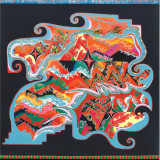
The next chapter of the Natural Information Society is here. Since Time Is Gravity, credited to Natural Information Society Community Ensemble with Ari Brown, presents a newly expanded manifestation of acclaimed composer & multi-instrumentalist Joshua Abrams nearly 15 year, 7 albums &-counting flagship ensemble. Joining the core NIS of Abrams (guimbri & bass), Lisa Alvarado (harmonium) Mikel Patrick Avery (drums) & Jason Stein (bass clarinet) are Hamid Drake (percussion), Josh Berman & Ben Lamar Gay (cornets), Nick Mazzarella & Mai Sugimoto (alto saxophones & flute), Kara Bershad (harp) & Chicago living legend of the tenor saxophone Ari Brown. Recorded live to tape at Electrical Audio & The Graham Foundation, cover painting Vibratory Cartography: Nepantla, by Lisa Alvarado. 2xLP on Eremite USA, 2xLP & CD on Aguirre/Eremite Europe. Out 14-04.

Since first developing Natural Information Society in 2010, Joshua Abrams has been gradually expanding the group’s conceptual underpinnings, its musical references & the sheer number of the group’s members. Its music is, in a sense, an expansive form of minimalism, based in repeated & overlaid rhythmic patterns, ostinatos & modality. Its roots, its scale & its meaning become clearer in time. If time is gravity, it also allows us to carry more. Having begun as fundamentally a rhythm section with Abrams’ guimbri at its core, the version here can stretch to a tentet, including six horns.

Abrams has been expanding his minimalism gradually, but he has long understood a key to minimalism’s potential: the breadth of its roots in the late 1950s & early 1960s, ranging from the dissatisfaction of young European-stream composers with the limitations of serialism to the simultaneous dissatisfaction of jazz musicians with the dense harmonic vocabulary of bop & hard bop. The former began exploring rhythmic complexity & narrow tonal palates in place of harmonic abstraction (Steve Reich’s Drumming, Philip Glass’ Music with Changing Parts; perhaps above all Terry Riley’s In C & his late ‘60s all-night organ & loop concerts); the later reduced dense chord changes to scales (signally with Miles Davis' Kind of Blue, but rapidly expanding with John Coltrane’s vast project). In the 1950s the LP record opened the world with documentation of Asian & African musics, key influences on both minimalists & jazz musicians. If John Coltrane’s soprano saxophone suggested the keening shehnai of Bismillah Khan, the instrument was rapidly taken up by two key minimalists, LaMonte Young & Riley, similarly appreciative of its flexible intonation, the same thing that kept it out of big bands.

If the guimbri, the North African hide-covered lute that Abrams plays with NIS, involves a rich tradition of hypnotic healing music associated with the Gnawa people, Abrams’ music also touches on other musics as well — other depths, memories & healings, different drones, rhythms & modes. As the group expands on Since Time Is Gravity, he has made certain jazz traditions in the same stream more explicit as well. If there is a mystical & elastic quality involved in the experience of time, both in direction & duration, you will catch it here. The parts for the choir of winds expand on the roles of Abrams’ guimbri, Mikel Patrick Avery & Hamid Drake’s percussion & Lisa Alvarado’s harmonium: at times, the winds are almost looping in the tentet version, each hitting a repeating note in turn, at once drone & distinct inflection on temporal sequence. The brilliance of the work resides in Abrams’ compositions, the NIS’ intuitive execution & in Ari Brown’s singular embodiment of the great tenor saxophone tradition, including the oracular genius of Eddie “Lockjaw” Davis, & Yusef Lateef. The three pieces by the expanded NIS featuring Brown —the opening “Moontide Chorus” & “Is” & the ultimate “Gravity”— have an immediate impact, & togther might be considered a kind of concerto for tenor saxophone. Here Brown presses almost indistinguishably from composed melody to improvised speech, getting so close to language that he might have a text. Everything here is a sign. Note the tap of the Rhythm Ace that links “Moontide Chorus” to “Is”, the attentive heart always present, even when signed by a machine. There’s a link here to the methodologies & meanings of dub music & the linear & vertical collage of beats, textures & tongues: treated with reverence, a sample of a beat-box can be as soulful, as hypnotic, as a mbira or a tamboura. If those pieces with Brown are heard as a suspended concerto, the three embrace & enfold the other works, like the sepals of a flower. That placement will also touch on the mysteries of our perception of time.

Particularly in “Is”, but elsewhere as well, a phenomenon of transcendence arises in which time appears to be tripartite, at once moving backwards & forwards & standing still. This is an act of technical brilliance certainly, but also an illumination of music’s ability to represent temporal consciousness through polymetrics. This particular listener has only heard it before in a few places, including the horn shouts & bowed basses of Coltrane’s Africa, in moments of Charles Mingus’ The Black Saint & the Sinner Lady, in certain pieces where tapes were literally running backwards, & earlier still in Dizzy Gillespie’s Cubana Be, Cubana Bop, in which the composer George Russell & conguero Chano Pozo found a music that spoke at once in the voices of Stravinsky’s Rite of Spring & the vestigial rites, rhythms & songs of the Yoruba language & Santeria religion of inland Cuba.

In Joshua Abrams’ compositions & the realization of them by the NIS, in the time of one’s close listening & memory thereof, distinctions between the “natural” & the “social”, the “quotidian” & the “transcendent” are erased, suspended or perhaps irrelevant. Consider two of the ensemble pieces, one named for nature, the other social science. In “Murmuration” the repeated wind figures of flute & alto saxophone combine with the interlocking patterns of harp, guimbri & frame drum (tar) to create a perfect moving stillness, not an imitation but a witness to the miracle of the starlings’ astonishing collective art, a surfeit of beauty that might be the ultimate defense tactic.

“Stigmergy” takes its name & concept from the Occupy movement’s Heather Marsh, who proposes a social system based on a cooperative rather than competitive models, one in which ideas are freely contributed & developed as ideas rather than an individual’s property. In its form, Abrams’ “Stigmergy” is the closes thing to traditional jazz, a series of accompanied solos by each of the wind players. However, the composed accompaniment is a radically collectivist notion: a repeated rhythmic figure, call it ostinato or riff, in which the different winds each play only a note or two of the figure, a concept both more collectivist & individualistic in its conception than any typical unison figure. It suggests another of the underlying recognitions that propel the Natural Information Society, the group as social organism, the teleology of hypnotic anarchy, all parts in place, functioning systematically, evolving & expressing itself, its nature & society, as a transformative organism.

George Lewis has described music as “a space for reflection on the human condition”. This suggests that, rather than a “distraction”, at least some music might serve as a distraction from distraction. It’s a focus, a clarity, a awareness, an external invitation to interiority, as if music itself is a model for form & contemplation, an organism contemplating for us or as us. If that is a possibility, & I am sure I have heard such musics, than this music is among them. How many of our rhythms, melodies & harmonies (cultural, historical, biological, psychic) might such music carry, translate & transform in the particulate ecstasy of our own murmuration? (Stuart Broomer, April 2022)

pas en stock

Commandez maintenant et nous commanderons l'article pour vous chez notre fournisseur.

33,15

Last In: 2 years ago
M.E.B. - That You Not Dare To Forget

M.e.b.

That You Not Dare To Forget

12inch19658765071
Sony UK
31.05.2023

Opaque Pink Coloured LP Vinyl - M.E.B. (formerly Miles Electric Band) led by Vince Wilburn, Jr collects a progressive All-Star ensemble featuring Miles Davis alumni and the players Miles inspired. This brand new, never-released studio recording captures a multi-generational who’s who of acclaimed artists performing new Miles-inspired compositions. Two tracks of the five on the album include unreleased trumpet performances by Miles and the album, produced by Miles' alumni Lenny White and Wilburn, features music legends including Ron Carter, Marcus Miller, Stanley Clarke, Donald Harrison, Darryl Jones, Vernon Reid and John Scofield. This album is dedicated to the memory of Wallace Roney and Bernard Wright and contains some of their final recordings. The cover is an original painting from artist and Miles’ associate Mikel Elam. Pressed on hot pink vinyl, this is the exclusive vinyl release.

pré-commande31.05.2023

il devrait être publié sur 31.05.2023

36,77

Last In: 2026 years ago
Miles Davis - E.S.P. LP

Miles Davis

E.S.P. LP

12inchIMXLP6018N
IMPEX Records
30.05.2023

Unlike the majority of previous Davis albums, E.S.P. consisted entirely of new compositions written by members of the group. Despite the profusion of new material, only one tune ("Agitation") is known to have appeared in the group's live performances. "Little One" might be best known for being revisited on Hancock's landmark album, Maiden Voyage, recorded a few weeks later. This version is somewhat more embryonic; Carter's bass is halting, and Davis and Shorter state the theme with winding, interlocking contrapuntal lines that evoke Davis and Coltrane's version of "Round Midnight". Hancock's solo on Carter's composition, "Eighty-One", also presages his work on that LP - particularly its title track.

The title track is reminiscent of Jackie McLean's "Little Melonae", which Davis had recorded with John Coltrane in 1956. "Iris", by contrast, is another Coltrane-like ballad, not too dissimilar to "Infant Eyes" on Shorter's Speak No Evil album. Shortly thereafter, Shorter's compositions would begin to dominate the Quintet's recordings, though here he contributes only two of the seven songs.

This was the first time Wayne Shorter recorded with Miles, and the band - in this configuration - had been together for less than a year. As you will hear, the connection between the musicians is uncanny, as if they had been playing together for decades. Especially notice Wayne Shorter's brilliant interplay with Miles on the closing track "Mood," the haunting ballad written by bassist Ron Carter. At over forty-eight minutes, E.S.P. is one of the longest jazz albums of its period.

pré-commande30.05.2023

il devrait être publié sur 30.05.2023

57,56

Last In: 2026 years ago
Miles Davis - Kind of Blue LP 2x12"

How does one properly introduce an epochal record? Perhaps by unequivocally stating that it is the best-selling jazz album in history. Or by affirming that, every year, it sells tens of thousands of copies more than five decades after its original release. There's also the matter of its status as the most-referenced, and arguably, most important, jazz recording of all-time. And the Dream Team line-up of Miles Davis, Cannonball Adderley, John Coltrane, Bill Evans, Wynton Kelly, Paul Chambers, and Jimmy Cobb. Yes, Kind of Blue is utterly inimitable.

In its three-decade-plus history, Mobile Fidelity has never been prouder to have the honour of handling efforts as important as Davis' key recordings. It's why the our engineers took every available measure to transport listeners to the March and April 1959 sessions that parlayed modal jazz into mainstream language. The blueprint for melodic improvisation and vamping, Kind of Blue simplifies tonal organization and chordal progression into an eminently beautiful, introspective tapestry stitched with swinging poetry, mellifluous soloing, compositional lyricism, transcendental harmonies, and group interplay of the highest calibre.

While no one has ever completely identified the magic behind the record's allure – the otherworldly nature is part of its inherent charm – much of the success lies with the band members. Davis intentionally hand-picked these musicians to comprise this particular cast, with everyone from former foil Evans to blues maestro Kelly to percussive genius Cobb interacting and reacting with peerless skill.

An audiophile favourite from the day it was issued, Kind of Blue takes on nirvanic sonic proportions via Mobile Fidelity's reissue. The expressive warmth, imaging clarity, frequency extension, and window-on-the-world breadth afforded by this new edition places music lovers right in the studio with the sextet. Close your eyes and, no matter how many times you may have heard it before, your experience will parallel that of the players that recorded these gems. Everyone shares in the excitement of not knowing what will happen and, as the music begins to lie out in front of you, you'll feel as if you've been whisked away to a jazz holy land. Quintessential.

pré-commande30.05.2023

il devrait être publié sur 30.05.2023

105,00

Last In: 2026 years ago
Nucleus - Elastic Rock

Nucleus

Elastic Rock

12inchBEWITH125LP
Be With Records
26.05.2023

Nucleus's Elastic Rock is undisputedly a milestone in Jazz-Rock. A beautiful and vital debut album, it was first released on Vertigo in 1970. Original copies are now very tricky to score and, like all the Nucleus records, it’s aged ridiculously well. This Be With re-issue, re-mastered from the original analogue tapes, shows off just why this deserves to be back in press.

Genius trumpeter and visionary composer Ian Carr was one of the most respected British musicians of his era. He was a true pioneer and saw the potential in fusing the worlds of jazz with rock, just as Miles Davis and The Tony Williams Lifetime did in the US. In late 1969, following the demise of the Rendell-Carr quintet, and tiring of British jazz, Carr assembled the legendary Nucleus. Regarding music as a continuous process, Nucleus refused to “recognise rigid boundaries” and worked on delivering what they saw as a “total musical experience”. We can get behind that.

Under bandleader Carr, Nucleus existed as a fluid line-up of inventive, skilled musicians. This constant evolution and revolution was all part of the continuous musical exploration and discovery that took jazz to new levels. And the music has kept relevant. To steal a line from a review of our re-issue of Roots, when it comes to anything Nucleus “it’s basically already hip-hop”.

The very title Elastic Rock could be regarded as the group's MO, describing a melting point between their rock and jazz impulses. Indeed, housed in a memorable gatefold jacket designed by Roger Dean, the die cut molten teardrop shape on the front sleeve opens to reveal a fiery volcanic crater. On the back, Dean's drawing has Carr with saxophonist Brian Smith, guitarist Chris Spedding, drummer John Marshall, bassist Jeff Clyne and sax, oboe and pianist Karl Jenkins in a circle, the central core of a movement and the basis for its activity.

Recorded over four days in January 1970, Elastic Rock didn't sound like any other British jazz album. Exploding out the gate, "1916" opens with Marshall's frantic pounding before melancholic horns enter. The smooth title track, "Elastic Rock" is just a gorgeous electric blues track. Light drums, gentle melodic horns, piano and a solid bassline serve as the perfect bed for Spedding's graceful bluesy guitar melodies. The serene "Striation", a Clyne and Spedding collaboration, is led by bowed bass and is the epitome of calm before the late night laid back vibe of "Taranaki" breezes along sweetly and smoothly with great trumpet and tenor.

The truly emotional "Twisted Track" is elegant with horns, while guitar is gently played with drums and bass. Initially deeply soothing, it gradually builds with various solos and duets. "Crude Blues (Part 1)" features an excellent oboe part by Jenkins with laconic guitar helping out. "Part 2" is livelier, with a heavy backbeat and great wind parts. "1916 (Battle Of Boogaloo)" features a steady bassline and great call and response parts from the horn section.

The highly-charged centrepiece of the record, the mesmeric epic "Torrid Zone" features an hypnotic bassline and hi-hat with some of the ensemble's best soloing. Brilliantly encapsulating the jazz fusion aesthetic so desired by the group, the rhythm section is rock-influenced but magically retains a laid-back jazz vibe. Just perfection. Spacey jazz in the style of In a Silent Way, the semi-ambient "Stonescape" features smooth, muted brass, warm, smokey keys and a barely-there rhythm section. Heavenly.

The bubbling, fragile restraint of "Earth Mother" partially utilises the "Torrid Zone" bassline but takes the energy in a different direction with Marshall's frenetic drumming and Spedding's unpredictable riffing. Next comes the very idiosyncratic drum solo track by Marshall in the appropriately-titled "Speaking for Myself, Personally, in My Own Opinion, I Think." The album closes with the raucous "Persephones Jive", a track that ends the album frantically, riotously, just as it began.

This Be With edition of Elastic Rock has been re-mastered from the original Vertigo master tapes, Simon Francis’ mastering working together with Cicely Balston's cut at AIR Studios to weave their usual magic with these wonderful recordings. The stunning die-cut gatefold sleeve has been restored in all its molten glory.

pas en stock

Commandez maintenant et nous commanderons l'article pour vous chez notre fournisseur.

26,01

Last In: 2 years ago
Nucleus - We’ll Talk About It Later

Their masterpiece? With breaks for dayyyyyys and an almost ambient, heavy jazz atmosphere throughout, *this* is the apex of British jazz-rock fusion. We'll Talk About It Later was first released on Vertigo in 1971 and original copies are now very tricky to score. Like all the Nucleus records, it’s aged ridiculously well and this Be With re-issue, re-mastered from the original analogue tapes, shows off just why this deserves to be back in press.

Genius trumpeter and visionary composer Ian Carr was one of the most respected British musicians of his era. He was a true pioneer and saw the potential in fusing the worlds of jazz with rock, just as Miles Davis and The Tony Williams Lifetime did in the US. In late 1969, following the demise of the Rendell-Carr quintet, and tiring of British jazz, Carr assembled the legendary Nucleus. Regarding music as a continuous process, Nucleus refused to “recognise rigid boundaries” and worked on delivering what they saw as a “total musical experience”. We can get behind that.

Under bandleader Carr, Nucleus existed as a fluid line-up of inventive, skilled musicians. This constant evolution and revolution was all part of the continuous musical exploration and discovery that took jazz to new levels. And the music has kept relevant. To steal a line from a review of our re-issue of Roots, when it comes to anything Nucleus “it’s basically already hip-hop”.

We'll Talk About It Later is arguably Nucleus's best album. Not only that, it's in the top 5 of all fusion albums. By the time Nucleus entered Trident Studios in September 1970 to record Elastic Rock's successor, they had already won a best group award at the Montreux Jazz Festival. Once again presented in a Roger Dean designed die-cut gatefold sleeve it continued to demonstrate the chemistry and interplay that worked so brilliantly on Elastic Rock; Carr's sumptuous trumpet and flügelhorn lines, Karl Jenkins's funk-filled electric keyboards, Chris Spedding's wah-wah guitar, Brian Smith's sax and the rhythmic foundation of drummer John Marshall and bassist Jeff Clyne.

The group work and insane musicianship Nucleus were famed for is in evidence from the off. The intensely funky "Song for the Bearded Lady" is absolute FIRE, blasting out the speakers to leave listeners floored. Counterpoint riffing segues into a spacious groove and a Carr trumpet solo demonstrating the influence of electric Miles from the period. The stop-start funk of "Sun Child" would appeal to Soft Machine devotees whilst the genuinely touching "Lullaby for a Lonely Child" is a lovely downtempo ballad. Featuring an understated, reflective horn line from Carr and Smith and atmospheric, shimmering bouzouki from Spedding, there's an exotic flavour which contributes to the bliss. The ominous, sleazy title track retains a swaggering menace and is not the only track to lend a sort of heavy stoner rock atmosphere. The guitars and bass are deep and low throughout, conjuring heavy psych moments to go with the actual jazz and even funk. To say this album was in conversation with Bitches Brew would not be overstating the sheer brain-frying brilliance.

The Weather Report-adjacent "Oasis" opens Side B, a colossal track featuring nearly 10 minutes of steadily building melodic horns, keys and choppy guitar riffs. So ace, it could easily go on for another 10. Mesmeric. Spedding adds unique vocals to the undeniable groove of "Ballad of Joe Pimp" whilst saxophonist Smith's duet with drummer Marshall at the conclusion of "Easter 1916" - inspired by the Yeats poem about the Irish nationalist uprising in Dublin - adopts the wildness of the most incendiary free jazz.

This Be With edition of We'll Talk About It Later has been re-mastered from the original Vertigo master tapes, Simon Francis’ mastering working together with Cicely Balston's cut at AIR Studios to weave their usual magic with these wonderful recordings. The stunning die-cut sleeve has been restored with the original gatefold window pane depicting the Irish uprising in 1916. Incredible, timeless, guaranteed spine-chills.

pas en stock

Commandez maintenant et nous commanderons l'article pour vous chez notre fournisseur.

26,01

Last In: 2 years ago
Nucleus - Solar Plexus

Nucleus

Solar Plexus

12inchBEWITH127LP
Be With Records
26.05.2023

What a record! The outstanding Solar Plexus, the much-loved third album from Ian Carr and Nucleus, was first released on Vertigo in 1971. Inevitably, original copies are now very tricky to score and, like all the Nucleus records, it’s aged ridiculously well. This Be With re-issue, re-mastered from the original analogue tapes, shows off just why this deserves to be back in press.

Genius trumpeter and visionary composer Ian Carr was one of the most respected British musicians of his era. He was a true pioneer and saw the potential in fusing the worlds of jazz with rock, just as Miles Davis and The Tony Williams Lifetime did in the US. In late 1969, following the demise of the Rendell-Carr quintet, and tiring of British jazz, Carr assembled the legendary Nucleus. Regarding music as a continuous process, Nucleus refused to “recognise rigid boundaries” and worked on delivering what they saw as a “total musical experience”. We can get behind that.

Under bandleader Carr, Nucleus existed as a fluid line-up of inventive, skilled musicians. This constant evolution and revolution was all part of the continuous musical exploration and discovery that took jazz to new levels. And the music has kept relevant. To steal a line from a review of our re-issue of Roots, when it comes to anything Nucleus “it’s basically already hip-hop”.

We'll let Ian describe this one: "I wrote Solar Plexus' last year with the help of an Arts Council grant. It is based on two short themes which are stated at the beginning (Elements I & I1). The first theme is angular and has a slow, crab-like movement: the second theme is direct, simple and diatonic. CHANGING TIME and SPIRIT LEVEL explore the first theme and BEDROCK DEADLOCK and TORSO explore the second one. SNAKEHIPS DREAM tries to fuse both themes. (The title is a reference to the famous dancer 'Snakehips' Johnson)."

Solar Plexus features the same lineup as Elastic Rock and We'll Talk About It Later, but they're augmented by six guests, three of which play brass. Carr himself had almost full control of the writing and it does feel very different to the previous albums. It's more of a jazz record loosely based on a rock foundation rather than jazz fusion jamming.

The haunting synth-and-bass soundscape "Elements I and II" opens the album in dramatic, experimental fashion. It gives way to the bright, funky feel-good jazz of "Changing Times". An elegant onslaught of horns, courtesy of guests Kenny Wheeler and Harry Beckett, ride a solid groove for the duration. How the brass refrains have eluded samplers is beyond us. The melancholic "Bedrock Deadlock" features the brooding majesty of Jenkins' oboe and Clyne's mournful, skittering double bass. Wah wah guitar, drums and funky percussion then take over before the horns ride us out over frenetic beats. The dark, angular "Spirit Level" is a real highlight, by turns harmonic and beautiful then dissonant and wayward. Wonky jazz with no apparent structure or melodic bones. Regardless, it represents a great showcase for each virtuoso performer.

The breezy soul of "Torso" feels like a breath of fresh air, skipping along in the uptempo style with guitar, horns, drums and bass. A track which truly sounds scintillating, featuring sax solos, fantastic propulsive interplay from all the group around the halfway stage before Marshall gets his chance to really shine in closing out with a polyrhythmic drum solo. Final track "Snakehips' Dream" stretches cooly out over 15 minutes to round out a spellbinding album. An epic, suave groove, it's a relaxing piece with warm electric keys, laconic guitar and languorous horns. Truly sophisticated soulful jazz. An absolute masterclass. We could easily listen to this all day long.

This Be With edition of Solar Plexus has been re-mastered from the original Vertigo master tapes, Simon Francis’ mastering working together with Cicely Balston's cut at AIR Studios to weave their usual magic with these wonderful recordings. The stunning gatefold sleeve has been restored to complete this sensational package.

pas en stock

Commandez maintenant et nous commanderons l'article pour vous chez notre fournisseur.

26,01

Last In: 2 years ago
Swamp Children - Taste What's Rhythm

Swamp Children

Taste What's Rhythm

12inchBEWITH019TWELVE
Be With Records
19.05.2023

Manchester's Avant-Jazzy-Funk outfit Swamp Children were enviably eclectic and Taste What's Rhythm is their mini masterpiece. Flitting gracefully through a feast of genres with consummate ease, the band were almost indefinable and, accordingly, nigh-on impossible to market. So whilst this cult EP, originally out in 1982 on Factory Benelux, remains in demand for those in the know, it has also glided under the radar of many otherwise clued-up heads for over 40 years. If you don't know, get to know...

The Taste Whats Rhythm EP was originally released in 1982 on Factory Benelux (an informal partnership between the legendary Manchester-based Factory Records and Belgium-based Les Disques du Crépuscule). With it's kaleidoscopic brightness, silky panache and superb execution, it remains one of the most startling documents of a remarkable time and place.

The EP opens with the oh-so-Balearic title track. "Taste Whats Rhythm" gently unfolds with a Spanish guitar, hazy, drifting vocals and sun-bleached Latin percussion. After this most sumptuous of intros, the tempo is raised, the rhythms grow in complexity as horns jostle amidst the restrained chaos quite wonderfully. And then it winds down again. Proper fluctuating rhythms and tempos throughout. I guess that was the point - taste the variety!

“You’ve Got Me Beat” is a *perfect* piece of post-punk pop-jazz. A mysterious, after dark jazz-dancer, the aching vocals serve as a touching, tender resignation to love. A guitar hook which seems to elegantly reference The Blackbyrds' "Rock Creek Park" and a flowing pulse from New York's No Wave scene. It still sounds so fresh all the years later.

Closing out this most perfect of EPs, the twisted synths and nimble rhythms of bass-heavy roller "Softly Saying Goodbye" combine to create a super-slinky gem; Brit-Funk of the highest order.

Swamp Children formed in Manchester in 1980, around core members Ann Quigley (vocals), Tony Quigley (bass, metalaphone, percussion), John Kirkham (electric & acoustic guitars, metalaphone, percussion), Ceri Evans (keyboards, bass, percussion, background vocals), Cliff Saffer (saxaphone, clarine) and Martin Moscrop (drums, percussion, trumpet). They initially practised at a rehearsal space shared with fellow post-punk funkers A Certain Ratio and Joy Division/New Order. Young and relatively inexperienced upon getting together, the ages of Swamp Children's members ranged from just 16 to 19. Talk about the brilliance of youth.

From the outset, Swamp Children shared DNA with A Certain Ratio. Martin Moscrop was a founder member of Ratio, while Ann provided artwork for them. Although the close association with ACR led some to assume that Swamp Children were simply a splinter group, the new band pursued a more overt latin and jazz tinged direction, at the same time adopting a post-punk attitude towards making music, influenced by the records they were listening to at the time: Miles Davis, Brazilian jazz fusion and heavy funk dancefloor sides.

The band made their live debut at Manchester's infamous Beach Club in May 1980. Thanks to a double-booking blunder another support band turned up and were turned away, having travelled all the way from Dublin for a string of British dates. The name of the unlucky band was U2...

With arrangements that emphasised Tony Quigley’s darkly-coloured basslines (and Ann Quigley’s impressionistic vocals as another instrument in the mix) Swamp Children possessed an easygoing grace and a bubbling energy which indicated that the band's true strength was as an ensemble. The band’s musical sophistication (a fusion of funk, jazz, and bossa nova) would prove to be a strong influence on later UK acts like Sade. Indeed, Swamp Children themselves later mutated into the more known and acclaimed latin jazz outfit Kalima.

Working directly with James Nice, custodian of Factory Benelux, means that the audio for this re-issue of the classic EP comes from the original tapes. Cut at 45 RPM and released in the house Be With disco sleeve, we’ve made sure this record is well up to the job of having a permanent place in every DJ’s bag. As far as we’re concerned, this is essential stuff.

pas en stock

Commandez maintenant et nous commanderons l'article pour vous chez notre fournisseur.

16,43

Last In: 2 years ago
Hugh Mundell - Africa Must Be Free By 1983

Wiederveröffentlichung eines gefeierten und gesuchten Klassikers des Roots Reggae von 1978, produziert von Augustus Pablo und Hugh Mundell, re-mastered von Kevin Metcalfe! Die Musik wurde eingespielt von Basil "Benbow" Creary, Carlton "Santa" Davis, Wycliffe "Steely" Johnson, Jacob Miller & Leroy "Horse Mouth" Wallace (Drums), Robbie Shakespeare & Leroy Sibbles (Bass), Earl "Chinna" Smith, Geoffrey Chung & Clayton Downie (Guitar), Paul "Pablove Black" Dixon & Augustus Pablo (Organ, Piano, Melodica) und aufgenommen im Channel One Studio (Engineer: Ernest Hookim), Harry J Studio (Engineer: Sylvan Morris), Joe Gibbs Studio (Engineer: Errol "Errol T" Thompson), King Tubby's Studio (Engineer: Phillip "Prince Phillip" Smart), The Black Ark (Engineer: Lee "Scratch" Perry).

pas en stock

Commandez maintenant et nous commanderons l'article pour vous chez notre fournisseur.

21,81

Last In: 2 years ago
Bruce Springsteen - Greetings From Asbury Park

ULTRADISC ONE-STEP BOX SET OF BRUCE SPRINGSTEEN'S 1973 DEBUT PLAYS WITH AUDIOPHILE SOUND: LIMITED TO 7,500 NUMBERED COPIES.

1/4" / 15 IPS analogue master to DSD 256 to analogue console to lathe

Teeming with identifiable characters, youthful romanticism, vivid narratives, and sophisticated arrangements, Greetings from Asbury Park, N.J. is a personal postcard from the heart, soul, and mind of a rock ’n’ roll lifer bent on discovering his world and what lays beyond it. The 1973 album establishes many of the signature themes and sounds Bruce Springsteen would embrace throughout his unparalleled career. No wonder a majority of the songs — “Blinded by the Light,” “Lost in the Flood,” “Spirit in the Night” included — remain staples of the New Jersey native’s fabled concerts.

Sourced from the original analog master tapes, pressed at RTI on MoFi SuperVinyl, and strictly limited to 7,500 numbered copies, Mobile Fidelity's UltraDisc One-Step 180g 33RPM LP set is the definitive-sounding version of Springsteen’s daring debut. Afforded the benefits of SuperVinyl’s nearly non-existent noise floor, Greetings from Asbury Park, N.J. plays with a clarity, directness, and emotionalism that practically whisks you into the New York office in which Springsteen — accompanied by then-manager Mike Appel — played a few originals for legendary Columbia Records executive John Hammond and earned a record deal.

That solo-centric aspect of Greetings from Asbury Park, N.J. — credited only to Springsteen and featuring only a handful of accompanying musicians — helps make it unique in his catalogue. So do the acoustic-based frameworks, revealed on this pressing with newly exposed detail, nuance, and immediacy. The music emerges with an openness that gives flight to the Boss’ storytelling. His words flow with unbridled, stream-of-conscious pacing and vibrant imagery; they pay homage to and update a tradition established by Bob Dylan, Woody Guthrie, and Jack Kerouac. Equally important, Springsteen’s still-underrated vocal performances can now be appreciated in full-range fidelity. Earnest, transparent, and sincere, his singing comes across with an urgency that distinguishes him from the era’s singer-songwriter mold and a raw energy that underlines his unflinching belief in rock ’n’ roll.

Recorded in just three weeks, Greetings from Asbury Park, N.J. also stands out by way of its insightful artwork. Designed by Grammy winner John Berg, the inviting cover is appointed with images of the local landmarks, beachfronts, and geography that provide the backdrops for some of the songs. Those graphics are complemented by the beautiful packaging of Mobile Fidelity’s UD1S edition. Tucked in a sleek slipcase, the LP is housed in a special foil-stamped jacket with faithful-to-the-original graphics. In every way, this reissue is made for listeners who prize sound quality and who want to engage themselves in everything involved with this invigorating album.

An aspirational declaration by a then-23-year-old musician who was already a seasoned veteran of the Jersey Shore bar-band scene, Greetings from Asbury Park, N.J. can in many ways be seen as a semi-fictional autobiography released more than four decades before Springsteen penned his official tome. Elaborate, descriptive, and absorbing, Springsteen’s lyrics spark with the enthusiasm and exuberance of a wide-eyed adventurer ready for possibility, excitement, and fun — but who is also mindful of loss, pain, and disappointment. Words often tumble and collide like dice spilling from a jar; shaken and fully intact, they pour forth with purpose and without self-conscious concern.

One of two songs composed after label president Clive Davis cited the need for a radio-friendly single, the opening “Blinded by the Light” provides an unforgettable introduction. It flares with a blend of confidence, fun, and poetry that helps define Greetings from Asbury Park, N.J. Crackling with wiry guitars, funky chords, Clarence Clemons’ cool-toned saxophone, and action-packed lyrics, the shuffle simultaneously expands and contracts — and establishes Springsteen as a master of rhyme, alliteration, and breathless expression. The thread continues on “Growin’ Up.” Steered by ascending piano lines, soulful grooves, and frisky rhythms, the coming-of-age confessional is at once rebellious and controlled, fearless and vulnerable, honest and boastful. It is a tale to which multiple generations still relate.

Such universality has always been a Springsteen trademark. It surfaces throughout Greetings from Asbury Park, N.J., as does another Boss hallmark: the importance of friendship and tight bonds. These concepts relate to the fact many of the songs — see the feverish “Does This Bus Stop at 82nd Street?,” strutting “It’s So Hard to Be a Saint in the City,” and tender “For You,” the latter complete with brilliant Hammond organ shading — are directly tied to the friends, acquaintances, places, and happenings he knew. “Lost in the Flood,” whose cinematic drama and epic scope hint at the directions Springsteen would pursue on his next LP, extends that familiarity while addressing the kind of socially conscious issues with which he’s forever been associated.

Balancing the label’s vision of him as a folk-based singer-songwriter and his own desire to play rock ‘n’ roll with a full band, Springsteen never again made a record like Greetings from Asbury Park, N.J. One of the most captivating debuts in history, it heralds the start of a legacy whose import Springsteen seemingly foretells on “Blinded by the Light”: “He’s gonna make it tonight.” And how.

pré-commande30.04.2023

il devrait être publié sur 30.04.2023

159,62

Last In: 2026 years ago
Tai Davis - No Computers Necessary

2023 Repress

Often called one of Chicago's talented hidden gems, singer/songwriter/DJ/producer Tai Davis means House in almost every sense. He's dropped vocals for established producers such as Paul Johnson, Stacy Kidd, and also Galactik Knights, Nate Caswell and Yakka. Preferring to use vintage analog gear, his classic house sound consistently packs dance floors worldwide!
Track Review: A1) ""Cosmic Groove"" This piece sends you on a trippy journey with a 'spacey' bassline accompanied with groovy drums, but the lush pads and lead synth puts this jam over the top- guaranteed to make the floor burn!
A2) ""Floating"" This is truly vintage-sounding acid with 2 overlapping powerful TB-303 patterns with NO distortion, haunting strings, and a beating drum track for extra thump!
B1) ""Falling Forever"" The mellow but depressing synth pads will definitely grab you, but the repetitive, hypnotizing bassline will keep you. Add a minimal, pounding 808 and it makes this track one to play over and over...and OVER. B2) ""Strobe Light"" A minimalist track with a basic but adequate house piano riff and a freaky synth lead. But the 'popping' claps over the pulsating 909 bass drum paired with an abnormal, repeating bassline makes this one sound like pure 90's house! A definite classic.

pas en stock

Commandez maintenant et nous commanderons l'article pour vous chez notre fournisseur.

11,98

Last In: 5 months ago
Eric Dolphy - Musical Prophet: The Expanded 1963 New York Studio Sessions

First ofcial release of previously-unissued Eric Dolphy studio recordings
in over 30 years, including 85-minutes never before released. The
goundbreaking alto saxophonist, bass clarinetst and autst brought us
iconic LPs such as 'Out to Lunch!' and 'Outward Bound'.
The LP package is beautfully designed and includes an exhaustve 96-page
booklet replete with rare and never-before-published photos by Chuck
Stewart, Jean-Pierre Leloir, Val Wilmer, Hans Harzheim, Lennart Steen, Roger
Marshutz and many others, plus reproductons of the original album covers for
Conversatons and Iron Man.
Includes fve essays that cover dierent aspects of Eric Dolphy and this music
by jazz author/scholar Robin D.G. Kelley, Douglas label manager Michael
Lemesre, Japanese Dolphy scholar Masakazu Sato, and co-producers Zev
Feldman and James Newton, plus words by John Coltrane, McCoy Tyner,
Ornete Coleman and Charles Mingus.
Captured afer leaving Prestge/New Jazz Records, and just before recording
the tmeless classic 'Out to Lunch!' album, 'Musical Prophet' is a 3LP set that
contains the under-appreciated masterpieces 'Conversatons' and 'Iron Man'
recorded in New York City on July 1 and 3, 1963. Originally produced by Alan
Douglas- most well-known for his associaton with Jimi Hendrix, but who also
produced classic jazz albums such as 'Money Jungle' with Duke Ellington,
Charles Mingus and Max Roach- the tapes had been stored in a suitcase with
Dolphy's personal belongings and given to Dolphy's close friends Hale and
Juanita Smith just before he embarked on his fateful European trip in 1964.
Deluxe Limited-Editon, 180-gram 3LP gatefold set released exclusively for
Record Store Day's Black Friday Event on November 23, 2018

pré-commande21.04.2023

il devrait être publié sur 21.04.2023

68,70

Last In: 2026 years ago
Herbie Hancock - Crossings

Herbie Hancock

Crossings

12inchMOVLP2189
Music On Vinyl
21.04.2023

Fat Albert Rotunda is the venture into jazz-funk by keyboardist Herbie Hancock. The record is centered around the music Hancock wrote the Fat Albert cartoon show. It's one of the records which appeared in the period between his landmark album Maiden Voyage of 1965 and his 1973 classic Head Hunters. Fat Albert Rotunda is a unique item in Herbie Hancock's long and diverse catalog, with funky tracks like 'Fat Mama' and modern jazz-oriented tunes like 'Tell Me A Bedtime Story'. The sextet which is backing Hancock consists of some of the most prominent musicians of that time, like Joe Henderson on tenor sax, Johnny Coles on trumpet and Buster Williams on the bass.

Herbie Hancock is one of the most prolific jazz pianists of the 20th century. A child prodigy, he played with the greats such as Donald Byrd and Miles Davis. As he was a bit of a geek, he enjoyed gadgets & buttons and he was one of the first to embrace and master the electric piano, but he always stayed true to the acoustic sound. In fact, he always bounced back and forth between his electronic and acoustic sound, touching upon almost every development in R&B, Funk and Jazz while retaining an original and distinctive voice.

pré-commande21.04.2023

il devrait être publié sur 21.04.2023

33,57

Last In: 2026 years ago
THE RAT PACK - THE PLATINUM COLLECTION 3x12"
 
48

Long before today's 'rebellious' pop idols, singers Frank Sinatra,
Dean Martin and Sammy Davis Jr. plus Actor Peter Lawford and
Comedian Joey Bishop had entered showbiz legend as the
genuinely hellraisin' Rate Pack. The handle proved a gift to
journalists chronicling the life and high times of the all-male quintet
whose leading lights were, without a doubt, three of the greatest
entertainers of the 20th Century. Captured on this 3LP compilation
album are some excellent musical memories performed at their best

pré-commande14.04.2023

il devrait être publié sur 14.04.2023

30,88

Last In: 2026 years ago
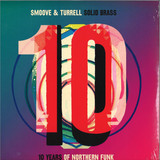
Smoove & Turrell - Solid Brass: Ten Years of Northern Funk LP 2x12"

A lot can happen in ten years.

Rewind back to Gateshead in 2008 - the producer Smoove is round his friend and keyboard player - Mike Porter's house. Together they are working on tracks for his project and all of a sudden they hear a heavenly voice from the neighbour. Transfixed by the vocals that are caressing their ears they go and investigate to find a youthful John Turrell doing his thing at a practice with a local band he played with when he wasn't teaching carpentry at the local college. Together they woo him with their Geordie charms and the initial line up of 'Smoove & Turrell' is born. The group instantly gel and soon after have penned the killer track 'I Can't Give You Up'...

Flash forward to 2019 and the carpentry community looks on with jealousy as the group has gone from strength to strength. Signed to the independent label Jalapeno Records they are now five albums deep and they have achieved multiple radio-playlisted singles, won awards, toured with the likes of Chic, gained sync success across the world and continue to wow venues in all continents with their thrilling live shows on the regular.

All of this in an age where attention spans are shorter than ever and there is more access to music than ever. This is certainly an achievement worth celebrating. Doubly so in fact as not only is it their ten year anniversary collection but also it is the 300th official release on Jalapeno Records so it only seems right that the occasion gets commemorated properly - a double gatefold LP with brass coloured vinyl somehow seems appropriate...

Comprising of 18 tracks taken from all five of their studio albums as well as two new barnstorming tunes exclusive to this release - it's a veritable feast of northern funk gems from start to finish. Favourites from their deep catalogue including 'Slow Down', 'Beggarman', 'In Deep', 'Have Love' and 'You Could've Been A Lady' are all present and correct, lining up next to the two newbies which also hold their own.

"But what about the new tracks!" we hear you cry - well Smoove's solo rework of The Spencer Davis Group - I'm A Man is the stuff of legend with physical copies changing hands for huge sums (if you are lucky enough to be able to locate one in the first place!). The track has long been a staple of S&T live sets but they've never laid it down in a studio recording... That is until now. It's a monster of a tune and the perfect way to kick proceedings off on this record.

That's not all though, as the lads also serve up the aptly reflective 'Give it Back'. It's signature Smoove & Turrell stuff - full of soul with deep and heartfelt lyricism. Turrell's chorus refrain "We love the ones who give it back" is typically honest and true of a band that prides themselves on community. Proper canny that. Proper canny.

pas en stock

Commandez maintenant et nous commanderons l'article pour vous chez notre fournisseur.

29,37

Last In: 13 months ago
NANCY SINATRA - START WALKIN´ 1965-1976

LTD. COL. VINYL

Definitive compilation spans solo recordings, rarities and duets with Lee Hazlewood Newly remastered from the original analog tapes by GRAMMYr-nominated engineer John Baldwin New interviews with the legendary singer, actress, and activist, Nancy Sinatra Extensive essay by Amanda Petrusich Q&A interview with Nancy & GRAMMYr-nominated reissue co-producer Hunter Lea Never-before-seen photos from Nancy Sinatra's personal archive Deluxe CD housed in 7"x7" hardcover book w/ 64-pg booklet Beautifully packaged Double LP featuring a 24-pg book 2xLP available on Standard Black Wax plus Summer Wine Sunburst Orange Release coincides with Nancy Sinatra's 80th birthday celebration Release to be supported by international press campaign in cooperation with Nancy Sinatra // Light In The Attic Records is proud to present Nancy Sinatra: Start Walkin' 1965-1976. The definitive new collection surveys Sinatra's most prolific period over 1965-1976, including her revered collaborations with Lee Hazlewood, over 23 tracks. Remastered from the original analog tapes by GRAMMYr-nominated engineer John Baldwin, the collection is complemented by liner notes penned by Amanda Petrusich (author and music critic at The New Yorker), featuring insightful new interviews with Sinatra, as well as a Q&A with archivist and GRAMMYr-nominated reissue co-producer Hunter Lea. The CD edition comes housed in a 7"x7" hardcover book (featuring 64-pages) and the two-disc vinyl set is presented in a gatefold jacket (featuring a 24-page booklet), with special color editions available exclusively at and independent record stores. Nancy's performance of the Lee Hazlewood-penned song "These Boots Are Made for Walkin'" was a huge hit in 1966 and became her signature tune. The pair began a three year run of successful albums, duets and singles including "Sugar Town," "Some Velvet Morning," "Summer Wine," "Sand," "Jackson," and the title track to the 1967 James Bond film "You Only Live Twice." Start Walkin' explores Nancy's recordings with Lee, her inspired collaborations with songwriter Mac Davis ("Hello L.A., Bye Bye Birmingham"), producer Lenny Waronker ("Hook and Ladder") and the "should've been hit" song with arranger/producer Billy Strange ("How Are Things In California.") Over the years, she has been cited as an influence by countless artists, including Sonic Youth, Morrissey, Calexico, U2, and Lana Del Rey. Her haunting song "Bang, Bang" gained a new legion of fans when it appeared in the opening credits of Quentin Tarantino's 2003 film, Kill Bill Volume 1.

pas en stock

Commandez maintenant et nous commanderons l'article pour vous chez notre fournisseur.

43,24

Last In: 4 years ago
John Hicks Trio - I’ll Give You Something To Remember Me By

In the late 1980s, the renowned American jazz pianist, composer, and arranger John Hicks formed one of the most influential ensembles consisting of musicians that had played music at the highest level all their lives and gained their status as both stand-alone artists and important sidemen. Each of them had participated in many of jazz’s great moments and all shared the ability, documented on many albums, to inspire their fellow musicians to even greater heights. The ‘John Hicks Trio’ had several line-up changes over the years that included greats such as Clifford Barbaro (Strata East, Blue Note, Sun Ra Arkestra, Charles Tolliver), Clint Houston (Prestige, Nina Simone, Roy Ayers, Azar Lawrence), Ray Drummond (Freddie Hubbard, Art Blakey, Lalo Schifrin), Marcus McLaurine (Muse, Verve, Weldon Irvine, Kool & The Gang) and Victor Lewis (Steve Grossman, Stan Getz, Charles Mingus, Cedar Walton, Chet Baker).

On the album we are presenting you today (I’ll Give You Something To Remember Me By from 1988) the trio consists out of some of the biggest and best players in the jazz, funk and soul scenes:

On piano we have the Atlanta based trio’s bandleader JOHN HICKS (1941-2006). He served as a leader on more than 30 albums and played as a sideman on more than 300 other recordings. After being taught piano by his mother, Hicks went on to study at Lincoln University of Missouri, Berklee College of Music, and the Juilliard School. After playing with a number of different artists during the early ’60s (including Oliver Nelson and being part of Pharoah Sanders’s first band) he joined Art Blakey & The Jazz Messengers in 1964. In the early ’70s he taught jazz history and improvisation at Southern Illinois University before resuming his career as a recording artist. Next to his many solo recordings for labels such as Strata East and Concord, Hicks would collaborate with all the big names in the scene, including Archie Shepp, Mingus and Alvin Queen. In 2014 & 2015, J Dilla paid homage to John Hicks by sampling two of his songs.

On drums we have the legendary IDRIS MUHAMMAD (1939-2014) who to this day is still considered as one of the most influential drummers covering a multitude of genre-transcending styles. Born in New Orleans, he showed early talent as a percussionist and began his professional career while still a teenager, playing on Fats Domino’s ‘Blueberry Hill’. He then toured with Sam Cooke and would later go on to work with Curtis Mayfield. Next to his landmark solo recordings for Prestige Records, Idris would collaborate with iconic musicians and acts from the likes of Manu Dibango, Ahmad Jamal, Melvin Sparks, Charles Earland, Walter Bishop, Ceasar Frazier, Roberta Flack, Gato Barbieri, Nathan Davis, Sonny Rollins, Lou Donaldson, Galt MacDermot, Lonnie Smith…and countless others. Idris Muhammad’s work was sampled by renowned performers such as Drake, Beastie Boys and Fatboy Slim.

On bass we have CURTIS LUNDY (born 1955) who originates from Florida. Lundy is a well-respected bass player (and a master of his instrument), choir director, arranger, composer and producer who was part of performances and recordings of renowned acts and artists such as Pharoah Sanders, Frank Morgan, Cole Porter, Chico Freeman, Khan Jamal… and many others!

On I’ll Give You Something To Remember Me By (recorded at the legendary Dutch Studio 44 in March 1987 and released on Limetree Records in 1988) the listener is treated to eight majestic tracks of the highest caliber (including an excellent Thelonious Monk cover-tune) and features a remarkable outing of advanced musicianship by three jazz-giants in their prime, delivering an inspirational gem of an album.

These recordings sound as successful, young and vibrant as ever! Expect supercharged ragtime Post Bop with striking notes, no-holds-barred musicianship, high swinging solos, screaming choruses and plenty of solid virtuosity to spare. The up tempo none stop Latin beat is complimented by the terrific drum solos of Idris Muhammad and the rhythmic bass strokes of Curtis Lundy. This electrifying set of tracks makes this release a bonafide hit and a must have for any self-respecting jazz fan or collector.

pré-commande10.03.2023

il devrait être publié sur 10.03.2023

29,62

Last In: 2026 years ago
Various - Jukebox Mambo Vol.4 (2x12")

Various

Jukebox Mambo Vol.4 (2x12")

2x12inchJMANLP136
Jazzman
27.02.2023
 
23

Ten years after our initial survey of Afro-Latin accented rhythm & blues from the mid-century, Jazzman proudly presents a fourth installment, packed with as many musical surprises as the first. With music plucked from an era spanning the late 1940s into the early 60s, Jukebox Mambo IV highlights yet again the unparalleled musical creativity of the post war era, and shows how the infusion of afro-latin rhythms was key to these revolutions.

Lovingly and painstakingly researched and curated, the album boasts 23 tracks, many previously uncompiled, touching on jazz, blues, doo wop, calypso, rock & roll, gospel and more. Featuring individual track notes for every song along with some never seen before photographs of the artists, Jukebox Mambo Vol IV maintains the same high production values of each previous volume, and indeed the wider Jazzman catalogue.

pas en stock

Commandez maintenant et nous commanderons l'article pour vous chez notre fournisseur.

24,33

Last In: 3 years ago
RUPERT HINE - UNFINISHED PICTURE

Recorded in 1973 at the Church of Saint Mary Magdalene in Paddington, London, Unfinished Picture is Rupert Hine's second LP. The songs where all composed by Hine with lyrics by David McIver and Simon Jeffries. On its sessions, Hine was surrounded by a host of outstanding musicians that included Simon Jeffes (Penguin Cafe Orchestra), Mike Giles (Giles, Giles & Fripp / King Crimson), Mick Waller (Cyril Davis, The Steampacket, Jeff Beck Group), Ray Cooper (Eric Clapton, Elton John) among others.


Rupert Hine's recording adventures started with the release of a 7" 45 by the folk duo Rupert & David "The Sounds Of Silence". In 1971 he was approached by Purple Records for the release of his debut solo LP Pick Up A Bone, which despite its lack of commercial success featured a strong collection of critically acclaimed compositions that made Purple Records want him to record a second album - Unfinished Picture, on which Hine showed a fantastic evolution to a more conceptual, cinematic approach. Echoes of Ray Davies, Kevin Ayers or hints of Nick Drake taken to a more 'happy' territoire mix with beautiful strings by The Martyn Ford Orange Ensemble and even some ARP synth explorations to build a fantastic collection of sounds that take the listener on a trip through the worlds of folk, psych and prog.


Hine's career would soon take off as a famed producer, he did work with Kevin Ayers, Milla Jovovich, Jonesy, Steve Tilston, Anthony Phillips, Camel, Saga, Rush, Tina Turner, Howard Jones, Bob Geldof, Suzane Vega, and many others.

pré-commande24.02.2023

il devrait être publié sur 24.02.2023

28,19

Last In: 2026 years ago
Various - The Easy 70s Pop Album 2x12"
 
32

Across 2LPs comes a unique collection of authentic 70s nostalgia.
Blissful and relaxing, compiled together onto vinyl is the warm sound of 32 of the decade’s finest works of easy listening pop.
Find classic lounge tracks from The Manhattan Transfer, Neil Diamond and Demis Roussos alongside Dionne Warwick, Commodores, Billy Joel and many more.

pré-commande24.02.2023

il devrait être publié sur 24.02.2023

24,16

Last In: 2026 years ago
New Pagans - Making Circles of Our Own

Making Circles of Our Own is the new upcoming sophomore record from Northern Ireland's New Pagans. From the very beginning the Belfast’s indie rock outfit intent was clear: to fuse their collective creative experiences and emit a confidence in both their sound and aesthetic. New Pagans in essence is a movement, challenging issues surrounding relationships, equality and history all wrapped in massive riffs and soaring dynamics shaped into their own brand of alternative, post punk and indie rock — all encompassing on the bands incoming second album ‘Making Circles of Our Own’. With the dawning of 2023 on the horizon, New Pagans have been building off the success of 2020’s debut album ‘The Seed, The Vessel, The Roots and All’ - which helped secure them as winners of ‘Best Live Act’ at the NI Music Prize in 2020 - and emerge invigorated anew. Latest single ‘Better People’ is a stunning blast of positivity that celebrates their ability to pull together, create communities and look after one another. Often outspoken and not shy of protesting the dark themes that infiltrate modern Irish life, singer & lyricist Lyndsey Mcdougall implores us to endeavour to be just as the title suggests. And with this new era comes their staggering second album ‘Making Circles Of Our Own’, which sees the five-piece abandon the chaos of 2020 for a moment in search of hope in the future. Recorded and self-produced at Badlands Studios in the Glens of Antrim in Ireland (the band's HQ) by band members Cahir O'Doherty and Allan McGreevy, New Pagans continue to expand their DIY position. This time around they also invited Sam Petts Davis (Radiohead, Warpaint, Frank Ocean) to mix the songs and the result is an energetic and infectious collection of anthems.

pré-commande17.02.2023

il devrait être publié sur 17.02.2023

24,74

Last In: 2026 years ago
Miles Davis - You're Under Arrest LP

PRESSED ON CRYSTAL CLEAR VINYL HOUSED IN A GATEFOLD JACKET WITH JAPANESE STYLIZED INSERT AND DELUXE OBI STRIP

Remastered From The Original Analog Tapes

A partner album to the previous Miles release Decoy this album is also produced by Miles and loaded with the synths of Robert Irving. You’re Under Arrest has some surprising new looks at pop tunes by Micheal Jackson and Cyndi Lauper and also features the return of John McLaughlin on guitar, and a guest performance from Sting. This is the nal installment of the prolic and brilliant collaboration between Miles and Columbia Records. Also featured on this album are Al Foster, Kenny Garret, and Daryl Jones.

pré-commande10.02.2023

il devrait être publié sur 10.02.2023

21,89

Last In: 2026 years ago
Sven Väth - What I Used To Play (12x12" boxset)
 
36

For this uniquely personal retrospective spread over twelve vinyl discs, Sven Väth takes us back to the early days of his DJ career. On What I Used To Play we meet great pioneers of electronic music, gifted percussionists, obscure wave bands, and innovative producers of a bygone 'new electronic' era. Rough beats and irresistible grooves from the identification stage of house, techno, and acid remind us not just how far electronic music has evolved over the past four decades, but how great it was to dance to EBM, techno, and house for the very first time.

If there is one protagonist of the electronic music scene who has remained curious, innovative and at the very cutting edge of music for over four decades, it's Sven Väth. His multi-layered artist albums and Sound of the Season mix compilations have been defining the genre for over two decades, and even today, he is constantly on the lookout for the next top tune to add to the highlights of his next set. At least, that's the case when he's not producing them himself as an artist or remixer. "Actually, it's always been part of my DNA to think ahead," and nothing had been further from his mind than looking back at his past, but when in spring of 2020 the international DJ circuit had to be scaled down to virtually zero, the 'restless traveler' suddenly had time. Time to stop and reflect on "how it actually was back then, at the very beginning of my career..."

"It was a great trip and with every track, beautiful memories came flooding back".
In the London apartment, he had just moved into, Sven has set up a "little music room", where he cocooned himself for several days, "to look way back for the first time and review my musical journey through the eighties, so to speak."

The interim result was six thematically oriented playlists with a grand total of 120 tracks from 'early 80s' to 'Balearic late 80s', together with excursions into afrobeat, European new wave, and EBM sounds and a few epochal techno/house tracks from the USA in between. From these 'Best of Sven Väth's favorites', the project What I Used To Play crystallized. Sven remembers how the Cocoon team reacted to his proposal: "They found the idea of making a compilation out of it MEGA from the beginning and everyone said 'Sven, go for it', but then, of course, the work really started, namely, to clear the rights and to get clean sounding masters of the up to 40-year-old tracks. There was also disappointment, of course. We couldn't clear certain titles because the rights holders in the USA had fallen out with each other or simply disappeared from the scene. In short, it wasn't easy, but now I can safely say we got the most important tracks."

Finally, after two years of research, curation, design, and administrative fine-tuning, the "little retrospective" from 1981 to 1990 is available. The exquisitely packaged, and three-kilo heavy box set is not only physically impressive, WIUTP is also the definitive record of Sven Väth's musical development. On each of the twenty-four sides of vinyl, you can trace track by track, what influenced him during which phase, and how he took off as a DJ from his parents' Queen's Pub straight into the spotlight at Dorian Gray. There and at Vogue (later OMEN), Sven became the style-defining player in the DJ booth that he still is today.


1981 - 1990: Future Sounds of Now

In the early eighties, the crowd in clubs like Vogue and Dorian Gray danced to what nowadays we call 'dance classics' - mainly disco, funk, soul, and chart pop. It was up to a new generation of DJs, including Sven Väth, the youngest protagonist in the Rhine-Main area at the time, to create their own club-ready music mix. Good new tracks and potential floor-fillers were rarities that had to be sought out and found, in order to prove oneself worthy.
Without MP3s, internet streaming, or other digital download possibilities, music didn't just gravitate to the DJ, instead, it had to be tracked down. In well-stocked record stores in Frankfurt and Wiesbaden or even in Amsterdam, London, or New York, Sven and friends sourced the material for countless magical nights. On WIUTP we can follow Sven's very personal journey through this wild, innovative era in which synth-pop, funk, hip-hop, and disco were successively replaced as 'club music' by house, techno, acid, and breakbeat. By the end of the decade, it was clear to see that these once exotic 'fringe' phenomena would soon become 'mass' phenomena.


Early 80s

Dirty Talk by the Italian-American duo Klein & M.B.O. represents the most innovative phase of the Italo-disco genre in the early eighties like no other track. Mario Boncaldo (I) and Tony Carrasco relied entirely on the original synthetic drum and percussion sounds of the Roland TR-808, coupled with the raunchy vocals of Rossana Casale and guitar accents of Davide Piatto. Of course, other tracks from this period were also influential in style, most notably Unit by Logic System, which worked as the perfect soundtrack to the laser lighting system at the legendary Dorian Gray club. With stomping beats and robotic rap interludes, Bostich by Yello also belongs on Sven's eternal playlist - after all, it caught the attention of Afrikaa Bambaataa, who invited the Swiss duo to perform at the Roxy in New York in 1983.


EBM Wave - Mid 80s

From today's point of view, the almost ten-minute-long, downtempo track Giant by Matt Johnson's band project The The, would probably not be considered an obvious club classic. However, a closer (re)listen reveals the rhythmic intricacies of the percussion overdubs by JG Thirlwell (aka Foetus) on Johnson's composition, and it becomes clear why this exceptional piece of music is one of Sven's absolute favorites. Other classics from this phase include Kaw-Liga by the mysterious The Residents, the hypnotic-synthetic Our Darkness by Anne Clark (and David Harrow), and last but not least, the somber, monotonous anthem Where Are You? by 16Bit, one of Sven Väth's projects together with Michael Münzing, Luca Anzilotti from 1986.


US House - Late 80s

You certainly can't talk about Chicago house without mentioning Frankie Knuckles. The resident DJ at the Warehouse not only gave the name to an entire genre, but also produced epochal floor fillers on the Trax label like the timeless Your Love, sung (and moaned) by Jamie Principle. Acid house protagonists Phuture also hail from Chicago, and on We Are Phuture (also released on Trax) we hear the chirping acid sounds of the legendary Roland TB-303 in full effect. Another featured classic is No UFO's by Detroit's Model 500 aka Juan Atkins, who is rightly considered the 'Godfather of Techno' even if the genre-defining track from 1985 still breathes with the spirit of hip-hop and electro from the first breakdance era.


Afrobeat

Le Serpent, by Algerian-born Abdelmadjid Guemguem, is a track that sounds completely different from everything else on WIUTP. Made in 1978, it's a monumental, rousing groove created without bass or synths, just with five congas! Even though Guem sadly passed away in 2021, his immortal, acoustic beats are understood all over the world and will continue to enrich many thousands of DJ sets for years to come. Another classic that not only Sven appreciates beyond measure is Hugh Masekela's Don't Go Lose it, Baby. In addition to being one of the most important jazz pioneers, the trumpeter and freedom fighter from Johannesburg was very experimental, integrating electronic sounds into his music in later years, in a similar vein to Miles Davis and Herbie Hancock. Dutch jazz pianist Jasper van't Hof's afrobeat project Pili Pili has also aged well. The trance-like, almost sixteen-minute-long track of the same name, manages to fill a whole side on the seventh of twelve vinyl discs in the WIUTP box.


UK-US-Euro - Late 80s

Time for a change of scene, in the truest sense of the word, and from a musical perspective, this section is like landing on another planet. First up is Andrew Weatherall's classic remix of Primal Scream's Loaded, featuring the iconic Peter Fonda sample (lifted from the 1966 biker film Wild Angels) that came to personify the mood triggered by the British Second Summer of Love in the late eighties: "We wanna be free to do what we wanna do, and we wanna get loaded...". This period also saw the emergence of M/A/R/R/S whose only single, 1987's Pump Up The Volume, became a club classic with support from DJ legend CJ Mackintosh. In this most eclectic of sections, we also encounter New York house and reggae producer Bobby Konders and his seminal Nervous Acid.


Balearic - Late 80s

Those who know him, know that Sven had already lost his heart to the 'magic island' of Ibiza as a teenager, so with that in mind, the WIUTP project couldn't end without a Balearic chapter. Inspired by Manuel Göttsching's E2-E4, the immortal, eponymously titled Sueño Latino belongs in there without question. Equally popular on the island was, and still is Break 4 Love by Raze, which thinking about it, would also fit perfectly into the house chapter. Last, but not least, there's an overdue reunion with Sven Väth himself, in his role as frontman of the successful Frankfurt trio OFF. Together with Michael Münzing and Luca Anzilotti (later of Snap!) this 'Organization For Fun' created the off-the-wall club hit Electric Salsa in 1986 which incidentally turned into an international chart smash, putting Sven in the enviable position of having to decide between pop stardom and a DJ career. Well, we all know how that decision turned out and the rest, as they say, is history. A not insignificant part of his story is What I Used To Play. Enjoy!

pas en stock

Commandez maintenant et nous commanderons l'article pour vous chez notre fournisseur.

184,83

Last In: 8 months ago
Billie Holiday - Lady In Satin

Lady in Satin was released in 1958 on Columbia Records, catalogue CL 1157 in mono and CS 8048 in stereo. It is legendary singer Billie Holiday's penultimate album completed by the singer and released in her lifetime (her final album, Billie Holiday, being recorded in March 1959 and released just after her death).

AllMusic says: "The feeling and tension she manages to put into almost every track set this album as one of her finest achievements. 'You've Changed' and 'I Get Along Without You Very Well' are high art performances from the singer who saw life from the bottom up."

The song material for Lady in Satin derived from the usual sources for Holiday in her three-decade career, that of the Great American Songbook of classic pop. Unlike the bulk of Holiday's recordings, rather than in the setting of a jazz combo Holiday returns to the backdrop of full orchestral arrangements as done during her Decca years, this time in the contemporary vein of Frank Sinatra or Ella Fitzgerald on her Song Books series. The album consists of songs Holiday had never recorded before.

Bandleader Ray Ellis used a 40-piece orchestra, complete with horns, strings, reeds and even a three-piece choir. It would turn out to be Holiday's most expensive music production. Soloists on the album included Mel Davis, Urbie Green, and bebop trombone pioneer J. J. Johnson.

Now with our 45 RPM release, mastered from the original analogue tape by Bernie Grundman, and pressed by our own Quality Record Pressings, the best-sounding version of this historic album gives listeners an even richer sonic experience. The dead-quiet double-LP, with the music spread over four sides of vinyl, reduces distortion and high frequency loss as the wider-spaced grooves let your stereo cartridge track more accurately.

Original album produced by Irving Townsend, and engineered by Fred Plaut.

pré-commande30.01.2023

il devrait être publié sur 30.01.2023

92,40

Last In: 2026 years ago
Davis Causey - New Things From Old Strings

What humbly began as the amateur strums of a 10-year-old on the
ukulele, catapulted into an expansive 60-year long career that has taken Athens stalwart, Davis Causey, everywhere from playing with Marvin Gaye, Jerry Butler, and Jackie Wilson to Derek Trucks, Waylon Jennings, and Kris Kristofferson, just to name a few
Next in the long line of his musical contributions is his second album on Strolling Bones Records: New Things From Old Strings, a perfect collection of songs that have followed him through time. This album is the culmination of a lifetime dedicated to loving and making music or, in Davis' words, a great way to almost make a living! The album features old friends Randall Bramblett and Chuck Leavell plus a special appearance from Duane Allman's 1961 Gibson Les Paul
(SG).)This started out as a form of musical therapy to get through the pandemic, but soon became something more. Most songs began with just a chord progression and grew from there with the help of the other musicians. Some songs came fully formed while others had to be coaxed into existence. These songs reflect my many influences. From Chet Atkins and Johnny Smith to Duane Allman and Mark Knopfler to Martin Taylor and many others. My mom was a
great believer in me and my music being herself a writer. Once heard it said that if you steal from one source it's called plagiarism, but if you steal from a lot of sources it's called research. Consider me a researcher

pré-commande27.01.2023

il devrait être publié sur 27.01.2023

30,05

Last In: 2026 years ago
Miles Davis - A Tribute to Jack Johnson

"A Tribute to Jack Johnson" by Miles Davis. Original Release: February 24, 1971.

A1. "Right Off" Feat. Billy Cobham, Herbie Hancock, John Mc Laughlin, Michael Henderson & Steve Grossman.

B1. "Yesternow" Feat. Bennie Maupin, Billy Cobham, Chick Corea, Dave Holland, Herbie Hancock, Jack DeJohnette, John Mc Laughlin, Michael Henderson, Sonny Sharrock & Steve Grossman.

pas en stock

Commandez maintenant et nous commanderons l'article pour vous chez notre fournisseur.

23,95

Last In: 20 months ago
VARIOUS - Sampled Jazz 2x12"

Various

Sampled Jazz 2x12"

2x12inch3409456
Wagram
20.01.2023
 
28

Double vinyl LP pressing. Wagram music present a release chock-filled with jazz tunes that have been appropriated and live on in the sample-heavy world of hip-hop! Includes tracks by Nina Simone, Bob James, Doris Day, Billie Holiday, Dinah Washington, and many others.

pré-commande20.01.2023

il devrait être publié sur 20.01.2023

22,65

Last In: 2026 years ago
WILLIE WALKER & THE BUTANES - I Feel It / Cry, Cry, Cry

A double treat for those who love timeless Southern Soul flavoured with some of those good ol’ down home blues. Memphis born, and Minneapolis based, Willie Walker can comfortably be included in the pantheon of grittiest soul singers along with Wilson Pickett, Syl Johnson, Lou Rawls, James Carr, Eddie Floyd, Tyrone Davis and L.V. Johnson, to name but a few, but there has always been speculation about other Willie Walkers. The recordings on Eutor and Hi in the 70’s are not by the same Willie as those on Goldwax and Checker in the 60’s. He did, however, also record as Wee Willie Walker.
 
He was a member of The Rhythm Harmonizers, The Val-Dons, The Exciters, The Bound Band, Willie & The Bumblebees (although that Willie is actually Willie Murphy of The Val-Dons), and Canoise, spanning a long and varied career before hooking up with the Minneapolis based band The Butanes in 2004, with whom he made the next three albums. The first of these was mainly cover versions, but "Right Where I Belong" (2004) and "Memphisapolis" (2006) are notable for each providing the tracks that make up this latest Jai Alai release, a label that differs from sister label Soul4Real by featuring 21st century tracks previously CD only but now released on 7” vinyl for the first time. It also has to be noted that all the tracks on both these albums were written and produced by Curtis Obeda, who managed to track down Willie after so many years.
 
“I Feel It” will have been missed by most as it was on the CD "Right Where I Belong" which was released in 2004 on the most unlikely of UK imprints, the Wirral based One On One Records run by Colin Dilnot. The album is a lavish display of real instruments from a band that once backed John Lee Hooker and Little Johnny Taylor and the perfect setting for Willie’s powerful vocals. 
 
Just tipping five glorious minutes, "Cry, Cry, Cry" is a perfect example of why soul music is inextricably linked to the blues, and when the gospel styled chorus joins in towards the end, you realise that this could, maybe should, have carried on for just a little bit longer. Perhaps a fuller length version exists? Sadly, Willie died peacefully in his sleep in November 2019, but to complete his story check out the two albums on Blue Dot as Wee Willie Walker & The Anthony Paule Soul Orchestra. To quote the great Quinton Claunch…”Willie was one of the best to come out of Memphis in the 60’s”.
 
Steve Hobbs
(Solar Radio, Totally Wired Radio)

pré-commande30.12.2022

il devrait être publié sur 30.12.2022

19,12

Last In: 2026 years ago
Melvin Gibbs - Anamibia Sessions 1: The Wave

A potentially surprising release on Editions Mego. Another planned prior to the untimely passing of Peter Rehberg in 2021.

Melvin Gibbs is the renowned bass player and producer from Brooklyn who’s vast resume includes playing with Sonny Sharrock, John Zorn, The Rollins Band, Dead Prez, Caetano Veloso and Femi Kuti amongst others. A solid resume, no doubt, but what is Gibbs doing on Editions Mego?

Behind the scenes, those who know Gibbs knew that amongst all this he was also tinkering away at another form of music, one which skirts around the border between music and sound design. The Wave is the first release that reveals this side of Gibbs’ creative output to those outside his inner circle.

The driving force for this output is Gibbs’ multi-decade friendship with acclaimed American video artist and cinematographer Arthur Jafa. Over the course of time Gibbs and Jafa have had many conversations about music and the connection between film and music. Jafa’s desire to make film that worked the way Black (as in Black/African-American/ Afro-diasporic peoples) music worked inspired Gibbs to study the filmmakers Serge Eisenstein and Dziga Vertov and incorporate their philosophies and tactics when recording his own music. The two discussed sound design which directly informed Gibbs’ choice of music making tools and led to him acquiring Symbolic Systems Kyma software and hardware, incorporating this as a composition tool and sound design and component in his work. These conversations bore concrete fruit through Gibbs’ work for TNEG, the film studio Jafa ran with filmmakers Malik Sayeed and Elissa Blount Moorhead. Gibbs created the soundtrack for their very first project, the short film “Deshotten 1.0” (2009 - directed by Jafa and Sayeed) as well as their Martin Luther King-inspired meditation on Black life “Dreams Are Colder Than Death” (2013, directed by Jafa)

The bass-forward music, or ‘sonics’ as Gibbs calls it, emerged from an alternative mode of contemplation, a mode that he sees as closer to the mindset of a rootworker, an African-American herbal doctor who cures psychic ailments using means derived from African spiritual practice, entering a forest to find the right plants for a suffering client than a mediator attempting to invoke mindfulness. Gibbs says this practice yields results that suggest an aural form of creation akin to coagulation, a formal movement that gives the sense that a flow of sounds can emit something bearing resemblance to solidifying objects.

In 2020 Jafa asked Gibbs to work on the soundtrack for a work in progress called “The Wave''. When they got together to work on the soundtrack, Jafa played Gibbs a selection of sounds that included random moments of (probably unwanted) feedback on 70's Miles Davis records, Pop Smoke's Brooklyn drill, the music of Bernard Gunter and Darmstadt-style compositions made with test equipment. Those sounds, filtered through years of conversation with Jafa about Black creativity and the possible evolution of Black music, formed the sonic vocabulary of “The Wave”.

pas en stock

Commandez maintenant et nous commanderons l'article pour vous chez notre fournisseur.

12,19

Last In: 3 years ago
Bird Streets - Lagoons LP 2x12"

Bird Streets

Lagoons LP 2x12"

2x12inchDEKO1088
Deko Music
16.12.2022

Acclaimed Brooklyn artist Bird Streets has returned with Lagoon, an album about separation, rumination, regret, and recurrence. For his second album under the Bird Streets name, John Brodeur has widely expanded on the project’s collaborative foundation, enlisting production b Patrick Sansone (Wilco), Michael Lockwood (Aimee Mann, Fiona Apple), and Zach Jones (Sting) and Oscar Albis Rodriguez (A Great Big World), plus guest appearances from the likes of Aimee Mann, Ed Harcourt, John Davis (Superdrag), Jody Stephens (Big Star), and an array of top-shelf session players. With mixing split between Sansone and Grammy winner Michael Brauer (Coldplay, John Mayer), and mastering by Grammy nominee Pete Lyman (Brandi Carlile, Chris Stapleton), Lagoon is an enormous step forward from an artist who has been hailed or his evocative storytelling and keen attention to craft. Producer and multi-instrumentalist Patrick Sansone helmed sessions in Nashville (“Burnout”, “Leave No Trace”, the bossa-flavored “The Document”) and later in Memphis, where he and Brodeur were joined by John Davis on guitar and Jody Stephens on drums, forming a power-pop fantasy band of sorts. (“Machine”, “Go Free”, and wistful “SF 1993” come from the Memphis dates.) Back in Brooklyn, Brodeur cut several tracks with the production team of Zach Jones and Oscar Albis Rodriguez, including “Ambulance,” the catchy AM Gold of “Let You Down,” and the Last Waltz-styled soul-rock of “Disappearing Act.” When the pandemic threw a wrench in the works, Brodeur turned to Los Angeles-based producer Michael Lockwood to remotely helm Lagoon’s final stretch. Track listing: Sleeper Agent; Machine; Burnout; The Document; Let You Down; Leave No Trace; SF 1993; Ambulance; Disappearing Act; On Fire; Unkind; Go Free

pré-commande16.12.2022

il devrait être publié sur 16.12.2022

41,39

Last In: 2026 years ago
Portico Quartet Ensemble - Terrain (Extended) - Live in Studio One (2LP+DL)

Clear Vinyl

Portico Quartet Terrain (Extended) – Live in Studio One: An Abbey Road 90th Session. Gondwana Records and Portico Quartet announce a strictly limited edition collectors-item. Featuring an expanded version of their long-form composition Terrain and re-arranged for the Portico Quartet Ensemble and recorded live in Studio One.

Terrain (Extended) features an expanded version of the composition re-arranged for the Portico Quartet Ensemble – a subtle re-configuration of the band that features a string quartet - and which allowed for the composition's deeper textures and resonances to be fully explored, along the way expanding the dialogue between tranquillity and a subtly unsettling melancholy, that makes Terrain such a beautiful, powerful piece.

9th November 2021 was a very special session. The band (who had first recorded at Abbey Road for their second album Isla back in 2009), brought long-term collaborator, recording and mix engineer, Greg Freeman over from Berlin to work with Abbey Road's Chris Bolster and the resulting concert film Terrain (Extended) - Live in Studio One An Abbey Road 90th Session received it's world premiere broadcast on the Gondwana Youtube channel on Thursday 20th October. Now Gondwana Records is super proud to announce the ultimate collector's edition of this special recording. Limited to just 1500 individually numbered and stamped LPs and 1000 CDs.

Recorded live at Abbey Road Studio One. Mixed in Berlin by the band's longterm collaborator Greg Freeman. Audio mastered by John Davis at Metropolis Studios. Vinyl cut by John Davis at Metropolis Studios

Available only on beautiful transparent clear (disc one) and crystal clear (disc two) vinyl pressed at Optimal in Germany

pas en stock

Commandez maintenant et nous commanderons l'article pour vous chez notre fournisseur.

33,40

Last In: 3 years ago
Michel Legrand - LeGrand Jazz

Michel Legrand

LeGrand Jazz

12inchIMXLP6028N
IMPEX Records
09.12.2022
également disponible

33 rpm version[92,40 €]


100% Analogue 33RPM 180g 1LP
Remastered from the Original Analogue Stereo Masters for the First Time!

Hear this album as it was meant to be heard! Absolutely Stunning!
The greatest assembly of musical talent ever on one album! Features Performances by John Coltrane, Miles Davis, Bill Evans, Ben Webster & 27 More Jazz Greats!


In 1958, a young, successful French composer-arranger with a major infatuation on American jazz, worked his way to New York and convinced the very best players of the time to record an album of largely jazz standards. Michel Legrand would go on to win numerous prizes and accolades (3 Oscars, 5 Grammies, 2 Palmes D'or, etc.), but little of what followed matched the sheer brilliance of Legrand Jazz.

Miles Davis, John Coltrane, Bill Evans, Ben Webster, Phil Woods and practically every other session man in town signed up for sessions with Legrand to record his idiosyncratic arrangements of standards ("Django", "Don’t Get Around Much Anymore", "Night in Tunisia", etc.). Instead of regurgitating then current bop styles, he reinvented the very nature of orchestral jazz band repertoire to make a unique and forward-looking statement on the genre.

The sound of Impex's all-analogue LP preserves the wide soundstage of late 50’s Columbia recordings while creating intimate spaces between players on the stage for maximum definition. This rare, highly-praised recording has never sounded as good as it does now. Go big with Legrand Jazz.

Legrand Jazz was greeted by an enthusiastic review in the magazine Down Beat. Dom Cerulli awarded it five stars out of a possible five.

The meticulously recreated outer jacket is packaged in a gatefold with an original photo montage inside honoring Michel Legrand's masterpiece of reinvention and sublime fan-boy enthusiasm.

"The music is luscious and this just may be one of the best-sounding records you'll ever hear." - Ken Kessler, Hi Fi News, Rated 95/100 Sound Quality!

pré-commande09.12.2022

il devrait être publié sur 09.12.2022

57,94

Last In: 2026 years ago
VARIOUS - PROTEST SONGS 2x12"
pré-commande09.12.2022

il devrait être publié sur 09.12.2022

25,92

Last In: 2026 years ago
Nathan Davis with Georges Arvanitas Trio - Live in Paris - The ORTF Recordings 1966-1967

"Live in Paris" - Nathan Davis, (sax); Georges Arvanitas (p, org); Jack Diéval (p); Jacky Samson, Jacques Hess (b); Franco Manzecchi, Charles Saudrais (dr)

Style is not a given. Not many musicians reach the level of artistic personality where you can unmistakably recognize them. It takes character, roots, honesty, soulfulness. Nathan Davis had style.

His tone on tenor was unique. So was his soprano sound and his distinctive approach to flute. His musical world was equally original and knew no boundaries.

This concert in Paris is audible proof that as a performer, his fluid phrasing, distinct articulation, booming bottom register, growls and shrieks were fuelled by tremendous drive and furious invention - the man was on fire!

These live sessions demonstrate the limitless invention of Nathan’s solos. Holding no punches, weaving signature phrases, shouts and riffs into his solos, he was a fierce and fervid performer. With a sort of hollow resonance at the heart of his reedy and warm sound, Nathan Davis was a highly original artist, from an era when having a distinct sound on your instrument was the grail of jazz artistry. Harold Land, Jimmy Heath, John Gilmore, Paul Gonsalves, Charlie Rouse, George Coleman, Booker Ervin, Clifford Jordan ... Jazz is made of such giants and Nathan Davis was one of them.

pré-commande25.11.2022

il devrait être publié sur 25.11.2022

46,22

Last In: 2026 years ago
TONY WILLIAMS - PLAY OR DIE LP

Tony Williams gehört sicherlich zu den auch heute noch einzigartigen Schlagzeugern im Jazz, deren Wirken sogar Stilrichtungen nachhaltig beeinflusst haben und immer noch prägen. Im Alter von 16 holte ihn bereits der Saxophonisten Jackie McLean in seine Band nach New York. Mit McLean spielte er auch seine erste Plattenaufnahme ein. Bald darauf sorgte Williams im Alter von 17 Jahren bereits im zweiten Miles Davis Quintet für Furore. Knapp 20 Jahre später, am 30. und 31. Mai 1980, ging Tony Williams mit Tom Grant (Keyboards, Synthesizer, er kam auf Empfehlung von Jeff Lorber in diese Band) und Patrick O'Hearn (Bass, Synthesizer) in das Tonstudio Zuckerfabrik in Stuttgart/Germany. Dieses Studio war in den 70er und in den frühen Achtzigern in der ersten Ausprägung eine legendäre Adresse für Audio-Produktionen aller Art. Larry Coryell, Wolfgang Dauner, Stephane Grappeli, Elvin Jones, Martin Kolbe + Ralf Illenberger, Volker Kriegel, Alphonse Mouzon, John Scofield und das United Jazz+Rock Ensemble nahmen dort auf. Diese beispielhaft für noch sehr viele andere. Produziert hatten Tony Williams und Peter Schnyder im Tandem. Komponist aller Titel war Williams. Das Album wurde in nur zwei Tagen eingespielt und direkt dort im Studio gemixt. Dieses zeitlose Album kam damals in einer Auflage von 500 Stück, wurde seinerzeit kaum promotet und mag dem/der einen oder anderen daher verborgen geblieben sein. Umso schöner, dass es jetzt wieder lieferbar ist.

pas en stock

Commandez maintenant et nous commanderons l'article pour vous chez notre fournisseur.

22,48

Last In: 3 years ago
Freddie McGrergor - Freddie

180 gram vinyl LP of Freddie's 1979 album with extensive sleeve notes
Produced by: Winston 'Niney The Observer' Holness
Recorded, Voiced & Mixed at: Channel One ecording Studio, 29 Maxfield
Avenue, Kingston 13
Engineers: Anthony 'Crucial Bunny'/'Bunny Tom Tom' Graham & Lancelot
'Maxie' McKenzie
Musicians:
Drums: Max 'Feelgood' Edwards & Leroy 'Horse Mouth' Wallace
Bass Guitar: George 'Fully' Fullwood
Lead Guitar: Earl 'Chinna' Smith
Lead Guitar & Rhythm Guitar: Albert Valentine 'Tony' Chin & Eric 'Bingy
Bunny' Lamont
Keyboards: Jamaba Johnson & Keith Sterling
Tenor Saxophone: Enroy 'Hot Train' Grant
Trumpet: Arnold 'Willie' Brackenridge & Donald Vidan-Greaves
Percussion: Herman 'Bongo Herman' Davis & 'Brooksy'
Advertising in Black Echoes and Record Collector

pré-commande25.11.2022

il devrait être publié sur 25.11.2022

23,49

Last In: 2026 years ago
Donald Byrd - Live in Pairs - Brunswick - 1958

Re-mastered from the original master tapes.
180 gr vinyl pressed by Optimal in Germany using the Metal Mothers from Pallas.

Facsimile reissue using the original photo by Jean-Pierre Leloir.
Double insert using an original color photo by JP Leloir.
Each record has been visually checked to prevent defects.

Recorded October 22, 1958, Olympia hall, Paris.
Original LP issue: Brunswick 87 903.

“They’d been living in Europe for months. They’d appeared in Cannes and at Knokke (…) yet the only thing missing was the consecration that a great concert in Paris would bring. They won that last battle with astounding brio, in front of an audience of connoisseurs. There were many there who thought modern jazz had never been so well- served in Paris.” (Jazz Magazine). Hard bop had arrived! Hallelujah! On its first French appearance, in July ‘58 at the Cannes Festival – the first and only Cannes jazz festival – the Donald Byrd Quintet had brought the house down. Yet four of its five members were relatively unknown in France… The French knew that the leader had replaced Kenny Dorham in the Jazz Messengers, that Doug Watkins was the Messengers’ bassist, and that pianist Walter Davis Jr. was still only 18 when he’d played with Charlie Parker. As for Art Taylor, even if his name meant something to fans, it was still difficult for people to have a more precise idea of his musical qualities. Only Bobby Jaspar was well-known to Paris audiences, and the tour marked the return of the prodigal son, the musician who’d decided, after setting the Club St. Germain on fire, to try his luck in the States early in 1956 – J.J. Johnson had hired him, and then Miles Davis (for a short spell) before Donald Byrd brought him into the group he was taking to Europe. This new tour would climax at the Olympia theatre during one of the “Jazz Wednesdays” that were organised there, ever since the Jazz At Carnegie Hall” tour – Zoot Sims, JJ. Johnson, Lee Konitz, Phineas Newborn – had inaugurated the series a little earlier. Byrd and his band took pains not to disappoint a Paris audience they knew to be particularly fickle, and they astutely varied the public’s pleasures throughout the evening. The complicity that united the rhythm section – Walter Davis Jr., Doug Watkins and Art Taylor – was much in evidence on Ray’s Idea; mistrusting the traps of the spectacular at all costs, Donald Byrd, producing brilliant inventions on the trumpet, took the lion’s share of the honours on a theme that was then much in fashion, Dear Old Stockholm, adapted from a Swedish traditional song; on Flute Blues, Bobby Jaspar proved he was still a specialist on that instrument, and Paul’s Pal showed that, on tenor, the playing of Sonny Rollins hadn’t gone unnoticed. It must be said that it didn’t have much effect on the discreet lyricism underlying the choruses he played during his “St. Germain” period. The Olympia spectators weren’t sparing in their applause for the five musicians. How else could they have reacted, faced with the fire the band showed during a tune like The Blues Walk? It wouldn’t take much for us to applaud, too, even if it is fifty-five years later…
Text – Alain Tercinet

pré-commande18.11.2022

il devrait être publié sur 18.11.2022

27,31

Last In: 2026 years ago
Donald Byrd - Parisian Thoroughfare

Re-mastered from the original master tapes.
180 gr vinyl pressed by Optimal in Germany using the Metal Mothers from Pallas.

Facsimile reissue using the original photo by Jean-Pierre Leloir.
Double insert using an original color photo by JP Leloir.
Each record has been visually checked to prevent defects.

In its October ‘58 issue, the title carried by Jazz Hot magazine was: »Revelation at the Chat Qui Pêche. The spirit of jazz (which some thought was dying) is sparkling with life in the Donald Byrd Quintet.« And indeed, on its first appearance at the Cannes Festival in July (the Jazz Festival, not the other one), the Donald Byrd Quintet brought the house down. Its members were hardly the Who’s Who of jazz, however. People vaguely knew that the leader had replaced Kenny Dorham in the Jazz Messengers, that Doug Watkins had played bass with them, and that pianist Walter Davis Jr. had been with Charlie Parker before he was 19. As for Art Taylor, if he’d already enjoyed a career longer than that of his colleagues, it hadn’t yet brought him recognition beyond a small circle of cognoscenti. Only Bobby Jaspar – who’d shone at the Club St. Germain – was famous with the Parisian audience. At the beginning of 1956, he’d decided to try his luck in the United States; J.J. Johnson had hired him, and then Miles Davis (for a brief spell) before Donald Byrd brought him into his own group. After appearing in Cannes (in the sun) and Knokke-le-Zoute (a much smaller audience) for almost three months, the Donald Byrd Quintet settled down for the autumn in one of the capital’s top jazz spots, the Chat Qui Pêche on the Rue de la Huchette. »In that tiny room,« wrote Frank Ténot, »where the owner used to bump into the soloists by accident when she was serving her customers, the music they played was hot, and always surprising.« To crown a tour that had been extremely satisfying for everyone, a concert at the Olympia theatre was organised (there were gigs there called “Jazz Wednesdays”). Byrd and Co. took things very seriously, even though they preserved the relaxed approach that their (relatively) long association now permitted: "La Marseillaise", and "And The Angels Sing" are both present in the introduction to Parisian Thoroughfare played by the two horns. The latter then went on to imitate other horns, those of the cars on 52nd Street ... However, when it came to "Stardust", it was with all the seriousness in the world, almost in meditation in fact, that Donald Byrd improvised over the backing provided by just Walter Davis Jr. and Doug Watkins. Bobby Jaspar, of course, was marvellous. If he showed a marked obedience to Sonny Rollins, he still preserved, intact, the virtues of sobriety that prevented him falling into the trap of serving up torrents of notes in pieces taken at a rapid tempo ("At This Time", for example). During the exchanges on "Formidable", you’d be forgiven for saying that he gets the better of Donald Byrd. As for the complicity that reigned between the members of the rhythm section, it gave the formation a homogenous character that was very rare in a quintet. One can’t thank François Postif enough for taking the risk to release this concert at the time. Now, almost half a century later, one

pré-commande18.11.2022

il devrait être publié sur 18.11.2022

26,85

Last In: 2026 years ago
Articles par page:
N/ABPM
Vinyl