Search:john davis

Styles
All
The Chitinous Ensemble - Chitinous

Certainly one of the most obscure and perhaps one of the most fascinating work of the English jazz revolution. Master of ceremonies is cellist Paul Buckmaster, known for his work with the Third Ear Band and for his (later) collaborations with Miles Davis, David Bowie and Elton John. Chitinous is his the only album as leader and it was recorded between 31 March and 13 April 1970, by an orchestra of no less than 51 players, with violins, violas and cellos. In this enormous line-up we find the cream of English musicians involved, starting with trumpeter Ian Carr and ending with drummer John Marshall. The leader is on cello, his main instrument, but also on keyboards, which he shares with the excellent Pete Robinson. The music is organized in suites, with very broad suggestions that draw from classical and contemporary music and then move back into jazz territory.

pre-order now24.05.2024

expected to be published on 24.05.2024

22,90
Donald Byrd and 125th Street NYC / Gerald Levert - Everyday / The Top Of My Head

The latest release on Jai Alai follows the format of forgotten vinyl tracks never before released on 7” format, or previously CD only album tracks, and will raise some eyebrows in artist selection and pairing.

Donaldson Toussaint L’Ouverture Byrd II was one of the most significant jazz artists of all time having joined Art Blakey’s Jazz Messengers in the mid-50s and establishing himself as one of the best hard bop trumpeter/flugelhorn players. His progression was continuous through the 50s/60s working with John Coltrane, Gigi Gryce, Pepper Adams, Thelonius Monk, Sonny Rollins as sideman, and became one of Blue Note Records leading artists.

By the end of the 60s Byrd decided to move away from that idiom, experimenting with jazz fusion, African music and Rhythm & Blues. He worked hard to make jazz and its history part of the curriculum in US music colleges and he taught at many including Rutgers, Hampton, Howard, and Columbia, the latter from who he received his PhD in music.
Byrd took a great interest in how Miles Davis’ experimentation was resonating with a younger audience, and despite being castigated by his musical peers, his development of jazz fusion changed the jazz scene forever. His work with the Blackbyrds was a cornerstone for the progression of jazz funk in the UK.

The effect of his hook-up with brothers Larry & Fonce Mizell was immediate and his Blue Notes albums “Black Byrd” (1973), “Street Lady”, “Stepping Into Tomorrow” (1974), “Places & Spaces” (1975) and “Caricatures” (1976) became legendary on the newly evolving jazz funk scene with certain tracks such as “Change (Makes You Wanna Hustle)” normalising dance jazz on the disco floors, not to mention being a rich source for many hip-hop samples.
A slightly leaner period followed when he moved to Elektra Records and of the three albums with his new incarnation 125th Street NYC, a group of musicians he taught at North Carolina Central University, two were produced by Isaac Hayes including “Words”, “Sounds, Colors & Shapes” (1982) from which “Everyday”, a fabulous forgotten piece of mellow jazz funk derives.

By the end of the 80s he had returned to his harder straight-ahead jazz roots, but his place in history and the evolving of jazz as a dance culture in our clubs should never be forgotten.

out of Stock

Order now and we will order the item for you at our supplier.

19,75

Last In: 23 months ago
Various - Holland-Dozier-Holland-Invictus Anthology LP 4x12"
  • 1: Freda Payne - Band Of Gold (Single Mix)
  • 2: Chairmen Of The Board - Give Me Just A Little More Time
  • 3: Flaming Ember - Westbound #9
  • 4: Silent Majority - Frightened Girl
  • 5: Chairmen Of The Board - You've Got Me Dangling On A String
  • 6: Honey Cone - Girls It Ain't Easy
  • 7: Chairmen Of The Board - Pay To The Piper
  • 1: Chairmen Of The Board - Everything's Tuesday
  • 2: Freda Payne - Unhooked Generation
  • 3: Glass House - Crumbs Off The Table
  • 4: Chairmen Of The Board - All We Need Is Understanding
  • 5: Freda Payne - Deeper And Deeper
  • 6: 100 Proof Aged In Soul - Somebody's Been Sleeping
  • 7: Honey Cone - Want Ads
  • 1: Freda Payne - Bring The Boys Home
  • 2: Barrino Brothers - I Shall Not Be Moved
  • 3: 8Th Day - You've Got To Crawl (Before You Walk)
  • 4: Lucifer - Don't You (Think The Times A-Comin')
  • 5: Honey Cone - Sunday Morning People
  • 6: Glass House – I Surrendered
  • 1: Freda Payne - You Brought The Joy
  • 2: General Johnson - I'm In Love Darling
  • 3: Chairmen Of The Board - Working On A Building Of Love
  • 4: Honey Cone - Stick Up
  • 7: 8Th Day – Eeny-Meeny-Miny Mo
  • 1: Holland-Dozier Featuring Lamont Dozier - Why Can't We Be Lovers
  • 2: Chairmen Of The Board - Elmo James
  • 3: Silent Majority - Something New About You
  • 4: Barrino Brothers - Try It, You'll Like It
  • 5: Danny Woods - Let Me Ride
  • 6: Glass House - Thanks I Needed That
  • 7: Laura Lee - Crumbs Off The Table
  • 1: Warlock - You've Been My Rock
  • 2: Laura Lee - Woman's Love Rights
  • 3: Holland-Dozier Ft Brain Holland - Don't Leave Me Starvin’ For Your Love
  • 4: The Politicians - Free Your Mind
  • 5: Harrison Kennedy - Sunday Morning People
  • 6: Satisfaction Unlimited - Let's Change The Subject
  • 7: 100 Proof Aged In Soul - Nothing Sweeter Than Love
  • 1: Eloise Laws - Love Factory
  • 2: Freda Payne - We've Got To Find A Way Back To Love
  • 3: Brian Holland - I'm So Glad Pt.1
  • 4: Honey Cone - If I Can’t Fly
  • 5: Tyrone Edwards - Can't Get Enough Of You
  • 6: Chairmen Of The Board - Skin I'm In
  • 7: New York Port Authority - I Got It Pt. 1
  • 1: Chairmen Of The Board - Finders Keepers
  • 2: Hi-Lites - That’s Love
  • 3: Freda Payne - Two Wrongs Don't Make A Right
  • 4: Holland-Dozier Featuring Lamont Dozier - New Breed Kinda Woman
  • 5: 8Th Day - She's Not Just Another Woman (Single Mix)
  • 5: Eloise Laws - Put A Little Love Into It (When You Do It)
  • 6: Melvin Davis - You Made Me Over
  • 7: Honey Cone Featuring Sharon Cash – Somebody Is Always Messing Up A Good Thing
  • 6: Flaming Ember - Gotta Get Away

Holland, Dozier and Holland are arguably the greatest songwriters ever. More prolific than Lennon and McCartney, they shaped “the Sound of Young America” and propelled the Motown sound in the mid-1960s into a creative stratosphere unmatched by any other independent music label. Their trademark catchy teenage love songs were delivered energetically by previously unknown Detroit groups like The Supremes, the Four Tops, Martha & the Vandellas & Marvin Gaye. Although synonymous with Berry Gordy’s Motown, it was their departure from Motown after a stand-off strike in 1967 and a brutal legal battle that led them to run their own group of labels, Invictus, Hot Wax and Music Merchant. This compilation is a definitive look at this period in history, exploring how H-D-H, under a new guise ‘The Creative Corporation’, drove the next generation of soul music in a myriad of different ways, towards funk, underground disco and jazz. Featuring 55 tracks, this collection documents HDH’s creativity and growth over this seminal 8 year period. During this time the trio developed new artists to rival Motown’s success such as Chairman Of The Board, Freda Payne, Honey Cone, Glass House, Flaming Ember, 8th Day, Laura Lee & Eloise Laws. The collection is complete with a detailed depiction of this period in history by award winning author Stuart Cosgrove who wrote the Soul Trilogy, a series of books on soul music and social change - Detroit 67: the Year That Changed Soul, Memphis 68: The Tragedy of Southern Soul which won the Penderyn Prize, as Music Book of the Year in 2018, and Harlem 69: the Future of Soul. Stuart’s notes detail the relationship with Motown in the final days, the immediate fall out after the trio left Motown and the creation of the new labels Hot Wax, Invictus & Music Merchant

pre-order now03.05.2024

expected to be published on 03.05.2024

68,49
The Blackstones Feat: Alvin Davis - Selection Train

The Blackstonesfeat.:Alvin Davis

Selection Train

7"-VinylIRONEP035-07
IRON SOUND
30.04.2024

* The Blackstones were formed by Leon Leiffer in 1974. Since the initial group formation, there have been several line up changes, currently the group consists of: Leon Leiffer, Tony Mahoney, Jr. Bailey, and they have recently been joined by A.J. Franklin (Chosen Few, Federals). On tours they have supported Curtis Mayfield and the Impressions, Rufus Thomas, Dennis Brown, Owen Grey, John Holt, Alton Ellis and many more Soul / Reggae greats.

Over the years they have worked with many notable Jamaican producers, Count Shelly, Fatman, Phill Pratt, Lloyd Charmers, Lindel Lewis, Tony “Ruff Cut” Phillips, Winston Curtis, Jah Larry, Tony Owens, and the late great Bunny ‘Striker’ Lee and the legendary, Clement "Sir Coxsone" Dodd, at Studio One in JA.

This release features two rootical vocal sides of their consistent repertoire. The 4 track EP features a re-work of “Selection Train” (Orig,”Selected Few”-JA) and “Hell & Heaven” (Orig-Lloyd Clarke-JA). The vocal tracks are replete with Instrumental Versions from Alvin Davis (Horns / Steven 'Marley' Wright (Guitar) / Asha B (Perc/Congos)..

out of Stock

Order now and we will order the item for you at our supplier.

10,29

Last In: 2 years ago
WRITHING SQUARES - MYTHOLOGY LP

In many ways, the music of Writhing Squares could have only originated in Philadelphia; the city itself a microcosm of creatives, go-getters, freaks & weirdos that have coalesced into a supportive & boundary-pushing crew. Former Purling Hiss bassist Daniel Provenzano & Ecstatic Vision sax-player & vocalist Kevin Nickles' first musical missive was shot forth in 2013 (the self-released CDR "Live In Space") & various singles, split releases, albums (and a double-album) later we arrive at the duo's fourth full-length "Mythology", their third for Chicago-based Trouble In Mind Records. "Mythology" picks up the pieces left shattered by their previous double-album "Chart For The Solution" and reconnects the broken shards together like Kintsugi, the ancient Japanese technique for mending broken ceramics, infusing the breaks with powdered gold. The Squares themselves are like mad-scientists, taking the ruined detritus populating junk shops & surplus outlets & constructing their own sonic laboratories in their New Jersey basements to record, mix & tweak "Mythology"s eight tracks. Their new location allowed the band to regroup, reassess & reconstruct their sound from the ground up, shearing away the cosmic excess of 2021's "Chart For The Solution" to a sharper point. Tracks like `Barbarians' & `LEM' are classic Squares; brutal, aggressive, unwavering assault of Motorhead/Stooges-inflected sci-fi punk scree, while others like `Chromatophage's mutant funk & `Cerberus's techno-slink owe a serious debt to electric-era Miles Davis or Herbie Hancock & show that the group has more to offer than bludgeoning you with sonic force. Provenzano's bass & electronics are like a tank rolling across the terrain - a gnarly construct of Hawkwind-ian headiness & `Vincebus Eruptum's snarl - uncaring of what gets in the way. Nickles' brass vacillates between Stooges-influenced sleaze, jazzy no-wave stabs, & cacophonous sonic storms, strafing the listener into oblivion. The duo are joined on "Mythology" by drummer John Schoemaker - who contributed drums to "Chart For The Solution"s epic closing track `Epilogue' - whose percussive pulse adds an organic swing to The Square's sonics, particularly on album closer "The Damned Thing"s cosmic strut. "Mythology" tackles a multitude of themes, from fantastical tales of hellhound `Cerberus' or the comic-inspired "Eternity " to `Chromatophage's colorful/evil yarn about animals that eat colors (or a Magic: The Gathering card) to the true-life influenced `Acid Rain' that deals with the uncertainty of consuming drinking water after a chemical spill in the Delaware River. Elsewhere, `Ferrell' is an homage to the late, great Ferrell "Pharaoh" Sanders & `The Damned Thing' by a short horror story penned by Ambrose Bierce about an animal whose coloring is invisible to the naked eye. Writhing Squares are in a transitional phase, mapping out a new sonic mythology for themselves after crossing the event horizon into unknown space. "Mythology" is streaming on most DSPs & released on black vinyl & limited fluorescent green vinyl (while supplies last) on April 26th, 2024.

pre-order now26.04.2024

expected to be published on 26.04.2024

21,22
WRITHING SQUARES - MYTHOLOGY LP

In many ways, the music of Writhing Squares could have only originated in Philadelphia; the city itself a microcosm of creatives, go-getters, freaks & weirdos that have coalesced into a supportive & boundary-pushing crew. Former Purling Hiss bassist Daniel Provenzano & Ecstatic Vision sax-player & vocalist Kevin Nickles' first musical missive was shot forth in 2013 (the self-released CDR "Live In Space") & various singles, split releases, albums (and a double-album) later we arrive at the duo's fourth full-length "Mythology", their third for Chicago-based Trouble In Mind Records. "Mythology" picks up the pieces left shattered by their previous double-album "Chart For The Solution" and reconnects the broken shards together like Kintsugi, the ancient Japanese technique for mending broken ceramics, infusing the breaks with powdered gold. The Squares themselves are like mad-scientists, taking the ruined detritus populating junk shops & surplus outlets & constructing their own sonic laboratories in their New Jersey basements to record, mix & tweak "Mythology"s eight tracks. Their new location allowed the band to regroup, reassess & reconstruct their sound from the ground up, shearing away the cosmic excess of 2021's "Chart For The Solution" to a sharper point. Tracks like `Barbarians' & `LEM' are classic Squares; brutal, aggressive, unwavering assault of Motorhead/Stooges-inflected sci-fi punk scree, while others like `Chromatophage's mutant funk & `Cerberus's techno-slink owe a serious debt to electric-era Miles Davis or Herbie Hancock & show that the group has more to offer than bludgeoning you with sonic force. Provenzano's bass & electronics are like a tank rolling across the terrain - a gnarly construct of Hawkwind-ian headiness & `Vincebus Eruptum's snarl - uncaring of what gets in the way. Nickles' brass vacillates between Stooges-influenced sleaze, jazzy no-wave stabs, & cacophonous sonic storms, strafing the listener into oblivion. The duo are joined on "Mythology" by drummer John Schoemaker - who contributed drums to "Chart For The Solution"s epic closing track `Epilogue' - whose percussive pulse adds an organic swing to The Square's sonics, particularly on album closer "The Damned Thing"s cosmic strut. "Mythology" tackles a multitude of themes, from fantastical tales of hellhound `Cerberus' or the comic-inspired "Eternity " to `Chromatophage's colorful/evil yarn about animals that eat colors (or a Magic: The Gathering card) to the true-life influenced `Acid Rain' that deals with the uncertainty of consuming drinking water after a chemical spill in the Delaware River. Elsewhere, `Ferrell' is an homage to the late, great Ferrell "Pharaoh" Sanders & `The Damned Thing' by a short horror story penned by Ambrose Bierce about an animal whose coloring is invisible to the naked eye. Writhing Squares are in a transitional phase, mapping out a new sonic mythology for themselves after crossing the event horizon into unknown space. "Mythology" is streaming on most DSPs & released on black vinyl & limited fluorescent green vinyl (while supplies last) on April 26th, 2024.

pre-order now26.04.2024

expected to be published on 26.04.2024

22,06
Cedar Walton - Mobius

Cedar Walton

Mobius

12inchBEWITH150LP
Be With Records
22.04.2024

Don't judge a book by its cover. Judge a record by its cover.

And, perhaps, its title.

Cedar Walton's Mobius is as outrageously, disorientatingly brilliant as the stunning jacket design, featuring the legendary jazz pianist morphing into a mobius strip, set against a beautiful sky filled with cumulus clouds. A proper jazz-funk fusion slapfest, Mobius is a stellar electric set from - essentially - one *hell* of a SUPERBAND.

Yes, in addition to Walton's Fender Rhodes wizardry, Mobius is elevated by Ryo Kawasaki's stinging electric guitar, pristinely clear vocals by Adrienne Albert and Lani Groves, rootsy percussion by Ray Mantilla and Omar Clay, alto and baritone from Charles Davis, trumpet from Roy Burrowes, Gordon Edwards on bass and Frank Foster's tenor sax. Oh and did we mention STEVE GADD ON DRUMS?!?!

Gem after gem of looping, bliss-inducing gold, it's an incredibly revelatory album. It presents a thrilling synthesis of R&B, funk, blues and hard bop (with a hint of rock), all driven by an idiosyncratic electronic keyboard. Walton, a giant in the jazz world, got quite the workout every time he played, from piano to arp synthesizer to clarinet to electric piano to mini-moog and back again.

Mobius was Cedar Walton's debut for RCA in 1975. The versatile artist confirmed his abilities as a player, composer, interpreter and arranger with this stunning record, and his own bright compositions offered a springboard for the improvisations of the different soloists. Coltrane's "Blue Trane" is the first classic to be given the funkafied Mobius treatment, Ryo Kawasaki let loose all over neck-snapping Gadd-drum gold before the horns take a fiery turn and subsequently give way to Cedar's virtuosity. A sparkling b-boy break version of Thelonious Monk's "Off Minor" (featuring an absolutely *fire* solo from Walton) really sets proceedings alight. Of the three original pieces, the shuffling, percussive power of "Soho" is just absolutely mind bending Latin-influenced jazzy soul whilst the mellow vibes of "The Maestro" bring elegant, sumptuous soul. And then there's the effortlessly funky "Road Island Red". Just too, too good.

Cedar Walton was born in Dallas, Texas, on January 17, 1934 and began his professional career in 1959 when he began touring for several years with the J.J. Johnson Quintet. He later joined the Art Farmer-Benny Golson Jazztet and then Art Blakey's Jazz Messengers. Pretty solid credentials, right? While based in New York City, Cedar played with such luminaries as Donald Byrd, Eddie Harris, Blue Mitchell, Kenny Dorham, Lee Morgan, Freddie Hubbard, Jimmy Heath and Milt Jackson. Without question, he was one of the most complete and gifted musicians of his time and Mobius provides proof of that. The fresh, danceable tracks, all firmly rooted in the living tradition of blues and gospel, are skilfully presented by a master who enjoyed keeping abreast of contemporary tastes and was always keen to renew his language.

As the album notes state: “Mobius, which is the theoretical shape of the infinite universe, makes use of the most modern recording techniques and synthesizers. We mastered and mixed so that it’s hotter than the competition, which should help radio play and in-store demonstration.” Indeed. Mobius is really gorgeous mid-70s fusion, ranging from the funky to the ecstatic. It's an absolute MONSTER that will completely blow you away; and, yes, it's as wild and hypnotic as the cover. The audio for Mobius has been carefully remastered by Be With regular Simon Francis, ensuring it sounds better than ever. Cicely Balston's expert skills have made sure nothing is lost in the cut whilst the records have been pressed to the highest possible standard at Record Industry in Holland. The original, iconic sleeve has been restored here at Be With HQ as the finishing touch to this long overdue re-issue.

out of Stock

Order now and we will order the item for you at our supplier.

24,79

Last In: 2 years ago
Miles Davis - Cookin'

Miles Davis

Cookin'

12inchSAARLPM2036
CELSON
29.03.2024

Cookin’ is the first of four albums derived from the Miles Davis Quintet’s fabled extended recording session on Octobre 26, 1956; the concept being that the band

would document its vast live-performance catalogue in a studio environment, rather than preparing all new tracks for its upcoming long-player. The bounty of material in the band’s live sets –

as well as the overwhelming conviction in the quintet’s studio sides – would produce the lion’s share of the Cookin’, Relaxin’, Workin’ and Steamin’ albums.


As these recordings demonstrate, there is an undeniable telepathic cohesion that allows this band – consisting of Miles Davis (trumpet), John Coltrane (tenor saxophone), Red Garland (piano),

Paul Chambers (bass) and Philly Joe Jones (drums) – to work so efficiently both on the stage and the studio. This same unifying force is also undoubtedly responsible for the extrasensory dimensions

scattered throughout these recordings. The immediate yet somewhat understated ability of each musician to react with ingenuity and precision is expressed in the consistency and singularity of each

solo as it is maintained from one musician to the next without the slightest deviation. « Blues by Five » reveals the exceptional symmetry between Davis and Coltrane that allows them to complete each others’ thoughts musically.


Cookin’ features the pairing of « Tune Up / When the Lights Are Low » which is, without a doubt, a highlight no only of this mammoth session, but also the entire tenure of Miles Davis mid-‘50’s quintet.

All the éléments converge upon this fundamentally swinging medley. Davis’s pure-toned soloes and the conversational banter that occurs with Coltrane, and later Garland during

« When the Lights Are Low », resound as some of these musicians’ finest moments.

pre-order now29.03.2024

expected to be published on 29.03.2024

31,89
HARVEY SCALES & THE SEVEN SOUNDS - LOVE THAT ONE

An R&B band formed in Milwaukee, Wisconsin, USA, in 1961. The members were lead vocalist and guitarist Harvey Scales (b. 1941, Arkansas, USA), Monny Smith, Bill Purtie, Rudy Jacobs, Al Vance, Bill Stonewall and Ray Armstead. Superstar James Brown was sweeping the charts in the late 60s with his new kind of hard soul called ‘funk’, and under his influence, Harvey Scales And The Seven Sounds, like numerous other groups at that time, made their presence felt recording new funk sounds. The group’s one hit, ‘Get Down’ (number 32 R&B, 1967), was recorded on Lenny LeCour’s Magic Touch label. The b-side, ‘Love-itis’, was later recorded by the rock group J. Geils Band. After signing with Chess Records, Scales and his group had a regional hit with the LeCour-produced ‘The Yolk’ in 1969. Later, under the aegis of Detroit producer Don Davis, the group recorded for Stax Records with little success. In 1976, for southern soul hit-maker Johnnie Taylor, Scales co-wrote the massive hit ‘Disco Lady’. That success secured Scales a recording contract with Casablanca, with whom the artist released two albums. Scales was still recording in the early 90s.

pre-order now25.03.2024

expected to be published on 25.03.2024

18,07
Barney Wilen Quintet - Guilde du Jazz - 1957 LP

Recorded in 1957, Paris.
Original LP issue: Guilde du Jazz J-1239.
When Miles Davis heard Barney Wilen for the first time during a jam session at the Club Saint-Germain in Paris, he exclaimed: “This is the best tenor saxophone I’ve heard in Europe, he plays tenor in an authentic way, much better than many current stars in the States.”

Barney Wilen’s mother was French, his father a successful American dentist-turned-inventor. He grew up mostly on the French Riviera; the family left during World War II but returned upon its conclusion. According to Wilen himself, he was convinced to become a musician by his mother’s friend, the poet Blaise Cendrars. As a teenager he started a youth jazz club in Nice, where he played often.

He moved to Paris in the mid-’50s and worked with such American musicians as Bud Powell, Benny Golson, Miles Davis, and J.J. Johnson at the Club St. Germain. His emerging reputation received a boost in 1957 when he played with Davis on the soundtrack to the Louis Malle film Lift to the Scaffold. Two years later, he performed with Art Blakey and Thelonious Monk on the soundtrack to Roger Vadim’s Les Liaisons Dangereuses (1960). He’s probably the first non-US musician to play at the Newport Jazz Festival – it was in 1959.

In 1957 he made his very first album as leader, The Barney Wilen Quintet for the US label Guilde du Jazz / Jazztone at the age of 20. Unfortunately, this record was not widely distributed in France because Barney was under contract with the French label Vogue. This album reflects joy and sadness on an emotional level by the subtletly of Wilen’s musical imagination and physical releasing the essential siprit of jazz swing. On this so rare record, Barney plays with : on alto Hubert Fol, who recorded couple of times with Django Reinhardt. On Piano Nico Buninck, born in Amsterdam, is considered one of the best Young pianist in his country. Lloyd Thompson is a Young talented bassist who played with Lester Young, Dizzy Gillespie and Kenny Clarke. On drums Al Levitt, 25, has already toured in the USA with Charles Mingus, Lennie Tristano, Stan Getz and Lee Konitz.

pre-order now22.03.2024

expected to be published on 22.03.2024

30,88
MILES DAVIS - A Tribute To Jack Johnson LP

Miles Davis' A Tribute to Jack Johnson is the best jazz-rock record ever made. Equally inspired by the leader's desire to assemble the "greatest rock and roll band you have ever heard,” his adoration of Johnson, and Black Power politics, Davis created a hard-hitting set that surges with excitement, intensity, majesty, and power. Bridging the electric fusion he'd pursued on earlier efforts with a funkier, dirtier rhythmic approach, Davis zeroes in on concepts of spontaneity, freedom, and identity seldom achieved in the studio — and just as infrequently accepted by the mainstream.

Sourced from the original analog master tapes, pressed on MoFi SuperVinyl, and housed in a Stoughton jacket, Mobile Fidelity's 180g LP reissue brings it all to fore with startling realism. Benefitting from SuperVinyl’s nearly inaudible noise floor, superb groove definition, and clean, ultra-quiet surfaces, this 180g LP showcases everything — from the bold tonality of the headliner's white-hot trumpet solos to the decay of crashing cymbals, carry of wiry guitar notes, and echoes of the studio — in reference fashion.

Bristling with exuberance, Davis' high-register passages explode with authority and commanding presence. Around him, a barrage of urgent backbeats, knifing riffs, and supple bass lines emerge amidst black backgrounds. One of the most prominent differences long-time fans will notice is how much more aggressive, immediate, and vibrant the music sounds, with those aspects central to the composer's original desires.

Utilizing wah-wah and distortion, the go-to instrumentalist of the performances— guitarist John McLaughlin — attacks with a nasty edge, slashing style, and vicious streak that allows A Tribute to Jack Johnson< cross the until-then-impenetrable divide between rock and jazz. Davis puts both feet in the former camp and erases any gap. The stories of the record’s creation are nearly as legendary as the sounds within: Two sessions, multiple jams, different sets of musicians (several uncredited), and near-miraculous production perfectionism that made it all appear cohesive.

The least-well-known masterpiece of Davis' career, the 1971 record — seamlessly assembled and spliced together by producer Teo Macero — was a victim of limited record-label promotion. Audiences also didn’t immediately know what to make of its original cover art — faithfully replicated here. In addition, the powers that be at Columbia Records were directing the public’s attention to Miles at Fillmore, a completely different kind of album guided by two keyboardists. A Tribute to Jack Johnson practically lives in a different universe, one from the future. To many listeners who did manage to hear it — among them critic/musician Robert Quine, Stooges leader Iggy Pop, and renowned critic Robert Christgau — it surpassed everything that came before.

Indeed, Davis treated it as a personal manifesto: An opportunity to salute the Black championship boxer admired for his threatening image to the establishment and impeccable taste in clothes, cars, women and music. Davis explains in the liner notes his affinity for Johnson — a stance mirrored by the defiant music, which hits with a prize fighter's force and reflects the graceful elegance with which a pugilist navigates the ring — and closes the album with a Johnson quote read by Brock Peters.

Inspired not only by Johnson but by Jimi Hendrix and Sly Stone, Davis changed his approach and his band. He surrounds himself with a cadre of musicians in their 20s and, in the case of bassist Michael Henderson, a 19-year-old fresh from touring with Stevie Wonder. Henderson gives Davis what he requested: boogie-based grooves that don’t lose shape or direction. Soprano saxophonist Steve Grossman, drummer Billy Cobham, and organist Herbie Hancock adhere to a similar aesthetic that prizes brazenness, innovation, and energy.

In that vein, during a portion of “Yesternow,” Davis segues into a separate performance (which became known in its entirety as “Willie Nelson”) played by guitarists McLaughlin and Sonny Sharrock, bass clarinetist Bernie Maupin, keyboardist Chick Corea, bassist Dave Holland, and drummer Jack DeJohnette. Dig it!

Talking with jazz scholar Bill Milkowski — who himself noted how McLaughlin’s unrestrained style, decibel-forward volumes, and rapid-fire power chords engendered himself to the rock crowd at the same time that his harmonics and syncopation still definitely made him a jazz player — guitarist Henry Kaiser summed up part of the appeal of A Tribute to Jack Johnson as well as anyone, saying: “It’s a jazz record that way way more open than other jazz records at the time, but still not free jazz. McLaughlin’s rhythm guitar playing on ‘Right Off’ — the use of different chords in a rock shuffle than what anybody had used before — was revolutionary.”

And to think that’s just one aspect of a record that contains multitudes. “Never let them forget it.” Indeed.

pre-order now15.03.2024

expected to be published on 15.03.2024

75,21
MILES DAVIS - Milestones LP

Miles Davis created just one studio album with his original sextet: Milestones. And he made every moment count. Pairing with Cannonball Adderley, John Coltrane, Red Garland, Paul Chambers, and Philly Joe Jones, Davis not only laid the groundwork for the modalism that immediately followed but tailored a genuine modern-jazz masterwork laden with performances among the most explosive of his distinguished career. Sandwiched between the more famous 'Round About Midnight and the epochal Kind of Blue, Milestones remains a seminal work of art.

Sourced from the original master tapes and pressed on dead-quiet SuperVinyl, Mobile Fidelity's numbered-edition 180g LP grants each musician their own space amid broad soundstages. Afforded the benefits of a nearly non-existent noise floor and supreme groove definition, this vinyl reissue doubles as a time machine back to the February-March 1958 recording sessions.

Colors, shapes, and dimensions appear in the manner that resembles what you'd glean from behind a studio control room's window. Davis' burnished trumpet is rendered in three-dimensional perspective and seemingly coaxes the band to play with unburdened zest. Coltrane's trademark saxophone teems with lifelike tonality and images with specificity; his solos work in tandem with and against the driving rhythms. Garland's swaggering piano lines? Visualize the keys as he hits full stride, the chords and fills slithering around skeletal frameworks.

Inducted into the Grammy Hall of Fame and selected as a "Core Collection" record by the Penguin Guide to Jazz, Milestones is as famous for its title track – widely considered ground zero for modalism and bolstered by Jones' hallmark "Philly Lick" rim shot – as the players that produced it. The launching pad for many of Davis' improvisational flights, the album teases the explorations Coltrane would soon chase. Davis' own solo work broaches territories that far exceed what he had done in his bop-rooted past. Every song is a highlight.

Take the bravado "Dr. Jackle," featuring a hot-foot pace and bebop strains, or "Sid's Ahead," which continues the album's blues theme while juggling edgy harmonics and inside-out structures. On "Billy Boy," distinguished with an arco bass solo from Chambers, Garland gets a turn in the spotlight and channels the openness practised by one of his heroes, Ahmad Jamal. Even more instructive is the band's reading of Dizzy Gillespie's "Two Bass Hit." Three years removed from the version Davis and company recorded for the trumpeter's Columbia debut, this interpretation demonstrates the extent to which the group had jelled in a relatively short amount of time.


Then there's "Straight, No Chaser," the definitive rendition of Thelonious Monk's signature piece. Coltrane's marbled playing pulls at the tune's borders, Adderley takes liberty with solos, and Davis dances around his mates, at one point quoting "When the Saints Go Marching In" while demonstrating his knowledge of tradition and casting an eye towards the future.

About that future. Garland already had one foot out the door during the Milestones sessions to the extent Davis spells him on "Sid's Ahead." Jones would stick around for a bit longer but soon plot his exit. History proves Davis navigated the changes with visionary aplomb. Yet the chemistry, excitement, and beauty the sextet achieves on Milestones cannot be overstated. This reissue helps put the album in proper perspective – and presents the music the fidelity it deserves.

pre-order now15.03.2024

expected to be published on 15.03.2024

100,80
JOHN COLTRANE - My Favorite Things LP 2x12"

John Coltrane's landmark 1961 jazz album My Favorite Things was born of the same recording sessions that yielded a majority of the albums Coltrane Plays the Blues (1962), Coltrane's Sound (1964), and Coltrane Legacy. That My Favorite Things was recorded in less than three days was in itself, remarkable. This record marked a significant turning point in Coltrane's career and showcased his distinctive playing style, which continues to inspire and influence musicians to this day. Coltrane's playing on My Favorite Things can be described as innovative, exploratory, and deeply emotive. The unforced, practically casual soloing styles of the assembled quartet — which includes Coltrane (soprano/tenor sax), McCoy Tyner (piano), Steve Davis (bass), and Elvin Jones (drums) — allow for tastefully executed passages à la the Miles Davis Quintet, a trait Coltrane no doubt honed during his tenure in that band, notes AllMusic. Coltrane was known for pushing the boundaries of jazz and expanding the possibilities of the saxophone as an instrument. Throughout the album, Coltrane's improvisations are characterized by their intensity, virtuosity, and sheer creativity. The title track is a modal rendition of the Rodgers and Hammerstein song "My Favorite Things" from The Sound of Music. Coltrane's use of modal playing made him a pioneer — modal jazz emphasizes improvisation over specific chord progressions. Coltrane's modal approach allowed him to explore a broader range of tonal colors and to create more open and expansive musical landscapes. Each track of this album is a joy to revisit. The ultimate listenability may reside in this quartet's capacity to not be overwhelmed by the soloist. As a soloist, the definitive soprano sax runs during the Cole Porter standard "Everytime We Say Goodbye" and tenor solos on "But Not for Me" easily establish Coltrane as a pioneer of both instruments. In 1998, My Favorite Things received the Grammy Hall of Fame award. The album attained gold record certified status in 2018, having sold 500,000 copies. We've given this definitive reissue of such a landmark album the presentation it deserves: Mastered directly from the original master tape by Ryan K. Smith at Sterling Sound and cut at 45 RPM. Pressed on 180-gram vinyl at Quality Record Pressings, and housed in tip-on old style gatefold double pocket jackets with film lamination by Stoughton Printing.

pre-order now15.03.2024

expected to be published on 15.03.2024

88,19
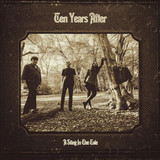
Ten Years After - A Sting In The Tale LP

* 180 gramaudiophile vinyl

In 1967 Four Young Musicians From Nottinghamshire, England Formed Ten Years After. Alvin Lee, Chick Churchill, Ric Lee & Leo Lyons Became One Of The Most Explosive Quartets On The World Stage And Cemented Themselves As One Of The Biggest Bands In Rock N Roll History.

The Band Scored Eight Top 40 Albums On The Uk Albums Chart And Twelve Multimillion Selling Albums On The Us Billboard 200 Between 1967 And 1974.

In 2014 Founder Members Ric Lee And Chick Churchill Put Ten Years After Back Together With A New Lineup. This New And Exciting Lineup Features British Bass Icon Colin Hodgkinson (backdoor, Peter Green, Alexis Corner, Spencer Davis, Chris Rea, John Lord) And Multi British Blues Award Winning Guitarist And Singer Marcus Bonfanti (van Morrison, Ginger Baker, Ronnie Wood).

This New Lineup Has Been Touring Extensively Since 2013 With Over 150 Shows Under Their Belt And Has Received Rave Reviews From All Corners Of The World As They Continue To Produce The High Energy Of A Vintage Ten Years After Show 50 Years Down The Line.

To Tie In With The Bands 50th Anniversary In 2017, Ten Years After Have Recorded A New Studio Album,a Sting In The Taleand Are Touring Throughout The Year To Promote This New Release And To Celebrate Their Anniversary.

pre-order now15.03.2024

expected to be published on 15.03.2024

33,82
Machi Oul Big Band - Quetzalcoatl

Before coming to Europe, in 1970, pianist Manuel Villarroel was a vet in his native Chilli. A few years later, as leader of the Machi Oul Big Band, he returned to the animal kingdom. A very specific kind of animal, for sure, the Quetzalcoatl, also known as the Feathered Serpent. What is behind this title (also the name of one of the three original compositions on this album released on the Palm label in 1976), is first and foremost a sort of homecoming...

After discovering the jazz of Herbie Hancock, McCoy Tyner, Miles Davis and John Coltrane, Villarroel was taken by the free jazz which was all the rage at the time in America and Europe, and this would inspire the first version of his Machi-Oul, project. This was a septet, with which the pianist would record, in 1971, the tremendous Terremoto (re-released by Souffle Continu FFL085). After this masterstroke Villarroel was invited to record with Perception (Perception & Friends) and with Baikida Carroll (Orange Fish Tears). While these were notable contributions, Villarroel was already looking into other combinations.

“I had to deal personally with my situation as an expatriate, without disavowing it. I tried not to betray my roots, I tried to translate into my music what was essential to me, to reflect my origins – Latin America, its musical and above all human feelings – while remaining faithful to jazz, which is the mode of expression of the musicians in the group”. This then is the ‘homecoming’ we mentioned, which would incite Manuel Villarroel to compose what he would call “structured free music”. In January 1972 the pianist enlarged his formation to reach the size of a real big band: the Septet became the Machi-Oul Big Band. Three years later in January 1975, with producer Jef Gilson at the helm, fifteen musicians including those from the old Septet (Jef Sicard, François and Jean-Louis Méchali, Gérard Coppéré) worked on a rare form of jazz. From togetherness to dissonance, we danse to it “Bolerito” then shake it up on “Leyendas De Nahuelbuta”. As for the concluding serpent, it is a piece which is impossible to pin down: “Quetzalcoat” is as impressive as it is difficult to grasp. To remind ourselves of this, lets listen to it again.

pre-order now15.03.2024

expected to be published on 15.03.2024

27,94
Various - The Northern Soul Scene LP 2x12"
 
25

Today's club culture all started with Northern Soul and its roots in the Mod all-nighter scene of London clubs. All the ingredients were there: DJs privy to the latest imports and advance promos, dancers fuelled by illegal uppers, venues which had scarcely opened when the pubs were all but deserted. The records, drugs and clubs have all changed, true, but the lifestyle is identical. Featuring classics from the Northern Soul Scene including Tom Jones, Ronnie Jones, Brotherhood of Man, Sonny Childe, Billie Davis, Tony Newman, Bats and more. Presented for the first time on orange colour vinyl and CD, this is essential for any funk and soul lovers.

pre-order now08.03.2024

expected to be published on 08.03.2024

38,87
JOHN COLTRANE - Giant Steps LP 2x12"

Released in 1960, Giant Steps was a watershed album for John Coltrane, solidifying the saxophone legend's reputation as one of the most influential and innovative musicians in jazz history, as well as delivering jazz to an increasingly mainstream audience, while garnering significant critical acclaim.

Although this was John Coltrane's debut for Atlantic, he was concurrently performing and recording with Miles Davis. Within the space of less than three weeks, Coltrane would complete his work with Davis and company on another genre-defining disc, Kind of Blue, before commencing his efforts on this one.

Coltrane (tenor sax) is flanked here by essentially two different trios. Recording commenced in early May of 1959 with a pair of sessions that featured Tommy Flanagan (piano) and Art Taylor (drums), as well as Paul Chambers — who was the only bandmember other than Coltrane to have performed on every date. When recording resumed in December of that year, Wynton Kelly (piano) and Jimmy Cobb (drums) were instated — replicating the alternate non-Bill Evans lineup featured on "Freddie the Freeloader" on Kind of Blue, sans Miles Davis of course. At the heart of these recordings, however, is the laser-beam focus of Coltrane's tenor solos.

All seven pieces issued on the original Giant Steps are Coltrane compositions. He was, in essence, beginning to rewrite the jazz canon with material that would be centered on solos — enabling the solo to become infinitely more compelling. This would culminate in a frenetic performance style using melodic phrasing that noted jazz journalist Ira Gitler accurately dubbed "sheets of sound."

The Giant Steps chord progression consists of a distinctive set of chords that create key centers a major third apart. Jazz musicians ever since have used it as a practice piece, its difficult chord changes presenting a "kind of ultimate harmonic challenge", and serving as a gateway into modern jazz improvisation. Several pieces on this album went on to become jazz standards, most prominently "Naima" and "Giant Steps."

The Penguin Guide to Jazz selected this album as part of its suggested "Core Collection" calling it "Trane's first genuinely iconic record." In 2003, the album was ranked No. 102 on Rolling Stone magazine's list of The 500 Greatest Albums of All Time, 103 in a 2012 revised list, and 232 in a 2020 revised list.

Undeniable music perfection deserves definitive sound and top-notch packaging. This reissue was mastered directly from the original master tape by Ryan K. Smith at Sterling Sound and cut at 45 RPM. Pressed on 180-gram vinyl at Quality Record Pressings, and housed in tip-on old style gatefold double pocket jackets with film lamination by Stoughton Printing.

Overall, Giant Steps is not only a critical triumph but also a defining moment in John Coltrane's career. Its innovative compositions, masterful performances, and profound influence on jazz make it an essential entry in Coltrane's discography and a timeless masterpiece in the history of the genre.

pre-order now29.02.2024

expected to be published on 29.02.2024

88,19
BETTY DAVIS - NASTY GAL LP

- Betty's classic third album, originally released by Island Records in 1975 - New vinly pressing on Metallic Gold colored wax - Featuring Betty's band Funk House - Booklet includes liner notes by John Ballon interviewing Betty plus full lyrics - Newly remastered from the original analog tapes by Kevin Gray at Cohearent Audio // In the 1970s, Betty Davis defied genre and gender by pushing her voice to extremes and embracing the erotic. She articulated a kind of pre-punk, funk-blues fusion that had yet to be normalized in mainstream music - a style that few musicians have come close to replicating. As one of the first Black women to write, arrange, and produce her own albums, Betty was a visionary who disregarded industry boundaries and constraints. Raw, unapologetic, and in full control, Betty paved the way for generations of future artists who said 'funk you' to the music industry and social norms. In 1975, Betty Davis's star was on the rise. With the backing of Island Records and a new band, Funk House, Betty's third album, Nasty Gal, leans into the hyper-sexualized persona with which her critics were so obsessed. She raps, purrs, shrieks, and moans on top of Funk House's manic funk-rock and lays claim to the "bad girl" anthems that now saturate the music industry. Mastered from the original tapes, Nasty Gal showcases Betty's groundbreaking work as a performer, writer, and producer.

out of Stock

Order now and we will order the item for you at our supplier.

48,11

Last In: 2 years ago
Seven Davis Jr. - Stranger Than Fiction LP

Seven Davis Jr. returns with a new album fresh after releasing the virtual reality infused clubby "Iss Good" EP on Classic Music Company. This album contains a fusion of R&B Hip Hop / Trip Hop / Deep & Soulful House songs. Inspired by the 90s sound and energy with appearances from John Cale, Luke Solomon, Ivan Dorn, Life On Planets, Jon Dixon and more.

out of Stock

Order now and we will order the item for you at our supplier.

18,07

Last In: 17 months ago
BETTY DAVIS - NASTY GAL LP

- Betty's classic third album, originally released by Island Records in 1975 - New vinly pressing on Metallic Gold colored wax - Featuring Betty's band Funk House - Booklet includes liner notes by John Ballon interviewing Betty plus full lyrics - Newly remastered from the original analog tapes by Kevin Gray at Cohearent Audio // In the 1970s, Betty Davis defied genre and gender by pushing her voice to extremes and embracing the erotic. She articulated a kind of pre-punk, funk-blues fusion that had yet to be normalized in mainstream music - a style that few musicians have come close to replicating. As one of the first Black women to write, arrange, and produce her own albums, Betty was a visionary who disregarded industry boundaries and constraints. Raw, unapologetic, and in full control, Betty paved the way for generations of future artists who said 'funk you' to the music industry and social norms. In 1975, Betty Davis's star was on the rise. With the backing of Island Records and a new band, Funk House, Betty's third album, Nasty Gal, leans into the hyper-sexualized persona with which her critics were so obsessed. She raps, purrs, shrieks, and moans on top of Funk House's manic funk-rock and lays claim to the "bad girl" anthems that now saturate the music industry. Mastered from the original tapes, Nasty Gal showcases Betty's groundbreaking work as a performer, writer, and producer.

pre-order now23.02.2024

expected to be published on 23.02.2024

48,11
Items per Page:
N/ABPM
Vinyl