Universe City's 1976 12 inch promo release, featuring 'Can You Get Down' and 'Serious', gained cult status in the disco scene. Produced and arranged by John Davis, the limited release and the subsequent demand over several decades, fuelled in part by regular plays from tastemakers like Sean P and Dave Lee, highlight the enduring popularity and influence of this particular record within the disco community. John Davis, a highly influential figure in the disco music scene, particularly during the 1970s. As a composer, arranger, and producer, Davis played a crucial role in shaping the sound of disco and funk music that can be heard throughout this release. Presented here officially for the first time since it’s limited promo release 48 years ago, this exclusive RSD release, lovingly remastered will be an essential purchase for any disco lover! Mint copies regularly changing hands for £100, this is a 'do not miss!' Delivered in a glorious Universe City band sleeve, limited to 500 units.
...Finally repressed! No more words needed... Classic!
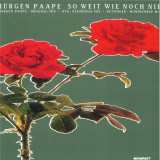
The original version of this gorgeous schlager techno track, released in august 2001 on Kompakt's Total 3, would put a smile on a lot of people's faces. Apart from the reworked original version, you'll get two sensational remixes: The one from Frankfurt's high-aesthete, super hipster, club- and label-owner with a three-letter name: Ata. Since the very beginning, his Playhouse label has always been a guarantee for finest German House music. It's his first (!) remix ever and his first studio work since the legendary first Playhouse release 'Holy Garage' in 1993. The 'Playhouse Mix' turns the original version into a mega-hip, late-night monster and reminds a bit of the great Larry Levan and Metro Area's congenious adaption of early-80s disco music. The 'Robert Johnson' club is going down on its knees. Wonderful. The other remix comes from one of Kompakt's in-house pioneers of pop ambient: it's Olaf Dettinger. Who didn't want to miss this chance and has interrupted his creative pause only for doing this wonderful 'Moonlight Mix'. Dettinger's cosy hi-tech sounds and Sonja Luebke's seraphic voice, both singing a duet to the moon. Very, very beautiful, indeed.
DER SMARTE HIT VON JÜRGEN PAAPE MIT REMIXEN VON PLAYHOUSE'S ATA UND DETTINGER. HERRLICH !
Before the soul and disco hits, Bill Curtis’ Fatback Band were one of the tightest funk groups in the world, and their catalogue threw up several rarities.
‘Dance Girl’ was their final single released in 1974 before they signed to Event/Spring. A New York block party classic that was deleted when the Perception label went bust. It was so popular at the time that it was covered by the Rimshots once it became unobtainable.
‘Keep On Brother Keep On’ was the group’s second single on Bill’s own BC Projects II label. It is a sought-after collectable on its original 1971 press, likely to set you back over £1000 for a copy.
Wigan Casino - the original UK dance culture super club - ran its’ first Nothern Soul All-Nighter in September 1973. It’s last session was in December 1981, and by then its 500 plus frantic All-Nighter had firmly stamped Northern Soul as an integral part of the British music landscape,
Wigan Casino Classics 1973 - 2023 proudly celebrates 50 years since the birth of the most important ever Northern Soul venue with 14 all time classic floor fillers. The Sandi Sheldon, Major Lance, The Seven Souls and Johnny Robinson gems were originally released on the Uber cool Okeh label but despite being part of the mighty Columbia Records empire sank without trace on release in the USA only to be discovered (and revered) by UK Soul devotees.
The Metros and Lorraine Chandler tracks were produced by Detroit’s mighty Pied Piper Productions crew and demonstrate that Motown were far from the only Motor City set up that knew how to conjure up truly breathtaking music.
In Northern Soul lore there is an intriguing story behind all 14 tracks - who produced and wrote them, which Rare Soul detectives - the original crate diggers - discovered them, what DJs played them..
But at the centre of it all is Wigan Casino, the seen better days Lancashire dance hall where 2,500 plus Soul fanatics flocked to every weekend to dance dance dance at the pre Rave era ultimate Rave. The recent 50th Anniversary celebration in Blackpool attracted a 5,000 turn out. The legend lives on.
This release marks the return of the always style wise Joe Boy label. Their trademark on point graphics are reinforced with the LP front sleeve being devoted to an iconic photograph by Francesco Mellini taken at the last ever Casino All-Nighter.
Cover versions of international songs have long thrived in South Africa’s music industry. Often unable to license the original tracks (until the early 90s the result of an international boycott of the country) labels instead hired producers and session artists to re-record them for the local market. Early house music in SA was no different.
When Ron ‘Robot’ Friedman, former bass player for local rockers Rabbitt, was winding down his label On Records in the early 90s, he reached out for new inspiration as the popularity of ‘bubblegum’ disco waned. For one of the label’s final releases he hired young DJ/producer Quentin Foster, obsessed with the new soulful house sound coming out of the US, to take the reins on a studio project dubbed Citi Express.
On Robot’s insistence it included a cover of Stevie Wonder’s ‘Living for the City’ (from 1973’s Innervisions) as the title track. Foster set to work in his home studio, dubbed Tone Def, selecting and re-working other US and UK tracks — ‘It’s Too Late’ (originally released in 1989 by Kelli Sae), ‘Love is the Message’ (influenced by the 70s soul anthem and credited to Gamble & Huff but bearing a closer resemblance to Better Days’ 1990 release written by Steve Proctor), ‘People of The World’ (recorded by Sorell Johnson in the UK in 1990) and ‘Victim of Your Love’ (released in 1990 by Gary Vonqwest as ‘Victim of Love’) — adding some signature South African touches in the process that foreshadow the imminent rise of kwaito. One original composition was added for good measure, ‘Open Invitation’.
The result offers a glimpse into those early days of house, a uniquely South African take on a global sound that still resonates today — reissued for the first time on Afrosynth Records.
It's not because one might have worked with people like Jimi Hendrix, John McLaughlin and Rod Stewart throughout their career that Italo-Disco wouldn't get the best of your work. A great example of the Italian phenomenon's infectiously widespread grip is British rock keyboardist Brian Auger's path, when he found himself in a Milanese recording studio during the mid 80's and recorded his last known release in that decade. Powerfully fusing decades of rock and jazz education with the synthetic hysteria of the time (and culture), the result is a classic downtempo number that has found its way into some of our favorite DJ sets for a while now. Vocal and instrumental are featured on the A-side and in addition the B-side offers a new remix where things take somewhat of a catastrophic turn into what sounds like Brian getting on the wrong train to a K-hole, probably not for most dance floors. Meticulously remastered at manmade mastering in Berlin.
Following the recently dropped ‘Strobe Queen’, which picked up support from Honey Dijon, Sean Johnston, Laurent Garnier, BBC Radio 1’s Pete Tong and Danny Howard amongst many more, Radio Slave returns with another standout House cut ‘Wild Life’, turning in two exceptional Disco and Dub mixes.
“I’ve always adored the “Wildpitch” era of DJ Pierre, Roy Davis Jnr, DJ Duke and labels like Power Music It’s definitely influenced my work as Radio Slave and “Wild Life” started out as a nod to that early nighties sound. Conceived during the pandemic, I had the track mapped out and then with help of a good friend I decided to add live bass, loads of analogue keyboards and record the whole thing live and it became this super funky disco jam.” - Radio Slave
Radio Slave aka Matt Edwards is one of dance music’s undisputed heavyweights. Having made his name as a DJ in the 90s, he went on to become the king of edits, twisting pop, R&B and indie cuts into essential versions that consistently set clubs alight. Since the mid-2000s, Edwards’ originals have helped define modern dance music, tackling techno, house, breakbeat, minimal and disco whilst exploring dub, balearic sounds and ambient across the myriad of other aliases and projects.
Sounds Of The Universe | The 12" Singles, a deluxe collector's
edition box set, contains seven 12" vinyl discs presenting
singles--including Wrong, Peace, the double A-side Fragile
Tension/Hole To Feed--alongside B-sides, remixes, dub
versions and other recordings contemporaneous to Depeche
Mode's 12th studio album, Sounds Of The Universe, originally
released by Mute Records in April 2009.
Sounds Of The Universe | The 12" Singles offers a full range of
ear-grabbing mixes--radio, club, dub and more--of Depeche
Mode originals with three discs (Discs Two, Four and Seven)
newly compiled for this collection, bringing together B-sides
and mixes first released across CD and maxi-singles
contemporaneous to the album's release.
When it came time to record the Sounds Of The Universe
album, DM's classic core (Dave Gahan, Martin Gore, Andrew
Fletcher) returned to the studio to make their second album
with producer Ben Hillier, whose intuitive contributions to
their previous studio album, 2005's Playing The Angel, had
created new sonic possibilities for the band expanding
Depeche Mode's vision and repertoire while continuing their
tradition of issuing monumental 12“ singles.
John Howard was one of the best and most creative DJs of the west coast house scene back in the 90’s. His mixes and productions were full of house groove, soul, breaks and jazzy rhythms. This new series on Repeat contains of three parts including Howard’s best productions. These tracks are all huge influence for many producers that later discovered these kind of psychedelic house grooves on European based DJ sets… John Howard was on his own journey much ahead of time and his music still sound absolutely incredible 25 years later… Mesmerizing release.
John Howard was one of the best and most creative DJs of the west coast house scene back in the 90’s. His mixes and productions were full of house groove, soul, breaks and jazzy rhythms. This new series on Repeat contains of three parts including Howard’s best productions. These tracks are all huge influence for many producers that later discovered these kind of psychedelic house grooves on European based DJ sets… John Howard was on his own journey much ahead of time and his music still sound absolutely incredible 25 years later… Mesmerizing release.
Showcasing his renowned nu-disco stylings and the evolution of his musical outputs from club delights to international hits, today Purple Disco Machine, the moniker of German disco house producer Tino Piontek, shares his stellar new single ‘Hypnotized’, marking the next era for the critically acclaimed project.
With an artist name that pays homage to 80’s funk hero Prince and the uplifting dance beat of Gloria Estefan’s ‘Miami Sound Machine’, Purple Disco Machine was destined to bring together the elements of synth pop, funk, Italo Disco. With over 250 million streams across his works to date, and a recent run of A list remixes for Dua Lipa, Mark Ronson, Robert Surace, Foals and Sir Elton John, Purple Disco Machine impresses once again, creating a modern and sophisticated take on the decade that has inspired him so greatly. Further announcing his sophomore LP for release in the next year, 2020 will see Purple Disco Machine deliver his most outstanding work to date.
Enlisting the help of indie British newcomers Sophie and the Giants on the single, Purple Disco Machine, adds their alluring vocals to the instantly engaging melody, and funk fuelled bassline, that has become synonymous with so many of his dance-fuelled hits.
Sampled by Jay-Z and Dr Dre, Italian band Calibro 35 announces the release of the new album NOUVELLES AVENTURES. The album will be available abroad on limited edition Crystal Clear vinyl next June 30th via Record Kicks.
Italian cult cinematic combo Calibro 35 are back with their new studio album NOUVELLES AVENTURES. The new album will be available abroad on a limited edition Crystal Clear Gatefold LP on June 30th, distributed worldwide via Record Kicks. The crystal clear vinyl edition is a Record Kicks exclusive and is limited to 1000 copies, which makes it an instant collector's item.
After last year's Scacco Al Maestro, the 2 tribute-albums dedicated to "il maestro" Ennio Morricone, followed by the "Calibro 35 plays Morricone" tour and the releasing of the ost of TV drama series Blanca, Calibro 35 are back with NOUVELLES AVENTURES, a new studio album of original material. NOUVELLES AVENTURES was recorded in Naples at Auditorium Novecento, the former Phonotype Records, one of the most legendary and fascinating Italian recording studios. The new LP sees the group making full use of their knowledge and resources, refined and enriched over the years, back to making "Calibro's music": a unique mix of funk, progressive rock, alternative jazz and wide-spectrum cinematic music the public has known them for in fifteen years of career.
"After a couple of intense and stimulating years playing Morricone and writing music for the TV drama Blanca", Calibro 35 said, "we had a great desire to make new inspired music. To do so, we left home and we shut ourselves up in the splendid space-time capsule that is the Auditorium Novecento studio. The result is a series of musical voyages in which we concentrated all our artistic and human experiences. As in Verne's imaginary and extraordinary journeys, we explored distant places where we had never been before. We then happened to return to more familiar shores and discover them with new eyes without realizing it. We borrowed the title NOUVELLES AVENTURES from György Ligeti, precisely because after fifteen years of building ourselves, we are ready for new adventures".
NOUVELLES AVENTURES was anticipated by the first extract "EXTRAORDINAIRE", an almost 6-minute song that once again confirms the band's aptitude for the exploration of unpredictable sound territories: a music that, on one hand sounds liquid and abstract, while on the other, it cuts through the psychedelic mists, with a complex architecture.
Described by Rolling Stone as "the most fascinating, retro-maniac and genuine thing that has happened to Italy in the past few years", Milan-based Calibro 35 enjoy a worldwide reputation as one of the coolest independent bands around. Active since 2007, during their long career they were sampled by Dr. Dre on Compton ("One Shot One Kill" feat. Snoop Dogg), Jay Z ("Picasso Baby"), The Child of Lov & Damon Albarn ("One Day") and Demigodz ("The Summer Of Sam"). They played major venues and festivals all over Europe and as unique musicians they collaborated with, amongst others: PJ Harvey, Mike Patton, John Parish, Stewart Copeland and Rokia Traoré.
Purple Disco Machine unleashes ‘playbox’ the thrilling next chapter of his disco-house odyssey.
The Dresden based disco megastar leads a rallying call to his disco army of super fans across the globe, with the release of his new single ‘Playbox’, a vibrant, high energy, disco-house treat that marks yet another exciting chapter of his sophomore album release.
With three extraordinary singles having made their way into the ether, Purple Disco Machine has kept his fans grooving throughout this past year - providing a huge ray of sunshine as we need it most. Already a globally renowned producer, Purple Disco Machine has quickly become a household name with the success of his international hit singles ‘Hypnotized feat. Sophie and the Giants’ (an anthem the world over having been streamed over 250 million times) and more recently ‘Fireworks feat. Moss Kena & The Knocks’ (with over 35 million streams to date).
‘Playbox’ is accompanied by an extraordinary video illustrated and animated by Juppi Juppsen, and Mathias Lemaitre Sgard, who created a vibrant homage to classic science-fiction, cyberpunk, retro-futurism spiced up with disco influences for ‘Playbox’. In the clip, Tino, in the form of a space superhero, and his female droid search for an ancient artefact which is said to hold the essence of music and, therefore, possess unimaginable power.
With just shy of 900 million streams across his catalogue to date, and over 9 million monthly listeners on Spotify, Purple Disco Machine continues to live up to the hype of #2 Beatport Artist of All Time. With a succession of notable remixes for Dua Lipa, Mark Ronson, Foals, Calvin Harris, Fatboy Slim, Sir Elton John, Royal Blood, Lady Gaga & Ariana Grande, Duke Dumont, and Diplo & SIDEPIECE, coupled with his own dominating originals ‘Body Funk’, ‘Dished (Male Stripper)’, and ‘Devil In Me feat Duane Harden & Joe Killington’ from his debut album Soulmatic, Purple Disco Machine continues to innovate and elevate at every turn.
In the mid-70s, Bob Shad’s cult New York Jazz label Mainstream Records turned to the burgeoning underground Disco scene and released a handful of great singles produced by the likes of Tommy Stewart, Jimmy Roach or Bert DeCoteaux. Featuring artists from the early Disco hotbed including South Side Coalition, Chocolate Syrup and Three Ounces of Love, these singles, proving Shad's great flair, accompanied the rise of the New York club and block party culture that was going to revolutionise the musical landscape a few years later. Most of the singles are officially reissued here on vinyl for the first time, with Three Ounces of Love's "Disco Man" full mix previously unissued on vinyl. Remastered by Colorsound Studio in Paris, with liner notes by Charles Waring and artwork by Thomas C. Bradley
Funk and Soul in the early 70s were mutating to a new sound spearheaded by such labels as Philadelphia International Records (PIR), Scepter and Salsoul: Early Disco was taking off and Its sound was earthier and more urban, mixing the nascent Disco beat with strong funk and soul elements. New York was at the epicentre of the phenomenon, thanks to its thriving club scene and also to a new wave of DJs from the Bronx who started playing the music at block parties along with James Brown and Mandrill. bubbling under was a cohort of small independent labels that released some great music on 7" singles to meet the growing demand. Industry veteran Bob Shad and his label Mainstream Records started investigating this new scene and asked his circle of independent producers to bring him their latest production for release. For the occasion, he set up two sub labels, IX Chains and Brown Dog.
Among the producers who'd heard Shad's call were Tommy Stewart who came up with The South Side Coalition's funky '(Don't You Wanna) Get Down Get Down' in 1975 and Prophecy's 'What Ever's Your Sign' a year later. Seasoned arranger/producer Bert DeCoteaux (Patti Austin, Maxine Brown, The Main Ingredient) brought Lenny Welch's soulful 'A Hundred Pounds of Pain' and the superb mid-tempo instrumental 'Nothing Between Us' by The Electric Ladies. Arranger Jimmy Roach came with his latest single with The Dramatics ('No Rebate on Love') whom he'd worked with at Volt and with Three Ounces of Love on their aptly titled single 'Disco Man,' whose unissued long version merging Side 1 and 2 is released here on vinyl for the first time. The sister group would go on to sign with Motown in 1978 and release their sole album self-titled 'Three Ounces of Love.'
Other highlights on 'Mainstream Disco Funk' include The Grand Jury's 'Music is Fun To Me' with its languid funky rhythm arranged by Ted Bodnar, a producer and studio engineer who'd work with Sir Joe Quarterman, Blair and Al Johnson. Also featured on the set is Crystal Image's superb 'Gonna Have a Good Time (part 1 & 2) which typifies the blend of urban funk, glitzy strings and metronomic beat that were signature elements of early Disco.
The style would keep getting more commercial over the years and reach overkill in the late 70s but the block party scene which more than embraced this breakbeat-filled genre would soon morph into hip hop in the second half of the 70s with the help of a few key industry figures such as Sylvia Robinson (Sugar Hill Records). By that time, Bob Shad had ceased releasing records and relocated in Los Angeles but he left behind a small treasure trove of superb obscure singles which are now making their LP debut on 'Mainstream Disco Funk' for the delight of all funk and disco lovers.
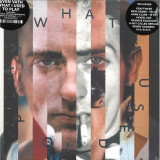
For this uniquely personal retrospective spread over twelve vinyl discs, Sven Väth takes us back to the early days of his DJ career. On What I Used To Play we meet great pioneers of electronic music, gifted percussionists, obscure wave bands, and innovative producers of a bygone 'new electronic' era. Rough beats and irresistible grooves from the identification stage of house, techno, and acid remind us not just how far electronic music has evolved over the past four decades, but how great it was to dance to EBM, techno, and house for the very first time.
If there is one protagonist of the electronic music scene who has remained curious, innovative and at the very cutting edge of music for over four decades, it's Sven Väth. His multi-layered artist albums and Sound of the Season mix compilations have been defining the genre for over two decades, and even today, he is constantly on the lookout for the next top tune to add to the highlights of his next set. At least, that's the case when he's not producing them himself as an artist or remixer. "Actually, it's always been part of my DNA to think ahead," and nothing had been further from his mind than looking back at his past, but when in spring of 2020 the international DJ circuit had to be scaled down to virtually zero, the 'restless traveler' suddenly had time. Time to stop and reflect on "how it actually was back then, at the very beginning of my career..."
"It was a great trip and with every track, beautiful memories came flooding back".
In the London apartment, he had just moved into, Sven has set up a "little music room", where he cocooned himself for several days, "to look way back for the first time and review my musical journey through the eighties, so to speak."
The interim result was six thematically oriented playlists with a grand total of 120 tracks from 'early 80s' to 'Balearic late 80s', together with excursions into afrobeat, European new wave, and EBM sounds and a few epochal techno/house tracks from the USA in between. From these 'Best of Sven Väth's favorites', the project What I Used To Play crystallized. Sven remembers how the Cocoon team reacted to his proposal: "They found the idea of making a compilation out of it MEGA from the beginning and everyone said 'Sven, go for it', but then, of course, the work really started, namely, to clear the rights and to get clean sounding masters of the up to 40-year-old tracks. There was also disappointment, of course. We couldn't clear certain titles because the rights holders in the USA had fallen out with each other or simply disappeared from the scene. In short, it wasn't easy, but now I can safely say we got the most important tracks."
Finally, after two years of research, curation, design, and administrative fine-tuning, the "little retrospective" from 1981 to 1990 is available. The exquisitely packaged, and three-kilo heavy box set is not only physically impressive, WIUTP is also the definitive record of Sven Väth's musical development. On each of the twenty-four sides of vinyl, you can trace track by track, what influenced him during which phase, and how he took off as a DJ from his parents' Queen's Pub straight into the spotlight at Dorian Gray. There and at Vogue (later OMEN), Sven became the style-defining player in the DJ booth that he still is today.
1981 - 1990: Future Sounds of Now
In the early eighties, the crowd in clubs like Vogue and Dorian Gray danced to what nowadays we call 'dance classics' - mainly disco, funk, soul, and chart pop. It was up to a new generation of DJs, including Sven Väth, the youngest protagonist in the Rhine-Main area at the time, to create their own club-ready music mix. Good new tracks and potential floor-fillers were rarities that had to be sought out and found, in order to prove oneself worthy.
Without MP3s, internet streaming, or other digital download possibilities, music didn't just gravitate to the DJ, instead, it had to be tracked down. In well-stocked record stores in Frankfurt and Wiesbaden or even in Amsterdam, London, or New York, Sven and friends sourced the material for countless magical nights. On WIUTP we can follow Sven's very personal journey through this wild, innovative era in which synth-pop, funk, hip-hop, and disco were successively replaced as 'club music' by house, techno, acid, and breakbeat. By the end of the decade, it was clear to see that these once exotic 'fringe' phenomena would soon become 'mass' phenomena.
Early 80s
Dirty Talk by the Italian-American duo Klein & M.B.O. represents the most innovative phase of the Italo-disco genre in the early eighties like no other track. Mario Boncaldo (I) and Tony Carrasco relied entirely on the original synthetic drum and percussion sounds of the Roland TR-808, coupled with the raunchy vocals of Rossana Casale and guitar accents of Davide Piatto. Of course, other tracks from this period were also influential in style, most notably Unit by Logic System, which worked as the perfect soundtrack to the laser lighting system at the legendary Dorian Gray club. With stomping beats and robotic rap interludes, Bostich by Yello also belongs on Sven's eternal playlist - after all, it caught the attention of Afrikaa Bambaataa, who invited the Swiss duo to perform at the Roxy in New York in 1983.
EBM Wave - Mid 80s
From today's point of view, the almost ten-minute-long, downtempo track Giant by Matt Johnson's band project The The, would probably not be considered an obvious club classic. However, a closer (re)listen reveals the rhythmic intricacies of the percussion overdubs by JG Thirlwell (aka Foetus) on Johnson's composition, and it becomes clear why this exceptional piece of music is one of Sven's absolute favorites. Other classics from this phase include Kaw-Liga by the mysterious The Residents, the hypnotic-synthetic Our Darkness by Anne Clark (and David Harrow), and last but not least, the somber, monotonous anthem Where Are You? by 16Bit, one of Sven Väth's projects together with Michael Münzing, Luca Anzilotti from 1986.
US House - Late 80s
You certainly can't talk about Chicago house without mentioning Frankie Knuckles. The resident DJ at the Warehouse not only gave the name to an entire genre, but also produced epochal floor fillers on the Trax label like the timeless Your Love, sung (and moaned) by Jamie Principle. Acid house protagonists Phuture also hail from Chicago, and on We Are Phuture (also released on Trax) we hear the chirping acid sounds of the legendary Roland TB-303 in full effect. Another featured classic is No UFO's by Detroit's Model 500 aka Juan Atkins, who is rightly considered the 'Godfather of Techno' even if the genre-defining track from 1985 still breathes with the spirit of hip-hop and electro from the first breakdance era.
Afrobeat
Le Serpent, by Algerian-born Abdelmadjid Guemguem, is a track that sounds completely different from everything else on WIUTP. Made in 1978, it's a monumental, rousing groove created without bass or synths, just with five congas! Even though Guem sadly passed away in 2021, his immortal, acoustic beats are understood all over the world and will continue to enrich many thousands of DJ sets for years to come. Another classic that not only Sven appreciates beyond measure is Hugh Masekela's Don't Go Lose it, Baby. In addition to being one of the most important jazz pioneers, the trumpeter and freedom fighter from Johannesburg was very experimental, integrating electronic sounds into his music in later years, in a similar vein to Miles Davis and Herbie Hancock. Dutch jazz pianist Jasper van't Hof's afrobeat project Pili Pili has also aged well. The trance-like, almost sixteen-minute-long track of the same name, manages to fill a whole side on the seventh of twelve vinyl discs in the WIUTP box.
UK-US-Euro - Late 80s
Time for a change of scene, in the truest sense of the word, and from a musical perspective, this section is like landing on another planet. First up is Andrew Weatherall's classic remix of Primal Scream's Loaded, featuring the iconic Peter Fonda sample (lifted from the 1966 biker film Wild Angels) that came to personify the mood triggered by the British Second Summer of Love in the late eighties: "We wanna be free to do what we wanna do, and we wanna get loaded...". This period also saw the emergence of M/A/R/R/S whose only single, 1987's Pump Up The Volume, became a club classic with support from DJ legend CJ Mackintosh. In this most eclectic of sections, we also encounter New York house and reggae producer Bobby Konders and his seminal Nervous Acid.
Balearic - Late 80s
Those who know him, know that Sven had already lost his heart to the 'magic island' of Ibiza as a teenager, so with that in mind, the WIUTP project couldn't end without a Balearic chapter. Inspired by Manuel Göttsching's E2-E4, the immortal, eponymously titled Sueño Latino belongs in there without question. Equally popular on the island was, and still is Break 4 Love by Raze, which thinking about it, would also fit perfectly into the house chapter. Last, but not least, there's an overdue reunion with Sven Väth himself, in his role as frontman of the successful Frankfurt trio OFF. Together with Michael Münzing and Luca Anzilotti (later of Snap!) this 'Organization For Fun' created the off-the-wall club hit Electric Salsa in 1986 which incidentally turned into an international chart smash, putting Sven in the enviable position of having to decide between pop stardom and a DJ career. Well, we all know how that decision turned out and the rest, as they say, is history. A not insignificant part of his story is What I Used To Play. Enjoy!
Tod Dockstader's Aerial series, an electronic/drone masterpiece, is cherished among fans of the artist's work and this second volume is available in an audiophile quality double LP edition.
Tod Dockstader's Aerial series is sourced from his life long passion for shortwave radio. Dockstader collected over 90 hours of recordings, made at night, and comprised of cross signals and fragments plucked from the atmosphere.
Opening with airwave drones, Dockstader gradually allows elements to slowly come and go, summoning an ominous atmosphere of ethereal cloud clouds. Malignant placidity continues, giving the feeling of eavesdropping upon late-night audio activity not unlike discovering number stations while sweeping the dials. These sounds pull you in as their density and rhythms come and go.
Backward voices, deep echoing choruses of conversations flowing under the surface, ocean sounds, pulsing electro-rhythms, all seem to be created via the collaging of many hours of source recordings. A masterwork of collage and juxtaposition by an overlooked pioneer of American electronic music.
Artwork by John Brien (Imprec) is inspired by the propagation of shortwave radio signals throughout the earth's atmosphere.
"This return of Dockstader is something to cherish, not just because his output has been so limited and scarce but because what we do have is so intriguing, persuasive and cliche-free; the music of an inspired explorer who trails in nobody's slipstream." The Wire
"One of the great figures of musique concrete composition." Dusted
The Aerial project
I've written before of my interest in shortwave radio, in the notes to the Quatermass CD. Also, in the notes to the Omniphony CD (which has my first "Aerial" mix, "Past Prelude," in it), I mentioned "The Aerial Etudes," which was my working title for what became the three CDs you have. And, at the end of an interview with Chris Cutler (which can be found in the "Unofficial TD Website"), the piece I mentioned I was starting to work on at the time became Aerial.) When I was very young, people got most of their entertainment from radio. They called it "playing the radio," as if it were a musical instrument. That's what I've tried to do in this piece. About this time, a few people encouraged me to look into using a computer for this work.
I'd never used one, but I saw it would allow me to keep my mixes digital - no more transfer losses. So, at the end of 2001, I got a computer and an editing program for it, and spent what seemed a long time learning it. I began selecting mixes and loading them into the computer in late March, 2002. Out of the 580, I selected 90 "best" mixes - eventually reduced to 59, the ones on the CDs. Finally, in assembling the CDs, I followed David Myers' suggestion to allow each piece to flow into the next - making a continuous journey to the end. Tod Dockstader, 14 september 2003
About Tod Dockstader: Dockstader moved to New York in 1958 and became a self-taught sound engineer and sound effects specialist and apprenticed as a recording engineer at Gotham Recording Studios. It was around this time that he started to use his off-work hours to experiment with mixing and manipulating sounds on magnetic tape (musique concrète). By 1960 he had amassed enough material to assemble his first record Eight Electronic Pieces which was released on the Folkways label in 1961 (this would later be used in the soundtrack of Fellini’s Satyricon). The last of the eight pieces was later re-worked into his first stereo piece. In 1961 he applied to use the facilities at the Columbia-Princeton Electronic Music Center and was denied access by Vladimir Ussachevsky. Ussachevsky’s official reason was the “overstrained” scheduling of the studios, although many suspect that Dockstader’s lack of academic training was a factor in the decision. He continued to create music throughout the first half of the 60s, working principally with tape manipulation effects. His last piece at Gotham was Four Telemetry Tapes in 1965, after which he left to work as an audio-visual designer on the Air Canada Pavillion at Montreal’s Expo ‘67. It was around this time in 1966 that some of Dockstader’s pieces were released on three Owl L.P.s, and his work became known to a larger audience. He achieved modest recognition and radio play alongside the likes of Karlheinz Stockhausen, Edgard Varèse, and John Cage.
The Lagaffe boys have a special one for you. Lagaffe 10 marks the 10th EP in our vinyl series and serves as a perfect way to end our 10th year in existence. To mark this occasion we are releasing a 4 tracker with our founders and label regulars.
The EP opens up with Cohen Social Club by Flexi Leifs aka Felix Leifur. Our man Felix lost his drum machines last spring but luckily he found a guitar and some drums. The track starts off with suspicious sounding guitar notes that somehow end up as pure beauty, giving hope in the darkest of places. Frodo with the ring stuff, if you know what I mean. Playful reverbs and echos give the tune the classic Felix Leifur feel to it!
Moff & Tarkin has the next track "Pure Fury", some breakbeats and cheesy disco vocals, why change a winning recipe?
Next up is "We are not alone " by label boss Jonbjörn. I think this is what Elton John meant when he said "thank god for those electro bangers!" Solid 909 drum work featuring dramatic chords and some original vocal work. If you can spot the sample write us on Soundcloud and you might win a year's worth of LaCafe Tales!
With "Að handan" Viktor Birgiss comes back to the label in style. Our mastering engineer described it as having the loudest kick drum in history, imagine that! Lo fi dub sounding drums interlaced with atmospheric chords, made for those late night intimate moments on the dancefloor, again Frodo with the ring stuff, if you know what I mean.
11 track album by Patrick Cowley. Perhaps one of the most revolutionary and influential people in the cannon of disco music, Cowley created his own brand of Hi-NRG dance music coined 'The San Francisco Sound.' By the mid-70ies, Patrick's synthesizer skills landed him a job composing and producing songs for disco superstar Sylvester such as 'You Make Me Feel (Mighty Real)', 'Dance Disco Heat' and 'Stars.' This helped Patrick obtain more work as a remixer and producer. Of particular note was his 18-minute long remix of Donna Summer's 'I Feel Love'. By 1981 Patrick released a string of dance 12inch singles, like 'Menergy' and 'Megatron Man', creating the soundtrack for a generation. Prior to his passing on November 12, 1982, he recorded two more Hi-NRG hits, 'Do You Wanna Funk' for Sylvester and 'Right On Target' for Paul Parker. In 1981 Patrick was contacted by John Coletti, owner of famed gay porn company Fox Studio in Los Angeles. John had heard about Patrick's music from the legendary Sylvester and proposed he write music for his films. Patrick jumped on this offer and sent reels of his college compositions from the 70s to John in LA. Coletti then used a variable speed oscillator to adjust the pitch and speed of Patrick's songs in-sync with the film scene. 'School Daze' is a collection of Cowley's instrumental songs recorded between 1973 and 1981 found in the Fox Studio vaults. Influenced by Tomita, Wendy Carlos and Giorgio Moroder, Patrick forged an electronic sound from his collection of synthesizers, modified guitars and self-constructed equipment. The listener enters a world of dark forbidden vices, introspective and reflective of Patrick's time spent in the bathhouses of San Francisco. The songs on 'School Daze' range from sparse prototechno to high octane funk to somber post-punk to musique concrete, revealing the depth of Cowley's unique talent.
The gift that keeps on giving, Purple Disco Machines' 'Exotica (Deluxe Album)' is being treated to some epic remixes of your favourite songs now available on vinyl.
Highlighted here, a remix of 'Dopamine' by current heavy hitter John Summit and a Club Dub mix of 'I Remember'.
Three years after he released the incredible New Experience EP (picking up plaudits from Bill Brewster, Tim Sweeney, Laurent Garnier, Horse Meat Disco, Leo Mas & 6Music’s Tom Ravenscroft, among many more), Tokyo’s Kota Motomura returns to Hobbes Music for his debut LP, Pay It Forward. This is the first vinyl release on Hobbes Music since the much-loved ‘Aranath’ EP by Leonidas & Hobbes last Spring. While the label maintains the level of quality control for which it has become recognised, the artist continues to subvert electronic and dance music norms in his iconoclastic way on this extraordinary record.
He’s a mysterious character with an ear for idiosyncratic music that runs the gamut from ambient, exotica and jazz to disco, house and techno via post punk, new wave and funk. It’s highly original and all adds up to a confection perhaps best described as ‘Balearic’.
Album opener Paradise is a certified jazz-funk JAM. Destined for dance floors worldwide, this one’s been dropping well with DJs, Motomura demonstrating his piano chops alongside Mutsumi Takeuchi’s sax. Tropical pushes the boat in a more rhythmic direction, some pretty wild drum programming laced with more sounds of the, um, tropics, before mad vocal yelps suggest something yet more tribal. To Be Free initially resembles early 90s progressive house (pulsing bassline, synth-driven melodies), before the arrival of some new wave guitar licks a la classic Talking Heads/David Byrne and ooh ooh vocal chants take it to another dimension altogether.
B-side opener Emotion features Takeuchi again (on flute this time) and more vocal chants before things take a dramatic turn, threatening to open up into a full fanfare before calming and then bursting into wild life again with the exhortation that “C’mon, everybody dancing!” Rhythm flirts with an energy and pace more akin to a techno record: drums, drums, more drums plus a fair few yelps and chants - the kind of DJ tool that will send a simmering dance floor wild in the right hands. Flower closes things in a more melancholy style, familiar to fans of ‘Aboy’ from the New Experience EP, with plaintive acoustic guitar (performed by Akichi), birdsong and big piano chords.
Support from Bill Brewster, Leo Mas, Al Kent, Red Rack’em, Nick The Record, Phil Mison, Phat Phil Cooper, KZA, Sean Johnston (ALFOS), S/A/M, Dribbler, Joe Muggs, Monolith Cocktail and more…
‘Gonna review in MÜ mag... very fine stuff!’ JOE MUGGS
‘Will be reviewed on the blog’ MONOLITH COCKTAIL BILL BREWSTER played Flower on the DJ History podcast #641 (25.3.22) 'I really like this album, Flower and Paradise are my favourite' LEO MAS ‘I like Paradise’ AL KENT ‘Woo this is tasty. DEFO playing on my next radio show. The label’s A&R is defo getting better and better. HM has been putting out some dope stuff and this one seems really good quality’ RED RACK’EM
‘Paradise and Flower sounding good’ NICK THE RECORD
‘Tunes sound great!’ PHIL MISON ‘Going to include Paradise and Flower on my Sunday Ibiza global radio show PHAT PHIL COOPER (Nu Northern Soul)
‘Very nice album with influences from many different genres. I especially like To Be Free with nice synths and guitar cutting, and Flower, which is a chill vibe’ KZA (Mule Musiq, Endless Flight)
'100% correct about the ALFOS potential of To Be Free!' SEAN JOHNSTON (A Love From Outer Space)
'Stunning, will fit perfectly with the vibe of my radio show’ S/A/M (Music For Dreams, DK; Playa Del Sol, Ibiza)
'Stellar work, i'll make a bet that Flowers is a Balaeric classic this summer' DRIBBLER (Breakfast Club, Ibiza)
‘It's cool in a nice smelling psycho sense, it was a very DEEP sound that I couldn't produce. Congrats!’ ALTZ (Altzmusica)
‘Paradise is my jam, it's deep, sunny and never boring. I'm interested to see how this will work on the dance floor. Overall a great album with solid composition and impressive use of live instruments!’ SOBRIETY (fka Chloé Juliette)
'Very tidy selection' ASTROJAZZ (Kelburn Garden Party, Wee Dub, Samedia Shebeen, Disco Makossa) ‘This is a lovely release. Follows on from New Experience in the best way possible. It's got lots of vibes going on but holds together as a cohesive piece of work. Love it’ JAMIE THOMSON (La Cheetah, Glasgow)
‘To Be Free is a track i could imagine Andy Weatherall playing in one of his sets at A Love From Outer Space’ KIRSTIE PATON aka She-Bang Rave Unit (Threads Radio, Radio Magnetic)
SAM Records was one of the labels at the forefront of the Disco Genre when the format was at its creative peak. This was the late 70’s and early 80’s, when the producers and artists involved were all using top notch professional recording studios with live instrumentation and their focus was on songs and rhythms that would make the dance floor move. Sam Weiss the founder of SAM was involved with various aspects of the music industry in addition to his role running the label, but the Sam Records imprint was his greatest passion, and that energy comes through in the songs that make up the catalogue. In this compilation we have engaged some of the world’s premier producers of the current disco inspired sounds that are blowing dance floors worldwide. They have used their talents and appreciation of the genre to mix, edit and master these classic jams into disco inspired productions that are fully equipped to ignite DJ sets and dancefloors worldwide.
On the A side with ‘Joy’, Bruise head in a jubilant direction. Chanting vocal chops ride along deep cut kick grooves and vivid piano riffs; modernising the classic house sound and forming a track that would as likely go off in a club in the UK as it would on the sun-soaked beaches of Ibiza.
In ‘The Theme’, Bruise switches things up and offers up a weighty, bass-driven progressive techno heater; bolstered with rattling break chops and polyrhythmic analogue synth arpeggios. As the track progresses, rip-roaring, squelching acid-lines are introduced at the crescendo; creating a versatile club record; primed and ready for the clubs reopening.
On this single ‘When Pianos Attack’, the vibe is instantly recognisable. Piano chords lead the charge of yet another dancefloor destroyer, with that signature sound of swinging beats, layered pianos, lashings of strings, and hosts of heavenly soulful choirs. Just close your eyes, look up, feel the rush, and dance.
+ Includes the unreleased vinyl exclusive ‘Akiba Choirs’. A new school dance anthem!
Huge support from: Annie Mac, Pete Tong, Laurent Garnier, Severino / Horse Meat Disco, Sasha, A Trak, Andhim, Spiller, Graeme Park, DJ EZ, John Digweed, Fatboy Slim, Sam Devine, Laurence Guy, Gilles Peterson, Fred Everything, Soul Clap, James Lavel, Basement Jaxx, Francois K, Luke Solomun.
'Joy'
- Pete Tong’s Essential New Tune + Tong asked Bruise to record a Joy themed Essential Mix for BBC Radio 1.
- Premiered by leading dance authority Mixmag.
- Featured in Defected / Faith’s behind the counter.
‘When Pianos Attack’
- Played by Blessed Madonna as an artist to watch 2022!
- Played at Warehouse Project by Graeme Park, and then again by Terry Farley.
- Magnetic Magazines Best of Month
Bruise appeared in Faith Magazines taking a full page for interview with a heavy focus on When Pianos Attack.
This one is something unique coming straight from the FullTime Production vaults.
Orlando Johnson steps up to the plate once again with four of his delighting records revisited and completely remastered.
Pure Disco and Soulful House pleasure!
The 1983 special US remix by the iconic and legendary remixer and producer John "Jellybean" Benitex of "Turn The Music On" was Orlando Johnson's greatest hit and opens Side A together with the UK Remix of "If You Come Back" featuring Tony Adam.
On the flip side scalpel maestro Massimo Berardi delivers a new rendition of "Somebody Save Me" together with his remix when in the Harlem Hustlers duo, of "I Got It", taken from Orlando Johnson's "Funky Time" album of 2011.
Dr Packer's work has been showcased by labels such as Salsoul, Defected, Glitterbox, Z Records, Masterworks, Disco Dat, Hot Digits & Midnight Riot' and received support from DJs such as 'Dimitri From Paris, Joey Negro, John Morales, Greg Wilson, Late Night Tuff Guy, Simon Dunmore to name a few.
The Tinted Love E.P is a selection of remixes that the good doctor has done for Tinted Records.
30 years as a full-time touring nightclub DJ sounds like one hell of a career, and for Kenny Summit it's as much of a milestone as it is a turning point. Having shared the stage with greats such as David Byrne, Stevie Wonder, Chaka Khan, George Michael, Kylie Minogue and Prince over the years, Kenny took that influence and inspiration and decided it was time for him to get behind the mic too.
‘Burnin’ is a song written, produced and performed by Kenny Summit that speaks on a desire that's been burning inside of him for three decades. Across those 30 years he’s made many an influential friend too, three of which come on board to remix ‘Burnin’ - the late great Paul Johnson, D&B icon DJ Aphrodite and Brooklyn legend DJ Spinna.
"I caught the fever for house in 1990 and by 1992 I was booked for my first DJ gig at New Jersey's famed Zanzibar nightclub where house legend Tony Humphries held court on a weekly basis. Something changed that night, a fire started and its been building, growing inside of me and now it's time to put paper to pen and write my own songs."
Clearly influenced by the artists Kenny's worked with over the years, ‘Burnin’ is a culmination of one man's journey through dance music; from the Nile Rogers-ish 70s guitar riff to the whining Steely Dan-like keys, to the lush strings and synth pop stabs that would make Moroder blush, the track itself is masterfully produced and punctuated with Kenny's unique uplifting vocals, sang in a manner as if David Byrne and Boz Scaggs were put together and yet still very uniquely Kenny Summit.
Up on remix duties the late great Paul Johnson, Chicago's shining star, serves up a dark, very much after house vibe, that still keeps that trademark Paul Johnson sound. Drum & Bass icon DJ Aphrodite applies his unique sound to ‘Burnin’ with a stellar remix the D&B community has been patiently waiting over three years for. And finally, long-time friend, Brooklyn's DJ Spinna steps up, who after hearing the track commented 'this needs a dope DUB! Leave it to me, imma hook you up bruh!'. The Discoelectric Dub does not disappoint.
Serious holy grail business on this rare 12-inch extended disco version of Lorraine Johnson - The More I Get, The More I Want on Prelude Records. Original copies of this promo-only cut will set you back £400+ and it doesn’t take a genius to work out why. Produced by Jesse Boyce and Moses Dillard and mixed by Rafael Charres the man behind the mixing desk for classics such as Rare Pleasure - Superfine Feeling and Keith Barrow - Turn Me Up, it’s a dream team cohort that created this Paradise Garage classic.
Backed with equally enthralling, Boyce and Dillard produced, Francois K mixed ‘Feed The Flame’, also loved by the Garage dance floor.
Informed by a highly influential early 1980s electronic music classic, the title track literally mind-sets the theme of Llewellyn’s latest release, kicking off with a euphoric vibe and drums shimmering with digital artifacts. At times almost dreamy cinematic pads, upfront with energetic Moroder-esque propelling bass lines, are the sound signatures of Llewellyn’s journey through a warm and synthesizer laden EP, reviving the sound aesthetics of both the post-discoid VHS and today’s club era with a contemporary touch. Finishing off with a laid-back facet, this four track EP contains enough warmth and drive to get you safely through the cold months, into a warm and promising future.
Llewellyn is one of Martin Enke’s producer’s monikers, who is closely associated with the Riotvan crew and also known as Lake People. Past releases can be found on labels like Riotvan, Uncanny Valley, Permanent Vacation, Mule Musiq and others.
The Austrian electronic music label fortunea starts off the new decade
with a bang! This time they come up with a new EP by label fellow
Peletronic.
It’s called ‚Secret Escape‘ and begins with the raw and energetic title
track, that is driven by MPC-style melody chops and a grooving bassline. Definitely a lot of peak time potential here. The original track is accompanied by a remix of charismatic Australian dj- and producer Jad & The, who transforms it into an euphoric deep house weapon with funky breaks and analogue infused acid sequences.
The first track of the B-side is setting up a darker mood. It’s called „My
House Is Your House“ and comes up with spaced out elements that
complement each other into a late night/early morning club atmosphere.
Voice- and effect artefacts sprinkle through the listeners head, while kick and bassline are holding everything together. Jon Gravy makes the remix dutys on B2 and delivers a stomping alternative to the original. A funky reverberant guitar, a staccato male vocal and high pitched piano stabs gives you back these feellings of mid 1990s chicago house memories.
All in all a must have house record for this upcoming festival season.
Don’t miss out!
Support by Rainer Trüby, Mr. Ties, Ame, Tensnake, Robert Owens, Fred P, Kassian, Horse Meat Disco, Loz Goddard, Jeremy Glenn, Intr0beatz, Franck Roger, Carlo, Replika, Just Her, Sune, Orlando B, Reece Johnson
Supported by Villalobos, Dorian Paic, Mattia Trani, DJ Tennis, Verrina & Ventura , Giorgia Angiuli, Carola Pisaturo, Julina Perez
There are people who place their soul at a border between two worlds that are completely different one from the other.
Giulio Paternò has always split his heart in two halves: one beating for Pink Floyd's, Dire Straits' and Deep Purple's rock; the other for an electronic sound influenced by the likes of John Talabot, Nicolas Jaar or David August.The final result by mixing these two different souls is all channeled into his project Swoosh, where house and techno meet the psychedelic sound from the '70s. So here is a captivating and a magnetic sound which is shaped exclusively by a live act with Ableton, a Gibson Les Paul and various controllers.Swoosh's peculiarity drew the attention of top national venues and festivals such as Tenax in Florence, Circolo degli Illuminati in Rome, or Amore and Spring Attitude Festivals.By Spring 2016 Swoosh will be releasing his first EP "Over and Above" with Autum Records, a label based in Rome and New York.Feedback:> DJ TENNIS: Great record, Swoosh is a producer to keep watching... / Gran disco, Swoosh è un producer da tenere sott'occhio...> VERRINA & VENTURA: Great, the slow one is fantastic! / Complimenti, traccia lenta fantastica!
> CAROLA PISATURO: Liked it so much. / Mi piace moltissimo.
> GIORGIA ANGIULI: I really enjoyed the whole EP, tracks are so stilish! / Mi piace molto l'EP, tracce super stilose!> JULIAN PEREZ: Good listening, a good listening. / Un ascolto piacevole > MATTIA TRANI:above mi piace moltissimo bell'atmosfera!
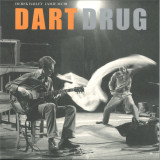
Percussionist Jamie Muir was a member of King Crimson during the recording of Larks' Tongues In Aspic, in 1973. Staying less than a year with Robert Fripp, the Scot had already cut his teeth with another master guitarist, Derek Bailey, as part of the Music Improvisation Company, along with Evan Parker, Hugh Davies and Christine Jeffrey, whose eponymous 1970 album was one of the first releases on ECM. Muir and Bailey recorded Dart Drug eleven years later, in 1981.There's no shortage of great percussionists in the brief history of free improvised music but on the strength of Dart Drug alone Jamie Muir deserves a place at High Table. Unlike for example Han Bennink and John Stevens, though, you can't hear echoes of any particular jazz drummer in Muir's playing, even if he has expressed appreciation for Milford Graves (who himself sounded like nobody else who'd come before him).What on earth did Muir's kit consist of Some instruments are clearly identifiable (bells, gongs, chimes, woodblocks); others could be... well, anything. Old suitcases thwacked with rolled up newspapers Tin cans and hubcaps inside a washing machine Who cares It sounds terrific - but if you're the kind of person who faints at the sound of nails scraping a blackboard, you might want to nip out and put the kettle on towards the end of the title track.Dart Drug is consistently thrilling, and often very amusing - but it's certainly not easy listening. In music we talk about playing with other musicians, whereas in sport you play against another opponent (or with your team against another team). Why not play against in music, too That's precisely what happens very often in improvised music, and Bailey was particularly good at it. How can a humble acoustic guitar hope to compete with a Muir in full flight Sometimes Bailey's content to sit on those open strings, teasing out yet another exquisite Webernian constellation of ringing harmonics and wait for the dust to settle in Muir's junkyard, but elsewhere he sets off into uncharted territory himself.'The way to discover the undiscovered in performing terms is to immediately reject all situations as you identify them (the cloud of unknowing) - which is to give music a future.' Bailey evidently concurred with this spoken statement by Muir, including it in his book Improvisation.Derek Bailey is no longer with us, of course, and Muir gave up performing music back in 1989. All the more reason for seeking out this magnificent, wild album.
It is very difficult to present David Duriez without writing an encyclopedic tome as its influence on the House music in France was decisive. Since its inception in 1992, David released over a hundred records under his name, tens under various pseudonyms, mainly on vinyls on the most renowned labels like 2020Vision, Ovum, Systematic, Pokerflat, F Communication, Under the Counter, Stickman, Crosstown Rebels, The End, etc .. (the list is long, see Discogs to be convinced) and as many remixes for some of the greatest artists (think Moby, Dj Sneak, Gemini, DJ Hell, Llorca, Telex, Random Factor, Johnny Fiasco, Paul Johnson, Jori Hulkkonen, Ralph Lawson, Random Factor, Kenny Hawkes or Mr.C).
Founder of the label Brique Rouge and a whole galaxy of other labels, he participated in the creation of internationally recognized labels such as Robsoul with Phil Weeks, Freak n'Chic with Dan Ghenacia (from Apollonia) or Rz Muzik. At a time when David had federated online the cream of the House producers via a forum (far and long before social networks), Ivan Smagghe had nicknamed him "the producer of the producers." , A true House Music activist,
But most of all David Duriez is a devastating dancefloor DJ, He did several tours around the world and played in some of the biggest clubs in the world between 1995 and 2010. Truly one of the most important players in the French electro scene, David is back on tracks after a few years hyatus. But don't call it a comeback because he has never really gone awol, he has been watching the scene and now he's back in the studio. You can expect a (very) long serie of releases for 2016, you have been warned!
The Return of The Vagabond – Revisited! On The New Way
There are figures that do not belong to any single era. They traverse .me, watch the world evolve, and
con.nue their journey guided by a singular compass: music.
Born from a concept by Use Vinyl Records, The Return of The Vagabond – Revisited! On The New Way is a
compila.on that sets the "Vagabond" back in mo.on—an iconic symbol for those who live music as a
journey without boundaries of .me, genre, or genera.on.
His return takes shape through a curated selec.on of .meless interna.onal disco, funk, and rock classics,
reinterpreted with fresh soundscapes while remaining deeply faithful to the spirit of the originals. This
musical odyssey is helmed by Daniele Baldelli & Marco Dionigi, Marco Fra=y, (Ino)2, DJ Mauri, and
Corrado Pres@, proving that great music can transcend .me, reinvent itself, and con.nue to inspire.
More than just a compila.on, The Return of The Vagabond – Revisited! On The New Way is a sonic voyage
that rediscovers legendary tracks through a modern lens. It is a project that demonstrates how authen.c
music never belongs to the past: it evolves, changes its skin, and con.nues to resonate deeply with the
present.
out of Stock
Last delivered 3 days ago available to reorder, subject to availability
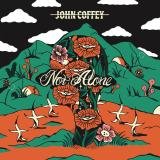
John Coffey built a reputation as one of the most explosive live bands in Europe - even becoming an internet sensation with the legendary “beer catch”. From Graspop to Sziget, Wacken to Pinkpop, Vainstream to Jera On Air, 2000trees and Hurricane/Southside - the Dutch group has played several of the biggest festivals, sold out the Melkweg in Amsterdam and even launched their own punk rock festival - Coffey Fest - to celebrate community and uncompromising music. Never shying away from the world around them, John Coffey actively uses their platform to speak out on social justice and political urgency. The new studio album "Not Alone" is about the power of connection. About discovering that there are other people who feel what you feel. Whether you find that connection through a partner, a friend, a helpline, or a room full of people feeling the same music. Talking helps. Singing helps. Screaming along helps. Armed with new music, a fierce activist ethos, and upcoming European tour dates, the band proves that engagement and heavy rock ’n roll are a perfect match.
"Back in 2022, Ban Ban Ton Ton raved about George T’s then digital-only release, “Roll On, Kings Cross”. We described it as a “dynamite dose of poetry and digidub.” Likening the prose – which describes a train journey from the coast to the city – to Michael Smith and Joe Duggan, while comparing the production to Dennis Bovell’s remixes of Jarvis Cocker’s “Swanky Modes”, and The Sabres Of Paradise’s “Wilmot”. Melodica-led with a hefty post-punk flavour, its dub, which focuses on manipulating and morphing the bass-line, we called “hollowed out house.”
These tracks have now been pressed to vinyl for the second release on new imprint Noetic Rhythm, where they’re joined by Leonidas’ “Great Northern” mix. Eschewing his usual futuristic ethno techno jacking, here he drops into roots reggae. Creating something more skanking, more stepping. An extended “discomix” showered in filtered, Mutron Bi-phased percussion, ghostly horns and peppered with the odd syndrum pop. Washes of sampled surf appropriately accompanying George informing us that “to the left there’s the sea.”
The 12 also features, “Dr Doctor”, a fresh collaboration with Yas Mine, The singer / guitarist’s French vocals countering George’s Matt Johnson-esque delivery, and a John Barry / “Midnight Cowboy”-like melodica melody serenading the song’s slow, squelchy, electronic skanking. The dub, instead, showcasing Yas’ fine fretwork." BAN BAN TON TON review
-
"These tracks are massive! I love Roll On King's Cross the best" KAY SUZKI (Time Capsule)
"I played the dub (Dub On, King's Cross) at a club in Oslo alongside some Maurizio and it sounded great. Bit of an oddball." Also played on NTS Radio and in Mixmag mix. JONNIE WILKES // OPTIMO
"Really digging Mr Demure when he drops into dubwise" DR ROB // BAN BAN TON TON
"Yes. Nice" NICK THE RECORD
"Awesome" JONNY ROCK
"I really like this EP... Love the Leonidas dub!" CEDRIC WOO (Beauty & The Beat, LDN)
"Love the blend of Augustus P vibes with a post punk dub feel. Bingo!" DICKY TRISCO
"I love it and will be playing" TREVOR FUNG (Ibiza Legend)
"Yes this is dark but kinda friendly.... brilliant...It's like ghost town ...I love Leo's mix" FOR MANKIND (Pikes Ibiza)
"Love the release and LOVE LOVE LOVE Dr Doctor!!!! Psyched to play this one out all weekend." ZILLAS ON ACID // James Weissinger (Philadelphia, US)
"This is amazing. Dub on kings cross is a banger - really love this one" ARVEENE
"Loving the Leonidas dub" ATEMI (Blackbush Orchestra / Abstrack)
+
PREVIOUSLY
"Melodica heaven" JD TWITCH/OPTIMO (RIP)
"I love this" IVAN SMAGGHE
"It's hot!!" JONNY ROCK
+ plays/support from:
DON LETTS (BBC 6Music)
TOM RAVENSCROFT (BBC 6Music)
HARRI (Sub Club)
[f] Roll On, King's Cross [Leonidas' Great Northern Mix] 06:54
[g] Dr Doctor [Instrumental Mix] 03:25
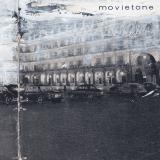
World Of Echo are proud to announce the long-awaited reissue of the self-titled debut album by Bristol’s Movietone. Originally released in 1995 by Planet Records and reissued on CD in 2003 by The Pastels’ Geographic Music imprint, this is the first time Movietone has been reissued on vinyl. An expanded double-LP edition, it includes the extra tracks from the 2003 CD (their first two singles, and an unreleased demo of “Chance Is Her Opera”), and adds three more unearthed gems: demos of “Alkaline Eye” and “She Smiled Mandarine Like”, and an early take of “Late July”, recorded in a garden by Dave Pearce (Flying Saucer Attack) in 1993.
Taken together, this is the definitive collection of music from the first phase of one of Bristol’s most remarkable groups. Movietone was the cumulation of a series of events, explorations, and discoveries, starting at secondary school – the group’s core membership of Kate Wright, Rachel Brook, Matt Elliott and Matt Jones met at Cotham School in Bristol. As for many other groups, their early years were all about experimenting, and finding ways to ‘make do’, a DIY sensibility that would inform Movietone through their decade-long lifespan. From formative rehearsals in a shed in the garden of Brook’s family home, to recording early material to four-track in Redland Library, and on into the Whitehouse and Mr Grin’s studio sessions for their debut album, Movietone’s music fell together in a creatively unpredictable, yet conceptually rigorous manner.
By the time they released Movietone, they’d found a home with Bristol’s Planet, run by author Richard King and James Webster, who had both released their first two singles, “She Smiled Mandarine Like” and “Mono Valley”. There was other music happening around them in Bristol, too, from the Jones brothers’ avant-rock outfit Crescent (who were Movietone’s closest conspirators), through Elliott’s jungle/electronica project Third Eye Foundation, and Brook and Elliott’s membership of Flying Saucer Attack. A closely knit community, Movietone are the centre of this nestling architecture of groups. The vision in the music, mostly, belongs to Wright, but Movietone ran in democratic creative consort. Listening back to Movietone, you can hear this democracy in action through the wildness of the music, which is balanced by the poetics of Wright’s lyrics and melodies.
Full of half-captured memories and entangled abstractions, there’s an elliptical, ruminative quality to much of the writing here that shows the deep influence of the Beat Generation writers, along with a twilight environment captured in the songs that’s pure third-album Velvets, Galaxie 500, early Tindersticks, Codeine. Unpredictable interventions – the crashing glass in “Mono Valley”, the sudden explosions of “Orange Zero” point towards the noise blowouts of My Bloody Valentine, the unpredictability of Sonic Youth; Wright’s understated vocal cadence suggest a deep, embodied understanding of John Cage’s Indeterminacy.
Movietone would go on to make 3 fantastic albums for Domino: Night & Day (1997), The Blossom Filled Streets (2000) and The Sand & The Stars (2003) and their Peel Sessions were released earlier this year on Textile. Still held in high regard by artists like Steven R. Smith, and The Pastels, whose Stephen McRobbie once described them as “one of the great unknown English groups,” it’s an absolute thrill to listen to Movietone anew – still inspired, still seductive, still magic, still mysterious.
Spring 2026 saw The Proclaimers recording their new album, You May Offend. It is brothers Craig and Charlie Reid’s first album since 2022’s hugely acclaimed Denture’s Out (“Proves you don't need to be a young pretender to land hit after palpable hit,” – MOJO magazine). Their 13th studio album’s 12 tracks – punchy and punky, rousing and carousing, tender and tough – were recorded at Monmouth’s legendary Rockfield Studios with producer Dave Eringa, their crack live band – Steven Christie, Garry John Kane, Zac Ware and Clive Jenner – and frequent guest guitarist, Manic Street Preachers’ James Dean Bradfield. The result is an album, as ever, concise as well as incisive, and about looking forward. Pushing on and digging into the issues and feelings that matter to them here, now and tomorrow, not yesterday, as with the title track, and first single, a lament for the state of free speech, with Charlie approving of the fact that the title can be taken two ways: “As in: ‘Look, careful what you do, you may offend someone.’ Or: ‘OK children, you may now offend.’ Is it an instruction or an invitation? Or a warning?” A powerful accompanying video for the You May Offend single is being created by Emmy & BAFTA award winners, director Douglas Mackinnon in partnership with Peter Anderson Animation. “My favourite band of all time. They write the most spectacular songs, big hearted, uncynical passionate songs.'” - David Tennant “There is a whole other world of music behind that song that I’ve just been discovering, and they’re a wonderful, wonderful band. Now we live in the age of coolness that doesn’t mean anything, it's just quality and soul. The Proclaimers make more sense than ever.” – Chris Martin after Coldplay performed Sunshine on Leith at BBC’s The Piano Room
Ecstatic’s dreamiest cadets bliss out on a new album of acoustic and electric guitar, harmonium and synth tapestries, notably nestling a Romance cameo within a genteel toggle of atmospheric pressure.
Back on (side) road after releasing quietly acclaimed kosmische gem ‘I Had too Much to Dream Last Night’ back in 2021 and the lysergic lushness of ‘Listen to the Sky’ a couple of years later, Celestial suggest a more sublime return to earth with the shine-eyed wonders of ‘I Can Hear the Grass Grow’, an album that soothes to the supine in eight shimmering parts of pearlescent melodic motifs marbling harmonious backdrops intended to tenderly comb nerves straight.
The duo take their role as seductive sandmen with a curious melodic wit that leaves something to the imagination whilst nudging it along the album’s narrative thread. A courtly flamenco lick flickers in opener ‘The Endless Stair’, one of the most restrained recordings we've heard from the childhood friends; blessed with just a little reverb and echo, as if a mic's been lowered into some dimly lit basement while Celestial puzzle out mystifying, interlocking harmonies. It hits a mid-point between John Fahey's raga-inspired Americana and Vini Reilly's rain-soaked Northern blues - the emotion throbs from every note.
Celestial's music is never too polished, giving it the fuzzy, uninhibited flair of a long-lost mail order private press and instilling it with a level of humanity that's rare to discover in the new-new age. Even when mysterious labelmate Romance turns up to ornament 'Mermaid Boulevard' with backmasked electronics, it's their low-slung Ry Cooder-esque guitar/bass that provides the narrative anchor, while the title track and spongiform analog textures of ‘Song For The rainy Season’ dial it right down to a Harmonia-via-BoC pastoral sublime. Vini Reilly and Eno’s influence is most surely felt on the swaying elegance of ‘Sweet Sleep, Angel Mild’, with a central motif that lingers on the mind long after it’s stopped playing, whilst their closing couplet perfectly resolves the cycle with a melancholic kiss-off for the ages.
out of Stock
Last delivered 14 days ago available to reorder, subject to availability
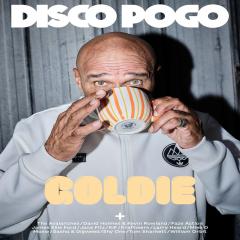
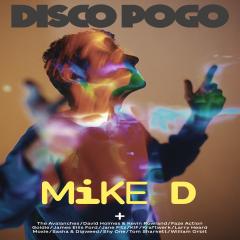
For Autumn/Winter 2026/2027 our tenth issue is possibly our best ever with three heavyweight cover stars in the shape of Goldie, Mike D and The Avalanches. Issue 10 also features: Kevin Rowland and David Holmes - Two of the most dapper chaps in music go for a walk through London. William Orbit - We pay tribute to the producer who was simply ahead of his time. Sasha and John Digweed - The Man Like and Diggers reflect upon 30 years of their seminal ‘Northern Exposure’ mix. Larry Heard - Can you feel the genius of the man with his Mr. Fingers in many musical pies? Kraftwerk and Sheffield - How a group of German futurists turned the Steel City on its head. The Warehouse Project - The revolutionary Mancunian clubbing institution turns 20. We bring the cake. They blow out the candles. Shy One - It’s been a long and winding road for the artist also known as Mali Larrington-Nelson. Tom Sharkett - The one-man disco has a groove machine and he’s going to use it. Moxie - Moxie by name; moxie by nature. All hail the On Loop leader. KiF - Teenage friends collate an album dedicated to the life of the passion flower. Plus… loads more across 192 pages.
For Autumn/Winter 2026/2027 our tenth issue is possibly our best ever with three heavyweight cover stars in the shape of Goldie, Mike D and The Avalanches. Issue 10 also features: Kevin Rowland and David Holmes - Two of the most dapper chaps in music go for a walk through London. William Orbit - We pay tribute to the producer who was simply ahead of his time. Sasha and John Digweed - The Man Like and Diggers reflect upon 30 years of their seminal ‘Northern Exposure’ mix. Larry Heard - Can you feel the genius of the man with his Mr. Fingers in many musical pies? Kraftwerk and Sheffield - How a group of German futurists turned the Steel City on its head. The Warehouse Project - The revolutionary Mancunian clubbing institution turns 20. We bring the cake. They blow out the candles. Shy One - It’s been a long and winding road for the artist also known as Mali Larrington-Nelson. Tom Sharkett - The one-man disco has a groove machine and he’s going to use it. Moxie - Moxie by name; moxie by nature. All hail the On Loop leader. KiF - Teenage friends collate an album dedicated to the life of the passion flower. Plus… loads more across 192 pages.