‘The Nearer The Fountain, More Pure The Stream Flows’, the new studio album from Damon Albarn, is released by new label home Transgressive
Records.
‘The Nearer The Fountain, More Pure The Stream Flows’ was originally
intended as an orchestral piece inspired by the landscapes of Iceland.
This last year has seen Albarn return to the music in lockdown and
develop the work to 11 tracks which further explore themes of fragility,
loss, emergence and rebirth. The result is a panoramic collection of
songs with Albarn as storyteller. The album title is taken from a John
Clare poem Love and Memory.
The deluxe version of the album takes the form of a casebound book
with additional photography, original scanned lyrics and artwork from
Damon, alongside a clear vinyl version of the album and a bonus 7”
featuring an exclusive song from the recording sessions, plus a high
quality digital download. Also available on black vinyl and cassette.
A recent special Globe Theatre performance in London sold out
immediately and was streamed globally to 72 countries around the world and received rave reviews across the board.
out of Stock
Last delivered 4 years ago available to reorder, subject to availability
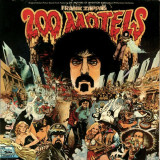
"Released in October 1971, Frank Zappa’s “200 Motels” was a miraculous feat, a cinematic collision of the venerated musician and composer’s kaleidoscopic musical and visual worlds that brought together Zappa and his band, The Mothers, Ringo Starr as Zappa – as “a large dwarf” – Keith Moon as a perverted nun, Pamela Des Barres in her acting debut, noted thespian Theodore Bikel, the Royal Philharmonic Orchestra, and an incredible assortment of characters (both on screen and off) for a “surrealistic documentary” about the bizarre life of a touring musician. The 2LP set : We are pleased to present the original soundtrack, a double-album set featuring all original packaging including the booklet & poster and a brand new remaster by legend Bernie Grundman at Bernie Grundman Mastering. Pressed on 180g black vinyl by Optimal Media in Germany.
In celebration of “200 Motels” golden anniversary, Zappa Records, UMC and MGM have assembled a definitive Super Deluxe six-disc box set of the beloved, yet hard to find, soundtrack. Fully authorized by the Zappa Trust and produced by Ahmet Zappa and Zappa Vaultmeister Joe Travers, the monstrous 200 Motels 50th Anniversary Edition brings together the original soundtrack, newly remastered by Bernie Grundman at Bernie Grundman Mastering, along with a staggering amount of unreleased and rare material unearthed from FZ’s Vault, including original demos, studio outtakes, work mixes, interviews and movie ads, along with newly discovered dialog reels, revealing an early audio edit of the film. Also included is a wealth of never-before-heard audio documentary material surrounding the project.
The six-disc set will be housed in a 64-page hardcover book in a handsome 12” x 12” slipcase. The packaging replicates the original booklet updated with revealing new liner notes from Pamela Des Barres, Ruth Underwood and Joe Travers, as well as Patrick Pending’s essay from the 1997 reissue, and is chock full of motion picture artwork, stills and images, from the film and its making, many which have never been seen before. This must-have collector’s release will also include a custom “200 Motels” keychain and Do-No-Disturb motel door hanger and a full-size replica of the original movie poster. Years in the making, all the audio was meticulously identified and transferred over several years as Travers dug through the Vault to create a new high resolution 96K/24B digital patchwork stereo master from the original analog tapes. The Vault material was mastered by John Polito in 2021. We are pleased to present the original soundtrack on 2 compact discs featuring all original packaging including the booklet & poster and a brand-new remaster by legend Bernie Grundman at Bernie Grundman Mastering. *Existing orders still stand."
HESITATION return with a heartfelt take on the Christmas record. A gift of seven traditional pieces fed through a brandy-oiled machine of analogue synthesizers and robotically assisted singing, festooned with wayward horns and primitive sprigs of guitar recorded in a conservatory in Dorchester.
The emotional hit of the results - from the deconstructed Macca synth and plucked harmonics of 'Good King Wenceslas', to the zero gravity glacial cloud that forms 'Once in Royal David's City' - is undeniable. Think John Fahey and Beefheart pulling an augmented reality wishbone, and you're halfway there.
Recommended if you like CS + Kreme, Zappa, Colleen.
out of Stock
Last delivered 4 years ago available to reorder, subject to availability
From its founding in the late 14th century, the kingdom of Buganda has been celebrated through sound and nurtured a rich musical tradition in its royal court. Coming from across the kingdom, musicians would take turns in the palace to sound drums, xylophones, flutes, lyres, and more to praise and honour the existence of the kingship. In recent years however, the tradition has been more difficult to maintain, especially since 1966 where there was a violent attack on the palace that abruptly abolished the kingdom and during which royal musicians fled or were killed. And while the kingdom was re-established in 1993 as a cultural institution, many of the remaining musicians had since chosen to sideline their skills to deal with the issues of their day to day lives, the practice of the royal tradition waning in popularity, especially with younger listeners and players. But all is not lost. Scattered across the kingdom, a motivated team of older veterans and attentive young players are still keeping the tradition alive. Offering a transversal glimpse into the past and the present, "Buganda Royal Music Revival" collects recordings made in between the late 1940s and 1966 illustrating the older generation's skills, and presents them alongside recent recordings featuring old and young musicians who still carry on this musical tradition, some even performing for the current king, Muwenda Mutebi II. The later were made during the shooting of the 2019 documentary "Buganda Royal Music Revival" that presents through a film what this album conveys through sounds: a packed dive into a century-old tradition. The music displayed here is diverse and vibrant, presenting a variety of styles and highlighting instruments that illustrate the depth and sophistication that stemmed from the royal court experience of Buganda. As a starter, the album opens with 'Mujaguzo'. Often translated as 'The Drums of the Kingship', the mujaguzo is a crucial ensemble for the cultural tradition, made from drums collected by the kingdom throughout its long history and numbering around 100 drums (historical records suggest there were at some point over 300). They are the vitality of the kingship packaged into sound. From here, we're introduced deeper to an array of instruments and textures, like the buzzing Bugandan lyre (endongo) by contemporary royal player Albert Bisaso Ssempeke, the resonant akadinda xylophone with its 21 large wooden keys, Temutewo Mukasa's restless praise sung with his harp (ennanga), the hand-made gourd trumpet (amakondere), the entenga "drum-chime" and its core set of 12 drums tuned like the amadinda xylophone, or the tightly intertwined melodies of the flutes ensemble (abalere). With the music, the hissing and swishing sounds of old tapes reminds at times the listener of the long process, from the original recording to its archival digitization, that allows the talent of past musicians to still vibrate nowadays. This rousing selection of music and moods is a unique and all too rare exploration of sounds that celebrates the common history of generations of musicians, and the question remains open as to how this rich cultural tradition will shape and be shaped by the upcoming Bugandan future, and what engagement it will trigger among audiences within, but also beyond, the kingdom of Buganda.
Frank Zappa’s “200 Motels” was a miraculous feat, a cinematic collision of the venerated musician and composer’s kaleidoscopic musical and visual worlds that brought together Zappa and his band, The Mothers, Ringo Starr as Zappa – as “a large dwarf” – Keith Moon as a perverted nun, Pamela Des Barres in her acting debut, noted thespian Theodore Bikel, the Royal Philharmonic Orchestra, and an incredible assortment of characters (both on screen and off) for a “surrealistic documentary” about the bizarre life of a touring musician. In celebration of “200 Motels” golden anniversary, Zappa Records, UMC and MGM have assembled a definitive Super Deluxe six-disc box set of the beloved, yet hard to find, soundtrack for release on November 19. Fully authorized by the Zappa Trust and produced by Ahmet Zappa and Zappa Vaultmeister Joe Travers, the monstrous 200 Motels 50th Anniversary Edition brings together the original soundtrack, newly remastered by Bernie Grundman at Bernie Grundman Mastering, along with a staggering amount of unreleased and rare material unearthed from FZ’s Vault, including original demos, studio outtakes, work mixes, interviews and movie ads, along with newly discovered dialog reels, revealing an early audio edit of the film. Also included is a wealth of never-before-heard audio documentary material surrounding the project. The six-disc set will be housed in a 64-page hardcover book in a handsome 12” x 12” slipcase. The packaging replicates the original booklet updated with revealing new liner notes from Pamela Des Barres, Ruth Underwood and Joe Travers, as well as Patrick Pending’s essay from the 1997 reissue, and is chock full of motion picture artwork, stills and images, from the film and its making, many which have never been seen before. This must-have collector’s release will also include a custom “200 Motels” keychain and Do-No-Disturb motel door hanger and a full-size replica of the original movie poster. Years in the making, all the audio was meticulously identified and transferred over several years as Travers dug through the Vault to create a new high resolution 96K/24B digital patchwork stereo master from the original analog tapes. The Vault material was mastered by John Polito in 2021. The remastered 200 Motels soundtrack will also be reissued on vinyl as a 2LP pressed on 180-gram black vinyl and on a 2CD format - both will include a smaller version of the movie poster.
‘The Nearer The Fountain, More Pure The Stream Flows’, the new studio
album from Damon Albarn, is released by new label home Transgressive
Records.
‘The Nearer The Fountain, More Pure The Stream Flows’ was originally
intended as an orchestral piece inspired by the landscapes of Iceland.
This last year has seen Albarn return to the music in lockdown and
develop the work to 11 tracks which further explore themes of fragility,
loss, emergence and rebirth. The result is a panoramic collection of
songs with Albarn as storyteller. The album title is taken from a John
Clare poem Love and Memory.
The CD edition includes a 20-minute ‘hidden’ track of a new and original
recording that inspired some of the record’s themes.
The deluxe version of the album takes the form of a casebound book
with additional photography, original scanned lyrics and artwork from
Damon, alongside a clear vinyl version of the album and a bonus 7”
featuring an exclusive song from the recording sessions, plus a high
quality digital download. Also available on black vinyl and cassette.
A recent special Globe Theatre performance in London sold out
immediately and was streamed globally to 72 countries around the world
and received rave reviews across the board.
Roy Montgomery, a pioneer of the NZ underground,
believes there is always new sonic terrain to investigate.
His latest series of albums for Grapefruit marks forty
years of rigorous exploration in which he’s managed
to navigate disparate genres, scenes, and atmospheres,
always at the forefront of experimental independent music.
To commemorate, Grapefruit will be releasing four new
Montgomery albums in 2021, which can be purchased
individually or via subscription.
The third release of the series, Rhymes Of Chance, is the
darkest entry of the four. Songs sound particularly spacious
and minimal, with two tracks centering forlorn melodies
around trusty collaborator Emma Johnston’s singing and
two others sung by Montgomery himself. While Side A
presents the six-part “Rhymes Of Chance” suite, Side B’s
“Aspiratory” holds a clue to Montgomery’s approach on this
record; a floating dirge stretches time, much in the manner
Mark Hollis (to whom the song is dedicated) approached
music.
The forthcoming latest edition of the popular compilation series featuring long-lost vintage 60s-70s proto-metal and stoner rock singles, Brown Acid: The Thirteenth Trip will be available on Halloween 2021. Check out the first single "Run Run", released in 1970 by Montreal hard rockers Max is available to hear & share via Metal Injection HERE. (And, direct YouTube and Bandcamp)
The Brown Acid series is curated by L.A. label RidingEasy Records and retailer/label Permanent Records. Read interviews with the series curators via Paste Magazine HERE and LA Weekly HERE.
About The Thirteenth Trip:
Max, from Montreal, QC — originally known as Dawn, before Tony Orlando & Dawn forced a name change — kick things off with “Run Run” from their lone 1970 single. It’s a hard-hitting rocker with scale climbing crunching guitars and powerful Bonham-esque drumming. Sadly, the band didn’t last long due to poor management and various other factors, so this is the only surviving document according to guitarist Gerry Markman. And what a document it is, paired with the A-side “The Flying Dutchman.”
You might remember Ralph Williams and the Wright Brothers from their track “Never Again” on Brown Acid: The Tenth Trip. Here they make their return to the series with the A-side of their 1972 Hour Glass Records 45, which sounds like Blue Cheer mangling Roy Orbison’s “Pretty Woman” (that’s right, several years before Van Halen actually did so.) Alas, Ralph and these Wright Brothers soon disappeared from terrestrial airspace.
“Feelin’ Dead” is extremely heavy blues from this also extremely rare 1974 single by Detroit, MI’s Master Danse, which was only released as a promo 45. Think Led Zeppelin’s “Since I’ve Been Loving You” and you’re on the right track. A little dose of Hendrix acid blues and a heartfelt groove, and you’ll wonder why this single never even made it to official release. The unavoidable tell in the lyric, “help me get this damn thing out of my arm” hints at the post-Vietnam heroin epidemic as a potential clue why we never heard more from Master Danse.
Folks, Gary Del Vecchio is “Buzzin’” hard on this one, and from what sounds like an in-studio party of yelps and chatter at the start of the song, it seems that the whole band was in on the festivities. The funky blues riff, reminiscent of Led Zeppelin’s “Heartbreaker” and rollicking rhythmic changes certainly keep the buzz a rollin’.The recording is technically credited as Gary Del Vecchio with Max, though not the same band as the one that kicks off this Trip.
John Kitko’s 1973 heavy psychedelic rager “Indecision” is the only recording known to exist by the mysterious artist. The Twin Record Productions release features a different artist, Tom Poff on the B-side, which is truly a shame, considering the smoldering ashes Kitko leaves of the turntable by song’s end. It starts out more like a late 60s Acid Rock jam before leaping into a blazing double-time gallop, whipped into a frenzy by wailing, neck-pickup guitar squeals and Kitko’s barely audible howls.
Tampa, FL’s Bacchus made their Brown Acid debut way back on the very first Trip with “Carry My Load.” This 1972 B-side, “Hope” is a huge sounding swinging rocker replete with roadhouse piano bolstering the chunky riffs and confident vocals. After relocating to Southern California a few years later, the band morphed into Fortress, an 80s melodic metal act whose Hands In The Till album of Pomp Rock on Atlantic Records still draws chatter today.
Orchid’s “Go Big Red” is perhaps the most garage-y sounding offering here, with loose rhythms and straightforward stop-and-start riffing. Nonetheless, the stomping energy and fried-amp guitar tone make this one a charming skull thwack. The band’s 1973 single on American records, backed with a cover of Johnny Russell and Voni Morrison’s “Act Naturally” (popularized by Buck Owens and the Buckaroos) is their only release, so the world never did see this Orchid fully blossom.
By the title alone of Dry Ice’s “Don’t Munkey with the Funky Skunky” you know you’re in for a good time. The 1974 barnstormer seems aimed to the novelty tunes crowd, with its kooky lyrics and silly-voiced spoken catchphrase break, “peeyew, you’ll be sorry if you do.” But, the Ohio band’s maniacal drumming, crunching guitars and, of course, drug euphemistic lyrics make it a shoo-in for the Brown Acid series of erudite rock’n’roll.
Good Humore’s swaggering 1976 rocker “Detroit” is a slick and smooth paen to the Motor City. It most likely doesn’t predate “Detroit Rock City” by Kiss, also released in 1976, and it has more rock’n’roll swing, but it could fit comfortably alongside the era’s arena anthems. Not much else is known about the one-off release on P.V. Records, but songwriter Mike Moats is noted to also have been a recording engineer in later years and this well produced track sounds like a labor of love.
The forthcoming latest edition of the popular compilation series featuring long-lost vintage 60s-70s proto-metal and stoner rock singles, Brown Acid: The Thirteenth Trip will be available on Halloween 2021. Check out the first single "Run Run", released in 1970 by Montreal hard rockers Max is available to hear & share via Metal Injection HERE. (And, direct YouTube and Bandcamp)
The Brown Acid series is curated by L.A. label RidingEasy Records and retailer/label Permanent Records. Read interviews with the series curators via Paste Magazine HERE and LA Weekly HERE.
About The Thirteenth Trip:
Max, from Montreal, QC — originally known as Dawn, before Tony Orlando & Dawn forced a name change — kick things off with “Run Run” from their lone 1970 single. It’s a hard-hitting rocker with scale climbing crunching guitars and powerful Bonham-esque drumming. Sadly, the band didn’t last long due to poor management and various other factors, so this is the only surviving document according to guitarist Gerry Markman. And what a document it is, paired with the A-side “The Flying Dutchman.”
You might remember Ralph Williams and the Wright Brothers from their track “Never Again” on Brown Acid: The Tenth Trip. Here they make their return to the series with the A-side of their 1972 Hour Glass Records 45, which sounds like Blue Cheer mangling Roy Orbison’s “Pretty Woman” (that’s right, several years before Van Halen actually did so.) Alas, Ralph and these Wright Brothers soon disappeared from terrestrial airspace.
“Feelin’ Dead” is extremely heavy blues from this also extremely rare 1974 single by Detroit, MI’s Master Danse, which was only released as a promo 45. Think Led Zeppelin’s “Since I’ve Been Loving You” and you’re on the right track. A little dose of Hendrix acid blues and a heartfelt groove, and you’ll wonder why this single never even made it to official release. The unavoidable tell in the lyric, “help me get this damn thing out of my arm” hints at the post-Vietnam heroin epidemic as a potential clue why we never heard more from Master Danse.
Folks, Gary Del Vecchio is “Buzzin’” hard on this one, and from what sounds like an in-studio party of yelps and chatter at the start of the song, it seems that the whole band was in on the festivities. The funky blues riff, reminiscent of Led Zeppelin’s “Heartbreaker” and rollicking rhythmic changes certainly keep the buzz a rollin’.The recording is technically credited as Gary Del Vecchio with Max, though not the same band as the one that kicks off this Trip.
John Kitko’s 1973 heavy psychedelic rager “Indecision” is the only recording known to exist by the mysterious artist. The Twin Record Productions release features a different artist, Tom Poff on the B-side, which is truly a shame, considering the smoldering ashes Kitko leaves of the turntable by song’s end. It starts out more like a late 60s Acid Rock jam before leaping into a blazing double-time gallop, whipped into a frenzy by wailing, neck-pickup guitar squeals and Kitko’s barely audible howls.
Tampa, FL’s Bacchus made their Brown Acid debut way back on the very first Trip with “Carry My Load.” This 1972 B-side, “Hope” is a huge sounding swinging rocker replete with roadhouse piano bolstering the chunky riffs and confident vocals. After relocating to Southern California a few years later, the band morphed into Fortress, an 80s melodic metal act whose Hands In The Till album of Pomp Rock on Atlantic Records still draws chatter today.
Orchid’s “Go Big Red” is perhaps the most garage-y sounding offering here, with loose rhythms and straightforward stop-and-start riffing. Nonetheless, the stomping energy and fried-amp guitar tone make this one a charming skull thwack. The band’s 1973 single on American records, backed with a cover of Johnny Russell and Voni Morrison’s “Act Naturally” (popularized by Buck Owens and the Buckaroos) is their only release, so the world never did see this Orchid fully blossom.
By the title alone of Dry Ice’s “Don’t Munkey with the Funky Skunky” you know you’re in for a good time. The 1974 barnstormer seems aimed to the novelty tunes crowd, with its kooky lyrics and silly-voiced spoken catchphrase break, “peeyew, you’ll be sorry if you do.” But, the Ohio band’s maniacal drumming, crunching guitars and, of course, drug euphemistic lyrics make it a shoo-in for the Brown Acid series of erudite rock’n’roll.
Good Humore’s swaggering 1976 rocker “Detroit” is a slick and smooth paen to the Motor City. It most likely doesn’t predate “Detroit Rock City” by Kiss, also released in 1976, and it has more rock’n’roll swing, but it could fit comfortably alongside the era’s arena anthems. Not much else is known about the one-off release on P.V. Records, but songwriter Mike Moats is noted to also have been a recording engineer in later years and this well produced track sounds like a labor of love.
Portico Quartet announce Terrain, a three-part suite drawing on American minimalism and ambient music alongside their own rich heritage as they explore new musical vistas
When Duncan Bellamy and Jack Wyllie – the driving force behind Portico Quartet got together in their East London studio in May 2020 and started work on the music that would become their new album, the world, or most of it, was in the midst of the first lockdown. The unique impact of the events of 2020 became the backdrop to their time composing and recording; causing them to take stock, re-think, and plot a new musical path.
Indian novelist Arundhati Roy expressed the sense of grief and rupture from the pandemic as "a portal, a gateway between one world and the next", and as they created the music that would become Terrainthey were drawn towards longer, slowly unfolding pieces, which are perhaps the most artistically free and also the most beautiful they have ever made.
These are compositions more in the lineage of Line and Shed Song (Isla/2009), Rubidium (Portico Quartet/2012) and Immediately Visible (Memory Streams/2019). Wyllie expands: "We've always had this side of the band in some form. The core of it is having a repeated pattern, around which other parts move in and out, and start to form a narrative. We used to do longer improvisations not dissimilar to this around the time of our second record Isla. On Terrain we've really dug into it and explored that form. I suppose there are obvious influences such as American minimalism, but I wasparticularly inspired by the work of Japanese composer Midori Takada. Her approach, particularly on 'Through the Looking Glass', where she moves through different worlds incorporating elements of minimalism with non-Western instruments and melodies were at the front of my mind when writing this music".
Terrain I, II & III are all subtly different, but a short rhythmic motif that repeats is the starting point in all three movements. There is a sense of a shared journey to all these pieces, they move throughdifferent worlds, with a sense of horizontal movement that lends the music real momentum. Terrain I was the first piece they worked on and it started with a hang drum pattern, improvised by Bellamy, who added cymbals and synthesiser. From there on it grew, Wyllie adding saxophone, another synthesiser section, strings. For Bellamy "It felt more like filmmaking than music making, a bricolage of conflicting, shifting signs, subtle tension and multiple narratives. Andrei Tarkovsky's 'Mirror' and British artist John Akomfrah's incredible 'Handsworth Songs' were pivotal points of reference for me." Wyllie expands the point. "There is a sense of conversation between us both, in that someone presents a musical idea, the other person responds to it with something else, which would then be responded to again... until it feels finished. These responses are often consonant with each other but there is also a dissonance to some of this work. The music slowly evolves through these shared conversations."
It is this sense of dialogue, both between the composers, and between tranquillity and a subtly unsettling melancholy, that makes Terrain such a powerful statement. One that speaks to both our interior and exterior worlds, to our own personal landscape, to our Terrain.
out of Stock
Last delivered 4 years ago available to reorder, subject to availability
Formed in 2019, LA-based Cuffed Up were born out of a search for “self acceptance and self-realization”. Amidst a shared affinity for the ever-expanding global post-punk scene, vocalist and guitarist duo Ralph Torrefranca and Sapphire Jewell, bassist Vic Ordonez and drummer Joe Liptock breathe fresh life into the resurgent genre. The quartet’s latest EP, Asymmetry, saw the band pair up with producer Brad Wood (Touché Amoré, Smashing Pumpkins, Liz Phair) spending a week honing the songs through experimentation with sounds and ideas. The result is a collaborative effort that tackles one’s own mortality, abandonment in relationships and reckoning with shame. Now signed to Royal Mountain Records (Alvvays, Mac DeMarco, METZ, Wild Pink), Asymmetry expands on their refreshing self-titled debut that saw love from the likes of KEXP, NME, DIY, Bandcamp, and The Line Of Best Fit, as well as Steve Lamacq (BBC Radio 6), Daniel P Carter (BBC Radio 1) and John Kennedy (Radio X) and a supporting run with Silversun Pickups.
With a career spanning more than 25 years, the award-winning jazz guitarist has become widely acknowledged as one of the hardest working musicians in the business. Musically, Nigel’s blend of flowing bebop lines, deep blues sensibility and his mastery of chording continue to delight audiences and fellow musicians alike. His career highlights include a support show for Gladys Knight at The Royal Albert Hall and an appearance on Van Morrison’s recent album, Keep Me Singing. Starting his professional career in his early 20s, Nigel toured Europe with various reggae and funk bands before settling on a solo guitar career and turning his attention to jazz. Citing early influences as Wes Montgomery, Joe Pass, John McLaughlin and the Mahavishnu Orchestra, Nigel honed his craft by attending gigs and sitting in with the players of the time. He has played on more than 50 albums including seven as a leader, spent 10 years with acid jazz outfit The Filthy Six, was a member of James Taylor’s band, JTQ, for three years (with whom he recorded five albums) and performed with the legendary David Axelrod
"Ry Cooder" - Ry Cooder (voc, g, mand, b); Van Dyke Parks (p); Bobby Bruce (v); Chris Ethridge Roy Estrada, Max Bennett (b); John Barbata, Richie Hayward (dr); Milt Holland (dr, perc); Gloria Jones (backing voc)
By the time he was aged 22, Ry Cooder was already a veteran of the music business and in great demand as a studio musician and sideman. Shortly after signing a contract with Warner Music in 1969, he released his first album under his own name, placing his confidence in the musical talent he had developed since being a child and on the rare value of his favourite instrument, the steel guitar.
The present LP that carries his name is a fascinating blend of blues, folk, rock ’n’ roll and pop – a unique mixture, which combines superb songs, virtuosic playing and somewhat bizarre yet imaginative arrangements. For material, Cooder, the son of folklorist parents, dug out ten gems coming from over six decades, right back to the 1920s – by legends such as Woody Guthrie, Blind Blake, Sleepy John Estes and Leadbelly, as well as a more up-to-date Randy Newman composition. As magnificent as his choice might be, it is the exuberant charm of his own instrumental composition "Available Space" that almost steals the show here. Expansive and unbiased, Cooder plays an ironic game made up of wordless irregular phrases, which promise the listener something new and ultimately circle in an infinite loop.
Cooder’s need to prove himself, moderated by his veneration for the past, helps to create a completely original work that will prove rewarding for the adventurous listener.
This Speakers Corner LP was remastered using pure analogue components only, from the master tapes through to the cutting head. More information under pure-analogue
All royalties and mechanical rights have been paid.
Recording: 1970 at various studios by Bob Kovacs, Doug Botnick, Rudy Hill and Jim Lowe
A deep dive into the one of most collectable jazz catalogues in the world, a selection of some of the rarest and most sought-after recordings from the 60s and 70s, a time when British jazz began to find its own identity. Drawn from the iconic labels of Decca, Deram, Argo, EMI Columbia/Lansdowne Series, Fontana, Mercury, & Philips. Kenny Wheeler was born Canada in 1930 and, with encouragement from his father - himself a trombone player - began playing trumpet at age 12. After studying at Toronto’s Royal Conservatory, he arrived in London in 1952, his playing enveloped in the sounds of Miles Davis, Booker Little, and Fats Navarro. In 1959, Wheeler joined the Johnny Dankworth Orchestra and stayed there until 1963, although he returned frequently for shows and other projects in the years that followed. He quickly become a distinguished soloist in the Orchestra and appeared on Dankworth’s key sixties albums. Wheeler met and played with the rising artists of London’s free jazz scene. Players such as Trevor Watts, Derek Bailey, and Evan Parker, musicians who would challenge the conventions of the day, eschewing formal composition and structure to embark on group improvisation. For a musician thoroughly schooled in all the conventions of charts and dance bands as Wheeler was, this was a radical departure. Wheeler’s contributions proved his ample flexibility and showed he was capable of inhabiting both the free environment and the more formal and controlled settings of a big band and orchestra. This was shown most clearly on his debut album, Windmill Tilter, recorded for Fontana with the John Dankworth Orchestra. The album features a young John McLaughlin on guitar along with bassist Dave Holland and a roster of talented and well respected musicians playing on one of the greatest modern jazz big band and orchestral albums.
An already distinguished and highly successful career officially opens a new chapter with the August 13 release of the new album My Name Is Suzie Ungerleider.
Bursting with her trademark evocative melodies and trenchant lyrics, it's the eighth solo studio album by the American-Canadian artist revered for such landmark records as Johnstown and Sleepy Little Sailor.
It's also her first since the artist formerly known as Oh Susanna announced that she would now record and perform under her birth name.
Fifth -and last- volume of our "R&B Hipshakers" series, featuring rockin' R&B and early soul from the King and Federal catalogues. A compilation of tracks from 1953 to 1964 by essential artists such as Hank Ballard, The 5 Royales, Little Esther, Little Willie John, Lula Reed, Albert King… that, after 5 juicy volumes (do you have them all?), reach the magic number of 100 delights from King and Federal's incredible output.
20 terrific dance cuts selected by genre expert Mr Fine Wine, from WFMU's Downtown Soulville. Most of the tracks have never been reissued before. *This volume includes a previously unreleased version of Lulu Reed's 'Your Love Keeps A-Working on Me' on a bonus single that will be solely available as part of this 2LP + bonus 7" pack.
out of Stock
Last delivered 5 years ago available to reorder, subject to availability
Having already unearthed three collections of archival ‘70s recordings by Catherine Christer Hennix, Blank Forms continues their annual illumination of the visionary Swedish composer’s music by turning to more recent work with this first-time vinyl edition of Hennix’s “Blues Alif Lam Mim in the Mode of Rag Infinity/Rag Cosmosis,” a 2014 piece first released as a CD in 2016 (Important Records).
The double album captures the April 22, 2014 premiere of Hennix’s composition by by the Chora(s)san Time-Court Mirage, her expanded just intonation ensemble, featuring a brass section of Amir ElSaffar, Paul Schwingenschlögl, Hilary Jeffery, Elena Kakaliagou, and Robin Hayward; live electronics by Stefan Tiedje and Marcus Pal; and voice by Amirtha Kidambi, Imam Ahmet Muhsin Tüzer, and Hennix herself. Intended to reveal the blues’ origins in the eastern musical traditions of raga and makam, “Blues Alif Lam Mim in the Mode of Rag Infinity/Rag Cosmosis” has its roots in Hennix’s 2013 realization of an “Illuminatory Sound Environment,” a concept developed in 1978 by anti-artist Henry Flynt on the basis of Hennix’s own “The Electric Harpsichord.”
As Hennix explains in Other Matters, Blank Forms’ 2019 collection of her writings:
“Rag Infinity/Rag Cosmosis presents fragments of ‘raga-like’ frequency constellations following distinct cycles and permuting their order, creating a simultaneity of ‘multi-universes.’ When two such ‘universes’ come in proximity of each other and begin unfolding simultaneously along distinct cycles, there is a kaleidoscopic exfoliation of frequencies as one universe is becoming two, but not separated—the effect of cosmosis is entrained, binding two or more frequency universes into proximity where their modal properties interact and blend, creating in the process entirely new microtonal constellations in an omnidirectional simultaneous cosmic order with phenomenologically ‘transfinite’ Poincaré cycles (cyclic returns to initial conditions).”
As with Hennix’s best work, the organic unfolding of this quivering drone belies a precision that opens onto the infinitesimal. Upon its mesmerizing ebb and flow, the vocalists incant a devotional poem written in Arabic by Hennix and featuring quotations from the Quran. Also reproduced on the album’s gatefold jacket, Hennix’s reduction of the sacred text to its most elegant formulation invites the contemplator to bring their inner knowledge to the composition for use as a prompt for meditation. Yet the piece offers depth to even the most secular listener willing to immerse themselves in music brimming with such serene intensity.
Catherine Christer Hennix (b. 1948) started her creative life playing drums with her older brother Peter, growing up in Sweden where she heard jazz luminaries, such as John Coltrane, Eric Dolphy, Dexter Gordon, Archie Shepp, and Cecil Taylor perform from 1960 to 1967. Directly after high school, Hennix went to work at Stockholm’s pioneering Elektronmusikstudion (EMS), where she developed early tape music, incorporating computer generated speech done at the Royal Technological University (KTH), where she was an undergraduate student. After traveling to New York In 1968, she met artists Dick Higgins and Alison Knowles who invited her to stay at the Something Else Press Town House where she had the opportunity to meet, among others, composers John Cage, James Tenney, and Phil Corner. During the following years she developed fruitful collaborative relationships with many composers in the burgeoning American avant-garde, including, most significantly, Henry Flynt and La Monte Young. Young introduced Hennix to Hindustani raga master Pandit Pran Nath and she would later study intensively under him as his first European disciple. While Hennix continued to make music performing alongside Arthur Russell, Marc Johnson, Henry Flynt, and Arthur Rhames, she also served as a professor of Mathematics and Computer Science at SUNY New Paltz and as a visiting Professor of Logic (at Marvin Minsky’s invitation) at MIT’s Artificial Intelligence Laboratory. In recent years Hennix has led the just-intonation ensemble the Chora(s)san Time-Court Mirage, which has featured musicians Amelia Cuni, Amirtha Kidambi, Chiyoku Szlavnics, Hilary Jeffrey, Amir El-Saffar, Benjamin Duboc and Rozemarie Heggen. She currently resides in Istanbul, Turkey pursuing studies in classical Arabic and Turkish makam.
Lloyd Altamont Thomas Robinson recorded many songs as a singer first for Studio One in 1963 and later for many labels and Jamaican producers including Duke Reid,
Lloyd Daley, Sir JJ and more. Robinson was part of the duo Lloyd and Devon, whom had quite a few good songs under their belt including a hit for Derrick Morgan's Hop label,
"Red Bum Ball.". With Glen Brown, under the name Lloyd & Glen, he wrote and recorded many outstanding Rocksteady & early Reggae tracks, some quite heavily influenced by
Black Soul including the two sublime tracks featured here. He went on to record the big dancehall hit “Cuss Cuss” in 1984 on the Harry J. label.
Glenmore Lloyd Brown, began his career as a vocalist in Sonny Bradshaw’s jazz group before recording duets with Hopeton Lewis, Dave Barker, and Lloyd Robinson.
Later, Brown became the founder and owner of the Reggae/Dub labels Pantomine and South East Music. A sought after producer he worked with many with many
Reggae greats including U Roy, Gregory Isaacs, Big Youth, I-Roy, Prince Jazzbo, Johnny Clarke, Lloyd Parks, and Little Roy.
The heavy rhythms of his Dub productions resulted in his being known as "The rhythm master".
As “Lloyd & Glen”, they composed, sang and recorded together about 15 tracks, ranging from Ska to Rocksteady to Soul on a variety of labels between 1966 and 1968.
Most of these songs are outstanding, many are just sublime with a strong American Soul influence.
out of Stock
Last delivered 5 years ago available to reorder, subject to availability
"The Shape Of Jazz To Come" - Ornette Coleman (as); Don Cherry (crt); Charlie Haden (b); Billy Higgins (dr)
It was John Lewis, pianist of the Modern Jazz Quartet, who brought Ornette Coleman to the renowned Atlantic label, having heard him play in Los Angeles. »Ornette Coleman is doing the only really new thing in jazz …« he reportedly said. The present initial Atlantic album was released just in time to coincide with the New York debut of the Coleman Quartet in November 1959. Lewis was sure that Coleman would open up new paths for jazz, and his opinion is reflected in the title of the album – "The Shape Of Jazz To Come". After the rather worn-out hard bop routine of the past years, this music was like a breath of fresh air. The fast numbers ("Eventuality", "Chronology") remind one of wildly hyped-up bebop. Other numbers ("Congeniality", "Focus On Sanity") juggle with catchy, almost folk like short motifs. This album contains two of Coleman’s most beautiful compositions: "Peace" and "Lonely Woman", which was later given lyrics and often heard in its vocal version. The Mulligan-Baker Quartet provided the model for the pianoless quartet – and when the band swings along once in a while with a moderato tempo, it is truly reminiscent of cool jazz. Be that as it may, the two wind instrumentalists just love the frenetic 'cry' and the intentionally 'imprecise' interplay. Clearly defined stanzas or traditional harmonic forms were not for them. The jazz musicologist Peter N. Wilson wrote: »A record, which is not unjustifiably so entitled« about this LP which was given 5 stars by the magazine Rolling Stone.
This Speakers Corner LP was remastered using pure analogue components only, from the master tapes through to the cutting head. More information under pure-analogue
All royalties and mechanical rights have been paid.
Recording: May 1959 at Radio Recorders, Hollywood, CA, by Bones Howe
TROJAN JAMAICA / BMG is proud to announce the release of U-ROY’s final full-length, SOLID GOLD U-ROY. The album was originally set to come out in 2020 with plans for a worldwide tour in support, but unfortunately, the pandemic delayed the release. Now, with the heartbreaking loss of U-ROY on February 17, the album has become a celebration of one of the most profoundly influential reggae stars of his generation. An originator of the chatty rhythmic vocal style known as toasting — a key foundational element in the development of rap in its nascent stages in the 1970s — U-ROY left behind an unmatched legacy which is clearly on display on SOLID GOLD U-ROY, with its guest appearances including ZIGGY MARLEY, SHAGGY, MICK JONES of THE CLASH, SANTIGOLD, SLY & ROBBIE, DAVID HINDS of STEEL PULSE, and more. The album arrives on
July 16, 2021.
SOLID GOLD U-ROY is being heralded today by the release of “MAN NEXT DOOR” (Feat. SANTIGOLD). One of the great reggae songs of all time, the track features an indelible guest appearance by the incomparable Santigold. “Man Next Door” is a beloved reggae standard written by John Holt and released in 1968 by his group The Paragons. U-ROY sampled the song in 1982 for “Peace and Love in the Ghetto” on his Original DJ album. Pre-orders of SOLID GOLD U-ROY will come with an instant grat download of “MAN NEXT DOOR”
Über den Zeitraum von mehreren Wochen während des Lockdowns entstanden, präsentieren Nick Cave & Warren Ellis in dieser Woche ihr neues Gemeinschaftsalbum: Carnage – was zu Deutsch so viel wie Blutbad oder Gemetzel heißt. Cave beschreibt das Gemeinschaftswerk denn auch als „eine brutale, aber wunderschöne Aufnahme, eingebettet in eine gemeinschaftliche Katastrophe.“ Obwohl die beiden schon viele Soundtracks zusammen komponiert und aufgenommen haben, und Ellis zudem seit geraumer Zeit Mitglied von The Bad Seeds ist, handelt es sich bei Carnage tatsächlich um den ersten Longplayer, den sie auch offiziell als Duo eingespielt haben.
„Die Arbeit an Carnage war eine komprimierte Phase intensivster Kreativität“, sagt Ellis, „denn es dauerte gerade mal zweieinhalb Tage, bis diese acht Songs in irgendeiner Form standen. Dann erst sagten wir uns: ‘Ach komm, lass uns doch ein Album machen!’ Das alles war also nicht sonderlich geplant.“
Das Klangspektrum der neuen Aufnahmen reicht vom düsteren, elektronischen Puls des Stücks „Old Time“ bis hin zum sehnsuchtsvoll-wunderschönen „Albuquerque“, einer klassischen Ballade, die auf einer kreisförmigen Klavierfigur basiert, überzogen mit hypnotischen Streicherparts. Insgesamt hat das Album eine etwas rastlose Energie, die Perspektive ist im Vergleich zum gefeierten Nick Cave & The Bad Seeds-Vorgänger Ghosteen eher nach außen gerichtet – wobei die beiden auch dieses Mal versuchen, die Grenzen des Songformats zu verschieben, immer wieder neu auszuloten, was ein Song eigentlich alles sein kann…
Während die eigentlichen Aufnahmen in recht kurzer Zeit stattfanden, waren die Songs von Carnage schon davor länger herangereift, in den ersten Lockdown-Wochen, die Cave damit verbracht hatte, „zu lesen, regelrecht zwanghaft zu schreiben und einfach nur auf meinem Balkon zu sitzen und über die Dinge nachzudenken.“ An ein Album dachten die beiden denn auch gar nicht, als sie zusammen ins Studio gingen, um zu jammen. „Das Album“, so Cave, „ist dann einfach so vom Himmel gefallen. Es war ein Geschenk.“
Carnage ist die Fortsetzung jenes kollektiven Improvisationsansatzes, auf den die beiden schon für Ghosteen gesetzt hatten – was Cave zugleich erlaubte, das klassische, eher narrativ strukturierte Songwriting hinter sich zu lassen. Als Rohmaterial dienen ihnen Textideen, die Cave zuvor über einen längeren Zeitraum verfasst und verfeinert; sie handeln zumeist von wenigen Kerngedanken und -themen, einzelnen Bildern und Metaphern, die er mit Worten umkreist. Die eigentlichen Songs entstehen dann in ausgedehnten Improvisations-Sessions im Studio: Anfangs sehe das so aus, wie Ellis berichtet, dass „da zwei Menschen im Raum sitzen und sich etwas trauen, indem sie erst mal einfach passieren lassen, was gerade passiert“. Ihre endgültige Form bekommen die Stücke daraufhin erst durch intensives Editieren und Filtern, wenn Musik und Text zu einer Art Klangcollage zusammenkommen. Das Element der Überraschung spielt bei jedem dieser Schritte eine zentrale Rolle, und mal geht alles ganz schnell – „Shattered Ground“, zum Beispiel, sei, so Ellis, „gleich im ersten Take fertig“ gewesen, während andere, wie beispielsweise der Titelsong, „sich erst kurz vor dem Abschluss der Mixing-Phase zu erkennen geben sollten.“
Wenn man bedenkt, dass Carnage in relativ kurzer Zeit entstanden ist, wirkt die enorme Bandbreite an Themen und Stimmungen um so beeindruckender, denn das Resultat klingt einerseits absolut eindringlich („Old Time“), andererseits auch zutiefst kontemplativ („Lavender Fields“). Wie sich die Stimmungen und Energien verschieben und überlagern, erkennt man auch daran, wie die beiden gewisse Zeilen, Refrains und flüchtige Bilder auf immer neue Weise in den verschiedenen Songs wieder auftauchen lassen, was dem Album insgesamt etwas Kaleidoskopisches gibt. In Songs wie dem aufrüttelnd-aufgebrachten „White Elephant“ und dem fast schon fiebrig-psychedelischen „Balcony Man“ kollidieren surreale Bildwelten, so dass die Zeilen nicht mehr wörtlich zu verstehen sind und an ihre Stelle etwas Suggestives, Impressionistisches tritt.
Die einzigartige kreative Chemie zwischen Cave und Ellis basiert auf einer langen gemeinsamen Geschichte, die sie als Kollegen und Solokünstler verbindet: Erstmals begegneten sich die zwei schon 1993, als Ellis die Geigenparts für einige Songs von Let Love In einspielen sollte, das achte Album von Nick Cave & The Bad Seeds. Wenig später schaute Cave bei einem Konzert von Ellis’ Band Dirty Three in Brisbane vorbei – und landete schließlich auch selbst auf der Bühne, wo sie gemeinsam Interpretationen von Neil Youngs „Helpless“ und Roy Orbisons „Running Scared“ zum Besten gaben. „Damit fing das alles an“, erinnert sich Ellis, der schließlich selbst festes Mitglied von The Bad Seeds wurde. Auch beim 2006 gegründeten Bandprojekt Grinderman arbeiteten sie zusammen, was laut Nick Cave ein Ventil für „die beste Midlife-Krise war, die sich ein Mann wünschen kann“. In dieser Konstellation sollten sie zwei Alben aufnehmen, Grinderman 1 und 2, bis sie die Band dann 2011 wieder auflösten.
Seit 2005 haben Cave und Ellis zudem an etlichen Soundtracks für Film, TV und Theater gearbeitet – u.a. für The Road (2009) und Lawless (Die Gesetzlosen; 2012), beide entstanden unter der Regie von John Hillcoat, sowie für David MacKenzies Hell or High Water (2016) und Taylor Sheridans Wind River (2017). Das gemeinsame Erschaffen derart atmosphärischer Instrumental-Scores, wobei oftmals elektronische Loops von Ellis als Ausgangspunkt fungierten, über denen Cave am Klavier improvisieren sollte, hat ihre Arbeitsweise und ihr Songwriting nachhaltig geprägt.
Mit Carnage legen sie das nächste Kapitel ihres musikalischen Abenteuers vor: Ein Album, das quasi aus Versehen entstehen sollte, während des langen, weltweiten Stillstands der Pandemie-Monate. Die verschiedenen Stimmungen und auch das Rastlose an diesen Aufnahmen spiegelt die existentielle Ungewissheit wider, aber zugleich flackern auch immer wieder Momente der Ruhe auf, Augenblicke der meditativen Selbstbesinnung. Unterm Strich ist es ein Album, entstanden in und gemacht für diese unbeständigen Zeiten, das durchsetzt ist mit Augenblicken konzentrierter Schönheit. Aufnahmen, die ihre unumstößliche Zuversicht fast schon trotzig zum Ausdruck bringen.
out of Stock
Last delivered 5 years ago available to reorder, subject to availability
Produced by long-time friend Cate Le Bon, ‘Boy from Michigan’ is Grant’s most
autobiographical and melodic work to date. Grant stopped being a boy in Michigan aged
twelve, when his family moved to Denver, Colorado, shifting rust to bible belt, a further
vantage point to watch collective dreams unravel. Across 12 tracks, Grant lays out his
past for careful cross-examination.
In a decade of making records by himself, he has playfully experimented with mood,
texture and sound, all the better for actualizing the seriousness of his thoughts. At one
end of his musical rainbow he is the battle-scarred piano-man, at the other a robust
electronic auteur. ‘Boy from Michigan’ seamlessly marries both.
With Le Bon at the helm, Grant pared back his zingers, maximizing the emotional impact
of the melodies. A clarinet forms the bedrock of a song. One pre-chorus feels lifted from
vintage Human League. There is a saxophone solo.
‘Boy from Michigan’ ultimately swings between ambient and progressive, calm and livid.
The album’s narrative journey opens with Grant at his artistic prettiest, three songs drawn
from his pre-Denver life (the Michigan Trilogy, as Grant calls them): the title track, ‘The
Rusty Bull’ and ‘County Fair’. Each draws the listener in to a specific sense of place,
before untangling its significance with a rich cast-list of local characters, often symbolizing
the uncultivated faith of childhood.
Elsewhere, tracks like ‘Mike and Julie’ and ‘The Cruise Room’ offer an affecting plunge
deep into Grant’s late teenage years in Denver, while the midpoint of the album is
highlighted by ‘Best In Me’ and ‘Rhetorical Figure’, a pair of skittish, scholarly dance tunes
that build on the lineage of Grant’s electropop heroes, Devo.
Childhood as a horror narrative is the theme of ‘Dandy Star’, which observes a tiny Grant
watching the Mia Farrow horror movie ‘See No Evil’ on an old family TV set and finally, on
‘The Only Baby’, Grant removes his razor blade from a pocket to cleanly slit the throat of
Trump’s America, authoring a scathing epitaph to an era of acute national exposition.
Though he has lived in Iceland since 2011 - the same year he was also diagnosed HIVpositive - Grant spent his childhood and formative years in the US and maintains US
citizenship. Growing up, Grant was subjected to a deeply ingrained hatred of anyone
perceived as homosexual at school. Following the demise of his first band The Czars,
Grant left music entirely for over five years, only to achieve greater success as a solo
artist (his acclaimed 2015 solo LP ‘Grey Tickles, Black Pressure’ went Top Five in the
UK). Grant has sold out Royal Albert Hall, performed at Glastonbury, Latitude and more
and his song ‘Snug Snacks’ was featured on Pitchfork’s Songs That Define LGBTQ Pride.
BBC Radio 6 host Mary Anne Hobbs described Grant’s music: “Most songwriting, even if
it’s based on a true story ... is embellished in some way. But John's lyrics - they’re so true
they might as well be written in blood.”
Deluxe 2LP pressed on 140g black vinyl in inner sleeves with paintings by Gil Corral, 2
unique prints, 36-page photo booklet, pull out lyric sheet and digital download card, all
housed in a beautiful black velvet O-Card gatefold sleeve with Glitter Spark Eye.
Produced by long-time friend Cate Le Bon, ‘Boy from Michigan’ is Grant’s most
autobiographical and melodic work to date. Grant stopped being a boy in Michigan aged
twelve, when his family moved to Denver, Colorado, shifting rust to bible belt, a further
vantage point to watch collective dreams unravel. Across 12 tracks, Grant lays out his
past for careful cross-examination.
In a decade of making records by himself, he has playfully experimented with mood,
texture and sound, all the better for actualizing the seriousness of his thoughts. At one
end of his musical rainbow he is the battle-scarred piano-man, at the other a robust
electronic auteur. ‘Boy from Michigan’ seamlessly marries both.
With Le Bon at the helm, Grant pared back his zingers, maximizing the emotional impact
of the melodies. A clarinet forms the bedrock of a song. One pre-chorus feels lifted from
vintage Human League. There is a saxophone solo.
‘Boy from Michigan’ ultimately swings between ambient and progressive, calm and livid.
The album’s narrative journey opens with Grant at his artistic prettiest, three songs drawn
from his pre-Denver life (the Michigan Trilogy, as Grant calls them): the title track, ‘The
Rusty Bull’ and ‘County Fair’. Each draws the listener in to a specific sense of place,
before untangling its significance with a rich cast-list of local characters, often symbolizing
the uncultivated faith of childhood.
Elsewhere, tracks like ‘Mike and Julie’ and ‘The Cruise Room’ offer an affecting plunge
deep into Grant’s late teenage years in Denver, while the midpoint of the album is
highlighted by ‘Best In Me’ and ‘Rhetorical Figure’, a pair of skittish, scholarly dance tunes
that build on the lineage of Grant’s electropop heroes, Devo.
Childhood as a horror narrative is the theme of ‘Dandy Star’, which observes a tiny Grant
watching the Mia Farrow horror movie ‘See No Evil’ on an old family TV set and finally, on
‘The Only Baby’, Grant removes his razor blade from a pocket to cleanly slit the throat of
Trump’s America, authoring a scathing epitaph to an era of acute national exposition.
Though he has lived in Iceland since 2011 - the same year he was also diagnosed HIVpositive - Grant spent his childhood and formative years in the US and maintains US
citizenship. Growing up, Grant was subjected to a deeply ingrained hatred of anyone
perceived as homosexual at school. Following the demise of his first band The Czars,
Grant left music entirely for over five years, only to achieve greater success as a solo
artist (his acclaimed 2015 solo LP ‘Grey Tickles, Black Pressure’ went Top Five in the
UK). Grant has sold out Royal Albert Hall, performed at Glastonbury, Latitude and more
and his song ‘Snug Snacks’ was featured on Pitchfork’s Songs That Define LGBTQ Pride.
BBC Radio 6 host Mary Anne Hobbs described Grant’s music: “Most songwriting, even if
it’s based on a true story ... is embellished in some way. But John's lyrics - they’re so true
they might as well be written in blood.”
Deluxe 2LP pressed on 140g black vinyl in inner sleeves with paintings by Gil Corral, 2
unique prints, 36-page photo booklet, pull out lyric sheet and digital download card, all
housed in a beautiful black velvet O-Card gatefold sleeve with Glitter Spark Eye.
Heavenly Recordings announce the debut solo album from
acclaimed Bay Area multi-instrumentalist, producer and
composer Dougie Stu.
Dougie grew up outside of Chicago and his early education
began in jazz clubs and festivals as a teenager - frequenting
sessions with Jeff Parker, Fred Anderson, Nicole Mitchell and
other members of the AACM. Left exceedingly inspired, he
continued on to the University of Michigan, studying bass
under Detroit jazz royalty Robert Hurst and Geri Allen, where
he deepened his practice in Jazz and Contemplative
Studies.
Now, based out of Oakland and Los Angeles, Stuart
collaborates within many Jazz, Hip-Hop, and Experimental
music scenes. His works include compositions for the NPR
podcast Snap Judgement, along with co-writes and
production with various groups including: Brijean, Bells Atlas,
Meernaa, Luke Temple and Jay Stone.
Dougie Stu’s ‘Familiar Future’ is a uniquely jazz-attuned
album that is soulful and ethereal. It draws inspiration from
artists and producers like Lonnie Liston Smith, Charles
Stepney, David Axelrod and Alice Coltrane. Stuart has
arrived at a sound that harkens back to the golden era of
soul jazz and R&B, while still sounding contemporary.
The band feature the immediately recognizable guitar
stylings of Jeff Parker (Tortoise), who was one of Stuart’s
biggest influences growing up in Chicago, Maya Kronfeld
(Georgia Anne Muldrow, NYEUSI) on Fender Rhodes, Steve
Blum (Bells Atlas) on synthesizer, percussionists Brijean
Murphy (Toro Y Moi, Poolside), John Santos (Tito Puente,
Dizzy Gillespie) and drummer Hamir Atwal (tune-yards).
Special guests include Marcus Stephans on flute, Shaina
Evoniuk on violin and Crystal Pascucci on cello. The album
was engineered and mixed by Rob Shelton at Tiny
Telephone and he also appears on synthesizer on one song.
With Bending the Golden Hour, the third album from Memphis, Tennessee’s Aquarian Blood, husband and wife team J.B. Horrell (Ex-Cult) and Laurel Horrell (formerly of the Nots) continue the gorgeously stripped-down and atmospheric direction set on their critically acclaimed previous effort A Love That Leads to War.
While Aquarian Blood has roots as a chaotic punk rock six-piece, the band shifted gears after two raucous cassette-only releases on ZAP Cassettes, a pair of seven-inches, and 2017’s Last Nite in Paradise, released on Goner Records. After drummer Bill Curry broke his arm, the Horrells redefined
Aquarian Blood, reemerging in early 2018 as the more intimate, mostly acoustic balladeers behind the staccato, fever dream sound of A Love That Leads to War. Like its immediate predecessor, Bending the Golden Hour was recorded at the Horrell's Midtown Memphis home. The band turned over 43 tracks to Goner co-owner Zac Ives, who handpicked 17 songs for the album.
The final result is shimmering and hopeful; as beautiful and sparse as a Rockwell Kent snowscape. Bending the Golden Hour begins ominously with “Channeling,” which sounds like an outtake from Paul Giovanni’s soundtrack to 1973’s pagan nightmare The Wicker Man. Then the band upshifts for “Time in the Rain,” a sweet duet set to a rigid snare beat. From there, Aquarian Blood zigs to country and zags to psychedelic folk, brooding on one song and soothing listeners with the next. And while the music, feel, and experience is different, Aquarian Blood naturally brings to mind some legendary musical partnerships: Richard and Linda Thompson, Lee Hazlewood and Nancy Sinatra, Johnny and June Carter Cash, Gram Parsons and Emmylou Harris; not to mention similarly-bent-but-beautiful luminaries like Roy Harper, Pentangle circa 1967 -1973, and Jackson C. Frank.
There’s a big middle ground, like folk-psych, or weirder country music,” he says, reeling off names like Skip Spence and Syd Barrett as stepping stones between the genres of punk and folk.
Inspirations for Bending the Golden Hour come from myriad sources that document the milestones and minutiae in a family’s full life. Some lyrics name a time or a place; others reflect the fleeting moments that elapse unnoticed. “Come Home,” which is sung by J.B. and his daughter Ava, was written the day Ava got her driver’s license. “Ava took the car out by herself afterwards, and I wrote the song immediately—she sang her part when she got home that evening,” J.B. recalls. Whether or not the listener knows the backstory, the song rings sentimental, with subtle, supportive instrumentation that underscores guitar and vocals. The bewitching “Rope and Hair,” on the other hand, is less sketched out, with lyrics that are simply a recitation of the talismen found on a silver sabertooth charm that J.B. purchased for Laurel at a Latin strip mall in southeast Memphis. That’s all to be said. “Sometimes when you know too much about what the song is about, it takes away the magic,” says J.B. “Alabama Daughter,” says Laurel, is about a place where a childhood friend lived called Castleberry Holler. “It was really rural, just a lot of shacks without electricity—the kind of place you didn’t go to unless you were invited,” she says. “Probable Gods” is a hazy reflection on the struggle of such a strange year. “It’s been very cathartic to put all of this into words and not have it live
Never underestimate the power of a woman with her back to the wall. In March 2020, as Covid blew across the planet, the shutters came down on live venues and recording studios, and the music scene fell suddenly silent, Ghalia Volt faced the same dilemma as every other artist.
What now? The answer was One Woman Band. Having joined with the cream of the US roots scene for two acclaimed albums, 2017’s Let The Demons Out and 2019’s Mississppi Blend, Volt’s rebirth as a solo performer wasn’t a decision made lightly. But if an apprenticeship busking in her native Brussels taught Volt anything, it’s that she already had everything she needed to make magic.
“In March, I started playing on a real drum set,” she recalls.
“Playing a kick, snare and hi-hat plus a tambourine with my two feet, while playing slide/guitar and singing at the same time.” After road-testing the new format at shows across Mississippi, Volt realised that one was the magic number.
In August, she committed to the project, embarking on a month-long Amtrak train trip that became an intensive writing session, the shifting landscapes beyond the window inspiring her pen to scratch as never before. Tracked live in November at Memphis’s legendary Royal Sound Studios, One
Woman Band is Volt’s most lyrically honest and groove-driven material to date.
You can feel the turn of those train wheels in the addictive stomp of songs like
Reap What You Sow, while the rattle-and-shiver slide guitar of Espiritu Papago
evokes the scream of a locomotive whistle.
“Imagine John Lee Hooker on mushrooms, lost in the desert of Arizona, on a hot
summer day,” says Volt. “That’s the vibe of that song.” The Covid-19 pandemic
is an unprecedented chapter of human history, with no clear end in sight.
But Ghalia Volt has given us the soundtrack to better times ahead, and the
songs we’ll still be singing when we meet on the other side. This might be a
One Woman Band - but you’re always welcome to ride shotgun.
The Black Keys release their tenth studio album, Delta Kream, via Nonesuch Records. The record celebrates the band’s roots, featuring eleven Mississippi hill country blues standards that they have loved since they were teenagers, before they were a band, including songs by R. L. Burnside and Junior Kimbrough, among others. Dan Auerbach and Patrick Carney recorded Delta Kream at Auerbach’s Easy Eye Sound studio in Nashville; they were joined by musicians Kenny Brown and Eric Deaton, long-time members of the bands of blues legends including R. L. Burnside and Junior Kimbrough. The album takes its name from William Eggleston’s iconic Mississippi photograph that is on its cover.
Auerbach says of the album, “We made this record to honor the Mississippi hill country blues tradition that influenced us starting out. These songs are still as important to us today as they were the first day Pat and I started playing together and picked up our instruments. It was a very inspiring session with Pat and me along with Kenny Brown and Eric Deaton in a circle, playing these songs. It felt so natural.”
Carney concurs, “The session was planned only days in advance and nothing was rehearsed. We recorded the entire album in about ten hours, over two afternoons, at the end of the “Let’s Rock” tour.”
Auerbach says of Delta Kream’s first single ‘Crawling Kingsnake’: “I first heard John Lee Hooker’s version in high school. My uncle Tim would have given me that record. But our version is definitely Junior Kimbrough’s take on it. It’s almost a disco riff!” Carney adds, "We fell into this drum intro; it's kind of accidental. The ultimate goal was to highlight the interplay between the guitars. My role with Eric was to create a deeper groove."
The music from northern Mississippi, which came to life in juke joints, has long left an imprint on the band’s music, from their cover of R.L. Burnide’s ‘Busted’ and Junior Kimbrough’s ‘Do The Romp’ on their debut album, The Big Come Up; to their subsequent signing to Fat Possum Records, home to many of their musical heroes; and to their EP of Junior Kimbrough covers, Chulahoma.
Formed in Akron, Ohio in 2001, The Black Keys, who have been called ‘rock royalty’ by the Associated Press and ‘one of the best rock ‘n’ roll bands on the planet’ by Uncut, are guitarist/singer Dan Auerbach and drummer Patrick Carney. Cutting their teeth playing small clubs, the band have gone on to sell out arena tours and have released nine previous studio albums: their debut The Big Come Up (2002), followed by Thickfreakness (2003) and Rubber Factory (2004), along with their releases on Nonesuch Records, Magic Potion (2006), Attack & Release (2008), Brothers (2010), El Camino (2011), Turn Blue (2014) and, most recently, “Let’s Rock” (2019), plus and a tenth anniversary edition of Brothers (2020). The band has won six Grammy Awards and a BRIT and headlined festivals in North America, South America, Mexico, Australia, and Europe.
Clear / Orange Vinyl
Factory Benelux presents a remastered 2xLP coloured vinyl edition of Circuses and Bread, the seventh studio album by Manchester ensemble The Durutti Column. Originally released by Factory Benelux and Factory in 1986, the original 9 tracks have now been expanded with 6 bonus pieces.
The cover art retains the original design by 8vo. The remastered limited edition CLEAR+ORANGE vinyl set is housed in gatefold sleeve, with liner notes and rare band images. A CD version is also available (FBN 154 CD).
Self-produced by Vini Reilly at Strawberry and Revolution studios, the album saw Durutti playing as a quartet, with Reilly on guitar, vocals and keyboards, Bruce Mitchell in drums and percussion, John Metcalfe (viola) and Tim Kellett (trumpet).
‘The music ends up being very simple,’ Vini told NME. ‘People can dismiss it as being very simplistic, easy listening or whatever. It’s very honest, it’s very personal. People say it’s ambient, and it’s like Eno. I don’t like that, because the music’s made to be listened to, it’s not wallpaper.’
Of extended piece Blind Elevator Girl – Osaka, Vini adds: ‘The music really writes itself. For example, we’re in Osaka, in Japan, getting in this elevator. It’s very crowded with all these Japanese businessmen talking about distribution deals, and going on and on. On this lift was a beautiful Japanese girl, in an immaculate uniform. Each floor we arrived at, she’s starting talking Japanese, obviously saying what was on each floor. We went higher and higher, and finally we get to the top. And then, sort of walking out of the elevator, I suddenly realised she was blind... It got to me, this girl. It was incredible. So maybe a day later, I was thinking about that, and the whole tune came out. And every single piece of music is like that.’
Bonus tracks include Italian-only EP Greetings Three, scarce compilation track The Aftermath, and a previously unreleased working version of 1987 single Our Lady of the Angels produced by the late Stuart ‘Jammer’ James.
out of Stock
Last delivered 4 years ago available to reorder, subject to availability
Limited edition to 500 copies vinyl + 16 pages comic.
Record Kicks presents the reissue of the rare and in-demand Calibro 35 EP Dalla Bovisa a Brooklyn on vinyl. The EP includes an original Calibro 35's comic and is limited to 500 copies, which makes it an instant collector's item.
Originally recorded in 2012 in Brooklyn during the sessions for their third studio album Any Resemblance, Dalla Bovisa a Brooklyn (literally 'from Milan's district Bovisa to Brooklyn') came out in that same year as a limited edition 10". The EP contained an original comic by Italian gurus Gianfranco Enrietto and Marco Philopat that tells, between reality and fiction, the experience of Calibro 35 in the Big Apple. Rapidly gone out of stock, the original copies are rare to find and change hands for big money amongst record collectors and Calibro fans. Following the re-release of the first 3 Calibro 35 studio albums, now also Dalla Bovisa A Brooklyn sees the light again on the superior 12" format that includes a restored colored version of the original 16 pages comic. From the opening "Broccolino funk" to the last track, the 6 minutes of the afro-funk winner "Bushwick, Nigeria", on the six tracks on the EP the band sounds as groovy as ever, serving another funk-filled journey, full of fuzz guitars, distorted organs and brooding bass lines.
Active since 2008, Calibro 35 enjoy a worldwide reputation as one of the coolest independent bands around. During their thirteen-year career, they were sampled by Dr. Dre on his Compton album, Jay-Z, The Child of lov & Damon Albarn; they shared stages worldwide with the likes of Roy Ayers, Muse, Sun Ra Arkestra, Sharon Jones, Thundercat and Headhunters and as unique musicians they collaborated with, amongst others, PJ Harvey, Mike Patton, John Parish, Stewart Copeland and Nic Cester (The Jet). Described by Rolling Stone magazine as "the most fascinating, retro-maniac and genuine thing that happened to Italy in the last years", Calibro 35 now count on a number of aficionadosin every corner of the planet.
out of Stock
Last delivered 5 years ago available to reorder, subject to availability
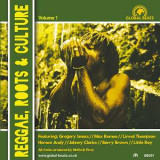
If some of these titles look familiar, it’s because they’re among the most majestic roots and culture songs ever recorded, and by singers whose credentials are beyond question. All tracks feature the original artists and even the actual seventies’ vocal in some cases, but the rhythms have been recreated with today’s sound-systems in mind and are heard at their very best when roaring out of giant speaker boxes, greeted by a forest of raisedhands and with a deejay at the mic.
Producers Mafia & Fluxy include reggae legends Bunny “Striker” Lee and Fat Man among their mentors, and their mastery both in the studio and on stage is unrivalled outside of Jamaica. The way these two brothers play dub will make the hairs on the back of your neck stand up whilst the messages in songs like Every Tongue Shall Tell, Declaration Of Rights, No Peace and Fittest Of The Fittest are relevant as ever but then the music on this album isn’t dated, and is reggae, roots and culture for the ages.
Just in time for the holidays comes a brand new Christmas classic from Academy Award-winning composer Michael Giacchino (Up, Ratatouille & Lost) and if the world ever needed a shot of positivity right now then this is it!
The idea of writing a Christmas single happened whilst hosting a Christmas party with Richard Kind at the Royal Albert Hall in 2019. During that party, they heard a radio announcement regarding a Christmas song competition, and they immediately began trying to
write a song and find someone to sing it! Throughout the party, guests turned up, but no one wanted to sing the song, that is until Himesh Patel and UK band Itchy Teeth knocked on the door and took up the challenge. Himesh was fresh from starring in Danny Boyle’s film Yesterday, and Itchy Teeth were the band that performed with him throughout the movie.
Recalling classic Christmas earworms such as Wings ‘Wonderful Christmastime,” the single is written by Michael Giacchino, Elyssa Samsel and Kate Anderson and performed by Itchy Teeth. The B-side is a beautiful smokey lounge version of Christmas Number One performed by the John Robert Wood Yule Sextet.
The LTD 7’ comes complete with a digital download card and is presented in gatefold Christmas card cover, ready and waiting to be given as a gift and inscribed with your very own holiday greeting.
Let us see 2020 out in a flurry of positivity, optimism and fun, so get ready to be singing this song around the christmas tree this year with all your family (even if that mean doing so on Zoom)
Father John Misty is the nom-de-plume of Josh Tillman, who
has been recording and releasing solo albums under his own
name since 2003 and who recently left Seattle’s Fleet Foxes
after playing drums with them from 2008-2011.
When discussing Father John Misty, Tillman paraphrases Philip
Roth: “‘It’s all of me and none of me, if you can’t see that, you
won’t get it.’”
‘Fear Fun’, Father John Misty’s album from 2012 and now
available again through Sub Pop, began gestating during what
Tillman describes as an “immobilizing period of depression” in
his former Seattle home, when he had lost interest in
songwriting and wound up finding his voice by writing a novel.
After breaking from Seattle and settling in a spider-infested
Laurel Canyon treehouse, Tillman spent months demoing
songs, eventually liberating himself from his creative impasse.
With the help of LA producer/songwriter/pal Jonathan Wilson, a
wealth of talented musicians kicking around LA and producer
Phil Ek (who everyone knows has worked with Built to Spill,
Modest Mouse, Band of Horses, Fleet Foxes), ‘Fear Fun’
blossomed into a fully-formed expression of Tillman’s
unrestrained vision.
‘Fear Fun’ consists of such disparate elements as Waylon
Jennings, Harry Nilsson, Arthur Russell, All Things Must Pass
and Physical Graffiti, often within the same song. Tillman’s
voice has never been better and often sounds like Roy Orbison
at his most joyous, while the music maintains a dark,
mysterious yet playful, almost Dionysian quality.
Lyrically, his absurdist fever dreams of pain and pleasure elicit,
in equal measures, the blunt descriptive power of Bukowski or
Brautigan, the hedonist-philosophy of Oscar Wilde and the
dried-out wit of Loudon Wainwright III.
6-panel digipack CD. Gatefold LP.
Father John Misty is the nom-de-plume of Josh Tillman, who
has been recording and releasing solo albums under his own
name since 2003 and who recently left Seattle’s Fleet Foxes
after playing drums with them from 2008-2011.
When discussing Father John Misty, Tillman paraphrases Philip
Roth: “‘It’s all of me and none of me, if you can’t see that, you
won’t get it.’”
‘Fear Fun’, Father John Misty’s album from 2012 and now
available again through Sub Pop, began gestating during what
Tillman describes as an “immobilizing period of depression” in
his former Seattle home, when he had lost interest in
songwriting and wound up finding his voice by writing a novel.
After breaking from Seattle and settling in a spider-infested
Laurel Canyon treehouse, Tillman spent months demoing
songs, eventually liberating himself from his creative impasse.
With the help of LA producer/songwriter/pal Jonathan Wilson, a
wealth of talented musicians kicking around LA and producer
Phil Ek (who everyone knows has worked with Built to Spill,
Modest Mouse, Band of Horses, Fleet Foxes), ‘Fear Fun’
blossomed into a fully-formed expression of Tillman’s
unrestrained vision.
‘Fear Fun’ consists of such disparate elements as Waylon
Jennings, Harry Nilsson, Arthur Russell, All Things Must Pass
and Physical Graffiti, often within the same song. Tillman’s
voice has never been better and often sounds like Roy Orbison
at his most joyous, while the music maintains a dark,
mysterious yet playful, almost Dionysian quality.
Lyrically, his absurdist fever dreams of pain and pleasure elicit,
in equal measures, the blunt descriptive power of Bukowski or
Brautigan, the hedonist-philosophy of Oscar Wilde and the
dried-out wit of Loudon Wainwright III.
6-panel digipack CD. Gatefold LP.
This is Jack Wilson's debut album as a bandleader, originally released in 1963 for Atlantic label, featuring a young Roy Ayers on vibraphone, bassist Al McKibbons and drummer Nick Martinis. Jack Wilson was a fine and often underrated pianist and composer who played with many great names such as Gene Ammons, Jacki Mclean, Esther Phillips, Lou Rawls, Johnny Griffin, Ertha Kitt, Lambert Hendricks & Ross, Antonio Carlos Jobim... This is a lively studio session opening up with a beautiful rendition of Jobim's classic "Corcovado" and followed by WIlson's five originals. A great debut album full of warm, sophisticated and yet highly dynamic Jazz vibes.
On Wild Pink’s third album (and first for Royal Mountain
Records), ‘A Billion Little Lights’, John Ross explores the
dichotomy of finally achieving emotional security - of
accepting the love and peace he deprived himself of in his
twenties - while also feeling existentially smaller and more
directionless than ever before.
Produced by Grammy-winning producer David Greenbaum
(U2, Beck, Jenny Lewis), the album is a two-pronged
triumph: an extraordinary reflection on the human
condition presented through the sharpest, grandest and
most captivating songs Wild Pink have ever composed.
“A steady and unstoppable rush of grand melodies and
rippling synths” - The FADER
“The Brooklyn band... thrives on a combination of rock
extroversion and frontman John Ross’ hard-won and
tenuous new optimism” - Pitchfork (8.1)
“‘A Billion Little Lights’ is his most ambitious and overall
best work” - Uproxx
“Glimmers like the stars over a vast heartland expanse” -
Stereogum
“Soaring, atmospheric indie rock” - BrooklynVegan
“One of rock’s tiny masterpieces” - Billboard
“Whatever vaguely ‘80s heartland motorik + classic rock
quality has made The War on Drugs an amphitheater
band, Wild Pink has it, too.” - Paste
Online - Features in Pitchfork, NPR All Songs Considered,
Stereogum, The FADER, MTV, Billboard, Paste, Uproxx,
Consequence of Sound, The Line Of Best Fit, BrooklynVegan.
Wild Pink’s last album, 2018’s Yolk In The Fur, concluded with a song about the strange sense of relief that comes with “letting go of youth.” Frontman John Ross, then in his early thirties, was singing from a place of newfound comfort and wisdom, but it ended with a repetition of the line, “I don’t know what happens next.” The song, titled “All Some Frenchman’s Joke”, is a beautifully concise rendering of a universal milestone: leveling up from the wide-eyed naivety and self-destructive routines of our youth, only to realize that we’re as unprepared for the future as we were for the past. On Wild Pink’s third album and first for Royal Mountain Records, A Billion Little Lights, Ross explores that dichotomy of finally achieving emotional security—of accepting the love and peace he deprived himself of in his twenties—while also feeling existentially smaller and more directionless than ever before. The record is a two-pronged triumph: an extraordinary reflection on the human condition presented through the sharpest, grandest, and most captivating songs Wild Pink have ever composed. The band, which is rounded out by bassist T.C. Brownell and drummer Dan Keegan, formed in New York City in 2015 and put out a handful of EP’s before releasing their critically acclaimed self-titled debut in 2017. It was a sophisticated showing for a band’s first album, but it was the striking maturation of Yolk In The Fur that established Wild Pink’s unique sound: a glistening variety of pastoral indie-rock akin to The War On Drugs, Death Cab For Cutie, and Kurt Vile, but informed by classic American rock poets like Bruce Springsteen and Tom Petty.
"Don't Turn Me From Your Door" - John Lee Hooker (g, voc), Earl Hooker, Eddie Kirkland (g), a.o
John Lee Hooker is not only a mystery but also an interesting man to study. Some, like the author Jacques Demêtre called the musician from Mississippi »the most raw and African of all blues players from a musical point of view«, while the critic Net Hentoff was awestruck by Hooker’s unfiltered power of expression that could scare the pants off a listener taken unawares. The numbers on this LP bear witness to the fact that Hooker’s musical language could stir one’s emotions deeply, even without the meaty 'boom boom'. Each title is like a raw diamond, which is intentionally uncut and is to be perceived with directness. With a stutter and a slur in his speech, the singer declaims his song over a twangy guitar, which is driven along by the rhythmic meter. A final farewell is taken sluggishly and sullenly in the forthright text of "You Lost A Good Man", and even a song without words ("Misbelieving Baby") ponders a question in a purely instrumental monologue. Apart from a dash of boogie ("Pouring Down Rain") Hooker avoids all manner of sweet sounds and harmonies. He remains austerely raw, mercilessly honest, occasionally unforgiving and denies all thoughts of any kind regarding going 'back to the roots'. This sound IS the root of it all.
This Speakers Corner LP was remastered using pure analogue components only, from the master tapes through to the cutting head. More information under pure-analogue.
All royalties and mechanical rights have been paid.
Recording: 1953 in Cincinnati (OH) and July 1961 in Miami (FL)
"On Tour" - Delaney Bramlett (g, voc); Bonnie Bramlett, Rita Coolidge (voc); Eric Clapton, Dave Mason (g); Bobby Keys (sax); Jim Price (tb); B. Whitlock (org, voc); Carl Radle (b); Tex Johnson (bgo, cga); Jim Gordon (dr)
This 42-minute-long live album, which was recorded in December 1969 in Croydon, England and was awarded 5 stars by the magazine Rolling Stone, is not only the culmination of Delaney & Bonnie’s creative output, but also marks their connection to the further careers of Eric Clapton and George Harrison. On this particular tour Clapton plays the same mixture of country music, blues and gospel that were to hallmark his own early solo appearances from 1970. He rose to the occasion with consistently brilliant virtuosity; the highlights are a dizzying solo in "I Don’t Want To Discuss It", a lengthy 'Slowhand' passage in "Only You Know And I Know", and a dry fervent introduction to the wonderfully balanced "Coming Home". Vocally Delaney & Bonnie were never better than on this live set, and the 11-piece band sounds musically more close-knit than many a quartet of the times, regardless of whether they are playing a lengthy blues number or a medley of Little Richard songs. It is certainly no coincidence that the band featured here would become Clapton’s own choice for his first solo LP, or that the kernel of this group – Bobby Whitlock, Carl Radle and Jim Gordon – would metamorphose into Derek and the Dominos, or that the bulk of the band would constitute the group that would perform with George Harrison in "All Things Must Pass" and The Concert For Bangladesh, except that their playing (not to mention the recording) is better here. Half the musicians on this record attained near-superstar status less than one year later, and although their fame was fairly short-lived, this is certainly justified, as you will ascertain when you listen to this live performance.
This Speakers Corner LP was remastered using pure analogue components only, from the master tapes through to the cutting head. More information under pure-analogue.
All royalties and mechanical rights have been paid.
Recording: December 1969 live at Fairfield Halls, Croydon (UK), by Andy Johns and Glyn Johns
In 1968 Status Quo’s first hit record “Pictures of Matchstick Men” was released and the debut album soon followed. The single reached #7 in the UK, and remains the band’s only major hit single in the US, where it reached #12. Picturesque Matchstickable Messages from the Status Quo features several covers, including “Green Tambourine” by The Lemon Pipers and “Spicks and Specks” by The Bee Gees.
South London members Alan Lancaster (bass) and Francis Rossi (guitar) were the original members and founders of Status Quo. Formerly known as The Spectres and later renamed to Traffic or Traffic Jam they settled for Status Quo as their band name in 1967. The following years they were joined by John Coghlan (drums), Roy Lynes (keyboard) and Rick Parfitt (guitar).
Nach Crazy Rhythms Of Mata Hari, Shake Your Bones, dem Cool Cat Club und Born To Hula! Folgt nun der 5. Teil der DJ-Set Serie auf Stag-O-Lee. Wie auch bei den Vorgängern handelt es sich hier um einen auf 80 Minuten eingedampftes DJ-Set von einem verdienten Recken der Zunft - Keb Darge. Gaz Mayall folgt direkt mit Volume 6. Linernotes: Rockabilly didn't cross my world until the early nineteen eighties at a Dirtbox weekender in Bournemouth, until then I was a pure northern soul boy. I didn't really get stuck into collecting the stuff until a decade later, but when I did what a wonderful world of tunes opened up to me, and I went wild on it. I was very lucky to be doing a record stall in Camden market at the time just across from Boz Boorer and Neil Scott's stall. They along with other serious collectors Dave Vickers, Barney Koumis, Cosmic Keith, Jim Fox, Dave Crozier, and many others taught me all I needed to know. I only ever made one great rockabilly discovery which none of them knew, "Little Bit Lonesome" by Charles Ross, but I was happy enough buying all their recommendations as they were all new and exciting for me. I have done several rockabilly comps before, but sadly the Philippines typhoon in 2013 destroyed my village and forced me to sell the bulk of my collection. Here are some of my favourites that I never got round to putting out before that happened. Two of the aforementioned collectors are no longer with us. I therefore dedicate this comp to Dave Vickers and Cosmic Keith who both had a huge influence on my life and my musical taste.