Time is Local is a project by Danish collective We like We and sound artist Jacob Kirkegaard built around a 12-hour live sound installation and performance at Thorvaldsen Museum in Copenhagen.
The piece was initiated and performed by the artists during the G((o))ng Tomorrow Festival in 2017. As they slowly wandered the halls and rooms of the museum for a whole day, they performed extended sound compositions for a visiting audience at each of the 12 chambers for a longer session - a haunting experience as the outside world disappeared and the focus was on quiet sonic moments unfolding in midst of the grand, reverberous space. For this album they have collected 12 fragments revolving around the chambers in the museum. Each chamber is being represented by its own handful of tones, instruments and voice. The statues within, depicted by neo-classicist sculptor Bertel Thorvaldsen get their own soundtrack of quiet emanating gusts. Barely heard frequencies reflect through the walls. The marble carved busts of Greek gods that line the museum hallways gaze eternally with a blank stare as decades pass and new audience arrives.
Although We like We should need no introduction to followers of the Sonic Pieces label, the Danish all female sound quartet consists of Katrine Grarup Elbo (violin), Josefine Opsahl (cello), Sara Nigard Rosendal (percussion) and Katinka Fogh Vindelev (voice). Together they have forged a dynamic and intuitional sound beyond genres through the last decade. Only two years ago they released the nordic neo-classical opus Next to the entire All. This time they emerge in collaboration with sound artist Jacob Kirkegaard. Jacob’s works are sonic reflections on complex aspects of the human civilisation, treating themes such as radioactivity, melting ice, border walls and tones emitted by the ears. Through the last decades he has released records and sound documents through labels such as Touch, Important Records and more. As a document of their 12h performance, Time is Local is a beautiful sonic evocation that shines as a bright line of sun through the cracks of a tomb.
Suche:jose m
Secretsundaze welcomes Eliphino to the gala relaunch of their imprint for a thoroughly satisfying mini album of contemplative jacking and dulcet breakbeats.
Eliphino's most recent 'Realistic Sex EP' on the hotly tipped Meda Fury label boasts thunderous breaks, 303s and serious sub-bass pressure which has gained praise from tastemakers such as Jon K, Carista, Josey Rebelle, Moxie and Gilles Peterson.Having flexed with this darker edged EP after a long lay-off from releasing, while sharpening his skills and reconnecting with his musical inspiration, Eliphino is now ready to really cut loose with 'Breaking Up Is Hard' - a statement longplayer that dreamily investigates the dusty spaces between house, breakbeat, ambient, hardcore and acid. Tom This album came about as way of focussing my energy in the wake of a significant break up. I tried to experiment with melody and texture to convey some of the range of emotions that come with such a testing time. That being said, the B-side bangers are more dedicated to abandon and forgetting your worries.
Hailing originally from the Leeds, but with time spent in both London and Berlin, 'Breaking Up Is Hard' lands somewhere between the Hessle Audio crew, Joy O and Selected Ambient Works era Aphex.
Having previously released heaters for Brownswood and Hoya Hoya over the years, Eliphino stepping up for the debut artist LP on the reactivated Secretsundaze label feels like a natural fit as James Priestley explains:
""We've collectively had a connection and friendship with Tom that goes back several years and in fact it was receiving this work as demos that really spurred and inspired us into getting the label rolling again. It feels totally right to be working with him on this and for this mini-LP to herald the relaunch of the label as it moves towards a more artist led as opposed to EP driven approach.
Repress
The fourth output on the imprint GEN X is a various artists EP featuring Remy-X, AADJA, Dave Simon and label owners Deep Dimension.
Featuring four hard-hitting old school ravey cuts with new age soundscapes. Bringing back the energy of the early nineties raves.
Supporting artists:
Marcel Dettmann, Pan-Pot, Ramiro Lopez, VII Circle, Dubfire, Ilario Alicante, Noir, Paco Osuna, Richie Hawtin, Marco Bailey, Endlec, Joseph Capriati, Rebekah, Marco Carola
Apollo are delighted to welcome the return of Australia duo Albrecht
La’Brooy AKA Sean La'Brooy and Alex Albrecht with their blissful new
album 'Healesville' recorded in a mud-brick hut on a strawberry crop
in the Melbourne countryside.
Apollo are delighted to welcome the return of Australia duo Albrecht
La’Brooy AKA Sean La'Brooy and Alex Albrecht with their blissful new
album 'Healesville' recorded in a mud-brick hut on a strawberry crop in the
Melbourne countryside. 'Healesville' follows on from the bucolic wonder of
their Apollo debut 'Tidal River' which took inspiration from the duo's visit to
the beautiful Wilson's Promontory (a remote national park on the South
East coast of Australia). "Late last year, we trekked out to a beautiful mudbrick studio located next to a large strawberry crop in Healesville," Albrecht
explains. "We spent a few days capturing the feeling of the slow-paced,
relaxed surrounds: The wildlife, the strawberry pickers, the sounds of the
night, and improvising a response to them with music we felt suited."
Setting up their favoured musical equipment, which included two pianos, a
Waldorf, a Nord and a clutch of microphones the long-form improvisations
began. "The physical construct of the hut imparted a warm and acoustically
interesting environment to record in," Alex explains. "It also allowed us to be
as close to the strawberry crop itself - we positioned a mic out the window
to capture the recordings of the sound outside. During one of the sessions,
a harvest was taking place, and you can hear tractors passing and workers
talking and laughing in the recording. The resulting drowsy pieces were
completely improvised (augmented by percussionist Joseph Batrouney,
guitarist Carla Oliver (Badskin) and guitarist Oliver Patterson), freeform
recordings that explores themes of relaxation, sleep and dreams;
somnambulant piano figures are caressed with delicate guitar passages
bathed in the bucolic field recordings of the Healesville environs. Recording
the album proved to be as relaxing and civilised a process as listening to it:
"We cooked nice dinners, enjoyed good wines, and took plenty of walks
through the landscape to break up the sessions," Alex shares. The resulting
record is one of quietly sozzled majesty - a delicate fusion of ambient
electronic textures, live instrumentation and field recordings that beguiles
and soothes the listener in these troubled times. — Recorded live at Earth
Mud Straw in Healesville by Alex Albrecht and Sean La'Brooy. Guitar by
Oliver Paterson and Carla Oliver (Badskin), Percussion/FXs by Joseph
Batrouney. Mastered by Corey Kikos. Thanks to Sabbine, Boomtown wines
and the strawberry pickers in Healesville.
- A1: Episode 1
- B1: Episode 1
- C1: Episode 2
- D1: Episode 3
- E1: Episode 4
- F1: Episode 5
- G1: Episode 6A
- H1: Episode 6B
“He is Nigh.”
“He is? Already? How??”
When Aziraphale (Angel and part-time rare book dealer) and Crowley (an Angel who didn’t so
much Fall as Saunter Vaguely Downwards) learn that the Antichrist has been born on present day
Earth, they agree to work together to prevent the End of Days. Eleven years later, all bets are off
when innocent Adam Young discovers he has the power to bring about Armageddon. As the stage
is set for a showdown between the forces of Good and Evil, the prophecies of Agnes Nutter,
Witch may yet come true…
For the first time ever on vinyl, Good Omens is adapted and co-directed for BBC Radio 4 by the
award-winning Dirk Maggs (The Hitchhiker’s Guide to the Galaxy; Neverwhere; Stardust; Anansi
Boys; The X-Files; Alien; Batman; Superman). It is based on the novel by Neil Gaiman and Terry
Pratchett, now the basis for a major Amazon Prime TV series premiering in Summer 2019.
Starring Mark Heap as Aziraphale and Peter Serafinowicz as Crowley, with Josie Lawrence as
Agnes Nutter, Colin Morgan as Newton Pulsifier and Charlotte Richie as Anathema Device, the
cast also includes Phil Davis, Harry Lloyd, Paterson Joseph, Rachael Stirling, Jim Norton, Nicholas
Briggs, Neil Maskell, Steve Toussaint, Simon Jones, Julia Deakin, Mitch Benn, Louise Brealey, Mark
Benton and many more including cameo appearances by Neil Gaiman and Terry Pratchett.
The unique four 180g heavyweight heaven and hell split black and white vinyl — includes a laser
etched Side B — are presented in illustrated wallets inside a rigid, bound 16 page book, with
exclusive sleeve notes written by Neil Gaiman and Dirk Maggs.
“Heaven and Hell are preparing for war, and it’s going to be very messy.”
- A1: Why Am I A Rastaman
- A2: Revolution
- A3: Going Home
- A4: Rolling Stone
- A5: Humble African
- A6: Where Is The Love Feat. Marcia Griffiths
- A7: Poverty
- B1: Too Much Ginals
- B2: Never Give Up
- B3: Weeping
- B4: It's Hard To Live
- B5: Fishes & Fry
- B6: Home Grown Feat. Morgan Heritage
- B7: Poor People Hungry Feat. Tony Rebel
Wiederveröffentlichung des Albums aus dem Jahr 2000! - "Humble African" ist für viele Experten der beste Longplayer, den Roots-Ikone Culture aka Joseph Hill in den 90er & Nuller Jahren veröffentlicht hat. Mit den Gästen Marcia Griffiths, Morgan Heritage und Tony Rebel sowie einer starken Besetzung an Musikern als Rhythmusgruppe mit kompletten Bläsersatz von Dean Fraser (Saxophon), Chico Chin (Trompete) und Nambo Robinson (Posaune). Am Mischpult saßen bei der Aufnahme die Toningenieure Errol Brown und Shane Brown, den finalen Mix übernahm Stephen Stanley unter der Federführung des Produzentenduos Lynford "Fatta" Marshall & Collin "Bulby" York aka Fat Eyes Team.
Having broken a decade's silence with 2016's 'System', LA-based electronic musician Joseph Fraioli, a.k.a. Datach’i, returns this summer with his eighth album 'Bones'.
Released on Venetian Snares' Timesig imprint, 'Bones' features 12 tracks of mind expanding electronica, once again recorded on his custom-built Eurorack modular system. Much like its predecessor, 'Bones' manages to make the most of the possibilities modular systems offer, whilst avoiding their many pitfalls that can often turn such music into little more than a dry academic exercise. Indeed 'Bones' is a remarkably intimate album, written and recorded in the time following his father's death, and reflects this intense period of personal change in Joseph's life.
"Creating this music was a therapy of sorts," Joseph recalls. "It was almost like a close friend being there for me, and it's something that I hope others can perhaps utilize in the same way."
The connection to his father is something that is reflected not just in the emotional intensity of 'Bones', but in the actual production itself. "My father and I were very close," he explains. "Whilst he was sick with cancer I bought him a guitar as he wanted to learn how to play, just to have something to do while he was getting treated. After he passed away my mother gave me the guitar to have as a sort of memory of him. I had the idea to record some sounds and music on the guitar and load it onto granular sample players on the modular synth so I could make new music from those sounds as a sort of tribute to my dad. You can hear some of those sounds on a few of the tracks here like 'Arrivals', 'Motion in the Living Room' and 'Undimension'."
The resulting album grapples with the intensity of these emotions. But for all their weight, tracks like 'Saugerties Road', ‘Rockledge 3A’ and ‘Antumalal’ transform that heaviness into something warm and comforting whilst the aforementioned 'Arrivals' or ‘Wand’ ultimately achieve some kind of escape velocity and soar. Even though 'Bones' is about endings and finding closure, it also looks forward to new beginnings.
"It was something very much on my mind throughout recording this album," he relates, "ends being beginnings and beginnings being the end. Cycles of time and how time works, it's all reflected throughout the album right down to how the tracks are ordered."
Ranging from blissful ambience and guileless, starry eyed melodies, to intricate claustrophobic rhythms that forever sound close to collapsing in on themselves before expanding into bold new patterns, 'Bones' is the work of a producer who, twenty years on from his debut, continues to push the boundaries of electronic music.
Like many Canadians, Joseph Shabason and Ben Gunning like to untangle themselves from urbanity and disappear up north a few times a year. Unlike other cottage-goers, Ben and Joseph don’t while away the ur-time on jet-skis and lounge on docks reading pulpy mysteries. Instead, they bring a car full of synths, drum machines, saxophones, guitars, samplers, effects, and recording equipment to jam the days away in a cabin-fever inducing haze of wood smoke, cedar musk, hot wires and jazz sweat.
Muldrew, recorded on the northern Ontario lake by that name, is the culmination of several years of this collaborative tradition. Resisting their penchant for composition and arrangement, the duo embarked on this project with only an open framework that encouraged restraint. The result is a sparse and improvisational album, hung on enough structure for each song to evoke a distinct, albeit ambiguous mood. Space is paramount and even the most digital elements breathe with the resonance of the room and mingle with creaking floors. The resulting album is steeped in the placid stillness and northern ambience of a lake at dawn, and the emotive expanse of a forest at dusk. Imagine an ECM cottage-series, or Jon Hassell and John Martyn scoring a Bela Tarr film set in rural Canada. This is the future-proof music of metropolitan polyglot minds invigorated by nature’s mute refusal to follow a click-track.
DMM Pressing. Limited Edition of 500.
Known as the Queen of Morna, Cesária Évora brought the traditional music of Cape Verde to international recognition and became recognised as one of world music's great female voices. Raised in an orphanage, Évora started singing as 16-year-old in the bars and sailor taverns of the West African island and sang on cruise ships before performing in Portugal at the invitation of Cape Verdean singer Bana. After being discovered by Portuguese producer Jose Da Silva she went to Paris becoming a serious global star. . Madonna asked her to perform at her wedding and again for her birthday, but Evora turned her down both times
Influenced by Brazilian rhythms, creole flamboyance and the heartworn sadness of the blues, the "barefoot diva" was compared to Billie Holiday and found great acclaim in). A heavy drinker and smoker, Évora's romantic, humble visions of Africa led to a Grammy Award for Voz d'Amor (2003), but ill-health forced her retirement in 2010 and she died - aged 70
The Barefoot Diva, and she continued to always perform without shoes on, proudly proclaiming her humble roots. She is also remembered for her stage appearance, always modestly dressed, with a bottle of Cognac on stage and a cigarette in her mouth.
Cesaria Evora is the world's foremost singer of the morna, the indigenous style of Africa's Cape Verde Islands. The morna evolved as a hybrid of Portuguese fados, British sea shanties, and African rhythm, reflecting the island's history as a Portuguese colony and spot for British coal mining. Some say it was also influenced by the modinha, a Brazilian song form. Full of mournful melodies and slow tempos, Evora's music encapsulates the essence of the morna in its sadness, longing, and nostalgia.
SN Variations is pleased to announce its 5th release.Adrian Corker returns after a break living in Warsaw with two tracks composed for Lock Grooves recorded onto acetate,percussion by Sam Wilson(Riot Ensemble/Actress) and violin performed by Aisha Orazbayeva.The tracks also feature the piano of Mark Knoop and the voice of Josephine Stephenson.
A lock groove is one cycle of one groove on a record.This is 1.8 sec cut at 33RPM and 1.33 cut at 45RPM.Having used lock grooves on film scores for British film Waiting for You and The Have Nots directed by Florian Hoffmeister, Corker wanted to explore their potential further in a standalone more percussive release. He used the cutting lathe currently residing in the living room of The Exchange mastering legend Graeme Durham to experiment with different sounds cut onto acetate and then recorded over different durations back into a computer. These are combined forming frames for performances of violin, percussion and piano.
The record will be released on a vinyl pressing of 250 copies and download on July 5th
Four years on from his release on TIMEDANCE002 as L.SAE, Joseph Higgins is back on the label under his flagship moniker Metrist. Pollen Pt. I is the first part of a trilogy of records, showcasing Metrist's latest developments in twisted beat-science.
The release combines four tracks of rudeboi electro swagger, offkilter vocal chops and imaginative grooves.
Since his L.SAE record in 2015 Metrist has released on Where To Now?, Neighborhood and a LP Opal Tapes, here he refines his sound palette even further, striking a unique balance between the avant-garde and dancefloor.
L’Illustration Musicale, Sonimage, Técipress-In Editions (Timing), Musax, Freesound,
Montparnasse 2000 in France but also De Wolfe and Chappell in England, every of these
sound illustration labels have in common to bring out as a legendary spectre the name of Jacky
Giordano and his aliases. Widespread practice in the library music world, Joachim Sherylee,
chosen for the In Motion album, is one of his plentiful aliases (with José Pharos, Jacky
Nodaro, Gruppo Sounds, Rubba...) used by the french composer, that we regain as well for
Black Devil with Bernard Fèvre or even for the Shifters with Yan Tregger.
For his enthronement on the mythical English label De Wolfe, it's under the obscure name of
the Rubba collective that Jacky Giordano aka Joachim Sherylee sneaked in the londonian De
Wolfe studios with the companionship of British colleagues such as John Hyde (aka John
Saunders, James Harrington, Astral sounds or even Wozo) and his wife Monice Hyde (aka
Monica Beale), Alan Howe (aka John Collins), Robert Poole and Tim Broughton.
Published in 1980, the In Motion: Modern Progressive Group Sounds Played By Rubba LP
and its minimalistic and utilitarian red record cover which contains 13 tracks, mainly composed
by Joachim "Giordano" Sherylee and was never reissued since then. This record became cult
over time; it will have taken that the Hip-Hop world seizes it in order to dig out from the
disregarded and underestimated musical gems graveyard. First of all with beatmaker Madlib
and Freddie Gibbs in 2011 with the track “Thuggin'”, in which he sampled the track “Way Star”,
also used more recently by Mil and the rapper Westside Gunn on his track “Brains Flew” by
(1964 Version).
Nearly 40 years after, the Farfalla Records label, after publishing Timing Archives, presents
another aspect more progressive and psychedelic of the multi-faceted composer Jacky
Giordano by fully reissuing at last this coveted, mysterious and mesmerizing "Rubba". Very
desired by crate-diggers, In Motion appears in the want-list of plenty enthusiasts in this
enigmatic world of the library music. (Erwann Pacaud)
LillyGood Party! is back with their 5th release of their official and fully licenced Edits.We are very happy to bring some jazz and some south African vibes to our serie of our extended versions.Those tracks have already been tested and played in clubs at our parties or parties worldwide and those ones are sunny, groovy and club ready for the spring and summer vibes coming. Full of joy and energy, those two bulletsare just perfect for those who love music and mix various styles in their dj sets.On the A side Alex Edit is a long road to freedom like the title says. Co written by Airto and José Neto this longer version of this south African fast afro latin number is infectious with a deep slow beginning going into a fast and crazy ride mixing percussions, great bassline and live music to make people dance and sweat with a big smile on the face.On the B side the Attias brothers Edit with added overdubs sounds bigger and phatter than the original version to be played in a dj set. A sort of deep jazz slow house jam for early or late play . A jazz groove with percussions and great Byron Wallen musicians and singer re fixed for you . Don't sleep its limited and never came out this way J
- A1: Tomás Tello - Valle Interandino (Peru)
- A2: Wellman – Cumbianchina (Argentina)
- A3: Joa Joys – Nadando (Argentina)
- A4: Horacio – Chacbril (Argentina)
- A5: Simón Vs Saimon - Amor10 (Peru)
- A6: M3Y – Aguas (Argentina)
- B1: Manrico Montero - Canto Interandino (Mexico)
- B2: Gil Sanson - Interludio Con Mbira (Venezuela)
- B3: Pandelindio - La Fuerza Domesticadora De Lo Pequeño (Argentina)
- B4: Gustavo Obligado - Gaoh El Gigante (Argentina)
- B5: Ciudad Satélite - Los Muertos De Siempre (Bolivia)
- B6: José Soberanes – Sus (Mexico)
La Danza del Agua" (The Dance of Water) is an eclectic musical journey through Latin American experimentalism - a sort of unofficial companion to the Anthologies of Atypical Portuguese Music volumes but focussing on South American music themes instead.
Originally released as two volumes on digital and tape versions on Papaki Records (2017, Argentina), this new concise edition presents 12 of the original 38 artists. Not to be seen as exhaustive document representing the wide styles of the even wider continent, it hopes to showcase some of its more marginal music with artists from a variety of countries such as Argentina, Mexico, Peru, Bolivia & Venezuela.
As such, this compilation shines a wider light on new and exciting sounds from the vast continent with a wide range of styles such as digital cumbias, sound experimentation, freak folk, noise, exotica, danceable beats and much more, mixed together to give life to the continuing strange world of contemporary South American experimental music.
A logical continuation of our New Weird South American explorations after releasing works from Meridian Brothers, Romperayo, Chupame El Dedo and a tape batch on Sucata sister label featuring Panchasila, Los Siquicos Litoraleños, Bardo Todol, Tomás Tello and more.
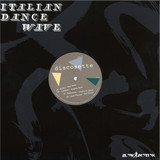
Summer is coming sooner this year, and you can tell from the heat of the two latest releases from Slow Motion: yes ladies and gents, Italian Dance Wave Compilations are back! The first of the two, “Italian Dance Wave Disco Sette”, is here to delight you: starting from a half Italo and half Asian influenced Altieri track, killing it with a dancefloor belter that will make you sweat the night away, raving sensations guaranteed. Lukebox (Fabrizio Mammarella and Umberto Saba from the duo Loudtone) will serve you a slightly more downtempo, modular, weirdo beast that will make your head bang without you even notice: banger. Back on your turntables, is also Robotalco who is providing some proto-house extravaganza and adding some charme to the dirty, chunky beats of the compilation. Last but not least, José Manuel, delivering a touch of biting deep house and electro tribal feels to close the gap, and make us scream “hell yes”.
Celebrating its 25th anniversary, Far Out Recordings proudly presents two albums of previously unheard Azymuth demo recordings from 1973-75
Since their debut album release in 1975, Azymuth have risen to rank alongside the world’s greatest jazz, funk and fusion artists. As young men in Rio de Janeiro, they stood out for both their exceptional talent as musicians, and their wild rock ‘n’ roll antics in the predominantly middle-class worlds of bossa nova and jazz. Their signature ‘Samba Doido’ (crazy samba) sound ruptured the tried and tested musical structures of the day, resulting in what can only be described as an electric, psychedelic, samba jazz-funk hybrid.
Before they became Azymuth, José Roberto Bertrami (keyboards), Ivan ‘Mamão’ Conti (drums), Alex Malheiros (bass) and Ariovaldo Contesini (percussion) played backing band to just about every major artist in Brazil. Bertrami was also contracted as an arranger and songwriter at some the biggest labels of the era: Polydor, Philips, Som Livre, and EMI being just a few. Azymuth’s name can be found on record sleeves by the likes of Jorge Ben, Elis Regina, Marcos Valle, Ana Mazzotti and countless others. But at the dawn of the seventies, fascinated by developments in improvisational music - from jazz in the US, to progressive rock in the UK and of course samba, bossa and tropicália on home turf - the energetic young group were inspired and ready to move forward. Any spare moment in which they weren’t in sessions and writing music for other artists, they would be carving out their own sound.
These previously unheard recordings took place between 1973-75 at Bertrami’s home studio in the Laranjeiras district of Rio de Janeiro. At the time of recording, there was nothing in Brazil, less the world that sounded anything like them, so perhaps it’s unsurprising that when Bertrami presented his demos to the record companies he had been working for, he was turned away, and told in effect that the music was ‘wrong’.
One of the demos ‘Manhã’ would be picked up by Som Livre and Azymuth released their seminal debut album in 1975. Throughout the late seventies and eighties, the group released a series of now classic albums for Milestone Records, before taking an indefinite hiatus to pursue their individual careers.
When English producers Joe Davis and Roc Hunter arrived in Brazil in 1994 to record the first Azymuth album in over a decade, Bertrami dug out the demos which had sat virtually untouched for over twenty years. Joe recalls how he was “blown away by the freedom and intensity of the music, as well as the genius of the ideas musically.” Beginning a long and fruitful relationship, ‘Prefacio’ would be the first track Azymuth recorded for Far Out Recordings and was released on the Carnival album (1996).
Along with ‘Manhã’ and ‘Prefacio’, only a handful of these demos were ever professionally recorded and released, making this the first opportunity to hear many of these early Azymuth compositions in their raw, original form.
On every track the frenetic energy in the studio is palpable, giving the recordings a beautifully personal feel and a sense of the phenomenally creative vision Bertrami, Malheiros and Conti were realising at the time. Fifty years on, Azymuth’s earliest recorded music retains an ineffable, futuristic quality, standing amongst their most captivating and moving work.
Credits:
Keyboards: José Roberto Bertrami (Mini Moog Series One, Arp Omni, Arp 2600, Arp Solina Strings, Fender Rhodes 88, Hammond B3 with box speaker, Clavinet with Wah Wah)
Drums: Ivan ‘Mamão’ Conti
Bass: Alex Malheiros
Percussion: Ariovaldo Contesini
Produced by Azymuth and Jose Roberto Bertrami
Recorded at José Roberto Bertrami’s home studio in Laranjeiras, Rio De Janeiro, Brazil between 1973–1975.
Issue and project co-ordinator: Joe Davis
Tape transfers by Roc Hunter (thanks to Simon Hitner)
Mastered by Daniel Maunick at the Sugar Shack, Lanark, Scotland
Mastered by Frank at Carvery Cuts
All tracks published by Far Out Music Publishing/Westbury Music LTD
Celebrating its 25th anniversary, Far Out Recordings proudly presents two albums of previously unheard Azymuth demo recordings from 1973-75
Since their debut album release in 1975, Azymuth have risen to rank alongside the world’s greatest jazz, funk and fusion artists. As young men in Rio de Janeiro, they stood out for both their exceptional talent as musicians, and their wild rock ‘n’ roll antics in the predominantly middle-class worlds of bossa nova and jazz. Their signature ‘Samba Doido’ (crazy samba) sound ruptured the tried and tested musical structures of the day, resulting in what can only be described as an electric, psychedelic, samba jazz-funk hybrid.
Before they became Azymuth, José Roberto Bertrami (keyboards), Ivan ‘Mamão’ Conti (drums), Alex Malheiros (bass) and Ariovaldo Contesini (percussion) played backing band to just about every major artist in Brazil. Bertrami was also contracted as an arranger and songwriter at some the biggest labels of the era: Polydor, Philips, Som Livre, and EMI being just a few. Azymuth’s name can be found on record sleeves by the likes of Jorge Ben, Elis Regina, Marcos Valle, Ana Mazzotti and countless others. But at the dawn of the seventies, fascinated by developments in improvisational music - from jazz in the US, to progressive rock in the UK and of course samba, bossa and tropicália on home turf - the energetic young group were inspired and ready to move forward. Any spare moment in which they weren’t in sessions and writing music for other artists, they would be carving out their own sound.
These previously unheard recordings took place between 1973-75 at Bertrami’s home studio in the Laranjeiras district of Rio de Janeiro. At the time of recording, there was nothing in Brazil, less the world that sounded anything like them, so perhaps it’s unsurprising that when Bertrami presented his demos to the record companies he had been working for, he was turned away, and told in effect that the music was ‘wrong’.
One of the demos ‘Manhã’ would be picked up by Som Livre and Azymuth released their seminal debut album in 1975. Throughout the late seventies and eighties, the group released a series of now classic albums for Milestone Records, before taking an indefinite hiatus to pursue their individual careers.
When English producers Joe Davis and Roc Hunter arrived in Brazil in 1994 to record the first Azymuth album in over a decade, Bertrami dug out the demos which had sat virtually untouched for over twenty years. Joe recalls how he was “blown away by the freedom and intensity of the music, as well as the genius of the ideas musically.” Beginning a long and fruitful relationship, ‘Prefacio’ would be the first track Azymuth recorded for Far Out Recordings and was released on the Carnival album (1996).
Along with ‘Manhã’ and ‘Prefacio’, only a handful of these demos were ever professionally recorded and released, making this the first opportunity to hear many of these early Azymuth compositions in their raw, original form.
On every track the frenetic energy in the studio is palpable, giving the recordings a beautifully personal feel and a sense of the phenomenally creative vision Bertrami, Malheiros and Conti were realising at the time. Fifty years on, Azymuth’s earliest recorded music retains an ineffable, futuristic quality, standing amongst their most captivating and moving work.
Credits:
Keyboards: José Roberto Bertrami (Mini Moog Series One, Arp Omni, Arp 2600, Arp Solina Strings, Fender Rhodes 88, Hammond B3 with box speaker, Clavinet with Wah Wah)
Drums: Ivan ‘Mamão’ Conti
Bass: Alex Malheiros
Percussion: Ariovaldo Contesini
Produced by Azymuth and Jose Roberto Bertrami
Recorded at José Roberto Bertrami’s home studio in Laranjeiras, Rio De Janeiro, Brazil between 1973–1975.
Issue and project co-ordinator: Joe Davis
Tape transfers by Roc Hunter (thanks to Simon Hitner)
Mastered by Daniel Maunick at the Sugar Shack, Lanark, Scotland
Mastered by Frank at Carvery Cuts
All tracks published by Far Out Music Publishing/Westbury Music LTD
* MIRAGES is the brainchild of Jean-Benoît Dunckel(AIR) and Jonathan Fitoussi.
* Spawning from Xavier Veilhan’s Studio Venezia at the 57th Venice Biennale and completing in Jean-Benoit’s studio in Paris.
* Collaboration between Jean-Benoit (AIR) and Jonathan Fitoussi.
* 12″ 180g heavyweight clear vinyl
* White printed artwork by Jean-Philippe Talaga
* Photos by Diane Arques
* Ltd Ed. of 500
“Synthesizers amassed through the years, which on this album, conceived with precision and care over the course of one year, reveal their essence –and more importantly, their soul, going from very cinematographic parts to very direct others. Between start and finish, a singular floating and inventive pop music unfolds. An upgraded form of instrumental electronic music, that takes the listener very far, and very high, perfectly mixing both musicians world, like fruitful pictures arisen from a desert that forgot to be arid. Their mirages are inventive, their mirages are fertile.” Joseph Ghosn
Alt-rock icon Josephine Wiggs is best known as bassist in The Breeders, rising to superstardom in the '90s and continuing to draw crowds and critical acclaim in the wake of their 2018 album All Nerve.
But over the years, Wiggs has released several of her own albums, all of which delightfully defy genre. Her new solo record, We Fall, is both a departure and a distillation of an enduring personal aesthetic: moody and spare but also melodic, at once contemporary and nostalgic.
Some influences are clear: We Fall is reminiscent of the experimentalism of Brian Eno's Another Green World and recalls the delicate, languid minimalism of Harold Budd. The album's classical inflections, sharpened by a dialog with electronic elements, evoke Alva Noto and Ryuichi Sakamoto. This is an album of juxtapositions: minimalist at moments, richly layered in others; ambient while also sharply focused; melancholy yet resolute.
There's something both dreamy and scientific about We Fall. Wiggs, an enthusiastic amateur mycologist, has an impressive collection of mushrooms she's photographed in her travels. We Fall could be the soundtrack to what can't be captured in a single photo—the growth and decay of miraculous creatures that a less astute and sensitive eye might overlook entirely.
Composed, performed and recorded by Wiggs, with drums and electronics by her longtime friend and collaborator Jon Mattock (Spacemen 3, Spirit , We Fall is a lyrical, bucolic album with an undercurrent of disquiet. Think of a wintertime walk in the woods as dusk falls too soon. True to the classic album form, the 10 almost entirely instrumental tracks on We Fall form a compelling whole: a crystalline meditation on paths not taken and words unspoken, an elegy for moments lost and last embraces.
JOSEPHINE WIGGS BIO
Josephine Wiggs grew up in an unconventional family north of London. Returning home from a summer holiday with a donkey riding in the back of the family's 1927 Rolls Royce was not considered at all bizarre. Wiggs studied cello as a child, segued from college in London to undertake a master's degree in Philosophy, and then, in a move few would have predicted, joined a rock band.
After making three albums with The Perfect Disaster (1987-1990), Wiggs left to join Kim Deal (Pixies), Tanya Donelly (Throwing Muses), and Britt Walford (Slint) in forming indie supergroup The Breeders, whose debut album Pod came out in 1990. Following a shift in line-up—with Kelley Deal on guitar and new drummer Jim Macpherson—The Breeders released Last Splash in 1993; with its hit single 'Cannonball' and 'Divine Hammer,' they became alternative rock superstars.
During the same period, Wiggs released two lower-key albums with Jon Mattock (Spacemen 3, Spiritualized): Nude Nudes (1992) under the name Honey Tongue, and Bon Bon Lifestyle (1996) using the moniker The Josephine Wiggs Experience. She also recorded and produced Klassics with a K (1996), the beloved and only album by the Kostars (Luscious Jackson's Jill Cunniff and Vivian Trimble). During a brief run of shows, Wiggs joined the band on drums, showing her range of musical ability.
In the late '90s Wiggs collaborated with Vivian Trimble as Dusty Trails, whose eponymous 2000 album is an homage to neo-noir soundtracks, spaghetti westerns, and Gallic pop. Time Out described it as 'one of the most subtly suggestive, understatedly elegant...things likely to have caressed your cochlea in years.'
Allusions in Dusty Trails to film music foreshadowed the next stage of Wiggs's career, writing scores for feature and documentary films—from Happy Accidents by Brad Anderson in 1999 to Appropriate Behaviour by Desiree Akhavan in 2014. Her new album We Fall began as a suite of short pieces for the documentary film Built on Narrow Land. Wiggs has also composed and recorded music to accompany live performance and short films by the acclaimed Brazilian choreographers chameckilerner.
In 2013, following the 20th anniversary of Last Splash, the classic lineup of The Breeders reunited for a world tour. Five years later in 2018 they released All Nerve, with Wiggs co-writing two songs and singing lead on the standout track 'Metagoth.' We Fall, Josephine Wiggs' third album of her own design and ninth album in a career spanning three decades, will be released on vinyl and available for download and streaming on April 12, 2019 by Sound of Sinners.