Cerca:journalist

Generi
Tutto
Pan Thorarensen - Ljóstillífun LP

Album was released in three versions: classic with black vinyl, limited edition with solid green vinyl (hand numbered 100 copies) and special Japan edition (with OBI and transparent green vinyl). All versions have 180g vinyl.

Ljóstillífun is the latest album by musician/sound artist Pan Thorarensen. The album is inspired by Iceland's flóra, its plant kingdom, and the country's mysterious natural landscapes. The title, Ljóstillífun, translates to Photosynthesis in English.

Pan extensively incorporated field recordings of nature using specialized microphones during the album's production. He combined these with various handcrafted electronic instruments, synthesizers, and sound design techniques to create a truly unique sonic environment.

"The music will guide the listener into a meditative state, immersing them in Iceland's flóra, stillness, and the breathtaking beauty of its nature."

For this project, Pan collaborated with several esteemed artists, including:
• Italian composer and guitarist Eraldo Bernocchi
• Venetian ambient producer and composer Gigi Masin
• Portland-based sound designer and field recordist Patricia Wolf
• Japanese ambient artist Moshimoss
• Berlin-based Japanese violinist Hoshiko Yamane (Tangerine Dream)

Beyond his solo work, Pan has composed music for short films and documentaries and has released numerous albums under various stage names. One of his projects is the ambient trio Stereo Hypnosis, in which he collaborates with his father, Óskar Thorarensen, and composer/guitarist Þorkell Atlason.

For the past 16 years, Pan has traveled the world exhibiting his art and performing at numerous music festivals. Throughout these journeys, he has formed deep connections with musicians, visual artists, agents, journalists, and event organizers.

A key figure in Iceland's electronic music scene, Pan is widely respected for his artistic contributions. Fifteen years ago, he founded and has since organized Extreme Chill, an annual electronic music festival that attracts both local and international electronic music enthusiasts, drawing them into the ethereal embrace of Iceland's natural beauty.


The album is released by the renowned Polish independent label U Know Me Records, which celebrates its 15th anniversary this year. After more than 125 releases this is the very first one without Polish artists involved in the recordings. UKM starts a new chapter...

pre-ordina ora16.05.2025

dovrebbe essere pubblicato su 16.05.2025

33,57
Jan Akkerman - North Sea Jazz Concert Series
  • Tranquilizer
  • You Do Something To Me
  • Pietons
  • Streetwalker
  • The Zebrah

Jan Akkerman (b. 1946) stands apart as a singular figure in the realm of rock and beyond. A Dutch guitarist of unparalleled versatility, he earned international acclaim in 1973 when he topped the prestigious Melody Maker readers’ poll, surpassing icons like Eric Clapton (2nd), Jimmy Page (5th), and Carlos Santana (10th). His fame, however, has never defined his artistry. For Akkerman, it’s always been about the music—any genre, as long as it resonates. He’s a lifelong improviser who approaches each performance as a new adventure. Akkerman first rose to prominence with Focus, a band that embodied the grandiose instrumental rock spirit of the 1970s. Long compositions, dazzling technique, and adventurous arrangements made them a cornerstone of progressive rock. Despite the accolades, Akkerman remained true to his calling. When asked about his success, he has always brushed it aside, preferring to let his guitar do the talking. Side 1 of this record captures Akkerman’s stunning performance on July 10, 2011, at the Nile Hall in Rotterdam. Here, he showcases his ability to take listeners on a sonic journey. The mellow “Tranquilizer” offers a relaxed groove, followed by the heartfelt ballad “You Do Something to Me,” unfolding emotion without words. In “Piétons”—a gospel-tinged blues—trumpeter Eric Vloeimans delivers a fiery solo before the leader propels the piece into uncharted territory. Side 2 brings us back to an earlier moment, recorded in July 2005 at the Paul Acket Paviljoen in The Hague. “Streetwalker” delivers a funk-driven explosion featuring alto saxophonist Benjamin Herman, while “The Zebrah” sends Vloeimans soaring into the musical stratosphere, only to have Akkerman reignite the piece with blistering guitar lines, his band driving forward like a well-tuned Mercedes on an open highway. Akkerman’s live performances are as unpredictable as they are electrifying. Whether sharing the stage with legends or newcomers, his spontaneous creativity makes every concert unique—a master class in musical freedom. Jan Akkerman remains a touchstone for guitarists and fans alike, an authentic improviser whose name still elicits one universal response from any seasoned Dutch rock enthusiast: “He’s the best guitarist in the world.” The North Sea Jazz Concert Series includes officially licensed releases that will be released as standard on 180-gram white vinyl in a sleeve of heavy paper and printed on reversed board. The records are captured in mainly black-and-white artwork by Hans Pol in his signature style of the festival with inspiration from the covers of classic older jazz releases from the Blue Note label, for example. The liner notes are written by journalist and jazz expert Jeroen de Valk. For all recordings it’s a first time ever release on vinyl!

pre-ordina ora25.04.2025

dovrebbe essere pubblicato su 25.04.2025

27,94
THE SEX ORGANS - INTERGALACTIC SEX TOURISTS
  • Foreplay
  • Outer Space
  • Tonight
  • Lubricaton
  • Camel Toe Twist
  • Drowning
  • I Wanna Be A Pussy
  • Itch
  • Orgasms
  • Earth Blues
  • Fuck Off

Vinyl-Reissue des Sex-Organs Debut! Mit DLC und Insert! PURE & DIRTY SEX'N'ROLL + DIRTY GARAGE FROM OUTER SPACE GESPIELT VON ZWEI GENITALIEN! THIS IS NOT ONLY A RECORD - IT'S A WHOLE RADIO PLAY !!! THE SEX ORGANS durchquerten mutig und zielorientiert zigtausend Lichtjahre, um als intergalaktische Sex-Touristen auf unserem Planeten Erde zu landen und ihre Mission SEX & ROLL unter die Menschen zu bringen! Primitive anarchische Schlagzeug-Beats gepaart mit schreienden verzerrten Gitarren und schamlosen Texten! Dafür haben sie sich als erstes mit ihrem Raumschiff nach Italien ins OUTSIDE INSIDE Studio gebeamt und kurzerhand den famosen Produzenten Matt Bordin genötigt ein Meisterwerk aufzunehmen. Um die Weltherrschaft zu erlangen sind sie damit sogleich in die Schweiz ins VOODOO RHYTHM RECORDS Headquarter gepilgert, wo sie Beat- Man verführt und entführt haben, damit dieser mit seinen internationalen Vertriebszweigen den ganzen Globus mit diesem musikalischen Höhepunkt infiziert. Ein bekannter Journalist, der lieber nicht genannt werden wiil, hat dieses XXL-Genitalien-Duo auf einer ihrer orgastischen Welt-Tourneen begleitet und auf Tonband festgehalten, was die Welt zu dieser Sex-Invasion zu sagen hat... zu hören auf diesem Album! Futuristic Primitive Rock n' Roll Trash Garage Science Mono as Fuck !!!

pre-ordina ora18.04.2025

dovrebbe essere pubblicato su 18.04.2025

18,70
Angel - Angel

Angel

Angel

12inchDEKO11601
Deko Entertainment
18.04.2025
  • Tower
  • Long Time
  • Rock & Rollers
  • Broken Dream
  • Mariner
  • Sunday Morning
  • On & On
  • Angel (Theme)

For Fans of, KISS, Starz, Angel, and 70’s classic rock! Employing a dazzling mix of glam rock, hard rock, and progressive rock, Angel's outrageous, white-satin-heavy image and equally over-the-top stage shows, making them one of the more colourful arena rock bands of the mid-'70s and early '80s. Discovered by KISS bass player, Gene Simmons, the group issued their eponymous debut album in 1975, which hewed closer to prog rock than the glam pop that would inform future endeavours like On Earth as It Is in Heaven(1977) and Sinful(1979). The group released a total of 5 studio albums and 1 live album before going their separate ways in 1981.Formed in Washington, D.C., the group's self-titled 1975debut was recorded for the flamboyant Casablanca Records label--home to KISS--with a line-up comprising Frank DiMino (vocals), Punky Meadows (guitar), Gregg Giuffria (keyboards), Mickie Jones(bass), and Barry Brandt(drums). A heavy slab of heavy pomp rock with lengthy songs swathed in Giuffria's atmospheric keyboards and featuring the longtime stage favourite "Tower". Now to celebrate the50thAnniversarythis classic has been remastered and is being released on both a 6-pane l CD digipak and on 180G vinyl with liner notes by Rock Candy journalist Dave Reynolds. There are only 700 of the Black-Blue swirl worldwide. A must have for any Angel fan with classics like “Tower” and “Rock & Rollers”

pre-ordina ora18.04.2025

dovrebbe essere pubblicato su 18.04.2025

30,04
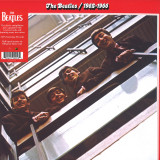
The Beatles - The Red Album LP 3x12"

The Beatles

The Red Album LP 3x12"

3x12inch5592053
APPLE
14.04.2025
 
38
disponibile anche

UK 6LP Boxset[163,82 €]

UK Blue LP[75,59 €]


This landmark compilation has introduced generations of fans to the incredible history of the most storied band in music. For its 50th anniversary, the collection has been expanded with 12 additional tracks, including for the first time some of George Harrison’s earliest songs and some classic Beatles versions of R&B and rock ‘n’ roll hits that were so influential on the band.

The 3LP collection now contains 38 tracks, 30 of which have new mixes for 2023. The set’s 12 newly added tracks are collected on its 3rd LP. An insert contains new sleeve notes by journalist and author John Harris. For current fans and future generations alike, the new 1962 – 1966 collection is a joyous celebration of The Beatles’ timeless musical legacy.

non in magazzino

Ordina ora e ordineremo l'articolo per te presso il nostro fornitore.

75,59

Last In: 13 months ago
The Beatles - Blue LP 3x12"

The Beatles

Blue LP 3x12"

3x12inch5592080
APPLE
14.04.2025
 
37
disponibile anche

UK 6LP Boxset[163,82 €]

UK Red LP[75,59 €]


The Beatles 1962 – 1966 & The Beatles 1967 – 1970 (2023 Edition) 6LP BLACK

These landmark compilations have introduced generations of fans to the incredible history of the most storied band in music. For its 50th anniversary, the collections have been expanded: ‘Red’ has 12 additional tracks, including for the first time some of George Harrison’s earliest songs and some classic Beatles versions of R&B and rock ‘n’ roll hits that were so influential on the band. ‘Blue’ has 9 additional tracks including “Blackbird” and “Glass Onion” including the last new Beatles song, “Now And Then” for a total of 21 new additions which are all compiled onto the 3rd disc, effectively creating a ‘new’ LP for each set.

Together the 6LP’s contain 75 tracks, 36 of which have new mixes for 2023. The inserts contains new sleeve notes by journalist and author John Harris. For current fans and future generations alike, the new 1962 – 1966 & 1967 - 1970 collections are a joyous celebration of The Beatles’ timeless musical legacy.

non in magazzino

Ordina ora e ordineremo l'articolo per te presso il nostro fornitore.

75,59

Last In: 13 months ago
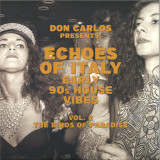
Various - ECHOES OF ITALY – THE BIRDS OF PARADISE – EARLY 90S HOUSE VIBES VOL.2 (2x12")

Googling “paradise house”, the first results to pop up are an endless list of European b&b’s with whitewashed lime façades, all of them promising “…an unmatched travel experience a few steps from the sea”. Next, a little further down, are the institutional websites of a few select semi-luxury retirement homes (no photos shown, but lots of stock images of smiling nurses with reassuring looks). To find the “paradise house” we’re after, we have to scroll even further down. Much further down.

It feels like yesterday, and at the same time it seems like a million years ago. The Eighties had just ended, and it was still unclear what to expect from the Nineties. Mobile phones that were not the size of a briefcase and did not cost as much as a car? A frightening economic crisis? The guitar-rock revival?! Certainly, the best place to observe that moment of transition was the dancefloor. Truly epochal transformations were happening there. From America, within a short distance one from the other, two revolutionary new musical styles had arrived: the first one sounded a bit like an “on a budget” version of the best Seventies disco-music – Philly sound made with a set of piano-bar keyboards! – the other was even more sparse, futuristic and extraterrestrial. It was a music with a quite distinct “physical” component, which at the same time, to be fully grasped, seemed to call for the knotty theories of certain French post-modern philosophers: Gilles Deleuze, Félix Guattari, Paul Virilio... Both those genres – we would learn shortly after – were born in the black communities of Chicago and Detroit, although listening to those vinyl 12” (often wrapped in generic white covers, and with little indication in the label) you could not easily guess whether behind them there was a black boy from somewhere in the Usa, or a girl from Berlin, or a pale kid from a Cornish coastal town.

Quickly, similar sounds began to show up from all corners of Europe. A thousand variations of the same intuition: leaner, less lean, happier, slightly less intoxicated, more broken, slower, faster, much faster... Boom! From the dancefloors – the London ones at least, whose chronicles we eagerly read every month in the pages of The Face and i-D – came tales of a new generation of clubbers who had completely stopped “dressing up” to go dancing; of hot tempered hooligans bursting into tears and hugging everyone under the strobe lights as the notes of Strings of Life rose up through the fumes of dry ice (certain “smiling” pills were also involved, sure). At this point, however, we must move on to Switzerland.

In Switzerland, in the quiet and diligent town of Lugano, between the 1980s and 1990s there was a club called “Morandi”. Its hot night was on Wednesdays, when the audience also came from Milan, Como, Varese and Zurich. Legend goes that, one night, none less than Prince and Sheila E were spotted hiding among the sofas, on a day-off of the Italian dates of the Nude Tour… The Wednesday resident and superstar was an Italian dj with an exotic name: Don Carlos. The soundtrack he devised was a mixture of Chicago, Detroit, the most progressive R&B and certain forgotten classics of old disco music: practically, what the Paradise Garage in New York might have sounded like had it not closed in 1987. In between, Don Carlos also managed to squeeze in some tracks he had worked on in his studio on Lago Maggiore. One in particular: a track that was rather slow compared to the BPM in fashion at the time, but which was a perfect bridge between house and R&B. The title was Alone: Don Carlos would explain years later that it had to be intended both in the English meaning of “by itself” and like the Italian word meaning “halo”. That wasn’t the only double entendre about the song, anyway. Its own very deep nature was, indeed, double. On the one hand, Alone was built around an angelic keyboard pattern and a romantic piano riff that took you straight to heaven; on the other, it showcased enough electronic squelches (plus a sax part that sounded like it had been dissolved by acid rain) to pigeonhole the tune into the “junk modernity” section, aka the hallmark of all the most innovative sounds of the time: music that sounded like it was hand-crafted from the scraps of glittering overground pop.

No one knows who was the first to call it “paradise house”, nor when it happened. Alternative definitions on the same topic one happened to hear included “ambient house”, “dream house”, “Mediterranean progressive”… but of course none were as good (and alluring) as “paradise house”. What is certain is that such inclination for sounds that were in equal measure angelic and neurotic, romantic and unaffective, quickly became the trademark of the second generation of Italian house. Music that seemed shyly equidistant from all the rhythmic and electronic revolutions that had happened up to that moment (“Music perfectly adept at going nowhere slowly” as noted by English journalist Craig McLean in a legendary field report for Blah Blah Blah magazine). Music that to a inattentive ear might have sounded as anonymous as a snapshot of a random group of passers-by at 10AM in the centre of any major city, but perfectly described the (slow) awakening in the real world after the universal love binge of the so-called Second Summer of Love.

For a brief but unforgettable season, in Italy “paradise house” was the official soundtrack of interminable weekends spent inside the car, darting from one club to another, cutting the peninsula from North to centre, from East to West coast in pursuit of the latest after-hours disco, trading kilometres per hour with beats per minute: practically, a new New Year’s Eve every Friday and Saturday night. This too was no small transformation, as well as a shock for an adult Italy that was encountering for the first time – thanks to its sons and daughters – the wild side of industrial modernity. The clubbers of the so-called “fuoriorario” scene were the balls gone mad in the pinball machine most feared by newspapers, magazines and TV pundits. What they did each and every weekend, apart from going crazy to the sound of the current white labels, was linking distant geographical points and non-places (thank you Marc Augé!) – old dance halls, farmhouses and business centres – transformed for one night into house music heaven. As Marco D’Eramo wrote in his 1995 essay on Chicago, Il maiale e il grattacielo: “Four-wheeled capitalism distorts our age-old image of the city, it allows the suburbs to be connected to each other, whereas before they were connected only by the centre (…) It makes possible a metropolitan area without a metropolis, without a city centre, without downtown. The periphery is no longer a periphery of any centre, but is self-centred”.

“Paradise house” perfectly understood all of this and turned it into a sort of cyber-blues that didn’t even need words, and unexpectedly brought back a drop of melancholic (post?)-humanity within a world that by then – as we would wholly realise in the decades to come – was fully inhuman and heartless. A world where we were all alone, and surrounded by a sinister yellowish halo, like a neon at the end of its life cycle. But, for one night at least, happy."

non in magazzino

Ordina ora e ordineremo l'articolo per te presso il nostro fornitore.

28,99

Last In: 36 days ago
CHURCH OF CONFIDENCE - (S)HIT EXPLOSION

Mit ihrem achten Studio Album präsentiert das von Journalisten oft als "Deutschlands unterbewertetste Punk-Rock Band" bezeichnete Berliner Trio ein Cover-Album das es in sich hat. Im klassischen "K-Tel" Gewand werden hier 12 Kracher der 50er, 60er, 70er und 80er Jahre abgeliefert. Allerdings nicht im üblichen, "wir spielen einfach mal alles doppelt so schnell-Hauruck Sound", nein, hier wurde mal richtig tief in die musikalische Trickkiste gegriffen. So kommen die ,Rubettes" im Gewand der ,Ramones" daher, ,Slade" im Sound der ,Stranglers" und ,Jimi Hendrix" sogar als waschechte Southern Rock Nummer a la ,Lynyrd Skynyrd". Von Uli Confidence dem Mastermind der Band und Betreiber des Berliner Kult-Clubs ,Wild At Heart" im hauseigenen Studio produziert, wird auf dieser Scheibe völlig ungeniert von klassischem Rock`n`Roll, über 70s Rock, Glam und sogar New Wave alles zelebriert, was der Kirche des Vertrauens lieb und heilig ist. Spaß-, Party-, und Unterhaltungsfaktor bis zum Anschlag auf Maximum gedreht, zündet hier ein Kracher nach dem anderen... 500 Stück weltweit, klassisch schwarzes Vinyl, durchnummeriert.

pre-ordina ora28.03.2025

dovrebbe essere pubblicato su 28.03.2025

20,59
TC.KYLIE & The Hourglass - RE:birthよみがえり

TC.KYLIE x The Hourglass brings dynamic jazz fusion music from her debut album, integrating Hong Kong, Japanese and British cultures. Kylie leads her band dynamically on stage playing keyboard and synth keytar, iconic in Japanese jazz rock & highly memorable to watch.TC.KYLIE, a jazz fusion pianist, performs regularly in both Hong Kong and London. Inspired by the likes of Shaun Martin and Robert Glasper, she also continues to write songs in the areas of Japanese acid jazz, following Fox Capture Plan, Jabberloop, Toconoma, Jizue and Bohemianvoodoo. Prior to becoming a performing artist, Kylie previously worked as a news documentary journalist for radio and TV networks in Hong Kong, She spent much of her time connecting human stories and investigating the connections between people and society which was inspiring and enlightening but also often heavy and difficult within increasingly tricky political landscapes unfolding around her.

Under the changing social environment in her hometown and with the hit of the pandemic, she decided to take an indefinite well-earned break in 2020 to take care of her own well-being & passions. During a stay at a jazz cafe and hostel in Lake Towada in Aomori, Japan, encouraged by the hostel owner as a jazz enthusiast; Kylie sat in front of the piano, contemplated and played scattered notes to express what she had been enduring during her time as a political/social reporter.

Finding herself joyfully picking up music in her life again after years of leaving it behind, she wrote the song "The Last Grief" a tribute to one of her deepest sorrows and in remembrance of her best friend in childhood who battled heavily with depression. This song went on to be an official selection for the International Toronto Music Video Festival as well as the Toronto Asian Independent Film Festival in 2023.

pre-ordina ora21.03.2025

dovrebbe essere pubblicato su 21.03.2025

20,59
Rush - Rush 50 7x12"

Rush

Rush 50 7x12"

7x12"-Vinyl6526277
UMR
21.03.2025

Celebrate 50 years of RUSH with their first-ever complete career anthology. . Igniting the experience are the very first two singles “Not Fade Away” and “You Can’t Fight It” remastered & reissued for the first time ever. The collection showcases 7 unreleased tracks including five 1974 live selections with the non-album songs “Bad Boy” and “Garden Road,” a Vault Edition of “The Trees” with an alternate guitar solo, and the very last performance with Neil Peart in Los Angeles on August 1, 2015 of “What You’re Doing / Working Man / Garden Road.” The 104-page hardcover book features new Hugh Syme 50th anniversary artwork along with stunning new song illustrations, photos and liner notes by renowned rock journalists David Fricke and Philip Wilding..

50 tracks on 7 180g LPs featuring selections from every studio, live and deluxe reissue album

pre-ordina ora21.03.2025

dovrebbe essere pubblicato su 21.03.2025

255,88
SCRATCH ACID - SCRATCH ACID BOX SET (3x12" + 7")
  • Cannibal
  • Greatest Gift
  • Monsters
  • Owner's Lament
  • She Said
  • Mess
  • El Espectro
  • Lay Screaming
  • Mary Had A Little Drug Problem
  • For Crying Out Loud
  • Moron's Moron
  • Skin Drips
  • This Is Bliss
  • Flying Houses
  • Crazy Dan
  • Eyeball
  • Big Bone Lick
  • Unlike A Baptist
  • Damned For All Time
  • Ain't That Love
  • Untitled 1
  • Holes
  • Albino Slug
  • Spit A Kiss
  • Untitled 2
  • Holes
  • Final Kiss
  • Amicus
  • Cheese Plug

Born out of the early 1980's Austin noise punk scene, Scratch Acid deliberately eschewed the loud, fast rules of hardcore as everything they didn't want to be and embraced a weirder, artier sound. The band's eventual permanent line-up consisted of David Yow on vocals, Brett Bradford on guitar, David Wm. Sims on bass, and Rey Washam on drums. During their brief existence from 1982 to 1987, the band released 3 records, including a full-length album (Just Keep Eating) and two EPs (S/T EP, Berserker). On March 14, 2025, Touch and Go Records will release the Scratch Acid Box Set - limited to 2000 sets worldwide. Remastered by Bob Weston at Chicago Mastering Service, the box set includes 180-gram clear LP pressings of all three releases as well as a 24-page booklet featuring exclusive behind-the-scenes photos, liner notes by David Yow, Brett Bradford, and photographer/journalist Pat Blashill, as well as full-color paintings by contemporary artist Mark Todd from the same era as the cover art for the S/T EP and Berserker releases. In addition, this limited Scratch Acid box set includes an exclusive clear vinyl 7" with both tracks the band contributed to the 1986 Touch and Go Records compilation, God's Favorite Dog. The 7-inch includes cover art by Mark Todd as well.

pre-ordina ora14.03.2025

dovrebbe essere pubblicato su 14.03.2025

105,25
Various - Led Zeppelin Origins (2x12")
 
28

Find all the titles that influenced one of the greatest rock band of all times, on a double vinyl. With: B.B. King, John Lee Hooker, Elvis Presley, Little Richard, Bob Dylan, Joan Baez, Muddy Waters, Sonny By Williamson I... The tracklist was made up by the journalist Lionel Eskenazi, who is a true specialist of the what many consider as the best rock band ever

non in magazzino

Ordina ora e ordineremo l'articolo per te presso il nostro fornitore.

22,06

Last In: 15 months ago
Hans Zimmer - Ring LP 2x12"

Hans Zimmer

Ring LP 2x12"

2x12inchWW1682
Waxwork
21.02.2025

"In celebration of its 20th Anniversary, Waxwork Records is proud to present THE RING Original Motion Picture Music by Hans Zimmer! This long anticipated release marks the first time that The Ring will be available on vinyl. The Ring is a 2002 supernatural horror film directed by Gore Verbinski and starring Naomi Watts and Brian Cox. It is a remake of Hideo Nakata’s 1998 Japanese horror film Ringu, based on Koji Suzuki’s 1991 eponymous novel. The plot follows a journalist who investigates an urban legend of a cursed videotape that seemingly kills the viewer seven days after watching it. The Ring was released on October 18, 2002 to positive reviews praising its atmosphere, visuals, and Watt’s performance. It is one of the highest grossing horror remakes and paved the way for English-language remakes of other Asian horror films such as The Grudge and Dark Water. The score by composed by Hans Zimmer is a dark symphonic orchestration that shifts from ghostly and melancholic to frightening and terror stricken. Constructed from a base of a piano, violins, synthesizer, and two cellos, Zimmer’s score is thoroughly effective in bringing the listener into the haunting space that is The Ring with dreadfully anxious strings, mournful keys, and rolling percussion. Zimmer creates a shadowy ambience that pulls you into the gripping ghost story. Waxwork Records is thrilled to present the full score to The Ring composed by Hans Zimmer for the very first time on vinyl as a deluxe double LP for the film’s 20th Anniversary. Featuring 180 gram “Samara & The Well” Green & Black Marbled Vinyl and “Cursed VHS Tape” Black with White Splatter Colored Vinyl, heavyweight gatefold jackets with matte satin coating, new art and design by Matt Needle, exclusive liner notes by director Gore Verbinski, a 12”x12” printed insert, and enthusiastic album packaging approvals from director Verbinski and composer Hans Zimmer.

pre-ordina ora21.02.2025

dovrebbe essere pubblicato su 21.02.2025

53,15
Tordenskjolds Soldater - Peace

Black Vinyl / 350 mcn double white coated paper / Poster sleeve / PVC outers / Original artwork / Exclusive 30x30 cm insert with Q&A by Tony Higgins with Ole Matthiessen printed on on 250 gram Gardamat coated paper. Archive picture from original recording session printed on 350 gram Gardamat paper. Archive pictures printed on 375 gram Vintage Bindakote Monolucido. All papers are acid free an printed with food based inks.

Personnel: 

Jesper Nehammer - tenor saxophone
Ole Mathiessen – piano
Jon Finsen – drums
Henrik Hove - bass

Notes:
Danish jazz band founded in 1969. Band line up: Henrik Hove on bass, Ole Mathiessen on piano, Jesper Nehammer (later Thors Hammer, Alrune Rod and Entrance) on tenorsax, and Jon Finsen on drums. Played for a while every Monday in the famous Jazzhouse Montmatre in Copenhagen.
Tordenskjolds Soldater only made this record (1970).
The small record label Spectator Records was founded in 1969 by Jørgen Bornefeldt a former journalist from Danmarks Radio in coorporation with the jazz musician Carsten Meinert. Meinert recorded two albums on the label. He only joined the company in the beginning. Cindarellaistudiet The studio was destroyed august 6th 1972 by a major fire. And that was the end of Spectator Records. From 1969 to the end, the label recorded at least 23 lp albums and 9-11 singles/EP's. The picture shows Henning Kragh Pedersen from Cinderella in Spectators studio. The great Danish rock band Gasolin recorded their first single – Silky Sally - on Spectator Records. It was no success and sold only 155 copies. Silky Sally is now one of the most sought after Gasolin singles among collectors and is of course very expensive.
The music from Spectator Records is mostly jazz, progressive rock and hippie free style. But they also made strange records for children, education etc. Most records were issued in very small numbers (300-500). Some of the best progressive rock in Northern Europe was recorded here.
Quality of vinyl was often poor - even new looking records can have audible problems. Covers and labels are primitive and cheap. On the other hand the creativity could be outstanding - check the Furekaaben cover gallery or the artwork of William Skotte Olsen from Green Grass. Several record from the labels are cult today. A perfect copy of certain records costs a fortune.
Master tapes was never found after the fire in 1972. Unofficial reissues and bootlegs are therefore made on the base of the original records. Recordings that never made it to the vinyl got lost in the fire. Both Cinderella and The Copenhagen based band, Lines lyst, had material readdy for lp's which was never recorded. (Tony Higgins)

pre-ordina ora14.02.2025

dovrebbe essere pubblicato su 14.02.2025

33,82
Various - ECHOES OF ITALY - ARTISTS IN WONDERLAND – EARLY 90S HOUSE VIBES VOL.1 LP 2x12"

Volume 1 of this expertly curated project of 90s Italian House - put together by Don Carlos.

If Paradise was half as nice… by Fabio De Luca.

Googling “paradise house”, the first results to pop up are an endless list of European b&b’s with whitewashed lime façades, all of them promising “…an unmatched travel experience a few steps from the sea”. Next, a little further down, are the institutional websites of a few select semi-luxury retirement homes (no photos shown, but lots of stock images of smiling nurses with reassuring looks). To find the “paradise house” we’re after, we have to scroll even further down. Much further down.

It feels like yesterday, and at the same time it seems like a million years ago. The Eighties had just ended, and it was still unclear what to expect from the Nineties. Mobile phones that were not the size of a briefcase and did not cost as much as a car? A frightening economic crisis? The guitar-rock revival?! Certainly, the best place to observe that moment of transition was the dancefloor. Truly epochal transformations were happening there. From America, within a short distance one from the other, two revolutionary new musical styles had arrived: the first one sounded a bit like an “on a budget” version of the best Seventies disco-music – Philly sound made with a set of piano-bar keyboards! – the other was even more sparse, futuristic and extraterrestrial. It was a music with a quite distinct “physical” component, which at the same time, to be fully grasped, seemed to call for the knotty theories of certain French post-modern philosophers: Gilles Deleuze, Félix Guattari, Paul Virilio... Both those genres – we would learn shortly after – were born in the black communities of Chicago and Detroit, although listening to those vinyl 12” (often wrapped in generic white covers, and with little indication in the label) you could not easily guess whether behind them there was a black boy from somewhere in the Usa, or a girl from Berlin, or a pale kid from a Cornish coastal town.

Quickly, similar sounds began to show up from all corners of Europe. A thousand variations of the same intuition: leaner, less lean, happier, slightly less intoxicated, more broken, slower, faster, much faster... Boom! From the dancefloors – the London ones at least, whose chronicles we eagerly read every month in the pages of The Face and i-D – came tales of a new generation of clubbers who had completely stopped “dressing up” to go dancing; of hot tempered hooligans bursting into tears and hugging everyone under the strobe lights as the notes of Strings of Life rose up through the fumes of dry ice (certain “smiling” pills were also involved, sure). At this point, however, we must move on to Switzerland.

In Switzerland, in the quiet and diligent town of Lugano, between the 1980s and 1990s there was a club called “Morandi”. Its hot night was on Wednesdays, when the audience also came from Milan, Como, Varese and Zurich. Legend goes that, one night, none less than Prince and Sheila E were spotted hiding among the sofas, on a day-off of the Italian dates of the Nude Tour… The Wednesday resident and superstar was an Italian dj with an exotic name: Don Carlos. The soundtrack he devised was a mixture of Chicago, Detroit, the most progressive R&B and certain forgotten classics of old disco music: practically, what the Paradise Garage in New York might have sounded like had it not closed in 1987. In between, Don Carlos also managed to squeeze in some tracks he had worked on in his studio on Lago Maggiore. One in particular: a track that was rather slow compared to the BPM in fashion at the time, but which was a perfect bridge between house and R&B. The title was Alone: Don Carlos would explain years later that it had to be intended both in the English meaning of “by itself” and like the Italian word meaning “halo”. That wasn’t the only double entendre about the song, anyway. Its own very deep nature was, indeed, double. On the one hand, Alone was built around an angelic keyboard pattern and a romantic piano riff that took you straight to heaven; on the other, it showcased enough electronic squelches (plus a sax part that sounded like it had been dissolved by acid rain) to pigeonhole the tune into the “junk modernity” section, aka the hallmark of all the most innovative sounds of the time: music that sounded like it was hand-crafted from the scraps of glittering overground pop.

No one knows who was the first to call it “paradise house”, nor when it happened. Alternative definitions on the same topic one happened to hear included “ambient house”, “dream house”, “Mediterranean progressive”… but of course none were as good (and alluring) as “paradise house”. What is certain is that such inclination for sounds that were in equal measure angelic and neurotic, romantic and unaffective, quickly became the trademark of the second generation of Italian house. Music that seemed shyly equidistant from all the rhythmic and electronic revolutions that had happened up to that moment (“Music perfectly adept at going nowhere slowly” as noted by English journalist Craig McLean in a legendary field report for Blah Blah Blah magazine). Music that to a inattentive ear might have sounded as anonymous as a snapshot of a random group of passers-by at 10AM in the centre of any major city, but perfectly described the (slow) awakening in the real world after the universal love binge of the so-called Second Summer of Love.

For a brief but unforgettable season, in Italy “paradise house” was the official soundtrack of interminable weekends spent inside the car, darting from one club to another, cutting the peninsula from North to centre, from East to West coast in pursuit of the latest after-hours disco, trading kilometres per hour with beats per minute: practically, a new New Year’s Eve every Friday and Saturday night. This too was no small transformation, as well as a shock for an adult Italy that was encountering for the first time – thanks to its sons and daughters – the wild side of industrial modernity. The clubbers of the so-called “fuoriorario” scene were the balls gone mad in the pinball machine most feared by newspapers, magazines and TV pundits. What they did each and every weekend, apart from going crazy to the sound of the current white labels, was linking distant geographical points and non-places (thank you Marc Augé!) – old dance halls, farmhouses and business centres – transformed for one night into house music heaven. As Marco D’Eramo wrote in his 1995 essay on Chicago, Il maiale e il grattacielo: “Four-wheeled capitalism distorts our age-old image of the city, it allows the suburbs to be connected to each other, whereas before they were connected only by the centre (…) It makes possible a metropolitan area without a metropolis, without a city centre, without downtown. The periphery is no longer a periphery of any centre, but is self-centred”.

“Paradise house” perfectly understood all of this and turned it into a sort of cyber-blues that didn’t even need words, and unexpectedly brought back a drop of melancholic (post?)-humanity within a world that by then – as we would wholly realise in the decades to come – was fully inhuman and heartless. A world where we were all alone, and surrounded by a sinister yellowish halo, like a neon at the end of its life cycle. But, for one night at least, happy.

non in magazzino

Ordina ora e ordineremo l'articolo per te presso il nostro fornitore.

28,99

Last In: 36 days ago
Nick Heyward - North of a Miracle
  • When It Started To Begin
  • Blue Hat For A Blue Day
  • Two Make It True
  • On A Sunday
  • Club Boy At Sea
  • Whistle Down The Wind
  • Take That Situation
  • The Kick Of Love
  • The Day It Rained Forever
  • Atlantic Monday

Released in October 1983, “North Of A Miracle” was Nick Heyward’s first solo album after leaving Haircut 100. Produced by Geoff Emerick (The Beatles, Elvis Costello, Badfinger, America, Supertramp and many more), the album features the hit singles “Take That Situation”, “Whistle Down The Wind”, “Blue Hat For A Blue Day” and “On A Sunday”. The album went on to sell over 100,000 copies in the UK, earning a Gold Disc Award.

Deluxe 3CD Edition:
Expanded to a Deluxe 3CD Edition, Disc One features the original album mastered from the original stereo tapes, Disc Two features the various 12” mixes, instrumental versions and non-album B-sides, while Disc Three, entitled “Recordings 1984”, features Nick’s 1984 single releases “Love All Day” and “Warning Sign”, along with the tracks from their accompanying 12” singles. Also featured are three previously unreleased tracks: “Teach Till You Reach” (an unreleased single), “Give Love More Time” (an alternate instrumental version of “Love All Day”), and “Kiss Those Tears Goodbye” (an unfinished recording featuring the backing vocals only). Annotated by author and journalist Daryl Easlea, based on a brand-new interview with Nick Heyward, this 3CD set is presented in Deluxe 7” Packaging, with a 20-page booklet.

180g Vinyl Edition:
This new edition has been expertly mastered by Barry Grint at AIR Mastering from the original stereo tapes using precision half-speed mastering. Half-speed mastering is a vinyl cutting technique that improves groove accuracy and transient information creating an incredibly detailed stereo image with a natural high frequency response.

Presented in its original gatefold sleeve, pressed on 180-gram heavyweight black vinyl, featuring an obi strip and housed in a poly-lined inner sleeve, with a 2-page insert.

pre-ordina ora31.01.2025

dovrebbe essere pubblicato su 31.01.2025

33,19
APOLLO BROWN & THE LEFT - Gas Mask

Gas Mask revives old-school hip hop with gritty beats, politically charged lyrics, and raw cuts, reflecting Detroit's harsh realities and resilience.” -Hip Hop DX While others follow the mainstream, The Left (Apollo Brown, Journalist103, and DJ Soko) takes the unpaved road to Detroit. The result is Gas Mask, featuring Apollo's hard drums, Journalist's rugged, politically charged flow, and Soko's raw cuts, creating an impactful debut album that captures the essence of Detroit. They transform random songs into a highly praised underground hip-hop album. This is a Mello Music Group classic!

pre-ordina ora31.01.2025

dovrebbe essere pubblicato su 31.01.2025

36,93
Arthur Boto Conley's Music Workshop presents - Acidboychair / Come Down Easy

The Acidboychair music project started in the early noughties as a commentary on what journalist Simon Reynolds would summarise a few years later as Retromania. Initially conceived by Thomas Baldischwyler and Andreas Diefenbach as a performative revival travesty with large-format drum computers and synthesizers reconstructed from cardboard, everything took a surprising turn when DJ Mooner (the man behind the now defunct Munich music label Erkrankung Durch Musique) took an interest in the adventurous audio material produced by Baldischwyler. In 2005, the LP 1987 (EDM1016), produced almost exclusively with long-forgotten software (SoundEdit 16, RB-338, etc.), was released on Mooner's label. As a result of the growing number of bookings, Baldischwyler had to think about improving the performability of his intentionally amateurish productions. Fortunately, the Ableton Live programme became a DAW with a MIDI sequencer and support for VST plug-ins as early as 2004 - and this made it easier for him to execute his intuitive, error-friendly version of acid house. This can be heard on the first two sample-heavy tracks on the A-side of Come Down Easy, which were recorded in 2005 and 2006 respectively at Acidboychair gigs at Hamburg's Golden Pudel Club and Munich's Registratur. The first two tracks on the B-side (produced sometime between 2006 and 2008) were actually supposed to be part of a solo release on the Acido label run by Dynamo Dreesen, but this never materialised. However, the final tracks and the 133.3 BPM lock grooves that follow are the title and central to this catalogue number TBG123: Through ethno-musicologist Arthur Boto Conley, who had already released a one-sided 12 on his label with material from one of Baldischwyler's audio installations, he met Florian Meyer (Don't DJ) and Marc Matter (Spoken Matter), who introduced him to their collaborative project Institut F?r Feinmotorik (IFFM). Baldischwyler's attempt to approach the sound aesthetics of IFFM led to the tape 60 Minutes Of Barely Modified Lock Grooves (TCCC06), recorded in Rome in 2018. A buyer of this tape introduced him to the Detroit collective Pure Rave, which he immediately contacted and introduced to the work of the IFFM. It was important for Baldischwyler to have an analogue update made and so both the Detroiters and IFFM, who now live in Berlin, were given 8 copies of EDM1016's backstock to remix the material in their own way. At their jam in Detroit, Pure Rave opted for the almost identical material that IFFM had also used for a live performance in the Hamburg project space Beek. The dominant jumps in both arrangements come from the track Eightyseven, produced in the early 2000s for the LP 1987, an awkward remix of the Spacemen 3 track Come Down Easy, which is also referred to in the liner notes on the inner sleeve of TBG123. The almost two-decade-old revival idea thus turns into false memory syndrome and runs into a - in keeping with our times - clean-cut (endless) groove. Kassem Mosse (The KM of MM/KM) on Come Down Easy after a first listening session: I think it all works very well as a mix, no matter where you start it carries you further forward back in the loop. if I understand the liner notes correctly, it's about the music's turn from tradition preservation (doing everything right) to ecstatic delusion (not doing everything right when intoxicated). Now that I'm reading again instead of listening, the titles give me a different understanding of the connections; how the skipping belongs together, which playtime is connected. Now I can name my favourites. Thank you for the journey!

pre-ordina ora06.01.2025

dovrebbe essere pubblicato su 06.01.2025

26,01
JAKE AMY - YOOFEE/GRAZE

Jake Amy

YOOFEE/GRAZE

12inchWW130
WICKED WAX AMSTERDAM
Release unknown
 
2

"Jake Amy is one of Australia’s most exciting nu-jazz outfits. Their sound synthesises up-tempo future-sonic jazz with hip-hop breakbeats, luscious synth harms, afro-cuban grooves & electronic music. 'Yoofee' and 'Graze' are both heavy-hitting tunes that go from high energy jazz-funk to darker drum&bass aesthetics, tightly executed in a live trio setting. Jake Amy is a Melbourne-based session pianist, producer, audio engineer, and social justice journalist. As a non-binary and queer artist, Jake’s music is deeply influenced by their experiences with gender visibility and their advocacy for non-binary representation. Their work is a bold, boundary-pushing exploration of identity and authenticity, reshaping the nu-jazz genre with every release."

pre-ordina ora

Questo articolo non è stato ancora rilasciato. È possibile pre-ordinare il prodotto ora.

13,03
NORBERTO DE NOAH - NORBERTO DE NOAH AND THE BOHOBE SPIRITS MUSIC

The Equatoguinean Norberto de Nöah established in Madrid in the early 80s, where he became a firebrand of African culture in the vibrant Movida. In 1988 he self-released his first solo album, a blend of homeland sounds —modern and traditional— with new synth and drum machine touches. The vanished album finally gets its well-deserved reissue.

Edition of 500 albums on vinyl (Bandcamp download code included) - Original artwork with new 14 pages insert and poster

In the mid-1980s, the European media, music industry and public became increasingly interested in African music. This was a period of international success for King Sunny Adé, Salif Keita, Youssou N’Dour, Ray Lema, Touré Kunda, etc. Spain, with its own particular conditions, wasn’t oblivious to the phenomenon and the Equatoguinean Norberto de Nöah may be its best exponent.

Norberto moved in the early eighties from his hometown in the island Fernando Po (now known as Bioko) to its former colonial capital, Madrid. While studying dramatic arts, he created and led the band Nohkis, made up of African and Spanish musicians. In 1985 they released the maxi-single “Mujer española” / “África, ¿dónde está tu gloria?”, and the song “El loco”, was released on a compilation LP called Esto es increíble, both on the label Lollipop. According to the journalist Patricia Godes, they were first artists to record an African music record in Spain. It received positive reviews and a great impact on the most independent side of Madrid’s La Movida movement. Very soon afterwards, Nohkis’ band split up.

Afterwards, Norberto would concentrate on his solo career, and Norberto de Nöah and The Böhöbé Spirits Müsic was released in 1988, definitely a solo album. Norberto created his own label, Kilimandjaro Productions, and composed, arranged and produced all the songs of the LP. Moreover, he sang and played all the instruments: a vast selection of organic instruments, a Yamaha RX-5 drum machine and a Roland D-50 synthesizer.

In the album he exposed his deepest roots, updating the lexicon of traditional Bubi music, the musician’s ethnic group, a compendium of ceremonial melodies that ancient troubadours composed for the court. Doing so he showed new possibilities to one of the oldest ethnic groups in the world. Besides all this, he was also inspired by American music such as funk, R&B, Latin American music and also by a wide range of African and Caribbean rhythms.

Mixing the traditional and the avant-garde in a spontaneous and natural way, the music contained in the record’s grooves flows freely and takes you to places full of magic and mystery, while still transmitting new and exciting sensations. Even more, according to the Equatoguinean musician and writer Baron Ya Búk-Lu based in Madrid, the album’s sound was “the perfect combination of all characteristics that defined the Equatoguinean Afropop music made in Madrid during the 1980s”, a story that still needs to be told in all its depth and intensity!

Following the release of two LPs and several singles, the activity of Norberto de Nöah and Kilimandjaro Productions (and the subsequent Bananas Podridas) ceased. Nevertheless, Norberto’s links to music continued, as a promoter and DJ in Madrid’s nightlife.

Norberto de Nöah contributed greatly to changing Spain’s musical landscape, breaking barriers and mental frameworks. He was the first to make contemporary and popular Guinean music known to the Spanish public.

The repercussions in the African market of a Spanish (and Bube) speaking African musical project, where English and French dominate, was very difficult. In addition, the passage of time and changes in phonographic formats have diluted the memory of Norberto's legacy. Now it’s time to reverse the situation and break all the outdated frontiers!

Norberto de Nöah and The Böhöbé Spirits Müsic, as every important music piece, was at the same time part of a universal phenomenon of recognition of African music and a very personal project, based on the artist’s nostalgic and heartfelt need to show and homage his ethnic group, the Bubis. In this process he also refreshed his hometown music legacy, giving it a new air and opening the door to lots of other great Equatoguinean artists coming afterwards, as well as being an inspiration for many musicians in Spain.

pre-ordina ora13.12.2024

dovrebbe essere pubblicato su 13.12.2024

36,77
Articoli per pagina:
N/ABPM
Vinyl