In The Land of Silence is the first full length album by experimental artist Ireen Amnes. The founder of the London based collective Under My Feet. debuts on Sonic Groove with an immaterial journey contemplating suffering, liberation, the importance of affection and unity. This ambient album reveals a hidden connection between these human emotions. From anger and rejection, to love and unity, the sounds explored by the artist represent a recent journey within. Recollections of distant memories are expressed with nostalgic sounds; by contrast, darker tracks are symbolic of those moments when it is more dif ficult to accept reality for what it is. Ireen expresses in this album that there wouldn’t be any joy without suffering.
Sounds created out of emotions that cannot be spoken. Beats that pulse out of gestures that can no longer be performed. Tones that screech out of bodies that can no longer be human. Echoes of all unspoken words reverb into the wounds of time; that constant ebb and flow of existence; that relentless stomping of exchanges. The slur of life is now noise – she collects its torn pieces with her bare hands and holds them close to her pounding flesh. She now sways in and out of consciousness, transported by nothing but his will to life, his ecstatic memory, his murmured love that now forms this soundtrack to her life.
Поиск:joy o
Все
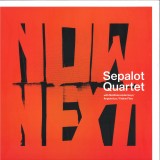
NOWNEXT is a voyage from the past to the future, from now to then, from what's behind us to what's waiting for us just around the next corner. In musical terms these are the gaps that appear when you drift between genres and take risks. Strolling far from the well travelled Zeitgeist path. The second album by the Sepalot Quartet floats through this timeless space and fills those cracks with a relaxed fusion of Jazz meets Indie meets Electronica, not once denying Sepalots hip hop roots.
This freedom of expression can also be considered a sign of our times, with a generation coming of age without rivalling youth phenomena. Where a jazz show is held in a techno club with no further explaination needed.
With their first release the Quartet still relied on remakes from the established Sepalot dicography, with their current work they laid the foundation for a truly solid form of musical self discovery.
NOWNEXT is enlivened by this spirit and offers a fascinating and confindent blend of varied sounds spanning time and space.
With all this being said, NOWNEXT is truly an up to date album of international format, feeding from the rich experience of its diverse members (Sepalot, Angela Aux, Fabian Füss, Matthias Lindermayr). Memories, associations and a well carved vision are melted into a masterpiece.
NOWNEXT is the latest offering by SEPALOT and his QUARTET and needs to experienced with all senses.
Two distinct tracks, each of them representing two different moods.
On Side A „New Info“ is characterized by a dark theme with a deep sound, whilst on B Side represents pure joy, composed of trippy and hyped pads and chords. Together they create a symmetric duality.
Supported by: Arapu, Suciu and Cezar
To Celebrate The 6th Anniversary Of The Agency, Rotate Prepared A Hefty 4xlp Compilation Featuring Its Key Artists. 'rotations Ii' Is The Seven-chapter Follow-up To rotations I' Out In 2016 And Features Tracks From Most Of The Current Music Crafters In The Rotate Family: A Collection Of Personal Musical Excursions And Peculiar Studies Of Rhythm And Sound, From Artists Full Of Wit, And Grit. 'phase Five' (a1) Is Yuzo Iwata's Debut On Rotate And, Without Surprise, Is A Showcase Of Sonic Wizardry That Sets The Tone To The Entire Compilation With Its Dreamy (and Almost Delirious) Atmosphere And Marching Organic Groove. 'aphasia' (a2) Has Anestie Gomez Shifting The Gears To A More Minimalistic Sonic Palette Of Razor-sharp Drum Programming, Sophisticated Swing, And Deep Acidic Low-ends. The Flipside 'hypnosis' (b1) Is Leiris's Debut Solo On Rotate And A True Study On Reduced Raw Grooves And Abstract Sound-design, Wrapped In Amidst Of Hypnotic Mystery. 'partenaire Particulier' (b2) Brings Back Leiris Together With Ben Vedren As "monkey Nenufar": A Spellbinding, Steady-beat Ride Full Of Joyful Chords And Filtered Echoes For Certified Euphoria. Levi Verspeek Kicks The Flip-side With 'paying 420' (c1), A Focused 4 By 4 Excursion Focused On Groove And On-point Sampling Of Minuscule Percussive Loops Teeming Around A Central Pulsating Bassline. Funky, Vibrant And Full Of Emotion, Pit Spector's 'back From Cdv' (c2) Is A Love Letter To The Esteemed Club Der Visionaere, And An Ode To The Micro-house Aficionados, Especially Those With A Soft Spot For Latin Rhythms. Denis Kaznacheev's 'poromechanics' (d) Is A 15-minute Sonic Delirium Through Startling Soundscapes, Sweltering Rhythms And Barely-sane Micro-sampling, Ultimately Setting A Hypnotic, Enigmatic Tone To The Closing Of This Compilation. "rotations Ii" Is A Versatile Comeback To This V.a. Series Where Rotate Artists Can Be Themselves, Loyal To Their Own Sound And Their Very Distinct Personalities.
Polaroid were an Italian post-punk/new wave band, formed in Turin in 1981. This vinyl re-issue of 'Senza Respiro' contains all 6 original songs with 4 bonus tracks from the band's later period.
.
Polaroid made their debut with the cassette 6-track EP 'Senza Respiro', self-released in 1984. Influenced by Bauhaus, Joy Division, The Cure, Pere Ubu as well as Chic and Talking Heads. The music was dark and cold, but also melodic especially with regards to guitars and voices. At the end of 1984 the band added vocalist Michele Cantoblundo while drummer Marco left and was replaced by a Roland TR-909. With Michele began a period of very dark and poetic music, influenced also by bands like Red Lorry Yellow Lorry and The Sisters of Mercy. The band peacefully broke-up in 1987.
All songs have been remastered by George Horn at Fantasy Studios. The record is housed in custom jacket designed by Eloise Leigh and includes 4 polaroid sized postcards with photos notes and lyrics.
Maybe it's just you: jumping around from joyful reveries to passages of melancholia, from uncanny
revelations to the grey routines. Or maybe it's just the music: a dusty cosmic theme with a bit of
the 80s' electronic flavour, warping your state of mind on the slick drum rolling, electro tingles
and obsessive sci fi bleeps.We call it Moodswing: Sublee's electronic visions for Contemporan.
For the latest instalment in the Apollonia story we look to Argentina and the talented producer Federico Molinari. Having been based in Germany for the last couple of decades, Federico has refined his sound, developing a strong signature through his DJ sets and his studio productions, most of which he has released via his label OSLO. Federico's ability to craft effortless grooves and timeless rhythms is evident here on this killer new three-tracker. Side A is the eight-minute long roller 'Congo Toys'. The focus here is on a crisp 4x4 beat, which keeps things simple - under this lies a sturdy bassline. All the while, the low end is accompanied by a series of bleeps, which could almost be the chatter between two archaic computers, modulated and weaving in and out of the beats and bass. On the flip, we have two more dance floor-ready joints. Like ' Congo Toys, 'Tres Cuartos' is focused around a simple foundation, with layers of unusual effects - an overriding sense of playfulness comes through in Molinari's production, perfect for the boogie down crew. Last up, 'Joyfex' takes us further into leftfield, hypnotic, hazy atmospherics draw us into their web and we're tangled up in a mesh of vibrating whirrs and echoing, distorted voices. Sublime business from an Apollonia favorite
Joyfull Family and Mike Anderson on Wound Music. Major Panther Ep is a vinyl only release and includes Memoryman aka Uovo & Murphy Jax remixes. If you want some pure chicago/pumpin house acid tracks in your set, this is your ep! Nothing more to say...
first release of french duo "creative swing alliance" on endless flight.
creative swing alliance is pablo valentine and steven joyce ames.
pablo is running mcde label.there are three killer beatdown house stuff. if you are following the sound of motor city drum ensemble or dj nature, you will definetly love this release.
Berlin-based disco don Tobi Schwermann aka Jack Tennis strides into his tenth year making music with a seance on his Art Groupie label. 'Billy's Family' is a heart-sweeping disco sound with sweeping Philly strings and neat guitar lines, golden chords and a nice plump mid-tempo rhythm. 'Lonely Streets' channels Bill Withers gritty soul and moody basslines into an infectious groove, then 'Some Kind Of A Lady' gets lips pouted and hands in the air with unrestrained disco joy. 'VO' closes with a rich ecosystem of whistles, organic percussive sounds and a strident electronic groove with fiery Latin vocals. Eclectic excellence once more.
Plastik People deals in house & garage done right. This latest drop is a split EP between Marc Cotterell and Dominic Balchin and opens with 'The Trumpet Track', which is exactly that. 'Baby Do You Feel Me' is unabashed vocal joy, while 'Oh Lord' sinks into deeper house with shapeshifting chords that keep you moving. 'Rhythm Of The Vibe' is a New York homage with shades of Kerri Chandler and we can't get enough of it.
- A1: 70 Degrees In The Shade
- A2: Straightjack
- A3: Harem
- A4: Open
- A5: Slightly Oliver John Surman-Mike Osborne Quartet
- B1: My Pussin
- B2: The Toddy Deuce Calypso
- B3: Downstream
- B4: Don’t Stop The Carnival John Surman-Russ Henderson Calypso Jazz
These two very different sessions involving John Surman and Mike Osborne have much in common. They both share a wonderful sense of liberation, of the joy of making music together and of finding collectively new ways of making jazz happen. And even more importantly, they speak volumes about the eclecticism and openness of British jazz in those years of the mid- to late-sixties and about the creative ambitions of John Surman. In the current absence in the market of his first LP, this is an essential purchase for Surman fans. Notes by Duncan Heining with suggestions from John Surman. These sessions have never previously appeared officially in any form.
Side One 26.2.67 - Mike Osborne (as), John Surman (ss, bs), Harry Miller (b), Alan Jackson (d) - Side Two 17.7.68 - Sterling Betancourt for Alan Jackson and add Russ Henderson (p)
Sakura is without doubt the most loved and lauded entry in Susumu Yokota’s catalogue.
The music unravels like cascades of petals falling from the eponymous cherry blossom trees. Yokota intended to ‘express ki-do-ai-raku (the four emotions; joy, anger, sorrow, and happiness) through music’, and throughout Sakura, the effect fluctuates between profound tranquillity, hesitation, melancholy and joy with ease, addressing the fickle nature of human emotion, while transcending the inclination to label moods entirely.
Sakura became Yokota’s best selling album. It was greeted with universal acclaim, lauded by Philip Glass and Brian Eno and launched Yokota internationally.
‘A bittersweet beauty, heightened by the sadness that all things must one day end.’ - Martyn Pepperell
- A1: Les Masques - Il Faut Tenir (1969)
- A2: Isabelle Aubret - Casa Forte (1971)
- A3: Christianne Legrand - Hlm Et Ciné Roman (1972)
- A4: Jean Constantin - Pas Tant D'chichi Ponpon (1972)
- A5: Billy Nencioli & Baden Powell - Si Rien Ne Va (1969)
- B1-: Marpessa Dawn - Le Petit Cuica (1963)
- B2: Jean-Pierre Sabar - Vai Vai (1974)
- B3: Sophia Loren - De Jour En Jour (1963)
- B4: Isabelle - Jusqu’à La Tombée Du Jour (1969)
- B5: Sylvia Fels - Corto Maltesse (1974)
- C1: Frank Gérard - Comme Une Samba (1972)
- C2: Ann Sorel - La Poupée Des Favellas (1971)
- C3: Charles Level - Un Enfant Café Au Lait (1971)
- C4: Andrea Parisy - Les Mains Qui Font Du Bien (1970)
- C5: Audrey Arno - Quand Jean-Paul Rentrera (1969)
- C6: Aldo Frank - T’as Vu Ce Printemps (1970)
- D1: Christianne Legrand - Cent Mille Poissons Dans Ton Filet (1972)
- D2: Clarinha - Lemenja (1970)
- D3: Hit Parade Des Enfants - Aquarela (1976)
- D4: Jean-Pierre Lang - Tendresse (1965)
- D5: Magalie Noël - Une Énorme Samba (1970)
- D6: Françoise Legrand - La Lune
Ever since the late 1950s bossa-nova revolution, Brazil’s influence on French music has been undeniable. Pierre Barouh, Georges Moustaki and a vast array of lesser known artists, all made the Musica Popular Brasileira (MPB) an axis of promotion at the service of a cool and metaphysical, modern and mixed Brazilian lifestyle. Some were seduced by the poetic languors of the bossa, some were looking for fun, and others just loved the American hybridization of jazz-bossa, jazz-samba.
What is bossa nova? One of its creators, Joao Gilberto said: "Its style, cadence, everything is samba. At the very start, we didn't call it bossa nova, we sang a little samba made up of a single note - Samba de uma nota so .... The discussion around the origins of bossa nova is therefore useless”. It is nevertheless useful to remember that these magnificent Brazilian songs, which the guitarist describes as samba, were shifted and balanced around improbable chords. "I like things that lean, the in-betweens that limp with grace," said Pierre Barrouh, quoting Jean Cocteau.
With emotion, arrangements for violin and supple guitar licks, bossa nova rapidly changed. A transformation that can be heard in the Tchic, tchic, French Bossa Nova 1963-1974 compilation, the result of a cultural reappropriation, which traveled through the United States and supplemented itself in France.
A musical revolution that has remained significant, bossa nova was born in Rio. From 1956 to 1961, Brazil lived through its golden years. In five years, the country had invented its modernist style. Elected president in 1956, Juscelino Kubitschek de Oliveira, an elegant man with a broad forehead, brandished a promising slogan: "Fifty years of progress in five years". He quickly got to work. Not worried about increasing debt, he launched the project for a new federal capital, Brasilia, designed by the communist architect Oscar Niemeyer. Volkswagen opened state-of-the-art factories and created the “fusquinha”, the Beetle. In Rio, the Vespa made its first appearance. The Arpoador Surf Club crew run into the “girl” from Ipanema, Helô Pinheiro - the tanned garota ("chick"), between a flower and mermaid, who at 17 walked by the Veloso bar, where the fiery author and composer, Tom Jobim and Vinicius de Moraes, were getting drunk on whiskey. From then on, bossa symbolized cool.
In 1958, Joao Gilberto recorded Chega de Saudade, which the directors of Philips denied, calling it "music for fagots". The marketing director, who believed in it, secretly pressed 3000 78-inch vinyls and distributed them at schools around Rio, creating a tidal wave.
American jazzmen then took over. In particular, trumpeter Dizzy Gillespie and guitarist Charlie Byrd. In November 1962, the Brazilian Ministry of Foreign Affairs funded a "Bossa-Nova" concert at Carnegie Hall in New York, inviting the genre’s pioneers. Unprepared, the show soon turned to disaster. But the troupe was invited to the White House by Jackie Kennedy. The first lady loved "the new beat" and in particular Maria Ninguem, a song by Carlos Lyra, later covered by Brigitte Bardot.
In Brazil, the 1964 military coup quickly ended this euphoria. The destructive atmosphere that ensued pushed many Brazilian musicians to leave, if not to exile. Thus, Tom Jobim, Sergio Mendes and Joao Gilberto arrived to the United States. In New York, Joao Gilberto met saxophonist Stan Getz. At the time, he was married to the Bahianese Astrud Weinert Gilberto, who had a German father. She had never sung before, but she knew how to speak English. Getz therefore asked her to replace her husband on The Girl From Ipanema. The Getz/Gilberto record with Tom Jobim on piano, was released in March 1964. Phil Ramone, the "pope of pop" was in charge of sound.
Bossa nova arrived in Paris through the classic “guitar-voice” channel (Pierre Barouh, Baden Powell, Moustaki…) But France loved jazz and Paris had already welcomed its American contributors. All these good people were to pass through Saint-Germain-des-Prés. The cabaret l'Escale became the Mecca of Latin American sound where one could find Pierre Barrouh and his friends, such as the Camara Trio, samba-jazz aces, whose only record was published by the Saravah label. With a band strangely called Les Masques (a band that included Nicole Croisille and Pierre Vassiliu, among others), the Camara Trio recorded an interesting Brazilian Sound, including the track Il faut tenir which is present on this tasty compilation of rarities.
Other enlightened musicians can also be found on the compilation, such as Jean-Pierre Sabar (songwriter for Hardy, Auffray, Leforestier ...) and the French pop rock organist Balthazar. In 1975, Sabar recorded Aurinkoinen Musiikkimatka on a Finnish label, which featured the crazy Vai, Vai, included on this record. We are now following the footsteps of Brazilian electronic musicians such as Sergio Mendes, Eumir Deodato or Marcos Valle who created funk and disco sounds on their keyboards and synthesizers. A style that influenced Véronique Sanson when she wrote Jusqu’à la Tombée de la nuit in 1969 for Isabelle de Funès, the niece of Louis and a great friend of Michel Berger - Sanson did end up singing this track on her 1992 Sans Regret record.
The pinnacle of exoticism and travel, Sylvia Fels’ Corto Maltese includes bongos, sea mist and ocean sounds. The title was taken from Jacky Chalard’s concept album written in 1974, Je suis vivant, mais j’ai peur (I am alive, but I am scared), based on Gilbert Deflez’s science fiction novel.
However, bossa nova extended the scope of popularity. "In the 1970s, I was a fan of Sergio Mendes, Getz / Gilberto. I fell in love with this music that I knew because I had been an orchestral singer, " explained Isabelle Aubret, who in 1971 delivered a composite record of covers by the very funky Jorge Ben, Orfeu Negro, Tom Jobim, Vinicius de Morais and Jean Ferrat. "I recorded this album for Meys Records in Paris, far from Brazil, with wonderful musicians, François Raubert, Roland Vincent, Alain Goraguer...". The latter wrote the arrangements for Casa Forte, a very percussive title borrowed from Edu Lobo, one of the initiators of the bossa who spent time in California. "Jazz and bossa came together and produced very rhythmic music. I love singing, it allows me to dream, to have fun, to feel a high on stage, and these songs brought me joy, made me swing, my singing felt like a dance.”
The world tours of French singers and their desire for the tropics, often brought them to Rio with its hills, forests, caipirinhas and tanned bodies. There are surprises though, like this Iemenja (Iemenja is the goddess of the sea in the Afro-Brazilian candomblé religion). Not unlike the composer and musician Jean-Pierre Lang, based in Sao Paulo, Claire Chevalier taught Brazil to Brazil. In 1970, the singer and painter published a 45-inch vinyl, Mon mari et mes amants (My husband and my lovers), under the improbable pseudonym of Clarinha (little Claire). She was then living in Rio, with her husband, Joël Leibovitz, who founded a band called Azimuth, and who owned a record label specialized in "sambas enredos" songs for samba school parades.
For its B side, she asked Pierre Perret to come up with lyrics for a song composed by Carlos Imperial: "Oh goddess of the sea, o goddess Iemenja, I bring a white rose to adorn your long hair ..." . "Perret came to see us, and we had fun, remembers Joël Leibovitz. We wrote Lemenja for fun, we recorded it at the Havaí studio, behind the Central do Brasil the central station. Erlon Chaves, the arranger who worked with Elis Regina, joined us" adding his share of Afro-Brazilian percussions and funky brass to the mix.
There is a common misunderstanding in Franco-Brazilian history: that bossa, admittedly hedonistic, is perceived as funny, even though the poets who wrote the texts are often philosophizing on the human condition. Its French interpreters pull it towards a carnival inspired universe, far removed from its fundamental essence. Thus, Jean Constantin covered the famous Samba da minha terra, an ode to the art of samba written by the classic Bahian composer Dorival Caymmi, renaming it with the enticing title of Pas tant de tchi tchi pompon: "On your pier there is no tchi tchi / when you arch your back, you know everything is alright ”(lyrics by Gérard Calvi). This expedited bossa aims for the absurd, but retains a certain elegance.
Indeed, Jean Constantin was not an idiot, the rather large man had a huge mustache and liked fantasy, (Les pantoufles à papa, Le pacha, inspired by cha-cha-cha-cha, salsa and jazz) but he was also the lyricist of Mon manège à moi interpreted by Edith Piaf, the composer of Mon Truc en plume by Zizi Jeanmaire and the soundtrack of François Truffaut’s 400 Blows. Le Poulpe, published in 1970, from which this bossa is extract, was arranged by Jean-Claude Vannier, an accomplice of Serge Gainsbourg’s Melody Nelson. In short: "There is enough of samba / By looking at the parasol / Because my poor cabeza / Is going to die in the sun".
Even the American actress Marpessa Down, who was at the heart of the bossa nova revolution with her role as Euridyce in Marcel Camus’ film Orfeu Negro, winner of the 1959 Cannes Palme d'or, fed the clichée with Je voudrais parler au petit cuica - "Tell me how you manage to always make people want to dance / It's true, I must admit that I cannot resist your magic" - in consequence, once can hear the cuica, a little drum inherited from the Bantu.
But bossa nova had many angles. Societal, of course, pushing actresses who were symbols of women's liberation like Brigitte Bardot, Jeanne Moreau, or Sophia Loren to engage in the exercise of accelerated bossa. In February of 1963, Sophia Loren made a record in French in Rome, Je ne t'aime plus, featuring the song De jour en jour, a bossa written by two Italians, Armando Trovajoli and Tino Fornai, which was released a little later by Barclay. Bossa accompanied the 1960s, a decade of moral liberation. Ann Sorel, who interpreted La Poupée des favellas, caused a sensation with L’amour à plusieurs, a provocative song written by Frédéric Bottom and Jean-Claude Vannier. As for the actress Andrea Parisy, she displayed her bourgeois cheekiness in Marcel Carné's Les Tricheurs before interpreting Les mains qui font du bien. And Magalie Noël, the friend of Boris Vian, who sung Johnny fais-moi mal, was hired to sing Une énorme Samba, composed by Alain Goraguer (arranger to Gainsbourg, Bobby Lapointe and Jean Ferrat) with lyrics by Frédéric Botton.
But in the end, of what wood is bossa nova made of? The answer is given by Christianne Legrand, daughter of Raymond the conductor, and sister to Michel the composer: "With me, with jà" - jà means "immediately" in Portuguese. In 1972, the singer, an expert in vocal jazz and a member of the Double Six, published Le Brésil de Christianne Legrand. Two songs included on the Tchic Tchic compilation that demonstrate how bossa, jazz, funk, rock, etc. work like a swiss army knife: the music is used to denounce broken systems, or miracles, HLM et ciné roman, Cent mille poissons dans ton filet, two songs from the O Cafona soundtrack, a successful telenovela broadcast, at the time in black and white, on TV Globo. The first was adapted in French by the fighter and friend of the Legrand tribe, Agnès Varda. The second is content with a play on words, jostling them into a summer fun.
Véronique Mortaigne
Ola Tunji is a young French quintet based in Brussels. Together, they explore the boundaries between spiritual jazz and free jazz, following in the footsteps of their great heroes John Coltrane, Pharoah Sanders, and Albert Ayler. At the forefront is the still only 24-year-old Ornella Noulet, whose saxophone playing can both rasp and soothe with the authority of a seasoned jazz veteran.
The band describes their music as collective meditations, in which they express love, compassion, joy, and serenity through improvisation. By making music together, they search for a deeper sense of humanity.
Their self-titled EP was initially released only digitally on Bandcamp, but it was immediately met with enthusiastic international acclaim, including praise from the American platform All About Jazz. Bandcamp itself also highlighted the release as a jazz standout. While awaiting their first full-length album, W.E.R.F. records is releasing this outstanding EP on vinyl for the first time.
- 1: Vengeance And Grace
- 2: End Of My Rope
- 3: It's What You Meant
- 4: Goner
- 5: Closing The Door
- 6: Martyr Of A Man
- 7: My Pride
- 8: Ticket Home
- 9: The Bottle's Gone
- 10: I Ain't Bound
- 11: Vengeance And Grace (Alone)
- 12: End Of My Rope (Alone)
- 13: It's What You Meant (Alone)
- 14: Goner (Alone)
- 15: Closing The Door (Alone)
- 16: Martyr Of A Man (Alone)
- 17: My Pride (Alone)
- 18: Ticket Home (Alone)
- 19: The Bottle's Gone (Alone)
- 20: I Ain't Bound (Alone)
Opaque Red Vinyl[32,98 €]
Grounded in a season of life that has been earned rather than borrowed, Benjamin Tod speaks with the ease of someone no longer running from himself. There is joy now - a steadiness that comes from commitment. With the recent arrival of his son and a deep well of new music on the horizon, Tod is firmly rooted in both purpose and possibility. That clarity is evident in Vengeance and Grace, the Lost Dog Street Band frontman's forthcoming and most expansive solo album to date. Conceived as a "dual-version" release, the project presents two parallel worlds: (Alone) is a stripped solo-acoustic version, along with its full band counterpart.
Together, the two versions form the full range of what Tod is capable of: restraint on one side, force on the other. At the core of Tod's writing is a simple conviction: music should serve something larger than the moment. His writing speaks to mind, body, and soul, shaped by faith, discipline, and a hard-earned understanding of consequence. The darkness that once defined him is neither denied nor indulged. It is understood and no longer in control. Today, Tod moves with a sense of calm that wasn't always there. He is grateful, settled, and intentional, continuing to follow the compass that's guided him from the beginning. Rooted in traditional country and folk, his work stands firmly in the modern music landscape, shaped by experience, restraint, and the life he's built around it.
- 1: 24-03-04_Birthday_B4
- 2: Big-Box Store Heart
- 3: Nqa
- 4: Sure Could (A Random Exercise In Life-Altering Party Fouls)
- 5: The Luna Project
- 6: Crash Taylor
- 7: 30Days30Days30Days
- 8: Shitshow Or Boulevard Of Soaking Dreams
- 9: Oh, Donna
- 10: Wten
- 11: Something's Gotta Give
- 12: Pinch Me
When you name your band Prince Daddy & The Hyena, you sort of accept that chaos isn’t a chapter in your story – it’s the entire ethos. Since forming out of Albany, NY’s DIY scene, Prince Daddy & The Hyena have built a career out of reaching their breaking point and continuing forward anyway. Their first LP, produced by Joe Reinhart, captured a very young band figuring things out in real time; their massive conceptual undertaking Cosmic Thrill Seekers followed and pushed their ambition (and patience) to new extremes. Not long after, a serious van accident nearly took their lives, directly informing the intensity of their self-titled record.
Over the last decade, the band has lost close friends and collaborators, endured relationship struggles, and faced countless moments that would have ended most bands without question. But those experiences never slowed Prince Daddy & The Hyena down. On their upcoming fourth album, Hotwire Trip Switch, they recalibrate and reconnect with their roots while sounding more focused and self-aware than ever. Reuniting with Joe Reinhart for the first time in nearly a decade, the album pulls from the punchy lineage of Green Day, the hook-driven quirk of Weezer, the snarky urgency of Joyce Manor and Jeff Rosenstock – all through the distinctly bratty lens of songwriter and vocalist Kory Gregory.
- Love You Still
- Learning To Drive
- 50:
- Responsible Friend
- Bored Of Myself
- When The Doctor Needs A Doctor
- Goodbye Wisdom
- 90: Years Long
- Lost Time
- Cellophane
- Stay
Responsible Friend is an album about the ways in which we show up for one another. What does it mean to be a responsible friend - to be there for someone you love without trying to save them - in a society steeped in conflict and injustice? Some of the songs on Responsible Friend are joyful dedications while others feel more like letters Elizabeth wasn't sure she wanted to send. Taken together, it's a record about slowing down in a world that keeps accelerating. It's a commitment to friends, family, and self, at a time when everyone seems to be carrying more than they can reasonably hold.