
Buscar:joy o

10
London-based sonic champion Shy One releases her long-awaited second album Mali on Errol and Alex Rita"s Touching Bass. So-called after her given name, Mali is a confident, future-facing ode to Black British electronic music and diasporic lineage. Informed by the full spectrum of London sound that she was raised on - with a vital cast of Black British collaborators including George Riley, Steve Spacek, James Massiah and Private Joy.
11
Black Vinyl Repress
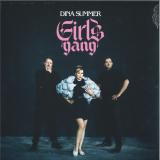
Das Berliner Indie-/Electro-Wave-Trio Dina Summer meldet sich mit einer ordentlichen Portion Synthpop auf ihrem zweiten Album ‘’Girls Gang’ zurück!
Dina Summer ist ein kollaboratives Projekt, das aus Kalipo, einer Hälfte der legendären Electro-Punk-Band Frittenbude, und dem griechisch-deutschem DJ & Produzenten Duo Local Suicide besteht, die das Label Iptamenos Discos betreiben. Ihre bisherigen Werke umfassen das von Kritikern gefeierte Album „Rimini“ aus dem Jahr 2022, das einen nostalgischen Einblick in Retro-Disco-Vibes bietet, sowie die EPs „Who Am I“ (2021) und „Hide & Seek“ (2024). Seit der Gründung der Band vor fünf Jahren hat Dina Summers Musik mit Millionen von Streams, weltweitem Radio-Airplay und zahlreichen Spotify- und Apple Music-Editorial-Playlists für Aufsehen gesorgt und wurde von DJs wie Charlotte De Witte, The Hacker, Âme, Dixon, Joris Voorn, DJ Hell, Joyce Muniz und Dubfire gespielt. Das neue Album umfasst 11 Songs die sich mit Themen wie Empowerment („No More Tears“ & „Girls Gang“), Außenseitertum („Alien“ & „Zombie“), Vergänglichkeit („Promise Me feat, Curses & Joshua Murphy“), Nostalgie („Halkidiki“) und Beziehungen („Nothing To Hide“ & „Hypnotized“) auseinandersetzen. Legte ihr Debütalbum seinen Fokus eher auf den Club zwischen Italo-Disco und 90ies Elektro, erkundet die neue Veröffentlichung eine größere Sound-Palette, die von New Wave & Post-Punk zu Electroclash und Synth- & Indie-Pop reicht. „Girls Gang“ ist ein gutes Stück songorientierter als das Debütalbum, die Band erweitert ihr Repertoire auf einigen Songs unter anderem um echte (!) Bässe und Gitarren, vorallem aber setzt Frontfrau Dina neben ihrem Markenzeichen - Spoken Word - immer öfter auf ihre Gesangsstimme. Trotzdem knüpft das Album nahtlos an das Erstlingswerk an, man hört wieder jene poppige Melodien und Hooks mit denen sich Dina Summer zuvor schon einen Namen gemacht hat, ausgebreitet auf einem Bett aus Indiepop-Hymnen und Club-Brechern.

- 1: That’s The Way
- 2: Children Of The World
- 3: The Pressure
- 4: Glide
- 5: Lay It Back
- 6: Hello Sunshine
- 7: Through The Pain
- 8: Shows Us The Way
1
También disponible
Oxblood coloured vinyl[29,20 €]
MF Robots return with a euphoric blend of Afro-soul-funk, delivering a release brimming with optimism, tight vocals, and the inescapable grooves that have become their signature. This album is a celebration of life, love, and musical joy, radiating positivity from start to finish.
Co-founder Jan Kincaid describes the track Glide as “a celebration of the unfolding of a love story.” From its romantic, reflective instrumental introduction to the soulfully upbeat opening bars, the listener is immediately swept into a journey.
True to MF Robots’ style, the track is joyful and celebratory, yet it pushes further—exploring the path love takes over time, and how, when it works, we can glide through life’s challenges with the right person by our side.
The album’s vibe is exuberant and full of energy, paying homage to soulful greats while adding a modern twist. There’s a subtle nod to legends like Earth, Wind & Fire, but what truly shines through is the sense of fun—the feeling that MF Robots are having an absolute ball singing, playing, and creating music that moves both body and soul.

MF Robots return with a euphoric blend of Afro-soul-funk, delivering a release brimming with optimism, tight vocals, and the inescapable grooves that have become their signature. This album is a celebration of life, love, and musical joy, radiating positivity from start to finish.
Co-founder Jan Kincaid describes the track Glide as “a celebration of the unfolding of a love story.” From its romantic, reflective instrumental introduction to the soulfully upbeat opening bars, the listener is immediately swept into a journey.
True to MF Robots’ style, the track is joyful and celebratory, yet it pushes further—exploring the path love takes over time, and how, when it works, we can glide through life’s challenges with the right person by our side.
The album’s vibe is exuberant and full of energy, paying homage to soulful greats while adding a modern twist. There’s a subtle nod to legends like Earth, Wind & Fire, but what truly shines through is the sense of fun—the feeling that MF Robots are having an absolute ball singing, playing, and creating music that moves both body and soul.

- A1: Caballo Salvaje
- B1: Cumbia De La Noche
From the windswept streets of Edinburgh comes a sound that gallops wild through the night — equal parts jungle heat and Highland haze. Los Chichanos, a fiercely multicultural collective formed in 2021 under the spirited direction of guitarist Sandino Borges. Never ones to wait for an invitation, the band have carved out a scene of their own in Edinburgh, a home for tropical rhythm and nocturnal joy amid Scotland’s long dark nights. Their devotion to the electrifying pulse of Peruvian tropical music, cumbia and chicha, intertwined with Afro-Latin rhythms and vintage psychedelia runs deep.
Add the soul Cuban son, the swing of Brazilian grooves and a hint of spaghetti western melodrama, and you begin to hear the distinct voice of Los Chichanos. Caballo Salvaje gallops forward with fuzzed- out guitar, echo-drenched organ, and the untamed spirit of the Andes. Cumbia de la Noche was written during a harsh winter season when daylight became a distant memory.

- Money (Demo)
- Unreleased (Demo)
- Scrape/North Of The Border
- Money (Reflex Mix)
- Extremities
- The Fanatic
- Intravenous
- Beautiful Dead
También disponible
Clear Vinyl[32,98 €]
A journey into the raw and visceral origins: from the demo sessions mixed by Steve Albini to the night of the very first secret show on December 20th, 1988. In the heart of Chicago, Geordie and Martin Atkins turned frustration and distance into pure creative energy, recording the now-legendary "Black Cassette" demos at Albini"s house. Distorted, menacing bass lines, unruly oscillators, and Albini running endlessly up and down the stairs between the basement drum room and the pantry control room defined a sound that was brutally direct and uncompromising. The first interactions with the Yamaha drum machine foreshadowed elements that would later shape parts of the album. Those sessions sparked essential ideas, while the future studio - purchased from Steve and moved to Wabash Ave - would soon become the core of Invisible Records and Killing Joke"s operations. On the other side, a truly rare document: excerpts from Atkins"s very first show with the band, at Burberries in Birmingham on December 20th, 1988. In a small, mirror-lined club filled with tension, adrenaline, and inevitable collisions with the walls, Extremities, The Fanatic, Intravenous, and The Beautiful Dead were performed publicly for the first time. It was the night when everything ignited: the blast beat still in its embryonic stage, the controlled fury Geordie demanded - "can you go a bit more Moonie on it?" - and above all Jaz"s theatrical yet strikingly genuine laughter. Not just joy, but a declaration: a giant "fuck off" to the doubters and a prelude of what was about to come. A raw, essential, indispensable testimony: the birth of an era.

A journey into the raw and visceral origins: from the demo sessions mixed by Steve Albini to the night of the very first secret show on December 20th, 1988. In the heart of Chicago, Geordie and Martin Atkins turned frustration and distance into pure creative energy, recording the now-legendary "Black Cassette" demos at Albini"s house. Distorted, menacing bass lines, unruly oscillators, and Albini running endlessly up and down the stairs between the basement drum room and the pantry control room defined a sound that was brutally direct and uncompromising. The first interactions with the Yamaha drum machine foreshadowed elements that would later shape parts of the album. Those sessions sparked essential ideas, while the future studio - purchased from Steve and moved to Wabash Ave - would soon become the core of Invisible Records and Killing Joke"s operations. On the other side, a truly rare document: excerpts from Atkins"s very first show with the band, at Burberries in Birmingham on December 20th, 1988. In a small, mirror-lined club filled with tension, adrenaline, and inevitable collisions with the walls, Extremities, The Fanatic, Intravenous, and The Beautiful Dead were performed publicly for the first time. It was the night when everything ignited: the blast beat still in its embryonic stage, the controlled fury Geordie demanded - "can you go a bit more Moonie on it?" - and above all Jaz"s theatrical yet strikingly genuine laughter. Not just joy, but a declaration: a giant "fuck off" to the doubters and a prelude of what was about to come. A raw, essential, indispensable testimony: the birth of an era.

También disponible
Oxblood Coloured Vinyl[32,35 €]
YONAKA return with their turbo-charged second studio album, Until You’re Satisfied. Self-recorded with band member Alex Crosby at the production helm, alongside a little help from Dimitri Tikovoï (Placebo, The Libertines), the Brighton rock-trio come together as a unified force over 13 tracks. Until You’re Satisfied is a joyful reclamation of themselves, wrestled from the brink and shaped into their truest form yet. “Fragile in places and a circus in others”.

- You Smile When It Hurts
- Dreamin
- Time
- Blue Draginfly
- Arabian Night
- Reality
- Walking Alone
- Dar Tunnel
- I Try Alone
- Open My Head
- Tired To Follow
- Happy Birthday
Far from being a nostalgic exercise, the record reasserts their daring artistry, merging legacy and rebirth. Known for melodic minimalism, elegant melancholy, and pulsing electronics, the band has often been compared to Depeche Mode, New Order, or Joy Division, yet their singular identity has always set them apart. On this new album, they reinvent their sonic language, blending vintage synths with classical textures and luminous modern production. The result is a sensory journey where light and shadow converse, where poetry meets pulse, reaffirming their timeless relevance. Their influence extends across genres: sampled by Madlib, reinterpreted by Tricky, reimagined by Theophilus London, and remixed by DJs such as Marcel Dettmann. Tributes, reissues, and appearances in cinema and fashion underscore their resonance, from Lucie Borleteau's Chanson Douce movie to catwalks by Chloe.
Born in Marseille in the early 1980s and led by Alain Seghir alongside Catherine Loy , Brigitte Balian , and Beverley Jane Crew , Martin Dupont left a mythic legacy with tracks like ' Inside Ou't and 'Just Because...' before dissolving in 1987. Rediscovered through Minimal Wave reissues, their music captivated a new generation of underground and electronic enthusiasts. Today, Martin Dupont are reborn. Seghir and Crew, joined by Sandy Casado, Thierry Sintoni, and Olivier Leroy, embark on a world tour that affirms their unique ability to move and inspire. You Smile When It Hurts proves that their visionary sound has never been more alive
10
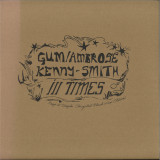
Co-founder of Pond and touring member of Tame Impala, Jay Watson, also makes music as GUM. “GUM is my brain, unfiltered,” Watson says. A labour of love and an exercise in joy, written and recorded with Ambrose Kenny-Smith, best known as the mesmeric harmonica-player, keyboardist and vocalist with King Gizzard & The Lizard Wizard and The Murlocs. The debut collaborative album between the two is a 10 track exploration into groove, blues and soul, deeply hypnotic from start to finish.
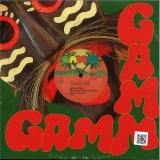
Melohman and Paco Colombas Unveil 'Palma de Janeiro': A Rhythmic Bridge Between Mallorca and Brazil...
PALMA DE MALLORCA - Producers Melohman and Paco Colombas announce their new EP, 'Palma de Janeiro' on GAMM, a vibrant sonic fusion where Mallorcan tradition meets Brazilian pulse. All together, the result is a highly percussive house workout with a South American feel.
The project centers on a unique dialogue between two worlds: the Mediterranean drone of the Ximbomba and the tropical snap of the Pandeiro.
Inspired by the festive spirit of Mallorca's 'Devil' - a mischievous figure of joy and dance - the EP weaves together communal island roots with the duo's deep-seated passion for Brazilian music.
Born from years of crate-digging and travels across Brazil, 'Palma de Janeiro' is more than a collaboration; it is a celebration of music as a universal language. It is a tribute to the dancefloor, where local heritage and global rhythms collide.

JOCELYN VIRAPIN is one of the master of the Guadeloupean Gwoka percussion.
Born October 17th, 1957 in Basse-Terre, he’s an author, composer, producer and a vinyl digger.
His Gwoka is a pure tribute to the traditional combination of responsorial singing in Guadeloupean creole, rhythms played on the Ka drums and dancing.
He started to play in the 90’s with his band Gwaka. He opened and collaborated with prestigious band such as Kassav or Zouk Machine.
He has a massive discography as arranger and musician: he appears on more than 78 albums! The track "Pasyon" was originally released in 1994 on a rare vinyl , but with the artist we decided to do an edit, so we invited the super talented jazz player Florian Pellissier for a Rhodes improvisation on the original take.
The track "Respè Pou Fanm" was originally released with his band BELOKA in 2010 and was only pressed on a Cd format at a very limited quantity. This beautiful song is a blend of Ka, fantastic jazzy keys on Rhodes, hypnotic bass, sublime creole spiritual chants. With an incredibly joyous feel, the lyrics gave a timeless advice to men: Respect Women .
It definitely deserves a vinyl version for all the music lovers, Dj’s and diggers from all over the world !
Kenbé red pa moli !
Music From Memory is thrilled to present ‘Aquáticos’, a captivating new record from Los Angeles producer Eddie Ruscha and Brazilian guitarist Fabiano Do Nascimento. Blending Nascimento’s expressive, Afro-samba and choro-inflected guitar with Ruscha’s cosmic, groove-driven sound, ‘Aquáticos’ marks the start of a vibrant musical partnership—an organic, free-spirited collaboration full of interplay and vitality.
Conceived during the early 2020’s, ‘Aquáticos’ grew from a series of recording sessions in which the music unfolded naturally, in a state of effortless flow. Album opener ‘Nascer,’ the very first piece they recorded, captures such a moment perfectly: Nascimento’s 7- and 10-string nylon guitars weave seamlessly with Ruscha’s modular synths, drum machines, and vintage keyboards. Like much of Ruscha’s work under Secret Circuit and E Ruscha V, it is rich in lush, rhythmic textures—pulsing and bubbling with vibrant energy.
The initial session that produced the opening track set the tone for the record, establishing a template of intuitive interplay and musical freedom. Each subsequent session built upon the last, gradually shaping ‘Aquáticos’ across nine tracks, all characterized by melodic richness, rhythmic depth, and an unshakable sense of spontaneity.
‘Aquáticos’ pulls the listener gently into a celebration of musical conversation — a radiant, immersive journey where Ruscha and Nascimento’s instruments breathe together, echoing the joy, curiosity, and playful spirit that define their collaboration.
Sleeve art and design by Michael Willis.

Joyce Manor are California pop-punk legends and I Used To Go To This Bar is this epochal band operating at the top of their game. They continue to deliver relentlessly satisfying rock music in a manner that makes it look simply effortless. The Torrance, California-hailing trio of Barry Johnson, Chase Knobbe, and Matt Ebert are at a point in their career where their position as one of the most beloved rock bands is a foregone conclusion. Their seventh album finds the group continuing to find rich new veins to tap in their short-and sweet songcraft without losing an ounce of bite that gained them such repute in the first place. I Used To Go To This Bar further situates Joyce Manor in the rich lineage of their influences and inspirations. Think AFI"s rapid-fire burn, Weezer"s indelible power-pop acumen, and the dusky emotionalism of The Smiths while further establishing them as leading lights in the current rock landscape. The fresh burst of inspiration that fuels I Used To Go To This Bar proves that Joyce Manor are far from content to rest on such laurels, moving forward with their sound and style in a way that reminds you of how they got to this point in the first place. Catch them live at Coachella 2026.

- A1: The Call
- A2: Marty's Dream
- A3: Endo's Game
- A4: The Apple
- A5: Pure Joy
- A6: Holocaust Honey
- B1: The Humbling
- B2: Motherstone
- B3: The Scape
- B4: Tub Falls
- B5: Fucking Mensch
- B6: Rockwell Ink
- C1: Hoff's
- C2: Seward Park
- C3: The Necklace
- C4: Vampire's Castle
- C5: Back To Hoff's
- C6: Shootout
- D1: I Love You, Tokyo
- D2: The Real Game
- D3: Endo's Game (Reprise)
- D4: Force Of Life
- D5: End Credits (I Still Love You, Tokyo)
23
Daniel Lopatins (Oneohtrix Point Never) Soundtrack für Marty Supreme, gepresst auf schwarzem und transparentem Vinyl. Kommt mit japanischem Obi-Band und doppelseitigem "Koto Endo / Marty Supreme Offizieller Ball"-Poster. Der Film Marty Supreme ist eine Abenteuerkomödie von Josh Safdie aus dem Jahr 2025 und ist lose vom Leben Marty Reismans inspiriert, die in den 1950er-Jahren spielende Geschichte ist jedoch fiktiv. Die Hauptrolle des titelgebenden Tischtennisspielers übernahm Timothée Chalamet. Gwyneth Paltrow, Odessa A'zion, Kevin O'Leary, Tyler Okonma, Abel Ferrara und Fran Drescher ergänzten das Schauspielensemble. Marty Supreme ist der erste Film von Josh Safdie nach Beendigung der kreativen Zusammenarbeit mit seinem Bruder Benny. Das Werk wurde Anfang Oktober 2025 im Rahmen des New York Film Festivals uraufgeführt. Der US-Kinostart war an Weihnachten 2025. Ende Februar 2026 soll der Film in die deutschen Kinos kommen. Die Filmmusik von Daniel Lopatin wurde im Jahr 2025 für einen Hollywood Music In Media Award (HMMA) nominiert. Im Rahmen der Critics' Choice Movie Awards 2026 wurde Marty Supreme in die Shortlists für die Kategorien Casting & Ensemble", Szenenbild", Kamera", Kostüme", Filmschnitt" und Filmmusik" aufgenommen. Im Dezember 2025 gelangte der Film auf die Oscar-Shortlists für das beste Casting, die beste Kamera, das beste Makeup & Hairstyling und die beste Filmmusik. (Quelle: Wikipedia)

11
A brash, unapologetic blend of electronic, dance, punk, industrial, and pop music, No Lube So Rude exists at the intersection of the personal and the political, where the body serves not only as a sexual and spiritual vessel, but also as the front line in a battle for basic human rights. Peaches’ lyrics are bawdy and explicit here, laced with biting sarcasm and clever wordplay, but they’re also surprisingly vulnerable, offering up a candid look in the mirror from a post-menopausal queer icon reckoning with a society that’s come to expect silence, if not outright erasure. The result is a deliberately provocative exploration of identity, sexuality, and bodily autonomy from a trailblazer, a singular work of emotional and sonic alchemy that balances the poetic and the profane in equal measure as it transforms all the friction and frustration of modern life into joy and transcendence.

The NY House Trak brought joy to dance floors world wide in 2012 and beyond. With second hand copies now fetching for 40 euros and over, we thought it was time to serve you with a limited re-issue of both this club track and Can You Feel It Remastered and vocals on the a-side slightly adjusted this time 'round too! The NY House Trak is cut on one side so you know what this means: extra loud pressing for ultimate sound quality. Side b contains a previously unreleased instrumental!

- 1: Lemonade Tycoon
- 2: Anti-Bird-Spike-Bird-Nest
- 3: Interlude (Stride)
- 4: Allcapsallbold
- 5: Pet Boss
Taupe’s latest album release, waxing | waning delivers jazz experimentalism, ‘skronk’, avant-rock, and electronics, by the Glasgow-based trio, due out via Minority Records. Across its seven tracks, waxing | waning captures Taupe’s approach – bold and boundary pushing – shaped by a fresh shift in the band’s dynamic and compositional approach.
Taupe’s waxing | waning, co-composed and realised by its players in a studio that was once an undertaker’s premises in Glasgow, is an absolutely affirmative album, an act of cultural defiance in desperate times.
Comprising Mike Parr-Burman (guitar, bass guitar, electronics), Jamie Stockbridge (alto and baritone saxophones) and Alex Palmer (drum kit, percussion), Taupe work up a storm of skronk, free jazz and harmolodic frenzy whose closest relations include Zu, Melt Banana and John Zorn. However, waxing | waning is from its opening, stuttering blasts, an exercise in seeking out and claiming new territory, finding unique and novel permutations in which jazz, rock, electronics interbreed at breakneck pace. Here is a group determined to say and do things they don’t get to say and do elsewhere in their musical lives.
‘Lemonade Tycoon’ hits the ground skronking. It’s cubistic jazz, cumulative in its impact, avoiding the white lines of the conventional freeway, bridling, bustling, coming at you from all angles – a three way conversation of astonishing rapidity, fast track, telepathic communication – everyone from James Chance to Albert Ayler coming at you at once, before morphing in to a spidery scrawl of electronics and furious percussion. ‘Anti-Bird-Spike BirdNest’s‘ title somehow sums up the sort of mental images evoked by the music – its sheer creative disobedience, as if being chased in vain, like a delivery rider evading capture by ICE agents -– shapeshifting, assuming different shades, sprouting metal quills and, in its midsection, seeming almost to swallow itself alive, before regurgitating itself in a sublime mess.
‘Interlude (Stride)’ is not exactly ambient, more a horizontal enmeshment of percussion, drones, reverberant noise, electronics, a sonic mulch. ‘allcapsallbold' reminds of early Aksak Maboul, in its playfulness, a haywire series of short phrases, subject to mechanical interference, a complex weave of irregular rhythms, increasingly eloquent sax phraseology and caustic guitars, which land heavier and heavier. ‘Pet Boss' is the new jazz equivalent of a highly evolved, mature conversation among brilliant equals, sharp, empathetic, complementary, rising to a collective, joyful noise. On the title track, electronics descend like a shower of bright particles, intensifying in their luminosity, whitening the skies, as sax and drums kick up a tempestuous, spontaneously sculpted noise that summons the ghosts of the great free jazz players, before a dark calm descends slowly. Finally, ‘Turn Push Kick’, a burgeoning chatterstorm of electronics, before the group kicks in, at angles to one another, led by abrasive guitars, reminiscent of Sunn O))) in their ritualistic concussion, riffing, digging deep amid squealing sax and piledriving percussion.

Julius Hemphill's debut record, 1972's Dogon A.D., was self-produced for his Mbari imprint, and it was issued with a beautiful black-and-white cover. Very DIY. The label's name writ large along the bottom edge, like it was the band's name. It's a quartet record featuring Hemphill on alto and flute, with Baikida Carroll on trumpet, Abdul Wadud on cello, and Phillip Wilson on drums – a classic jazz front line/rhythm section format, but nothing conventional about the way the music sounds.
The long track – from where the LP takes its title – is one of the key epic statements of new jazz in the era. Among its remarkable distinctions, it manages to draw on Wilson's schizoid experience having been a member of the Paul Butterfield Blues Band and the first drummer for the Art Ensemble of Chicago, in making an 11/8 rhythm into a staggeringly funky thing of joy. Over the course of fourteen and a half minutes, Hemphill builds a nearly continuous solo, his spiritual blood brother Wadud sawing the cello with a deep blues soulfulness that is raw and mantra-like in its repetitive incantation. It feels right and wrong in equal measure, the theme carrying its own piquancy with honked barnyard dissonances and some contrary motion between the horns and string. Most of all, it takes its own sweet time, in no hurry to get anywhere in particular, but out for a righteous stroll. – John Corbett (excerpt from the liner notes)
