Eddie C's Disko Universal continues its run of deep and diverse releases with 'A New Chapter' EP from Southside Chicago legend Ellery Cowles and Austin up-and-comer Open Soul...
Ellery Cowles lives House Music. He's rocked it with Lil Louis, Roy Davis Jr, Steve Poindexter and the Chicago Bad Boys.
Here we dive straight into Midwest territory - raw machine funk, smoky house grooves, and the kind of no-nonsense acid you'd expect from someone with DJAX and Cajual credentials.
Timeless, floor-ready material from true craftsmen - deep groove, no filler.
Sounds like the kind of record you'd pull from a beat-up crate in a corner of Detroit Threads and never put back.
Search:jr jr
2026 Repress
Saha Gnawa’s self-titled debut pairs Moroccan Gnawa with NYC jazz and groove, channeling North African futurism through cross-cultural improvisation. Building off centuries-old practices, traditional song forms dissolve into psychedelic outer-space explorations.
2025 Repress
When people think of Tough Gong they usually think of Bob Marley and rightly so, as he was nicknamed and often called Tough Gong and from this his early releases which came out on the Tough Gong label. But Tough Gong was also the name of a recording complex named after Bob Marley hat included a top level recording studio, pressing plant and distribution centre that would allow reggae music to carry on many years after his sad and too early demise.
Bob Marley had take over the former residence of Island Records boss Chris Blackwell the Island House, 56 Hope Road around 1974. Just before the 'Smile Jamaica' concert on 03rd December the same year the house was ambushed by gunmen. Bob's manager Don Taylor was hit 5 times AND Bob was shot in the arm and his wife Rita Marley was hit in the head by a stray bullet. How no one was fatally injured is staggering. Immediately after the concert Bob Marley started his self imposed exile from Jamaica, settling in London, England. This would lead to the aptly named exodus album being recorded there in the summer of 1977. It would not be until the 'One Love' peace concert in Kingston's national arena on the 22nd April 1978 that would see Bob's return to the island. Marley felt is was important to show his commitment to the people of Jamaica and on his return to 56 Hope Road he began construction of his own recording studio with the help of music mogul Tommy Cowen. Unfortunately Bob Marley's short life would end on the 11th May 1981 from cancer which originated form a football injury. His passing would lead to 56 Hope Road being turned into a museum to the legend of reggae music.
A new location would have to be found to carry on Bob's work which was 220 Marcus Garvey Drive, Kingston 11. The buyer would be Rita Marley and the Tough Gong International Organisation.
Engineers working at the new facility included Errol Browne who had worked at Treasure Isle studios and Hopeton Overton Browne known as 'Scientist', named by the great producer Bunny 'Striker' Lee who worked with him previously at King Tubbie's and Channel One's studios described his ground breaking style as being like that of a scientist.
We focus for this release on the work carried out by the great Scientist on the songs of the Black Solidarity Label run by Ossie Thomas (aka Joe The Boss) recorded at Tough Gong studios. One of the foremost recording, pressing and distribution facilities on the Jamaican island set up from the work of Bob Marley to carry forward reggae music. Hope you enjoy this set......
2025 Repress
Gregory Porter’s “1960 What?” continues to be one of Expansion’s most sought after releases and comes now in new enhanced packaging. It combines the original with the Opolopo Kick & Bass re-Rub
Gregory Porter as narrator, sounding like Amiri Baraka, declares on “1960 What?” that “the motor city is burning y’all—that ain’t right” and refers to Martin Luther King Jr.’s death and describes trigger-happy policing (supported by a trumpet that blares, jabs, rumbles, and yearns); and the song portrays how certain events turn people against the possibilities of life and light. A vision that only recognizes strength and cruelty and rage is dangerously imperfect: rather, creativity, education, intelligence, sensitivity, democratic political participation, and compassionate social work are goals and virtues that can be affirmed, if not actively pursued, in all times.
Utter presents Marshall Jefferson's previously unreleased meditation opus 'Yellow Meditation For The Dance Generation' alongside two remixes from French production maestro Joakim.
Marshall Jefferson: Chicago House music pioneer, creator of the anthemic ‘Move My Body’, an original collaborator of Adonis, Ce Ce Rogers and Roy Davis Jr., production mastermind of countless dancefloor classics such as Phuture’s ‘Acid Tracks’, Sterling Void’s ’It’s All Right’, Hercules’ ‘7 Ways’… and the soothing voice behind a 36 minute healing meditation guide. Yes, really.
But let’s rewind, slightly.
In 2017, Marshall was approached and encouraged by Ian ‘Snowy’ Snowball to write his autobiography and the pair set about putting Marshall’s account of the history of House music together. The book, ‘Marshall Jefferson: Diary of a DJ’ was published in 2019.
Following the book’s release, Ian and Marshall's collaboration continued and during the pandemic an outlandish idea arose to create a piece of music combining Ian's interest in meditation (he runs Club Chi specialising in Shibashi Qigong - a form of Tai Chi Qigong - which is a gentle form of movement therapy/exercise) and Marshall's willingness to experiment musically to see what might be possible.
The result is ‘Yellow Meditation For The Dance Generation’, where Marshall vocalises Ian’s lyrics in his instantly recognisable voice. The keen-eared out there may also recognise aspects of the music itself as a stripped back, lengthened and far mellower version of Marshall’s 1985 obscurity ‘Vibe’:
“I would take tapes to the Music Box and Ron Hardy would play my music. ‘Vibe’ was one of those tracks. I recorded ‘Vibe’ in 1985, but it became one of my tracks that I just forgot about until some guy on Facebook sent me a recording of it that was taken from a club. The only person who I ever gave a recording of ‘Vibe’ to was Ron Hardy. The other people I know who had copies of the track were Gene Hunt and Emanuel Pippin (DJ Spookie).
"The original version of ‘Vibe’ was made using a Roland 707, Roland JX-8P keyboard and a Roland 727 drum machine. I was still working at the Post Office at the time, and this was pre-‘Move Your Body (The House Music Anthem)’. ‘Vibe’ has the building blocks for ‘Move Your Body’ because it was using the instruments on the track that I discovered what I could do with the bass sound, to make a track like ‘Move Your Body’.”
Still, Ian’s initial intention for ‘Yellow Meditation’ was function and it was designed to be a ‘Sequential Relaxation Exercise’ focusing on the Solar Plexus. Bearing this in mind, Marshall took a bare-bones and hypnotic approach to this particular re-recording of ‘Vibe’ so that the voice takes centre stage and listeners (hopefully) find themselves on a meditative journey. In fact, this long-form track was always intended as a private tool purely for meditation at Club Chi rather than released to the public - after all, Marshall had also created and released a more drum heavy, ’traditional’ club-focused 'Vibe Three' instrumental version for that very purpose - but a chance airing of the full 36 minute version changed its path.
Much like those 1985 ‘Vibe’ cassettes, Marshall had sent the track to a few close contacts, one of whom was Kieran at Phonica Records who aired it over the shop’s basement soundsystem. Its unorthodox nature caught the ear of colleague Alex (of Utter) and the seeds of a physical release were planted.
Eventually, with the full-version carefully whittled down to a vinyl friendly length of 24 minutes, full track parts in hand and a b-side to fill, Alex sought out one of his favourite producers to take up the remix reigns: Joakim. The Tigersushi co-founder and Crowdspacer boss has a long history of boundary-pushing remixes that straddle both dancefloor functionality and experimentation. This time the original material resulted in Joakim coming up with a number of ideas and he finally delivered two versions - one club focused (‘Vertical’), the other more introspective and meditative (‘Horizontal’), both of which appear on the final 12”.
The limited edition 12” also includes a download code giving buyers access to all of the vinyl tracks plus an 18 minute extended version of Joakim’s ‘Horizontal’ remix, its instrumental counterpart (for those who can live without Marshall's voice) and full 12 minute acapella (for those who can't!)
Alex
a A1. Yellow Meditation For The Dance Generation (Edit) 24:00
b B1. Yellow Meditation For The Dance Generation (Joakim's Vertical Remix) 9:09
9:05
- A1: Herbert - Got To Be Movin' (On The Dancefloor)
- A2: Chris Nazuka - Somewhere Between Distance And The Impossible
- B1: Blaze - Lovelee Dae (Beloved Vocal Rmx)
- B2: Gemini - In My Head (Freaks Move This Way Vocal Dubby)
- C1: Seven Davis Jr. - One (Live Edit)
- C2: Red Rack'em - Wonky Bassline Disco Banger
- D1: Eli Escobar - Happiness Pt. 2
- D2: Kenny Hawkes & Louise Carver - Play The Game (Space Children Love Mix)
To mark three decades of Classic, this special edition double vinyl comes housed in a raw reverse board sleeve, calling back to the very first ‘Season’s’ release on the label. The inner sleeves feature stunning orange and pink GMUND card stock, complete with embossed detailing—a tactile nod to Classic’s design-led legacy and attention to craft.
Volume 1 of the 3-part compilation series dives into Classic’s most cherished moments—spanning both foundational tracks from the label’s early years and key highlights from its post-2011 rebirth.
Record One celebrates some of the first outings of Classic's original era.
It opens with Matthew Herbert’s sought-after 1996 cut ‘Got To Be Movin’—a raw, Chicago-inspired groover that captures the sound of Classic’s roots.
Also featured is the monumental ‘Somewhere Between Distance and the Impossible’ by Chris Nazuka (of Rednail Kidz with Derrick Carter), a 1997 masterpiece steeped in atmosphere and widely regarded as one of the label's most transcendental releases.
Flip to Side B for Blaze’s legendary ‘Lovelee Dae’, remixed into a club ready, ethereal dreamscape by Jon Marsh of The Beloved.
To finish we have Gemini’s hypnotic ‘In My Head’, transformed by prolific remixers on Classic - Freaks (Luke Solomon & Justin Harris) into a dubbed-out vocal trip that oozes character.
Record Two picks up the story with Classic’s reawakening in 2011.
Seven Davis Jr’s ‘The One’ (Live Edit) was the track that caught Luke Solomon’s ear, paving the way for his Friends EP and long-standing connection with the label.
Red Rack’em’s infectious and eccentric ‘Wonky Bassline Disco Banger’ found its perfect home on Classic in 2016, quickly becoming one of the most talked-about records of the year.
Then there’s Eli Escobar’s ‘Happiness Pt. 2’—a rich, emotive standout from his Classic album work, showcasing his skill at blending deep grooves with raw soul.
Rounding out the release is the iconic ‘Play the Game’ by Kenny Hawkes & Louise Carver. A pillar of UK house history, this essential track was reissued in 2019 with a powerful remix from his best buddy’s The Space Children (Luke Solomon, Jonny Rock & Leon Oakey), honouring Kenny’s lasting influence.
Two of Australia’s own legends Dr Packer & Yogi deliver an instant classic with ‘Heavy Vibes’. Reworking the disco track by the Montana Sextet aka Vince Montana Jr. who was primarily known for founding Salsoul Orchestra and his work with the MFSB and their track ‘Love Is The Message’, heard throughout ‘Heavy Vibes’.
David Penn & KPD join legend Kurtis Mantronik for a 2025 update of Kurtis’ 2011 release ‘Get Down’, sampling Brick’s 1977 disco record ‘Ain’t Gonna Hurt Nobody’.
- A1: Mark Farina & Homero Espinosa - Work Groove (2025 Remaster)
- A2: Mark Farina & Homero Espinosa - Work Groove (Hotmood Remix)
- A3: Mark Farina & Homero Espinosa - Work Groove (Acapella)
- B1: Homero Espinosa & Della - Burning Hot (Seven Davis Jr & Jt Donaldon Remix)
- B2: Franky Boissy Ft Roland Clark - Black Music (David Harness & Tedd Patterson Main Afro Mix)
Moulton Music proudly presents House of Moulton Vol. 1, our first-ever vinyl series. This release digs deep into the Moulton catalog, highlighting some of our biggest tracks alongside exclusive and unreleased remixes that you won’t find anywhere else.
Side A kicks off with a fresh 2025 mixdown of “Work.Groove” by Mark Farina and Homero Espinosa, followed by a brand-new remix from Hotmood who brings the funk with an uptempo, driving version perfect for peak-hour sets. We’ve also included the acapella of “Work.Groove” for DJs and heads who like to get creative.
Side B goes even deeper, starting with an unreleased remix of “Burning Hot” by JT Donaldson and Seven Davis Jr. This version captures the essence of Moulton’s deep house sound with analog synths, tough beats, and signature funk. Rounding out the release is David Harness and Tedd Patterson’s Main Afro Mix of “Black Music” by Franky Boissy and Roland Clark, a powerful and soulful cut that closes the record in style.
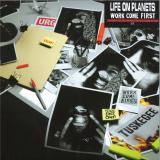
Tuskegee continues apace with ‘Work Come First’ from Life on Planets, a flawless blend of classic house, R&B, and conscious songwriting, remixed with finesse by Omar S and Soul Clap’s Charles Levine.
A modern-day hymn to hustle and stride, ‘Work Come First’ doesn’t chip away at the soul in pursuit of success. Working in collaboration with like-minded producer Seven Davis Jr., Phill Celeste applies his key alias to a triumphant, full-bodied songwriting moment. Led by beautiful organ piano, mingling with the artist’s defiant vocals and defined by the feel of a full live band, ‘Work Come First’ continues Life On Planets' beguiling, genre-crossing journey.
In ever-charismatic and minimal mode, Detroit icon Omar S breaks down ‘Work Come First’ into core elements for the floor, blowing out the system and applying Life on Planets’ vocal performance to a raw, lo-fi arrangement with a hint of street soul. In neat parallel, Charles Levine delves into the more full-bodied, rich elements of the track, tripping on the sophisticated funk long associated with the Soul Clap founder’s oeuvre.
Complimenting both takes, producer Seven Davis Jr. provides an alternate ‘Sev’s mix’, a little rougher around the edges for dancers under red lights.
"I want to hear more of Ryo Fukui's performances." The dream of listeners around the world has now become a reality. A spectacular live performance full of the charm of the mature Fukui who has been with .This is what an unexpected joy is all about. The appearance of Ryo Fukui's "new work". Recorded on June 26, 2004. This is a live recording of a live performance commemorating the 9th anniversary of , the jazz live house that Fukui presided over and used as the base of his activities.
The members of the trio were Fukui, Kosuke Sakai (bass), and Yoshito Eto (drums). Fukui was 56 years old at the time. His performance was powerful and large-scale, yet delicate and sharp. In terms of the balance of energy, stamina, and technique, he was just approaching his prime. He spins heavy yet elegant renditions of his beloved Phineas Newborn Jr. and Tommy Flanagan, and thrillingly plays Wayne Shorter, who he was a huge fan of in his youth. It is a spectacular performance that reflects the fulfillment of Fukui's time. , which opened in June 1995, is celebrating its 30th anniversary this year.
Text by Yusuke Ogawa (UNIVERSOUNDS / DEEP JAZZ REALITY)
- A1: Kelly Watch The Stars (Edit); Mixed By – Stéphane "Alf" Brait*; Producer, Recorded By – Nicolas Godin; Remastered By – Marie Pieprzownik
- A2: Kelly Watch The Stars (Moog Cookbook Remix); Remix – Roger Joseph Manning Jr
- B1: Kelly Watch The Stars (Edit Version); Remix – Etienne De Crécy
- B2: Kelly Watch The Stars (American Girls Remix By Phoenix); Remix – Phoenix
In 1982, the elite, core musicians (MFSB / The Salsoul Orchestra) behind the soulful Sound of Philadelphia - Earl Young (drums), Ron Baker (bass), Norman Harris (guitar), Lenny Pakula (organ), Larry Washington (percussion), Vince Montana, Jr. (vibes) - and powerhouse vocalists Joe Freeman, David Simmons, Ron Tyson and Bobby Love convened at Philadelphia’s historic Virtue Studios to record some of the genre’s most iconic hits. This small, but amazing set of lush recordings, which were mixed at Alpha Studios - ensuring that every note and nuance was captured with the highest fidelity, recently caught the attention of the famed producer and remixer Eric Kupper. Kupper got his start working as a keyboardist and guitarist for such producer/remixers as David Morales, Arthur Baker, Frankie Knuckles, Peterauhofer, and Richie Jones, just to name a few. Since 1986, he has played on, remixed, and/or produced over 1400 records for artists spanning all contemporary musical genres. Presented here is Kupper stellar remix of “Back Stabbers” which features Freeman’s impassioned lead vocals. This release is not just a tribute to the past, but a vibrant continuation of the legacy
More Rice and Jugaar Records – Two Bangkok-affiliated labels – bring together an assemblage of their mutual friends for a heady, floor-focused VA with moods to soundtrack peak flow, after-hours rabbit holes, and just about everything in between.
Rudoh of Jugaar Records fame kicks us off with ‘Madoh’, a bendy groove that initially bares flex of early 2000s Minimal with its trimmed, rubbery percussion and obscured vocal snippets. As the track progresses, a hefty break and a catchy synth line bolster things before breakdowns unfold like little trippy slumbers rudely interrupted by bold, punchy drops.
Next up is Tokyo legend Gonno who follows up with ‘Rad’, a broad-shouldered banger propelled by a heaving kick and clap combo. A wrought synth is paired with odd shocks of acid and a sequence that flickers like a strobe. All the while a thick, gnarled bass line rumbles underneath, keeping vibes at boiling point throughout.
More Rice’s DOTT follows up with a swampy excursion propelled by a potent kick and nimble submarine tones. Drums are neatly stacked in polyrhythms as an infectious swing unfolds, one that’s decorated with ghostly synths and a generous dose of psychedelic synthesis.
Sarayu – also of More Rice fame, closes things up with ‘Fuijan Groove’, a brilliantly lean cut that lets the subs do the talking. Sharp tonal blobs flesh out a simple but highly effective march as spectral pads expand in plumes of smoke until the conclusion of a rich and varied record that unites two kindred labels perfectly.’
‘More Rice and Jugaar Records – Two Bangkok-affiliated labels – bring together an assemblage of their mutual friends for a heady, floor-focused VA with moods to soundtrack peak flow, after-hours rabbit holes, and just about everything in between.
Rudoh of Jugaar Records fame kicks us off with ‘Madoh’, a bendy groove that initially bares flex of early 2000s Minimal with its trimmed, rubbery percussion and obscured vocal snippets. As the track progresses, a hefty break and a catchy synth line bolster things before breakdowns unfold like little trippy slumbers rudely interrupted by bold, punchy drops.
Next up is Tokyo legend Gonno who follows up with ‘Rad’, a broad-shouldered banger propelled by a heaving kick and clap combo. A wrought synth is paired with odd shocks of acid and a sequence that flickers like a strobe. All the while a thick, gnarled bass line rumbles underneath, keeping vibes at boiling point throughout.
More Rice’s DOTT follows up with a swampy excursion propelled by a potent kick and nimble submarine tones. Drums are neatly stacked in polyrhythms as an infectious swing unfolds, one that’s decorated with ghostly synths and a generous dose of psychedelic synthesis.
Sarayu – also of More Rice fame, closes things up with ‘Fuijan Groove’, a brilliantly lean cut that lets the subs do the talking. Sharp tonal blobs flesh out a simple but highly effective march as spectral pads expand in plumes of smoke until the conclusion of a rich and varied record that unites two kindred labels perfectly.’
Oliver Dollar presents part four of his Contemporary series on Rekids. The EP precedes his upcoming album on the label, enlisting Seven ‘Sev’ Davis Jr. and Nils Ohrmann, alongside dub reinterpretations by La Boix and Sev.
Germany’s Oliver Dollar returns to Radio Slave’s Rekids with Contemporary Part Four, Parts one through three featured collaborations with Austin Ato, Brillstein, Harvard Bass, Hazmat Live, Boogs, and many more, winning support from the likes of Nightmares on Wax, Anja Schneider, Laurent Garnier, Carista, Jennifer Cardini, Dam Swindle, and others.
For this next chapter of Oliver Dollar’s ‘Contemporary’, elements of Dub serve as the unifying thread, opening part four with ‘Speakers Bleed’, a jazz-inflected House cut from Oliver and Classic Music Company and Ninja Tune artist Seven ‘Sev’ Davis Jr. Hypnotic vocals swirl through deep, groove-laden rhythms, setting the tone for the EP’s fluid, atmospheric feel before Oliver reunites with Golden Gate club resident and long-time collaborator Nils Ohrmann for the Hallelujah Dub of ‘The New Is Here’. The track features the soulful voice of Detroit songwriter and Contemporary series regular APROPOS while gospel-tinged background vocals and rich textures sit over an infectious percussive rhythm. On the flip, Oliver Dollar & Brillstein’s ‘Pill Popper’ from Contemporary Part Two is reworked by La Boix, the duo of LA”s Thee Mike B (aka Brillstein) and producer Salva, whose credits include work with RL Grime, Kurupt, E-40, and the Grammy-nominated album of ScHoolboy Q, as well as remixes for Rihanna, Boys Noize and Nelly Furtado. Their version is a late-night, low-slung trip, with echoing keys and vocals drifting through deep basslines. Closing the EP, Seven Davis Jr. returns for a dub of ‘Before You’, Oliver’s collaboration with ADMN from Contemporary Part One. Retaining APROPOS’ heartfelt vocal from the original, Sev layers bright, soul-drenched synths over rolling drums, delivering an irresistible, feel-good finale.
Exit were a five-piece ensemble of journeymen musicians from the lone star state of Texas who came together in the early 1980’s to record a handful of popular local 45’s including two Football-mania songs. The groups line-up consisted of lead guitarist and vocalist Clennis High, rhythm guitarist Lonnie Jones, his brother Johnny K. Jones the groups keyboardist, bassist Frank Houston Jr and George Oliver on Drums.
Clennis High, a promising Football player with a flair for playing the guitar began his early musical career while attending Wheatley High school. Aged 17, Clennis played on several Crazy Cajun, Huey P Meaux’s recording sessions for Eugene Gamble and Barbara Lynn. Further recording sessions on Roy Head followed before he accepted an invitation by his neighborhood friend Willie Parnell to play alongside a group of fellow students in a band called ‘The Drells’. ‘The Drells’ had been founded by Archie Bell in 1966 pulling together neighborhood friends James Wise, base singer Cornelius Fuller, Billy Butler, Willie Parnell joined later by Archie’s brother Lee Bell. Clennis would play with ‘Archie & The Drells’ through their time on Skipper Lee Frazier’s Ovide label often accompanied by the ‘Texas Southern University Toronadoes’ where they scored a hit with the dance instruction song “Tighten Up” which on the strength of Atlantic Records picked the group up. Clennis played on all 3 of the Drells studio albums “Tighten Up”, “I Can’t Stop Dancing” and There’s Gonna Be A Showdown” under Gamble and Huff’s tutelage before quitting to return home to complete his degree. He continued to play with several local Houston bands including the Cold Four who recorded the sort after “Love And Care/Low Riden” (Drells).
Clennis later formed ‘The Reality Band’ with his friend Jerald Grey which introduced him to George Oliver and Frank Houston Jr. Occasionally ‘The Reality Band’ played with other groups, one group in particular (which Jerald previously knew) being an outfit from Conroe, Texas called the ’58 Engineers.
‘The 58 Engineers’ were founded by Johnny and Lonnie Jones, taking their name from the Army unit Johnny served with during his time in the service. By 1973 having grown to 8 members the group entered the studio to record the highly collectable and popular funk outing “The Funky Fly (Part1 & 2)” on their own Bryant Records label (Bryant being the Jones brother’s mother’s maiden name).
As members of the ‘58 Engineers’ moved on, the Jones brothers found themselves working more and more with the ‘Reality Band’ so when Jerald Grey too later moved on the remaining ‘Reality Band’ members Clennis, George and Frank having grown fond of the two “Country Brothers from Conroe” as they affectionally called the Jones’s made the decision to continue working with them, which led to the foundation of the group, Exit.
During 1980 the recently formed Exit recorded the first of their two Football -mania songs but it is from the groups 1981 release “Success/One More Hour” (Dat-Tex 105) that Soul Junction have taken the splendid ballad “One More Hour” to pair with the flipside of the groups third release “The Little Green Monster” (Dal-Tex 106) which is now highly regarded and sort after by sweet soul/lowrider connoisseurs alike. Both of these songs have been put back-to-back to feature on Soul Junction’s forthcoming September 45 release.
Muzik & Friendz Records is absolutely thrilled to announce a momentous milestone: we are celebrating our 10th anniversary! To mark a full decade of music, community, and friendship, we are incredibly proud to present a special various artists vinyl compilation.
This celebratory record sees us reunite with some of our closest friends and talented artists who have been integral to the Muzik & Friendz journey. We are so happy to come back with this new release featuring captivating contributions from JR From Dallas, Pat Lezizmo, Rawdio, Franksen, and an exciting, previously secret collaboration project known as Padeera. Each track has been carefully selected to deliver genuinely groovy, infectious, and compelling house cuts that embody the sound and spirit of the label.
Join us in celebrating ten years of passion for music with this essential vinyl release, packed with fresh tracks from the family.
- A1: Chuck Robertson - Shoot Out The Lights (7 29)
- A2: Chuck Robertson - State Of Mind (3 41)
- A3: Ceschi & Sam King - Say Something (3 18)
- A4: Ceschi & Sam King - Brutiful (2 59)
- A5: Ceschi & Sam King - Sell Me Youth (2 00)
- B1: Stacey Dee - Everything Is Beautiful (3 13)
- B2: Stacey Dee - Breastless (3 58)
- B3: John Edward Carey Jr - Guts & Teeth (3 40)
- B4: John Edward Carey Jr - Songs Song (4 22)
- B5: Ras 1 - Take Me Home (4 22)
- C1: Ras 1 - Sunny Hours (5 30)
- C2: Poli Van Dam - Sad To Me (3 59)
- C3: Poli Van Dam - Southbound Stranger (3 37)
- C4: Brendan Kelly - Cyborg Midnight (7 32)
- D1: Brendan Kelly - Cold Cold Ground (5 47)
- D2: Fat Mike - Alcoholics Alphabet (2 52)
- D3: Fat Mike - Cokie The Clown (2 37)
- D4: Sam King - Glitch (1 54)
- D5: Ceschi & John Edward Carey Jr - Ojala (4 17)
- D6: John Edward Carey Jr - Desperations (5 56)