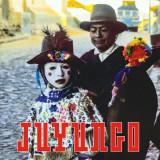
‘Since the 16th century, the Ecuadorian province of Esmeraldas has been home to a unique Afro-Indigenous culture originating in the integration of the Indigenous Chachi and Nigua peoples with African Maroon communities. Juyungo documents significant Esmeraldan artists and bands playing the Afro-Ecuadorian folklore of the province, as well as including some older field recordings. Based mostly on the marimba, whose origins lie partly in the African balafon, partly in Indigenous percussion instruments, the music is laced with call and response chants, ambient insect and bird noise, the filigree finger-styles of the Andean guitar tradition and the panpipes of the mountains. This is resonant insider roots music at its headiest — the mystic revelation of Esmeraldas, gully deep and lustral.’
- Francis Gooding, The Wire.
The fifth in our series of LPs compiling classic music from Ecuador. Customary Honest Jons runnings: a beautiful gatefold sleeve; superior pressing, with vivid, intimate sound; full-size, sixteen-page booklet, in colour throughout, with detailed, fascinating, bi-lingual notes, and stunning photographs.
The music is transfixing, magical; not like anything else. From start to finish, this album is continuously, profoundly immersive; a kind of journeying, trippy meditation about slavery and cultural resistance, identity and mix, places and spaces, futures and pasts. It’s inscrutable to net-surfing, algorithms, Shuffle. But for a taste try the insurgent marimba roller Agua Largo, jet-propelled by Rosa Huila’s rapturous blend of African spiritualist and Christian chant. ‘Healing music,’ Zakia called it on Gilles Peterson’s BBC show recently. And the ravishing pasillo Kasilla Shungulla — ‘calm your heart’ in the Quichua language — a duet between the Peruvian master-guitarist Raúl García Zárate and viola da gamba by Juan Luis Restrepo from Medellin, recorded in a baroque church in Buzbanza, Colombia.
out of Stock
Last delivered 5 months ago available to reorder, subject to availability
In 2026, the sample alchemist returns to his first love with his 11th album, Endless Smile 2. A 16-track project conceived as a tribute to his landmark 2015 album Endless Smile, which featured his iconic tracks “Betty” and “Qu’attendez-vous de moi”.
Born from a desire to return to the essentials, Endless Smile 2 focuses on instrumental compositions enriched with samples and organic textures inspired by the 70s. The album develops a warm and sun-soaked atmosphere, crossed by the melancholic touch that defines Degiheugi’s musical universe.
Recorded between 2023 and 2025 in his studio Endless Smile Records and mixed by his longtime collaborator Mr. Gib, the album opens with the trip-hop anthem “The Last Opening”. Far from being a simple introduction, it acts as a true gateway into Degiheugi’s new sonic journey. Keyboards set the tone, the horn section led by N’Zeng invites listeners into the groove, while guitars and organic keyboards immerse us fully into his musical world. The scene is set: he’s back.
Among the standout tracks, “Ain’t Goin Down” delivers a reggae-influenced groove driven by a message of hope, while “Vem O Mar” (feat. Hugo Kant) explores funk and tropical soundscapes. “Ipanemax”, a nod to the classic “The Girl From Ipanema”, and “Ouh Baby” extend this Brazilian atmosphere, while “Savoir Danser” leans toward oriental textures and “Juanita Bonita” ventures into a bold fusion of cumbia and dub.
The album also reveals Degiheugi’s signature melancholic side. An addictive loop settles deep into the listener’s mind as “Sympathique et sympa” balances nostalgia with urban groove. The haunting strings of “Naked” and the soul ballad “She Worries” respectively reflect on mortality and the fragility of romantic relationships. Guest artist Miscellaneous addresses gender-based violence on “Love Is Blind”, telling the story of a woman trapped in a toxic relationship.
Endless Smile 2 closes with “Enivrez-vous”, an outro inspired by Charles Baudelaire’s poem, bringing the album to a contemplative conclusion. With this release, Degiheugi masterfully completes a musical journey that began ten years ago.
A new duo and record label based in Madrid lands on the underground techno scene, led by Mike Gómez and José Castillo, the latter known for his aliases Milford and UHF, and also the owner of the electro label Gladio Operations.
Diorama is born with the intention of recovering the soul and essence lost in electronic music, which for some time has become practically homogeneous and predictable. With a timeless, fresh, and warm sound, Diorama produce rhythms close to dub and Detroit techno, mainly influenced by Juan Atkins, UR, and Basic Channel, among others.
This EP, titled Pacific Trak, begins with a nod to the old Scottish school, where they revive a forgotten track by British producer Anthony Scott, adding its imposing main chord to a true sea of melodic textures, bathed in exquisite acid. Spanish techno master Tadeo gives us his vision of Pacific Trak, exploring dub territories that remind us of past pieces released under the incomparable Maurizio label.
The B-side opens with Soul Memories, a manifesto of resistance that vibrates with detuned harmonies and raw bass lines, recalling the origins of Detroit’s primitive sound. The package closes with Polymorphic, a progression of relentless aquatic chords, set among careful and precise minimalist rhythms that oscillate between high-dynamics tech and dub.
out of Stock
Last delivered 3 months ago available to reorder, subject to availability
Celebrating the 30th anniversary of Enlace Funk magazine, they present the world's first Flamenco-Jazz compilation, featuring 16 tracks from between 1978 to 2025, released on vinyl for the first time. A musical dialogue between Flamenco and Jazz, unique in the world, a journey through some of the most important artists of this style, starting with the seminal work of the group Dolores in 1978, and continuing to examples of the current sound of this exciting fusion. Includes tracks never before released on vinyl by artists such as Jorge Pardo, Chano Dominguez, Pedro Ojesto, and Marc Miralta. The first volume of Flamenco-Jazz aims to showcase this unique style that has proven to be a bridge of communication and dialogue between flamenco and jazz musicians, creating an inimitable sound that is constantly evolving and transcending barriers. We take as our starting point a 1978 recording by Dolores, featuring Paco de Lucía, which later led to the formation of her legendary sextet with musicians who had participated in this recording. Of course, this first volume wouldn't be complete without other masters like Josemi Carmona, Pedro Ojesto, and Marc Miralta. And of course, a new generation of names that have elevated the genre to its current status, such as flautists Trinidad Jiménez and Sergio De Lope, Juanfe Pérez and Juan Pérez Rodríguez from Huelva, Pablo Martín Caminero from Vitoria, and Miquel Alvarez from Valencia. Not forgetting innovators like Antonio Lizana and Enriquito, who are crossing borders and sharing their unique style. Ltd ed.classic black vinyl double LP in gatefold sleeve
Babylon, der über zwei Stunden Originalmusik enthält, ist ein originelles Epos, das im Los Angeles der 1920er Jahre spielt, mit Brad Pitt, Margot Robbie und Diego Calva in den Hauptrollen und einem Ensemble mit Jovan Adepo, Li Jun Li und Jean Smart. Der Film ist eine Geschichte von übergroßem Ehrgeiz und unverschämten Exzessen, die den Aufstieg und Fall zahlreicher Charaktere in einer Ära ungezügelter Dekadenz und Verderbtheit im frühen Hollywood nachzeichnet. Der Soundtrack besteht aus 48 Musikstücken von Oscar-Preisträger Justin Hurwitz (La La Land).
'End Beginnings', das neue Album von Sandwell District, ist die erste neue Musik des Kollektivs seit dem tragischen Tod von Juan Mendez (Silent Servant) im Januar 2024. Mendez‘ atemberaubende Kunstwerke und Visuals waren immer eine zentrale Säule von Sandwell District, tatsächlich arbeitete er an einem Kunstwerk mit dem Titel 'End Beginnings' - nun der Titel des dritten Albums und eine Hommage an den verstorbenen Freund. 'End Beginnings' bringt gewaltigen Techno und umwerfende Dancefloor-Dynamik zusammen, eine meisterhafte Kombination von Innovation und Ekstase. Nach dem tragischen Einschnitt, steht nun wieder der Spaß im Vordergrund: „Eine gute Zeit zu haben ist so ziemlich der Grund, warum man überhaupt damit anfängt. Und es macht Spaß. Ich denke, wir fühlen uns jetzt viel glücklicher, besonders nach dem, was mit Juan passiert ist. Wir sind dankbar“, sagt Regis. '
out of Stock
Last delivered 5 days ago available to reorder, subject to availability
SKYLAX RECORDS presents a monumental new release by two of France’s most revered electronic music icons: ARNAUD REBOTINI & ACID WASHED. This record marks the first chapter of a secretive 4-part project — each release forming a piece of a bigger picture — a bold and mysterious tribute to the roots and future of rave culture. Following in the footsteps of Rebotini’s landmark album "Musical Component", this new project feels like a natural evolution — deepening his vision while expanding it into new sonic territories. Without giving too much away, this is SKYLAX BLACK 2 (after the LAXBLACK 1 "Winter Sequences EP" which marked the collaboration between Rebotini & Skylax) and features a set of four stunning tracks. On the A-side, Redshifts to Blueshifts opens the EP with an epic and soulful Detroit-style journey, evoking the finest moments of Underground Resistance — militant yet emotional, full of futuristic melancholy. 99 Shakes follows with a more direct club-driven assault, propelled by massive synth riffs and machine-gun rhythms, pushing the boundaries of dancefloor energy. Flip to the B-side and discover Futur Race, a pure electro odyssey à la Juan Atkins and early Metroplex (think 1985 sci-fi transmissions), sharp, robotic, and ultra-funky. Closing the EP is Gen Mix, a powerful and cinematic slice of what can only be called Wagnerian techno — intense, dramatic, orchestral in scope, and unmistakably Rebotini. This release is a statement — timeless and forward-thinking. This release is the first in a series — a mysterious and powerful journey through sound, vision, and legacy. What’s next? You’ll find out… one piece at a time.
out of Stock
Last delivered 4 months ago available to reorder, subject to availability
Elations Recordings presents "Return of the Airpoets", an exploratory recording from longtime collaborators Reuben Lewis (I Hold The Lion's Paw) & Adam Halliwell (Mildlife, IHTLP), occupying a unique space between contemporary experimental music and avant jazz. Engineered and mixed by Reuben Lewis in 2023, and featuring guest appearances from acclaimed Australian drummer Ronny Ferella.
"Return of the Airpoets" continues a conversation begun with 'Cygon Dance', an extended duo between Lewis and Halliwell from Halliwell's 2023 LP "Freedom Lapse"; a dialogue that stems from a shared love and respect for Jon Hassell's Fourth World music. Sonic pioneer and adventurer, Hassell's futuristic vision advocated possible musics, stressing plurality and multiplicity. Faithful to his vision, Adam and Reuben, as trailblazers rather than imitators, delight in boundless musical possibilities, adopting Hassell's futurism as stock-in-trade, making it their own while augmented with neo noir hues and hints of the tilted electro-funk of Miles Davis' collaborations with Marcus Miller.
These nine tracks flow together as a unified suite, their shadowy presence stitched from fractured narratives: imaginary crimes, murders, dreams, the unspoken. At the same time, you can detect the artists' meticulous attention to sonic detail, feel the undercurrents, the complex layering. This music has been distilled, winnowed, from extended improv sessions, with the artists - as producers - zeroing in on offcuts, shards, and splinters, seamlessly patching together fragments in post-production to construct intricately layered sound collages, taking a leaf out of Tao Macero's book, building from the ground up.
Who are these airpoets? Their mystifying trial suggests the travails of Joseph K, sentenced for unspecified crimes. But I prefer to see them as fugitives escaped from Robert Bolaño's novel, "Savage Detectives". In Bolaño's book, poet Juan Garcia Madero is granted admission to the shadowy group of poets, the Visceral Realists, whose movement has no clear aims, and whose members "walked backward . . . gazing at a point in the distance, but moving away from it, walking straight toward the unknown." Like the visceral poets, these airpoets, Reuben Lewis and Adam Halliwell, set their sights on a point on the distant horizon, setting off without map or compass, drawing nearer and moving away, towards the unknown.
Frederiksberg Records is proud to announce the long-awaited reissue of Ambonisye Lord Shepherd"s 1981 debut album, "Evidence For Real", a deeply personal and spiritual fusion of Soul and Jazz that has remained a hidden treasure for more than four decades.
out of Stock
Last delivered 10 months ago available to reorder, subject to availability
The producers of the new hit Broadway musical BUENA VISTA SOCIAL CLUB and WORLD CIRCUIT RECORDS present the show’s Original Broadway Cast Recording, to be released in July 2025, recording produced by Dean Sharenow and David Yazbek. Step into the heart of Cuba, beyond the glitz of the Tropicana, to a place where blazing trumpets and sizzling guitars set the dance floor on fire. Inspired by true events, the new Broadway musical BUENA VISTA SOCIAL CLUB™ brings the GRAMMY® Award-winning album to thrilling life—and tells the story of the legends who lived it. A world-class Afro-Cuban band is joined by a sensational cast in this unforgettable tale of survival, second chances, and the extraordinary power of music.
The BUENA VISTA SOCIAL CLUB™ Musical officially launched at Broadway’s Gerard Schoenfeld Theater in March 2025 to huge critical acclaim and has been nominated for 10 TONY AWARDS. The show is produced on Broadway by Orin Wolf, John Styles, Barbara Broccoli, Atlantic Theater Company, Luis Miranda, LaChanze and John Leguizamo with Executive Producer Allan Williams, with Nick Gold (World Circuit) and Juan de Marcos González (Buena Vista Social Club) acting as consultants on the production.
out of Stock
Last delivered 11 months ago available to reorder, subject to availability
Fin" is the fourth album by Spanish band Exnovios, a group that has been described as a blend of Spacemen 3 influences and the best of Spanish '60s pop. The new dozen songs that make up their fourth LP happily shifts away a bit from to the usual unbeatable formula of this Pamplona-based quartet (garage reverbcore as if sung by Spanish legends Juan y Junior) and add new and fascinating layers-at once fresh yet entirely logical in the evolution of such a unique band within the local scene. Exnovios' new collection of songs wasn't created in a rehearsal space or recorded in a single week in the studio. Rather, it was composed and rehearsed slowly in bedrooms and living rooms-songs that were later brought into the studio with the idea of finishing building them there. Over the course of nearly a year, the band approached each song one by one, in a handcrafted manner, alongside their trusted ally, producer Guillermo Mutiloa. The result is a treasure trove of songs, perhaps more psych-folk than ever, as acoustic pieces abound-full of exquisite melodies without abandoning the consciousness-expanding journeys that have made Exnovios a cult favorite: from the instant classic 'Nubes' (with its very Byrds-like harmonies and gorgeous twelve-string acoustic guitar), to the delightful Big Star-style fiction of 'El cine se queda en silencio', or even the fabulous cover of Stephin Merritt's 'Tú tú tú tú.' These are often drumless tracks, perhaps with some light percussion, always featuring detailed and exquisite arrangements of guitar, electronics, percussion, and even touches of strings. And despite the reduced presence of drums (which, along with the laid-back recording approach, makes this almost Exnovios' "White Album"), fans of the band's legendary fuzz-guitar reverbcore sound won't be disappointed: there's the psychedelic 'Viaje Alucinante', full of their classic riffs; their brutal cover of Psychic TV's 'Godstar' (drenched in echo and eccentric vocal effects); and the perfectly crafted 'Naves Misteriosas', which pulls off the impossible feat of sounding like 'Cerca de las Estrellas'-era Los Pekenikes in the verses, Phil Spector in the chorus, and the Ramones in the post-chorus. And there's much more: percussion reminiscent of the most 'baggy' Primal Scream on the brilliant 'Aún no es tarde'; love lyrics wrapped in an exquisite drum machine soaked in reverb and Suicide-style Farfisa on 'Ha venido a quedarse'; the beautiful two-chord electronic Christmas carol 'Ya es Navidad'; and that lysergic waltz that sings of the peace brought by karmic revenge, carried along by waves of fuzz and delay, titled 'El día del juicio final.' "Fin" reveals more sides and nuances of Exnovios than ever before-a festival of eclectic styles that all remain true to the musical vision that has defined them over the past decade, with their melodic powers at the peak of their talent.
New single by Romperayo on 7-inch vinyl spinning at 45 rpm, released by the Austrian label discos
elgozo.
This record is a tribute to the sound of Cumbia Sabanera de Acordeón from Colombia, in dialogue with
Mexico’s Cumbia Sonidera. It also pays homage to the melodic line of the first generation of
Colombian accordion masters of Cumbia Sabanera such as Joaquín Betín, Emiro Caicedo, and
Policarpo Calle.
The two tracks are built on a solid rhythmic foundation of bass and percussion, accompanying a
melodic interplay between accordion and analog synthesizer.Mixed and produced by Pedro Ojeda Acosta at Romperayo Studios, both songs were recorded live, in
quartet format, at Mambo Negro Studios in Bogotá, Colombia, by Daniel Michel, featuring Iván
Medellín on accordion, Nicolás Eckardt on electric bass, Juan Manuel Toro on analog synth, and Pedro
Ojeda on percussion.
This single offers a first taste of Romperayo’s upcoming LP, set for release in early 2026 — once again
on discos elgozo.
Tensal is the solo project of Héctor Sandoval, also known as half of Exium and Komatssu. Since its creation in 2014,
Tensal has become the channel for his most personal vision of Techno, blending diverse rhythms and textures with a
powerful and distinctive identity. Alongside his own imprint Tensal Ltd, he has released on some of the scene’s most influential labels, including Mord, Modularz, Perc Trax, Blueprint, Arcing Seas, PoleGroup, Float, Kynant, KR3, A.R.T.S,
Warm Up and Soma, where he delivered his first LP in 2018.
He has remixed artists such as Slam, Electric Indigo, Anthony Linell, Mike Parker, Shed, Pangaea and Shifted, while his
tracks are championed by leading DJs like Jeff Mills, Richie Hawtin, Marcel Dettmann, Ben Klock, Ellen Allien, Laurent Garnier and DVS1. His DJ sets, built largely from his own productions, have taken him to more than 60 countries
worldwide, with performances at iconic clubs and festivals including Berghain, Tresor, Awakenings and Fabrik.
Beyond Tensal, Sandoval explores different frontiers of electronic music: with Juan Rico (Reeko) he formed Komando Terrorismo Sonico (K.T.S.), releasing the album Insurrección in 2021; in 2022 he launched Syndromania on Oaks
Records, a vinyl-only project fusing Techno with Trance, EBM, Electro and Acid. In 2023 he joined BPitch Control,
releasing several EPs and performing at the label’s We Are Not Alone events, while in late 2024 he debuted on Blueprint
Records with Highland Landscapes, a collaboration with Vince Watson (Amorphic), followed by a joint EP on Mord in
2025.
out of Stock
Last delivered 4 months ago available to reorder, subject to availability
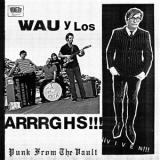
Valencia-based band Wau y Los Arrrghs!!! is made up of five punk rock hooligans as raw and real as chaos itself - led by one of the wildest frontmen around, Juanito Wau. Yes, there's garage rock here, no doubt - but you'll also find blasts of punk, rock 'n' roll, pop, and even a splash of surf. After many years unavailable, we are now delighted to reissue their second album "¡¡¡Viven!!!" (2009) featuring new artwork by Mik Baro. It includes their classic originals 'Copa, raya, paliza' and 'Viva Link Wray!!!' as well as a bunch of wild cover versions of Los Mockers, The Lyrics, The Troyes, The Hatfields, Jonah & The Whales_ The album was produced by Jorge Explosion (Dr. Explosion) and Mike Mariconda (Raunch Hands, Devil Dogs), and recorded at the celebrated Circo Perrotti Studios in Gijón. Please welcome again the undisputed kings of garage punk!
MOON DESTROYS wurde von Juan Montoya (ex-Torche) und Schlagzeuger Evan Diprima (ex-Royal Thunder) gegründet und veröffentlichte 2020 die erste EP "Maiden Voyage". Das 5-Song-Debüt entstand unter Mitwirkung von Troy Sanders (Mastodon) und Bryan Richie (The Sword) und legte den Grundstein für die Band, die 2024 mit Sänger/Gitarrist Charlie Suárez (MonstrO) und Bassist Arnold Nese ihre endgültige Besetzung fand. Im April 2025 rückte MOON DESTROYS dann ins wirkliche Rampenlicht, sicherte sich Support-Slots mit Elder und Dozer und veröffentlichten selbst ihr Debütalbum "She Walks By Moonlight" in limitierter Auflage. Dieses neue Album zeigte sofort die rasante Entwicklung, die über die Verbindungen der Mitglieder zu ihren früheren Bands hinausging. "She Walks By Moonlight" ist rau und verzerrt, aber dennoch verschwommen und hypnotisch und wechselt von schimmerndem Post-Rock zu treibendem Riff-Doom und zurück zu shoegaziger Psychedelia. Es ist eine filmische wie jenseitige Reise einer Band, die sich auch mühelos in die Gefilde von Floor, Mother Love Bone, The Jesus and Mary Chain, Russian Circles und Ride begibt und letztendlich alle Versuche einer Kategorisierung in einem sprudelnden, soghaften, funkelnden Dunst zusammenbrechen lässt. Blues Funeral präsentiert nundie weltweite Wiederveröffentlichung des Albums, ein neues Albums folgt 2026. Transzendenter Heavy Psych-Doom für Fans von REZN, King Buffalo, Pelican und Dead Meadow "With She Walks By Moonlight, Moon Destroys proves they're not just refining their sound--they're pushing boundaries, crafting a record that's as meditative as it is crushingly heavy." _Ghost Cult
Soul Jazz Records delve into the vast vaults of Discos Fuentes, one of the oldest and largest record companies in Latin America, known as "the Motown of Colombia". Discos Fuentes played a major role in spreading Afro-Latin sounds both to Colombia and around the world and this album explores that legacy. Latin Fire! features legendary Colombian artists such as Fruko, The Latin Brothers, Michi Sarmiento, Afrosound, Pedro Laza, Wganda Kenya and more and showcases the wide-ranging variety of styles that Discos Fuentes made unique to their sound. The album features music from the golden era of Fuentes; from late 50s and 1960s Cumbia through to the emergence of heavyweight and hardcore salsa and Afro-funk in the 1970s and up to the early 1980s.
out of Stock
Last delivered 7 months ago available to reorder, subject to availability
Since their reunion in 2015, Malka Family has been enchanting stages once again and releasing fabulous albums. Le Retour Du Kif (2018) and SuperLune (2022), featuring almost all of the original musicians, have marked their comeback.
Today, Planète Claire, a 16 tracks album, is undoubtedly one of Malka Family’s best works.
It was urgent for the great Funk families to return and give the new generations a lesson of kif…
Back to the Roots
In 1987, after organizing the Chez Roger Boîte Funk parties with Dee Nasty and Actuel/Radio Nova, Joseph Mannix and Isaac Ben Araz (then guitarist and trombonist of the group Human Spirit) decided to create a French-style Funk band.
The group quickly became one of the most spectacular live sensations of the 1990s.
Their self-produced debut album, Malka On The Beach, was released in 1991. Both the press and the public went crazy for these little funkateers, leading to a series of non-stop tours. Their concerts—wild, costumed performances—drew massive crowds. Warner France took notice and signed them.
Their second album, Tous Des Ouf (WEA), a true Space Opera P-Funk featuring guests like Sidney (Hip-Hop), Dee Nasty, Marco Prince (FFF), Juan Rozoff, and more, was released in 1992.
After touring the world multiple times, the band became independent again in 1995 and recorded an EP for Big Cheese Records: Fricassé De Funk.
By the late ‘90s, the rise of DJs and electronic music signaled the decline of large live bands. Due to its logistical weight—the band had over 14 members on their last tour—Malka Family was forced to part ways in 1997 after touring for their album Fotoukonkass (RCA/BMG).
But that was without counting on the resilience and extraordinary freshness of these Funk performers…
out of Stock
Last delivered 10 months ago available to reorder, subject to availability
New Source presents a new release from Juan Barraco under his alias Bunda. On this four-track EP, Bunda builds a personal and physical journey through his distinctive take on contemporary club music. Rather than following trends, Bunda draws from deeper sources: Latin American rhythmic traditions, post-industrial energy, and a classical music-rooted instinct for improvisation. The result is a release that feels expressive, tactile, and refreshingly off-grid.
From the heavy percussion and orchestral flashes of “Dvořák’s New World” to the stripped-back, jazzy minimalism of “New Source,” each track offers a distinct mood and approach. “Frente en Alto” brings a sense of urgency with its forward-driving rhythm and subtle tension, while “Game Over” closes the release with a raw, broken groove and distorted textures aimed straight at the sweatier corners of the club.
New compilation by Coco Maria on her own new founded imprint Club Coco. Comes with a 4 page folded insert.
There are albums that aren’t just listened to—they’re lived in. Club Coco – New Dimensions in Latin Music is one of them. This compilation, curated by Coco María, marks the first release on her own label and serves as a sonic portrait of what Latin music can become when it’s guided by intuition rather than labels. Eleven tracks open the windows and cross continents as effortlessly as changing a song. Here, Neapolitan synthesizers coexist with digital cumbias, voices whisper from within the groove, and rhythms invite movement—without urgency or pretense.
This selection isn’t defined by a genre but by a feeling: that of someone dancing with an open heart and keen ears. Each track is a postcard from a corner of the world, and also a love letter to rhythm and the emotions it stirs. From Bogotá to Naples, passing through Lima, Amsterdam, and New York, this compilation offers a journey where past and future brush against each other in the present moment. Club Coco doesn’t aim to define a sonic truth, but to invite listeners to discover new ways of hearing and feeling.
The party has already started. Come on in.
out of Stock
Last delivered 7 months ago available to reorder, subject to availability
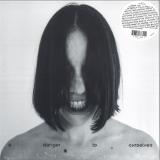
„A Danger to Ourselves“, das neue Album von Lucrecia Dalt, erscheint am 5. September 2025 bei RVNG Intl. und ist eine gewagte und doch intime Reflexion über die ungefilterten Komplexitäten menschlicher Beziehungen. Ohne die fiktiven Erzählungen der letzten Alben der Künstlerin kommt „A Danger to Ourselves“ von einem Ort der emotionalen Aufrichtigkeit. Dalts Stimme steht im Mittelpunkt und wird von einer üppigen akustischen Orchestrierung, perkussiven Instrumenten und einer Reihe hochkarätiger Mitstreiter unterstützt, die sich wie ein tiefes persönliches Gespräch entwickeln.
Die in Pereira, Kolumbien, geborene Dalt wuchs in einer musikbegeisterten Familie auf, die sie im Alter von neun Jahren dazu ermutigte, eine Gitarre in die Hand zu nehmen. Dalt folgte diesem kreativen Impuls, war fasziniert von computergestützter Produktion und verließ eine aufkeimende Karriere als Bauingenieurin, zog von Medellín nach Barcelona und schließlich nach Berlin, wo sie ihren unverwechselbaren, abenteuerlichen Sound entwickelte. Mit „Anticlines“ (2018) und „No era sólida“ (2020) und vor allem mit „¡Ay!“, Dalts bahnbrechendem Sci-Fi-Bolero-Album von 2022, hat sich ihre Arbeit auf immer anspruchsvolleres Terrain begeben. Auf dem Weg dorthin hat Dalt ihre Praxis auf die Vertonung von Filmen wie „On Becoming a Guinea Fowl“ (2024), die HBO-Serie „The Baby“ (2022) und den bevorstehenden psychologischen Horrorfilm „Rabbit Trap“ ausgeweitet, während sie Klanginstallationen und Performances kreiert, die ihre leuchtenden Modulationen und ihren unverwechselbaren, sich entwickelnden stimmlichen Ansatz zur Schau stellen. „A Danger to Ourselves“ entstand aus fragmentarischen Erklärungen, die Dalt aufschrieb, während sie das Leben auf der Tournee von „¡Ay!“ und die prägenden Momente einer neuen Beziehung meisterte. Im Januar 2024 begann sie, diese intimen Fragmente zu musikalischen Kompositionen zu kristallisieren, die allmählich zu einer zielgerichteten Konstellation von Songs wurden. Die Klangarchitektur des Albums basiert auf dynamischen Drum-Loops, die von Alex Lázaro beigesteuert werden, dessen perkussives Rückgrat wie bei „¡Ay!“ zur Leinwand für Dalts vielschichtigen Gesang wurde. Anstatt konventionellen melodischen Strukturen zu folgen, erzeugt das Album Musikalität durch das Zusammenspiel von Basslinien, Rhythmen und kompositorischem Design. „A Danger to Ourselves“ offenbart Dalts kompromissloses Streben nach klanglicher Klarheit, bei dem kühne Produktionsentscheidungen und sorgfältige Aufnahmetechniken Stimme und Instrument mit neuer Tiefe und Strahlkraft harmonieren lassen. „A Danger to Ourselves“ ist eindeutig anti-konzeptionell und ein poetischer Instinkt, mit dem Dalt den Fokus auf die Musik selbst lenkt, indem er Stimmen verwendet, die über die Parameter der Songs hinaus schwingen, und die perlenden Echos der ursprünglichen, romantischen Erregung beobachtet. Dalts klare Aufmerksamkeit für Details ist in jedem Takt spürbar, eine Hingabe, die sich in konzentrischen Kreisen dreht und ein Feld bildet, das das Persönliche und das Ätherische vereint. Das Album basiert auf intuitiven Experimenten und nutzt einfache Gesten und komplexe Kompositionen, um wandernde Linien zu weben, wie in „Divina“, das sich zwischen Spanisch und Englisch durch elastische Klanglandschaften bewegt. Der Titel des Albums geht auf David Sylvians Text „cosa rara“ zurück, der die Zerbrechlichkeit des Lebens, die Schwingungen der Liebe und die treibende Sehnsucht nach dem Wundersamen symbolisiert. „A Danger to Ourselves“ spiegelt diese transzendenten Zustände wider, indem es die Komplexität menschlicher Verstrickungen und den Wunsch nach Befreiung von Dopaminspiralen und gewöhnlichen Pfaden hin zu einer offeneren inneren Welt widerspiegelt. Sylvian selbst hat auf „A Danger to Ourselves“ eine Doppelrolle als Co-Produzent und Musiker gespielt. Es ist eine kollaborative Collage mit Beiträgen zahlreicher gefeierter Künstler. Weitere Kollaborationen ziehen sich durch das gesamte Album: Juana Molina ist Co-Autorin und Interpretin von „The Common Reader“, Camille Mandoki singt bei „Caes“, Cyrus Campbell spielt den grundlegenden Elektro- und Kontrabass, und Eliana Joy steuert bei mehreren Stücken Hintergrundgesang und Streicherarrangements bei. In den leuchtenden Tiefen von „A Danger to Ourselves“ inszeniert Dalt eine tiefgreifende Metamorphose, bei der das Persönliche durch klangliche Alchemie zum Universellen wird. Dieses Album ist sowohl Höhepunkt als auch Aufbruch - ein Portal, an dem ihre früheren experimentellen Reisen zu etwas verblüffend Intimem und doch Expansivem zusammenlaufen. Das Album ist ein Netz emotionaler Offenbarungen, jede Komposition ein präziser Indikator für Verletzlichkeit, in der Dalts Stimme eine Offenbarung in neuen harmonischen Gefilden verkörpert. Dalt hat ein lebendiges Dokument der Intuition jenseits konventioneller Grenzen geschaffen, das den Weg in Bereiche eröffnet, in denen die Musik sowohl Spiegel als auch Fenster ist.
Für Fans von PJ Harvey, Broadcast, St. Vincent, ML Buch, Stereolab, Cate LeBon, Aldous Harding, Mabe Fratti, Dry Cleaning, Juana Molina
out of Stock
Last delivered 11 months ago available to reorder, subject to availability
Grey Matter - Lost In Thought, originally released in November 1996 on Axia Records as a 5 track EP is now back on vinyl.
Dave Mothersole had this to say in his review of it for Muzik magazine in February 1997.
"Acid Techno, slo-mo Hip Hop breaks, right through to old school, bottom heavy warehouse grooves and Depeche Mode-meets-Juan Atkins purism. The real surprise, here, though, is how thoroughly listenable the whole thing is. Innovative, imaginative, and pretty bloody good."
This release includes all 5 tracks from the original AX001 release which has been selling for over £60 a copy on Discogs, spread over two 12"s with 3 extra unreleased tracks 'Never Die Just Multiply', 'Musical Electronic Poetry', and the 'Melt Into The Floor Mix' of 'Gloomy Encounters'.
All tracks are remastered from the orignal DAT tapes by Paul Mac & Simon @ The Exchange.
out of Stock
Last delivered 12 months ago available to reorder, subject to availability
Müne isn’t just a label—it’s a sonic language carved somewhere between the imagined and the real. Born from the fusion of the Japanese words 夢 (yume, “dream”) and 音 (oto, “sound”), Müne exists as a liminal space where emotion, memory, and sound design blur into something that feels. Less about genre, more about atmosphere. Less formula, more intuition.
The debut release capture that vision into four tracks shaped by hardware grit, dusty grooves, and moods that shift between tension and warmth.
A-side
Jose Daguerre sets the tone with Barbaria, a hypnotic loop-based workout with gritty low-end, dry drums, and a subtly evolving structure. It’s meditative, but with weight. Electro Reunión leans into stripped-down electro mechanics—tight sequencing, foggy FX, and a lingering sense of space. With Patricio Felip collab on the keyboard, both tracks feel tactile, intentional, and refreshingly unpolished.
B-side
Dani Labb brings Resfr0m, a broken-beat track that feels like it’s breathing—loose and raw, wrapped in textures that drift between dreamy and distorted. Finally, Veloz y Raptor by Juan Proeliis & Cohema closes this first release with a bouncy, dark cut full of kinetic energy, tape color, and playful detail.
MÜNE 001 is a declaration of intent: warm, human, and left-of-center. Built for deep listening and late-night systems.
out of Stock
Last delivered 3 months ago available to reorder, subject to availability
Valencia-based band Wau y Los Arrrghs!!! is made up of five punk rock hooligans as raw and real as chaos itself _ led by one of the wildest frontmen around, Juanito Wau. Yes, there's garage rock here, no doubt _ but you'll also find blasts of punk, rock 'n' roll, pop, and even a splash of surf. This joint release with Slovenly Records brings back two anthemic tracks from Spain's undisputed kings of garage punk! Originally produced by Jorge Explosion over a decade ago, "Copa, raya, paliza" and "Es un buen día" are guaranteed party-starters no garage DJ should be without. Pressed on neon pink vinyl.
In Guadeloupe, many people think that jazz and ka music are like a ring and a finger. To some extent, the same could be said about so called Latin music and the music played in the French West Indies.
Both aesthetics were born in the Caribbean and bear so many connections that they can easily be considered cousins. In constant dialogue, there are lots of examples of their fruitful alliance and have been for a while. The English country dance that used to be practiced in European lounges came to be called kadrille in Martinique and contradanza in Cuba. They both featured additional percussion instruments inherited from the transatlantic deportation. Drawing from shared feelings about the same traumatized identity – later to be creolized – it would be hard not to assume that they were meant to inspire each other. The golden age of the orchestras that graced the Pigalle nights during the interwar period further proves the point. As soon as the 1930s, Havana-born Don Barreto naturally mixed danzón and biguine music in a combo based at Melody's Bar. In the following decade, Félix Valvert, a conductor who was born and raised in Basse-Terre in Guadelupe, also worked wonders in Montparnasse with La Coupole, which was an orchestra made up of eclectic musicians. Afro- Caribbean performers of various origins were often hired on rhythm and brass sections in jazz bands, which used to enliven the typical French balls of the capital. In the 1930s and onwards, Rico’s Creole Band was one of them.
Martinican violinist-clarinettist Ernest Léardée, who would become the king of biguine music as well as the main figure of French Uncle Ben's TV commercials (a dark stigma of post-colonial stereotypes), had musicians from the whole Caribbean sphere play at his Bal Blomet – and they all enchanted "ces Zazous-là" (according the words of Léardée's biguine-calypso piece). In les Antilles (French for French West Indies), music history started to speed up in the 1950s, when trade expanded and radio stations grew bigger. The Guadelupean and Martiniquais youth tuned in their old galena radio sets to South American and Caribbean music. As for the women traders, les pacotilleuses, they bought and sold goods across different islands (the "passing of items through various hands" was thought to be most pleasurable) and brought back countless sounds in their luggage. Such was the case of Madame Balthazar, who once returned from Puerto Rico with the first 45rpm and 33rpm to ever enter Martinique.
Out of this adventure was created the famous Martinican label La Maison des Merengues, a music business she opened and undertook with her husband and which proved to be a major landmark. At the end of the 1950s, in Puerto Rico, Marius Cultier competed in the Piano International Contest playing a version of Monk's Round 'Midnight. He won the first prize and this distinction foreshadowed everything that was to come. Cultier, the heretic Monk of jazz, was quickly praised for writing superb melodies, always tinged with a twist that conferred a unique sound to his music. It didn't take long for the gifted self-taught musician to get to play with Los Cubanos, making a name for himself thanks to his impressive maestria on merengues.
The rest is history. Besides, in the late 1950s, Frantz Charles-Denis, born into the upper middle class in Saint-Pierre and better known by his first name Francisco, went back home after working at La Cabane Cubaine – a club located rue Fontaine where he had caught the Latin fever. Francisco's music was therefore heavily marked by his Cuban cousins' influence, which gave the combos he led a specific style and also led to renewal. Things were swinging hard in La Savane, located in the main square in Fort-de-France. He set up the Shango club close by and tested out the biguine lélé there, a new music formula spiced up with Latin rhythms. Soon afterwards, fate had him fly to Puerto Rico and Venezuela.
As for percussionist Henri Guédon (percussions were only a part of his many talents), he was born in Fort-de-France in May 22nd 1944, the day marking the celebration of the abolition of slavery. As an old man, he could remember that in " his father's Teppaz, a lot of hectic 6/8 music was constantly playing...". In the opening lines of his Lettre à Dizzy, a small illustrated collection of writings published by Del Arco, he highlighted the huge impact that cubop had on him as a teenage boy, around 1960. He eventually turned out to be the lider maximo in La Contesta, a big band steeped in Latin jazz. He was also the one who originated the word zouk to describe music which brought the sound of the New York barrio to Paris. It was the culmination of a journey that started in Sainte-Marie: "a mythical place for bélé, the equivalent of Cuban guaguancó". In the early 1960s, the tertiary economy developed to the detriment of agriculture. Yet rural life was where roots music emerged in Martinique and in Guadeloupe.
Record companies played a major part in the process of Latin versions sweeping across the islands – before reaching everywhere else. Producer Célini, boss of the great Aux Ondes label, and Marcel Mavounzy, both the head of Émeraude records - a firm which was founded in 1953 - as well as the brother of famous saxophonist Robert Mavounzy, were big names to bear in mind. Although there were many of them - all of whom are featured on this record - Henri Debs was definitely the major figure in the recording adventure. He proved to be so influential that he even got compared to Berry Gordy. In the mid 1950s, when he acquired his first Teppaz, he worked on his first compositions: a bolero and a chachacha. Then, he became the one man who made people discover Caribbean music, from calypso to merengue. He was among the first ones to rush out to San Juan, Puerto Rico, to buy records and distribute them through a store run by one of his brothers in Fort-de-France. He had members of the Fania All Star come and perform there, which he was madly proud about. He was also the first one to pay attention to Haitian music, such as compas direct and various other rhythms which would soon flood the market. As a result, many of the combos hitting his legendary studio would end up boosted by widespread "Afro-Latin" rhythms. However, he never denied his identity: gwo ka drums were given a major role, although they were instruments which had long been banned from the "official" music spheres. The present selection bears witness to such a creative swarming. Here are fourteen tracks of untimely yet unprecedented cross-fertilization: all types of music rooted in the Creole archipelago have found their way, whatsoever, to the tracklisting. Whether originating from the city or being more rural, they all go back to what Edouard Glissant, in an interview about the place of West Indian music in the Afro-American scope, called "the trace of singing, the one which got erased by slavery." "It is so in jazz, but also in reggae, calypso, biguine, salsa... This trace also manifests through the drums, whether Guadelupean, Dominican, Jamaican or Cuban... None of them being quite the same. They all point to the idea of a trace, seeking it out and connecting to each other through it. This is the hallmark of the African diaspora: its ability to create something new, in relation to itself, out of a trace. It may be the memory of a rhythm, the crafting of a drum, a means of expression which doesn't resort to an old language but to the modalities of it." The opening track features one of the emblematic orchestras of this aesthetic identity, criscrossing many music types from the archipelago. The 1974 Ray Barretto guajira – Ray Barretto was a major New York drummer influenced by Charlie Parker and Chano Pozzo – is magnificently performed by Malavoi, a legendary Fayolais group (i.e from Fort-de-France). Additionally, the compilation ends on a piece by Los Martiniqueños de Francisco. It symbolically closes the circle as it is a genuine potomitan of Martinique culture which also functions as a tireless campaigner for Afro-Caribbean music. Practicing the danmyé rounds (a kind of capoeiria) to the rhythm of the bèlè drum, it delivers a terrific Caterete, a kind of champeta of Afro- Colombian obedience which was originally composed by Colombian Fabián Ramón Veloz Fernández for the group Wgenda Kenya. The icing on the cake is Brazilian Marku Ribas, who found refuge in Martinique in the early 1970s, bringing his singing to the last trance-inducing track. These two "versions" convey the whole tone of a selection composed of rarities and classics of the tropicalized genre, swarming with tonic accents and convoluted rhythms. It is the sort of cocktail that the West Indians never failed to spice up with their own ingredients. For instance, the Los Caraïbes cover of Dónde, a famous Cuban theme composed by producer Ernesto Duarte Brito, has a typical violin and features renowned Martinique singer Joby Valente and his piquant voice.
The track used to be – or so we think – their only existing 45rpm. The meaningful Amor en chachachá by L'Ensemble Tropicana, a band which included Haitian musicians among whom was composer and leader Michel Desgrotte, also recalls how Latin music was pervasive in the tropics in the mid-1960s. They were the ones keeping people dancing at Le Cocoteraie in Guadelupe and La Bananeraie in Martinique. Around the same time, another "foreign" band, Congolese Freddy Mars N'Kounkou's Ryco Jazz, achieved some success on both islands by covering Latin jazz classics – such as their adaptation of Wachi Wara, a "soul sauce" by Dizzy Gillespie and Chano Pozo whose interweaving of strings and percussions can have anyone hit the dancefloor. How can you resist Dap Pinian indeed, a powerful guaguancó by Eugene Balthazar, performed by the Tropicana Orchestra and published by the Martinique-founded La Maison des Merengues? It also acts as a symbol of the maelstrom at work. Going by the name Paco et L'orchestre Cachunga, Roger Jaffory used to play guaguancó too: his Fania-inspired Oye mi consejo is one example of his style. Baila!!!!! Dancing was also one of the Kings' focus points. Oriza is a Puerto Rican bomba and a "classic" originally composed by Nuevayorquino trumpeter Ernie Agosto, which reserves major space for brasses, giving it a special sheen.
Emerging from the New York barrios crucible was also La Perfecta, a Martinique group originating from Trinidad, whose name directly references the totemic Eddie Palmieri figure as well as his own band, also called La Perfecta. Here they borrow Toumbadora from Colombian producer and composer Efraín Lancheros and interpret it by emphasizing percussions, which set fire to the track even more than the wind instruments. The same goes for Martinique's Super Jaguars, who use Tatalibaba – a composition by Cuban guitarist Florencio "Picolo" Santana which was made famous by Celia Cruz & La Sonora Matencera – as a pretext for sending their cadences into a frenzy. In a more typically salsa vein, the Super Combo, a famous Guadelupean orchestra from Pointe-Noire that was formed around the Desplan family and had Roger Plonquitte and Elie Bianay on board, adapt Serana, a theme by Roberto Angleró Pepín, a Puerto Rican composer, singer and musician also known for his song Soy Boricua. Here again, their vision comes close to surpassing the original. In the 1970s, L'Ensemble Abricot provided a handful of tracks of different syles, hence reaching the pinnacle of the art of achieving variety and giving pleasure. They played boleros, biguines, compas direct, guaguancó and even a good old boogaloo - the type they wanted to keep close to their hearts for ever, "pour toujours", as they sang along together in one of their songs. Léon Bertide's Martinican ensemble excelled at the boogaloo which had been composed by Puerto Rican saxophonist Hector Santos for the legendary El Gran Combo.
Three years later, in 1972, Henri Guédon, with the help of Paul Rosine on the vibraphone, tackled the Bilongo made famous by Eddie Palmieri. Such a classic!!!!! And so were the Aiglons, the band from Guadelupe: choosing to execute Pensando en tí, a composition by Dominican Aniceto Batista, on a cooler tempo than the original, they noticeably used a wonderfully (un)tuned keyboard in place of the accordion. On the high-value collectible single – the first one released by Les Aiglons under the Duli Disc label – there is a sticker classifying the track under the generic name "Afro". Now that is what we call a symbol. Jacques Denis
out of Stock
Last delivered 7 months ago available to reorder, subject to availability
„A Danger to Ourselves“, das neue Album von Lucrecia Dalt, erscheint am 5. September 2025 bei RVNG Intl. und ist eine gewagte und doch intime Reflexion über die ungefilterten Komplexitäten menschlicher Beziehungen. Ohne die fiktiven Erzählungen der letzten Alben der Künstlerin kommt „A Danger to Ourselves“ von einem Ort der emotionalen Aufrichtigkeit. Dalts Stimme steht im Mittelpunkt und wird von einer üppigen akustischen Orchestrierung, perkussiven Instrumenten und einer Reihe hochkarätiger Mitstreiter unterstützt, die sich wie ein tiefes persönliches Gespräch entwickeln.
Die in Pereira, Kolumbien, geborene Dalt wuchs in einer musikbegeisterten Familie auf, die sie im Alter von neun Jahren dazu ermutigte, eine Gitarre in die Hand zu nehmen. Dalt folgte diesem kreativen Impuls, war fasziniert von computergestützter Produktion und verließ eine aufkeimende Karriere als Bauingenieurin, zog von Medellín nach Barcelona und schließlich nach Berlin, wo sie ihren unverwechselbaren, abenteuerlichen Sound entwickelte. Mit „Anticlines“ (2018) und „No era sólida“ (2020) und vor allem mit „¡Ay!“, Dalts bahnbrechendem Sci-Fi-Bolero-Album von 2022, hat sich ihre Arbeit auf immer anspruchsvolleres Terrain begeben. Auf dem Weg dorthin hat Dalt ihre Praxis auf die Vertonung von Filmen wie „On Becoming a Guinea Fowl“ (2024), die HBO-Serie „The Baby“ (2022) und den bevorstehenden psychologischen Horrorfilm „Rabbit Trap“ ausgeweitet, während sie Klanginstallationen und Performances kreiert, die ihre leuchtenden Modulationen und ihren unverwechselbaren, sich entwickelnden stimmlichen Ansatz zur Schau stellen. „A Danger to Ourselves“ entstand aus fragmentarischen Erklärungen, die Dalt aufschrieb, während sie das Leben auf der Tournee von „¡Ay!“ und die prägenden Momente einer neuen Beziehung meisterte. Im Januar 2024 begann sie, diese intimen Fragmente zu musikalischen Kompositionen zu kristallisieren, die allmählich zu einer zielgerichteten Konstellation von Songs wurden. Die Klangarchitektur des Albums basiert auf dynamischen Drum-Loops, die von Alex Lázaro beigesteuert werden, dessen perkussives Rückgrat wie bei „¡Ay!“ zur Leinwand für Dalts vielschichtigen Gesang wurde. Anstatt konventionellen melodischen Strukturen zu folgen, erzeugt das Album Musikalität durch das Zusammenspiel von Basslinien, Rhythmen und kompositorischem Design. „A Danger to Ourselves“ offenbart Dalts kompromissloses Streben nach klanglicher Klarheit, bei dem kühne Produktionsentscheidungen und sorgfältige Aufnahmetechniken Stimme und Instrument mit neuer Tiefe und Strahlkraft harmonieren lassen. „A Danger to Ourselves“ ist eindeutig anti-konzeptionell und ein poetischer Instinkt, mit dem Dalt den Fokus auf die Musik selbst lenkt, indem er Stimmen verwendet, die über die Parameter der Songs hinaus schwingen, und die perlenden Echos der ursprünglichen, romantischen Erregung beobachtet. Dalts klare Aufmerksamkeit für Details ist in jedem Takt spürbar, eine Hingabe, die sich in konzentrischen Kreisen dreht und ein Feld bildet, das das Persönliche und das Ätherische vereint. Das Album basiert auf intuitiven Experimenten und nutzt einfache Gesten und komplexe Kompositionen, um wandernde Linien zu weben, wie in „Divina“, das sich zwischen Spanisch und Englisch durch elastische Klanglandschaften bewegt. Der Titel des Albums geht auf David Sylvians Text „cosa rara“ zurück, der die Zerbrechlichkeit des Lebens, die Schwingungen der Liebe und die treibende Sehnsucht nach dem Wundersamen symbolisiert. „A Danger to Ourselves“ spiegelt diese transzendenten Zustände wider, indem es die Komplexität menschlicher Verstrickungen und den Wunsch nach Befreiung von Dopaminspiralen und gewöhnlichen Pfaden hin zu einer offeneren inneren Welt widerspiegelt. Sylvian selbst hat auf „A Danger to Ourselves“ eine Doppelrolle als Co-Produzent und Musiker gespielt. Es ist eine kollaborative Collage mit Beiträgen zahlreicher gefeierter Künstler. Weitere Kollaborationen ziehen sich durch das gesamte Album: Juana Molina ist Co-Autorin und Interpretin von „The Common Reader“, Camille Mandoki singt bei „Caes“, Cyrus Campbell spielt den grundlegenden Elektro- und Kontrabass, und Eliana Joy steuert bei mehreren Stücken Hintergrundgesang und Streicherarrangements bei. In den leuchtenden Tiefen von „A Danger to Ourselves“ inszeniert Dalt eine tiefgreifende Metamorphose, bei der das Persönliche durch klangliche Alchemie zum Universellen wird. Dieses Album ist sowohl Höhepunkt als auch Aufbruch - ein Portal, an dem ihre früheren experimentellen Reisen zu etwas verblüffend Intimem und doch Expansivem zusammenlaufen. Das Album ist ein Netz emotionaler Offenbarungen, jede Komposition ein präziser Indikator für Verletzlichkeit, in der Dalts Stimme eine Offenbarung in neuen harmonischen Gefilden verkörpert. Dalt hat ein lebendiges Dokument der Intuition jenseits konventioneller Grenzen geschaffen, das den Weg in Bereiche eröffnet, in denen die Musik sowohl Spiegel als auch Fenster ist.
Für Fans von PJ Harvey, Broadcast, St. Vincent, ML Buch, Stereolab, Cate LeBon, Aldous Harding, Mabe Fratti, Dry Cleaning, Juana Molina
out of Stock
Last delivered 11 months ago available to reorder, subject to availability
Butterfly Records is proud to release a vinyl reissue of Radio Babilonia, the fourth electrifying studio album by Uruguayan alternative band Traidores. The album was originally released on CD and cassette in 1995 and it stands as one of the most representative works of their career. In Radio Babilonia voices of Juan Casanova and Víctor Nattero converge into a symphony of intense emotions and profound reflections. Each note resonates with their musical legacy, rising as a testament to the reality that surrounded them, where pain and beauty intertwine in a powerful auditory experience. With a style that defies convention, their lyrics transport us to a world of poetic chronicles, inviting us to explore the catastrophes of the present and future through their vibrant and critical lens. This album from 1995 is a masterpiece for those who seek an authentic and moving sound - a sonic journey that reflects its time and makes a bold statement. Released in August 1995, Radio Babilonia opens with its title track- a sonic storm that sets the tone with poetic urgency and avant-garde defiance. Songs like "Máquina" and "Crónica del Sur" explore inner turmoil and fracture realities, wrapped in melodic brilliance and sharp arrangements. Nattero's guitar work shines, especially in tracks like "Ella sabe bien" and "Pasajero de un tren," where a sense of déjà vu echoes through the lyrics. Side A closes with the haunting waltz "Como una plegaria," evoking blood-stained devotion. Side B deepens the album's mystique, offering lucid hope through punk anthems like "Enemigo del mundo" and "Fragmentos de mí." It culminates in the defiant "Canción rebelde": "There is no worse evil than chaining oneself to pain." Traidores channel poetic rage into a powerful, redemptive soundtrack for a disenchanted era.
out of Stock
Last delivered 13 months ago available to reorder, subject to availability
Ranil is undoubtedly the most unconventional figure among the greats of Amazonian cumbia, earning a well-deserved place alongside iconic bands like Los Mirlos, Los Wembler's, and Juaneco y su Combo. This compilation offers a glimpse into the vast musical output Ranil created in the late 1970s and early 1980s. Psychedelia, rock fusion, cumbia, salsa, mambo, Amazonian folk_ you'll find all these flavors blended into the vibrant, jungle-rich sound Ranil crafted. DESCRIPTION Ranil is undoubtedly the most unconventional figure among the greats of Amazonian cumbia, earning a well-deserved place alongside all the better-known iconic bands. He worked as a teacher, criollo guitarist, radio host, TV entrepreneur, and politician, but gained lasting fame as the founder of Ranil y Su Conjunto Tropical in the 1970s. By 1968, around the same time Los Destellos were making waves in Lima, groups like Los Wembler's de Iquitos and Juaneco y su Combo began electrifying cumbia in Iquitos. This new genre, dubbed Amazonian cumbia, exploded nationwide in 1973, thanks to hits by Juaneco y su Combo, Los Mirlos, and Los Wembler's. The success these bands achieved spawned dozens of other groups from the Amazon. Ranil, always a visionary, recognized the movement's potential and joined forces through his first single recorded on the Dinsa label in 1974. Unhappy with the contractual terms, he went on to found Producciones Llerena, the label on which he would release the rest of his discography. Over the years, Ranil y su Conjunto Tropical featured guitarists like Límber Zumba and Luis Nigro, while Ranil remained the lead vocalist and bassist for group. Zumba and Nigro had already played with other regional bands and written songs for groups like Los Destellos and Los Mirlos. This compilation offers a glimpse into the vast musical output Ranil created in the late 1970s and early 1980s, bringing together 14 tracks from the band's 10 LPs. These records have always been hard to come by as, despite being recorded in Lima, they were distributed by Ranil from Iquitos. Psychedelia, rock fusion, cumbia, salsa, mambo, Amazonian folk_ you'll find all these flavors blended into the vibrant, jungle-rich sound Ranil crafted.
out of Stock
Last delivered 13 months ago available to reorder, subject to availability
late night drive home have never known a world without Wifi - without access to the endless stream of joy, sorrow, heartbreak, and hope that we all tune in and tune out to on the daily. In many ways, the guys can"t really extricate themselves from that reality - even their band name comes from a random Wikipedia page - but they"re trying to at least grapple with it. "Most of us grew up on the internet with unsupervised access at a very young age," says singer Andre Portillo. "As we started foreseeing all the outcomes - both good and bad - of this kind of access and advancement, we started writing... forming a sound and message that would become our next record." The culmination of that, then, is the buoyant yet ominous as I watch my life online, the band"s debut album. late night drive home was born in El Paso, Texas, and Chaparral, New Mexico, hardworking communities where folks built their houses by hand and collars were mostly blue. Comprising guitarist Juan "Ockz" Vargas, singer Andre Portillo, drummer Brian Dolan, and bassist Freddy Baca, the entirely self-taught quartet released their first digital EP as a full band, 2021"s Am I sinking or Am I swimming?, and blew up with the single "Stress Relief," a blast of early-Aughts indie that racked in tens of millions of streams. After they signed with Epitaph Records in 2023 - and releasing 2024"s grunge-inspired 3 song EP i"ll remember you for the same feeling you gave me as i slept - they found themselves playing stages their indie idols previously shredded: Coachella, Shaky Knees, Austin City Limits, and Kilby Block Party. Since the end of the pandemic, though, the band had been dreaming up as i watch my life online. "I started thinking about the time after the pandemic and how much things were changing," says Vargas. "So the whole album is a critique of social media and the way we use the internet to distance ourselves from each other." The resulting suite of tracks is a series of online vignettes that hammers home the band"s message: the photos on your phone shouldn"t be your identity; your posts aren"t your inner monologue. A bigger life is lived where there"s no service - in your hometown on a late night road with your friends, and on stage, where the band finally found their destination after that long drive.
Kevin Saunderson’s E-Dancer combine with DJ Minx to create an instant classic and am anthem for a long hot summer.
If is a triumphant colloboration between Techno godfather Kevin and his son Dantiez, who as well as being part of E-Dancer co-wrote and co-produced this latest gem from Detroit’s electronica lineage.
The result is an insanely catchy proud homage to the Motor City’s Techno roots propelled by one of by one of those unforgettable Reese bass lines.
The Electrifying Mojo, Juan Atkins, Carl Craig, Mayday, Stacey Pullen, UR, Ken Collier, MK, Moodyman, Jeff Mills, Terrence Parker and Octave One are amongst the Area Code 313 legends name checked in the lyrical romp.
DETROIT made its’ debut at the city’s recent Movement celebration of all things Techno and was acclimated as a gem by those who understand that you can’t tell the Motor City’s how to play its’ music. Kevin followed this up with a DJ trip to Ibiza where DETROIT created Detroit mayhem.
“WHATTUPDOE —WE’RE THE D”
out of Stock
Last delivered 32 days ago available to reorder, subject to availability
Originally released in 1996, Kerosene 454’s sophomore album 'Came By To Kill Me’, is back in print after 28 years. These were the first recordings written exclusively with drummer Darren Zentek (formerly of the band, Glendale) and came at a time when the band felt like they were moving at 100 miles per hour. The album was recorded in the summer of 1996 with J. Robbins (Jawbox, Magpie Cage Studio) and Don Zientara at Inner Ear Studios with help from Juan Carrera (Warmers, Slowdime Records).
Always one to command your attention with his multi layered grooves, this EP features an old Juan Atkins sample ''Buy some shit from Detroit'' that has been part of Beroshima's live sets for years. Excellent opener 'Encounter' reflects a recent idea Jeff Mills and Muller had to produce tracks together for a not yet produced sci-fi movie. It is an eight-minute astral techno trip with smooth, driving drums and plenty of intergalactic synth lines. 'The Passion of Lovers' transfers the organic Beroshima style into 2018 and shows off Frank's passion for spaced out electronica. It's a brilliantly bumping cut with lithe synths and melodies adding that soul and colour as it races through the galaxies. Limited quantities!
out of Stock
Last delivered 14 months ago available to reorder, subject to availability
Dig deep in to the released output of famed producer David Axelrod and you’ll discover this gem, Pride. The single self-titled release is the pairing of Axelrod with his son Michael. The father-son duo deliver psychedelic pop with what many may call a Baroque folk-rock twist. Issued in 1970, the project is somewhat in the realm of the output from groups such as Love or The Byrds – but indelibly David Axelrod through and through.
Final Error is a death- thrash metal band from Lippstadt, North Rhine- Westphalia
(Germany), founded in 2014. The original lineup included Jens "Hammer"
Schillhammer (bass), Chris Krause (guitar), Achim Kietz (vocals), and Michael "Mieke"
Joachimsmeier (drums).
In 2016, they released their frst EP, "Sick of Your Lies". After several lineup changes -
Krause and Kietz both left - the band evolved further toward a pure metal sound,
moving away from their early hardcore punk infuences. New members like Fabian
Sendfeld, Juan Manuel Fuentes, Nico Paiva, and Andreas Kramer shaped this new
direction.
Their debut album "The Blind Lead the Blind" was released in 2019 via Dedication
Records, followed by the EP "Dead Man Walking" (2021) on KKR Records, both
accompanied by professional music videos directed by Matthias Kollek. In 2022, they
released their second full- length album, "Necromantic Rituals". After Kramer's
departure in 2023, the band welcomed seasoned drummer Burkhard "Borgy" Fabian
"RATT exploded on to the national scene in 1984 with the release of ‘Out Of The Cellar.’ Featuring an undeniable hook and legendary music video, lead single “Round And Round” hit #12 on the Billboard Hot 100, while ‘Out Of The Cellar’ reached #7 on the Billboard Top 200 and was certified triple platinum. Two more charting singles followed with “Back For More” and “Wanted Man”. RATT started the tour as an opening act, but by the end of the tour had climbed to arena headliner.
The album features the classic line up of Stephen Pearcy (vocals), Warren DeMartini (guitars), Robbin Crosby (guitars), Juan Croucier (bass/vocals), and Bobby Blotzer (drums), and is now available on CD with Lenticular Cover, and Limited Edition Red and Black Splatter vinyl with Lenticular cover with a Neon Orange 7"" single"
out of Stock
Last delivered 15 months ago available to reorder, subject to availability
Metroplex Records welcomes Pascal Hetzel to the label. The Berlin-based producer and DJ (who is also half of the duo CYRK) delivers something a little different for Juan Atkins' label institution. The EP serves four slices of funky, dub-infused and chord-driven techno, aimed squarely at the dance floor that pay tribute to the Motor City legacy while carving out their own euphoric permutation of classic Detroit techno tropes. Four tracks to heat up dance floors worldwide!
out of Stock
Last delivered 47 days ago available to reorder, subject to availability