
6
nicht am Lager
Bestelle jetzt und wir bestellen den Artikel für dich beim Lieferanten.
Last In: vor 10 Monaten
13,03 €
Bestelle jetzt und wir bestellen den Artikel für dich beim Lieferanten.

B&W[50,38 €]
"Waxwork Records is honored to present the release of the Original Motion Picture Soundtrack to George A. Romero’s horror classic, NIGHT OF THE LIVING DEAD. Written, filmed, and released in 1968 by a rag tag group of Pittsburgh based misfits, NIGHT OF THE LIVING DEAD is an American independent horror film that follows the story of seven people trapped in a rural farmhouse that is besieged by a large and growing group of living dead ghouls. The film is regarded as a cult classic by critics, film scholars, and fans and has garnered critical acclaim. The film has been selected by the Library Of Congress for preservation in the National Film Registry and is deemed “culturally, historically, and aesthetically significant”.
Filmed and released on a shoestring budget, NIGHT OF THE LIVING DEAD became a smashing success earning over 250 times its budget. The film is a first of its kind and ushered in a new way of writing, directing, and filming horror films. The overused script of romantic, fantastical tales of otherworldly monsters and creatures was completely flipped and tossed aside by visionary George A. Romero. As the film’s writer and director, Romero created a new, obvious threat, and one that is universally recognizable - Our very own neighbors. Due to an unseen force beyond man’s control, the recently deceased arise from the dead in seek of living human victims. These ghouls kill and feast upon the flesh of their victims, and the only way of stopping them is by destroying their brains.
From 2015 to 2018, Waxwork Records worked closely with the remaining members of the independent production company that made NIGHT OF THE LIVING DEAD, Image Ten, to produce a definitive soundtrack album featuring all music from the film. Much of the film’s music was thought to be lost or destroyed but was located in its entirety and faithfully restored and re-mastered for vinyl. This special release of NIGHT OF THE LIVING DEAD features the complete soundtrack, double LP “Black & White Hand Poured” colored vinyl, all new artwork by Robert Sammelin, a booklet featuring never before seen production photos, liner notes by Daniel Kraus (co-author of THE SHAPE OF WATER with Guillermo Del Toro), liner notes by Night Of The Living Dead’s dialogue recorder and sound engineer, Gary Streiner, and deluxe packaging."
erscheint voraussichtlich am 11.10.2024

This is the very first reissue of the much in demand double sided killer single released in 1970 on the Upsetter label. Both tracks were produced by Lee Perry.
The A side is a beautiful yet wicked cover of LET IT BE by the Beatles, produced by Lee Perry and performed by the Soulettes.
The B side is BIG DOG BLOXIE, an even whackier version of the A side by Lee Perry.
ABOUT THE SOULETTES:
The Soulettes initially comprised Alpharita Anderson, born in Cuba, her male cousin Constantine Walker and her school friend Marlene Gifford and started recording as backing vocalists at Studio One from 1964 including the first Wailing Wailers’ hit “Simmer Down”. They also backed Lee Perry on a series of dirty songs such as ‘Rub & Squeeze’ and ‘Doctor Dick’. Under their own name The Soulettes were moderately successful have a string of minor hits such as ‘Opportunity Knocks’ and the lovely ‘Friends And Lovers’. Alpharita married Marley in in 1966 and the Soulettes disbanded. In 1969, Rita Marley re-formed the Soulettes with Nora Dean (later replaced by Hortense Lewis) and Cecile Campbell, Cornel’s sister.
The new line-up with Nora Dean and Cecile Cornell started working Lee Scratch Perry for a couple of songs including the outstanding cover of the Beatles’ ‘Let It Be’ which became their main hit in 1970. Following the group’s demise around 1973, Rita joined Marcia Griffiths and Judy Mowatt to form the I-Threes whom became the de facto female backing trio for Bob Marley…
erscheint voraussichtlich am 10.10.2024

erscheint voraussichtlich am 27.09.2024

erscheint voraussichtlich am 06.09.2024

Die limitierte Deluxe Edition von Archives Vol. III enthält Aufnahmen und Filme, die
die unangekündigte Bandbreite von Young’s Bemühungen aus der Zeit von 1976-1987 zeigen. Es ist eine der umfangreichsten Anthologien in seiner aufgezeichneten Geschichte. Insgesamt sind es 22 Discs, davon 17 CDs in 11 Softpaks und 5 Blu-Rays in 3 Softpaks. Es sind 11 Filme auf Blu-Ray, davon 4 bisher unveröffentlichte. Die insgesamt 198 Musiktitel enthalten 121 bisher unveröffentlichte Live-, Studio-, Mix- oder Schnittversionen und 15 bisher unveröffentlichte Songs, die hier zum ersten Mal überhaupt. 62 Tracks waren bereits auf verschiedenen Aufnahmen erhältlich. Die Blu-Rays enthalten 128 Tracks, über 14 Stunden Film. Die Box enthält außerdem ein 176-seitiges Buch und ein Poster. Mit über 28 Stunden können Sie von New York nach Denver fahren, die ganze Zeit hören und bei Ihrer Ankunft immer noch Stunden übrig haben.
erscheint voraussichtlich am 06.09.2024

Following the release of the celebrated Fugazi (Deluxe Edition), Marillion’s second studio album will be released on 1LP featuring the brand-new 2021 remixed stereo versions by Andy Bradfield and Avril Mackintosh. Originally released in 1984, Fugazi went on to be certified Gold and reach number 5 in the UK albums charts. The classic album spawned two singles Assassing and Punch & Judy, both reaching #22 and #29 on the UK singles charts respectively.
Bestelle jetzt und wir bestellen den Artikel für dich beim Lieferanten.

erscheint voraussichtlich am 26.06.2024

This release is the first volume of the Phase x Heist Mode collaboration, a double vinyl of various artists with collaborations, singles and locked grooves.
This release reflects the union of both artists and collectives despite the distance of many kilometres.
This first volume is composed of sounds that are very peculiar to each artist but all have a musical connection to each other.
Bestelle jetzt und wir bestellen den Artikel für dich beim Lieferanten.

Aventura is an American bachata group that broke into the mainstream with their 2002 hit "Obsesión (featuring Judy Santos)". With a line-up comprising Romeo Santos, Lenny Santos, Henry Santos and Max Agende Santos, they are regarded as one of the most influential Latin groups of all time. They have sold out many arenas including the world famous Madison Square Garden. Aventura has been nominated for awards such as American Music Awards, the Latin Grammy Awards, Billboard Latin Music Awards, and Premio Lo Nuestro.
erscheint voraussichtlich am 24.05.2024

The album will be released through Neurot Recordings in collaboration with Supernatural Cat, the record label of the rock ‘n’ roll graphic design collective Malleus, of which Poia and Urlo are part of.
Ufomammut formed in the late 90s by Poia (guitars, FXs) and Urlo (bass, vocals, FXs, synths), (rising from the ashes of past band Judy Corda), together with Vita (drums). With Levre taking over on drums in 2021, the band has undergone a rebirth, culminating in the release of the album Fenice and the Crookhead EP.
Over the course of 25 years, the band has developed a unique sound that combines heavy, dynamic riff worship with a deep understanding of psychedelic tradition in music.This has resulted in a cosmic, futuristic, and technicolor sound that fully immerses listeners.
The band has produced 10 records along with various other releases, such as compilations, EPs, and live albums.
Now, in 2024, as they celebrate their quarter-century milestone, the band is set to release their latest album, HIDDEN. This album marks a shift in the band’s musical composition, aiming for a more intense and heavy sound, and it’s the third release featuring Levre as the band’s new drummer.
The title, HIDDEN, reflects the concept of the presence of everything in our existence and the ability to bring to light what lies within us. With HIDDEN, Ufomammut delves into a sonic journey that traverses vast expanses of space and time.
From the crushing heaviness to the hauntingly melodies, from the textured compositions to the otherworldly atmospheres, HIDDEN testify the neverending evolution of Ufomammut and their mastery of creating immersive sonic experiences: a fitting celebration of their 25 years of sonic exploration and experimentation.
The album was recorded at Flat Scenario Studio in Piemonte, Italy, with Lorenzo Stecconi handling the mixing and mastering, and Luca Grossi overseeing vocal tracking.
erscheint voraussichtlich am 24.05.2024

Combining elements of post-rock, trip-hop, and industrial music, HAAL have quickly become cult favourites in the UK live scene. Their psychotropic blend of samples, DIY pedals, and monolithic instrumentation, has seen the band play and tour alongside the likes of Kyoto Kyoto, WEB, Deliluh, Treeboy & Arc, Katy J Pearson, and Gurriers, as well as appearing at festivals such as ArcTanGent, Dot To Dot and more. Coming off the heels of their recent singles “Janus” and “Judy” (and subsequent remixes by Water From My Eyes and Crimewave), the new EP “Back To Shilmarine” arrives as a blistering snapshot of the band’s protean dynamism.
The band celebrate their late-90s / early-00s influences in a caustic yet melodic blend of tracks that nod as much to the output of labels such as Dischord, Touch & Go, and Nothing Records, as they do their contemporaries in the UK scene such as SCALER, Famous, deathcrash, and LICE. The EP sees them bring all these touchstones together to create a unique and uninhibited maelstrom of sound that spans everything from intricate math-inflected guitar lines and pensive vocals to propulsive drumming, totemic riffing, and warped synths.
Arguably some of HAAL’s heaviest material to date, “Platform 1, 18:19” offers the first look into this new material melding motorik rhythms and hypnotic riffs with sudden explosions of noise and power. However, as ever with HAAL, there is more than meets the eye – the track also features samples completely abstracted from their sources, for instance, the drone that begins the song is taken from a video of frontman Alfie Hay and his friends beating Bop It.
Elsewhere on the EP, the lyrics explore themes of cosmic existentialism, absurdism, meaning, transhumanism, inner reflection, science, history, and general philosophy. “All the lyrics are musings or verses that I wrote at very different times in my life” says Hay. “I then had to fit them around the music, despite being written at wildly different periods.” The record was once again recorded with long-time collaborator Alfie Tyson Brown (Katy J Pearson, LICE, Lazarus Kane) at The Louisiana in Bristol. The band have a tight knit collaborative circle around them, this is particularly notable around the band’s imagery
erscheint voraussichtlich am 10.05.2024

erscheint voraussichtlich am 10.05.2024

silver LP[26,01 €]
Das neue Album 'Tarantula Heart' der Melvins ist wie nichts, was die Band je zuvor gemacht hat. Ein Meilenstein, keine Frage. Vielleicht sogar ihre beste Platte. Ganz sicher aber eine ihrer schrägsten. Im Mittelpunkt des fünf Songs umfassenden Albums stehen der 19-minütige Opener 'Pain Equals Funny' und der lärmende Heavy-Hit 'Working the Ditch'.
Neben den drei Kernmitgliedern sind auf dem Album auch Drummer Roy Mayorga (Ministry, Soulfly, Stone Sour und Nausea) und We Are The Asteroid-Gitarrist Gary Chester, mit dem die Melvins kürzlich auf Tournee waren, zu hören.
So zeigen sich auf diesem Album mehr denn je die vielseitigen Einflüsse, die Buzz‘ Schaffensprozess informieren. Seien es nun Judy Garland-Klassiker, The Birthday Party oder aber auch die improvisatorische Herangehensweise eines Miles Davis.
'Tarantula Heart' klingt nicht nur gut, nein, es sieht mit dem brillanten Coverartwork von Mackie Osborne auch noch gut aus.
erscheint voraussichtlich am 19.04.2024

black LP[26,01 €]
Das neue Album 'Tarantula Heart' der Melvins ist wie nichts, was die Band je zuvor gemacht hat. Ein Meilenstein, keine Frage. Vielleicht sogar ihre beste Platte. Ganz sicher aber eine ihrer schrägsten. Im Mittelpunkt des fünf Songs umfassenden Albums stehen der 19-minütige Opener 'Pain Equals Funny' und der lärmende Heavy-Hit 'Working the Ditch'.
Neben den drei Kernmitgliedern sind auf dem Album auch Drummer Roy Mayorga (Ministry, Soulfly, Stone Sour und Nausea) und We Are The Asteroid-Gitarrist Gary Chester, mit dem die Melvins kürzlich auf Tournee waren, zu hören.
So zeigen sich auf diesem Album mehr denn je die vielseitigen Einflüsse, die Buzz‘ Schaffensprozess informieren. Seien es nun Judy Garland-Klassiker, The Birthday Party oder aber auch die improvisatorische Herangehensweise eines Miles Davis.
'Tarantula Heart' klingt nicht nur gut, nein, es sieht mit dem brillanten Coverartwork von Mackie Osborne auch noch gut aus.
Bestelle jetzt und wir bestellen den Artikel für dich beim Lieferanten.

erscheint voraussichtlich am 24.03.2024

Several unique features set the debut studio album by folk rock supergroup Crosby, Stills & Nash, released in 1969 by Atlantic Records, apart. It's the only album by the band before adding Neil Young to their lineup. The album spawned two Top 40 singles, "Marrakesh Express" and "Suite: Judy Blue Eyes," which peaked respectively at No. 28 during the week of August 23, 1969, and at No. 21 during the week of December 6, 1969, on the U.S. Billboard Hot 100. The album itself peaked at No. 6 on the U.S. Billboard Top Pop Albums chart. It has been certified four times platinum by the RIAA for sales in excess of 4 million copies.
Instantly lifting the group to stardom, along with the Byrds' Sweetheart of the Rodeo and the Band's Music from Big Pink, the previous year, the album is cited by music reviewers for initiating sweeping changes in popular music. In 2021 the album held the rank of No. 161 on Rolling Stone's 500 Greatest Albums of All Time list.
Crosby, Stills & Nash was "the perfect blend of David Crosby's social conscience, Stephen Stills's virtuoso musicianship and Graham Nash's ability to craft the perfect pop melody for radio," writes Rolling Stone, in its review.
The band was brought together after Crosby was fired from The Byrds, Stills's band, Buffalo Springfield had broken up (a band which also featured later member, Neil Young) and Nash's departure from The Hollies. The three decided to form a band after an informal jam led them to discover how well their voices harmonized. Released in May 1969, the band would perform nine of the album's 10 songs at Woodstock, which was the second time they ever did, in August of the same year.
The album features some of CSN's most well known and iconic songs; "Suite: Judy Blue Eyes," "Marrakesh Express," "Guinnevere," "Wooden Ships," "Helplessly Hoping" and "Long Time Gone." This album saw a shift in sound to what was popular at the time — blues based rock, opting for a more folk rock, and sometimes jazz-based sound. It would lay the foundations for the California Sound that would be popularised out of Laurel Canyon in the ‘70s. Artists such as The Eagles, Jackson Browne and Fleetwood Mac would take inspiration from the sound of this record.
All the hallmarks of a top-notch Analogue Productions reissue are here for you to savor: Mastered directly from the original master tape by Bernie Grundman and cut at 45 RPM. Pressed on 180-gram vinyl at Quality Record Pressings, and housed in tip-on old style gatefold double pocket jackets with film lamination by Stoughton Printing.
erscheint voraussichtlich am 29.02.2024

Joyce Harris was born in Kentucky in 1939 and moved to New Orleans with her family when she was 13 years old. Harris learned to play guitar, write songs and was soon performing duets with her younger sister Judy. They released three singles – ‘He’s The One’ / ‘Hey Pretty Baby’, ‘Washboard Sam’ / ‘Nursery Rock (Beedle De Bop)’ and ‘Hey Little Baby’/ ‘Rock And Roll Kittens’ – as Judy and Joyce in 1958. When her sister got married, Harris spent a year singing in restaurants in Mexico and a first solo single ‘It’s You’ / ‘The Boy In School’ was released on New York’s U.T. Records at the end of 1959. A talent spotter saw her in Mexico and was impressed enough to secure her an audition with the Austin, Texas-based Domino label. Harris was soon in the studio with Tommy Kaspar and Don Burch of Domino’s vocal quartet, the Slades, to record ‘I Cheated’ / ‘Do You Know What It’s Like To Be Lonesome?’ (R-903) in October 1960. ‘No Way Out’ / ‘Dreamer’ (R-905) followed in January 1961 and sold strongly enough to be licensed to Infinity Records. On 7 April 1961, Harris performed ‘No Way Out’ live on TV on American Bandstand. Three more singles would be issued on different labels between 1963 and 1966.
Harris’ cover version of ‘I Got My Mojo Working’ – backed by Sonny Rhodes’ group the Daylighters –was recorded at the ‘No Way Out’ session and remained unissued until Ace put it out on our “The Domino Records Story” in 1997 (CDCHD 506). With renewed interest in Harris we are delighted to pair this ‘Trailer’ version of ‘I Got My Mojo Working’ with ‘No Way Out’ as a 7” single.
Drop the needle and shake your stuff.
erscheint voraussichtlich am 23.02.2024

The debut release of FRIDAY THE 13TH PART VII: THE NEW BLOOD Original Motion Picture Soundtrack By Harry Manfredini and Fred Mollin! Available for the very first time in any format, Waxwork worked closely with Paramount Pictures to locate the original 1988 master tapes in the Paramount vault. Archived away for many years, and thought to have been lost, multiple master tapes containing the the complete score by composer Fred Mollin have been located, transferred, and re-mastered for this deluxe double vinyl release. Also included in this double album are the complete original soundtrack cues featured in the movie and composed by Friday the 13th veteran, Harry Manfredini.
FRIDAY THE 13TH PART VII: THE NEW BLOOD is a 1988 American Slasher-Horror movie that follows a psychokinetic teenage girl who inadvertently unleashes Jason Voorhees from his grave in Crystal Lake. The film features, for the first time, actor / stuntman Kane Hodder, as Jason Voorhees. Hodder would go on to portray Jason in numerous Friday The 13th films.
Waxwork Records is excited to present the definitive FRIDAY THE 13TH PART VII: THE NEW BLOOD soundtrack by including, for the first time, the complete film music by both composers Harry Manfredini and Fred Mollin. Features include 2xLP 180 gram “Psychokinetic Splatter” colored vinyl, deluxe packaging, new artwork by Sarah Deck, the complete soundtrack sourced from the original 1988 master tapes, and heavyweight gatefold jackets with satin coating.
erscheint voraussichtlich am 23.02.2024

Car Therapy Sessions is an EP of new and re-imagined songs by Faye Webster recorded at Spacebomb Studios with a 24 piece orchestra. The orchestra was headed by Trey Pollard who was responsible for both conducting and arranging, and Drew Vandenburg produced and mixed the EP. Car Therapy Sessions will be available on vinyl in the fall and is available to pre-order on April 13th. "I have a vivid memory of walking around London in 2018 listening to a mix of Jonny, which I had just written. I remember thinking "I want to perform this song with an orchestra". I truly have had my heart set on it since then, always talking about it and figuring out how or when to make it happen," says Webster. On the EP, Webster reimagines three songs from her critically acclaimed 2021 release I Know I'm Funny haha and 2019's Atlanta Millionaires Club. The songs "Kind Of", "Sometimes" and "Cheers" take on a cinematic and glimmering new sheen. In addition to the title track -"Car Therapy" - she also shares a sprawling and emotional work - "Suite: Jonny" - which combines fan-favorites "Jonny" and "Jonny (Reprise)." The two songs originally appeared on the Atlanta Millionaire's Club tracklist, two different views on the same narrative. Here they're presented together. It's remarkable how beautifully Webster's work can take on this orchestral treatment. Like Cole Porter, or Judy Garland - her delicate and emotional delivery packs a gut punch when dramatized by the EP's robust arrangements.
erscheint voraussichtlich am 16.02.2024

Bestelle jetzt und wir bestellen den Artikel für dich beim Lieferanten.

Studio One was founded by Clement "Coxsone" Dodd1 in 1954, and the first recordings were cut in 1963 on Brentford Road in Kingston.1[2] Amongst its earliest records were "Easy Snappin" by Theophilus Beckford, backed by Clue J & His Blues Blasters, and "This Man is Back" by trombonist Don Drummond. Dodd had previously issued music on a series of other labels, including World Disc, and had run Sir Coxsone the Downbeat, one of the largest and most reputable sound systems in the Kingston ghettos.
In the early 1960s, the house band providing backing for the vocalists were the Skatalites[3] (1964–65), whose members (including Roland Alphonso, Don Drummond, Tommy McCook, Jackie Mittoo, Lester Sterling and Lloyd Brevett) were recruited from the Kingston jazz scene by Dodd. The Skatalites split up in 1965 after Drummond was jailed for murder, and Dodd formed new house band the Soul Brothers (1965–66), later named the Soul Vendors (1967) and Sound Dimension (1967-). From 1965 to 1968 they played 9 a.m. to 5 p.m., 5 days a week, 12 rhythms a day (about 60 rhythms a week) with Jackie Mittoo as music director, Brian Atkinson (1965–1968) on bass, Hux Brown on guitar, Harry Haughton (guitar), Joe Isaacs on drums (1966–1968), Denzel Laing on percussion, and on horns (some initially and some throughout): Roland Alphonso, Dennis 'Ska' Campbell, Bobby Ellis, Lester Sterling, among others on horns during the era of Rock Steady. Headley Bennett, Ernest Ranglin, Vin Gordon and Leroy Sibbles were included among a fluid line-up, to record tracks directed by Jackie Mittoo at Studio One from 1966-1968.
During the night hours at Studio One from 1965-1968, singers like Bob Marley, Burning Spear, The Heptones, The Ethiopians, Ken Boothe, Rita Marley, Marcia Griffiths, Judy Mowatt, Alton Ellis, Delroy Wilson, Bunny Wailer[4] and Johnny Nash, among others, would put on headphones to sing lyrics to original tracks recorded by the Soul Brothers earlier each day. These seminal recordings included "Real Rock" (by Sound Dimension), "Heavy Rock", "Jamaica Underground", "Wakie Wakie", "Lemon Tree", "Hot Shot", "I'm Still In Love With You", "Dancing Mood", and "Creation Rebel".
Jackie Mittoo, Joe Isaacs, and Brian Atkinson left Studio One in 1968, recorded drums and bass for Desmond Dekker's and Toots' biggest hits at other Kingston studios, then moved to Canada. Hux Brown stayed in Jamaica to record on the soundtrack The Harder They Come, The Harder They Fall, and toured in Nigeria with Toots and the Maytals and Fela Kuti. The Soul Brothers (a.k.a. Sound Dimension) formed the basis of reggae music in the late 1960s, being versioned and re-versioned time after time over decades by musicians like Shaggy, Sean Paul, Snoop Lion, The Clash, String Cheese Incident, UB40, Sublime, and countless other Billboard originals and remakes trying to emulate their original Rock Steady sound at Coxsone's Studio One.
The label and studio were closed when Dodd relocated to New York City in the 1980s.
erscheint voraussichtlich am 26.01.2024

Studio One was founded by Clement "Coxsone" Dodd1 in 1954, and the first recordings were cut in 1963 on Brentford Road in Kingston.1[2] Amongst its earliest records were "Easy Snappin" by Theophilus Beckford, backed by Clue J & His Blues Blasters, and "This Man is Back" by trombonist Don Drummond. Dodd had previously issued music on a series of other labels, including World Disc, and had run Sir Coxsone the Downbeat, one of the largest and most reputable sound systems in the Kingston ghettos.
In the early 1960s, the house band providing backing for the vocalists were the Skatalites[3] (1964–65), whose members (including Roland Alphonso, Don Drummond, Tommy McCook, Jackie Mittoo, Lester Sterling and Lloyd Brevett) were recruited from the Kingston jazz scene by Dodd. The Skatalites split up in 1965 after Drummond was jailed for murder, and Dodd formed new house band the Soul Brothers (1965–66), later named the Soul Vendors (1967) and Sound Dimension (1967-). From 1965 to 1968 they played 9 a.m. to 5 p.m., 5 days a week, 12 rhythms a day (about 60 rhythms a week) with Jackie Mittoo as music director, Brian Atkinson (1965–1968) on bass, Hux Brown on guitar, Harry Haughton (guitar), Joe Isaacs on drums (1966–1968), Denzel Laing on percussion, and on horns (some initially and some throughout): Roland Alphonso, Dennis 'Ska' Campbell, Bobby Ellis, Lester Sterling, among others on horns during the era of Rock Steady. Headley Bennett, Ernest Ranglin, Vin Gordon and Leroy Sibbles were included among a fluid line-up, to record tracks directed by Jackie Mittoo at Studio One from 1966-1968.
During the night hours at Studio One from 1965-1968, singers like Bob Marley, Burning Spear, The Heptones, The Ethiopians, Ken Boothe, Rita Marley, Marcia Griffiths, Judy Mowatt, Alton Ellis, Delroy Wilson, Bunny Wailer[4] and Johnny Nash, among others, would put on headphones to sing lyrics to original tracks recorded by the Soul Brothers earlier each day. These seminal recordings included "Real Rock" (by Sound Dimension), "Heavy Rock", "Jamaica Underground", "Wakie Wakie", "Lemon Tree", "Hot Shot", "I'm Still In Love With You", "Dancing Mood", and "Creation Rebel".
Jackie Mittoo, Joe Isaacs, and Brian Atkinson left Studio One in 1968, recorded drums and bass for Desmond Dekker's and Toots' biggest hits at other Kingston studios, then moved to Canada. Hux Brown stayed in Jamaica to record on the soundtrack The Harder They Come, The Harder They Fall, and toured in Nigeria with Toots and the Maytals and Fela Kuti. The Soul Brothers (a.k.a. Sound Dimension) formed the basis of reggae music in the late 1960s, being versioned and re-versioned time after time over decades by musicians like Shaggy, Sean Paul, Snoop Lion, The Clash, String Cheese Incident, UB40, Sublime, and countless other Billboard originals and remakes trying to emulate their original Rock Steady sound at Coxsone's Studio One.
The label and studio were closed when Dodd relocated to New York City in the 1980s.
erscheint voraussichtlich am 26.01.2024
erscheint voraussichtlich am 19.01.2024

Car Therapy Sessions is an EP of new and re-imagined songs by Faye Webster recorded at Spacebomb Studios with a 24 piece orchestra. The orchestra was headed by Trey Pollard who was responsible for both conducting and arranging, and Drew Vandenburg produced and mixed the EP. Car Therapy Sessions will be available on vinyl in the fall and is available to pre-order on April 13th. "I have a vivid memory of walking around London in 2018 listening to a mix of Jonny, which I had just written. I remember thinking "I want to perform this song with an orchestra". I truly have had my heart set on it since then, always talking about it and figuring out how or when to make it happen," says Webster. On the EP, Webster reimagines three songs from her critically acclaimed 2021 release I Know I'm Funny haha and 2019's Atlanta Millionaires Club. The songs "Kind Of", "Sometimes" and "Cheers" take on a cinematic and glimmering new sheen. In addition to the title track -"Car Therapy" - she also shares a sprawling and emotional work - "Suite: Jonny" - which combines fan-favorites "Jonny" and "Jonny (Reprise)." The two songs originally appeared on the Atlanta Millionaire's Club tracklist, two different views on the same narrative. Here they're presented together. It's remarkable how beautifully Webster's work can take on this orchestral treatment. Like Cole Porter, or Judy Garland - her delicate and emotional delivery packs a gut punch when dramatized by the EP's robust arrangements.
Bestelle jetzt und wir bestellen den Artikel für dich beim Lieferanten.

Black LP in reverse board sleeve, polylined inner sleeve
US based Finnish pianist Anni Kiviniemi debuts her trio featuring bassist Eero Tikkanen and drummer Hans Hulbaekmo (from Gard Nilssen's Supersonic Orchestra and Moskus). The new album "Eir", out on We Jazz Records 12 Jan 2024, is an introspective, moody, yet swinging trio set comprising of 8 Kiviniemi originals. Modeled for a classic jazz piano trio, Kiviniemi's music reaches far beyond, bringing together influences from classical music, Norwegian musical tradition and North African music.
Of her compositional process, Kiviniemi says:
erscheint voraussichtlich am 12.01.2024

Clear Marble Vinyl. Fairport Convention are an English folk rock band, formed in 1967 by guitarists Richard Thompson and Simon Nicol, bassist Ashley Hutchings and drummer Shaun Frater (with Frater replaced by Martin Lamble after their first gig.) Vocalists Judy Dyble and Iain Matthews joined them before the recording of their self-titled debut in 1968; afterwards, Dyble was replaced by Sandy Denny, with Matthews later leaving during the recording of their third album. Denny began steering the group towards traditional British music for their next two albums, What We Did on Our Holidays and Unhalfbricking (both 1969); the latter featured fiddler Dave Swarbrick. For Liege & Lief Swarbrick joined full time alongside drummer Dave Mattacks. Both Denny and Hutchings left before the year's end; the latter replaced by Dave Pegg, who has remained the group's sole consistent member to this day. This album is from their 1974 tour of the USA recorded live in Denver.
erscheint voraussichtlich am 17.11.2023

Clear Marble Vinyl. Fairport Convention are an English folk rock band, formed in 1967 by guitarists Richard Thompson and Simon Nicol, bassist Ashley Hutchings and drummer Shaun Frater (with Frater replaced by Martin Lamble after their first gig.) Vocalists Judy Dyble and Iain Matthews joined them before the recording of their self-titled debut in 1968; afterwards, Dyble was replaced by Sandy Denny, with Matthews later leaving during the recording of their third album. Denny began steering the group towards traditional British music for their next two albums, What We Did on Our Holidays and Unhalfbricking (both 1969); the latter featured fiddler Dave Swarbrick. For Liege & Lief Swarbrick joined full time alongside drummer Dave Mattacks. Both Denny and Hutchings left before the year's end; the latter replaced by Dave Pegg, who has remained the group's sole consistent member to this day. This album is from their 1974 tour of the USA recorded live in Denver.
erscheint voraussichtlich am 17.11.2023
2025 Repress
Back digging in their prized vaults, Kaoz Theory cherry pick another two classics to be released for the first time on vinyl. Up first, one of Toronto’s finest Demuir enlists the signature soulfulness of Bluey Robinson for a bumping RnB-tinged, hazy house bomb entitled ‘Lusting U’. On the flip, Chicago legend DJ Sneak hits with a underground jackin’ groover ‘Judy Russell’ in trademark Windy City style.
Bestelle jetzt und wir bestellen den Artikel für dich beim Lieferanten.

In celebration of the 25th Anniversary of this seminal album, Belle & Sebastian are releasing If You’re Feeling Sinister on coloured vinyl for the first time. Originally released on November 18th 1996, it will be available on transparent red vinyl through Jeepster on November 26th 2021 and included as part of the Black Friday sales event. The album is released on gatefold vinyl and is distributed by Republic of Music
The album was recorded in Glasgow at CaVa Studios in August 1996 over just 10 days and was the first album released by Jeepster. There were no singles released from the album which was a famous Belle & Sebastian trait of the time. In line with this, there were also no interviews given and promotion involved a three gig tour over London, Manchester and Glasgow.
For the recording of this album, the band consisted of the six original members but this time also included Sarah Martin as the seventh member in her debut for the band. This was the second album released by Belle & Sebastian and all songs were written by Stuart Murdoch. The session produced 11 songs of which 10 made it to the album and the other became the single ‘This Is Just A Modern Rock Song’. Although there were no videos made for any of the album tracks, Sarah Martin recorded a video for this eleventh track.
The album cover features Ciara MacLaverty, a great friend of Stuart’s, beside a copy of Franz Kafka’s ‘The Trial’. The inside cover features some members of the band with friends in their impression of The Last Supper.
erscheint voraussichtlich am 13.10.2023

❅❅❅❅❅❅❅❅❅❅❅❅❅❅❅❅❅❅❅❅❅❅❅❅❅
❅ Winter Wonderland 26 Classic Christmas Songs across 4 Sides of Vinyl.
❅ Festive Favourites including: White Christmas (Bing Crosby) Winter Wonderland (Connie Francis) Rockin'
Around The Christmas Tree (Brenda Lee) Jingle Bell Rock (Bobby Helms) Jingle Bells (Frank Sinatra)
❅ Winter Wonderland is available Exclusively On Vinyl.
❅❅❅❅❅❅❅❅❅❅❅❅❅❅❅❅❅❅❅❅❅❅❅❅❅
Bestelle jetzt und wir bestellen den Artikel für dich beim Lieferanten.

Death Is Not The End sub-label 333 turns up the gold again with this repro of the much in-demand Flames cut of Nairobi Sisters' Promised Land. Sampled by Q-Tip for "Whateva Will Be" (appearing on ATCQ's final long-player) and on a range of earlier 90s boom-bap era productions, it is not at all hard to figure out why it's a coveted record. That break is as low-slung and funky as it gets, and best showcased on the superbly stripped-back dub on the flip.
The Nairobi Sisters were singers Terrie Nairobi and Judy Mowatt (later of the I-Threes, alongside Rita Marley & Marcia Griffiths). Promised Land was originally recorded together with The Gaytones for Sonia Pottinger's Gay Feet label, with this later version cut for Winston Jones' Brooklyn-based Flames Records. It is issued here under license from producer and songwriter Jones - the original singer and composer of Stop That Train (later made world-famous by Keith & Tex's version) with his Spanishtonians in the early 1960s - who later moved from JA to NYC where he established and ran the Flames label, a core imprint in Brooklyn's reggae scene from the mid-1970s until the early 1990s. 333 has licensed a range of Flames-era productions from the now Texas-based Jones, so keep and eye out for more as it comes... but for now, jump on this before it's gone!
Bestelle jetzt und wir bestellen den Artikel für dich beim Lieferanten.

Originally released on may 29, 1969, Crosby, Stills and Nash remains one of rock 'n' roll's most impressive debuts. It was big news in 1969 when former key members of the Byrds, Buffalo Springfield, and the Hollies - three of the finest bands of the '60s - splintered off to form their own trio. Despite their already-proven talents, few could have imagined the gossamer vocal blend that would become the trademark of supergroup Crosby, Stills and Nash. The band's debut effectively provided the soundtrack to the summer of '69. For his part, Steve Stills keeps exploring the progressive folk-rock sound that he'd pioneered with Buffalo Springfield; signature tune Suite: Judy Blue Eyes is an expansive, multi-section affair that makes full use of the group's vocal skills. Fresh from the Hollies, Graham Nash adds an accessible pop sensibility, epitomized by the effervescent ditty Marrakesh Express. David Crosby, always the wild card in the Byrds, here adds rough edges and flashes of mystery with his cutting protest rocker Long Time Gone and the exquisite art-folk of Guinnevere. With this kind of firepower under its belt, it's no wonder csn quickly became one of the biggest groups of their era.
erscheint voraussichtlich am 01.09.2023

While stationed in Germany in the RAF during the late 1950s and early 1960s, York-born alto and soprano saxophonist Trevor Watts met the drummer John Stevens, with whom he would form the Spontaneous Music Ensemble upon returning to the UK in 1965, which became an important vehicle for British free improvisation. Watts’ spin-off project Amalgam came two years later with Stevens and bassist Jeff Clyne, previously in the Jazz Couriers with Ronnie Scott; their debut LP Prayer For Peace is jazz improv at its most melodic, an unpredictable album of varying shades, with three unique takes of the song ‘Judy’s Smile.’
erscheint voraussichtlich am 31.08.2023
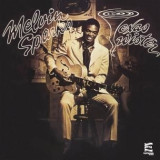
A masterful funky jazz album by one of the godfathers of acid jazz. Produced by Bob Porter, “Texas Twister” was a continuation of Sparks’ sought-after work at Prestige. The Texas-born guitarist had joined Bob Weinstock’s label at Porter’s request in 1970 after several years working with the likes of Jack McDuff, Lou Donaldson and Reuben Wilson. At Prestige, he recorded three albums as a leader and over a dozen as a session player, showing himself to be a wizard at playing funky licks and energised solos.
When Porter left to set up Eastbound Records in Detroit - as a branch of Westbound Records - Sparks followed, recording "Texas Twister” in 1973 as his label debut. The incredible rhythm section of Idris Muhammad (drums), Sonny Phillips (electric piano), Caesar Frazier (organ) and Wilbur Bascombe (bass) make this album a sure-fire funk bomb. On the front-line, a hard hitting horn section that includes Cecil Bridgewater (tenor sax) and John Faddis (trumpet) are a perfect foil for Sparks. The album includes the monster acid jazz club cut 'Whip! Whop!' and the frenetic 'Texas Twister', as well as a beautiful rendition of the Four Tops’ 'Ain't No Woman (Like The One I Got)’.
After Porter left Eastbound, Sparks recorded the more soul-based “’75” and began to record another album that languished in the vaults for decades. He then mostly concentrated on session work before he was rediscovered by the acid jazz scene in the late 80s, when he was brought over to Europe to tour as part of the BGP All-Stars. This late revival saw him record five further albums of funky blues-drenched jazz funk.
Ace Records now offer you the first-ever UK reissue of this album, that should take pride of place in anyone’s collection of 70s jazz funk.
erscheint voraussichtlich am 28.07.2023

With the release of the Gospel album, His Hand In Mine during December
1960, Something For Everybody was the first non-religious Presley album
to be released since Elvis Is Back! and the contrast couldn't have been
greater. None of the songs had ever been previously released in any form
and were divided equally into 'the ballad side' and 'the rhythm side'. With all
of the tracks recorded at RCA Studios, Nashville, in March 1961, except for
I Slipped, I Stumbled, I fell, which was recorded at 20th Century Fox
Studios in Hollywood six months earlier in October 1960.
erscheint voraussichtlich am 06.07.2023

Repress!
Ska, rocksteady, funky reggae, roots, dub mixes, disco mixes, they're all here from the queens of the Jamaican music scene - Studio One Women features a wide mix of classics and obscurities from the finest female voices in reggae.
Until now most of these tracks have only ever been available as extremely hard to find Jamaican 7" and 12" singles and even if you were lucky enough to find them they'd cost you a small fortune
Marcia Griffiths and Rita Marley (here with her first group The Soulettes) are two of Jamaica's most famous female singers hugely popular today. Both these artists became internationally famous as The I – Threes (along with Judy Mowatt), Bob Marley's backing singers alongside The Wailers. Also featured are Hortense Ellis, sister of Alton who cut many smash hits on the island, and Jennifer Lara, a lady who had a long career with Studio One, singing on countless sides.
Studio One is the greatest label in the history of reggae and is the foundation of all reggae music. It's where virtually every world renowned Jamaican superstar started out, Bob Marley and The Wailers included. Under the guidance of the legendary Clement Coxsone Dodd the musicians at Studio One recorded hundreds of instrumental rhythms which still provide the backbone for many of the records made in Jamaica today.
Bestelle jetzt und wir bestellen den Artikel für dich beim Lieferanten.

A kind of hush pervades throughout Standards Vol VI, the latest release by The National Jazz Trio of Scotland, the ironically named project helmed by Falkirk’s musical polymath, Bill Wells, that is neither a trio, nor a jazz band. If this collection of ten covers probably comes closest to the latter in its late night renditions of actual standards, the presence of long-term NJToS member and collaborator Aby Vulliamy as the record’s lone vocalist adds to its solitary air. This follows Standards Vol IV (2018), which featured fellow NJToS co-founder Kate Sugden as primary vocalist, while Gerard Black, a member of the group since 2016, took centre stage in similar fashion on Standards Vol V (2019). Wells has long been a fan of Vulliamy, both of her work as a viola player with numerous collaborators, and as a singer.
Vulliamy played viola on Everything’s Getting Older, Wells’ 2011 collaboration with Arab Strap vocalist Aidan Moffat. Wells went on to play melodica on Vulliamy’s solo record, Spin Cycle, released on Karaoke Kalk in 2018. With the intent of producing the saddest heartbreak record ever made, Wells sourced a back catalogue of miniature epics, reinterpreting each tale of everyday yearning to make a canon of melancholy loungecore designed for nights in alone, if not always lonely. Beyond the concept of isolation behind Standards Vol VI, practical concerns added to the affair, with Wells recording backing tracks at home in Glasgow, while Vulliamy added her voice from her home in Yorkshire. The result on Standards Vol VI is a thing of quiet beauty that sees Wells and Vulliamy reimagine a panoply of pop classics in their own aloof sounding image.
Shades of Margo Guryan and Claudine Longet abound in Vulliamy’s delivery over Wells’ woozy, low-slung guitar and piano, with samples culled from a session with Teenage Fanclub’s Norman Blake. Little electronic percussive clicks and hisses lend things an even more otherworldly air on a record bookended by opener, Donovan’s proto hippy classic, Catch the Wind, and Dixieland miniature, Careless Love. The eight points in between take in a first half led by The Beatles’ normally jaunty We Can Work it Out, flipping the loveable mop-tops’ perky optimism for something more soul searching. This is followed by I Wish You Love, Albert Beach’s English language version of French songwriter Charles Trenet’s evergreen, Que reste-t-il de nos amours. The Bee Gees lost classic, To Love Somebody, is up next, with more impossible to answer questions coming in Why Can’t I?
The latter is a Rodgers and Hart composition that first appeared in the duo’s 1930 Broadway musical, Spring is Here, in which the show’s two heroines commiserate each other over their shared loneliness. Wells stumbled on the song in a tatty Rodgers and Hart songbook, which, like its subjects, had been left on the shelf before he and Vulliamy brought it in from the cold. The second half of Standards Vol VI leads with Matchmaker, Matchmaker, Jerry Bock and Sheldon Harnick’s much covered evocation of a pre dating app era from their 1964 hit musical, Fiddler on the Roof. This is followed by Billy Rose and Dave Dreyer’s showbiz staple (with Al Jolson also taking a credit), Me and My Shadow. While made famous by showbiz double acts ranging from Frank and Sammy to Robbie and Jonathan, here it flies decidedly solo. Johnny Mercer and Hoagy Carmichael’s Skylark comes next, a song inspired by Mercer’s yearning for Judy Garland. We hear ya, bub. The most downbeat take on Bacharach and David’s The Look of Love you’re ever likely to hear comes next, ushering in the short farewell of Careless Love, before the lights are turned out forever. Yeah, well. Whatever gets you through the night…
erscheint voraussichtlich am 30.06.2023

First-ever reissue of the 1988 album. Gatefold LP includes new and restored artwork and a chapbook, featuring forty-eight pages of lyrics, essays, photographs, and Gordon's extraordinary drawings for each song. The Choctaw, Assiniboine, and Texan poet, journalist, visual artist, American Indian Movement activist, and musician Roxy Gordon (First Coyote Boy) (1945-2000) was above all a storyteller, known primarily as a writer of inimitable style and unvarnished candor, whose wide-ranging work encompassed poetry, short fiction, essays, memoirs, journalism, and criticism. Over the course of his career he recorded six albums, wrote six books, and published hundreds of shorter texts in outlets ranging from Rolling Stone and The Village Voice to the Coleman Chronicle and Democrat-Voice, in addition to founding and operating, with his wife Judy Gordon, Wowapi Press and the underground country music journal Picking Up the Tempo. Along the way he cultivated close friendships with fellow Texan songwriters such as Lubbockites Terry Allen, Butch Hancock, and Tommy X. Hancock, as well as Ray Wylie Hubbard, Billy Joe Shaver, and, most famously, Townes Van Zandt, whom he called his brother. Although his work covered a vast array of topics exploring strata personal, local, global, and cosmic alike, Gordon's primary subject as a writer, musician, and visual artist was always American Indian culture, specifically the ways it collided and coexisted with European American culture in the South and West-and within the context of his own life and braided identity. The ten songs on Crazy Horse Never Died, his first officially released and distributed album, were recorded in Dallas in 1988. "Songs" is perhaps an imprecise taxonomy for what Roxy captured on this and his other albums, all of which remain out of print or were released in instantly obscure limited editions of homebrew cassettes and CD-R's. (Paradise of Bachelors plans to reissue remastered, expanded editions of his catalog; Crazy Horse is the first.) He only occasionally attempted to sing, and his musical recordings are primarily corollaries of, and vehicles for, his poems. His sharp West Texan drawl, tinged by formative years of reservation living in Montana and unmistakable once you hear it-high, lonesome, flat, and cold-blooded as a bare rusty blade-instead patiently unfurls in skewed sheets of anecdotal verse and discursive narrative rants. Although Gordon's music at times incorporated powwow style drumming, fiddling, or unaccompanied ballad singing, the majority of it hews to an idiosyncratic spoken word style, accompanied by atmospheric, sometimes synth-damaged country-rock that skirts ambient textures and postpunk deconstructions. His songs are essentially recitations over backing tracks of finger picked guitars, rubbery washtub bass, and buzzing, oscillating keyboards. On the stark yellow and red jacket of Crazy Horse, which he designed himself, Gordon describes these recordings as innately ambivalent in terms of form, content, and identity: These are poems and/or songs about the American West, white and Indian. My life has been Indian and/or white. Maybe there's not a lot of difference-maybe. I guess that's mostly according to which white person or which Indian you're talking about. That's probably what this album's about. Crazy Horse Never Died comprises songs that span the personal and political arcs of his writing practice and the poles of his native and white ancestries.
erscheint voraussichtlich am 12.05.2023

With Cruisin', their second album for Telephone Explosion, Toronto's Bernice distils their playful sense of composition resulting in the most affecting collection of their young career. Across fifteen tracks, a special kind of contemporary, jazz-inflected pop unfolds, miraculous for being both fun and musically adventurous, all in the name of emotional resonance. Each groove in the bassbin is matched by a little scratch at the listener's heartstrings. The album was recorded at home with Phil Melanson (Sam Gendel, Andy Shauf) and Thom Gill (Beverly Glenn-Copeland, Joseph Shabason), led by songwriter and vocalist Robin Dann (Martha Wainwright) and producer Matthew Pencer, with additional contributions from longtime members Dan Fortin and Felicity Williams (Bahamas) being captured remotely.
Throughout their eleven years as a group, working at the intersections of several scenes and spotlights (many of which begin and end at Toronto's beloved Tranzac Club), Bernice have developed an idiosyncratic musical language that feels immediately inviting and wonderfully refreshing. The group's two previous releases, Eau De Bonjourno (2021) and Puff: In The Air Without A Shape (2018) received generous nods from both Stereogum and Pitchfork, who described the music as "unusually mesmerizing". With the songcraft a little more crystalline and the vulnerability notched up, Cruisin' feels like the right record to open Bernice up to a much wider audience.
Development of the album began in Spring, 2021 during a writing retreat at the family farm in Bond Head, Ontario. Members of the band luxuriated in slow time, tinkering with lyrics and melodies, sharing meals, knitting. From this communal gathering, the concept of 'dedication' emerged as a guiding theme. Specifically, developing songs in an almost epistolary form; as love letters or check-ins for friends, community members, pets and other more elusive acquaintances (a longtime working title for the project was 'Songs For People').
Lead single 'Underneath My Toe', one of the first pieces developed under this theme, finds the group at their most graceful and direct. Beginning with songwriter/vocalist Robin Dann singing simply 'Hi / I miss you all the time', the composition proceeds to shift subtly between soft jazz balladry and low-bit funk, revelling in the intimate beauty of a long-time-no-see letter to a dear old friend.
Though being a band that so deeply values the art of fartin' around, Bernice couldn't settle on such a straightforward approach. During the creative process, a clarifying question arose: 'Can you cruise to it?'. This somewhat ambiguous aesthetic criteria became a guiding light for the album. 'Sure, it's a beautiful song about building trust with a new nonagenarian friend... but can you cruise to it?'.
Case in point, both follow up singles, 'No Effort To Exist' and 'Second Judy', fall into a more nebulous, bewildering category of song. Undoubtedly affecting, emotionally charged, existentially searching, yet also undeniably juicy. Drum patterns skitter into place while synth tones shift on a dime to meet thematic twists. There's errant whistling and curious overdubs. Then in come elegant backing vocals, elevating the narrative while an unlikely, left-field groove is established. Miraculously, the listener is not just moved, but Cruisin'.
Therein lies the marvel of Bernice: they remind us that the rec room funk of Mario Kart 64 need not exist in mutual exclusivity to a rich tapestry of human emotions. Even as we live through this most cursed timeline, we can look into the heart of things, dwell on the challenges we're called to witness, and find a little levity to carry us through; grab a lil' mushroom and cruise the existential soup.
erscheint voraussichtlich am 24.04.2023
