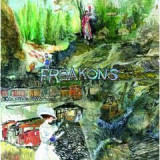
40-plus years since its original release, the pop-punk-new wave inventions of Anthony
Moore’s ‘Flying Doesn’t Help’ are freshly remastered, blasting the sparkling, angular
sounds into today with perfect vitality.
After spending the early years of the 1970s making experimental music first as a solo
artist, then with Slapp Happy and Henry Cow, 1976’s ‘OUT’ sessions had reinvigorated
Anthony’s youthful love of the naive pop melodies of pop radio, the undeniable excitement
of songs. While ‘OUT’ ultimately went unreleased at the time, the iconoclasm clouding the
late ’70s air was addictive and transformative for Anthony. England seemed to be roiled
as violently as it had been in counter-cultural days a decade earlier; the UK pop charts
breathlessly reflected the changing spectrum with equal parts aging hippie and prog
delicacies alongside new ascendant sounds: rough-hewn pub and punk rock, plus dub
reggae and disco and ska and Stiff and Krautrock. This proved to be an ideal environment
for Anthony to make records by exploring, as he puts it, the “deep connection between
minimalism, repetition, working with tape and celluloid and forming the modules of a
three-minute pop song.”
Caught up in a no-holds-barred era, Anthony was more than happy to play the out-of-hishead madman, raving through outrageous exchanges with the press, while ‘Judy Get
Down’ received Single Of The Week honours from the NME (with review penned by Brian
Eno). Represented by Blackhill Enterprises, Anthony did production work throughout
1978-1979, on Kevin Ayers’ ‘Rainbow Takeaway’, Manfred Mann’s Earth Band’s ‘Angel
Station’ and the first This Heat album, meanwhile cutting his own songs on a dead time
deal at Workhouse Studio with engineer / producer Laurie Latham. Through the wee
hours of countless nights, the two pieced together ‘Flying Doesn’t Help’, with a little help
from friends (an inspired bunch, including Bob Shilling, Charles Hayward, Chris Slade,
Robert Vogel, Festus, Matt Irving, Sam Harley, Bernie Clark, Edwin Cross and Martine
Moore on the telephone).
Building upon the axis of pop and experimental impulses that distinguished ‘OUT’, and
informed further by the raw sensibilities exploding everywhere, ‘Flying Doesn’t Help’
blasts out of the speakers with its own unique blend of sophistication and aggression,
Anthony’s keyboard flashes between arpeggiations and outright stabs among the noise of
slicing guitars, funk basslines and the reverbed blare of the drumkit. Opening with
Anthony’s greatest hit, ‘Judy Get Down’, and containing a noise-laden remake of the
Slapp Happy/Henry Cow number, ‘War’, among other delightful sweet-and-salty
confections, ‘Flying Doesn’t Help’ never stops moving, fuelled with raw outrage and dark
satirical intent, churning with the energy of next-gen types like Tubeway Army and DEVO,
while shimmering with the elegance of the still-challenging old guard types, like Cale and
Bowie.
Clearly, ‘Flying Doesn’t Help’ was steeped in the time, and the original release reflected a
deep mistrust of the corporation mindset. Information was a dubious concept, and
connections to any recognizable organization were seen as untrustworthy, so facts like
musician credits were left out of the package, and even Anthony’s name was altered (he
was credited as A. More on the album and Tony More on a single release). The label
name QUANGO was conceptual as well, standing for ‘Quasi Autonomous NonGovernmental Organization’; each record was sealed with red tape that the listener was
required to cut through in order to get to the music. Rather than recreate the conditions of
the original release of ‘Flying Doesn’t Help’, this reissue instead embraces the changed
environment of the current time and place: instead of no credits, now they are complete,
with Anthony’s full name restored and even the artwork subtly ‘relocated’ to reflect a new
set of relationships. All of which brings the forward-looking sounds of ‘Flying Doesn’t Help’
into the more independent-minded 21st Century syntax where it belongs.
Search:judy
LIMITED TO 500 COPIES // HIGH-QUALITY TIP-ON COVER // INCL. DOWNLOAD CODE
OFFICIAL RE-ISSUE, DONE IN COOPERATION WITH THE FAMILY OF BOBBY COLE !!!
If you lived in New York during the 1950s through the 1990s and liked jazz, you knew about Bobby Cole. He played piano, sang, composed, arranged and, in 1967, released an album of original compositions titled "A Point of View" (Concentric Records). He had fans but avoided becoming mainstream. He stayed contemporary without becoming current. Jazz, folk, rock, modern dance scores…he wrote and performed them all. He smoked too much, drugged too much, drank too much. He was also cerebral, curious, a prodigious reader of poetry, philosophy, theology, and an uncommonly intelligent and literate lyricist.
On a December night in 1996, he had a heart attack while walking to work. An ambulance brought him to New York Hospital where, a few hours later, he died. Bobby Cole performed throughout Manhattan for forty years, but he spent most of the 1960s headlining at Jilly's, the midtown bistro owned by Frank Sinatra and his friend Jilly Rizzo. Sinatra called Bobby "my favorite saloon singer."
Bobby Cole caught the attention of Judy Garland, who visited Jilly's one night in 1964. She was hosting a weekly television show, and in the midst of a feud with her special materials arranger, Mel Torme. Three weeks later, Mel was out, and Bobby was in. He performed on Judy's show with his Trio. Bobby was scarcely 30 years old and it was his first time on television, but he was unruffled, sophisticated, and so damn cool. After Judy's show ended, Bobby occasionally arranged and conducted for her until she died.
Today, Jilly's is called the Russian Samovar and the piano is in the same spot. My husband and I ate there a few years ago. As we enjoyed our meal, I talked about Jilly's in the Sinatra era. Jilly had an apartment on the upper floor. I pointed up to the apartment and the balcony, where Jilly and Frank would sometimes drop water-balloons on unsuspecting pedestrians below. Another story described Jilly's as "tough, and you had to be tough to work there. Bobby Cole was tough. Frank and Jilly used to throw firecrackers at him to see if they could rattle him, but nothing rattled Bobby Cole. He ignored them and kept on playing." In the 1980s, Bobby headlined at a club called the Café Versailles. His daughter sometimes visited with her friends. She recalled that when she and her father would exit the club after work, a panhandler would be waiting for him. Bobby, who fought his own losing battle with the bottle, would slip the guy twenty dollars and wryly admonish him, "Be sure not to spend it on food." The night my husband and I visited the Russian Samovar there was a guy playing piano there, very young, and trying hard. I talked to him a little bit between his numbers about Bobby and the history of Jilly's and he was sweet, but I could tell he didn't care. I felt like one of those old people who bore young people to death with stories about things that happened before they were born – which, let's face it, is what I was. Nonetheless, when we were ready to leave, I put twenty dollars in his tip jar and said, "This is with compliments from Bobby Cole." After we left my husband said I should have added, "Be sure not to spend it on food."
Marie Hegeman (December 2021)
- A1: Jah Woosh - Woodpecker Sound
- A2: Machine Gun Hogg & Co. - Bed Bound Saga
- A3: Prince Far I & Creation Rebel - Quanté Giubila
- A4: The Chicken Granny - Quit The Body
- A5: Alan Pellay - Parasitic Machine
- A6: London Underground - Dreams Are Better
- B1: Suns Of Arqa - Asian Rebel
- B2: Alan Pellay - Demonic Forces
- B3: The Mothmen - Afghani Dub
- B4: Jeb Loy & The Il Wells - Things That Made U.s
- B5: New Age Steppers - Yipee I Aah
- B6: Judy Nylon - The Dice
First volume – though the 2nd never happened – of this ongoing collaboration between post-punk stalwarts Cherry Red and home of the western dub On U Sound. Adrian Sherwood obviously sitting behind the desk and a cast of marvelous artist leading the way for a reggae renaissance. Stolen and contaminated songs, we may take this as a reference point for 12 unreleased tracks showing the best of the UK underground rhythms. A further development of the Jamaican heritage, with handmade electronics and a forward thinking production. Mothmen ‘Afghani Dub’ is one of the leading track here, with future members of Durutti Column and Simply Red on board, this is a mystical post-industrial trip through upbeat rhythms. Along the way you’ll find the over the top vocal performance of Judy Nylon – more akin to certain no wave expressionism – futuristic vibes from Sun Of Arqa, contribution from New age Steppers supergroup and Creation Rebel teaming up with the so-called Jamaican ‘Voice of Thunder’ Prince Far I. All in all a (natural) mystic experience.
- A1: Althea & Donna - Uptown Top Ranking
- A2: Susan Cadogan - Hurt So Good
- A3: Sophia George - Girlie Girlie
- A4: Judy Mowatt - I Shall Sing
- A5: Marcia Griffiths - Steppin' Out Of Babylon
- A6: Janet Kay & The Kaylets - Lovin You
- B1: Marcia Aitken - I'm Still In Love With You
- B2: Joya Landis - Angel Of The Morning
- B3: Phyllis Dillon - Perfidia
- B4: Sylvia Tella - Spell
- B5: Nora Dean - Barbwire
- B6: Mille Small - Honey Hush
- C1: Phyllis Dillon - Love Was All I Had
- C2: Faye Bennett - Back Wey
- C3: Lorna Bennett - Good Woman
- C4: Sonya Spence - Come With Me
- C5: Sandra Robinson - Sensi For Sale
- C6: Althea - Downtown Thing
- D1: Marcia Griffiths - Give You & Get
- D2: Dawn Penn - I Let You Go
- D3: Paula Clarke - Dynamic
- D4: Susan Cadogan - If
- D5: Hortense Ellis - My Willow Tree
- D6: Doreen Shaeffer - Back In My Arms Again
Trojan have pulled together some of reggae's finest moments here, and importantly they come from some of the genre's most vital female talents, who can often be overlooked in favour of their more visible male counterparts. Across four sides of vinyl the likes of Millie Small, Althea & Donna, Marcia Griffiths, Phyllis Dillon, and Susan Cadogan all deservingly feature and personal sleeve notes from musician Rhoda Dakar also add real value. Big hits, unknown rarities and some brilliantly wonky numbers like Sandra Robinson's "Sensi For Sale" make this an instant NEED!
Reissue of The Rolf Kühn Orchestra's gently-grooving 1979 album
'Symphonic Swampfire', featuring Joachim Kühn, Philip Catherine, NielsHenning Ørsted Pedersen, Charlie Mariano, Herb Geller and others
For a German jazz musician to find international recognition as a major player
has been and remains a rarity. Clarinetist Rolf Kühn belongs to this elite class. No
one sounds like him on the clarinet; warm, round and masterful, his tone remains
unmistakable no matter what style he may be playing at any given moment. His
play resonates with a maturity and wisdom gathered from a long and rich life of
musical experiences.
Inspired by the captivating and breathtaking landscape of Ibiza, which Rolf Kühn
discovered for the first time in 1970, the album 'Symphonic Swampfire' was
created in 1978. Rolf Kühn had spent many summers in Ibiza, his brother
Joachim is now living there since several years. After Kühn had written orchestral
compositions for commissioned works for film, TV and radio productions, he was
able to fulfill his long- standing wish to record one of his jazz albums with an
orchestra. 'Symphonic Swampfire' is the first collaboration with sound engineer
Walter Quintus, with whom Rolf and Joachim Kühn should collaborate many more
times.
- A1: Uncle Archibald
- A2: Buzz
- A3: Lopes
- B1: Total Space
- B2: Miss Maggie
- C1: Swampfire, Part I
- C2: Swampfire, Part Ii
- D1: La Canal
- D2: Just Call
- D3: Judy
- E1: On More Bass Hit
- E2: Key-Alliance
- E3: To Zbiggi
- F1: Cucu Ear
- F2: Beverly Hills Party
- F3: Sultans Of Jazz
- G1: District 7
- G2: Black Jasmine
- G3: Q 11
- G4: Descendants
- H1: Stereo
- H2: Husky
- H3: A Little Circus
- H4: Shogun
- I1: Concersation One
- I2: Pinocchio's Dream
- I3: Pinocchio's Dance
- J1: Don't Forget
- J2: Choro Do Portina
- J3: Broken City
- K1: Laura
- K2: Fingerprints
- L1: A Strange Sunrise
- L2: X-Ray
- L3: Flip-Flop
- L4: Autumn Leaves
- L5: Dexter's Tune
- M1: Both Sides Now
- M2: Angel Eyes
- M3: Yellow And Blue
- N1: Impulse
- N2: The Second Time
- N3: Train To Norway
- O1: I'm Through With Love
- O2: Conversation Iii
- P1: Mela's Interplay
- P2: Body And Soul
- P3: What Are You Doing The Rest Of Your Life?
- H5: Open Windows
- H6: Goodby (For Buddy)
Few artists are storytellers as deft and disarmingly observational as Andy Shauf. The Toronto-based, Saskatchewan-raised musician's songs unfold like short fiction: they're densely layered with colorful characters and a rich emotional depth. Like he's done throughout his career, Shauf wrote, performed, arranged, and produced every song on his new album Wilds at his studio space in the west end of Toronto. Over the course of a year-and-a-half, Shauf had written more than 50 songs, and pared down this massive body of work, into a single album's worth of material, which became 2020's highly acclaimed The Neon Skyline album. These songs focused on a theme by intertwining the individual characters stories of a group of friends who gathered for one night at the same local bar. Wilds includes songs from those same writing sessions, that did not fit into the Skyline storyline and had their own singular iden?tity apart from that album, though he does revisit with his old friends Judy and Jeremy in this outing.
- A1: Splish Splash 2:14
- A2: Dream Lover 2:44
- A3: Mack The Knife 3:04
- A4: Beyond The Sea 2:52
- A5: It Ain't Necessarily So 3:28
- B1: Clementine 3:13
- B2: I Can't Give You Anything But Love 2:39
- B3: Caravan 2:58
- B4: Queen Of The Hop 2:06
- B5: Judy, Dont Be Moody 2:18
- A1: Sagittarius A (Right Ascension) 05 15
- A2: Pleasure Discipline 05 57
- A3: Ertrinken 05 38
- B1: Growth Cycle (Featuring Robert Owens) 05 52
- B2: Zahlensender 08 04
- B3: The Approach 03 27
- C1: Nylon Mood 06 26
- C2: Alphabet City 05 43
- C3: Don't Ask, Don't Tell 06 10
- D1: No Entiendes 06 56
- D2: Kurzstrecke 06 43
- D3: Golden Dawn (Featuring Stefanie Parnow) 07 14
- E1: Interdimensional Interferenc 05 58
- E2: Distant Paradise 08 05
- F1: Be (Featuring Robert Owens) 04 50
- F2: Vampir 06 29
- G1: Downtown | 161 11 38
H- side is etched
The American cable-television industry exploded in the 1980s, pushing broadcasts of diverse programming and emissions of low-laying cultures into homes. Community stations piggybacked on the digital developments of the time, extending their existence through telephony and broadcast a iliates. For those growing up in this time, in locations such as New York City, the localized communications beamed into their homes exposed them to an impressionable array of disparate sounds and visions.
Move into the 1990s and New York was filled to the brim of emergent cultures drawing from this ebullition of communication. From Rammellzee’s shapeshifting to the late Judy Russell and Frank and Karen Mendez’s Nu Groove imprint fusing reggae, poetry and house, nascent ideas emanated from the city walls, from within stores such as Sonic Groove store and on VHS releases such as Stakker’s The Evil Acid Baron Show, a legendary technicolor psychedelic trip along the wildest frontiers of acid house. As scenes expanded and identities developed, such individuals weather the events of the visceral now, expressing themselves right into an unpredictable future.
Function’s long career has seen him uncover a vast range of sonic identities, a mainstay through house, techno and industrial with collaborations with the likes of Regis, Damon Wild alongside his highly influential Infrastructure imprint. With influences deeply tied to pop art, rave and gay scenes, and early memories of block-parties emitting Kraftwerk and Strafe, he found himself seeking out the undercover illegal nights of the 90s on a quest of sexual unearthing, mixing the ever-yearning escapology mission of disco with the influential DJ sets of Jeff Mills.
For his new album Existenz, he marks a clear step away from the corporeal techno of his recent releases. Pivoting around themes of religion, sexuality, trauma and healing, it is a work expansive and celebratory, a clear liberation from a deeply internalized past. Formed from a collection of recordings made in a period from late 2016 to mid 2019, Existenz takes the form of a creative outburst in reaction to a number of traumas - recent, childhood and throughout Function’s life. Life partner Stefanie Parnow assisted the production process in its entirety, providing inspiration, spiritual healing and featuring vocal contributions.
Cosmic synths soar and swoop in ‘Pleasure Discipline’ through towering stacks of rhythm that stutter and creak to a halt before rebooting, a firm robotic response to human intervention. ‘Zahlensender’ reflects a spatial tetris of urban life, as digitalization set within an XYZ matrix confronts the sprawling city. Constant arpeggiated meditations echo synaptic transmissions, e ecting a dissolution of boundaries. ’The Approach’ recalls the unification of the self, a state of delirium non-subjective and smooth, as all connections and functions give way to simple intensities of feeling, crossing the threshold into spirituality. ’Golden Dawn’, featuring Stefanie Parnow, marks a further elevation of dubbed-out euphoria, as once more positive rays emerge. His ode to the effortless short-trip urban navigation 'Kurzstrecke' finds Function in motion, upfront and bold, snapshots of conversation and flickers of light. 'Ertrinken' finds metallic bass jabs swamping snipped synthetic voices, with hidden stores of emotion set as a nod to the history of vocoders as a tool for encrypted military communication. House icon Robert Owens features on 'Growth Cycle' and 'Be', entrenching a celebratory atmosphere over Function's clubwise leanings. Closing track 'Downtown 161' reflects the unmistakeable filtered and squashed interjections of television, and sampled dance vocals - a sound for the curious, dreamers and dancers.
With Existenz, Function reveals an essential body of work, spread over 4LP - thought experiments on the role of identity and spirituality after a lifetime of upheaval and trauma. Leading up until the release date, Function will undertake an album promo tour with select dates - A/V shows at Berlin Atonal and Rural festival in Japan, and three dates as part of his Bassiani residency.
Haley Dahl, die seit ihrer Teenagerzeit als Sloppy Jane auftritt, ist neuerdings bei Phoebe Bridgers' Label Saddest Factory Records unter Vertrag. Phoebe und Haley sind schon seit Schulzeiten eng befreundet. Damals war Sloppy Jane eine Teen-Punkband. Die ersten Mitglieder waren Phoebe Bridgers am Bass, Sarah Cath an der Gitarre und Imogen Teasley-Vlautin am Schlagzeug. Heute hat die Band mehr als ein Dutzend Mitglieder und sich in ein Kammerpop-Projekt verwandelt. Für ihr neues Album "Madison" verbrachte Dahl drei Jahre damit, Höhlen zu erkunden, die ihre Vision für das Album einfangen könnten. Ihre Suche führte sie quer durch die USA, wobei sie sich mit der unterschiedlichen Akustik jeder Option beschäftigte, bevor sie bei den Lost World Caverns landete. Das Ergebnis ist ein wunderschönes, persönliches Werk, eine große Geste, ein kraftvolles Statement über obsessive Liebe und über das Hineinwachsen in sich selbst nach einer lebensverändernden Beziehung. Dahl und ihre 21 Bandkollegen nahmen Madison zwei Wochen lang jeden Tag von 15 Uhr bis 8:30 Uhr in den Höhlen auf. Um in die Höhle zu gelangen, mussten sie durch die Rückseite eines Geschenkeladens in einen langen Tunnel eindringen, wo sie über 200 Treppen zum Eingang hinuntergehen mussten. Dahl und Co. bewältigten diesen steilen Weg mit einem Klavier. Die Decke der Lost World Caverns ist riesig hoch und bildet eine perfekte Kuppel. Außerdem herrschte im Inneren eine Luftfeuchtigkeit von 98 Prozent, was sowohl zu einem hervorragenden Klang als auch zu Problemen mit der Stimmung und der Ausrüstung führte. Der Tontechniker Ryan Howe saß mit seinem Mischpult und seinem Computer im Subaru seiner Eltern oberhalb der Höhle und fädelte Kabel durch ein Loch im Boden bis zur Decke der Höhle. Auf dieses Album, das so vollständig realisiert und sorgfältig ausgeführt wurde, hat Dahl lange gewartet und auch als Musikerin viel gelernt: Für Madison lernte sie, wie man für Kammermusikinstrumente schreibt und brachte sich selbst das Klavierspielen bei. Die Platte lässt sich nur schwer kategorisieren. Es ist David Bowie wenn der Song "Crying" von Roy Orbison am Ende von Harmony Korines Film "Gummo" gespielt wird. Es ist My Chemical Romance trifft Sgt. Pepper. Courtney Love und Queen. Es ist ein riesiges, blumiges, samtiges Ding voller Spielzeugpferde und Stalagmiten. Er folgt einer großen Linie: einer großen Geste, die so groß ist, dass sie die ganze Erde bewegt. "I'm glad to live in a world where Haley Dahl wanting to go to a cave to make a record just makes sense. This is already a classic album." - Phoebe Bridgers
‘K Bay’, out on Domino Recordings, is the first new solo
material from Matthew E. White in six years.
Matthew E. White describes the album as a “love affair
with music.” It’s a record thrillingly engaged with an
eclectic range of contemporary and 20th Century popular
music. The daring production mines and foregrounds longsimmering but previously veiled influences from the realms
of hip-hop, electronic pop and dancehall but all filtered
through White’s self-described outsider perspective.
‘K Bay’ is an homage to Kensington Bay, his home studio
where he records his personal projects and is his
sanctuary of creativity (White’s second studio,
Spacebomb, is where he works on collaborative projects
and has recorded and produced records by Foxygen,
Natalie Prass and Flo Morrissey).
More than love, romance, or self-reliance, this is the
animating ideal of ‘K Bay’ - that we can forever strive for
something better, no matter how flawed or blessed we
have already been. A decade ago, Matthew E. White made
a classic beauty no one expected; on ‘K Bay’, he has
made a masterpiece by harnessing what he’s learned from
that community and life itself in entirely unexpected,
electrifying, and reaffirming ways.
- A1: Space: 1999 Year 2 Main Theme
- A2: Strange Light
- A3: Rendezvous In Space
- A4: The Death Of Psychon
- B1: We're All Aliens
- B2: Swarm Of Space Bees
- B3: The First Capsule
- B4: A Kiss For Helena/The Power Room
- B5: Return To Golos
- B6: Make Me A Pretty Nose
- C1: The Garden Of Vega
- C2: Seduction
- C3: Ss Emporium
- C4: Transaction Complete
- D1: Light Years Away
- D2: Space Animal On The Loose
- D3: Showdown At Copernicus
- D4: Space: 1999 End Titles
The latest release in the series exploring the musical worlds of Gerry Anderson is the most extensive yet. Space: 1999 ran for two series from 1976 to 1977 and depicted the occupants of Moonbase Alpha and their struggle for survival when, after the explosion of a nuclear waste dump, the Moon is hurtled into space.
The series was the most expensive produced for British television at that time and the most musically diverse of all the shows made by Anderson for ITC. Gerry Anderson’s long-time musical partner in all the previous adventures was Barry Gray and Space: 1999 Series 1 proved to be the last of their collaborations. For Series 2, composer Derek Wadsworth took over the reins to provide a more contemporary sound.
The Year 2 album contains Wadsworth’s score, specially selected cues to provide a driving and exciting narrative to convey the new adventures. Record Collector perfectly describes it as “classic 1976 period stuff: fast, furious and occasionally over the top in a dramatic way; nicely atmospheric for Sci-Fi and a touch funky every now and again.”
Derek Wadsworth enjoyed a long and successful career as a composer, trombonist and session musician. For over half-a-century he played, arranged, and conducted for some of the biggest names in music including Dusty Springfield, George Harrison, Judy Garland, Dionne Warwick and many more.
Limited Edition Polka Dot Vinyl - Includes Bonus 7" The Pipettes reissue their beloved debut album "We Are The Pipettes" on limited edition polka dot vinyl to mark the album's 15 year anniversary. Back on vinyl for the first time since its original release, the record sounds as fresh, funny and filthy as it did on it's release. Whether it's the string-drenched, four to the floor, call to the dance-floor clarion call of Pull Shapes or the lonesome melancholy of A Winter's Sky, it's a record full of the joys and the pains of youth.
- A1: Fendermen - Ghost Riders In The Sky
- A2: Geater Davies - Sad Shades Of Blue
- A3: Joe Cocker - Woman To Woman
- A4: Lobo - Me & You & A Doig Named Bob
- A5: John Fred & His Playboy Band - Judy In Disguise
- A6: Johnny Cash - I Walk The Line
- B1: Golden Gate Quartet - I'm Troubled
- B2: Guy Mitchell - Singing The Blues
- B3: Duane Eddy - Cannonball
- B4: The Surf Coronados - Pipeline
- B5: Chris Farlowe - Paint It Black
- B6: Screamin' Lord Such - Murdered In The Graveyard
- C1: T Rex - Jeepster
- C2: The Surfaris - Wipeout
- C3: The Ventures - Walk Don't Run
- C4: Nino Tempo & April Stevens - Deep Purple
- C5: 1910 Fruitgum Co - Indian Giver
- C6: John Lee Hooker - Boom Boom
- D1: Connie Francis - Stupid Cupid
- D2: Julie Teicher - These Boots Are Made For Walkin
- D3: The Clovers - Love Potion No 9
- D4: The Grass Roots - Midnight Confessions
- D5: Dobie Grey - The 'In' Crowd
- D6: The Kingsmen - Louie Louie
No sooner than the 5th repress of Cornershop’s England Is A Garden has run out of stock, we have a limited edition Silver Jubilee sealed double vinyl gatefold with liner notes and sleevenotes by Rolling Stone’s David Fricke.
Furthermore we have gone under the bonnet of the album to deliver a double platter instrumental version on ‘Lozenge Clear’ vinyl only in order to see and hear more clearly what has become a sports classic. This instrumental version has a new take on the album’s artwork by long term Cornershop sleeve designer Nick Edwards
Cornershop’s ‘England Is A Garden’ - “the latest in a series of albums that have mirrored the exceptional story of the band itself” Rough Trade Shop NY.
It strides in a sunshine glow, to deliver a full listening experience, bringing songs of experience, empire, protest and humour, steeped in the way only Tjinder Singh would come with.
The new album has, at last, sparked off significant interest in the back catalogue of Cornershop, with some titles including ‘Judy Sucks A Lemon’ and ‘Hold On It’s Easy’ now out of stock. A first time on vinyl issue of the ‘Cornershop & The Double-O Groove Of’ album by Cornershop Featuring Bubbley Kaur, featuring the John Peel favourite ‘Topknot’ and BBC 6Music perennial ‘Natch’, is planned for later this year.
Both the ‘England Is A Garden’ Silver Jubilee’ vinyl and the ‘England Is A Garden Instrumentals’ album are available from all good independent record shops.
2 track 7” Strictly Limited Translucent Lime coloured Vinyl Includes postcard and poster.
Part of the Optic Sevens 3.0 Reissue Series.
In 1980 post punk pop indie band GIRLS AT OUR BEST came out of nowhere (Well, Leeds actually) with GETTING NOWHERE FAST and was the NME’s Single Of The Week reaching the Top 10 of the indie chart.
The band, fronted by Judy Evans, released four further singles plus the album PLEASURE which reached the UK album charts in 1981, before splitting up two years after this debut.
- A1: Art Blakey Big Band Feat. John Coltrane - Pristine (Take 2)
- A2: Fred Johnson - A Child Runs Free
- A3: George Benson - Along Comes Mary
- A4: Charles Mingus - Boogie Stop Shuffle
- A5: Gordon Beck - The Hustler
- A6: Lorez Alexandria - Send In The Clowns
- B1: Dizzy Gillespie - Chega Dee Saudade (No More Blues) (Take 2)
- B2: Letta Mbulu - What's Wrong With Groovin
- B3: Joe Williams With Thad Jones & The Mel Lewis Orchestra - Get Out Of My Life Woman
- B4: Oscar Brown Jr. - Work Song
- B5: Grant Green - The Final Comedown
- B6: Jeremy Steig - Howling For Judy
Half & Half Colour Vinyl Disc 1: Yellow/Magenta Disc 2: Turquoise/ Magenta
Double album that includes;
45rpm bonus disc with the singles and B sides
Gloss laminated gatefold sleeve
printed inner sleeves, containing lyrics, photos and interview by The Mouth Magazine
“Pleasure Bag” containing 4 postcards, 2 stickers, A stencil, Repro Tour Poster, Repro promo posters for “Go For Gold” and “Politics/ Its Fashion” singles. Press photo and Press Flyer
In 1980 post punk pop indie band GIRLS AT OUR BEST came out of nowhere (Well, Leeds actually) with GETTING NOWHERE FAST and was the NME’s Single Of The Week reaching the Top 10 of the indie chart. The band, fronted by Judy Evans, released four further singles plus the album PLEASURE which reached the UK album charts in 1981, before splitting up two years after that first record.
Girls At Our Best were one of the finest, most life-affirming of a new breed of independent bands who cropped up at the turn of the 80s – long-standing fan John Peel once referred to them as one of the few groups that made the period bearable. Formed in Leeds from the ashes of punk band SOS, the group were fronted by distinctive female vocalist Jude ‘Jo’ Evans, forming a songwriting team with guitarist James Alan and bass player Gerard Swift after they met at art college. All four of their singles for their own Record Records, Rough Trade and Happy Birthday Records are included here as bonus tracks on a 45rpm 12”– including the wonderful ‘Getting Nowhere Fast’ (later covered by The Wedding Present), its coruscating b-side ‘Warm Girls’, ‘Politics!’, ‘Go For Gold’ and ‘Fast Boyfriends’
Their influence can be seen on innumerable C86/indie bands who came afterwards
DeWolff return with their new album, Wolffpack, released on 5th February 2021 via Mascot Records.
DeWolff, the kaleidoscopic warriors were not long into their 2019 Tascam Tapes European Tour when the Covid19 pandemic broke and they, like so many others, had to turn back and head home. They started working on the new album Wolffpack.
The album kicks off with the first song they finished, the soulful psychedelic funk of "Yes You Do," featuring Ian Peres and longtime friend of the band, Judy Blank. "We wrote it in a Zoom meeting!" Pablo says. "Treasure City Moonchild," struts in with a funky swagger and Piso's trademark swirling Hammond, with Dawn Brothers' Levis Vis providing some Bass juice. "Do Me," includes Theo Lawrence on vocals and is through the eyes of an anti-hero who realizes he isn't worthy of the woman of his dreams, and dates back to 2019 and the Next of Kin live show. "I consider this the best song I ever wrote, so I couldn't stand the idea that it was only used for those Next of Kin shows and then never again! That's why I brought it to DeWolff, but it needed some rearranging," he says. Another song from the Next of Kin sessions was "Sweet Loretta" and features Dawn Brothers' Stefan Wolfs and Darilyn's Diwa Meijman. "Loretta is the protagonist's childhood sweetheart. She has a rich dad, but he's really conservative, and so she can only inherit his money if she marries a man. But she's lesbian. So, the protagonist, who's also out for this old guy's money, suggests they play pretend and marry so they can split the money."
They sweep through disco on "Half Your Love," swamp rock on "Bona Fide" and take on sci-fi and the Old Testament on "RU My Savior." Their tour buddies The Grand East show up on "Roll Up the Rise." Written in the first days of quarantine, it's about the end of the quarantine - told from a future perspective. "Lady J," came after Pablo watched the documentary "13th." "I was quite shaken up by it," he admits. "The lyrics are based on the idea that Lady Justice seems to have a scale that doesn't measure the "weight" of your crime but the tone of your skin. She is supposed to be blindfolded, but the people who act in "her" name aren't blind at all: they discriminate between white and black."
The album ends with the forlorn "Hope Train." Based on the Pulitzer prize-winning novel by Colson Whitehead about two slaves in the US during the 19th century, who make a bid for freedom from their Georgia plantation. "I found it really hard to envision the world in which it takes place," he says. The band used a 1970s Fisher-Price Toy cassette recorder in the intro, "We wanted to see if we could somehow approach the sound of those very early country blues recordings, like the ones by Blind Willie Johnson.”
William Basinski's reputation as the foremost producer of profound meditations on death and decay has long been established, but on his new album, Lamentations, he transforms operatic tragedy into abyssal beauty. More than any other work since The Disintegration Loops, there is an ominous grief throughout the album, and that sense of loss lingers like an emotional vapor. Captured and constructed from tape loops and studies from Basinski's archives - dating back to 1979 - Lamentations is over forty years of mournful sighs meticulously crafted into songs. They are shaped by the inevitable passage of time and the indisputable collapsing of space - and their collective resonance is infinite and eternal.
"Cy Timmons, born in 1941, is “The World’s Greatest Unknown” singer-songwriter from Atlanta, Georgia.
His style may be called batida Americana: unusual bossa nova technique marked by the art of guitar percussion and turning his voice into a variety of instruments such as flute, trombone, synthesizer and more. But basically, it is difficult to specify the genre where his music belongs because it has been developed individually and heavily colored by his love of American music such as cool jazz, traditional pop, early R&B and many years of entertaining in various musical venues including Café Erewhon (“Nowhere” spelled backwards) which he ran in Atlanta. Rather than an imitation of bossa nova, Cy applied the bossa concept of expressing samba alone through classical guitar and vocals to expressing good old American popular music alone and so developed a new “traditional” American sound, a sound that was honed in part through an encounter with Judy Davis of Oakland, California, the stars’ vocal coach whose students included Frank Sinatra, Judy Garland, Mary Martin and Barbra Streisand.
He himself produced three albums of his music. On the first: “Cy Timmons” (1972) he was backed by a small orchestra, but the second, “The World’s Greatest Unknown” (1974), and the third “Heaven’s Gate” (1998), were Cy alone and show the true worth of his music that also has something in common with João Gilberto’s “White Album” and “Voz E Violão”."
Mastered and half-speed cut at Abbey Road, pressed at RTI, each release comes in a custom G-FLute cardboard mailer. 001 has a satin fabric heart sticker and 002 gold foil-stamped quotations from Cy. Both have extensive liner notes, including a full length interview.
Outta Sight’s collectable ‘Classics’ series continues with two real heavyweight’s of the rare soul scene, face-to-face for the very first time. Together, these two icons helped define, not only Northern Soul, but the soul music genre… and now, almost sixty years on, they go head to head.
In the blue corner is former commercial artist and amateur heavyweight boxer Mr Roy Hamilton who set the dancefloors trembling across the North of England when his 1962 “Earthquake” was finally unleashed on the Northern Soul scene. Hamilton was already a huge star in America scoring two R&B No.1’s in 1954 and ’55 with the standards “You’ll Never Walk Alone” and “Unchned Melody”. But, he will forever be remembered in the U.K. for his Northern anthems “Crackin’ Up Over You”, “The Panic Is On”, “You Shook Me Up” and the explosive “Earthquake”.
In the red corner is the multi-talented actor, pianist, arranger, producer, songwriter and singer Mr H. B. Barnum who’s early belter “It Hurts Too Much To Cry” belies its 1962 recording date. Barnum also scored on the rare soul scene with “Three Rooms With Running Water”, “The Record” and the awesome “Heartbreaker”.
But his contribution far exceeds his personal output with writer, producer and arranger credits on a slue of floorfillers inlcuding Judy Street’s “What”, Earl Wright’s “Thumb A Ride” and The Magnificents’ ”My Heart Is Calling You”, to name but a few.
Lyrical King is the debut 1987 album from one of rap’s pioneers and innovators who was said by some to be the first artist recorded by Def Jam Records. T La Rock recorded this album for Sleeping Bag Records as the labels first rap act and show cased him at the
height of his career. An old school legend, MC and dancer who was sampled by Public Enemy and Nas, heavily influential on artists such as LL Cool J and the Def Jam sound and would walk out on stage with Run –D.M.C . Highlights include ‘Back to Burn’ and ‘This Beat Kicks’ where T La Rock teamed up with visionary producer Kurtis Mantronik.
- A1: Kiddus I - If You Love Me
- A2: Winston Mcanuff - Malcolm X
- A3: Cedric Myton - Row Fisherman
- A4: Ken Boothe - Everything I Own
- B1: The Viceroys - Ya Ho
- B2: Horace Andy - Ain't No Sunshine
- B3: Judy Mowatt &Jah9 - Black Woman
- C1: Kiddus I - Survive
- C2: Cedric Myton - Rebellion In Heaven
- C3: Var, Derajah & Winston Mcanuff - Be Careful
- D1: Derajah - Tribute To My Sista
- D2: Ken Boothe - Speak Softly Love
- D3: Var - Live Good
Stripped down to the roots, these 13 contemporary new versions of classic Jamaican recordings, originally from the likes of the Trojan and Studio One studios, are triumphantly fresh and channel Jamaica’s rebel music history.
With Rastafari sewn into its sonic seams, Inna De Yard remind us of Jamaica’s vast contribution to popular music around the globe with a cast of golden-generation roots artists whilst introducing a new class of roots-enthused artists from the island.
Following the release of the album is a feature-length Inna De Yard documentary-film directed by Peter Webber (3 Oscar nominations for Girl with a Pearl Earring), set for its UK and international cinema release alongside European tour and summer festival dates including a special beach performance at the music industry Midem Festival in Cannes.
After a sell-out debut tour in France in 2017, the trailblazing quartet of Ken Boothe, Cedric “The Congos” Myton, Kiddus I and Winston McAnuff join forces to front a cross-generational super-group of roots-reggae visionaries, featuring Jamaican vocal trio The Viceroys and Bob Marley backing vocalist and artist Judy Mowatt, as well as Jah9, Var and Derajah, three of Jamaica’s most stirring and spiritually-connected artists on the scene today.
Margino (real name Kim Kallie) is a South African artist. She recorded her first song
at the age of eight, when she performed ''Montreal'' with her mother Judy Page. She
sang with the reggae group Kariba and jazz rock outfit Turbo in the early 80's, and
later did backing vocals for Future and others. She first shot to fame as a solo star
with a version of ''Holiday'' (written by Lisa Stevens and Curtis Hudson, credited as
Cathy Hudson), which was released at the same time as Madonna's version.
Margino also had a hit in 1983 with a cover of In-Deep's ''Last Night a DJ Saved My
Life'', that went to #16 on the South-African Top 30 and charted for 10 weeks. She
now runs a Performance Academy from her studio, and continues to perform on
stage at events around Cape Town.
Recorded at RPM Recording Studios (Johannesburg, South Africa) in 1985, Happy
People is a flawless album with dancefloor hits such as ''Happy People'', ''I'm
Getting Out'' and ''One Hot Night'' and downtempo tunes such as ''You Turn Me On'',
''You Need A Woman'' and ''You''. All rhythm tracks were played by Attie Van Wyk
(Keyboards, Synthesizer, Drum Machine) and Danny Bridgens (Guitar). The full
album is a cream of boogie funk, disco and pop.
For this reissue, Jamwax took the pleasure to remaster the sound from the original
tape. The artwork was also remake with Andy Warhol ''Marilyn Monroe'' pop art
style, for your eyes pleasure.
- A1: Hypocrite - Heptones
- A2: Save The Last Dance For Me - Heptones
- A3: The Gardner - Julie Ann
- A4: Our Day Will Come - Heptones
- A5: Have A Little Faith - Nicky Thomas
- A6: Freedom To The People - Heptones
- B1: Every Day And Every Night - Heptones
- B2: Maga Doc - Peter Tosh
- B3: God Bless The Children - Nicky Thomas
- B4: Love Has Many Faces - Heptones
- B5: Be The One - Heptones
- B6: Mama's Song - Nicky Thomas
- 180 GRAM AUDIOPHILE VINYL
- FIRST PRESSING OF 750 NUMBERED
COPIES ON ORANGE VINYL
Primarily released to showcase the sublime talents of one of Jamaica's most celebrated vocal trios, The Heptones, the aptly titled Heptones & Their Friends album features a selection of superior reggae sides by the group alongside hugely popular works from the three of reggae's biggest stars of the period: Judy Mowatt, Nicky Thomas and Peter Tosh of The Wailers.
Backed by top session crew, the Now Generation, the Joe Gibbsproduced selection is of a predictably high standard throughout, with highlights including Be The One', a pitch-perfect slice of classic roots, a gloriously cheesy pop cover of the Drfters' Save The Last Dance', the strident Freedom To The People' and one of the biggest Jamaican hits of the early 1970s, Hypocrite'.
Steve Reich's Drumming is regarded as one of the most important musical works of the last century. Distilled through his studies of African percussion in Ghana during 1970 and Balinese gamelan music, Reich revolutionized our understanding of polyrhythms, sculpting a new sonic territory to illuminate the radical potential of Minimalism.Divided into four sections, performed without pause, Drumming is written for eight small tuned drums, three marimbas, three glockenspiels, piccolo and voice. The singers recite melodic patterns that mimic the sounds of the instruments, gradually rising to the surface and then fading out. The overall effect can be transfixing - pulling listeners into the rhythm and possessing a raw immediacy, directness and energy.The premier performances of Drumming took place in December 1971 in New York City - first at The Museum of Modern Art, then at Brooklyn Academy of Music and finally at Town Hall where this recording was made - and featured the composer along with a cast of longtime collaborators including Art Murphy, Steve Chambers, Russ Hartenberger, James Preiss, Jon Gibson, Joan La Barbara, Judy Sherman, Jay Clayton, Ben Harms, Gary Burke, Frank Maefsky and James Ogden.Originally released in 1972 by gallerist John Gibson in a small private edition, Drumming represents the culmination of Reich's investigation into rhythmic phase relationships and its early realization captures a remarkably organic feel, especially compared to the more widely known version on Deutsche Grammophon from 1974.This first-time vinyl reissue and first-time CD release has been carefully remastered from the original master tapes.
Wild Oats is happy to present this debut release entitled Pure Amethyst' from Caron Miller aka Q'uran D'Mar aka Q'D' who is another gifted young brother from Detroit. Our hope is this record adds some thoughtfulness, love and intentionality to your inner world at the beginning of this Lunar new year.
February's birthstone is the Amethyst so we found it very synchronistic that this debut is released in February.
The Amethyst crystal guards against psychic attack and transmutes that energy into love. From The Crystal Bible by Judy Hall, she also states this valuable piece, This stone facilitates the decision-making process,bringing in common sense and spiritual insights,and putting decisions and insights into practice. Mentally it calms and synthesizes, and aids the transmission of neural signals through the brain.'
Pure Amethyst Sonically personifies this internal shadow dance that one must participate in in order to get to a grounded and positively intentioned state of being. Questioning ones motives, accepting and releasing the blame of past traumatic experiences as the reasons for deficiencies inspires you to find a new way forward from where you are. Ultimately realizing it is you today who is going to inspire the goodness in your life. As the great Arthur Ashe states, "To achieve greatness, start where you are, use what you have, do what you can."
Sincerely, Kyle J Hall