An obscure and deep acoustic jazz-funk LP from 1974, remastered and repressed in an edition of only 300 copies !
“Profile” is the first and only Ken Rhodes LP as a leader. This intimate and rare recording captures an explosive concoction between blues, jazz and a touch of funky swing. Though an acoustic performance, this LP offers overwhelming grooves, breaks as well as introspective moments .
The upbeat and funky titile track “The Profile” forshadows the raw grooves of the session.The composition is driven by Rhode’s very soulful and bluesy improvasitions in a colorful dialogue with Joachim Knauer’s percussive and obsessive bassline which embraces the funky rhymthms of George Greene. However, this raw “in-your-face” formula is beautifully constrated in “Nothing New” and the piano solo “Robyn’s Lullaby” where the trio slows down to play deep, dreamy and hazy tunes.
Biography
Ken Rhodes was born August 14, 1945 in Memphis, USA and grew up in a family of excellent musicians. He attended the American Convervatorium of Music in Chicago, studied classical music and received Bachelors and Masters Degree. At the age of 16 he toured with his own jazzband throughout the eastern states. During this time he wrote classical compositions for symphony orchestras and organ-music. Gerry Mulligan called him for an extended tour. Studying at the University of Cincinnatti he received the Down-Beat Prize in 1970 as “Best Arranger”. In August 1970 he came to Germany and worked four years as writer, arranger and conductor at the theatres in Augsburg and Nürnberg. Besides that he played with wellknown european musicians at the famous “Domicle” club in Munich, he founded his own group and performed in Germany and Austria. Since July 1975 he works as a professional jazzmusician travelling Europe.
quête:jul
Chicago-area native Josh Johnson’s vital presence in the vanguard of new jazz music is evident by his features on countless critically-acclaimed
projects like Jeff Parker’s Suite for Max Brown and Makaya McCraven’s Universal Beings.
When he moved to L.A. eight years ago, he thought his stay would be temporary. The saxophonist and keyboardist would spend enough time there to learn from his heroes Herbie Hancock and Wayne Shorter, but not a complete geographic pivot. But eight years later, Johnson is still in L.A., where he recorded his debut album Freedom Exercise with three ‘musically omnivorous’ friends (the very quality that inspired him to stay on the West Coast).
The songs on Freedom Exercise reflect this idea of genreless exploration ‘ a fluid combination of jazz, post-rock and electronic music. Ultimately, Johnson’s compositions are concise yet expansive, like an intimate gathering in a sprawling city.
Vinyl version of the latest album (CD was released November 13th) from US singer/songwriter/composer. This is a 10 track LP featuring songs from the hit Apple TV series of the same name. Marketing activity across all media outlets.
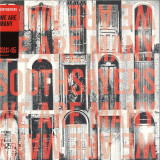
South London-based band Soothsayers are set to release their ninth studio album 'We Are Many'. Held together by heavy basslines, solid grooves, and socially and politically charged lyrics; the album takes the listener into different sonic spaces with elements of dub, Afrobeat, improvisational jazz and electronica.
The initial steps in recording 'We Are Many' came in January 2019 when the band's founders - saxophonist Idris Rahman and trumpeter Robin Hopcraft - set out on a journey to Brazil. With executive production in the Sao Paulo studio by renowned music journalist and author David Katz, they hooked up with bass player and producer Victor Rice who they'd met sharing the bill at Freedom Sounds festival in Cologne, Germany a year earlier. Victor organised a session in Studio Traquitana, home of acclaimed Brazilian band Bixiga 70, and invited a selection of local musicians. Percussionist and singer Ligia Kamara contributed lyrics and melodies written in the studio, and drummer Bruno Buarque, guitarist Joao Erbetta and bassist Victor provided some solid, personality-driven input. Fresh and vital, what came out was a fascinating blend of Soothsayers' dub and Afrobeat mixed with distinctly Brazilian inflections.
After arriving back in the UK, Idris and Robin set about creating the remainder of the album in a different, yet complimentary way, and called on the services of Wu-Lu and Kwake at their The Room studio in South London. Things started to take shape very quickly, Wu-Lu and Kwake combining Soothsayers' music with electronic elements, while also referencing elements of the current UK jazz scene.
When lockdown hit in March 2020, there was still a lot of work to do in order to complete a full album and Robin and Idris set about working on tracks with their musicians remotely. Having time to consider the album as a whole, they found strong connections between the music recorded in Brazil and the tracks recorded in London and they set about fusing and combining these elements further into a satisfying whole.
UK based Sengalese singer Modou Toure was enlisted to guest on one track while percussionists Satin Singh and Maurizio Ravalico were engaged to help affirm a sound-world where Brazilian flavours, such as the low-end Surdo drum, were combined with sounds more readily associated with reggae and Afrobeat.
Soothsayers' three part vocal harmony is a defining factor in this album. With strong references to the vocal styles of reggae legends such as The Gladiators, Mighty Diamonds, Heptones, and Abyssinnians; it has benefited from the long-standing friendship between Robin, Idris and Julia Biel. Lyrics, melodies and harmonies were presented, discussed, explored and recorded at Idris' and Julia's home studio in Streatham in a relaxed and positive way, with concepts from social and political commentary turned into powerful songs.
Themes cover political observations of Trump and beyond alongside Brazil's president Bolsanaro (Rat Race), speaking out against increasing levels of violence from the Brazilian government towards its native and indigenous people (Love And Unity) and keeping hopeful despite the impending horrors of a no-deal Brexit (We Won't Lose Hope).
Elsewhere they discuss striving to create space for meditation and reflection against the background noise of 24/7 news and social media (Move In Silence), the daily grind (No Sacrifice) and workers' rights (Slave), while highlighting those that fall through the cracks in society and end up without a permanent address, what led to this and how close we all are from this happening (One Step Away).
'We Are Many' represents a positive and uplifting statement in the face of challenging times - the overriding force, power and positivity of the music to continue forward, pushing the boundaries of musical concepts into the future.
"Whilst heavy questions of life and death and the future of our species surround us all, music is a guide that can help us perceive the challenges in a different way - a guide that can help us towards a deep inner peace. If we listen, music can help light the way. We hope you will listen, and we hope you will experience the joy, meditative power and beauty in the connection of different musical cultures that was experienced in the creation of this album."
"Don't Turn Me From Your Door" - John Lee Hooker (g, voc), Earl Hooker, Eddie Kirkland (g), a.o
John Lee Hooker is not only a mystery but also an interesting man to study. Some, like the author Jacques Demêtre called the musician from Mississippi »the most raw and African of all blues players from a musical point of view«, while the critic Net Hentoff was awestruck by Hooker’s unfiltered power of expression that could scare the pants off a listener taken unawares. The numbers on this LP bear witness to the fact that Hooker’s musical language could stir one’s emotions deeply, even without the meaty 'boom boom'. Each title is like a raw diamond, which is intentionally uncut and is to be perceived with directness. With a stutter and a slur in his speech, the singer declaims his song over a twangy guitar, which is driven along by the rhythmic meter. A final farewell is taken sluggishly and sullenly in the forthright text of "You Lost A Good Man", and even a song without words ("Misbelieving Baby") ponders a question in a purely instrumental monologue. Apart from a dash of boogie ("Pouring Down Rain") Hooker avoids all manner of sweet sounds and harmonies. He remains austerely raw, mercilessly honest, occasionally unforgiving and denies all thoughts of any kind regarding going 'back to the roots'. This sound IS the root of it all.
This Speakers Corner LP was remastered using pure analogue components only, from the master tapes through to the cutting head. More information under pure-analogue.
All royalties and mechanical rights have been paid.
Recording: 1953 in Cincinnati (OH) and July 1961 in Miami (FL)
Production: Henry Stone
South London-based band Soothsayers are set to release their ninth studio album 'We Are Many'. Held together by heavy basslines, solid grooves, and socially and politically charged lyrics; the album takes the listener into different sonic spaces with elements of dub, Afrobeat, improvisational jazz and electronica.
The initial steps in recording 'We Are Many' came in January 2019 when the band's founders - saxophonist Idris Rahman and trumpeter Robin Hopcraft - set out on a journey to Brazil. With executive production in the Sao Paulo studio by renowned music journalist and author David Katz, they hooked up with bass player and producer Victor Rice who they'd met sharing the bill at Freedom Sounds festival in Cologne, Germany a year earlier. Victor organised a session in Studio Traquitana, home of acclaimed Brazilian band Bixiga 70, and invited a selection of local musicians. Percussionist and singer Ligia Kamara contributed lyrics and melodies written in the studio, and drummer Bruno Buarque, guitarist Joao Erbetta and bassist Victor provided some solid, personality-driven input. Fresh and vital, what came out was a fascinating blend of Soothsayers' dub and Afrobeat mixed with distinctly Brazilian inflections.
After arriving back in the UK, Idris and Robin set about creating the remainder of the album in a different, yet complimentary way, and called on the services of Wu-Lu and Kwake at their The Room studio in South London. Things started to take shape very quickly, Wu-Lu and Kwake combining Soothsayers' music with electronic elements, while also referencing elements of the current UK jazz scene.
When lockdown hit in March 2020, there was still a lot of work to do in order to complete a full album and Robin and Idris set about working on tracks with their musicians remotely. Having time to consider the album as a whole, they found strong connections between the music recorded in Brazil and the tracks recorded in London and they set about fusing and combining these elements further into a satisfying whole.
UK based Sengalese singer Modou Toure was enlisted to guest on one track while percussionists Satin Singh and Maurizio Ravalico were engaged to help affirm a sound-world where Brazilian flavours, such as the low-end Surdo drum, were combined with sounds more readily associated with reggae and Afrobeat.
Soothsayers' three part vocal harmony is a defining factor in this album. With strong references to the vocal styles of reggae legends such as The Gladiators, Mighty Diamonds, Heptones, and Abyssinnians; it has benefited from the long-standing friendship between Robin, Idris and Julia Biel. Lyrics, melodies and harmonies were presented, discussed, explored and recorded at Idris' and Julia's home studio in Streatham in a relaxed and positive way, with concepts from social and political commentary turned into powerful songs.
Themes cover political observations of Trump and beyond alongside Brazil's president Bolsanaro (Rat Race), speaking out against increasing levels of violence from the Brazilian government towards its native and indigenous people (Love And Unity) and keeping hopeful despite the impending horrors of a no-deal Brexit (We Won't Lose Hope).
Elsewhere they discuss striving to create space for meditation and reflection against the background noise of 24/7 news and social media (Move In Silence), the daily grind (No Sacrifice) and workers' rights (Slave), while highlighting those that fall through the cracks in society and end up without a permanent address, what led to this and how close we all are from this happening (One Step Away).
'We Are Many' represents a positive and uplifting statement in the face of challenging times - the overriding force, power and positivity of the music to continue forward, pushing the boundaries of musical concepts into the future.
"Whilst heavy questions of life and death and the future of our species surround us all, music is a guide that can help us perceive the challenges in a different way - a guide that can help us towards a deep inner peace. If we listen, music can help light the way. We hope you will listen, and we hope you will experience the joy, meditative power and beauty in the connection of different musical cultures that was experienced in the creation of this album."
- Idris Rahman and Robin Hopcraft
Miles in Tokyo is a live album recorded on July 14, 1964, by the Miles Davis Quintet (featuring Sam Rivers, Ron Carter, Herbie Hancock and Tony Williams) at the Tokyo Kōsei Nenkin Kaikan, Shinjuku, Tokyo, Japan. It is the first recording of Davis in Japan and the only album to showcase an early incarnation of his Second Great Quintet featuring Sam Rivers on tenor saxophone, following George Coleman’s departure. After this, Wayne Shorter’s appointment completed the classic line-up which recorded such albums as ESP and Miles Smiles, through to Miles in the Sky. The legendary Miles in Tokyo album is now available on vinyl in Europe for the first time. The heavyweight gatefold contains a 4 page-booklet glued inside, like the original
1969 Japanese LP version.
180 GRAM AUDIOPHILE VINYL
• GATEFOLD SLEEVE WITH 4 PAGE BOOKLET
• FOR THE FIRST TIME AVAILABLE ON VINYL IN EUROPE
• RECORDED IN 1964 AT THE TOKYO KŌSEI
NENKIN KAIKAN, SHINJUKU, TOKYO
• THE MILES DAVIS QUINTET FEATURING SAM RIVERS, RON CARTER, HERBIE HANCOCK
AND TONY WILLIAMS
The Sea and Cake's fifth album Oui is back on vinyl. Pressed on color vinyl for the first time (yellow with white!) and packaged in a high gloss jacket with a free download card. Oui marks the triumphant return of The Sea and Cake after a three-year absence which saw the members of the band pursue a variety of interests; musical, professional and personal. The line up of the band remains Sam Prekop, Archer Prewitt, Eric Claridge and John McEntire. The Sea and Cake formed in 1994 out of the ashes of Shrimp Boat (Sam and Eric), and The Cocktails (Archer). John was a friend of the three and had just begun playing with Mosquito, which would later rename itself Tortoise. In fall of that year the band released their self- titled debut record and followed it with three more for a total of four in four years, each gaining in popularity and critical acclaim. In 1997 after months of touring in support of their most successful record The Fawn, the band decided to take some time off to focus their energy in other places. Eric went to work on his paintings with a series of shows in Chicago and a bi-monthly insert in the Chicago Reader. Archer recorded his second solo record, toured and continued to concentrate on his Sof' Boy merchandise and comics (published by Fantagraphics). John played with Tortoise, built a studio (SOMA) and engineered the Stereolab record among many others. Sam painted for his debut solo show in Chicago and a July 2000 show at Clementine in Chelsea, released his debut solo record and toured extensively. When things began to quiet down in late 1999, the four began setting aside the time to record what would become their finest record yet, Oui. "Surprisingly the long lay off didn't seem to pose any ill effects, somehow the distant perspective supplied a new necessary focus", says Prekop. There were no impediments as far as reconvening and songwriting were concerned. Sam added that "I think (the fact that) Archer and I continued to work together during The Sea and Cake's down time was crucial. So when we started writing it wasn't like we were starting over, we were just working in a new context."
The Tipping Scale is a gorgeously sung cycle of songs that mix deeply personal lyrics with universal themes; Kinlaw is a smart, conceptual writer, one not afraid to explore deep emotions like loss, regret, and confusion, alongside strength, identity, and change. She explains that The Tipping Scale is an ideal metaphor for the record, the idea of an ever-present slipping in and out of change, and an acceptance of this kind of change. On it, she unravels intimate memories and tries to learn from them. As you listen to her songs and decode her words, you realize she's not just building songs, she's also creating a home_where painful thoughts of the past can exist within the present_as well as an entirely new, unflinching universe. This universe she created is not metaphorical_it's, in fact, very real. Kinlaw, who often works with gesture and movement as a writing tool, found The Tipping Scale unifying her multidisciplinary practice. She found it by building a real world. As she wrote, with the goal of finding human entry points for storytelling that felt authentic and honest to her practice, she often saw the music relating to motion. "I would start with a gesture and let it build into something until a memory attached itself to it," She explains. "The memory would become a story and the story would reveal itself as something important that needed to be expressed in this album." This works, too, for the lyrical process, where harder and less smooth gestures would represent consonants, and smooth, flowing movements would become vowels. She found the same thing happening with melodic lines and key changes. This is a record that jolts between the corporeal and the psychological, drawn from a flailing body, anchored by inconvenient truths. RIYL: Choir Boy, Jenny Hval, Kate Bush, Boy Harsher, Caroline Polachek, Black marble, Julia Holter, Grouper
Under the impression of the racially motivated murders on 19 February 2020 in Hanau, her hometown, the visual artist and musician Michaela Meise recorded the piece "Cemalim" by the Turk Erkin Koray in German translation. The production of the song was supported by the Städtische Galerie Nordhorn and the NS-Dokumentationszentrum München, both of which have included the work in their exhibition programmes this year.
Erkin Koray is a representative of the psychedelic Anadolu-Rock and published "Cemalim" as an arrangement in 1973. The original composer, Rafik Başaran, came from the Cappadocian town of Ürgüp, which is also mentioned in the song. "Cemalim" means, translated into German, "My darling Cemal", and is a lament for the dead. Meise wrote the German text based on the translation by Fatih Alasalvaroglu, who also comes from Hanau.
Besides the mourning of nine young people, solidarity with the relatives and friends of the murder victims is urgently needed. They have organised themselves in the "Initiative 19 February Hanau" - on their website you can find information about what support they would like to receive.
Most of the concert programme of the last two years included anti-fascist songs and was a reaction to the increasing right-wing populism. Folk songs, hits and chansons of the 1960s, published in July 2018 on the album "Ich bin Griechin" (Martin Hossbach), dealt with the experience of the Second World War, told of the longing to leave home or the experiences of a seasonal worker. The songs were composed by the anti-fascist Mikis Theodorakis, the musician Barbara, who survived the Shoah with her family in the underground, and George Moustaki and Alexandra, who crossed both national borders.
Unter dem Eindruck der rassistisch motivierten Morde am 19. Februar 2020 in Hanau, ihrer Heimatstadt, hat die bildende Künstlerin und Musikerin Michaela Meise das Stück »Cemalim« des Türken Erkin Koray in deutscher Übersetzung eingespielt. Die Produktion des Liedes wurde von der Städtischen Galerie Nordhorn und dem NS-Dokumentationszentrum München unterstützt, die beide das Werk in ihre diesjährigen Ausstellungsprogramme aufgenommen haben.
Erkin Koray ist ein Vertreter des psychedelischen Anadolu-Rock und veröffentlichte »Cemalim« im Jahr 1973 als Bearbeitung. Der ursprüngliche Komponist, Rafik Başaran, stammte aus der kappadokischen Stadt Ürgüp, von der auch im Lied die Rede ist. »Cemalim« bedeutet, ins Deutsche übersetzt, »Mein Liebling Cemal«, und ist eine Totenklage. Meise schrieb den deutschen Text auf Grundlage der Übersetzung von Fatih Alasalvaroglu, der ebenfalls aus Hanau kommt.
Neben der Trauer um neun junge Menschen ist Solidarität mit den Angehörigen und Freunden der Mordopfer dringend notwendig. Sie haben sich in der »Initiative 19. Februar Hanau« organisiert – auf ihrer Website finden sich Informationen, welche Unterstützung sie sich wünschen.
Meises Konzertprogramm der letzten zwei Jahre umfasste anti-faschistische Lieder und reagierte somit auf den zunehmenden Rechtspopulismus. Volkslieder, Schlager und Chansons der 1960er Jahre, erschienen im Juli 2018 auf dem Album »Ich bin Griechin« (Martin Hossbach), verarbeiteten die Erfahrung des Zweiten Weltkrieges, erzählten von der Sehnsucht, die Heimat zu verlassen oder den Erfahrungen eines Saisonarbeiters. Die Lieder stammten vom Antifaschisten Mikis Theodorakis, der Musikerin Barbara, welche die Shoah mit ihrer Familie im Untergrund überlebte, sowie von George Moustaki und Alexandra, die beide nationale Grenzen überschritten.
Downloads
Following the 2020 release of RoundAgain, Nonesuch reissues on vinyl Joshua Redman's first album with his own band — pianist Brad Mehldau, bassist Christian McBride, and drummer Brian Blade — originally released in 1994. MoodSwing was Redman’s third recording as a band leader and his first featuring all-original compositions. The young saxophonist sought to change what he believed to be the public perception of jazz — a largely academic and overly intellectualized form of music devoid of the emotional themes that drive many other genres. As he explains in the original liner notes, jazz was seen as, “an elite art form, reserved for a sophisticated intelligentsia who rendezvous in secret.” With MoodSwing, Redman makes the case that jazz can be an accessible musical medium that could evoke basic and visceral emotional reactions.
From the playfully coy ‘Chill’ to the urgent energy of ‘Rejoice’, Redman offers up a communicative and inspired record ofemotional diversity. Joining him in this task was a young band of his peers, all of whom have since become established and esteemed figures in jazz. MoodSwing was one of the first exposures the jazz community had to young pianist Brad Mehldau, then beginning his career in Redman’s quartet. Mehldau anchors these compositions behind Redman’s lyrical playing, occasionally stepping out front to show his talents in ‘The Oneness of Two (In Three)’ and ‘Past in the Present’. The band’s rhythm section has since been recognized as one of jazz’s best, with Christian McBride on bass, and then little-known Brian Blade on the drums.
As the follow-up to his breakout Wish, MoodSwing was universally praised by critics and enjoyed commercial success, selling over 300,000 units worldwide. Entertainment Weekly wrote, ‘saxist Redman finds ingenious ways of creating a modeof acoustic jazz that is both entertaining and enlightening.’ This record continues to provide a cornerstone for Redman’s currentcareer; many of these compositions are still featured in the saxophonist’s live sets today.
Redman’s previously announced European summer 2020 tour dates with Mehldau, McBride and Blade have been rescheduled for 2021, including London’s Barbican, now on July 11.
- Halloween Pts. 1 & 2
- Master Of Art
- Caretaker
- The Healthy One
- Finish Piece
- Peachy
- 8: 0
- Red Clay Roots
- Barnacles
- Montauk Monster
- The Wait
- The Weight
- I See Dark
- Halloween, Pts. 1 & 2 (Btmi Split 7-Inch Version)
- Master Of Art (Alternate Mix)
- Caretaker (Raymond Street Version)
- The Healthy One (Demo)
- Peachy (Live)
- 8: 0 (Demo)
- Barnacles (Live)
- The Wait (Alternate Mix)
- I See Dark (Demo)
- Web In Front (Live)
The thirteen song album has been remastered at the hallowed Abbey Road Studios in London from the original 1/4’ analog master tapes, and the vinyl processed with a new half speed lacquer cut to ensure the highest quality audio possible.
The bonus LP is a collection of outtakes of nearly every album track, including never before heard pre-production demo recordings, alternate mixes and arrangements, live material, an Archers of Loaf cover, as well as a newly recorded version of the album track ‘Caretaker’ which was recorded in 2019 on the literal last night in the house Stevenson grew up in, ten years after the song was originally written there.
The album features liner note essays written by musicians Julien Baker and Lucy Dacus who drew early inspiration for their own music and songwriting from the album. Also contributing liner notes are Pitchfork, NPR and Stereogum writer Nina Corcoran, as well Packaging: LP Deluxe edition, stoughton tip-on jacket gatefold w/ download card
Abbey Lincoln, often remembered for her seminal work with Max Roach, was a powerful performer and indeed one of the greatest Jazz voices of all time. "Straight Ahead" stands as one her best albums. Lincoln is matched here by a ultra-stellar line up including Jazz masters such as Booker Little — trumpet, Julian Priester — trombone Eric Dolphy — alto saxophone, bass clarinet, flute, Walter Benton and Coleman Hawkins — tenor saxophone, Mal Waldron — piano, Art Davis — bass, Max Roach — drums, Roger Sanders and Robert Whitley — congas. "Straight Ahead" is the perfect combination between Lincoln 's strong "Afro-Blue" tone singing, conscious lyrics and angular modern Jazz arrangements. Recorded in New York in a one-off studio session held on February 22, 1961 and released by Candid Records in the same year, the album includes highlights such as Oscar Brown jr's "When Malindy Sings", Thelonious Monk's "Blue Monk", Billie Holiday and Mal Waldron's "Left Alone" and "African Lady" a Randy Weston composition based on lyrics by the great writer Langston Hughes.
Founded in 1996 by the German-Nigerian lead singer Ade Bantu, his brother Abiodun Odukoya and Patrice, BANTU have been one of the West African acts transforming the legacy of King Sunny Adé and Fela Kuti into the soundtrack of the continent. The group is distinguished by the fact that while created and fronted by vocalist Ade Bantu, it is unmistakably a collective, collaborative effort. When you have a band this strong, this tight where everyone gets to shine, magic happens. And once again with this new album, the 13-piece ensemble is pushing the boundaries of funkiness and political prowess for contemporary music, in Africa or globally.
From their first release, “No Vernacular in 1996 to the present, BANTU has scored a series of hits across Europe and Africa garnering major awards. Indeed, the list of artists who've collaborated with BANTU is a testament to the power, originality and talent of the band: an international cornucopia including UB40, Tony Allen, Orlando Julius, Brothers Keepers (which they created), Gentleman, Ebenezer Obey and Burna Boy just to name a few. These collaborations helped the band earn several major Continental awards, including the Kora Awards (the Pan African equivalent of the Grammys) for “Best Group West Africa” and “Best Group Africa”.
Their latest release Everybody Get Agenda is nothing short of a musical sensation - Afrobeat, Funk and Soul seamlessly flow into one another as they merge with Jazz, Highlife, Hiphop and Yoruba music. The lyrics address issues around corruption, injustice, migration, xenophobia and urban alienation while a guest appearance by Seun Kuti on “Yeye Theory” rounds up this solid long player. There is no doubt that with Everybody Get Agenda BANTU has not just charted new musical territory but reached it and planted the flag.
As Midnight Sister, multi-disciplinary LA artists Juliana Giraffe and Ari Balouzian make motion pictures. Yes, sometimes with moving images _ but most often only with the music they create together. Balouzian's serpentine, string compositions are movie scenes that allow Giraffe, a brilliant character actor, to cloak herself in a new roles and voices. A bit of Jon Brion's score work; some old Hollywood strings; a solid dose of glam and outsider disco from 70s independent cinema. Any perceived artifice is always matched by an indelible human fingerprint, something perfectly off. Giraffe and Balouzian's respective work in fashion, visual art, video and film scoring _ along with the gang of virtuosos with which they surround themselves _ all wonderfully coalesce as Midnight Sister. And if 2017's `Saturn Over Sunset' was their collection of short films about outcast life in The San Fernando Valley, then their new album `Paining the Roses' is the inventive, meta motion picture that cements them as auteurs. `Painting the Roses' is in many ways a fairy tale -- not so much the sweet-and-happyending kind as something richer, packed with imagination and rooted in the complex human messiness beneath a story's artifice. Frontwoman Giraffe describes it as "this tightrope of being real yet synthetic, organic yet staged, light yet dark, logical yet irrational, beautiful yet dilapidated. Joyful nonsense." Here, disguises like masks and paint are not meant to hide but to liberate, to "set a part of us free", and Midnight Sister often embody this themselves, appearing highly stylized, curious, warm and inviting but a little askew. `Painting the Roses' is a story told through the looking glass, one where we examine ourselves in a funhouse mirror but find clarity in its twists. Giraffe traveled to visit family in Argentina during the making of the album and reconnected greatly with that part of her family history, art and culture. Balouzian created the core album opener "Doctor Says" during a session in the desert outside of LA. The guitar, which reminded Giraffe of South America, has a slow, sweltering surf-tango to it, like Dick Dale doing Carlos Gardel. And even though the song was inspired by Giraffe's reconnection with Argentina, the song is about the fading of some close friendships during the making of the album. "Man, you have changed," Giraffe sings, unclear if tis directed to a friend or to herself. Later on the album, "Wednesday Baby" _ named after Giraffe's rescue dog _ is patient, subtly baroque pop. It follows Giraffe through one of those gloomy days spent in tunnelvision doldrums from which only a sunbathing turtle or your canine companion can pull you out. By the time collaborator Max Whipple's saw comes beaming down from heaven in the song's 3rd part, we're hypnotized by the song's charming ennui. The song lands someplace both familiar and aloof, a little slice of timelessness taken straight from The Cake of Perfect Songcraft.
Re-mastering by: Ray Staff at Air Mastering, Lyndhurst Hall, London
An amazing session of spiritual soul jazz – and one of the rarest albums on Strata East! Shamek Farrah's soulful alto is matched with the free spiritual piano of Sonelius Smith, for a totally memorable session that virtually defines the essence of the Strata East sound! The music is free, but not too free; lyrical, but never indulgent; and always turning over with a fresh sense of imagination, and a soaring groove that's very much in the classic Strata East mode!
- A1: Ainie - Swoosh
- A2: Georgia Anne Muldrow - Babyhoneybee
- A3: Josi Miller - Drunk Text
- A4: Lisa Vazquez - Do Right
- A5: Saltyyyy V - York Blvd
- A6: Aygyul - I'm Alright (Instrumental)
- A7: Usagi - Bloom
- B1: Da Chick - Flow For Miles
- B2: Gnarly - Karapincha
- B3: Jillesque - Hit That Bongo
- B4: Sadiva - I Don't Wanna Leave You
- B5: Julie Schatz - She Sauce
- B6: Courtney Hawkins - Lost In Paris
- B7: Sowall - Hummingbird
Clear Vinyl
It is the year 2020, a year that addresses our awareness of diversity, tolerance and sustainability in an assorted, socio-cultural way. We translate this demand into music. "Nuthin' But A She Thang" focuses on a marginalised view of instrumental beat music.
This sampler, reflects a cross-section of the international female producer scene: 14 female artists, 8 countries, 4 continents, one language - music! The 14 instrumentals take the listener on a musical journey, which creates a tension between classic sample sound and modern current productions.
The many facets of female beat producing are presented by exclusive contributions by Ainie (DE) o Aygyul (AT) o Courtney Hawkins (US) o Da Chick (PT) o Georgia Anne Muldrow (US) o Gnarly (UK) o Jillesque (US) o Josi Miller (DE) o Julie Schatz (US) o Lisa Vazquez (US) o Sadiva (AUS) o Saltyyyy V (DE) o SOWALL (KOR) o USAGI (JP). Together with Stylefile as a cooperation-partner, we were able to persuade none other than HERA (DE). She implanted an even more artistic approach and added an exclusive artprint to this piece of music.
Our latest Release DDCT003 is in the end not only a musical project, it is a statement, it is an attitude.
Without warning, a group of young girls from a remote region of Benin is shaking up the world of garage rock with breathtaking freshness, ingenuity and energy, playing spot-on, loud and clear.
A musician named André Baleguemon decided to form an exclusively female band rooted in the concerns of its time. He puts the spotlight on the guitar, drums and keyboard, instruments he has admired since his childhood, symbols of modernity in this remote region. His observation is simple: “In the North, girls have no room to advance and women are put aside. I simply wanted to show the importance of women in the societies of North Benin by forming a female orchestra “.
On July 25th, 2016, with the support of the city of Natitingou, André launched a press release on Nanto FM offering to help train girls in music for free. A few days later, dozens of aspiring musicians showed up at the Youth Center. “The girls who came didn’t know anything about music. We selected seven girls of the Waama and Nabo ethnic groups from the surrounding villages, some had never even seen these types of instruments before. “
The girls quickly became passionate about their new musical activities, learning how to play drums, guitar, piano and sing vocal harmonies. Their progress was astounding. An intense work of musical training took place, starting with drum workshops, their favorite instrument. Angelique and Urrice on drums and vocals, assisted by Marguerite, the third drummer. Sandrine is on keyboards, as is Grace, who also sings vocals. Julienne is on bass and Anne on guitar.
André’s determination is one of the key elements of this human and artistic success. The girls have already performed dozens of concerts in the region, forging and expanding an already solid repertoire, while attracting an ever-increasing local audience. In addition to musical progress, he has been personally involved with each family, showing them the importance of his project, both musically and humanly and in particular the fact that each girl must remain in school and not be forced into marriage.
At the end of 2018, their encounter with the young French sound engineer Jérémie Verdier accelerated the course of things. On a mission in the region, he called on his Spanish friends Juan Toran and Juan Serra who showed up with their recording equipment in order to record the band’s first songs in the annex of the local museum. Random encounters and fate led Jean-Baptiste Guillot to hear the tapes. He decided to go meet them at the end of 2019. This short but memorable journey sealed the fate of the record you are now holding in your hands.
- 1: Fourth Of July
- 2: Hearing Voices
- 3: Spook
- 4: Summertime
- 5: Way Up High
- 6: Listen, The Snow Is Falling
- 7: Sorry
- 8: Melt Away
- 9: King Of Spain, Part Two
After producing two albums celebrated by a thirsty underground network of fans, Galaxie 500 released what turned out to be their unexpected swansong, This Is Our Music. The title is an intentionally declarative statement. After being labeled masters of the disengaged and forlorn, Damon Krukowsi, Dean Wareham, and Naomi Yang delivered a full-length comprised of their most stately material. Here, one can hear potential realized, as well as changes afoot. "Fourth of July" is a surprisingly up-front song for the band, with rolling drums and a bass-heavy refrain, and it proved to be their most popular single. The track sets the stage for the dynamism of This Is Our Music. When Galaxie 500 sounds wistful ("Summertime"), it sounds like years of yearning actualized; when the band sounds regretful ("Sorry"), it comes pleading on its knees. The trio found a beautiful balance between increased production values and knob-twiddler Mark Kramer's oddhanded approach. For the first time since its original pressing, This Is Our Music is available again on vinyl. Cut by vinyl ace Kevin Gray from a remaster by Kramer and Alan Douches, the album sounds more vibrant than ever, and Galaxie 500 exists again as one of the most enrapturing and glorious bands to emerge from the underground in the past 25 years.